The Astonishing 300 Year History of the Gibson ex-Huberman Stradivarius

“The true artist does not create art as an end in itself; he creates art for human beings. Humanity is the goal.” ~ Bronislaw Huberman

Now owned and played exclusively by Joshua Bell, the Gibson ex-Huberman Stradivarius violin was made in Cremona in 1713 by the most revered luthier of them all: Antonio Stradivari, during what was known as his ‘golden period’ from around 1700 to 1725.
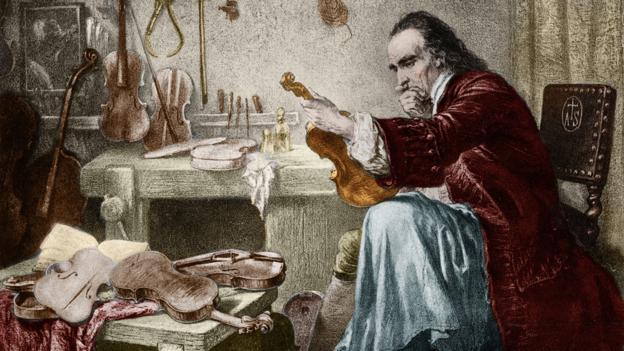
Illustration of Antonio Stradivari in His Atelier

Illustration of Antonio Stradivari in His Atelier – Image by © Stefano Bianchetti/Corbis

If the origin of a violin or stringed instrument is the key to its value, then a large part of that provenance is inexorably wrapped up in its history after its departure from the  Stradivari workshop in Cremona.

If a violin can be said to imbibe the qualities of its owners, world events and individuals who have influenced its journey; then this violin’s history is virtuosic, violent, secretive, poignant, beautiful and courageous.

Recent History

Joshua Bell talks about how it was ‘love at first sight’ when he first saw and heard it during a rehearsal with its then owner, British violinist Norbert Brainin, a former member of the esteemed Amadeus Quartet. He felt its tone was sweet as well as ‘gutsy’, which is not surprising considering who has played on it and where it has been. Norbert joked that one day it might be his…if he had 4 million dollars to spare…

Joshua Bell - Huberman_violin

It must have been written in the stars that one day it would be his. That day came in 2001 when Joshua Bell was at J & A Beare’s in London having some maintenance work done on his ‘Tom Taylor’ Stradivarius violin. He learnt from Stephen Beare that the Gibson ex-Huberman Strad was on their premises being prepared for imminent sale by Brainin to a German industrialist.

Joshua had to act fast, and managed to purchase the violin before it was gone from his grasp, probably forever. He performed on it at the Royal Albert Hall the same day it came into his ownership and has never played another instrument since.

How it Sounds

If a violin can be said to have a soul, then I think the Gibson/Huberman violin’s soul is Polish. It may have been crafted in Cremona, but its roots are entwined with its most celebrated owner, Bronislaw Huberman. Perhaps that’s why it sings so resonantly to the music of Chopin.  Here is his nocturne in C sharp minor performed by Joshua Bell on the Huberman Strad for his first album release (Romance of the Violin), after purchasing the violin.

I recently watched The Return of the Violin; an incredibly moving documentary film, (tissues were needed), and felt compelled to share it with you. It’s a film about the depth of the human spirit and the story of the violin’s incredible history coming full circle,  the ultimate testament to the healing power of music.

Narrated and produced by Roy Mandel, directed by Haim Hecht, he talks to the central figure of the film, holocaust survivor Sigmund Rolat, whose tragic memories and brutal observations of the Nazi invasion of Poland ties together their respective Jewish families from Czestochowa, along with 20th century Polish wunderkind violinist, Bronislaw Huberman and composer Johannes Brahms.

Bronislaw Huberman (1882 – 1947)

A Jewish boy from Czestochowa, he was a child prodigy who grew to be one of the most iconic violinists of the 20th century. He was known for his individualistic and personal interpretations, which I find very refreshing in this day and age of focus on technique.

Violinist Bronislaw Huberman, aged 18.

Violinist Bronislaw Huberman, aged 18.

He began learning the violin at the age of four, because his father (a law clerk), wanted him to play the piano, but not being able to afford one gave him a violin instead. His immense talent soon became obvious and according to the film, he was gifted the Stradivarius violin that had been owned by the family of Count Władysław Zamoyski (1853–1924).

I love this 1930 Huberman recording of Bruch’s beautiful theme based on Hebrew melodies written originally for cello, Kol Nidrei:

He’s also amazing with Chopin! Gorgeous vintage recording:

For a time the young Huberman was tutored by the great Joseph Joachim in Berlin. He introduced Bronislaw to the composer Joahnnes Brahms, (who was having a bit of a revolt on his hands from the violinists of the day), over the difficulty of his Violin Concerto in D Major. Not so for the Polish wunderkind. Brahms didn’t believe Joachim until he heard the  young boy perform his work at a legendary concert in Vienna.
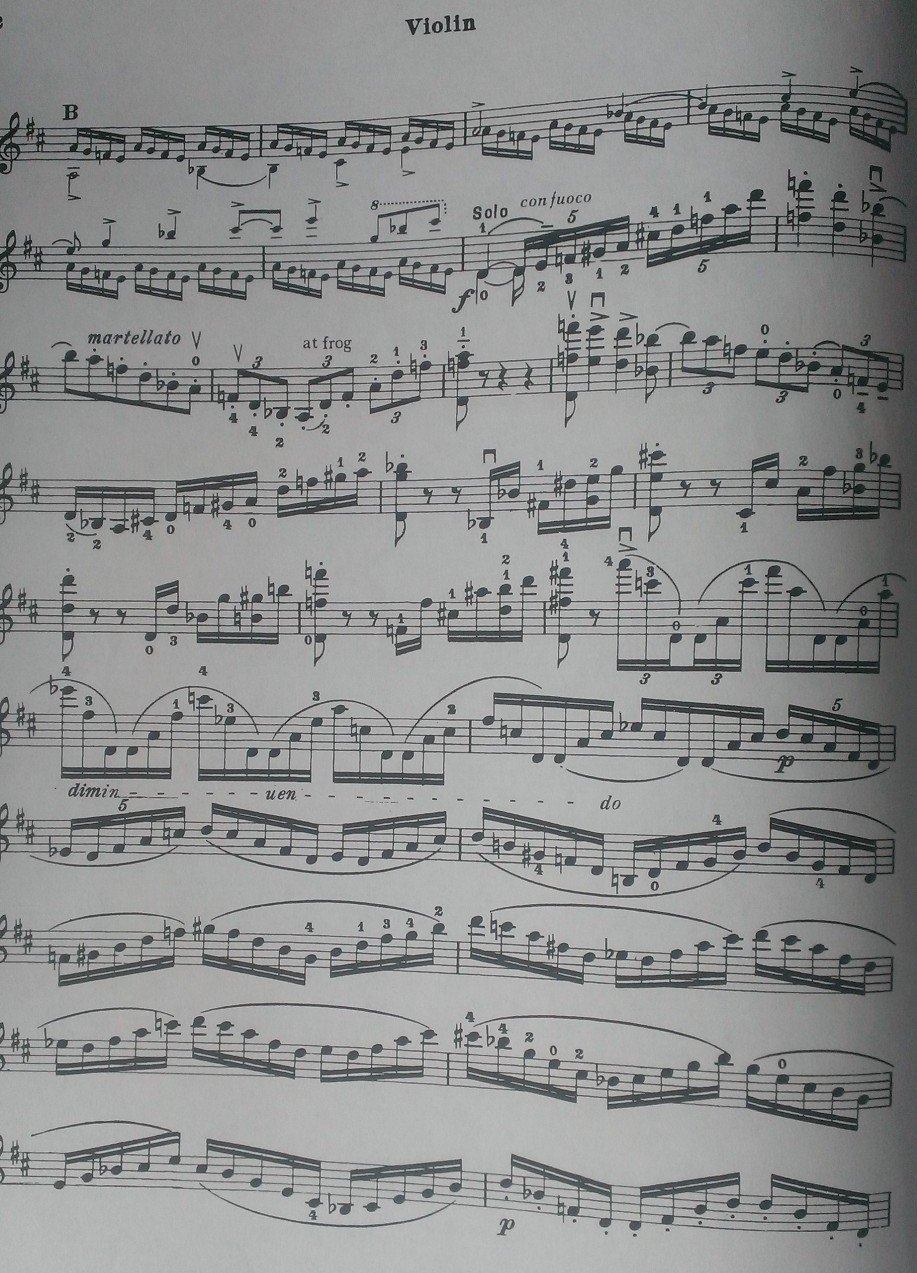
My sheet music of the Brahms Violin Concerto Op. 77 in D major

My sheet music of the Brahms Violin Concerto Op. 77 in D major

I have to admit I didn’t know much about Huberman, and when I saw the film and learnt of his courage and devotion I was full of admiration for him. He was a remarkable man, a visionary and humanitarian.

Not only was he the founder of what is now known as the Israel Philharmonic Orchestra, he rescued as many of his fellow European Jewish musicians (and their immediate families) from the horror of the holocaust as was possible, by giving them a place in his new Orchestra of Palestine.

“One has to build a fist against anti-semitism – a first class orchestra will be this fist.” ~ Bronislaw Huberman

Talk about playing for your life! I can only imagine the stress of some of these musicians must have felt when auditioning for a seat in Huberman’s new orchestra; which if you earned yourself a place essentially meant escaping the death camps.

Perhaps Hollywood should make a movie called ‘Huberman’s List.’

The Thefts

The first time the Gibson/Huberman Strad was stolen was in Vienna in 1919. Fortunately, it was quickly recovered and Huberman continued to wow audiences on it for another 17 years.

And so it played out, on that fateful day – 28th February 1936 – whilst Huberman was on stage playing his Guarnerius violin during a benefit concert at Carnegie Hall, (to raise funds for his new orchestra in Palestine), the Huberman Strad, laying in repose in its double case in his dressing room, was stolen.

I can only speculate if Juilliard trained violinist Julian Altman had premeditated his musical larceny, or whether it was a crime of passion, an opportunistic urge on the night to steal the Gibson Strad.

With breathtaking contempt and audacity the shyster Altman played on it at weddings and other political events. No-one was any the wiser for half a century, with the possible exception of his friend, Luthier Ed Wicks who lived in Danbury. He carried out repairs to the bridge and neck of the violin in 1983 and noticed the inscription inside.

Although Altman told him it was a copy, I suspect he was of a different opinion, but he wasn’t to know that it had once belonged to the great Bronislaw Huberman. Sadly, Huberman never saw his beloved Strad again.

Huberman was reimbursed to the tune of $30,000 dollars (its value at the time), and ownership of the stolen strad passed on to its insurer: Lloyds of London.

It was only while in jail and on his deathbed in 1985 that Altman confessed to his crime, telling his wife she could find the supporting documents to corroborate his story in between the violin case and its canvas cover. His estranged wife Marcelle collected the instrument from the home of Ed Wicks and returned the instrument to the authorities, whereby Charles Beare verified its authenticity.

Charles Beare in The Strad magazine:

“As I lifted the violin from its case, I didn’t appreciate that Mrs. Hall and her friends and family were still in doubt about the violin’s identity. Very slowly I said ‘No — problem’, and it turned out that in the second or two between the two words Mrs. Hall almost died with disappointment. After that there was joy all round.”

“Out in the better light of the garden, away from the crowd and the popping champagne corks, I had a good look at Huberman’s remarkable violin. In 1911, when the young virtuoso purchased it, Alfred Hill of W. E. Hill and Sons wrote ‘The red varnish is in a pure state, as applied by the maker.’ Now you could barely see it, submerged as it was beneath layer upon layer of dirt and polish. . . .Nevertheless the violin was clearly a masterpiece, and in the pale sunlight its handsome wood and red varnish glowed reassuringly.”

Marcelle Hall was paid a finder’s fee of £ $263,475.75  by Lloyd’s of London, which was the focus of much legal wrangling by other beneficiaries of the Altman estate.

Full Circle

Although his entire family were murdered, Sigmund Rolat survived the Second World War and made a successful life for himself in America, returning several times in later life to his and Huberman’s birthplace of Czestochowa.

It was Rolat’s dream to hear Huberman’s violin played by its current owner, Joshua Bell, (who also has Jewish ancestry), in the concert hall that stood on the foundations of the old synagogue before it had been destroyed by the Nazis.

Poignant just doesn’t cover it.

The Return of the Violin

That dream came true in 2009 in conjunction with Rolat’s efforts to open the Museum of the History of Polish Jews in Warsaw:

Interview

Discussion about The Return of the Violin with Sigmund Rolat, Joshua Bell and Budd Mishkin:

Slight Confusion

According to Charles Beare:

W. E. Hill and Sons purchased the violin in the nineteenth century from an old French family, subsequently selling it to Alfred Gibson, a prominent English violinist who also owned one of the Stradivari violas exhibited in Cremona. In 1911 it returned to Hills and was sold to Huberman, at which time Alfred Hill wrote that “the fine red varnish which covers it is in a pure state as applied by the maker.”

This account contradicts the story that the Gibson Strad was given to Huberman by Count Zamoyski. I can’t quite tie together all the loose ends, but it doesn’t matter. This remarkable violin has had remarkable owners, and a dramatic history.

Portrait of Alfred Gibson with his Stradivarius by Herbert Olivier (uncle of Laurence), c. 1899

Portrait of Alfred Gibson with his Stradivarius by Herbert Olivier (uncle of Laurence), c. 1899

It has been celebrated, coveted, admired, and heard in live performance by many (including me).

One thing’s for sure, it went incognito for 51 years before returning to its well-deserved spotlight!

Cornish Dreams and Ice creams

“Cornwall is very primeval: great, black, jutting cliffs and rocks, like the original darkness, and a pale sea breaking in, like dawn. It is like the beginning of the world, wonderful…” ~ D. H. Lawrence

I’ve only been back home for a day, but now that I’ve unpacked and caught up with most of the laundry I thought I’d share some of our holiday experiences and wax lyrical about the many charms of Cornwall while it’s still vivid in my mind.

I also have a new craving, well, strictly two: Cornish ice cream and cream teas.

2015-08-12 16.03.08

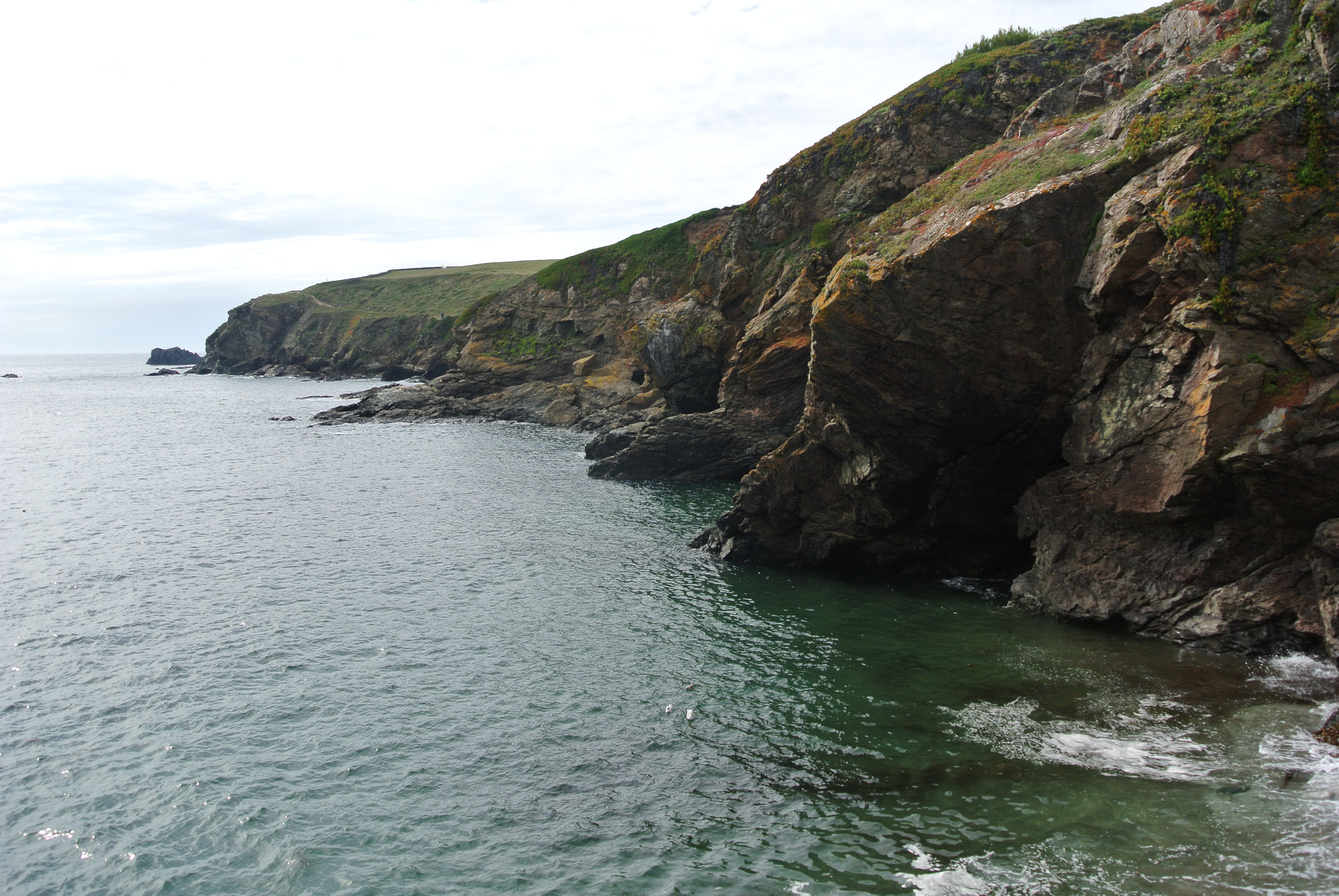
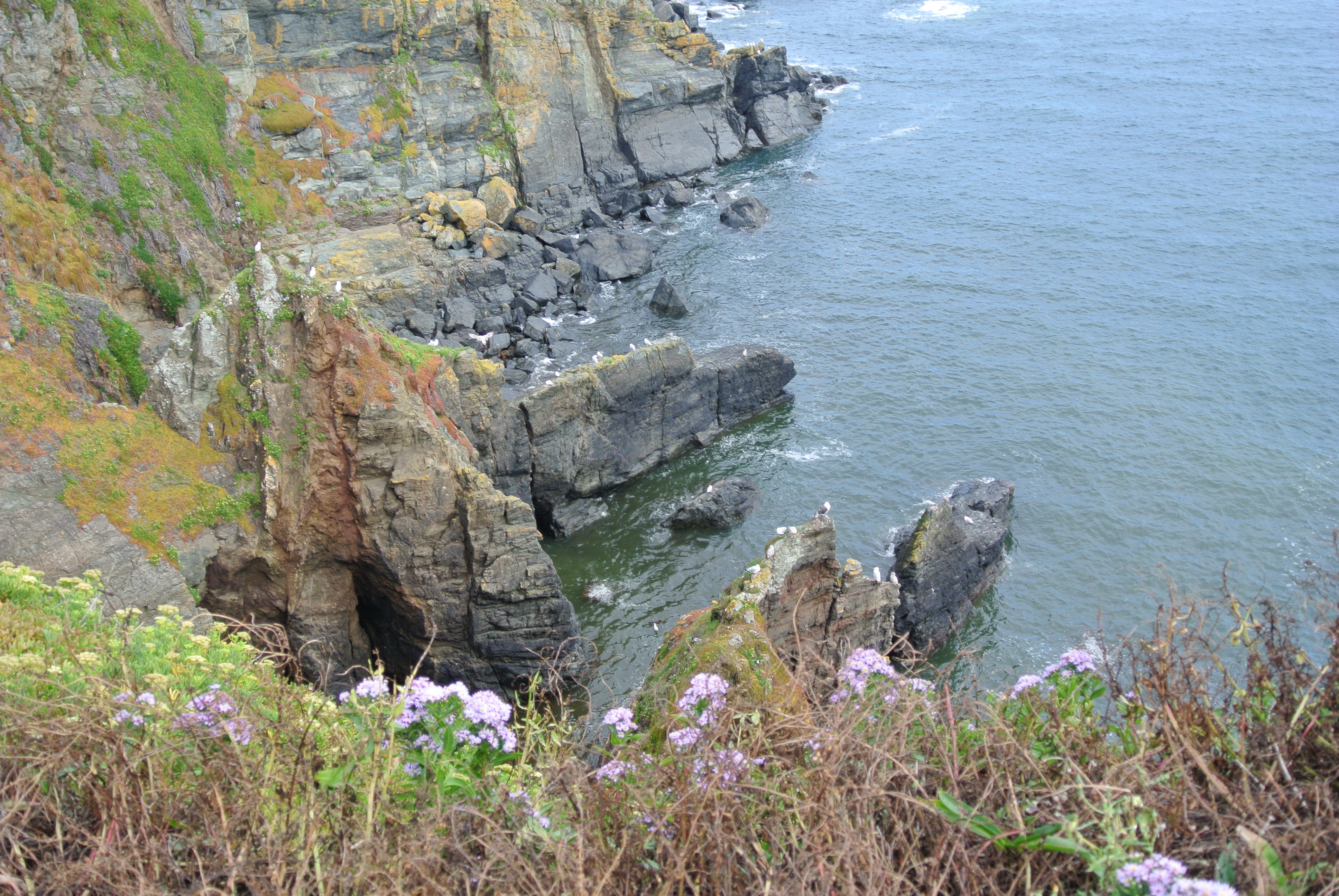
Cliffs at Lizard Point.

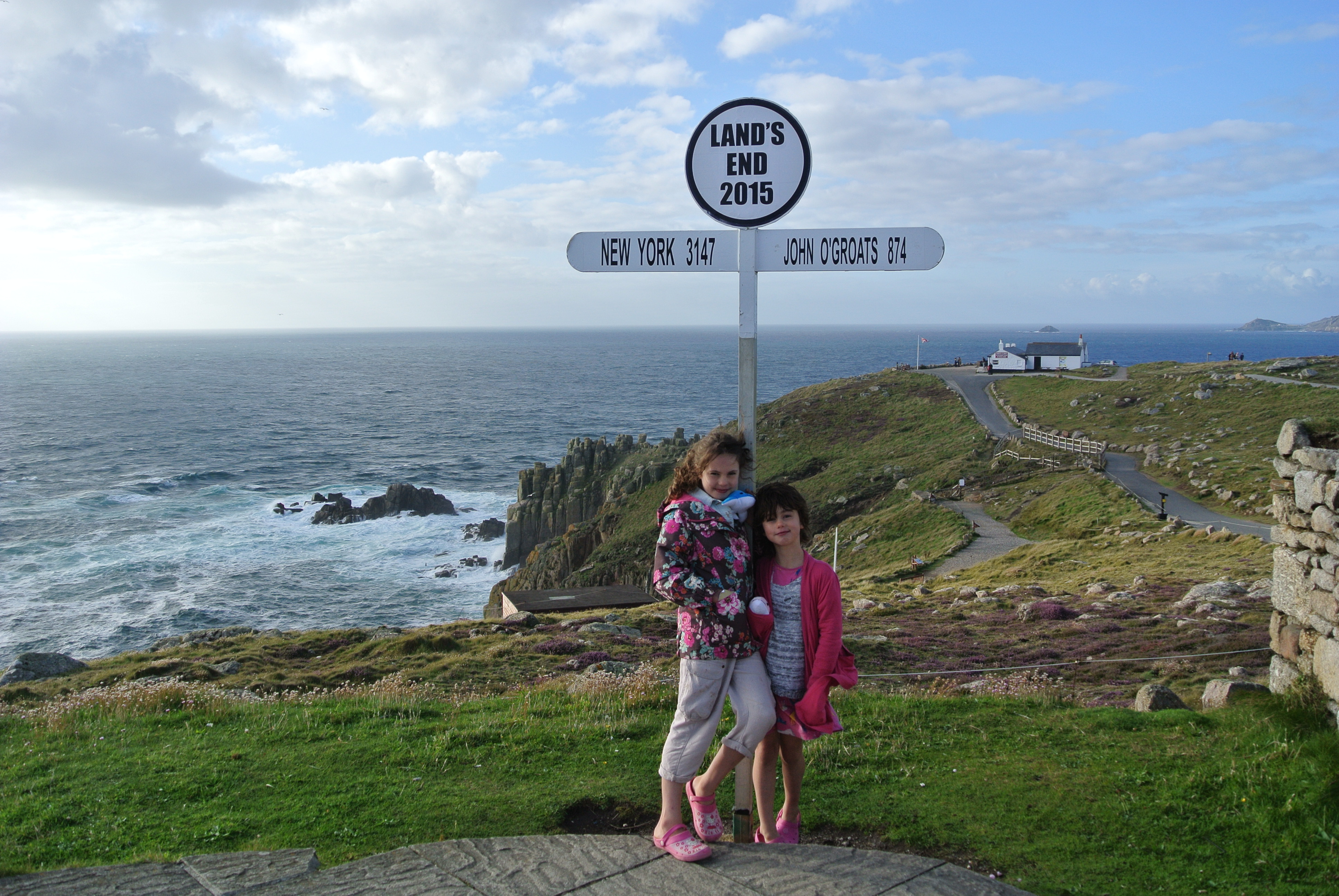
We got to see some of the legendary Cornish coast, with its dramatic, flower covered cliffs, clear, azure seas, surfing beaches and small sandy coves, abandoned and ruined tin mines, undulating fields with cows aplenty, the occasional hungry seal, and, as is the case with most visitors to the south west of Cornwall, a windswept photo opportunity at Land’s End, Britain’s westernmost point.

map_of_cornwall

Poldark Locations

One of the things about the latest BBC adaptation of the eponymous Graham Winston novels (apart from the rugged looks and solid acting of Aidan Turner as Ross Poldark), that has captured my imagination has been the stunning locations.

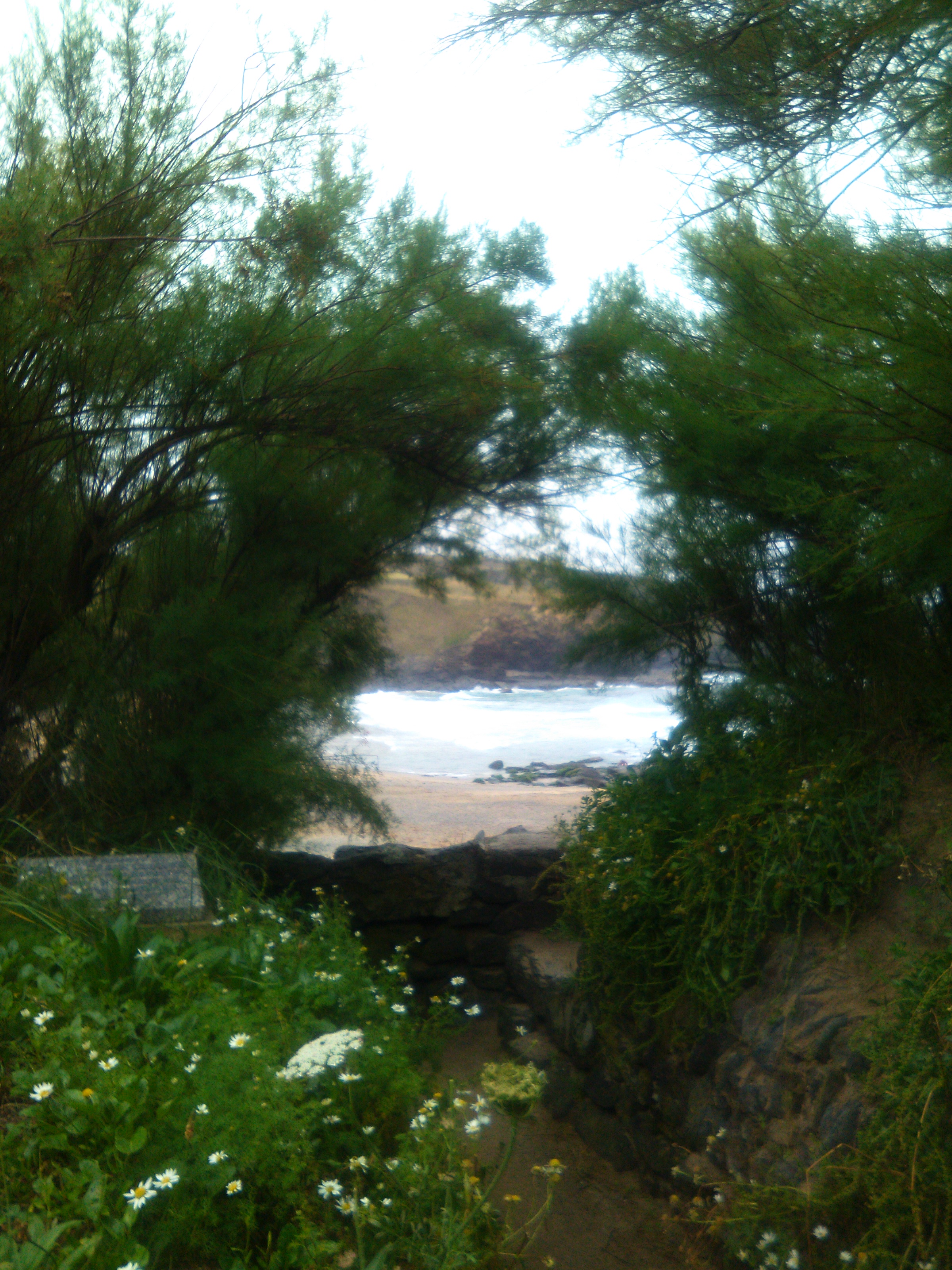
Gunwalloe Church Cove from Church

View from the church towards Gunwalloe Cove

I was naive enough to think it was shot in one area, but in reality there were 14 different Poldark filming locations throughout Cornwall; and being something of a period drama fan I was glad to see three of them during my stay.

The first location was Gunwalloe Church Cove on The Lizard (a really stunning but treacherous stretch of coastline), that has a small medieval church to the right of the beach.  As well as being the site of many real-life shipwrecks, this was the beach where they filmed the night-time scene of Ross and the villagers helping themselves to the spoils of a Warleggan shipwreck.

Here is the scene shot on Gunwalloe Cove from the current Poldark series:

It seemed entirely plausible to me, we were there in early August, the sky was vanquished behind foreboding dark clouds, the wind was biting and relentless, the roar of the ocean as the waves crashed onto the beach approaching high-tide was immense. So much for summer!

Cliffs on either side of the beach provided rocks for rough seas to pound as well as potential caves.

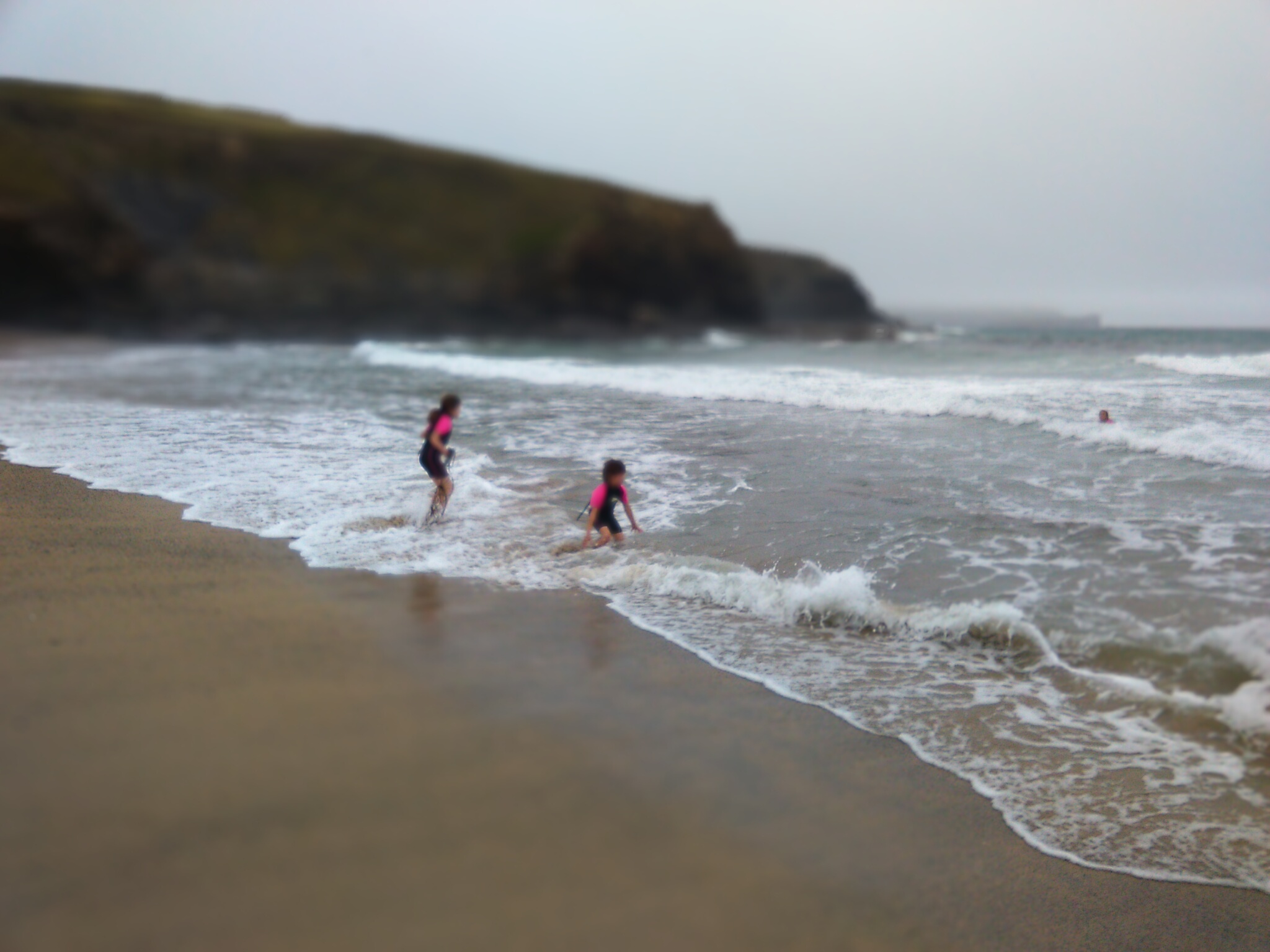
It was also the first time my daughters had ventured into the surf, clad in their new, unbaptised wetsuits, armed with determination, excitement and curiosity to try body-boarding. In reality the brutally cold temperatures and power of the Atlantic Ocean prohibited such an activity for my little dudettes, but they did wade in up to their knees and let the tide chase them, screaming and whooping onto the beach.

Emily and Ruby in the surf at Gunwalloe Church Cove2

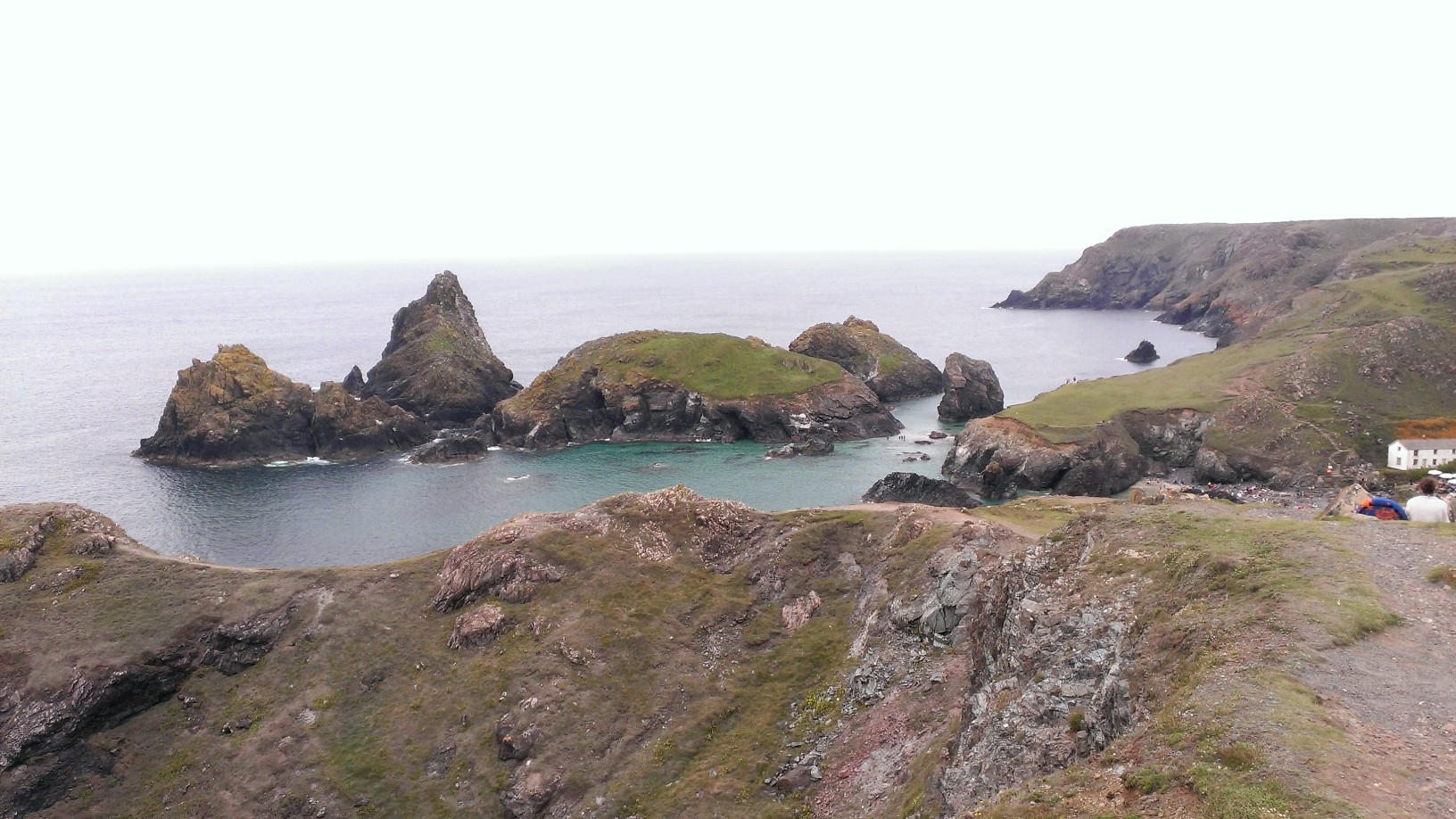
Later in the week when the weather had improved we ventured back to the Lizard Peninsula and to the supremely beautiful Kynance Cove and another filming location – Lizard Point (the most southerly point in England).

Kynance Cove at high tide

Kynance Cove at high tide

A large white lighthouse and museum sit at the top of the headland, and if you wander down to the edge of the cliff and down into bay there is an old Lifeboat station (built in 1914), with an interesting history depicted on its doors. The girls sunned themselves here for a while…

View from the old lifeboat station at Lizard Point.

View from the old lifeboat station at Lizard Point.

Chatting to the owner of the delightful café with an outdoor terrace offering a great view of the bay, we learnt that he had trained the local seagulls to fly to a nearby field where he feeds them twice a day.

We didn’t get dive-bombed, see or hear a single gull whilst having our delectable cream-tea. It could be a possible solution for the beleaguered tourists and locals in St. Ives, who have to endure birds with a penchant for Hitchcock type behaviour towards people and their food!!

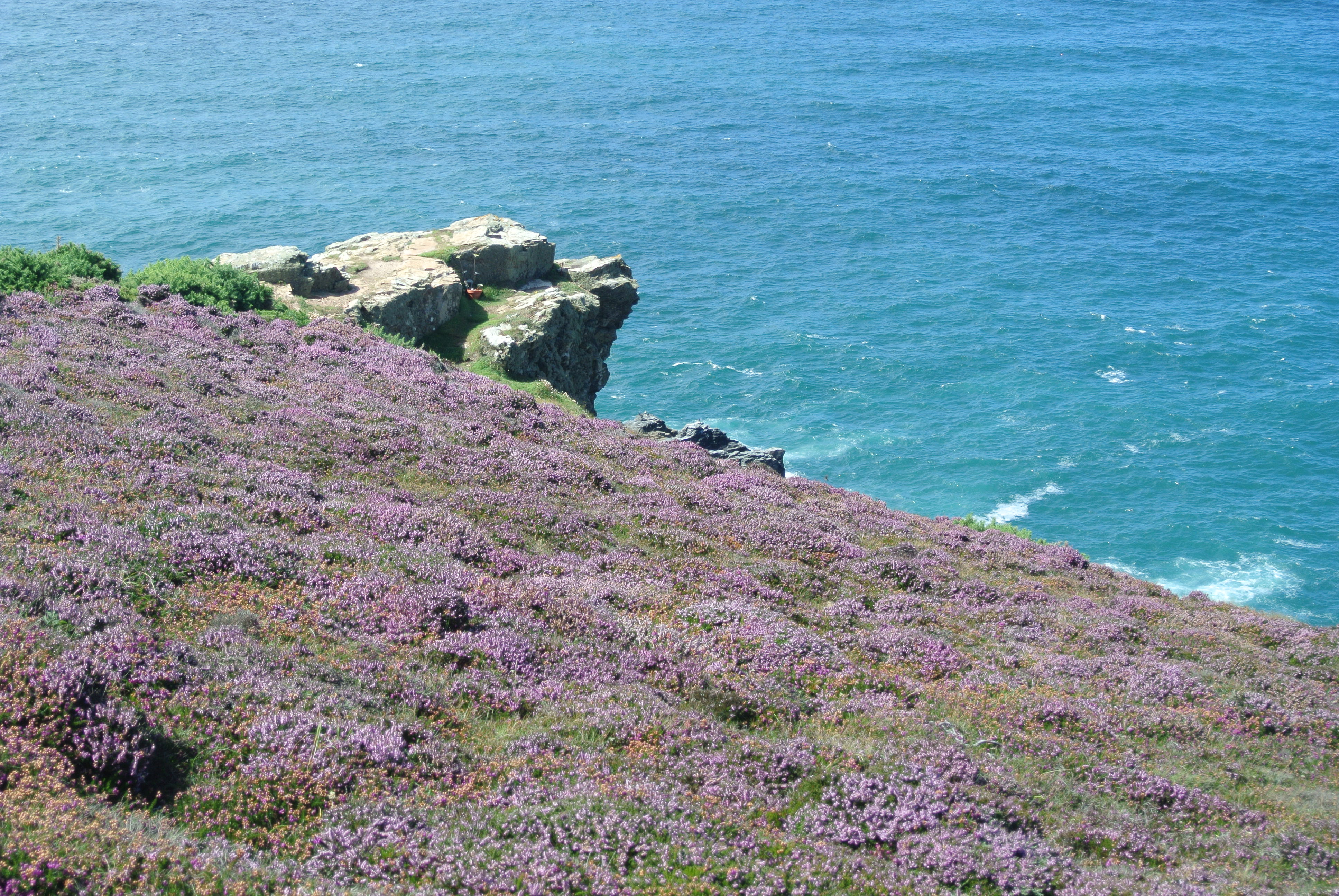
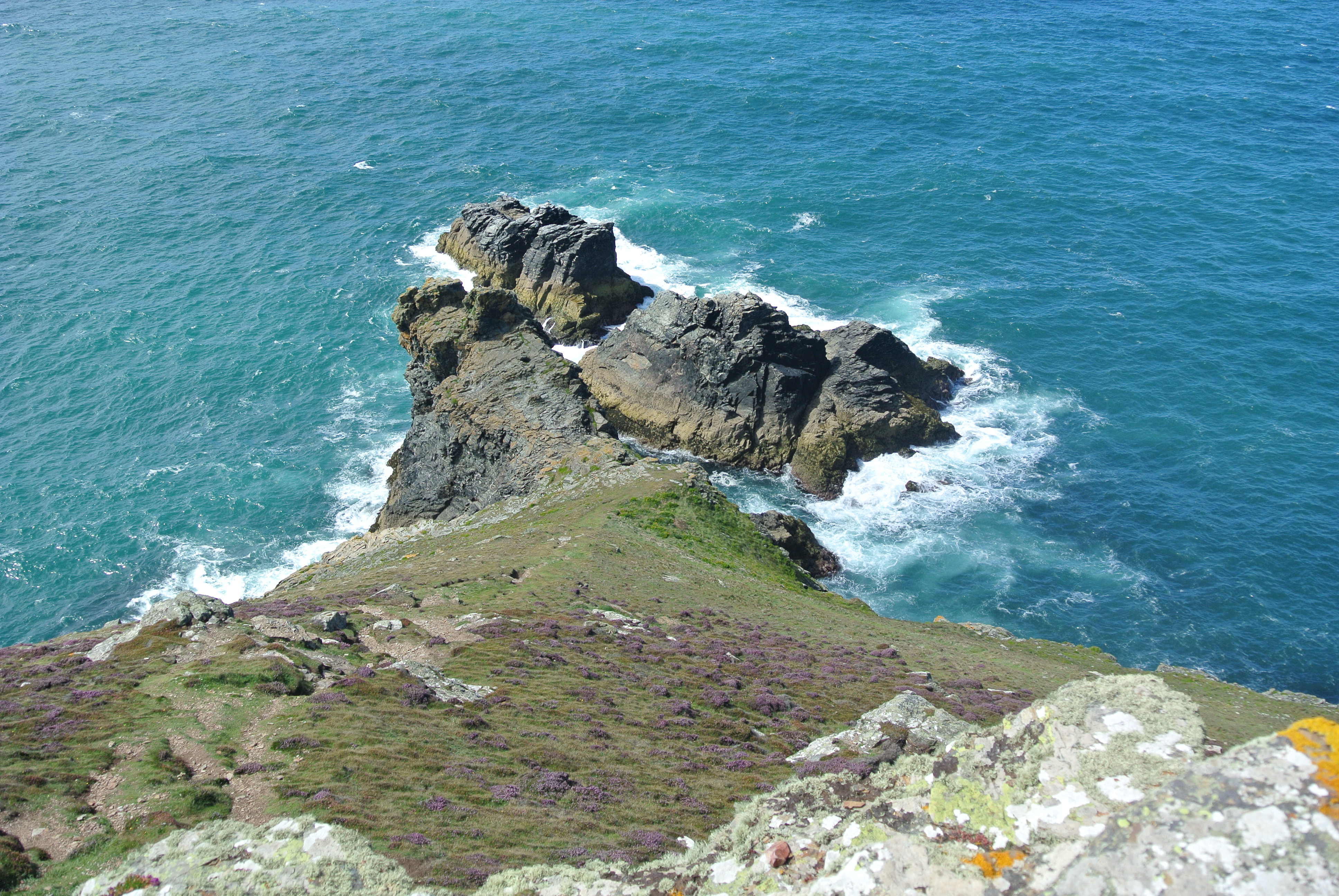
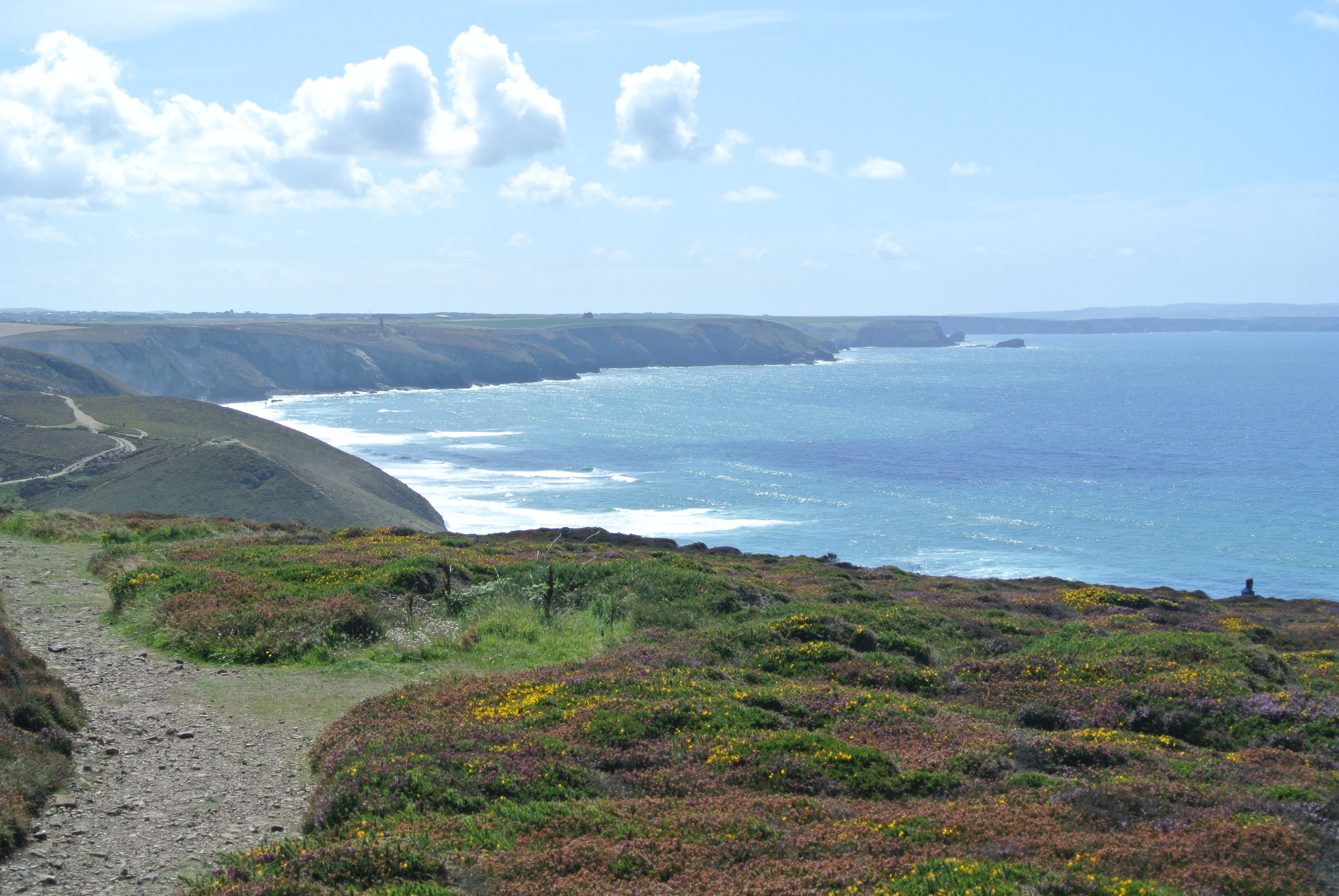
On the last day, with the car packed-up and bursting at the seams, we headed out to the mining town of St. Agnes on the north coast between St. Ives and Newquay.  It’s a very pretty village with a nice beach, and you can drive just out of the town up to St. Agnes Head: a heather clad heathland bluff, providing dramatic views towards St. Ives in the distance and also north up the coast.


2015-08-15 13.45.46

The scent wafting from the heather as I wandered along the cliff footpath was delightful, as was the vibrant hues of pink, purple, violet and yellow of these ubiquitous and hardy flowers, which contrasted beautifully with the bright blue ocean and spewing white foam of the waves against rocks.

I tentatively climbed onto the stone ledge to take this shot!

I tentatively climbed onto the stone ledge to take this shot!

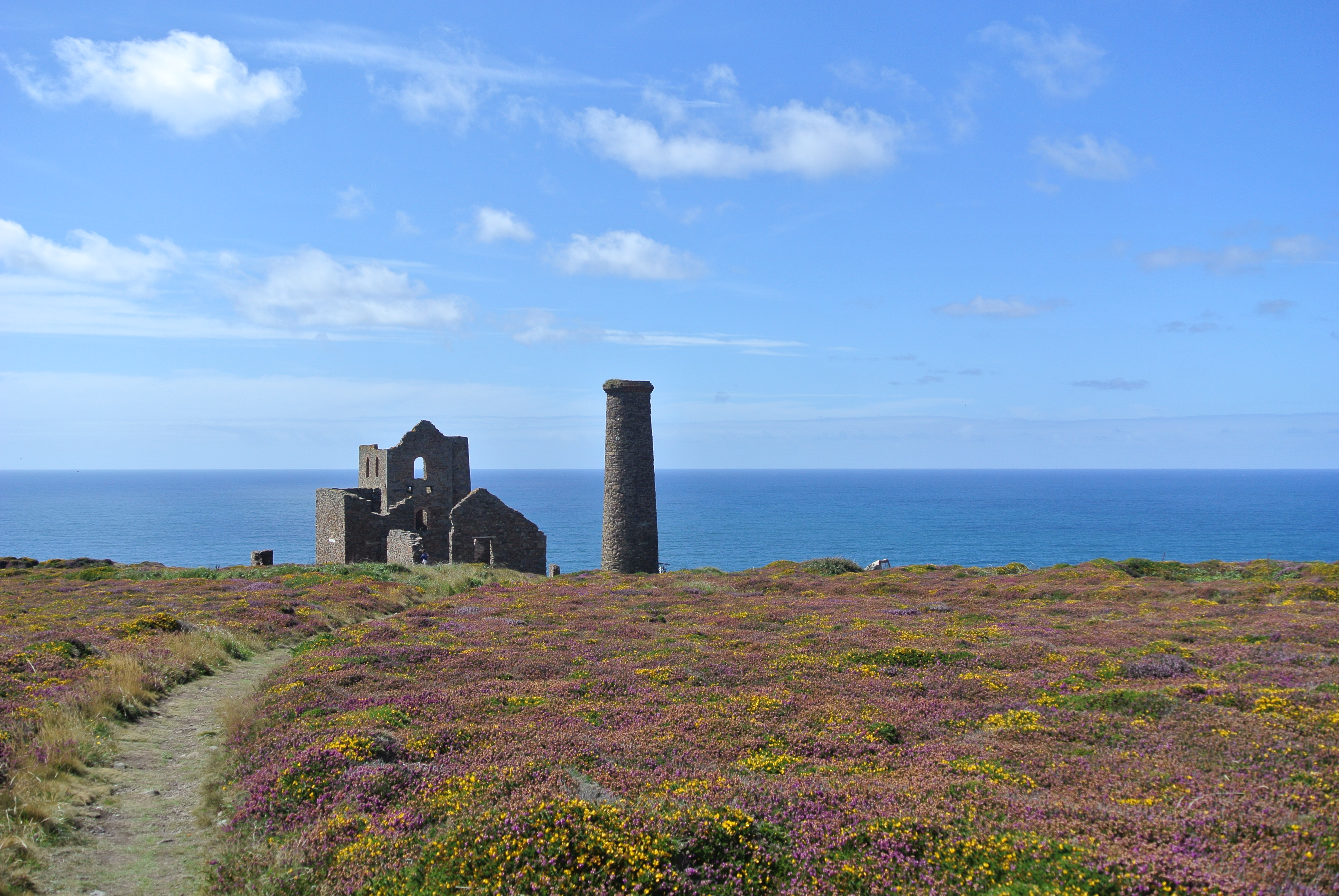
Also near St. Agnes is the historic site of Wheal Coates, a tin and copper mine on the site of mines dating back to the 16oo’s.

Wheal Coates, St. Agnes

Wheal Coates, St. Agnes

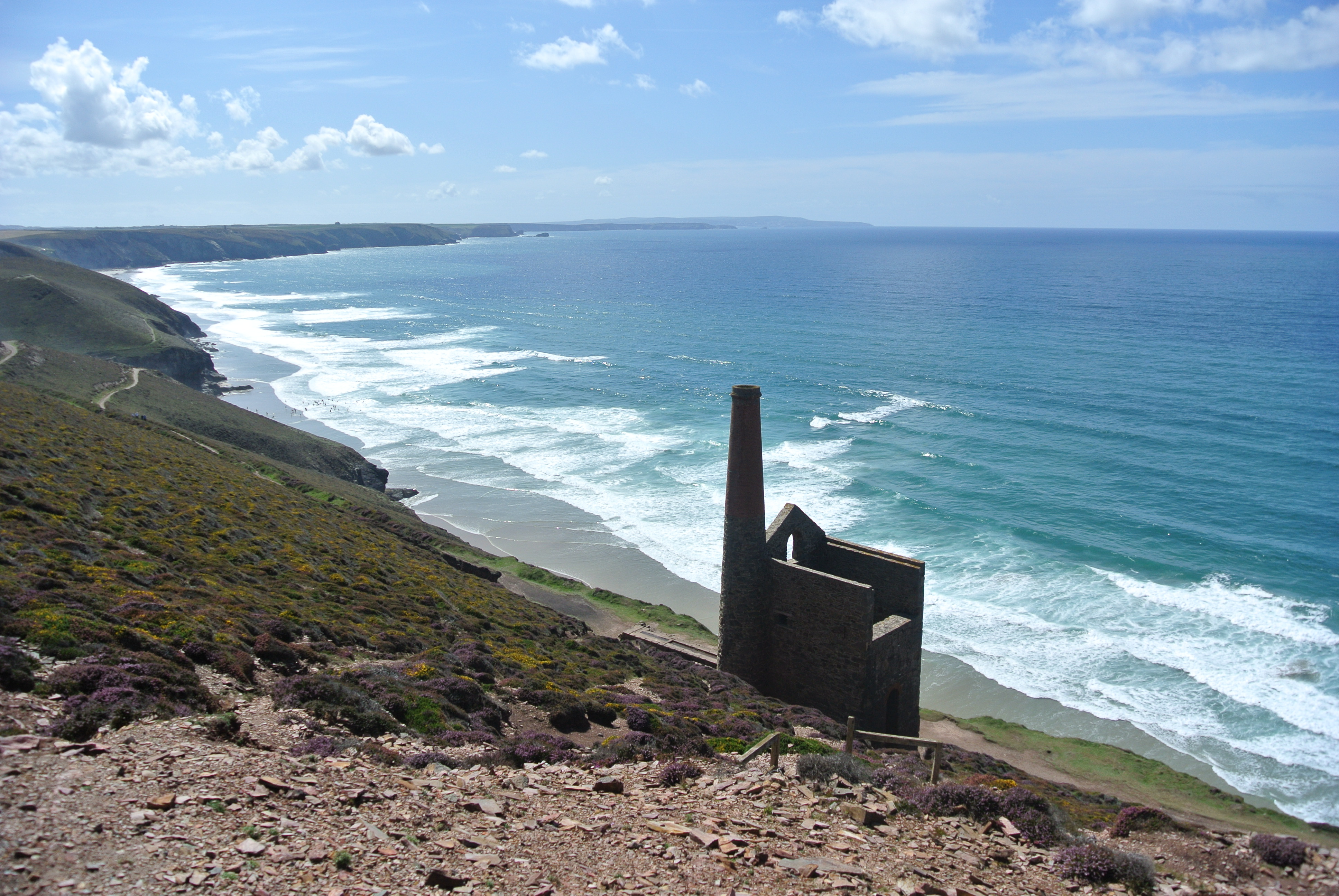
However, the Victorian mine was permanently closed down in 1914. The coastal views of the Towanroath Engine House (a grade II listed building), perching on the side of the cliff with the surf crashing onto Porthtowan and Chapel Porth Beaches below just took my breath away.

2015-08-15 14.34.20

Towanroath Engine House

I suspect the impressive view and pristine coastline was not at the forefront of the miners’ minds as they toiled in what would have been trying conditions.

View towards St. Ives from St. Agnes Head

Coastal view from St. Agnes Head

Some of the other filming locations that I didn’t get time to see were the World Heritage Botallack Mine, Levant Mine and West Wheal Owles in St. Just, Pedn Vounder Beach, Stepper Point, St. Breward and Bodmin Moor and Charlestown Harbour (perfect as the 18th century Falmouth Harbour).

Land’s End – 301 miles from home

We arrived here at about 6.30 pm, perfect timing to avoid the crowds. I hadn’t been back to visit Land’s End since my first trip when I was eighteen, and found that there was a lot more here to entice families than just a sign.

2015-08-14 18.48.08-2

There is a hotel and restaurant perched on the hill, as well as a small Aardman Animation ‘Shaun the Sheep’ theme park and gift shops which were thankfully all closed up by the time we arrived.

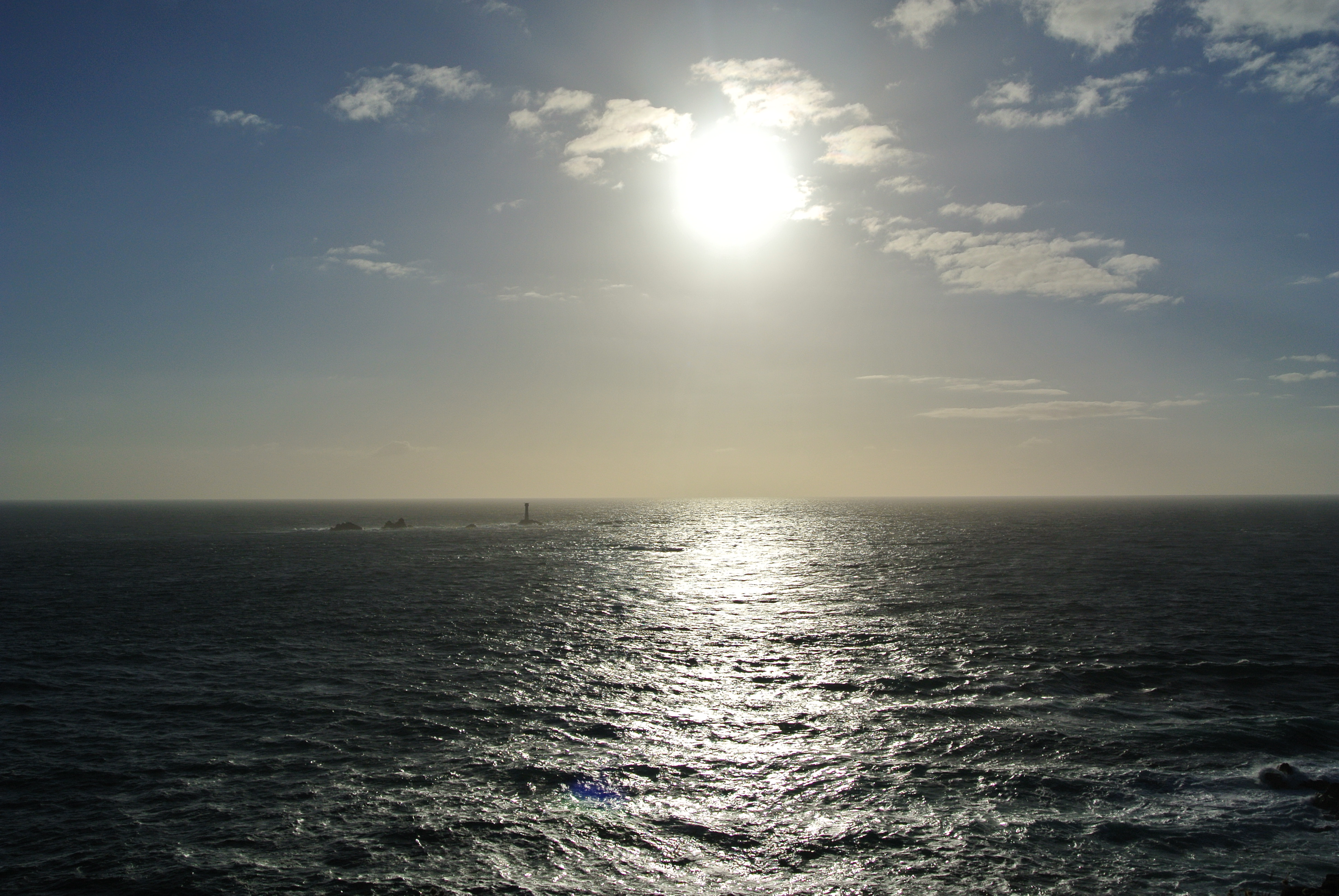
Also the site of many a shipwreck, the Long Rocks Lighthouse gives out light every ten seconds these days, and we stared in awe at the sheer bracing, rugged beauty of the place.

Long Rocks Lighthouse beneath the sun at Land's End.

Long Rocks Lighthouse beneath the sun at Land’s End.

We decided to stay and have dinner at the hotel so that we could watch the sunset. The skies had been clear when we arrived, but as the sun gradually sank into the horizon it became mostly masked by cloud. It was still a magical evening.

St. Ives

This popular seaside town nestles into a protected horseshoe harbour, and comprises many steep, narrow lanes lined with art galleries, boutiques, gift shops, surfing outlets, pasty shops (you haven’t lived until you’ve tried one from Pengenna), although tasty, it was so huge I could barely finish it. The local ice cream is to die for, and the town is bustling with tourists, artists, surfers and families. There isn’t much room for the crowds and the cars, so it can get a bit hairy with young children.

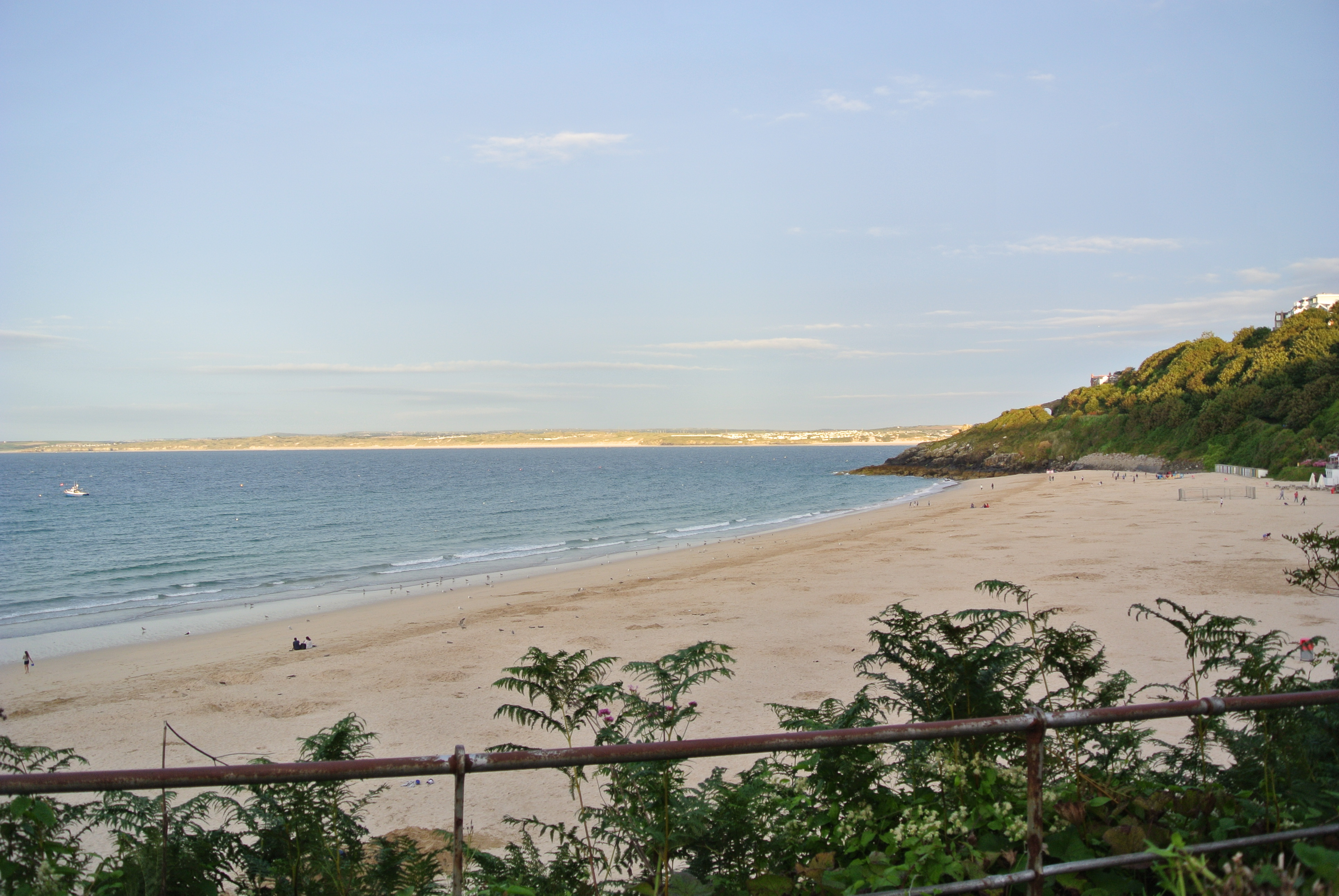
The pristine Carbis Bay

The pristine Carbis Bay

Parking is a total headache, and on the second day we were there we parked in a church car park just up from the Carbis Bay British Rail station and got the train into St. Ives. This has to be the most scenic train station in the UK. It pulls up behind a large sandy beach and you can walk from there to the centre of St. Ives in about ten minutes.

We spent quite a few hours on the crowded but very nice Porthmeor Beach, full of sunbathers and body surfers alike. Emily and Ruby managed to get their first taste of riding a wave and seem to have become adrenaline junkies overnight!

We’ll have to do the Shanty Baba evening Pirate Ghost story and walk next time we’re there.

Our boat trip to Seal Island wasn’t the highlight of our holiday, but I suspect it will be long remembered. We booked onto a later trip thinking it would be fun to go out in calm seas (it had been a gorgeous day up to that point), but by 4.45pm when we stood on the harbour wall watching three local seals who had ventured into the shallows and were bobbing up for fresh fish being thrown down to them by the locals, wondering if it was worth an hour and a half out at sea when they were literally at our feet!

Emily doing her seal impression.

Emily doing her seal impression.

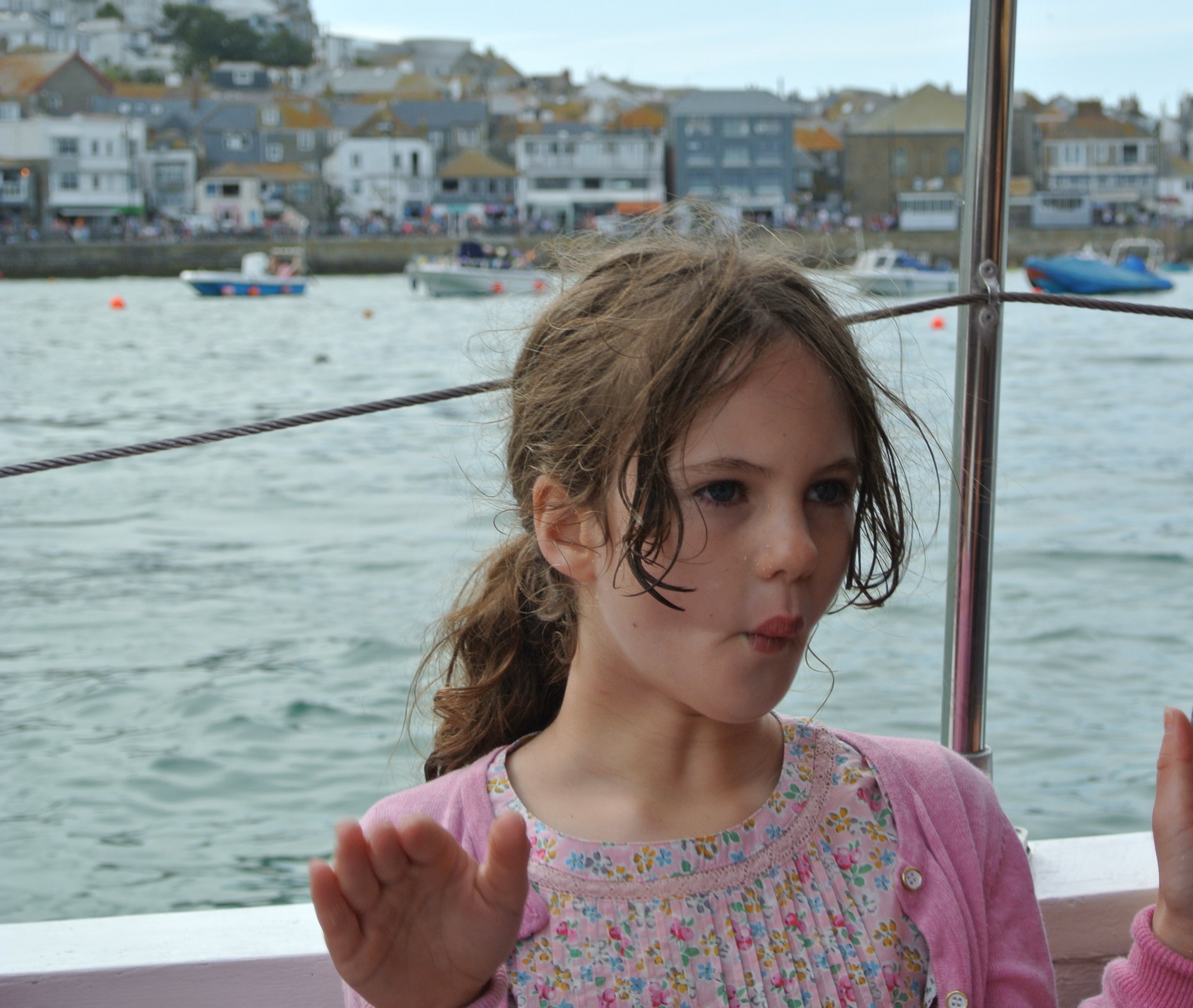
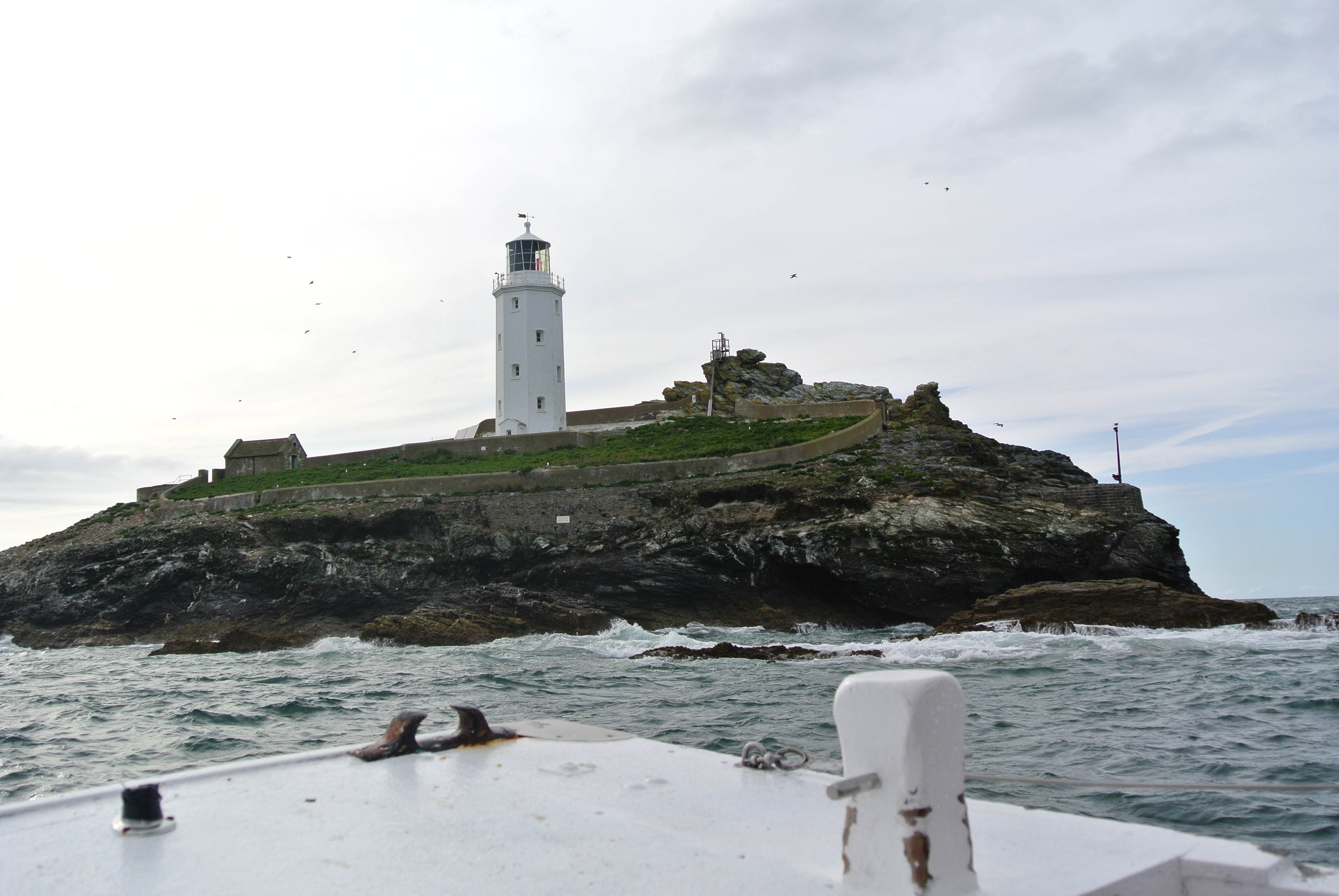
It turned out that our doubts were founded, as our boat, the Cornish Crest, was a small fishing vessel that was both uncomfortable and slow, and by now the seas had grown choppy so we got quite wet too. We sat patiently as our cheerful captain skilfully took us out to Godrevy Lighthouse instead of Seal Island due to the worsening conditions.

Godrevy Lighthouse St. Ives

Godrevy Lighthouse St. Ives

Bigger, faster, more comfortable boats sped past us. When we reached the rocks off the lighthouse we caught a glimpse of two black heads barely above the waves, and I couldn’t wait for the boat to turn around and take us back to the harbour. What with the cool wind whipping around us, the waves sloshing over the side and the lack of seals it was an experience that left us wishing we had stayed on the beach!

Mugs of creamy hot chocolate and homemade food at Pels Café on the harbour front helped to warm us up as we quickly readjusted to having our land legs back…

The Eden Project

The whole of Cornwall was drenched under a massive downpour on the Thursday, so after a lazy morning we visited the Eden Project near St. Austell. Lovingly nurtured from a disused giant china clay pit, the ecological vision of the charity’s creators has achieved astounding success. We spent a few fun and educational hours wandering through the massive biospheres and around the moving, lifelike dinosaur exhibit, which really captured their iamginations.

2015-08-13 19.09.45

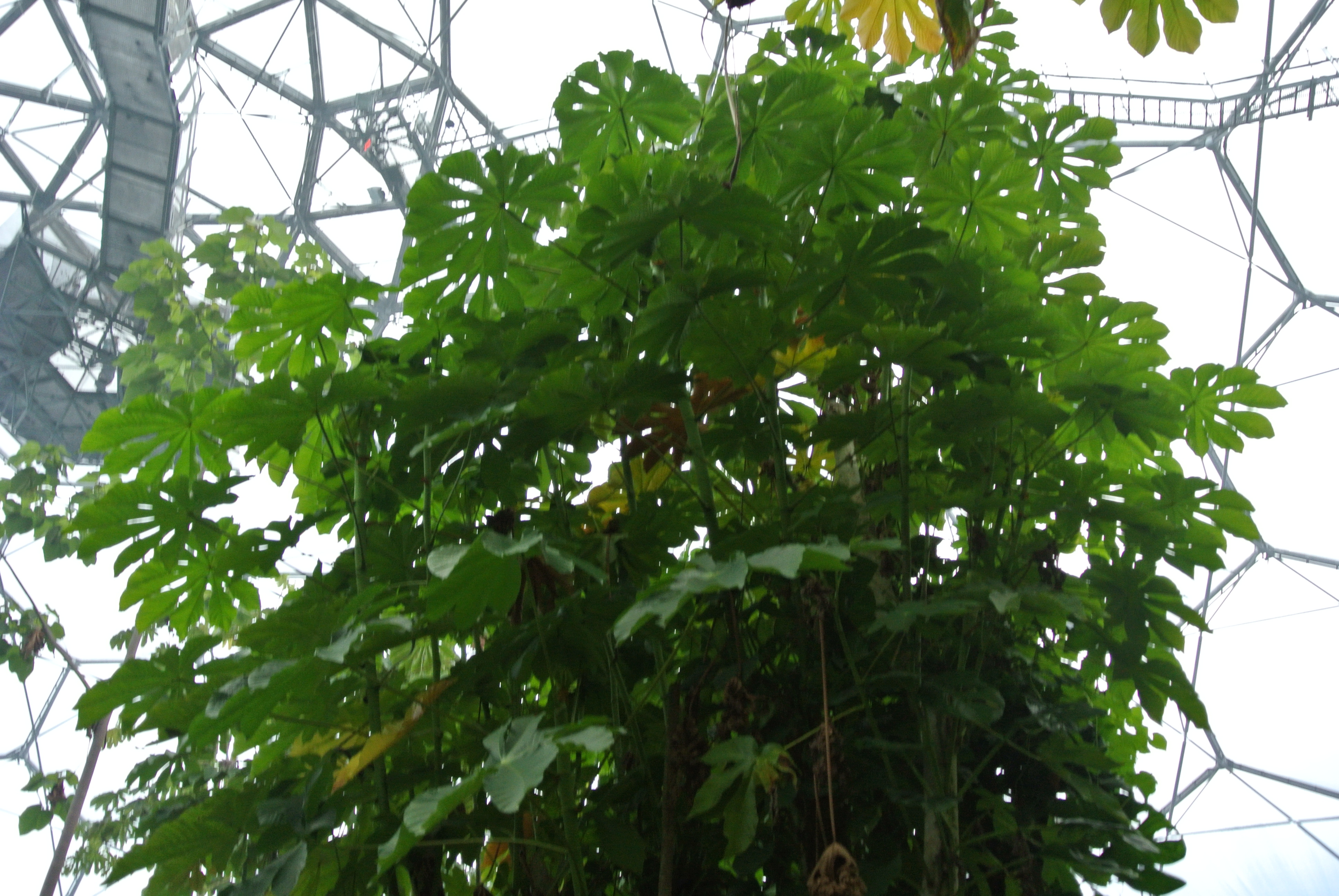
It was wonderful strolling through the world’s biggest greenhouse, home to the world’s largest indoor rainforest, hearing the rain pelting onto the biosphere.

2015-08-13 17.57.10

It was hot and steamy inside, so raincoats and jumpers came swiftly off.

2015-08-13 16.23.52

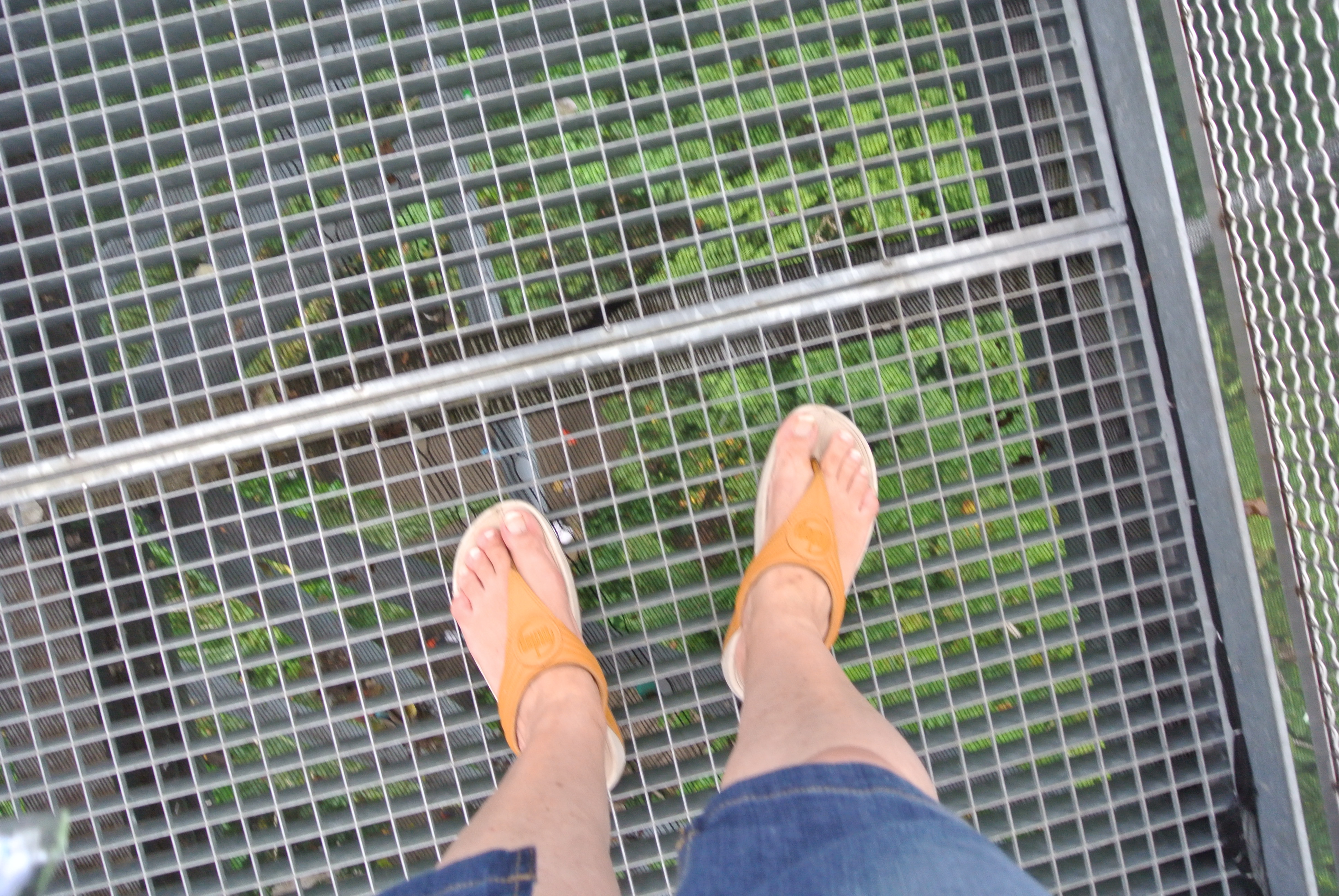
The girls absolutely loved it, and the word “awesome” was frequently used. I managed to get onto the sky walk viewing platform before it closed, which offers panoramic views across the dome. It’s somewhat disconcerting though, that the steps sway as you climb high above the green canopy.

Don't look down!

Don’t look down!

It was wonderful for adults and especially children, to learn about coffee, tea, chilli, cocoa, banana, the fair trade concept and the importance of the rainforest in the planet’s ecosystem. I even saw a Trumpet Tree which was consumed by natives as a pick-me up and appetite suppressant stronger than coffee.

2015-08-13 17.49.48

Model dinosaurs caught up with us in the Mediterranean biosphere, which really captured their imaginations. All in all a great day out, despite the many visitors and the wet conditions.

2015-08-13 18.35.22

A week isn’t long enough to explore the many spectacular beaches, coastal walks, historic houses,  harbours, tin mines and many other attractions.

We spent some time on Holywell Bay before driving home, the surf was impressive. A taster of Cornwall’s best beaches:

I have a great excuse to go back in the not too distant future…

When I get a chance I’ll add a small photo gallery of some of the sights.

What’s in a painting? Taking a Look at Velázquez’s Masterpiece: Las Meninas (c. 1656)

“I would rather be the first painter of common things than second in higher art.” ~ Diego Velazquez

As someone who enjoys looking at art, but with no education in art history, or any practical skill in sketching or painting, I thought it would be great to educate myself a little more and share my findings with you on my blog.

Detail of Infanta Margarita Teresa from Las Meninas. Her left cheek had to be repainted after the painting suffered fire damage in 1734.

Detail of Infanta Margarita Teresa from Las Meninas. Her left cheek had to be repainted after the painting suffered fire damage in 1734.

Great art was painted for many different reasons by the masters of history, but these days it serves chiefly as a window into the past. Great art has immortalised its creators and their methods and become sought after by wealthy collectors, as well as for the aesthetic enjoyment of all those who clap eyes on it in a museum.  It’s there to be appreciated.

You don’t have to know the specific techniques that the artist employed to achieve a certain effect, although maybe that knowledge would deepen understanding and thereby recognition of what makes a ‘masterpiece’.

Art, like music and literature is subjective; with each era bringing to the fore its masters of the craft, replete with their varied and individual styles, techniques and subject matters.

There have been many glorious paintings that have captivated, yet also eluded humanity over the centuries; their mysterious meanings being debated and interpreted by art scholars and critics through the ages, so I thought this would make a good subject for a series of posts.

I’m starting with the Spanish baroque painter Diego Velázquez, (June 1599 – August 1660), born in Seville to Spanish parents and Portuguese grandparents, he became principal court painter to King Philip IV of Spain and one of the leading figures of the Spanish Golden Age. His oeuvre consisted mainly of royal portraiture, plus important cultural scenes of the epoch, but he also captured portraits of ‘ordinary’ people.

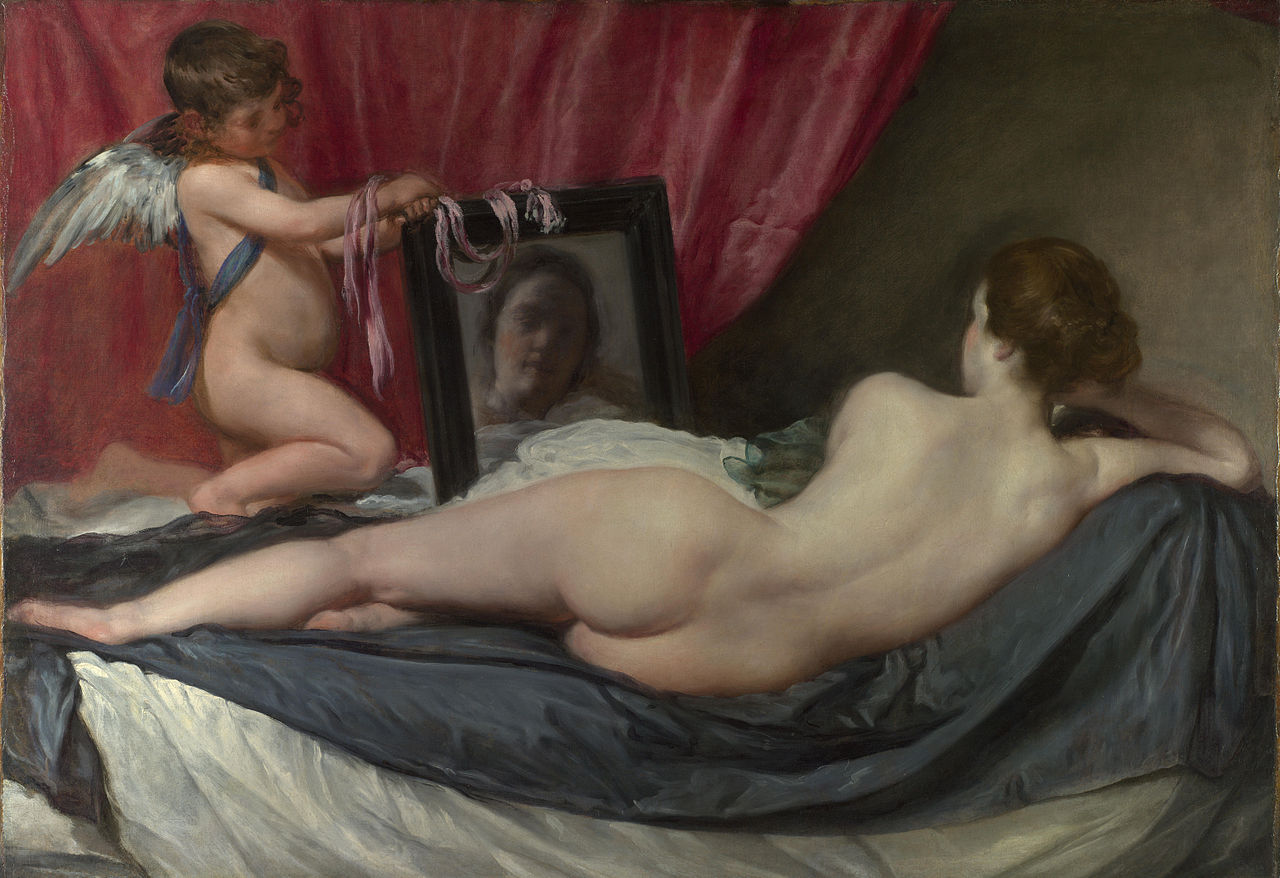
Diego Velazquez - The Rokeby Venus - The National Gallery London

Some of my favourites of his are the Rokeby Venus, The Spinners, Mars, God of War and the Three Musicians. He was admired greatly by Impressionist French painter Édouard Manet, who called him the “painter of painters”.

In addition to his royal portrait commissions, Velázquez was the king’s curator of the royal art collection in the 1640-50’s. He became known as a great connoisseur of European art and was responsible for the curation of works by Titian, Rubens and Raphael, which can still be seen in the Prado today.

Velázquez met Rubens during the Flemish master’s six month diplomatic trip to Madrid in 1628 and escorted him to El Escorial to view a collection of Titians. I can only surmise that they felt a mutual respect for each others talents!

Pablo Picasso, 58 recreations of Las Meninas.

Pablo Picasso, 58 recreations of Las Meninas.

Strangely his work only became known outside of Spain in the 19th century, but his influence on Western Art was considerable. Picasso recreated Las Meninas in 58 variations in 1957.  Salvador Dali and Francis Bacon both created works based on notable paintings by Velázquez. John Singer Sargent and Goya both referenced Las Meninas.

From Wikipedia:

Las Meninas has long been recognised as one of the most important paintings in Western art history. The Baroque painter Luca Giordano said that it represents the “theology of painting” and in 1827 president of the R.A. Sir Thomas Lawrence described the work in a letter to his successor David Wilkie as “the true philosophy of the art”. More recently, it has been described as “Velázquez’s supreme achievement, a highly self-conscious, calculated demonstration of what painting could achieve, and perhaps the most searching comment ever made on the possibilities of the easel painting”.

There is much information about the life and work of Velázquez, but for now I want to focus on the multi-layered visual information embedded in the astoundingly innovative Las Meninas, (The Maids of Honour).

This sizeable oil on canvas work measures 318 cm × 276 cm, and was painted only four years before Velázquez died at the age of 61 in 1660. If not quite his valediction, it is considered to be the apotheosis of his artistic achievement.

Las Meninas was painted in the ‘Pieza Principale’ of the apartments of the late Balthasar Charles’s in the palace of Alcázar, Madrid. After the death of Philip’s first child (by the deceased Queen Elisabeth), it was used as Velázquez’s studio.

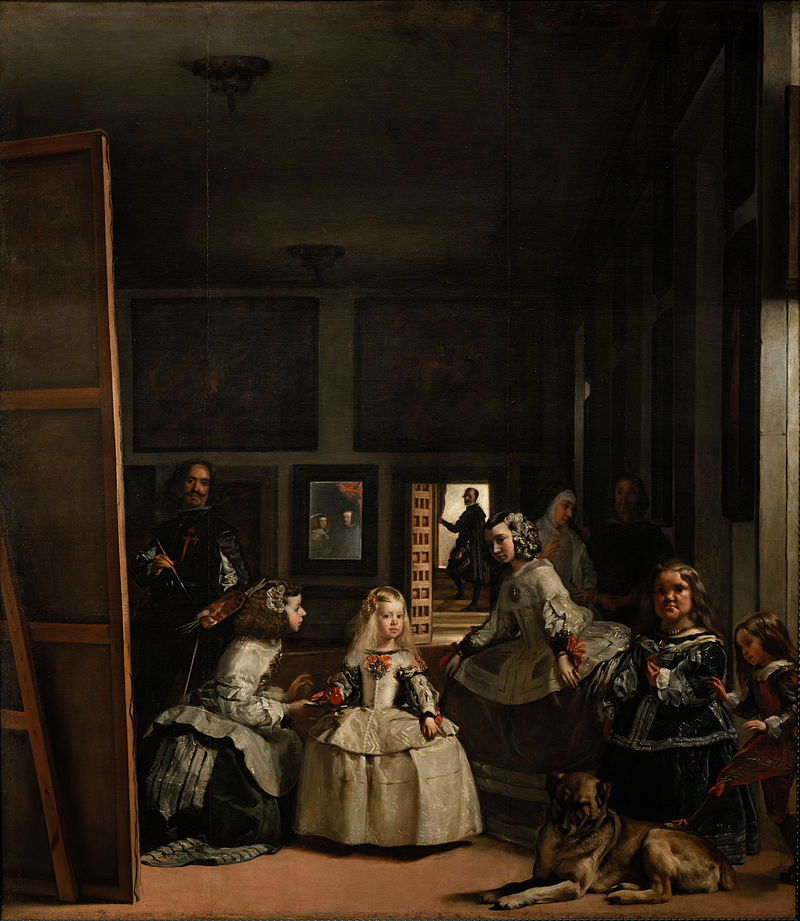
Diego_Velázquez - Las_Meninas

Who or what, is the real subject?

Upon first glance it could be thought that the subject matter is the only surviving child of Philip IV of Spain, a precocious looking Infanta Margarita Teresa. Either side of her are her two attentive ladies-in-waiting, one of whom appears to be offering her a small cup of cocoa. Incidentally, four hundred years ago the hot chocolate they drank contained mind-altering qualities!!

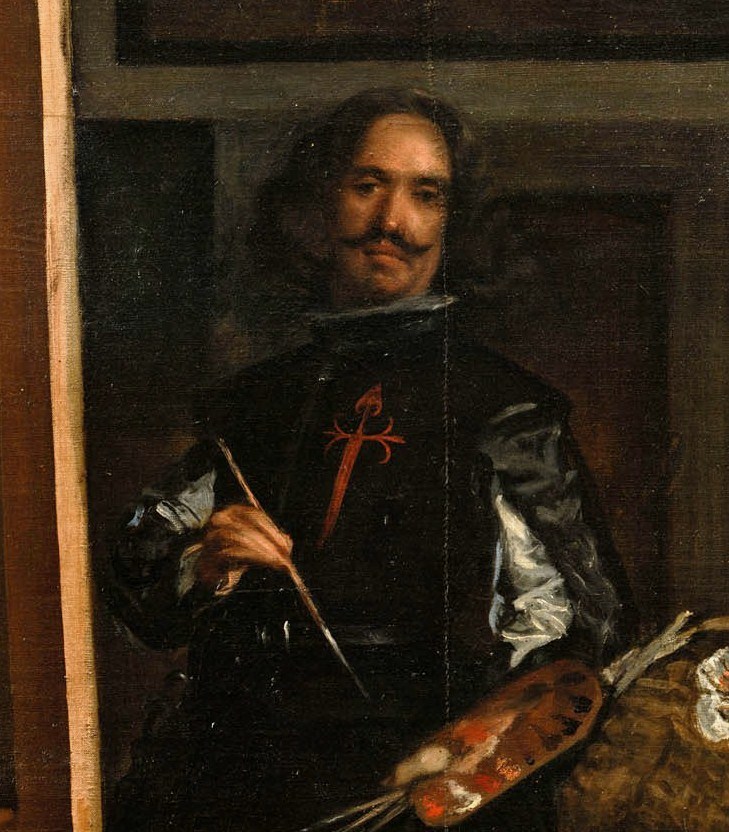
In her vicinity you can also see two dwarf court jesters, and behind them two courtiers (one of which is a nun), with the royal pooch obediently resting at their feet. The painter standing at the easel is Velázquez himself, (there could be no doubt about the origin of this masterpiece).

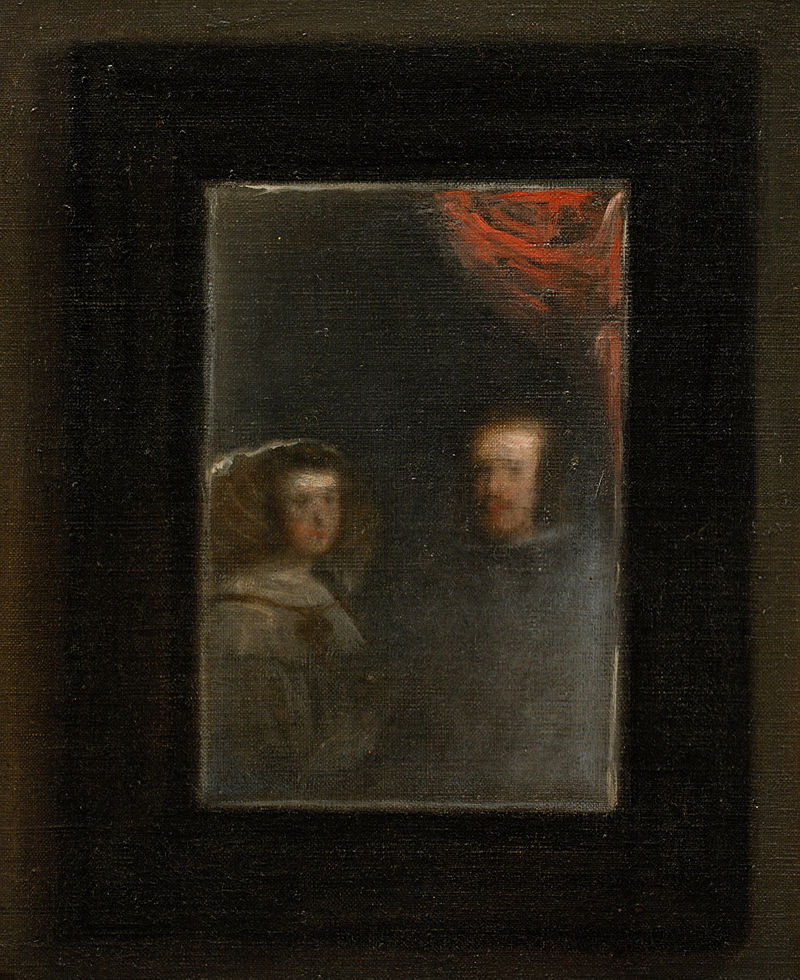
Then your eyes are drawn to the reflection of King Philip and Queen Mariana in the mirror at the back of the room. You wonder, are they visiting their daughter having her portrait painted, or is she visiting her parents having their picture painted, which is being reflected back to us from the tall canvas into the mirror? The imagery on the canvas he is painting can only be imagined.

Las Meninas - Mirror detail of King Philip IV of Spain and Queen Mariana

Las Meninas – Mirror detail of King Philip IV of Spain and Queen Mariana

It could be interpreted that the royal couple are standing precisely where we, as the viewers, are witnessing the scene from, which is endowed with natural light from the front right window. We are standing in the king and queen’s shoes…

The air in the large, but to my sense, oppressive space between the figures and the high ceiling above them is almost tangible.

The painting is considered to have many vanishing points, apparently coinciding on the shadowy figure visible through the open door, posing somewhat menacingly on the staircase…

The presence of the man in the doorway, (Don José Nieto Velázquez), seems to signal that the king and queen (having posed for their portrait), will soon be leaving the room, but perhaps there is a darker theme being introduced to the viewer here? He could be a visual representation of a deeper meaning: mortality and death.

The heavily muted, dark background (perhaps one of the huge paintings hanging on the back wall is by Rubens?) is contrasted sharply by the bright light emanating from behind the figure on the stairs revealed by the open doorway, which draws your gaze away from the people in the foreground, giving the perspective of distance, of perhaps a journey into the unknown.

It seems to me a complex portrayal of the painter (and his elevated status among the royal household), a kind of snapshot of their life journey witnessed from the canvas and on the canvas!

No wonder it has been so celebrated over the years by artists, historians and art lovers alike. If you want to see it in real life you’ll need to travel to the painting’s permanent home in the Museo del Prado in Madrid.

Velazquez was admitted into the Order of Santiago by royal decree in 1659, hence the red cross was added to his breast on the painting after the artist’s death.

For those in the UK with an interest there is also a smaller version of the painting (minus the royal reflection), preserved in the country house of Kingston Lacy in Dorset. Radiographs have shown it to be painted after the Madrid masterpiece. Some believe it could have been a copy by Velázquez’s student and son-in-law, Juan Bautista Martínez del Mazo (1612-1667).

The opening chapter of French philosopher Michael Foucault’s book, The Order of Things was devoted to an in-depth analysis of Las Meninas.

It seems somewhat sad to think that the most prominent figure in the painting, the young Infanta Margarita, was married off to her uncle Leopold I, Holy Roman Emperor in Vienna aged only 15, and by the time of her death in her early twenties she had endured 19 pregnancies, resulting in just four births, with only one of her babies surviving into adulthood.

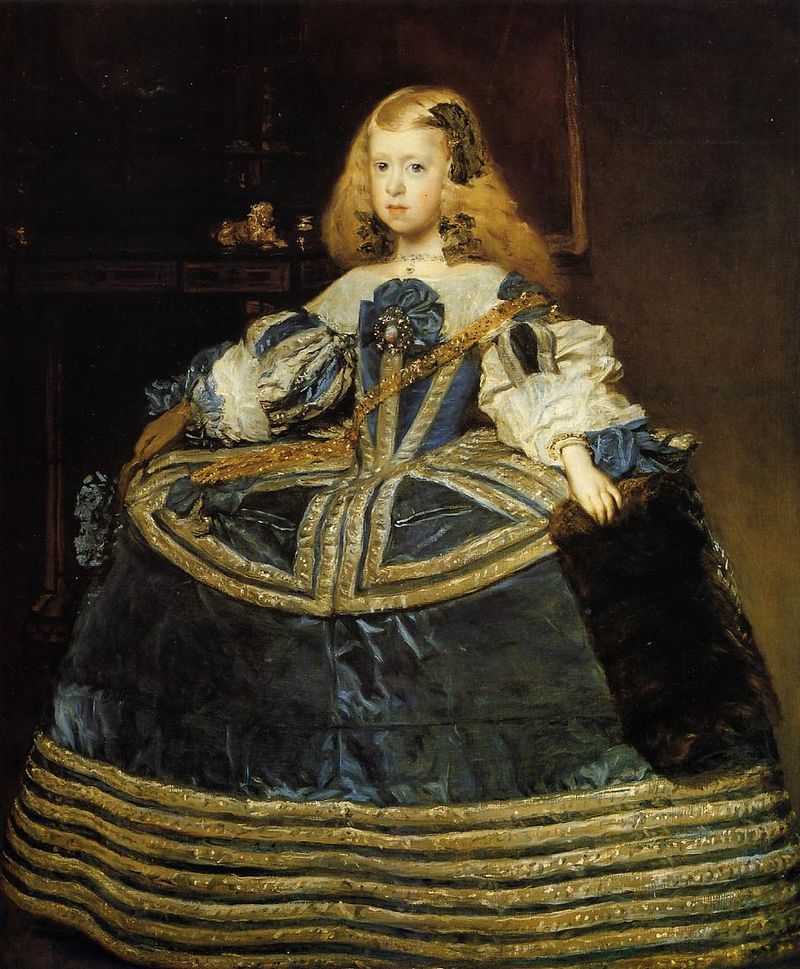
Velázquez - Infanta_Margarita aged 8 in a blue dress 1659

Growing up she was painted several times by Velázquez, probably the other most famous portrait is of her wearing a blue dress c. 1659 (now on display at the Kunsthistorisches Museum, Vienna.

Unlike its long gone painter and sitters, Las Meninas survived the Peninsula War, the Spanish Civil War, a precarious train journey back to Madrid and a fire that destroyed the palace in 1734. Luckily for us, monks rescued the scorched painting by throwing it out of the window! Sadly hundreds of paintings in the royal collection were lost in the disaster.

I’ll leave you with an interesting documentary about Diego Velázquez, his art and Las Meninas by the National Gallery: