“Joy, sorrow, tears, lamentation, laughter – to all these music gives voice, but in such a way that we are transported from the world of unrest to a world of peace, and see reality in a new way, as if we were sitting by a mountain lake and contemplating hills and woods and clouds in the tranquil and fathomless water.” ~ Albert Schweitzer
With my children and their friends running me around in circles this half-term I almost gave up on the idea of publishing a new blog post. But then I made a discovery, and I wanted to share it. By the way, if all you guys and gals out there already know about this gem do feel free to tell me…
I thought I knew all Bach’s violin concertos. I often play them when I practice. His Double Violin Concerto in D minor BWV 1043 is so well known, it seemed odd that he would have written a Triple Violin Concerto that is virtually unheard of.
However, the other day as I was browsing through YouTube that is exactly what I came across!
It was the 2nd movement being performed by Sir Yehudi Menuhin and David Oistrakh’s musical dynasty, (his son, Igor and grandson Valery), in Moscow. I was intrigued. It’s not in mainstream repertoire, or surely I would have heard of this piece before?
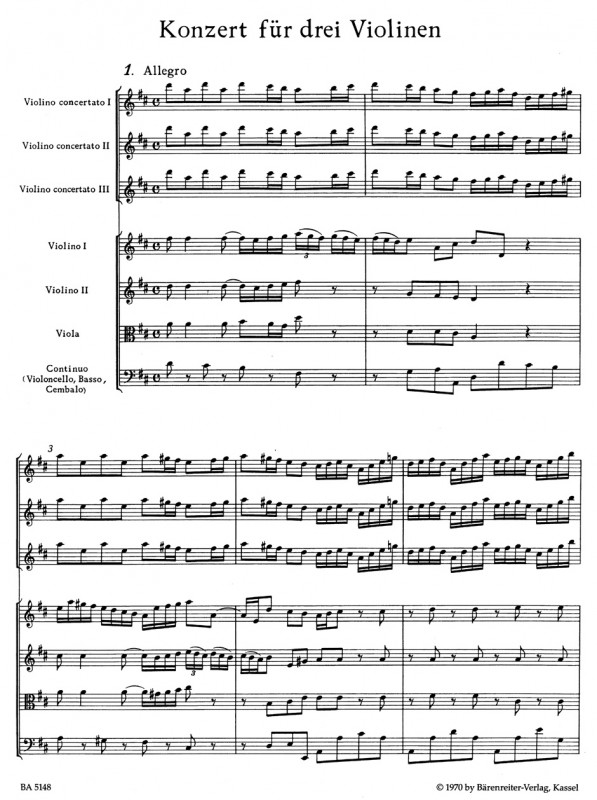
So I did a little digging, and unearthed the reconstructed Concerto for 3 Violins in D Major BWV 1064R. This wasn’t published as an original Bach violin concerto; it’s a reconstruction of the Concerto for 3 Harpsichords, strings and Continuo in C Major, BWV 1064.
Here’s where the uncertainty creeps in. Whether Bach used one of his own earlier (now lost) violin concertos or one composed by Vivaldi is unclear. But the point is, there actually was a violin concerto used as the basis for BWV1064, and the piece has been transcribed back to the violin in the key of D Major to give us that wonderful original sound.
Whilst it may not be as melodic and lyrical as Bach’s Double Violin Concerto, the Triple Concerto has a certain charm, and so as far as I’m concerned it’s a case of ‘better late than never’.
All of Bach’s harpsichord concertos (with the exception of the Brandenburg concerto) are thought to be arrangements made from earlier concertos for melodic instruments probably written in Köthen. In many cases, only the harpsichord version has survived.
Here is the Freiburger Barockorchester, on period instruments, performing the entire concerto:
The original published version for harpsichord with Hogwood, Moroney and Rousset:
I also really like it arranged for 3 pianos:
Again, it just goes to show how versatile and universal Bach’s music is that it suits so many different instruments. See my earlier post about the Chaconne for solo violin.
With a plethora of top violinists recording Bach, it’s hard to imagine that the early recordings of Bach’s violin music were made back in 1904, when Fritz Kreisler first performed the Prelude in E and ‘Air on the G String’ in Berlin. The Double Violin Concerto was recorded by Kreisler and Efram Zimbalist in January 1915, the first time a complete recording of a major work by Bach was made, and also the first time that two leading violinists played together in a recorded performance.
With such a large body of work it’s hardly surprising that Bach’s music continues to offer surprises, and I’d like to toast to many more to come.
I must scoot Bach to doing the housework now, humming as I go…
“No one can give a definition of the soul. But we know what it feels like. The soul is the sense of something higher than ourselves, something that stirs in us thoughts, hopes, and aspirations which go out to the world of goodness, truth and beauty. The soul is a burning desire to breathe in this world of light and never to lose it – to remain children of light.” ~ Albert Schweitzer
“The more we give love, the greater our capacity to do so.” ~ Dr. David R Hawkins
As Valentine’s Day is approaching, I thought I might as well jump on the love bandwagon!
I probably should have written this post in French; étant le vrai langage de l’amour.
In terms of the arts, nothing captures the many facets of love like music. Just as a single ray of light dances through the prisms of a diamond, casting a beautiful, ethereal spectrum; so can the notes of a captivating romance, passionate rhapsodie, reflective nocturne or a soulful sonata evoke certain emotional states in the listener. States that can place you into a poignant memory or an ardent fantasy, or the many moods in between.
And now for the scientific part:
A musical tone makes physical objects vibrate at its frequency, the phenomenon of sympathetic reverberation. A soprano breaks a wineglass with the right note as she makes unbending glass quiver along with her voice. Emotional tones in the brain establish a living harmony with the past in a similar way. The brain is not composed of string, and there are no oscillating fibers within the cranium. But in the nervous system, information echoes down the filaments that join harmonious neural networks. When an emotional chord is struck, it stirs to life past memories of the same feeling.
(A general Theory of Love)
Over to you Ludwig!
Now, us ladies love to be romanced (generally speaking), and I’m sure it’s true for most women that being desired by your sweetheart is somewhat of a potent aphrodisiac, and makes us every bit as enthusiastic about amatory pursuits as lovers, partners or husbands.
But there’s more than one type of love, although it’s usually the romantic and erotic type of love that society pays the most attention to. Even more so, at this time of year, thoughts turn to the intimate relationship between a man and a woman. Hall & Oates captured the sentiment in the lyrics of their song, Kiss On My List.
Come the 14th not everyone will be fortunate enough to be with a loving partner, and Valentine’s Day can be quite depressing if you believe your happiness solely rests on a romantic connection. It’s an endless commercial love-fest of adverts, romcoms, red roses and card sales. I would never berate a man for giving me roses, (quite the opposite), but the expectation it puts on people means the true meaning of love can get distorted and exploited on Valentine’s Day.
It’s as much about friendship, companionship, kindness, sharing, trusting and understanding as it is about pleasures of the flesh; although who wouldn’t enjoy a night of unbridled lovemaking with their sweetheart? Moving on swiftly…
Even without love, the pleasure part can be addictive. I’m sure the sexual exploits of Giacoma Casanova left a trail of devastated hearts in women across 18th century Europe. Perhaps he was the first celebrity womaniser?
Love, or the lack of, affects everyone. In 450 B.C., Hippocrates stated that emotions emanate from the brain. You and I are mammals, and as such we’re subject to limbic resonance and limbic regulation.
Love is, without doubt, the most powerful force on the planet. It can heal, sooth, excite, placate, reassure, create new life and put one into a state of ecstacy. However, those moments can be relatively short lived. For constant happiness to abide in your heart, you have to be able to extend love and forgiveness to yourself first.
The basis of all love is self-love. If you love and respect yourself, you will be able to pass on that energy to others. There’s nothing selfish or unhealthy about that. Self-loathing, guilt and repressed emotions are all blocks to giving and receiving such love.
“Immature love says: ‘I love you because I need you.’ Mature love says ‘I need you because I love you.” ~ Erich Fromm (The Art of Loving).
The immature love is a dependency. You love that person because of the way they make you feel, and when that feeling has gone you will feel bereft and perhaps then look for someone else who can provide those emotions. But the mature love means you love someone for who they are.
You are tender, kind and passionate, but do not depend on them for your own happiness. Instead, you treasure each moment with them, appreciating and respecting them for who they are, for their unique personality, talents, endearing qualities and flaws, wanting their happiness as much as your own.
That’s where the ‘variations’ come in. The basic ‘theme’ is the person you become by your lovingness towards your kin and the wider world, and with that comes the capacity to truly appreciate love in all its glorious forms: the sensual, the passionate, the platonic, the maternal, the highs, the lows and the middle ground.
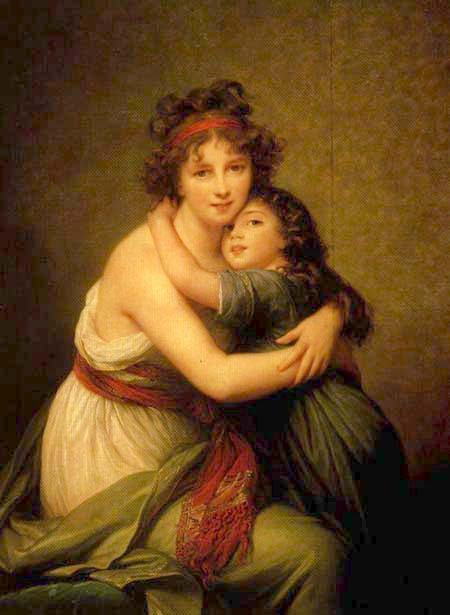
Maternal love is so strong that nothing can break it, (perhaps with the exception of mental illness). Whilst your offspring may drive you crazy and push you to the limit on occasion, you know that no matter what, you will always love and protect them. Part of that love is knowing when to nurture, and when to promote independence and foster self-reliance. The love of parents plays a huge role in a child’s self-esteem and development. Never criticize the person, only cite the action.
And just as the unwavering love children are shown promotes harmony in families, so can the loving behaviour we all show to each other, to friends, aquaintances and even to total strangers, promote a healthy global community.
To be able to suspend our judgements of others and love unconditionally is no easy task, but it comes from the standpoint of compassion and understanding. We are all at different points in our spiritual evolution.
I’ve long been a student of the late Dr. David R Hawkins, founder of the Institute for Advanced Spiritual Research, and author of many illuminating books. He also gave many brilliant lectures and interviews during his life. His book Power vs. Force totally changed my perspective on life (see Veritas Publishing).
He often cited instances where the caring and loving attitude of a doctor towards both the patient and their recovery would have a beneficial impact on their healing. An advocate of animals, he believed that the unconditional love shown by dogs to their human companions could add as much as 10 years to their life. Especially if that person was elderly, isolated and lonely.
“Love is misunderstood to be an emotion; actually, it is a state of awareness, a way of being in the world, a way of seeing oneself and others.” ~ David R. Hawkins
Here is a wonderful talk he gave on unconditional love:
There is so much mesmerising art and beautiful prose written about love, and that is what I will leave you with.
“I loved you first: but afterwards your love”
Poca favilla gran fiamma seconda. – Dante
Ogni altra cosa, ogni pensier va fore,
E sol ivi con voi rimansi amore. – Petrarca
I loved you first: but afterwards your love
Outsoaring mine, sang such a loftier song
As drowned the friendly cooings of my dove.
Which owes the other most? my love was long,
And yours one moment seemed to wax more strong;
I loved and guessed at you, you construed me
And loved me for what might or might not be –
Nay, weights and measures do us both a wrong.
For verily love knows not ‘mine’ or ‘thine;’
With separate ‘I’ and ‘thou’ free love has done,
For one is both and both are one in love:
Rich love knows nought of ‘thine that is not mine;’
Both have the strength and both the length thereof,
Both of us, of the love which makes us one.
Christina Rossetti
“Love one another, but make not a bond of love:
Let it rather be a moving sea between the shores of your souls.”
Kahlil Gibran, (The Prophet)
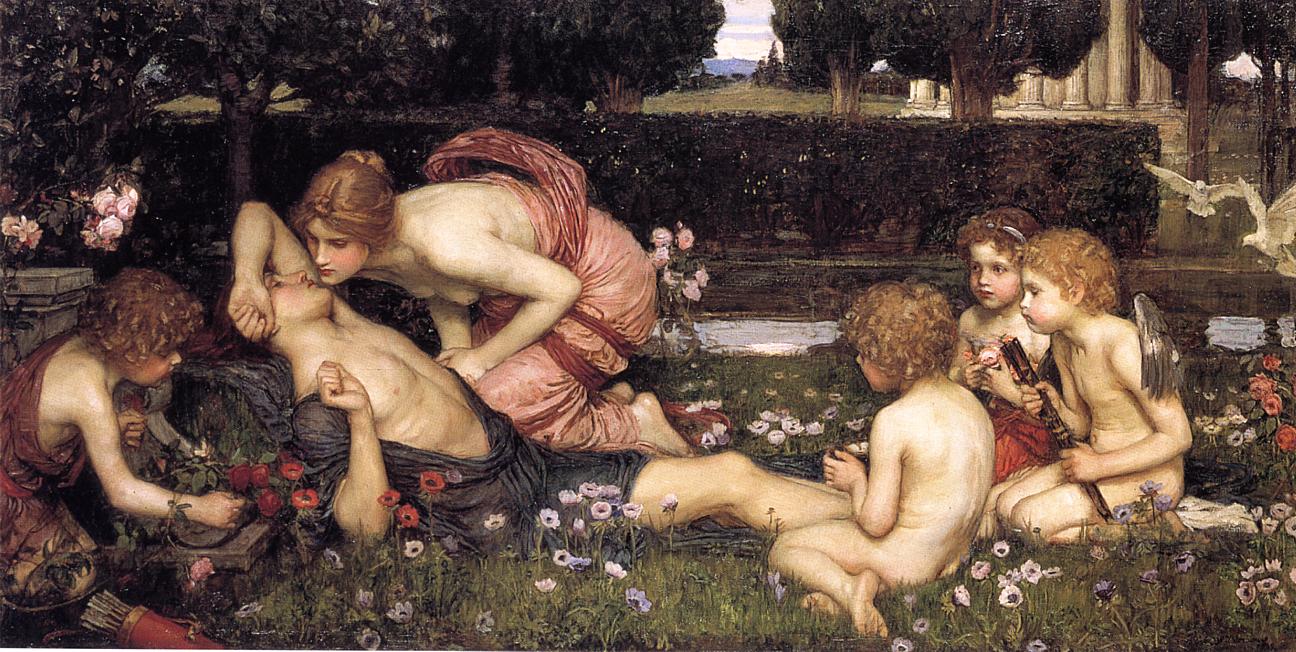
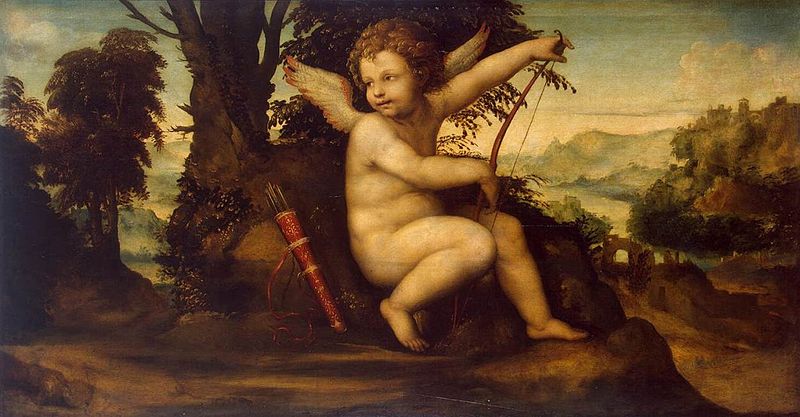
As for me, Cupid has pierced my heart, his arrow is well and truly lodged!
Cupid, draw back your bow… The dulcet tones of the ‘king of soul’ Sam Cooke:
Let me not to the marriage of true minds
Admit impediments. Love is not love
Which alters when it alteration finds,
Or bends with the remover to remove:
O no! it is an ever-fixed mark
That looks on tempests and is never shaken;
It is the star to every wandering bark,
Whose worth’s unknown, although his height be taken.
Love’s not Time’s fool, though rosy lips and cheeks
Within his bending sickle’s compass come:
Love alters not with his brief hours and weeks,
But bears it out even to the edge of doom.
If this be error and upon me proved,
I never writ, nor no man ever loved.
William Shakespeare (Sonnet 116)
Percy Bysshe Shelley – Love’s Philosophy:
C’est tous mes chéris, Je t’aime!
Thomas Tallis – If Ye Love Me:
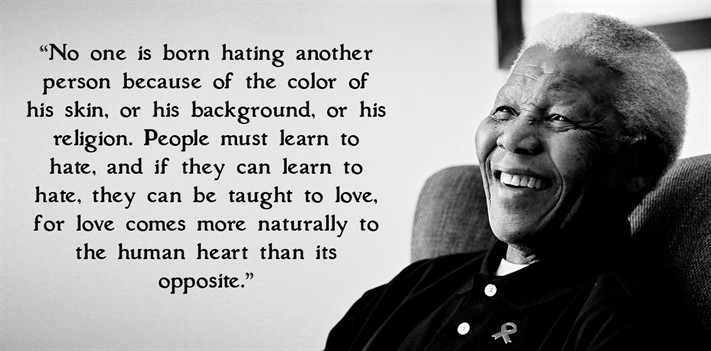
“When the power of love overcomes the love of power the world will know peace.” ~ Jimi Hendrix
“For me, time is the greatest mystery of all. The fact is that we’re dreaming all the time. That’s what really gets me. We have a fathomless lake of unconsciousness just beneath our skulls.” ~ Anthony Hopkins
Since the dawn of time humans have dreamt, and those dreams have a served a purpose, but are we any closer to figuring out what that purpose is?
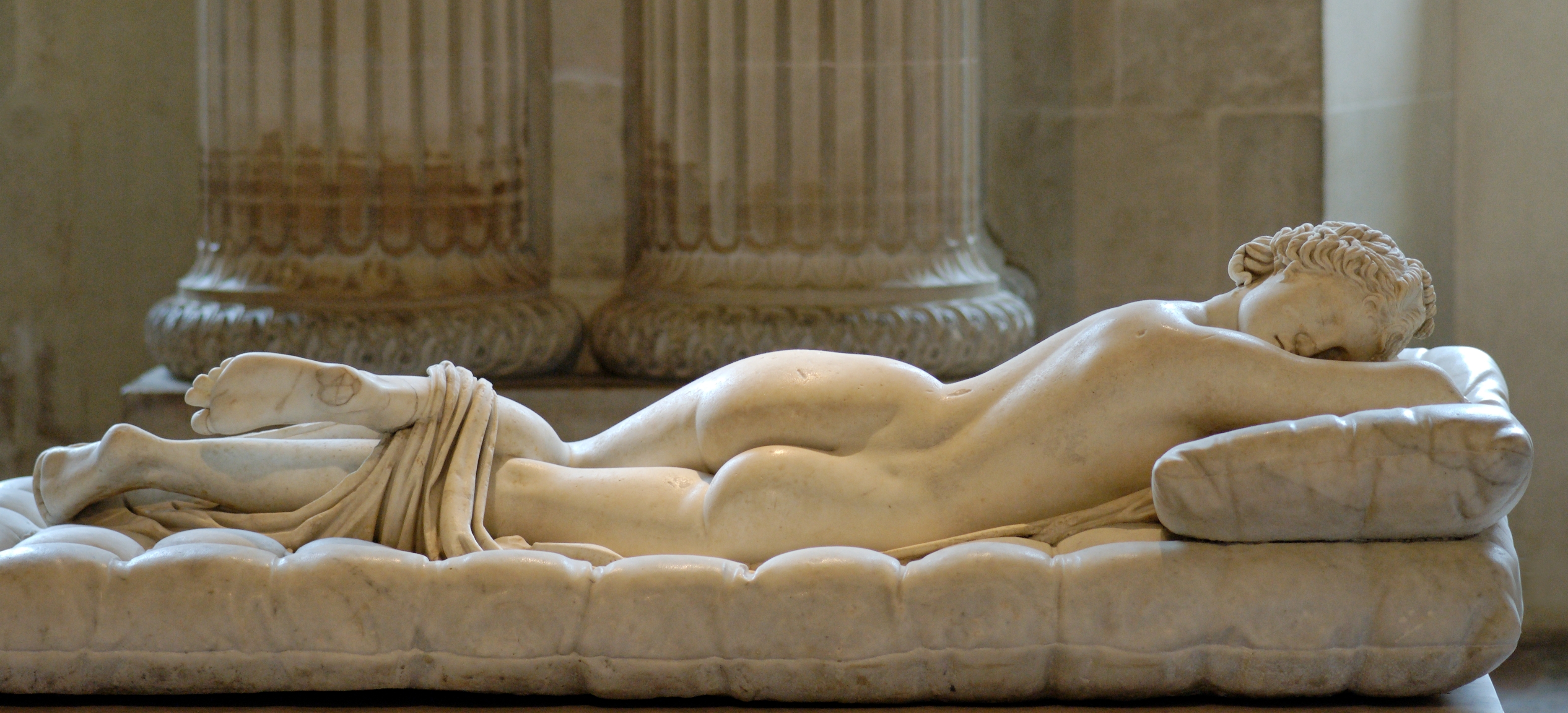
Sleeping Hermaphroditus, by Bernini c. 1620 (Louvre)
Have you ever woken up in a cold sweat, with your heart racing, gasping for breath, temporarily terrified that what you just went through in your sleep was real? Sometimes it can take a few seconds to realise that it was all a dream, albeit a rather vivid one.
I had one just like that just the other day. I might as well share it with you, it was quite strange!
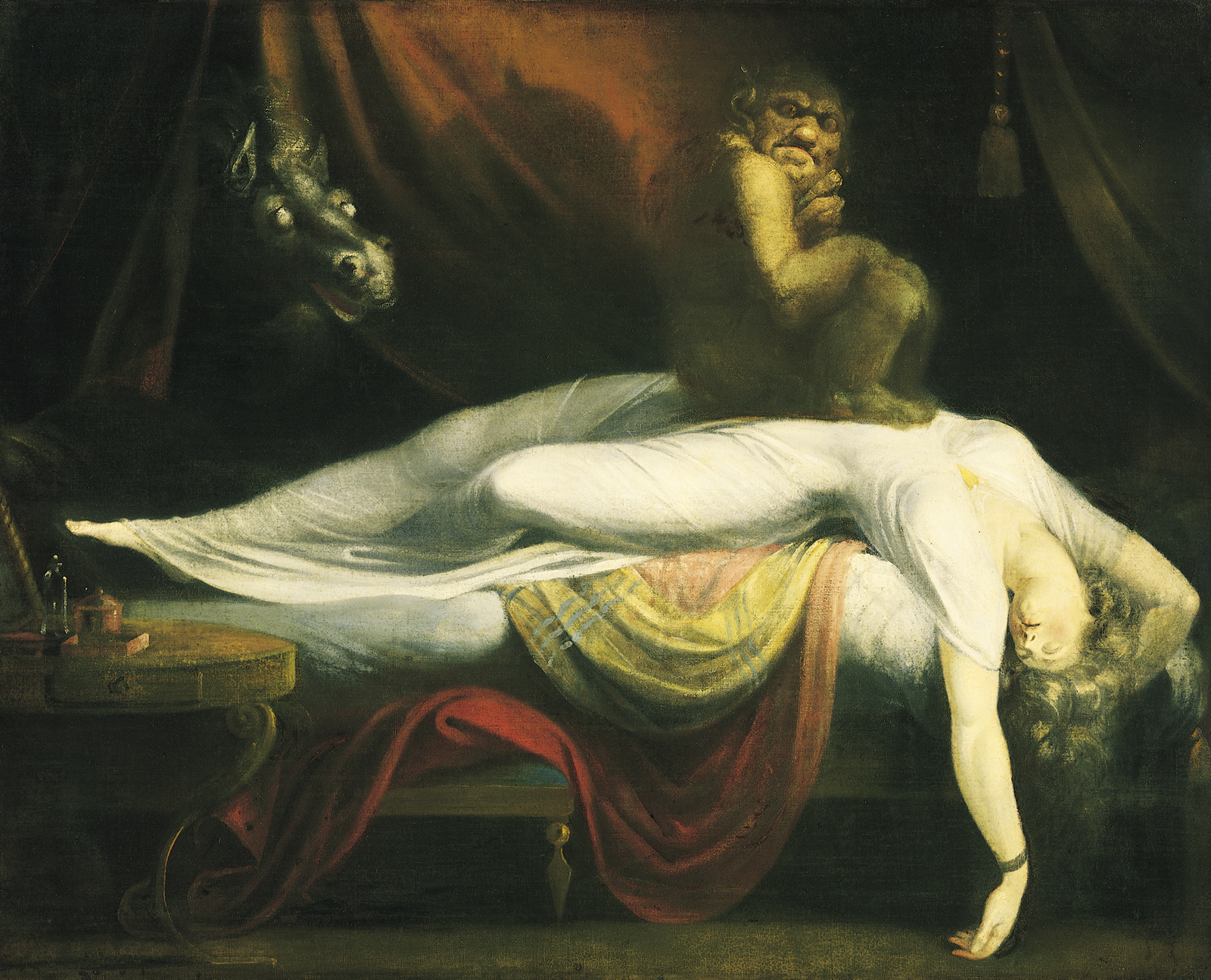
The Nightmare, by John Henry Fuseli
I was working in some sort of complex, (I couldn’t tell you what I was doing, but it was scientific), and then there was a commotion, and we looked out the window to see a rocket coming towards us. I saw the rocket hit the ground not far from us, and the explosion rapidly engulfed us. I didn’t feel the heat, but soon it became quite obvious that instead of waking up, as I had just perished in a fireball, that I was now a spirit. Somehow my spirit was asking questions. What just happened and why? I began to investigate the causes of the crash.
I was only aware that I was still in the land of the living when Ruby climbed into bed beside me, warming her cold feet on me, cuddling up to me, saying, “Mummy, I had a bad dream.” Comforting her helped me to forget the horror of my own nightmare.
I began to wonder what had transpired in my life to dream of such bizarre circumstances. If I took Freud’s theory of ‘wish fulfillment’ literally, I might arrive at the conclusion that I have a death wish!
What I find amazing is that our minds can create such real scenarios that we live out in our sleep, so much so, that even after we become fully conscious those mental images can still haunt us. Equally strange that some dreams we forget almost instantly; and others make us reflect…
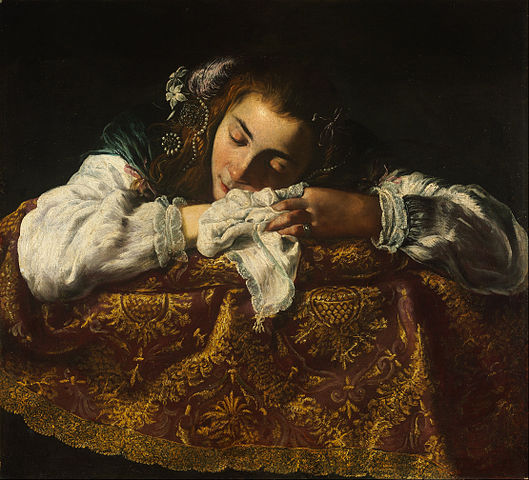
Sleeping Girl, by Domenico Fetti
It is surely a healthy release for our subconscious minds to process all the emotions and events going on in our lives, and interpret those sensations and thoughts into a series of seemingly unrelated mental pictures that, if analysed, could tell us about what is going on deep in our psyche. I find it fascinating that our ‘inner’ eye is every bit as detailed and accurate in painting pictures on the canvas of our minds, as are our biological eyes at capturing so called ‘reality’.
It seems to me that dreaming is our way of integrating our thoughts and beliefs that have been repressed or that are transparent to our conscious mind. The illumination of our experiences, hopes, and fears into messages that our conscious mind can make sense of. Shining a light, (even if it is a blurry one), into the darkness.
Perhaps we are not meant to fully understand our dreams. Perhaps it is enough that we acknowledge them, and honour them, by paying more attention to what has been unfolding in our lives, thus making us more aware.
BBC documentary on dream interpretation:
When I was a child I used to have regular recurrent dreams, one of which was flying over fields. Maybe I watched Peter Pan once too often! Luckily, the muscle paralysis in REM means we’re unable to actually physically live out our dreams. But I wonder, how do we sleep walk? That phenomena has long interested me.
Occasionally I find myself lucid dreaming, and during one such episode I had an out of body experience. I can’t remember the dream, only that I was awake in the dream and I was aware of what I was creating as I went along. I was on the verge of drifting back into sleep and I felt myself sinking into a super relaxed state when the OBE occurred. It was an incredibly profound experience, one that I think about often. It lessened my fear of death significantly.
Both Sigmund Freud and Carl Jung studied and analysed dreams, with Freud publishing his findings in his book The Interpretation of Dreams. Jung rejected his theory that dreams were meant to be secretive, and became immersed in his mythic world of archetypes and our universal experiences of the Collective Unconscious. For serious dreamscape navigators, there are two books that might be of interest by Jung: his autobiography, Memories, Dreams and Reflections, and his personal dream diary, The Red Book.
Carl Jung – The Wisdom of the Dream (A world of Dreams):
From Wikipedia:
Jung stressed that the dream was not merely a devious puzzle invented by the unconscious to be deciphered, so that the true causal factors behind it may be elicited. Dreams were not to serve as lie detectors, with which to reveal the insincerity behind conscious thought processes. Dreams, like the unconscious, had their own language. As representations of the unconscious, dream images have their own primacy and mechanics.
Jung believed that dreams may contain ineluctable truths, philosophical pronouncements, illusions, wild fantasies, memories, plans, irrational experiences and even telepathic visions. Just as the psyche has a diurnal side which we experience as conscious life, it has an unconscious nocturnal side which we apprehend as dreamlike fantasy. Jung would argue that just as we do not doubt the importance of our conscious experience, then we ought not to second guess the value of our unconscious lives.
The film A Dangerous Method follows the story of Freud, Jung and his disturbed young Russian patient, Sabina Spielrein. There is a great scene in the film where Freud and Jung are analysing one of Jung’s dreams:
I would sign off by saying, “Sweet dreams,” but maybe it would be better to say, “dream big, dream of your future, and trust that your present dreams are somehow leading you there…”
“All that we see or seem is but a dream within a dream.” ~ Edgar Allan Poe
“The passions, whether violent or not, should never be so expressed as to reach the point of causing disgust; and music, even in situations of the greatest horror, should never be painful to the ear but should flatter and charm it, and thereby always remain music.” ~ Wolfgang Amadeus Mozart from The Journal of Eugene Delacroix.
The name ‘Mozart’ conjures up an image of a divine genius, a demigod of music, unsurpassed child prodigy, composing savant with steam coming off his quill, operatic icon, inquisitive about the world and the mysteries of life, with an unquenchable thirst for knowledge and creative output. Not to mention an ardent admirer of women (especially ones who could sing), and who possessed a desire for fun and the simple pleasures of drinking and social discourse. An individual who was little in stature but large in intellect, who loved life and seemed to live it Allegro Con Brio.
At least, it does for me…
His fame has spanned centuries and his name is known by just about every human being on the planet. Whatever your impressions of this giant of classical music are, one thing’s for sure; his miraculous outweighed his mundane. By the time of his death in 1791 at the age of 35, he had written over a staggering six hundred compositions, in the form of sonatas, symphonies, concertos, chamber pieces, operas and choral music.
Revered by composers that followed, and most likely envied by his contemporaries (cue Salieri), Johannes Chrysostomus Wolfgangus Theophilus Mozart has probably touched more souls than any other composer in the history of music. And I think he was able to do that because of the mundane.
His mind was in another sphere, but his physical body was ordinary, and shared the same mundane functions as the rest of us mortals. He experienced the everyday emotions of life that we all do: happiness, sadness, love, hate, desire, jealousy, pride, excitement, ambition, despair, longing, and well, the list goes on.
Because the miraculous isn’t possible without the mundane…
Therein lay the very substance for transmutation into the sublime, his inspiration of what it means to be human in musical form: collections of notes and pitches, silence and resonance, arranged for different instruments in different styles, something for everyone, and that anyone can relate to today, 224 years after his death.
His star shone bright (I’m talking supernova), and burned rapidly, but luckily for us Mozart was a prodigious and prolific composer, and despite his often challenging circumstances he created a stunning legacy of music for the world to enjoy.
His father Leopold would have been proud. His early tuition for Wolferl and Nannerl on the violin, clavichord and in classical composition (Mozart wrote his first sonata at the age of 5), along with their childhood travels across Europe, their family performances in front of royalty and the aristocracy, would eventually pay dividends far beyond his fatherly comprehension! Now his music is in space, courtesy of NASA.
He even has his own scientific phenomena: The Mozart Effect. Play Mozart to your children, and even better, if they can learn to play him.
A list of Mozart’s musical compositions; which were numbered and classified in chronological order by Ludwig von Köchel as either ‘K’ or ‘KV’ in the Köchel catalogue.
A Few Mozart Facts:
His favourite string instrument was the viola, and he wrote the Sinfonia Concertante as a beautiful conversation between the violin and the viola. The andante from that music is one of the most moving pieces of music I’ve ever heard.
In the spring of 1770 whilst in Italy with his father, the Pope conferred on Mozart the Order of the Golden Spur. It was in Italy that he met and became friends with the violinist and British prodigy Thomas Linley (who also died tragically young).
Baron Gottfried van Swieten, who was head of the Imperial Library of some 300,000 volumes in Vienna, granted Mozart access to works by JS and CPE Bach and Handel. Thus Mozart learnt to graft ‘counterpoint’ onto sonata form and find his own unique style which wasn’t popular at the time.
Wolferl and Constanze had six babies, but only two of them survived into adulthood: Karl Thomas, born in 1784, and Franz Xaver Wolfgang in 1791, just before Mozart died.
Beethoven thought that Mozart had an affair with one of his (Mozart’s) pupils and had also borrowed money from her husband. Even more bizarrely they were neighbours to the Mozarts, and the day after Mozart’s death the husband committed suicide after attacking his wife, who was five months pregnant, slashing her across the face, neck, shoulders and arms with a knife. It is thought the woman and baby survived the attack.
Mozart became a Freemason in 1783, at the time there were around thirteen ‘lodges’ in Vienna with 700 members, around half of which were nobles.
His opera Don Giovanni was popular in Prague, but the performance in Vienna was a flop.
In the year of his death it’s estimated that Mozart’s income was between 5,000 and 6,000 florins.
At the time of Mozart’s death only one fifth of his compositions were in print, whereas by the 1820’s nearly two thirds were.
Constanze claimed that Mozart thought he had been poisoned with Acqua Toffana, and that he was writing the Requiem for himself.
There’s a lot of information and myth about Mozart, and I could go on all day, but instead, I recommend watching the fascinating and fabulous BBC documentary: The Genius of Mozart.
Part 1 – Miracle of Nature:
Part 2 – A Passion for the Stage:
Part 3 – The First Romantic:
If you are on Twitter and you enjoy Mozart’s music why not join the celebration of his birth in the 6th annual #MozartChat on Tuesday 27th January, conceived and run by pianist and writer @waynemcevilly. Check out his website and piano masterworks for children.
Until my younger son recently developed OCD (Obsessive Compulsive Disorder), I hadn’t realised just how prevalent it seems to be. I discovered some very well-known people (past and present) suffered with it, including one of my all-time heroes.
William was always prone to worry, and had certain proclivities towards cleanliness that his older brother didn’t! But the onset of adolescence seemed to take it to a whole new level.
I think there were several factors responsible for his increased ‘sensitivity’, and an overall increase in anxiety was definitely one of them. He continues to work hard at school, and so far his grades are up at grammar school level, but he worries about his homework and his work in general.
On a personal level he seemed suddenly unsure of himself. Growing up he’s mostly been a confident and self-assured boy, but lately he started asking me if I still loved him. He seemed to need extra reassurance. I was happy to give him this, but it didn’t appear to quell his anxiety.
William was just the sweetest, kindest, affectionate and most lovable boy until his hormones kicked-in. Now I have to endure a know-it-all attitude, frequent rants, his being argumentative and confrontational with me and his siblings, mood swings, and on top of his typical teenage behaviour there is a debilitating voice in his head – his OCD; which undoubtedly adds extra strain to family life.
His appetite seemed to diminish, foods he liked previously were assigned to the ‘rank list’, and suddenly he started going a whole day at school not eating any of the restaurant food available. He couldn’t sit down without first putting an item of clothing on any seat and he had to have two showers a day. His hand washing became so bad his skin got really sore and cracked, and he developed an aversion to pretty much every smell in the universe! At one point he would only eat crisps with a fork!
After a visit to his GP (who made a referral), and a lengthy wait, he was admitted to CAMHS (Child and Adolescent Mental Health Services), part of the NHS that deals specifically with this age group, to have some CBT (Cognitive Behavioural Therapy). Looking round the waiting room at the tired and apprehensive faces of the other parents I took comfort from knowing that I wasn’t the only one with teenage offspring going through some kind of melt-down.
CAMHS has been a Godsend for us, and I feel that William has made some good progress. Whilst there is still work to do, his therapist, Sue, has really helped him to understand that he has the power to kick OCD’s butt.
I thought that sharing the generic information and tips she has given to William would be helpful for other parents and their children who may be going through similar trials and tribulations…
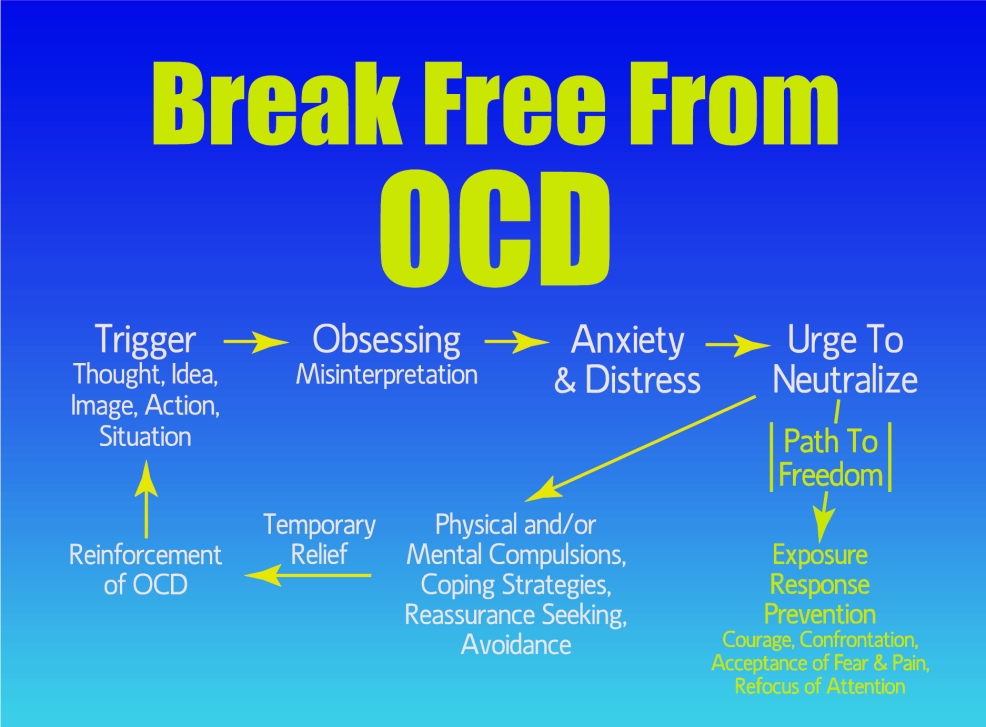
On his first session they talked about the relationship between his thoughts and behaviour. He was asked to focus in on the different emotions and sensations that he experienced, and he wrote them in a pie chart relative to what he was feeling. Sue then drew a couple of quirky pictures to illustrate to William how his thoughts created his feelings, and how they, in turn contributed to different sensations in his body, which then had a direct impact on his behaviour.
She drew him an ABC of thoughts: Activity – Belief – Consequence
She asked him to consider:
“How helpful is my thought?”
“What evidence do I have to support my thought?”
“What evidence do I have to disprove my thought?”
“What would be a more helpful thought?”
“What’s good about this thought?”
“What’s bad about this thought?”
She then mapped his reactions to OCD to illustrate how the OCD wins, how he wins, and what happens at the intersection between the two.
In later sessions he worked through an ERP programme (Exposure and Response Prevention), which is laid out according to the individual’s specific circumstances, where the activities and situations that cause the compulsions are deliberately undertaken.
At first, William was asked to participate in the actions that caused him the least amount of stress so that he could expose himself to the anxiety for short periods of time, gradually increasing the time and severity level of his activities. Sue drew a graph, and explained that his stress would always be high if he let his OCD rule him, and that to sit with the discomfort for a while would gradually lessen his overall anxiety around those activities, providing he made the effort to do the tasks that upset him.
“Exposure and Response Prevention (E&RP) encourages participants to expose themselves to their obsessions (or to situations that will bring on the obsessions), while they prevent themselves from using compulsions to get rid of the resulting anxiety.” ~ Fred Penzel Ph. D.
Over the weeks that followed Will worked on the strategies that were set specifically for him, and he began to see success. He gained confidence from the lesser tasks, so that he is now tackling the situations that he thought he never would be able to deal with.
22 Things only people with OCD will understand: Buzzfeed
My eldest son, Max (now 17 and towering over me), still has a few issues to deal with, but I feel we navigated his teen years through some scary storms into relatively calm waters. We have the odd squall, but on the whole he’s much happier. He also had a period of visiting CAMHS for different reasons, and they were instrumental in diagnosing his high functioning Autism. It also helped me enormously; mainly how to be a better parent to him, and I learnt not to take it personally when his lack of compassion or ‘mind blindness’ affected either me or the family.
I was dismayed to read in The Times last week that more cuts have been made to services directly affecting teenage mental health.
Modern society seems to be taking its toll on our youngsters, with increasing cases of depression, self-harm, eating disorders, mental disorders and in some cases suicide. Government cuts to CAMHS are indefensible. Our youngsters need this service! The implications for society are dire if this vital service is diminished.
I am bracing myself for the next teenage era with my daughters, but thankfully I have a few years yet before I have to deal with that dreaded phase. My challenge before then will be to help shore up their self-esteem, confidence and our relationships so that even rough seas won’t be able to destroy the safe harbour we have built, or, at least that’s the idea…
Now it’s time to inject some humour!
I watched the ‘Kevin’ sketches again recently to have a laugh and reassure myself that we’d all get through it, even if I did have a few more grey hairs to show for it!
“When you change the way you look at things, the things you look at change.” ~ Dr. Wayne Dyer
“The important thing is to strive towards a goal which is not immediately visible. That goal is not the concern of the mind, but of the spirit.” ~ Antoine de Saint-Exupéry
The ancient science of Numerology, which originated in Babylon and Egypt, was also studied thousands of years ago in China, India, Rome, Japan and Greece. It was in ancient Greece where a certain Greek Philosopher and Mathematician, Pythagoras, felt that the entire universe could be expressed through numbers, and his theories expanded Numerology (so that he became known as the father of Numerology).
In modern Numerology 2015 is an 8 Universal Year, (calculated by adding the digits of the year together). The number 8 is said to represent infinite abundance, which of course could affect many different areas of our lives.
Let’s hope we can all harness this cosmic power moving forward…
Having done some soul searching, decide your definite major purpose.
There are nine advantages to this:
You start to notice resources and develop the possible qualities needed to achieve your purpose.
Specialise – attract the knowledge you need. This gives you focus.
Budget your time and money. You don’t waste precious resources.
It alerts you to possibilities you may have missed before, when your radar is honed.
You make quicker decisions.
You attract help. When you’re on a mission people will want to help you.
Experience of the 12 great riches mentioned in part 1.
Develop faith. Not so much in the religious sense, but in yourself.
Develop success consciousness.
It is recommended to make goal statements. These should be positive, specific and with a deadline. Ideally they should fall under the categories of what, why and how. They should also be influence-able, i.e. under your control. Decide the price you’ll pay, know how you are going to do it, and what you’ll learn and do. Read it several times a day, and memorise it.
Outcome Acting & Thinking:
Model yourself on other people who have done what you want to do. Study not just what they did, but if possible what they believed and their values. What were they focusing on? If you can meet such people, many successful people are prepared to help those with a dream. You can also learn a lot from books and people online. To some extent you will go through trial and error to gain wisdom.
Working backwards is helpful. First you look at the big picture, and like a puzzle gather and fit together the pieces you need to achieve to reach your goal. It’s common sense to break it down into doable steps.
Remember to ask the magic question if you hit a brick wall:
“How can I____________________?”
Fill in the blank with whatever it is you need to know. It’s amazing how the answer will come to you. It could be in the form of meeting someone influential or knowledgeable in the area you’re interested in. You might see an article, hear a radio interview, read a book etc. Somehow, the universe will answer you.
It’s worth noting that without awareness thoughts and events happen on auto-pilot, according to our early programming.
Thinking:
Align your beliefs with your goals for the year. Watch out for your un-resourceful or self-sabotaging beliefs.
Values provide a source of motivation.
Filters allow us to let in the information that you need to reach your goal.
Create the big picture and then chunk it down into manageable steps and actions, so that you don’t lose heart or become overwhelmed.
Look at your method of making good and fast decisions.
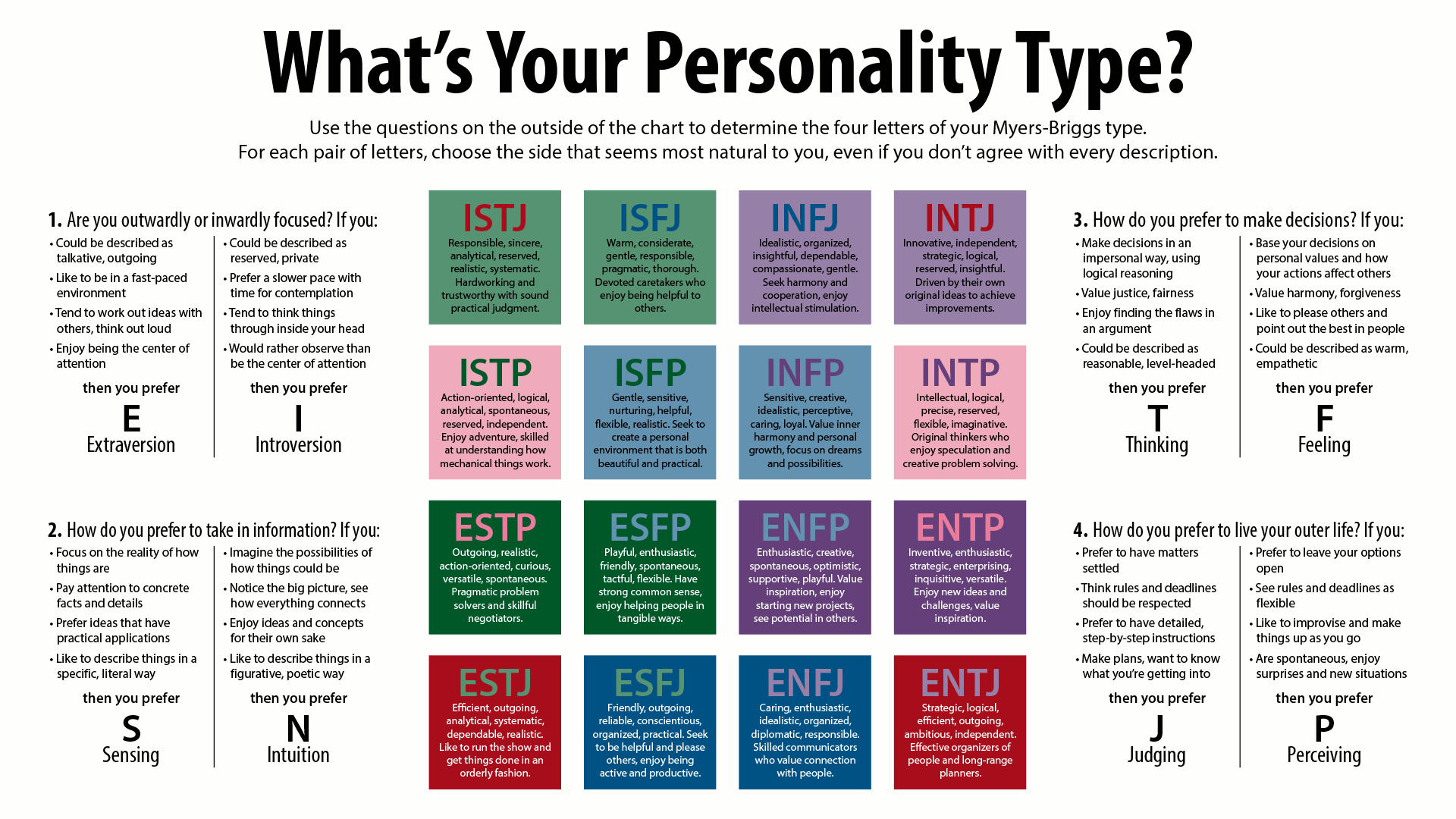
You might find it useful to be aware of your psychological preferences. Are you extroverted or introverted? Sensing or intuitive? Thinking or feeling? Judging or perceiving? Why not take the Myers Briggs Test based on Jung’s writings in his book Psychological Types.
Understand your internal representations and how they steer your actions.
We are all bound to hit some rocks on the road to success. Maybe even a mountain or two. There’s no avoiding it. I’ve found it helpful at such times to remind myself of Napoleon Hill’s statement that every adversity carries with it the seed of an equivalent or greater benefit. It’s okay to feel temporarily discouraged or bad about it, but the most important thing to do is to evaluate the adversity and list its advantages.
Germinate the seed…
Shakespeare so often has the right words and wisdom for every occasion:
There is a tide in the affairs of men,
Which, taken at the flood, leads on to fortune;
Omitted, all the voyage of their life
Is bound in shallows and in miseries. ~ Julius Caesar 4.3.217-20, Brutus to Cassius
If we go the extra mile we will gain more satisfaction, make ourselves indispensable, increase our personal initiative, develop self-reliance and courage, integrity and eliminate procrastination. The qualities of all successful people.
Good luck! By that I mean: Labouring Under Correct Knowledge
“You are never too old to set another goal or to dream a new dream.” ~ C.S. Lewis
“Whatever the mind of man can conceive and believe, it can achieve.” ~ Napoleon Hill
It’s a new year, and we’re naturally focused on what we might do differently or better than last year. Those well-meaning new year resolutions to exercise more, give up smoking, and all manner of ‘should dos’ get attention for maybe a couple of months before they fall by the wayside; even if we’re super determined. Life has a way of testing us to the limit!
To me, the term ‘resolutions’ sets us up for failure before we’ve even begun. It sounds too much like iron clad will-power is required. There’s no fun or adventure and excitement in it. It sort of implies that we’ll need to be as serious as the United Nations are when they publish a Security Council statement of will.
Some lofty intention that we don’t really believe is attainable, eating away at our motivation for sustained action. We certainly do need intention and resolve to achieve our goals and dreams, but that alone won’t propel us to the heights of achievement.
In this and the next post I hope to break down the components of how to turn a few ideas on your 2015 resolutions list into a way of life: a step by step approach to create habits so ingrained that it wouldn’t occur to you not to behave in a way that takes you closer to your desired outcomes; so that when 2016 rolls around you can knock back the champagne knowing you did everything in your power to live the life of your dreams.
Every year is a stepping stone toward manifesting the full potential of your life.
It’s an ambitious task I know, but I wanted my first post of 2015 to be as meaningful as possible…
Perhaps we should start with questions.
Why create something?
For some it’s the joy of creating, but at the end of the day, we all need to survive. We all want stuff. That’s okay. For others, the challenge is the key. If you set yourself a challenge that’s just far enough away to motivate and stretch you, just a little more than you thought you could do, but not so far away that it’s frustrating and seemingly impossible, who knows what your life could look like in the process of striving for that goal. The point is it has to be important and meaningful to you.
The dictionary definition of success is: the favourable or prosperous termination of attempts or endeavours; the accomplishment of one’s goals.
Napoleon Hill studied the most successful people in America over a period of twenty years, and at the suggestion of billionaire businessman Andrew Carnegie, he distilled this collective knowledge in his 1937 best-selling book: Think and Grow Rich.
In it, he lists the 12 Great Riches of Life:
PMA – Positive Mental Attitude
Sound physical health
Harmony in human relationships
Freedom from fear
Hope of achievement, e.g. setting yourself challenges, which gives you a zest for life
Capacity for faith
Sharing your blessings with others
Having a labour of love
Have an open mind on all subjects
Self-discipline
Understand people
Financial security
Napoleon Hill’s words of wisdom from the great man himself:
Do you know what you want?
Some of us have been told as children that we shouldn’t want anything, and in other cases these decisions were made for us. Some of us may have decided that what we want is not possible anyway. Just deciding this one thing could be the most important step you ever take.
It’s important to have that key ingredient of awareness, and ask: what are my beliefs around what I want? Beliefs are self-fulfilling prophecies that can either help us or hinder us in our quest.
The next thing to decide is the price. What are you willing to do, or to give of yourself to achieve your goals? The price must be paid in full (even though it’s January there’s no discounting allowed, sorry!)
Six Step Formula:
Know where you are – this is taking stock of your situation. What do I know or not know? What resources are available to me?
Know where you want to be, and be very specific.
Take action. Doing something will lead to learning and to further actions. You may not know every action you should take, but an elephant isn’t eaten whole (if you excuse the example), just act the best way you can.
Evaluate the action. What worked? How can I tweak it?
Refine the action. Continue to act, evaluate and you will attract the people and situations that will help you.
I must away…until part 2.
“If you cannot do great things, do small things in a great way. ~ Napoleon Hill
“I will honour Christmas in my heart, and try to keep it all the year.” ~ Charles Dickens
Just a short post from me today, (and my last of the year). I can hear your “phews”! I am ensconced in Christmas preparations and as things stand at the moment, Santa might well break his neck trying to make his way into my daughters’ bedroom…
Even a burglar would have a challenge making that much mess!
As is the case with Christmas crackers, you normally get a bright but flimsy hat, a corny joke and a completely useless plastic gift, (with the odd surprise), but they are quite fun to pull on when you are completely stuffed and happily inebriated!
I’d like to thank everyone who has spent their precious time reading any of my posts, and to wish you all a very Merry Christmas and a Happy New Year!
I know I say this every year, but it feels like 2014 has gone by in a flash. My kids are that bit taller, savvier, and generally more mature. Funnily enough, they haven’t yet grown out of their adoration of Father Christmas!
I, on the other hand, feel older and not much wiser, with a rather depleted bank account! Luckily, monetary measures are not the only way to evaluate a year. It has been a tough one for me, but it hasn’t been without its highlights.
I hope 2015 will bring you abundance in every area of your life!
Some say that ever ‘gainst that season comes
Wherein our Saviour’s birth is celebrated,
This bird of dawning singeth all night long;
And then, they say, no spirit dare stir abroad,
The nights are wholesome, then no planets strike,
No fairy takes, nor witch hath power to charm,
So hallow’d and so gracious is the time.
~ William Shakespeare
Hamlet 1.1.163-9, Marcellus to Horatio
It’s time to give thanks for the light in our lives. Our faith, health, family, friends and for the good fortune that has been bestowed upon us, in whatever form we have been blessed in.
“I have always thought of Christmas time, when it has come round, as a good time; a kind, forgiving, charitable time; the only time I know of, in the long calendar of the year, when men and women seem by one consent to open their shut-up hearts freely, and to think of people below them as if they really were fellow passengers to the grave, and not another race of creatures.” ~ Charles Dickens
I will bid you a festive farewell with a small selection of baroque Christmas music that for me, represents the spirit of love, peace, joy and goodwill to all men:
Ho, ho ho! I better get back to making a path for Santa…
“The piece is a monster. I have never seen anything like it; it may not be music at all.” ~ Wenzel Sukowaty (from the BBC film Eroica).
In honour of Ludwig van Beethoven’s 244th birthday on 17th December 2014, and the composer chat conducted by my esteemed musicians and friends on Twitter (hashtag #LvBchat), I thought I would focus on his most heroic of compositions – the Sinfonia Eroica. It was composed during the summer of 1803 and completed in April 1804.
The 9th of June 1804 was a very important day for our dear Ludwig, but it was also a watershed in the history of classical music, absolutely critical to the future development and evolution of music and for composers and artists in general. Beethoven set the benchmark. However, I doubt that Beethoven realised the profound significance of what he had achieved, he was just doing what he did best – following his heart and his muse.
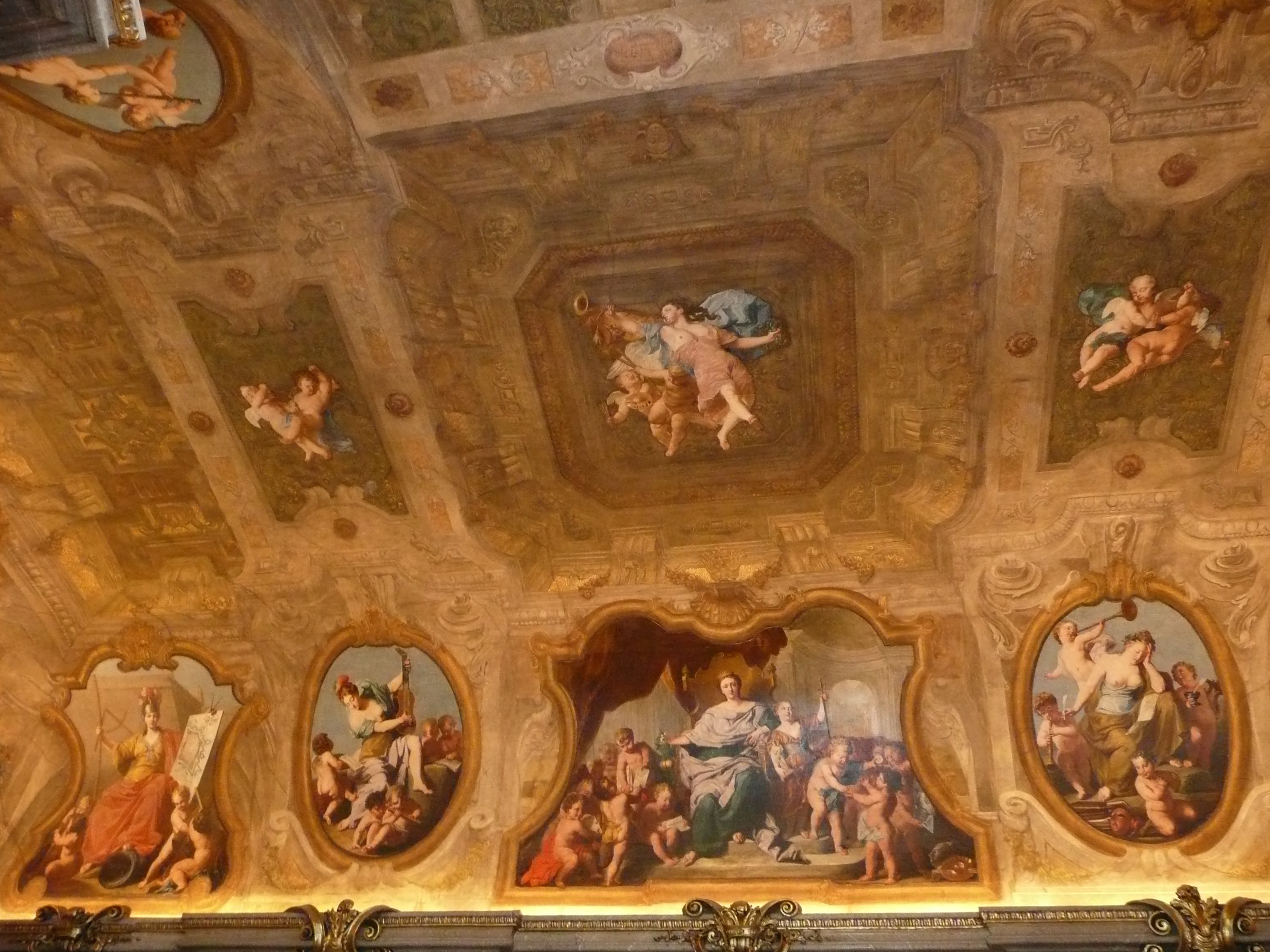
This was the day that his legendary third symphony in E-Flat Major, opus 55 was first privately performed at the Bohemian residence (Castle Eisenberg), of Prince Franz Lobkowitz, to whom the work was dedicated, and one of Beethoven’s most ardent supporters and patrons. Rehearsals prior to the public premier of the symphony (which took place on 7th April 1805 at the Theater an der Wien), were held in the concert hall of the prince’s Palais Lobkowitz in Vienna, (later named the Eroica Saal after this momentous composition), and was to unleash music of the likes the Viennese had never heard before. Now that’s brave!
Ceiling of the Eroica Saal at the Palais Lobkowitz
A temporary respite from the hostilities between Napoleon and Europe was holding. Beethoven embraced this revolutionary turmoil and the ideals of liberty, equality and fraternity, and firmly placed himself as an artist at the centre of his third symphony by writing what he felt, and what he wanted, breaking away from the accepted symphonic structures and norms at the time. It was a beacon of originality. He was a man who had entered into the most creative period of his life.
Eroica: The Day That Changed Music Forever
The BBC dramatised the event of the private premier of the third symphony in the film, Eroica, with the strapline: the day that changed music forever. It was first broadcast in 2003, written by Nick Dear and directed by Simon Cellan Jones. The film follows Ludwig, Ferdinand Ries, the Lobkowitz family, friends, and the musicians as the new music unfolds on an unsuspecting audience, and takes you on Beethoven’s personal journey into the history books.
What I love about this film is the care and accuracy with which it was made, drawing on the recollections of Ferdinand Ries (Beethoven’s pupil and secretary), and from reports about the event.
Ian Hart plays Beethoven just how I imagine him; enthusiastic about his music, bold, dynamic, forthright, (blunt even), brutally honest, brusque, impatient, with frequent outbursts of temper, but underneath that he displays a simmering passion and tenderness for his lover, the widowed Countess Josephine von Deym.
The Orchestre Revolutionnaire et Romantique directed by Sir John Eliot Gardiner perform the music on authentic, period instruments (none of the violins have chin rests, which were yet to be invented), and in the numbers and proportions that Beethoven intended it for.
I love the way it switches from Beethoven walking with Ries to the Lobkowitz residence, to the palace staff going about their business, getting ready for the event, and the musicians, especially the horn player, Otto, who is known to Beethoven.
The camera work is very sensitively done, moving around the sections of the orchestra as they tackle this new, epic work, and capturing their shocked reactions at the nature of the notes and markings presented to them by Beethoven’s copyist Wenzel Sukowaty.
It is longer, more difficult and unlike anything they have ever attempted or played before, and a few re-starts are required until Beethoven is satisfied that they have reproduced the sound he wants.
It’s unthinkable that a modern orchestra would sight read a new symphony at its premiere (private or not), let alone consume beer before doing so. They might start seeing more than one baton!!
There are so many magical touches, one being the introduction of Beethoven to Prince Lobkowitz’s cousin, Count von Dietrichstein; and when asked if he is a land owner, Beethoven proclaims that he is a brain owner! Dietrichstein shows himself to be egotistical, ignorant and rigid in his ideas about music, but strangely his views on Napoleon Bonaparte turn out to be erudite.
We see a scene where the musicians, exhausted from their exertions are having a break and some lunch, and begin to debate the war and Napoleon’s agenda.
Beethoven’s views that an artist is on the same level as the nobility, are borne out by his behaviour and of course Ries’s comment, ‘that he doesn’t accept the inequality,’ to the copyist, who replies, ‘men have been executed for less.’ It could be considered heroic that Beethoven never compromised his artistic integrity for the whims or desires of any of his wealthy and titled patrons.
There is a very endearing moment when Beethoven and Josephine are alone discussing his marriage proposal, and she refers to him as ‘Louis’. However, it does not go well. It’s my personal view that Josephine was his ‘Immortal Beloved’.
In the third movement we glimpse Beethoven’s distress and distracted expression as he deals with his rejection from Josephine, whilst directing the scherzo marked allegro vivace, which personifies his hot-blooded nature.
The elderly Haydn’s entrance just before the start of the fourth and final movement is brilliant, as is the ensuing exchange of comments about students, and what idiots they are. The inference is not lost on Beethoven, who was championed by Haydn and became his student as a young man in 1792.
I’m going to shut up now, and let you watch the film uninterrupted!
Beethoven’s idealism and his abhorrence of tyranny are at the root of the Eroica. The fervour of freedom embodied by the Eroica is just as relevant and ground-breaking today as it was 210 years ago. There is always room for heroism in our lives!
Neither before or since, has music evoked such passion as Beethoven’s. He was in-tune with his creative spirit, and had endured more than his fair share of suffering; so who better than Herr Beethoven to write music that represents the struggle and overcoming of life’s challenges?
When asked by a close friend some fourteen years later, which was was his favourite symphony, Beethoven responded without hesitation: ‘the Eroica.’
We know that with the inevitable onset of his deafness and heart-break, that his heroism would eventually far outshine what he achieved in the summer of 1804. But for me, it’s the starting point of his heroism, it’s the moment we are blessed by his courage and the music that gives us a first insight into the depth of his spirit.
“He gives us a glimpse into his soul. Everything is different from today.” ~ Joseph Haydn (from the BBC film Eroica).
“Every secret of a writer’s soul, every experience of his life, every quality of his mind is written large in his works.” ~ Virginia Woolf
When I was eleven I had a nasty accident at school. It was positively gruesome. I remember the day vividly; my class had just come back from a P.E. lesson and we were making our way into the changing rooms. I wanted to tell my best friend something (I can’t even remember what it was), and in my haste to talk to her I placed my right hand next to the hinge of the door as she was closing it. Only I didn’t quite have my finger out of the way…
The ensuing carnage must have been quite a shock for my head teacher, who was greeted by a very pale screaming girl, with the end of her finger missing and copious amounts of blood flowing everywhere. The trail of blood running from the girls changing room to the classroom must have been redolent of a murder scene. The whole of Bledlow Ridge Primary School knew that something quite grisly had just happened. He duly picked up the top of my finger and wrapped it up (I never asked what in), and I was driven straight to hospital. The car journey was awful, I was clutching my tawdry severed finger, and as the initial shock wore off the pain grew in intensity.
It wasn’t a clean separation, and I was told that they would try and sew it back on. My mum and my family came to see me before the anaesthetic to reassure me. I had never been under before, and I was terrified I would never wake up again, as the anaesthetist counted down from ten. By the time he reached five I was out cold.
When I regained consciousness my finger was throbbing in agony and I felt groggy. The wonderful get well cards made by my classmates helped to cheer me up in the aftermath of my surgery. The only consolation was that I’m left handed, so it could have been worse, and I got to have quite a bit of time off school.
My mum dug those handmade cards out of her loft recently. They still bring a smile to my face. I remember I couldn’t play netball for months, (which I was absolutely gutted about) and when the bandages eventually came off I was shocked to see that the top of my right index finger wasn’t actually recognisable as a finger. The nerve endings gave me hell in the cold. It was like needle points stabbing my flesh until it went numb.
Needless to say, I have a thing about fingers and doors, and my kids have received several lectures about the dangers of getting a digit caught!
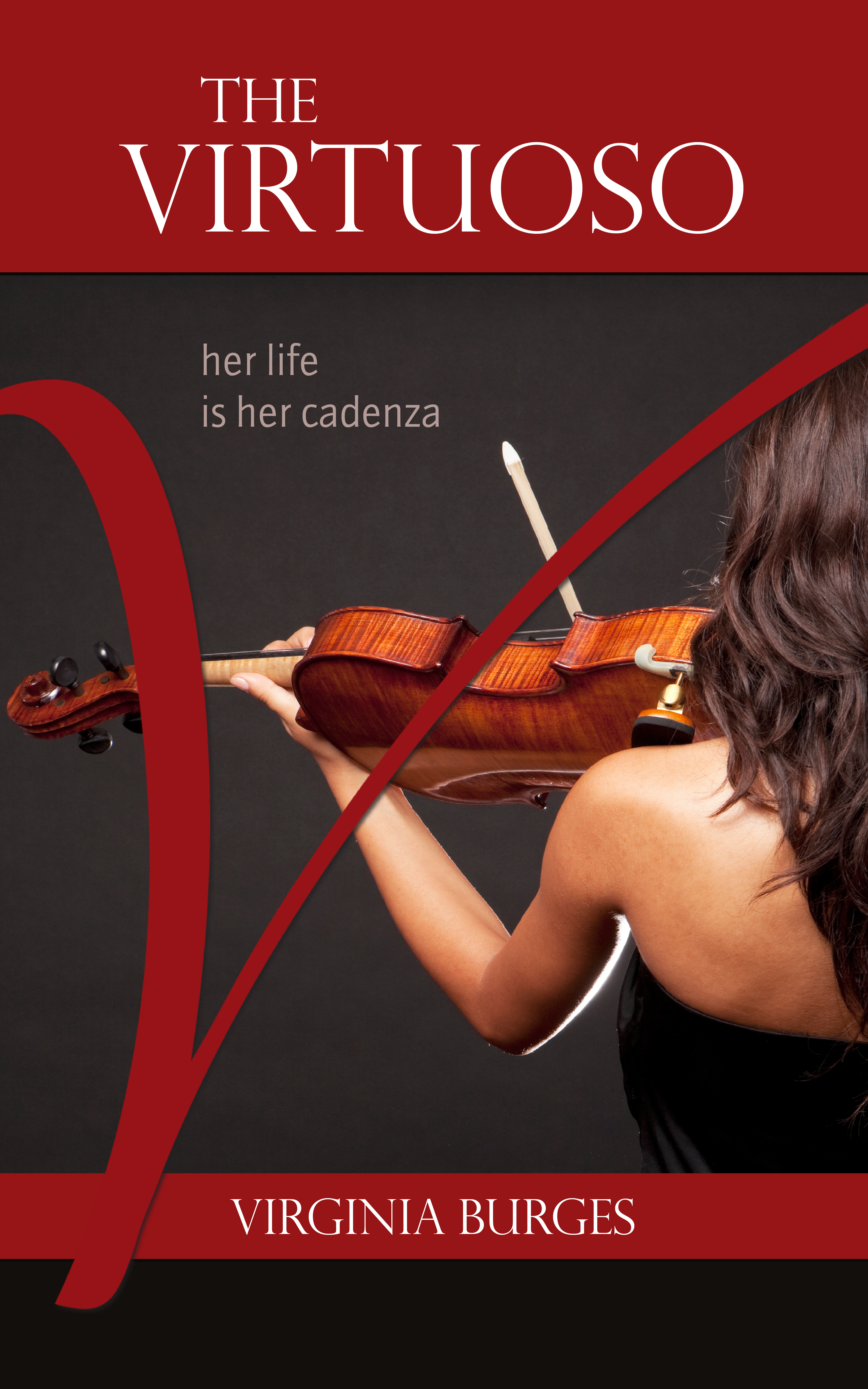
In the midst of my trauma little was I to know that the experience would surface many years later from the depth of my psyche, to provide my muse with inspiration for the misfortune of my first heroine and protagonist of my novel, The Virtuoso.
So you could say the idea has been brewing for a good many years! Eleven was also the age when I started learning to play the violin. I can’t help thinking that the foundations of the path to publication were laid in 1981…
Stepping Out Onto the Worldwide Amazon Stage
New Kindle Cover
I’m happy to announce that The Virtuoso has now been published on Amazon Kindle today, Monday 15th December 2014 at a launch price of £3.59. There will also be a paperback version available on Amazon next year. (US Link)
I’m sure I’ll feel a certain amount of satisfaction that I made it this far, for persevering over the seven years it’s taken me (on and off) to complete The Virtuoso, so that I can finally say my work in progress is now a work in print!
I’m now at the stage where I’m excited that my work can open the door to other related creative pursuits. I was fortunate to meet and hear the violin virtuoso, Adelia Myslov in the summer. She played a stunning performance of the Mendelssohn Violin Concerto. I asked her if she would be interested in playing a specially composed unique ‘theme’ for The Virtuoso, and to my delight she said yes! The music project is still ongoing and I hope it will be composed and recorded in the not too distant future. Eventually it will be available on iTunes and Amazon.
There is also a book trailer that has been produced for The Virtuoso by 13Media Arts in Daventry. Along with my voice, words and pictures, and Kevin and Darren’s digital jiggery pokery (I mean expertise), I am hoping it will prove to be a successful team effort!
During these years I’ve battled my demons of self-doubt that I could actually be a writer, and a half decent one at that. Well, I’ll leave the judging to my readers (I do hope I have some soon), after all, my daughter Emily is telling everyone she knows: ‘my mum is an author.’
The path to publication hasn’t always been like the yellow brick road! At times I had so many other ‘distractions’ beckoning for my attention; mainly life happening around me. But I found that the more time and effort I put into it, the more I got sucked into my characters’ world of make-believe, and the more I felt as if I was becoming a proper writer.
“Fiction is the truth inside the lie.” ~ Stephen King