About Time…

 “Existence is a series of footnotes to a vast, obscure, unfinished masterpiece.” ~ Valdimir Nabokov

My fellow travellers on the space-time continuum, what is this thing called time, by which we measure our existence on Earth?
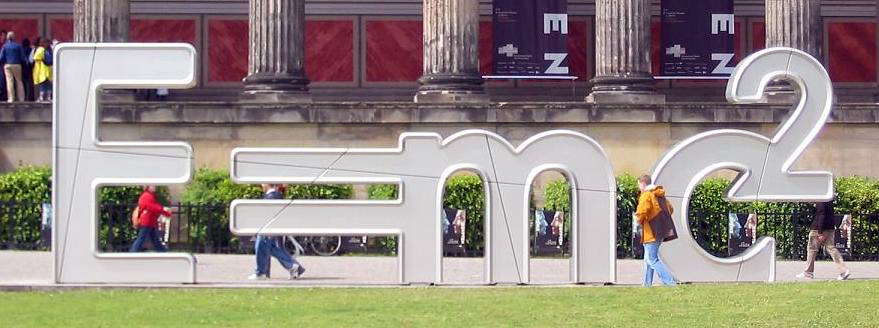
E=mc2 - Relativity3_Walk_of_Ideas_BerlinTime is a phenomenon that affects us all. It ‘s a by-product of physicality. Ever since Einstein’s Theory of General Relativity and the most famous equation the world has ever known, E=mc2, from his paper on Special Relativity, we have come to understand more about the properties of space and time.

Some of the brightest and best minds of the human race have pondered, nay, studied the very fabric of space-time. And they have reached into the sub-atomic world to do it. Whilst I’m nowhere remotely near that select group of individuals, I thought it would be fun to share a few of my musings on the subject.
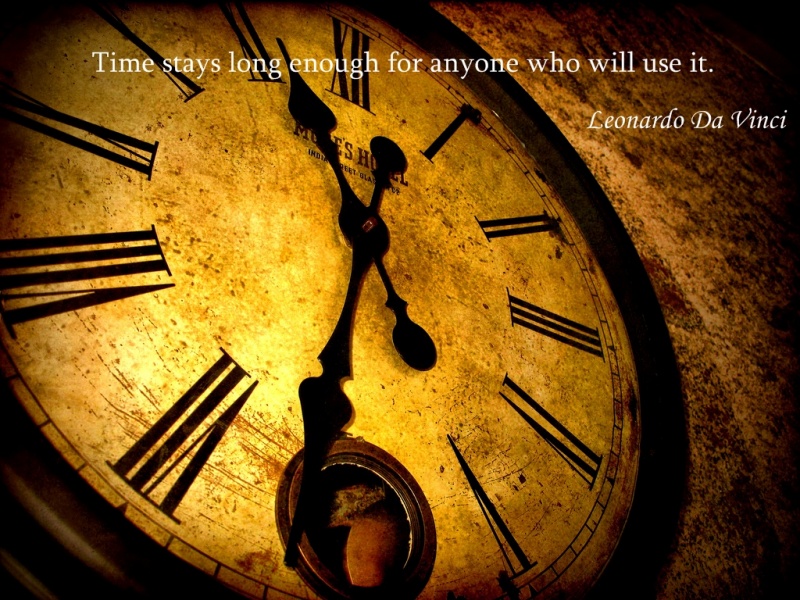
Leonardo Da Vinci on time

These musings were stimulated by recently watching the multiple award winning film, the Theory of Everything, with amazing performances by Eddie Redmayne as the brilliant but sick scientist, Stephen Hawking, and Felicity Jones as Jane Wilde, who became his first wife and mother of his three children. Certain scenes in the movie brought me to tears. It was based on Jane’s memoir, Travelling to Infinity: My Life with Stephen, published in 2007.

Hawking was diagnosed with motor neuron disease in 1963 whilst completing his PhD in physics at Cambridge University, and was told he had two years to live. Now aged 72, against incredible odds, he continues to search for his all-encompassing theory. He is the recipient of many accolades, such as Fellowship of The Royal Society, and the Queen offered him a Knighthood, (which he politely refused).

He wrote his best-selling book, A Brief History of Time in 1988, which has since sold over 10 million copies. The New York Metropolitan Opera have created a new opera based on the book, which is to be premiered in 2015-16.

Another movie that also stimulated thoughts on the passing of time was Interstellar, wherein the hero (played by Matthew McConaughey), goes off into distant galaxies to find a new and habitable planet for the human race to re-populate; being on the brink of extinction due to climate change on Earth. In deep space it’s only a few years to him, and he barely ages, but when he returns home his daughter is an old lady and a grandmother.

How weird is that?

“The bad news is time flies. The good news is you’re the pilot.” ~ Michael Altshuler

As humans living on planet Earth we cannot escape the inevitable march of time. I distinctly remember thinking at the age of 15 that I could not imagine how it would feel to be 30 years old. It seemed so far away. I thought I’d be ancient…
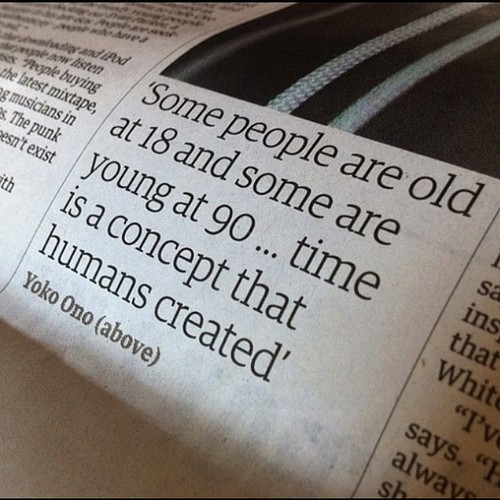
quote-about-time-concept-humans-createdA few blinks of an eye later and I’m now the wrong side of 40, but strangely I don’t feel that much different. I’m still me.  Of course my body has aged (but well, I hope), although anatomically, we are literally not the same people as our cells constantly die and renew themselves. My personality is broadly the same, only a bit more mature having learned a few life lessons, and at the same time a bit more adventurous, gleaned from the fact that time is passing at apparently ever increasing velocity!

I suppose what I’m trying to say, is that my consciousness has witnessed the years passing, but is unaffected by them. Maybe our souls really do exist outside of space and time, in a non-linear domain, hence the theory that souls are immortal by nature.
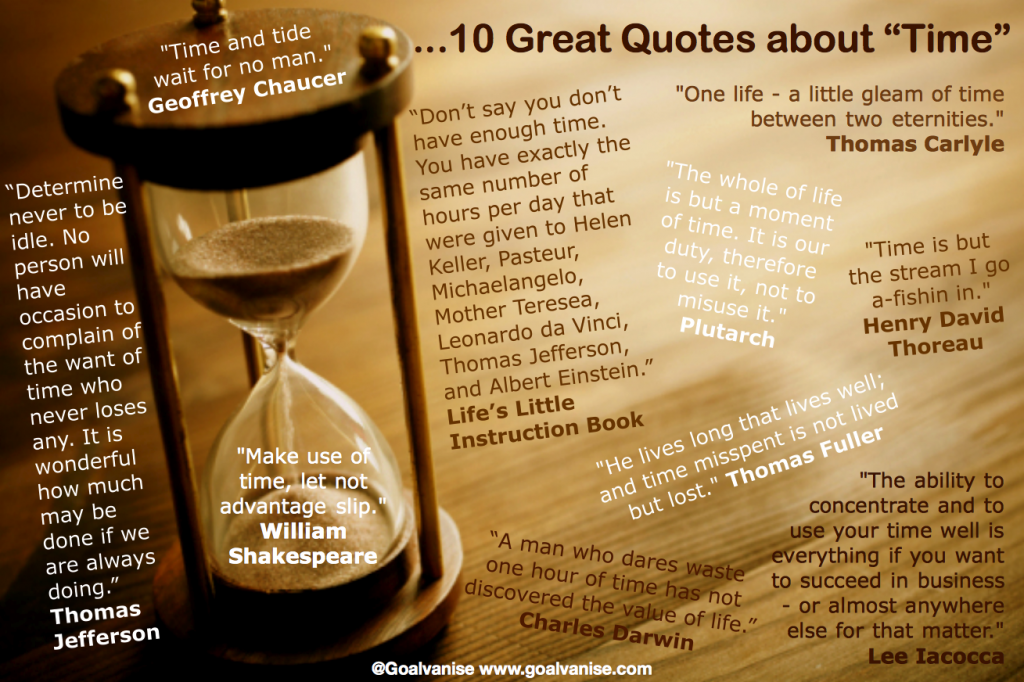
Time-Quotes

A person could go round the bend studying the concept of time. Supposedly time is happening all at once; past, present and future…

“The problem with procrastination is it’s been around since the beginning of time it seems.” ~ Stephen Richards

This was the best mnemonic I could come up with: The Immediate Moment Everywhere

Writers as well as scientists have also penned their take on time. I particularly love this passage by TS Eliot. Four Quartets, Burnt-Norton:

TS Eliot also features in this interesting talk: The Nature of Time, by Will Self on BBC radio 4
Time is freeOf course, time is a key component in music, the beating of the time signature by the conductor, thus ensuring that the notes are played according to their pre-ordained time frame as written by the composer. If a musician doesn’t adhere to the time the music will be sloppy, and probably won’t sound as the composer intended. I got to thinking that the beats in a bar could resemble the seconds of our lives, and the music represents the events in our lives.

“It struck me tonight how music mirrors life. Fleeting ephemeral moments, made up of beauty, sadness, joy, hope and despair. The melodies are created in both major and minor keys. Flowing and fleeting. You can’t hold onto it, or keep it from changing. Our emotions possess the evanescence of a note.” ~ The Virtuoso

Here are two videos to explain all!

The Illusion of Time – Quantum Physics:

The End of Space and Time? – Professor Robbert Dijkgraaf:

“Time you enjoy wasting, was not wasted.” ~ John Lennon

The notion of time as a finite measurement really hits home after you have children, or especially after the death of a loved one. Then it seems the nonchalant pleasure of idling it away as one may have enjoyed in one’s youth, becomes somewhat of an anathema with the realisation that one’s time could be suddenly curtailed!
Seating-on-the-rock-Time-quotesThese days I am reminded how easy it is to become engrossed in my writing or playing my violin, and lose all track of time, and what a wonderful feeling that is, to not be beholden to the constant ticking for those brief hours…

“Time is what we want most, but what we use worst.” William Penn

The Great Virtuoso Violinists/Composers of the 18th Century: Paganini

(c) Royal Academy of Music; Supplied by The Public Catalogue FoundationWhen asked to name a famous violinist, the first person on most people’s lips is Niccolò Paganini. To this day, he is probably regarded as the greatest violinist of all time.

His legendary status, through both performance and composition, has continued to influence composers and violinists 175 years after his death, making him the foremost innovator of technique in violin repertoire.

This will be the first in a series of posts over the next few months, spanning the 18th and 19th centuries, featuring the great violin virtuosi of the classical and romantic eras in music.

Niccolò Paganini (27 October 1782 – 27 May 1840):

Anecdotally, it was the mandolin that little Niccolò learnt first, moving on to the violin when he was aged seven. He was also proficient on the viola and guitar. Born the third of six children in Genoa, he had a rare congenital disorder that meant he had freakishly flexible fingers.

He was so incredibly talented that many thought he had sold his soul to Satan. When you are able to compose and play music that is so fiendishly difficult it’s no wonder his superstitious audiences came to that conclusion! Cue the trailer for the recent film starring German violinist, David Garrett as “The Devil’s Violinist”:

In fact, Paganini was literally ‘born’ to play the violin, as his genetic makeup meant he had long fingers and could stretch his hands abnormally wide, a definite boon for a concert violinist.  Because of his rubbery connective tissues he could apparently move his little finger (fourth finger on the violin), out sideways at right angles to the rest of his hand. However, this rather unfair advantage to his musicianship would come at a price, plaguing him with a plethora of other ailments.

It is now thought that Paganini’s genetic condition was Marfan Syndrome, which would explain his bouts of ill health, especially in his later life. Paganini suffered with joint pain, poor vision, breathlessness, chest pains and fatigue. These less desirable symptoms meant that he frequently had to cancel public performances and he died at the relatively young age of 58.

In addition to his congenital health problems Paganini contracted Syphilis in 1822 and took Mercury and Opium as a remedy, albeit one with serious side-effects.

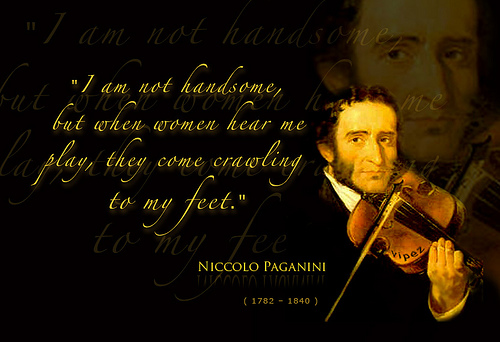
Paganini quote

Despite his physical challenges Paganini liked the high life, with a taste for gambling and womanising. He had a son (Achilles), with singer Antonia Bianchi, but they were never married. After his death, the Catholic Church in his hometown refused to bury him for decades (such was his reputation).

His first concerts were held mainly in Italy, but as his fame spread he travelled across Europe; spellbinding audiences in Vienna, Germany, Poland, Paris, Bohemia and Britain. He was the complete package as violinist. He possessed passion, flexibility, dexterity, technique, flair, imagination and innovation. He was able to write music that specifically showcased his particular style and skills that would be unmatched by any other violinist in his lifetime.

Influences: 

From Wikipedia:

Much of Paganini’s playing (and his violin composition) was influenced by two violinists, Pietro Locatelli (1693–1746) and August Duranowski (1770–1834). During Paganini’s study in Parma, he came across the 24 Caprices of Locatelli (entitled L’arte di nuova modulazione – Capricci enigmatici or The art of the new style – the enigmatic caprices). Published in the 1730s, they were shunned by the musical authorities for their technical innovations, and were forgotten by the musical community at large. Around the same time, Durand, a former student of Giovanni Battista Viotti (1755–1824), became a celebrated violinist. He was renowned for his use of harmonics and the left hand pizzicato in his performance. Paganini was impressed by Durand’s innovations and showmanship, which later also became the hallmarks of the young violin virtuoso. Paganini was instrumental in the revival and popularization of these violinistic techniques, which are now incorporated into regular compositions.

His celebrated Violin Caprice No. 24 in A minor has provided inspiration for transcriptions and variations and themes on other instruments such as the cello, piano, flute, oboe, trumpet, saxophone and guitar.

Some of my favourite Paganini performances:

Caprice No. 24 in a vintage, virtuosic recording by Jascha Heifetz:

‘La Campanella’ for Violin and Orchestra by Ivry Gitlis:

Sonata in E minor, Opus 36 for violin & guitar, performed by Ruggiero Ricci and pianist Louis Persinger:

The heavenly tones of Leonid Kogan – Sonatine for Violin & Guitar in A Major:

Whilst his Moto Perpetuo isn’t melodic, it’s quite a feat to play accurately, and even more so on the cello. Top marks to Miklós Perényi:

Duet for one violin, performed by both Salvatore Accardo and, yes, you guessed it, Senor Accardo!

I Palpiti beautifully executed by Maxim Vengerov:

And finally…Yehudi Menhuin is wonderful in this vintage performance of the Violin Concerto No. 1  2nd & 3rd movements:

Paganini works that inspired other composers:

Paganini’s virtuosity and music was much admired by the likes of Franz Liszt, Frédéric Chopin, Sergei Rachmaninoff, Robert Schumann, Johannes Brahms, Johann Nepomuk Hummel, Johann Sedlatzek and Eugène Ysaÿe to name but a few.

Here is a small selection of classical pieces written in homage to Paganini.

Recollections of Paganini, a Fantasia for the pianoforte, by Hummel performed by Marco Pasini:

Liszt’s inimitable Paganini Etude No. 6 played with passion by Marc-Andre Hamelin:

I adore Rachmaninoff’s Rhapsody on a Theme of Paganini, played to perfection by Arthur Rubinstein:

Tárrega’s Variations ‘Carnaval de Venecia de Paganini’ sound wonderful on the classical guitar with David Russell at the helm:

I’d like to finish my finale with this quote from violinist.com:

 “When it comes to violinists, virtuosity is not entirely the result of mechanical finger velocity and sheer technique, as it is with pianists. The violin is an instrument which has almost human whims—it is attuned to the mood of the player in a sympathetic rapport: a minute discomfort, the tiniest inner imbalance, a whiff of sentiment elicits an immediate resonance . . . probably because the violin, pressed against the chest, can perceive our heart’s beat. But this happens only with artists who truly have a heart that beats, who have a soul. The more sober, the more heartless a violinist is, the more uniform will be his performance, and he can count on the obedience of his fiddle, any time, any place. But this much-vaunted assurance is only the result of a spiritual limitation, and some of the greatest masters were often dependent on influences from within and without. I have never heard anyone play better—or, for that matter, play worse than Paganini . . .”

~ Heinrich Heine (1843) Thoughts on the Violin and on Violinists

The Motherhood Milestone

“Mothers are the ultimate executives. Instead of raising profits, they are raising humanity.”

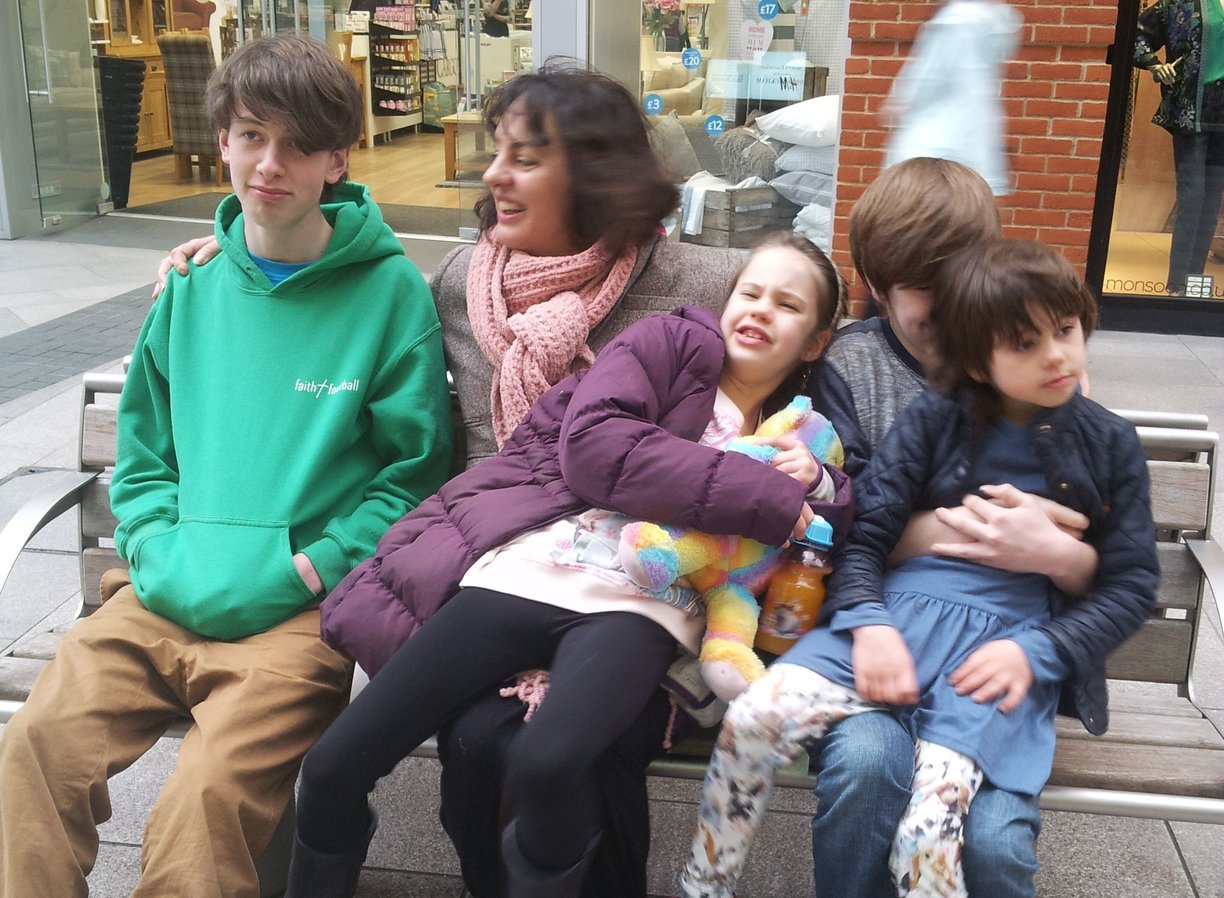
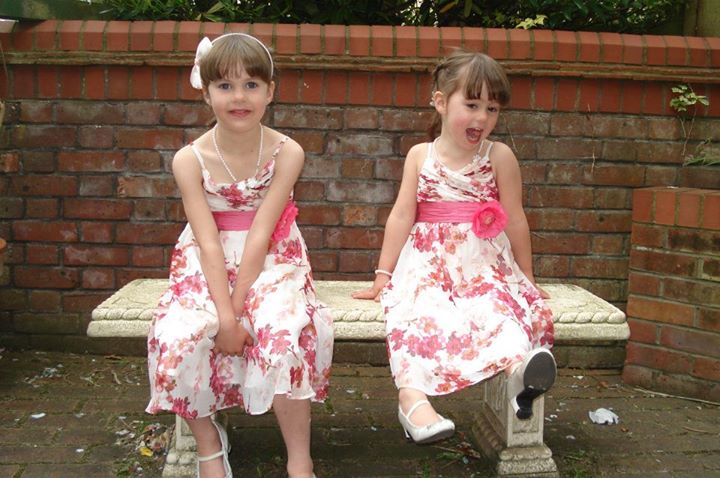
rsz_mothers_day_with_kids2 (2)As it was Mother’s Day in the UK on Sunday, my thoughts have turned towards the last seventeen and a half years that I have been a mum. The funny thing is; I never really felt maternal up until I became pregnant, and then something miraculous happened. I was responsible for another life form, and my love for that being was indescribable. It’s a really special and beautiful bond.

Please forgive me if I ramble on a bit, it’s hard to be concise when sharing about one’s kids. I have a lot of raw material to draw on!

My first pregnancy wasn’t easy. I had a high powered job in London, a lengthy commute, and a business trip to Sydney to get through. At the time of the meeting in Australia I didn’t know that I was pregnant. I knew I’d suffer with jetlag, but I could hardly venture out of my hotel I was so exhausted. I had been sent as a representative of the UK Sales Team for Qantas Airways, and I had to be on top of my game, as it was my job to report back to the UK staff on the Annual General Meeting of the airline. This would have been around February 1998.  When I got home and did a test it became clear why I barely managed that long-haul trip. I wasn’t a big drinker, but I cut out alcohol altogether, I never smoked, I took folic acid and I went to antenatal classes run by the NCT (National Childbirth Trust). I worried about everything. Would my baby be healthy? What would it look like? Would it be a boy or a girl? How would I manage the birth?

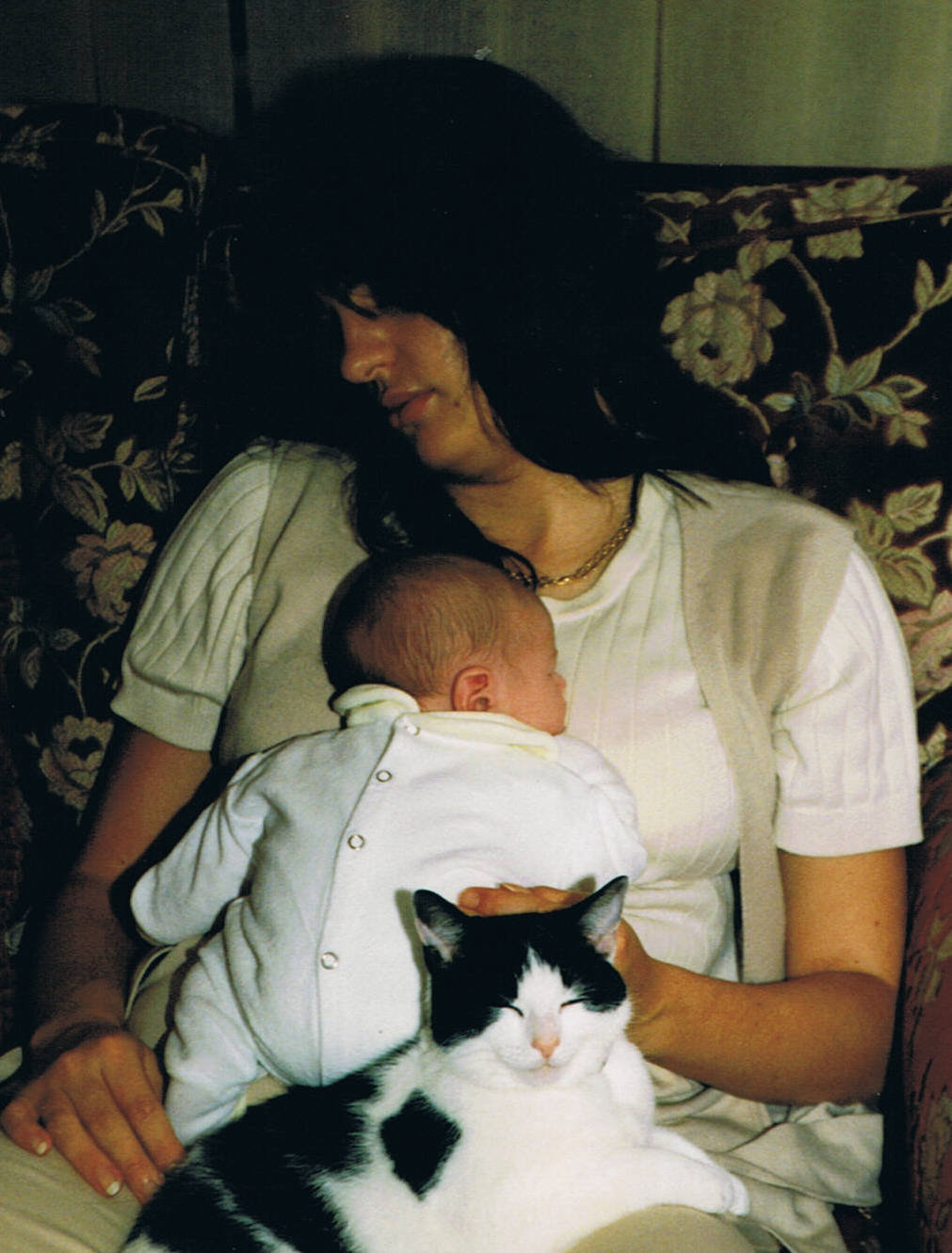
mother baby Max and catDespite first time nerves my pregnancy went swimmingly. It’s a magical time when you have your first 20 week ultrasound scan, and you can see the little bundle growing inside you. Apart from some mild morning sickness all had gone okay, up until I had a fasting blood test at about 32 weeks. My sugar levels were too high. It turned out I had gestational diabetes. I knew those early morning chocolate bars I scoffed when setting off in my car at 6 am to drive to London were responsible. From then on I had to monitor my blood sugar levels every day. I was assured that after the birth my blood sugar levels would return to normal, and they did.

It wasn’t a problem I had with my other three pregnancies, which all had their own unique characteristics. I suffered with a bit of post natal depression after having Max. I found it such a shock to the system, that loss of freedom, the sleepless nights, getting used to being a feeding machine with much in demand udders, in a seeming endless cycle of nappy changing, feeding, weaning and blending of homemade baby food etc. Thank God I had a circle of friends and family support, because every new mum needs it, no matter how young or old you are. But I eventually got into a routine with him, and went back to work full-time until I had William. At first you feel like a limb is missing.

The main challenge initially is to get the feeding well established. I wrote an earlier blog about breastfeeding.

me and wills on summer solsticeI remember having extremely strong and sometimes painful Braxton Hicks contractions from about six months on when pregnant with William. My work colleagues used to put their hands on my bump and feel it go rock hard. I suffered with excruciating sacroiliac joint pain after William, as my pelvis had been pulled out of alignment, and because I carried all out front my abdominal muscle wall had separated, which along with hormonal changes aggravated my PGP (pelvic girdle pain). I had a quite a few months of physio therapy to get my muscle imbalances sorted out. I’ll be forever grateful to Mike Ker for his amazing remedial massage skills!

William was such a happy baby, and he loved it when I blew raspberries on his tummy and neck. One of his early words was “shamage” and I later realised he was trying to say sandwich.

Five years later, when I was nine months gone with Emily, my waters broke in a public car park. But I didn’t go straight into labour, (she was too cosy in situ), and twenty four hours later I had to be induced. Not to be recommended! My labour with her was the most difficult of all. Ruby moved around in my womb a lot, (the sign of things to come), but her birth was quick and straightforward. I remember thinking, I should be used to this intense pain by now.

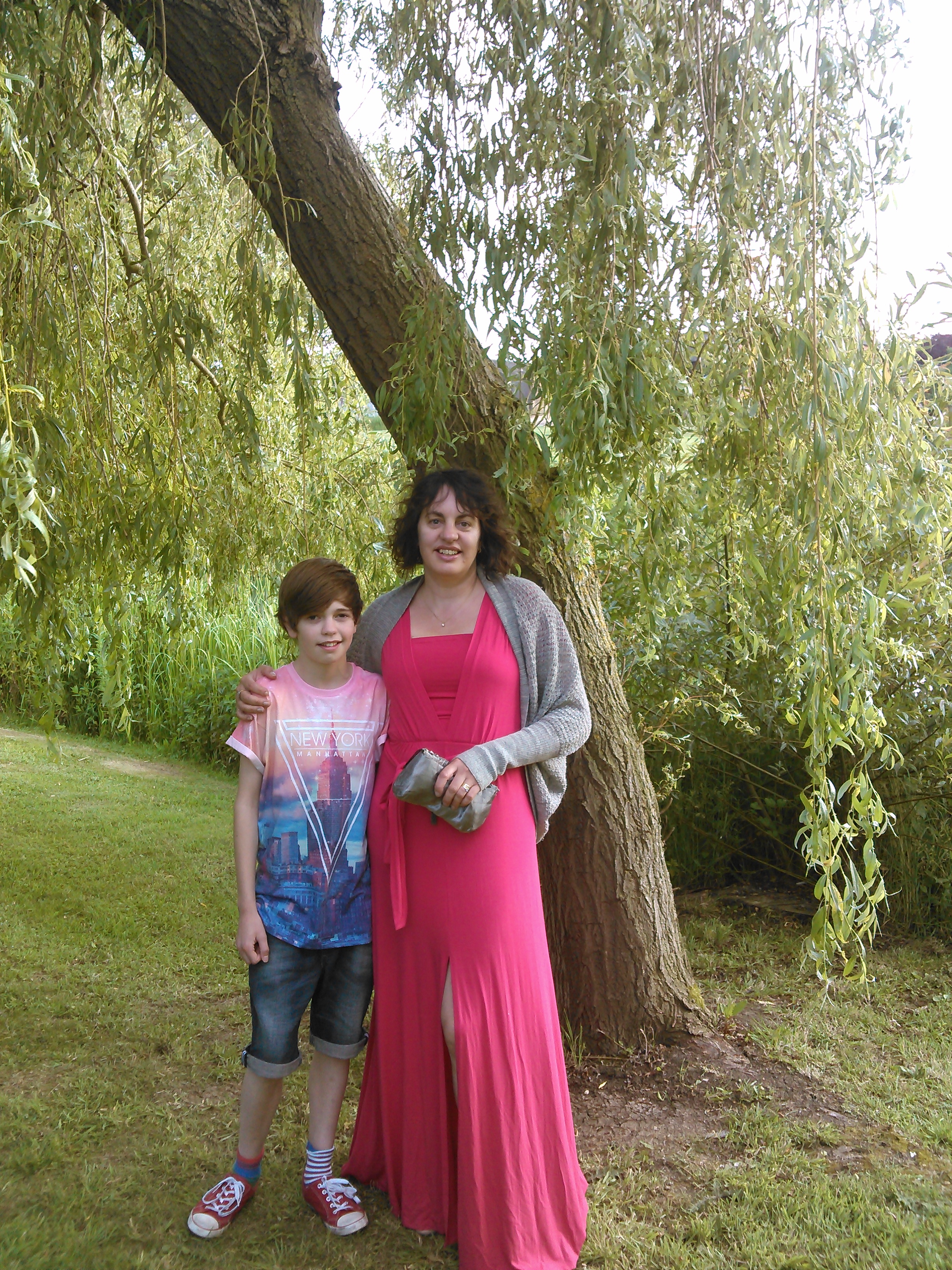
Emily & Ruby at mums wedding

And just as each of my pregnancies was different, so it is with the personalities of my four children. Because I had my daughters close together that brought additional challenges. I was potty training Emily not long after Ruby was born, and usually I’d just sat down with Ruby latched on for a voracious suckle, when Emily would sneak off and do a number two in her nickers without telling me. I think it was her way of saying she didn’t like not being the centre of attention any more. When Ruby was about eighteen months old she broke her arm. Luckily it healed quickly, but she is still a dare devil.

It has been a roller coaster of a ride, with many ups and downs. A learning curve like no other!

I have three main tenets for raising my kids:

  1. I love them unconditionally. Even when they cause me grief, (which has been regularly over the years). I try to remember that they are not perfect, and I shouldn’t expect perfect behaviour. I’m no saint, so I’ve tried to create an atmosphere of love and harmony where they can be themselves, whilst instilling key values. I won’t tolerate violence between them. Sibling rivalry is an issue with such a range of ages and genders sometimes.
  2. I never criticise them as people, only ever their actions. Discipline is vital, but it’s also important that it’s done in a kind way. I want them to grow up with confidence and a healthy self-esteem as far as possible, and effective learning happens in a fun environment where they are not afraid to make mistakes.
  3. They are their own people. It’s hard to let go sometimes and let them make their own decisions, especially if I don’t agree with them. I try to relate to them as individuals with their own unique personalities, talents and challenges. It’s their life and I encourage independence and creativity as these are valuable life skills.

It wasn’t until I became a mother myself that I really appreciated everything my mother had done for me, or understood her protectiveness. Even now she still worries about me, and I know that will always be the case for me with my offspring, as long as my heart beats.

I think there should be a special date marker for motherhood, just like B.C. and A.D. are used for the birth of Jesus, only B.C. would stand for Before Children, and then there would be N.E.E.V. (numquam erit eadem vita), life will never be the same…

Reflections of motherhood:

It’s a massive milestone in a woman’s life. Your body goes through extraordinary physical, hormonal and emotional changes.  It’s also a way of measuring your own mortality. I feel the same as I did when I had Max, but when I look at him now and he’s taller than me, I can see where the years have gone!

They grow so rapidly. You never look back wishing you had spent less time with your kids. I’m sure I’m not the only mother to have felt guilty on many occasions that I haven’t spent enough time with them.

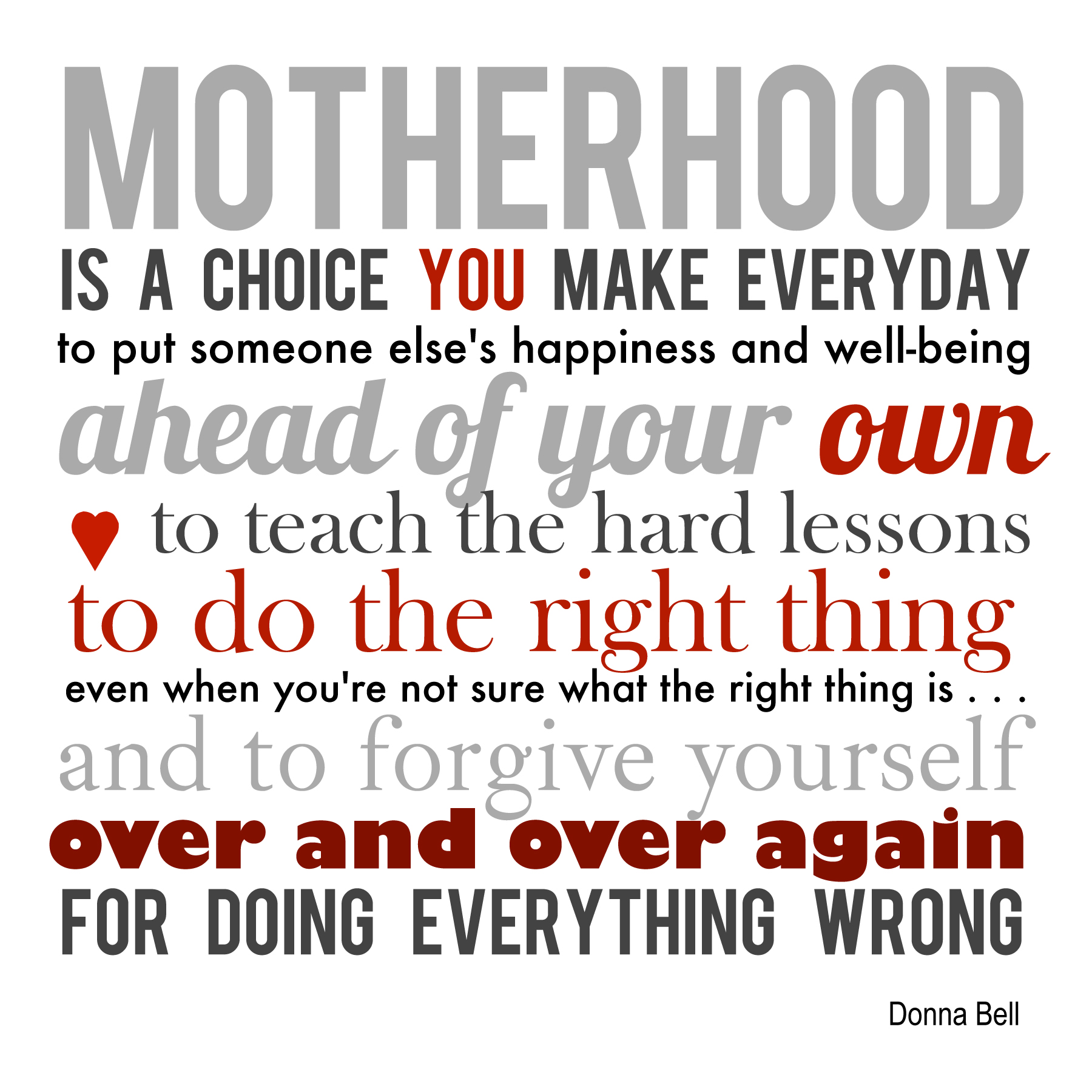
motherhood

Over the years I’ve learned not to beat myself up so much if I don’t have a productive day, it’s part and parcel of being a mum. The priority is always making sure I’m the best parent I can be.

I have enough washing volume to get through each week that I could open a Chinese laundry, or the endless cooking (they are always hungry), the cleaning and tidying up after them, the running around after school to do various sports and activities, the haircuts, the doctor’s and dentist appointments, school plays, assemblies and parents’ evenings, exams, homework, special projects, shoe shopping, birthday parties and sleepovers; it’s a wonder I have any energy left! And sometimes when I have no time, and I’m juggling all that plus my career and a home, and I’m exhausted beyond belief, I moan and get down about my workload.

When this happens I try to remind myself how lucky I am to have four healthy, mostly happy kids. I look at other families around the world living in dire straits. We all have our challenges.

It helps to laugh. I love this sassy rap advert by Fiat, The Motherhood:

Motherhood has so many milestones: the first words, walking, talking, sleeping through the night, the first tooth,  learning to read, write and ride a bike. It makes me happy and proud to see my children learning, growing, playing and achieving new goals. I’m sure most parents know the kind of joy I’m talking about. I’ve always been my children’s biggest cheerleader…

They are my gifts – precious gifts that I have been entrusted to bring into the world and raise to the best of my ability. Maybe one day I’ll have a clue what I’m doing!

“Motherhood is near to divinity. It is the highest, holiest service to be assumed by mankind.” ~ Howard W. Hunter

Film Review: Mr Turner

“Why, Mrs Somerville, you have the arm of a blacksmith.”

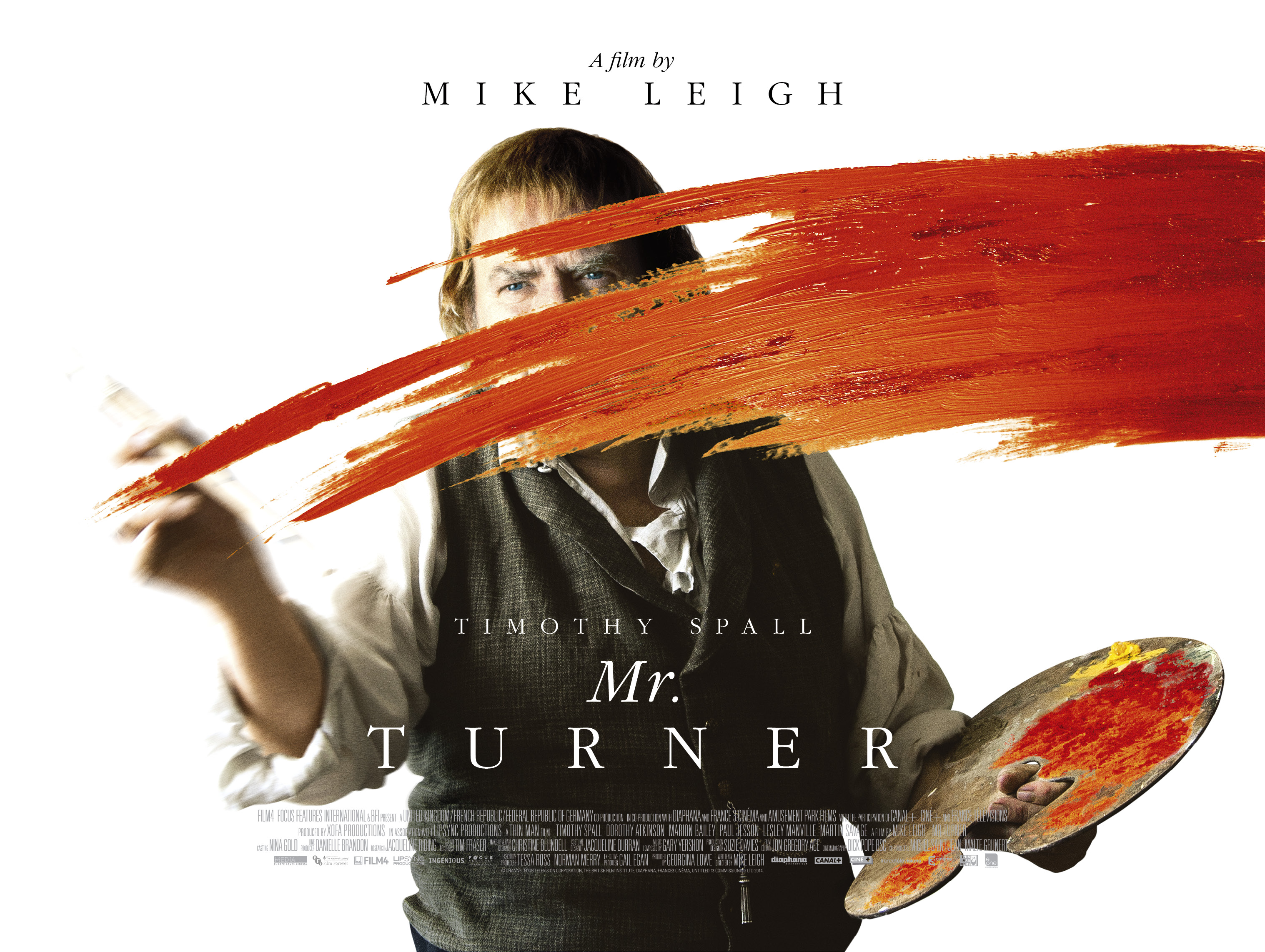
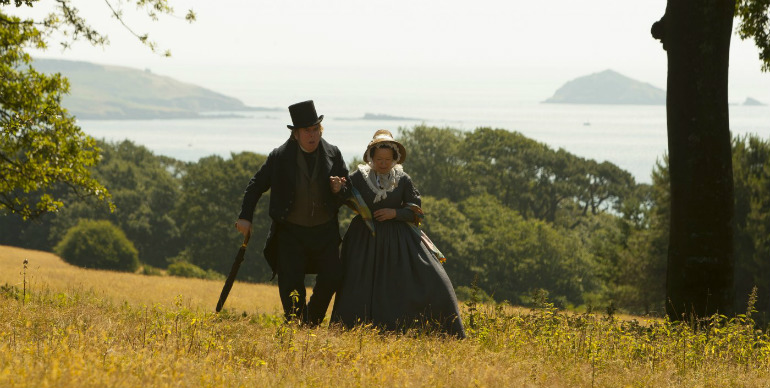
Mr Turner, Mike Leigh’s 2014 multiple Oscar and BAFTA nominated biopic about one of Britian’s most revered artists, the romantic landscape painter, Joseph Mallord William Turner, spans the last twenty six years of his life.

Mr-TurnerI love Turner’s paintings, but I didn’t know much about the man or his life, and I think the film went a good way to furnishing me with the facts. Actually, it did more than that. It instilled an admiration for the man beyond his artistic genius, such as his work ethic, honesty, passion and down to earth personality, despite his elevated position in society due to his prodigious talent.

Turner’s art was so popular that it was responsible for raising the prominence of landscape painting to the same level as that of history painting in his lifetime.

Being a ‘period drama queen’, it was probably a foregone conclusion that I would enjoy this film!

Although it’s a dramatised biopic, so much about this film felt authentic. It was visceral and gritty, absolutely realistic, but those elements of the story were also beautifully interspersed with some amazing cinematography of the British countryside, atmospheric art studios and galleries.

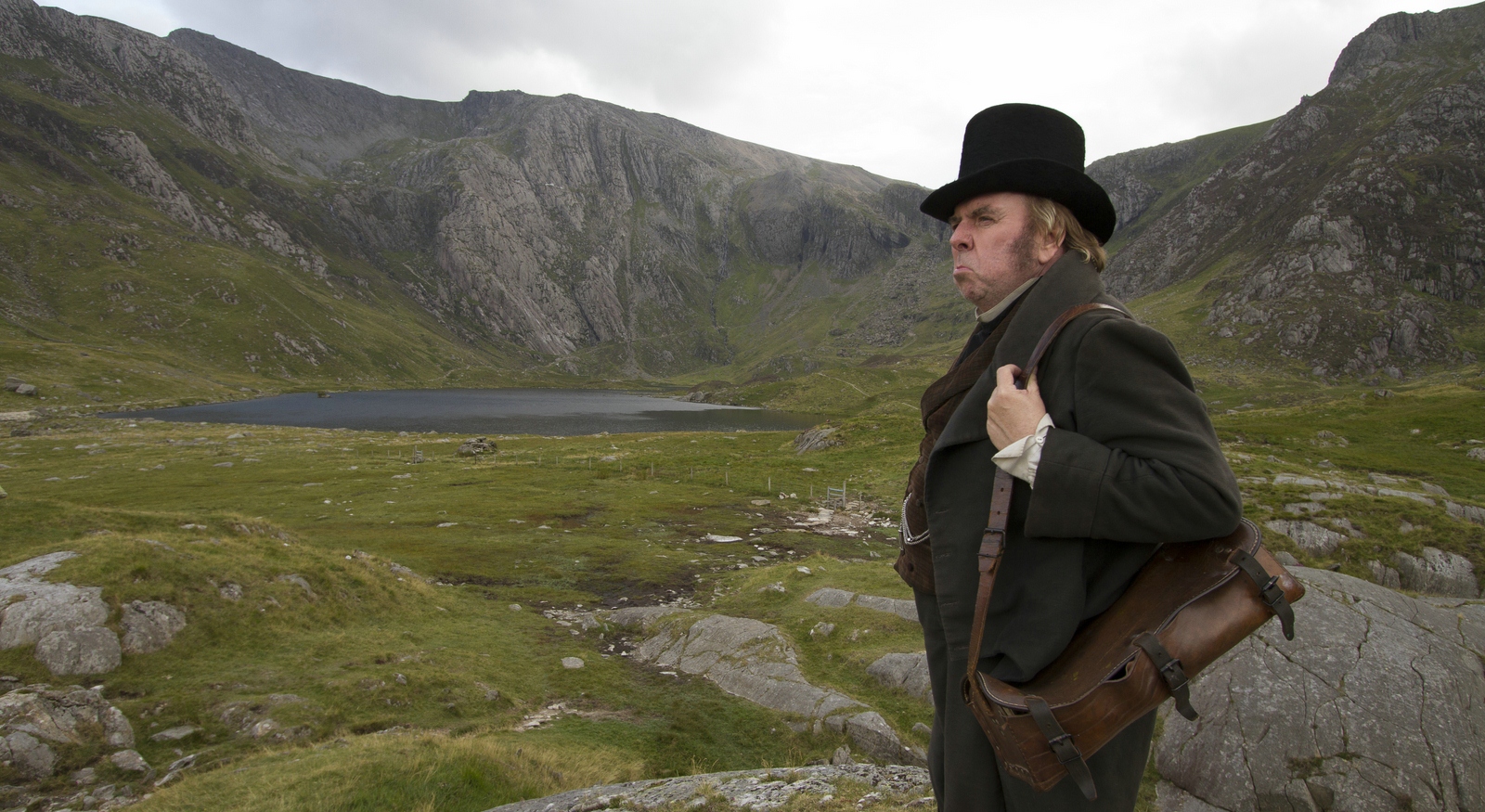
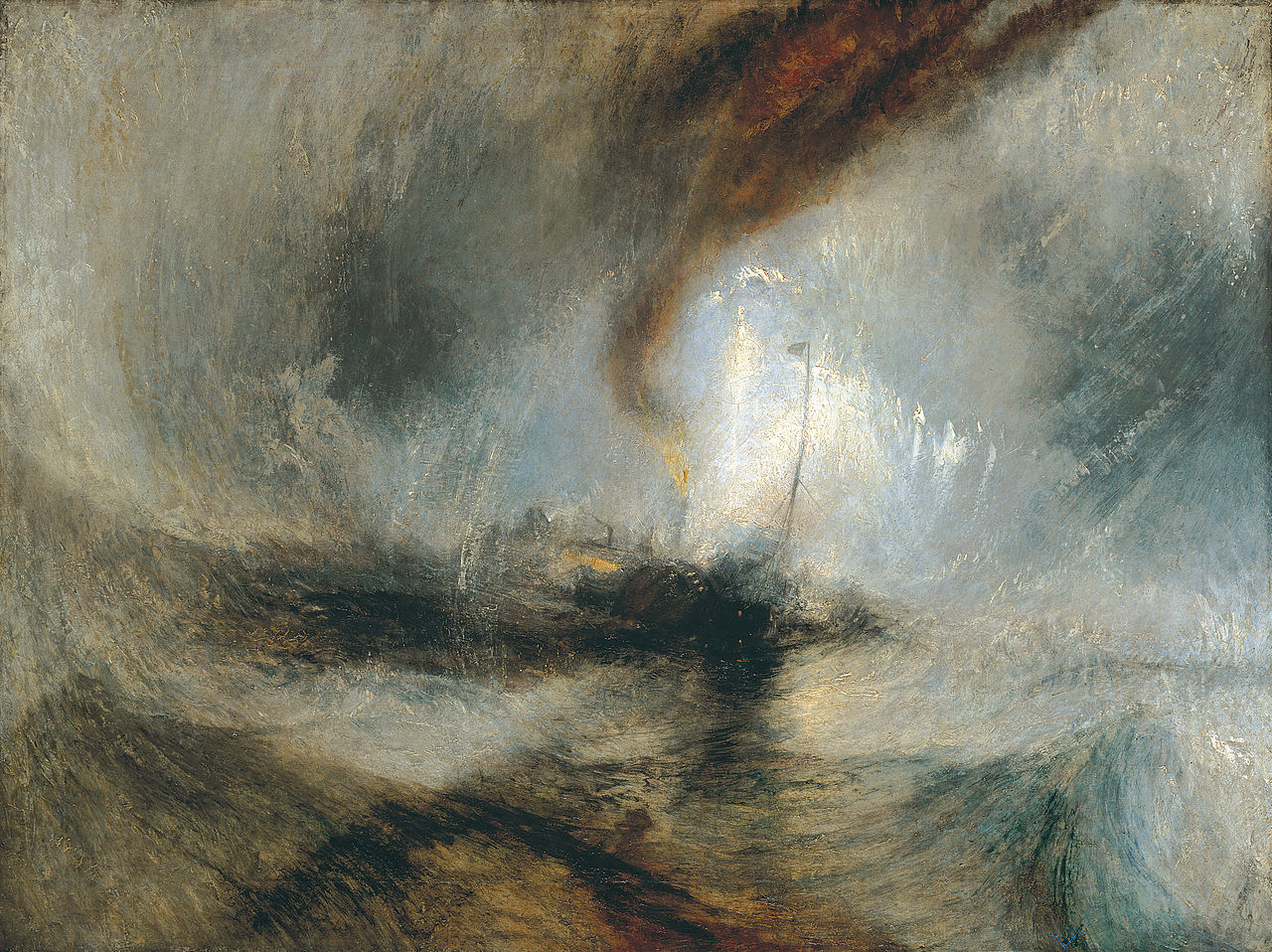
Mr-Turner-sceneryViews of rugged mountains, the sea and the light on the coastline all evoked scenes that you can imagine he painted. There is even a moment where he is tied to the mast of a steam boat in a snow storm, so that he could later accurately paint the event. He did suffer for his art…

“Once, Turner had himself lashed to the mast of a ship for several hours, during a furious storm, so that he could later paint the storm. Obviously, it was not the storm itself that Turner intended to paint. What he intended to paint was a representation of the storm. One’s language is frequently imprecise in that manner, I have discovered.” ~ David Markson, (Wittgenstein’s Mistress).

JMW - Snow_Storm_-_Steam-Boat_off_a_Harbour's_Mouth

It’s wonderful that Mike Leigh made sure that the use of light, (which Turner was famous for), was a visual delight throughout the film. I loved the way the light streams through the window of his studio, and his encounter with the use of a prism courtesy of the witty and intelligent Scottish science writer and polymath, Mrs Somerville.

I would say that Timothy Spall’s portrayal of this prolific and eccentric painter is his finest performance bar none. To help prepare for the role of Turner, Spall had painting tuition from Tim Wright for two and a half years prior to filming, so that he would appear authentic in the painting scenes. It clearly paid off.

The viewer is treated to scenes of Turner travelling everywhere with his large kit bag, spitting on his canvases, blowing dried paint on them, and applying his forceful brush strokes.

Probably one of the best scenes in the film is when he enters the Royal Academy (which is like another home to him), and has upbeat interactions with his fellow Academicians, such as John Constable, George Jones, C.R. Leslie, David Roberts, and Clarkson Frederick Stanfield, and is shown putting the finishing touches to a seascape by the rather dramatic addition of a red buoy, much to Constable’s annoyance:

Spall gives a very lusty portrayal of the rather portly, rugged and enigmatic artist, a man who at heart liked the simple pleasures of life; his work, travelling, being at one with nature, his food and drink, sex and female companionship. When we are first introduced to Mr Turner, he has just returned to his home in London from a trip to the Netherlands.

On the one hand Billy Turner comes across as gruff, (he does a lot of grunting), curmudgeonly and secretive, (for instance he later leads a double life as ‘Mr Booth’ with his lover in Chelsea), and yet on the other hand he is also incredibly kind, lending £50 to troubled artist Benjamin Robert Haydon, later relinquishing the debt when Haydon falls victim to financial and personal misfortune. It becomes obvious that even though he is a very private man, he has integrity, and that he prefers simplicity and comfort, even though he is accustomed to grandeur.  

His close relationship with his father, who works with him in his studio, purchasing and mixing paints and gathering materials for his work, is totally heart-warming. My sympathy went out to his melancholy housekeeper, Hannah Danby, who comes across as a rather pitiful creature that Turner uses to satisfy his sexual needs and who worships him, but her affection and devotion is not returned.

Strangely, Hannah is the niece of the even more hapless Sarah Danby, an earlier lover of Turner’s and mother of his two daughters. One feels Turner would rather forget the whole affair, but her random visits put pay to that!

mr-turner-timothy-spallMuch is made of Turner’s trips to Margate to paint the seascapes; and the development of his relationship with Sophia Caroline Booth, the welcoming landlady of the guest house he stays in during his time there. They eventually become lovers and she moves to London so that they can live together. They make each other happy in their dotage.

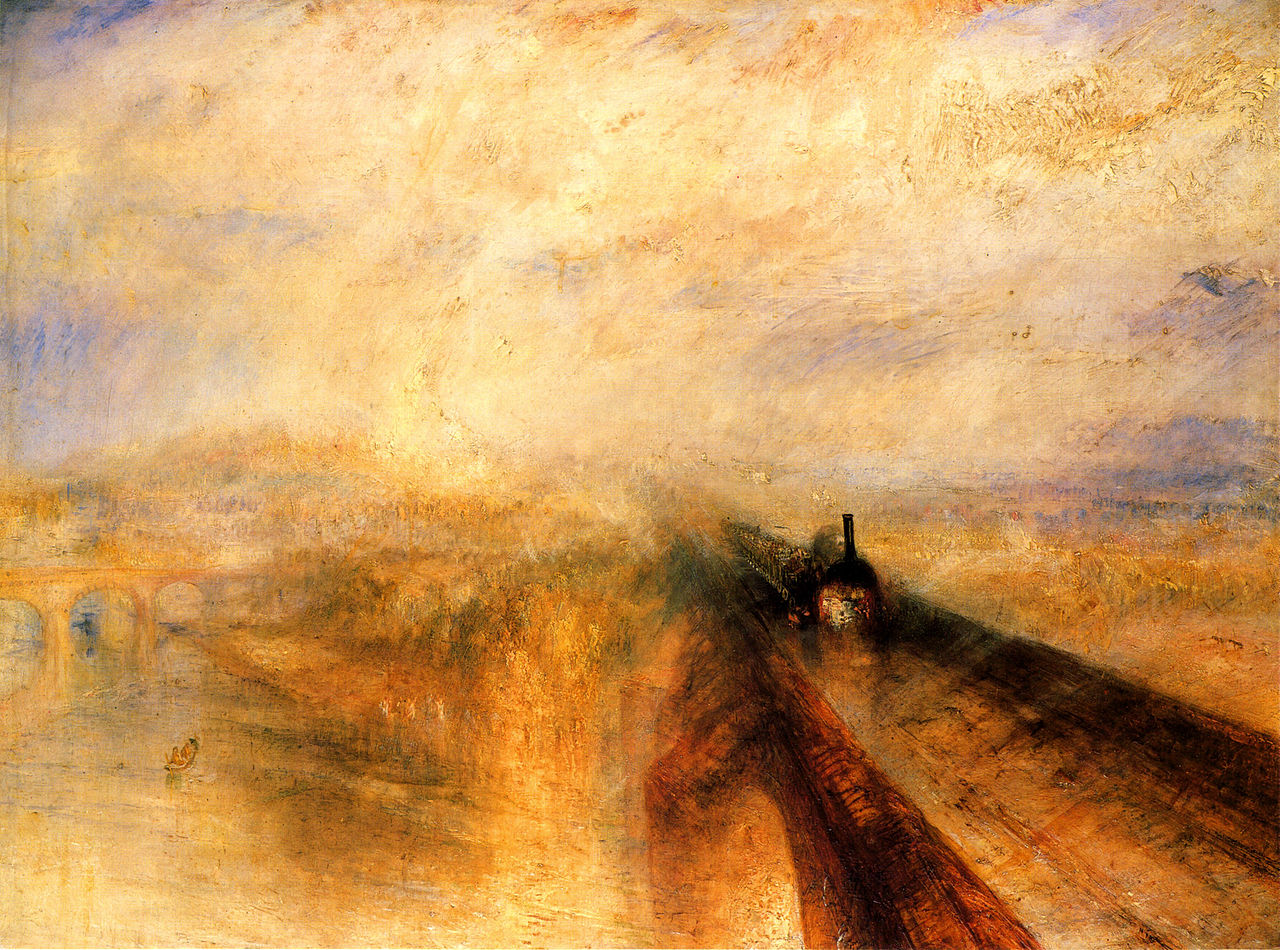
We also see how over the years his journey to the coast by boat is replaced with the invention of the steam train and the Great Western Railway, which Turner also committed to canvas.

JMW Turner - Rain_Steam_and_Speed_the_Great_Western_Railway

“It was a masterpiece. Nobody bought it. (Rain, Steam and Speed – The Great Western Railway, 1844)” ~ Anthony Bailey, (Standing in the Sun: A Biography of J.M.W.Turner).

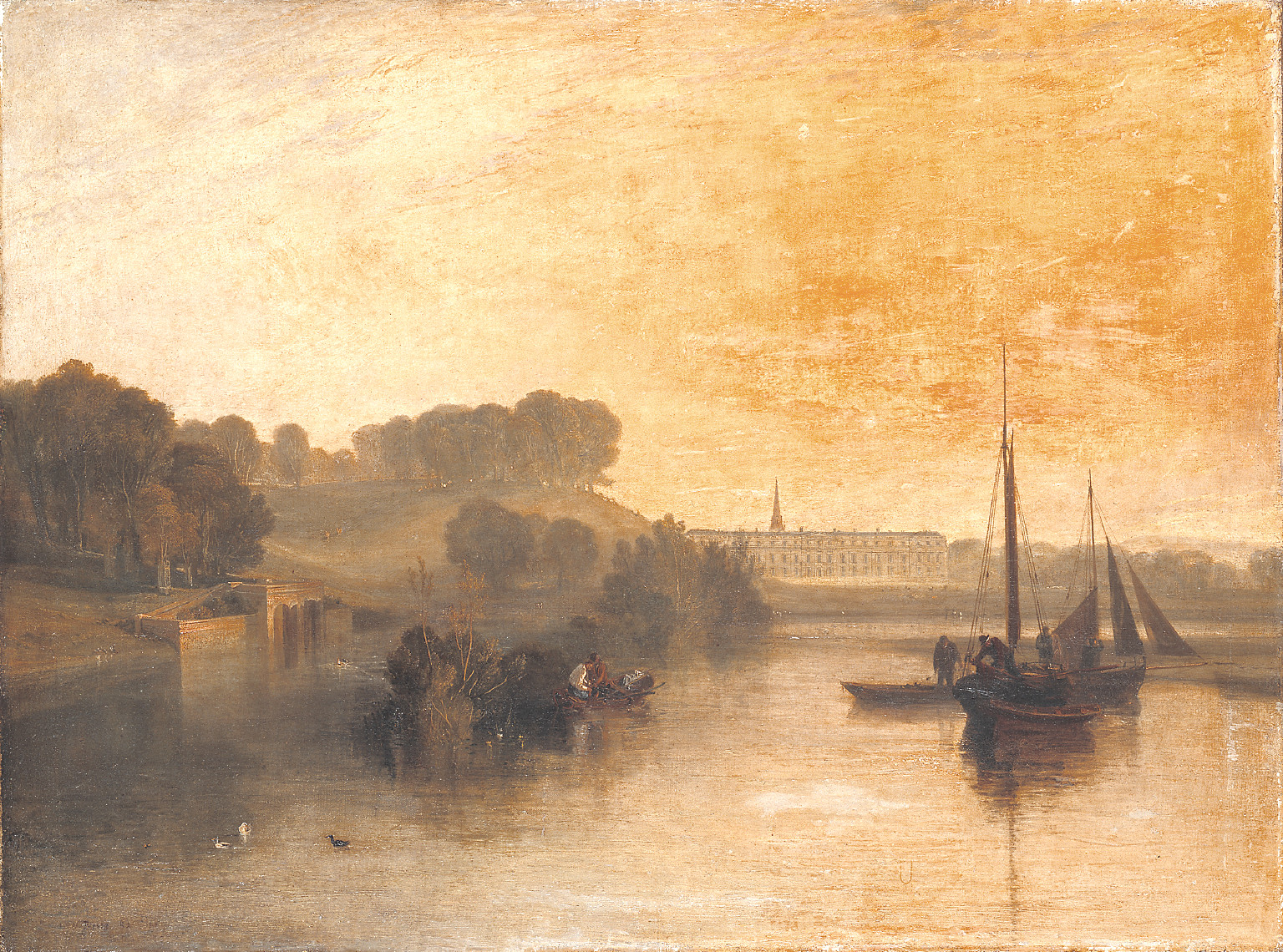
There are quite a few touching moments, such as when he is a guest of one of his wealthy patrons, the 3rd Earl of Egremont at his hereditary home, the magnificent Petworth House in West Sussex, (which incidentally is also featured in my novel, The Virtuoso).

JMW Turner - Petworth House

The camera floats along Turner’s paintings which are hung low to meet the eye line of dining guests, as he chats with Miss Coggins, who is playing Beethoven’s ‘Pathetique’ piano sonata. He asks her to play Purcell, and she obliges with Dido’s Lament, to which Turner sings along.

There is another scene where he enters a brothel, and meets a young girl for the first time. He asks her to reveal herself and arranges her seductively on the bed, and then proceeds to sit down and take out his sketch book.

Another is of Turner on a boat with friends and fellow artists on the Thames, when they witness ‘The Fighting Temereire’ Steam Boat being led to her berth to be dismantled, and it is suggested that Turner should paint her for posterity.

JMW Turner - The_Fighting_Téméraire_tugged_to_her_last_Berth_to_be_broken

We are also introduced to the young Victorian writer, art critic and patron John Ruskin, who adores and reveres Turner, (he is beguiled by his painting The Slave Ship), but the viewer is made painfully aware that he hails from a different class. It is a rather satirical portrayal of his character, lisping away, full of hubris, and quick to criticize Turner’s landscape predecessor, Claude Lorrain.

We see that despite his relative fame while still alive, Turner is also victim to changing public tastes as his style of art grows more ethereal and intensely light focused. He winces in the shadows when the young Queen Victoria and Prince Albert are inspecting the Royal Academy exhibition, and the monarch is definitely not impressed by Turner’s “yellow mess”. Similarly, he is mocked in the theatre for his later style of painting. He realises that the new kids on the block, the Pre-Raphaelite Brotherhood, are now in vogue.

One of the last scenes in the film takes place in Turner’s home gallery, when he is made an offer by a wealthy industrialist to purchase all of his paintings for the sum of one hundred thousand pounds. Still a significant sum of money by today’s standards; an absolute fortune in Turner’s era. But Turner just snorts and replies, ‘With somewhat of a heavy heart, it’s out of the question.’ He declines the generous offer, as he has bequeathed his completed artworks to the British nation.

If there is one small criticism of the film, it is of the modern, eerie soundtrack and music. I never thought that would be the case, but to me it felt incongruous to the subject matter it was meant to convey, and would have been more suited to a thriller. I would rather have heard music from the romantic period, which in my opinion would have suited the film better. Perhaps they were going for an atmospheric feel to align with the complex character of J.M.W. Turner.

Here is a fascinating short film about the artistic aspects of bringing Mr Turner to the big screen:

In summary, Mr Turner is a must watch film that draws you into J.M.W. Turner’s world and has a superb cast, screenplay and locations that brings his story vividly to life. I’m sure I will revisit the movie repeatedly now that I have the DVD in my possession!

What surprised me from the film was Turner’s constant sketching. He would sketch everyday events often, which is probably why his output was so prolific. He was said to have completed around 19,000 sketches during his lifetime, as well as hundreds of watercolours and oil paintings. He was accepted into the Royal Academy of Art at the tender age of 15, when it was under the leadership of Sir Joshua Reynolds.

For art lovers who want to know more about Turner’s life and work here is a fabulous documentary:

He was not just an inspiration and source of pride for the British, his paintings influenced the Impressionist movement in France, and were carefully studied by Claude Monet.

“Unfortunately I met Mr. Turner at the Academy a night or two after I received this letter; and he asked me if I had heard from Mr. Lennox. I was obliged to say ‘yes.’

‘Well, and how does he like the picture?’

‘He thinks it indistinct.’

‘You should tell him,’ he replied, ‘that indistinctness is my forte.’” ~ George Walter Thornbury (The Life of J.M.W. Turner).

The Anatomy of Hope

“The hope of future generations is the chance we have to awaken in ourselves a consciousness that is increasingly immune to irrationality and that values wisdom.” ~ Harry Palmer

hope-quotes-about-love-i14Bad news travels fast. At the speed of light it departs from the behemoth that is the worldwide web and whizzes along innumerable fiber optic cables, then streams through your router and onto your screen! In the modern, hyper-connected age it’s impossible to stay away from news. Every new headline seems to scream of murder and mayhem. I limit myself to exposure just once a day, unless it’s something earth shattering. I loathe getting constantly bombarded with how ‘bad’ the world is.

Whilst it’s important to stay informed I do think there’s a danger of news overload. You could be forgiven for thinking that we live in a hell on Earth, and those kind of beliefs create a climate of fear. You see desperate faces devoid of hope on your TV every night. You might rightly think, ‘WTF is the world coming to?’ It’s easy to get depressed in the face of such relentless s**t.

And you have to remind yourself that out of the billions of people inhabiting planet Earth, only a small percentage are making trouble. But those are the only ones we hear about. Most of us live in relative peace (unless you are unfortunate enough to be in one of the war zones or trouble hot spots in the world). Wars have been raging somewhere in the world for about ninety percent of humanity’s existence.

hopeIn times of war hope is a precious commodity indeed. Winston Churchill, who himself battled bouts of depression, (his “black dogs”); kept our nation’s hope alive with his brilliant speeches that rallied people together against an evil doctrine that threatened our freedom. Even in the face of devastating losses. But the important thing is, it wasn’t empty rhetoric, it was a combination of well thought out strategy and inspiring oratory.

To have no hope is to have no motivation, no reason to live. To feel that dreadful emptiness in your gut invites in apathy and her cohorts: fear, helplessness and depression. When hope dies, your future dies.

I read this article about the recent murder of Russian politician Boris Nemtsov, which kind of implies they should all give up and accept murder and corruption as a way of life. Yes, it’s a big blow for democracy in Russia, but the people must use it as a springboard for continued change. Poor Boris probably hoped that he wouldn’t have to become a martyr to bring his lofty cause to fruition, but the power of a martyr should never be underestimated..

I’ve tried to understand, what exactly is hope? For me, the anatomy of hope is acceptance and gratitude for the present moment (what is), but at the same time having aspirations for what you want in your future. It’s interwoven with the creative process. Pursuits of any kind are not possible without hope for an improved tomorrow. It is the starting point for all endeavour. It is the root of goal-setting and encompasses desire, courage, compassion and love. Without it there would be no evolution, no growth.

Hope is one of the few four letter words that really packs a positive punch. Hope is as essential to the human spirit as air is to the survival of the physical body. Quite simply, it ranks up there with oxygen.

best-quotes-hope-life-dont-give-up-nice-lovely-sayings-pics

When hope leaves, your cells literally shut down. I’ve been there, at the bottom of the pit, feeling that there was nothing left for me in life. I very nearly gave up. It’s a place I wouldn’t wish on anyone. But when you hit rock bottom there is only one direction you can travel, or you perish down there.

The film The Shawshank Redemption, based on Stephen King’s novella has a wonderful scene between Andy and Red that perfectly epitomises the essence of hope:

Of course, I don’t want to get mixed up with false-hope, which is pie-in-the-sky thinking. I’m talking about the kind that will make you stretch and grow, yet is achievable. You need enough to excite your imagination; satisfy your reasoning mind that it’s doable and to ignite your furnace of ambition.

“All people dream, but not equally. Those who dream by night in the dusty recesses of their mind, wake in the morning to find that it was vanity. But the dreamers of the day are dangerous people, For they dream their dreams with open eyes, And make them come true.” ~ D.H. Lawrence

Hope wallpapersLast year I had a bout of rejection when I was submitting The Virtuoso to literary agents, and after a while it got me down. Then I became afraid to open the emails, because I knew what they would say. I could feel my confidence ebbing away, and my enthusiasm for my work dwindling. I decided after a few months of polite ‘thanks but no thanks’ comments that I would represent myself, for better or worse.

Hope is also a theme I wove into The Virtuoso. My protagonist, the violinist Isabelle Bryant, draws her hope from the example of her musical hero Beethoven, who once contemplated suicide in his darkest hour. The only reason we know that he did was the discovery of the “Heiligenstadt Testament” after his death in 1827.

I thought that if I put Isabelle in his shoes she might well feel the same despair. Imagine how you would feel if the only thing that you are good at, in fact brilliant at, is about to be ripped from your life, compounding the emotional havoc already in your heart, wreaked by romantic heartbreak and growing isolation. It’s the kind of suffering you can only recover from with a hefty dose of hope and determination.

I think that the depth to which we sink is a measure of the height we can ascend to. Luckily for us Beethoven persevered, and because of his courage we can enjoy his musical legacy, some of the greatest music in history, including the immortal ninth symphony:

There is always light at the end of the tunnel if we can but focus on it and have the faith to follow it. Napoleon Hill said, ‘The starting point of all achievement is desire.’ That desire is the flame of hope, the spark which provides your motivation for action, which in turn produces your results. I don’t advocate dwelling on the past, but sometimes it can be useful to see how far you have come.

And when you achieve a desired outcome you naturally find another dream to pull you towards your full potential. Hope is an immensely personal thing, but it can also be incredibly powerful when a group of people apply the same hope to humanity.

Here is a heart-warming compilation of normal folks responding to the question: what is hope?

If you find yourself in a similar mental state to the one I was in a number of years ago, I sincerely hope that this post has helped to give you the belief that you can make it through. When you get to the end of your rope, tie a big knot and hold on!

Hold On Pain Ends

My hope is that one day, humans will be able to co-exist in mutual respect of our diverse cultural, geographical and religious differences. No matter who you are, where you’re from, or what your background is you have basic human needs, and Maslow’s hierarchy of needs applies to pretty much everyone alive.

My favourite rock band, Queen, also have One Vision:

I had a dream when I was young,

A dream of sweet illusion,

A glimpse of hope and unity,

And visions of one sweet union.