Survival Archetypes – Their Role in the Collective/Personal Psyche; and Why You Should Know About Them (Part 1)

“Everything that irritates us about others can lead us to a better understanding of ourselves.” ~ Carl Jung

I’m a beginner in the field of psychoanalysis, but as a writer I’m immensely curious about people and I wanted to provoke some ideas, thoughts and reflections in you that have recently been stimulated in me; thanks to a wonderful lady who is helping me to understand more about myself and others.archetypes - Jung
I hope that by the end of this blog the next time someone ‘pushes all your buttons’, you will be able to step back and witness your reaction and perhaps understand the unconscious behaviour they are exhibiting which is exactly the ‘shadow’ part of yourself that you have been resisting.

Working on ourselves is the only answer, we cannot change another – EVERYTHING comes from within.

In any given relationship between two people there are multiple personalities at work – no wonder life gets so…interesting!

Light and shadow

There are four survival archetypes that everyone on the planet shares: CHILD, VICTIM, SABOTEUR and PROSTITUTE. There are another twelve predominant archetypes that many of us will work through in our lifetime, but beyond that they are probably limitless. I’ll explore the Child Archetype more closely in this post, and the Victim, Saboteur and Prostitute archetypes in part 2.

It’s important to note that the archetypes themselves are impersonal; each contains an element of light; what we know, the positive aspects of that archetype, and an element of shadow; the perceived darker part that we don’t acknowledge, know about or integrate. The point is there is light and shadow in each of us.

Wonderful talk by Alan Watts about Carl Jung on accepting the darkness of Self and others:

Being aware of what we don’t want to look at and are resisting in ourselves absolves us from judging others; we learn to observe, rather than react to the unconscious behaviour they are mired in. The moment someone offends us it means we have gone into an archetype.

As our understanding grows, we ‘see’ how we have ‘acted out’ in the past when confronted by other people’s archetypes, as well as dealing with our own!

Insight and hindsight can bless us with foresight…

“Knowing your own darkness is the best method for dealing with the darknesses of other people.” ~ Carl Jung

Conscious and Unconscious mind

The Conscious and Unconscious mind has been compared to an iceberg: what we see above the surface (conscious mind), is but a fraction of what lies beneath it (unconscious). Ninety five percent of our thoughts and actions stem from the Unconscious. When we think and act consciously were are responding, but when we act beneath our conscious level we are reacting, and we react according to the archetypes that we have failed to integrate. Patterns become the foundation for our personality.
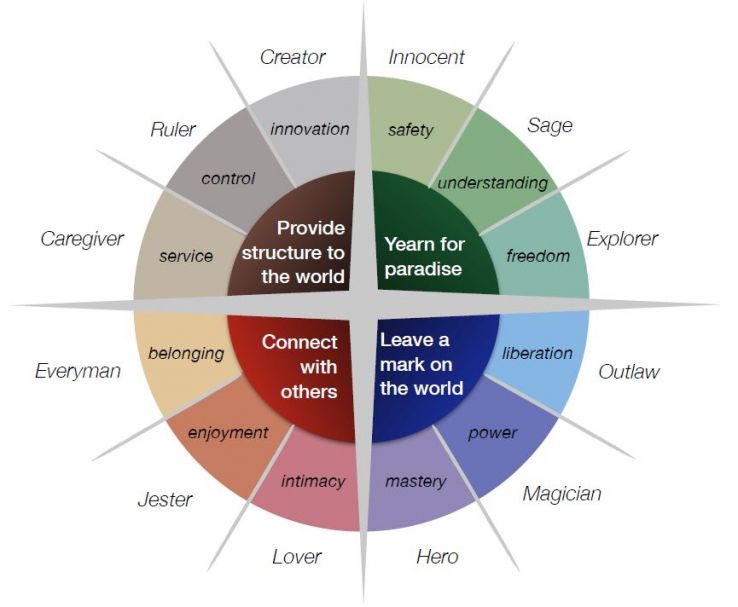
Dominant Archetypes

Dominant Archetypes

Archetypes are the language of the Unconscious. When we aren’t aware of why we’re doing something the archetype takes over and transparent beliefs and holding patterns drive us. Like a robot we operate on our default behavioural settings.

“There is no coming to consciousness without pain.” ~ Carl Jung.

Collective Unconscious  

According to Jung, the Collective Unconscious is the sum of all human experience from the beginning of time. Therefore, whatever happens to an individual, group or nation also affects us as a species. We are not separate from the recent disaster in Mecca or the unfolding humanitarian crisis in the Middle East, or to the suffering stemming from trauma, past and present. It all goes into the primordial ‘shared’ mind and we all draw from it.

Fairy tales and literature

Hamlet & Ophelia by Dante Gabriel Rossetti c. 1866

Hamlet & Ophelia by Dante Gabriel Rossetti c. 1866

There’s a reason that fairy tales are so prevalent in Western Culture (and the habit of passing on stories in other cultures), because they help children to understand themselves.  Characters such as Peter Pan, Snow White, Sleeping Beauty, the Wicked Step Mother, the Prince, the Free Spirit, the Damsel in Distress, along with iconic archetypes penned by Shakespeare and modern tales/films such as Lord of the Rings and Star Wars filled with heroes, villains, sages and mentors, all of which we can relate to as they exist at the substrate of our psyches.

Our task for our time on Earth is to understand these fundamental human questions:

  • Who am I?
  • Why am I here?
  • What am I supposed to be doing?

Power

There are two types of power: control over others and internal power (when we move from ego into soul power). Our spiritual task is to master personal power. We see the legacy of misery and suffering that exists in the world when individuals and groups seek to wield power over others. Personal power requires us to live with integrity, self-respect and self-belief so that in expressing our truth we can benefit others.

In order to do this we must integrate all parts of ourselves, the light and shadow. Free-will and choice are inherent to the Conscious mind and allow us to respond rather than react.

As James Hillman comments, Archetypal Psychology focuses on the soul and the intrinsic patterns that shape our psychological development “the fundamental fantasies that animate all life”.

Wonderful lecture from Dr. James Hillman about myths and archetypes:

The four survival archetypes common to all of us

CHILD Archetype: represents innocence and sets up our perceptions of life. The themes are safety, loyalty and family.

Lesson: to move from dependency to responsibility.

Within this archetype there are five categories:

Orphan Child
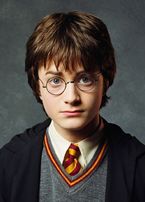
Harry PotterLight – Usually features heavily in children’s stories. Don’t feel part of the family, have a fear of being alone and probably had to develop independence early in life. Constructs an inner reality based on judgement and personal experience. The orphan represents the fear of surviving alone in the world.

Shadow – An inability to grow up. Suffer from feelings of abandonment. Does not develop independence and needs a tribal union, e.g. joining unsuitable groups.

Wounded Child

Light – Have been abused, neglected or suffered trauma and are likely to invite dysfunctional relationships. Usually compassionate towards others (life’s future therapists). It’s the path to forgiveness.

Shadow – An abiding sense of self-pity, a tendency to blame parents and resistance to moving on through forgiveness.

Magical/Innocent Child

Light – Believes that everything is beautiful; the part of us that is enchanted and enchanting to others.  Ann Frank was a great example of this archetype. She embodied the qualities of wisdom and courage in the face of overwhelming difficulties. Demonstrate the power of imagination and the belief that anything is possible.

Shadow – Retreating into fantasy. Depression and pessimism arises when dreams are thought foolish by adults. Miracles are no longer possible.

Nature Child

Light – Loves to be outdoors, can balance tender, emotional qualities with inner toughness and the ability to survive. Has a great communication and rapport with animals.

Shadow – Cruelty to animals and disregard for nature, such as the destruction of the rainforest.

Eternal Child

Light – Determined to remain young in mind, body and spirit.

Shadow – Refusal to grow up and embrace adult responsibility e.g. Peter Pan. Become dependent on others for physical security, inability to accept the ageing process. Joan Rivers at least made us laugh about this aspect of the archetype! Plastic surgeons cater to this group…

Language

If you catch yourself saying, or hear anyone saying these phrases (or variations of) you know that you/they are operating in CHILD:

It’s not Fair! Nobody loves me, I don’t deserve it…

Recognising Child behaviour

Wanting to be pitied, self-pity, pouting, child-like stance, avoiding eye contact, always wanting to be the centre of attention, refusal to take responsibility and wanting someone else to undertake a task you are perfectly capable of doing.

“The debt we owe to the play of imagination is incalculable.” ~ Carl Jung

The Great Virtuoso Violinists/Composers of the 17th Century: Vivaldi (Part 2)

Having covered the more factual parts of Vivaldi’s life and music in part 1, you can sit back, relax and enjoy the maestro’s music…

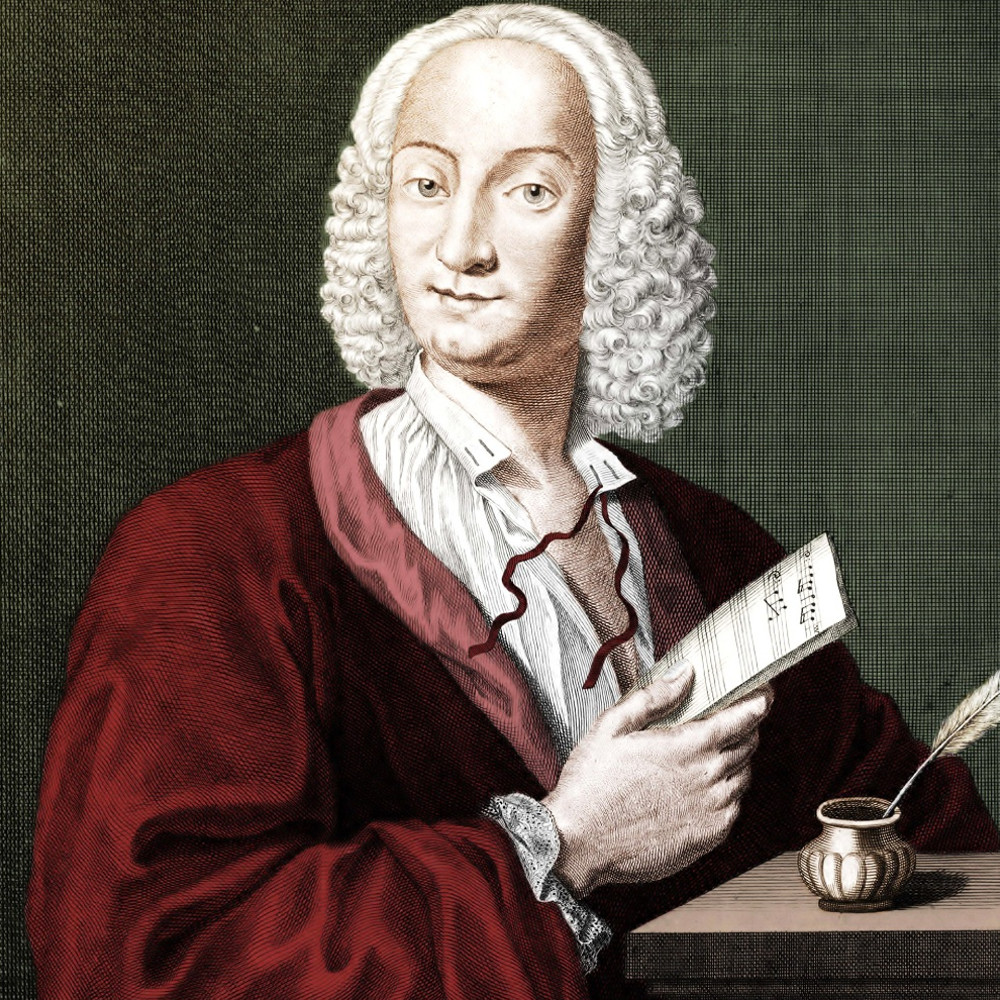
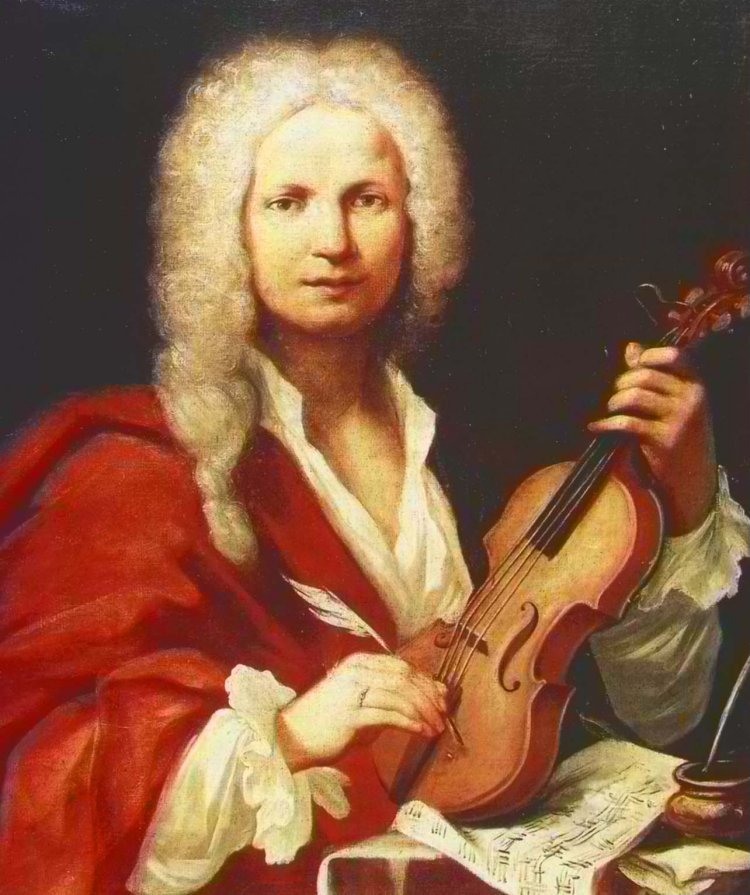
Antonio Vivaldi portrait

‘L’estro Armonico’ (Harmonic Inspiration) Opus 3

This is a set of twelve concertos for one, two and four violins composed by Vivaldi in 1711.

“Perhaps the most influential collection of instrumental music to appear during the whole of the eighteenth century.” ~ Michael Talbot

It’s impossible to highlight so few works out of such an incredible oeuvre but here, in no particular order is a selection of some of my favourites from this opus for your listening pleasure!

Violin Concerto in G major, Op. 3 No.  6, (RV 310) performed by Elizabeth Wallfisch and Tafelmusik:

The amazing harpsichord version transcribed by Bach (BWV 978) played by Chiara Massini:

Violin Concerto in A minor, Op. 3 No. 6, RV 356 by Elizabeth Wallfisch:

Concerto for two violins, strings & B.C in A minor, RV522 Op. 3 No. 8 by Tafelmusik:

Concerto for four violins in B minor, Op. 3 No. 10, RV 580 by Il Giardino Armonico:

The astonishing performance of Bach’s transcription for 4 keyboards (BWV 1065), Argerich, Kissin, Pletnev, Levine and a host of top notch violinists! I challenge you to listen to this and not feel happy afterwards!

Concerto for 2 Violins, Cello, Strings and B.C. in D minor Op. 3 No. 11, RV 565 by Tafelmusik:

Il cimento dell’armonia e dell’inventione (The Contest Between Harmony and Invention) Opus 8

Written between 1723 and 1725 and published in 1725, Vivaldi’s Opus 8 consists of twelve violin concertos which he labelled ‘Il cimento dell’armonia e dell’inventione’, of which the first four concertos were his famous The Four Seasons.

The Four Seasons: Opus 8 Nos. 1-4

Had it not been for the Turin collection The Four Seasons may have never been resurrected from their archive, dusted down and brought back into public awareness. Although ‘Le Quattro Stagioni’ were not among the Turin find the excitement about the discovery meant they were granted a new lease of life.

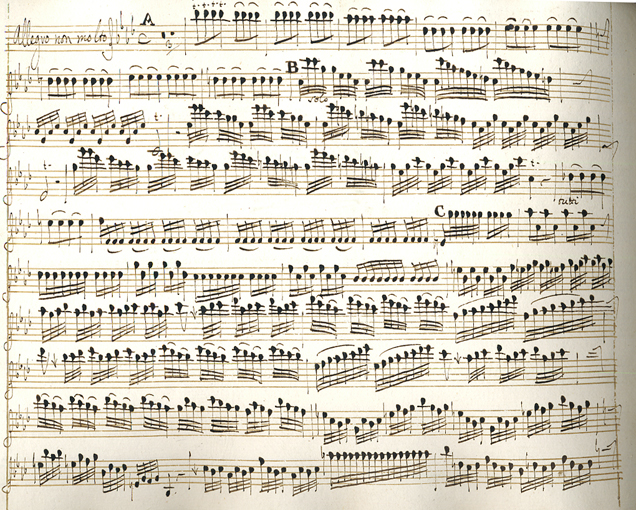
Vivaldi - manuscript Inverno

Score for L’Inverno (Winter)

The first four Opus 8 concertos are now the most widely recorded pieces in classical music history repertoire. Since the very first recording made by Alfredo Campoli in 1939 there have been over a thousand different recorded versions.

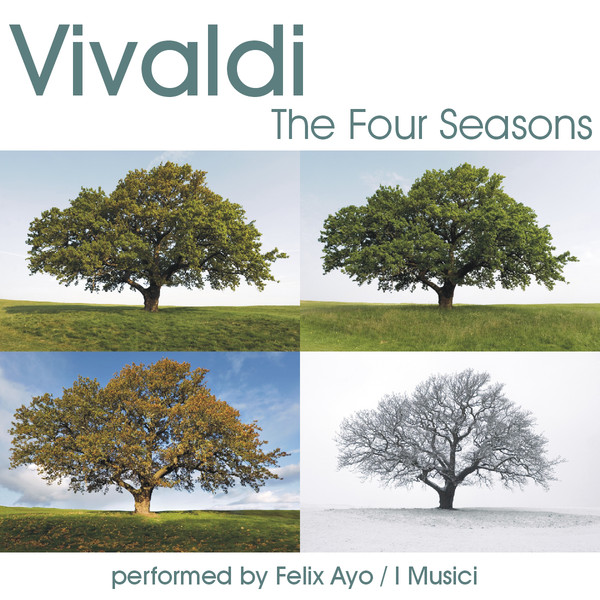
Vivaldi - I-Musici-Felix-Ayo-Vivaldi-The-Four-Seasons

With records, CDs and digital downloads to sell and with so many versions of such a popular work it’s crucial for artists to emulate a critical business practice: differentiation.  There’s an array of classical and period baroque instruments, chamber groups, orchestras and ensemble styles, giving licence to the soloist and musicians to embellish, alter the tempo and put their personal touch to it,  in order to distinguish them from other recordings and performances.

Vivaldi - Alan Lovbeday AOSMITF 4 Seasons

The seminal 1969 recording by the Academy of St. Martin-in-the-Fields featuring violinist Alan Loveday under the baton of Sir Neville Marriner, reputedly catapulted the piece from its recondite realm to that of mainstream consumption.

The third movement from ‘Winter’ of that album:

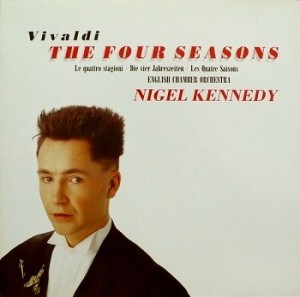
Nigel Kennedy’s 1989 recording of The Four Seasons with the English Chamber Orchestra sold over two million copies, becoming one of the best-selling classical works ever.

Vivaldi - Nigel Kennedy 4 seasons

Gil Shaham and the Orpheus Chamber Orchestra recorded The Four Seasons as well as a music video for the first movement of ‘Winter’ that was featured regularly on The Weather Channel in the mid-1990s.

Today, it seems unthinkable that Vivaldi could have been forgotten and overlooked by history.

Personally, I love to play The Four Seasons and find ‘Winter’ by far the hardest to master, being written in the key of F minor.  I love the hashtag (sharp notes) but four flats haunt me…

I recently learnt that Vivaldi actually wrote sonnets to accompany the Four Seasons, which the music relates to perfectly. It’s an early example of programme music, a genius of descriptive musical storytelling that conjures up vivid scenes in your mind…

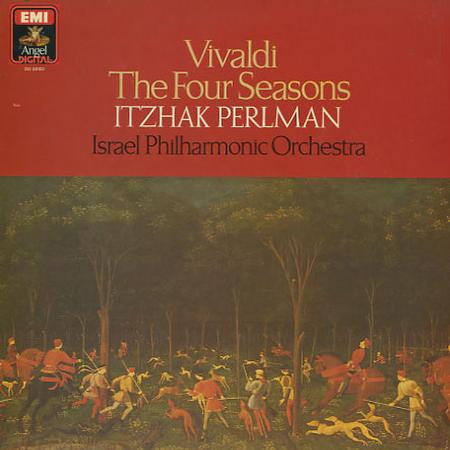
Vivaldi - Perlman IPO 4 Seasons

Between 1718 and 1720 Vivaldi left Venice and travelled to the countryside of Mantua; where it is believed he absorbed the setting and inspiration for his most ‘nature oriented’ work!

La Primavera (Spring) RV 269

In the first movement the birds are represented by the most sublime trills, and the gentle melody that evokes the murmur of the brook, followed by the semi quavers which indicate a quick storm, followed by the birds again as the air clears…

Itzhak Perlman and IPO strings delight:

L’Estate (Summer)  RV 315

The first movement in particular gives me a sense of a sweltering, bleak and languid environment. I can feel how hard it must be for Vivaldi to breathe, his asthma aggravated by the humidity. It’s written in G minor, which is considered to be the ‘darkest’ key. Overall the feel of the second movement is listless. It fills me with torpor…until the third movement he unleashes the storm to end all storms!

Julia Fischer and the strings of The Academy of St. Martin-in-the Field perfectly capture the deeply suffocating spirit of this concerto:

L’Autunno (Autumn) RV 293

The third movement seems to poke fun at the hunters; I think Vivaldi was definitely a member of the anti-hunting lobby!

The dotted quavers  signify the plodding hooves of cruel men on their clumsy horses. As the tempo increases you can hear the prey running for its life. The chords begin to raise a semitone with each phrase, increasing the pressure on the animal as the hunters and dogs close in. Gun shots ring out, the animal finally gives up its struggle and you imagine you can hear the dogs laughing… The final insult occurs after the main theme returns at the end of the finale signifying the hunters going about their deathly business.

I love Giuliano Carmignola and I Sonatori de la Gioiosa Marca’s interpretation:

L’Inverno (Winter) RV 297

The opening movement sounds very metallic and visceral, (thanks to the use of the bow very close to the bridge). You can definitely hear teeth chattering!

This performance by Il Giardino Armonico sends chills down my spine!

Arrangements of The Four Seasons

Vivaldi actually re-scored his ‘Spring’ allegro for use in the opening overture and chorus of his opera Dorilla in Tempe, thus setting the trend for future transcriptions, covers, remixes, adaptations and mashups.

The fact that so many improvisations have been possible is testament to Vivaldi’s skill as a composer.

In 1765 French organist and composer Michel Corrette arranged ‘Spring’ as a choral motet for choir and orchestra: Laudate Dominum de Coelis, subtitled “Motet à Grand Chœur arrangé dans le Concerto de Printemps de Vivaldi”. The words of Psalm 116 are set to the music with vocal soloists performing the solo violin parts.

Vivaldi’s inventiveness paved the way for Beethoven to write the ‘Pastoral’ symphony in 1808 also featuring drunken peasants and a storm.

In 1969 the Swingle Singers did an a cappella cover from their album the Joy of Singing.

In Argentina Ástor Piazzolla published Estaciones Porteñas, ‘The Four Seasons of Buenos Aires’ in performances by various artists since 1970.

Jacques Loussier and his jazz trio covered the ‘Four Seasons’ in this wonderful performance:

Vanessa Mae was the first violinist to use an electric violin on her crossover version of the Presto from ‘Summer’ and following in her footsteps there have been various arrangements for harp, electric guitar, choral and rock remixes.

I particularly like this choral version of ‘Winter’ by the Accentus Chamber Choir:

Arrangement for Flute of ‘Winter’ by Jean-Pierre Rampal & Franz Liszt Chamber Orchestra:

A gorgeous second movement from ‘Winter’ for the oboe with Albrecht Mayer and New Seasons Ensemble:

In 2012 composer Max Richter created a postmodern and minimalist re-composition released as ‘Recomposed – Vivaldi The Four Seasons’. Working with solo violinist Daniel Hope, Richter discarded around seventy five percent of the original source material. A live recording with the composer at Le Poisson Rouge in New York:

There’s even a flamenco/tango arrangement of Spring by Gustavo Montesano and the Royal Philharmonic Orchestra!

Opus 8 Nos. 5 – 12

Here are three of the remaining eight works that follow The Four Seasons in the Opus 8.

Violin Concerto ‘La Tempesta di Mare’ in E-Flat major, Op. 8 No. 5 RV 253 by Giuliano Carmignola and the Venice Baroque Orchestra:

Violin Concerto in C Major, ‘Il piacere’ Op. 8 No. 6, RV180 – Andrew Manze and the Academy of Ancient Music:

Concerto No. 7 in D minor, ‘Per Pisendel’, Op. 8 No. 7 RV 242 by Giardino Armonico:

Other Violin Favourites

I love the way Anne Akiko Meyers plays all three parts in his Triple Violin Concerto in F Major RV 551:

Il Rosignuolo – Concerto for violin, organ, strings & B.C. in A major, RV 335a by MusicaAdRhenum:

Violin Concerto in E Major, RV 271 ‘L`amoroso’ played as a tender love song by I Musici:

Violin Concerto in E minor, Op.  11 No.  2 ‘Il Favorito’ (RV 277) first movement by Giuliano Carmignola & I Sonatori de la Gioiosa Marca:

´La Stravaganza` 12 Violin concertos Opus 4, by Rachel Podger and Arte Dei Suonatori:

Violin Concerto in A Major, ‘The Cuckoo’ (RV 335) with Giuliano Carmignola:

Violin Concerto in D Major, ‘Il Grosso Mogul’ (RV 208) by Il Giardino Armonico:

Sonata for 2 violins & B.C. in D minor, Op. 1 No. 12 (RV 63) ‘La Follia’ by Il Giardino Armonico:

Transcriptions and Arrangements

Violin Concerto in D, Op. 3 No. 9 (RV.230) – arr. for trumpet, violin, cello and harpsichord with Alison Balsam:

Bach Sicilienne from Concerto in D minor, BWV596 after Vivaldi RV 565, Alexandre Tharaud:

The largo of the Lute Concerto in D Major, RV 93 performed on classical guitar by John Williams always transports me to a place beyond words:

Trio Sonata Op. 1 No. 12 ‘La Follia’ by the Barrios Guitar Quartet:

Concertos for other instruments

This one really pulls my heart strings! Adagio from the Cello Concerto No. 1 in C major RV 398 by Rostropovich:

Heinz Holliger on form in the second movement of the Oboe Concerto in C major, RV 452:

Piccolo Concerto in C major, RV 443 – Il Giardino Armonico:

Flute Concerto in G minor, ‘La Notte’ RV439 with Fabio Biondi & Europa Galante:

Examples of sacred music

I don’t think there’s any doubt about Vivaldi’s faith when you listen to his sacred works. Here is a selection of some of my favourites, but there are many I have yet to discover!

Gloria in Excelsis in C Major, (RV 588):

Motet Nulla in mundo pax sincera (RV630):

“Et in terra pax hominibus” with Emma Kirkby, Michael Chance & Tessa Bonner:

Dixit Dominus was rediscovered in 2005 by Australian scholar Janice Stockigt. (RV807):

Nisi Dominus (RV608) by the Academy of Ancient Music and Christopher Hogwood:

Modern Catalog of Works

Although both CE (Complete Edition) and Fanna numbers (F.) have been used in the past, the modern catalog of numbers attributed to Vivaldi’s multitudinous works was created in the 1970’s by Danish musicologist Peter Ryom and take the prefix RV – “Ryom-Verzeichnis” or “Répertoire des oeuvres d’Antonio Vivaldi”. They do not necessarily follow in consecutive order with adjacent works.

The end in Vienna

Although Vivaldi lived a comfortable life in Venice, (he made around 50,000 ducats in his lifetime) changing musical tastes meant his music was no longer in demand so he sold off a chunk of manuscripts to finance his last trip to Vienna.

He planned to serve as a composer at the imperial court of Emperor Charles IV and perhaps stage operas. Unfortunately his patron died soon after his arrival in the city, leaving Vivaldi without an income and he died penniless. Not a fitting end to such a magnificent career. His funeral took place in St. Stephen’s and he was laid to rest next to Karlskirche.

I have come to the conclusion that Vivaldi lived his life with as much exuberance as his music arouses in the listener. The sheer volume of his output is unmatched to this day; a feat of such unbridled passion for music as will probably never be seen again…

The Great Virtuoso Violinists/Composers of the 17th Century: Vivaldi (Part 1)

“There are no words, it’s only music there.” ~ Antonio Vivaldi

Listening to Vivaldi’s music always conjures up such joy and serenity in me. His lively, melodic allegros are uplifting and life affirming, whereas his soulful adagios have a transcendental quality. It strikes me that he must have possessed an unrelenting zest for life. He certainly made the most of living with a fertile mind trapped inside a sick body.

Famous for his evocative ‘Four Seasons’ concertos and sometimes referred to as “il Prete Rosso” (the Red Priest), due to the colour of his hair; he lived, performed and composed his immortal music almost entirely in Venice.

Antoni Vivaldi portrait2

Vivaldi is now considered one of the key figures of the baroque era. However, his work and reputation only started to garner attention and gather steam in the early 20th century. Since then the flamboyant Venetian maestro has more than made up for lost time…

Knowing how much I love Vivaldi’s music, I can see it’s going to be a challenge for me to exercise brevity in this post! Because of the volume of his work I have decided to dedicate two posts to him.

Antonio Lucio Vivaldi (4 March 1678 – 28 July 7141)

I think it’s fair to suggest that Vivaldi was the ‘rock star’ of his day. Although he was a priest he refused to say mass and was suspected of being involved in a ménage à trois with two teenage girls.

His music was passionate, dangerous, dramatic and yet ethereal. His creativity produced a massive body of violin sonatas and concertos, as well as concertos for a range of other instruments, operas, arias and sacred music. It’s thought he wrote nearly 800 compositions during his lifetime.

His main contemporary, the grand-daddy of them all, JS Bach, was influenced by him and incorporated some of Vivaldi’s works into his own repertoire for harpsichord, thus keeping his work alive in Europe, known only to a handful of musicologists and scholars.

However, unlike Bach and Händel whose memories and music survived their mortal reign, after Vivaldi’s death, his music fell from favour and Vivaldi himself was remembered more for being an eccentric violinist and cleric than as a prolific composer. He was very nearly a Venetian nobody instead of his rightful place as the Venetian Master.

Early life 

Vivaldi was born in Venice, the eldest of 6 children. Just as the legend of the storm that raged in Vienna the moment Beethoven passed away has proliferated, so goes the story that Vivaldi was born during an earthquake in Venice. It’s a romantic notion that would support his often visceral, elemental music, whether true or not.

He was born with severe asthma, which as you can imagine, in the late 17th century would have proved fatal in most cases. Little Antonio’s mother may have done a deal with God, that if he spared her first born then she would dedicate his life to the church.  Asthma plagued Vivaldi all his life, however he did become a priest, but is only known to have actually said mass for about a year after being ordained.

Vivaldi & Son

Before Johann Georg Leopold and Wolfgang Amadeus Mozart, there was Giovanni Battista and Antonio Lucio Vivaldi; an enduring and successful father and son partnership. Giovanni was a successful musician, performing with Vivaldi as well as peddling his music manuscripts on the streets and generally helping his son’s career wherever he could.

Career

Thankfully for us Vivaldi followed his heart and his real passion – music. Those that heard him play commented on the ferocity of his technique. Only a violin virtuoso could write such demanding music for his instrument!

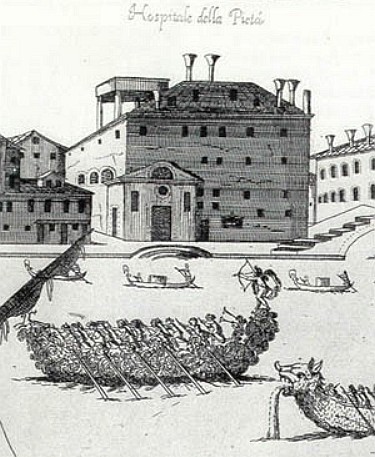
Ospedale_della_Pietà - VeniceIn 1703 Vivaldi was assigned to the Ospedale della Pietà, an orphanage for abandoned and illegitimate babies. The unfortunate infants were passed through a hole in the wall, which had a warning issued above it from Pope John Paul urging parents to keep their children if they were able to care for them. In Vivaldi’s day there could be as many as four babies deposited a day. Sadly, before the orphanages opened many were tossed in the canals as unwanted appendages.

The boys were taught trades, such as stone cutting and weaving, whereas the girls were tutored in music and singing. It was the perfect vocation for Vivaldi, as master of violin he was able to write music for his students (approximately two concertos a week), and his young female protégés performed in a small section of the Pietà behind a decorative grille.

Venice became popular as a tourist destination after its position as a trading centre and economic power had waned, hence Vivaldi and his ensemble of young ladies were added to the list of the city’s attractions!

The tradition of the students giving concerts at the Pietà continued long after their first and most famous composer passed on and in 1770 the French philosopher, Jean-Jacques Rousseau, after seeing a performance commented:

“I have not an idea of anything so voluptuous and affecting as this music; the richness of the art, the exquisite taste of the vocal part, the excellence of the voices, the justness of the execution, everything in these delightful concerts concurs to produce an impression which certainly is not the mode, but from which I am of opinion no heart is secure.”

Imagination and inventiveness

The three movement style (fast – slow – fast) became firmly established in Vivaldi’s concertos, and the first movement generally consisted of five tutti (ensemble together) and four soli (soloist). He was influential on the sonata form and the creation of the classical concerto of the 18th century.

Professor Livanova remarks that his concertos, as distinct from Corelli’s Concerti Grossi, are characterised not only by:

“free development of orchestral texture,…but also by the singling out of the concertante solo of the solosist’s principle part, which would be executed with the brilliance of virtuosity. It was in the violin concerto that they found the most direct expression for instrumental virtuosity, analogous to the aspiration for vocal virtuosity in the operatic aria of the time… However, in the first stages of development the violin concerto had not yet sacrificed its artistic meaning to external virtuosity.”

Love

When he was 48 years old Vivaldi fell for singer Anna Giro, a sixteen year old girl who was to be his muse and companion for the rest of his life. Her older sister Paolina was her chaperone, thus many spurious rumours began to spread about the nature of their relationships. What is known is that Anna lived with him, featured in most of his operas and she was with him when he died in Vienna in 1741.

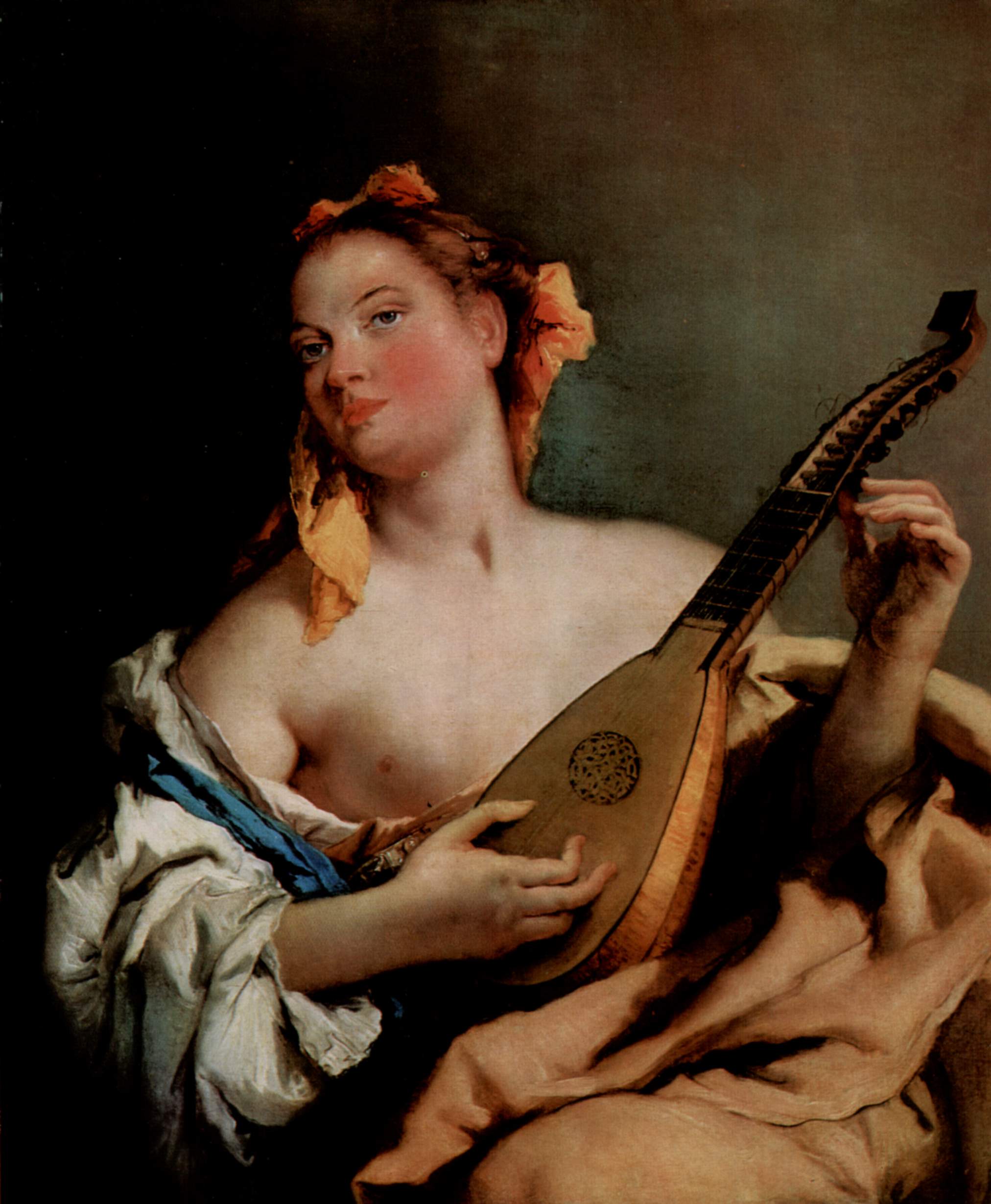
Giovanni Battista Tiepolo - Girl with a mandolin

Giovanni Battista Tiepolo – Girl with a mandolin

This brilliant article (Saint or Sinner?) by Susan Orlando investigates his character and relationships more closely.

Obsession with Opera

Vivaldi claimed he had written 94 operas, but only 50 of them have been discovered. Being an opera impresario was more of a side line for Vivaldi, and although he had limited success it was his ‘thing’. I haven’t even scratched the surface of his operatic output, let alone the many arias that comprise them. His skill at setting music to a story probably stood him in good stead when he composed the Four Seasons.

Here is an impassioned rendition from contralto Sonia Prina of ‘Vedrò con mio diletto’ from Giustino:

Viva Vivaldi! A fabulous selection of arias from mezzo-soprano Cecilia Bartoli:

Vivaldi’s personal archive (the Turin manuscripts)

Sometime after his death, Vivaldi’s private collection of handwritten manuscripts were sold to the Genoese Count Giacomo Durazzo (1717 – 1794), the Austrian ambassador in Venice who was a patron of Gluck. Perhaps as an act of charity on behalf of Durazzo, around half of the collection was gifted to a Salesian monastery in Piedmont.

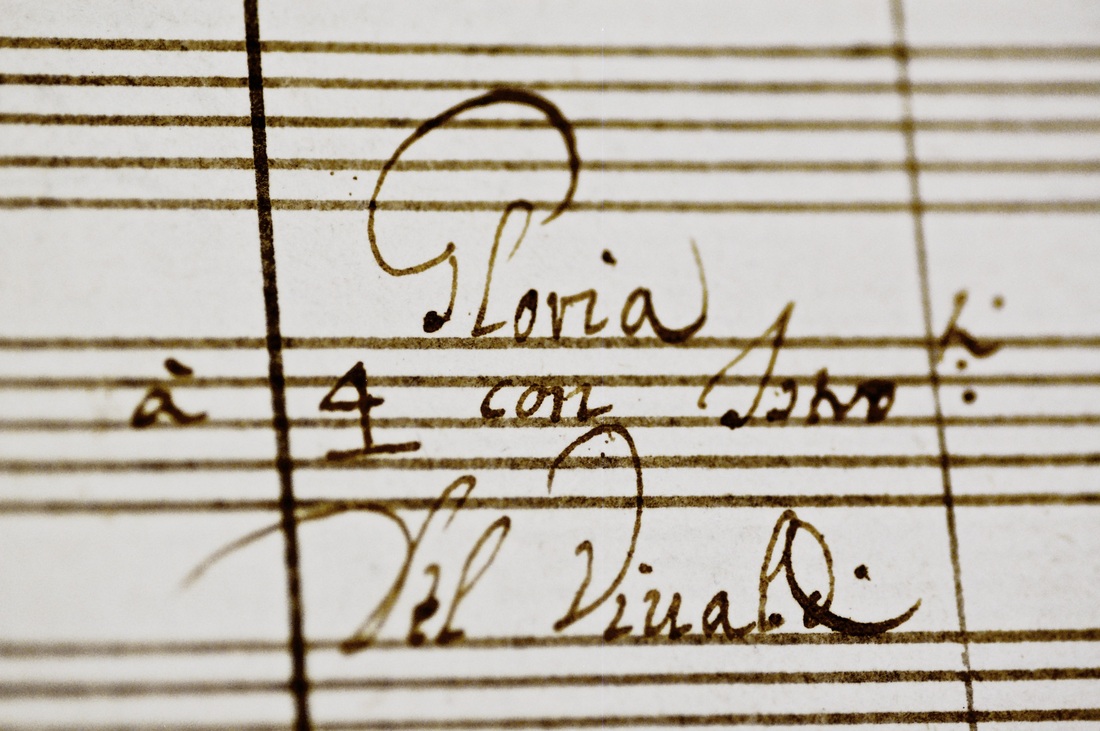
Vivaldi - Gloria image Miles Fish

Vivaldi – Gloria Manuscript – Turin Image credit – Miles Fish

Hidden in a musty store room, ensconced among 97 volumes of music scores, Vivaldi’s music lay gathering dust for two hundred years at what is now the Collegio San Martino near Turin, until they were re-discovered unexpectedly in 1927 by Alberto Gentili, a professor of music history at the University of Turin, who was called in to value the collection so that it could be sold.

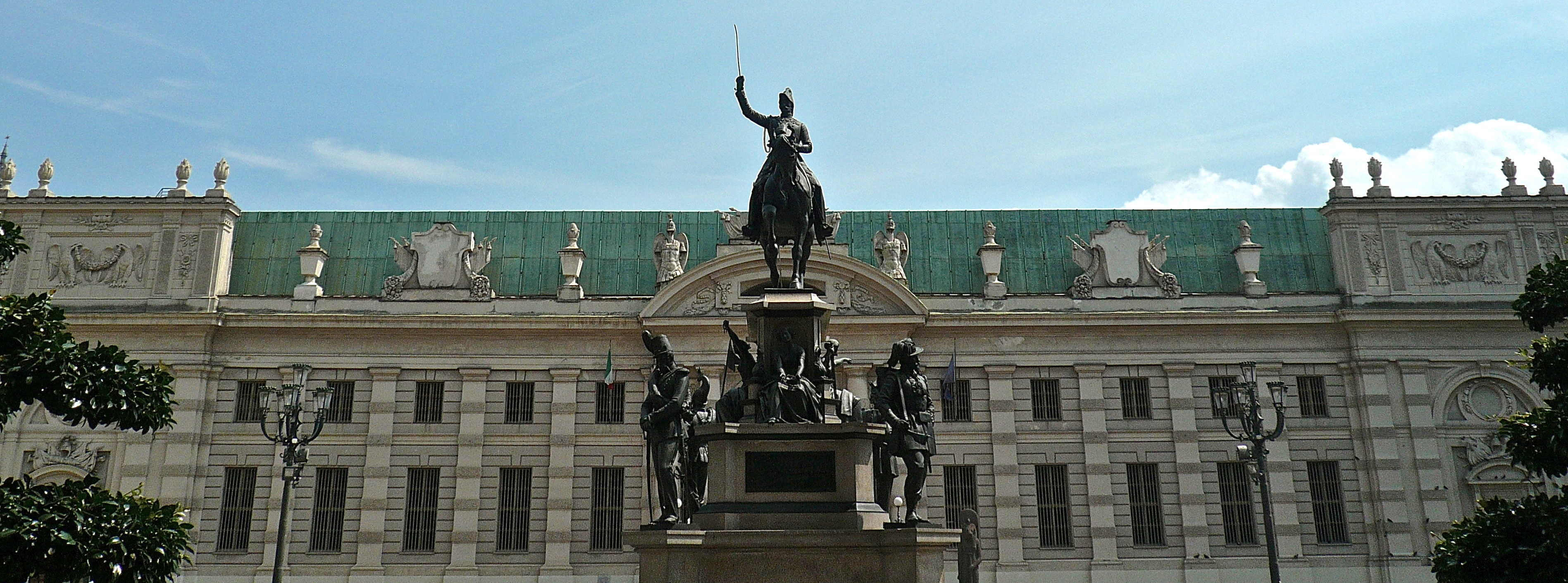
National University Library Turin

National University Library Turin

Gentili soon reaslised that he had an amazing find on his hands, and wanted to keep Vivaldi’s original autographs in the city of Turin. However, after careful sorting it became apparent to Gentili that only half the works were present, and he suspected the missing scores were still owned by descendants of the Durazzo family. His hunch turned out to be correct and eventually after tracking down the Durazzo heir, the remaining manuscripts (along with the original find) were purchased by local businessmen Roberto Foa and Filippo Giordano respectively, in memory of their sons, for the Turin Library.

I would so love to visit Turin just to see this collection! On an upper floor of the Turin National University Library, safely on display, are Vivaldi’s original manuscripts consisting of 450 works: 110 violin concertos, 39 oboe concertos, over a dozen operas and a substantial selection of sacred music.

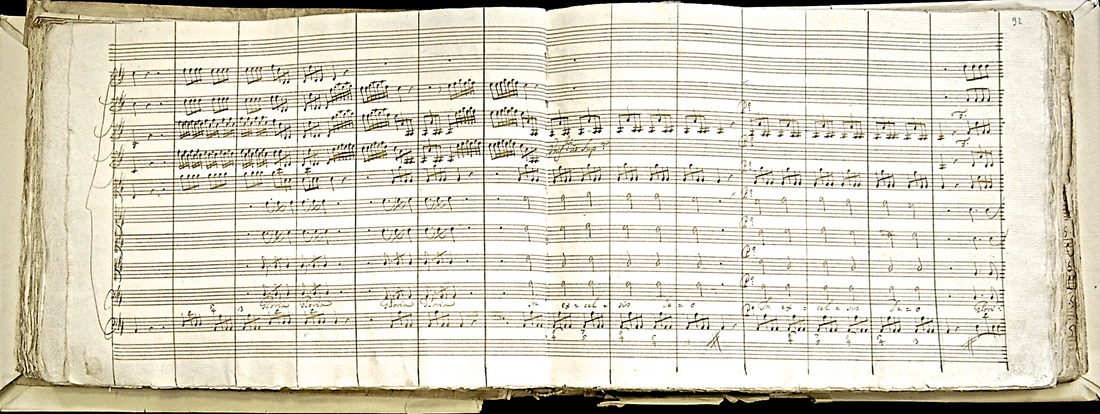
Manuscript of the Gloria RV 589 - image credit Miles Fish

Manuscript of the Gloria RV 589 – image credit Miles Fish

What is striking is that the notes appear to have been transported straight from Vivaldi’s brain onto the paper, with very little crossing out and no sketches. The mark of a genius!

In part 2 I’ll be focusing on the Opus 3 concertos, the Four Seasons and some other gems from his vast musical legacy.

The Dangers of ‘Labelling’

“The ability to observe without evaluating is the highest form of intelligence.” ~ Jiddu Krishnamurti

Before you click on the X button, let me swiftly assure you that I’m not going to bang on about how sharp needles are these days or pontificate about how life threatening sewing can be!!

Rather, I’ll be musing about the human tendency to give everything and everyone a label or name, category or judgement.

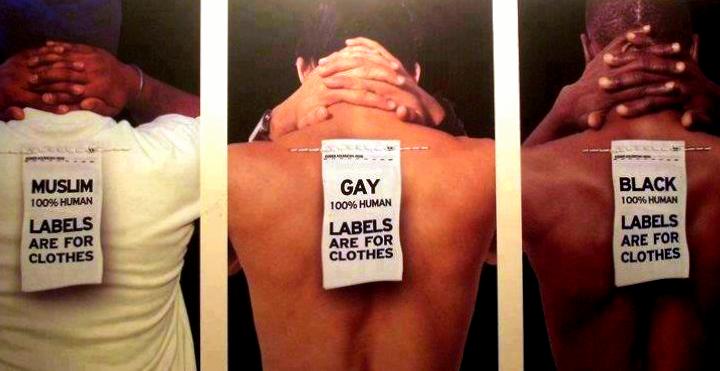
labels are for clothes

Our creator kind of stacked the odds against us when he bestowed on us such amazing cognitive faculties. Yes, you read that right.  The mind is both a blessing and a curse – the ultimate dichotomy.

We learn how to ‘label’ as a necessary activity to process information and to understand our environment, but if taken too far it can be damaging to ourselves and society. A purely cerebral existence is no existence at all. We must learn to balance it with our emotions, which emanate from the heart.

Mastery of the mind will be the single biggest challenge that any of us will ever undertake.  It all starts upstairs, so to speak. Foes we face are the ego, indoctrination, trauma and old habits just for starters.

George Bernard Shaw - quote-on-changing-our-thinking

I read some fantastic bios on Twitter, but no matter how many labels we give ourselves we are so much more than that. We are powerful, creative, spiritual beings learning how to remember who we really are. Words and labels are just insufficient and insignificant to describe the sentient being that is you; but, clumsy as it is, language is our main tool.

Why is it the arts have endured over millennia and speak to our souls so deeply? Long gone civilisations, movements and individuals that have defined a zeitgeist and had a rich cultural expression are still studied and admired to this day.

They reflect back to us the best of ourselves.

Music, drawings, paintings, sculpture, architecture and literature are a manifestation of our creative impulse, our divine origin.  Two people from different countries not speaking the same language or having anything in common can listen to the same piece of music together and be bonded through how that music makes them feel.

barenboim-quote

Music connects us to our common heritage – our humanity.

Art and culture are an enduring legacy of what mankind can achieve when following passion and harnessing experience rather than looking at what is wrong with the world and others.

The paradox of thought

We are labelling all the time in our thoughts. Only just this morning during my first violin practice in weeks, my thoughts were tuned into how rusty and awful I was until I finally let them go and just enjoyed the feeling of being at one with my instrument (even if it would have made dogs howl and cats run in  terror)!

Humanity’s intellectual and conceptual abilities have propelled us from caves and spears to modern homes, technology and weaponry. But, as Dr. Martin Luther King Jr. pointed out, (rather worryingly), our technology is more advanced than our spiritual capability. The implications for self-destruction are all too apparent.

The mental acuity we use to solve our problems is usually the very thing that has created the situation in the first place.

As Einstein said:

“We can not solve our problems with the same level of thinking that created them.”

Internal map of representation

When we’re born our minds are blank canvases waiting to be filled. A baby feels no prejudice. Is your canvas a lovingly crafted masterpiece or a collection of quick and clumsy sketches?

We all use compartments to try to make sense of the world, to determine our own personal sense of reality. The danger is that we create divisions, which can easily fester and before you know it you’re facing a rift valley on the scale of Kenya’s!

As we are growing up we have experiences which shape our beliefs and judgments, so that we can formulate our internal map of representation. “I like to eat sweets, but I don’t like going to the dentist.” “I’m good at English but not Maths.”

After wearing a red dress and being teased one might develop negative associations with the colour red.

Over a lifetime billions of images, perceptions, thoughts and ideas enter into the grey matter to be processed. We are all computer programmers!

Perception

Talk about a picture speaking a thousand words. The heart breaking image of drowned 3 year old Aylan Kurdi really affected me. As a mum I couldn’t help but feel devastated for that family. Those boys will never have the chance to reach their full potential and live in peace, which is all they ever wanted. Isn’t that what we all aspire to? The opportunity to lead happy and worthwhile lives?

Until that desperate image was beamed around the world, the perception of ‘migrants’ and the challenges they face was very different.

Labels colour perception and close us off to our true nature and essence. Such labels only serve to dehumanise people. This is where the media have a responsibility to step up to the plate. They have the power to shape our perceptions on a huge scale.

William Blake - perception

When we witness the true suffering of another we can’t close off our hearts. If history can teach us anything it is that.

This talk by Holocaust survivor Elie Weisel at the White House is all too appropriate to the current humanitarian crisis arising from events in the Middle East.

The Perils of Indifference:

When we view anyone as anything other than a fellow human being, just like us, only with different upbringings, beliefs and experiences, it separates us. It means we have the justification to commit evil acts.

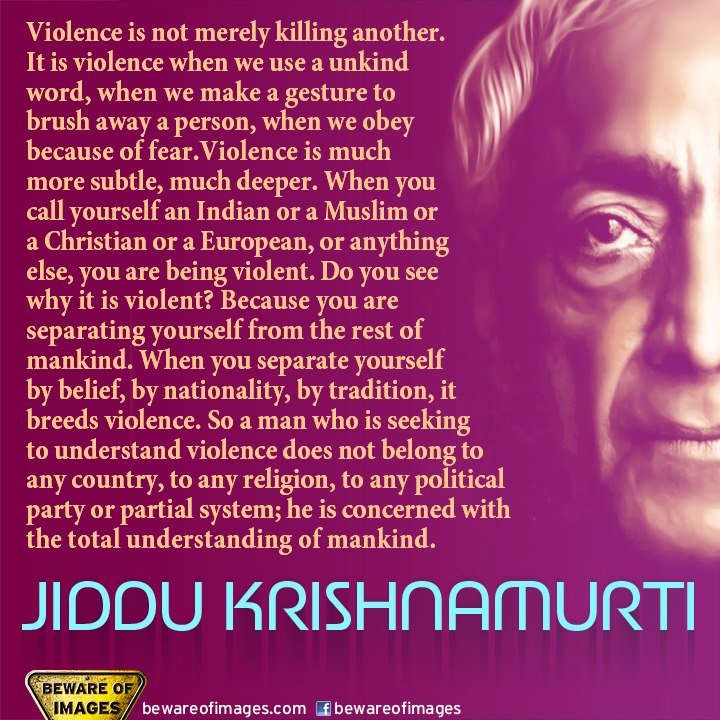
jiddu-krishnamurti-violence-is-not-merely-killing-another

The ones being labelled BECOME their religion or ethnic group, colour or sex. We don’t look past the categories we have placed them in to see the divine spark within them. After all, many faiths teach that we are all ‘one’ at the soul level.

Religion

“Religion is bad because it causes war. ” Let’s examine that provocative label shall we? Religion is neither good or bad. It’s simply a way that humanity organises and practises its different interpretations of faith. The true intention of religion is to offer guidance.

Dangers arise when more labels and judgements come in to play. My God is better than yours. God is punishing us. Infidel!

The cause of war is humans using religion to support their own self-righteous cause or agenda.

“When you have the choice between being right and being kind just choose kind.” ~ Dr. Wayne Dyer

Islamic State is the perfect example of this. The perpetrators were maybe once decent human beings until something went very wrong in their heads.  To coin a Star Wars phrase, they became seduced by the ‘dark side’. They subscribed to a virulent, hateful and evil doctrine stemming from a twisted, puritanical interpretation of Islam, turning it to suit their own ends: power and control.

The sanctity of life means nothing to them. They do not view anyone who holds a different belief to them as being worthy of keeping their head and seem to take pleasure in torturing others. It disgusts me. There is no tolerance, no love and their sick ideology seems to infect weak minded individuals who are angry. It gives them a way to vent their spleen and to feel important.

It’s the same with any religion. Christianity has done its fair share of torture, rape, pillage and plunder in the name of the Lord.

Dalai Lama - love-is-the-absence-of-judgementCatholic priests tend to get a bad rap these days, due to the terrible acts of abuse by some; but back in the days of my ‘black dog’ I was fortunate to meet a ‘good’ Father who helped me. He listened to me and didn’t judge me. I didn’t view his faith as a barrier to our discussions, and he didn’t use it to put me on a guilt trip over the mess my life was in, he just accepted me. I will always be grateful to him.

You can’t tar everyone and every religion with the same brush!

Over the centuries civilised people all over the world have been fighting against narcissistic despots, dictators, slavery, ignorance and exploitation. And it all started with what seemed like an innocent label.

We need to look past people’s appearance, sex, beliefs, religion and circumstances and see the being beneath. Removing these labels and judgements enables us to communicate from heart to heart and not head to head. Of course, as a species we are drawn to those individuals we feel a natural affinity with, but it would certainly facilitate more understanding.

I know that I have many flaws, but one thing I won’t do is care if someone is Christian, Hindu, Muslim, Buddhist, aetheist, agnostic or any other denomination. I will try and interact with them how I would want to treated: with common human decency, not with bigoted views and labels.

Labelling has its place – but that’s only on clothing and consumer goods. We should not let it define who we are: ineffable, eternal, powerful beings.

Advaita/Nonduality

I love this easy to understand explanation of Advaita/Nonduality.

If we could all see ourselves as one big family, born of the same parent, as spiritual siblings, the world would have more compassion, less war, less racism, less ageism, sexism or any other ism!

A very interesting and down to earth lecture by scientist David Bohm about the effects of thought and fragmentation:

Our daily challenge is to get our mind out of the way; to look, listen and interact with our hearts. The mind will then do our bidding and not the other way around.

“A mind at peace, a mind centered and not focused on harming others, is stronger than any physical force in the universe.” – Wayne Dyer

#SundayBlogShare 🌎☀🌛🌠 Boundaries…

“Poets utter great and wise things which they do not themselves understand.” ~ Plato

In a rare moment of courage and lucidity, a strange urge came upon me; I attempted to write poetic verses:

Boundaries…

The air we breathe suffuses and inflates our lungs,

Intoxicated with life, desire for nature’s abundance.

Elegant, rasping rhythms of filling and emptying,

Nourishing cells in primordial chemical dance.

I have form, I have a mind. But it is the soul that defines…


Where do I begin? Where do you end?

Do our immortal boundaries overlap?

Separate yet whole, like yin and yang,

Energies mingling in etheric joy without gap.

Distance annihilated, in the eternal now of spirit.


Your essence entwines with mine, even if hearts beat apart…

Eyes cannot see what the soul feels,

Defining limits is impossible, for each blurs into the other.

Edges soar among firmament; physicality exquisitely denied,

Our connection is real – solid as the earth, sea, wind and sky.


Burning with the searing intensity of the sun,

Even the elements cannot contain it…

Form is but walking death, a fleeting vessel of expression,

Oh beautiful barrier, you trap the delights and torments of flesh.

Why must our earthly boundaries elude each other?


Love and life will find a way, forever seeking,

Like flowers pursuing arduous paths through concrete,

Unfolding their challenged petals, blossoming into divine vision.

Should your soul depart, mine will scatter throughout the universe;

No longer tethered in union: its boundaries…broken.

By Virginia Burges

Tips for Decluttering Your Life

“Out of clutter, find simplicity. From discord, find harmony. In the middle of difficulty lies opportunity.” ~ Albert Einstein

It has been both a relaxing and busy few weeks and I’m feeling a bit out of kilter. That tends to happen to me when I get out of my daily routine for a prolonged period. It’s been wonderful to spend some time with my kids, but I think I’m ready for them to go back to school tomorrow!

I knew they were all gut-buckets, but I have literally spent half my time cooking and preparing meals…

In between feeding my brood I had a strong urge to have a good clear-out. At first it was from a practical standpoint, I needed to make more space in my daughters’ bedroom so that we didn’t have any unnecessary delays in the morning getting ready for school.

I swopped furniture, went through a lot of old books and gave away masses of stuff that they’ve outgrown. As a result I’ve been able to give them more room to play and fit in a small desk/dressing table for Emily.

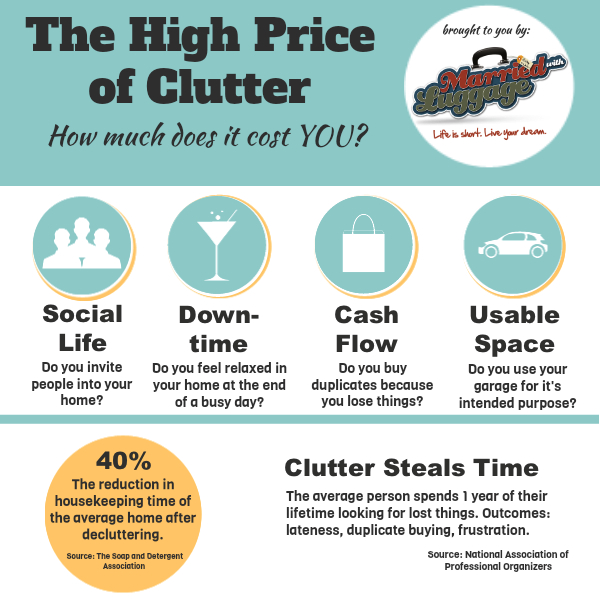
Clutter-infographic

That was exhausting but it needed doing. I then decided to re-organise my sons’ room, which hadn’t been properly tackled for years, and certainly not since my eldest son left home a year ago. I’m halfway through that alongside my home office.

As I went about my business something unexpected happened. I started to relish how much I could get rid of. Apart from having sore muscles from quite a bit of heavy lifting and lugging around of furniture, I actually felt lighter and happier. It has given me an inner harmony and felt akin to having a deep spiritual cleanse.

I am determined to empty the house of junk, detritus and general “stuff” that seems to have accumulated over time. I used to be a bit of a hoarder, but I’ve become much stricter with myself over the years. When you have a large family clutter can get out of control, which has a definite negative psychological effect on everyone, but mainly the parents!

“Have nothing in your house that you do not know to be useful or believe to be beautiful. ~ William Morris

I’m not finished by a long shot, but already I can feel there is a greater flow of energy, it has given me a huge ‘mental’ spring clean. Decluttering your physical space frees up the space in your mind that keeping too many possessions can take up.

With limited space I figured if there were less toys to play with, then my youngest (and by far the messiest), would find it easier to tidy up after herself, thereby freeing up my time and teaching her a valuable life lesson in the process. We’re still working on that one!

clutter quote - Eleanor Brownn

Decluttering my home has been a lesson in organising my life. The same goes for online, digital “stuff”. I don’t need to read every single Facebook post with someone having a rant about something in their life. It gets to the point where it’s information overload. I only read emails at certain times during the day, otherwise it’s a constant distraction.

I used to think that Feng Shui was baloney, but now I can see its intrinsic value.  I may even dedicate a separate post to it in the future.

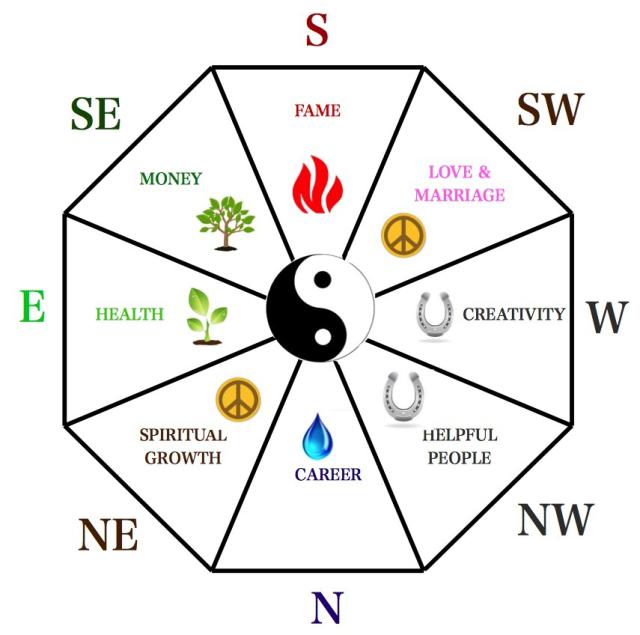
Feng Shui Bagua (energy map of any space).

Feng Shui Bagua (energy map of any space).

Luckily my desk is west facing, which is meant to stimulate one’s muse!

If you feel happy and relaxed in your environment and aren’t anxious about where your stuff is and how you are going to keep, protect and sort it all, it means you are free to spend more time doing the things that make you happy.

You have to be in the right frame of mind to do it, but once you get on a roll it’s surprising how satisfying it is to bag up old clothes and items for those less fortunate or for recycling. It can also be helpful to have a friend on hand who isn’t attached to your stuff like you are!

It’s so easy for clutter to build up unless you keep on top of it. I think I’m going to keep this motto near my monitor:

A bag a day keeps the clutter away…

In our consumer driven, materialistic society having lots of possessions is seen as a status symbol, but the truth is it just creates more to think about! I think Gandhi had the right idea; he lived a simple but fulfilling life full of meaning.

10 Tips for decluttering:

It’s a lesson I could have done with learning sooner in life: what clutters your mind clutters your soul.

I want my soul to breathe and expand, not constrict and contract.

If you have a decluttering project you’ve been thinking about starting I’d urge you to get stuck in, you’ll feel so pleased with yourself!

Happiness is a place between too little and too much. ~ Finnish Proverb