“Gods and goddesses are not what people think they are. Their names are terms with which we try to convey a certain experience, a state of consciousness.”
Frederick Lenz
This third and final post on the psychology of Greek mythology through the feminine lens is dedicated to the alchemical goddess, Aphrodite. I think we could all use a little more love in our lives right now…
The Alchemical Goddess – Aphrodite
Aphrodite is unique and has her own classification, a fitting designation for the magical process or power of transformation that she alone has. In her mythology she caused gods and mortals (except the virgin goddesses) to fall in love and conceive new life. She inspired poetry and speech, and symbolises the transformative and creative power of love.
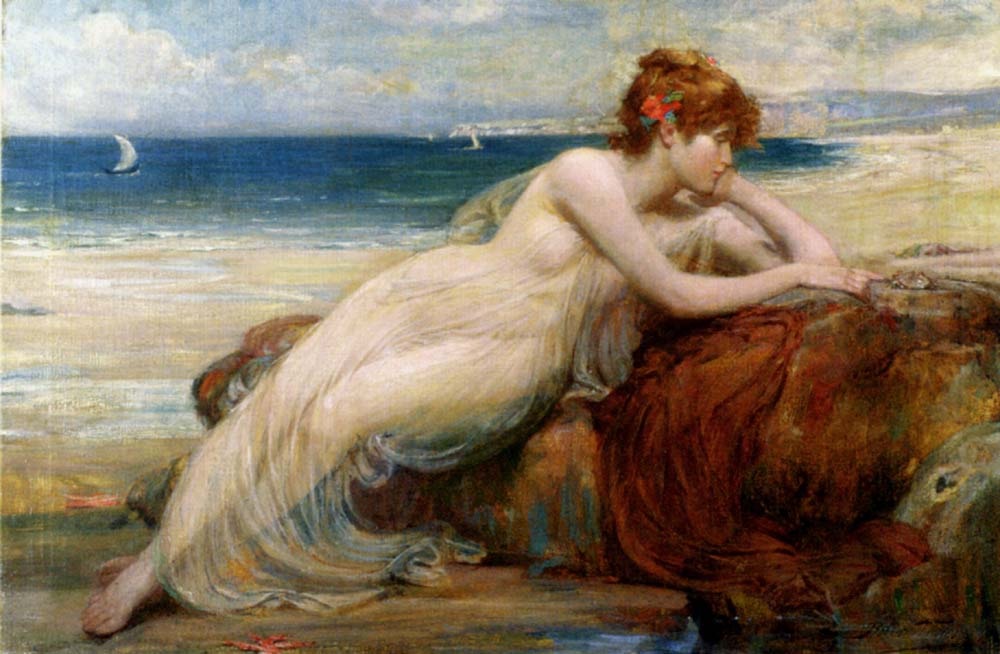
Aphrodite by Robert Fowler
Aphrodite had the most sexual liaisons, but was like the virgin goddesses in that she did what she pleased, she was like the vulnerable goddesses in being in relationships with male gods and bearing children, but she was never victimised and did not suffer. The feeling of desire was mutual in her relationships. She valued emotional experience over and above independence and permanent bonds.
This archetype may be expressed through physical intercourse or through a creative process.
When Aphrodite influences a relationship, her effect is not limited to purely romantic or sexual experience. She embodies Platonic love, soul connection, deep friendship, rapport and all expressions of love.
Quality of consciousness: Can be likened to a spotlight on stage in a musical or drama performance drawing your attention to what is in front of you. This ‘limelight’ enhances, dramatizes or magnifies the impact of the experience. Have you ever attended a concert and been so absorbed and emotionally transported, or moved by a performance? It is a two-way exchange between audience and artist.
There is an interactive Aphrodite-like energy (an element of creativity that encompasses broader focus than Virgin Goddesses and also diffuse like Vulnerable Goddesses). Time almost stands still or gets distorted; such as the feeling of being in love!
Aphrodite consciousness is more focused and intense than the diffuse awareness of vulnerable goddesses. But it is also more receptive and attentive to what it focusses on than the virgin goddess consciousness.
Absorbed by whom we are with, or by what we are doing, we lose track of time – a characteristic that Aphrodite shares with Hestia.
Aphrodite – Goddess of Love and Beauty, Creative Woman and Lover
Muse, tell me the deeds of golden Aphrodite the
Cyprian, who stirs up sweet passion in the gods and subdues the
tribes of mortal men and birds that fly in air and all the many
creatures that the dry land rears, and all the sea: all these
love the deeds of rich-crowned Cytherea.
~ Homeric Hymn to Aphrodite
Roman Name: Venus
Aphrodite was the most beautiful and irresistible of the goddesses. She had many affairs and children and generated love, beauty, eroticism, sexuality, sensuality and new life.
She maintained her autonomy like the virgin goddesses and was in relationships like the vulnerable goddesses. However, she made her own choices and was never victimised.
She allowed a two way exchange and was therefore able to change consciousness, expressing what is considered alchemy.
Origin:
There are two versions of Aphrodite’s creation story:
- Homer tells that she had a conventional birth to Zeus and a sea nymph, Dione.
- Hesiod’s Theogony tells that she was born as the result of a violent act. Kronos took a sickle and cut off the genitals of his father Uranus, and threw them into the sea. White foam spread around them as sperm and sea mixed, and Aphrodite was born as a fully formed goddess.
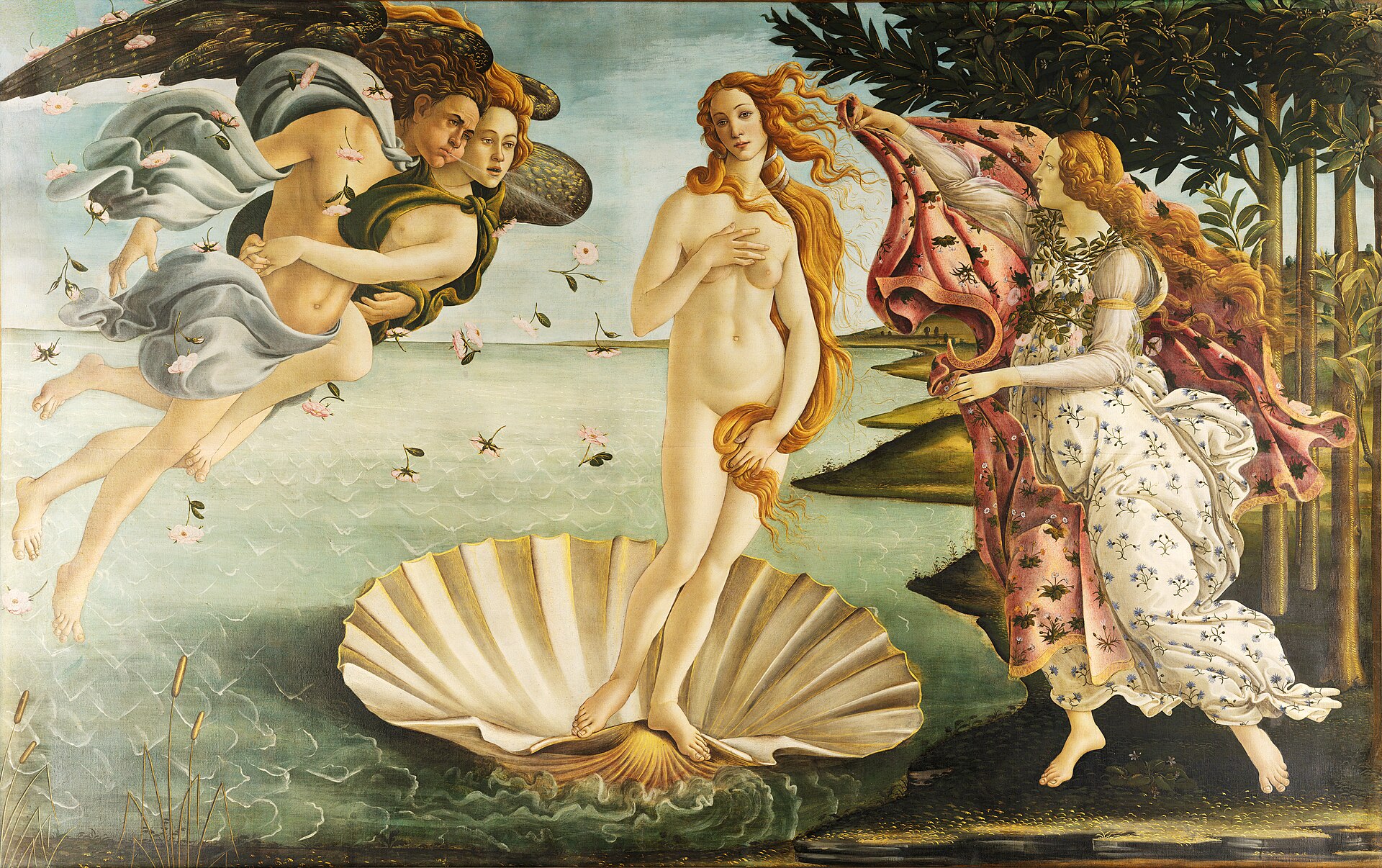
Sandro Botticelli – The Birth of Venus c. 1485
She then came ashore to Cyprus and, accompanied by Eros (Love) and Himeros (Desire) was escorted into the assembly of the gods.
Struck by her beauty, many of the gods vied for her hand in marriage. Unusually, Aphrodite was free to choose. She selected Hephaestus, Hera’s rejected son, the lame God of Craftsmen and god of Fire of the Forge. He was cuckolded by her many times and they had no children. Their union represents the union of beauty and craft.
In her liaisons, Aphrodite was paired with second generation Olympian male gods, the sons of Zeus, Poseidon and Hades.
She was linked with Ares – God of War – with whom she had a long-term affair and several children: Harmonia (Harmony), Deimos (Terror) and Phobos (Fear).They represent the union of the two most uncontrollable passions – love and war.
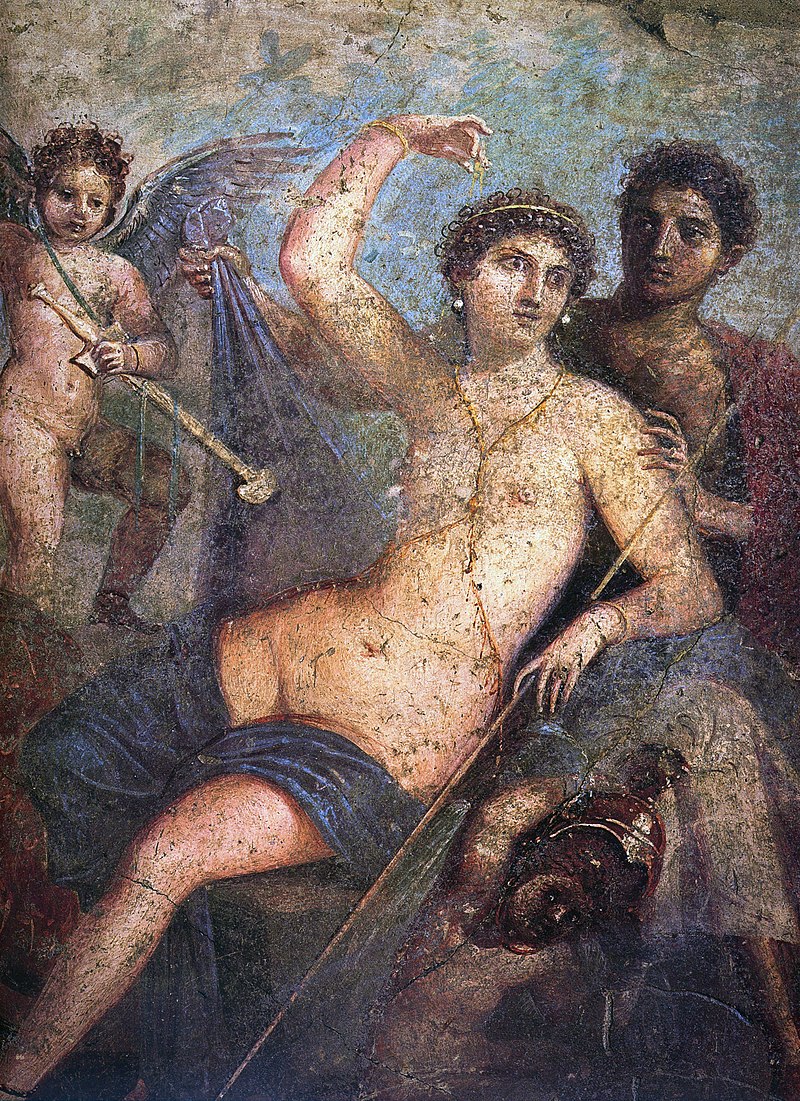
Fresco of Venus and Mars at Pompeii
She also had a long term affair with Hermes – messenger of the gods – who guided souls to the underworld and who was the patron god of travellers, athletes, thieves and businessmen as well as the god of communication, inventor of musical instruments and Olympian trickster.
Their child was Hermaphroditus, the bisexual god who inherited the beauty of both parents and had the sexual characteristics of each. He represents bisexuality (the attraction to both sexes) or androgyny (the having of both qualities of each sex).
Eros, the god of love, was also one of her sons. He may or may not have had a father. Today all that is left of him is the baby – Cupid.
How is Aphrodite like the other goddesses?
She turns statues into living women, whereas Athena turned living people into stone.
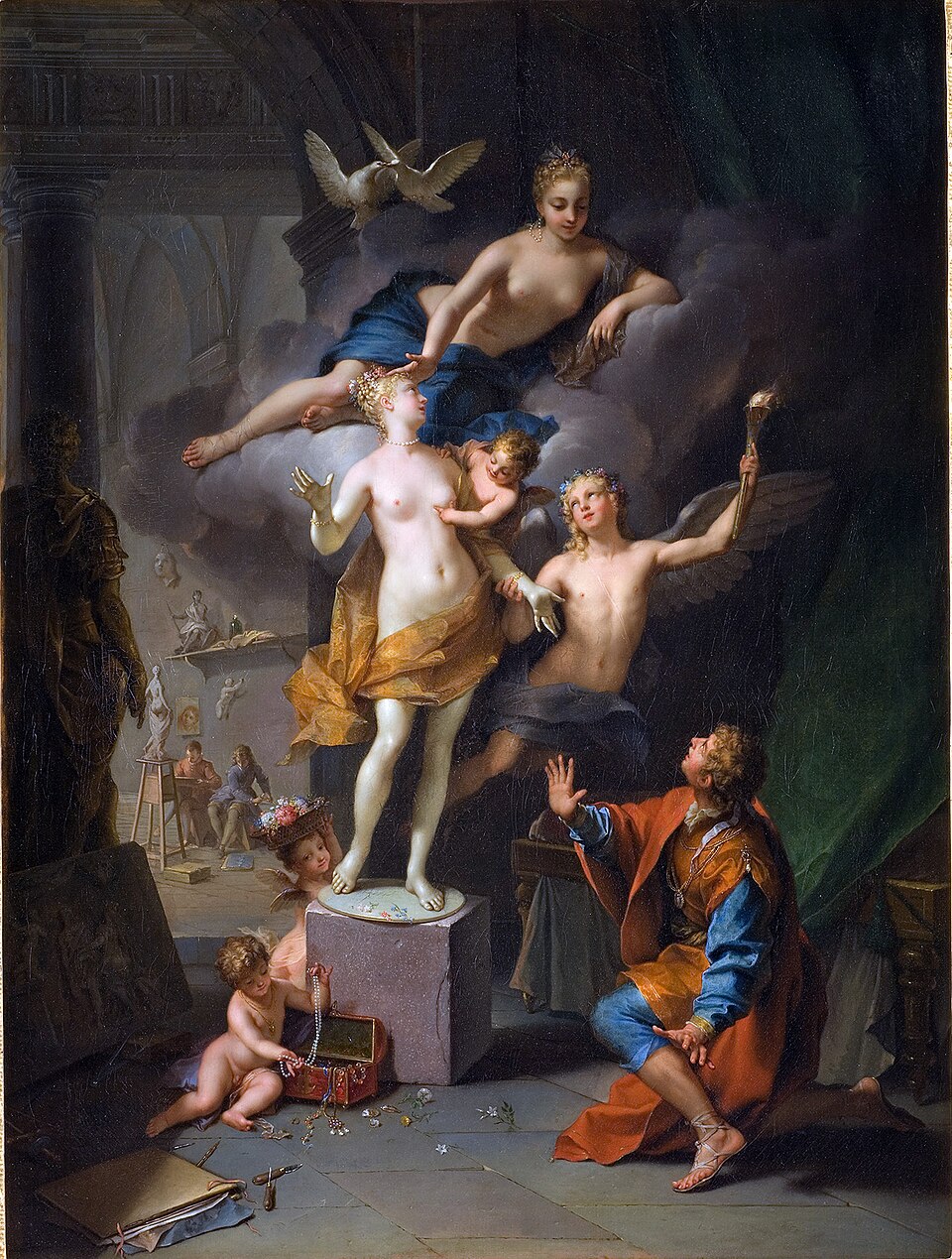
Jean Raoux (1677 – 1734) Pygmalion admiring his statue (Venus bringing Galatea to life)
She had many sexual liaisons and was far from a virgin but, like Artemis, Athena and Hestia, she did what pleased her.
Like Hera, Demeter and Persephone, she had links with males and bore children, but she was not vulnerable; nor did she suffer nor was she victimised.
Like the virgin goddesses she is able to focus on what is personally meaningful to her, but what she values cannot be measured in terms of achievement or success. In this, she is most like the introverted, anonymous Hestia who, on the surface, is the least like her.
Working creatively can generate Aphrodite consciousness with the rapport that exists between the artist and the painting, the novel and the novelist and the singer and the music. Work becomes invigorating rather than draining and we lose track of time, just as Hestia does.
Aphrodite the Archetype
The Aphrodite archetype governs women’s enjoyment of love and beauty, sexuality and sensuality.
The realm of the lover exerts a powerful pull on many women. As a force within a woman’s personality, Aphrodite can be as demanding as Hera and Demeter (the other two strong instinctual archetypes). Aphrodite impels women to fulfil both creative and procreative functions.
When Aphrodite shines her light, everything under it becomes fascinating.
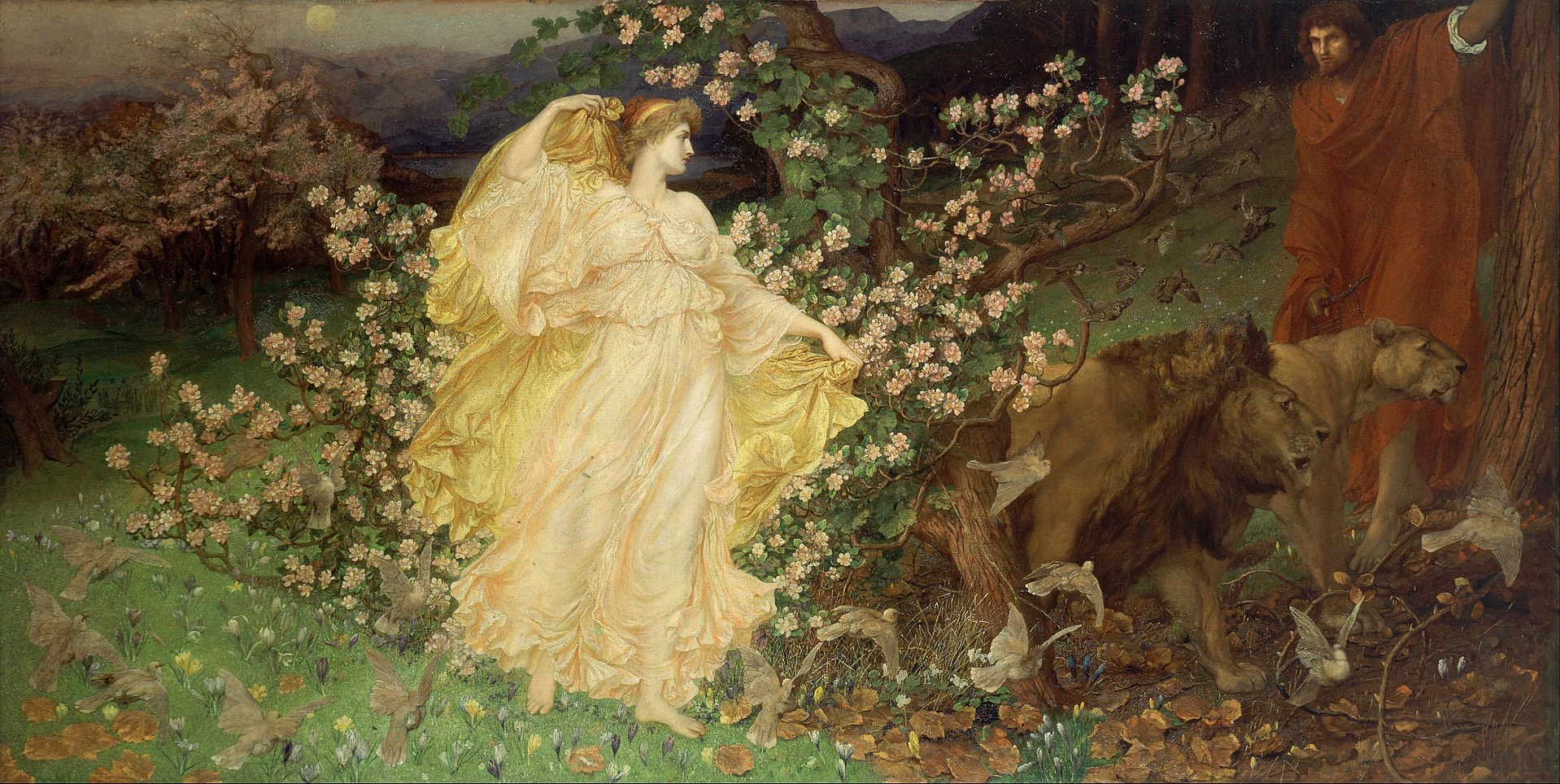
Venus and Anchises by Sir William Blake Richmond c. 1889-90
It is her style to be genuinely and momentarily involved in whatever interests her. This can be seductive, creating the impression that she is enamoured even when she is not.
When she is present as the major archetype in a woman’s personality, she falls in love easily and has sex appeal.
Judaism, Christianity and Islam all degrade this archetype and label her a whore, and therefore this can put her at odds with standards of morality, or even condemn her to death.
How is she only like herself?
She was the most beautiful of the goddesses. She had golden hair, flashing eyes, soft skin and beautiful breasts. She also loved laughter and had irresistible charm.
She is the only goddess energy that allows us to transform ourselves. She causes us to fall in love and conceive new life.
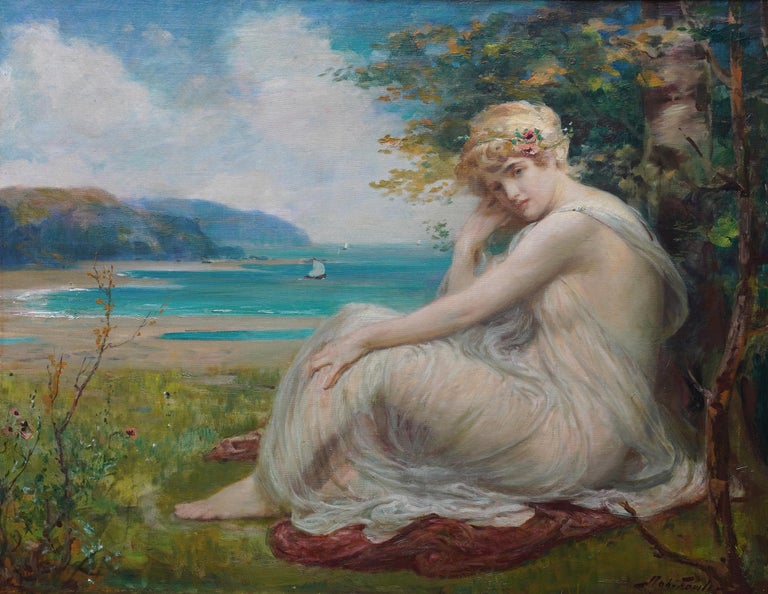
Aphrodite by Robert Fowler
In all of her relationships, the desire was mutual. She valued emotional experience with others more than her independence from others or permanent bonds with others.
Relationships are important to her, but not long-term commitments. She seeks to consummate relationships and generate new life so this archetype may be expressed through physical intercourse or through any creative process. An Aphrodite woman is irresistible…
She exudes chemistry with her proposed mate for the moment and the desire for union is paramount. Intercourse here is synonymous with communication and an urge towards completion, perfection and unity – the divine marriage.
She generates a desire to be known. New growth can be physical, emotional, mental or spiritual. Platonic love, soul connection, deep friendship, rapport and empathetic understanding are all expressions of love.
Aphrodite can happen in mentoring, counselling, parenting, directing, teaching, editing and therapy. She is fully there; affecting both people involved.
Activation of Aphrodite
Just as there are two mythic versions of her birth, there are two ways in which this archetype comes into consciousness.
The first is a dramatic initiation when she emerges suddenly, full-blown and magnificent from the waters of unconsciousness. This emotion can completely overtake her, overwhelming her until she sees nothing else.
The second is in a relationship and the growth of trust and love, where the gradual reduction of inhibition precedes her birth.
Procreative Instinct
Aphrodite represents the drive to continue the species. However, whereas Demeter has a baby because she wants one, Aphrodite has a baby because of her desire for a man.
Creativity
Aphrodite consciousness is present in all creative endeavour, including work done in solitude. The ‘relationship’ or ‘dialogue’ is present between the person and the work, from which something new emerges. Those joyful hours in creative flow…
She is a tremendous force for change through attraction, union, fertilisation, incubation and new creation. If both the creative and romantic aspects of Aphrodite are present in the same woman, she will engage in intense relationships as well as being engrossed in her creative work (Isadora Duncan and Georges Sand).
Cultivating Aphrodite
Cultivating sensual and sensory experience invites Aphrodite in. Lovers are instinctively attuned to each other’s tastes, fragrance, beauty, touch and music/sound. Tactile stimulation enhances their pleasure.
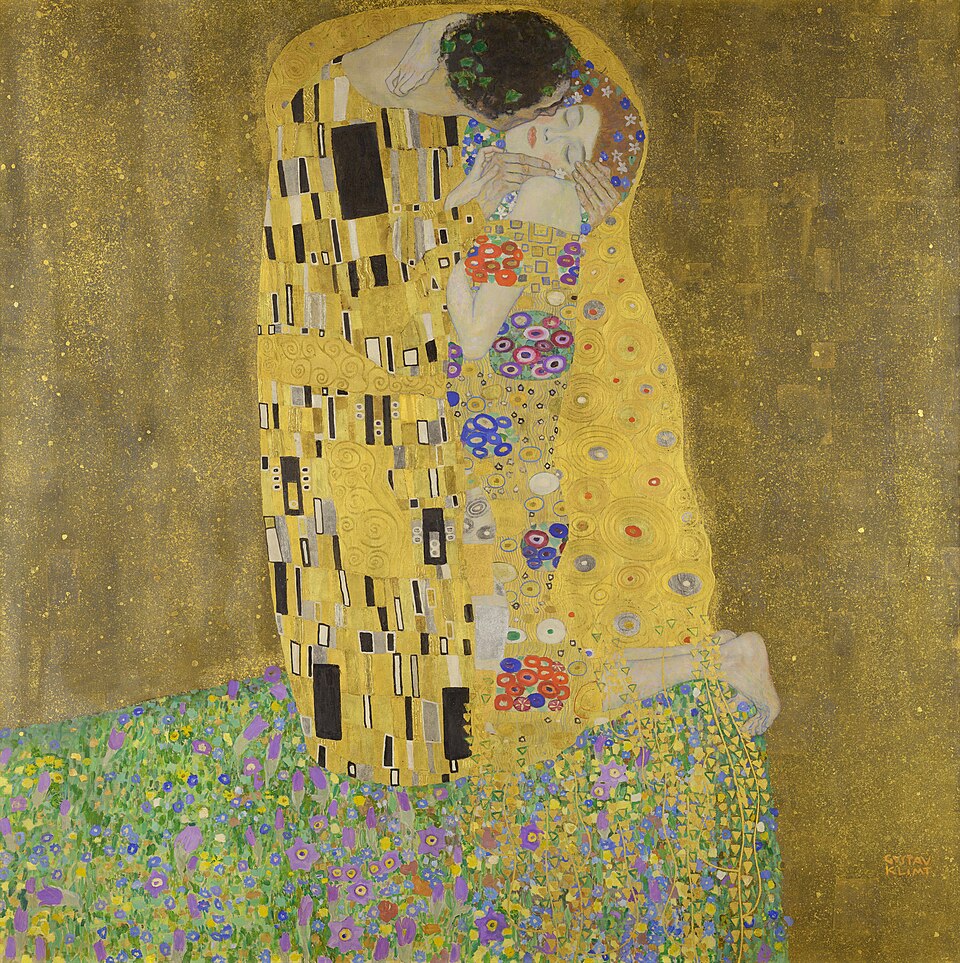
The Kiss (Lovers’ Embrace) by Gustav Klimt
This needs time and opportunity.
Aphrodite the Woman
Ever since the goddess Aphrodite emerged from the frothing ocean in all her undressed glory, curvaceous, flaxen haired, sexy women such as movie queens Jean Harlow, Lana Turner and Marilyn Monroe have personified the Goddess of Love.
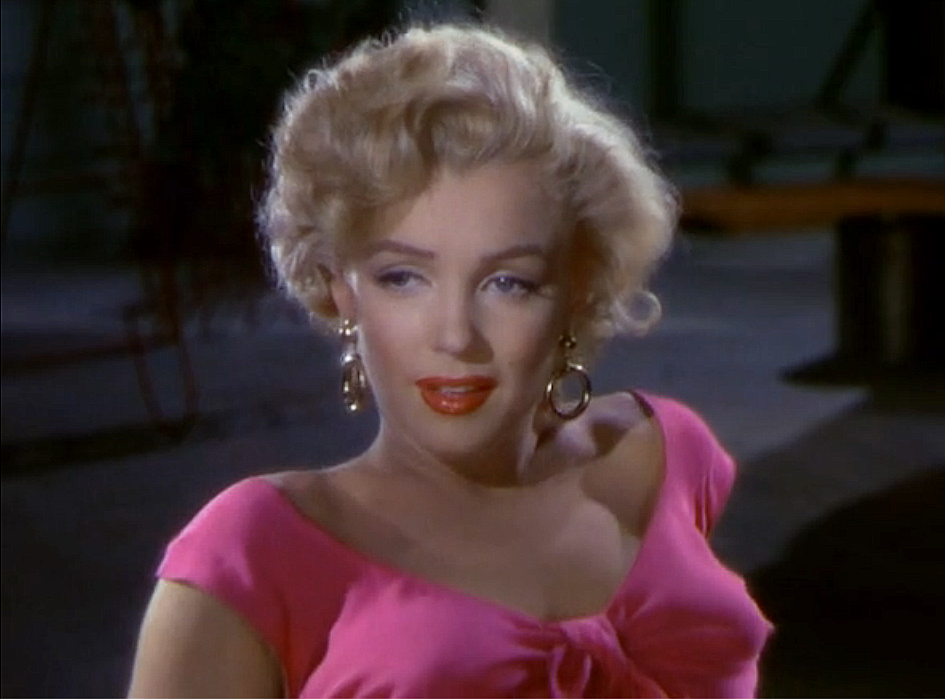
She is charismatic, beautiful and sexy. If she is plain, she is still attractive and magnetic and has ‘it’. A certain ‘je ne sais quoi’, an attractive and beguiling aura. The Aphrodite archetype creates a personal charisma – a powerful magnetism that, combined with physical attributes, makes a woman ‘an Aphrodite’.
Parents
Some parents groom their daughters to be little Aphrodite’s (child beauty pageants). However, when she reaches puberty, they may panic and put the brakes on and punish her. The mother may then start feeling competitive with her.
The most helpful parents do not emphasise or overvalue these characteristics or treat their daughters as pretty objects. Instead, they value intelligence, kindness and talent.
Adolescence and early Adulthood
This is a crucial stage for Aphrodite. Sexual expression can have the devastating consequences of unwanted pregnancy and disease. She needs to develop other goddess archetypes as soon as possible.
Work
Work needs to involve an emotional element for it to succeed for her. She likes variety and intensity and easily gets bored. She will only do well when she is completely engrossed. The most suitable occupations are art, music, writing, dance and drama or teacher, therapist or editor. She does not set out to achieve but to be involved.
Marriage
She needs the archetype of Hera if she is to have a strong, stable marriage. Otherwise, she may find this difficult, an example of this can be seen through the life of Elizabeth Taylor and again with Marilyn Monroe.
Relationships with Women
She may be mistrusted by other women, especially Hera women. She rarely bears other women any ill will and will be shocked by their hostility. She often has a wide circle of friends who enjoy her spontaneity and attractiveness, often sharing it.
Relationships with Men
Aphrodite women gravitate toward men who are not necessarily good for them. Unless other goddesses have an influence, their choice of men is often similar to Aphrodite’s own choices – creative, complex, moody or emotional men like Hephaestus, Ares and Hermes.
Children
She likes children and they like her. She is non-judgemental and appreciative of them and draws out a child’s feelings and abilities in such a way that they feel beautiful and accepted.
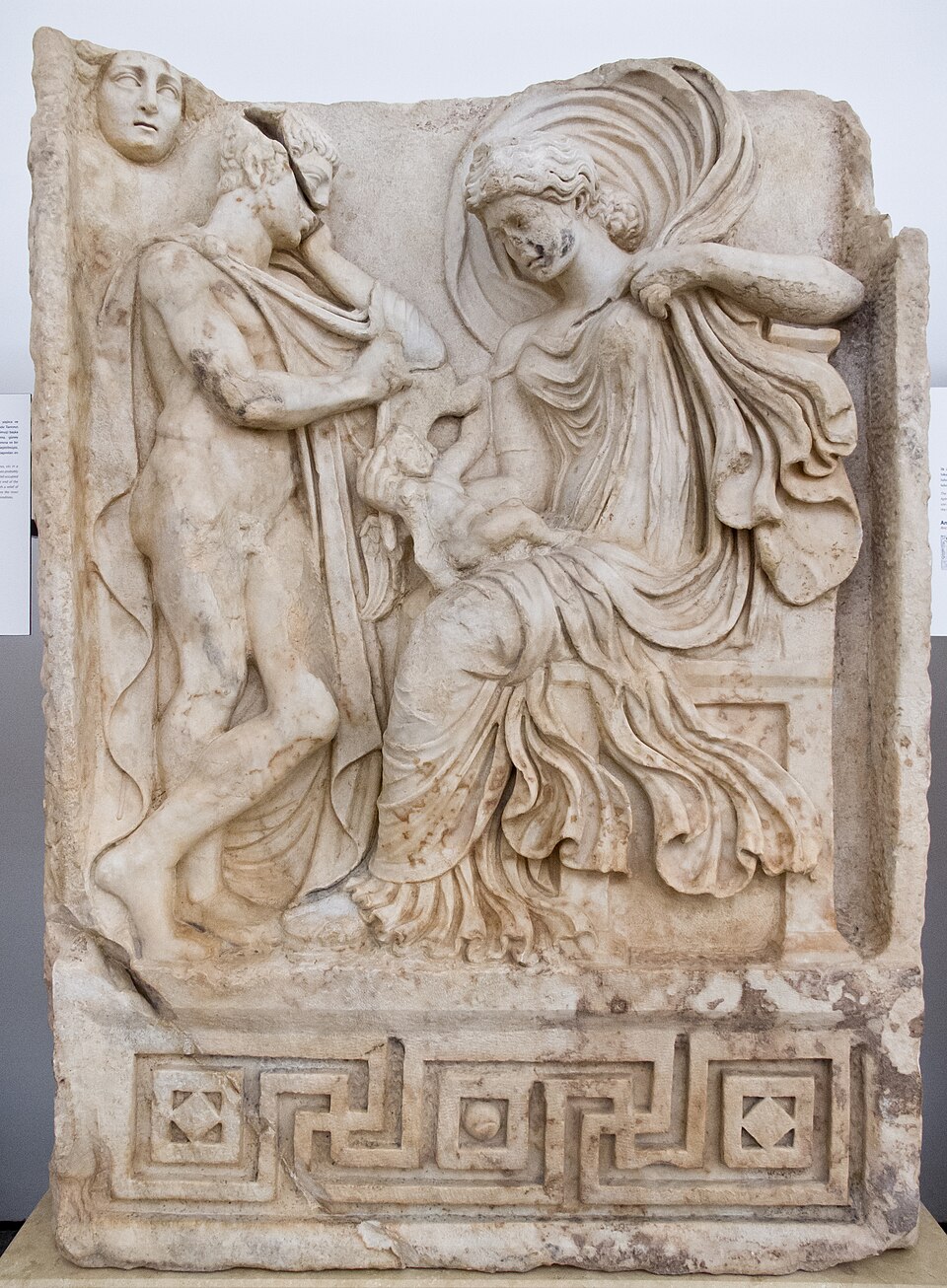
She can play and make-believe easily. She makes young people feel important.
Middle Years
This can be a devastating time. If she feels her beauty is fading, she may become so anxious that she is stripped her of her magic. She may also become unhappy at her choice of partner, especially if s/he is unconventional. These years will not be so difficult for her if she is engaged in creative work, however. She will retain her enthusiasm and use her experience to draw even more inspiration.
Later Years
If she retains her capacity to see beauty and feel in love with life, she will grow old with grace. She also needs to keep being interested in others.
Psychological Difficulties
It is not easy to have Aphrodite as a compelling archetype as society rarely gives her the freedom or understanding that she needs.
Identifying with Aphrodite
She has a lust for life and is fiery. She likes men and draws them to her. Her attentiveness is seductive and she has the ability to make someone feel they are special, attractive and wanted. This invites a reciprocal response. Depending on the circumstances, the consequences may be social condemnation, a series of shallow relationships, exploitation and subsequent lowered self-esteem.
She needs to learn how to contain Aphrodite appropriately and when to let her out. She can learn to dampen the budding desire of an unsuitable man and let him know she is unavailable.
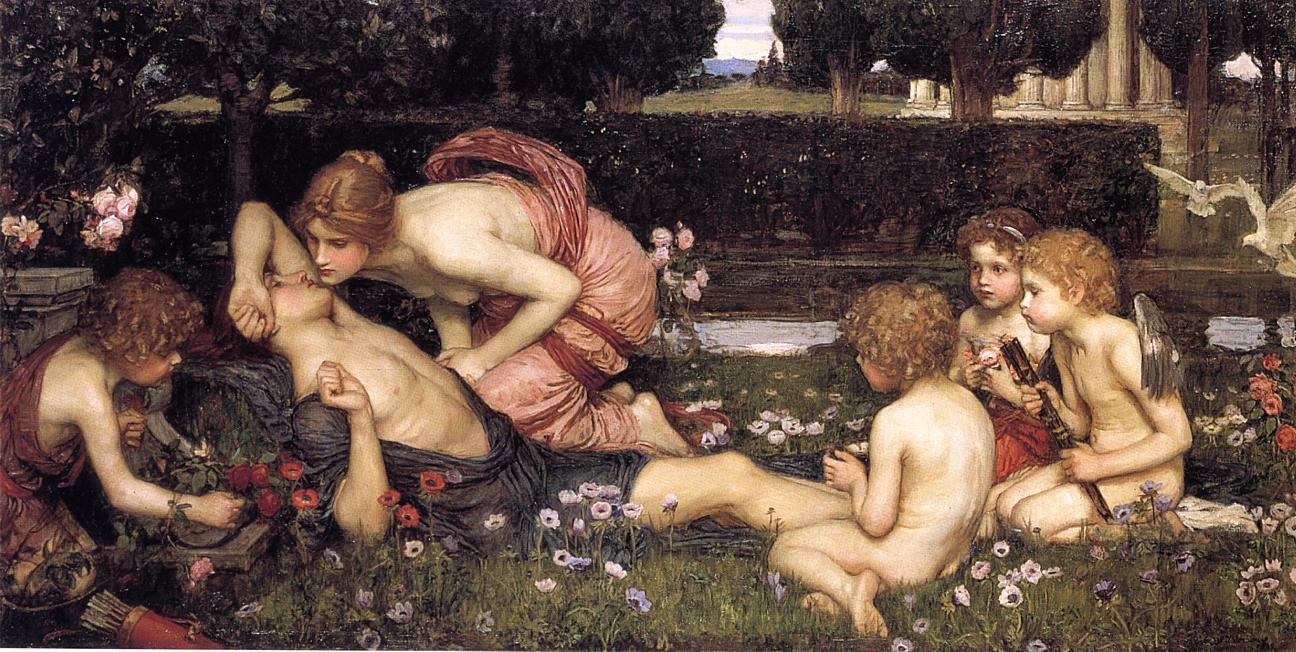
The Awakening of Adonis (Venus) by John William Waterhouse c. 1899
Her power to make others love can be destructive and men may become her casualties if she loves and leaves them. Sometimes she is the one who is wounded by staying with an inappropriate relationship because she cannot bear to be without one. She can even stay with or yearn for a man who makes it clear that he is not interested in her. Her obsession may span years, effectively stopping any other relationship.
In order to change, she must see the destructiveness of the relationship and let it go. She must resist seeing his beauty and becoming re-engaged with him.
Ways to grow
Knowledge of this archetype is especially useful for an Aphrodite woman. Such awareness will help her to free herself from guilt about who she naturally is. She must also become aware of what is in her best interests.
Developing other goddesses is extremely important. Artemis and Athena will help her to develop skills and acquire an education, Hera and Demeter will stabilise her, Hestia will enable her to settle, meditate and resist erotic attraction, and Persephone will teach her how to turn to a safer fantasy.
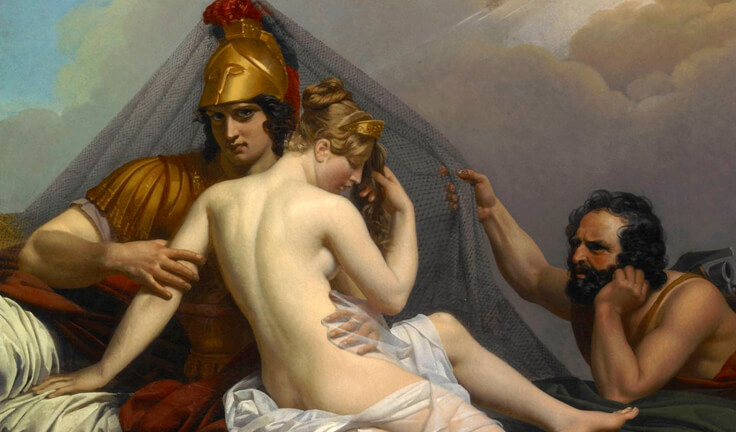
Aphrodite with Ares, Caught by Hephaestus
Aphrodite was never victimised. She had children with god lovers and male lovers. Of all the goddesses she was the least accepted in patriarchal society.
Bringing the goddesses together:
Which goddess will reign supreme in your psyche?
A woman often goes through three major aspects during her life: marriage (Hera), career (Athena) and beauty (Aphrodite.) This means having a vulnerable, virgin and alchemical goddess inside.
What happens if the goddesses vie inside you for pride of place?
Each time the woman must make a decision, there may be a contest among the archetypes for the ‘Golden Apple’. It can be overwhelming dealing with competing priorities, patterns and instincts. An inner equivalent of an Olympian war can occur when equally strong archetypes are in conflict.
I certainly had an almighty battle raging between my Athena, Aphrodite, Artemis and Demeter in the early stages of motherhood.
The Committee as Metaphor
Jean Shinoda Bolen suggests creating an archetypal goddess committee to help balance these powerful energies.
Imagine that there is a committee inside your head. Your ego chairs the committee of goddesses. A chairperson keeps order by being an observant participant and effective executive. When the ego functions well, appropriate behaviour results.
However, if one goddess decides she wants to be boss, or if more than one goddess vies for leadership, then chaos can reign and the goddess(es) rules the mortal.
For example: the decision to be made is what to do on a Sunday. Hestia favours solitude and proposes a day at home. Hera feels she has an obligation to visit her in laws. Athena reminds her that she has work to finish. Artemis advocates going to a women’s conference. Aphrodite wants to go to a party.
In another scenario Hera may decide to stay in her unsatisfactory marriage while Demeter may decide to stay because of the children. Artemis will favour independence. Athena and Artemis will favour returning to education. Demeter will want a late baby. Hestia will decide to go on a spiritual quest. Aphrodite will want to spice her life up with a new passion.
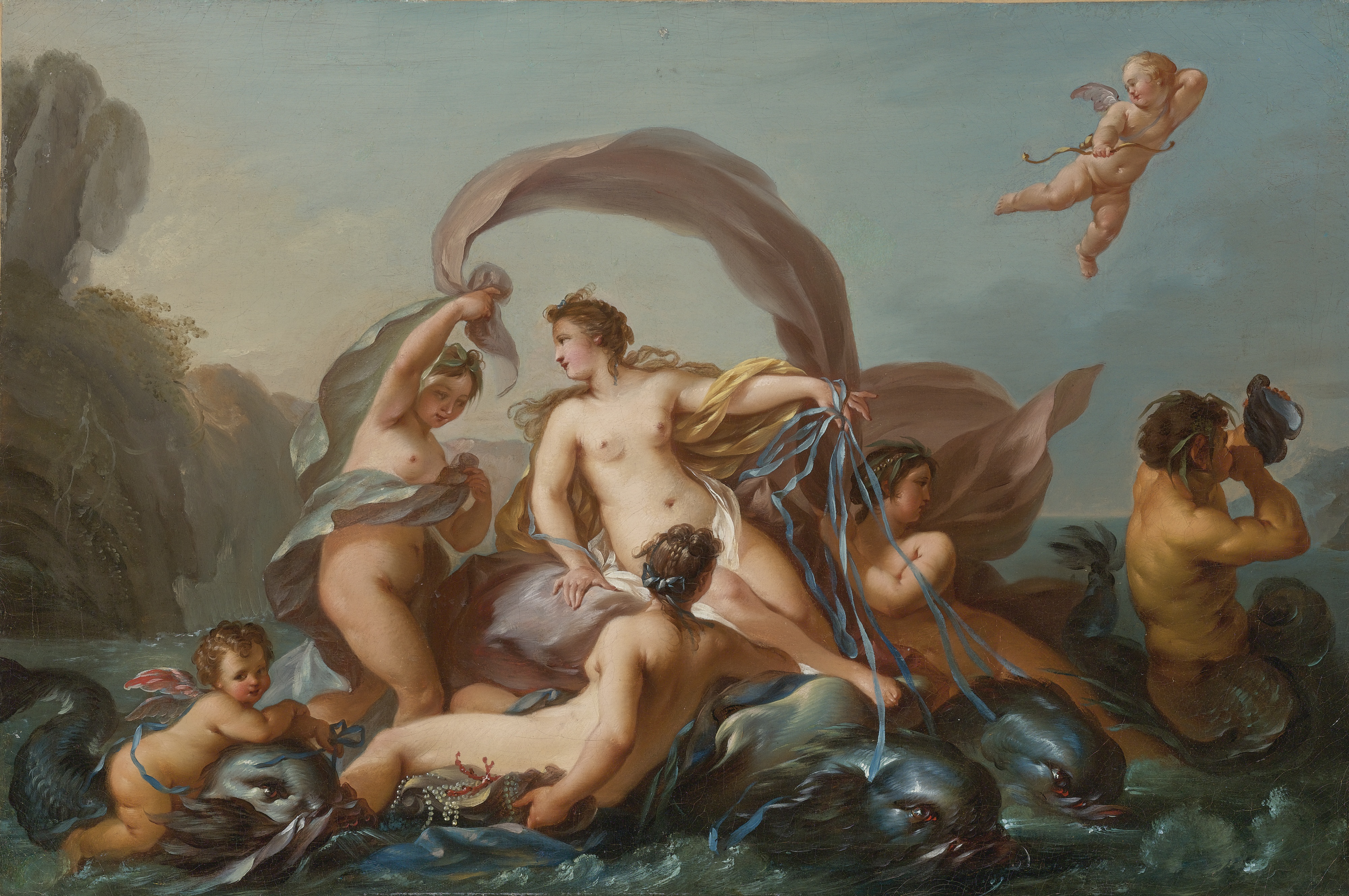
Jean-Baptiste Marie Pierre – The Birth of Aphrodite
If the ego is in charge of a healthy committee, then a woman will consider her choices, priorities, values, loyalties and finance etc. If the ego becomes overwhelmed, the goddesses will get the upper hand, an internal battle will rage and the woman may well either act rashly or be immobilised.
When this happens, it is helpful to talk to someone or write down pros and cons. If chaos continues, there can be a mental breakdown.
What happens if the ego is biased and identifies with one goddess over another? It will hear some goddesses and blank out others, censoring whatever it does not want to know about. The woman will then find herself acting out unconscious behaviour which she has suppressed, surprising herself and even others.
Example: A woman was due to audition for a major part in a Hollywood film and it was her big chance. She unconsciously knew that her partner would not be able to tolerate her having more success than him so she prepared for the audition and became so engrossed in her rehearsal that she missed it. Artemis gave her ambition and Aphrodite helped her to express her talent, but Hera decided to put the relationship first and Demeter protected the man from feeling threatened or inadequate.
There are also physical results of goddess warfare. For example, an independent woman with Athena qualities who never asks for help may develop asthma or ulcers as a way of allowing dependent Persephone to get some nurturing.
We often feel that we are more than one person. One woman may sell very successfully for a living (Athena and Artemis), while at home she is solitary and introverted (Hestia). Another is a brilliant advertising executive who is very creative (Artemis and Aphrodite), but at home she is a compliant Persephone with her husband. The goddesses take turns in a woman’s psyche at appropriate times.
When a person is in inner conflict, the outcome depends on how the ‘members’ of that woman’s committee work together. The chair needs to be fair but firm!
Understanding when and where the goddesses play inside you can help you to make conscious choices. We are shaped by our choices. We are all heroines of our own stories!
Rich-throned immortal Aphrodite,
Sappho (Ode to Aphrodite)
scheming daughter of Zeus, I pray you,
with pain and sickness, Queen, crush not my heart,
but come, if ever in the past you heard my voice from afar and hearkened,
and left your father’s halls and came, with gold
chariot yoked; and pretty sparrows
brought you swiftly across the dark earth
fluttering wings from heaven through the air.


