Remarkable Women: The Life and Times of Joan of Arc

“I am not afraid… I was born to do this.”  ~ Jeanne d’Arc

This will be the first in a series of posts exploring the impact on the world of remarkable women.

Joan of Arc by Albert Lynch. This painting could be the ruest likeness of her, as she had short, dark hair, cut in a round style.

Joan of Arc by Albert Lynch. This painting could be the truest likeness of her, as she had short, dark hair, cut in a round style just above her ears.

So often we celebrate men’s amazing achievements, but there have also been many women throughout history who have made remarkable contributions that have continued way beyond their life spans. They have become iconic. Their actions reflect the epitome of the virtues we aspire to today: honesty, commitment, integrity, courage and service to others.

Jeanne d’Arc (6 January 1412 – 30 May 1431)

Five hundred and eighty five years ago, on this very day, a loyal and brave maiden was burned alive at the stake in the old market square of Rouen.
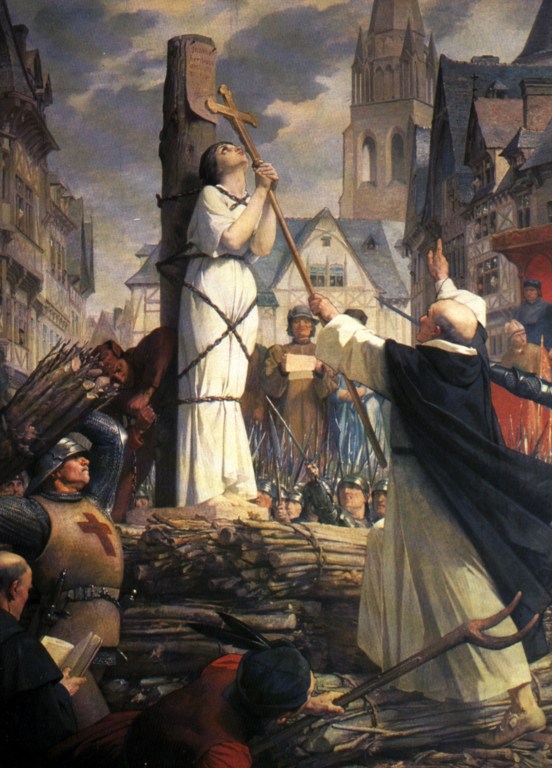
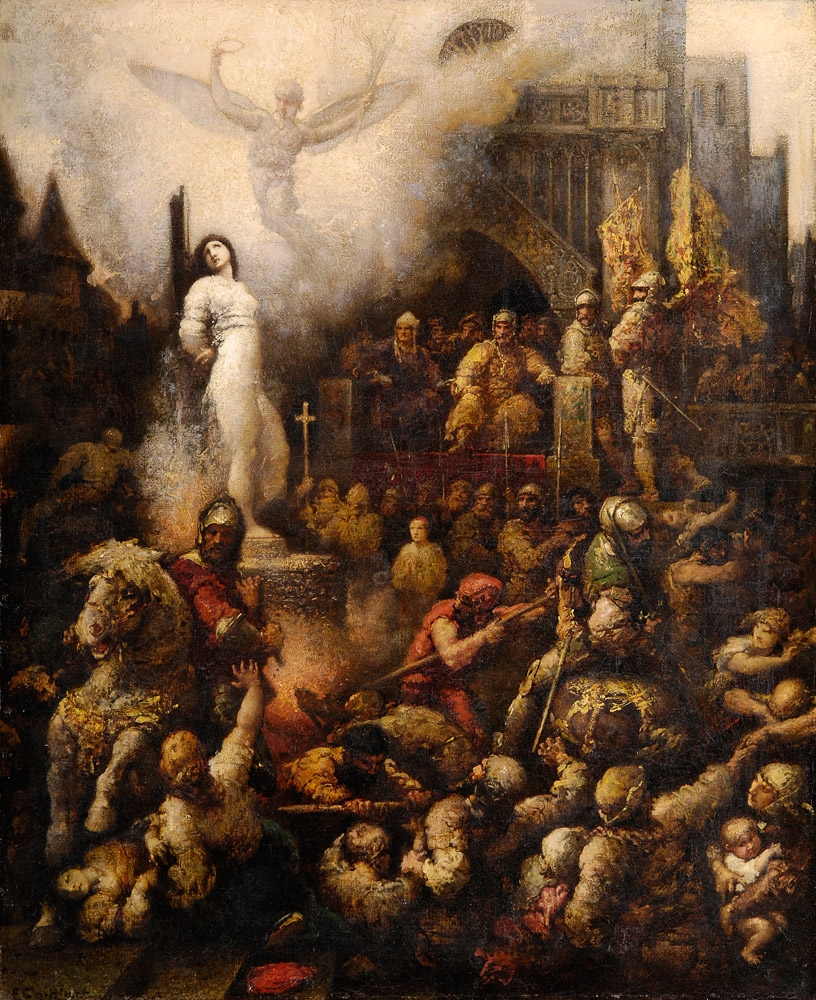
Joan of Arc at the stake by Jules Eugène Lenepveu.

Joan of Arc at the stake by Jules Eugène Lenepveu.

At the age of nineteen Joan suffered a hideous, unthinkable death, which ultimately secured her place in history and cost the English their goal of the French crown.

A fitting finale with Irina Arkhipova as Joan in Tchaikovsky’s opera The Maid of Orleans:

The aftermath of Joan’s death

The young English King Henry VI’s uncle, the Duke of Bedford, who was acting as his Regent, and who had held Philip the Good to their Anglo-Burgundian contract passed away on 16th September 1435.

With his last breath, so too passed the loyalty that the Burgundian Duke had kept since he signed the Treaty of Troyes to align the Burgundians with King Henry V of England on 21st May 1420, which granted Henry’s marriage to Queen Isabeau and King Charles VI’s daughter, Catherine of Valois and ensured his heirs inherited the Crown of France, instead of Charles VI’s son, Charles VII.

His signing had been an act of hatred and revenge against the Armagnacs, who had murdered of his Father, John the Fearless of Burgundy, on the bridge at Montereau in 1419.
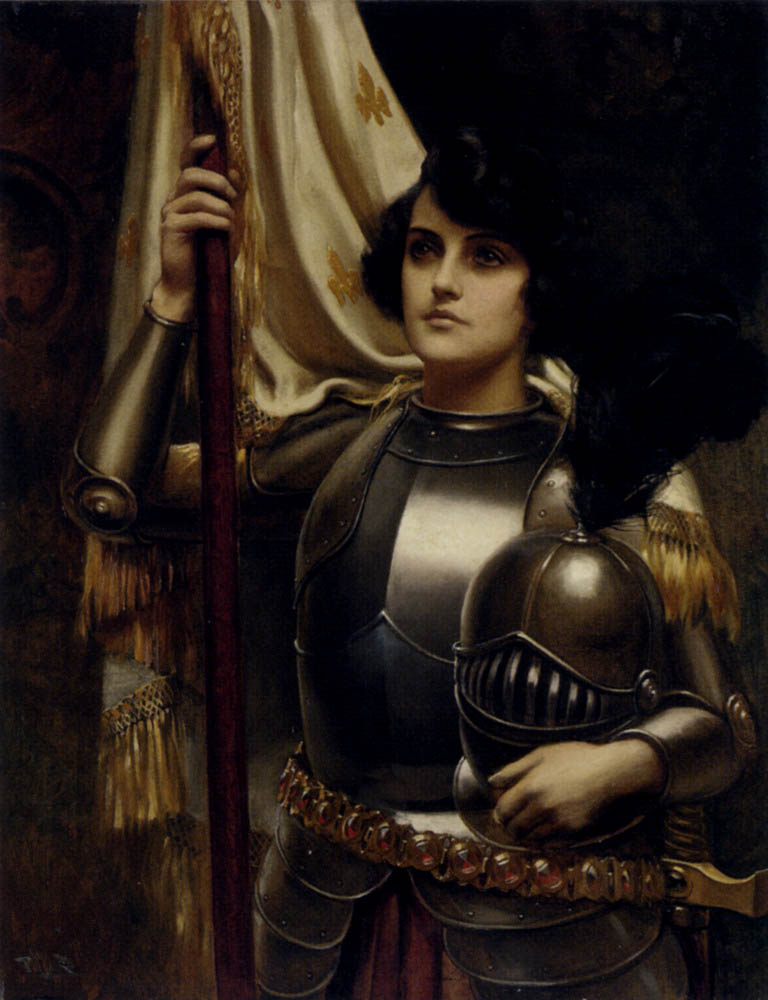
Joan of Arc by Harold Piffard

Joan of Arc by Harold Piffard

Diplomacy continued for a further four years after Joan’s execution, but Cardinal Niccolo Albergati, who was despatched by the Pope to broker peace at the Congress of Arras, (in the face of English opposition), absolved Philip the Good from his war promised treaty and brokered a peace settlement between the Burgundians and the Armagnacs, thus making a significant impact towards ending the Hundred Years War.

I’m convinced her martyrdom was the catalyst in the change of fortune for France, King Charles VII and his Armagnac supporters.
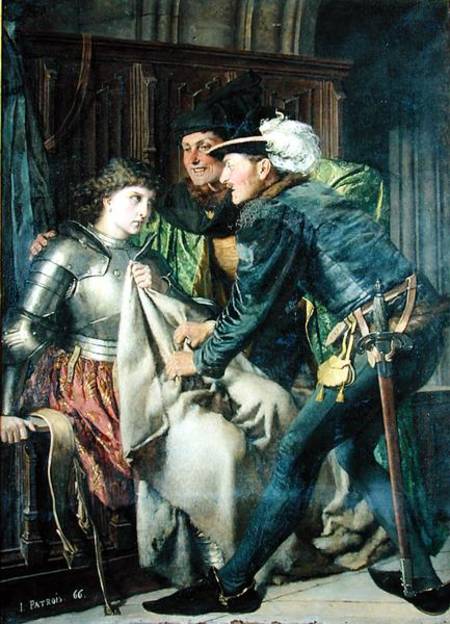
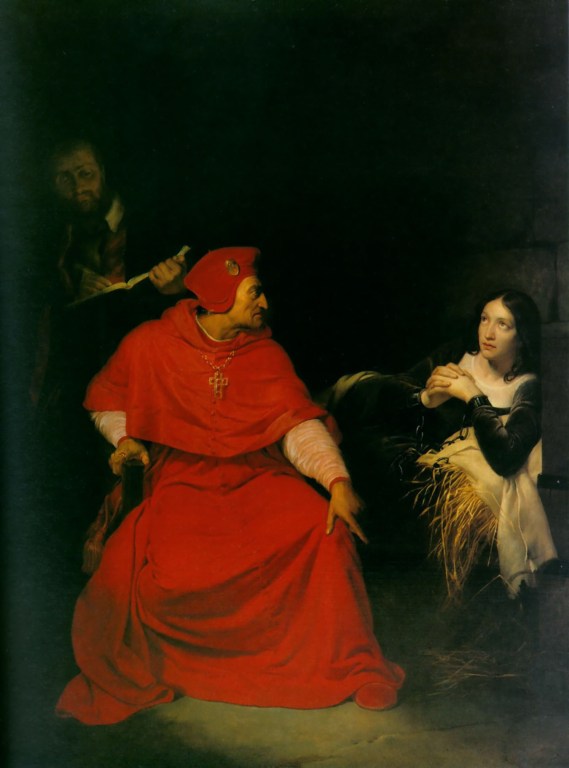
Joan of Arc Insulted in Prison, c. 1866 (oil on canvas) by Patrois, Isidore (1811-84) Musee des Beaux-Arts, France Giraudon French, out of copyright

Joan of Arc Insulted in Prison, c. 1866 (oil on canvas) by Patrois, Isidore 
Musee des Beaux-Arts, France

She has captured my imagination, earned my admiration and compassion, and ignited my interest in her life and into a window of history that still dominates literature, the world of art, film and popular culture today.

A moving video of her home in Domremy:

As far as I’m concerned there are no women who deserve this accolade more than Joan of Arc.
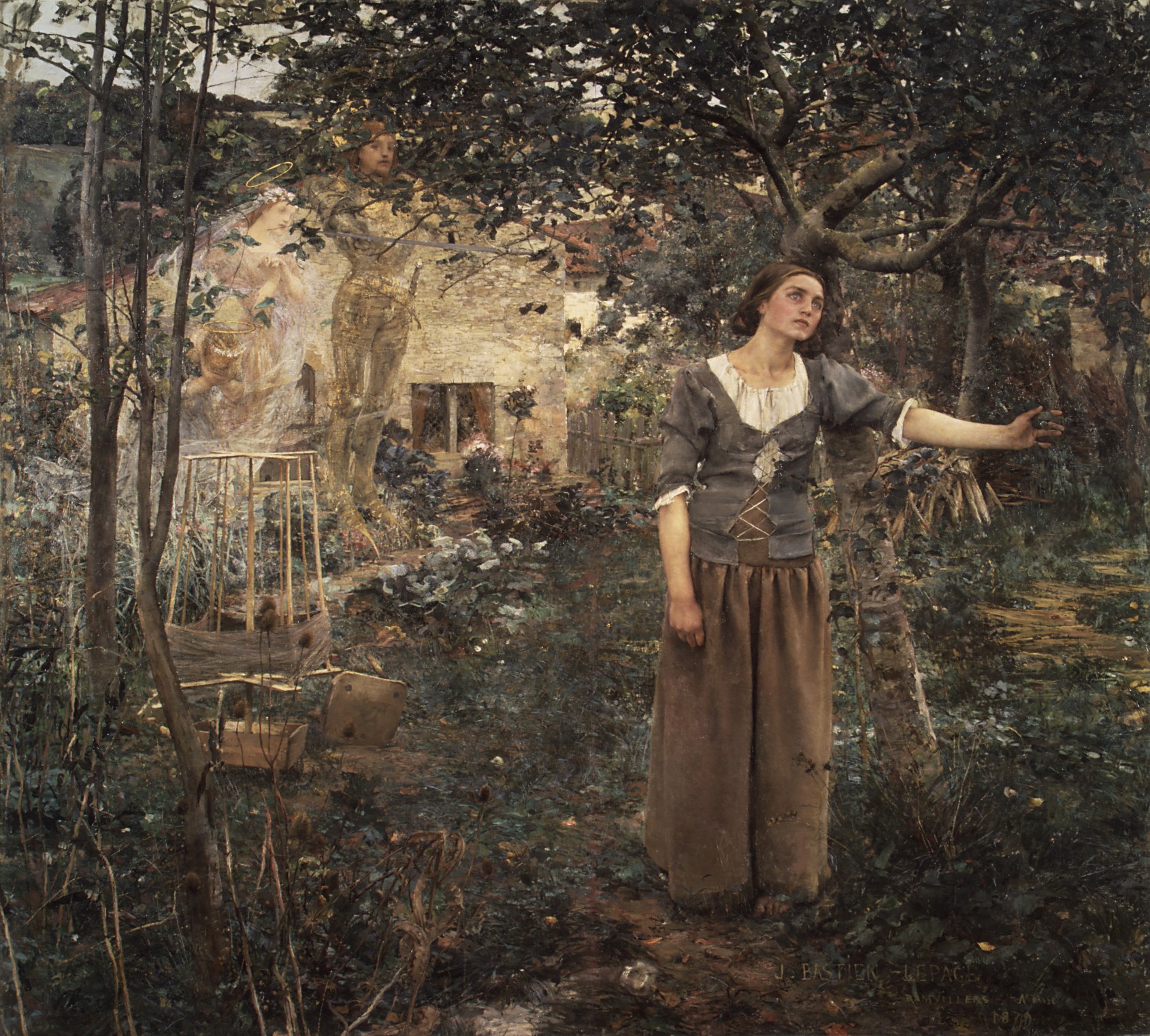
Joan of Arc by Jules Bastien-Lepage

Joan of Arc by Jules Bastien-Lepage

She was born to a humble farming family in Domremy in rural Alsace, daughter to Jacques and Isabelle, sister to Jacquemin, Jean and Pierre, during the vicious acrimony that pervaded the land in 1400’s France; an inheritance of the bitter dispute between the younger brother of the king, Louis, Duke of Orléans and his cousin, John the Fearless of Burgundy.

Louis was against John’s regency and guardianship of his brother’s children in the face of King Charles VI’s unfortunate insanity, which caused a deep schism between two royal and noble houses of France, and eventually led to his assassination by the Burgundians in November 1407 on the streets of Paris.

From then on the Armagnacs, (supporters of Charles, Duke of Orléans and the Burgundians, supporters of John’s son Philip the Good) became enemies, which had a profound effect on the course of the Hundred Years War.
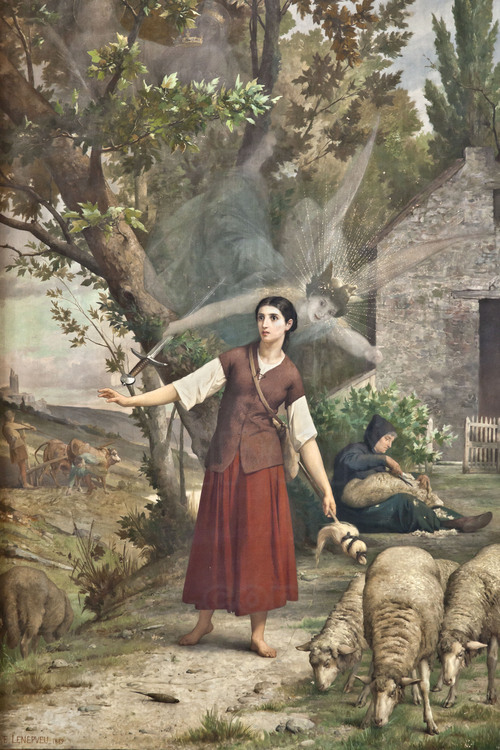
Joan of Arc at Domremy

With France torn apart by divided loyalties and rapacious greed for her crown, at the age of thirteen Joan began to see visions of Saint Michael and hear voices, directing her to secure the French crown for the disinherited Dauphin, Charles.  After convincing Charles and his court that she had been sent by the King of Heaven in his cause, she led an army to rescue Orléans from English occupation.

Siege of Orléans

After six months of siege, the arrival of Joan, her captains, and their Armagnac army meant that the townsfolk finally had hope that Orléans would be freed from the grip of the English and their Captain Sir William Glasdale.
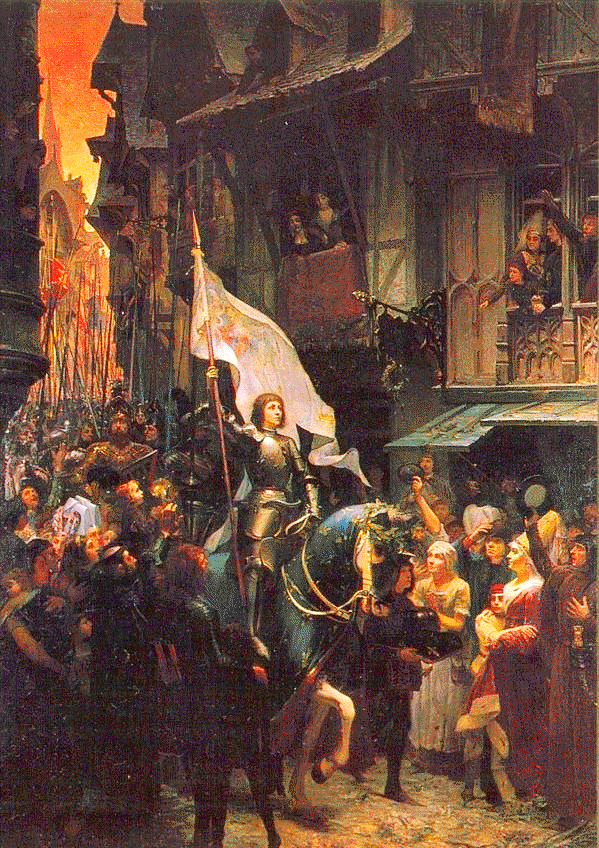
Joan of Arc riding into Orleans by Jean-Jacques Scherrer

Joan of Arc riding into Orleans by Jean-Jacques Scherrer

In just four days, suffering with a flesh injury between her shoulder and neck, and with the help of the local carpenters as their attack progressed, Joan had saved the Loire, secured freedom for the jubilant people of Orléans, and caused the ignominious, hasty retreat of Lords Suffolk, Talbot and Graves. With her her swift and decisive victory in the kingdom of Bourges it seemed that God had vindicated the legitimacy of King Charles’s cause.

Trailer to Luc Besson’s 1999 film, The Messenger: The Story of Joan of Arc

Jeanne d’Arc achieved the impossible. Of course she didn’t do it on her own, but her unshakable belief, oratory and unfaltering courage inspired others to follow and serve. She is the subject of so much literature, having already inflamed the imaginations of the likes of Mark Twain, George Bernard Shaw, Tchaikovsky and Leonard Cohen.

The birth of feminism

There were many firsts with Joan. Could she have been the very first feminist? She rebelled against the expected norms of her gender in 15th century France, where women were seen and not heard, robed and displayed for brave knights to fight for, breeding vessels that were traded in marriage among the nobility – trophies. Their choices were non-existent or very limited.

Shock, horror, Joan wore pants! Not only that, she became a soldier! Imagine being the first in a continent to go against the grain of centuries of ingrained culture, repression and strict religious dogma.
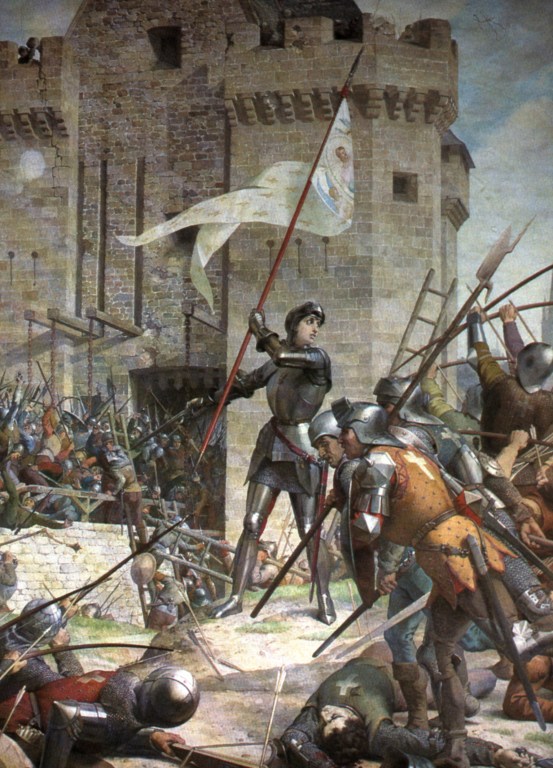
Jeanne d'Arc at the Siege of Orleans

Jeanne d’Arc at the Siege of Orleans

After Joan’s victory at Orléans, the French scholar and theologian, Jean Gerson, applied what was known as the discernment of spirits, to justify her masculine attire during the battle. He claimed that although the Old Testament prohibited it, the New Testament did not, and her circumstances as a warrior surrounded by men made it necessary to do so. Therefore, her male dressing deed ‘was done by God’.

Having read about her exploits thanks to the brilliant historian, Helen castor, and from Joan herself, (In Her Own Words), I felt so angry that the French court didn’t continue to heed her advice. Their actions left her and her men vulnerable, and led to the circumstances of her capture by the Burgundians near Compiègne.
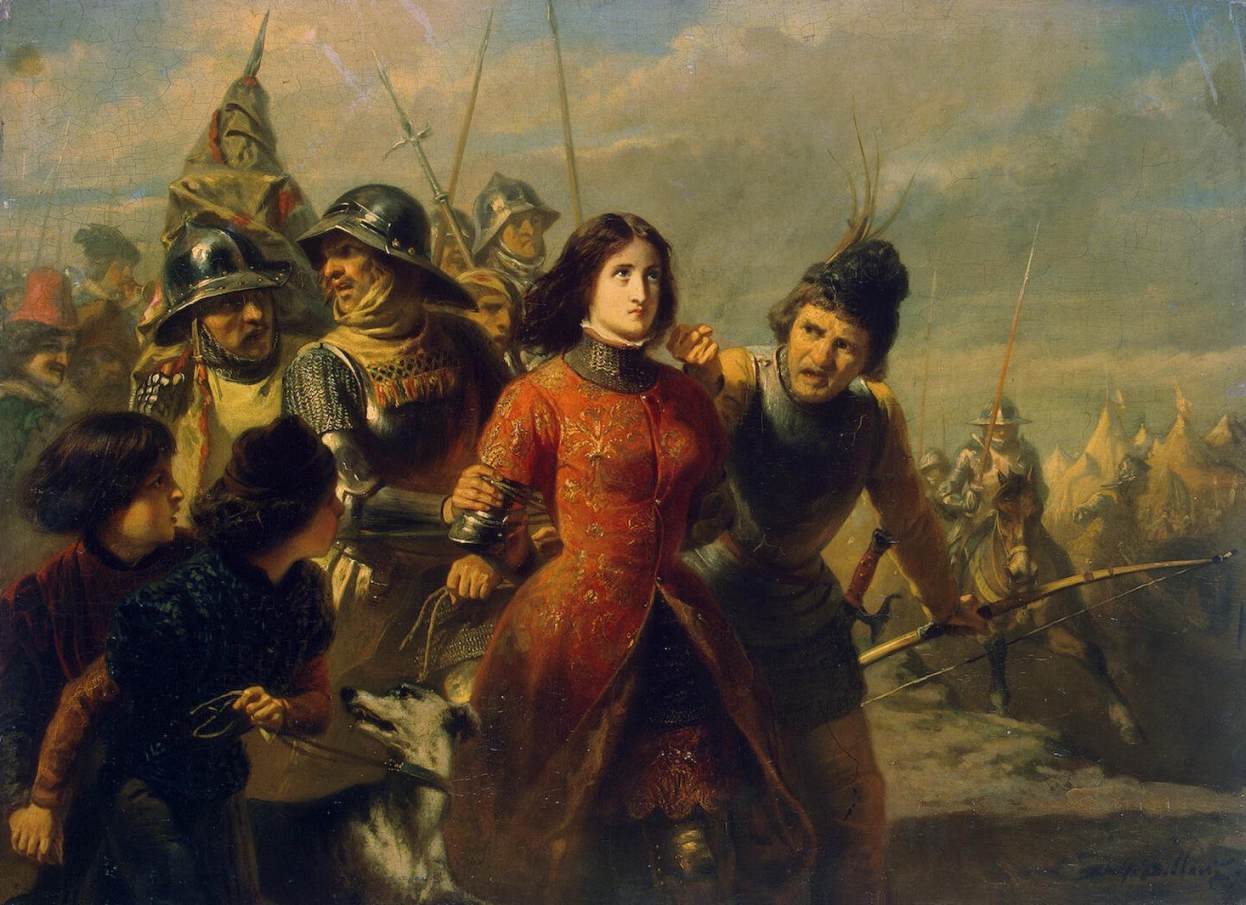
The capture of Joan of Arc by Alexandre Dillens

The capture of Joan of Arc by Alexandre Dillens

In my continuing research I found it helpful to write a dramatic monologue poem, I wanted to put myself in her shoes. Spare a thought today for one who paid the highest price anyone could pay for their faith and love.

The Maid of Heaven:

The English and Burgundians slandered me a sinner,

Their prized prisoner: the Armagnac whore and heretic.

Many hailed me a saint, when my predictions came to pass;

Only after my death, my chastity, never lost, was restored,

Restitution was made to my virtuous reputation,

Half a century passed, before my Sainthood was bestowed.

But the truth is this; I was simply a devout servant;

I listened to, and obeyed our Holy Father,

In my mission to save the most Christian Kingdom: France.

I was known as ‘Jeanette’ in my home town, Domremy,

I span thread with my mother, herded cattle with my father.

The church bells called me to prayer. I was happy

But a country life was not my destiny.

Voices told me to ensure the dauphin was crowned at Reims

With the protective escort of Captain Robert de Baudricourt

I travelled from Vaucouleurs to the royal court at Chinon and Poitiers,

There, scholars and learned men interrogated me…

How could a peasant girl save them?

My virginity was questioned and confirmed, I am intact.

Was I really sent by God?

Could I deliver France from the grip of endless war?

I told them, I am succour for a wounded and betrayed people.

Pitiable suffering, wrought from years of starvation and violence;

Cursed by changing loyalties and treaties carving up the Kingdom,

They suffered greatly for the sake of greed and power.

The holy kingdom of France; having been lost by a woman,

When Regent Queen Isabeau signed her son, the Dauphin

Charles, out of his kingly inheritance, in treachery at Troyes,

I would save as a Virgin; pure in heart, mind and body.

In order to do God’s work, I became the warrior maid,

I was sent by my right and sovereign Lord,

To deliver my King and France from their enemies

I was the Lord’s vessel of choice to chase out the English,

To fulfil this promise I could not be myself…

I had to discard the flowing garments of my femininity,

A shocking, taboo act; forbidden to my fair sex.

Red woollen dress replaced by hose and doublet;

Glossy, lustrous black hair, levelled from shoulders to ears.

None were more determined than I,

As I rode into battle, firm on my steed,

Encased and shielded in a suit of gleaming silver.

I am neither male nor female, but a symbol of hope!

Under my command the men did not rape and pillage,

They would not utter foul, coarse words, or kill unjustly.

‘La Pucelle’ became my sobriquet.

The gentle and grateful folk of Orleans never forgot

The miraculous salvation of their city under siege.

English Lords hurled insults as well as canon,

But this trollop would not go back to herding cattle!

It did them no good. My soldiers and I drove them out.

As promised, my war-cry will be remembered forever…

I proudly held St. Catherine’s saintly sword,

Found where she directed me, rusting in her chapel at Fierbois,

My white, silken banner flapping and flying in the wind

With alacrity I undertook my difficult but divine calling,

My loyal squire, Jean d’Aulon, ever at my side, so too

My captains La Hire, Alencon, the Bastard of Orléans and Xaintrailles

The Dauphin and his nobles believed in our just and holy cause,

But after our victories at Orléans, Jargeau, Patay and Meung,

Came wintry defeat at Paris, La Charité and Compiègne;

Pulled reluctantly away from the assault of Paris, was I;

Screaming and bleeding with an arrow piercing my thigh.

Endless diplomacy and delays lost our glorious momentum

My faithful voices and counsel thus went unheeded.

I continued in my mission, until that fateful day, 23rd May 1430

Cut off from Compiegne, Jean de Luxembourg captured me,

The kindness of his Burgundian ladies could not allay my fears.

So for once I shunned and ignored my faithful voices,

I flung myself from the stone tower at Beaurevoir.

Injured and recaptured, shame burned my soul,

My bid for freedom failed.  No ransom forthcoming from my King,

Instead, for 10,000 livres I was sold to my mortal enemy.

Their hatred for me was born of fear and defeat;

I would be treated badly in a prison guarded by men.

They transported me to Rouen, Warwick’s stronghold in Normandy

My voices told me to be strong, even in frail form.

Duke Philip asserted with smug authority, that my

Capture gave the Burgundians incontrovertible proof,

That my claim to act on heaven’s behalf was indeed false;

My trial was arduous, torturous, iniquitous and full of enmity.

Stultified was I, by leering eyes and jeering mouths.

A mere maiden bearing humiliation for her kingdom,

It seemed I had been abandoned by all,

To the pious and ruthless Pierre Cauchon;

Ever zealous in his quest to declare me an apostate.

He and his cowardly politicians, relentless, asking:

Would I submit to the Holy Mother Church?

Would I renounce my sins?

I told them I would submit to the Holy Father,

Under duress and endless repetition, I told them of my mission.

Puppet of the English, Bishop of Beauvais and his judges,

Most unholy men, they said I was guided by demons,

An idolater I was branded.

Under torture they coerced my abjuration at Saint-Ouen

No more anguish could I feel, than to reject my sovereign Lord,

And all I had accomplished under his command.

No amount of false accusations, fetters, hunger, derision and

Gnarled, groping hands could further assail my spirit.

Even under threat I became the warrior maid once more,

My faith ameliorated at the close of my trial.

I remain vociferous to the task entrusted to me,

Unjust sentence justified in lengthy Latin parchments

That canon law has written to satisfy the English.

Under ecclesiastical waxy stamp my fate was sealed.

Perhaps my death was always required…

Charles has been anointed with the holy oil of Clovis

Phillip the Good, Burgundian adversary, will surely seek peace,

And the English contagion will be expelled across the water,

Whimpering; with their tails between their legs.

Their child King Henry VI, like his Most Beloved grandfather Charles,

Has no stomach for war, strife of Roses on his doorstep.

One fine day, a unified France will remember me.

They will say that Jeannne d’Arc did her duty,

A simple, brave, devout and innocent girl,

Whose courage and vision shaped the mighty realm.

The interrogation of Joan of Arc by Paul Delaroche c. 1824

The interrogation of Joan of Arc by Paul Delaroche c. 1824

I gasped my last mortal breaths on a rickety bumpy cart,

Carrying me through the narrow streets of Rouen,

Faces peering from open windows in tall, timber houses,

The spring air thick with expectation and hatred

Then mercilessly I was bound to the stake,

My pale, cold feet planted on the pyre.

Brother Pierre, holding a cross for my last prayer

The spectacle of my cruel execution

Brought tears to the hostile crowd,

They who would witness fire and flame

And see the orange dance engulf my flesh,

Consuming me with voracious hunger. In agony

I cried out: Jhesus! Jhesus!

Death has stolen my breath, liberated my soul.

They may blacken my body, but not my memory;

It is not enough that milky skin is seared and charred

Beyond recognition. They want annihilation, not relics.

They may scatter my earthly ashes over the Seine,

To be drowned in the cool blue depths,

But my legacy cannot be destroyed.

It lives and breathes in the fabric of French history,

In the hearts and minds of all those I fought for;

They could not strike my deeds from the story books.

Court clerk, Guillaume Manchon has testified to my purity

And now, what was once sullied is cleansed, nullified,

My name is again revered!

Faith, love and courage kept me company for 19 earthly years

I now abide in paradise for all eternity,

For I am the Maid of Heaven…

By Virginia Burges
Joan of Arc at the stake by Francois Chifflart

Joan of Arc at the stake by Francois Chifflart

“When we take your person into account, you who are a young maiden, to whom God gives the strength and power to be the champion who casts the rebels down and feeds France with the sweet, nourishing milk of peace, here indeed is something quite extraordinary!” ~ Christine de Pizan, (Ditié de Jehanne d’Arc)

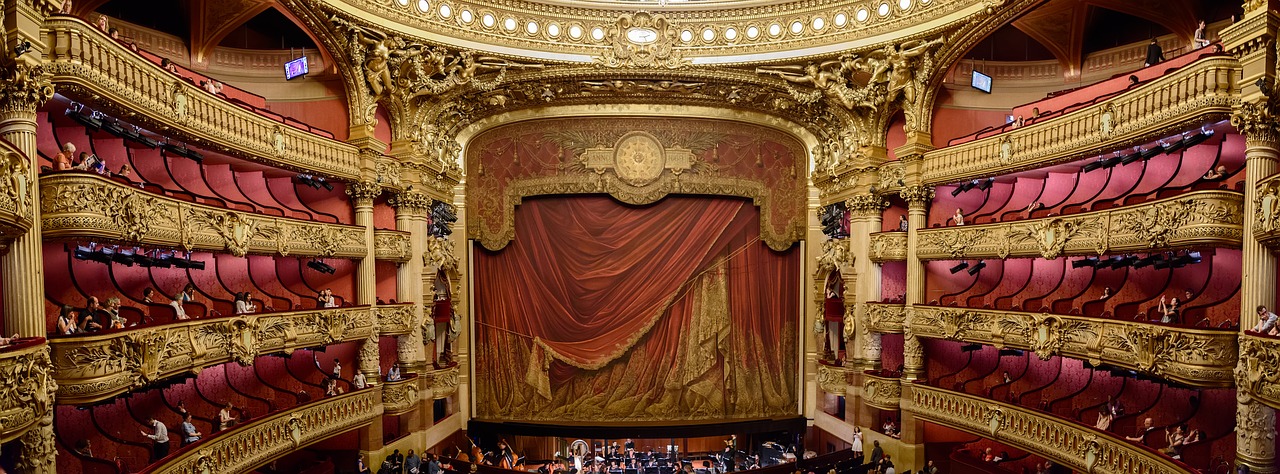
An Introduction to the Outstanding World of Opera

“No good opera plot can be sensible, for people do not sing when they are feeling sensible.” ~ W.H. Auden

If I could sing this post I would! Except you wouldn’t thank me, I can’t sing in tune so I tend to warble alone in the car…

Opera - stage curtain

Welcome to this week’s performance! The sumptuous curtains have been pulled back so you can catch a glimpse of a wonderful and varied cast of characters, divas and arias. Opera is the most colourful realm of musical drama. When text, (libretto) and music (usually singing) combine, it can result in heart-stopping moments of exquisite human expression. 

I’ve always enjoyed classical music, even as a youngster, but it’s only been in the last decade that I’ve really come to appreciate opera more fully. I must have matured and grown into the art form.

My mum took me to see Puccini’s romantic tragedy, ‘La Boheme’ at the Royal Opera House when I was about eighteen; we sat up in the stalls, almost in the roof if I recall. I don’t remember who the singers were – but I do remember their passion.

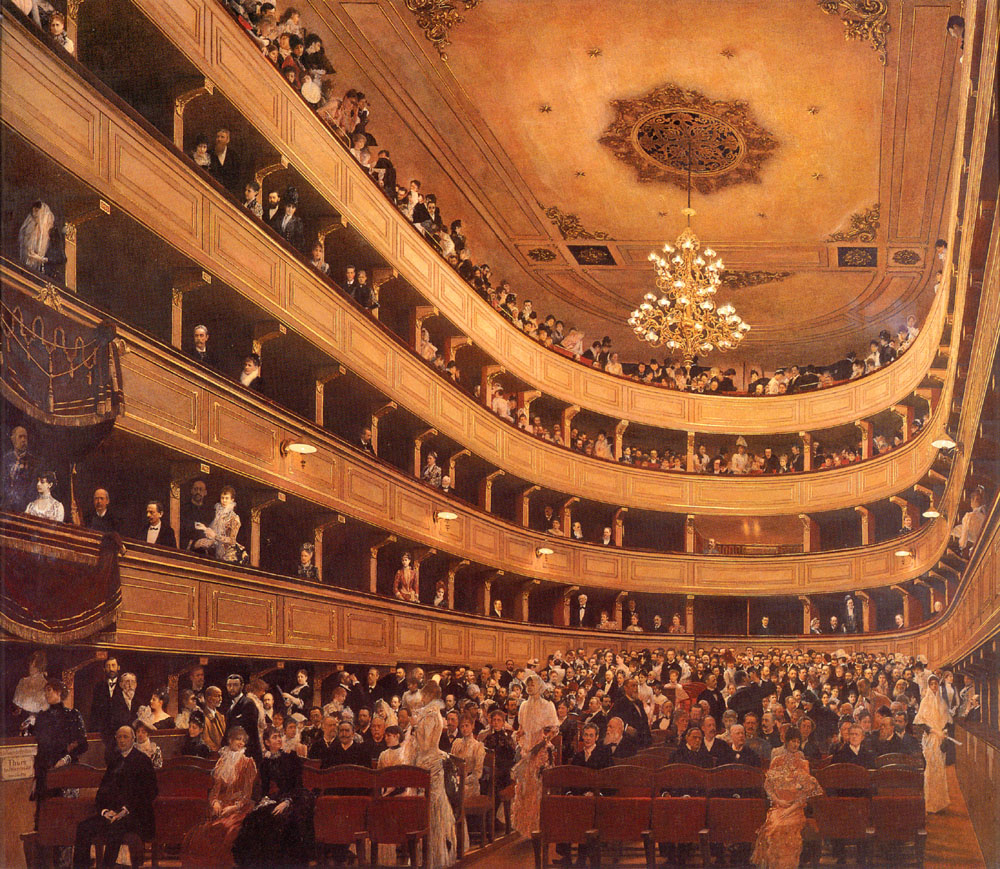
The old Burgtheater by Klimt c. 1889

The old Burgtheater by Klimt c. 1889

I loved the drama, the costumes, the live singing and music, but still it wasn’t until a good few years later I went to see Madame Butterfly, again at the Royal Opera House. We had better seats this time. Kleenex tissues were very much in demand during that performance!

Stephen Fry and comedian Alan Davies undertook an ‘operatic’ experiment in conjunction with the Royal Opera House, to monitor their cardiovascular output and physical markers during a performance of Simon Boccanegra, with a view of measuring their emotional responses throughout the performance. It was undoubtedly impactful on both of them, even Alan, who was not an opera fan. The Science of Opera:

Origins

The first known surviving opera was written in 1600 to celebrate the wedding of Marie de’ Medici and Henri IV of France, and was composed by the duo ‘il Romano’, Giulio Caccini (1551-1618) and Jacopo Peri (1561 – 1633).

L’Euridice is more of a drama set to music with some divine choral sections; the first attempt to combine text by Ottavio Rinuccini with vocal music. This type of early performance; a fusion of music with solo vocals and choral ensembles to combine both literary and visual arts evolved over 400 years, into the opera we are familiar with today.

A period performance of the entire work with Nicolas Achten and Céline Vieslet:

Orfeo ed Euridice

Over a century later composer Christoph Willibald Gluck would become inspired by the ancient Greek mythical tale of Orpheus, son of Apollo; legendary musician, poet and prophet (bard for that matter). His music dramatises Orfeo’s journey to Hades to appease the furies with his music in order to bring his new bride, Eurydice back to life, in his 1762 opera, Orfeo ed Euridice.

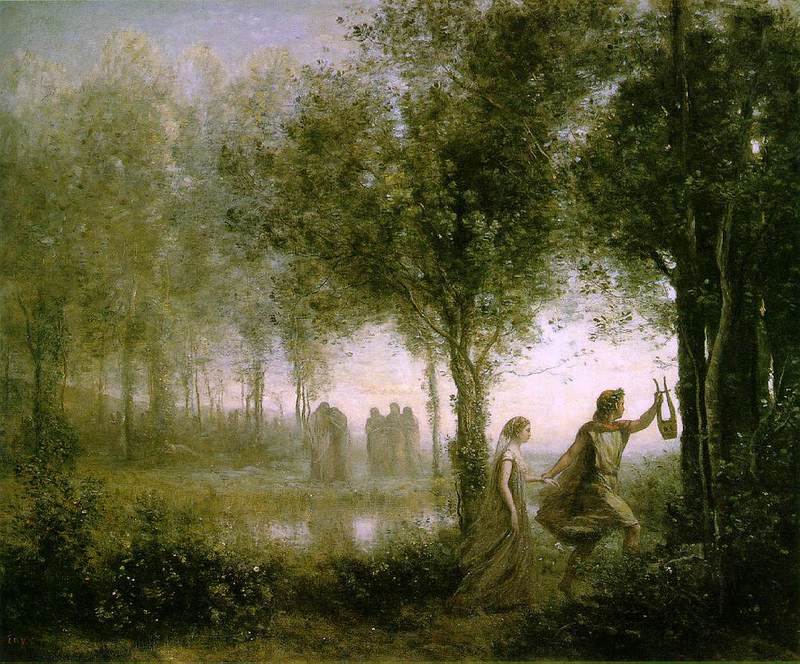
Orpheus leading Eurydice from the underworld by Jean-Baptsite Camille Corot

Orpheus leading Eurydice from the underworld by Jean-Baptsite Camille Corot

It was a box-office hit in Vienna when it premiered at the Burgtheater on 5th October, and was then revised and expanded further by Gluck for its French premiere at the Paris Opéra on 2 August 1774 as Orphée et Eurydice.

A superb clip of American tenor Richard Croft singing ‘J’ai perdu mon Eurydice’ by Gluck:

Offenbach wrote his operetta, ‘Orpheus in the Underworld’ in 1858 as a satirical send-up of Gluck’s earlier opera. The ‘Infernal Galop’ from Act 2, Scene 2, is infamously referred to as the ‘can-can’. Saint-Saëns took poetic license with the Galop, by slowing it to a crawl, and arranging it for the strings to represent the tortoise in The Carnival of the Animals.

I really have the urge to don stockings and kick my legs right now!

Baroque Opera

The great Baroque opera composers were Händel, Purcell, Monteverdi and Vivaldi, who I think must have written as many operas as I’ve had hot dinners!

Monteverdi’s music marked the crossover from the late Renaissance to early Baroque, and he also wrote an opera about, yes, you guessed it, Orpheus! ‘L’orfeo’ was written and first performed in Mantua in 1607.

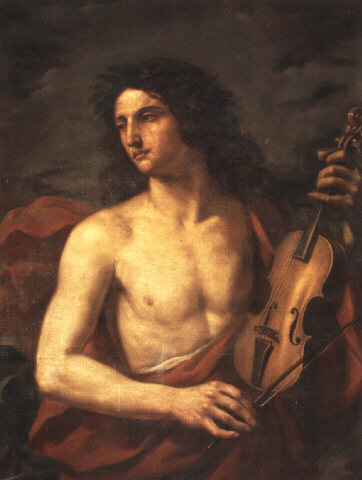
Orfeo by Cesare Gennari

Orfeo by Cesare Gennari

In fact, I was flabbergasted to learn that a total of 71 Orphean operas (not all completed) have been written between 1600 and 2015.

Cecilia Bartoli as Euridice in Haydn’s L’anima del filosofo ossia Orfeo ed Euridice, ‘Al tuo seno fortunato’:

Georg Friedrich Händel composed 42 operatic works of varying genres that were written between 1705 and 1741. He achieved great success with his operas after he settled in England. Many of his works were premiered at the opera house in the Haymarket, initially the Queen’s Theatre which then became known as the King’s Theatre.

One of my favourite Händel arias is ‘Lascia ch’io pianga’ (let me weep) from his first opera, Rinaldo, published in 1711.  Arleen Auger has the purest, sweetest voice in this remarkable recording:

Barbara Bonney ‘Thy hand, Belinda…When I am Laid in Earth’ by Henry Purcell:

Mozart

His partnership with Venetian librettist, Lorenzo Da Ponte created some of the most memorable operas ever written. From the tale of the philandering rake, Don Giovanni, to the complicated marriage of Figaro, to the outlandish Magic Flute with a psychotic Queen of the Night, as well as others such as Idomeneo, Cosi fan tutte, La Clemenza di Tito, Mitridate, Lucio Scilla and Zaide to name but a few.

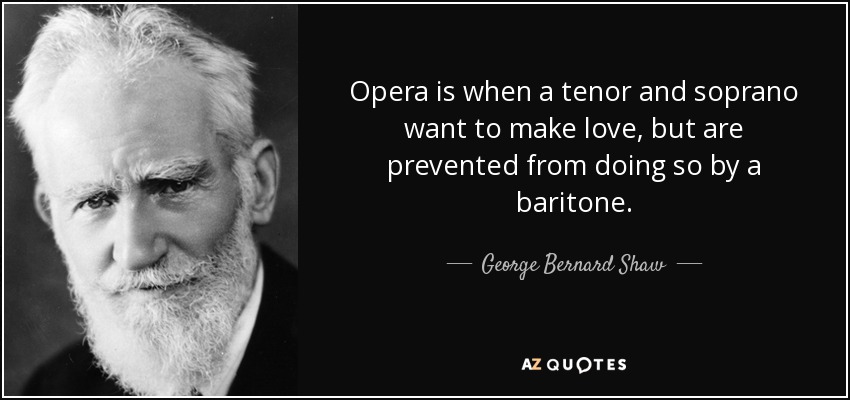
Opera quote-opera-is-when-a-tenor-and-soprano-want-to-make-love-but-are-prevented-from-doing-so-george-bernard-shaw-79-81-87

Diana Damrau isn’t taking any prisoners in her stunning rendition of the ‘Queen of the Night’ aria:

A really beautiful clip of Cecilia Bartoli and Jean-Yves Thibaudet performing ‘Voi che sapete’ (with translation) from the Marriage of Figaro:

Beethoven

Dear Ludwig only wrote one opera in his lifetime, about a dutiful wife, Leonore, the early title of the work that would become known as ‘Fidelio’. It contains his hallmark themes of heroism and courage at its core. Leonore disguises herself as a prison guard in an attempt to rescue her husband, Florestan, from death.

Marilyn Horne – Abscheulicher! Wo eilst du hin?

Bizet

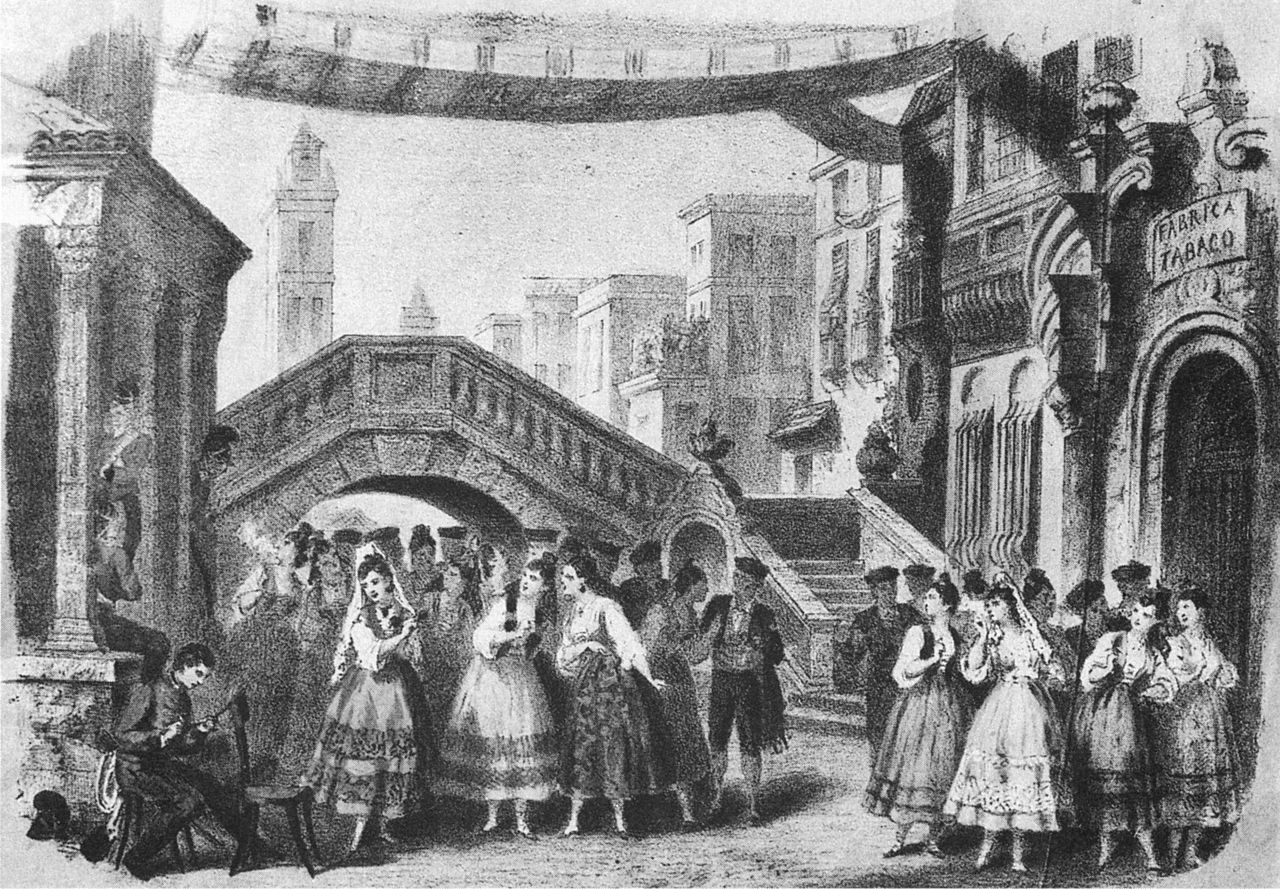
His iconic opera, Carmen, based on the eponymous novella by Prosper Mérimée, about a feisty and fickle young gypsy woman who captures the heart of a soldier, Don Jose, is one of my favourites. It broke with convention at the time of its premiere in March 1875, and was received with indifference. However it has become hugely in popular over the years.

Carmen lithograph by Pierre August Lamy c. 1875

Carmen lithograph by Pierre August Lamy c. 1875

The story follows Don Jose’s total immersion into infatuation, obsessive desire, love and jealousy against the back drop of a parched, proletarian Seville. The music portrays his eventual downfall as he becomes a deserter and vagabond, consumed with malicious intent towards Carmen –  the woman who has spurned him. If he can’t have her, then neither can his rival for her affections, toreador Escamillo…

It has many wonderful, memorable arias and evocative orchestral music that capture its passionate and tragic themes: the key ingredients of unforgettable opera.

Les tringles des sistres tintaient (Chanson Boheme) – Angela Gheorghiu:

Jonas Kaufmann as Don José with a poignant performance of the Flower Song ‘La fleur que tu m’avais jetée’:

I love this seductive, slinky performance of “L”amour est un oiseau rebelle” by Elina Garanca in the Metropolitan Opera staging of 2010:

A steamy scene ‘Près des remparts de Séville’ from the film of Carmen made in 1984, with Julia Migenes and Plácido Domingo:

Bizet’s Carmen has also provided inspiration for ballets and instrumental music.

The Italians are in the house!

Somehow the dramatic nature of opera suits the Italian psyche, after all, it originated there, and none were more successful in this genre than Guiseppe Verdi. He composed famous operas such as the romantic tragedy La Traviata, the epic Aida, Rigoletto, Nabucco, Otello, Il Trovotore, Macbeth, Falstaff, La Forza del Destino, Simon Boccanegra and many others.

Verdi blows my socks off with this colossal classic from Nabucco. Chorus of the Hebrew Slaves:

The drinking song from La Traviata with Rolando Villazon and Anna Netrbko:

Hot on his heels is Giacomo Puccini, a true romantic at heart. Among his best-loved operas are, Tosca, La Boheme, Turandot, Madame Butterfly, Manon Lescault and Gianni Schicchi.

Anna Netrebko and Rolando Villazon are superb in this romantic duet from La Boheme ‘O soave fanciulla’:

We musn’t forget Gioachino Rossini, who penned some very memorable tunes, including The Barber of Seville, La Cenerentola, William Tell, La Gazza Ladra and Otello.

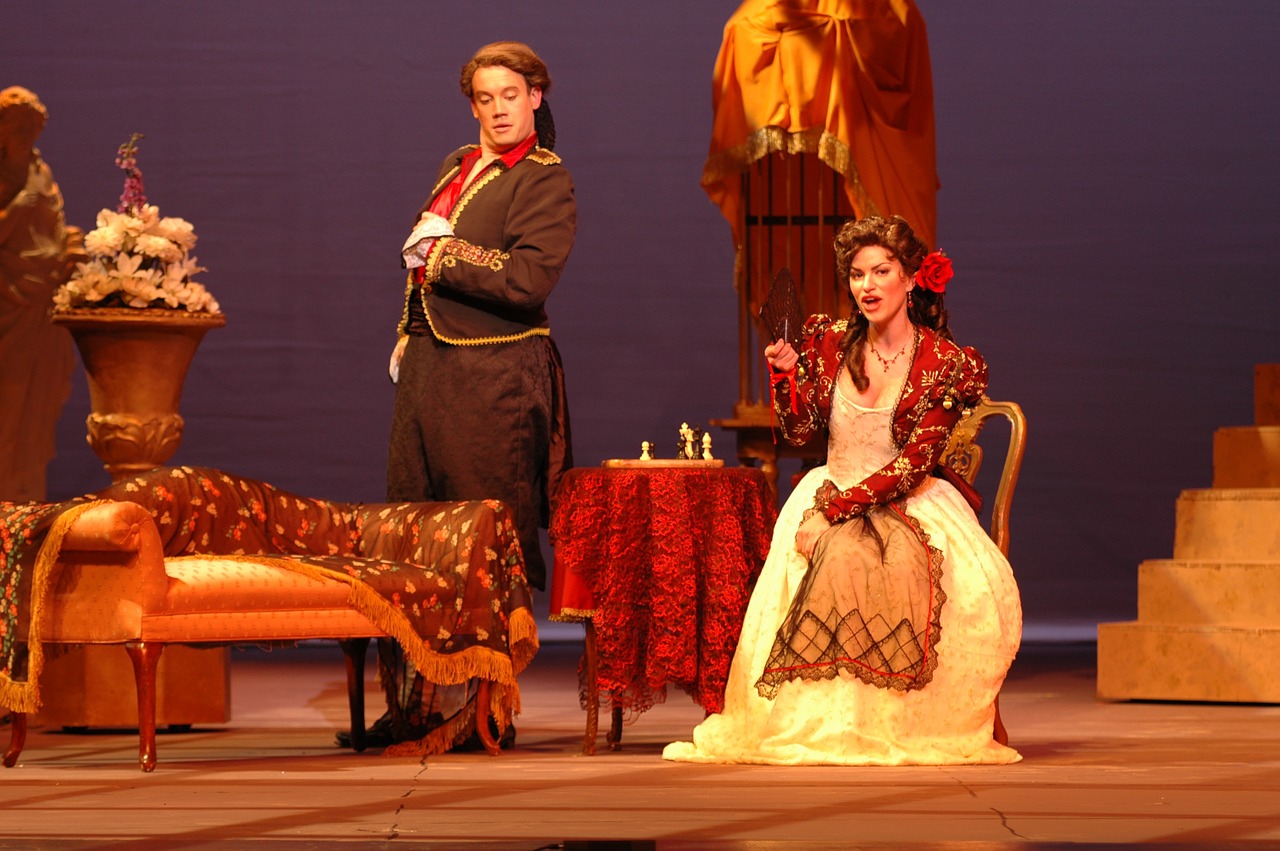
The Barber of Seville

The Barber of Seville

During his meeting in Vienna with Beethoven in 1822 at the age of thirty, when Beethoven was fifty one, profoundly deaf, curmudgeonly and losing his health, he still managed to note in his conversation book:

“Ah, Rossini. So you’re the composer of The Barber of Seville. I congratulate you. It will be played as long as Italian opera exists. Never try to write anything else but opera buffa; any other style would do violence to your nature.”

Other Italian opera composers of note were Bellini, Donizetti and Mascagni. One of my favourite arias is Casta Diva by Bellini (Chaste goddess…turn upon us thy fair face, unclouded and unveiled). A fabulous live vintage recording of Maria Callas packed with pathos:

Italy produced the finest tenor in opera history with Luciano Pavarotti. That man was born to sing! For me, no one can top his powerful, emotive and distinctive voice.

E lucevan le stelle (Tosca):

Here he is singing the immortal ‘Nessun Dorma’ from Turandot as an encore:

Tchaikovsky

We perhaps think of his wonderful, warm, lush violin concerto, his romantic symphonies and his immortal ballet music, but this Russian heavyweight wrote a grand total of eleven operas, his most popular being Eugene Onegin.

Wagner

Probably the closest rival to Verdi for the King of opera crown, Richard Wagner’s operas were usually epic in subject matter, long, very long, with romantic music, involving lovers, mythical characters, gods and large ladies.  And did I mention long?! Brünnhilde is an icon in her own right. So much so, she was even featured in a cartoon!

A beautiful recording with Anne Evans in Brünnhilde’s Immolation from Götterdämmerung:

When it comes to Wagner I can only listen in small doses. I’ve often joked that the ears can only enjoy for as long as the derriere can endure!

Wagner’s 13 impressive operas: Die Feen, Das Liebesverbot, Rienzi, Der Fliegende Hollander, Tannhäuser, Lohengrin, The Ring of the Nibelung (Das Rheingold, Die Walkure, Siegfried and Gotterdammerung), Tristan und Isolde, Die Meistersinger and Parsifal.

This made the hairs on my arms stand up! Ponte Singers – Pilgrim’s Chorus from Tannhäuser:

It doesn’t get more beautiful than this! Georg Solti and the Chicago Symphony Orchestra give a masterclass in building sublime, unresolved tension to an eventual, satisfying crescendo in this performance of Tristan und Isolde – Prelude and Liebestod:

For opera aficionados! Verdi vs Wagner – the 200th birthday debate with Stephen Fry:

I hope I have manged to give you a well-rounded introduction to opera if you’re not already a bit of an enthusiast, in which case you probably know more than me!

Of course there are those who poke fun at opera, even muscians! But we’ll let the irreverent Victor Borge off the hook; after all he was incredibly funny. A night at the opera like no other!

I’ll probably re-visit opera again one day, there’s far too much to cover in one post, and I know you’ve all got things to do and places to be.

For my swan song I’ll leave you with a poignant, sensual aria from Samson et Dalila by Saint-Saens –  ‘Mon coeur s’ouvre a ta voix’ sung by the queen of sopranos, Maria Callas:

“Opera is where a guy gets stabbed in the back, and instead of dying, he sings.” ~ Robert Burns

#SundayBlogShare 🎼🎻🎹🎸🎷🎧 Music: An Unsurpassed Social Gift

“All art aspires towards the condition of music.” ~ Walter Pater

Playing a musical instrument is the best workout I know for my brain, as well as for invigorating my whole body. Meditation follows a close second alongside some other pleasurable activities…

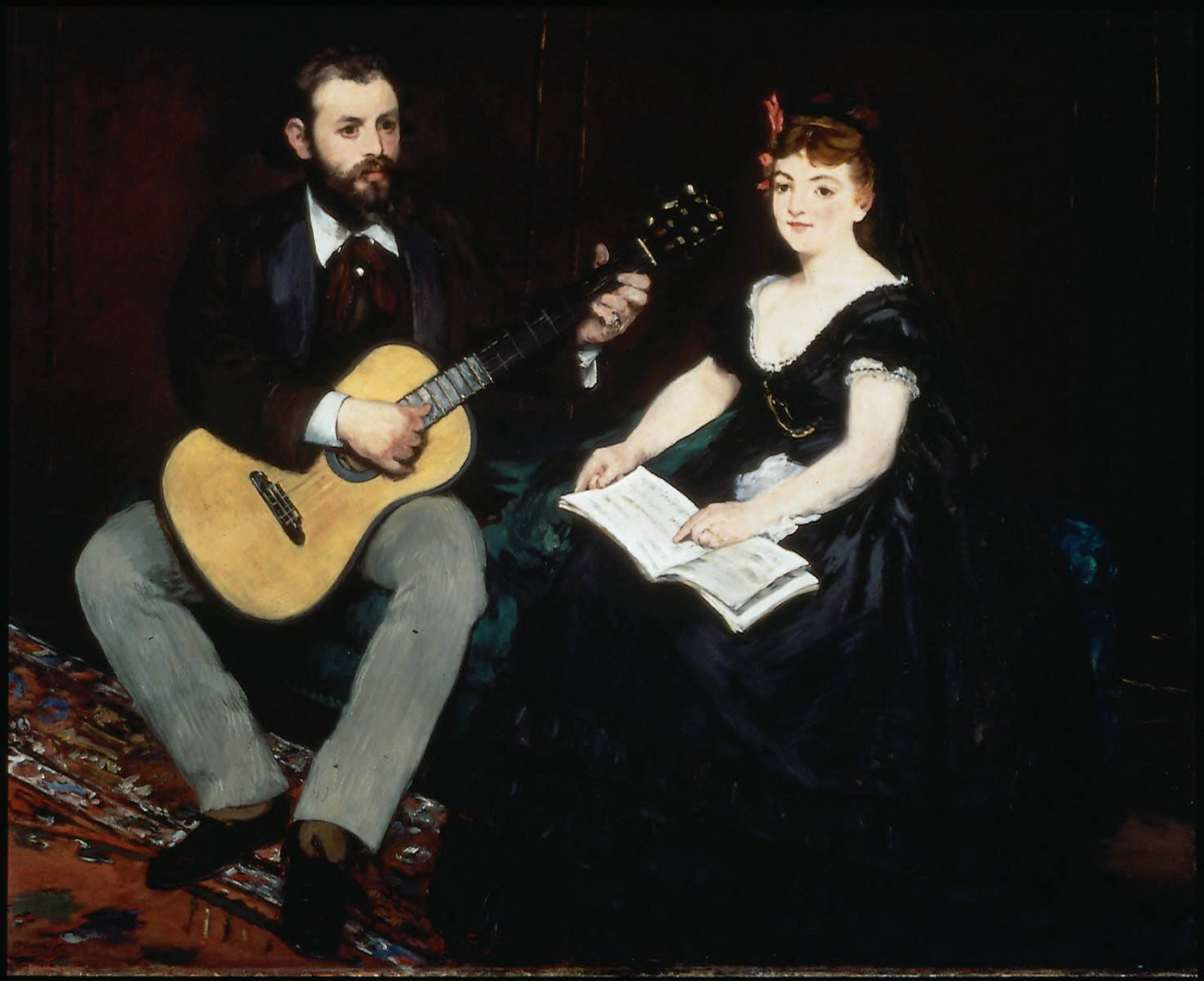
The Music Lesson by Manet c. 1868

The Music Lesson by Manet c. 1868

During a practice session I feel totally alive; my mind seems to be at its most creative, and yet clear of life’s ‘junk’. I can be myself when I’m playing my violin; happily ensconced in a ‘flow state’ with no judgment or expectation other than to enjoy my activity.

I may not be on stage in a world-class concert hall, (only in my imagination), in reality I’m in my lounge and completely engaged in a joyful fusion of physical and mental exercise.

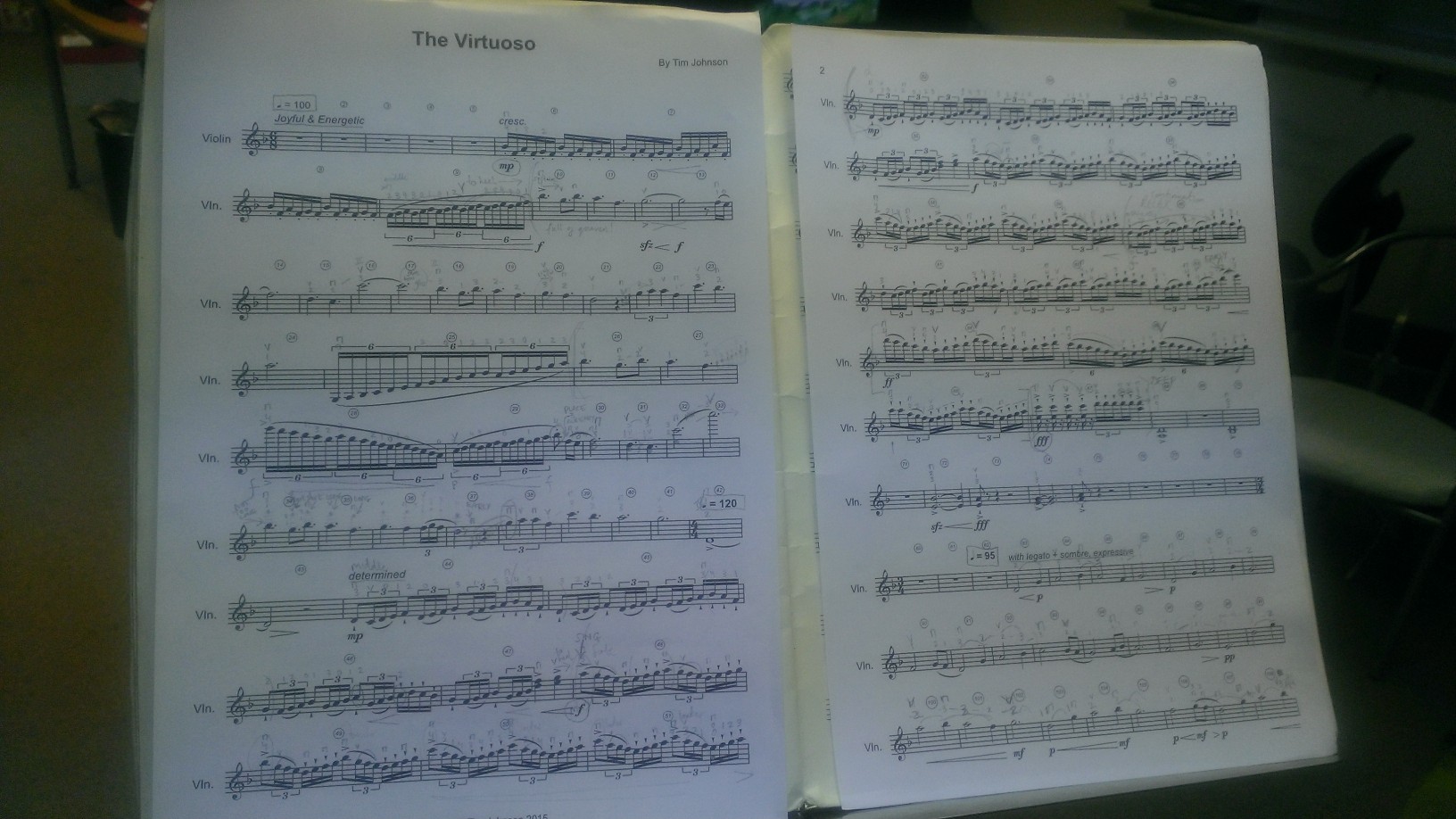
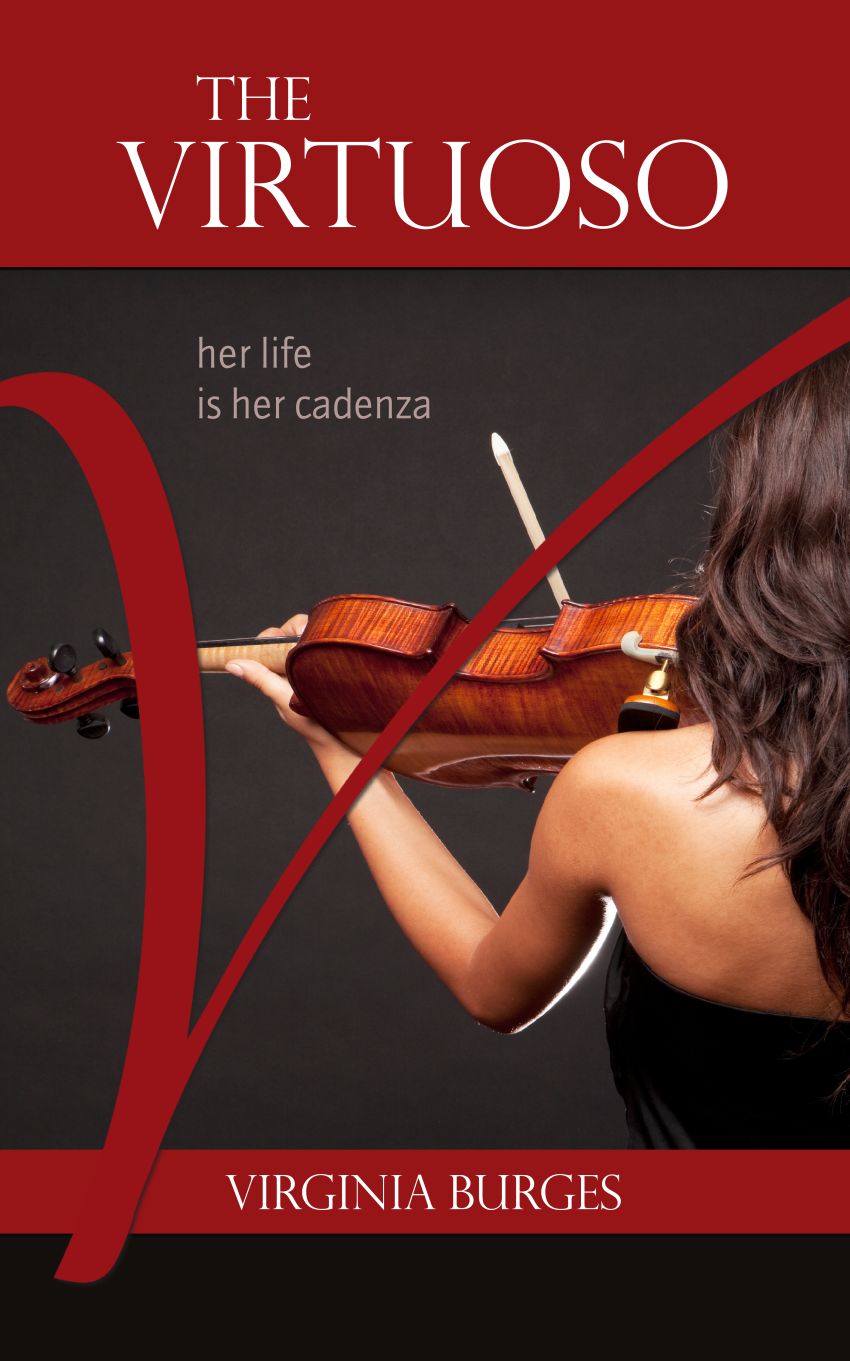
The thought of not being able to play inspired the premise for my novel, The Virtuoso.

Music score to accompany The Virtuoso by Tim Johnson

Music score to accompany The Virtuoso by Tim Johnson

While I’m playing Bach, Beethoven, Mozart and Vivaldi my brain is doing the ultimate multi-tasking, coordinating on an epic scale:

It’s enabling me to read the notes, to perform challenging passages of semi-quaver notes, to react quickly with tricky  incidental notes, trills and possible key changes during the piece, let alone changing position on the fingerboard, deciding what digit goes where, what bowing technique is required, the dynamics of the music and, of course intonation and my unique interpretation based on how the music makes me feel as I play it.

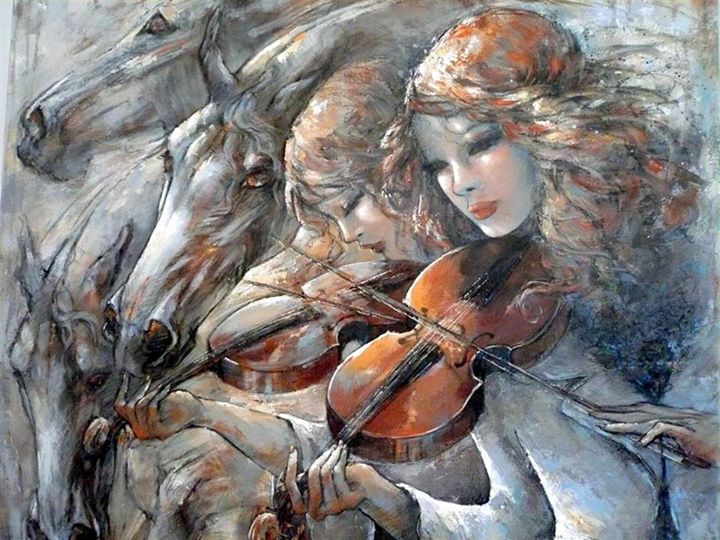
Jeanne Saint Cheron - violinist

Violinist by Jeanne Saint Cheron

Imagine coordinating that many processes in a split second. Brain plasticity is an incredible process. It must be an orchestra of simultaneous sparks, a symphony of synapses in there, lighting up all over the place!

Science has backed me up on that one. How playing an instrument benefits your brain – Anita Collins:

Afterwards I find myself in a special space, my mind is empty yet energised and I just write. Ideas flow. It doesn’t last forever, but I try to make the most of it! Those alpha brain waves are the good guys, they usher in our most creative moments when we’re in a state of relaxed concentration.

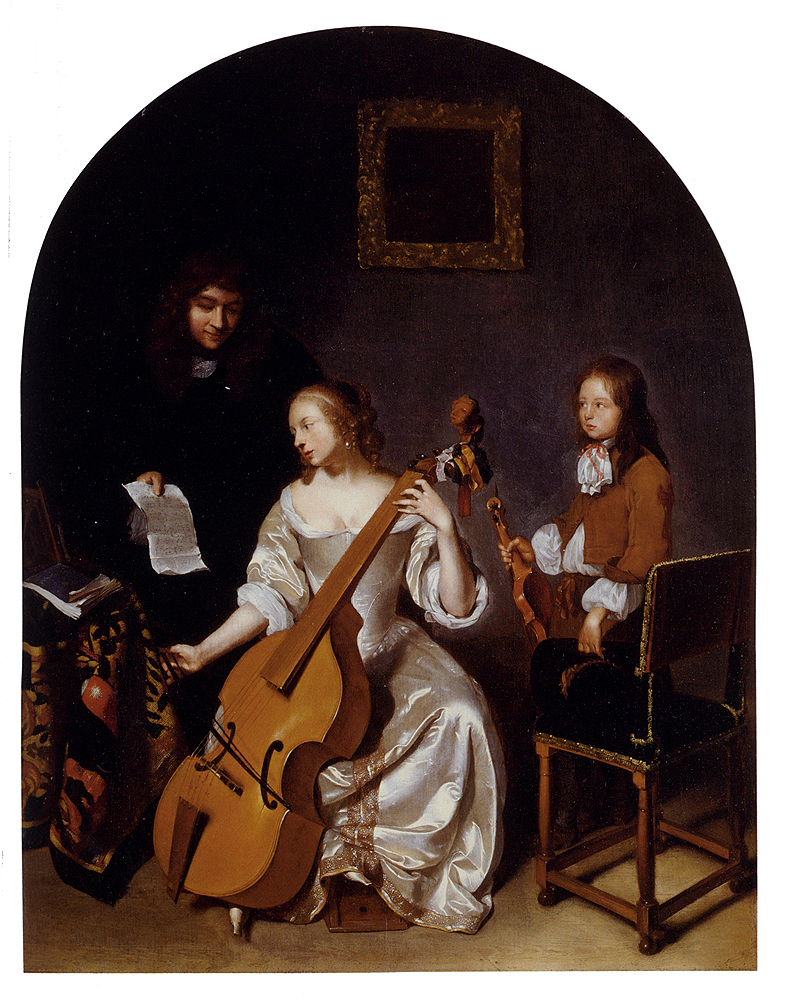
The Music Lesson by Caspar Netscher

The Music Lesson by Caspar Netscher

Music really is instrumental in improving brain function and cognitive ability.

You may relate to my joy if you play an instrument. I don’t mean to be unnecessarily sombre, but if music disappeared overnight, for whatever reason, what would become of our species? I don’t think I could live in a world devoid of such a rich, cultural heritage…

A fascinating talk from the late neurologist Oliver Sacks – Musicophilia: Tales of Music and the Brain:

This short video shows Dr. Sacks’s brain activity as he listens to music by Bach, his favourite composer compared with that of Beethoven:

A great excerpt from a talk about the history of music by Dr. Daniel Levitin, who argues against Steven Pinker, asserting that music preceded language:

I wanted to share with you my own verses; poetry which most certainly does not compare to the likes of Keats or Shelley, but which is nonetheless genuinely reflective of my love for music; both playing and listening.

Music Makes Me Feel…

First came the hypnotic rhythm of Beethoven,

Moonlight tones passing through my mother’s womb;

Loving piano gently infiltrates fleshy oven,

Beautiful harmony surrounds the warm, watery tomb

My whole being is receptive, active, listening,

Later in life, it will make my spirit sing.

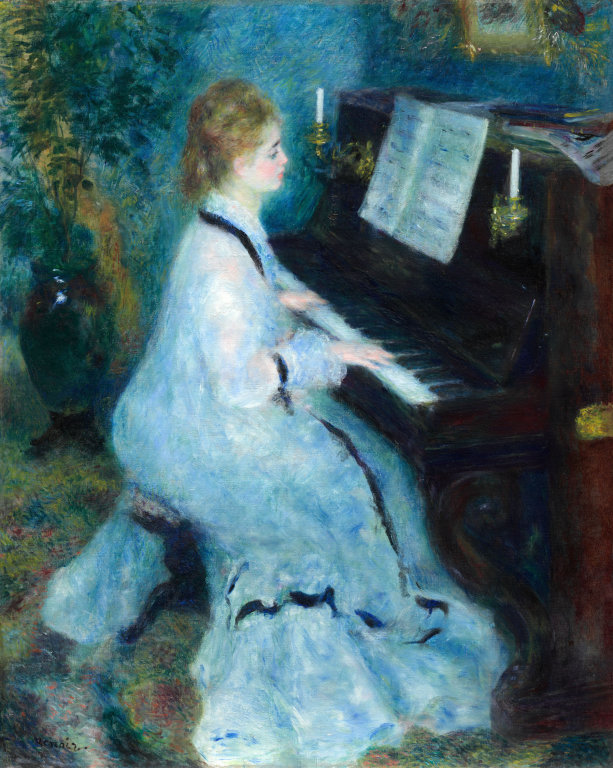
Woman at the Piano by Pierre Auguste Renoir

Woman at the Piano by Pierre Auguste Renoir

Orchestras fill our home, my education starts,

Lessons begin on the violin; fun but hard,

Before long I am hooked, for joy it imparts,

Bowing, scraping, hand stretching on fingerboard,

The right note eludes me, again and again,

Eventually, fingers know their place more than pain.

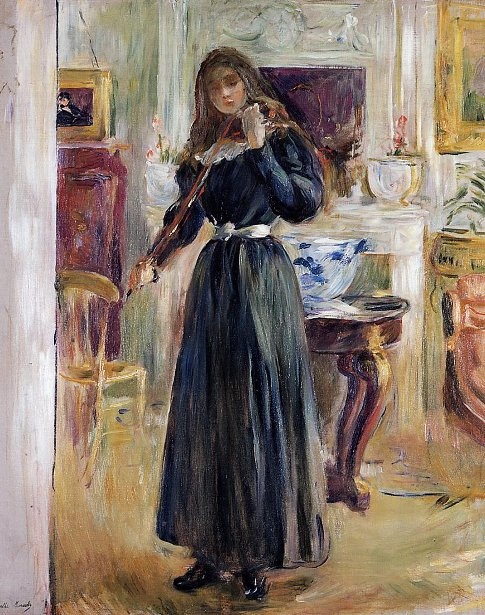
Berthe Morisot - The artist's daughterplaying the violin

Berthe Morisot – The artist’s daughter playing the violin

Pulsing air waves elicit ecstasy, and poignant lingering,

Oscillations match to memories from the deep,

Such moving melody, well-spring of suffering,

Black notes on treble or bass clef; ready to leap

From musicians instruments, creating composer’s passions

Hypnotism says Ludwig van, to force same emotions.

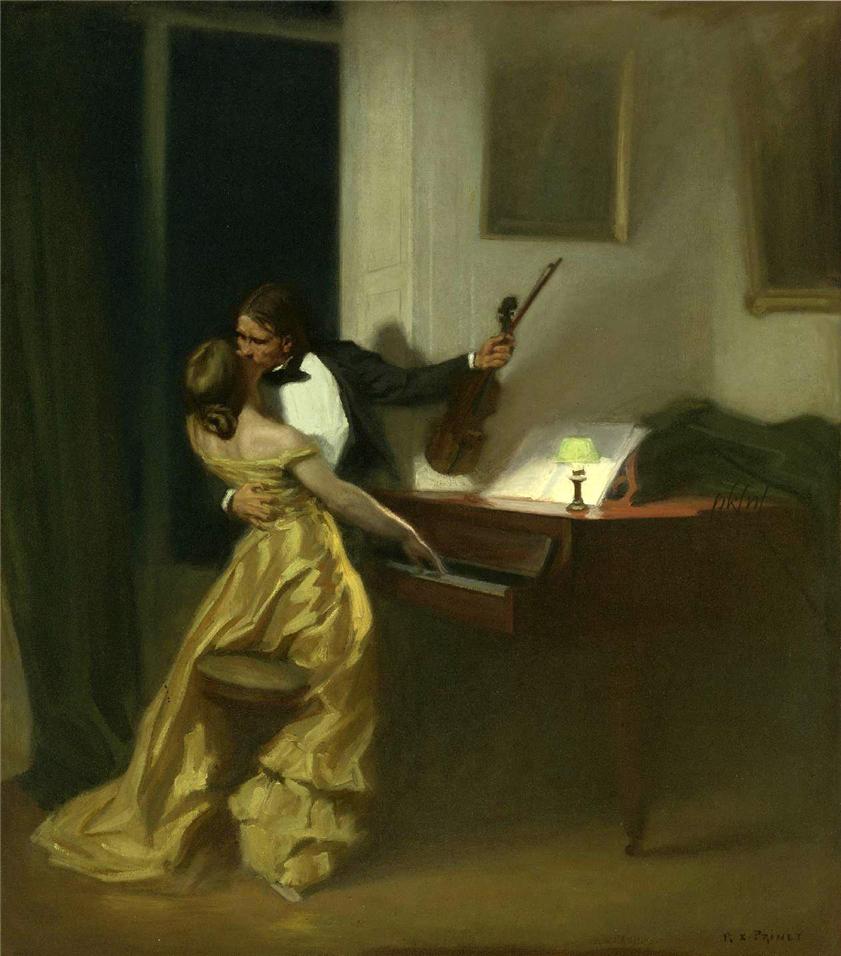
The Kreutzer Sonata by Xavier Prinet

The Kreutzer Sonata by Xavier Prinet

Major or minor key, varying dynamics and tempo

Music mirrors every sacred moment of life,

Soft, soothing adagio or a galloping allegro,

Good vibrations comfort me when in strife;

Open your heart to its flowing, healing tune,

And fill your soul with rapture, thrilling croon.

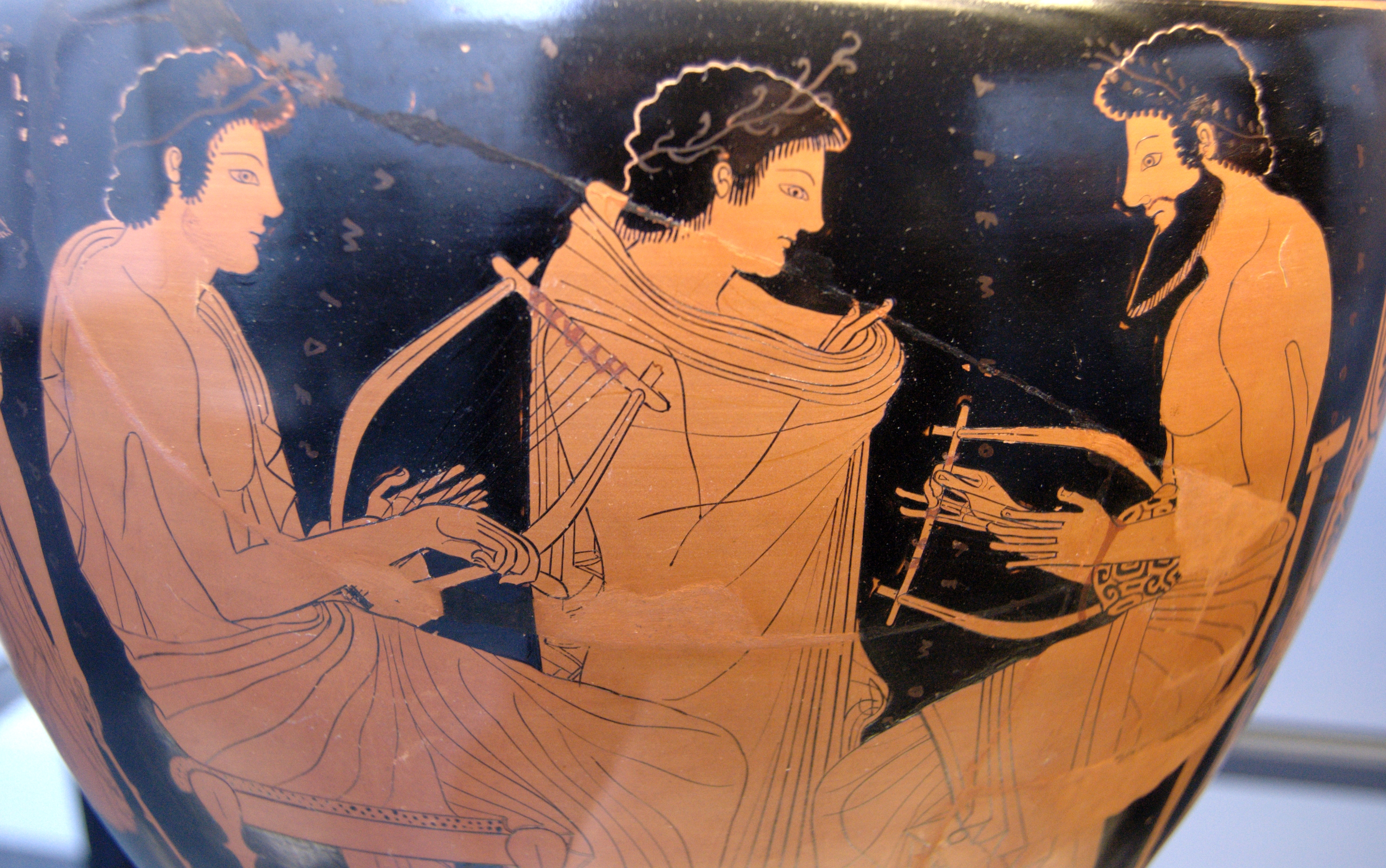
Music - Ancient Greek vase - music lesson

Ancient, divine sounds, evolving over millennia,

Effect is more visceral than art, sculpture, literature.

No mode of communication stirs like an aria;

Universal language communes with our nature,

Eclectic music of mankind, such profound apotheosis,

Ultimate expression of humanity: Quo Vadis?

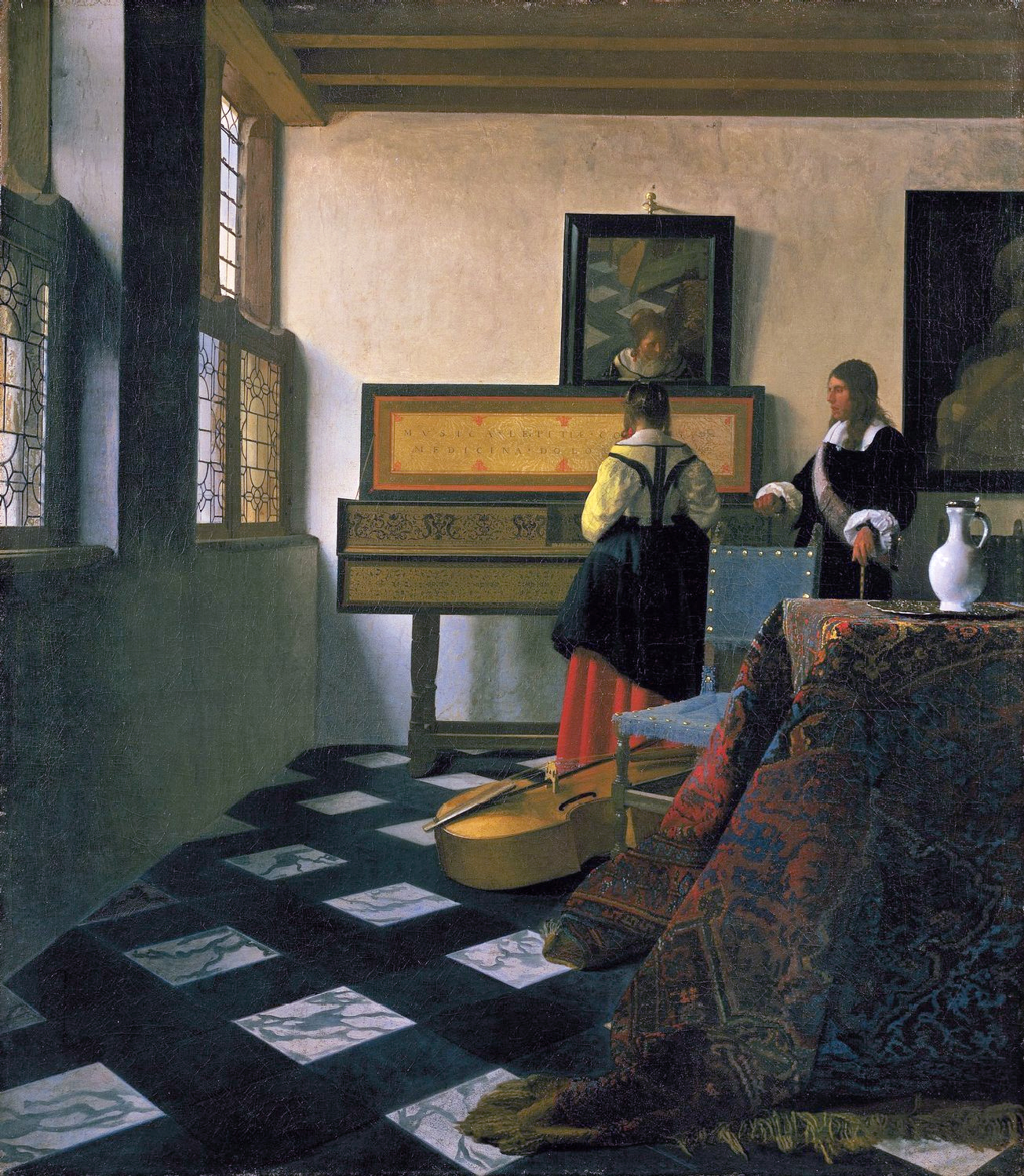
The Music Lesson by Jan Vermeer

The Music Lesson by Jan Vermeer

Apart from the sound of my mother’s voice, this timeless and peaceful composition by Beethoven that my mum used to play was probably one of the first things I ever heard:

Sound when stretched is music.

Movement when stretched is dance.

Mind when stretched is meditation.

Life when stretched is celebration. ~ Sri Sri Ravishankar

How to be More Motivated and Successful After Rejection

“Rejections slips, or form letters, however tactfully phrased, are lacerations of the soul, if not quite inventions of the devil – but there is no way around them.” ~ Isaac Asimov

You may ask, what can an author who’s sold more than 450 million books, as well as providing the content and inspiration for the behemoth that is the blockbuster series of Harry Potter movies, teach me about being rejected?

I would venture to say quite a bit actually. JK Rowling certainly inspired me to keep going, albeit not down the same path, but you’d imagine because of her stellar success she wouldn’t know anything about rejection – but you’d be wrong.

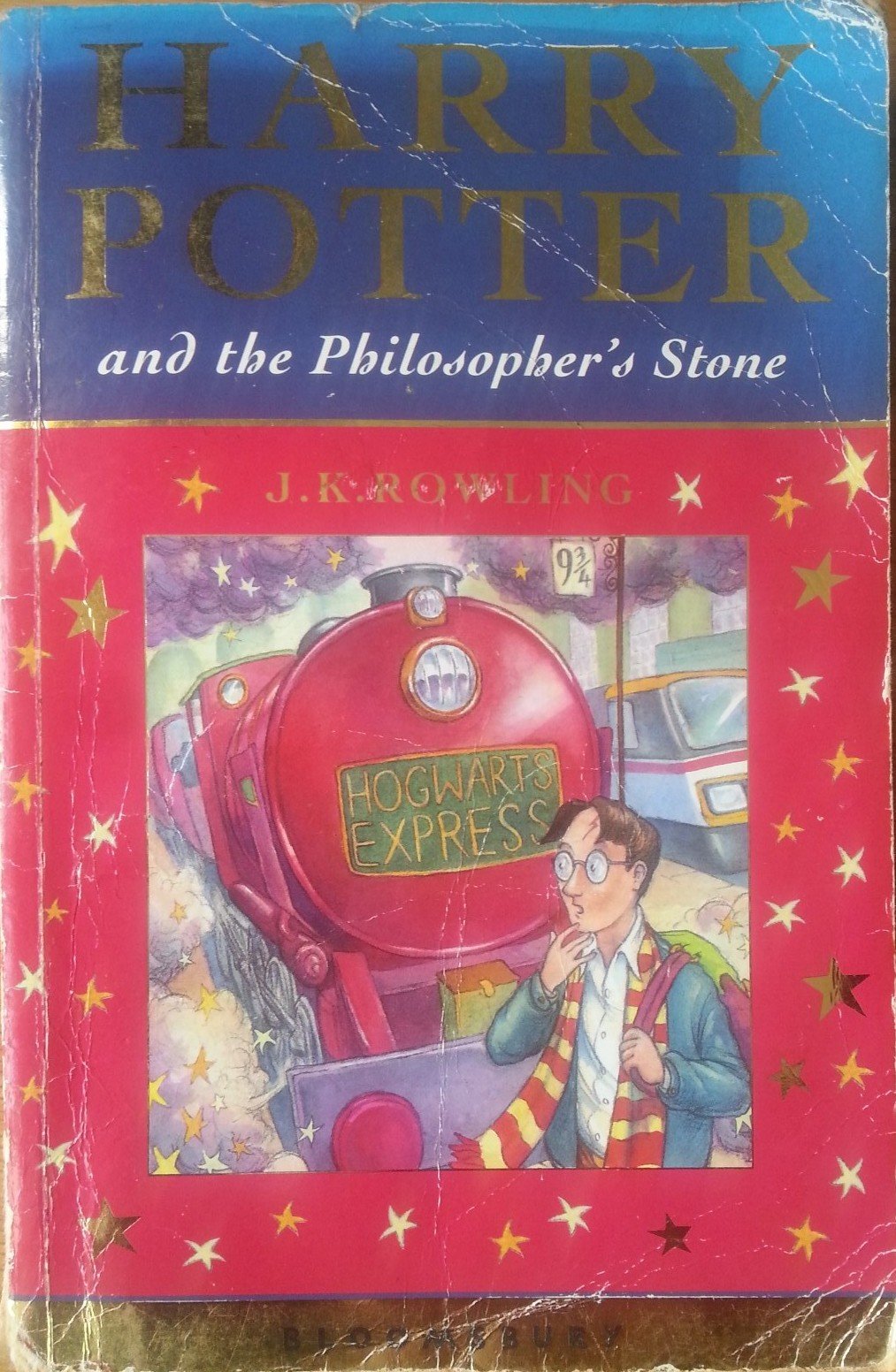
Rowling was rejected numerous times when she began approaching literary agents with Harry Potter and the Philosopher’s Stone. I’ll bet they’re kicking themselves now.

rsz_harry_potter_book

The Christopher Little Literary Agency agreed to represent her, a decision which has more than paid off! The rest, as they say, is history.

Rejections under the pseudonym Robert Galbraith

Many of us are aware that JK Rowling didn’t have immediate success when she approached agents and publishers with her first Harry Potter adventure.

Despite those rejections, the best-selling author of the Harry Potter fantasy series and her first adult novel, The Casual vacancy, decided to go incognito for her first foray into crime fiction.

I recently read a newspaper article that highlighted her rejections when she was looking to become published as crime thriller author, Robert Galbraith. When she sent off The Cuckoo’s Calling she came up against the same response as before, and probably some of what you and I have also experienced.

At the request of a fan, only for inspiration purposes and not revenge, JK Rowling revealed some of the responses she received as Robert Galbraith. Here is the reply from publisher Constable and Robinson:

Dear Robert Galbraith,

Thank you very much for giving us the opportunity to consider your novel, which we have looked at with interest. However, I regret that we have reluctantly come to the conclusion that we could not publish it with commercial success.

At the risk of ‘teaching my grandmother to suck eggs’, may I respectfully suggest the following: Double check in a helpful bookshop, on Amazon or in the twice yearly ‘Buyer’s Guide’ of the Bookseller magazine…who are the publishers now of your fiction category/genre. Call the publishers to obtain the name of the relevant editor…then send to each editor an alluring 200-word blurb (as on book jackets; don’t give away the ending!)…

Owing to pressure of submissions, I regret we cannot reply individually or provide constructive criticism. (A writers’ group/writing course may help with the latter.) May I wish you every success in placing your work elsewhere.

So why would an author who is reportedly worth £580 million put herself through that kind of torment? Rowling states: ‘I had nothing to lose and sometimes that makes you brave enough to try.’

It’s thought that twelve publishers turned down Harry Potter in 1996 until Bloomsbury took it on. Rowling pointed out that the same publisher who first rejected Harry Potter had sent the ‘rudest’ response to The Cuckoo’s Calling.

Eventually it was published by Sphere, the same publisher who accepted The Casual Vacancy in 2012. It was released in April 2013 and sold around 450 copies in Britain and a further 1,000 worldwide before the author’s true identity was made public.

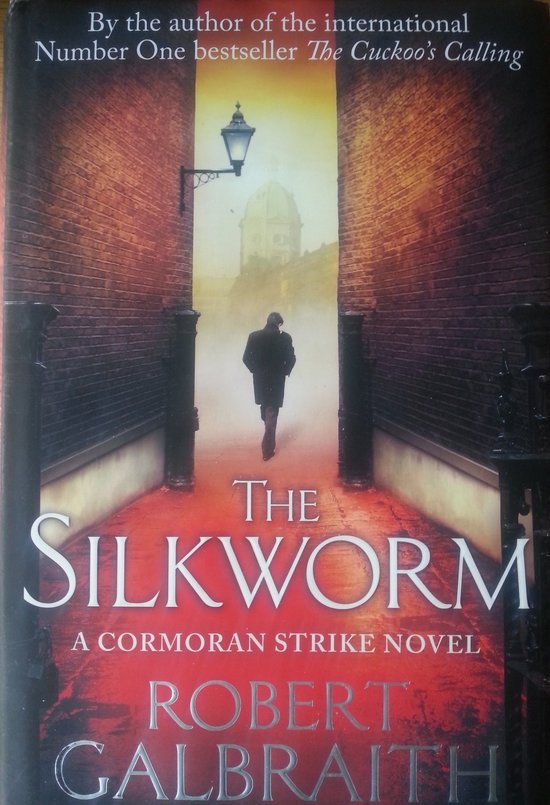
rsz_the_silkworm

Rowling has penned two further novels under the Galbraith pen name: The Silkworm and Career of Evil. So even one of the most successful authors of all-time continues to be rejected!

“You have to know how to accept rejection and reject acceptance.” ~ Ray Bradbury

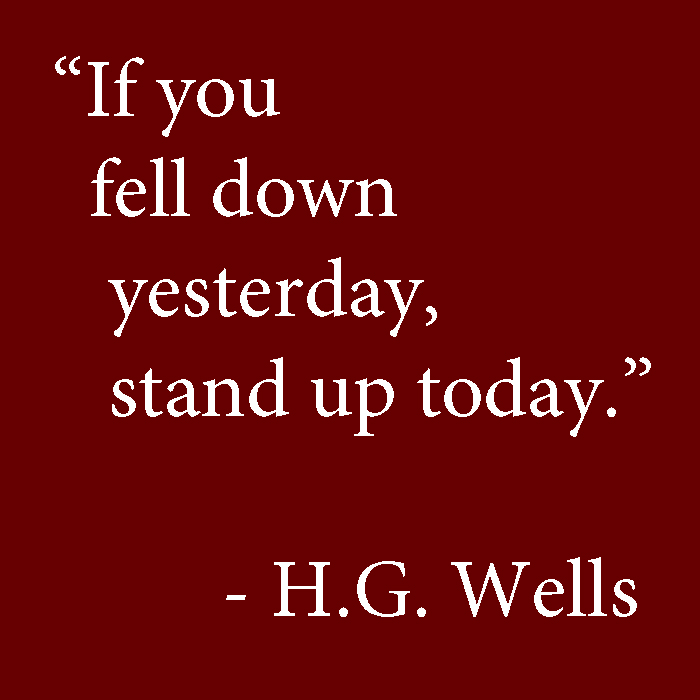
Most authors have suffered many rejections. Rejection is part of a writer’s life; it’s how you deal with it that matters.

Rejection - HG Wells

So if you’ve been rejected you’re in great company!

Having been told by an editor that he couldn’t write about women, Stephen King set about penning his grisly epistolary tale of a lonely teenager, Carrie, a vilified misfit with telekinetic powers. King actually rejected himself by binning his first few pages of Carrie, (his fourth novel but first to be published), but his wife Tabitha rescued the pages from his waste paper bin!

Margaret Mitchell had Gone with the Wind rejected 38 times before it was published and went on to win the Pulitzer Prize for Fiction in 1937. The movie of ‘Gone with the Wind’ became the most successful film ever made up to that point, and remained the highest earning film for a further 25 years after it was released in December 1939. It won 10 Academy Awards, including Best Picture, Best Director, Best Adapted Screenplay, Best Actress, and Best Supporting Actress.

It’s still the most successful film in box-office history after monetary inflation has been taken into consideration.

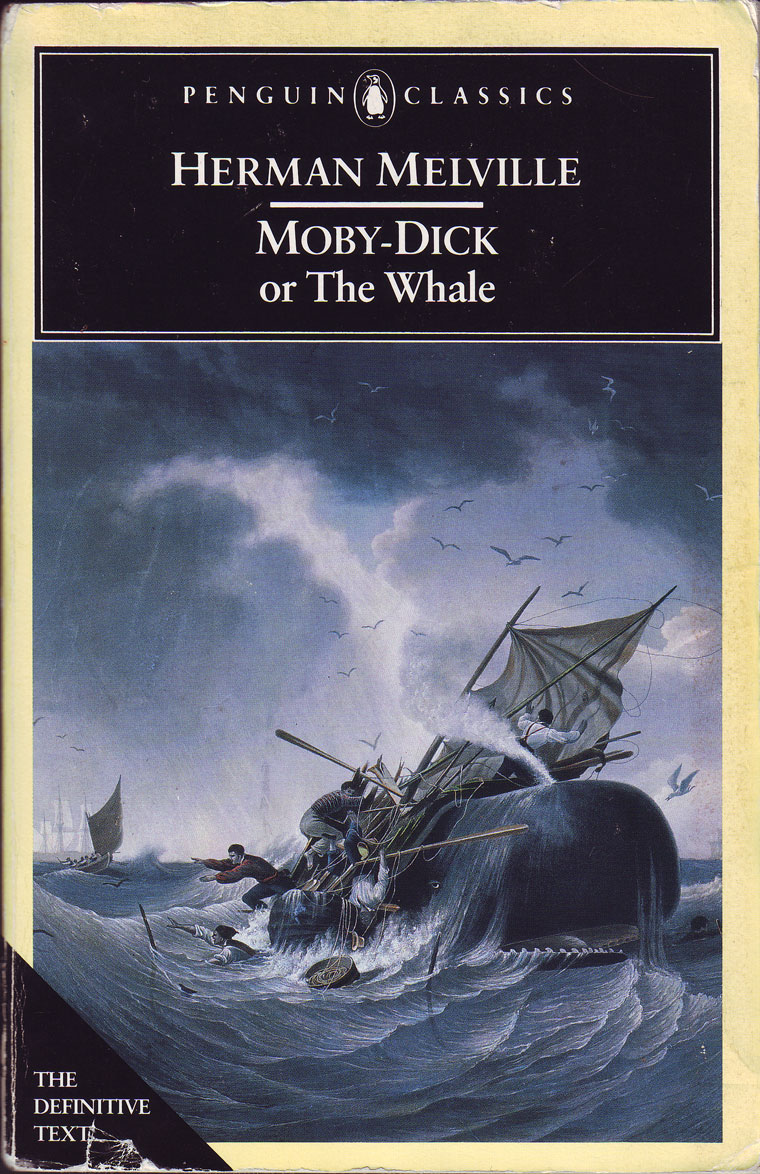
Other celebrated and successful authors that were rejected include: Mark Twain, DH Lawrence, Herman Melville, Ernest Hemingway, Dan Brown, Beatrix Potter, Agatha Christie, James Redfield, William Golding, George Orwell, John le Carré and Rudyard Kipling to name but a few.

Moby-Dick

Although it’s unpleasant, it seems par for the course that at some point you’ll be rejected, either as a writer, or in any other endeavour you undertake.  If you have the right attitude about it, rejection can inject you with the essential determination and strength of character needed to succeed, as well as helping to hone your skills where appropriate.

“Remember: when people tell you something’s wrong or doesn’t work for them, they are almost always right. When they tell you exactly what they think is wrong and how to fix it, they are almost always wrong.”  ~ Neil Gaiman

When I was ready to put my debut novel, The Virtuoso out there, it was a nerve wracking time. I was a first time author, my confidence was growing but I felt vulnerable and self-conscious. I didn’t know if I had it in me to become a published author or if people would enjoy my book.

Virtuoso-Kindle-no-bleed (2)

These fears have been banished since publication and the growing body of healthy reviews.

Needless to say I had many ‘thanks, but no thanks’ type of replies to my submissions, and some didn’t even bother to respond. After a few months of this soul destroying process I decided to self-publish. Independent authors comprise a significant share of the publishing industry. In this 2015 article, The Bookseller attempts to highlight the size of the self-publishing sector within the industry.

John Lock was the first author to sell over a million ebooks on Amazon. It can be done. There are many avenues an author can pursue, which I’m not going to go into here.

Rejection - JD Rockerfeller

Once I took my future into my own hands I felt better about myself. I was no longer at the mercy of literary agents; I could determine my own path.

The key point is to take positive action and don’t stop believing in yourself. Reading is highly subjective, and as Stephen King rightly pointed out, you can’t please all of the readers all of the time, you can’t even please some of the readers all of the time, but you really ought to try to please at least some of the readers some of the time.

If you can do that, you’re up there with the best of them.

I spent years working on my manuscript alongside working and raising a large family, I wasn’t about to ditch my dream because an agent or publisher didn’t feel my work was quite right for them at the time.

In fact, some of my rejection responses spurred me on. I’ll share a couple with you but I won’t say which agents they came from:

Thank you for bearing with me while I took a read of this. The Virtuoso is a window into a fascinating world, and you obviously know your subject very well. I’m afraid I don’t think it’s one for my list – I have to be very selective about what I take on, and to me the focus on relationships and dialogue just felt a little far towards the commercial end of the market for my tastes. Do keep trying it with agents – perhaps have a look in the acknowledgements sections of books that you think are for a similar readership, and see who represents them?

Very best of luck with it.

Dear Ginny,

Thank you for sending me THE VIRTUOSO and for giving me the opportunity to consider your work.

Unfortunately I am not able to offer you representation for your work. Although I thought the premise of the story was engaging, I’m afraid I did not fall in love with the writing, itself, the way I would need to in order to take it on in today’s tough non-fiction marketplace. I am sorry for this response but I feel that an agent must be wholeheartedly and unreservedly behind a book if she hopes to sell it to publishers. These judgements are always subjective and you may well find someone who feels very differently.

Thank you for giving me the chance to consider your work and I wish you luck in your search for a suitable agent to assist you.

Dear Ginny,

Many thanks for sending us this proposal, which I read with interest. I considered it carefully but I’m afraid on balance it just doesn’t quite grab my imagination in the way that it must for me to offer to represent you. So I must follow my instinct and pass on this occasion. I’m really sorry to be so disappointing, but thanks for thinking of us. Of course this is a totally subjective judgement, so do try other agents and I wish you every success.

Dear Ginny,

Thank you for sending in your material to us. We have read and considered your proposal carefully but do not feel it is something we could place successfully in the current publishing climate. Please bear in mind that this is the opinion of one agency alone and that others may feel differently.

We are extremely sorry to disappoint you but we wish you the very best of luck with your future writing.

Dear Virginia

Thank you for sending me your submission. I found your writing engaging, as you do write with real energy and imagination.

Having said that, I am afraid it wasn’t really something that I am currently looking for but I do wish you every success with your submission.

You may be reading this and thinking, ‘But I’m not an author so this isn’t relevant to me.’ However you can still apply the principles of not giving up, determination, re-evaluation and persistence to whatever project you’re working on.

Here’s a great motivational video by Prince Ea if you need help in that department!

We can all take a leaf out of Scarlett O’Hara’s book – after all, tomorrow is another day!

“I discovered that rejections are not altogether a bad thing. They teach a writer to rely on his own judgment and to say in his heart of hearts, ‘To hell with you.’“ ~ Saul Bellow

Heart Matters: Secrets of the Heart in Culture and Life

My heartfelt thanks go to French mathematician and philosopher, Blaise Pascal, for elucidating such profound observations about the human heart.

Blaise Pascal2

He provides the perfect context for the subject matter of this first, in-depth exploration of the human heart in my ‘Heart Matters’ blog trilogy.

In this first post I wanted to explore the fundamental questions about the function of the heart in our everyday lives as well as looking specifically at heart health challenges and well-being in later posts.

Mysteries of the Human Heart

Is the heart merely a muscle, a complex pump that powers blood, oxygen and nutrients around our body, or does it actually have a mind of its own, as Blaise Pascal suggests it does? Is it the seat of our emotions and the source of love? Perhaps it serves in both capacities?

David Malone explores the human heart, juxtaposing the modern scientific view of the heart as a mere pump, versus its long history as a symbol of love and the centre of innate wisdom and human character:

The heart has been written about in every age and culture. It is the subject of poetry, prose, stories and parables. For the romantics it is an ‘organ of fire’.

“When the heart speaks, the mind finds it indecent to object.” ~ Milan Kundera (The Unbearable Lightness of Being)

The immense use of the word ‘heart’ in language reveals our long-held obsession with its mysteries. Here are more than a few references to the heart, covering the whole spectrum of human emotion:

Heartfelt, heartbroken, heartache, bleeding heart, heartless, purple heart, kind hearted, soft hearted, cold hearted, black heart, heartless, heartthrob, heartbeat, sweetheart, weak hearted, big hearted, disheartened, heartily, hearty, heart of the matter, open hearted, half hearted, down hearted, free hearted, lion heart, heart centred, heart burn, a heart of stone, sickness of the heart, bless your heart, a change of heart, absence makes the heart grow fonder, after my own heart, be still my heart, eat one’s heart out, by heart, cry heart out, follow heart, faint of heart, give someone heart-failure,  heart of gold, have a heart-to-heart, follow your heart, heart in the right place, heart in mouth, heart sinks,  heavy hearted, heart skips a beat, heart flutter, home is where the heart is, heart’s not in it, with all one’s heart, young at heart, with a light heart, set heart on, take to heart, steal heart, out of the goodness of heart, pour heart out, to one’s heart’s content, lose heart, have heart in mouth, let heart rule head, in one’s heart of hearts, wear heart on sleeve, close to one’s heart, win heart, have a heart!

Perhaps to describe a person as heartless is the worst insult you could level at them, it implies that the very essence of what makes a human being is absent…

heart-quotes-and-sayings - Evander Holyfield

Shakespeare’s references to the heart:

The very instant I saw you, did My heart fly to your service.  (The Tempest, Ferdinand to Miranda) ~ You draw me, you hard-hearted adamant (Midsummer Night’s Dream, Helena to Demetrius) ~ My five wits, nor my five senses, can Dissuade one foolish heart from serving thee. (Sonnet 141, 9-10) Tell me thou lov’st elsewhere; but in my sight, Dear heart, forbear to glance thine eye aside (Sonnet 139, 5-6) ~ JAQUES What stature is she of? ORLANDO Just as high as my heart (As You Like It) ~ A heart to love, and in that heart Courage, to make love’s known (Macbeth, Macbeth to Macduff) ~ Tell me where is fancy bred, Or in the heart, or in the head? (Merchant of Venice, song) ~ What infinite heart’s ease Must kings neglect that private men enjoy! (Henry V) ~ My old heart is cracked, it’s cracked (King Lear, Gloucester to Regan) ~ If thou ever didst hold me in thy heart, Absent thee from felicity a while, And in this harsh world draw thy breath in pain To tell my story. (Hamlet, Hamlet to Horatio) ~ Go to your bosom; Knock there, and ask your heart what it doth know…  (Measure for Measure, Isabella)

Shakespeare as you’ve never heard him before! I think the Bard would dig this jazzy interpretation:

Definitions of heart

  1. A hollow, muscular organ, which, by contracting rhythmically, keeps up the circulation of the blood.
  2. The seat of the affections or sensibilities, collectively or separately, as love, hate, joy, grief, courage, and the like; rarely, the seat of the understanding or will; — usually in a good sense, when no epithet is expressed; the better or lovelier part of our nature; the spring of all our actions and purposes; the seat of moral life and character; the moral affections and character itself; the individual disposition and character; as, a good, tender, loving, bad, hard, or selfish heart.
  3. The nearest the middle or centre; the part most hidden and within; the inmost or most essential part of any body or system; the source of life and motion in any organization; the chief or vital portion; the centre of activity, or of energetic or efficient action; as, the heart of a country, of a tree, etc.
  4. Courage; courageous purpose; spirit.
  5. Vigorous and efficient activity; power of fertile production; condition of the soil, whether good or bad.
  6. That which resembles a heart in shape; especially, a roundish or oval figure or object having an obtuse point at one end, and at the other a corresponding indentation, – used as a symbol or representative of the heart.
  7. One of a series of playing cards, distinguished by the figure or figures of a heart; as, hearts are trumps.
  8. Vital part; secret meaning; real intention.
  9. A term of affectionate or kindly and familiar address.
  10. t. To give heart to; to hearten; to encourage; to inspirit.
  11. i. To form a compact centre or heart; as, a hearting cabbage.

All emotion emanates from the heart. It is the first organ that develops in a growing foetus, even before the brain.

“It is in the heart that the values lie. I wish I could make him understand that a loving heart is riches, and riches enough, and that without it intellect is poverty.” ~ Mark Twain

It makes sense to me that emotional intelligence comes from the heart and intellectual intelligence comes from the mind. The two are separate yet cannot exist without the other, the yin and yang of our physical existence. It seems that our creator trapped us in a biological duality of heart and mind, where our challenge lies in finding balance within the dichotomy of reason and passion.

It is a question pondered by greater poets than me.

Heart and Mind

SAID the Lion to the Lioness – ‘When you are amber dust, –

No more a raging fire like the heat of the Sun

(No liking but all lust) –

Remember still the flowering of the amber blood and bone,

The rippling of bright muscles like a sea,

Remember the rose-prickles of bright paws


Though we shall mate no more

Till the fire of that sun the heart and the moon-cold bone are one.’


Said the Skeleton lying upon the sands of Time –

‘The great gold planet that is the mourning heat of the Sun

Is greater than all gold, more powerful

Than the tawny body of a Lion that fire consumes

Like all that grows or leaps…so is the heart


More powerful than all dust. Once I was Hercules

Or Samson, strong as the pillars of the seas:

But the flames of the heart consumed me, and the mind

Is but a foolish wind.’


Said the Sun to the Moon – ‘When you are but a lonely white crone,

And I, a dead King in my golden armour somewhere in a dark wood,

Remember only this of our hopeless love

That never till Time is done

Will the fire of the heart and the fire of the mind be one.’

~ Edith Sitwell (1944)

The heart and its mysteries will always be at the root of popular culture. I don’t recall Elton John singing, “Don’t go breaking my brain.” It doesn’t sound right and it doesn’t feel right…

breakup quotes5jpg

“If my heart could do my thinking, and my head begin to feel, I would look upon the world anew, and know what’s truly real.” ~ Van Morrison

So how do we attain the ideal marriage between the heart and mind? That state of alignment and inner peace, which promotes optimal health and a feeling of good will to all man, of spiritual connection?

“It is better in prayer to have a heart without words than words without a heart.” ~ Mahatma Gandhi

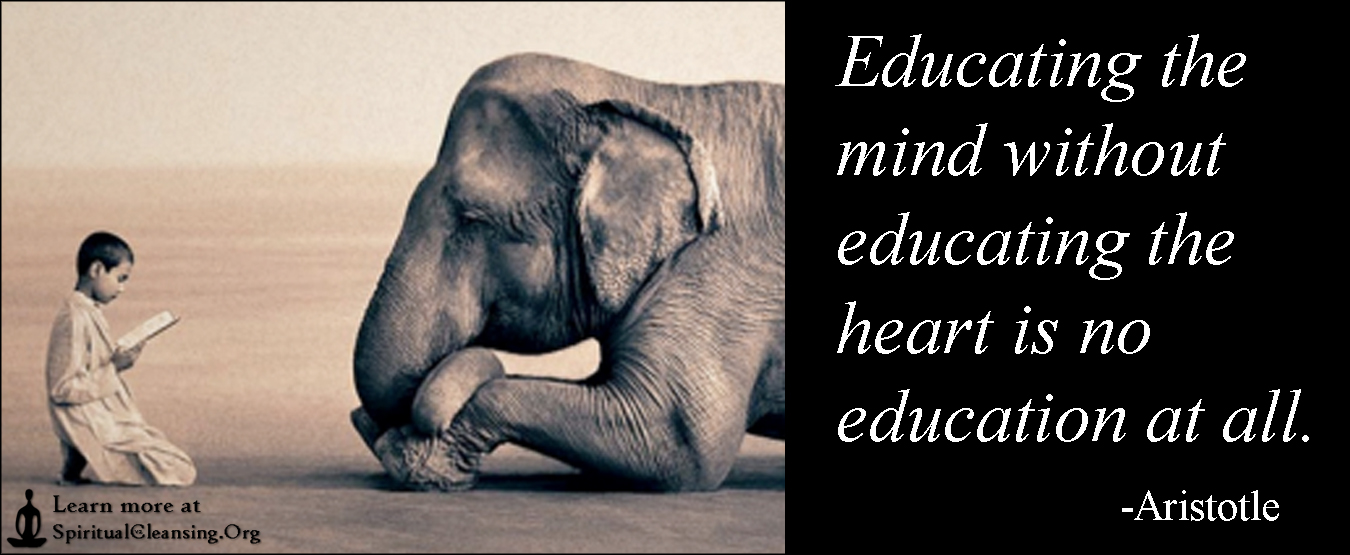
Aristotle - Educating-the-mind-without-educating-the-heart-is-no-education-at-all.

Increasing one’s intellect is sometimes an arduous task, and for some of us, there’s only so far our grey matter will take us (thanks genes). I’m all for constant learning. I’m a learning junkie. But the heart’s capacity to love knows no limits and is not dependent on knowledge.

The Heart — an organ of truth and emotion

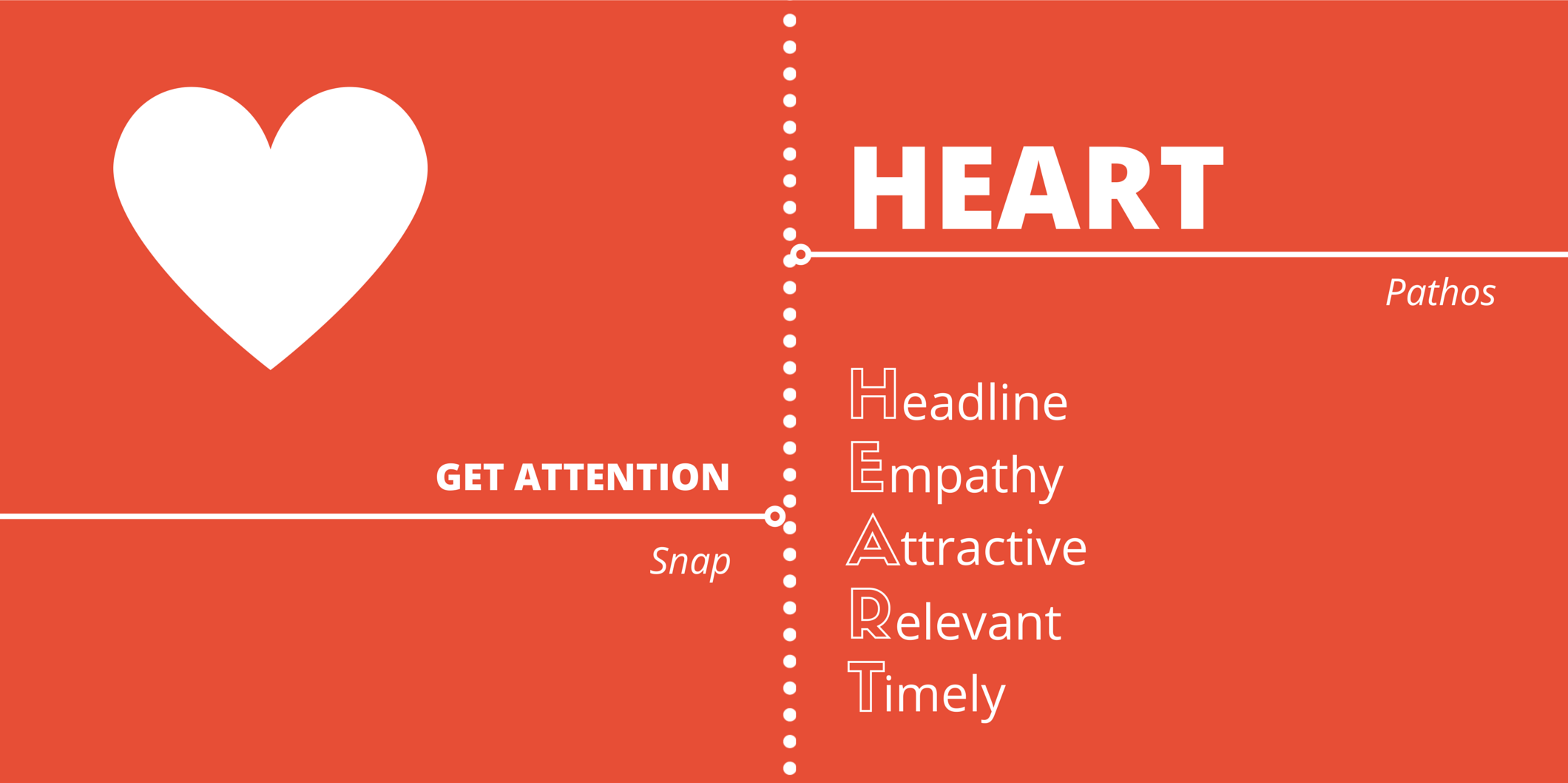
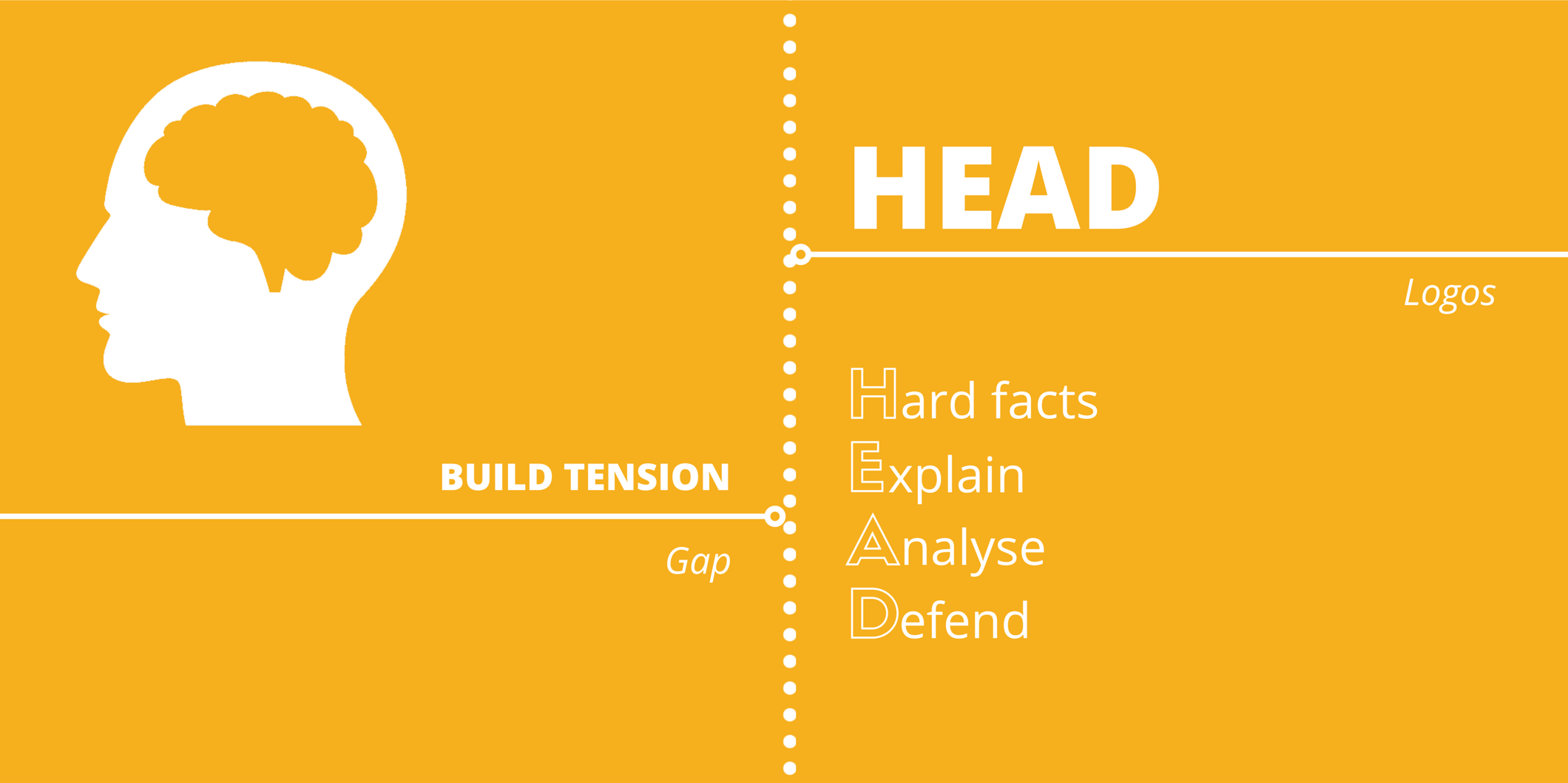
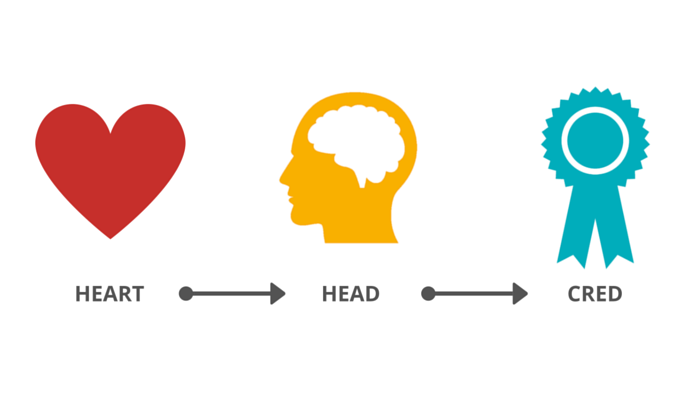
It turns out that living a heart centred life isn’t a sound bite of new-age mumbo jumbo, it’s based on hard science. Positive emotions and living in alignment with our strengths, virtues, passions and purpose creates coherence with the mind. Scientists have discovered that the heart has its own neurons which communicate with the brain more than the brain communicates with the heart. It’s a symbiotic relationship.

HEART-PPT

HEAD-PPT

Heart-head-cred

“I think… if it is true that

there are as many minds as there

are heads, then there are as many

kinds of love as there are hearts.” ~ Leo Tolstoy (Anna Karenina)

History of the heart

The ancient Egyptians recognised that the heart represents truth. The heart knows when we are in love, it gives us that ecstatic yet unsettling fluttering sensation which is beyond our control. The swelling and warmth we feel when we think of those we love. Whether we are being true to ourselves, or being less than truthful, it beats steadily or erratically accordingly. We may be able to fool others, but we can’t fool our heart.

if-you-want-to-know-where-your-heart-is-look-where-your-mind-goes-when-it-wanders-quote-1

“Alas! there is no instinct like the heart…” ~ Lord Byron

That’s why many organisations use Polygraph tests when questioning suspects and witnesses, so they can measure potential physiological changes that take place during questioning. The lie detector tests measure pulse, blood pressure, respiration and skin conductivity, all of which are controlled by the heart and cardio vascular system.

“The heart is the perfection of the whole organism. Therefore the principles of the power of perception and the soul’s ability to nourish itself must lie in the heart.” ~ Aristotle

Could it be that the voice of conscience we hear in our head actually has its Head Office located in our heart?

Heart quote

“When you are sorrowful look again in your heart, and you shall see that in truth you are weeping for that which has been your delight.” ~ Kahlil Gibran

It has been discovered that the heart emits its own powerful electro-magnetic field, and that our hearts are linked energetically to those we love regardless of distance. Science tells us that we are all connected at the quantum level.

Mysteries of the Heart:

The Heart’s Intuitive Intelligence: A path to personal, social and global coherence:

An interesting and enlightening TED Talk from Howard Martin, one of the original leaders who helped Doc Childre found the HeartMath Institute. I think he eloquently answers my questions!

When he talks about how human heart energy interacts and affects the planet’s ionosphere; it’s quite fitting that an anagram of HEART is EARTH.

To bear malice is ultimately affecting us more adversely than the person or thing we are scornful of. A Happy heart is a healthy heart.

Daisy shaped heart

Until the next time, from the bottom of my heart!

“It is our heart working in tandem with our brain that allows us to feel for others … It is ultimately what makes us human… Compassion is the heart’s gift to the rational mind.” ~ David Malone