Genuine Music Legend Leonard Bernstein Asks: Why Beethoven?

“I can’t live one day without hearing music, playing it, studying it, or thinking about it.” ~ Leonard Bernstein

In the summer of 1948 the pianist, composer and conductor Leonard Bernstein took a road trip with his younger brother, Burton Bernstein (who appears to have been their speedy chauffeur) and a literary British friend.

Their conversations are far from humdrum, as you would expect from such luminaries. I wanted to share a section of their dialogue that I found fascinating, intellectual and insightful, as documented by Bernstein in an early chapter of his book, The Joy of Music under the heading: Bull Session in the Rockies.

At the time of the conversation they are somewhere in the mountainous region of the Picasso Pass of New Mexico, and Leonard Bernstein refers to his brother as Y.B. (maybe some affectionate nickname) and his literary friend is called Lyric Poet ( L.P.).

Bernstein has these gracious words about his friend: L.P. is a poet’s poet from Britain and one of those incredible people who are constantly so involved in politics, love, music and working ideals, that, despite their established success, they often find themselves embarrassed in the presence of a laundry bill. When L.P. speaks, he is oracular; when he is silent, he is even more so.

I totally admire Lyric Poet, whoever he is/was, for attempting musical discourse with such a mind as Bernstein’s. He must have felt exasperated at times!

I have interspersed the text with Beethoven recordings by Bernstein where he has made a recording pertaining to their conversation to enrich the overall experience.

The following is what transpired between them…

Why Beethoven?

LP: My dear Y.B., I suspect you have forgotten the fact that our tyre burst yesterday was caused by just such driving as you are now guilty of.

YB: Don’t end your sentence with a preposition. (But Y.B. is impressed enough to reduce speed considerably-though gradually enough to preclude the suspicion that he has yielded a point. Few can impress hard-boiled Y.B.; but even he is not immune to the oracle. Some minutes pass in relieved silence; and, with the tension gone, L.P. may now revert to the basic matter of all trip-talk: the scenery.)

LP: These hills are pure Beethoven. (There is an uneventful lapse of five minutes, during which L.P. meditates blissfully on his happy metaphor; Y.B. smarts under the speed restriction, and I brood on the literary mind which is habitually forced to attach music to the hills, the sea, or will-o’-the-wisps.)

LP: Pure Beethoven.

LB: (Ceasing to brood): I had every intention of letting your remark pass for innocent, but since you insist on it, I have a barbed question to put. With so many thousands of hills in the world- at least a hundred per famous composer- why does every hill remind every writer of Ludwig van Beethoven?

LP: Fancy that- and I thought I was flattering you by making a musical metaphor. Besides, I happen to find it true. These mountains have a quality of majesty and craggy exaltation that suggest Beethoven to me.

LB: Which symphony?

LP: Very funny indeed. You mean to say that you see no relation between this landscape and Beethoven’s music?

LB: Certainly- and Bach’s, and Stravinsky’s, and Sibelius’, and Wagner’s- and Raff’s. So why Beethoven?

LP: As the caterpillar said to Alice, “Why not?”

LB: I’m being serious L.P., and you’re not. Ever since I can recall, the first association that springs to anyone’s mind when serious music is mentioned is “Beethoven.” When I must give a concert to open a season an all-Beethoven program is usally requested. When you walk into a concert hall bearing the names of the greats inscribed around it on a freize, there he sits, front and center, the first, the largest, the most immediately visible, and usually gold-plated. When a festival of orchestral music is contemplated the bets are ten to one it will turn out to be a Beethoven festival. What is the latest chic among young neo-classic compcosers? Neo-Beethoven! What is the meat-and-potatoes of every piano recital? A Beethoven sonata. Or of every quartet program? Opus one hundred et cetera. What did we play in our symphony concerts when we wanted to honor the fallen in war? The Eroica. What did we play on V Day? The Fifth. What is every United Nations concert? The Ninth. What is every Ph.D. oral exam in music schools? Play all the themes you can from the nine symphonies of Beethoven! Beethoven! Ludwig v-

LP: What’s the matter, don’t you like him?

LB: Like him? I’m all for him! In fact, I’m rather a nut on the subject, which is probably why I caught up your remark so violently. I adore Beethoven. But I want to understand this unwritten proscription of everyone else from the top row. I’m not complaining. I’d just like to know why not Bach, Mozart, Mendelssohn, Schumann-

YB: Andybody want a piece of gum?

LP: Well, I suppose it’s because Beethoven – or rather there must be a certain tra- That is, if one thinks through the whole-

LB: That’s just what I mean: there’s no answer.

LP: Well, dammit, man, it’s because he’s the best, that’s all! Let’s just say it out unashamed: Beethoven is the greatest composer who ever lived!

LB: (Who agrees, but has a Talmudic background): Dunkt dir das? May I challenge you to a blow by blow substantiation of this brave statement?

LP: With pleasure. How?

LB: Let’s take the elements of music one by one- melody, harmony, rhythm, counterpoint, orchestration- and see how our friend measures up on each count. Do you think it an unfair method?

LP: Not at all. Let’s see, melody…Melody! Lord, what melody! The slow movement of the Seventh! Singing its heart out-

LB: Its monotone heart, you mean. The main argument of this “tune,” if you will recall, is glued helplessly to E-natural.

LP: Well, but that is intentional- meant to produce a certain static, somber, marchlike-

LB: Granted. But then it is not particularly distinguished for melody.

LP: I was fated to pick a poor example. How about the first movement?

LB: Just try whistling it. (L.P. makes a valiant attempt. Stops. Pause.)

LB: (Brightly): Shall we move on to harmony?

LP: No, dammit, I’ll see this through yet! The…the…I’ve got it! The slow movement of the A-minor quartet! The holiness of it, the thankfulness of the convalescent, the purity of incredibly sustained slow motion, the-

LB: The melody?

LP: Oh, the melody, the melody! What is melody anyway? Does it have to be a beer hall tune to deserve that name? Any succession of notes- Y.B., you’re speeding again!- is a melody, isn’t it?

LB: Technically, yes. But we are speaking of the relative merits of one melody versus another. And in the case of Beethoven-

LP: (Somewhat desperately): There’s always that glorious tune in the finale of the Ninth: Dee-da-da-

LB: Now even you must admit that one beer hall par excellence, don’t you think?

LP: (with a sigh): Cedunt Helvetii. We move on to harmony. Of course you must understand that I’m not a musician, so don’t pull out the technical stops on me.

LB: Not at all Lyric One. I need only make reference to three or four most common chords in Western music. I am sure you are familiar with them.

LP: You mean (sings) “Now the day is o-ver, Night is drawing nigh; Shadows of the eeee-v’ning-“

LB: Exactly. Now what can you find in Beethoven that is harmonically much more adventurous than what you have just sung?

LP: You’re not serious L.B. You couldn’t mean that! Why, Beethoven the radical, the arch revolutionary, Napoleon, all that-

LB: And yet the pages of the Fifth Symphony stream on with the old three chords chasing each other about until you wonder what more he can possibly wring from them. Tonic, dominant, tonic, subdominant, dominant-

LP: But what a punch they pack!

LB: That’s another matter. We were speaking of harmonic interest, weren’t we?

LP: I admit I wouldn’t advance harmony as Beethoven’s strong point. But we were coming to rhythm. Now there you certainly can’t deny the vigour, the intensity, the pulsation, the drive-

LB: You back down too easily on his harmony. The man had a fascinating way with a chord, to say the least: the weird spacings, the violently sudden modulations, the unexpected turn of harmonic events, the unheard-of dissonances-

LP: Whose side are you on anyway? I thought you had said the harmony was dull?

LB: Never dull- only limited, and therefore less interesting than harmony which followed his period. And as to rhythm- certainly he was a rhythmic composer; so is Stavinsky. So were Bizet and Berlioz. I repeat- why Beethoven?

LP: I’m afraid you’re begging the question. Nobody has proposed that Beethoven leads all the rest solely because of his rhythm, or his melody, or his harmony. It’s the combination-

LB: The combination of undistinguished elements? That hardly adds up to the gold-plated bust we worship in the conservatory concert hall! And the counterpoint-

YB: Gum, anyone?

LB: -is generally of the schoolboy variety. He spent his whole life trying to write a really good fugue. And the orchestration is at times downright bad, especially in the later period when he was deaf. Unimportant trumpet parts sticking out of the orchestra like sore thumbs, horns bumbling along endlessly repeated notes, drowned-out woodwinds, murderously cruel writing for the human voice. And there you have it.

LP: (In despair): Y.B., I wish I didn’t have to constantly keep reminding you about driving sanely!

YB: You have just split an infinitive. (But he slows down)

LP: (Almost in a rage- a lyrical one, of course): Somehow or other I feel I ought to make a speech. My idol has been desecrated before my eyes. And by one whose tools are notes, while mine are words- words! There he lies, a bedraggled, deaf, syphilitic, besmirched by the vain tongue of pseudocriticism; no attention paid to his obvious genius, his miraculous outpourings, his pure revelation, his vision of glory, brotherhood, divinity! There he lies, a mediocre melodist, a homely harmonist, an iterant riveter of a rhythmist, an ordinary orchestrator, a commonplace contrapuntist! This from a musician, one who professes to lift back the hide from the anatomical secrets of these mighty works- one whose life is a devotion to the musical mystery! It is impossible, utterly, utterly impossible!

(There is a pause, partly self-indulgent, partly a silence befitting the climax of a heart-given tribute).

LB: You are right L.P. It is truly impossible. But it is only through this kind of analysis that we can arrive at the truth. You see, I have agreed with you from the beginning, but I have been thinking aloud with you. I am no different from the others who worship that name, those sonatas and quartets, that gold bust. But I suddenly sensed the blindness of that worship when you brought it to bear on those hills. And in challenging you, I was challenging myself to produce Exhibit A- the evidence. And now, if you’re recovered, I am sure you can name the musical element we have omitted in our blow-by-blow survey.

LP: (Sober now, but with a slight hangover): Melody, harm- of course, Form. How stupid of me to let you omit it from the list. Form- the very essence of Beethoven, the life of those magnificent opening allegros, those perfect scherzos, those cumulative-

LB: Careful. You’re igniting again. No, that’s not quite what I mean by form. Let me put it this way. Many, many composers have been able to write heavenly tunes and respectable fugues. Some composers can orchestrate the C-major scale so that it sounds like a masterpiece, or fool with notes so that a harmonic novelty is achieved. But this is all mere dust- nothing compared to the magic ingredient sought by them all: the inexplicable ability to know what the next note has to be. Beethoven had this gift in a degree that leaves them all panting in the rear guard. When he really did it- as in the Funeral March of the Eroica– he produced an entity that always seems to me to have been previously written in Heaven, and then merely dictated to him. Not that the dictation was easily achieved. We know with what agonies he paid for listening to divine orders. But the reward is great. There is a special space carved out in the cosmos into which this movement just fits, predetermined and perfect.

LP: Now you’re igniting.

LB: (Deaf to everything but his own voice): Form is only an empty word, a shell, without this gift of inevitability; a composer can write a string of perfectly molded sonata-allegro movements, with every rule obeyed, and still suffer from bad form. Beethoven broke all the rules , and turned out pieces of breath-taking rightness.  Rightness- that’s the word! When you get the feeling that whatever note succeeds that last is is the only possible note that can rightly happen at that instant, in that context, then chances are you’re listening to Beethoven. Melodies, fugues, rhythms- leave them to the Chaikovskys and the Hindemiths and Ravels. Our boy has the real goods, the stuff from Heaven, the power to make you feel at the finish:  Something is right in the world. There is something that checks throughout, that follows its own law consistently: something we can trust, that will never let us down.

LP: (Quietly): But that is almost a definition of God.

LB: I meant it to be.

***

I feel that this lively discussion formed the basis of several of Lenny’s famous recordings about the genius of Beethoven in which he espouses the idea of the perfection of each subsequent note in Beethoven’s music.

Rather paradoxically Bernstein slates as well as salivates, over Beethoven. Some of us aren’t happy! Thomas Goss take’s up Lyric Poet’s mantel in defending Mr B!

Whatever your thoughts on Beethoven, mine have been regularly expressed erring on the side of praise, neigh, worship for his craft! Beethoven is a composer of the people and for all time. His music speaks to everything that truly matters in life. Even when it seems trivial it is anything but. And when it is powerful it is transcendent…

It’s why Beethoven has the starring (historical) role in my fiction novel, The Virtuoso, which was described as: “A modern day Beethoven story,” in the summary from one publisher’s review.

I do hope you enjoyed the debate! I’d love to hear your views. I’ll let Beethoven have the last word!

When You See a Sensational Sky: Images and Poetry From Cloud Nine… 🌥⛅️🌤

“Clouds come floating into my life, no longer to carry rain or usher storm, but to add colour to my sunset sky.” ~ Rabindranath Tagore, (Stray Birds)

This is going to be a quintessentially English kind of post. Why? Because I’m talking about the weather, and for once, I’m not moaning about it! We Brits are not used to this kind of heat!

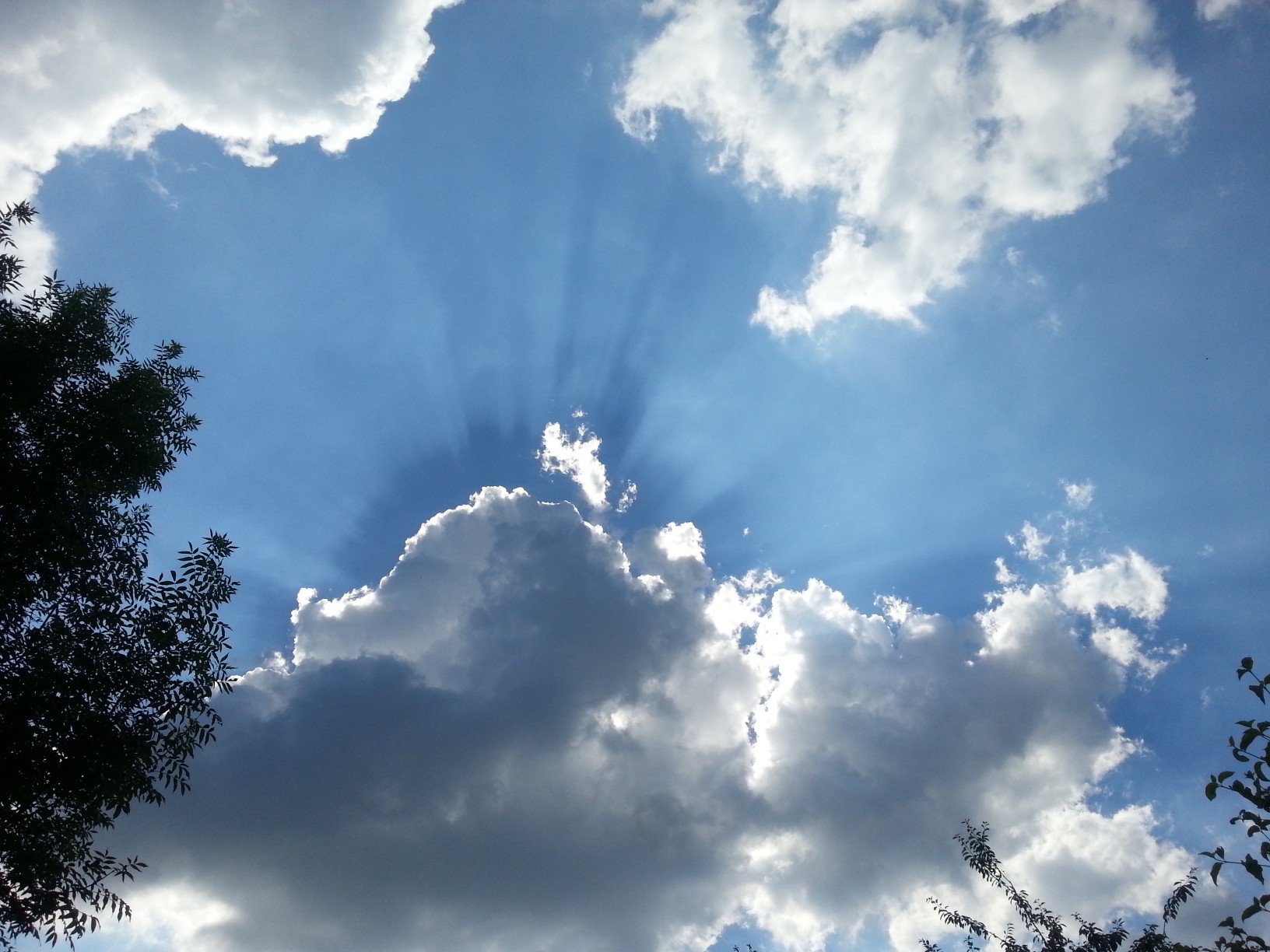
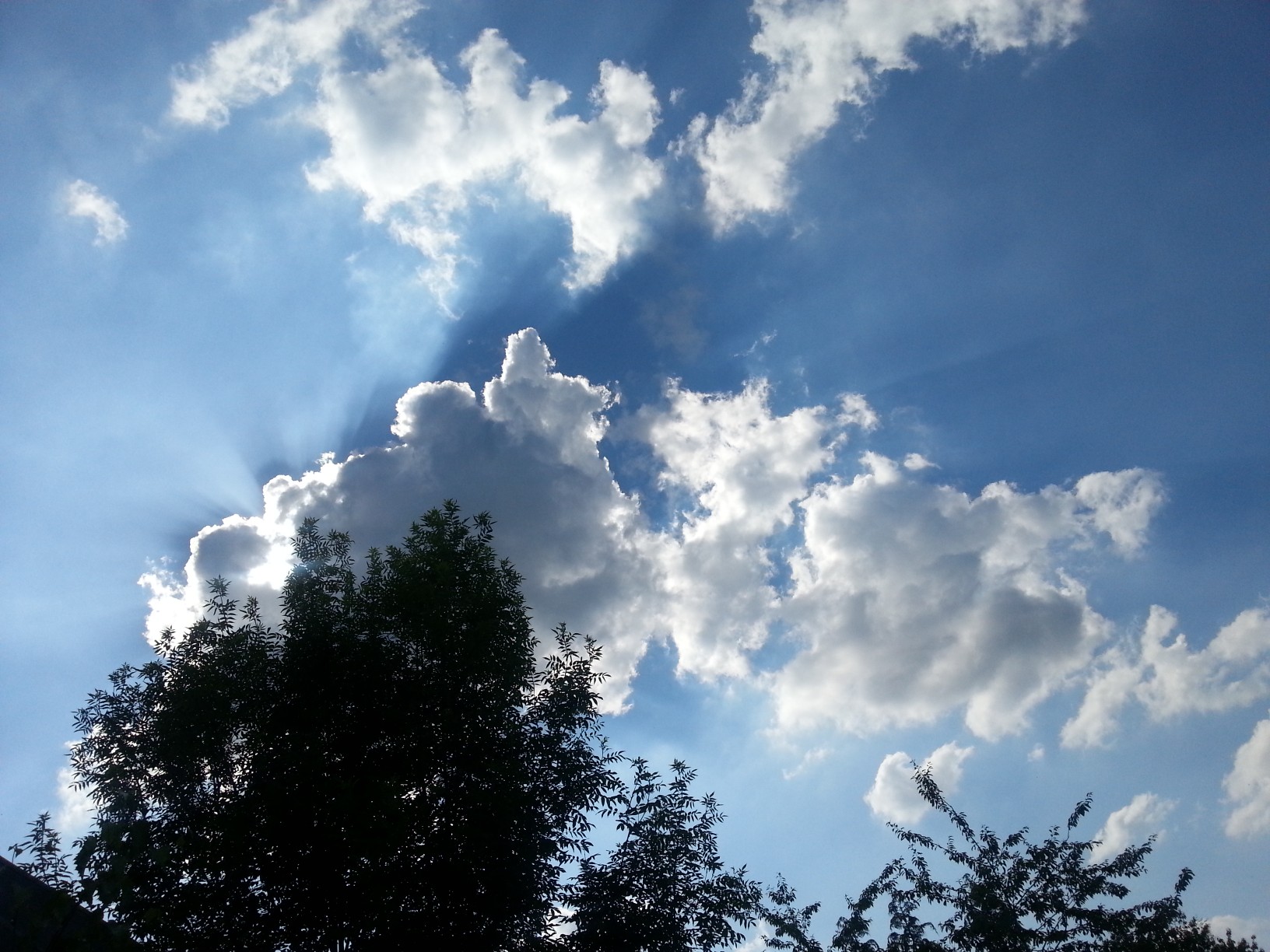
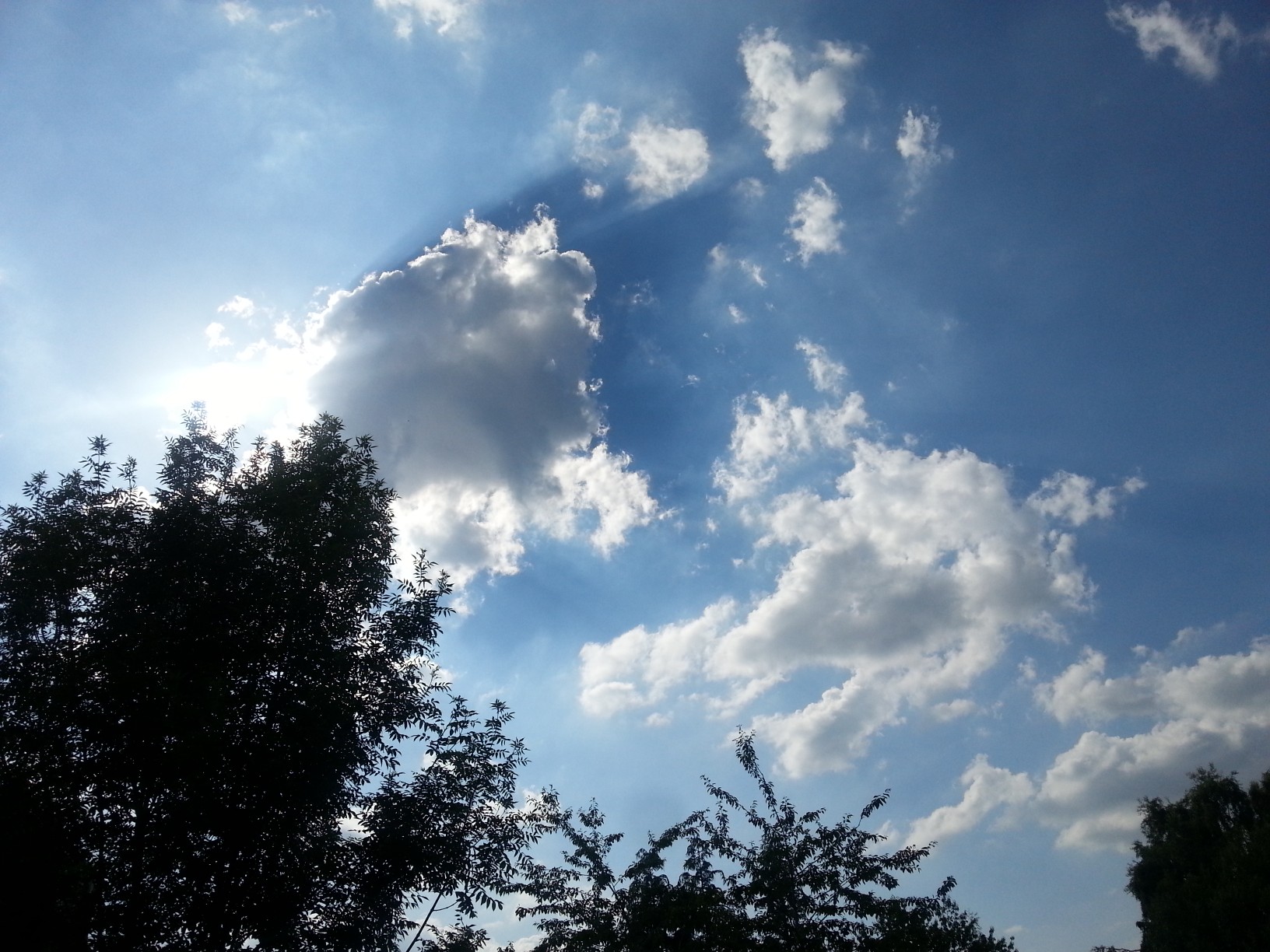
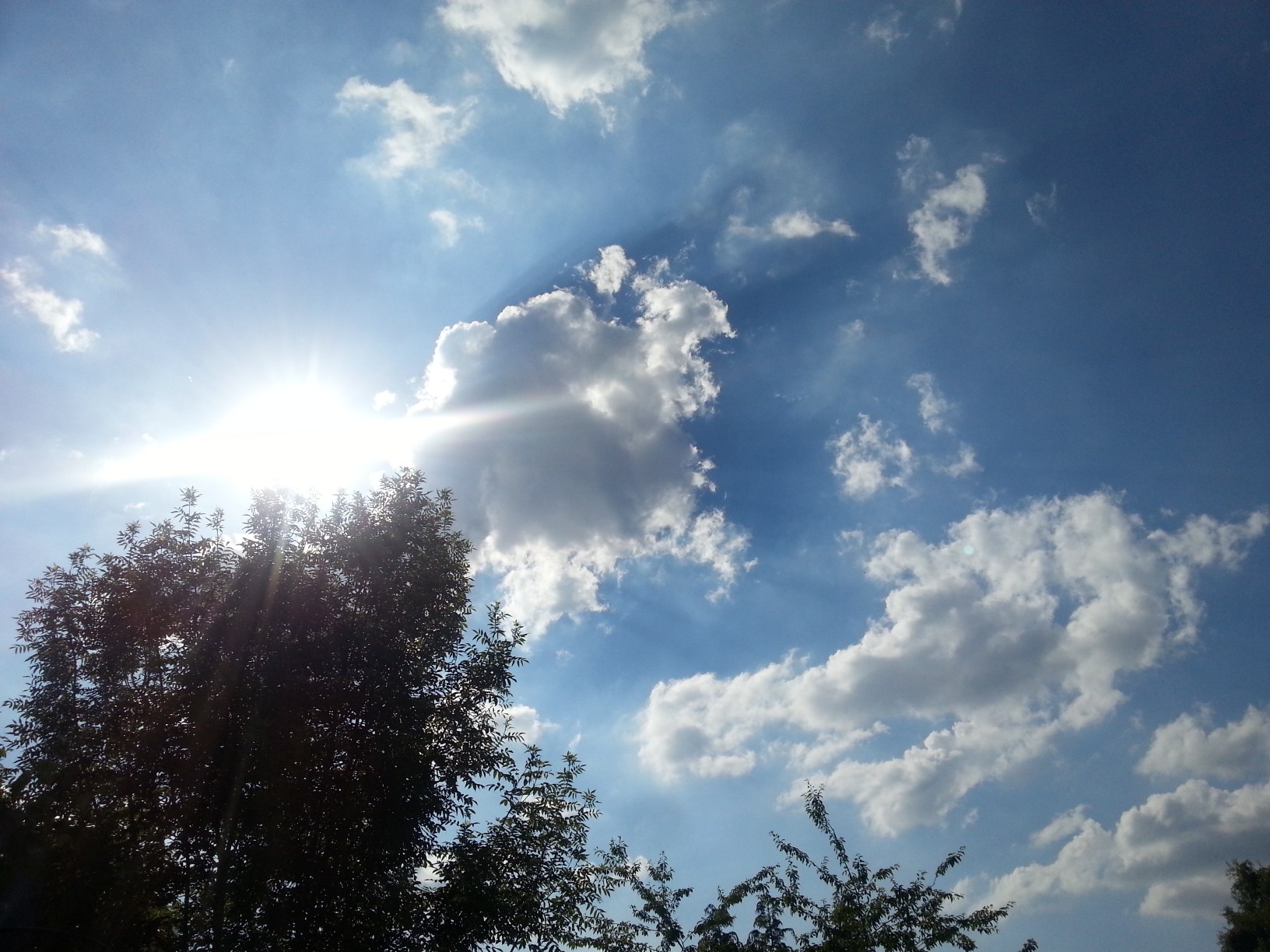
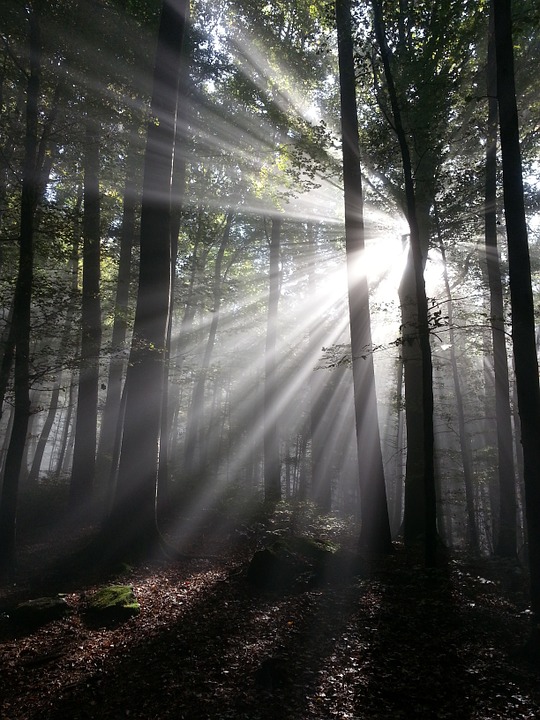
As I was sunbathing during Sunday’s glorious, baking hot afternoon, I watched the sun’s rays fan out spectacularly around a solitary cumulus nimbus cloud above me, and felt compelled to capture this astral scene in real time.

I took nine photographs as this huge cloud (my cloud 9), shrouded the blazing sun and then slowly broke up under the onslaught of a sweltering June heat wave. I was grateful to that cloud, without it I would have burnt to a crisp!

If I were an artist I probably would have painted it, but words came instead. My observations have been sublimated into a stream of consciousness, free-verse poem.

In that respect you could say clouds are the ushers of zen as well as the providers of shade…

“Clouds on clouds, in volumes driven, 

Curtain round the vault of heaven.” ~ Thomas Love Peacock

Contemplating Cumulus Clouds

My eyes crinkle at the contrast of silver-lining

Against foreboding, grey cotton sitting above me,

Enveloping every ounce of moisture in the air;

A luminous outline from the sun’s insistent rays,

This incandescent string of pure, bright light.

Illuminating my retina from behind the shadows,

As if nature is saying, there is good within the gloom;

I want to reach up and touch its rounded edges,

Grasp it’s elusive, fleecy form, behold for eternity,

But it is changing with every passing moment.

Life giving rays are only temporarily hidden,

Earth’s star, determined to dissolve suspended droplets

Scorching beams will once again permeate the ground,

Bathing all living things in its glowing reach,

Imperceptible breeze, to break up stifling humidity.

As I watch candy-like white wisps breaking away,

The puffy edges are swirling in constant motion,

Moving to form anther cloud, or simply evaporate,

Demonstrating the eternal flow of the universe…

How all primordial ingredients are reused, recycled.

Cumulo – these Latin piles of shaded air,

Resplendent swells of watery weather,

Floating purposefully or aimlessly, gathering or fleeing

Deliberate, or speeding; depending on the wind,

Patchwork ceiling for humans, lift for soaring birds.

We may frown and fret at an abundance of nimbus,

Bemoaning their frequent outbursts of precipitation!

Today cumulus shades me from the searing heat,

Another day they will bestow liquid on parched earth

Is God decorating the sky, with an ever-changing palette?

Meteorological material; from mysterious misty layers,

To floating pale tufts, or brooding, bulging monsters,

Swollen and violent with rain, blocking out the sun;

Ephemeral fluid shapes: never forever, and never the same…

Scarce or plentiful; permeating and patrolling the skies.

Cloud 9!

“Rest is not idleness, and to lie sometimes on the grass under trees on a summer’s day, listening to the murmur of the water, or watching the clouds float across the sky, is by no means a waste of time.” ~ John Lubbock (The Use Of Life)

#GE2017 #hungparliament – Democracy or Dog’s Dinner?

“Loyalty to country ALWAYS. Loyalty to government, when it deserves it.” ~ Mark Twain

After the shock narrow Brexit vote almost a year ago and the recent election of Donald Trump as U.S. President it was hard to imagine that politics could get any weirder…

However, when I woke up to the news this morning that the UK General Election had resulted in a ‘hung parliament’ I wasn’t in the least bit surprised. I had a feeling in my gut that it would go badly for the Conservatives. After all, how many mistakes will an electorate tolerate?

Before Theresa may so brazenly backtracked on her promise not to hold a snap election her party held 13 more parliamentary seats than it does today. I think this result proves that arrogance and complacency are not the qualities that people value or desire in members of parliament.

“I hold it that a little rebellion now and then is a good thing, and as necessary in the political world as storms in the physical.” ~ Thomas Jefferson

This was a text book lesson in how to throw away your core supporters and a majority in the Commons, in what should have been  (according the government and the polls), a straightforward election meant to strengthen the PM’s hand in upcoming Brexit negotiations.

Before and during the campaign Theresa May has been chipping away at the nation’s goodwill with bad decision after bad decision. Their proposed ‘hard Brexit’ and some of their policies and her reversal on banning the ivory trade incensed me.

Does she think she can continually say one thing yet do another? Such hypocrisy is prevalent in politics, I’m not naïve enough to think she’s the first politician to be guilty of that, but power always manages to corrupt on some level except for an extraordinary few leaders.

I find myself agreeing with Tim Fallon that our prime minister put her party above her country. How can we possibly believe her claims to lead with certainty when she has achieved the very opposite?

The Conservative election campaign ignited rage among the elderly, frustration in the Remain camp, and did not engage or provide any form of positive policies to the population. The cuts to our police were thrown back into the limelight after the horrendous terror attacks in Manchester and London, and I think many people felt angry. I know I did. I voted through gritted teeth.

In comparison, the far left Labour leader Jeremy Corbyn, (previously unpopular within his own party) and the definite political underdog, managed to run an effective election campaign and gain the support of young voters. Probably many who didn’t vote in the EU Referendum have made their voices heard this time, as it appears that there was a 72% turnout in the 18 – 24 age group, an increase of 30% from 2015. This is all very encouraging, as we need fresh blood and fresh ideas in politics.

The Tories didn’t appear to be bothered about the youth vote and alienated the elderly voters with their disastrous proposals for social care. Cuts to school budgets have also rankled with parents.

The fact that Theresa May did not participate in the election debate also damaged her credibility. Trust comes from openness, and May has been mostly tight lipped, sending Amber Rudd in her stead, thereby further demonstrating her lack of charisma and leadership skills.

The seismic shift in losing the ultra safe Conservative seats of Canterbury and Kensington to Labour shows just how badly the government have misjudged the public mood. You cannot gamble with power, especially when you are portrayed and perceived as the ‘nasty party’.

It’s clear that the majority of the population do not wish to see a ‘hard Brexit’, meaning a complete withdrawal from the single market, and now May’s original negotiating position is going to be very difficult. There is unprecedented uncertainty facing the nation since Article 50 was triggered, and that has only been exacerbated.

Politics without principle as cited in Mahatma Gandhi’s ‘Seven Social Sins’ is profoundly prophetic in this messy election result.  It’s worth sharing all seven:

Why is it we can’t seem to find the happy medium in a more centrist party that has sound economic policies, but just as importantly, moral backbone and a social conscience?

As some commentators have said, it feels like the ‘revenge of the Remainers’ today.

“An honest man in politics shines more there than he would elsewhere.” ~ Mark Twain

This quote is perhaps true of Jeremy Corbyn today. I may not agree with some of his views, but he did come across as a decent bloke.

It felt like all Theresa May wanted to do was ram a hard Brexit and ill thought out social care policies down our throats. Despite losing 13 parliamentary seats she is still in power by the skin of her teeth and only with the help of the far right DUP in Northern Ireland.

Whatever the PM’s intentions with the election campaign, the abysmal execution has been the deciding factor in the hung parliament result.

Have political campaigns lost their drama?

Who could have predicted that Labour would win an additional 32 seats?  It turns out the exit poll wasn’t that far off the mark…

I fail to see how Theresa May can still be our prime minister at the end of the next general election. And the way things are going that may be sooner rather than later…

The FT post election analysis:

So I return to my original question, do we have a true democracy or a something resembling a dog’s dinner? It certainly feels like the latter after Brexit and the shambles of a poor election campaign on the part of the majority party. But maybe the system needs a dog’s dinner now and then to shake things up and sort out the wheat from the chaff. Maybe it has to be both to be effective. A true democracy can survive a dog’s dinner and learn the lessons of each successive vote.

If it takes humiliation for a leader to become more humble and in-tune with the public sentiment rather than coming across as uncaring, implacable, blinkered and hypocritical then so be it.  Contempt for the electorate when you take them for granted is rewarded in kind with contempt at the ballot boxes.

I rather feel Ruth Davidson, the Conservative MSP who has galvanised the younger voters north of the border may have just single handedly saved the union from a second, more fervent and fierce Indy ref.  In this topsy-turvy election the SNP lost a third of its seats, including that of former SNP leader Alex Salmond.

Having suffered such a humiliating defeat the PM’s speech outside number 10 made no reference to the resounding views of British voters, brushing over the whole debacle as if it had never happened!

It seems I’m not the only one who thinks this was outrageous hubris. Author Robert Harris tweeted: No hint of apology or regret in PM’s statement. No humility. Full North Korean mode. She won’t last long

One thing is for sure, we have many challenges ahead of us and as we have born witness to today, things can change very rapidly in politics!

Regardless of the balance of power we all have a responsibility to look after ourselves and others as best we can, because as collective individuals we make up society. As one of the most inspirational human beings and spiritual leader’s the world has ever known, Mahatma Gandhi stated: “Our greatest ability as humans is not to change the world; but to change ourselves.”

“The government is merely a servant―merely a temporary servant; it cannot be its prerogative to determine what is right and what is wrong, and decide who is a patriot and who isn’t. Its function is to obey orders, not originate them.” ~ Mark Twain.

5 Powerful Life Principles at the Heart of Everything

“Life isn’t about finding yourself. Life is about creating yourself.” ~ George Bernard Shaw

The power of personal creation is probably the most profound ability that human beings possess outside of our capacity for love.

At our core we are creative beings. We only have to look at the world around us and back through our history at how we have developed storytelling, music, art and culture, industry, inventions, architecture and transport to know that our unbounded curiosity, inventiveness and ideas have shaped our evolution thus far.

But beyond these collective creations that are part of our everyday life each person on the planet has the potential to create the life of their dreams. This capacity to manifest what we want (or don’t want) is more highly developed in some than others, and maybe in particular areas, not necessarily the entirety of their lives.

We may look at someone who appears to be successful on the outside, but we don’t know what other circumstances are lurking in their life. It’s a waste of time comparing ourselves to others, because we are each on our own journey (albeit crossing paths now and then).

I’ve had some challenging creations and circumstances to deal with lately, and so have been on a mission to create more of what I want and less of what I don’t want. In my quest to improve my power of personal creation I came across several different teachers that have helped me to understand where I am, and more importantly, where I’m going!

“The people who get on in this world are the people who get up and look for the circumstances they want and if they can’t find them, make them.” ~ George Bernard Shaw

I wanted to share some of my insights with you in this post, in the hope that they might benefit you as they have me in my time of need.

5 Powerful Life Principles

  1. The energy of attraction, which is our expression of divinity. It has been labelled as the ‘law of attraction’ and it gives us power.
  2. The law of opposites, which gives us opportunity.
  3. The gift of wisdom, which gives us discernment.
  4. The joy of wonder, which gives us imagination.
  5. The presence of cycles, which gives us eternity.

These life principles are the mechanisms of manifestation, regulating the process of personal creation, by which we can express ourselves in thought, word and deed. These principles are a continuous source of power, continuously on, whether we are conscious of them or not.

The power of personal creation

The energy of attraction has been espoused for millennia, in various instructions and descriptions. You’ll no doubt recognise some of these:

“As you sow, so shall you reap.”

“As a man thinketh in his heart so is he.”

“Keep your thoughts positive, because your thoughts become your words. Keep your words positive, because your words become your behaviours. Keep your behaviours positive, because your behaviours become your habits. Keep your habits positive, because your habits become your values. Keep your values positive, because your values become your destiny.” ~ Gandhi

“Your imagination is your preview of life’s coming attractions.” ~ Albert Einstein

“Whether you think you can or think you can’t, either way you are right.” ~ Henry Ford

“All that we are is a result of what we have thought.” ~ Buddha

“Everyone creates realities based on their own personal beliefs. These beliefs are so powerful that they can create (expansive or entrapping) realities over and over.” ~ Kuan Yin

What you focus on, what you use the energies of life to create, you can create.

The energy of attraction:

I’ve decided to change my script and I’m working on my vision. As we grow it’s to be expected that we will fall back into old thought patterns. I was fortunate that at my lowest ebb I was in the right place at the right time to hear exactly what I needed to hear. It felt like the speaker was talking directly to me…

There were plenty of of aha! moments. I realised I hadn’t been a good gardener. I had allowed the weeds of my mind to take a strangle hold of the flowers. Because certain aspects of my life hadn’t yet worked out how I wanted them to, my sponsoring thoughts were coming from a place of lack and I had perpetuated those thoughts.

He made it clear that problems arise when we don’t have a clear vision and control over our thoughts and daily habits.  Your mind becomes more powerful where you direct its energy.

He told us to work on our recovery time from setback or defeat. That’s where I had come a cropper. What we say emotionally is deeply imprinted on our mind and comes about.

Had he been a fly on my wall?!

He asked: why don’t we do what we know to do? He told us what we needed reminding of: that we all have blocks, fears and doubts which have been created through past experiences, which influence our current decisions.

He told all of us in the room to let our negative emotions go, to shake them off. He said: “You’ll never ever, ever outperform your set autopilot.”

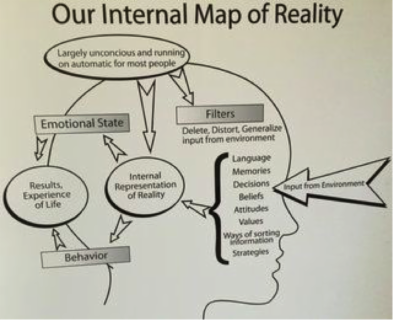
That’s why we have to get our sub-conscious mind working for us instead of against us. The subconscious mind cannot tell the difference between reality and an intensely imagined experience.

“The unconscious self is the real genius. Your breathing goes wrong the moment your conscious self meddles with it.” ~ George Bernard Shaw

Our thoughts and programmes will try and talk us out of our greatness. He did a hilarious sketch about getting all the committee members of our brains on board.

Captain Frontal Lobe is the cheerleader and motivator. He is up for anything. Colonel Amygdala is the cautious one, where emotions are processed, analysing all aspects of what captain frontal lobe is proposing.

General Limbic brain is the most ancient of the committee members, storing every negative or embarrassing scene from our childhood memories. Under no circumstances is he going to give his approval for us to potentially fail again. Sargent Motor Cortex is responsible for helping captain frontal lobe put his ambitious plans into action. Oh boy, it’s a maelstrom of desire, resistance and fear.

If we listen to the limbic brain we start to believe his assertions that we’re not good enough, or that we don’t deserve this. The little voice is suddenly loud and clear: Better to be safe than sorry.

Skillset Vs. Mindset

Although both are fundamental to any achievement, skillset is much less important that mindset. Success is 80% mindset and 20% skillset.

I have vivid memories of learning to swim when I was eight years old. My father used to try to eliminate my fear of water by throwing me in to pool, but that didn’t work.  It made me scream and run and frustrated him. When I was left to my own devices I would aim to move through the water just by tiny increments.

I would then move a little further away from the side each time and swim back to the wall. My skill level hadn’t significantly improved after each attempt, but what did grow was my self-belief. I just decided that I was going to make it to the side. It wasn’t graceful; my arms and legs were thrashing about and I was spluttering, but as my mindset became more positive so my skills grew in tandem.

I went very quickly from being terrified of water to a confident and competent swimmer. Action cures fear. Doing the thing we fear innoculates us against that fear.

The Law of Opposites

Once I understood this principle I was able to see my circumstances objectively, I could see how I had hoodwinked myself.

Another spiritual teacher explained it this way: In the absence of that which you are not; that which you are is not.

I had to really think about that. Essentially the law of opposites is a contextual field that exists in order for us to create.

The moment we invoke the law of attraction and focus on something we wish to be, do, or have, the law of opposites comes into play. In our two dimensional physical reality everything is polarised. We cannot experience love without hate, happiness without sadness, hope without despair, hot without cold, positive without negative, peace without war.

“He who has never hoped can never despair.” ~ George Bernard Shaw

If you take away the opposite of something it cannot exist experientially. So the moment we decide we are going to achieve a certain goal or dream, we immediately experience that which is not our goal/dream. The exact opposite turns up.

We might assume that the law of attraction does not work for us, only for others, because we have attracted the very antithesis of what we wanted. This is where I had got stuck. It’s easy in this stage to feel discouraged or to assume that we can’t do it. We buy into the illusion that we are not supposed to have it, or tell ourselves it’s not meant to be.

He used the acronym SATAN: Saying Anything As Negative.

However, the very appearance of these experiential opposites proves that we are indeed successfully using the law of attraction. The two cannot exist without each other.

This made me feel a whole lot better!

Whatever we set our minds and hearts to in life there will be challenges. That is a given. The universe will require us to go deeper, to learn that failure isn’t really failure, to believe without doubt and to ‘judge not by appearances’.

Our circumstances can change for the better if we don’t get bogged down in them when they are less than easy or uncomfortable for us.

On the path to greatness we are going to face obstacles and enemies. But if we can move from failure to failure without a loss of enthusiasm we will prevail.

Sergio Garcia was widely considered the best golfer in the world never to have won a major. But in April in Augusta he won the daddy of major’s, The Masters. This was after 19 years of professional competition. It was his moment. He was patient and persistent.

“A Native American elder once described his own inner struggles in this manner: Inside of me there are two dogs. One of the dogs is mean and evil. The other dog is good. The mean dog fights the good dog all the time. When asked which dog wins, he reflected for a moment and replied, The one I feed the most.” ~ George Bernard Shaw

Don’t let discouragement stop you in your tracks or make you change your intention. Give yourself permission to continue to call forth that which you wish to create.

The Gift of Wisdom

This gift is utilised when the Law of Opposites presents its effect in your daily life. When you have magnetised and contextualised your creations you get to discern and decide how to manifest the life you want. Using your inner wisdom is how you remain positive in the face of what appears to be overwhelming challenges, those moments when you are faced with a reality that is anything other than what you had imagined.

Neale Donald Walsh describes a person who succumbs to this principle as ‘a magician who has forgotten his own tricks’.

Move with clarity through the contextual field and invoke the law of attraction again and again inside the contextual field that you have created. All wisdom lies within you. You know internally higher truth. Discernment allows you to see things as they really are.

“Not many people are willing to give failure a second opportunity.” ~ Joseph Sugarman

Wisdom helps us to see and accept failure as a blessing in disguise and bounce back.

Each problem that we encounter as a result of the law of opposites carries a hidden opportunity so powerful that it literally dwarfs the problem. The challenge is to be able to recognise the seed of an equivalent or greater benefit and turn it into an opportunity. The challenges are really gifts. This requires a shift in perception. There certainly have been times I wished that God wasn’t so generous!!

With wisdom we can celebrate all of life’s lessons.

I love the way Wayne Dyer explains inner wisdom in his trademark humorous style as he talks of being inside a house during a power cut and all the lights go off. He has lost his keys, but because there is a light on outside in the street he decides to look for his keys there rather than fumble around in the dark. A friend comes along and asks what he is doing. He explains that he has lost his keys and they look for them together under the street light.

Eventually the friend asks him where he last had his keys, to which Wayne replies that he had them inside his house. It’s a ludicrous scenario, yet that is what we do regularly in our thinking. We look externally for answers, when the source is inside us.

The Joy of Wonder  

All things are filled with wonder; it’s our natural state of being. Abundance isn’t what we have. It’s not about ‘stuff’, but about what we are BEING. Life is an extraordinary journey to express our real selves, our inner beings.  Heartfelt gratitude puts us in touch with the part of ourselves that has no limits. When we are grateful, we have enough and we ARE enough.

Imagination is the beginning of creation. You imagine what you desire; you will what you imagine; and at last you create what you will. ~ George Bernard Shaw (Back to Methuselah)

I’m constantly learning from my children, who exhibit the most enthusiastic wonderment at times. Wonder is the antidote to cynicism. Stepping out in nature is a great way to awaken wonderment. Witnessing the miracle of our planet, all the living creatures that live here with us, and indeed, the human body, the most amazing piece of equipment we will ever own. Whatever we appreciate appreciates.

The Presence of Cycles

There is no straight line in the universe. The movement of energy and mass creates the experience of infinity.  Energy cannot be destroyed, it merely changes form. There is no start and no finish, therefore patience is one of the most important elements in applying the Law of Attraction.

As much as I love the summer, I wouldn’t appreciate it as much without having experienced winter. Cosmic forces and the seasons of nature are always in flow, bringing different blessings and challenges as they come and go. We must work with the cycle we’re in.

The purpose of these energies and principles is to allow life to preserve itself, for all those lives you touch and for you. The law of energy empowers us to empower others. I heard a saying that I never really understood before, but it makes more sense now: if you help enough other people get what they want, you will get what you want.

It means working through the lives of others. It’s having a service oriented attitude. Do unto others as you would have it done unto you is a spiritual teaching at the core of the Law of Attraction.

How many lives can you touch? Expanding the use of universal energy is known as the multiplier effect. If you want to be wealthy you will achieve one level, but if you make 100 people wealthy you will have multiplied the energy exponentially.

“There is the eternal war between those who are in the world for what they can get out of it and those who are in the world to make it a better place for everybody to live in.” ~ George Bernard Shaw

What flows through you sticks to you. What you give to another you give to yourself, as at the level of spirit we are all ONE. It’s moving away from a me first attitude to giving of ourselves.

Be the source of THAT which you wish to experience in your own life. Be the source of THAT in the life of another.

It is a lifelong process to attain mastery over oneself, but if we learn to harness the principles of life, the universe will be our business partner.

I’ll leave you with an illuminating talk by Bob Proctor:

Let’s smash through that terror barrier!

“What is life but a series of inspired follies?” ~ George Bernard Shaw (Pygmalion)