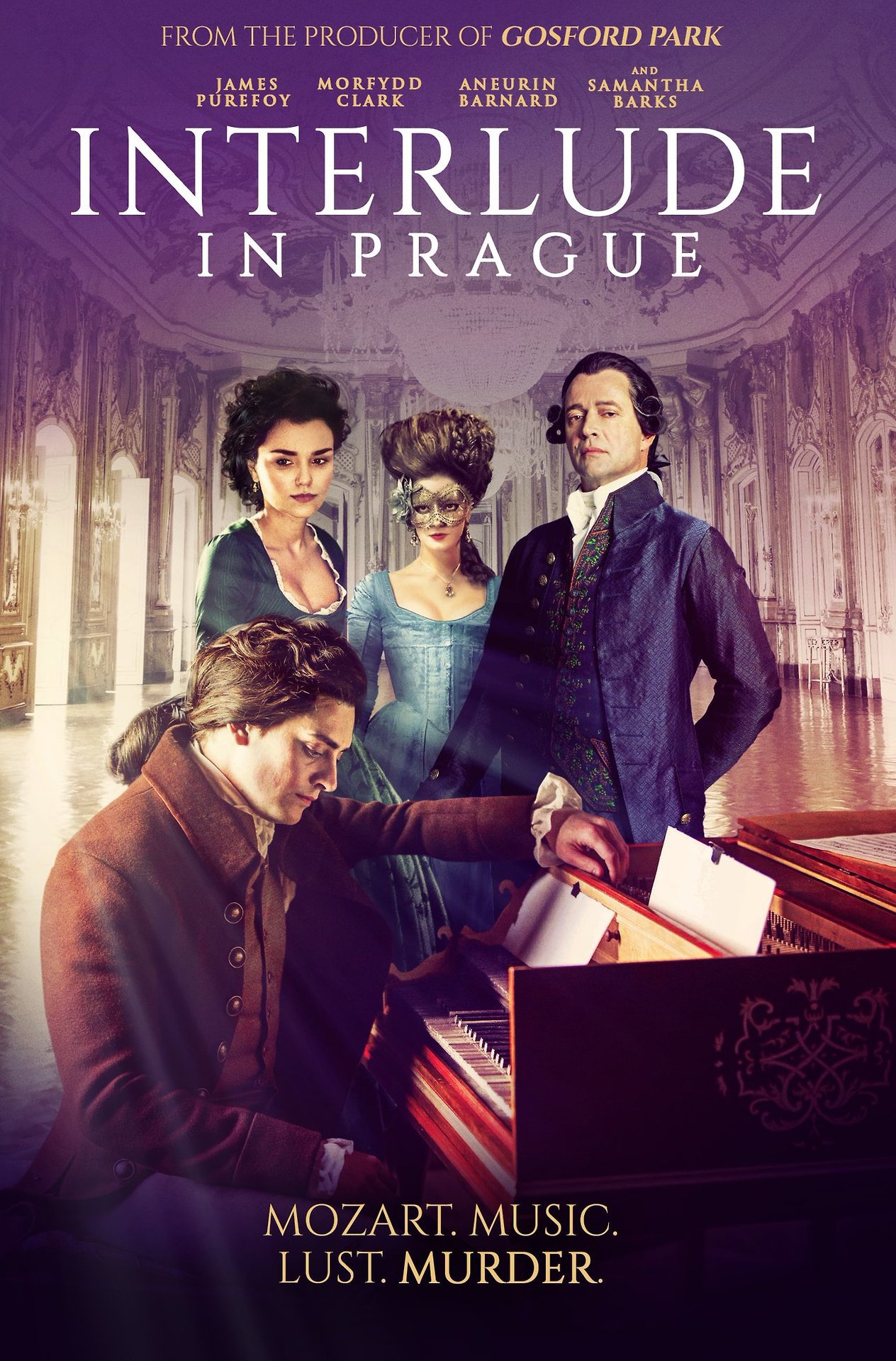
Mozart, Music, Lust, Murder: Movie Review of Interlude in Prague

“Prague contains all the people who love my music.” ~ Wolfgang Amadeus Mozart (Interlude in Prague)

For someone who has “period drama queen” stamped on her forehead you can imagine I was foaming at the mouth in anticipation of seeing the period thriller Interlude in Prague.

The movie was filmed on location and follows Mozart’s brief time in the city as he was writing his immortal opera based on the infamous and inveterate seducer Don Juan: Don Giovanni.

Having missed its release at the cinema I duly bought the DVD and waited for a quiet evening to indulge in my penchant…
I visited Prague for a long weekend many moons ago, so the cinematography brought back a nostalgic longing. The screen filled with panoramic scenery: vibrant pinky sunsets over the city’s ancient spires, the Charles Bridge at dawn and the cobbled streets of the old city.

Not since Miloš Forman’s brilliant film Amadeus (adapted by Peter Shaffer from his stage play) has a movie been made about Mozart.  Hardly surprising, that’s a tough act to follow!

Tom Hulce’s performance of Mozart in Amadeus was the one that was seared into my mind. How would I react to someone else playing the beloved maestro?

However,  I thought the Welsh actor Aneurin Barnard did an incredible job. I had already become a fan of his from his part as the unfortunate Richard III in the television adaptation of Phillipa Gregory’s The White Princess.
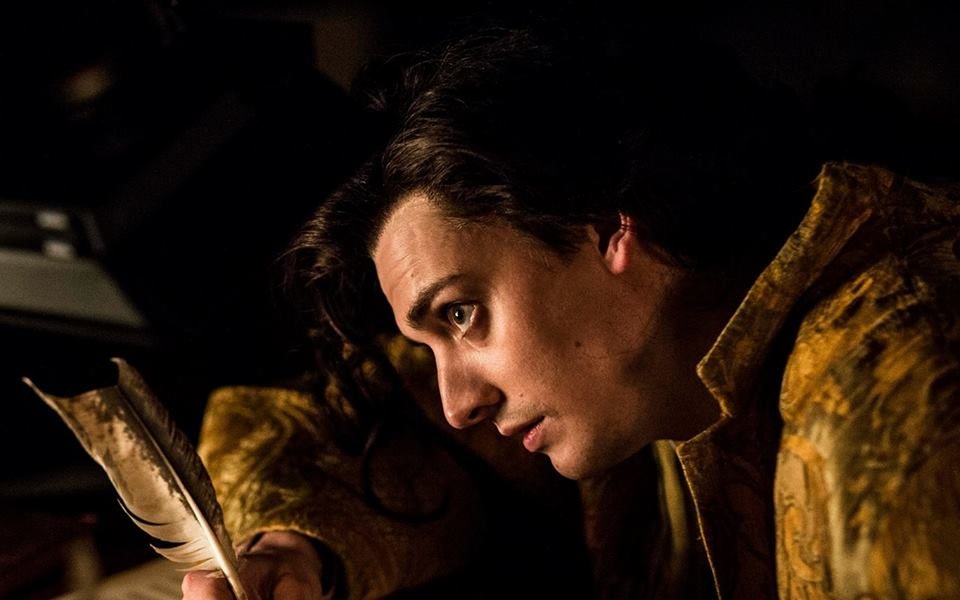
Compared to Hulce’s performance Barnard’s Mozart has more depth, is more relatable; not as jocular and altogether less flamboyant and hysterical (his baby son has just died and Constanze has retreated to a spa to recover).

Barnard looks like Wolfgang and he portrays a thoughtful, but nonetheless jovial maestro; who comes across as a deeply caring person and passionate about his music.

His passion extends to his beautiful new soprano for the role of Cherubino in Figaro; the young and ambitious Zuzanna Lubtak (Morfydd Clark).

Interlude in Prague (directed by John Stephenson), was wise to focus only on one aspect of the maestro’s iconic and turbulent life: his brief time in Prague in 1787.

Many aspects of the film were historically accurate; they filmed the exterior theatre scenes at the Estates Theatre where Mozart actually premiered Don Giovanni in October 1787. In Mozart’s day it was known as the Nostitz Theatre, built in around two years for the aristocrat František Antonín Count Nostitz Rieneck. It is the only surviving theatre in the world where Mozart performed.
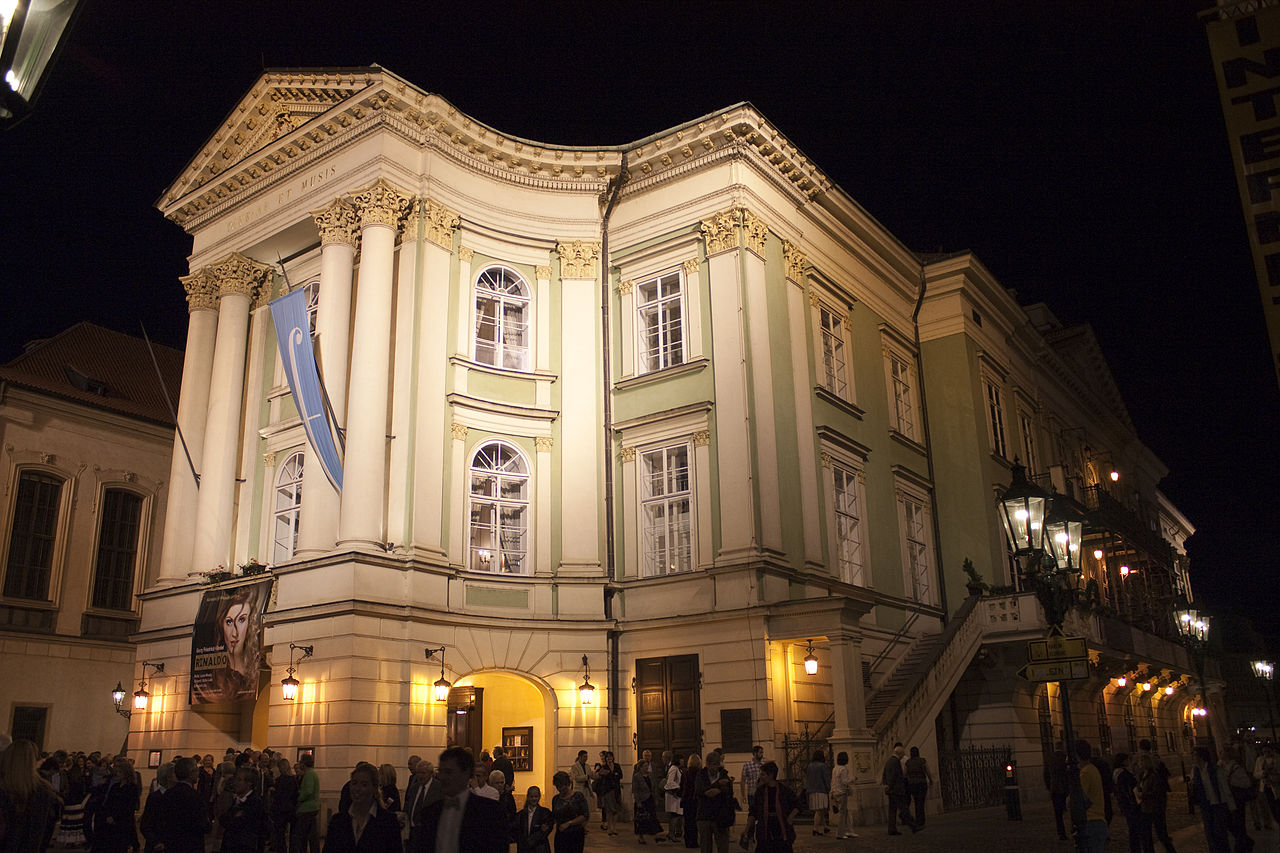
The concerts were given by candlelight, the internal workings of the theatre were 18th century, and in rehearsals and the composing scenes Mozart played on an authentic clavichord. The costumes were a sumptuous delight to my aesthetic eye.

Mozart’s last minute completion of his opera is shown at the end of the film in a scene in which the maestro, quill in hand, feverishly completes his autograph score. Constanze immediately hands it to the copyists who then pass the sheets with barely dried ink to the theatre director who distributes it to the orchestra with no time left for rehearsal. They must sight read for the world premiere of Don Giovanni with Mozart conducting.

Interview with the director and members of the cast:

It is December 1786 and soprano Josefa Duchek, (Samantha Barks) is on stage singing an aria from Le Nozze di Figaro.  Whilst her heavenly voice rings out into the hushed auditorium another, less pure act is being committed in a dressing room.  We do not see the participants but we know that the haughty and lecherous Baron Saloka (James Purefoy) is sowing his philandering seeds…

Josefa is the toast of Prague and afterwards in her dressing room, the licentious and predatory Baron Saloka is visiting her with lustful motives. Thwarted on this occasion by the sheer number of fans clamouring outside the door, Josefa’s relief is palpable.
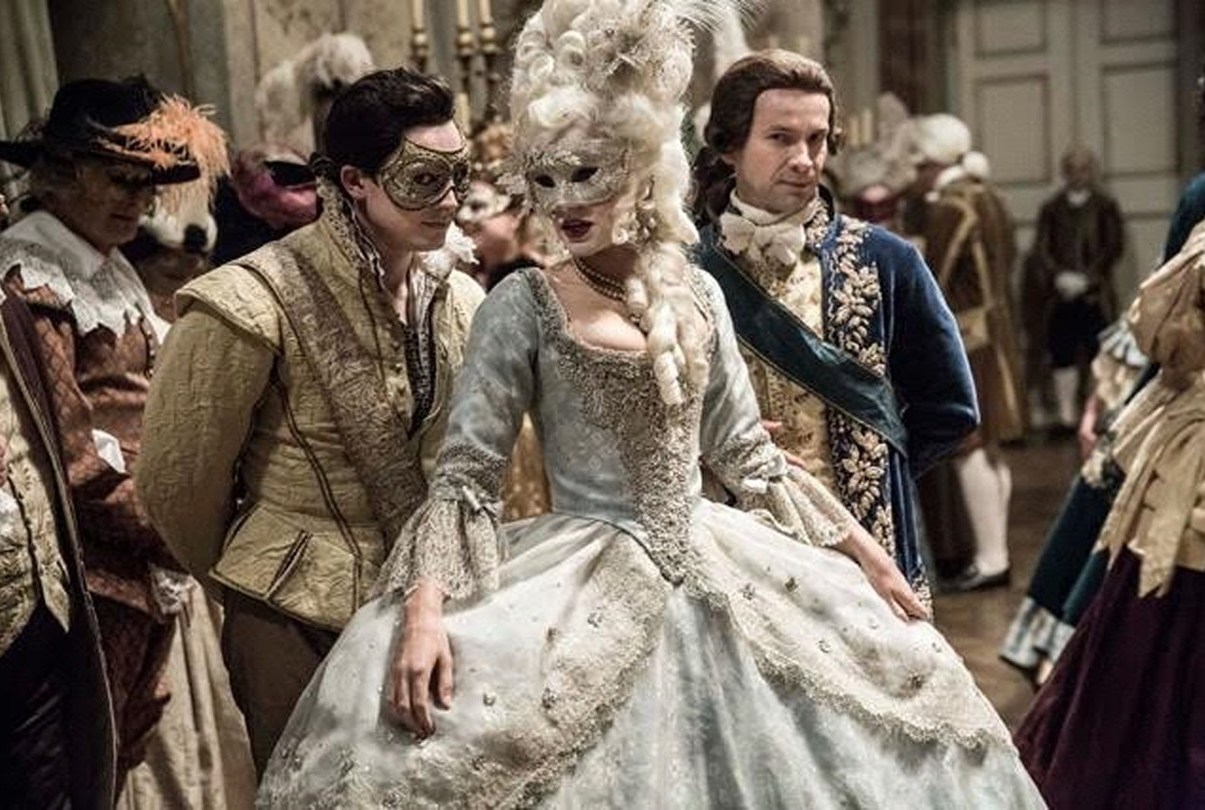
When Mozart arrives and begins composing at his friend Josefa’s residence he tells her about a “diabolically wicked character for one of your operas”.

The plot of the movie cleverly parallels that of Mozart’s opera Don Giovanni. The Baron Saloka is the unrepentant rake – but will he be punished?

The baron reluctantly agrees to offer Mozart his patronage at the behest of the enthusiastic aristocracy, who want nothing more than for the great maestro to conduct the final performance of the Marriage of Figaro and to write his next opera in their city.

Baron Saloka has more than what he states is a “professional” interest in the talented Zuzanna Lubtak, but she has lost her heart to Mozart. Although Mozart clearly adores his wife, he is unable to resist Zuzanna’s innocent charm and pure voice as they rehearse her parts in Figaro.
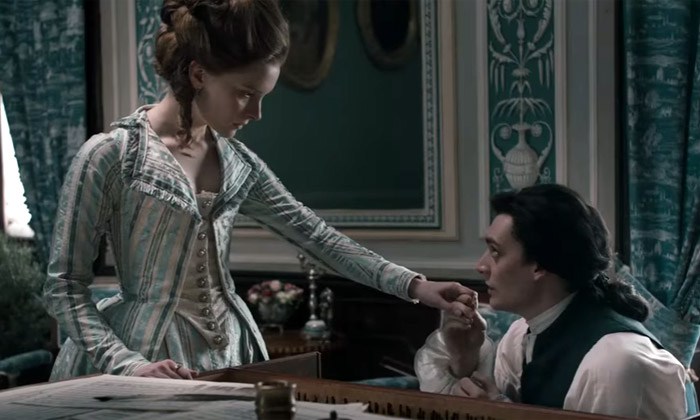
I really loved the scene where she sings ‘Voi che sapete’ to Mozart. If you know the aria and its meaning it has a poignant effect.

There is no clip of this from the film, so here is a wonderful performance (with the words), by Cecilia Bartoli:

The baron’s flagrant abuse of power and position is entirely befitting the dark D minor key of the opening bars of the Overture to Don Giovanni. He preys on servants and nobility alike, assured of their silence out of fear.  Unhindered in his quest for carnal pleasure, his vanity and promiscuity drive him to commit murder.

“Don Giovanni is beginning to frighten me.” ~ Mozart

He even has a scheming manservant like Don Giovanni’s Leporello. The baron is also in league with an envoy from the Archbishop of Salzburg, allied in their hatred for “the loathsome little peacock” who they aim to disgrace for his relationship with Zuzanna.

I do not wish to spoil the plot other than to say if you like thrillers, or Mozart, or period drama, or even all three, Interlude in Prague is a must watch.
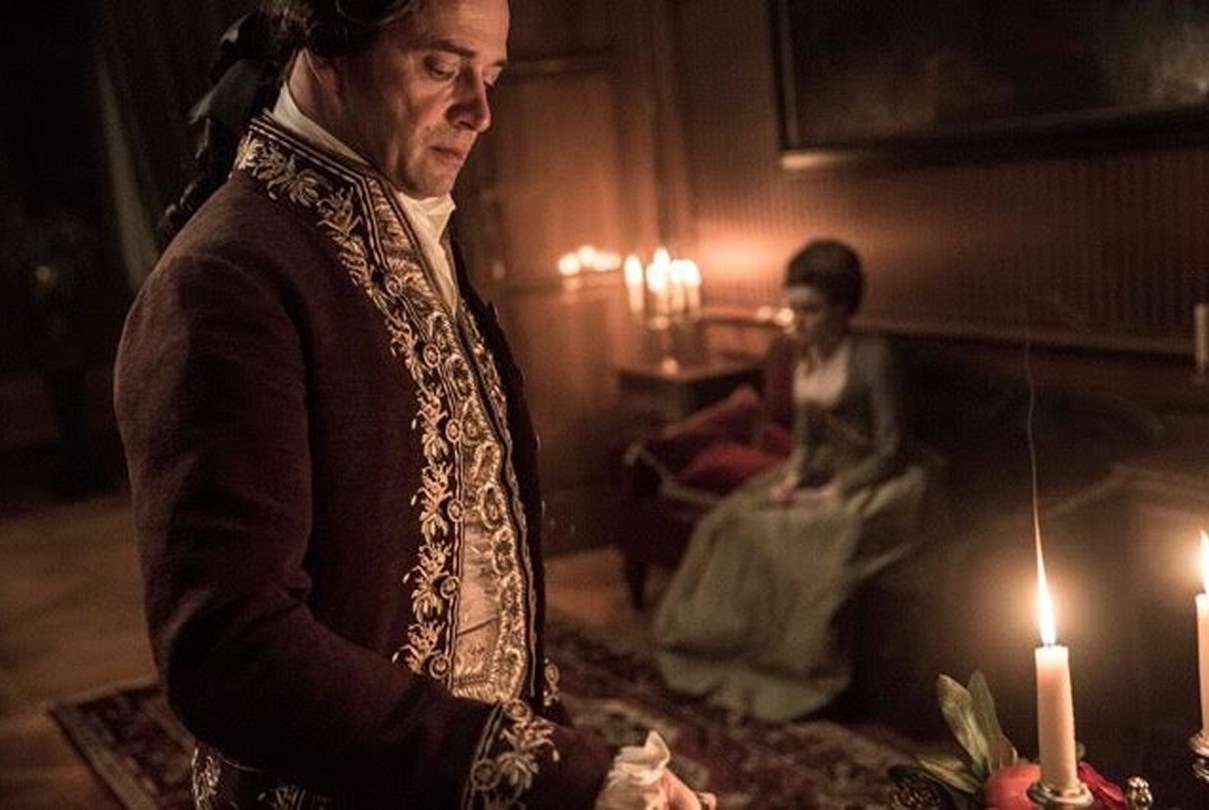
There is a tragic scene in a graveyard where Mozart is transfixed on a large, foreboding dark stone statue wearing a helmet – standing before him as the character of the Commendatore.

My only disappointment was that they didn’t feature my favourite aria from Don Giovanni, ‘La ci darem la mano’.

Interlude in Prague mirror’s Mozart’s life in a wonderful blend of fact and fiction, written and created by Brian Ashby.  In addition to the setting, the story, the costumes and music, the actors are all brilliant. Purefoy’s Baron Saloka made my skin crawl…

A special featurette from behind the scenes of Interlude in Prague:

To write a story around Mozart’s time in Prague and the events that inspired his writing of a darker Don Giovanni than the one he originally imagined, makes for an engaging premise. I wish I had thought of it!

In the 230 years since its world premiere in Prague, Don Giovanni continues to serve as an entertaining yet enduring cautionary tale, being one of the most popular and widely performed operas to this day.
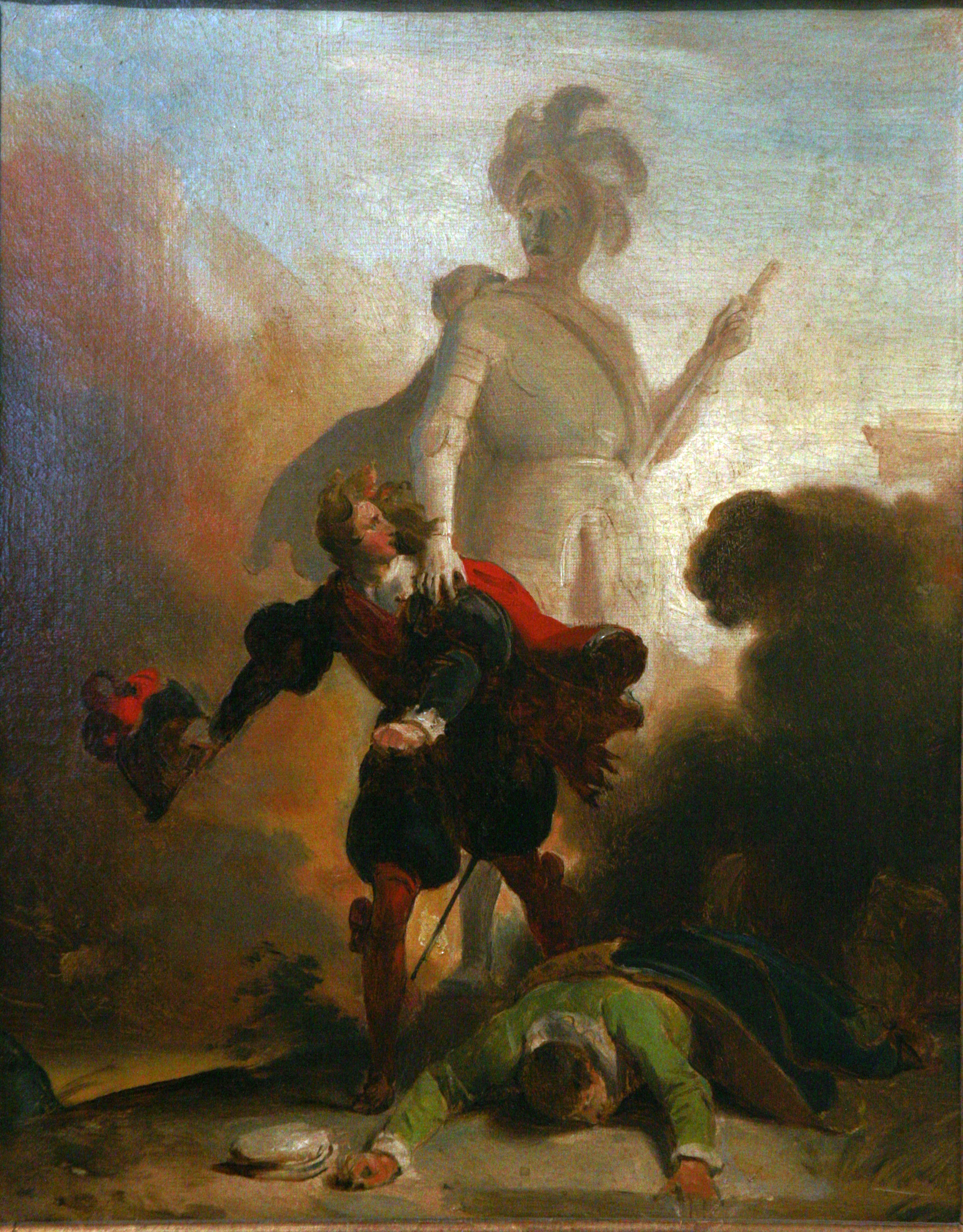
Don Juan and the statue of the commander by Alexander-Evariste Fragonard

I’ll bid you adieu with a vintage recording of Don Giovanni:

Remarkable Women: The Life and Times of Immaculée Ilibagiza
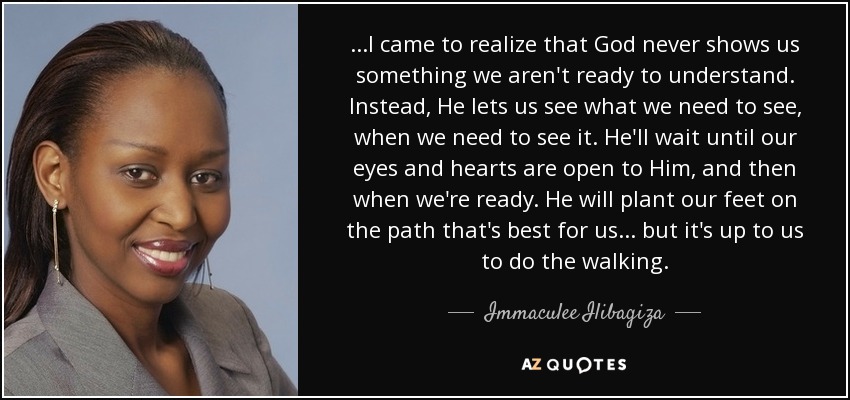
“The love of a single heart can make a world of difference.” ~ Immaculée Ilibagiza.

I’m staying in central Africa again this week, to pay my respects to a woman who Dr. Wayne Dyer referred to as a “Saint walking” and hailed by others as Africa’s Anne Frank: Immaculée Ilibagiza.

Fortunately her traumatic and gripping real life story has a happier ending…

Many tissues were soaked as I revisited her inspiring tale of survival and forgiveness. It’s not a lighthearted post I’m afraid, but there is light at the end of the tunnel.

Immaculée was just 22 when she found herself caught up in unimaginable conditions. She waited – starving,  silent and cramped for 91 days in a three by four foot bathroom in a local pastor’s house, hiding from Hutu thugs on a murderous rampage during the Rwandan genocide of 1994.

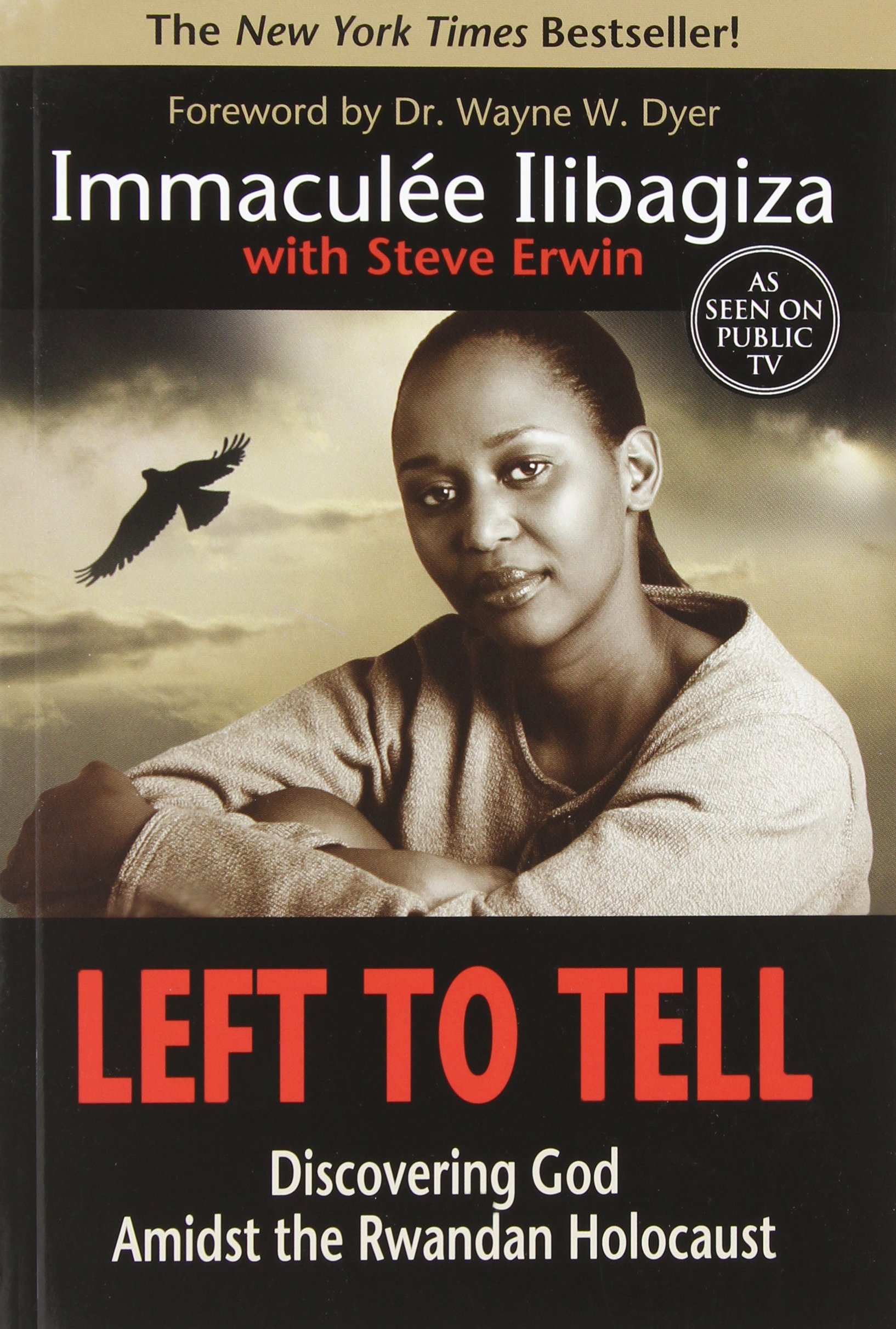
I read her book Left to Tell: Discovering God Amidst the Rwandan Holocaust, a few years back, it was one of the most moving stories I’ve ever read.

On the 6th April 1994 the president’s plane was shot down during its descent into Kigali airport and his death ignited long-standing acrimony between Rwanda’s two ethnic groups: the majority Hutu and the minority Tutsi.

Before Belgium relinquished Rwanda as a colony in 1962, it bestowed positions of power to those from the minority Tutsi group. After independence the Hutu population took back control, but simmering resentments of the preferential treatment shown to the upper class, intellectual Tutsis ran deep.

The government armed the Interahamwe, a malevolent Hutu paramilitary group, and made frequent radio broadcasts with instructions encouraging Hutu citizens to down their farm tools and abandon their everyday lives so they could assist the militia by killing their Tutsi neighbours and friends.

Their goal was total annihilation.

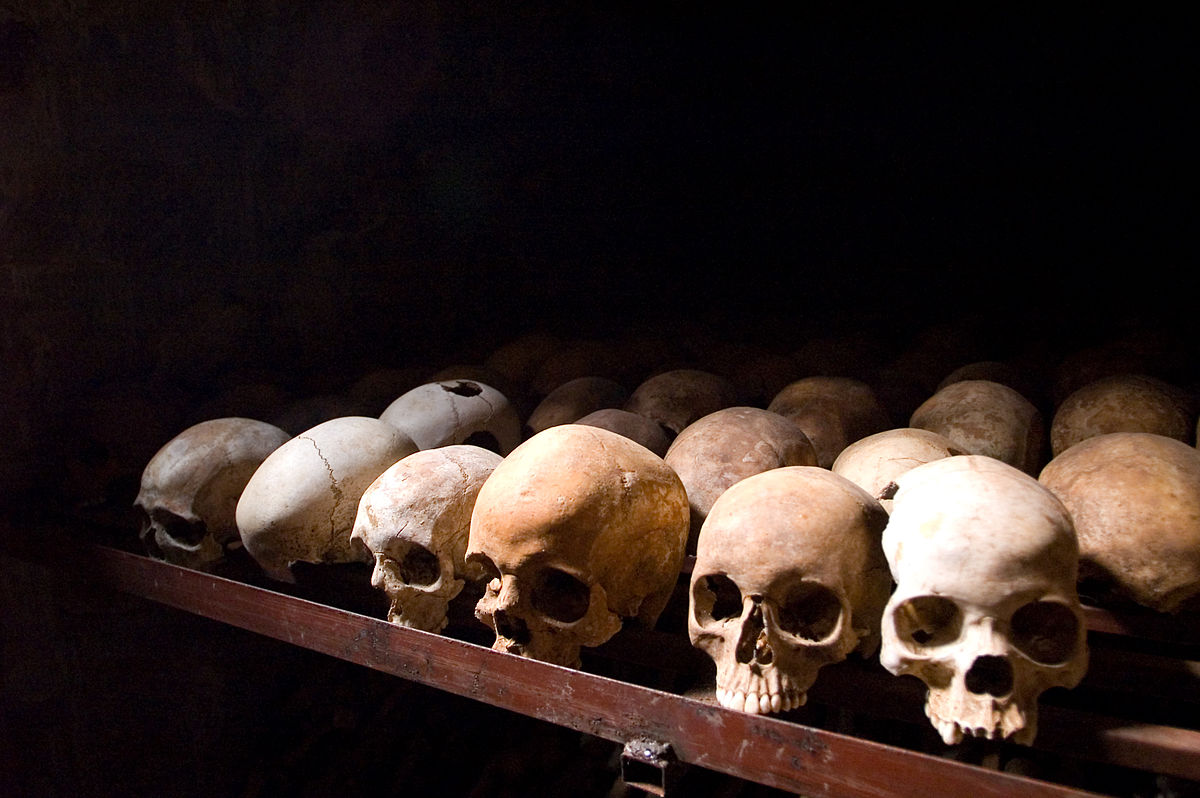
Photographs of genocide victims at the memorial centre in Kigali.

Racial tension and rancour was stirred up by the government’s evil propaganda, deliberately exploiting collective feelings of animosity that the Hutu’s may have felt since the nation’s independence. Hate preaching fuelled their anger. The Tutsi population were dehumanised as “cockroaches” and a killing frenzy was unleashed in Rwanda.

The West, the United Nations and UNAMIR, to their great shame, did nothing to stop it, which allowed the most horrific slaughter of the 20th century to take place.

Peace keeping units stood by and witnessed mass murders where desperate crowds had gathered. Immaculée’s brother Vianney was shot in a stadium massacre.

No mercy was shown to Tutsi victims; many of whom were hacked to pieces in their homes, on the streets, in the fields, in churches, in schools and wherever they were found.

In the madness that lasted 3 months around one million human beings were slain.

Men, women and children, (including moderate Hutus and those who sheltered Tutsis) were viciously murdered. Their killers callously notched up their death tallies. It’s as though they lost all shred of human decency, dignity and kindness overnight and became machines – devoid of compassion and emotion as they went about their systematic and organised ethnic cleansing.

“I realized that my battle to survive this war would have to be fought inside of me.” ~ Immaculée Ilibagiza

It was so barbaric that it’s hard to comprehend. I remember being frequently in tears as I read about Immaculée’s plight for survival in the midst of the hateful carnage that was sweeping across the land.

Two of Immaculée’s brothers, her mother and father and other relatives were butchered as she hid nearby (as instructed by her father), when news of the killings first broke out. Of her immediate family only one of her brother’s survived. Aimable had been away in Senegal at the time.

A sympathetic pastor hid (in secret from his immediate Hutu family) Immaculée and seven other women in the tiny space for 91 days. They were so cramped that the four tallest stood with their backs to walls and some laid on top of each other on the floor. They could only flush the toilet at the exact same time as the main toilet was flushed so as not to be discovered. Hutu gangs frequently searched the house, taunting and singing of their intended victims.

“They can only kill us once.” ~ Immaculée Ilibagiza

The women were packed in like sardines, unable to move and barely able to breathe for fear of being heard. Immaculée heard her name being called on many occasions and she prayed as she stood just inches behind plaster board from where her would-be killers skulked around hoping to find their next Tutsi victims.

She described the agonising fear of them being discovered, raped and murdered and talked of how her faith in God had given her strength to endure such horrors.

Nyamata Memorial Site

The priest had also risked life and limb to shelter these women, and he took scraps of food to them when he could safely do so. He covered the doorway with a wardrobe that had a suitcase on top. He would also leave the radio on so that Immaculée and the women could hear what was happening on the news.

They had to listen to the terror and live in constant fear of being found and wondering what had become of their loved ones.

After 91 days they heard that a refugee camp policed by French soldiers had been established for Tutsi survivors and left in the dead of night on their perilous journey to freedom.

It’s a powerful story, best told by Immaculée herself:

Immaculée lives in New York and married Bryan Black,  whom she met when they worked for the UN in Rwanda. He is now the head of Special Operations at United Nations Safety and Security Service. They have a son and daughter. She wrote her tale of survival and redemption against all odds and became a motivational speaker. What’s so remarkable about her is her grace in the face of such trauma.

Immaculée did not allow what happened to her, her family and her Tutsi compatriots to make her bitter or become a victim, but instead transformed her struggle into hope and inspiration for others. If that’s not the definition of a remarkable woman then I don’t know what is!

Most of us would be psychologically scarred for life after such a terrifying experience, but Immaculée forgave her family’s killers. She let go of her pain and her anger. There was no talk of revenge, only healing.

“To err is human, to forgive, divine.” ~ Alexander Pope

It seems that 23 years on Rwanda has come a long way to healing the collective pain, suspicion and deep rifts between the two ethnic communities. Inhabitants are now encouraged to say that they are all Rwandans, with no mention of Hutu or Tutsi.

Reconciliation has been ongoing and with some miraculous outcomes:

Fortunately women are getting more involved in politics. Under the 23 year rule of president Paul Kagame fifty six percent of MPs in Rwanda are women, the highest proportion for any country in the world.

Immaculée Ilibagiza is truly a transcendent soul, as beautiful on the inside as she is on the outside. I wish her a long and happy life as she teaches humanity that it is possible to recover from the worst experiences life can throw at us and to thrive in the wake of such terrible grief and injustice.

“Faith moves mountains, if faith were easy there would be no mountains.” ~ Immaculée Ilibagiza

Book Review: le Carré Carried me Away With The Mission Song

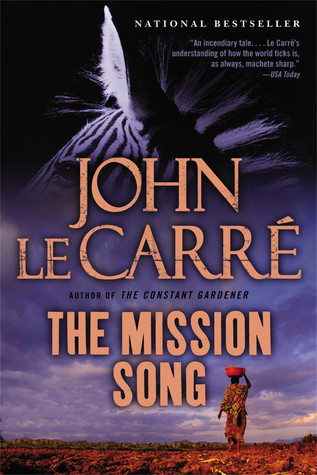
Whenever I read David Cornwell – better known by his pen name of John le Carré – I am left open-mouthed with awe at his storytelling prowess. He is the kind of writer I aspire to be; a lofty and unattainable benchmark for a newbie novelist!

The undisputed master of espionage and geopolitical thrillers, perhaps more psychological than action oriented; le Carré is gifted with a rapier sharp intellect, his characterisations are thorough and utterly believable, his plots are clever and complex but at the same time could be lifted from real life, and his use of vocabulary and descriptive powers are unmatched, in my humble opinion.

He can weave all of this together seamlessly with the knock-out punch of over-arching relevant social themes that leave you reeling with moral dilemmas and unease afterwards.

That is exactly what The Mission Song did to me. My children occasionally interrupted me as my nose was buried within its compelling pages for interminable periods over the weekend.

I became engrossed in the life of Bruno Salvador, known as Salvo, a top interpreter in the languages of Africa and the Eastern Congo.

I haven’t read Joseph Conrad’s Heart of Darkness, but I feel it’s highly likely that le Carré drew inspiration from his tale of Belgian exploitation of the Congo.

Conrad’s quote precedes chapter one::

“The conquest of the earth, which mostly means the taking it away from those who have a different complexion or slightly flatter noses than ourselves, is not a pretty thing when you look into it too much. “ – Marlow

King Leopold is mentioned only once in The Mission Song, but it does highlight the ongoing plight of the Eastern Congo: corruption, tribal rivalries, their suspicion and hatred of Rwandans, outside interference from greedy developed nations seeking to take advantage of the local strife so they can plunder its considerable natural resources under the veiled auspices of schools, hospitals and bounty for all.

The opening few pages on audio book of The Mission Song, read by David Oyelowo:

I’ll try not to give away too many spoilers in this review, more a taste of the book’s many virtues. The beginning was a slow burn for me, but after the first couple of chapters I was completely hooked.

I empathised with and was beguiled by Salvo’s essentially ambitious but innocent nature. In the early pages he tells of his rather sad and unorthodox childhood; the son of a Northern Irish missionary and a beautiful Congolese woman, born out of wedlock and in sin, fitting in nowhere, he is brought up in various mission schools and becomes fluent in Swahili, French, Shi, Bembe, Kinyarwanda and of course his adopted nation’s tongue: English.

After the death of his father Salvo is duly shipped to Britain courtesy of the Holy See, and comes under the wing of Brother Michael at The Sanctuary, a boarding school for Catholic orphans. They grow close, and later Salvo is supported financially and lives with their wealthy Aunt Imelda in Somerset.

Salvo is impressionable, idealistic, diligent and naïve. His physical attributes are of a confident, tall, muscular, light brown skinned man eager to impress his clients, and so from humble beginnings he has found his niche as a top interpreter.

He is called a zebra later in the novel, a derogatory reference to his mixed race parentage. However, Salvo adopts the sobriquet and uses it in his own motivational way as he pits himself secretly against some Congolese delegates, and later, after his moral paradigm shift, his no-name, ruthless employers.


Salvo has married a smart, upper class journalist named Penelope, against the wishes of her authoritarian father. Their marriage is doomed from the start.

Lately he has been doing some under the radar translation work for Her Majesty’s Government in Mr Anderson’s Chat Room. His knowledge of African languages makes him indispensable.

Salvo doesn’t know it yet but his life is about to get a whole lot more exciting and complicated!

The night before he becomes a part-time spy, Salvo meets Hannah, a young Congolese nurse, who needs him to translate her advice to a dying African patient. They fall in love at first sight. Hannah has a young son, Noah, living back in Uganda with her aunt so that Hannah can continue to further her nursing experience and send back money.

They are perfect for each other, and in his guilty heart Salvo knows that his bourgeois life with Penelope is over. Having consummated his love and passion with Hannah, Salvo is still infused with a post coital afterglow when he is summoned to meet with his Chat Room boss, Mr Anderson, about a ‘special’ mission that requires a change of identity and complete deniability.

Given new, but somewhat shabby clothes in comparison to his usual attire, his identity is changed to Brian Sinclair. He signs the Official Secrets Act. His task: to be a top interpreter for a no-name syndicate between tribal warlords and a businessman of the Eastern Congo.

Before they leave, Bruno is taken to a large London townhouse where he meets his immediate boss, ex-special forces tough man, Maxie, who reminds him of his long-dead maths teacher from The Sanctuary. Prominent politicians and business leaders are coming and going, including a hero of his, Lord Brinkley.

Soon our boy is being whisked by helicopter from London to Luton airport where he boards a private charter with Maxie and his spy cohorts: Spider, Anton and Benny, various security detail Salvo calls ‘anoraks’ and the syndicate’s contract writer, a shady French Lawyer, Jasper Albin.

Salvo’s phone has been commandeered temporarily by British Intelligence, so he cannot call Hannah to tell her he will be away for the weekend, or his wife to apologise for leaving her party early, and also their faltering marriage.

It is during the flight to a mysterious island in the North Sea on this heightened tide of emotions that he is briefed with what he needs to know by the laconic and foul-mouthed Maxie, whom he (and everyone else on the mission), refers to as Skipper.

Salvo learns that the top secret conference has been arranged by an accomplished servant of the Crown, the silvery haired and persuasive Philip, and that in his vital role as their interpreter, Brian Sinclair, he is not to divulge that he speaks the lesser known Shi and Kinyarwanda.

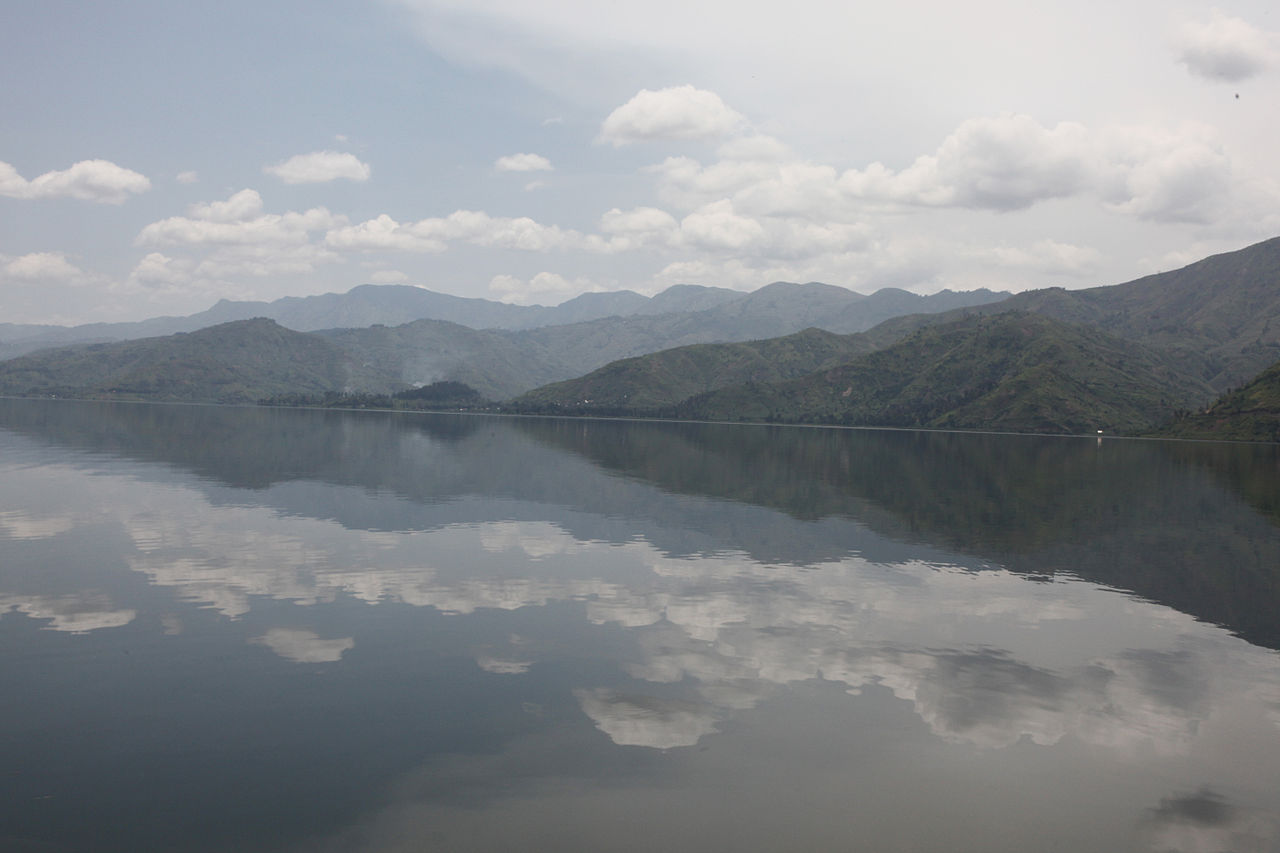
The Congo – Lake Kivu

This information seems incidental at first, but as the story progresses the significance of Maxie’s explicit instructions become fundamental to the plot:

“Suppose we put it out that you speak English, French and Swahili and call it a day? That’s more than enough for anybody. And we keep your little ones to ourselves. How would that grab you? Different kind of challenge for you. New.”

Salvo is less than impressed that ‘above the waterline’ he only speaks English, French and Swahili, and ‘below the waterline’ the languages that he is most proud of such as Shi, Bembe and Kinyarwanda must be kept under wraps, unless he is specifically asked to use them. He nonetheless undertakes his ‘above the waterline’ rendering of Philip, the Mwangaza and Maxie with alacrity.

The Mwangaza is a beloved spiritual leader of the Congo’s ‘middle path’, accompanied by his henchman Felix Tabizi, (aka Tabby), a feared former warrior, and his acolyte the Dolphin.

The three delegates consist of a gnarled general of the Mai Mai and ‘former Mobotu thug’ Franco, and his natural enemy, the aid’s ridden warlord Dieudonné of the despised and persecuted Banyamulenge tribe, and thorn in the British side is the arrogant and slick Haj, son of Luc, a long-time friend of the Mwangaza based in Goma, who has sent Haj as his proxy.

In Salvo’s words: “Haj, the egregious Sorbonne-educated, uncrowned merchant prince of Bukavu: but with such disdain, such foppery, and such determined distance from his fellows, that I was tempted to wonder whether he was having second thoughts about standing in for his father.”

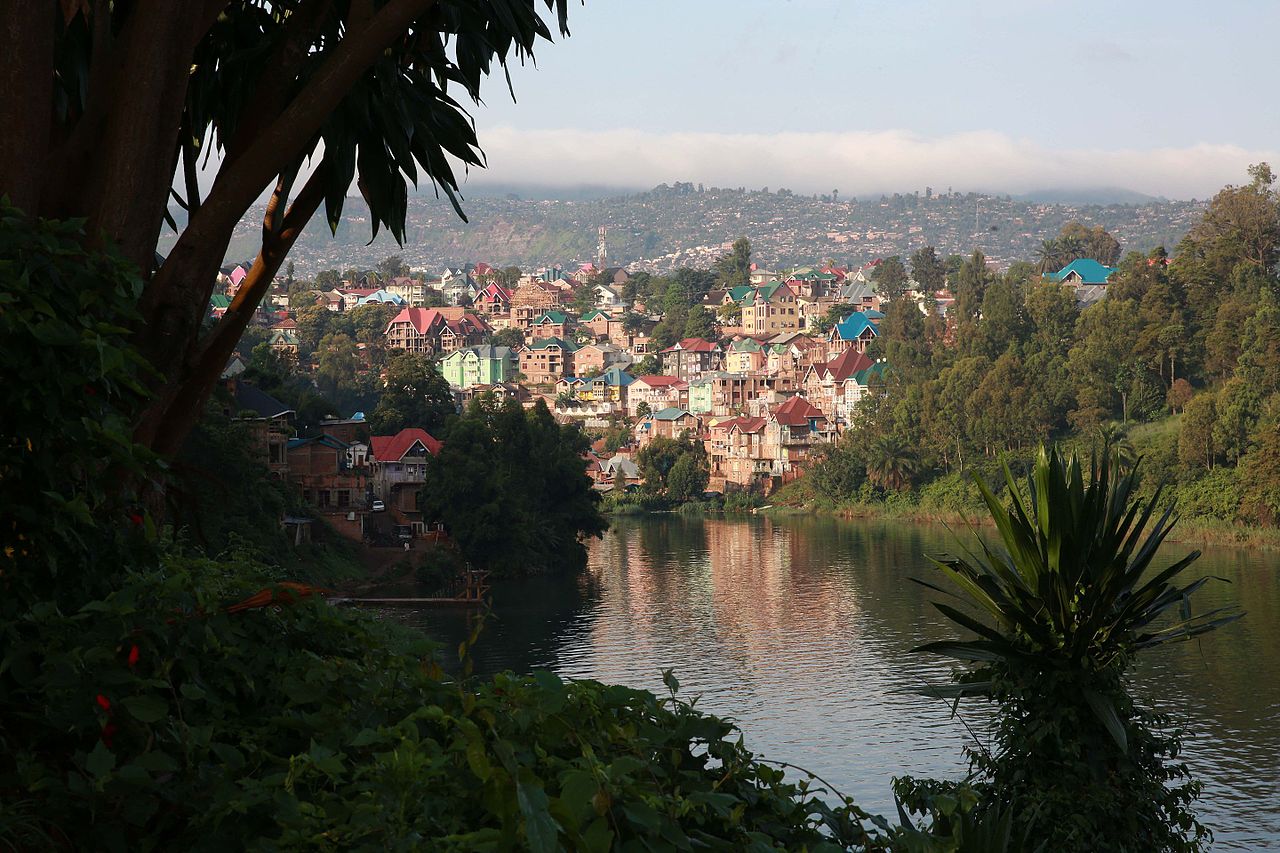
Bukavu – dawn on Lake Kivu

Le Carré’s genius is that I was sucked in with Salvo in his wanting to do a good job of interpreting and for their mission to be a success. In the recesses of the conference, rather than socialise and solicit with the delegates, Salvo has been instructed to go into the basement where Spider has put together a comprehensive listening station that links in to all the rooms in the house and the outdoor bugs scattered at key points throughout the grounds.

The conference organiser and boss, Philip is banking on loose tongues to wag while their unpredictable guests are out of earshot of their hosts…

The illicit listening is where Salvo hears himself being called ‘a pretty zebra’ by a recalcitrant Haj, who is doing his best to talk Franco and Dieudonné out of getting involved with the syndicate. They are speaking (and the inference is deliberately) in Kinyarwanda, not knowing their interpreter is eavesdropping on one of his ‘below the line’ languages.


As the syndicate’s chief ‘sound thief’, Salvo translates their conversations and reports back to the well-spoken Sam via the radio, who frequently starts her sentences with, “Brian dear…”

It is apparent to Salvo (and therefore to the reader), that Skipper wholeheartedly believes their secret conference will make them the saviours of the Eastern Congo. In his less than salubrious language Maxie explains:

“Congo’s been bleeding to death for five centuries,” he went on distractedly. “F***** by the Arab slavers, fellow Africans, the United Nations, the CIA, the Christians, the Belgians, the French, the Brits, the Rwandans, the diamond companies, the gold companies, the mineral companies, half the world’s carpetbaggers, their own government in Kinshasa, and any minute now they’re going to be f***** by the oil companies.“

As the conference unfolds, it becomes obvious that the well-meaning secret syndicate will support the three leaders to publicly support each other and the Mwangaza in a pre-arranged coup, although it’s portrayed more as a temporary disturbance by Maxie to downplay any violence, prior to the elections in Kinshasa.

Maxie takes great pains to explain that the wealth of the mines and minerals will be distributed to the well deserving people, after the syndicate and its partners take their cut.

The Congo gets its popular, altruistic leader, a newly formed peace united under the Mwangaza, and the delegates and the syndicate get rich. It’s a win-win according to Skipper.


Haj is the subversive element of their plan, and through Salvo’s clandestine listening in of Tabby torturing Haj with the assistance of Anton and Benny, (something his employers did not want him to know about), Salvo himself, now disillusioned and wary of the coming war that Maxie and the syndicate plan to unleash, and that Haj has protested about, secretly becomes the unlikely linchpin of the entire operation.

From one of the Mission Song’s most shocking scenes the book’s moving title then becomes clear.

Le Carré’s escalation and tension crescendos magnificently, so much so that you feel like you are a rookie spy, in the thick of it with Salvo, torn between his loyalty to Queen and country, his missionary’s conscience and his homeland, as well as his love for Hannah who he knows also adores the Eastern Congo and the Mwangaza. Their beleaguered nation, once again at the mercy of ruthless state-sponsored greed…

The twist at the end is heartbreaking and breathtaking. It’s so utterly brilliant I had a swell of emotion! I was screaming in my mind at Salvo not to be so naïve. He is a zebra surrounded by lions.

This is realistic spy fiction which makes it all the more impactful in my humble opinion. I was left with very unpatriotic thoughts and disquiet, I felt quite sullied actually. I don’t read le Carré for a light-hearted romp, because that’s not his style – it’s gritty, hard hitting, lyrical (you wouldn’t believe the man’s vocabulary), cynical and visceral.

“John Le Carré turns espionage into existentialism. His canvas is betrayal — of the realm and of the heart. His greatness comes from the personal nature of that exploration.” ~ David Farr

Endings are a tricky thing to master: to achieve a balance whereby the reader is both surprised and satisfied with an outcome that is unforeseen and yet can be the only logical conclusion to the story. Yet again The Mission Song left me breathless.

My thanks to John le Carré for inspiring me to once again get stuck in to writing my psychological thriller that has been rattling around my head for far too long.

I found this a fascinating and entertaining debate between author Anthony Horowitz and screenwriter David Farr – Ian Fleming vs John le Carré:

If you want an intelligent summer read full of authentic details in the world of espionage, covert national malfeasance, interpreting, dialogue to die for and edge-of-your-seat, emotional storytelling, The Mission Song won’t let you down!

For a deeper insight into the man and his writing this is a great interview (on le Carré’s part at least) filmed with BBC Radio 3:

For fans you may wish to know that the author will be speaking at the Royal Festival Hall in London on 7th September discussing his career and new novel, A Legacy of Spies, reprising his best loved character: George Smiley. It has been billed by The Guardian as the literary event of the year.

The kids will only just be back at school, but I must be there!!

#TravelTuesday – A Bird’s Eye view of the Stunning Amalfi Coast (Guest Blog by PJ van Zetten)

Through my networking endeavours I recently met a new colleague and friend, PJ van Zetten. I found PJ to be a warm, humorous, experienced and well-travelled business woman, and I wouldn’t hesitate to put my future travel plans in her expert hands!

PJ van Zetten is a bit of a League of Nations – born in Germany, of British parents, educated in the UK, France and Germany and married a Dutchman. PJ considers herself a second generation travel agent, as her mother opened a branch of a well-known agency on the Isle of Wight. PJ worked there during the holidays for no wages, as to pay her would have been ‘nepotism’, according to her mother.
PJ went into business travel and loved the decisiveness of people who had to be in a certain place at a certain time.  She became involved with leisure travel when her clients wanted to fit in a holiday, with their family or loved ones, in between the business elements.
PJ found she loved this even more as it opened up a whole new area of creativity. And then came redundancy. Via a couple of short term jobs, she landed in a book shop, to learn the business with the aim of starting her own bookshop café.
PJ found she was talking to customers about travel and giving them hints and tips and the benefit of her 30+ years in the business.  Shortly thereafter, someone asked her if she had ever heard of Travel Counsellors.  She drove up to Bolton for an interview and came away with an offer. It was the best 400 mile drive of her life.  As PJ goes into her eleventh year; having built a business from scratch, with an upward curve to the graph, year on year, she cannot imagine doing anything else with her life.
The best feeling in the world is phoning a client, who has just returned from holiday, to hear the words ‘That was the best holiday ever’, followed by ‘Let’s talk about the next one’.
PJ’s clients stay with her for years, because they know she tailors their holiday to their needs, wants and desires – PJ is not an order taker, she is a dream maker!

As my clients set off, in less than a month, for their 10 day holiday in Sorrento, I feel a huge sense of satisfaction and achievement.

Last year I decided to go to Italy for my early autumn holiday. I had not decided which region to visit, when a networking client gave me a referral for his 2017 holiday… To Italy!

The family wanted to go to an area I knew only by reputation and other people’s holidays.

Why not, says I to myself, go there? ‘Two birds, one stone!’

So off I went, flew to Naples, hired a car and drove to Sorrento.

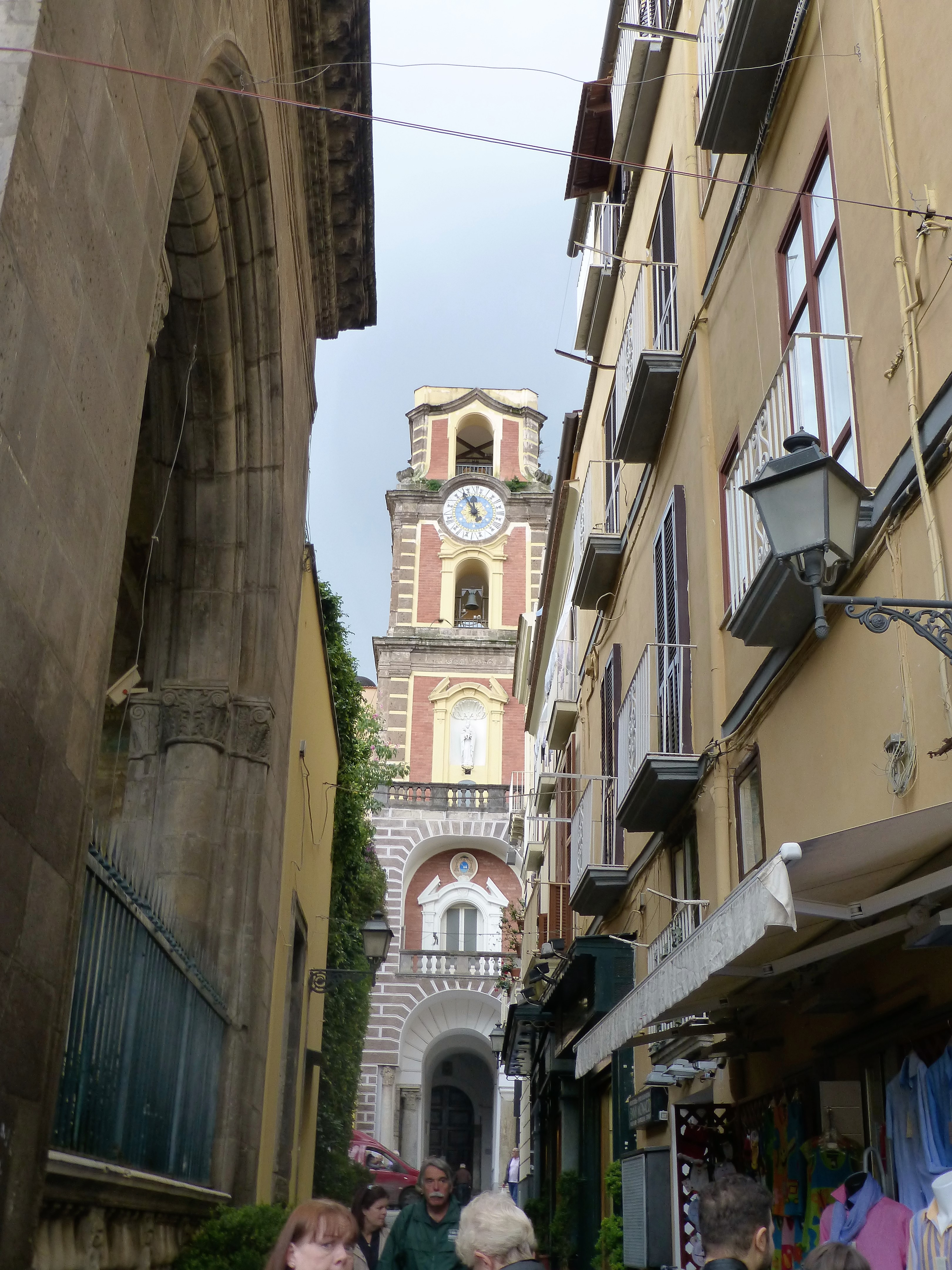
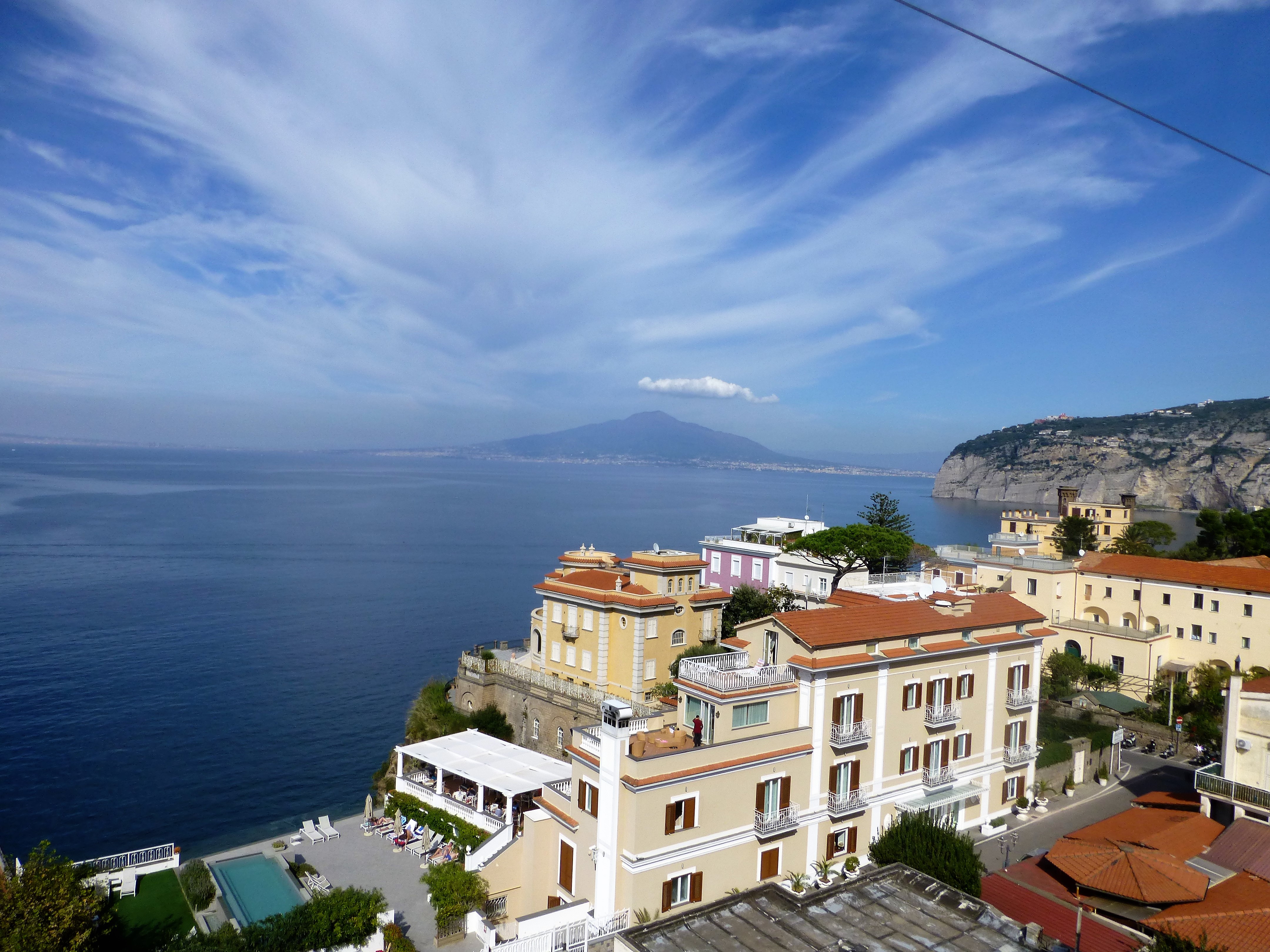
Sorrento

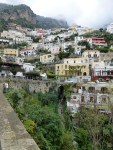
Named after the ancient Greek word for ‘Siren’, Sorrento would surely have provided a beguiling coastal allure to Ulysses on his Odyssey! The town was colonised by the ancient Greeks and their town plan still survives: East to West for the sunlight, and North to South for the prevailing winds.

Note to the wise – if your nerves are not in first class working order, I would not suggest you drive the Amalfi Coast. Narrow, windy roads, stunning drops, assertive Italian drivers and large oncoming coaches can test the strongest of nerves.

Sorrento is a great place both to enjoy for itself and to use as a base to explore the area.

Let the local buses take the strain! The SITA local bus service will take you from Sorrento to Positano and Amalfi, both visually pretty and attractive towns. For anyone with mobility issues, Sorrento is a bit flatter – the upper town and the marina.

These coastal towns get pretty crowded in high summer, so going, as I did in September, worked really well. Enough people to make it interesting but nowhere was too full, and I could always get a table at my favourite people-watching restaurant, right in the central square of Sorrento, Fauno Bar.

Across the main square, Piazza Tasso, is the little Dotto train that trundles around Sorrento.

Ravello

Also well worth a visit is Ravello, inland and high up, served by a one track road, controlled by traffic lights. When the lights turned green, I went …. only to meet a truck coming down…gulp!

Fortunately he knew the driveway to squeeze into so I could pass. As I drove past he yelled, “Signora bella e folle!” at the top of his voice. When I asked at a shop in Ravello what this meant, the owner laughed and said, “Oh you met Giovanni. He says that to all the women drivers…it means beautiful, crazy lady.” There is a bus from Amalfi up to Ravello, if you prefer not to be ‘crazy’.

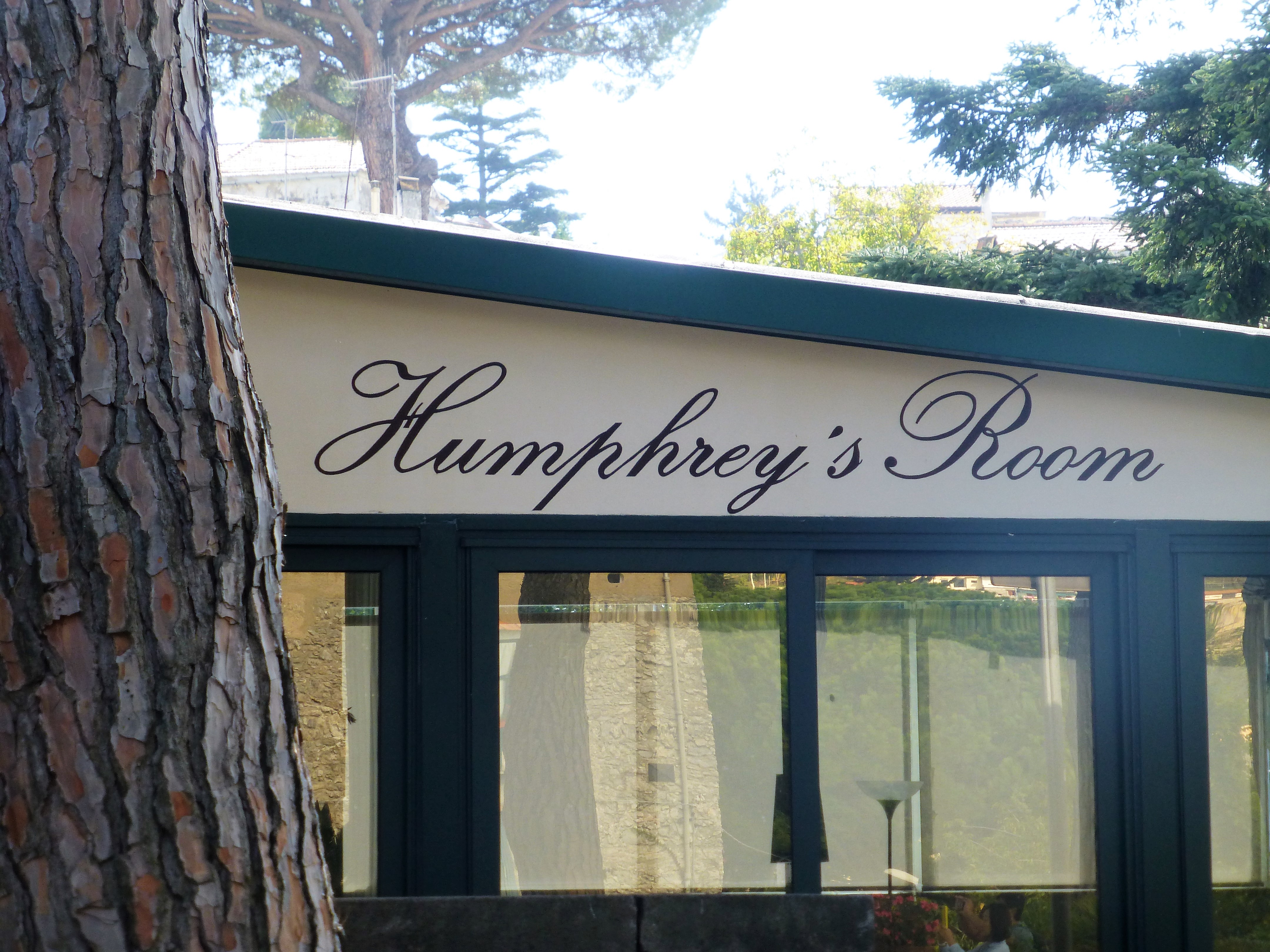
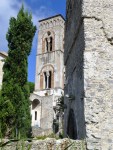
The views from Ravello are stunning and it has an interesting history, dating back to the Romans. It is now a UNESCO world heritage site. It has had many famous visitors including Humphrey Bogart, who was filming Beat the Devil. He and John Huston, the director, and others drank and played cards there so often, they named the room after him.

If you want a week away from everything, maybe with that special man, the Hotel Rufolo is the ideal romantic getaway, superb views, a pool overlooking the bay and scrumptious food – the menu is posted at the gate if you fancy a lunch there. It is not cheap, about €100 for two but worth it for the views and the ambience.

Pompeii and Herculaneum

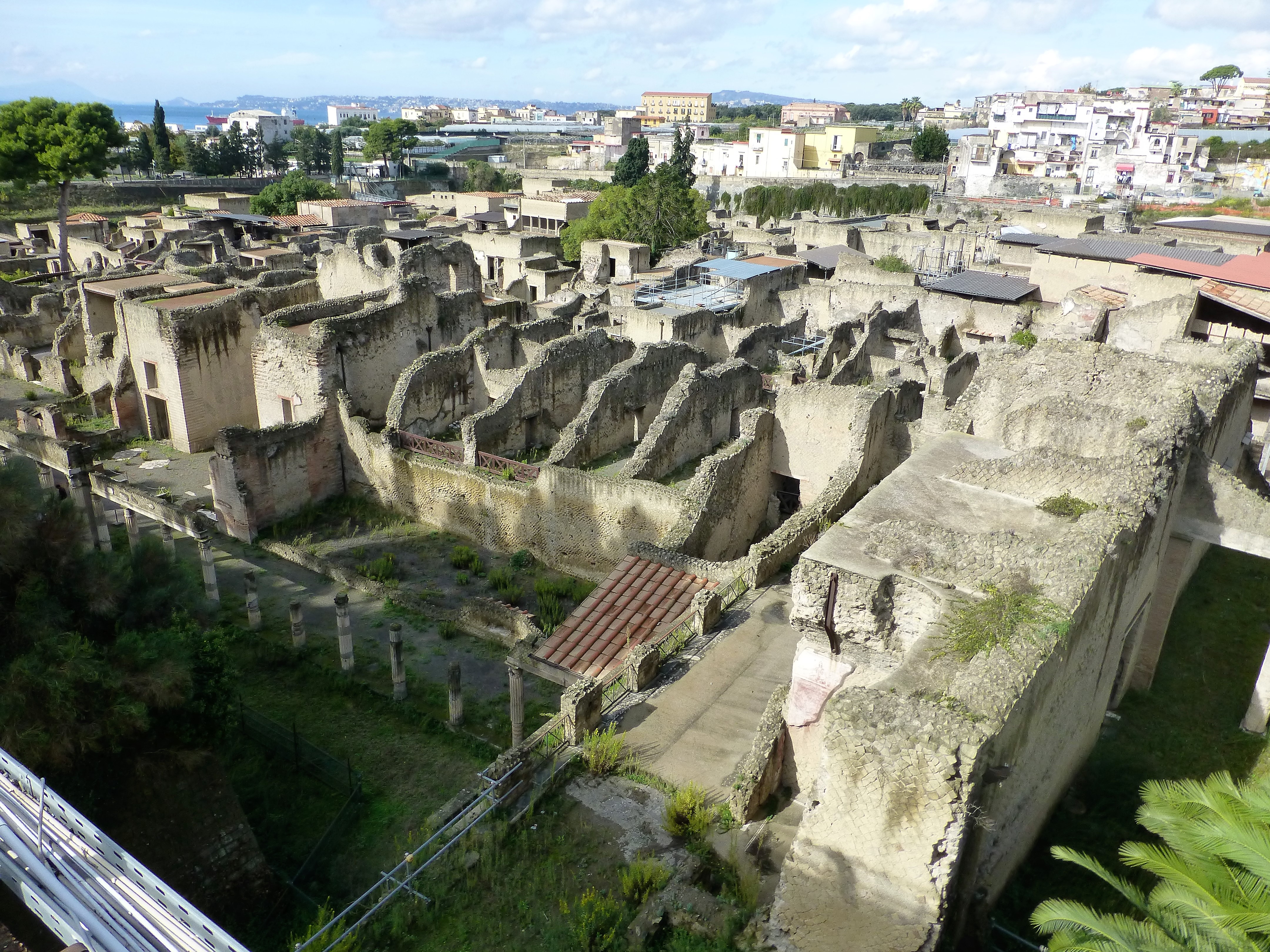
I spent one heavenly week exploring the area – delightful locals, delicious food, stunning views round every bend, the amazing Herculaneum for my historical and cultural fix (if wanting to visit Pompeii as well, always do this before Herculaneum – doing it the other way can lead to disappointment).

If you are not taking a private tour of the ancient sites, the next best way is to take the Circumvesuviana Train, the Sorrento-Napoli line. Not the most elegant of trains – think London Underground in the 70’s – it is cheap, convenient and it stops at Pompeii and Herculaneum – you can get off, do Pompeii, and get back on again for Herculaneum. Also you can visit Naples, the opposite end of the line from Sorrento.

Another word to the wise – pickpockets are rampant on the trains, especially out of Naples. Only take exactly what you need and keep it close!

I found Herculaneum one of the most moving places I have ever been. I took the audio guide and walking round, listening to the commentary, I could get a real sense of what it must have been like for the inhabitants, literally having nowhere to go and waiting for the end of the world. A humbling experience that made me very grateful for all my blessings.

Capri

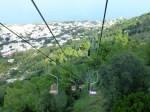
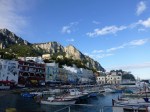
On the day before my departure, I planned my trip to the magical island of Capri, as the cherry on my Amalfi cake. It is certainly beautiful and the scenery is breath taking. It is billed as one of the most romantic places in Europe … You can decide.

Many locations in Sorrento offer a day tour to Capri. Well worth booking of one these, as a boat trip around Capri is also included. They take you to the Blue Grotto, where swimming is banned. If you hire your own boat, the choice is yours.

As a lone female traveller, I never felt uncomfortable or threatened. The locals are friendly and have a good sense of fun. They are delighted to talk to you, and of course sell you something if they can, and learning a few words of Italian will go a very long way towards aiding communication.

A bird’s eye view (by drone) of the stunning Amalfi Coast:

I took dozens of photographs and could recommend, with personal digital backup, a great place to stay which ticked all of their boxes. I suggested things they could do, told them of some nice restaurants I had tried and where were the best places to take a day trip, when they wanted more than to lounge round the pool, soaking up the sun.

They loved this and I left their home, with a booking tucked into my iPad.

If you would like to know your Amalfi from your Zabaglioni, I would love to talk with you. PJ’s website.

A half hour complimentary chat, by phone, Skype or at a local coffee shop could save you hours of time, effort and possibly money.

Photo Gallery: