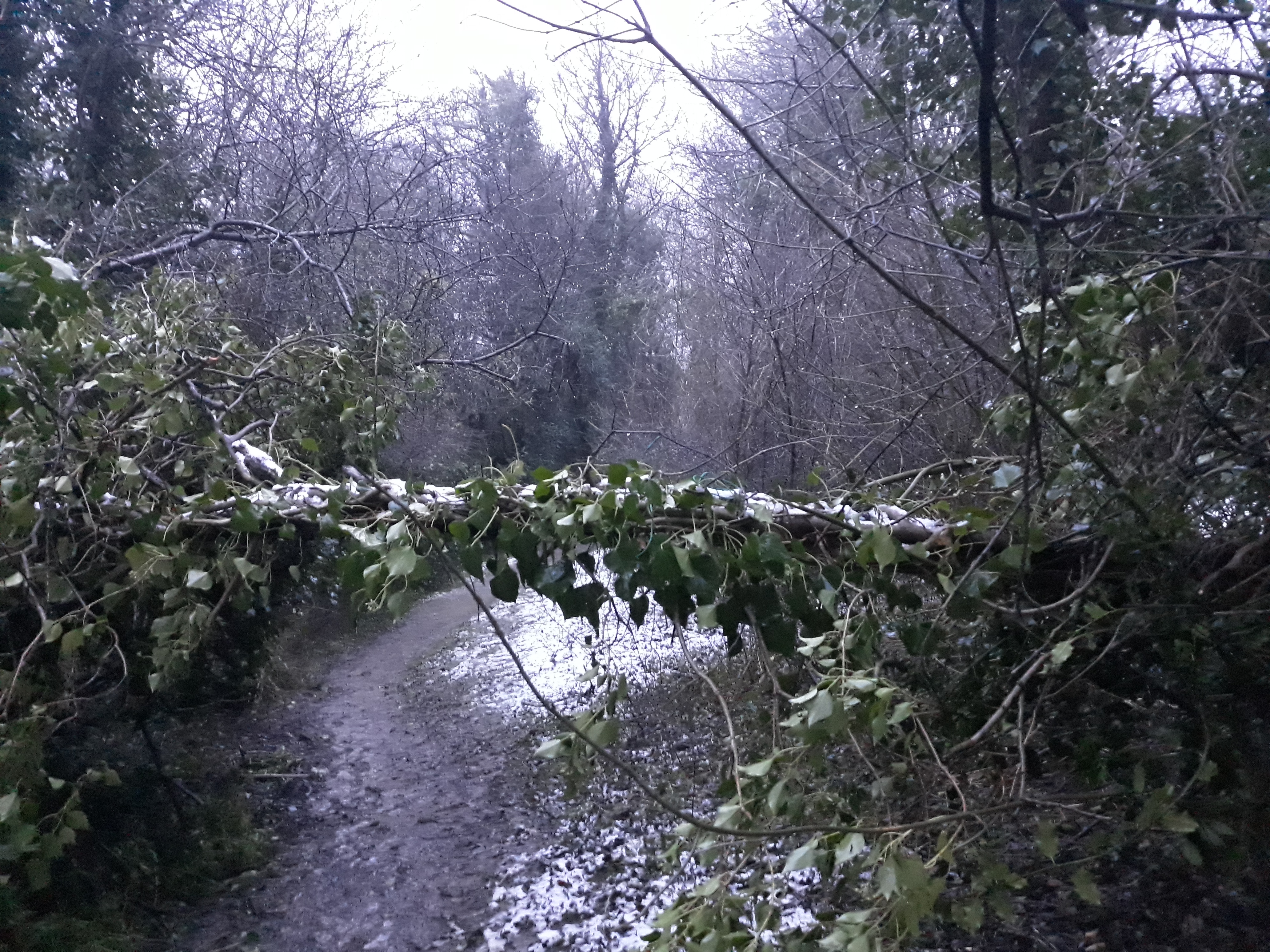
We woke to thick flakes of snow falling on Sunday morning, and a white layer soon started to cover everything.
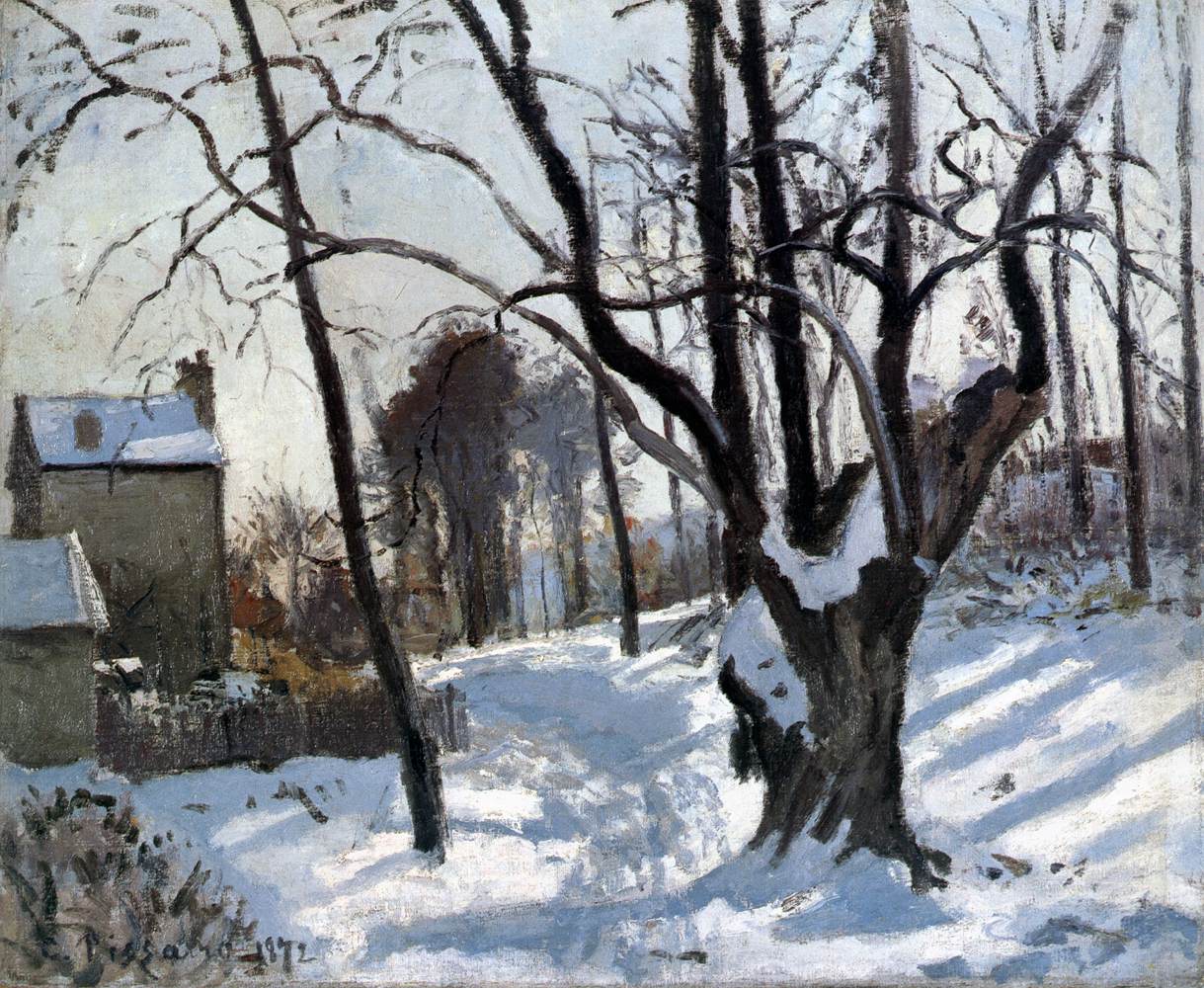
Winter Snow in Louveciennes by Camille Pissarro c. 1872
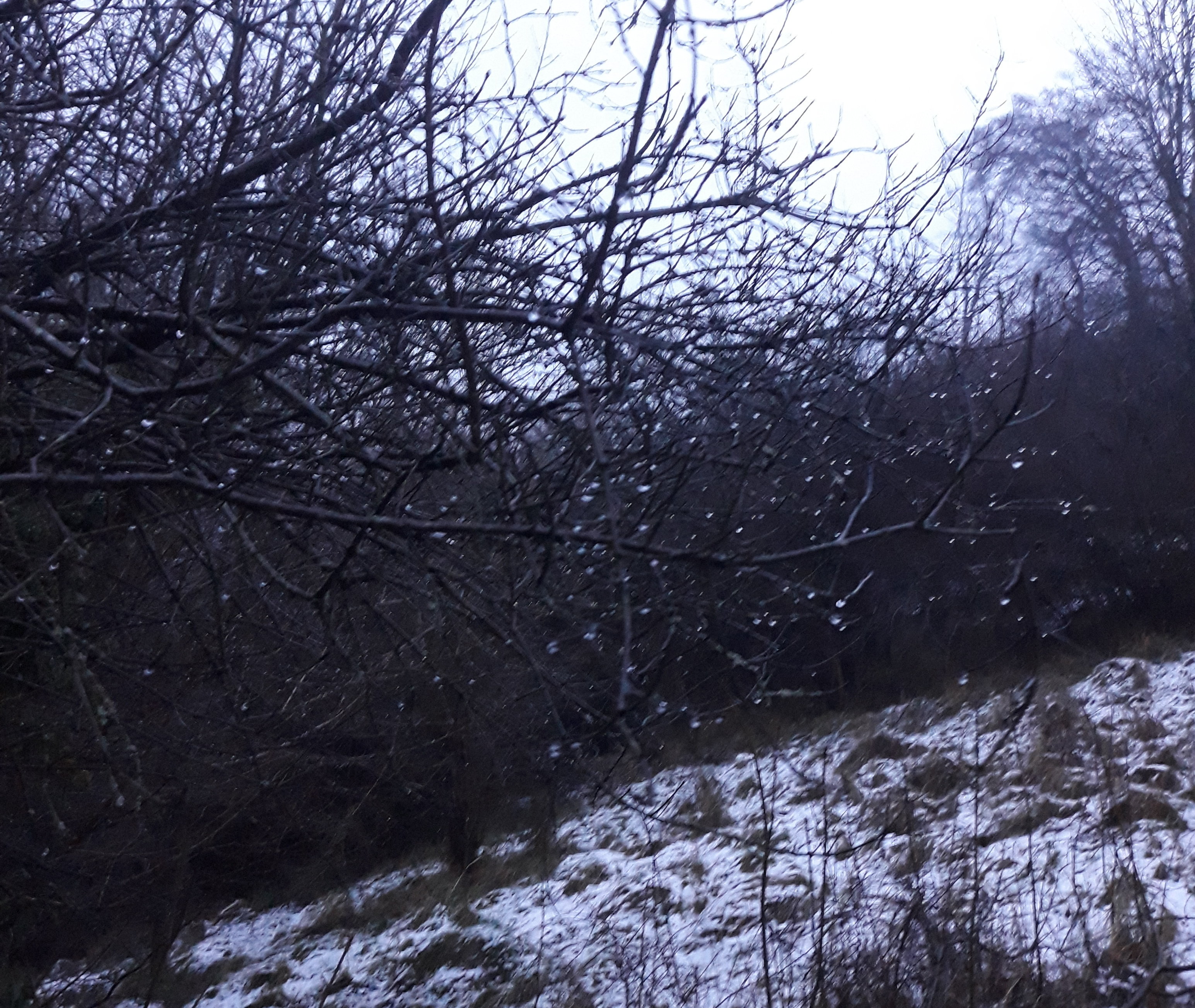
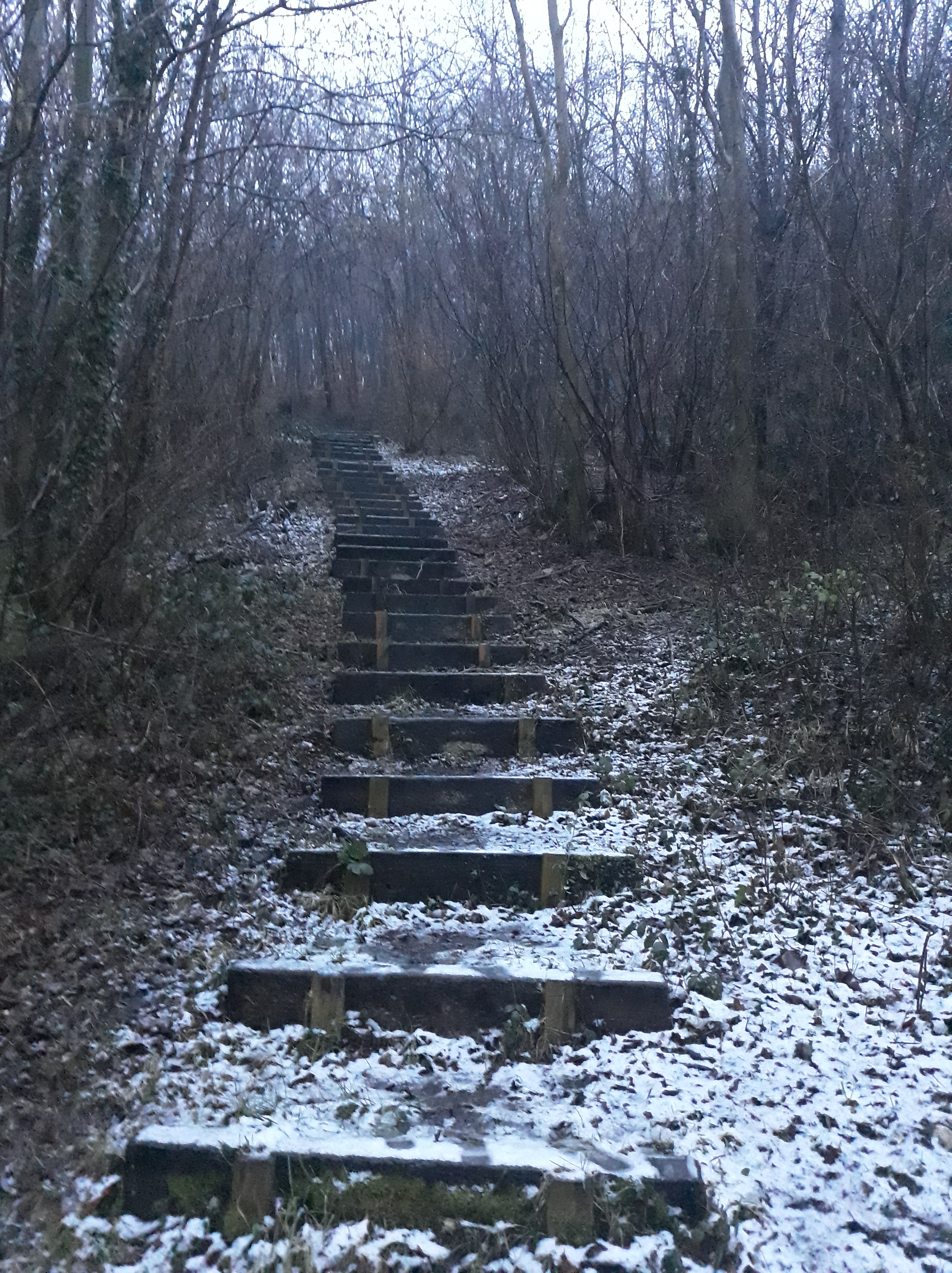
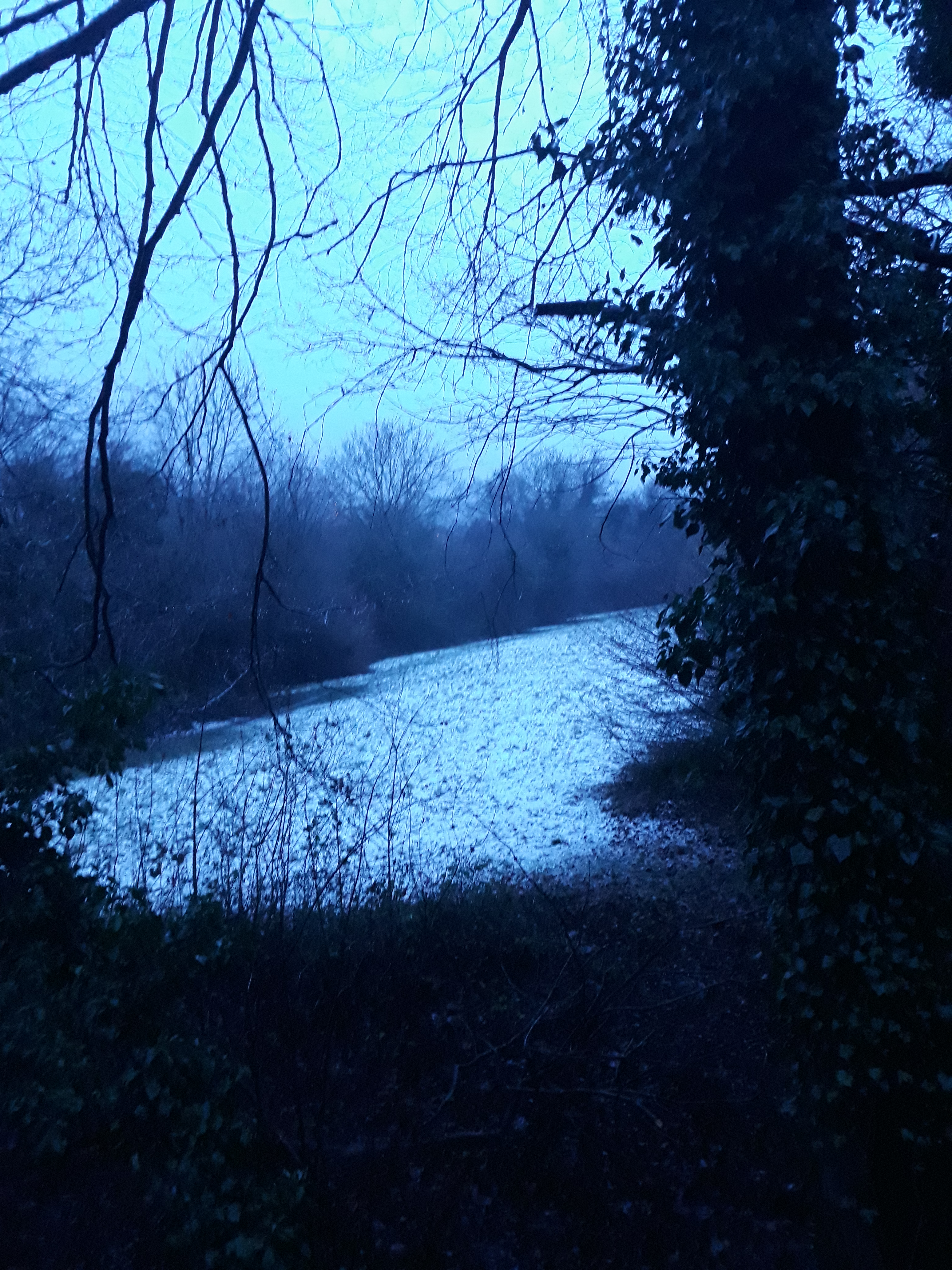
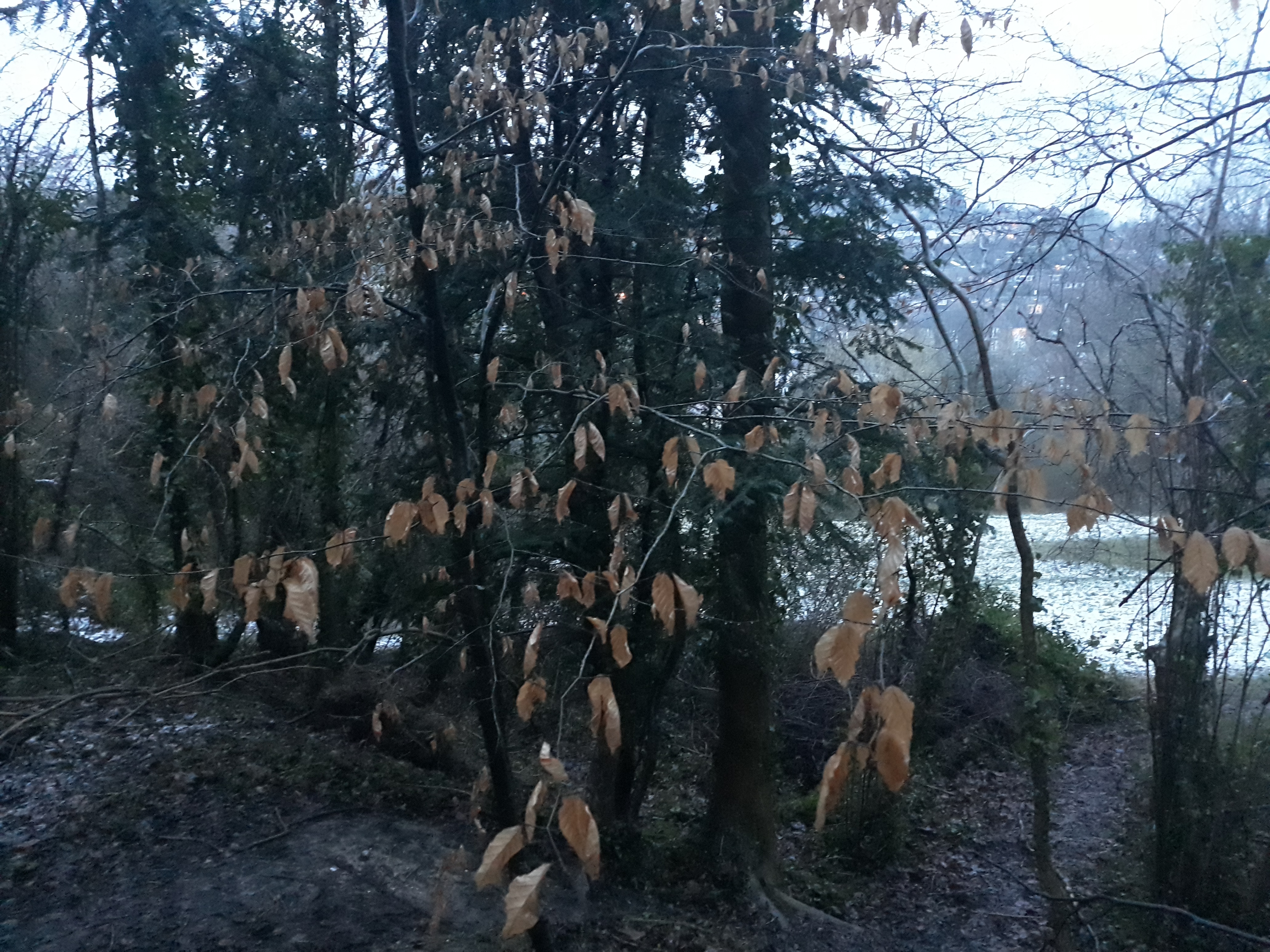
By the time I had got my act together the snow had turned to freezing rain and the dim light was fading further under a heavy blanket of cloud. Still, I felt the need to suffuse my stale blood with fresh air, clear my mind and stimulate my muscles, no matter the rather unappealing prospect the environment was making it.
It’s amazing how even on the coldest and dullest of days there is inspiration for a muse – if she looks for it.
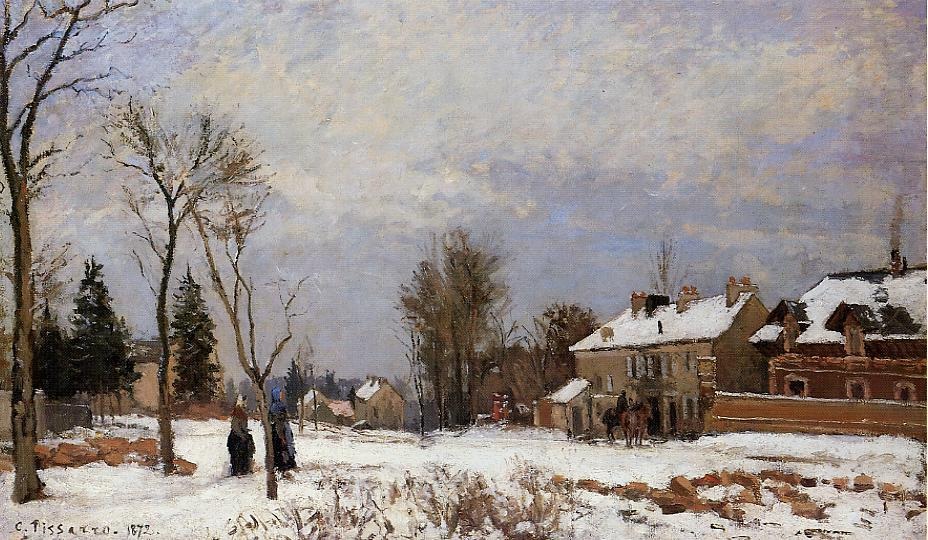
The Road From Versailles to Saint Germain by Camille Pissarro
Winter can be a tough time: reality sets in alongside the Christmas credit card bills, piling on worry with the extra woolly layers and the battling of virulent, seasonal germs, whilst rousing sluggish motivation.
Even Tchaikovsky agrees we should be warm and snug in January! Mind you, I’m sure Russian winters must be way more brutal than English ones. By the Fireside is the title of January from his 12 pieces of The Seasons, Opus 37. Richter reflects his sentiments on the ivories:
The days are short days and the nights, long. Everything seems to be focused inward.
It’s like we are curled up in a metaphorical fetal position, taking comfort from an enclosed, but secretly nourishing dark space, all growth shielded from view.
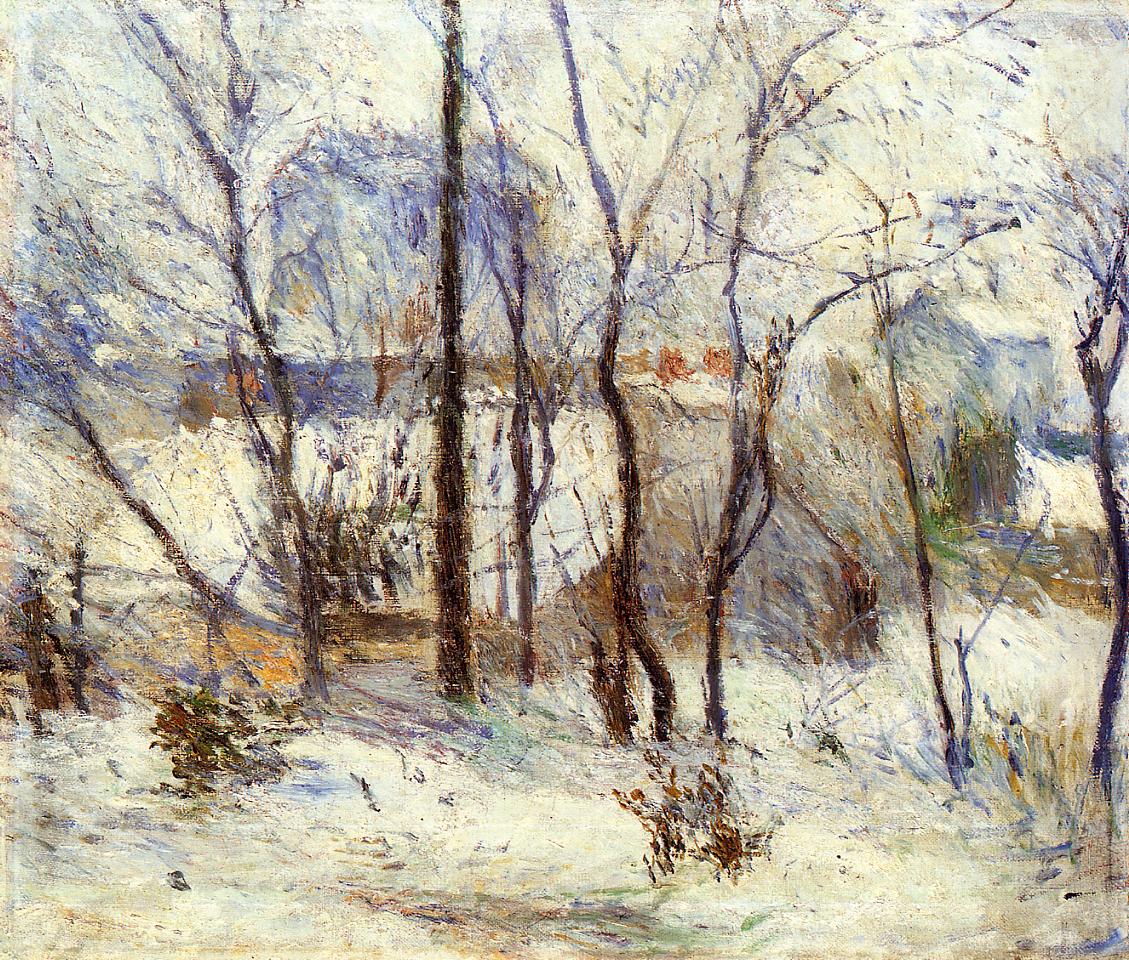
Garden Under Snow by Paul Gaugin c. 1879
We dig deep, perhaps drawing on inner reserves to see us through this forlorn time. Nature too, is hunkering down, despite her wintry displays. It seems to me that the stark scenery and empty trees are a sign of mother nature baring her soul to us, her naked branches giving us a sign that we too will flourish again.
Already I have noticed the days are drawing out in small increments.
All traces of snow were gone today. The sky was blue and the sun hovered like a low, bright disc, surely brightening all ragged spirits.
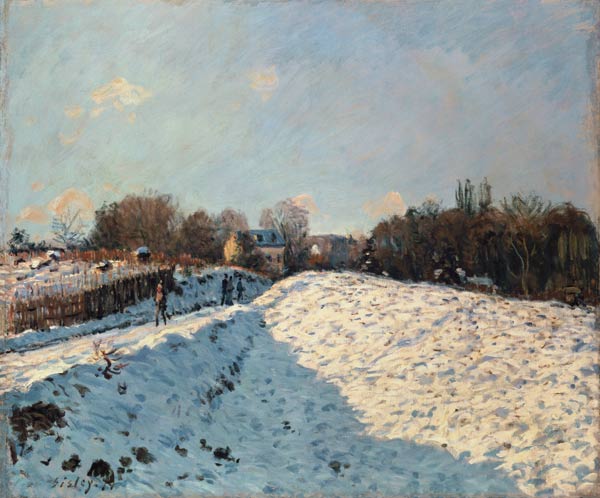
Effect of Snow at Argenteuil by Alfred Sisley
Winter certainly has its unique charms, when everything is stripped back and thrown into sharp relief, but they remain so because of their temporary time span. That is indeed, the magic of all the four seasons.
A Winter’s Walk
Trees and birds are silent while relentless rain holds court,
A rhythmic, yet random patting against my hood, hypnotising,
Lazy lungs expand with chilly, desolate air, as breath is caught
Coalescing with mist, hot and swirling: my efforts rising,
~ William Wordsworth from Lines Composed a Few Miles Above Tintern Abbey, on Revisiting the Banks of the Wye During a Tour, July 13, 1798.
Some places are sacred. Their energy flows through you and fills you with a tangible connection to the past, a gratitude for the present, and a hope for the future.
Tintern Abbey in the Welsh Wye Valley is one of those places.
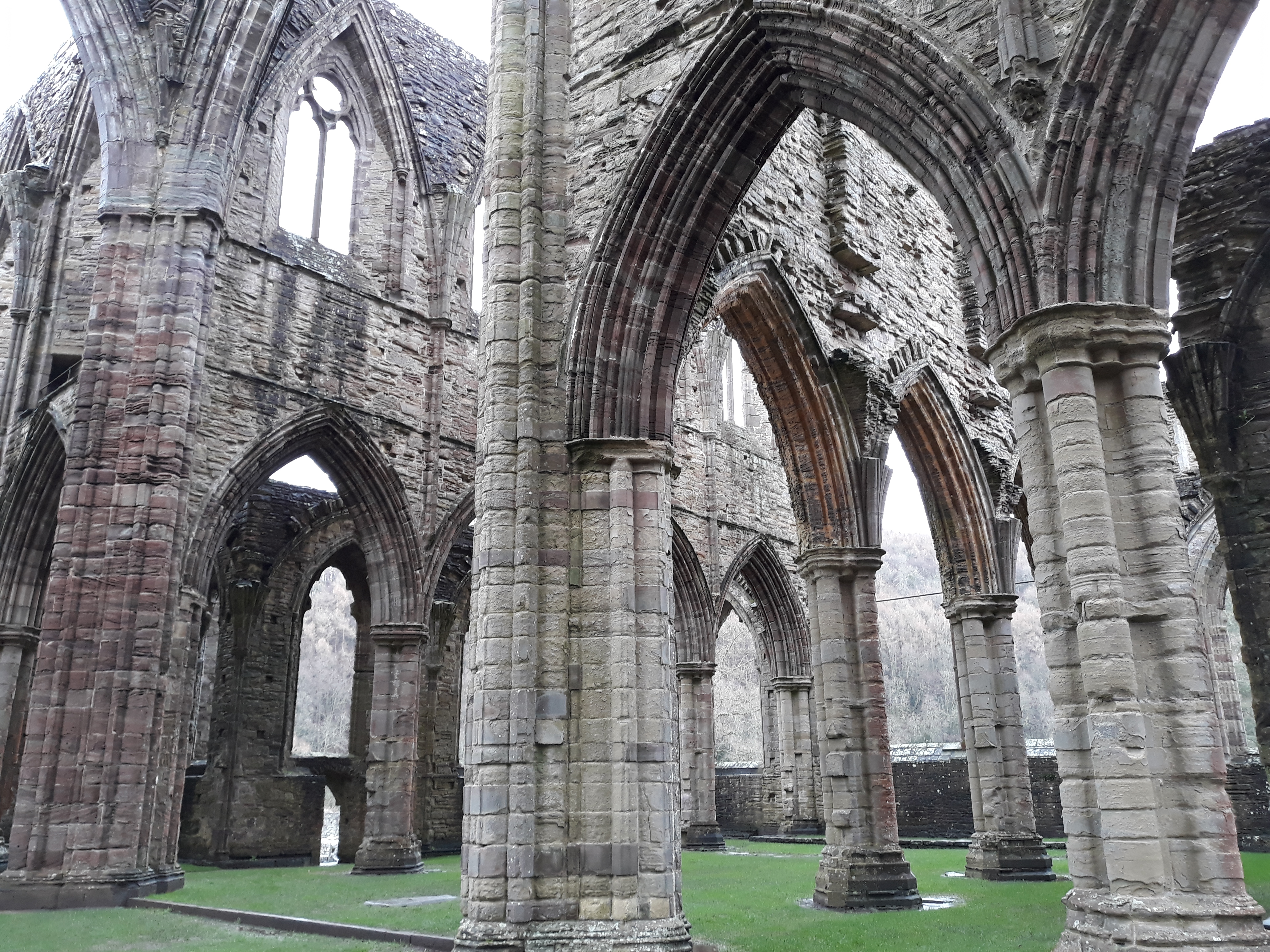
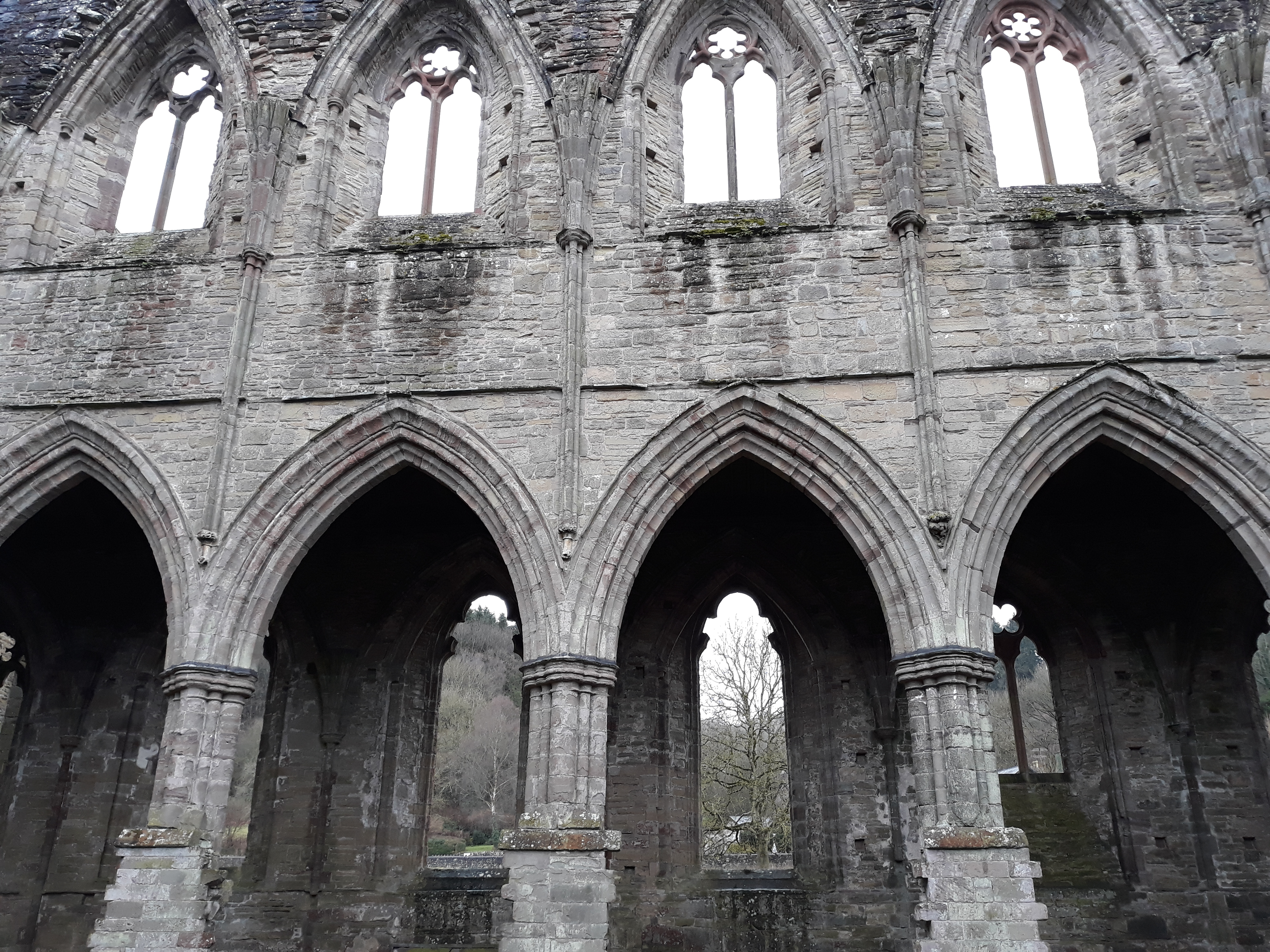
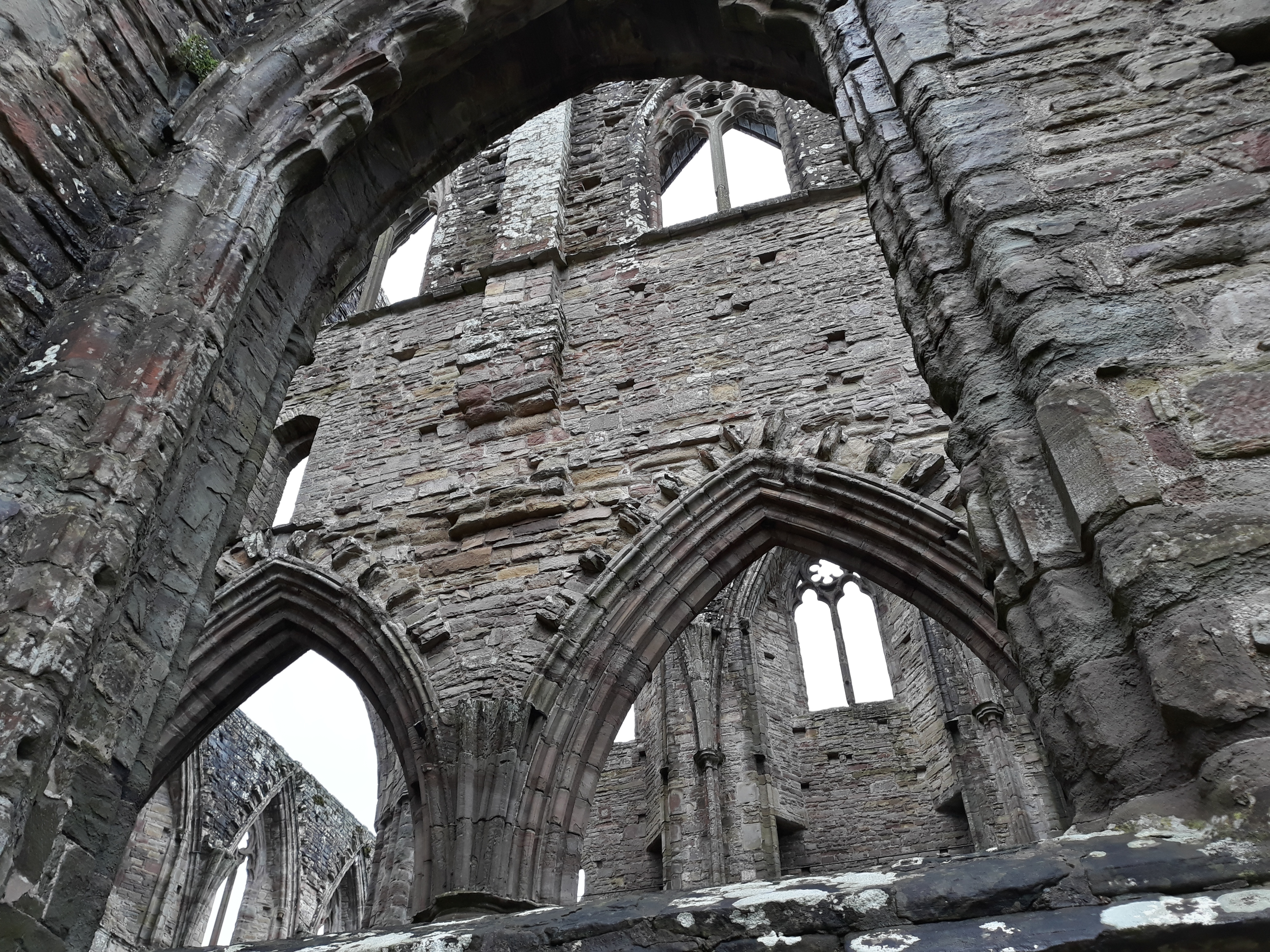
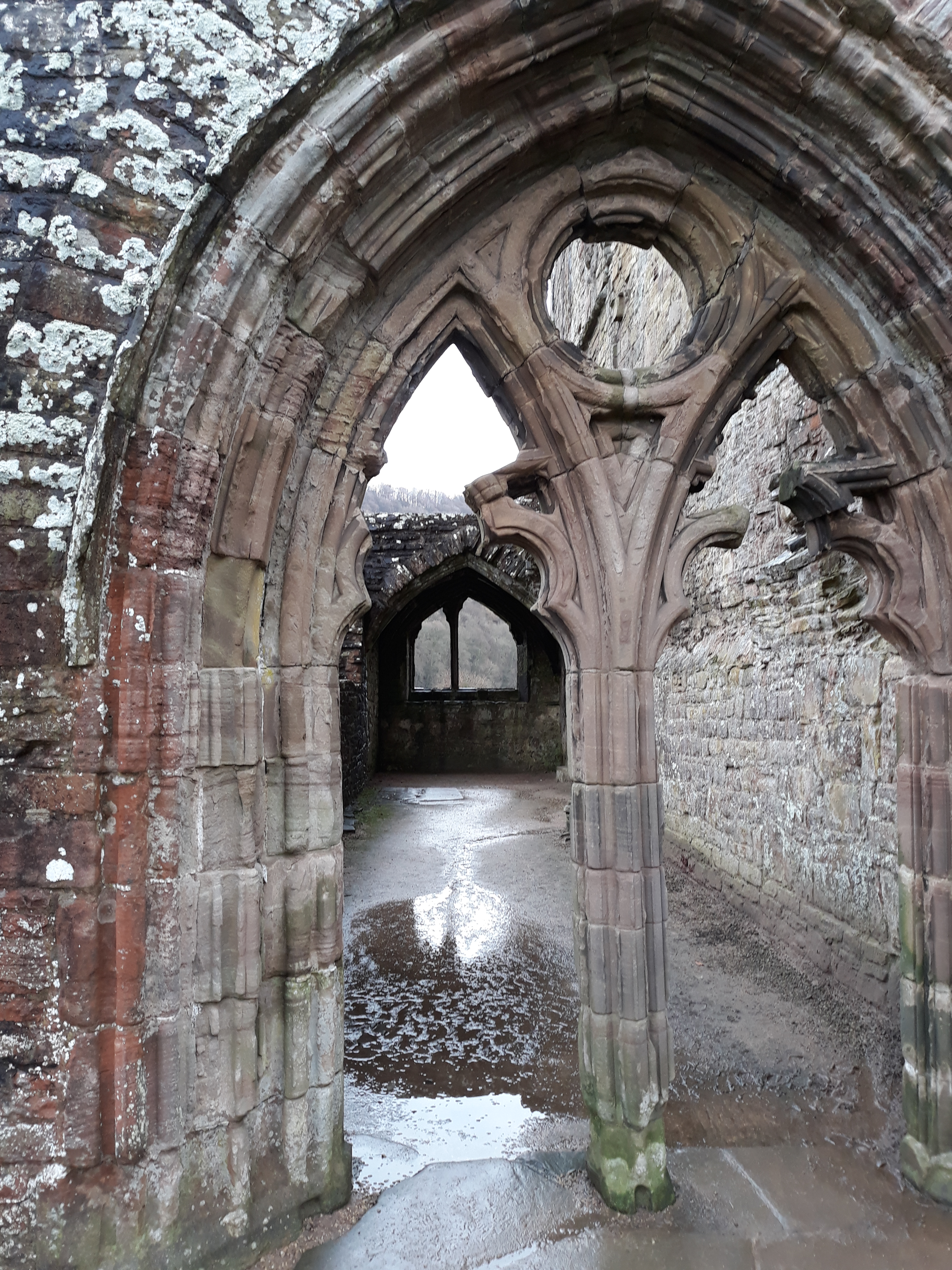
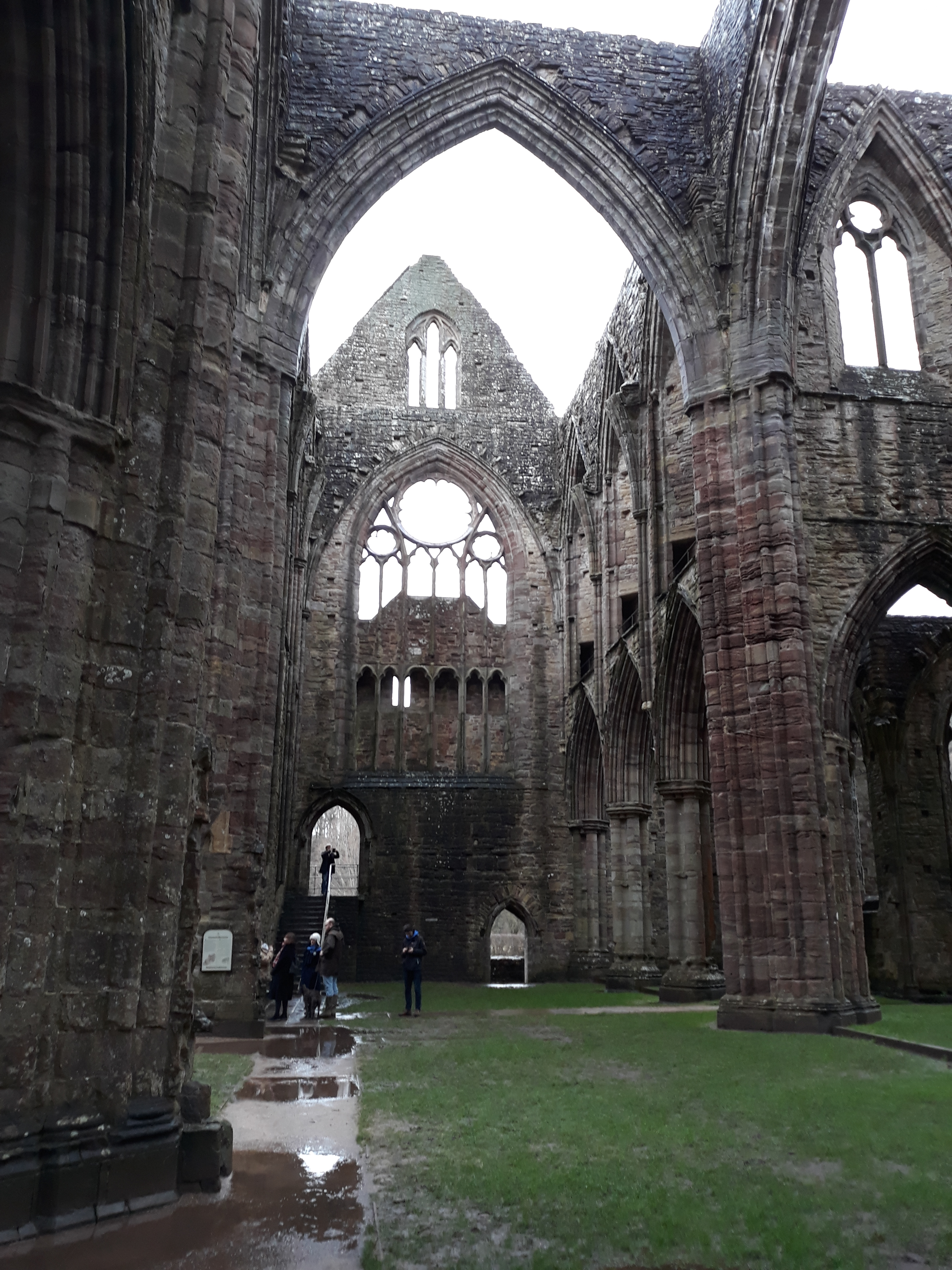
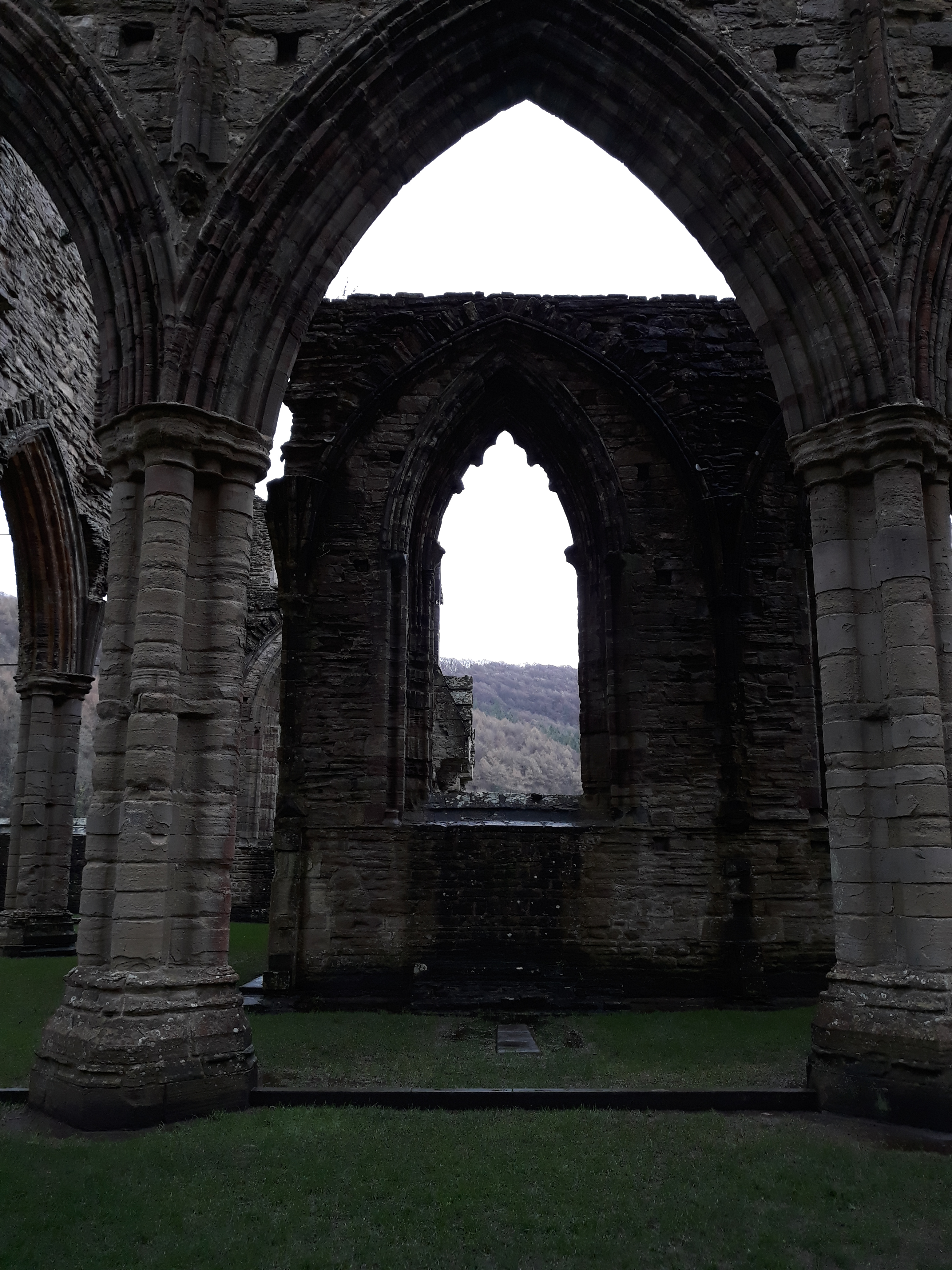
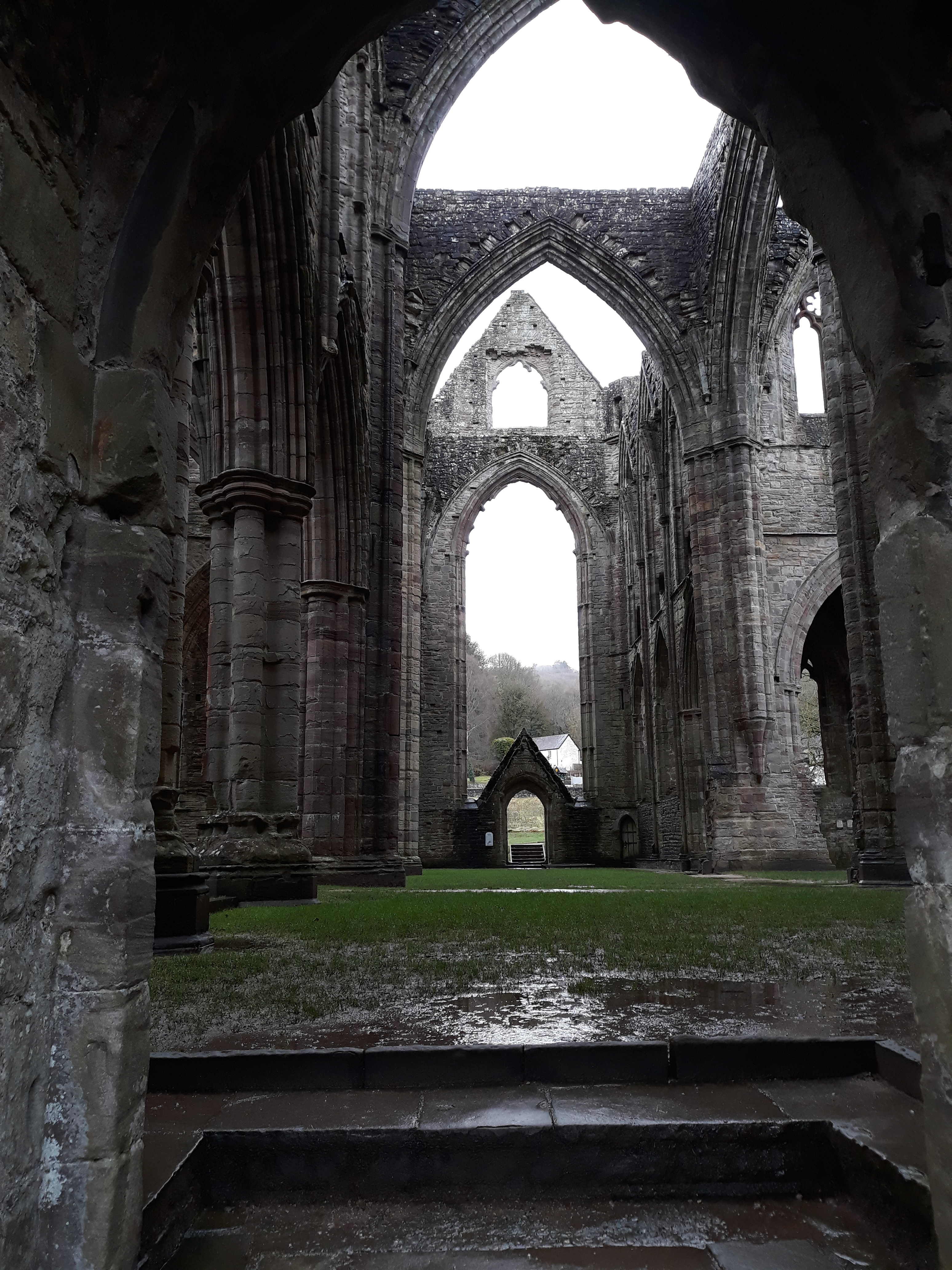
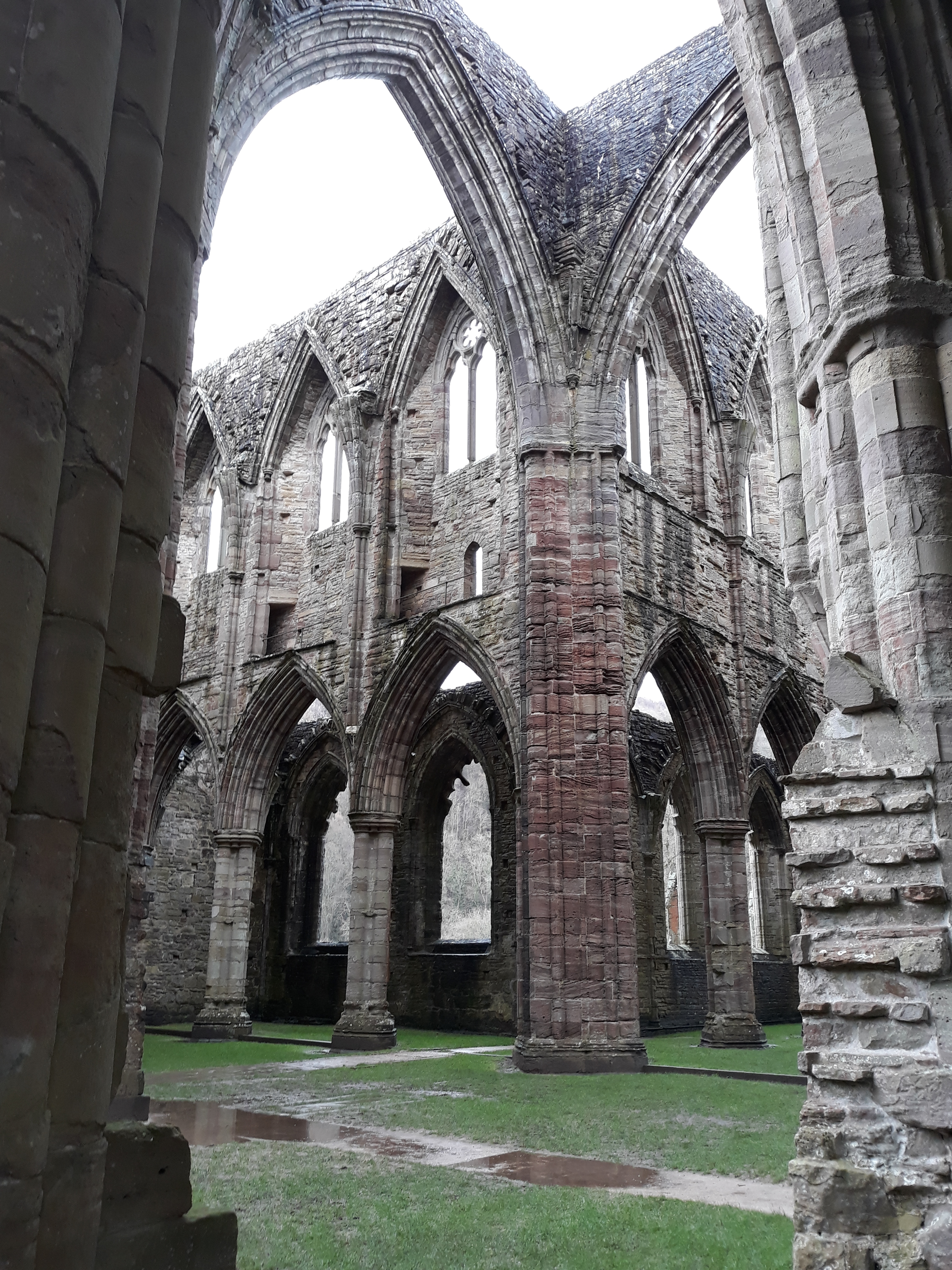
Arches in the north-east corner
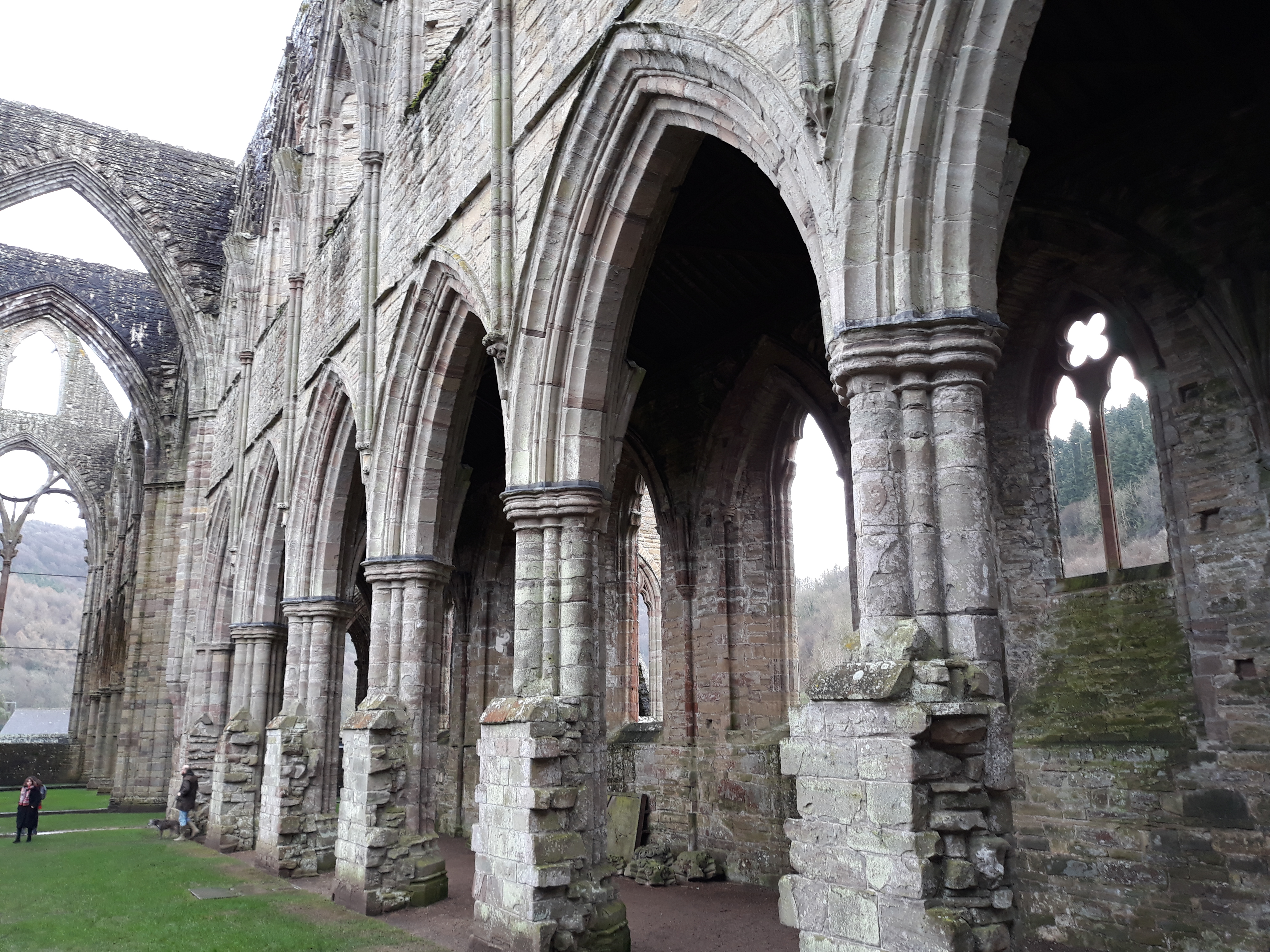
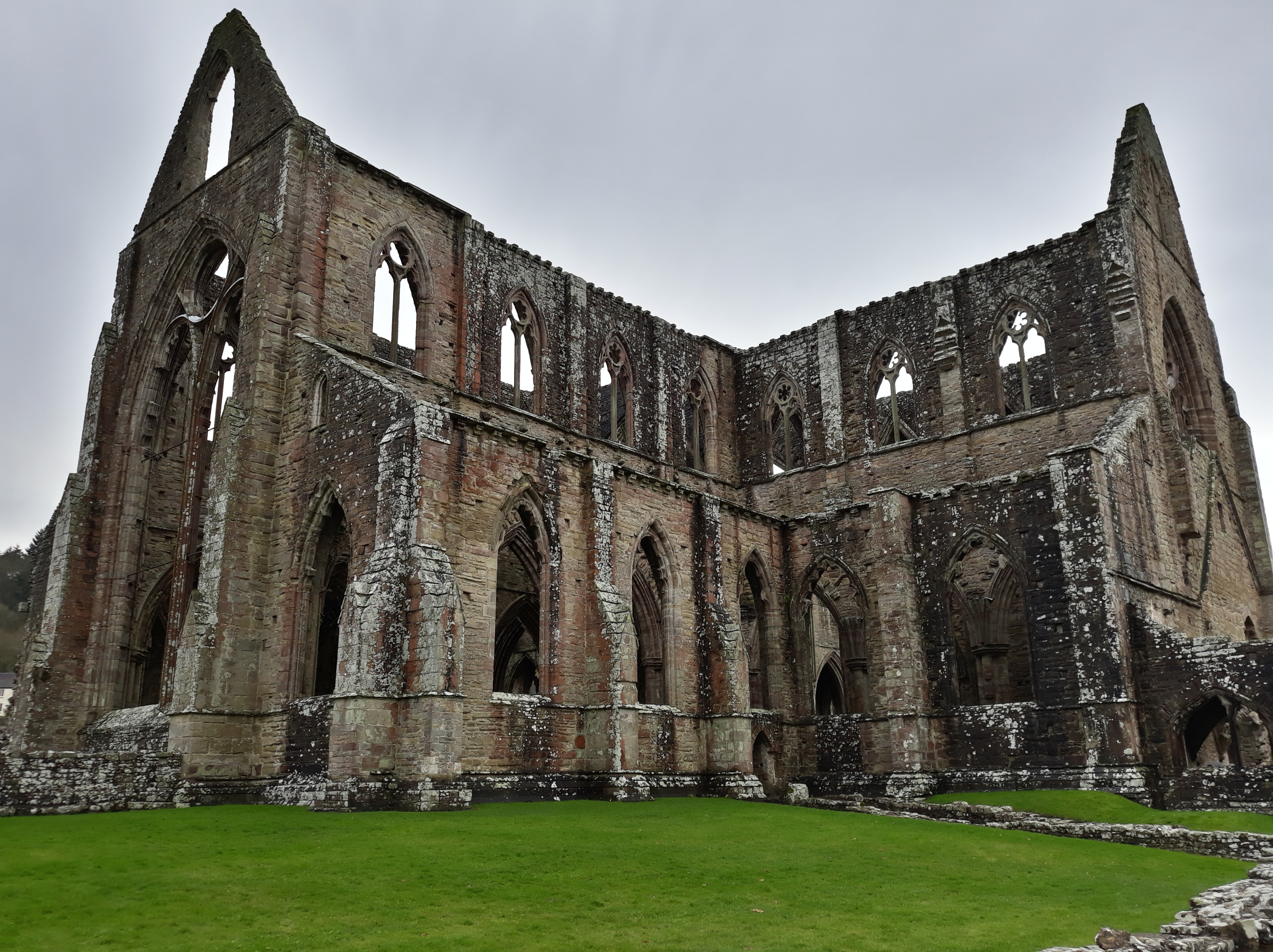
Arches along the south-west transept
It’s customary to map out your goals and plans for the year ahead in January, something I advocate and do myself; but I also think it’s also good to spend some time in contemplation, and to glance back at the positives and negatives of the previous year, especially to share and savour that which nourished your soul.
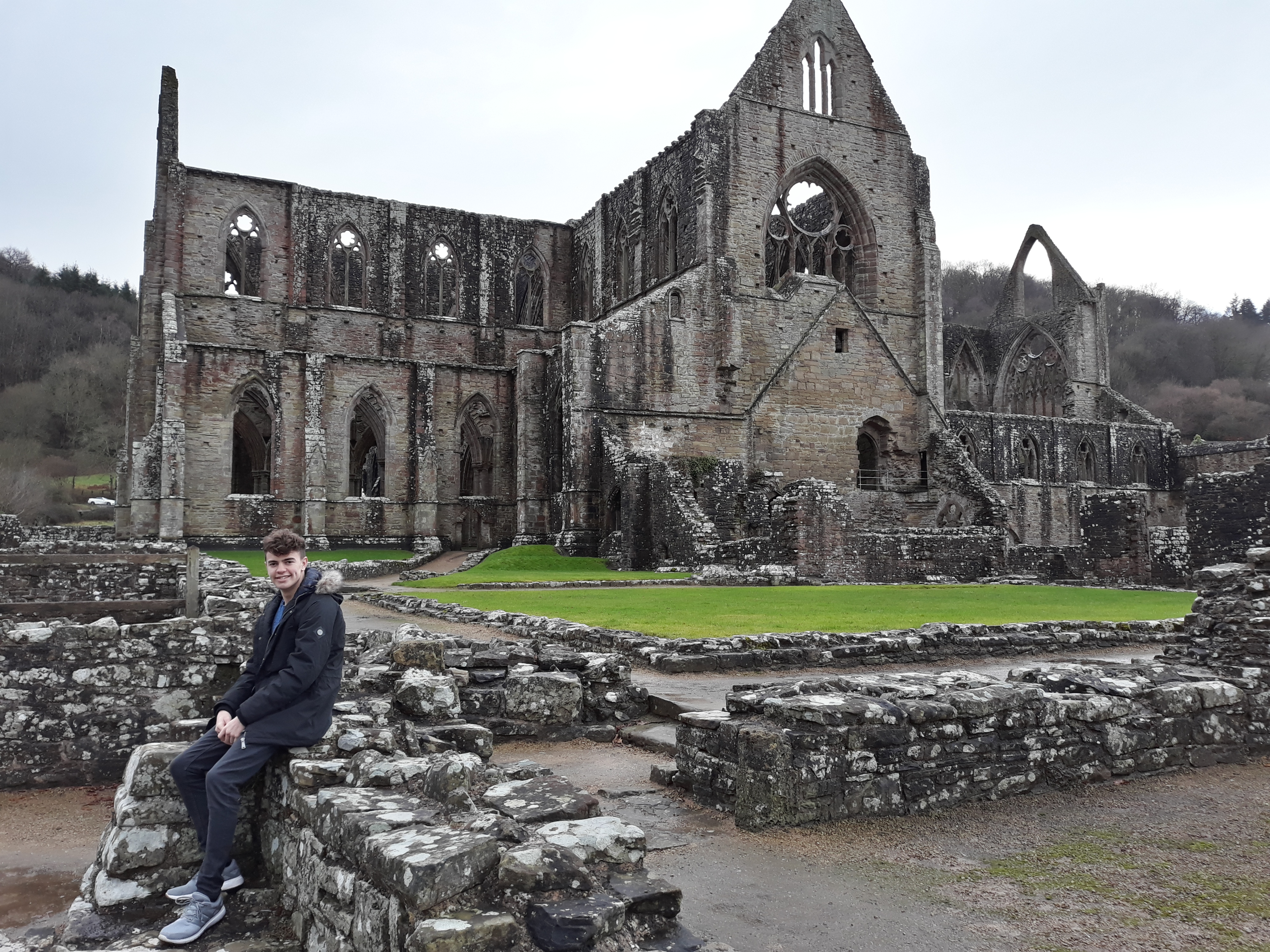
The timeless tranquility of Tintern Abbey filled me with wonder during our family visit on new year’s eve.
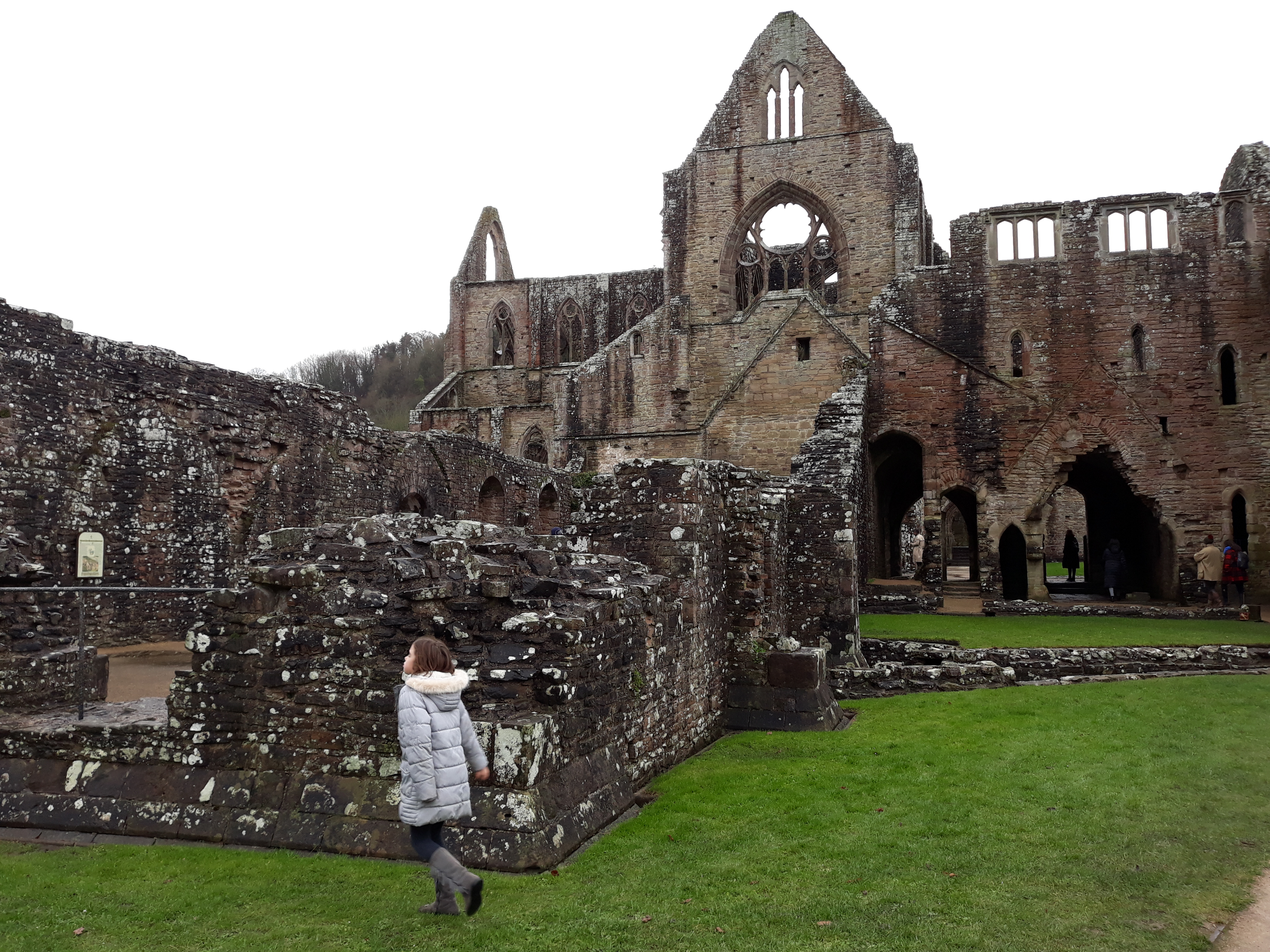
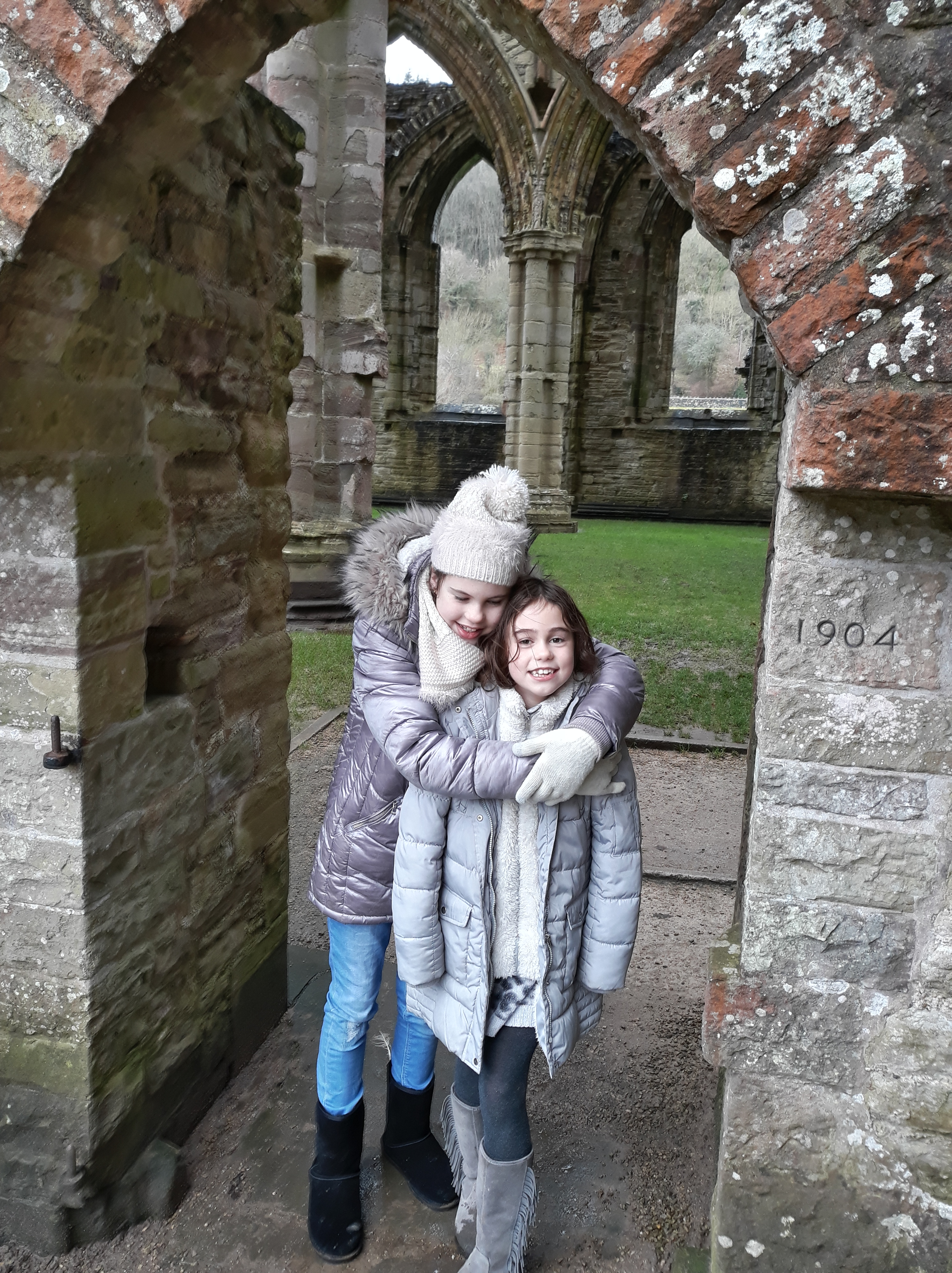
My youngest exploring
After a scenic drive through the Forest of Dean my children were keen to stretch their legs and explore. A heavy rain storm ceased abruptly before we parked, and the sky began to brighten auspiciously for our visit. Equipped with a poor choice of footwear for the muddy and quagmire like ground, we gradually lost ourselves among its crumbling and ascending ruins.
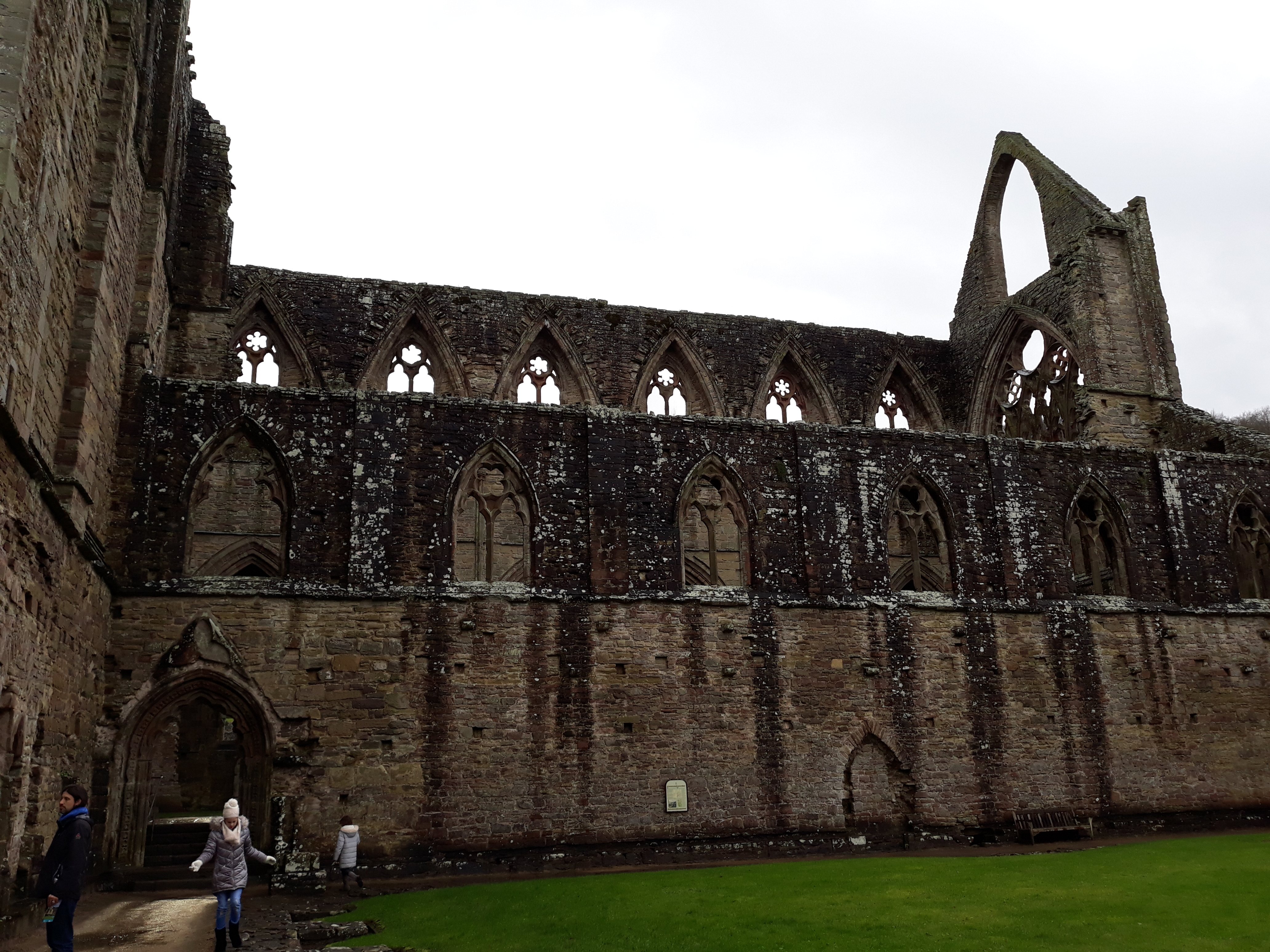
Tintern’s mottled, lichen covered, Old Red Sandstone walls, and lofty symmetrical arches, have housed and presided over numerous beings that lived simply and stoically throughout four centuries of tumultuous history.
There is a sense of nobility and majesty in the fresh air that pervades its spectacular, ruinous spaces.
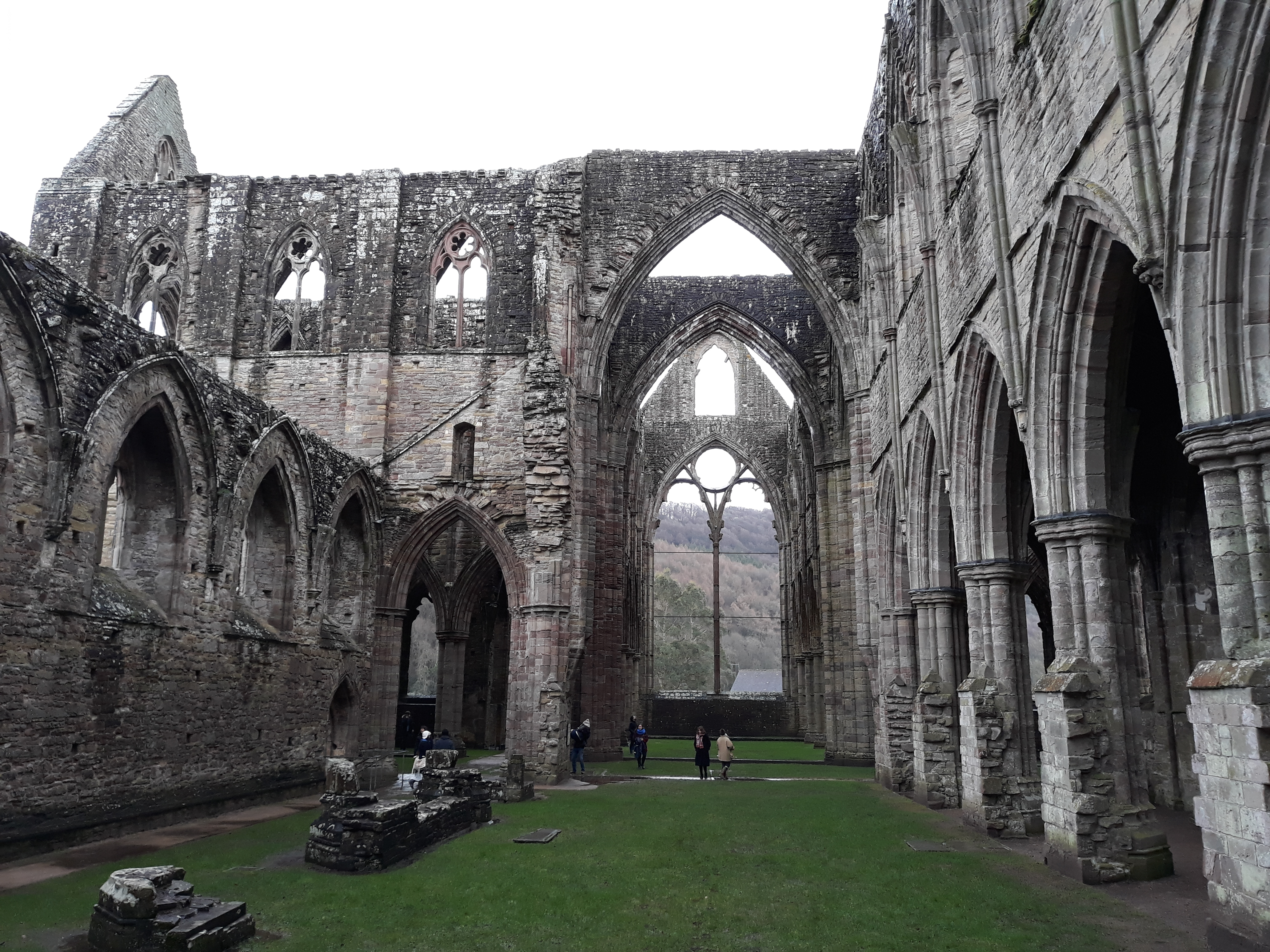
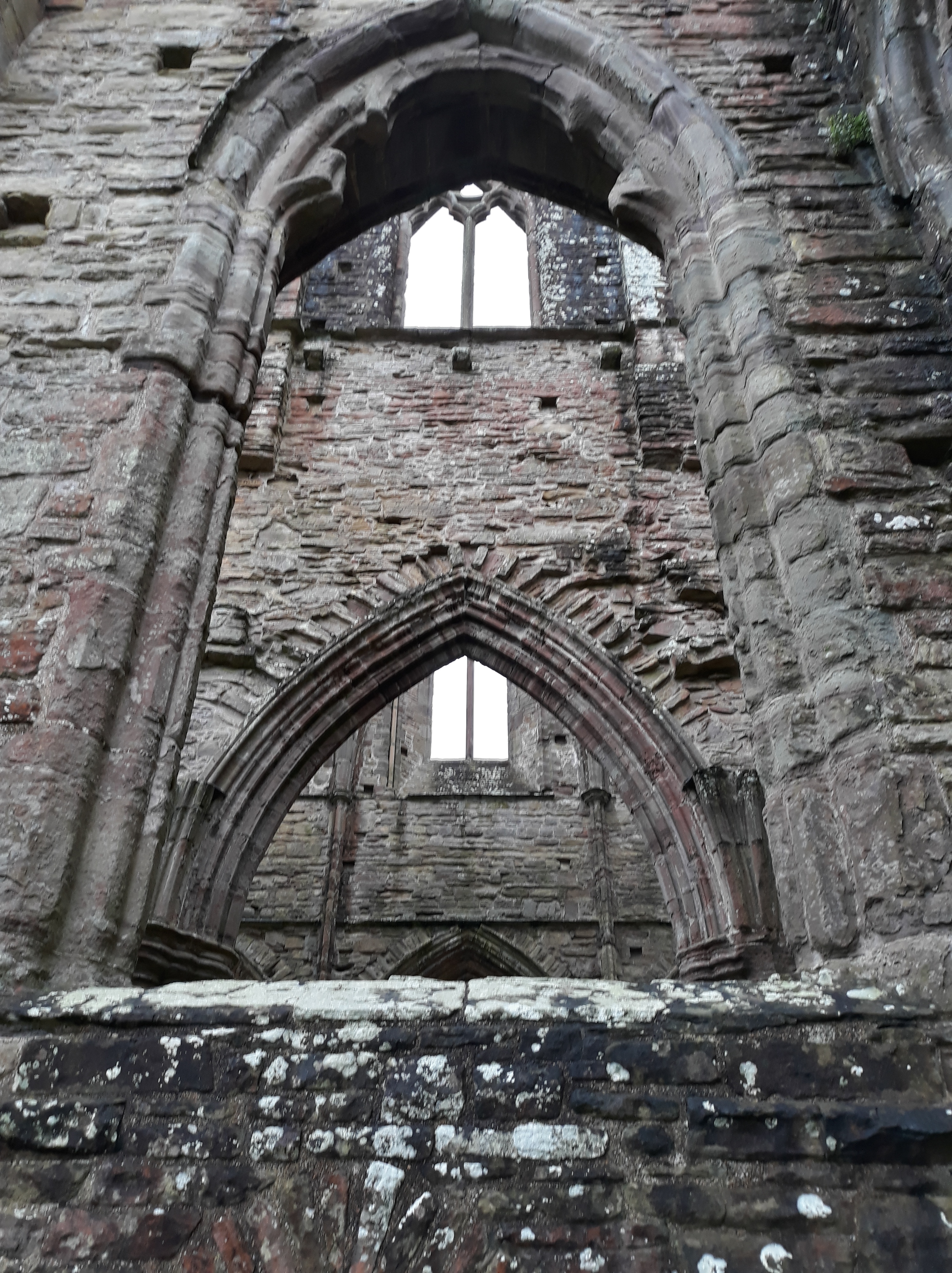
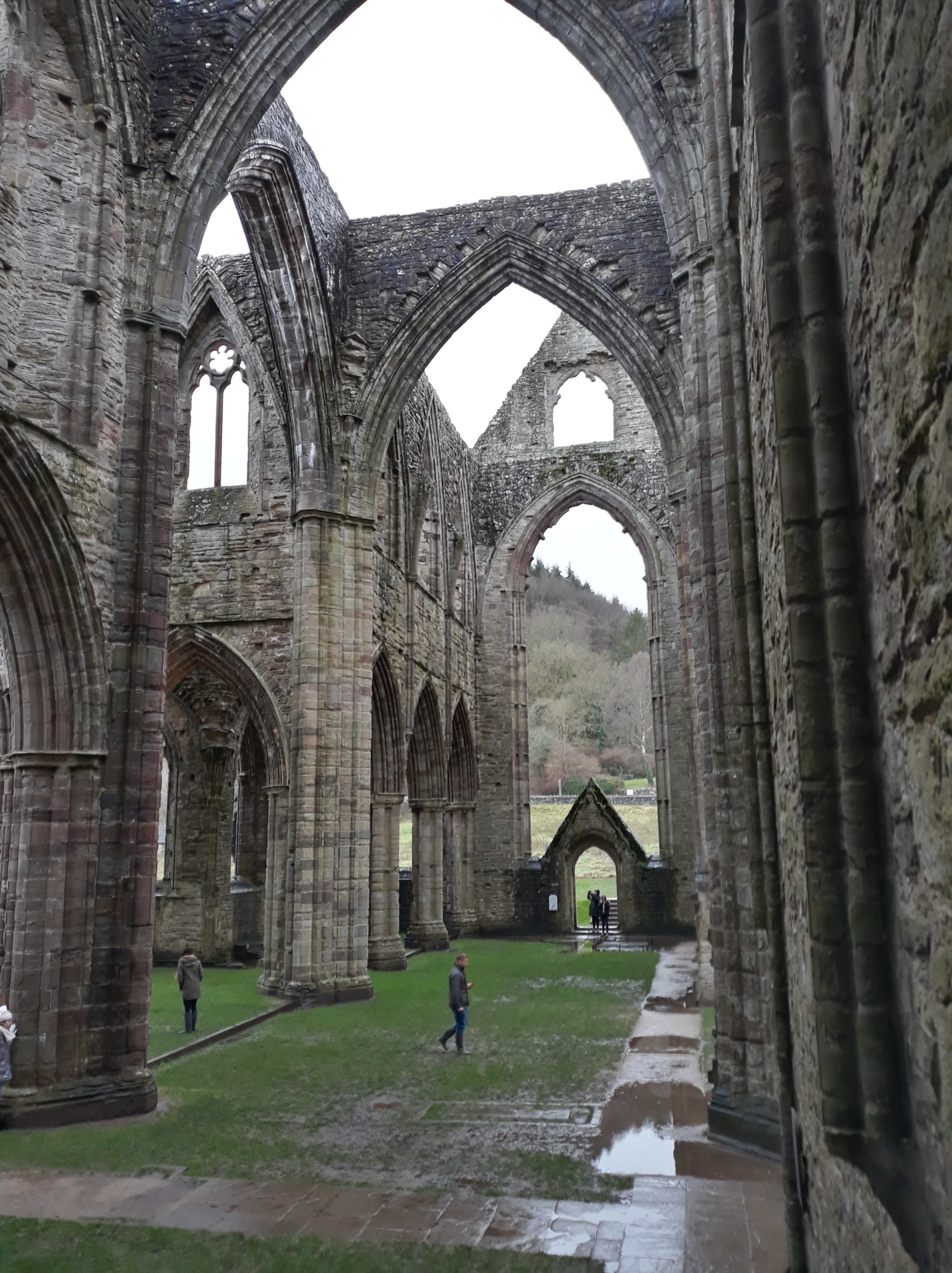
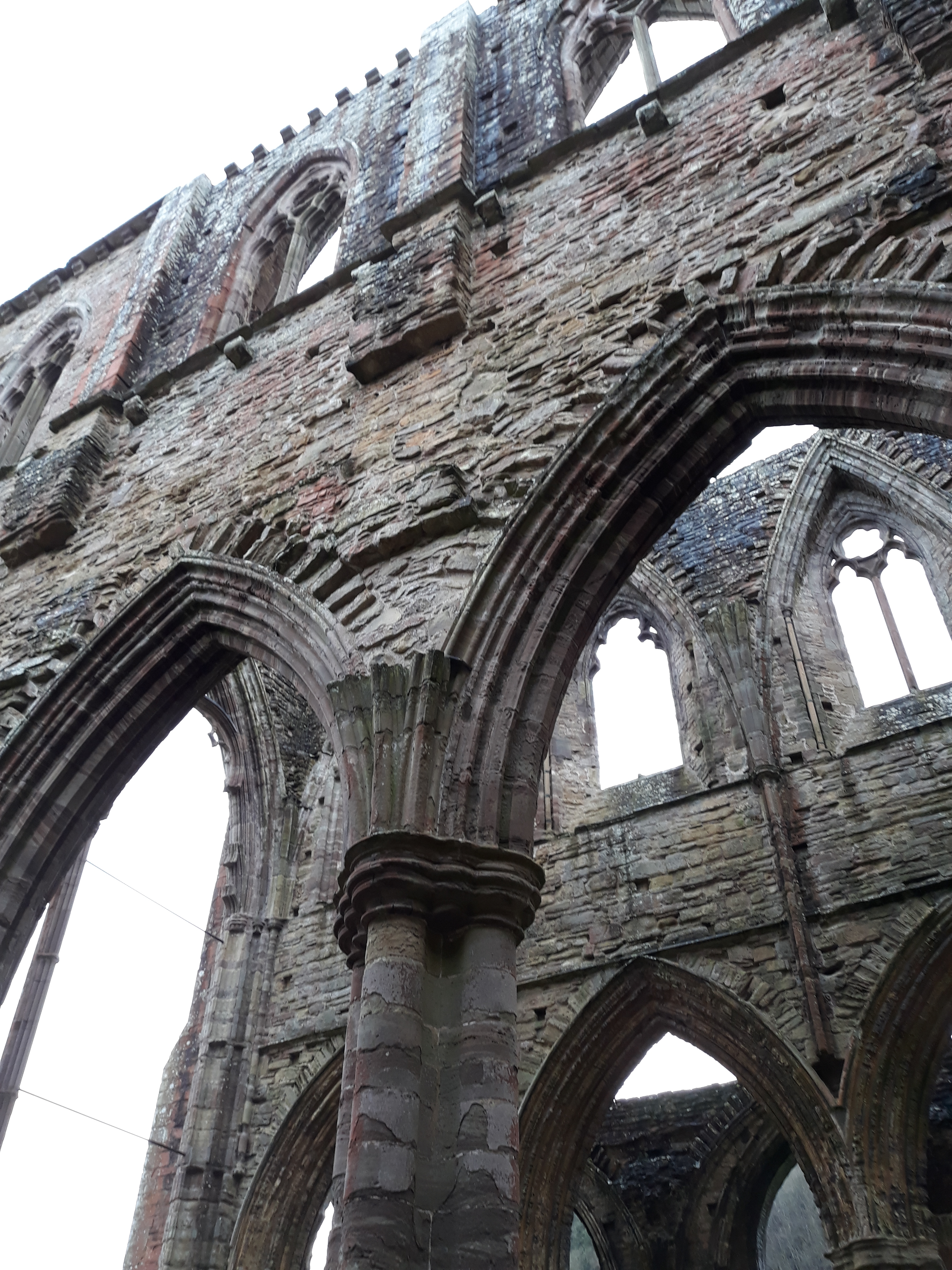
High walls and arches…
Our eyes roamed over the soaring remains of this 12th century Cistercian settlement, still standing resplendent inside a sweeping bend of the ancient River Wye, which weaves and curves like a silvery snake through the heavily wooded Wye Valley.
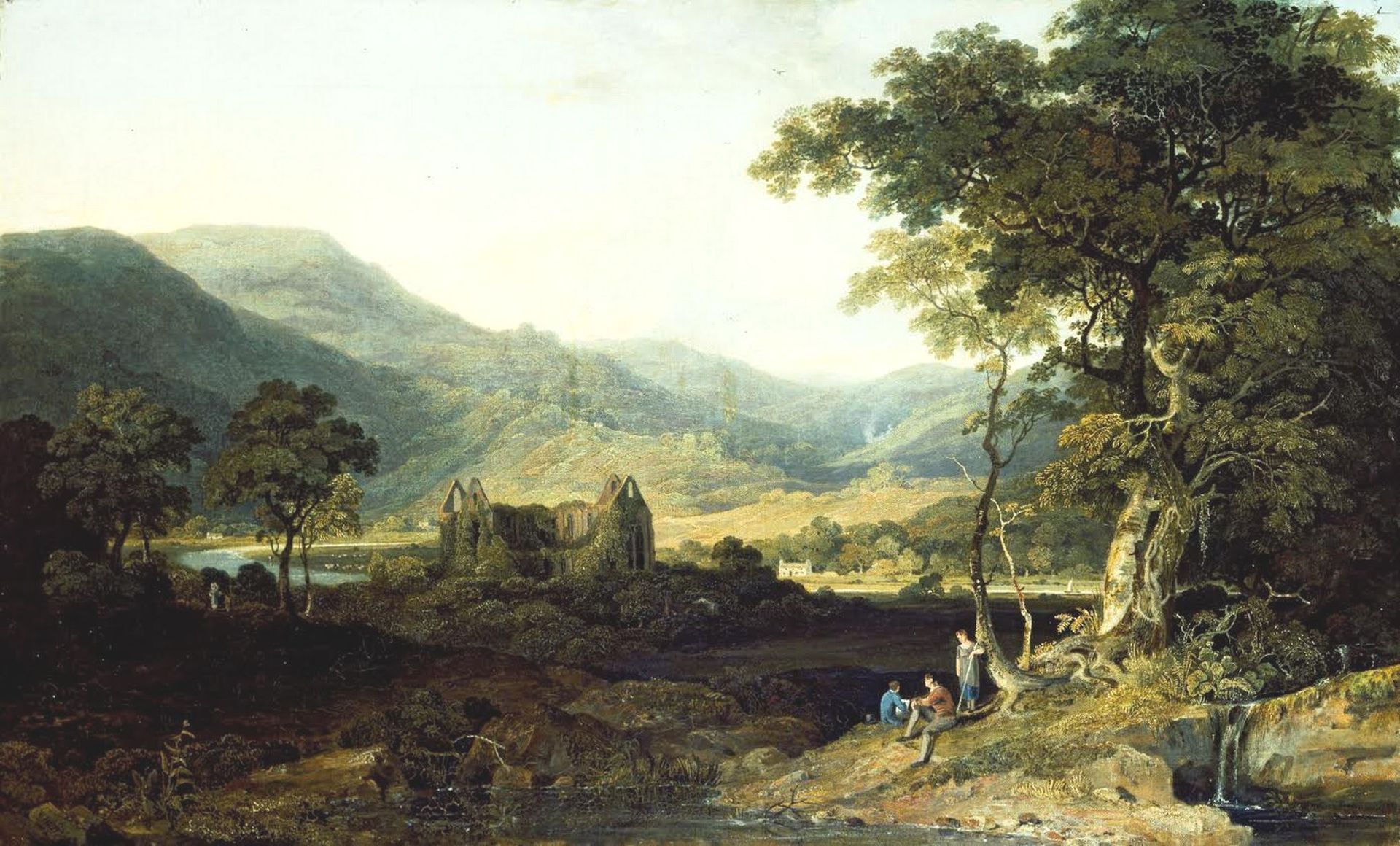
Tintern Abbey by Benjamin Williams Leader
Remote, often shrouded in mist, you soon get a feeling of reverence for the architectural brilliance that has defied the elements for over 700 years. It’s not just the complexity and beauty of the buildings either, the surroundings are peaceful, pristine and primal.
The early Cistercian monks could not have chosen a more picturesque and serene setting for their new home…
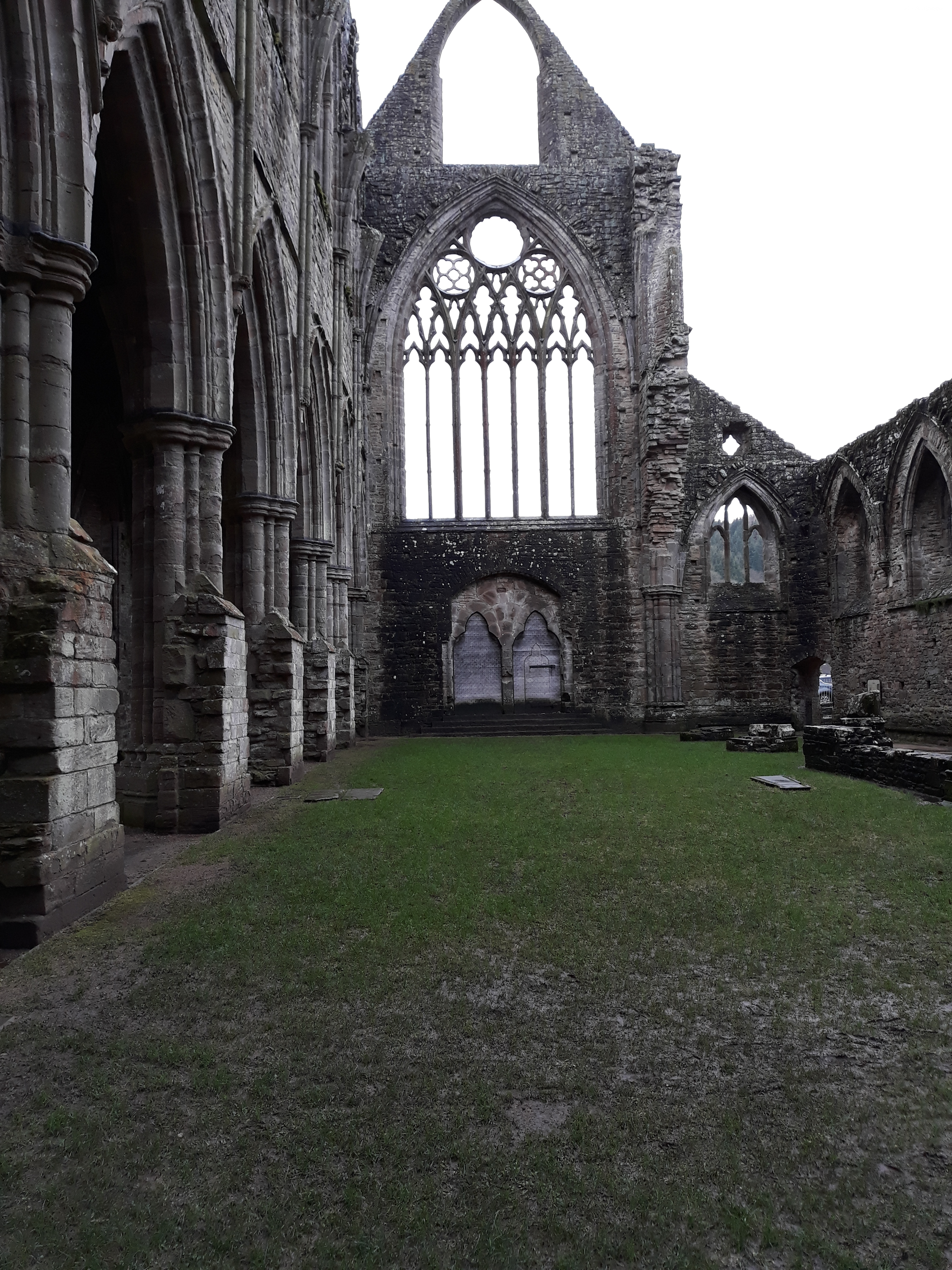
View towards East window and transept
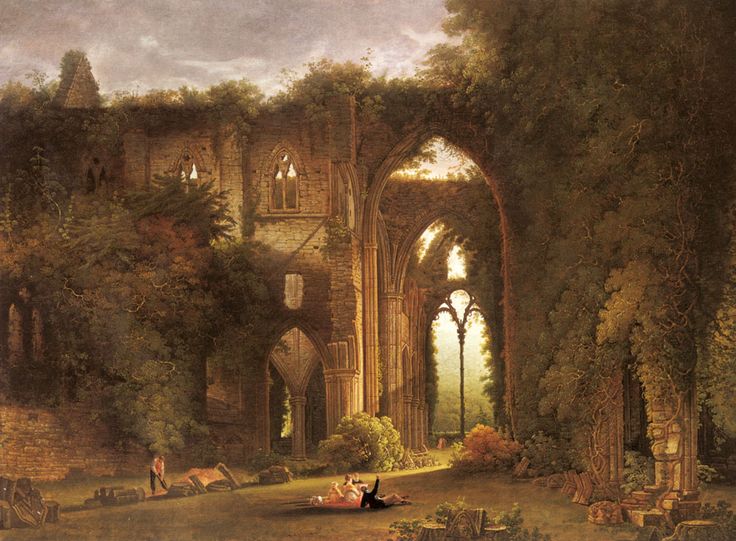
Sketching the Ruins of Tintern Abbey by Samuel Colman (1780 – 1845)
Any place that has been built for the purpose of devotion and worship of the divine creator carries a pure energy, a high vibration I can only describe as a sort of ‘healing’ vibe.
Even the children were in awe at its impressive design, scale and sheer longevity…
Alignment and height
As I walked from west to east along the water logged great church I could imagine the ghostly chanting of the choir, devout voices floating ever upwards…
A major turning point for Tintern Abbey came when King Henry VIII ordered the dissolution of the monasteries in England and Wales (for both financial and religious reasons), after he broke with the Catholic Church in Rome.
Book repositry and Sacristy
Abbot Richard Wyche and his 12 remaining monks surrendered their dwelling to the king’s men on 3rd September 1536; the defining historical moment of its decline.
Tintern’s lead roofs were removed and sold, and the buildings systematically stripped of all valuable material.
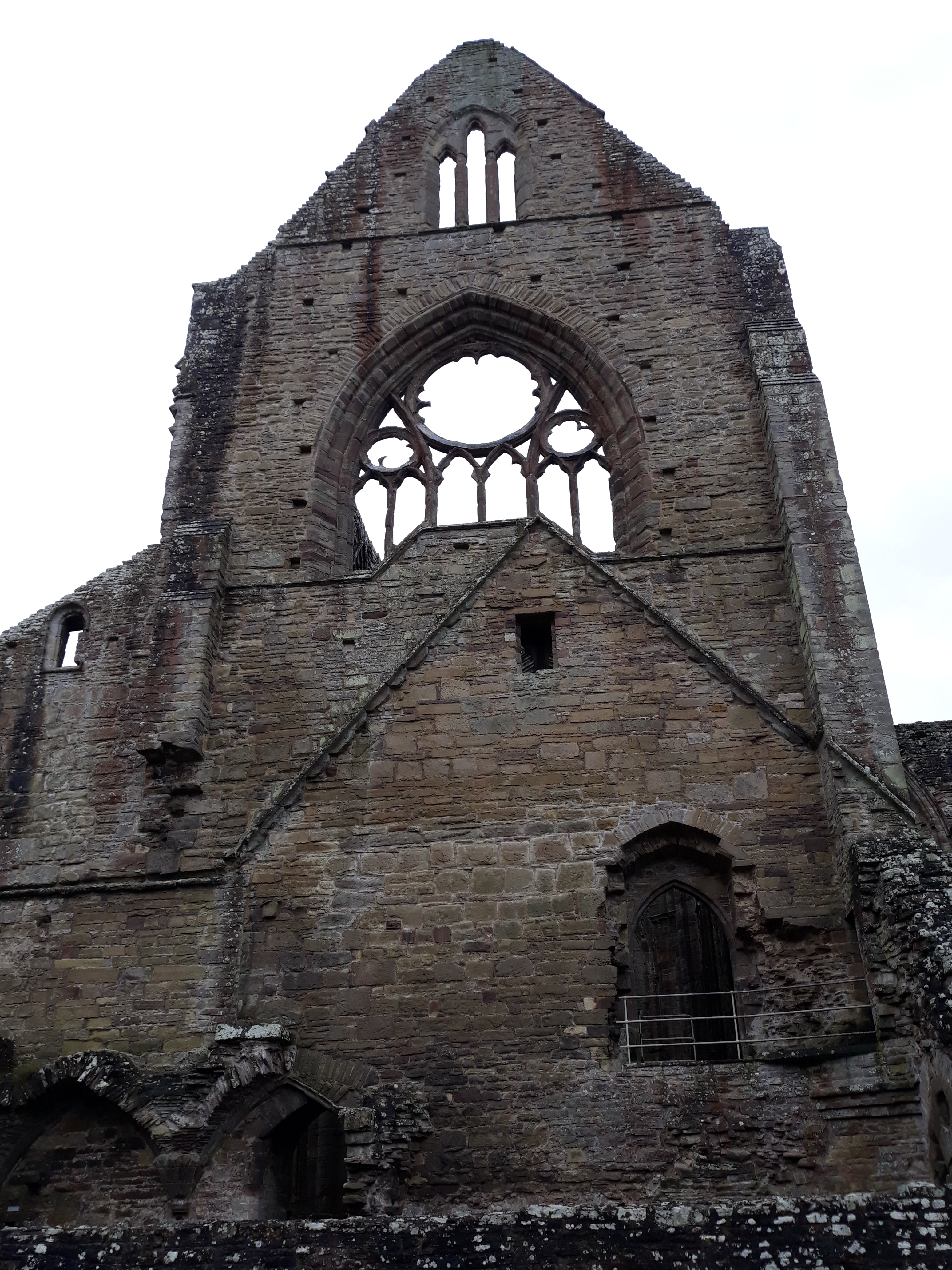
Outside the North window
After 400 years of continuous habitation on the site by Cistercian monks, and with their peaceful home plundered – Tintern Abbey was finally abandoned. Without the attention of its dedicated inhabitants and open to the onslaught of the welsh weather, it fell into disrepair and neglect.
West window and transept
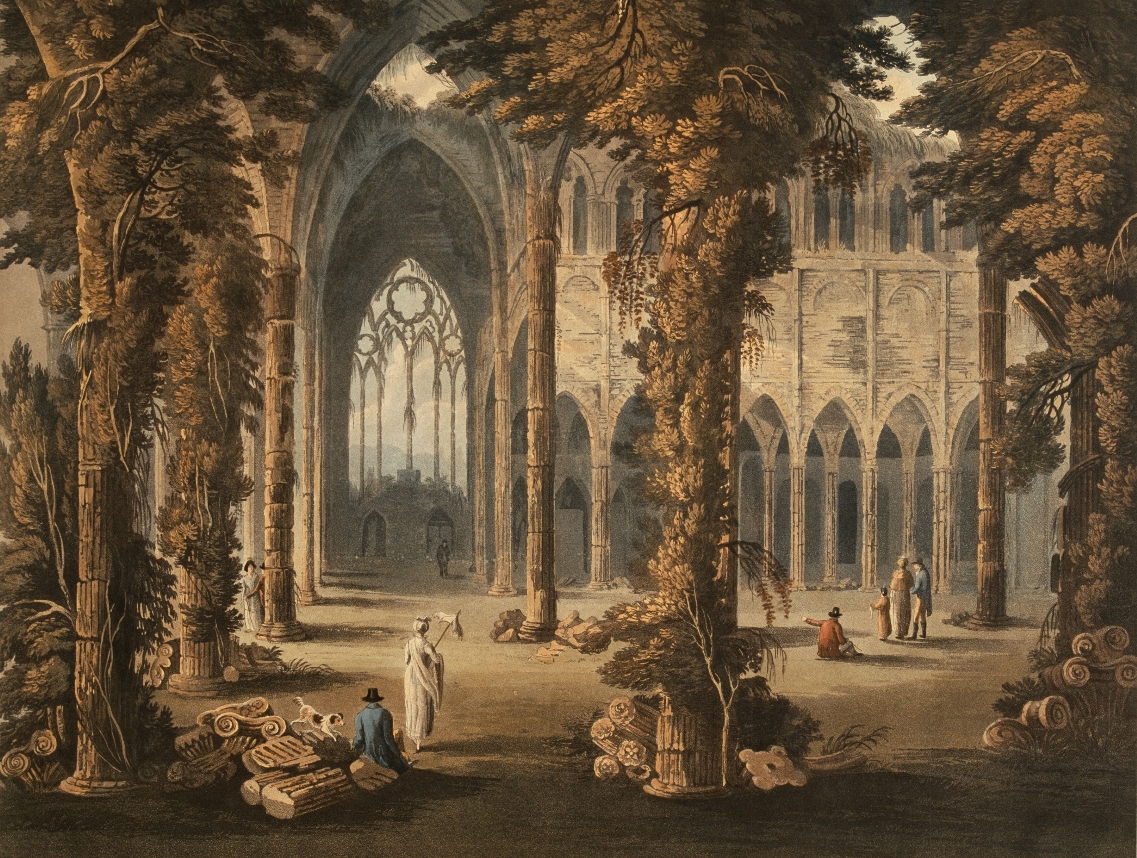
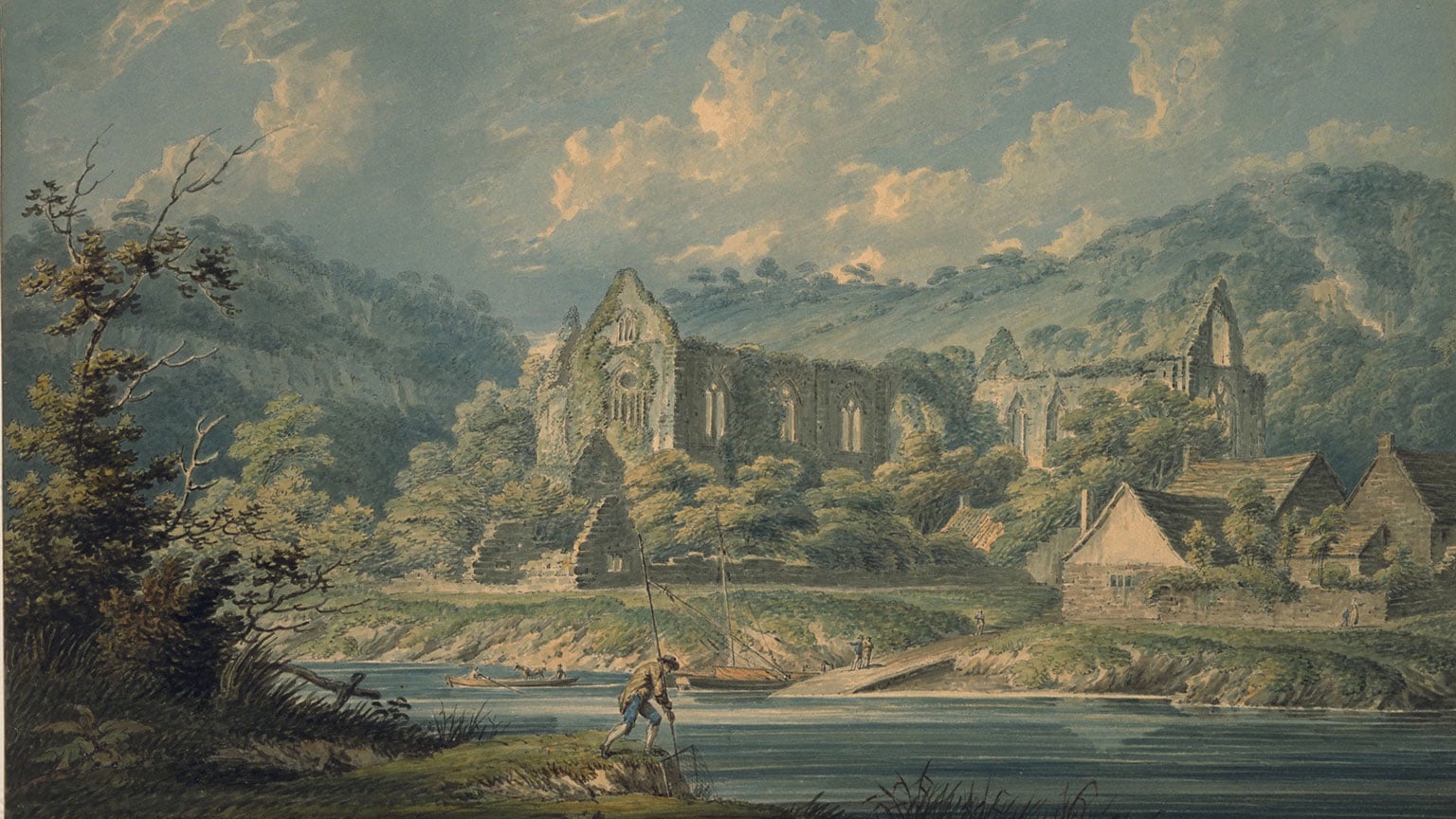
The abbey lay forgotten and slowly decaying for nearly three centuries, until it was rediscovered by fervent artists and poets in search of wild, unspoilt and romantic landscapes to inspire their art and creativity in the early 19th century.
Tintern Abbey – North Window by Frederick Calvert c. 1815
A new road to the area in 1820 made the site more accessible to adventurous and well heeled tourists, and the decaying buildings were eventually saved when Tintern Abbey was purchased by the Crown on behalf of the nation in 1901.
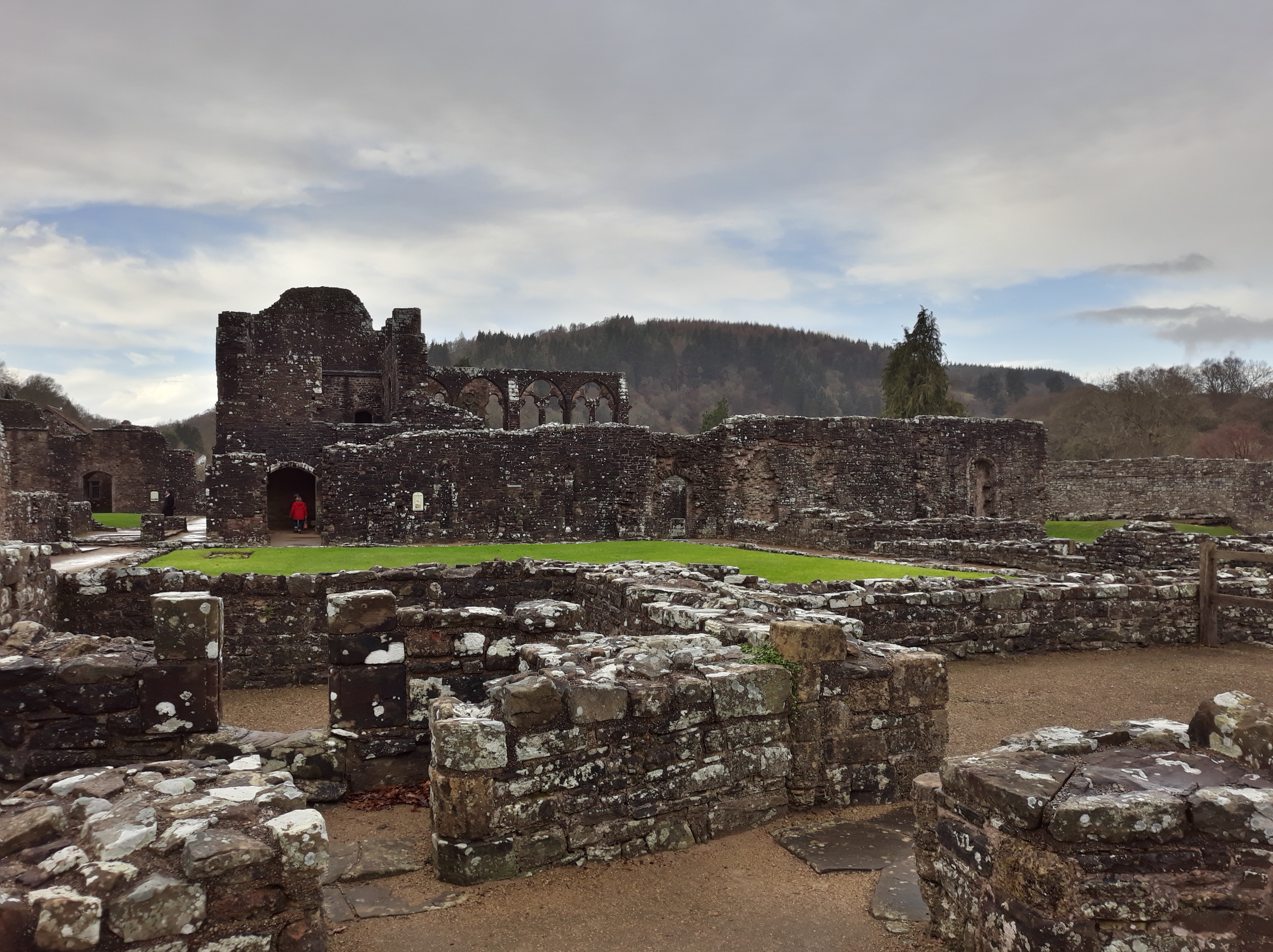
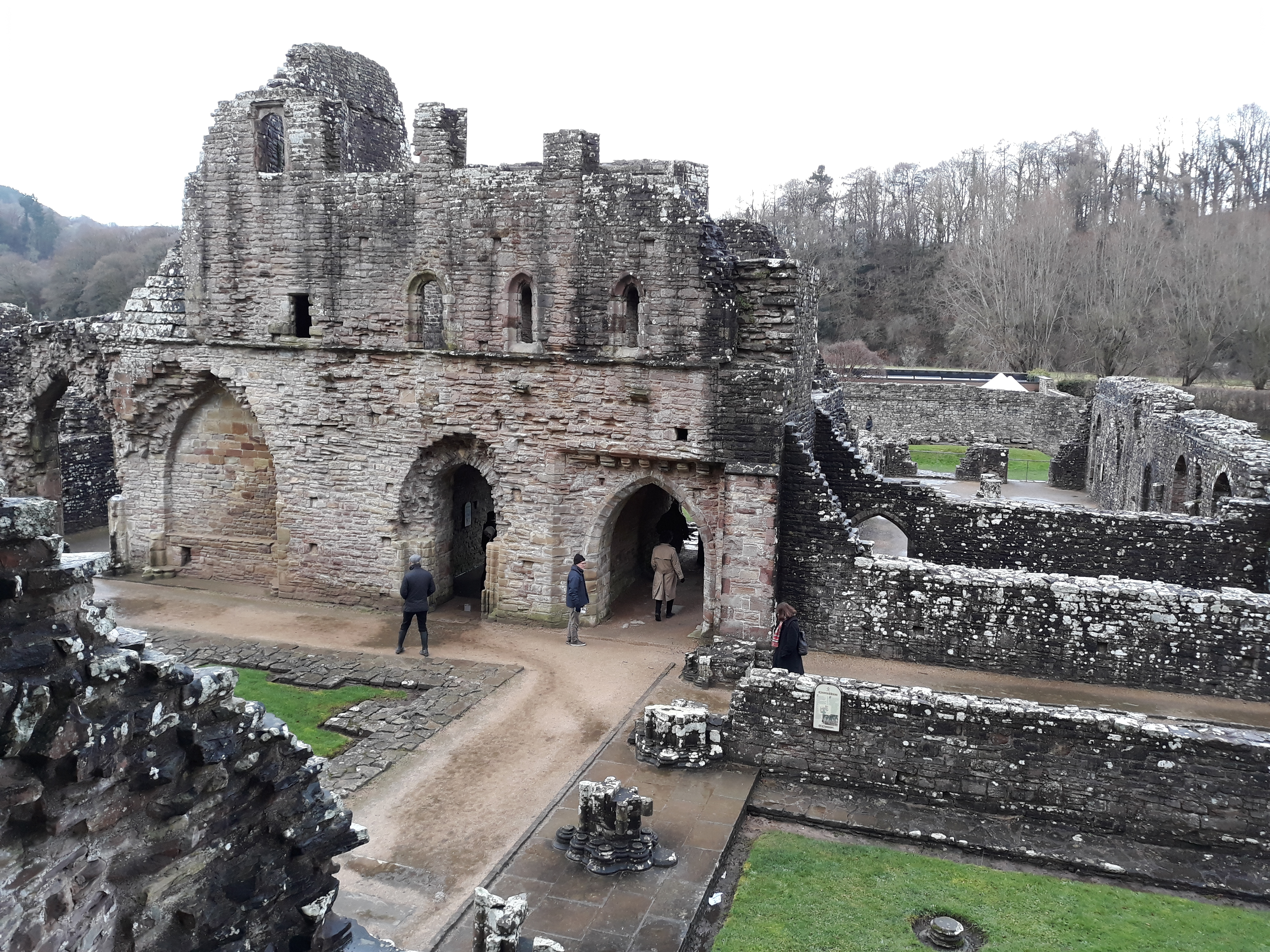
View towards monks’ quarters from the infirmary
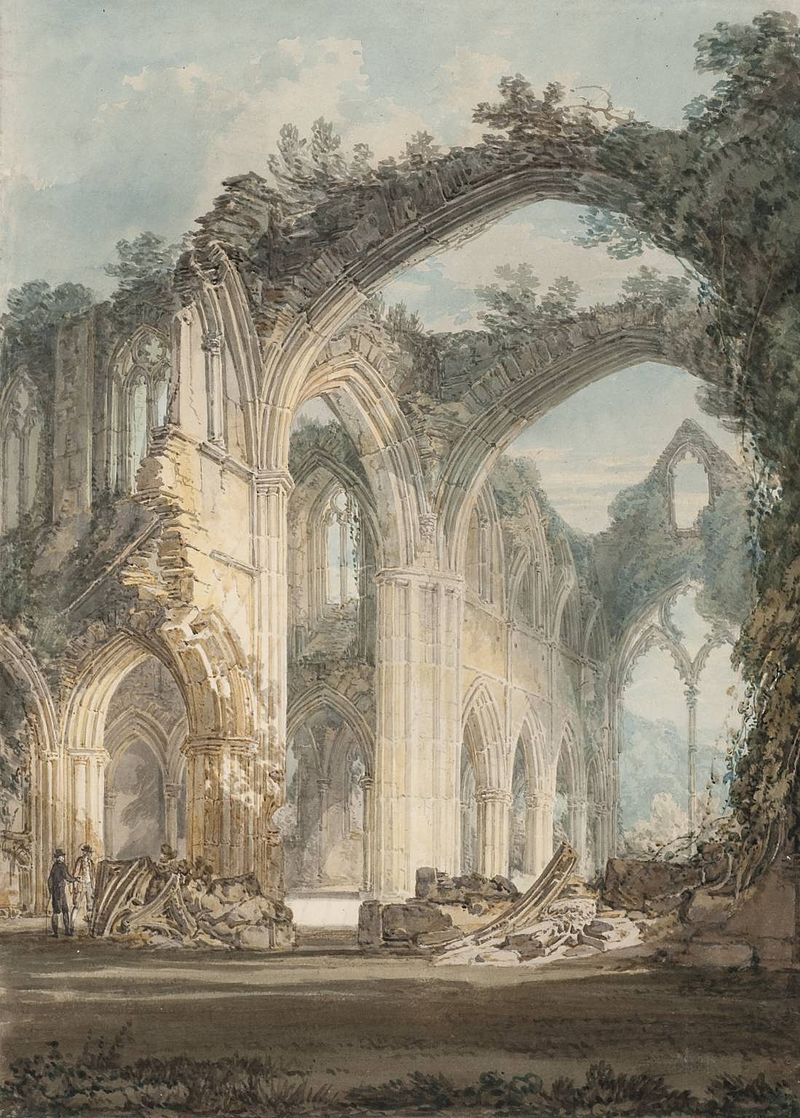
There are some wonderful watercolour and oil paintings of the abbey by Turner, Colman, Calvert, Dayes, Leader and van Lerberghe from this time period, during which its sturdy walls and pillars languished under copious ivy growth and masonry lay scattered throughout the transept.
Tintern Abbey – The Crossing and Chancel, Looking Towards the East Window by JMW Turner c. 1794
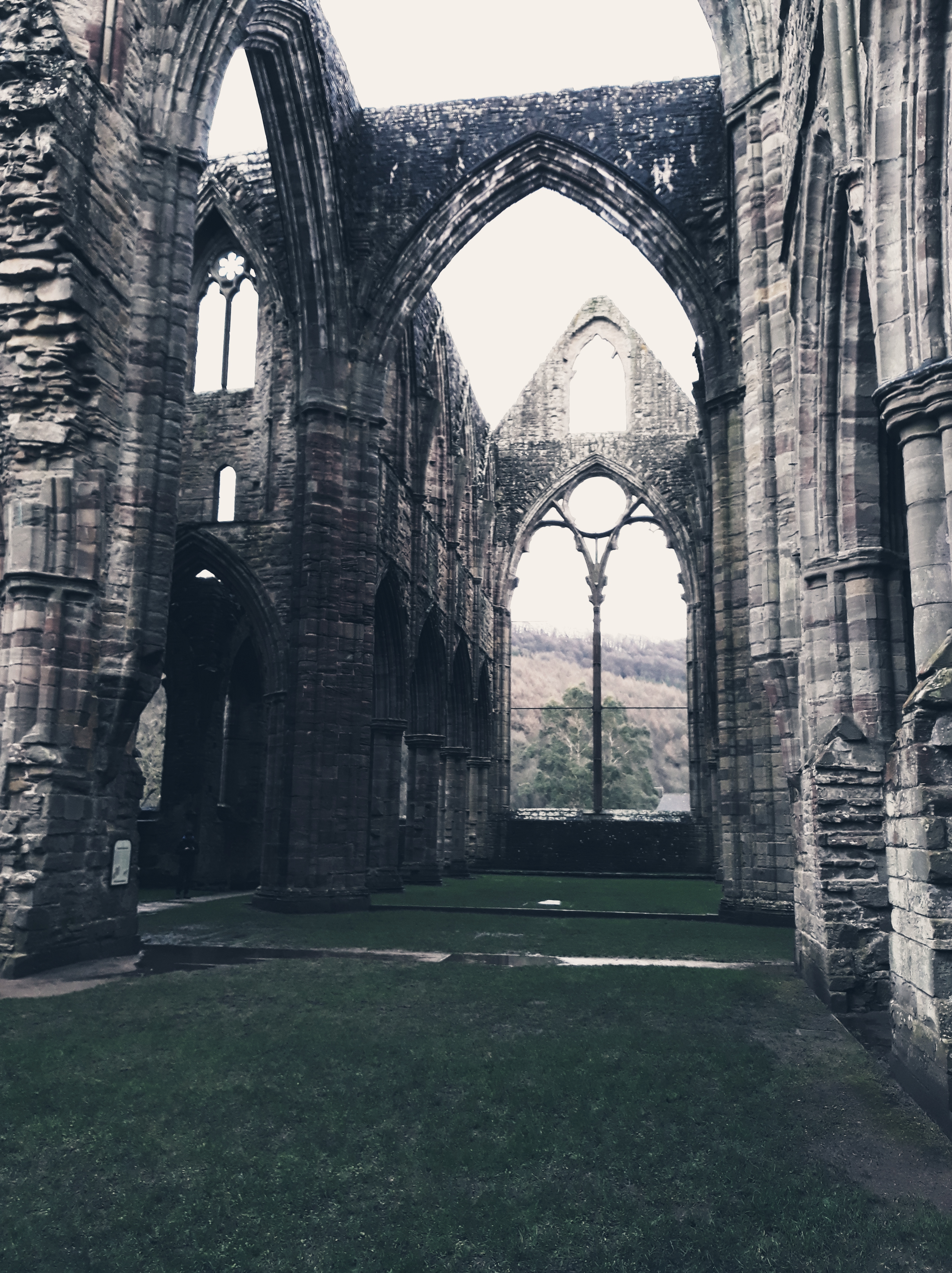
East window with sepia effect c. 2017
A wonderful recital of the poem ‘Tintern Abbey’ by William Wordsworth:
Or, if you prefer, you can read the lines whilst listening the Moonlight Sonata, which was composed by Ludwig van Beethoven only 3 years after Wordsworth wrote his poem :
Over the next 27 years an extensive programme of conservation was carried out, as well as in later, subsequent years.
Tintern Abbey took my breath away, and I can only image the splendour it must have exuded in its medieval heyday.
This stunning aerial footage really gives you a sense of the scale of the abbey in its location, accompanied by the celtic lilt of Loreena McKennit (The Mystic’s Dream):
History of Tintern Abbey
The abbey was founded by Walter fitz Richard de Clare, the Anglo-Norman lord of Chepstow, on 9th May 1131. Tintern was only the second Cistercian house in the British Isles and introduced the order’s pioneering brand of monasticism to Wales.
Looking towards monks’ quarters from north window gallery
The original 13 ‘white monks’ who settled here travelled from the abbey of l’Aumone (Loir-et-Cher), itself a branch of the order’s great Burgundian ‘mother house’ at Citeaux, France. The site at Tintern was chosen in this secluded country location because it was ‘far from the haunts of men’, as was typical of those preferred by the Cistercians.
This newly formed, pioneering religious community needed land to prosper, and Walter de Clare granted the monks a substantial estate on both the Welsh and English sides of the River Wye.
South window and transept
The land was organised into compact farms known as granges, and throughout the site’s growth in the 12th century the land was consolidated into areas for arable cultivation, the construction of farm buildings, cutting down woodland and draining coastal marsh to improve productivity.
Unlike other monastic orders, the Cistercians (who had no Norman links), found much favour in Wales, and could be self-sufficient with generous grants of land from Welsh rulers.
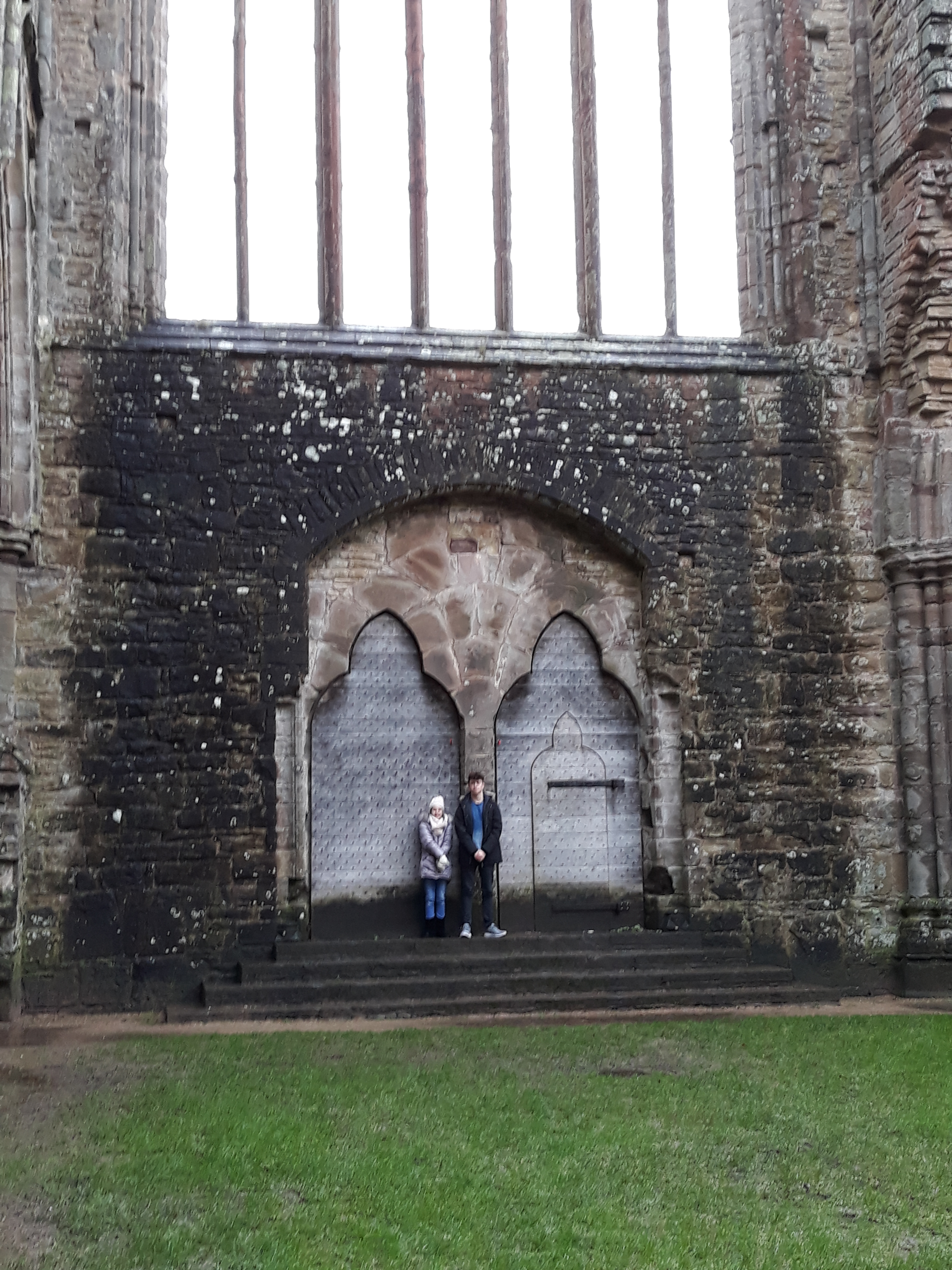
Emily and Will under the West window – the main visitor entrance during Tintern’s Medieval era.
Will chilling outside the great church
It’s thought that at first the monks lived in temporary wooden structures, but by the middle of the 12th century they had built a relatively modest stone church and monastic buildings set around a square cloister. As the community grew the monastic buildings were gradually rebuilt over the first half of the 13th century.
Rick Steve extolling the beauty of the Ruins of Tintern Abbey:
The chapter house and refectory date from this period. Without doubt, the abbey’s greatest glory is the stunning Gothic church which still dominates the site today, built between 1269 and 1301, when it was consecrated under the patronage of Roger Bigod, Earl of Norfolk (1270 – 1306).
A corner of the cloister
North window and transept
The great church is 228 feet long and 150 feet wide. The tall east window’s original stained glass contained the 5th earl’s coat of arms in gratitude to its benefactor.
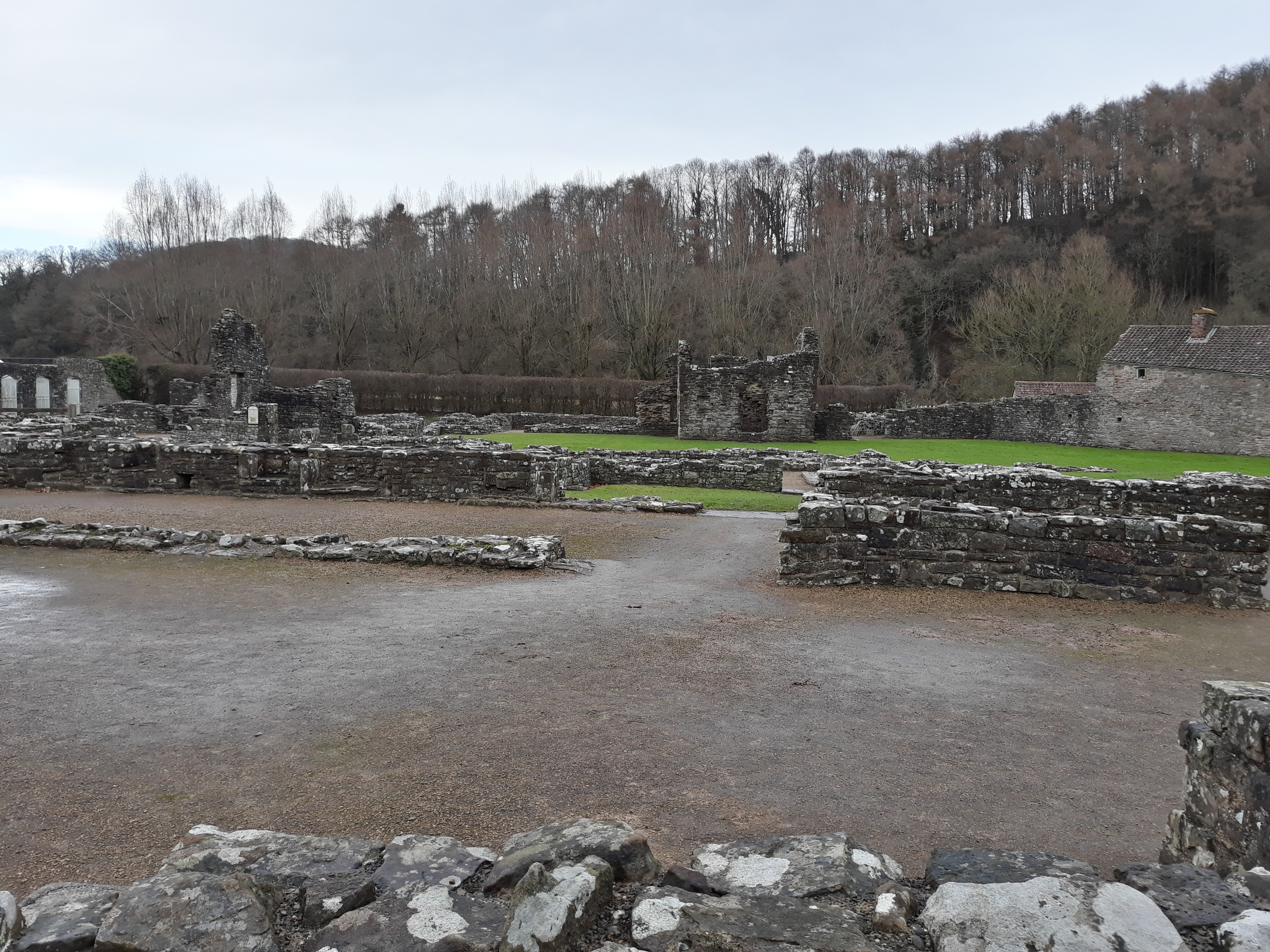
Unsurprisingly, the numbers of lay brothers fell during 1348-49 when the Black Death struck England and Wales. We walked around the foundations and low walls of the infirmary, which was almost as large as the church. The infirmary housed the sick from Tintern village and surrounding areas, as well as their own modest population.
Foundations of the infirmary – main hall
Monastic life of the Cistercian Order
The Cistercian way of life began in 1098 when a group of pioneering monks departed from the Burgundian abbey of Molesme with the intention of leading a life of austerity and perfect solitude.
An east facing window
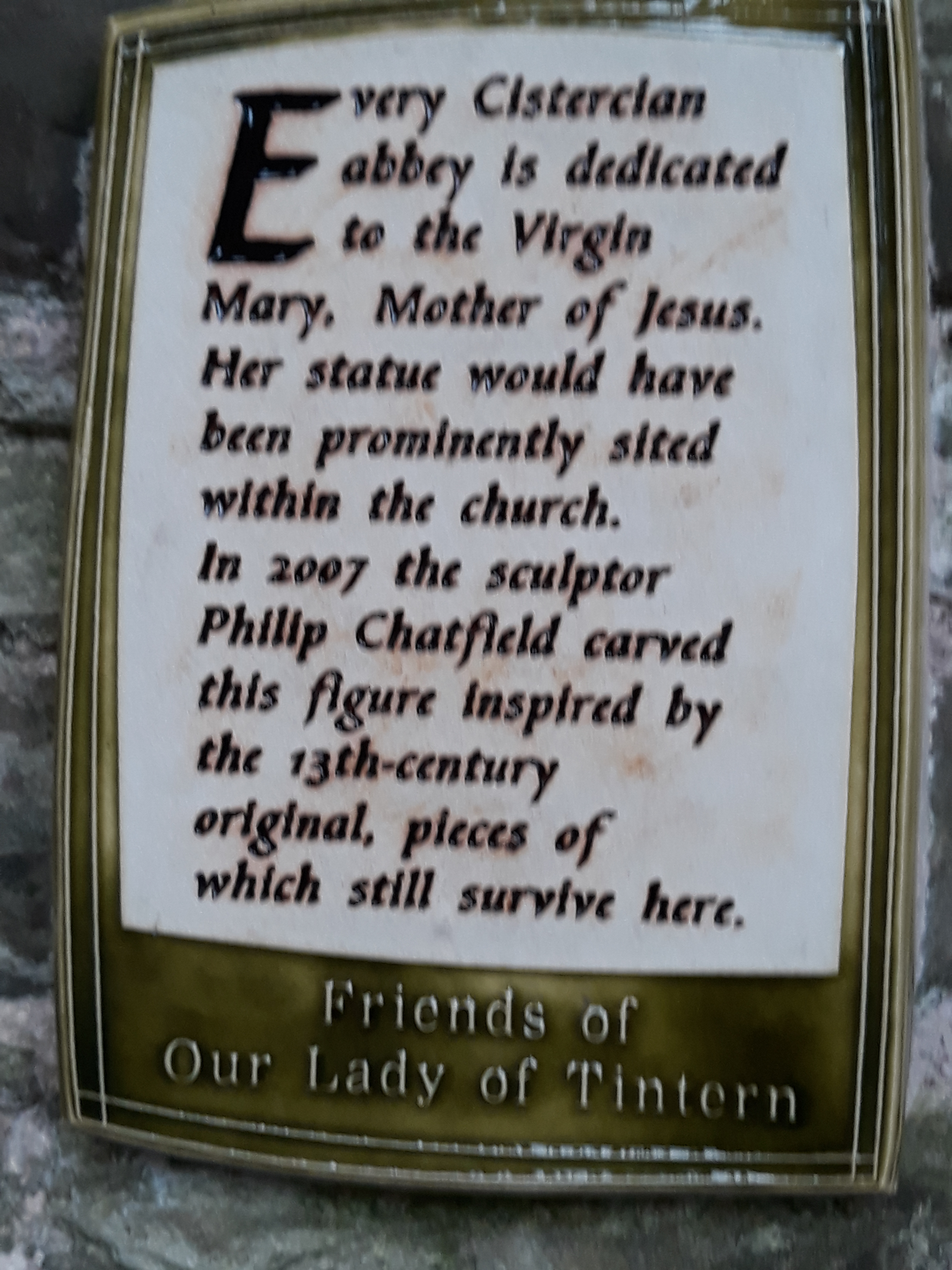
Robert, their abbot, led them to settle in an area of forest and marshland and their ‘New Monastery’ was given the Latin name of Cistercium, now known as Citeaux.
St. Bernard of Clairvaux was a charismatic French abbot who transformed the Cistercian Order; somewhat of an early trailblazer (and today’s equivalent of religious brand marketer), for his influence on the creation of the Cistercian identity.
By the time of his death in 1153 there existed around 340 Cistercian abbeys across Europe, organised in a network of ‘mother’ and ‘daughter’ foundations.
Over time there were upwards of 700 white monk abbeys across the length and breadth of Christendom, with 86 of these living in Great Britain.
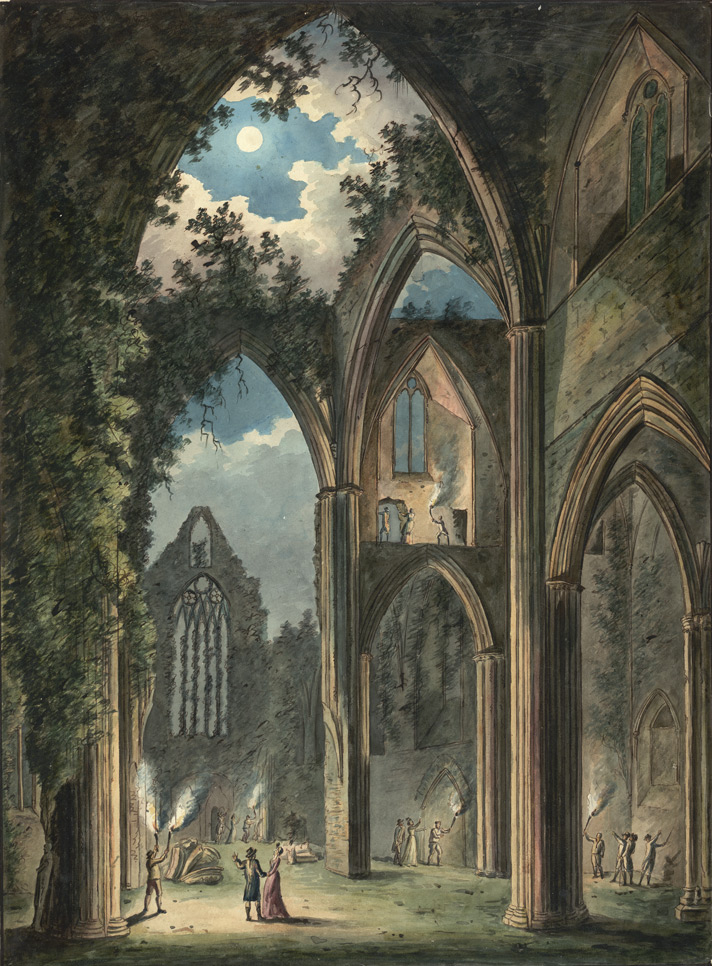
Tintern Abbey Interior by Moonlight by Peter van Lerberghe c. 1812
View from North to South
In 1165 Rhys ap Gruffudd, prince of Deheubarth gave his support to Strata Florida, and the daughter houses of Wales flourished. Whitland Abbeyin the heart of Wales became a ‘daughter house’ of Clairvaux.
The Cistercian adventure proved to be one of the most successful and remarkable phenomena of the medieval church.
Eastern and northern corner
View of Tintern Abbey by William Havell c. 1804
Cistercian Values
Their main focus was to lead a contemplative life, a strict interpretation of the Rule of St. Benedict, with an insistence upon poverty. They shunned wealth and luxury and observed a rule of silence whilst living on a meagre vegetarian diet. It doesn’t sound like much fun, but in many ways it was free of the pitfalls and complications of what we might consider a modern, desirable lifestyle.
They would have been men of virtuous character, living off the land, focused on their inner life and service to God and community.
There was a grand total of three fireplaces in the whole of Tintern Abbey, one in a ‘warming room’ adjacent to the monks’ day room, one in the kitchens, and one in the infirmary, so heaven only knows how cold and drafty it must have been in the winter… or at most times of year come to think of it!
Admiring stranger, that with lingering feet,
Enchained by wonder, pauses on this green;
Where thy enraptured sight the dark woods meet,
Ah! rest awhile and contemplate the scene.
These hoary pillars clasped by ivy round,
This hallowed floor by holy footsteps trod,
The mouldering choir by spreading moss embrowned
Where fasting saints devoutly hymned their God.
Tintern Abbey and the River Wye by Edward Dayes c. 1794
Unpitying time with slow but certain sweep
Has laid, alas! their ancient splendour low:
Yet here let pilgrims, while they muse and weep,
Think on the lesson that from hence may flow.
Like theirs, how soon may be the tottering state
Of man–the temple of a shorter date.
~ Edmund Gardner, Sonnet Written in Tintern Abbey
Tintern Abbey is a masterpiece of medieval architecture created in a time when construction methods did not have the benefit of modern technology and machinery, which makes it all the more inspiring.
Arches at the intersection of the transepts
Do go if you get the opportunity, it’s a wonderful, sacred place and you’ll be following in the footsteps of Wordsworth, Turner and countless other admirers…
There are some stunning walks nearby at Symonds Yat Rock, where 300 million years of nature’s patient erosion has formed a breath taking river valley view and scenic woodland trails. We did a short trail as the light was fading and Emily was a tad grumpy, so progress wasn’t as brisk as usual.
It was a wonderful few days to close out 2017 and see in the New Year. All blessings for 2018!
“For I have learned
To look on nature, not as in the hour
Of thoughtless youth; but hearing oftentimes
The still, sad music of humanity.” ~ William Wordsworth



 rhap.so.dy in words