Red Sparrow: Spookily Good Spy Fiction for a Vicarious Double Life

“God, she’s serious, thought Nate. Typical Russian, afraid of putting a foot wrong. But he liked her reserve, her underlying sensuality, the way she looked at him with her blue eyes. He especially liked the way she pronounced his name, “Neyt.”
~ Jason Matthews, Red Sparrow

As today is #WorldBookDay, I thought it timely to share my thoughts on Red Sparrow by Jason Matthews.

There are plenty of suspenseful and harrowing scenes in this book, and from page one my heart lurched from my chest to my mouth where it remained for 547 pages. It was like John le Carré on steroids, it totally gripped me!
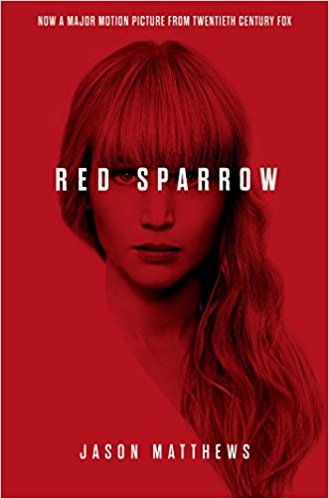
The writing itself wasn’t quite on par with le Carré, but still a very accomplished debut novel. I thought the characters and plot were totally plausible, and that’s probably because the author was involved in CIA operations for 33 years. The intelligence community may lie and steal for a living, but they put their lives on the line regularly; all so the balance of world power can be precariously preserved…

I deliberately haven’t seen the film yet, but I doubt it can match the book, which is brilliant. However, it was knowledge of the film that put the book on my radar.

I do think that Jennifer Lawrence is a good choice for the titular character, Dominika Egorova, aka Red Sparrow. She seems to embody her character’s essence from the book.

I found myself liking and sympathising with the beautiful, spirited and feisty Dominika. Her dream was ballet, (and I love that her mother is a professional violinist), but a cruel attack resulting in a broken foot ends her promising dance career with the Bolshoi, and she is left devastated and disillusioned when she is approached by her late father’s brother, Uncle Vanya. He has a small request to ask of her.
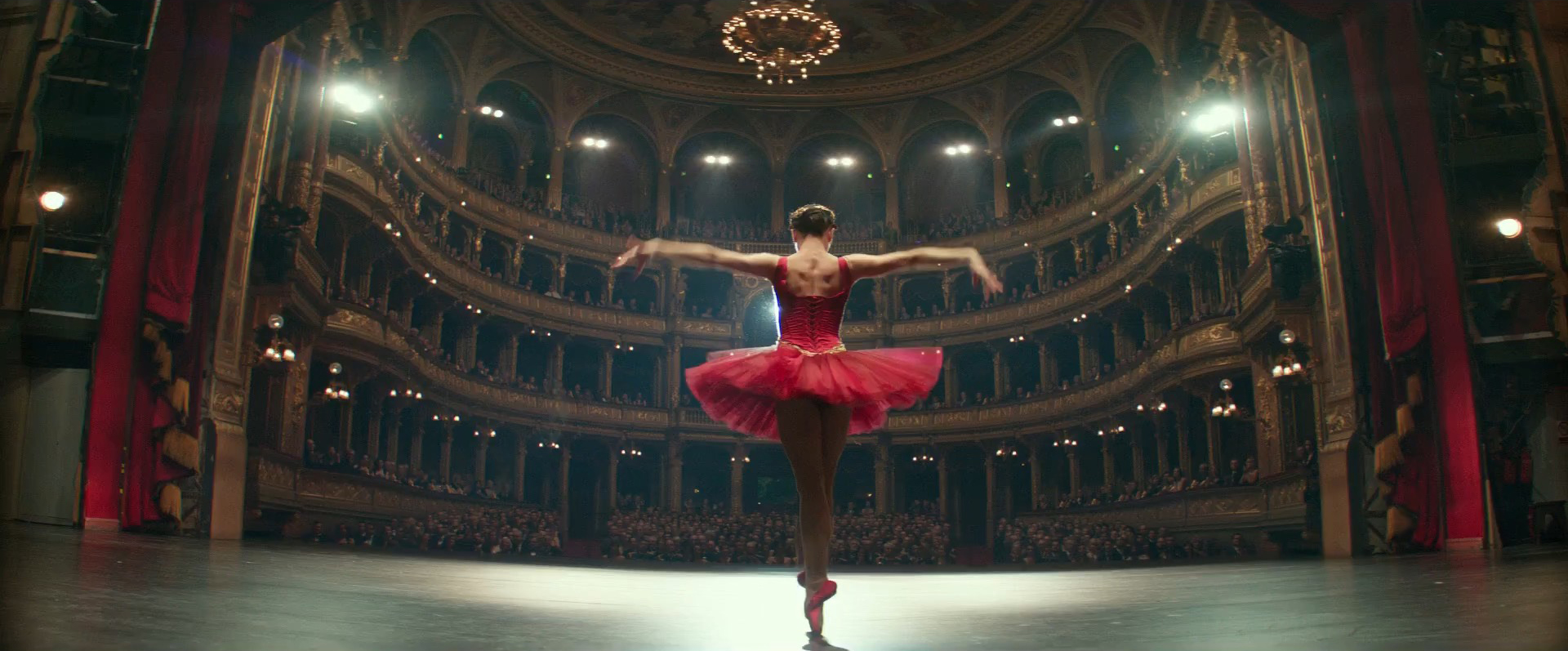
Not so dear Uncle Vanya is the deceptive and ambitious First Deputy Director of the SVR, who times his contact with his niece when she is most vulnerable. Needless to say, he does not love and respect Dominika like a normal uncle would.

Jason Matthews paints a picture of a modern Russia whose intelligence service (now the SVR instead of the KGB), which despite new names, appearances and PR, is very much rooted in the methods and attitudes of the ‘old times’.

Dominika has a ‘prodigious memory’, is physically stunning, strong, idealistic, cultured and determined – but she has a short fuse like her mother. With Uncle Vanya threatening her mother’s welfare she has no choice but to do his bidding and join the SVR.

After her traumatic job for her uncle Dominika is thrown among the wolves, but decides to run with the pack and beat them at their own game.

Her resentment at being a pawn for her boss is perfectly understandable; she is lied to, used and hindered in her progress, and her life is considered expendable in a revolting system that does not value its operatives beyond the glory they can bestow on their political masters and the State.

She is betrayed by her uncle when early in her training he sends her against her will to Sparrow School, where she and others are subjected to the vile methods of State sponsored seduction and ‘sexpionage’.  She survives humiliation after humiliation and uses her experiences to build her inner strength and fuel her anger against ‘them’.

Dominika is the first female agent to be recruited into the SVR, but her internal struggle to be seen as anything more than a ‘Sparrow’ is a challenge she must  overcome. She clashes with Soviet era forces within the Centre on her first case involving Simon Delon, a French embassy diplomat in Moscow whose daughter in the French military is the ultimate goal for passing classified information.

The only friend she has at Yasenevo (other than her self-serving uncle), is the kind and distinguished, but ageing General Korchnoi, who is head of the Americas Department.

The sections of brutal torture are not easy to read, but it is not just physical violence that is an ever present threat for the characters, but the psychological manipulation that drives their decisions and actions.

The most chilling, blood-run-cold encounters all include Sergey Matorin, Moscow’s most efficient grim reaper from the Centre’s F Line. He is the kind of ruthless, soulless assassin you would never hope to meet, a literal killing machine, who takes great pleasure from his work.

You could be forgiven for thinking that the Cold War hasn’t really ended after reading this novel.

It seems to have morphed into something even more complicated. Whether it’s done for dramatic purposes, or whether there is any basis in reality, only those sequestered in secret government buildings know the truth.

Red Sparrow is as smart, edgy, authentic, compelling and realistic as spy fiction gets. I was transported to a clandestine world of surveillance, subterfuge, street survival, (being ‘black’), mole hunts and forbidden love; quite a literary ride…

In the course of escalating emotions and events I discovered canary traps, barium meals, spy dust, whore school, burst transmissions, spy training, torture, murder and treason.

It also seems that spies can be foodies, and in Red Sparrow they do a lot of ‘business’ over dinner or in restaurants. The author (unusually for the genre), gives a recipe from the action at the end of each chapter. Whilst I’m not against this, I probably didn’t need to know everything they consumed in every chapter, so at times it came across as contrived, and had the effect of distracting me temporarily from the story.

KADDO BOWRANI—AFGHAN PUMPKIN
Deeply brown large chunks of peeled sugar pumpkin, cover liberally with sugar, and bake covered in medium oven until tender and caramelized. Serve over thick meat sauce of sautéed ground beef, diced onions, garlic, tomato sauce, and water. Garnish with sauce of drained yogurt, dill, and puréed garlic.
~ Jason Matthews, Red Sparrow

Locations include, Moscow, Washington, Helsinki, Rome and Athens. Matthews’s knowledge of these cities is impressive, as is the everyday life of the CIA Case Handler, Nathaniel (Nate) Nash. Wanting to take control of his own destiny rather than be sucked into the family business like his older brothers, Nate feels the need to prove himself in espionage rather than law.

As agent handlers go, Nate is enthusiastic and honourable, and his main concern is always to protect his agent’s life from constant danger. He is the kind of man you can trust if you are looking to spill state secrets…

After a near fatal brush with the FSB during a meeting with his Moscow agent (code name MARBLE), who happens to be the CIA’s most valuable asset, his stellar career falters. Gutsy, street savvy and fluent in Russian, Nate is now at odds with his chief of Station in Moscow. With his cover blown, he ends up in what he considers a bit of spy backwater, Helsinki.
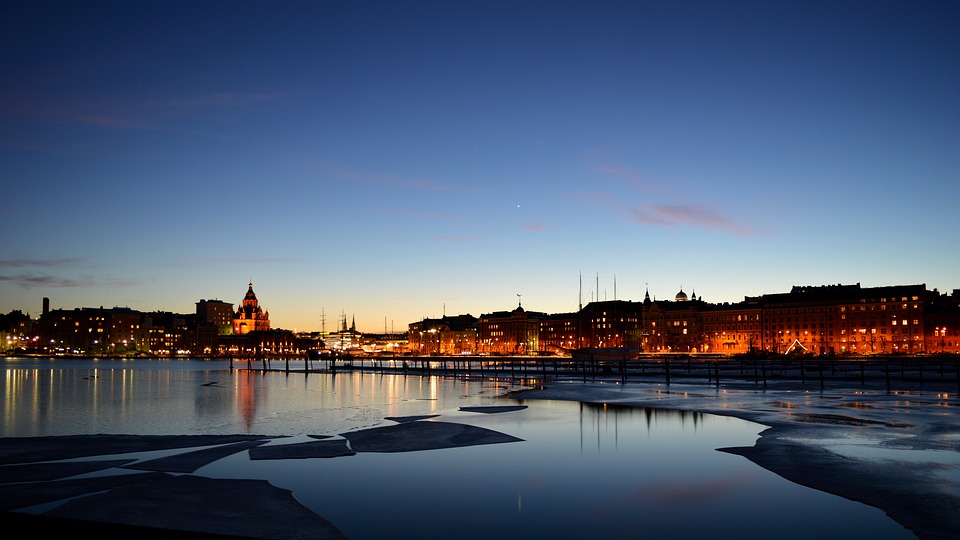
However, his expectations change rapidly when he is tasked with making contact with Dominika. He ‘meets’ her in a public swimming pool, initially unaware that she has also been sent to ‘befriend’ him and discover the identity of his informant in Moscow.

Anatomy of a scene with film director Francis Lawrence:

From there the plot really twists and turns, and I don’t want to give too much away, other than to say that Nate cannot help falling for Dominika (code name DIVA), even though he strives to always be professional, but their passion risks the mission and their lives.

I thought it was original and a nice touch that Jason Matthews gifted Dominika’s character with Synesthesia, so when she hears music she also sees colours (Bach is red to her), and in her dealings with other operatives she can see the colours they emit, which helps her intuit their thoughts and intentions.

Quite a handy skill for a spy, to almost be able to read minds, to know when you are being lied to!

“I want to feel that sometimes we leave the operation behind, that there is just you and me.” Her bossom heaved in her brassiere. He stood up and put his arms around her. His mind was a riptide of damage control battling the stirring of his passion for her. He smelled her hair, and felt her body.
“Dominika,” he said, and the rushing in his ears started, the old danger signal.
“Will you break your rules again?” she asked. She saw his purple lust, it lit up the darkened room.
“I want you to violate your rules … with me… not your agent, me” said Dominika.”
~ Jason Matthews, Red Sparrow

Only three of the men in the novel (including her lover, Nate), have purple halos, deemed by Dominika to be ‘true’, the safest and most sincere, the ones she trusts the most, but even their actions cause her to question everything…

Some scenes in this novel are truly shocking and provoked a visceral reaction in me, others are thought provoking and pertinent to current affairs.

This spy thriller is not just a seat of your pants roller-coaster ride; it stimulates deeper, more meaningful questions about the nature of international politics and its impact on all of us. The human motivations are insightfully portrayed and sensitively stereotyped, as the characters move in a world which is not black and white but mostly grey, where the lines of right and wrong are blurred, even in the CIA.

“She was tired of being used like a pump handle by all of them, the vlasti, the inheritors of the former Soviet Union, General Korchnoi, the Americans, Nate, telling her what was expedient, indicating what had to be done. She needed something more from them all. She was weary of having her feelings denied to her.”
~ Jason Matthews, Red Sparrow

Red Sparrow encompasses first rate storytelling that evokes the life of a spook in startling detail. It left me breathless. It’s also the first novel in a trilogy, but I need to wait a while and let my nerves settle down before embarking on part two: Palace of Treason.

I’m leaving it there, because it would be criminal to spoil this superb book for you!

“It’s quite simple,” said MARBLE. “Dominika will discover I am the spy and turn me in.” ~ Jason Matthews, Red Sparrow

Tchaikovsky and Oistrakh Pluck at Sturdy Heart Strings

“Undoubtedly I should have gone mad but for music. Music is indeed the most beautiful of all Heaven’s gifts to humanity wandering in the darkness. Alone it calms, enlightens, and stills our souls. It is not the straw to which the drowning man clings; but a true friend, refuge, and comforter, for whose sake life is worth living.”  ~ Pyotr Ilyich Tchaikovsky

The Russian’s are in the house! Thankfully not malicious, vengeful spies, instead respected individuals of the intelligent, cultural and artistic kind – and they are playing heart-felt music. Classical music is an auditory nerve agent of a spiritual nature; it seeps into your cells and elicits various emotional reactions, ideas, memories, feelings and visual imagery.

Tchaikovksy’s Violin Concerto in D Major, Opus 35 is one of the great romantic violin concertos ever written, and a staple of the concert violinist’s repertoire. It was the only violin concerto the Romantic era composer wrote, and I don’t think he could have followed it up with a better one somehow. It has many wonderful, subjective attributes which weren’t fully appreciated after it was first published and performed.

It is, in my humble opinion, melodic, lyrical, soulful, virtuosic and so very Russian in its expressive depths… Did I mention it’s also fiendishly difficult to play?

Where to start…

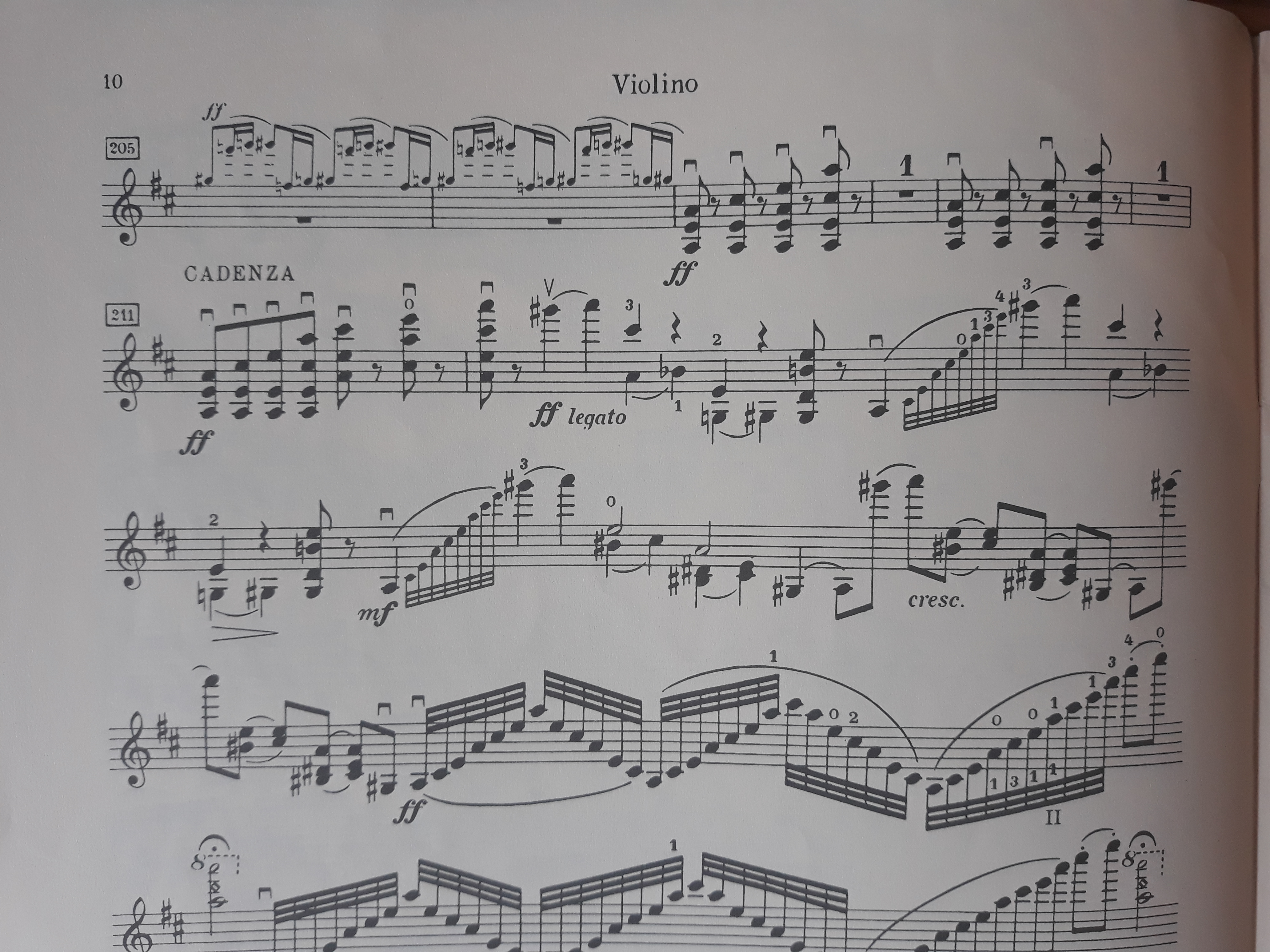
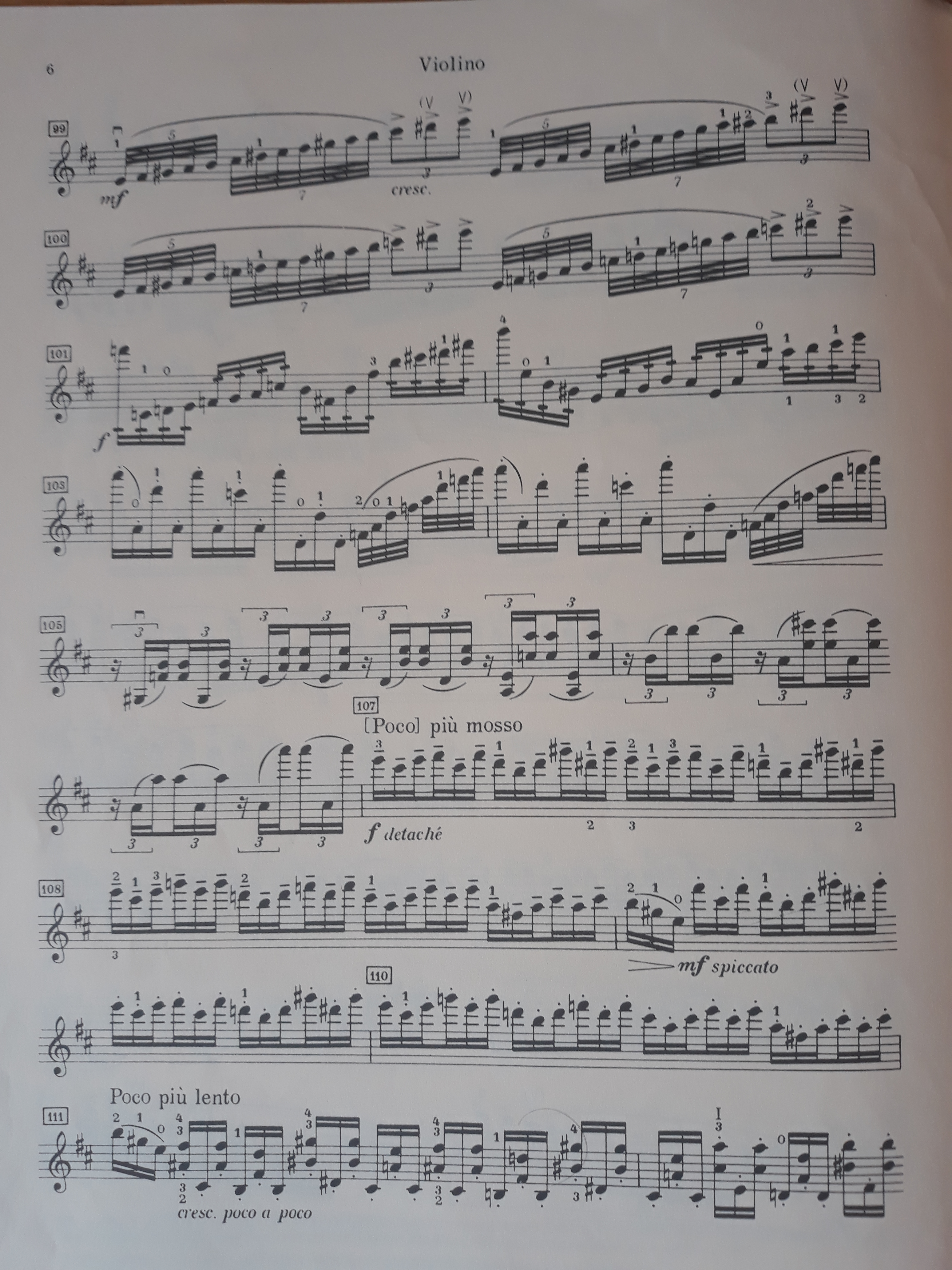
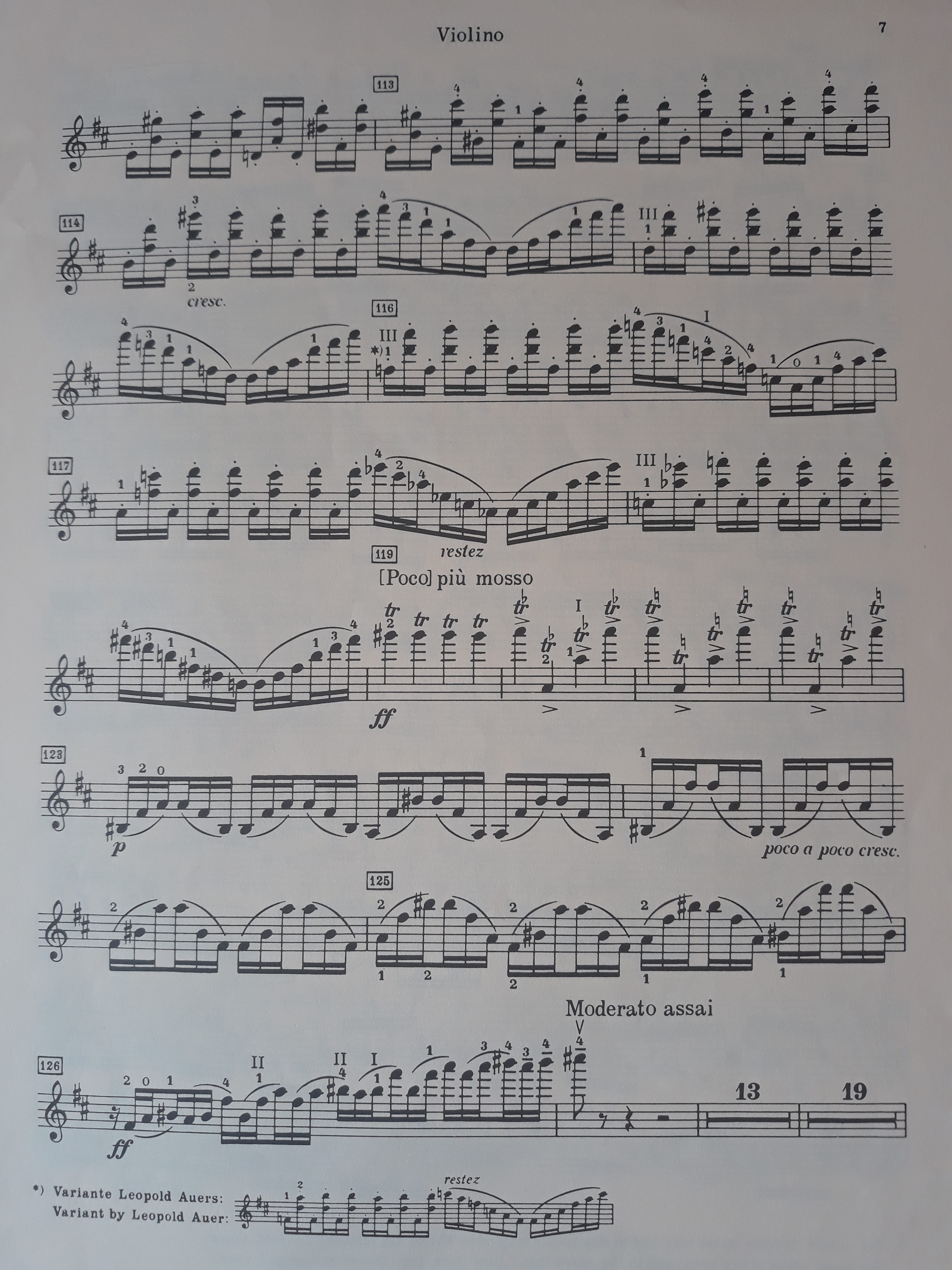
There are many tricky trills, finger-bending and eye-watering double-stopping, glissandi, frequent leaps and thrilling passages to for a soloist to negotiate. The opening movement is lengthy and physically demanding, with many notes in the stratosphere of what is possible for the violin.

It’s hard to maintain intonation and energy throughout these gruelling sections. A full body/brain workout for sure. It’s way over my playing ability for the most part, and even causes consternation for the professionals.

Tachikovsky originally dedicated the concerto to revered Russian virtuoso and teacher Leopold Auer, who rather embarrassingly declined to play its debut performance.

Relations between composer and artist cooled, and Tchaikovsky ruefully wrote in one of his letters that the episode ‘had the effect of casting this unfortunate child of my imagination into the limbo of the hopelessly forgotten’.

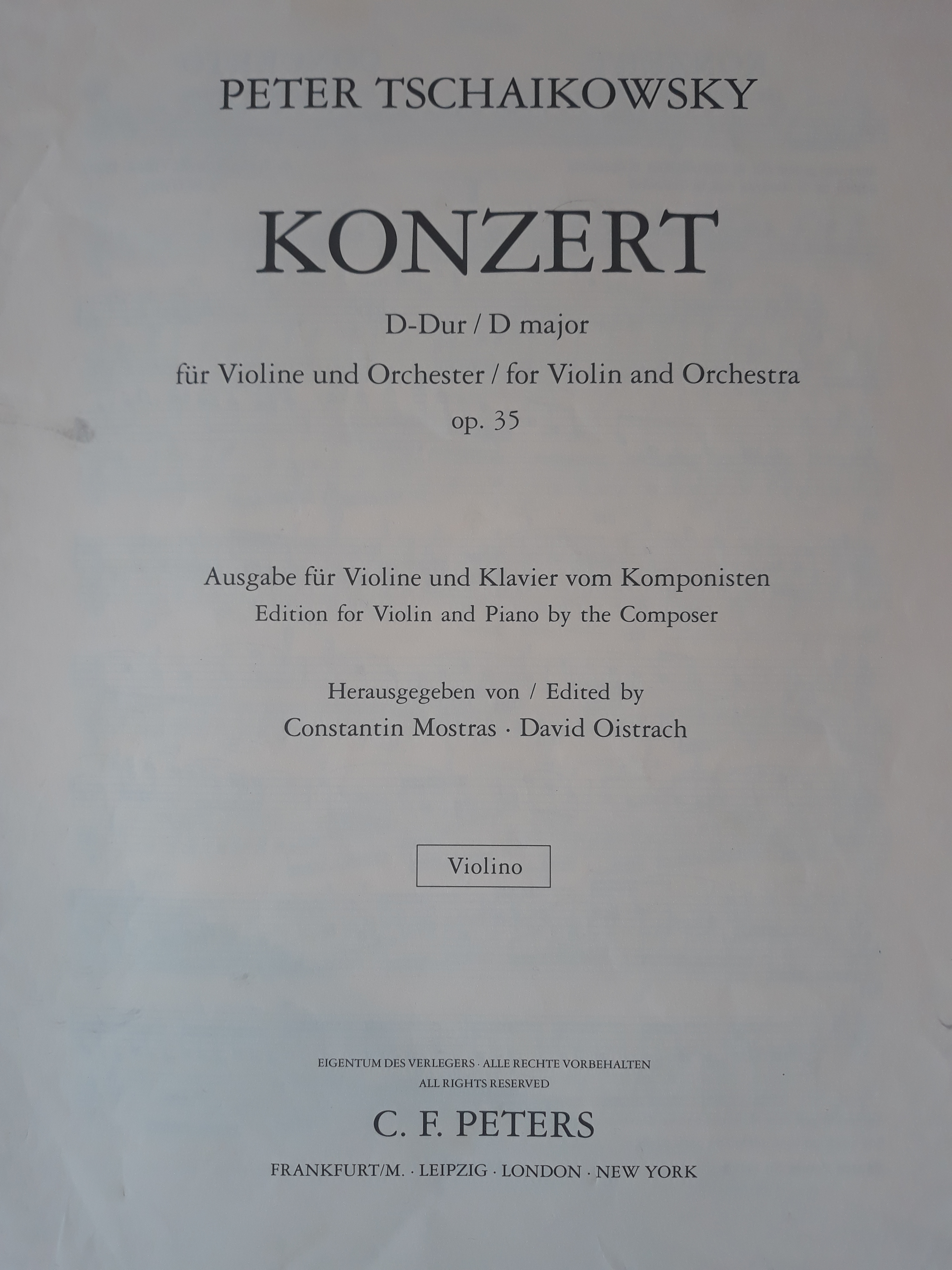
The front page of my own score for violin & piano with violin part edited by David Oistrakh

Thankfully it wasn’t forgotten, and rather paradoxically, it is Auer’s revised edition of the concerto that is most widely performed today.  Heifetz and Kreisler also made their own tweaks and some repeats were cut out. Leopold Auer gave his ‘official’ viewpoint in a 1912 interview, on what the press today might have dubbed ‘Dedication-Gate’:

“I had championed the symphonic works of the young composer (who was at that time not universally recognized), I could not feel the same enthusiasm for the Violin Concerto, with the exception of the first movement; still less could I place it on the same level as his purely orchestral compositions. I am still of the same opinion. My delay in bringing the concerto before the public was partly due to this doubt in my mind as to its intrinsic worth, and partly that I would have found it necessary, for purely technical reasons, to make some slight alterations in the passages of the solo part. This delicate and difficult task I subsequently undertook, and re-edited the violin solo part, and it is this edition which has been played by me, and also by my pupils, up to the present day.
It is incorrect to state that I had declared the concerto in its original form unplayable. What I did say was that some of the passages were not suited to the character of the instrument, and that, however perfectly rendered, they would not sound as well as the composer had imagined. From this purely aesthetic point of view only I found some of it impracticable, and for this reason I re-edited the solo part.”

There have been many wonderful performances over the years, but I especially love this 1954 recording of the late Russian virtuoso, David Oistrakh with Staatskapelle Dresden conducted by Franz Konwitchny:

It seems to me that Oistrakh connected with the music on a soul level. In this sublime recording of his own version he conveys its musical essence through a beautiful and plaintive purity of tone, a restrained yet intense vibrato, and mind-blowing virtuosity without sacrificing accuracy. It is astounding!

He gives a performance full of pathos, passion and precision but does not slide into schmaltzy self-indulgence, or become sentimental to the point of being sickly.

Oistrakh takes us to dizzying heights in the first movement (Allegro Moderato) with stunning syncopated semi-quavers interspersed with soft, pianissimo passages of eloquent singing on his Stradivarius, only to forcefully proclaim his intermittent chords in conversation with the orchestra before the final ascending, chord-laden runs that build in volume and speed until they climax with the entry of the lush main theme from the orchestra.

Professor James Stern provides nuggets on the first movement for violin students at Juilliard:

The violin’s soaring passages of rhythmic complexity and melody in increasingly higher realms make my heart dance.

This movement seems entirely evocative of Spring: there is some leftover wintry grit and determination giving way to vivid, vibrant and powerful new shoots of life and energy.

It is like an epic ballet score (of which Tchaikovsky was a master), without any dancing. Come to think of it, maybe someone should choreograph a dance routine to the first movement?

Itzhak Perlman, one of my living idols on the violin, gives his take on the Tchaikovsky violin concerto:

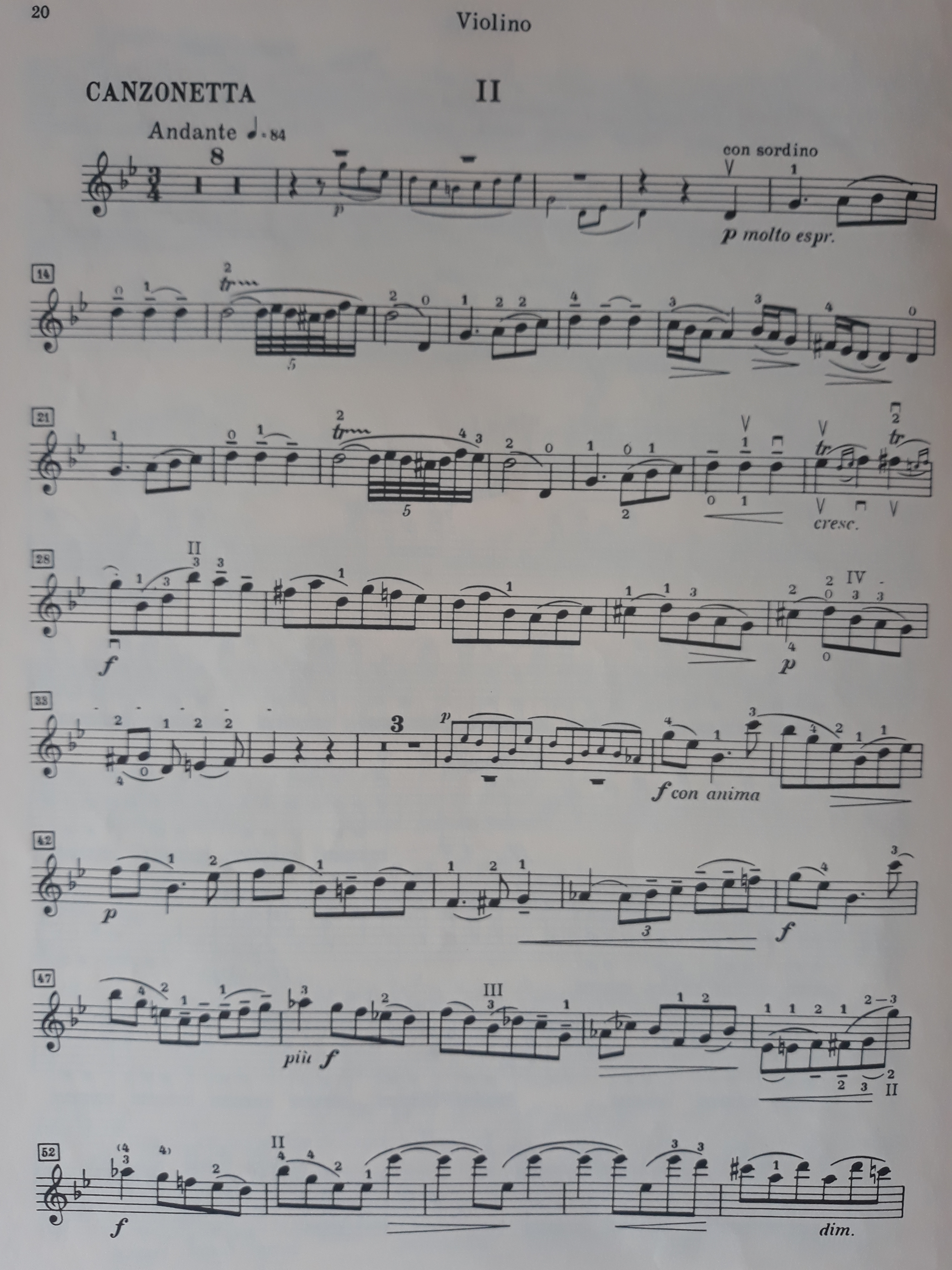
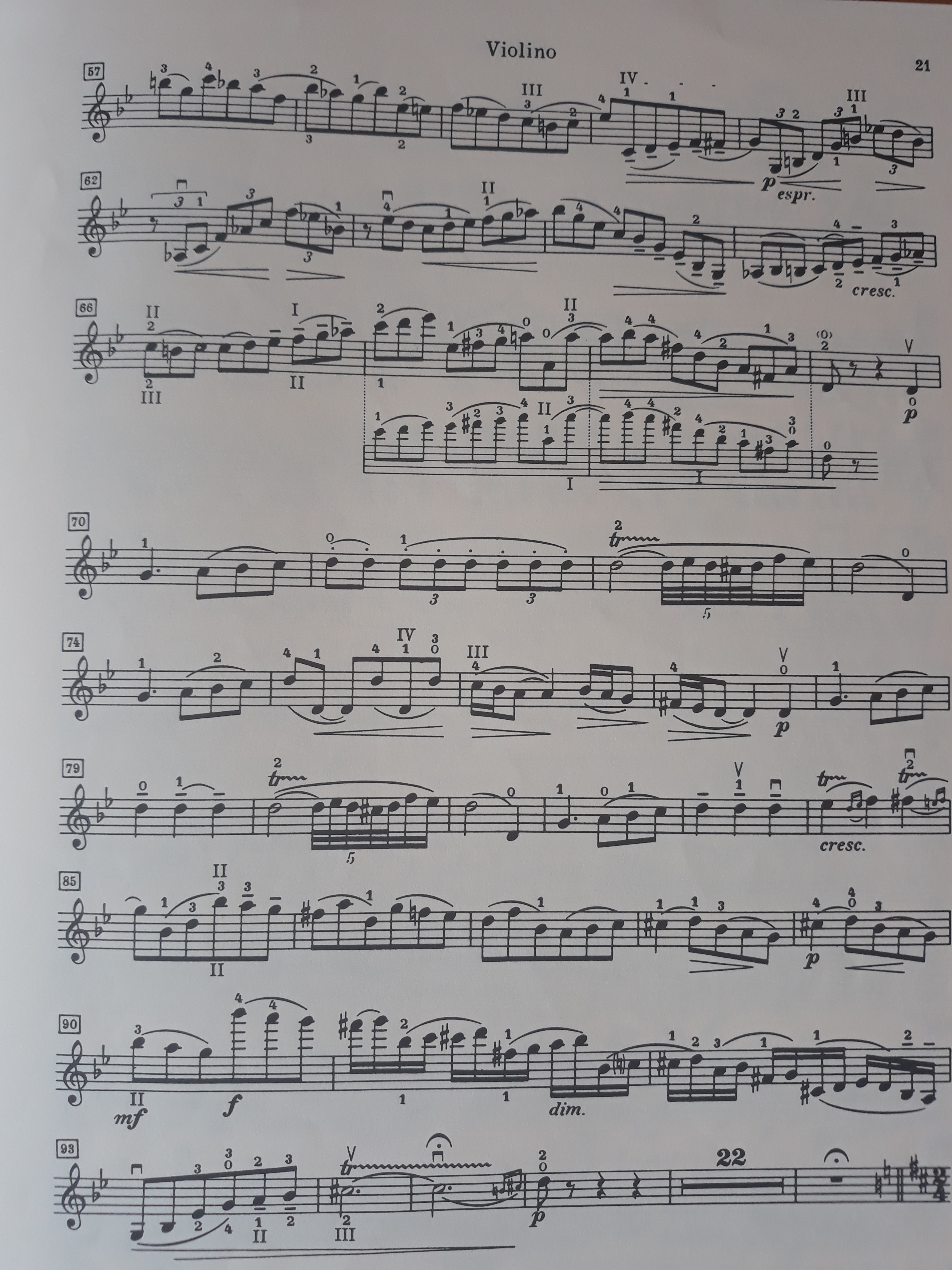
I love to play the second movement (Andante), titled Canzonetta in the key of G minor, which expresses a mournful, song like interlude, a kind of reflective musing on suffering; perhaps a lamentation of Tchaikovsky’s soul.

Oistrakh’s dynamics are exquisitely soft and gentle, and the music is marked con sordino (use of a mute), to subdue the effect further.

I also enjoyed Arabella Steinbacher’s ‘uncut’ interpretation and performance of Oistrakh’s edition, which is played at a slightly slower tempo than Oistrakh himself.  I am in awe at how she makes such mastery look effortless. Here’s what she says about the Canzonetta:

“Then, when Tchaikovsky writes con anima, it’s like the sunshine comes through the clouds. It’s on the E string and this positive energy comes through.”

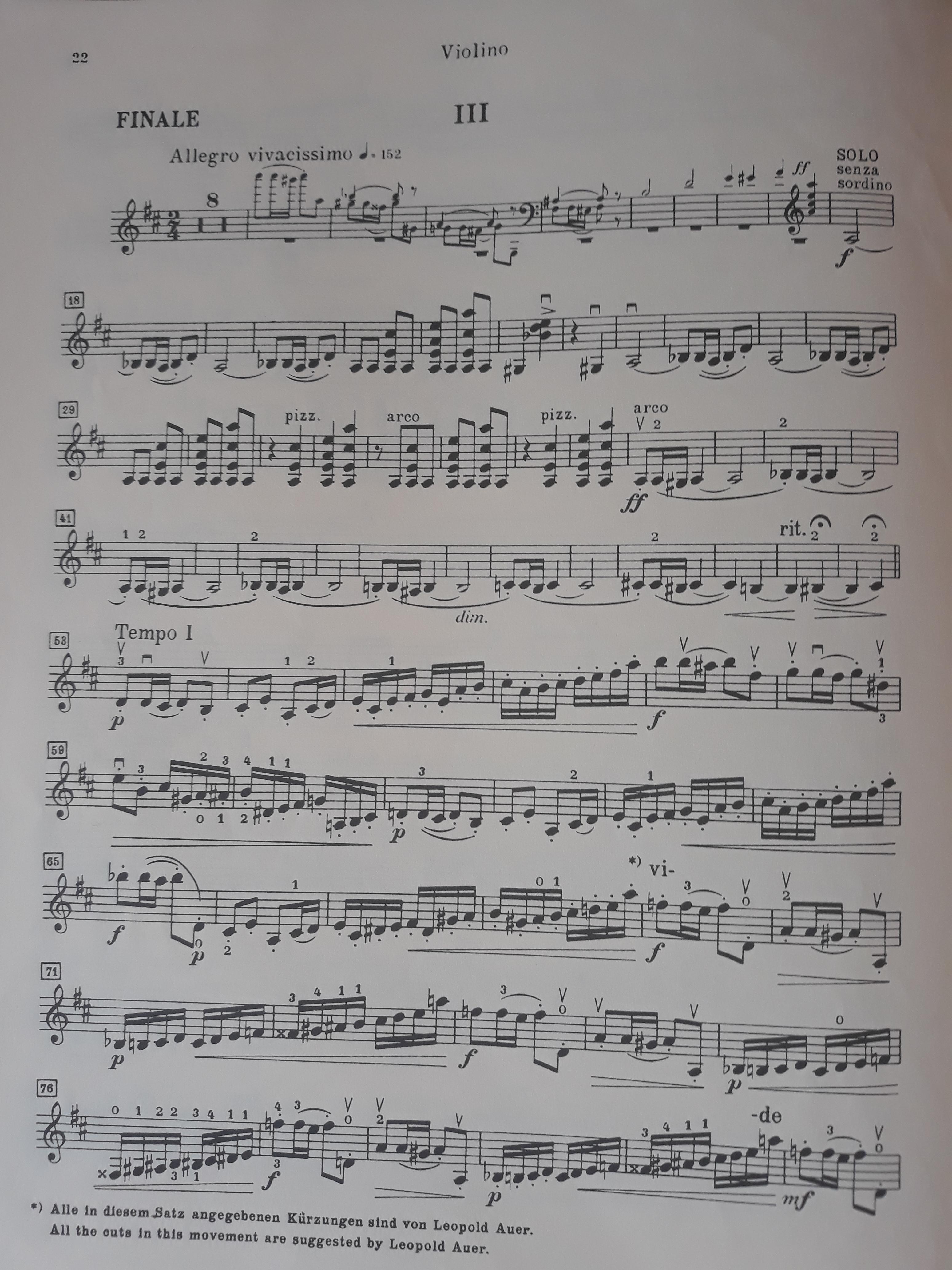
The third movement (Allegro vivacissimo), back to the D Major key, is a vivid tapestry of Slavic and Russian folk tunes woven together in a very bold, brisk and dynamic finale.

A masterpiece!

Tchaikvosky’s personal circumstances behind the Violin Concerto

Despite being written in the key of D Major, the concerto has an unmistakable melancholy feel. Tchaikovsky composed the work in spring 1878, after a period of personal strife and unhappiness. His disastrous six week marriage to Antonina Miliukova had failed and he was seeking solace from his misery with a tour of Switzerland, France and Italy.

It is widely thought that the inspiration for the work sprang from his infatuation for a violinist he had tutored in composition and music theory at the Moscow Conservatory, Josef Kotek.

It was Kotek who came to his rescue in Clarens, Switzerland, carrying many scores in his suitcase. Among them was Lalo’s Symphonie Espagnole, a concertante work for violin and orchestra which influenced Tchaikovsky greatly on his concerto. I can ‘hear’ similarities between Lalo’s finale and Tchaikovsky’s opening movement.

On the banks of lake Geneva they worked together on the solo sections and the sketching was completed in just eleven days, with the complete scoring finished in two weeks. He must have written it in some kind of creative frenzy.

Somewhat surprisingly, given his close collaboration with the composer, Kotek also refused to perform the premiere of Tchaikovsky’s violin concerto. Another early setback for the work.

However, Josef Kotek redeemed himself by instigating a life changing friendship for Tchaikovsky, as he enthusiastically edified his former tutor to his employer, Nadheza von Meck, a wealthy arts patron. Tchaikovsky began composing for her ‘in house’ string ensemble, (which Josef Kotek played in), resulting in a rewarding, if bizarre, fourteen year working relationship vital to Tchaikovsky’s composing career.

A later work by Tchaikovsky, the Valse-Scherzo for Violin and Orchestra was dedicated to Kotek.

Allegro Films have made a superb documentary about this period of his life:

Tchaikovsky rededicated his violin concerto to Adolph Brodsky, who premiered it in Vienna on 4th December 1881. The music critic Eduard Hanslick notoriously described it as “stinking music” — an insult which cut Tchaikovsky to the core.

A moving account of Tchaikovsky’s gratitude to Adolph Brodsky:

“In referring to this outstanding artist, I cannot help availing myself of this opportunity to express publicly the fervent gratitude which to my dying day I shall always feel for him because of the following incident. In 1877 I wrote a Violin Concerto and dedicated it to Mr L. Auer. I do not know whether Mr Auer felt himself flattered by my dedication, but the point is that, in spite of his genuine friendliness towards me, he never wanted to surmount the difficulties of this concerto and in fact pronounced it to be impossible to play—a verdict which, coming from such an authority as this Saint Petersburg-based virtuoso, plunged this unhappy child of my imagination into an abyss of what seemed to be irrevocable oblivion.
One day, some five years after my concerto had been written and published, when I was living in Rome, I went into a café and happened to pick up an issue of the Neue Freie Presse in whose feuilleton section there was an article by the famous critic Hanslick  about a recent concert by the Vienna Philharmonic Society which, amongst other things, had also featured that hapless violin creation of mine which L. S. Auer had condemned to non-existence a few years earlier. Herr Hanslick reproached the soloist (who was none other than A. D. Brodsky) for having made such a bad choice and lambasted my poor concerto, liberally strewing the pearls of his caustic humour and firing the most poisoned arrows of his irony.
“We know,” he wrote, “that in contemporary literature there have started to appear works whose authors love to reproduce in detail the most repulsive physiological phenomena, including foul smells. One might describe literature of that kind as stinking. Well, Herr Tschaikowsky has shown us that there can also be stinking music (stinkende Musik)”
Having read the above comment by this famous and highly influential critic, I could vividly picture to myself how much energy and effort it must have cost Mr Brodsky to get my “stinking concerto” performed by the Vienna Philharmonic, and how aggrieved and unpleasantly struck he must have been by this attitude of a critic towards a work by a fellow-countryman and friend. I of course hastened to convey my most heartfelt gratitude to Mr Brodsky, and from his reply I found out how many trials and tribulations he had had to get through in order to achieve his goal—and his goal was precisely to rescue my concerto from the abyss of oblivion. Mr Brodsky subsequently played the “stinking” concerto everywhere, and was everywhere attacked by critics similar to Hanslick in their approach and their exclusivity of tone, but still the deed was done—my concerto had been saved, and now it is quite frequently played in Western Europe, especially since another excellent violinist, the young Haliř, has come to the aid of Mr Brodsky (further down I shall have a lot to say about this young violinist).
It should now be understandable why I was so pleased to meet A. D. Brodsky in Leipzig, where I had never been before and otherwise had no friends amongst the locals, and to know that, throughout all the emotional agitation and even fears that were lying ahead of me on this tour, I could count on the moral support of his warm and firm friendship of many years’ standing.”

Musical influences on Tchaikovsky

An excerpt from his Autobiography in 1889 highlights how hearing Don Giovanni had affected him:

“Would play through my beloved Don Giovanni over and over again, or rehearse some shallow salon piece. From time to time, though, I would set about studying a Beethoven symphony. How strange! This music would cause me to feel sad each time and made me an unhappy person for weeks. From then on I was filled with a burning desire to write a symphony — a desire which would erupt afresh each time that I came into contact with Beethoven’s music. However, I would then feel all too keenly my ignorance, my complete inability to deal with the technique of composition, and this feeling brought me close to despair…”

From Wikipedia:
This declaration suggests that it was Beethoven’s symphonies in fact which kindled in the young Tchaikovsky the zeal to write music himself, rather than just escaping from everyday reality into the magical realm of Mozart’s opera. Moreover, the feeling of “sadness” which overcame him whenever he heard Beethoven’s music is one that would remain with him all his life, and, if around 1860 it was perhaps mainly due to his despair at the thought that he would never be able to write anything similar since he knew nothing of compositional technique, in later years it was certainly the “tragic struggle with Fate and striving after unattainable ideals” expressed in many of Beethoven’s works that struck a chord with Tchaikovsky. This affinity he felt with Beethoven and the element of ‘struggle’ in the latter’s life and music is perhaps most interestingly revealed in the additions he made to a compilation of biographical material on Beethoven which he started writing in 1873 but did not complete — ‘Beethoven and His Time’. These extra observations of his own suggest that Tchaikovsky clearly empathized with some important moments in Beethoven’s life: the early loss of his mother, the German composer’s struggle against adverse circumstances and against the failings of his own character. Thus, far from being merely a remote, awe-inspiring Old Testament God to him, Tchaikovsky recognized in Beethoven a kindred spirit, namely an artist who was deeply aware of the tragedy of human existence, and who sensed that the only true happiness he could find in life was in music. The comparison in his diary between Mozart and Beethoven, at first sight so ‘unfavourable’ for the latter, might therefore be interpreted, firstly, as a way of expressing how Mozart’s music acted like a balsam on his troubled soul as opposed to Beethoven’s, which reflected back his own suffering, and, secondly, as an implicit confession of how daunting it was to have to write music in the wake of Beethoven — a feeling that was shared by almost all the other great composers of the nineteenth century!

An insightful BBC documentary (sadly without subtitles for the Russian bits) on the life of Pyotr Ilyich Tchaikovsky (1840 – 1893):

After an emotionally fraught birth and challenging early years, this musical ‘enfant terrible’ evolved through much struggle, and grew to walk and talk and eventually sing on the world stage, thanks to the magnificent potential Tchaikovsky suffused within its poignant notes, as well as the dedicated soloists throughout the decades who  underwent countless hours of bruised fingers, chafed necks, aching arms and mind-altering concentration, pouring out their heart and soul in bringing it to life.

In a comment about Beethoven’s masses Tchaikovsky observed that they were not strictly religious works but, similar to his symphonies, as ‘poetically intensive effusions of sentiment’, permeated by the same ‘spirit of despair and struggle’.

I definitely get the feeling that Tchaikovsky’s Violin Concerto in D Major could be described thus, originating from the ‘ideal realm’ that Beethoven inspired in him, both from the perspective of performing and listening.

Any creative individual whose work may not have received glowing reviews or achieved early success can take heart from this story – all it takes is a determined and influential champion to make history.