“If I had an hour to solve a problem, I’d spend 55 minutes thinking about the problem and 5 minutes thinking about solutions.” ~ Albert Einstein
What with all the global turbulence of late I got to thinking: What is our evolutionary destiny as a species?
It’s a difficult and provocative question to ask, let alone to answer!
But we must ask it, if we are to understand where we are now and where we are heading. If we don’t, how can we create a happier, more bountiful and sustainable existence not just for ourselves, but for all creation, than we have thus far?
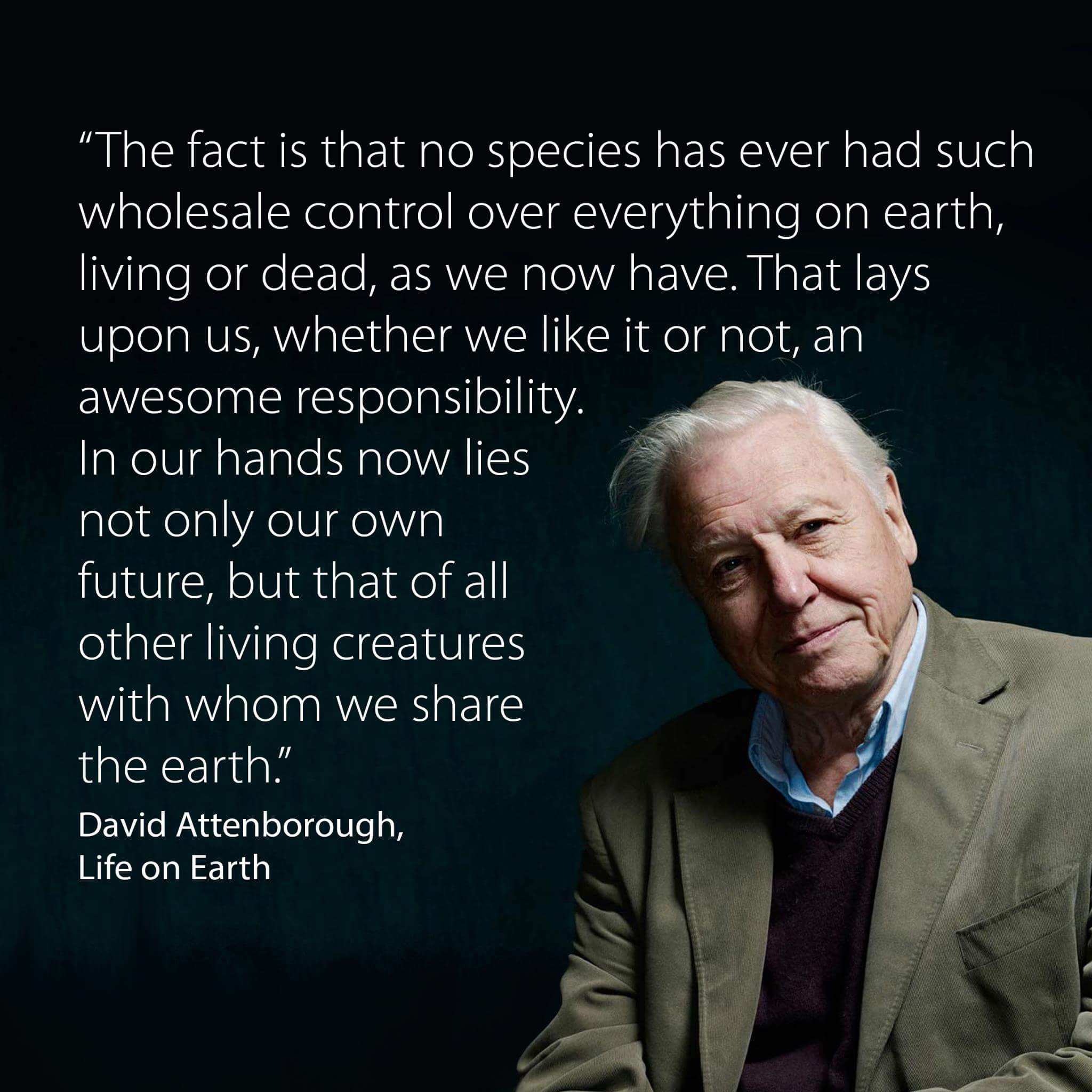
In my small slithers of time I have been reading Yuval Noah Harari’s brilliant book, Sapiens. I’m only half way through, but am finding it compelling and sobering reading.
I’m expanding on my interest in Anthropology as part of my research for my next novel, (a corporate conspiracy thriller), but it’s also insightful for a blog post or two!
The challenges of the Anthropocene
Scientists have named the new epoch of our planet the Anthropocene – the age of humans.
Human activity has impacted the face of the planet and its animal inhabitants to such a degree that we now largely hold the fate of the entire planet’s biodiversity in our hands. A scary fact, considering our past record!
There is little that we have failed to plunder or indirectly affect and use for our advantage over aeons of our species’ existence. We should heed Einstein’s advice and ruminate extensively on the challenges and opportunities of this new human epoch.
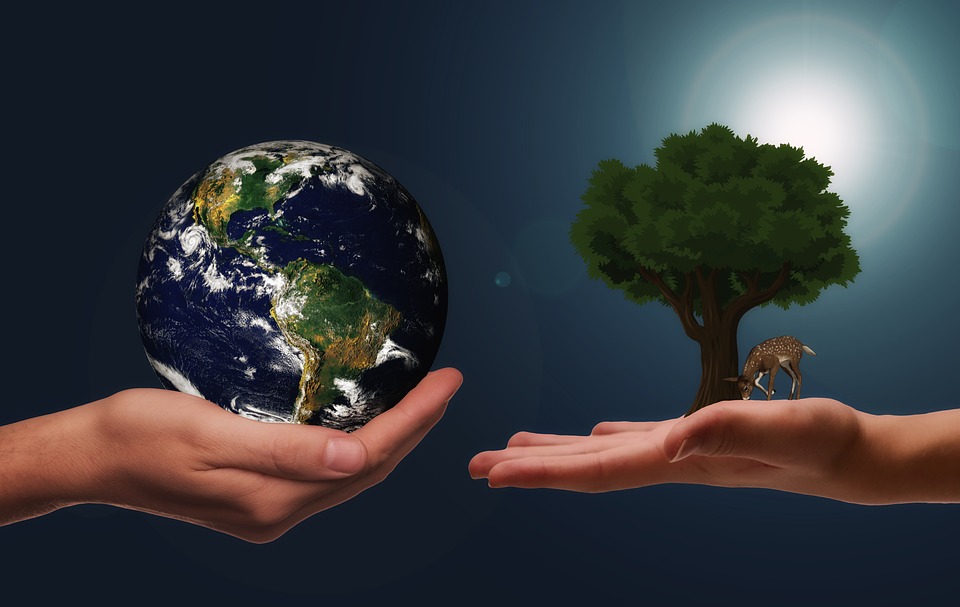
According to Sir David Attenborough we are now experiencing the 6th wave of mass extinction on our planet, and (I’m sorry to go all ‘doomsday’), unless we radically alter our trajectory it could be the precursor to the extinction of Homo sapiens. We are the masters of our fate, one way or another.
- Sir David Attenborough warns of climate crisis moment
We face untold misery unless we rapidly develop a global awareness of what’s happening and how we can adjust our behaviour to avoid cataclysm. Otherwise, as scientists continue to tell us, we will reap a bitter and devastating harvest…
This has been painfully demonstrated with the destruction of the Amazon and as this article in The Guardian points out, deforestation damage goes far beyond the Amazon.
The world has watched in horror at the devastating, unprecedented bushfires that are continuing to ravage Australia.
In addition to the devastating stories there have also been uplifting stories of heroism, altruism and love.
This article highlights visually the conditions that have exacerbated the fires in Australia.
It is thought close to a BILLION animals have perished in the bushfires: koalas, kangaroos, flying foxes and other precious wildlife. If like me, you feel devastated by this and wish to do something to help in addition to prayer, you can donate to Australia’s Wildlife Emergency fund on the WIRES website.
It has been heartbreaking to see the level of suffering. And yet, Australia’s impotent PM, Scott Morrison, is an outright climate change denier and has demonstrated a dire lack of leadership to his nation. More also needs to be done to heed the advice of the indigenous aboriginal population.
My grandfather grew up in a mining town just beyond the Blue Mountains of New South Wales. I have happy memories of the time I was there. I just want to sit and weep when I read of the impact of these fires.
Morrison is not the only leader to have failed miserably in his responsibility – Brazil’s Jair Bolsonaro should be put on trial for his role in the Amazon’s destruction – and by default the global impact it is having.
“If you had to invent a threat grand enough, and global enough, to plausibly conjure into being a system of true international cooperation, climate change would be it—the threat everywhere, and overwhelming, and total. And yet now, just as the need for that kind of cooperation is paramount, indeed necessary for anything like the world we know to survive, we are only unbuilding those alliances—recoiling into nationalistic corners and retreating from collective responsibility and from each other. That collapse of trust is a cascade, too.”
~ The Uninhabitable Earth: Life After Warming
To better understand the immense challenges and opportunities of the Anthropocene we should take a peek into the distant past – through millennia, into the history of Homo sapiens.
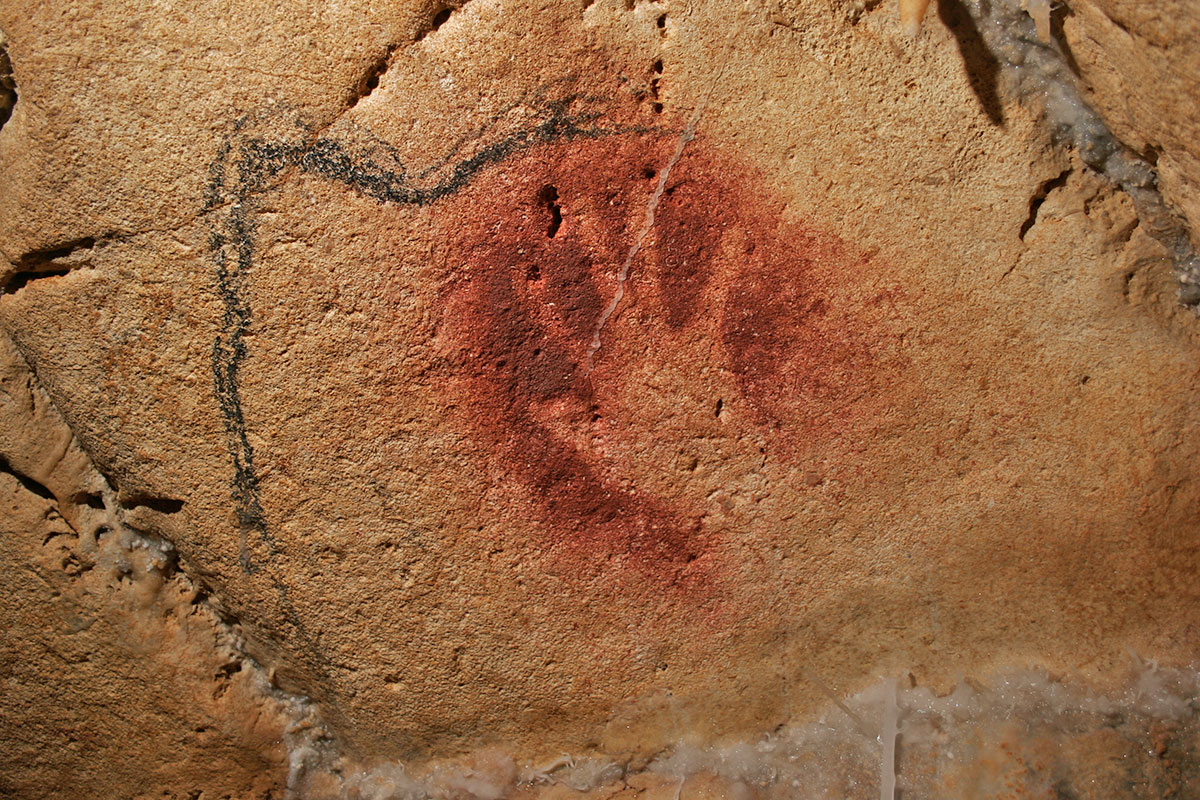
The red hand print in the cave at Chauvet-Pont d’Arc, imprinted c. 30,000 years ago.
The history of Homo sapiens
It’s an incredible history, peppered with highs and lows, successes and failures, but mainly it highlights the ingenuity, imagination and endless march of Homo sapiens to become the dominant species on planet Earth.
For better or worse, we have arrived at the Anthropocene – a precarious point in our evolution.
This timeline (plus a few of my own additions), is laid out in Sapiens.
Timeline in years before the present:
4.5 billion – Formation of planet Earth.
3.8 billion – Emergence of organisms, the beginning of biology.
66 million – Extinction of the dinosaurs.
6 million – The last common grandmother of humans and chimpanzees.
2.5 million – Evolution of the genus Homo in Africa. First stone tools.
2 million – Humans spread from Africa to Eurasia. Evolution of different human species.
500,000 – Neanderthals evolve in Europe and the Middle East.
300,000 – Daily use of fire by Homo erectus, Neandertals and the forefathers of Homo sapiens. Some scholars advocate the link between cooking food and the shortening of the human intestinal tract and the growth of the brain.
200,000 – Homo sapiens evolves in East Africa.
70,000 – The Cognitive Revolution. Emergence of fictive language and imagination. Sapiens spread out of Africa.
50,000 – Extinction of Homo sloensis and Homo erectus
45,000 – Sapiens settle Australia. Extinction of Australian mega-fauna. Extinction of Homo denisova. Up to 6% of the DNA of Melaniesians and Aboriginal Australians is Denisovan DNA.
30,000 – Extinction of Neandertals. In 2010 the Neandertal genome was mapped, and scientists discovered that 4% of the DNA of modern populations of Homo sapiens in the Middle East and Europe is Neandertal DNA.
16,000 – Sapiens settle America. Extinction of American mega-fauna.
13,000 – Extinction of Homo floresiensis.
12,000 – The Agricultural Revolution. Domestication of plants and animals. Permanent settlements. Sapiens now the only surviving human species in the genus Homo.
11,500 – Göbekli Tepe built by hunter-gatherer communities in Turkey.
5,000 – First kingdoms, script and money. Polytheistic religions.
4,500 – Stonehenge is built in southern England.
4,250 – First Empire – the Akkadian Empire of Sargon.
4,000 – The beginning of Hinduism in India.
2,500 – Invention of coinage – a universal money. The Persian Empire – a universal political order ‘for the benefit of all humans’. Buddhism in India – a universal truth ‘to liberate all beings from suffering’.
2,300 – The ancient library is built in Alexandria.
2,000 – Han Empire in China. Roman Empire in the Mediterranean. Christianity.
1,400 – Islam
500 – The Scientific Revolution. Humankind acknowledges its ignorance and begins to acquire unprecedented power. Europeans begin to conquer America and the oceans. The entire planet becomes a single historical arena. The rise of capitalism.
200 – The Industrial Revolution. Family and community are replaced by state and market. Massive extinction of plants and animals.
133 – The American legal system grants companies status as ‘legal entities’ or ‘corporate personhood’ as if they were flesh blood beings. Companies are the main players in the economic arena. Yet they only exist as ‘imagined realities’.
The Present – The Age of Humans (The Anthropocene). Humans transcend the boundaries of planet Earth. Nuclear weapons threaten the survival of humankind. Organisms are increasingly shaped by intelligent design rather than natural selection.
The future – Intelligent design becomes the basic principle of life? The development of Artificial Intelligence? Homo sapiens either extinct or replaced by superhumans?
The paradox of evolutionary success
Based on the latest scientific warnings and reports, it seems we are faced with a stark choice: adapt or die.
According to Charles Darwin the premise underlying all evolution is how a species adapts genetically and behaviourally to its environment over vast expanses of time to ensure its continued existence. Herbert Spencer summarised this theory as ‘survival of the fittest’.
But the situation humanity currently faces couldn’t be more critical. According to scientists we don’t have millennia, we have just decades to solve a crisis of our own making; arising it seems, from the activities of our evolutionary success…

Image by Rob Curran on Unsplash
Our current limited measure of evolutionary success is the number of DNA copies of a species. And being as humans (Homo sapiens) account for 96% of the mass of mammals living on the planet, I’d say, based solely on that criteria, we made it big.
We took our domesticated plants and animals with us too. Behind Homo sapiens, cattle, pigs and sheep are the second, third and fourth most widespread large mammals. 70% of the birds alive today are domesticated poultry.
It’s estimated there are some 25 billion chickens around the globe!
As far as plant life goes, wheat crops represent the largest landmass, covering over 220 million hectares. Our dependence on wheat, a cereal food containing gluten and lectins, two substances that are natural destroyers of gut health, and by default overall health, has been compounding for 7,000 years, when humans began farming in the Levant (Middle East).
The Agricultural Revolution
Gradually our diets switched from diverse forager staples like nuts, seeds, fruits, and vegetables such as mushrooms and meats like rabbit, deer and mammoth (who disappeared around the same time as Neanderthals), to a reliance on a narrower range of less nutritious crops such as wheat, rice and potatoes.
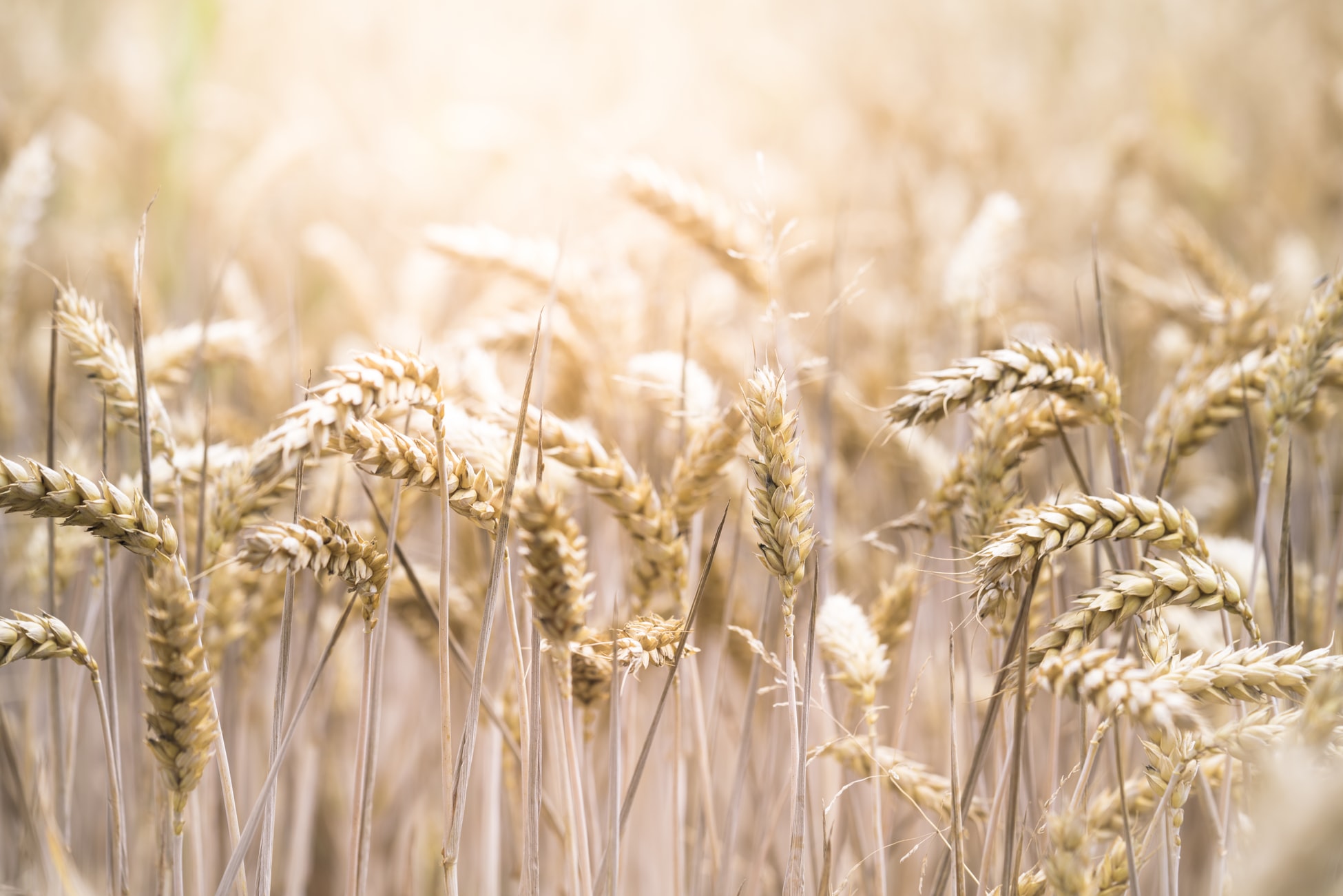
Image by Evi Radauscher on Unsplash
As our progression from foragers to farmers occurred over several thousand years, so our populations expanded in line with an increased intake of calories. It wasn’t a utopia though; we had to maintain and protect crops through climate cycles and raids from other tribes. We became vulnerable. We had all our eggs in one basket.
By the time humans had achieved significant population growth through complex agricultural societies, it was too late to go back to our hunter-gatherer way of life – it simply could not sustain the new structure of radically bigger communities.
What started out as a way of filling our stomachs more efficiently thousands of years ago somehow morphed into a beast that now controls us.
Agricultural Revolution: the ability to keep more people alive under worse conditions.”
~ Yuval Noah Harari (Sapiens)
Our species’ evolutionary success has come at a high price, with mass extinctions in marine, plant and animal life.
Homo sapiens have destroyed much of their natural capital: 50% of the world’s rainforest and coral reefs are gone, over fishing has depleted our oceans and hundreds of tons of plastic waste is killing marine life and polluting our oceans.

Polar bear and plastic cone – image by Andrea Bohl on Pixaby
Many fish are going into the human food chain full of harmful toxins such as PCBs, mercury and other heavy metals. Our water supplies are saturated with chlorine and fluoride and our air quality is full of persistent organic pollutants (POPs).
Also, the process of biomagnification has a serious impact on human health.
Some time ago I read a recent news story about a new world record for the time and depth of a submersible at the bottom of the Mariana Trench (the deepest place on Earth). Among some wonderful new discoveries of deep sea species there was a more depressing sighting of a plastic bag on the sea bed – seven miles down!
Given the mess we’re collectively in, is it not timely to measure and define evolutionary success outside of the narrow criteria of survival and reproduction?
We have not considered quality of life and diversity on our climb to world domination. Especially not for plant life, the animal kingdom or our domesticated livestock, and not in many cases, for large human populations around the world.
The profits and growth obtained from earth’s natural resources are finite. We cannot eat, drink or breathe money.
“Even though we now have a decent picture of the planet’s climatological past, never in the earth’s entire recorded history has there been warming at anything like this speed- by one estimate, around ten times faster than at any point in the last 66 million years. Every year, the average American emits enough carbon to melt 10,000 tons of ice in the Antarctic ice sheets- enough to add 10,000 cubic meters of water to the ocean. Every minute, each of us adds five gallons.”
~ The Uninhabitable Earth: Life After Warming
In part two I’ll cover the Cognitive Revolution, biodiversity and some solutions. I’ll aim to be more upbeat, but the facts are the facts, no matter how much we might wish they were otherwise.






 rhap.so.dy in words