An Introduction to the Outstanding World of Opera

“No good opera plot can be sensible, for people do not sing when they are feeling sensible.” ~ W.H. Auden

If I could sing this post I would! Except you wouldn’t thank me, I can’t sing in tune so I tend to warble alone in the car…

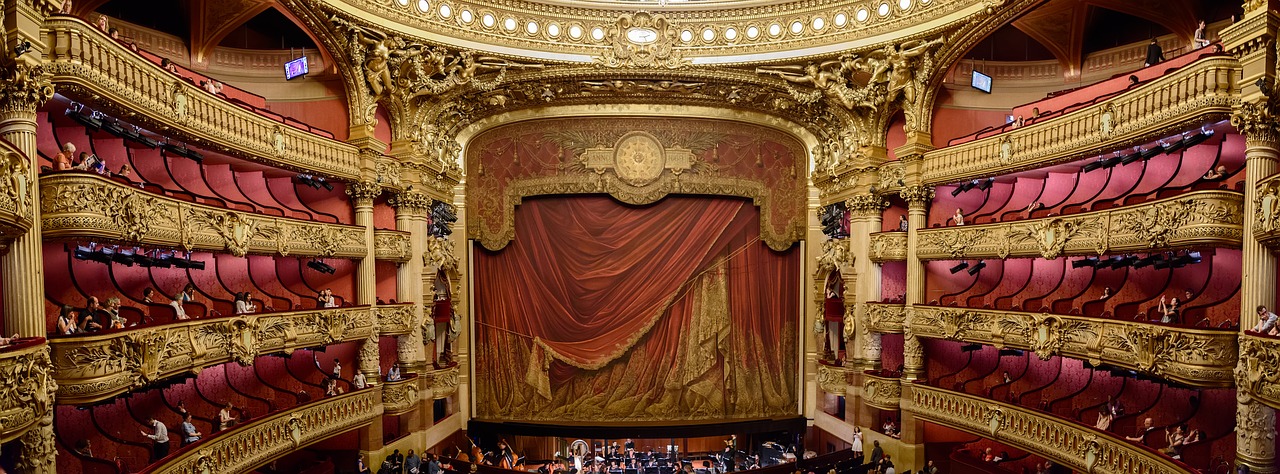
Opera - stage curtain

Welcome to this week’s performance! The sumptuous curtains have been pulled back so you can catch a glimpse of a wonderful and varied cast of characters, divas and arias. Opera is the most colourful realm of musical drama. When text, (libretto) and music (usually singing) combine, it can result in heart-stopping moments of exquisite human expression. 

I’ve always enjoyed classical music, even as a youngster, but it’s only been in the last decade that I’ve really come to appreciate opera more fully. I must have matured and grown into the art form.

My mum took me to see Puccini’s romantic tragedy, ‘La Boheme’ at the Royal Opera House when I was about eighteen; we sat up in the stalls, almost in the roof if I recall. I don’t remember who the singers were – but I do remember their passion.

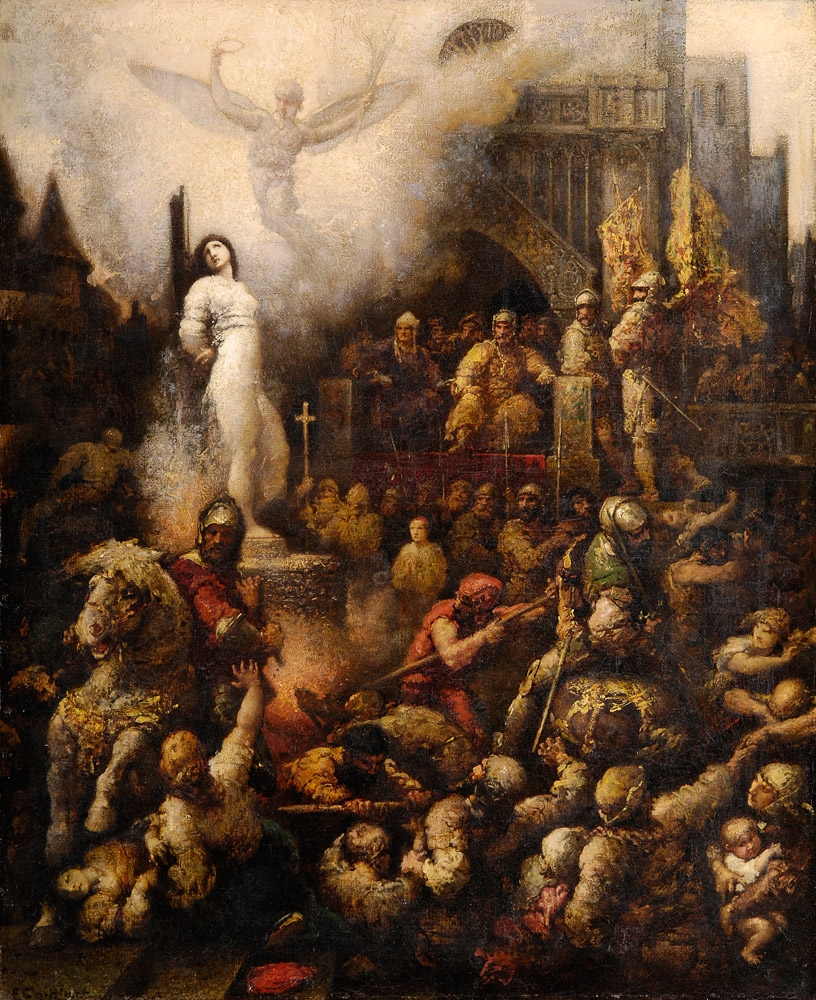
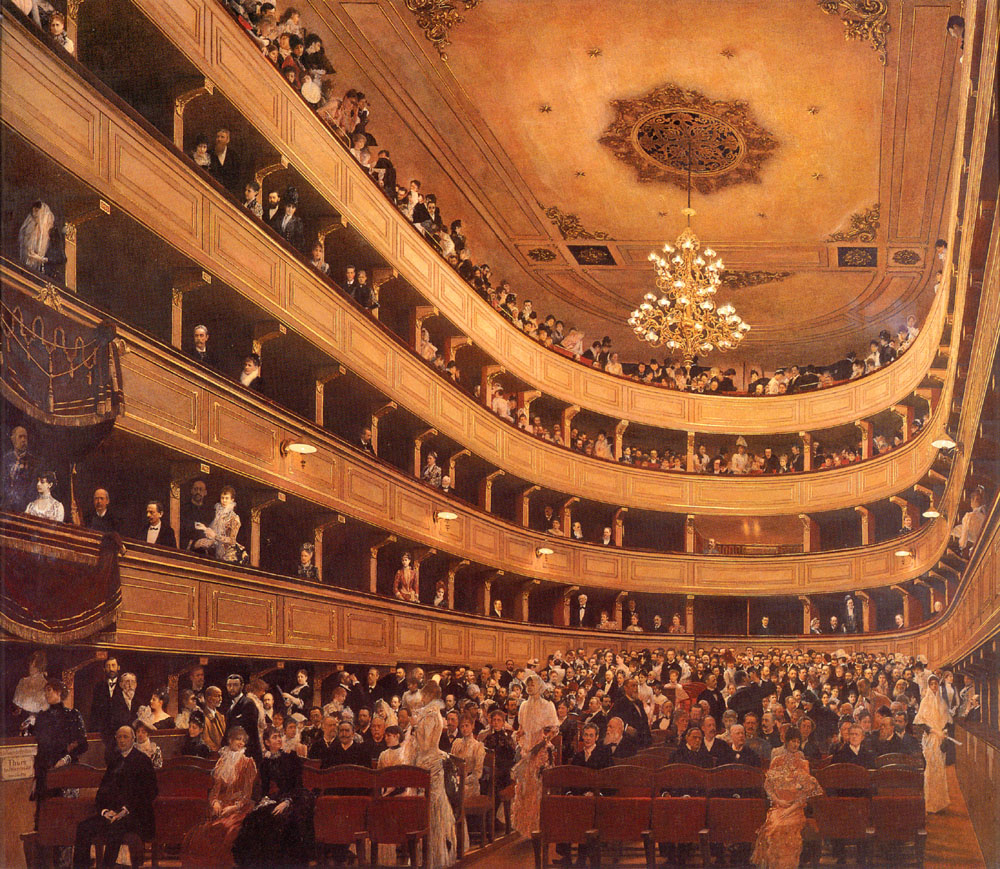
The old Burgtheater by Klimt c. 1889

The old Burgtheater by Klimt c. 1889

I loved the drama, the costumes, the live singing and music, but still it wasn’t until a good few years later I went to see Madame Butterfly, again at the Royal Opera House. We had better seats this time. Kleenex tissues were very much in demand during that performance!

Stephen Fry and comedian Alan Davies undertook an ‘operatic’ experiment in conjunction with the Royal Opera House, to monitor their cardiovascular output and physical markers during a performance of Simon Boccanegra, with a view of measuring their emotional responses throughout the performance. It was undoubtedly impactful on both of them, even Alan, who was not an opera fan. The Science of Opera:

Origins

The first known surviving opera was written in 1600 to celebrate the wedding of Marie de’ Medici and Henri IV of France, and was composed by the duo ‘il Romano’, Giulio Caccini (1551-1618) and Jacopo Peri (1561 – 1633).

L’Euridice is more of a drama set to music with some divine choral sections; the first attempt to combine text by Ottavio Rinuccini with vocal music. This type of early performance; a fusion of music with solo vocals and choral ensembles to combine both literary and visual arts evolved over 400 years, into the opera we are familiar with today.

A period performance of the entire work with Nicolas Achten and Céline Vieslet:

Orfeo ed Euridice

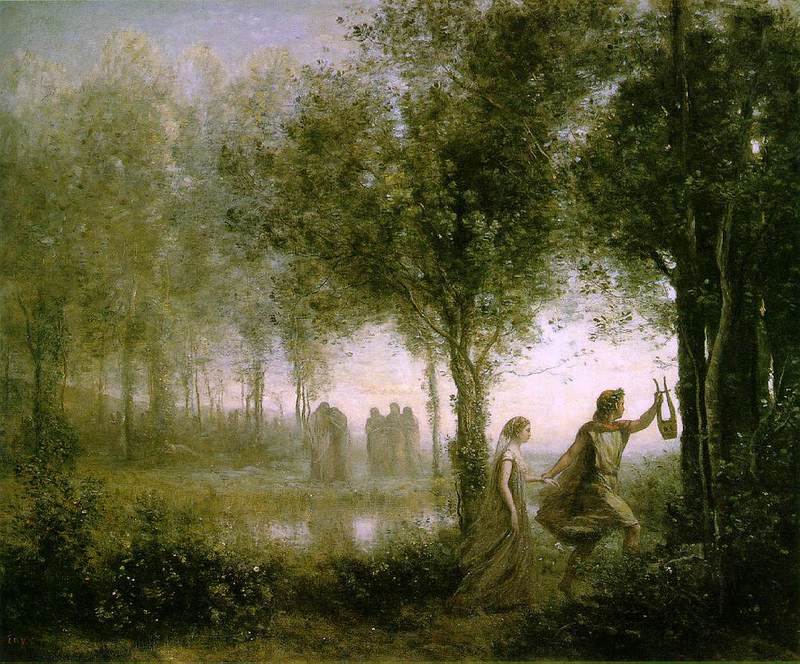
Over a century later composer Christoph Willibald Gluck would become inspired by the ancient Greek mythical tale of Orpheus, son of Apollo; legendary musician, poet and prophet (bard for that matter). His music dramatises Orfeo’s journey to Hades to appease the furies with his music in order to bring his new bride, Eurydice back to life, in his 1762 opera, Orfeo ed Euridice.

Orpheus leading Eurydice from the underworld by Jean-Baptsite Camille Corot

Orpheus leading Eurydice from the underworld by Jean-Baptsite Camille Corot

It was a box-office hit in Vienna when it premiered at the Burgtheater on 5th October, and was then revised and expanded further by Gluck for its French premiere at the Paris Opéra on 2 August 1774 as Orphée et Eurydice.

A superb clip of American tenor Richard Croft singing ‘J’ai perdu mon Eurydice’ by Gluck:

Offenbach wrote his operetta, ‘Orpheus in the Underworld’ in 1858 as a satirical send-up of Gluck’s earlier opera. The ‘Infernal Galop’ from Act 2, Scene 2, is infamously referred to as the ‘can-can’. Saint-Saëns took poetic license with the Galop, by slowing it to a crawl, and arranging it for the strings to represent the tortoise in The Carnival of the Animals.

I really have the urge to don stockings and kick my legs right now!

Baroque Opera

The great Baroque opera composers were Händel, Purcell, Monteverdi and Vivaldi, who I think must have written as many operas as I’ve had hot dinners!

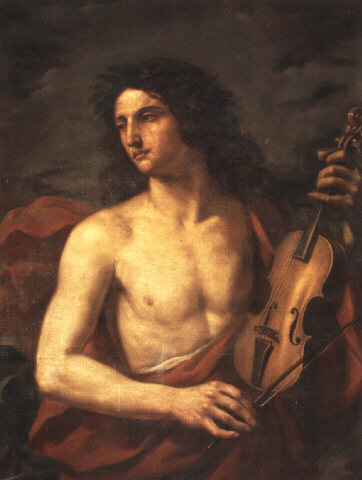
Monteverdi’s music marked the crossover from the late Renaissance to early Baroque, and he also wrote an opera about, yes, you guessed it, Orpheus! ‘L’orfeo’ was written and first performed in Mantua in 1607.

Orfeo by Cesare Gennari

Orfeo by Cesare Gennari

In fact, I was flabbergasted to learn that a total of 71 Orphean operas (not all completed) have been written between 1600 and 2015.

Cecilia Bartoli as Euridice in Haydn’s L’anima del filosofo ossia Orfeo ed Euridice, ‘Al tuo seno fortunato’:

Georg Friedrich Händel composed 42 operatic works of varying genres that were written between 1705 and 1741. He achieved great success with his operas after he settled in England. Many of his works were premiered at the opera house in the Haymarket, initially the Queen’s Theatre which then became known as the King’s Theatre.

One of my favourite Händel arias is ‘Lascia ch’io pianga’ (let me weep) from his first opera, Rinaldo, published in 1711.  Arleen Auger has the purest, sweetest voice in this remarkable recording:

Barbara Bonney ‘Thy hand, Belinda…When I am Laid in Earth’ by Henry Purcell:

Mozart

His partnership with Venetian librettist, Lorenzo Da Ponte created some of the most memorable operas ever written. From the tale of the philandering rake, Don Giovanni, to the complicated marriage of Figaro, to the outlandish Magic Flute with a psychotic Queen of the Night, as well as others such as Idomeneo, Cosi fan tutte, La Clemenza di Tito, Mitridate, Lucio Scilla and Zaide to name but a few.

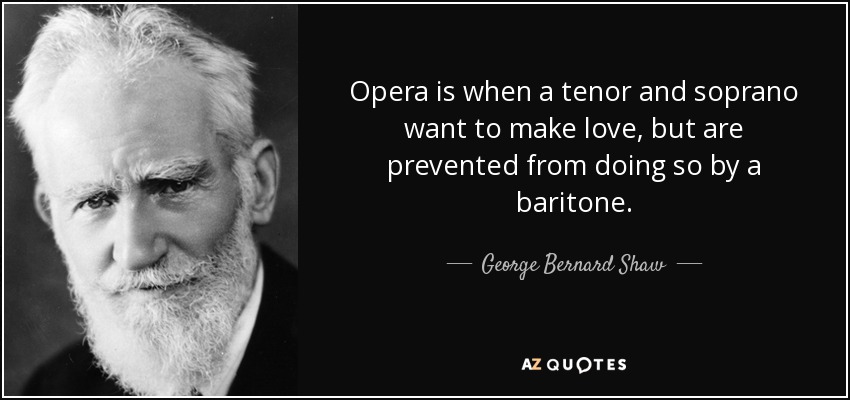
Opera quote-opera-is-when-a-tenor-and-soprano-want-to-make-love-but-are-prevented-from-doing-so-george-bernard-shaw-79-81-87

Diana Damrau isn’t taking any prisoners in her stunning rendition of the ‘Queen of the Night’ aria:

A really beautiful clip of Cecilia Bartoli and Jean-Yves Thibaudet performing ‘Voi che sapete’ (with translation) from the Marriage of Figaro:

Beethoven

Dear Ludwig only wrote one opera in his lifetime, about a dutiful wife, Leonore, the early title of the work that would become known as ‘Fidelio’. It contains his hallmark themes of heroism and courage at its core. Leonore disguises herself as a prison guard in an attempt to rescue her husband, Florestan, from death.

Marilyn Horne – Abscheulicher! Wo eilst du hin?

Bizet

His iconic opera, Carmen, based on the eponymous novella by Prosper Mérimée, about a feisty and fickle young gypsy woman who captures the heart of a soldier, Don Jose, is one of my favourites. It broke with convention at the time of its premiere in March 1875, and was received with indifference. However it has become hugely in popular over the years.

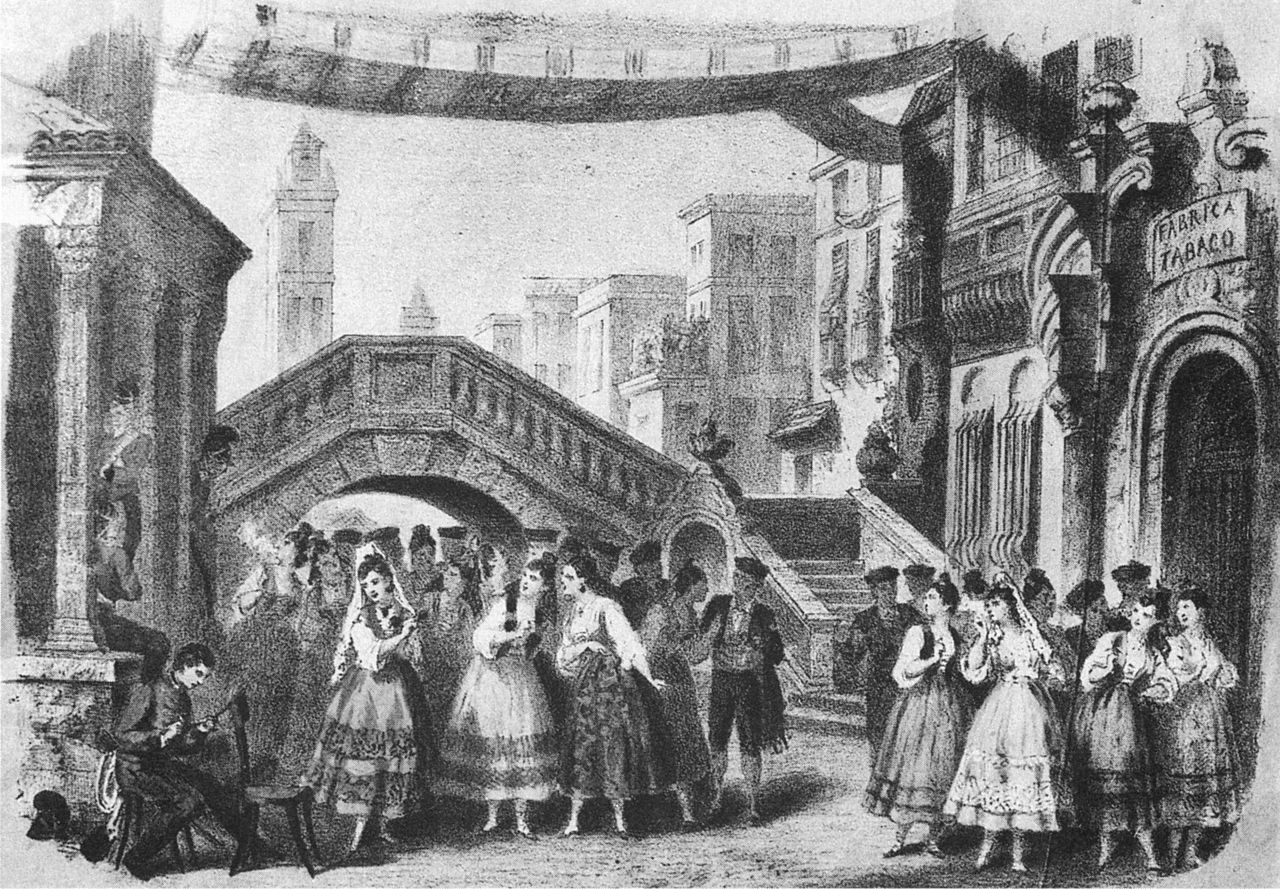
Carmen lithograph by Pierre August Lamy c. 1875

Carmen lithograph by Pierre August Lamy c. 1875

The story follows Don Jose’s total immersion into infatuation, obsessive desire, love and jealousy against the back drop of a parched, proletarian Seville. The music portrays his eventual downfall as he becomes a deserter and vagabond, consumed with malicious intent towards Carmen –  the woman who has spurned him. If he can’t have her, then neither can his rival for her affections, toreador Escamillo…

It has many wonderful, memorable arias and evocative orchestral music that capture its passionate and tragic themes: the key ingredients of unforgettable opera.

Les tringles des sistres tintaient (Chanson Boheme) – Angela Gheorghiu:

Jonas Kaufmann as Don José with a poignant performance of the Flower Song ‘La fleur que tu m’avais jetée’:

I love this seductive, slinky performance of “L”amour est un oiseau rebelle” by Elina Garanca in the Metropolitan Opera staging of 2010:

A steamy scene ‘Près des remparts de Séville’ from the film of Carmen made in 1984, with Julia Migenes and Plácido Domingo:

Bizet’s Carmen has also provided inspiration for ballets and instrumental music.

The Italians are in the house!

Somehow the dramatic nature of opera suits the Italian psyche, after all, it originated there, and none were more successful in this genre than Guiseppe Verdi. He composed famous operas such as the romantic tragedy La Traviata, the epic Aida, Rigoletto, Nabucco, Otello, Il Trovotore, Macbeth, Falstaff, La Forza del Destino, Simon Boccanegra and many others.

Verdi blows my socks off with this colossal classic from Nabucco. Chorus of the Hebrew Slaves:

The drinking song from La Traviata with Rolando Villazon and Anna Netrbko:

Hot on his heels is Giacomo Puccini, a true romantic at heart. Among his best-loved operas are, Tosca, La Boheme, Turandot, Madame Butterfly, Manon Lescault and Gianni Schicchi.

Anna Netrebko and Rolando Villazon are superb in this romantic duet from La Boheme ‘O soave fanciulla’:

We musn’t forget Gioachino Rossini, who penned some very memorable tunes, including The Barber of Seville, La Cenerentola, William Tell, La Gazza Ladra and Otello.

The Barber of Seville

The Barber of Seville

During his meeting in Vienna with Beethoven in 1822 at the age of thirty, when Beethoven was fifty one, profoundly deaf, curmudgeonly and losing his health, he still managed to note in his conversation book:

“Ah, Rossini. So you’re the composer of The Barber of Seville. I congratulate you. It will be played as long as Italian opera exists. Never try to write anything else but opera buffa; any other style would do violence to your nature.”

Other Italian opera composers of note were Bellini, Donizetti and Mascagni. One of my favourite arias is Casta Diva by Bellini (Chaste goddess…turn upon us thy fair face, unclouded and unveiled). A fabulous live vintage recording of Maria Callas packed with pathos:

Italy produced the finest tenor in opera history with Luciano Pavarotti. That man was born to sing! For me, no one can top his powerful, emotive and distinctive voice.

E lucevan le stelle (Tosca):

Here he is singing the immortal ‘Nessun Dorma’ from Turandot as an encore:

Tchaikovsky

We perhaps think of his wonderful, warm, lush violin concerto, his romantic symphonies and his immortal ballet music, but this Russian heavyweight wrote a grand total of eleven operas, his most popular being Eugene Onegin.

Wagner

Probably the closest rival to Verdi for the King of opera crown, Richard Wagner’s operas were usually epic in subject matter, long, very long, with romantic music, involving lovers, mythical characters, gods and large ladies.  And did I mention long?! Brünnhilde is an icon in her own right. So much so, she was even featured in a cartoon!

A beautiful recording with Anne Evans in Brünnhilde’s Immolation from Götterdämmerung:

When it comes to Wagner I can only listen in small doses. I’ve often joked that the ears can only enjoy for as long as the derriere can endure!

Wagner’s 13 impressive operas: Die Feen, Das Liebesverbot, Rienzi, Der Fliegende Hollander, Tannhäuser, Lohengrin, The Ring of the Nibelung (Das Rheingold, Die Walkure, Siegfried and Gotterdammerung), Tristan und Isolde, Die Meistersinger and Parsifal.

This made the hairs on my arms stand up! Ponte Singers – Pilgrim’s Chorus from Tannhäuser:

It doesn’t get more beautiful than this! Georg Solti and the Chicago Symphony Orchestra give a masterclass in building sublime, unresolved tension to an eventual, satisfying crescendo in this performance of Tristan und Isolde – Prelude and Liebestod:

For opera aficionados! Verdi vs Wagner – the 200th birthday debate with Stephen Fry:

I hope I have manged to give you a well-rounded introduction to opera if you’re not already a bit of an enthusiast, in which case you probably know more than me!

Of course there are those who poke fun at opera, even muscians! But we’ll let the irreverent Victor Borge off the hook; after all he was incredibly funny. A night at the opera like no other!

I’ll probably re-visit opera again one day, there’s far too much to cover in one post, and I know you’ve all got things to do and places to be.

For my swan song I’ll leave you with a poignant, sensual aria from Samson et Dalila by Saint-Saens –  ‘Mon coeur s’ouvre a ta voix’ sung by the queen of sopranos, Maria Callas:

“Opera is where a guy gets stabbed in the back, and instead of dying, he sings.” ~ Robert Burns

#SundayBlogShare 🎼🎻🎹🎸🎷🎧 Music: An Unsurpassed Social Gift

“All art aspires towards the condition of music.” ~ Walter Pater

Playing a musical instrument is the best workout I know for my brain, as well as for invigorating my whole body. Meditation follows a close second alongside some other pleasurable activities…

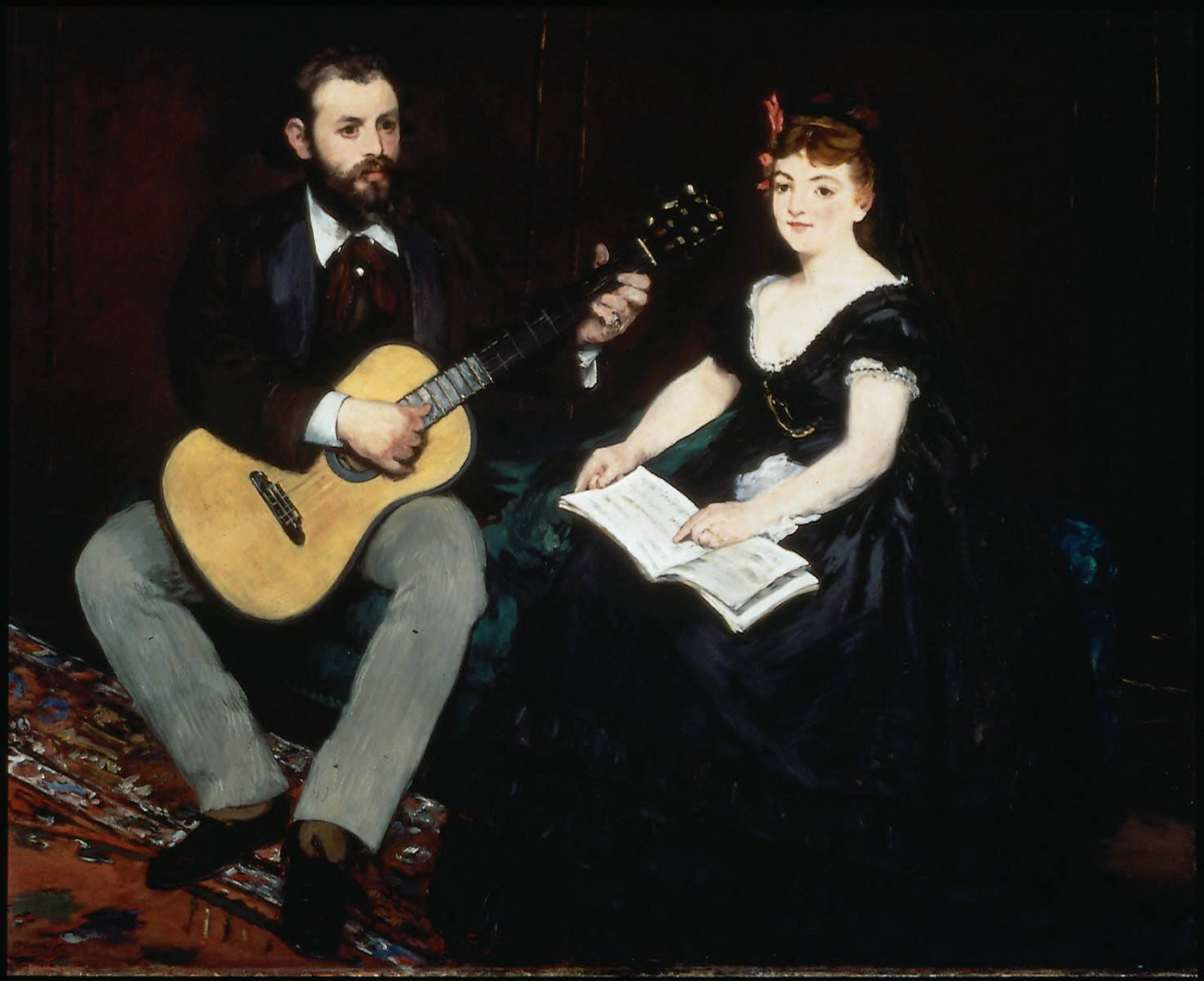
The Music Lesson by Manet c. 1868

The Music Lesson by Manet c. 1868

During a practice session I feel totally alive; my mind seems to be at its most creative, and yet clear of life’s ‘junk’. I can be myself when I’m playing my violin; happily ensconced in a ‘flow state’ with no judgment or expectation other than to enjoy my activity.

I may not be on stage in a world-class concert hall, (only in my imagination), in reality I’m in my lounge and completely engaged in a joyful fusion of physical and mental exercise.

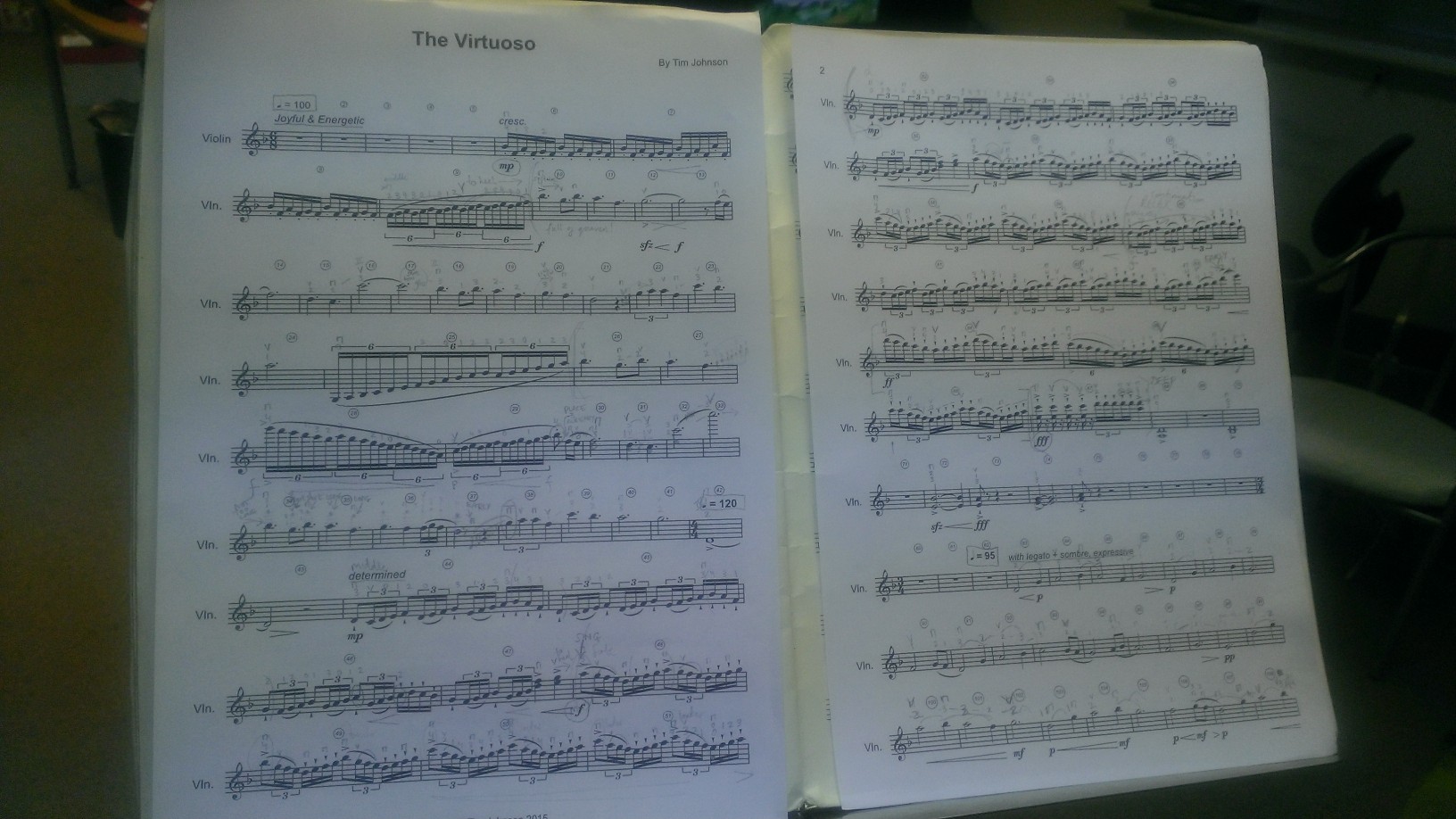
The thought of not being able to play inspired the premise for my novel, The Virtuoso.

Music score to accompany The Virtuoso by Tim Johnson

Music score to accompany The Virtuoso by Tim Johnson

While I’m playing Bach, Beethoven, Mozart and Vivaldi my brain is doing the ultimate multi-tasking, coordinating on an epic scale:

It’s enabling me to read the notes, to perform challenging passages of semi-quaver notes, to react quickly with tricky  incidental notes, trills and possible key changes during the piece, let alone changing position on the fingerboard, deciding what digit goes where, what bowing technique is required, the dynamics of the music and, of course intonation and my unique interpretation based on how the music makes me feel as I play it.

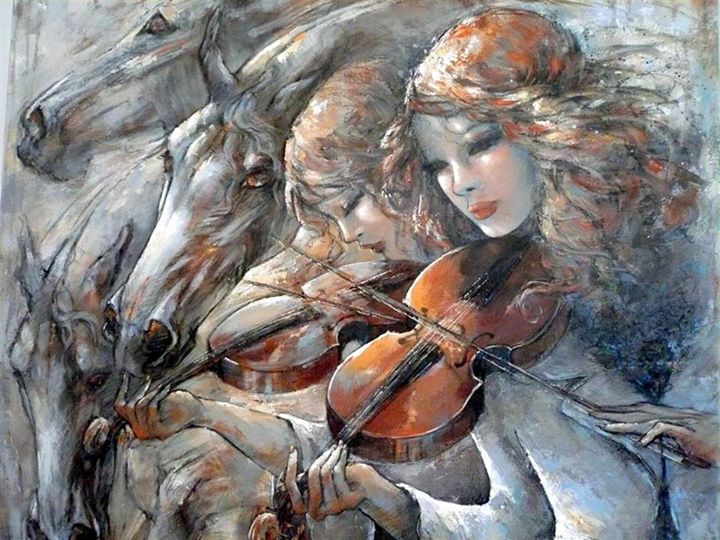
Jeanne Saint Cheron - violinist

Violinist by Jeanne Saint Cheron

Imagine coordinating that many processes in a split second. Brain plasticity is an incredible process. It must be an orchestra of simultaneous sparks, a symphony of synapses in there, lighting up all over the place!

Science has backed me up on that one. How playing an instrument benefits your brain – Anita Collins:

Afterwards I find myself in a special space, my mind is empty yet energised and I just write. Ideas flow. It doesn’t last forever, but I try to make the most of it! Those alpha brain waves are the good guys, they usher in our most creative moments when we’re in a state of relaxed concentration.

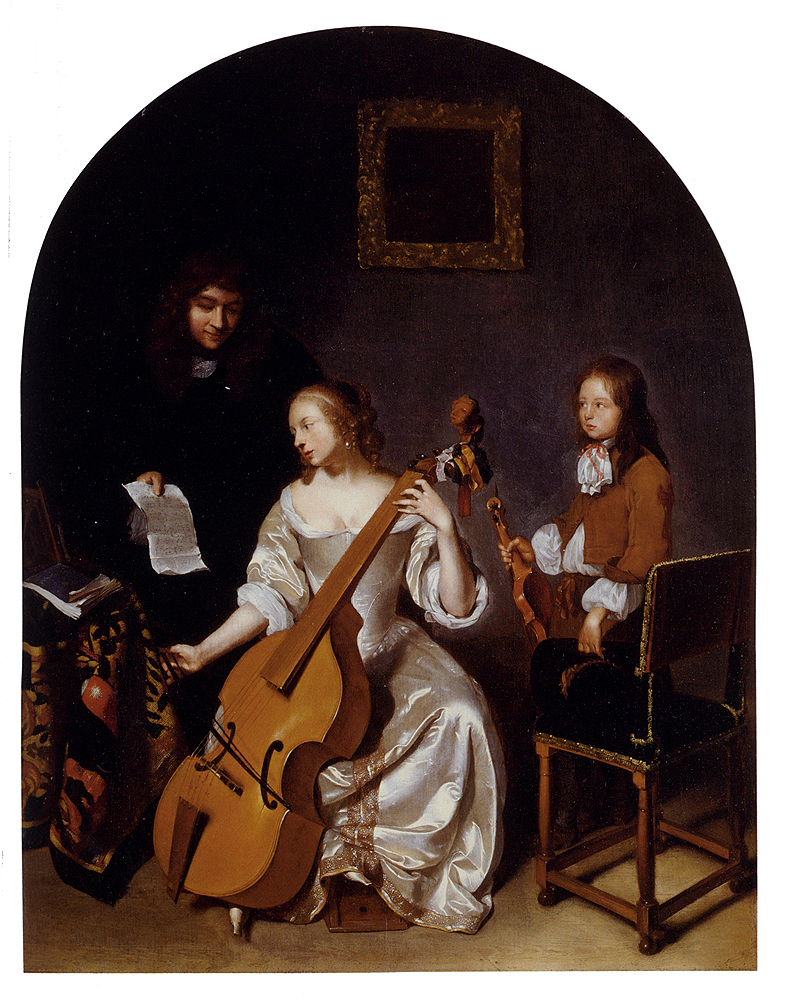
The Music Lesson by Caspar Netscher

The Music Lesson by Caspar Netscher

Music really is instrumental in improving brain function and cognitive ability.

You may relate to my joy if you play an instrument. I don’t mean to be unnecessarily sombre, but if music disappeared overnight, for whatever reason, what would become of our species? I don’t think I could live in a world devoid of such a rich, cultural heritage…

A fascinating talk from the late neurologist Oliver Sacks – Musicophilia: Tales of Music and the Brain:

This short video shows Dr. Sacks’s brain activity as he listens to music by Bach, his favourite composer compared with that of Beethoven:

A great excerpt from a talk about the history of music by Dr. Daniel Levitin, who argues against Steven Pinker, asserting that music preceded language:

I wanted to share with you my own verses; poetry which most certainly does not compare to the likes of Keats or Shelley, but which is nonetheless genuinely reflective of my love for music; both playing and listening.

Music Makes Me Feel…

First came the hypnotic rhythm of Beethoven,

Moonlight tones passing through my mother’s womb;

Loving piano gently infiltrates fleshy oven,

Beautiful harmony surrounds the warm, watery tomb

My whole being is receptive, active, listening,

Later in life, it will make my spirit sing.

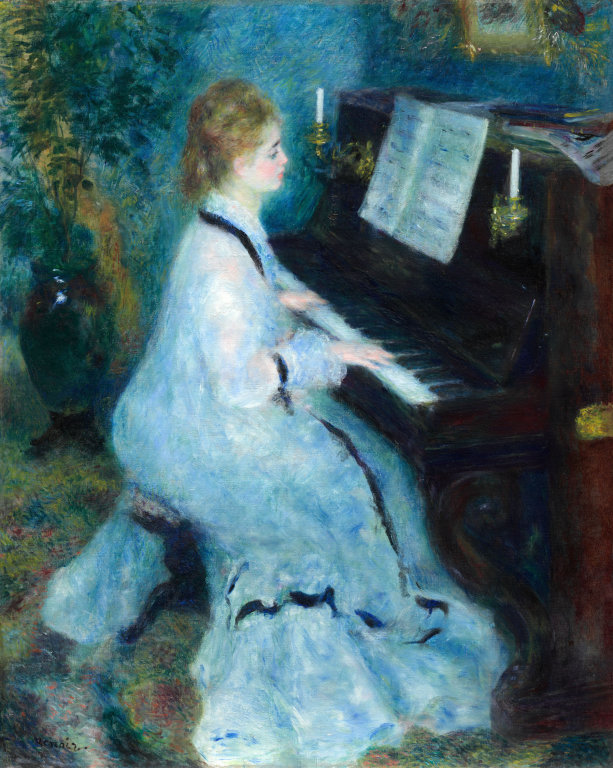
Woman at the Piano by Pierre Auguste Renoir

Woman at the Piano by Pierre Auguste Renoir

Orchestras fill our home, my education starts,

Lessons begin on the violin; fun but hard,

Before long I am hooked, for joy it imparts,

Bowing, scraping, hand stretching on fingerboard,

The right note eludes me, again and again,

Eventually, fingers know their place more than pain.

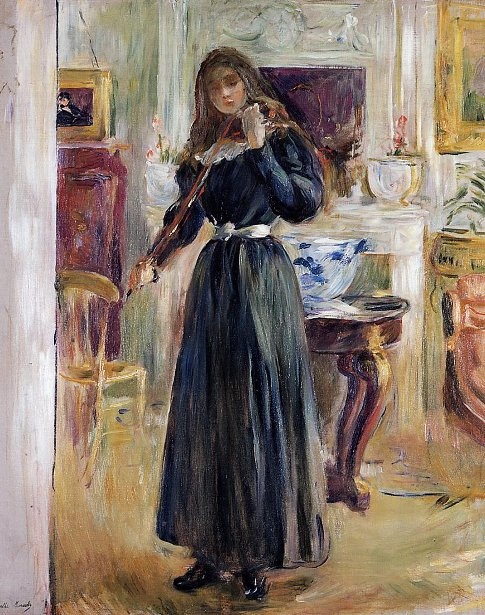
Berthe Morisot - The artist's daughterplaying the violin

Berthe Morisot – The artist’s daughter playing the violin

Pulsing air waves elicit ecstasy, and poignant lingering,

Oscillations match to memories from the deep,

Such moving melody, well-spring of suffering,

Black notes on treble or bass clef; ready to leap

From musicians instruments, creating composer’s passions

Hypnotism says Ludwig van, to force same emotions.

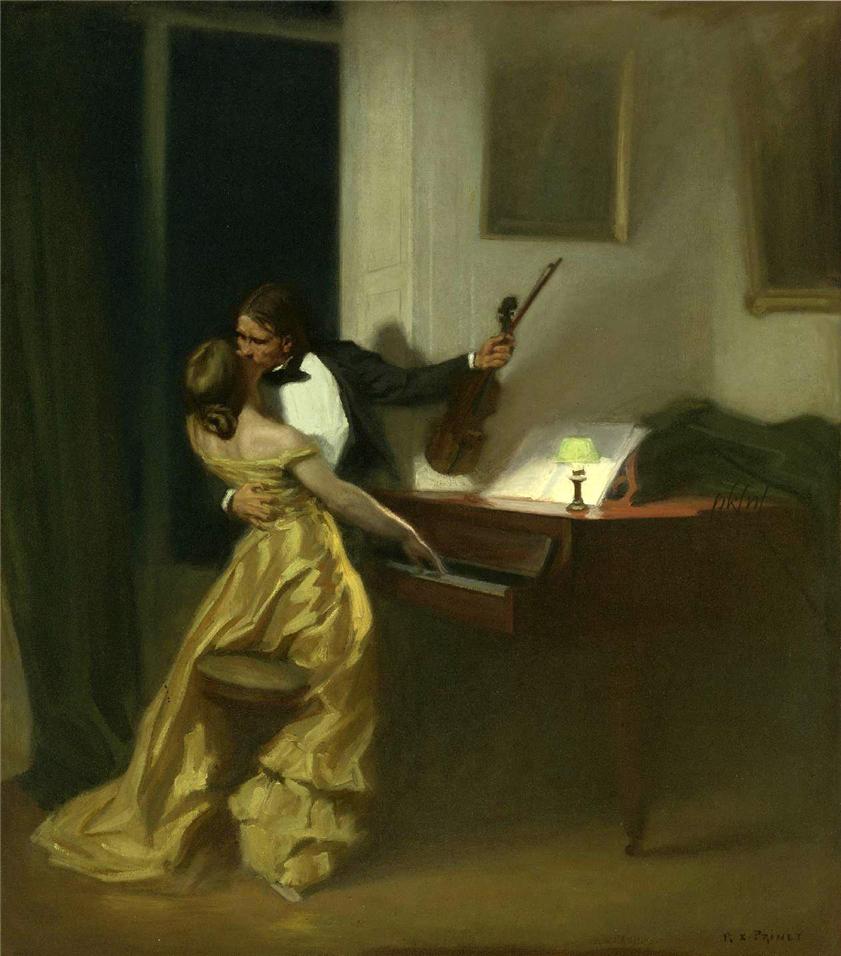
The Kreutzer Sonata by Xavier Prinet

The Kreutzer Sonata by Xavier Prinet

Major or minor key, varying dynamics and tempo

Music mirrors every sacred moment of life,

Soft, soothing adagio or a galloping allegro,

Good vibrations comfort me when in strife;

Open your heart to its flowing, healing tune,

And fill your soul with rapture, thrilling croon.

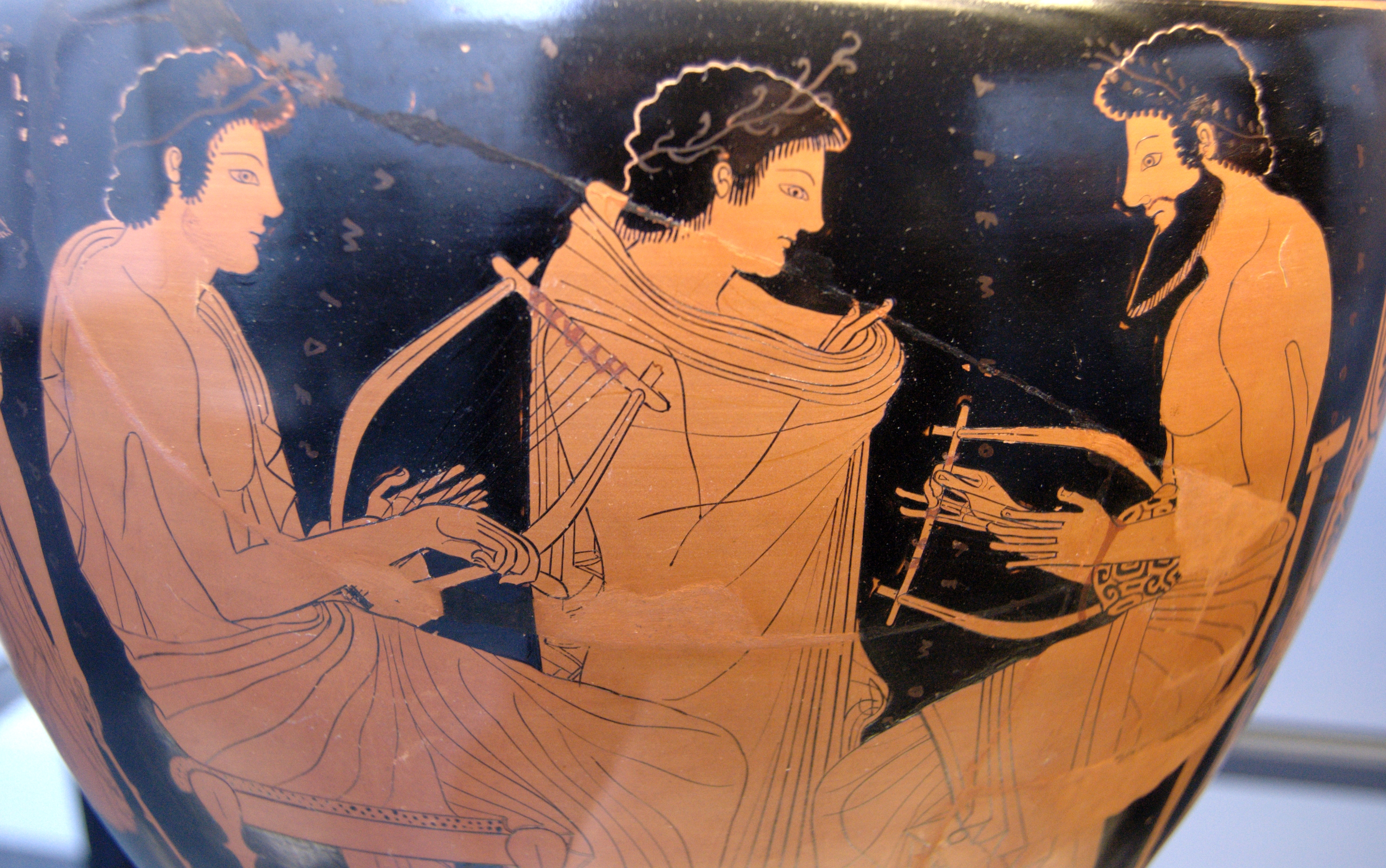
Music - Ancient Greek vase - music lesson

Ancient, divine sounds, evolving over millennia,

Effect is more visceral than art, sculpture, literature.

No mode of communication stirs like an aria;

Universal language communes with our nature,

Eclectic music of mankind, such profound apotheosis,

Ultimate expression of humanity: Quo Vadis?

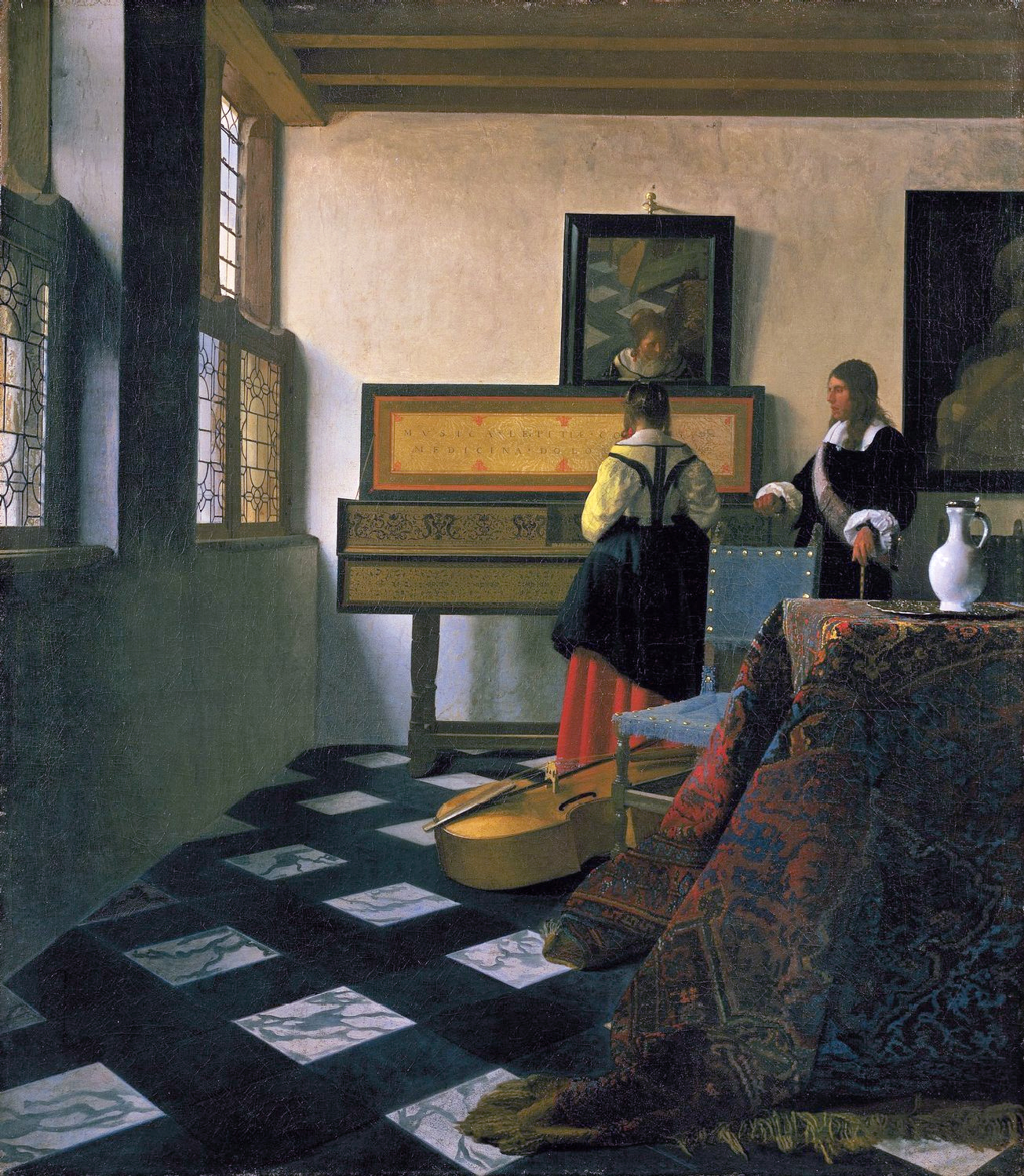
The Music Lesson by Jan Vermeer

The Music Lesson by Jan Vermeer

Apart from the sound of my mother’s voice, this timeless and peaceful composition by Beethoven that my mum used to play was probably one of the first things I ever heard:

Sound when stretched is music.

Movement when stretched is dance.

Mind when stretched is meditation.

Life when stretched is celebration. ~ Sri Sri Ravishankar

How to be More Motivated and Successful After Rejection

“Rejections slips, or form letters, however tactfully phrased, are lacerations of the soul, if not quite inventions of the devil – but there is no way around them.” ~ Isaac Asimov

You may ask, what can an author who’s sold more than 450 million books, as well as providing the content and inspiration for the behemoth that is the blockbuster series of Harry Potter movies, teach me about being rejected?

I would venture to say quite a bit actually. JK Rowling certainly inspired me to keep going, albeit not down the same path, but you’d imagine because of her stellar success she wouldn’t know anything about rejection – but you’d be wrong.

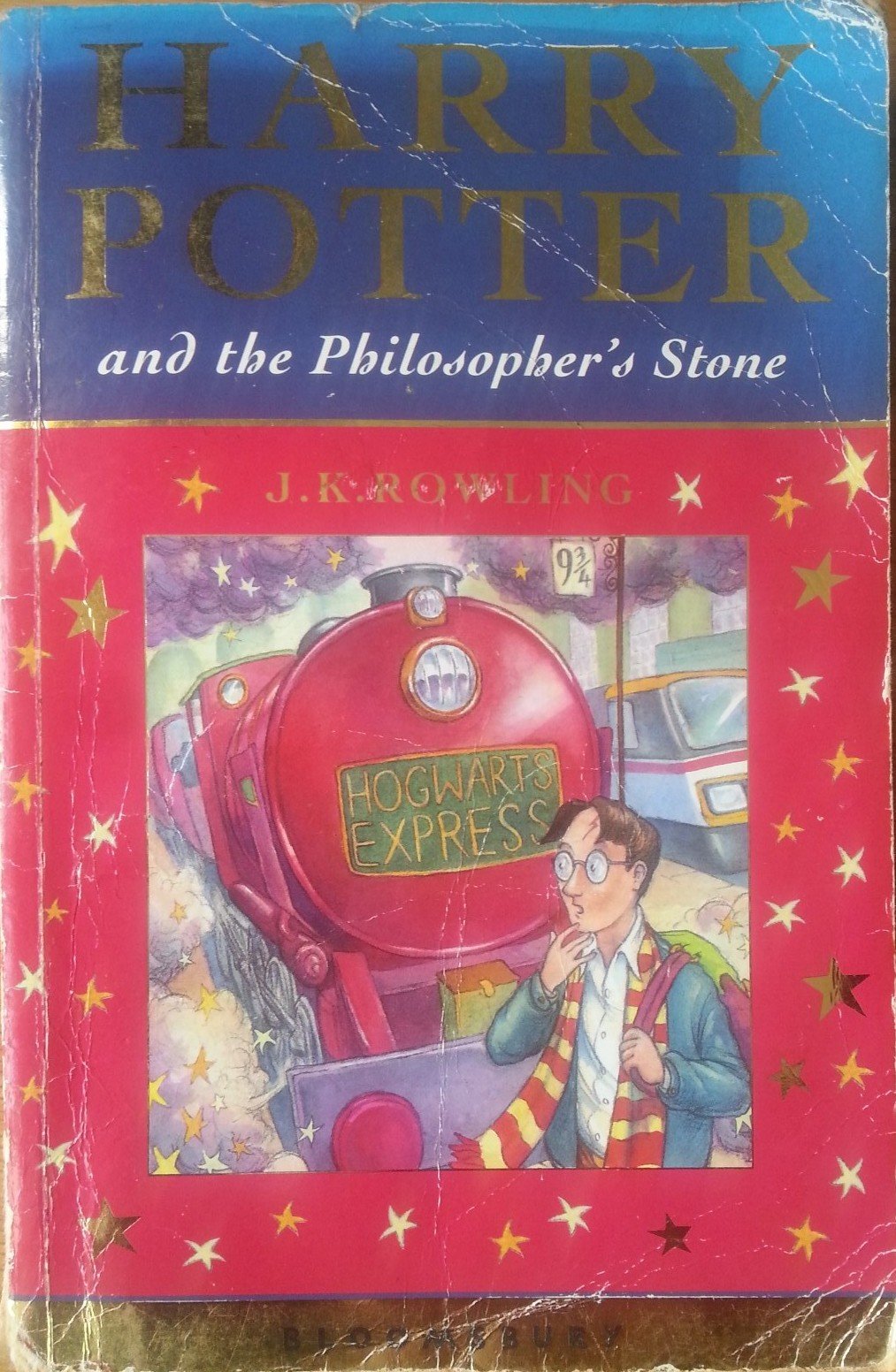
Rowling was rejected numerous times when she began approaching literary agents with Harry Potter and the Philosopher’s Stone. I’ll bet they’re kicking themselves now.

rsz_harry_potter_book

The Christopher Little Literary Agency agreed to represent her, a decision which has more than paid off! The rest, as they say, is history.

Rejections under the pseudonym Robert Galbraith

Many of us are aware that JK Rowling didn’t have immediate success when she approached agents and publishers with her first Harry Potter adventure.

Despite those rejections, the best-selling author of the Harry Potter fantasy series and her first adult novel, The Casual vacancy, decided to go incognito for her first foray into crime fiction.

I recently read a newspaper article that highlighted her rejections when she was looking to become published as crime thriller author, Robert Galbraith. When she sent off The Cuckoo’s Calling she came up against the same response as before, and probably some of what you and I have also experienced.

At the request of a fan, only for inspiration purposes and not revenge, JK Rowling revealed some of the responses she received as Robert Galbraith. Here is the reply from publisher Constable and Robinson:

Dear Robert Galbraith,

Thank you very much for giving us the opportunity to consider your novel, which we have looked at with interest. However, I regret that we have reluctantly come to the conclusion that we could not publish it with commercial success.

At the risk of ‘teaching my grandmother to suck eggs’, may I respectfully suggest the following: Double check in a helpful bookshop, on Amazon or in the twice yearly ‘Buyer’s Guide’ of the Bookseller magazine…who are the publishers now of your fiction category/genre. Call the publishers to obtain the name of the relevant editor…then send to each editor an alluring 200-word blurb (as on book jackets; don’t give away the ending!)…

Owing to pressure of submissions, I regret we cannot reply individually or provide constructive criticism. (A writers’ group/writing course may help with the latter.) May I wish you every success in placing your work elsewhere.

So why would an author who is reportedly worth £580 million put herself through that kind of torment? Rowling states: ‘I had nothing to lose and sometimes that makes you brave enough to try.’

It’s thought that twelve publishers turned down Harry Potter in 1996 until Bloomsbury took it on. Rowling pointed out that the same publisher who first rejected Harry Potter had sent the ‘rudest’ response to The Cuckoo’s Calling.

Eventually it was published by Sphere, the same publisher who accepted The Casual Vacancy in 2012. It was released in April 2013 and sold around 450 copies in Britain and a further 1,000 worldwide before the author’s true identity was made public.

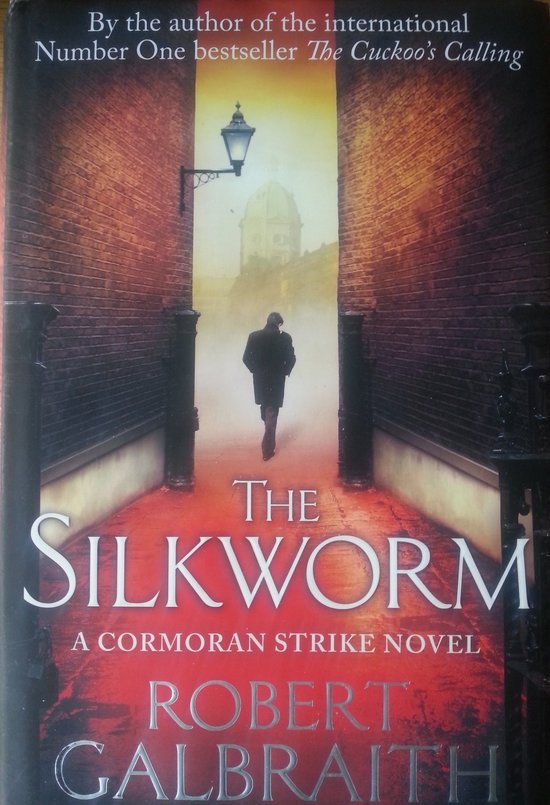
rsz_the_silkworm

Rowling has penned two further novels under the Galbraith pen name: The Silkworm and Career of Evil. So even one of the most successful authors of all-time continues to be rejected!

“You have to know how to accept rejection and reject acceptance.” ~ Ray Bradbury

Most authors have suffered many rejections. Rejection is part of a writer’s life; it’s how you deal with it that matters.

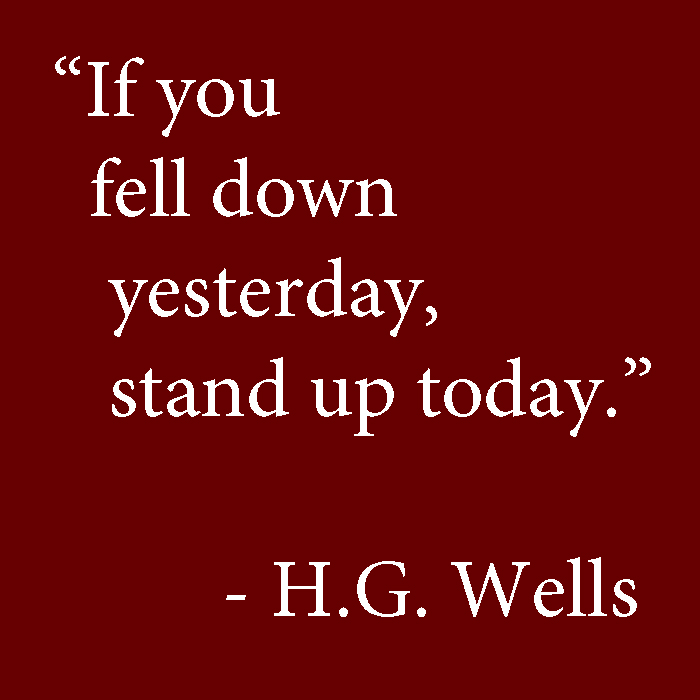
Rejection - HG Wells

So if you’ve been rejected you’re in great company!

Having been told by an editor that he couldn’t write about women, Stephen King set about penning his grisly epistolary tale of a lonely teenager, Carrie, a vilified misfit with telekinetic powers. King actually rejected himself by binning his first few pages of Carrie, (his fourth novel but first to be published), but his wife Tabitha rescued the pages from his waste paper bin!

Margaret Mitchell had Gone with the Wind rejected 38 times before it was published and went on to win the Pulitzer Prize for Fiction in 1937. The movie of ‘Gone with the Wind’ became the most successful film ever made up to that point, and remained the highest earning film for a further 25 years after it was released in December 1939. It won 10 Academy Awards, including Best Picture, Best Director, Best Adapted Screenplay, Best Actress, and Best Supporting Actress.

It’s still the most successful film in box-office history after monetary inflation has been taken into consideration.

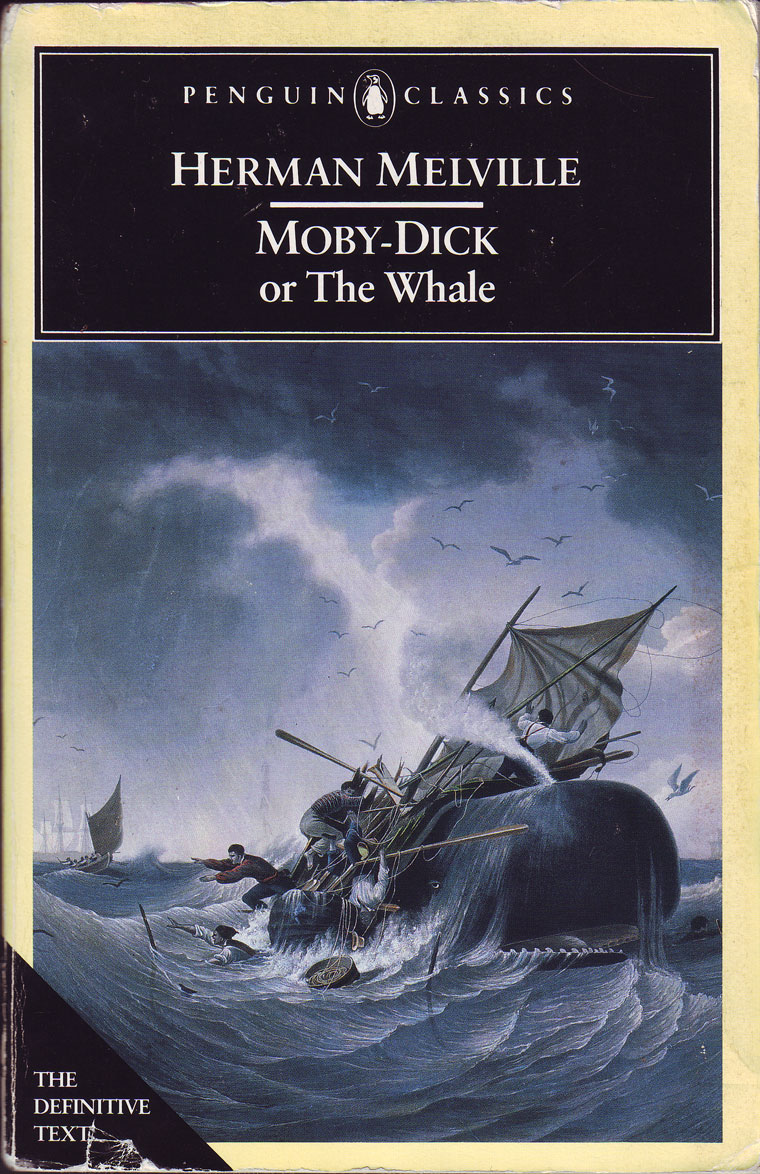
Other celebrated and successful authors that were rejected include: Mark Twain, DH Lawrence, Herman Melville, Ernest Hemingway, Dan Brown, Beatrix Potter, Agatha Christie, James Redfield, William Golding, George Orwell, John le Carré and Rudyard Kipling to name but a few.

Moby-Dick

Although it’s unpleasant, it seems par for the course that at some point you’ll be rejected, either as a writer, or in any other endeavour you undertake.  If you have the right attitude about it, rejection can inject you with the essential determination and strength of character needed to succeed, as well as helping to hone your skills where appropriate.

“Remember: when people tell you something’s wrong or doesn’t work for them, they are almost always right. When they tell you exactly what they think is wrong and how to fix it, they are almost always wrong.”  ~ Neil Gaiman

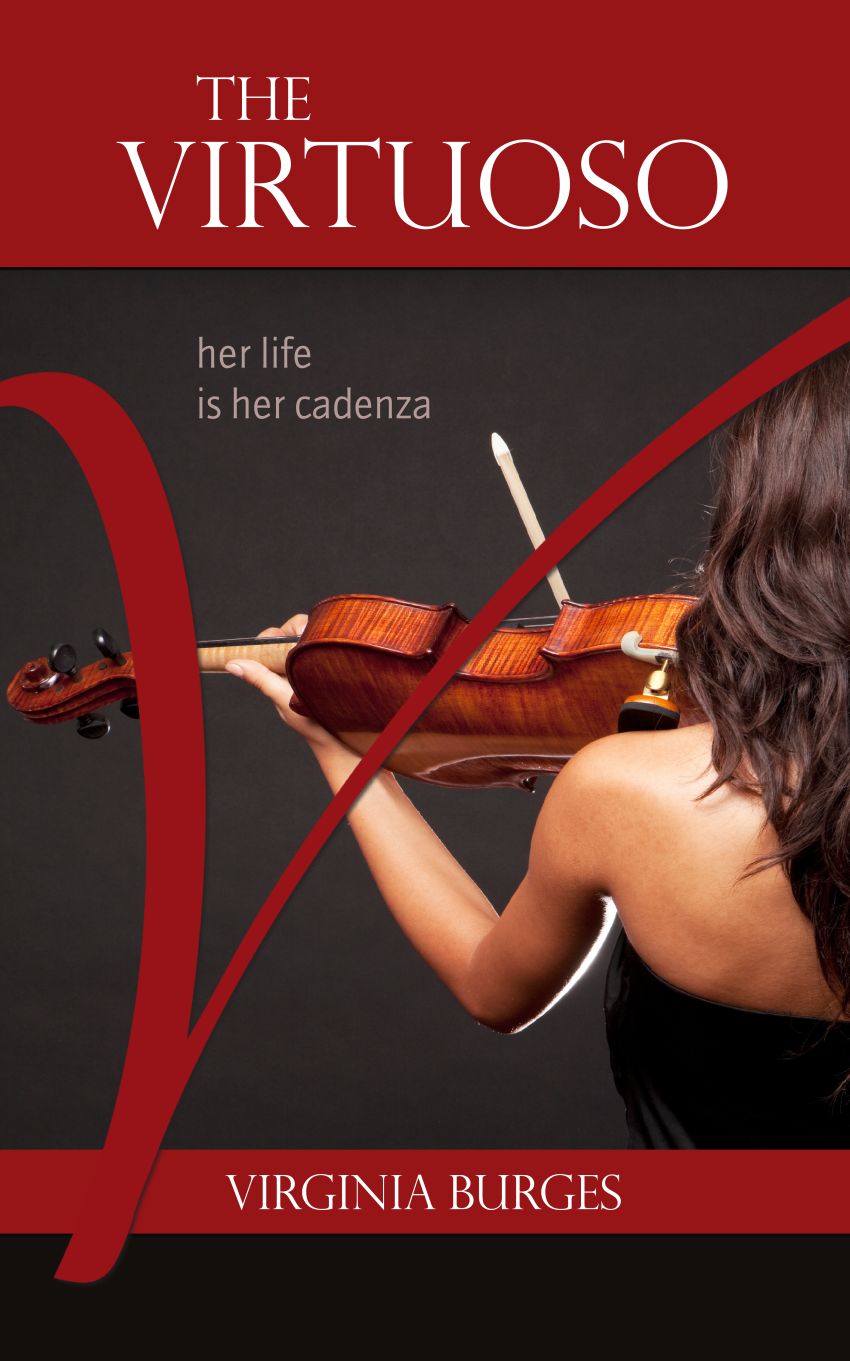
When I was ready to put my debut novel, The Virtuoso out there, it was a nerve wracking time. I was a first time author, my confidence was growing but I felt vulnerable and self-conscious. I didn’t know if I had it in me to become a published author or if people would enjoy my book.

Virtuoso-Kindle-no-bleed (2)

These fears have been banished since publication and the growing body of healthy reviews.

Needless to say I had many ‘thanks, but no thanks’ type of replies to my submissions, and some didn’t even bother to respond. After a few months of this soul destroying process I decided to self-publish. Independent authors comprise a significant share of the publishing industry. In this 2015 article, The Bookseller attempts to highlight the size of the self-publishing sector within the industry.

John Lock was the first author to sell over a million ebooks on Amazon. It can be done. There are many avenues an author can pursue, which I’m not going to go into here.

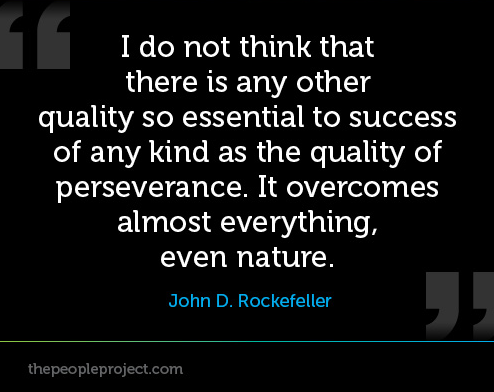
Rejection - JD Rockerfeller

Once I took my future into my own hands I felt better about myself. I was no longer at the mercy of literary agents; I could determine my own path.

The key point is to take positive action and don’t stop believing in yourself. Reading is highly subjective, and as Stephen King rightly pointed out, you can’t please all of the readers all of the time, you can’t even please some of the readers all of the time, but you really ought to try to please at least some of the readers some of the time.

If you can do that, you’re up there with the best of them.

I spent years working on my manuscript alongside working and raising a large family, I wasn’t about to ditch my dream because an agent or publisher didn’t feel my work was quite right for them at the time.

In fact, some of my rejection responses spurred me on. I’ll share a couple with you but I won’t say which agents they came from:

Thank you for bearing with me while I took a read of this. The Virtuoso is a window into a fascinating world, and you obviously know your subject very well. I’m afraid I don’t think it’s one for my list – I have to be very selective about what I take on, and to me the focus on relationships and dialogue just felt a little far towards the commercial end of the market for my tastes. Do keep trying it with agents – perhaps have a look in the acknowledgements sections of books that you think are for a similar readership, and see who represents them?

Very best of luck with it.

Dear Ginny,

Thank you for sending me THE VIRTUOSO and for giving me the opportunity to consider your work.

Unfortunately I am not able to offer you representation for your work. Although I thought the premise of the story was engaging, I’m afraid I did not fall in love with the writing, itself, the way I would need to in order to take it on in today’s tough non-fiction marketplace. I am sorry for this response but I feel that an agent must be wholeheartedly and unreservedly behind a book if she hopes to sell it to publishers. These judgements are always subjective and you may well find someone who feels very differently.

Thank you for giving me the chance to consider your work and I wish you luck in your search for a suitable agent to assist you.

Dear Ginny,

Many thanks for sending us this proposal, which I read with interest. I considered it carefully but I’m afraid on balance it just doesn’t quite grab my imagination in the way that it must for me to offer to represent you. So I must follow my instinct and pass on this occasion. I’m really sorry to be so disappointing, but thanks for thinking of us. Of course this is a totally subjective judgement, so do try other agents and I wish you every success.

Dear Ginny,

Thank you for sending in your material to us. We have read and considered your proposal carefully but do not feel it is something we could place successfully in the current publishing climate. Please bear in mind that this is the opinion of one agency alone and that others may feel differently.

We are extremely sorry to disappoint you but we wish you the very best of luck with your future writing.

Dear Virginia

Thank you for sending me your submission. I found your writing engaging, as you do write with real energy and imagination.

Having said that, I am afraid it wasn’t really something that I am currently looking for but I do wish you every success with your submission.

You may be reading this and thinking, ‘But I’m not an author so this isn’t relevant to me.’ However you can still apply the principles of not giving up, determination, re-evaluation and persistence to whatever project you’re working on.

Here’s a great motivational video by Prince Ea if you need help in that department!

We can all take a leaf out of Scarlett O’Hara’s book – after all, tomorrow is another day!

“I discovered that rejections are not altogether a bad thing. They teach a writer to rely on his own judgment and to say in his heart of hearts, ‘To hell with you.’“ ~ Saul Bellow

Heart Matters: Secrets of the Heart in Culture and Life

My heartfelt thanks go to French mathematician and philosopher, Blaise Pascal, for elucidating such profound observations about the human heart.

Blaise Pascal2

He provides the perfect context for the subject matter of this first, in-depth exploration of the human heart in my ‘Heart Matters’ blog trilogy.

In this first post I wanted to explore the fundamental questions about the function of the heart in our everyday lives as well as looking specifically at heart health challenges and well-being in later posts.

Mysteries of the Human Heart

Is the heart merely a muscle, a complex pump that powers blood, oxygen and nutrients around our body, or does it actually have a mind of its own, as Blaise Pascal suggests it does? Is it the seat of our emotions and the source of love? Perhaps it serves in both capacities?

David Malone explores the human heart, juxtaposing the modern scientific view of the heart as a mere pump, versus its long history as a symbol of love and the centre of innate wisdom and human character:

The heart has been written about in every age and culture. It is the subject of poetry, prose, stories and parables. For the romantics it is an ‘organ of fire’.

“When the heart speaks, the mind finds it indecent to object.” ~ Milan Kundera (The Unbearable Lightness of Being)

The immense use of the word ‘heart’ in language reveals our long-held obsession with its mysteries. Here are more than a few references to the heart, covering the whole spectrum of human emotion:

Heartfelt, heartbroken, heartache, bleeding heart, heartless, purple heart, kind hearted, soft hearted, cold hearted, black heart, heartless, heartthrob, heartbeat, sweetheart, weak hearted, big hearted, disheartened, heartily, hearty, heart of the matter, open hearted, half hearted, down hearted, free hearted, lion heart, heart centred, heart burn, a heart of stone, sickness of the heart, bless your heart, a change of heart, absence makes the heart grow fonder, after my own heart, be still my heart, eat one’s heart out, by heart, cry heart out, follow heart, faint of heart, give someone heart-failure,  heart of gold, have a heart-to-heart, follow your heart, heart in the right place, heart in mouth, heart sinks,  heavy hearted, heart skips a beat, heart flutter, home is where the heart is, heart’s not in it, with all one’s heart, young at heart, with a light heart, set heart on, take to heart, steal heart, out of the goodness of heart, pour heart out, to one’s heart’s content, lose heart, have heart in mouth, let heart rule head, in one’s heart of hearts, wear heart on sleeve, close to one’s heart, win heart, have a heart!

Perhaps to describe a person as heartless is the worst insult you could level at them, it implies that the very essence of what makes a human being is absent…

heart-quotes-and-sayings - Evander Holyfield

Shakespeare’s references to the heart:

The very instant I saw you, did My heart fly to your service.  (The Tempest, Ferdinand to Miranda) ~ You draw me, you hard-hearted adamant (Midsummer Night’s Dream, Helena to Demetrius) ~ My five wits, nor my five senses, can Dissuade one foolish heart from serving thee. (Sonnet 141, 9-10) Tell me thou lov’st elsewhere; but in my sight, Dear heart, forbear to glance thine eye aside (Sonnet 139, 5-6) ~ JAQUES What stature is she of? ORLANDO Just as high as my heart (As You Like It) ~ A heart to love, and in that heart Courage, to make love’s known (Macbeth, Macbeth to Macduff) ~ Tell me where is fancy bred, Or in the heart, or in the head? (Merchant of Venice, song) ~ What infinite heart’s ease Must kings neglect that private men enjoy! (Henry V) ~ My old heart is cracked, it’s cracked (King Lear, Gloucester to Regan) ~ If thou ever didst hold me in thy heart, Absent thee from felicity a while, And in this harsh world draw thy breath in pain To tell my story. (Hamlet, Hamlet to Horatio) ~ Go to your bosom; Knock there, and ask your heart what it doth know…  (Measure for Measure, Isabella)

Shakespeare as you’ve never heard him before! I think the Bard would dig this jazzy interpretation:

Definitions of heart

  1. A hollow, muscular organ, which, by contracting rhythmically, keeps up the circulation of the blood.
  2. The seat of the affections or sensibilities, collectively or separately, as love, hate, joy, grief, courage, and the like; rarely, the seat of the understanding or will; — usually in a good sense, when no epithet is expressed; the better or lovelier part of our nature; the spring of all our actions and purposes; the seat of moral life and character; the moral affections and character itself; the individual disposition and character; as, a good, tender, loving, bad, hard, or selfish heart.
  3. The nearest the middle or centre; the part most hidden and within; the inmost or most essential part of any body or system; the source of life and motion in any organization; the chief or vital portion; the centre of activity, or of energetic or efficient action; as, the heart of a country, of a tree, etc.
  4. Courage; courageous purpose; spirit.
  5. Vigorous and efficient activity; power of fertile production; condition of the soil, whether good or bad.
  6. That which resembles a heart in shape; especially, a roundish or oval figure or object having an obtuse point at one end, and at the other a corresponding indentation, – used as a symbol or representative of the heart.
  7. One of a series of playing cards, distinguished by the figure or figures of a heart; as, hearts are trumps.
  8. Vital part; secret meaning; real intention.
  9. A term of affectionate or kindly and familiar address.
  10. t. To give heart to; to hearten; to encourage; to inspirit.
  11. i. To form a compact centre or heart; as, a hearting cabbage.

All emotion emanates from the heart. It is the first organ that develops in a growing foetus, even before the brain.

“It is in the heart that the values lie. I wish I could make him understand that a loving heart is riches, and riches enough, and that without it intellect is poverty.” ~ Mark Twain

It makes sense to me that emotional intelligence comes from the heart and intellectual intelligence comes from the mind. The two are separate yet cannot exist without the other, the yin and yang of our physical existence. It seems that our creator trapped us in a biological duality of heart and mind, where our challenge lies in finding balance within the dichotomy of reason and passion.

It is a question pondered by greater poets than me.

Heart and Mind

SAID the Lion to the Lioness – ‘When you are amber dust, –

No more a raging fire like the heat of the Sun

(No liking but all lust) –

Remember still the flowering of the amber blood and bone,

The rippling of bright muscles like a sea,

Remember the rose-prickles of bright paws


Though we shall mate no more

Till the fire of that sun the heart and the moon-cold bone are one.’


Said the Skeleton lying upon the sands of Time –

‘The great gold planet that is the mourning heat of the Sun

Is greater than all gold, more powerful

Than the tawny body of a Lion that fire consumes

Like all that grows or leaps…so is the heart


More powerful than all dust. Once I was Hercules

Or Samson, strong as the pillars of the seas:

But the flames of the heart consumed me, and the mind

Is but a foolish wind.’


Said the Sun to the Moon – ‘When you are but a lonely white crone,

And I, a dead King in my golden armour somewhere in a dark wood,

Remember only this of our hopeless love

That never till Time is done

Will the fire of the heart and the fire of the mind be one.’

~ Edith Sitwell (1944)

The heart and its mysteries will always be at the root of popular culture. I don’t recall Elton John singing, “Don’t go breaking my brain.” It doesn’t sound right and it doesn’t feel right…

breakup quotes5jpg

“If my heart could do my thinking, and my head begin to feel, I would look upon the world anew, and know what’s truly real.” ~ Van Morrison

So how do we attain the ideal marriage between the heart and mind? That state of alignment and inner peace, which promotes optimal health and a feeling of good will to all man, of spiritual connection?

“It is better in prayer to have a heart without words than words without a heart.” ~ Mahatma Gandhi

Aristotle - Educating-the-mind-without-educating-the-heart-is-no-education-at-all.

Increasing one’s intellect is sometimes an arduous task, and for some of us, there’s only so far our grey matter will take us (thanks genes). I’m all for constant learning. I’m a learning junkie. But the heart’s capacity to love knows no limits and is not dependent on knowledge.

The Heart — an organ of truth and emotion

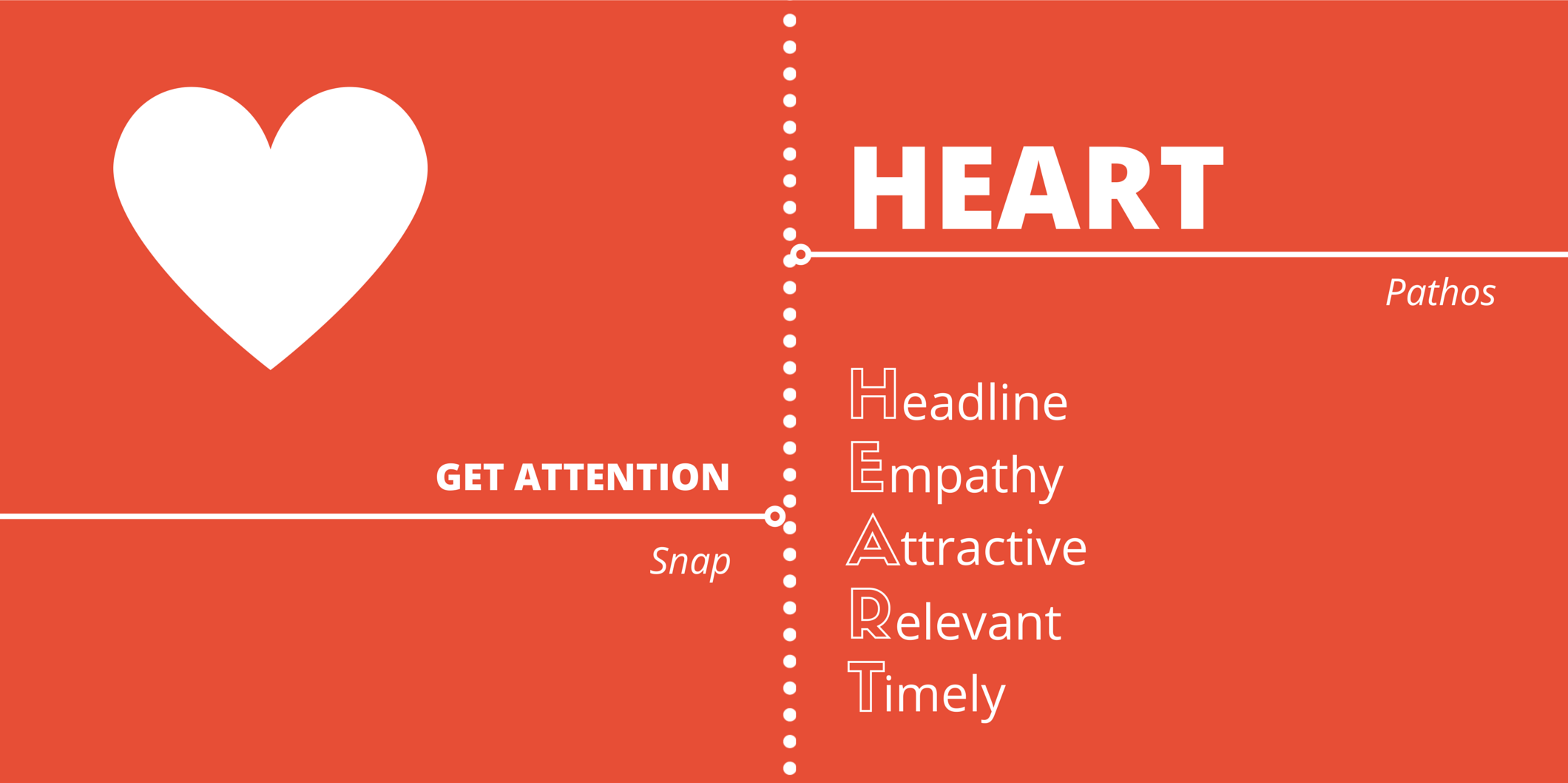
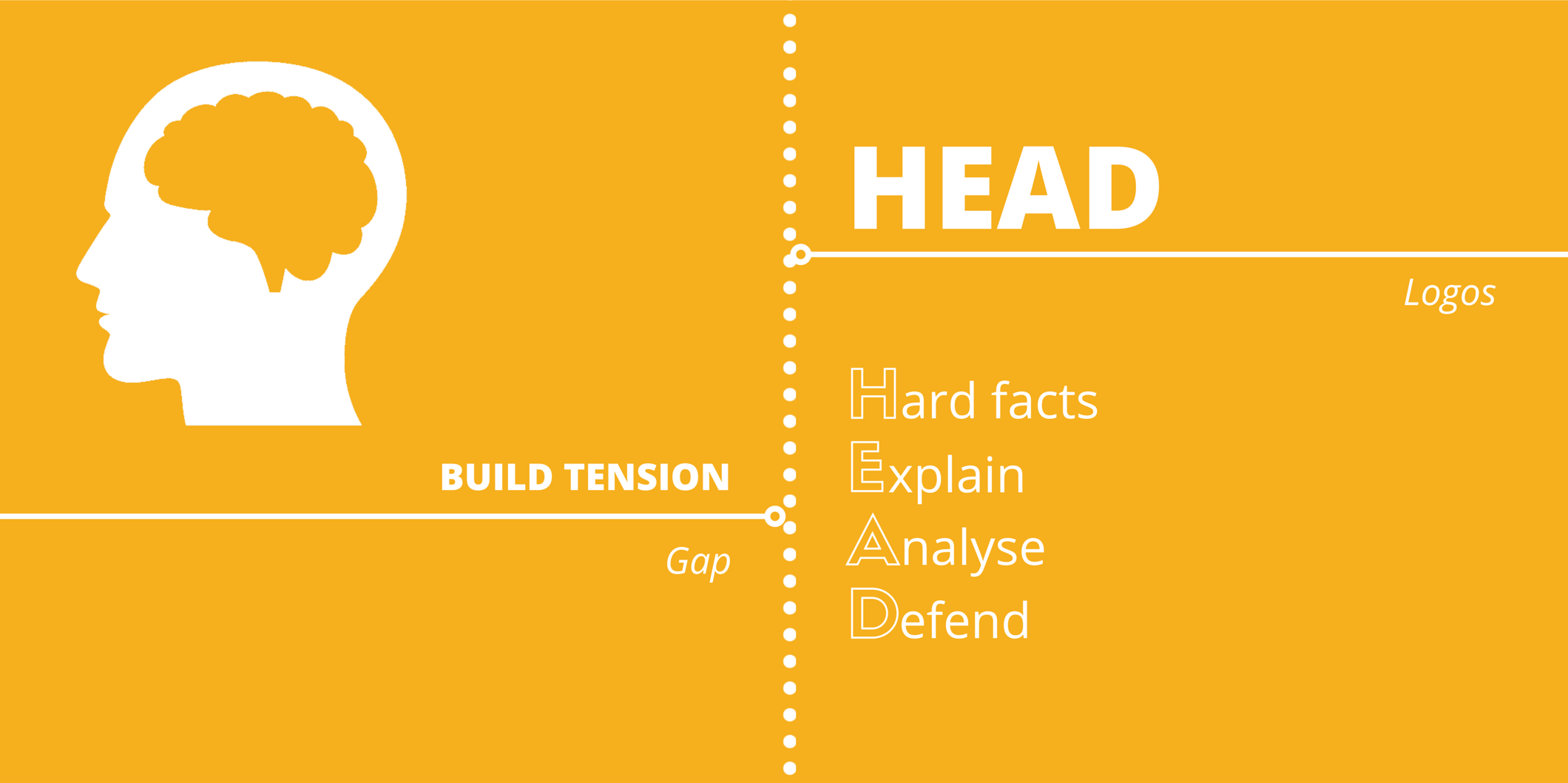
It turns out that living a heart centred life isn’t a sound bite of new-age mumbo jumbo, it’s based on hard science. Positive emotions and living in alignment with our strengths, virtues, passions and purpose creates coherence with the mind. Scientists have discovered that the heart has its own neurons which communicate with the brain more than the brain communicates with the heart. It’s a symbiotic relationship.

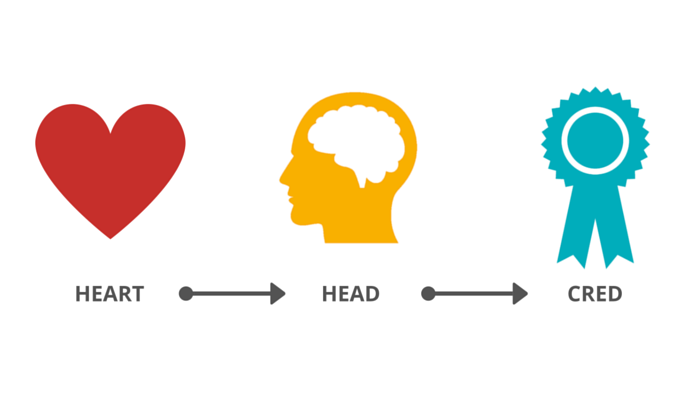
HEART-PPT

HEAD-PPT

Heart-head-cred

“I think… if it is true that

there are as many minds as there

are heads, then there are as many

kinds of love as there are hearts.” ~ Leo Tolstoy (Anna Karenina)

History of the heart

The ancient Egyptians recognised that the heart represents truth. The heart knows when we are in love, it gives us that ecstatic yet unsettling fluttering sensation which is beyond our control. The swelling and warmth we feel when we think of those we love. Whether we are being true to ourselves, or being less than truthful, it beats steadily or erratically accordingly. We may be able to fool others, but we can’t fool our heart.

if-you-want-to-know-where-your-heart-is-look-where-your-mind-goes-when-it-wanders-quote-1

“Alas! there is no instinct like the heart…” ~ Lord Byron

That’s why many organisations use Polygraph tests when questioning suspects and witnesses, so they can measure potential physiological changes that take place during questioning. The lie detector tests measure pulse, blood pressure, respiration and skin conductivity, all of which are controlled by the heart and cardio vascular system.

“The heart is the perfection of the whole organism. Therefore the principles of the power of perception and the soul’s ability to nourish itself must lie in the heart.” ~ Aristotle

Could it be that the voice of conscience we hear in our head actually has its Head Office located in our heart?

Heart quote

“When you are sorrowful look again in your heart, and you shall see that in truth you are weeping for that which has been your delight.” ~ Kahlil Gibran

It has been discovered that the heart emits its own powerful electro-magnetic field, and that our hearts are linked energetically to those we love regardless of distance. Science tells us that we are all connected at the quantum level.

Mysteries of the Heart:

The Heart’s Intuitive Intelligence: A path to personal, social and global coherence:

An interesting and enlightening TED Talk from Howard Martin, one of the original leaders who helped Doc Childre found the HeartMath Institute. I think he eloquently answers my questions!

When he talks about how human heart energy interacts and affects the planet’s ionosphere; it’s quite fitting that an anagram of HEART is EARTH.

To bear malice is ultimately affecting us more adversely than the person or thing we are scornful of. A Happy heart is a healthy heart.

Daisy shaped heart

Until the next time, from the bottom of my heart!

“It is our heart working in tandem with our brain that allows us to feel for others … It is ultimately what makes us human… Compassion is the heart’s gift to the rational mind.” ~ David Malone

The Special and Noble Tradition of Being a Bard (Part 2)

“All the world’s a stage,

and all the men and women merely players:

they have their exits and their entrances;

and one man in his time plays many parts …”

~ William Shakespeare from As You Like It, Act II, Scene 7, 139–42

I’m going to commence part 2 unapologetic for my continued worship binge of William Shakespeare! Especially after his recent #Shakespeare400 anniversary.

For me, text comes alive when you can see and hear actors performing it. So there’s going to be lots of media in this post.

Here’s a comic Hamlet taster from the celebrations held at the RSC in Stratford in conjunction with the BBC:

The first published mention of Shakespeare’s plays was made  in Palladis Tamia: Wit’s Treasury, by Francis Meres in 1598:

Palladis_Tamia,_Wits_Treasury_Francis_Meres_Love_labours_won_excerpt_1598

His sonnets weren’t published as a collective work for a further eleven years.

Love’s Labour’s Won

Because so little is known about William Shakespeare the man, the mention of an unknown play, Love’s Labour’s Won adds to the mystery surrounding his life and work. It was originally thought that Love’s Labour Won was the same play as The Taming of the Shrew, it wasn’t uncommon for his plays to be known under different names: Twelfth Night was sometimes called Malvolio and Much Ado About Nothing was sometimes referred to as Benedict and Beatrice, so the possibility of an alternative title was entirely plausible.

But in 1953 the mystery deepened when a book dealer in London came across a fragment of a bookseller’s inventory from 1603, listing both Love Labour’s Won and The Taming of the Shrew together, indicating that they were indeed separate plays. If it ever existed in printed form there is hope that one of the potential 1500 lost copies may surface one day…

It leads on to the question, if Love’s Labour’s Won really is a separate play, why wasn’t it included by Heminges and Condell in the First Folio?

Shakespeare vs Milton – Fascinating debate about the kings of English literature:

Shakespeare in film

Films continue to be made of his plays, and even about Shakespeare himself. For your viewing pleasure!

Macbeth:

The Merchant of Venice (2004):

Much Ado About Nothing (1993):

Coriolanus:

Romeo and Juliet (2013):

Richard III (1955):

Henry V:

Hamlet: (1996):

Othello (1995):

Twelfth Night (1996):

Shakespeare In Love:

I’d like to dedicate the remainder of the post with excerpts from some of the greatest bards the world has ever known.

Christopher Marlowe – Excerpt from Doctor Faustus

You stars that reign’d at my nativity,

Whose influence hath allotted death and hell,

Now draw up Faustus like a foggy mist

Into entrails of yon labouring clouds,

That when they vomit forth into the air,

My limbs may issue from their smoky mouths,

So that my soul may but ascend to Heaven.

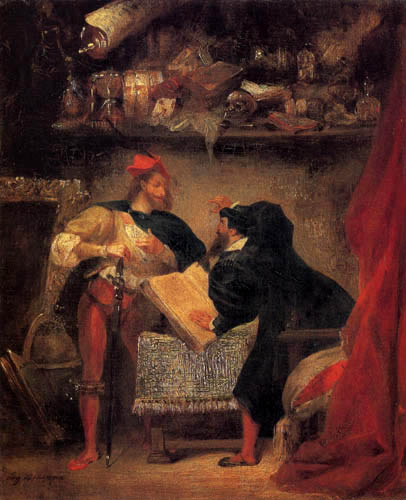
Mephisto before Faust by Eugene Delacroix

Mephisto before Faust by Eugene Delacroix

William Blake ~ (Notebook 40)

Abstinence sows sand all over

The ruddy limbs and flaming hair

But Desire Gratified

Plants fruits and beauty there.

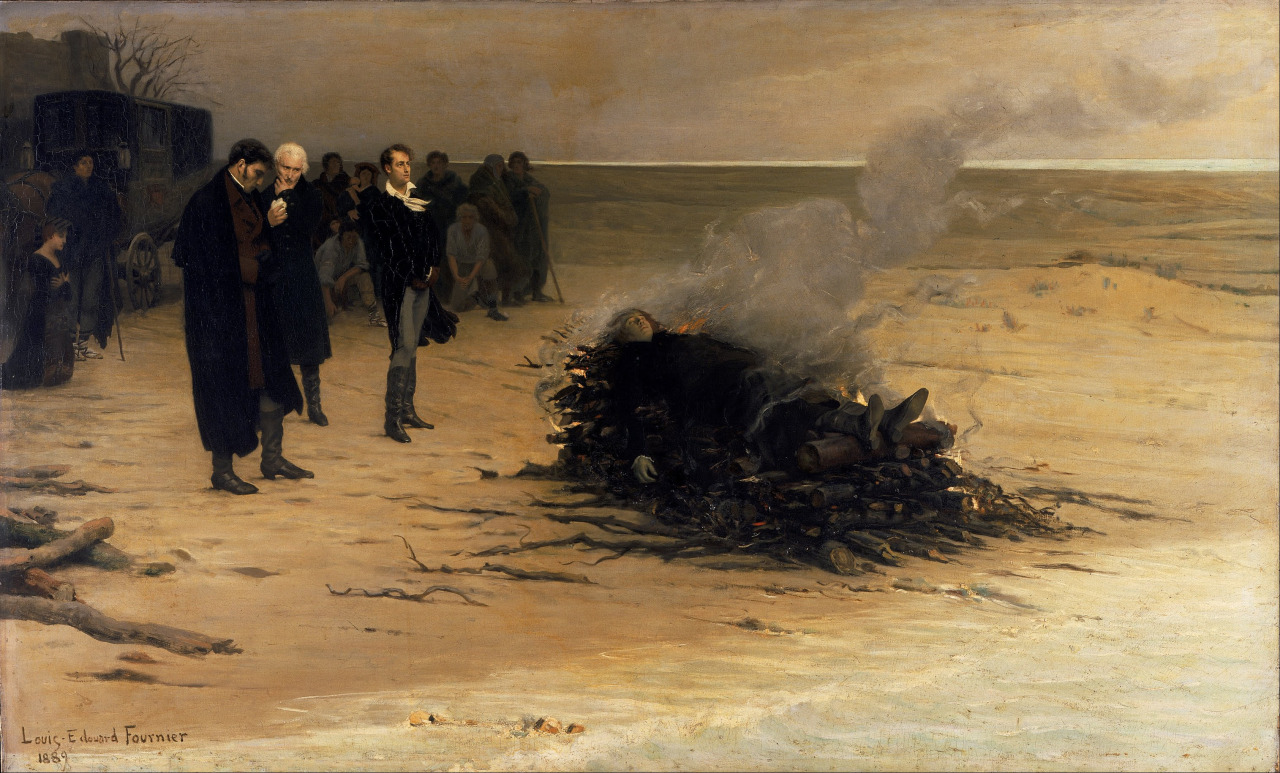
Cremation of Shelley by Louis Edouard Fournier

Cremation of Shelley by Louis Edouard Fournier

Love’s Philosophy by Percy Bysshe Shelley, read beautifully by Tom O’Bedlam:

Ulysses ~ Alfred, Lord Tennyson:

It little profits that an idle king,

By this still hearth, among these barren crags,

Match’d with an aged wife, I mete and dole

Unequal laws unto a savage race,

That hoard, and sleep, and feed, and know not me.

I cannot rest from travel: I will drink

Life to the lees: All times I have enjoy’d

Greatly, have suffer’d greatly, both with those

That loved me, and alone, on shore, and when

Thro’ scudding drifts the rainy Hyades

Vext the dim sea: I am become a name;

For always roaming with a hungry heart

Much have I seen and known; cities of men

And manners, climates, councils, governments,

Myself not least, but honour’d of them all;

And drunk delight of battle with my peers,

Far on the ringing plains of windy Troy.

I am a part of all that I have met;

Yet all experience is an arch wherethro’

Gleams that untravell’d world whose margin fades

For ever and forever when I move.

How dull it is to pause, to make an end,

To rust unburnish’d, not to shine in use!

As tho’ to breathe were life! Life piled on life

Were all too little, and of one to me

Little remains: but every hour is saved

From that eternal silence, something more,

A bringer of new things; and vile it were

For some three suns to store and hoard myself,

And this gray spirit yearning in desire

To follow knowledge like a sinking star,

Beyond the utmost bound of human thought.

This is my son, mine own Telemachus,

To whom I leave the sceptre and the isle,—

Well-loved of me, discerning to fulfil

This labour, by slow prudence to make mild

A rugged people, and thro’ soft degrees

Subdue them to the useful and the good.

Most blameless is he, centred in the sphere

Of common duties, decent not to fail

In offices of tenderness, and pay

Meet adoration to my household gods,

When I am gone. He works his work, I mine.

There lies the port; the vessel puffs her sail:

There gloom the dark, broad seas. My mariners,

Souls that have toil’d, and wrought, and thought with me—

That ever with a frolic welcome took

The thunder and the sunshine, and opposed

Free hearts, free foreheads—you and I are old;

Old age hath yet his honour and his toil;

Death closes all: but something ere the end,

Some work of noble note, may yet be done,

Not unbecoming men that strove with Gods.

The lights begin to twinkle from the rocks:

The long day wanes: the slow moon climbs: the deep

Moans round with many voices. Come, my friends,

‘T is not too late to seek a newer world.

Push off, and sitting well in order smite

The sounding furrows; for my purpose holds

To sail beyond the sunset, and the baths

Of all the western stars, until I die.

It may be that the gulfs will wash us down:

It may be we shall touch the Happy Isles,

And see the great Achilles, whom we knew.

Tho’ much is taken, much abides; and tho’

We are not now that strength which in old days

Moved earth and heaven, that which we are, we are;

One equal temper of heroic hearts,

Made weak by time and fate, but strong in will

To strive, to seek, to find, and not to yield.

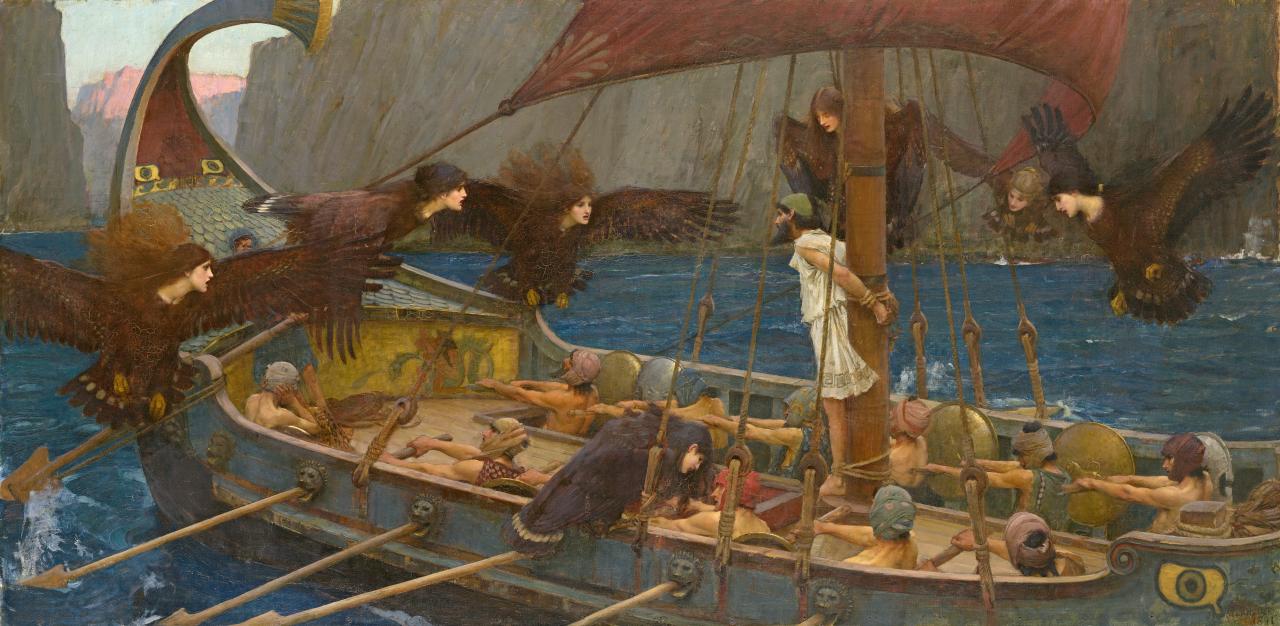
Ulysses by JW Waterhouse

Ulysses by JW Waterhouse

BBC Documentary about Byron, Keats, and Shelley – The Romantics – Eternity:

Edgar Allan Poe-The Raven- Read by James Earl Jones:

Audio book playlist by Random House – The Prophet by Kahlil Gibran:

Rabindranath Tagore on boundaries and understanding:

Audiobook of Dante Alighieri’s Inferno (Part 1 of 4):

Great website covering classic literature, explaining here about the epic poem The Iliad by Homer.

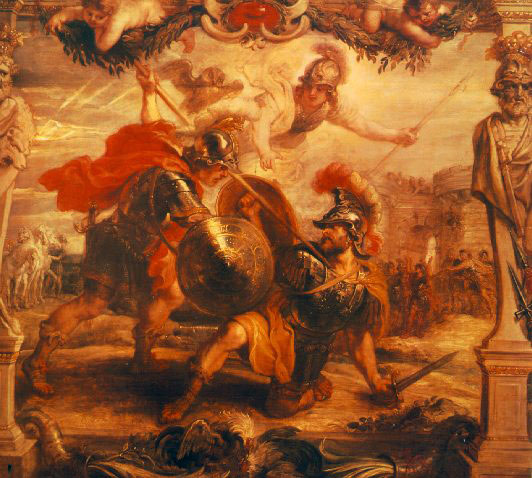
Achilles Slays Hector by Peter Paul Rubens

Achilles Slays Hector by Peter Paul Rubens

I’m going to finish with Shakespeare, probably the greatest Bard of all time and the greatest soliloquy of all time: To be, or not to be from Hamlet.

Kenneth Brannagh is electrifying:

Going back through the ages, oral tradition was everything, however, when the written word came into being all the ‘Bards’ that have come since could be immortalised.

True Bardic tradition may be a thing of the past, but modern authors, poets and musicians can leave a legacy of their work. Perhaps not on the scale of the likes of Chaucer, Milton, Shakespeare and Tagore, but we all have an imagination, which Einstein reminded us is more important than intelligence.

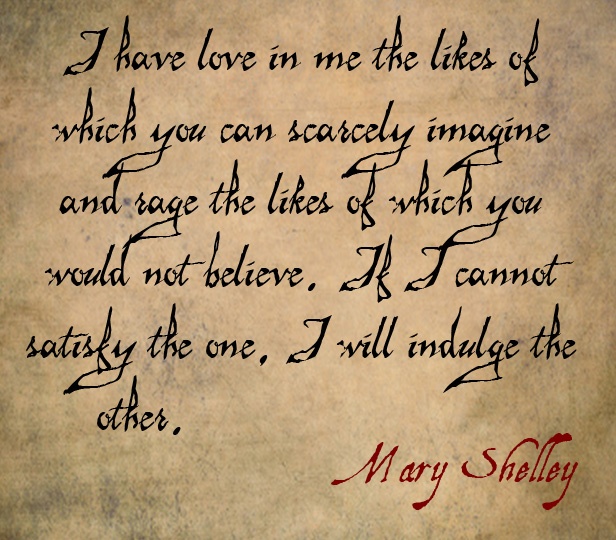
Excerpt from Mary Shelley's Frankenstein

Excerpt from Mary Shelley’s Frankenstein

Art and culture as we know it owes everything to the bards of the ages, and in this digital age we can all be a ‘Bard’ or even ‘Bardess’, to a larger or lesser extent…

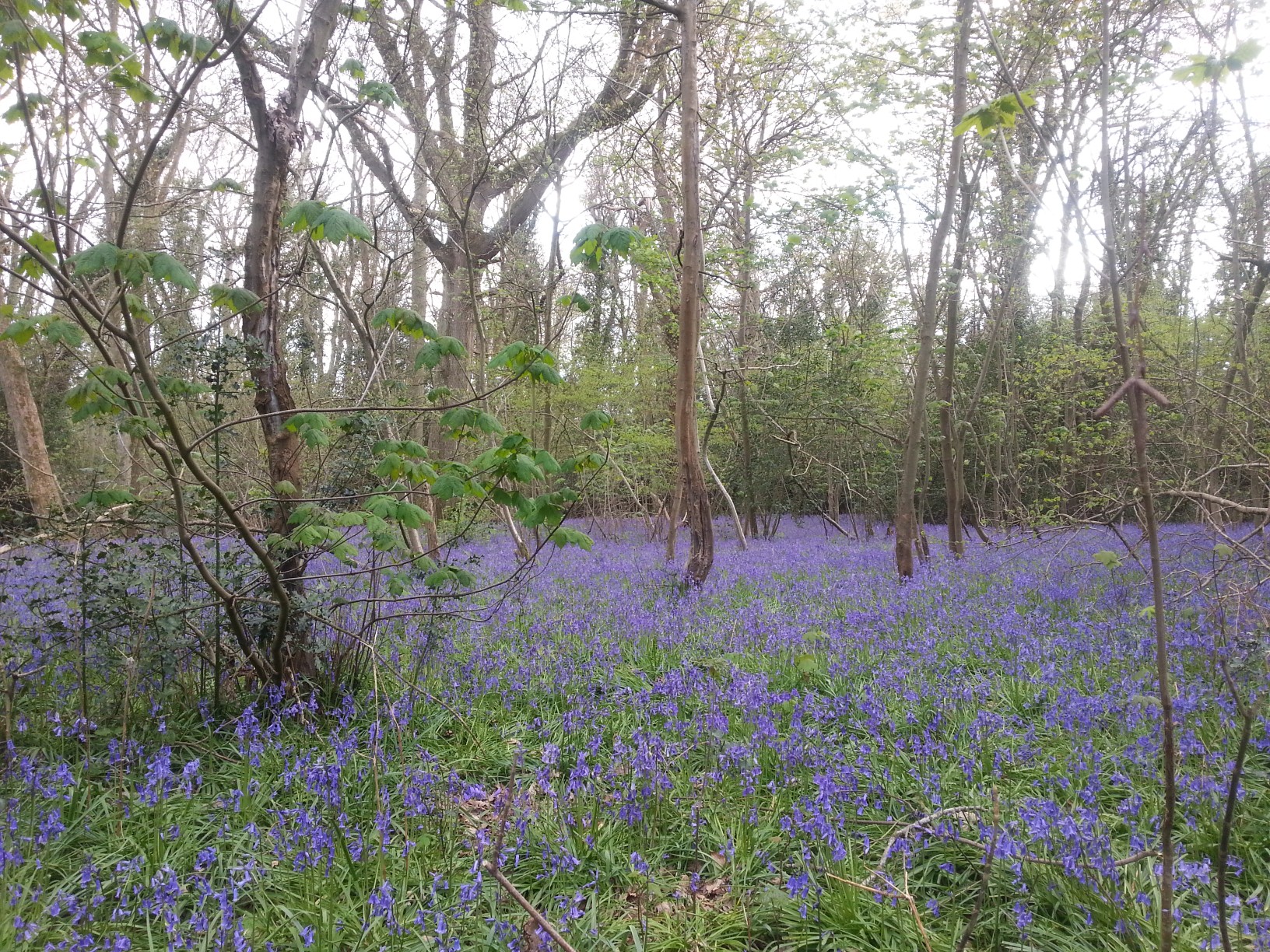
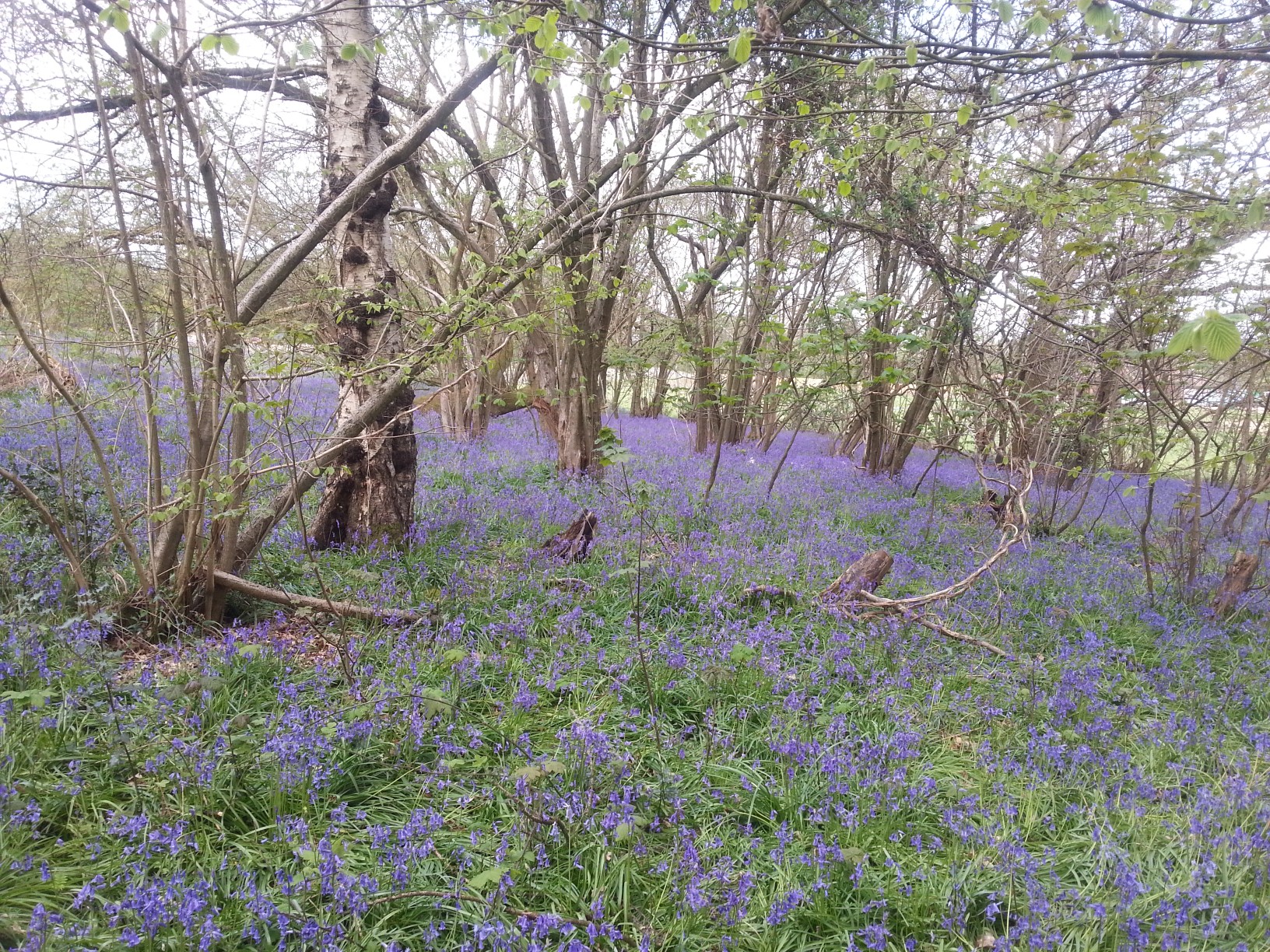
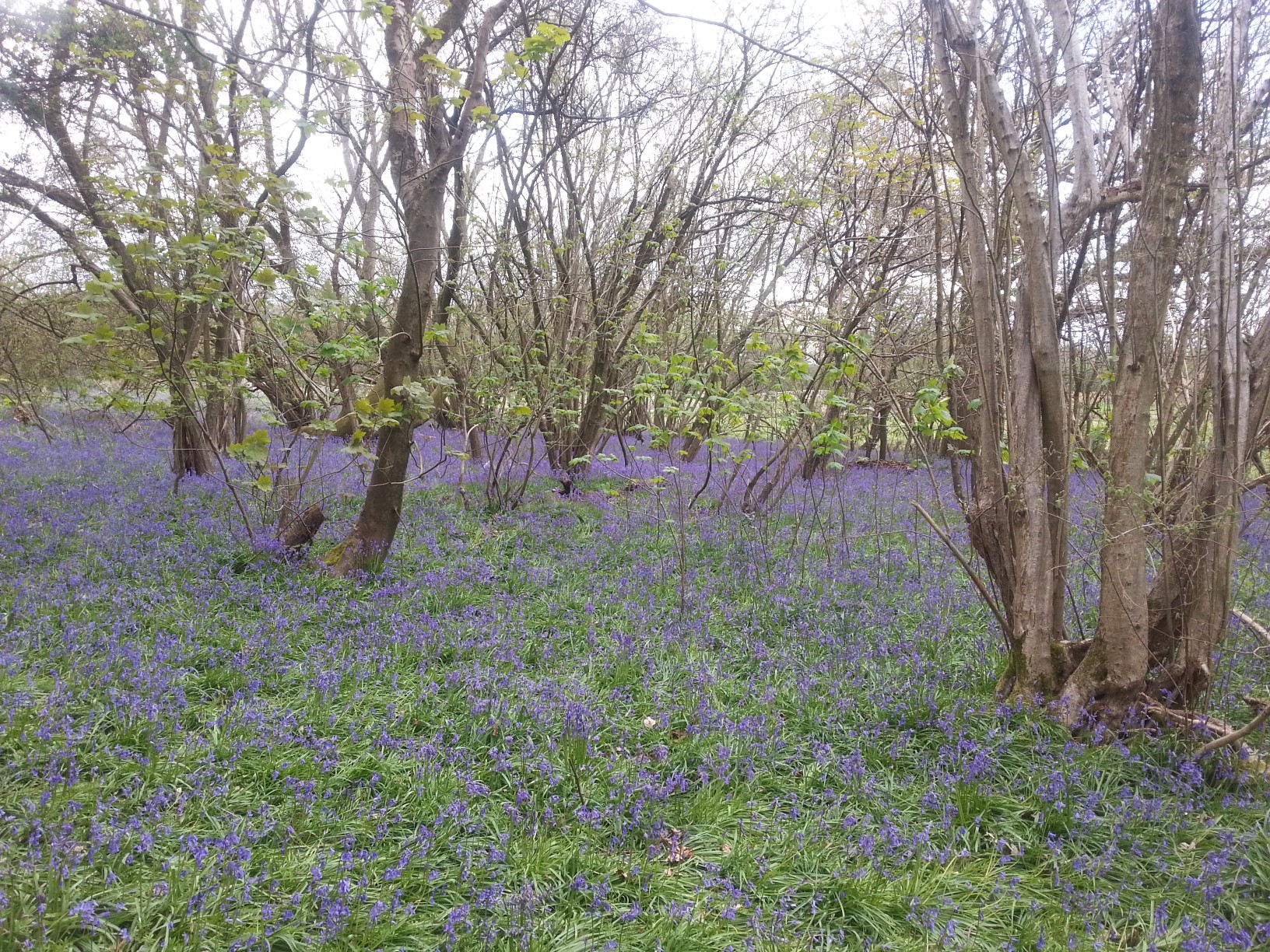
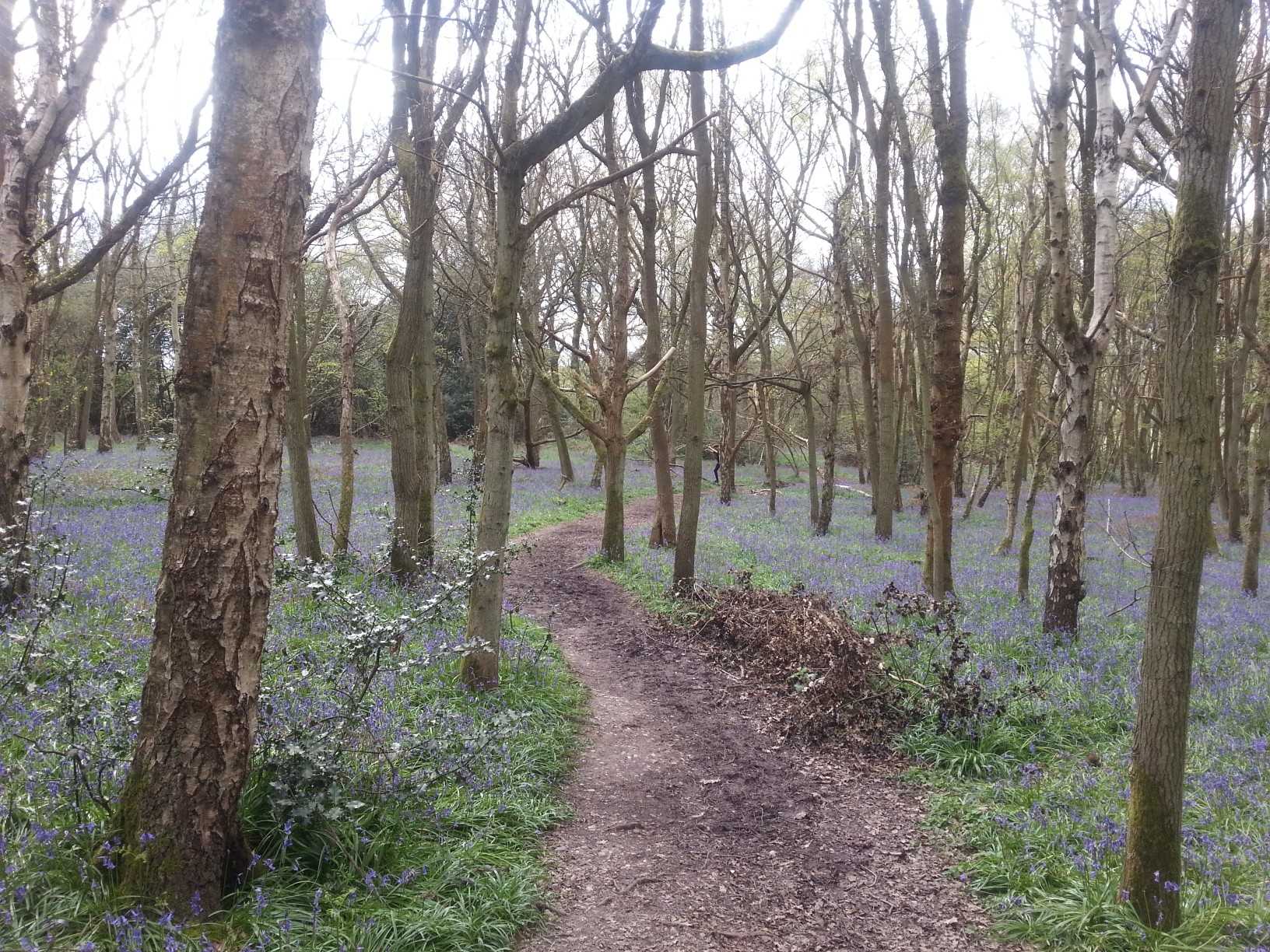
#SundayBlogShare – Benediction for Bluebells

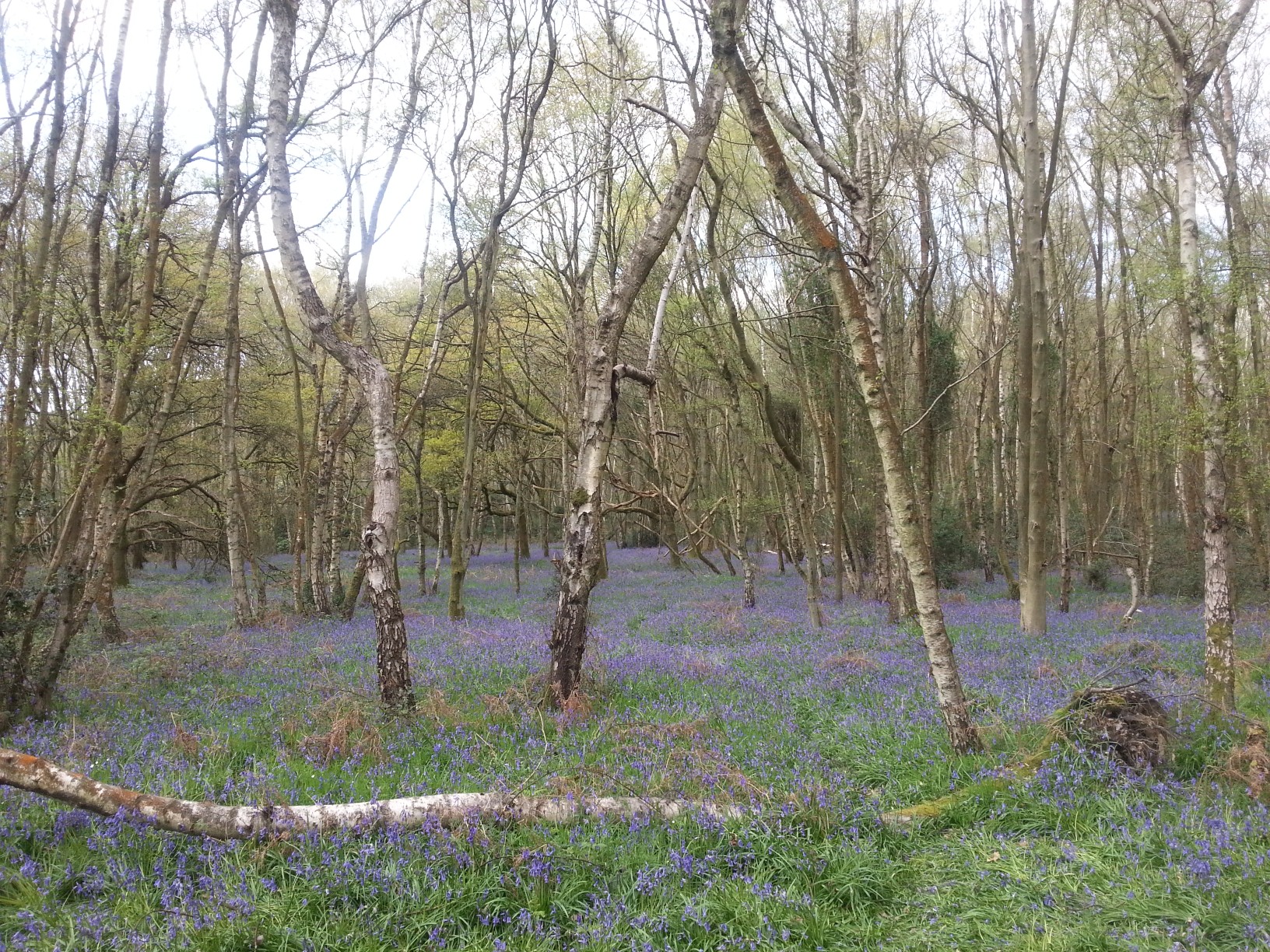
In honour of time spent in nature’s bright and gentle company yesterday, I wanted to share some reflective verse and photographs:

Benediction for Bluebells

Woodland floor, engulfed in precious purple petals,

Hues of magical violet softly illuminate my sight,

Shine forth, ye gathering crowds of bluebells,

Your springtime violet copse spreads pure delight!

Fragrant faces of flowers, grace the sodden ground,

No greater English beauty; there can be found.

By Virginia Burges
22 April - Bluebell carpet6

**

The Bluebell ~ by Emily Bronte

The Bluebell is the sweetest flower

That waves in summer air:

Its blossoms have the mightiest power

To soothe my spirit’s care.


There is a spell in purple heath

Too wildly, sadly dear;

The violet has a fragrant breath,

But fragrance will not cheer,

22 April - Bluebell carpet5

The trees are bare, the sun is cold,

And seldom, seldom seen;

The heavens have lost their zone of gold,

And earth her robe of green.


And ice upon the glancing stream

Has cast its sombre shade;

And distant hills and valleys seem

In frozen mist arrayed.

22 April - Bluebell carpet distance

The Bluebell cannot charm me now,

The heath has lost its bloom;

The violets in the glen below,

They yield no sweet perfume.


But, though I mourn the sweet Bluebell,

‘Tis better far away;

I know how fast my tears would swell

To see it smile to-day.

22 April - Bluebell path

For, oh! when chill the sunbeams fall

Adown that dreary sky,

And gild yon dank and darkened wall

With transient brilliancy;


How do I weep, how do I pine

For the time of flowers to come,

And turn me from that fading shine,

To mourn the fields of home!

22 April - Bluebell carpet4

#Shakespeare400 – William Shakespeare, Exalted Wordsmith Extraordinaire…🎭✒📖

“Shakespeare’s language has a quality difficult to define, of memorability that has caused many phrases to enter the common language.” ~ Stanley Wells

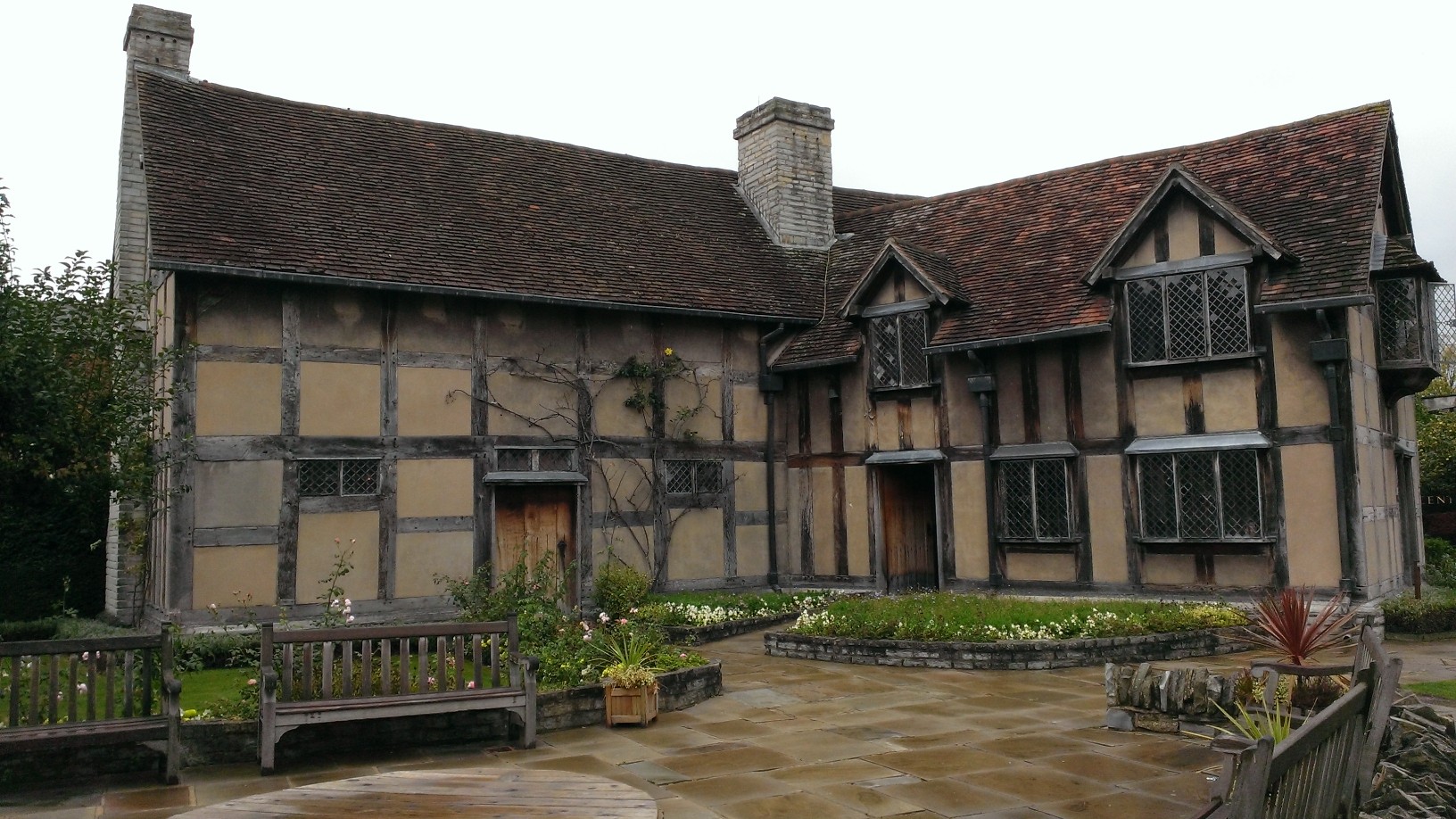
Four hundred years ago today, our greatest playwright, poet and actor passed away at his home in Stratford-upon-Avon at the age of fifty two.

Shakespeare's birthplace in Henley Street

Shakespeare’s birthplace in Henley Street

It’s a miracle Shakespeare made it that far, in a time when the plague wiped out huge numbers of the Tudor population, especially in infancy and youth, and if that didn’t get you there was malnutrition, starvation, murder, or being executed for saying or writing the wrong thing at the wrong time.

He is long gone, but far from being forgotten…

I was surprised to learn that Shakespeare wasn’t as learned as I first assumed, especially not when compared with Ben Johnson, his friend and contemporary; an intellectual poet, playwright and dramatist who had been influenced by Tacitus, Pliny and Suetonius. Although an ardent fan of Shakespeare, author Bill Bryson describes Johnson as a man ‘whose learning hangs like bunting on every word’.

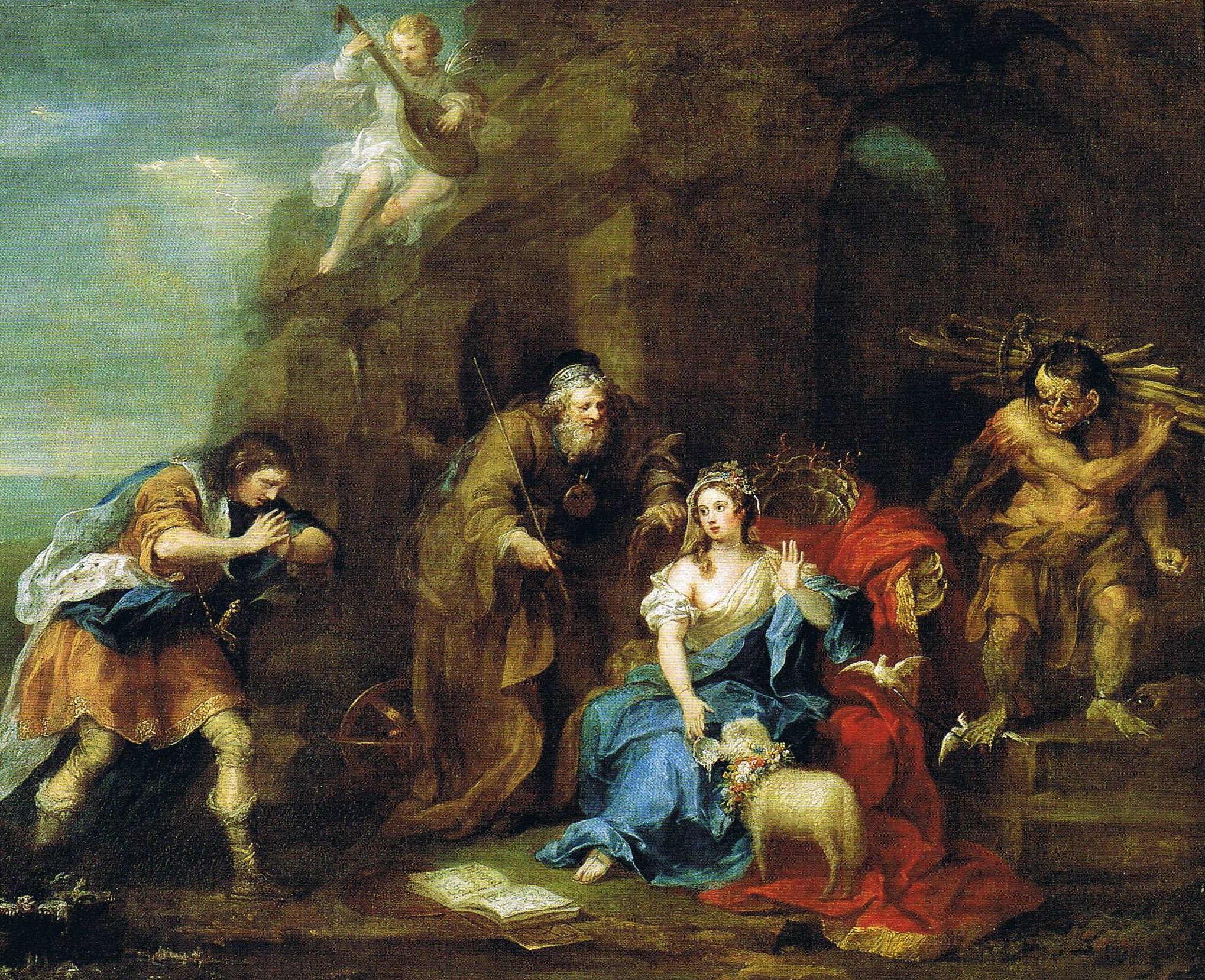
The Tempest by William Hogarth c. 1735

The Tempest by William Hogarth c. 1735

There are errors in Shakespeare’s plays that seem inconsequential in the face of his fame; such as placing a sailmaker in Bergamo (a land locked city it Italy) in The Taming of the Shew, while having Prospero and Valentine set sail respectively from Milan and Verona in The Tempest and The Two Gentlemen of Verona. He indicated no knowledge of Venice consisting of canals, and he introduced the clock to Caesar’s Rome fourteen hundred years before the first mechanical ticking was invented.

He was a master at manipulating the facts to suit his plots. One such example is in Part 1 of Henry VI, where Lord Talbot pre-deceases Joan of Arc instead of facing her in battle at Orleans.

Where Shakespeare did excel, to a large extent, was by taking existing plays, plots and poems and reworking them to be more engaging and memorable; imbuing them with his own brand of greatness.

It appears that he wasn’t scrupulous about what, where and how he sourced his ideas. This ‘borrowing’ of material was common practice to all Elizabethan playwrights, and it’s probably just as well for us that ‘intellectual property’ hadn’t yet been invented, and even the plays of the day often went without attribution.

It’s suspected that the first version of Hamlet that pre-dates Shakespeare was by Thomas Kyd, but it has been lost and no-one knows how similar or different the two versions are.

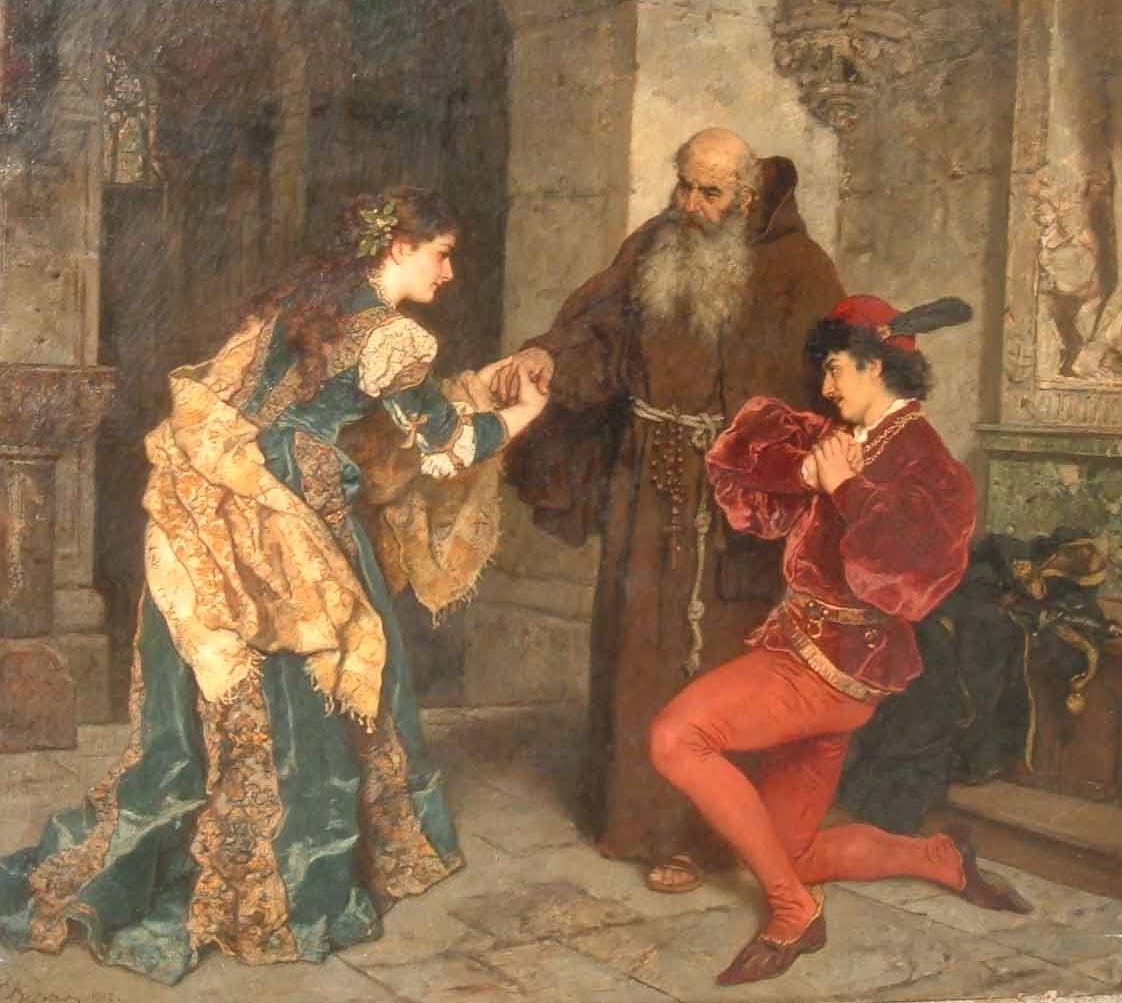
Romeo and Juliet before Father Lawrence by karl Ludwig Friedrich Becker

Romeo and Juliet before Father Lawrence by karl Ludwig Friedrich Becker

Other plays by Shakespeare that were based on earlier works include: King Lear, Romeo and Juliet, As You Like It, The Winter’s Tale, Othello and Much Ado About Nothing. So, even though he was, and still is, rightly considered England’s undisputed literary genius, he wasn’t without flaws.

There’s hope for the rest of us folks!

Master of language

Shakespeare assimilated the knowledge he needed and integrated it with the human condition, which he did have a vast knowledge of (vast being one of his words incidentally), so even though he didn’t necessarily have all the facts right, nobody could hold a candle to him when it came to emotions; to ambition, intrigue, love and suffering. Those universal conditions he portrayed with deft understanding and imagination.

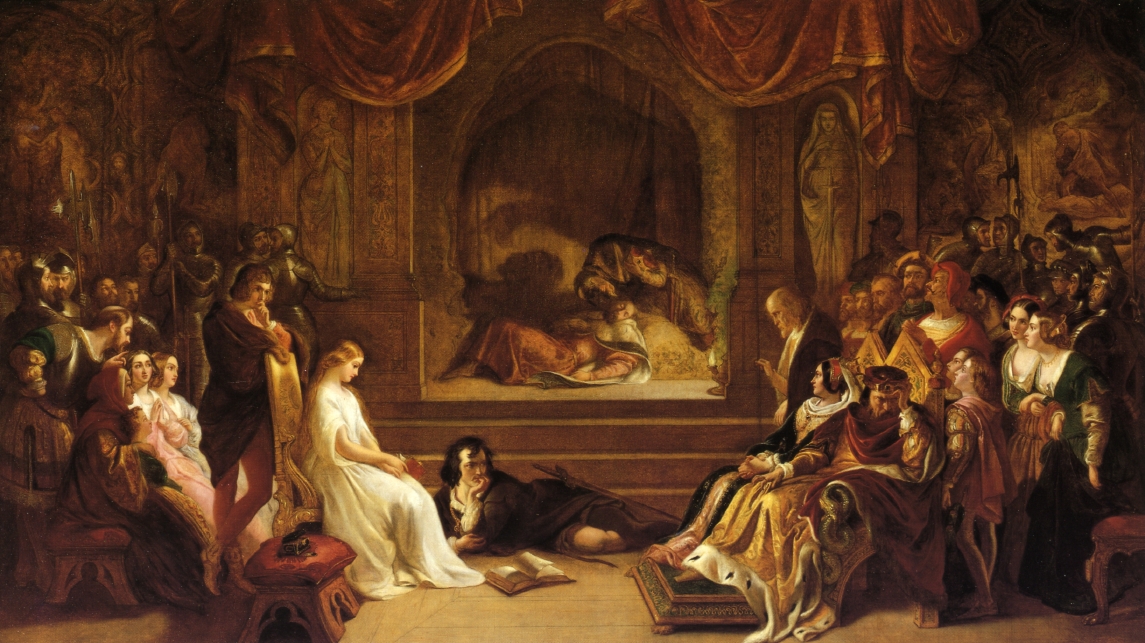
Play Scene from Hamlet by Daniel Maclise

Play Scene from Hamlet by Daniel Maclise

He was an innovator who used the power of words and language to its maximum advantage. The English language was undergoing somewhat of a renaissance in the 16th century, when around 12,000 new words entered the language between 1500 and 1650, with approximately half of them still in use today. Many of the old words were also employed in a new contextual and linguistic framework.

A breath of fresh literary air…

We think of Shakespeare’s language as being old fashioned, but in his day he mostly opted for the more modern, newer word. He never used seeth, but preferred sees, and used spoke rather than spake, cleft to clave, and goes to goeth. However, he did have his idiosyncracies, and for the most part employed thou in preference to you.

Shakespeare inventively created expressions that had no usage in grammar beforehand, such as ‘breathing one’s last’ and ‘backing a horse’ and over the span of his career is credited with the first recorded use of 2,035 words.

Included in some of these words are: abstemious, antipathy, critical, frugal, dwindle, extract, horrid, vast, hereditary, excellent, eventful, barefaced, assassination, lonely, leapfrog, indistinguishable, well-read, zany and countless others (including countless)!

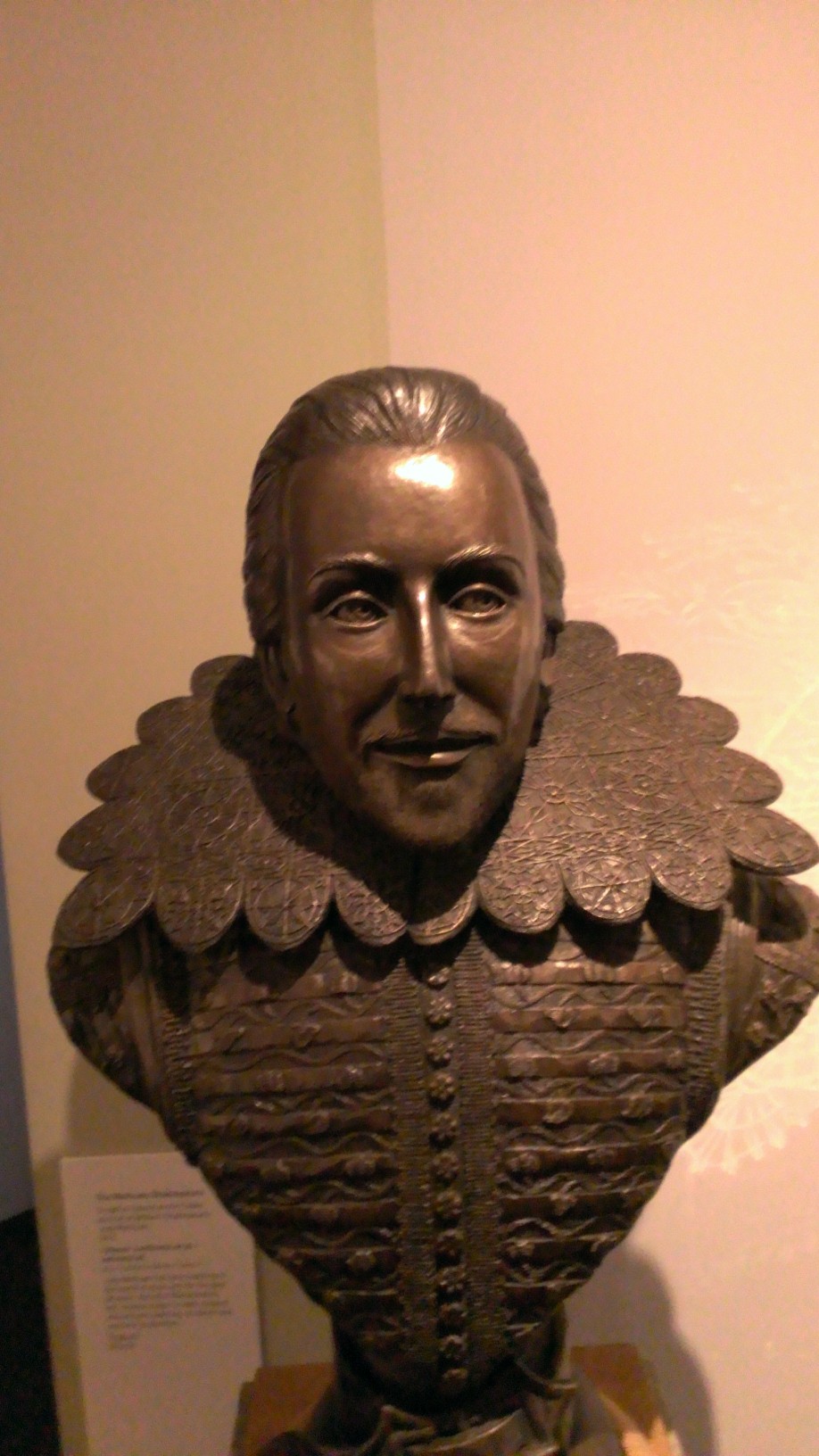
Shakespeare's bust at the Birthplace House

Shakespeare’s bust at the Birthplace House

Shakespeare also pioneered use of the prefix un- to some 309 existing words to give them new meaning, such as: unmask, unhand, unlock, untie and unveil.

He was a wordsmith of unfaltering exuberance and fecundity, introducing a torrent of new words and phrases into common usage: one fell swoop, vanish into thin air, play fast and loose, go down the primrose path, be in a pickle, budge an inch, the milk of human kindness, more sinned against than sinning, to thine own self be true, flesh and blood, foul play, be cruel to be kind, with bated breath, pomp and circumstance – and many others, which have become so deliciously irresistible and a staple of our language diet.

There are even two in one line from Hamlet:

Though I am native here and to the manner born, it is a custom more honoured in the breach than the observance.

Using the Oxford Dictionary of Quotations as a guide, Shakespeare contributed around one-tenth of all the most quotable phrases ever uttered in the written English language. Quite a feat!

In an age when Latin was the prevailing scholarly and published language , (out of 6,000 books contained in the Bodleian Library in 1605, only 36 of these were in English), Shakespeare and his contemporaries can be credited with increasing the availability of English in its country of origin and eroding the Latin trend.

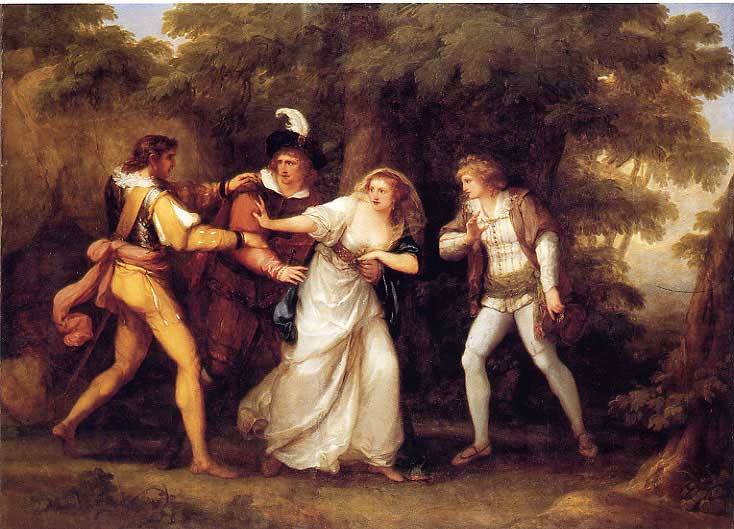
Valentine Rescues Silvia in The Two Gentlemen of Verona c. 1789

Valentine Rescues Silvia in The Two Gentlemen of Verona c. 1789

Stanley Wells stated, ‘It is telling that William Shakespeare’s birth is recorded in Latin but that he dies in English, as “William Shakespeare, gentleman”.’

Here is an interesting and humorous lecture given by the pre-eminent Shakespeare scholar, Stanley Wells, on Sex and Love in Verona, Venice and Vienna:

The First Folios

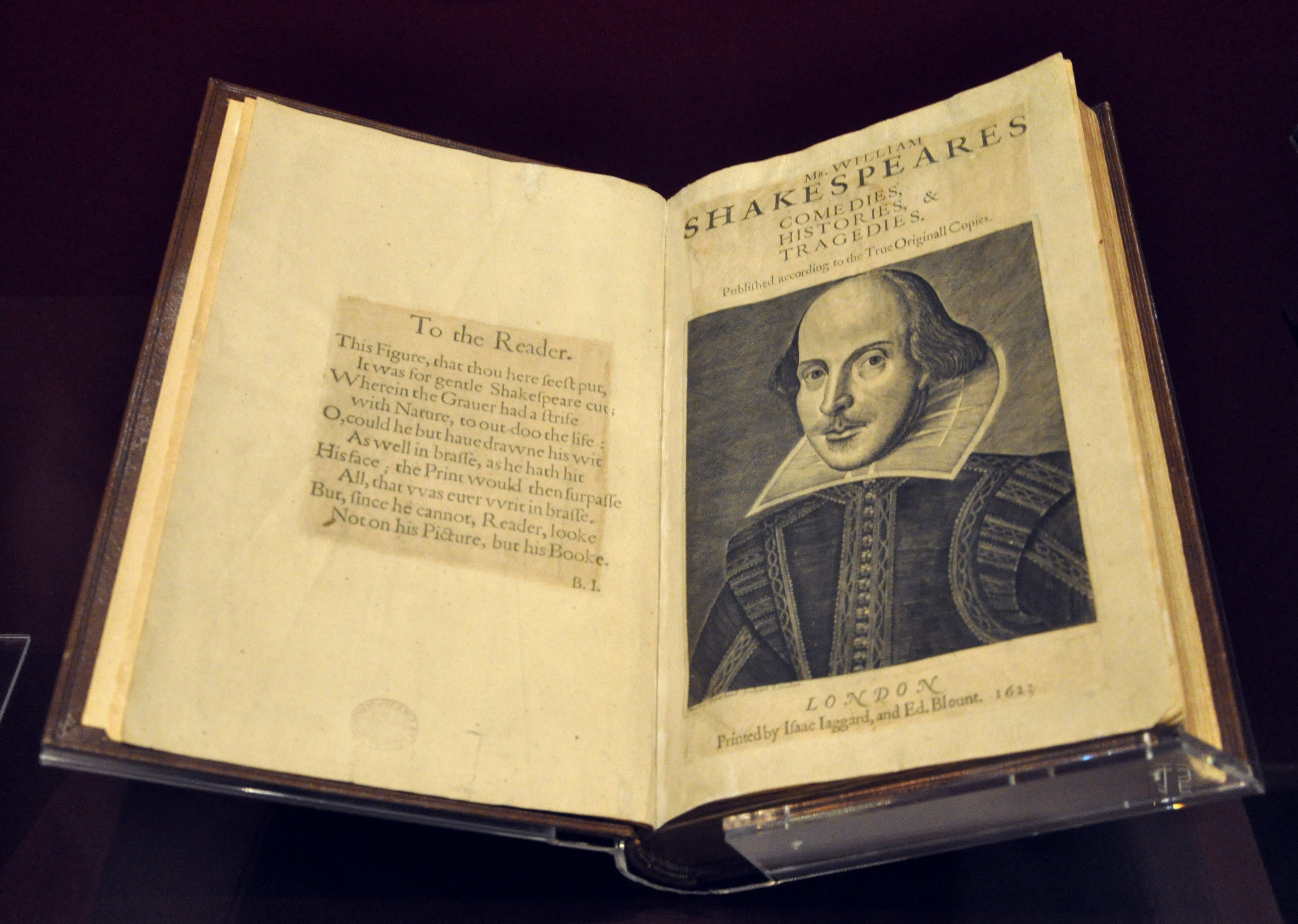
The main reason Shakespeare continues to entertain us today is down to the publication of his plays in 1623, seven years after his death. These ‘first folios’ were given the title: Mr William Shakespeare’s Comedies, Histories, and Tragedies and had 630 pages.  It is thought that around 750 editions were originally printed, but only 233 remain in existence today.  However, recently a first folio was discovered on the Isle of Bute. 

First_Folio_VA

From The British Library:

He wrote around 37 plays, 36 of which are contained in the First Folio. Most of these plays were performed in the Globe, an open-air playhouse in London built on the south bank of the Thames in 1599. As none of Shakespeare’s original manuscripts survive (except, possibly, Sir Thomas More, which Shakespeare is believed to have revised a part of) we only know his work from printed editions.

Of the 36 plays in the First Folio, 17 were printed in Shakespeare’s lifetime in various good and bad quarto editions, one was printed after his death and 18 had not yet been printed at all. It is this fact that makes the First Folio so important; without it, 18 of Shakespeare’s plays, including Twelfth Night, Measure for Measure, Macbeth, Julius Caesar and The Tempest, might never have survived.

The text was collated by two of Shakespeare’s fellow actors and friends, John Heminge and Henry Condell, who edited it and supervised the printing. They divided the plays into comedies, tragedies and histories, an editorial decision that has come to shape our idea of the Shakespearean canon.

In order to produce as authoritative a text as possible, Heminge and Condell compiled it from the good quartos and from manuscripts (now lost) such as prompt books, authorial fair copy, and foul papers (working drafts). The First Folio offered a corrective to what are now called bad quartos – spurious and corrupt pirate editions, likely based on memorial reconstruction.

The portrait of Shakespeare on the title page was engraved by Martin Droeshout and is one of only two portraits with any claim to authenticity. As Droeshout would have only been 15 when Shakespeare died it is unlikely that they actually met. Instead his picture was probably drawn from the memory of others, or from an earlier portrait. The writer Ben Jonson’s admiring introduction to the First Folio, seen in the title page image, declared in verse that the engraver had achieved a good likeness.

A wonderful talk from Dr. Eric Rasmussen of the University of Nevada, about the project of locating and cataloguing the First Folios, based on the locations discovered by Anthony James West over fifteen years:

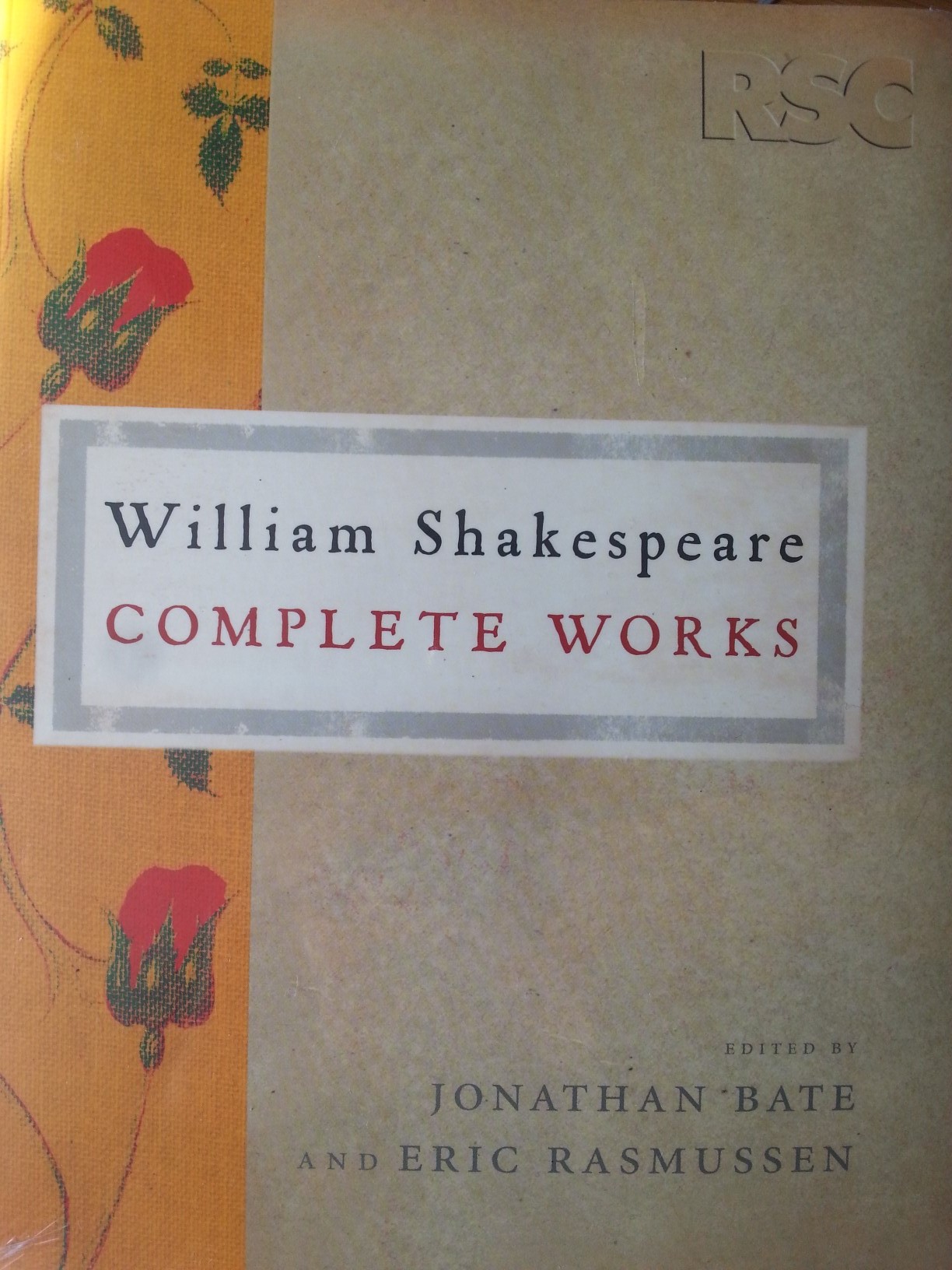
When I visited Stratford in 2014 I purchased his revised edition of the RSC ‘s Complete Works that he co-edited with Jonathon Bate, complete with the yellow cover he jokes about!

My treasured copy of the RSC Complete Works of William Shakespeare

My treasured copy of the RSC Complete Works of William Shakespeare

Shakespeare’s plays were made up of about seventy percent Blank Verse, five percent rhymed verse and twenty five percent prose. His vocabulary ran to about 20,000 words (more like 30-50K if you include variants of words), and boy did he work magic with those words…

He illuminated the workings of the soul in a way that very few have been able to do before or since.

Duke Orsino:

If music be the food of love, play on,

Give me excess of it; that surfeiting,

The appetite may sicken, and so die.

Twelfth Night Act 1, scene 1, 1–3

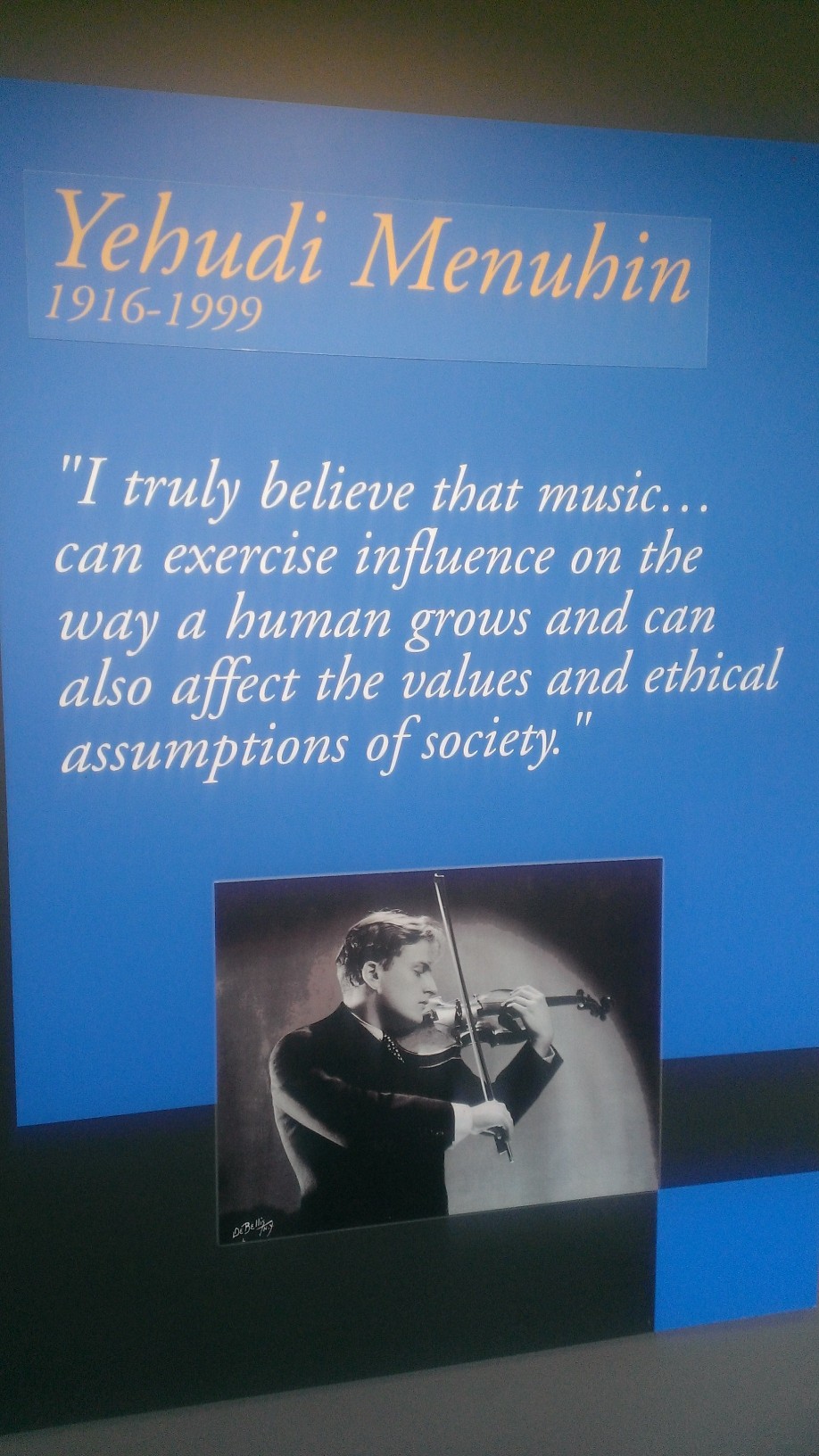
Celebrating a Monumental Musician and Man: Yehudi Menuhin

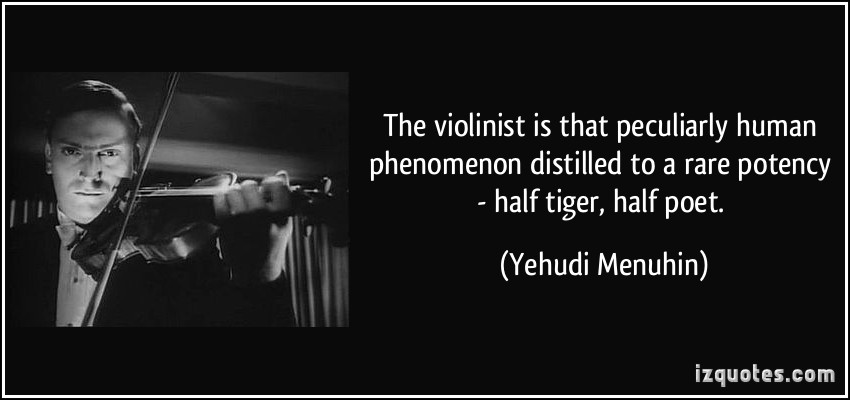
“Music creates order out of chaos: for rhythm imposes unanimity upon the divergent, melody imposes continuity upon the disjointed, and harmony imposes compatibility upon the incongruous.” ~ Yehudi Menuhin

When asked to think of a violinist, probably one of the first names that would come to mind is Yehudi Menuhin. I’m going to sound-off a bit (in a good way), as today marks the centenary of his birth, (22nd April 1916).

Yehudi Menuhin violin quote

Perhaps being British I was exposed to his music more than say, the likes of his contemporaries, Jascha Heifetz or David Oistrakh, but he’s undoubtedly one of the giants of the 20th century and revered by many current soloists. Not just for his supreme talent on the violin, or indeed his teaching and music school, or his conducting, but for also for his humanitarian work and contributions to the world of classical music as a whole.

A child prodigy, he first studied under Louis Persinger and later Romanian violinist and composer, George Enescu.

You could say he was truly a citizen of the world, born in the USA to Russian Jewish parent’s he became a Swiss citizen in 1970 and a British citizen in 1985. He performed all over the world during his illustrious career.

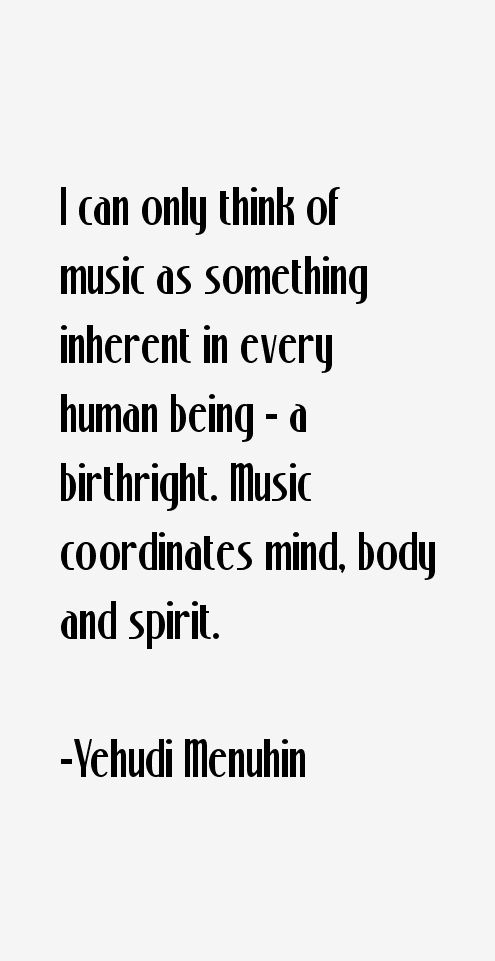
Yehud Menuhin on music

His recording contract with EMI was the longest in the history of the music industry, lasting almost 70 years from his first recording aged thirteen in 1929, to his final recording aged eighty three in 1999. He recorded over 300 works both as a violinist and conductor.

His legacy lives on in the form of his music school in Surrey (where Adelia Myslov, the violinist who recorded the soundtrack for my novel, The Virtuoso, attended). Adelia spoke of performing with him and I could see they were very special memories for her.

Yehudi Menuhin_1976

So many of his You Tube clips are from those halcyon days of black and white; truly vintage performances that I love. For me, Menuhin was the embodiment of virtuosity, his style was romantic without being sentimental, his musicality and phrasing was exquisite. I’ll share some of my favourite performances of his throughout this post.

“In playing Beethoven the violinist should be a medium. There is little that is personal or that can be reduced to ingratiating sounds, pleasing slides and so on. Everything is dictated by the significance, the weight, structure and direction of the notes and passages themselves.” ~ Yehudi menuhin

Rather than populate this post with tons of text, I’d rather give you his voice and music…

A Violonist in Hollywood – Yehudi Menuhin in coversation with Humprey Burton:

The focus of the film is on previously unreleased footage from the legendary Hollywood music film, Concert Magic from the year 1947. In interviews and conversations with his biographer Humphrey Burton, Yehudi Menuhin recalls the origin of the film, the war and post-war era in America and Germany. Special attention is paid to his commitment to the victims of World War II. These include great artists forced into American exile such as fellow musician Béla Bartók.

During the Second World War Yehudi Menuhin helped to raise the spirits of war victims and refugee children with numerous concerts. He supported artists in American exile, performed for an audience of freed prisoners of the concentration camp Bergen-Belsen, and in war ravaged Berlin he played demonstratively under the baton of Wilhelm Furtwängler.

Looking back at the mid-1940’s it is clear to see with what passion Menuhin linked his goals of musical excellence with a dedication to social causes. He used music to plead for justice and reconciliation often against strong resistance.

“Each human being has the eternal duty of transforming what is hard and brutal into a subtle and tender offering, what is crude into refinement, what is ugly into beauty, ignorance into knowledge, confrontation into collaboration, thereby rediscovering the child’s dream of a creative reality incessantly renewed by death, the servant of life, and by life the servant of love.” ~ Yehudi Menuhin

Yehudi Menuhin School

The Menuhin School was set up in 1963 for musically gifted children and is based in beautiful grounds at Stoke d’Abernon near Cobham in Surrey. I attended a classical concert there last year when Adelia was performing with Craig White; many of the school’s alumni are invited to return. It’s the spiritual home of violin tuition, with Lord Menuhin’s grave located in the grounds near the performance hall.

Menuhin grave

Violinist David Hope was lucky enough to be taught and mentored by Yehudi Menuhin, and talks about his journey with the late maestro and also his latest album, My Tribute to Yehudi Menuhin:

Current violinists fortunate to have been taught by Lord Menuhin include Nigel Kennedy, Nicola Benedetti, Paul Coletti and Peter Tanfield.

The Menuhin Competition

Set up in 1983, this is the world’s foremost violin completion for young musicians under 22. The Menuhin Competition is held every two years in different locations around the world. Past winners include Julia Fischer, Ray Chen, Lara St. John, Tasmin Little and Ilya Gringolts. The 2016 final was won earlier this month by Chinese violinist Ziyu He.

“I would hate to think I am not an amateur. An amateur is one who loves what he is doing. Very often, I’m afraid, the professional hates what he is doing. So, I’d rather be an amateur.” ~ Yehudi Menuhin
Instruments

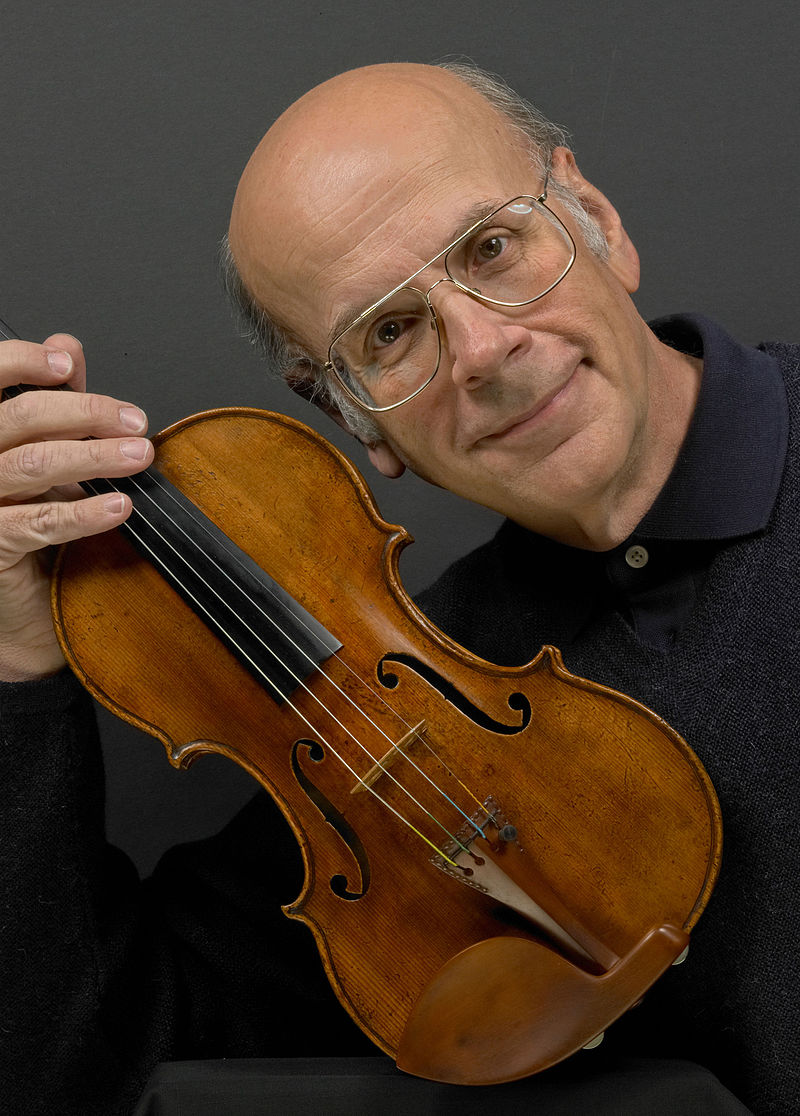
As you would expect from a musician of his calibre Yehudi Menuhin played on several famous violins, the most famous of which was the Lord Wilton Guarnerius of 1742.  Among his other violins were the Giovanni Bussetto 1680, the Giovanni Grancino 1695, the Guarneri filius Andrea 1703, the Soil Stradivarius, the Prince Khevenhüller 1733 Stradivarius, and the Guarneri del Gesù 1739.

David Fulton - current owner of the 1742 Lord Wilton ex Yehudi Menuhin Guarnerius

David Fulton – current owner of the 1742 Lord Wilton ex Yehudi Menuhin Guarnerius

I couldn’t find a clip where I could be sure Menuhin was performing on his Lord Wilton, but I have found one of James Ehnes playing Tchaikovsky’s Melody on it in 2012.  He made a series of recordings on famous Stradivari and Guarneri del Gesu violins. It seems to possess a very rich, deep and powerful tone.

Performance clips

The Menuhin Century: (Ave Maria, Flight of the Bumblebee):

I think I’m going to have to purchase this!

Beethoven Violin Concerto in D major, Op. 61 with the London Symphony Orchestra and Sir Colin Davis in 1962:

Yehudi Menuhin, aged 22 performing the Mendelssohn violin concerto in E minor, Op. 64 with his teacher, George Enescu conducting:

I absolutely adore his Bach Chaconne solo!

An iconic recording with David Oistrakh of Bach’s Double Violin Concerto in D minor:

The second movement of Paganini’s Violin Concerto No.1in D Major:

A fabulous vintage video of Menuhin in rehearsal and performance of Mozart’s Violin Concerto No. 3 in G Major, KV 216:

A vintage recording of Menuhin performing Edward Elgar’s Violin Concerto with Elgar conducting the LSO:

Menuhin plays the dramatic third movement of the Saint-Saëns Violin Concerto No. 3 in B minor, Op. 61 with the LSO:

Tchaikovsky’s Sérénade Mélancolique with the RPO:

Teaching

 Violin Tutorial – Left Hand First Exercises:

https://www.youtube.com/watch?v=mvV4A6lz-0w 

Left Hand Playing:

Keeping it in the family 

Performing with his sister Yaltah (on the piano), in a feisty rendition of Sarasate’s Habanera:

Accompanied by his son Jeremy Menuhin playing Beethoven’s ‘Spring sonata’ in F Major:

https://www.youtube.com/watch?v=CQUzCeIcFnw 

Menuhin performs Beethoven’s ‘Archduke’ Trio in 1974 with Rostropovich and Kempff:

Collaborations

Indian Classical Music with Ravi Shankar, Alla Rakha and Yehudi Menuhin:

Yehudi Menuhin & Ravi Shankar – Tenderness:

In his jazz mood with Stephane Grappelli! Autumn Leaves:

Jacob Gade’s tango – Jalousie:

I haven’t really touched on the technical difficulties he faced in the latter part of his career, because despite his virtuosic decline he was always an outstanding musician, conductor and human being.

Poster at the performance hall of Yehudi Menuhin School

Poster at the performance hall of Yehudi Menuhin School

“Actually, I was gazing in my usual state of being half absent in my own world and half in the present. I have usually been able to ‘retire’ in this way. I was also thinking that my life was tied up with the instrument and would I do it justice?” ~ Yehudi Menuhin

The Special and Noble Tradition of Being a Bard (Part 1)

“The appropriate business of Poetry, (which, nevertheless, if genuine, is as permanent as pure science), her privilege and duty, is to treat of things not as they are, but as they appear; not as they exist in themselves, but as they seem to exist to the senses, and to the passions.” ~ William Wordsworth

There will be plenty of bardolatry in these two posts, to quote the rather satirical term coined by George Bernard Shaw in his fervent appreciation of Shakespeare. When I think of ‘The Bard’, of course it is always Shakespeare that immediately springs to mind. With the 400th anniversary of his death approaching and his incredible legacy of literature, he is rightly referred to as ‘The Bard of Avon’.

William Shakespeare - The 'Chandos' portrait, artist unknown

William Shakespeare – The ‘Chandos’ portrait, artist unknown

Another more recent ‘Bard’ is Rabindranath Tagore, who was known by the sobriquet ‘The Bard of Bengal’.

But, strictly speaking, what is a ‘Bard’?

A ‘Bard’ has its roots in ancient Celtic, Welsh, Scottish and Irish culture, referring to one who had the innate skill of storytelling, composition of verse and poetry and or being a musician and singer, usually employed by a monarch or noble patron. Bards shaped our culture and ensured that our stories (and the wisdom contained within them), was passed on to future generations.

The Bard before the Royal Family by Anton Huxoll

The Bard before the Royal Family by Anton Huxoll

The meaning and influence of bardic tradition has evolved over the centuries to the more romantic understanding that is defined so perfectly in our modern world by the writings of William Shakespeare.

Interestingly, works of art work portraying bards tend to depict elderly men with windswept white hair playing a harp or grasping a tome, set against the backdrop of epic scenery.

The Bard by Benjamin West

The Bard by Benjamin West

It awakens quite a primordial longing to be at one with nature, be of service to the community and also kinship with fellow man. For me, there seems to be a very close connection with the wilderness, which, in ancient times would have been the case.

The Bard by John Martin c. 1817

The Bard by John Martin c. 1817

I’d like to start way back before Shakespeare though, with a poet I’d not heard of before, who hailed from Dark Ages Wales – Taliesin.

The Bard by Thomas Jones

The Bard by Thomas Jones

The Tale of Taliesin

Thanks to my good friend, fellow musician, writer and sound therapist, Laurelle Rond, I recently learned of the mythic Celtic folklore that surrounds the birth of Taliesin, a 6th century Welsh Bard.

He was a revered poet of the post-Roman period whose work seems to have survived in a Middle Welsh manuscript, known as the Book of Taliesin. Taliesin is believed to have sung at the courts of at least three Celtic British kings.

His name, spelt Taliessin in Alfred, Lord Tennyson’s Idylls of the King and in some subsequent works, means ‘shining brow’ in Middle Welsh. In legend and medieval Welsh poetry, he is often referred to as Taliesin Ben Beirdd (‘Taliesin, Chief of Bards’ or chief of poets). According to legend Taliesin was adopted as a child by Elffin, the son of Gwyddno Garanhir, and prophesied the death of Maelgwn Gwynedd from the Yellow Plague. In later stories he became a mythic hero, companion of Bran the Blessed and King Arthur.

Here is the mythological Tale of Taliesin, as told by Peter Freeman:

At its heart the Tale of Taliesin is a story of rebirth. It is layered with symbolism and meaning on many levels, but for me, the ultimate message of the myth is that spiritual struggle, suffering and cleansing can transform us, at which point we are reborn with inner vision, as Taliesin, the Bard.

Ceridwen, the queen and a Goddess herself, cannot bear to look upon her ugly son Morfran, who represents the shadow side of human nature; the dark side of ourselves that we don’t want to see and find hard to look at.

Gwion, Morda and Ceridwen attending to the cauldron - Taliesin

Gwion, Morda and Ceridwen attending to the cauldron – Taliesin

Gwion Bach, the young boy who is tasked with guarding the magic elixir, but who consumes the three drops of inspiration to avoid a burn when the potion is accidentally spilt on his hand, ignites her wrath and the shape-shifting chase begins. The chase is akin to the vicissitudes of everyday life, the ebb and flow of our fortunes, whereby we have to take different forms (personality traits and strengths), in order to run with our challenges.

Eventually we are empowered and born with the gift of intuition, poetry, music, wisdom and a willingness to be of service to others.

This tale has inspired composers, musicians, singers and songwriters alike, and I was delighted to find this evocative concerto for alto saxophone and orchestra by Martin Romberg, with Anja Bachmann as the soloist:

Song by Damh The Bard – Ceridwen and Taliesin:

#Shakespeare400

It will soon be 400 years since William Shakespeare shuffled off his mortal coil on 23rd April 1616, and with iconic titles such as Hamlet, Romeo and Juliet, The Tempest, Henry V, A Midsummer Night’s Dream, Othello and Macbeth to his quill it’s no wonder that his name will never be erased from the great canon of English literature. His works are  as relevant and loved today they were in Elizabethan times. Talk about staying power!

Trends and ‘celebrity’ status are transient, but true genius is enduring. No-one created characters like Shakespeare…

Procession of Characters from Shakespeare

Procession of Characters from Shakespeare

Historically, poets had glorified God, but our William had other ideas.  His muse was free and he did not censor her. Imagination was the foundation for his art. He wrote plays about love, hate, jealousy, ambition, power, greed, potions, witches, kings, queens, noblemen and women, fairies and everyday people. He needed to entertain the people so that he could make a living and support his young family back in Stratford.

However, in 1593, in the wake of the dreaded plague the theatres were closed and so ‘The Bard’ turned to poetry. His first poem was Venus and Adonis.

In the midst of the religious turmoil of the Tudor period, Shakespeare’s own distant cousin, Robert Southwell, was imprisoned in the Tower of London. He had sent his cousin W.S. a letter on the duty of poets, which was given to Queen Elizabeth I on the evening after his execution.

In 1594 under the patronage of Lord Hunston William formed a company of actors, mainly with his long-time friends, John Heminges, Henry Condell, William Sly, Augustine Phillips and Richard Burbage, who played many of his most memorable roles.

Shakespeare and his Contemporaries at The Mermaid Tavern by John Faed.

Shakespeare and his Contemporaries at The Mermaid Tavern by John Faed.

Sadly, William and Anne’s only son, Hamnet, died at the tender age of 11, so he was no stranger to heartache. It is thought that Sonnet 33 with its poignant verses could be describing Shakespeare’s grief, or potentially his despair at the rift in his relationship with the Earl of Southampton:

Sonnet 33

Full many a glorious morning have I seen

Flatter the mountain-tops with sovereign eye,

Kissing with golden face the meadows green,

Gilding pale streams with heavenly alchemy;

Anon permit the basest clouds to ride

With ugly rack on his celestial face,

And from the forlorn world his visage hide,

Stealing unseen to west with this disgrace:

Even so my sun one early morn did shine

With all triumphant splendour on my brow;

But out! alack! he was but one hour mine,

The region cloud hath mask’d him from me now.

Yet him for this my love no whit disdaineth;

Suns of the world may stain when heaven’s sun staineth.

In part 2 we’ll hear more from the ‘Bard of Bengal’ and the ‘Bard of Avon’, as well as some other much loved poets that have graced our lives since then.

“I slept and dreamt that life was joy. I awoke and saw that life was service. I acted and behold, service was joy.” ~ Rabindranath Tagore

#SundayBlogShare – Impressions of Cornwall on my Cornea… 🐚🌊⚓

Well, strictly speaking I guess it should be retina, but it doesn’t quite have the same ring to it! After a week exploring yet more of south Cornwall I felt compelled to pen some prose about all things Cornish.

Porthcurno - wave

Cornwall reminds you in sometimes very bleak, stark terms, that away from urban spaces humans are vulnerable. Exposed to the elements we are at the mercy of nature, but for the most part, we are furnished beyond measure with every conceivable bucolic blessing.

Ancient, Celtic landscape demands attention and respect,

Ethereal, translucent light, any roaming spirit lifts,

Illuminating land of lighthouses, coast of craggy cliffs,

Treacherous, rocky graveyards to long wrecked ships,

Barrels of rum and sailors drowned, washed ashore…

LE - looking out towards longships lighthouse

Looking out to the Longships Lighthouse at Land’s End

Cold Celtic sea pounds sandy, surf-battered beaches,

Rolling waves – inevitable – powerful, break again and again…

Spewing white, foamy fingers as they meet rock and grain,

No land can defy its constant relentless erosion,

Every crash roars ‘brave me if you dare’!

Porthcurno - girls in water

Stunning sights around every curve, inlet and bay,

Quaint fishing harbours safely enclose painted boats,

Peeling, wooden hulls bobbing, heeling, always afloat

Gulls swoop and cry over glassy, glinting ripples

Delight in pasties, Cornish-cream teas and ice-cream.

Pretty Porthleven Harbour

Pretty Porthleven Harbour

For respite from epic, elemental coastal landscapes,

Seek out misty moors, carpeted with prickly heather,

Inviting inns provide shelter from inclement weather,

Discover the literary heritage of a proud pirate past,

It’s every hiker’s trail and a smuggler’s paradise.

Gunwalloe Church Cove

Gunwalloe Church Cove

Half ruined, silent chimneys protrude from green meadows

Home to birds, since their halcyon days of mining,

Rich seams of copper and tin, now empty lining

Deep shafts delve down from deserted engine houses

The wheals closed, bereft of investment and profit.

Wheal Coates, St. Agnes

Wheal Coates, St. Agnes

Windy lanes and high hedgerows separate patchwork fields,

Undulating hills adorned by herds of carefree cows,

Gnarled old trees hold secrets in their boughs,

Lost gardens, manicured lawns, flower filled biospheres,

Yet more views beckon to greedy irises…

Emily and Ruby on tree

Hidden horseshoe coves bask in sun and breeze,

Secret caves found, as gushing, tidal oceans bare,

Invigorate senses, inhale pure, salt infused air,

Tingling droplets moisten parched, urban skin

Sweet scent of the sea fills burgeoning lungs.

LE - view of coast

Lofty, stone towers and Church spires are dwarfed,

By tall wind turbines, with sharp white blades,

Solar panels reflect and fill farmers’ glades,

Ancient, rooted, mossy riverbanks trickle by unhindered,

Revel in her diversity and ever present views.

Clowance - Emily and Ruby on bridge

Irreverent skies change like chameleons, clear one moment,

Foreboding the next; clouds morphing into gangsters,

Cotton white puffs swell into angry grey monsters

Filling your vision as they darken and loom,

Ready to suddenly release their vast, watery weight.

Porthleven - dramatic skies and sea

Land before time; shaped by eons of cosmic forces.

Iconic, coastal scenery captures hearts and imagination,

Last bastion of English Riviera, gritty, island nation,

Before I depart, Cornwall bestows her treasure:

A lasting impression on my cornea…

View towards the Minack Theatre from Porthcurno Beach

View towards the Minack Theatre from Porthcurno Beach