Why Attitude is the Greatest Alchemy of Life

“If you are distressed by anything external, the pain is not due to the thing itself, but to your estimate of it; and this you have the power to revoke at any moment.” ~ Marcus Aurelius (Meditations)

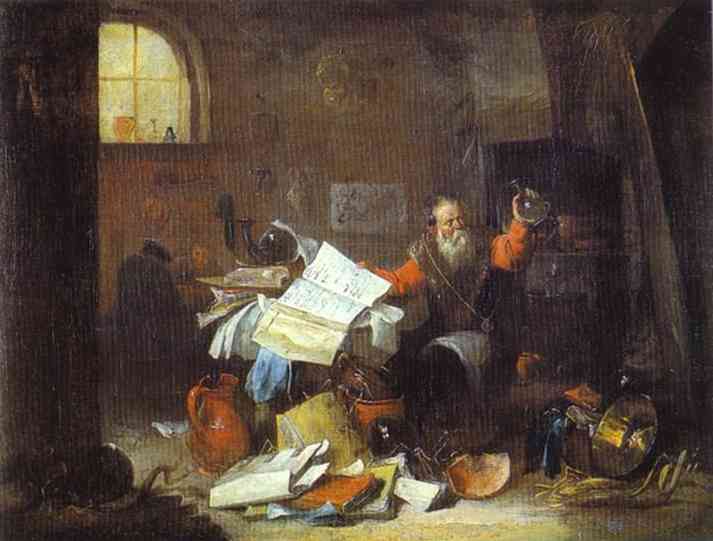
One of my favourite books is The Alchemist by Paulo Coelho. Its prose is poetic and its theme, wise. In a nut shell, the ancient art of alchemy is the coveted ability to turn lead or mercury into gold. Imagine what a valuable skill that would be…

The Alchemist by David Teniers the Younger

The Alchemist by David Teniers the Younger

Everything you touched transformed literally into gold…  But in a broader sense we are all alchemists. You see, attitude is the raw material of personal alchemy.

By harnessing our most helpful and positive thought processes we can turn any perceived negative situation to our advantage, thus transforming undesirable substances into the elixir of happiness.

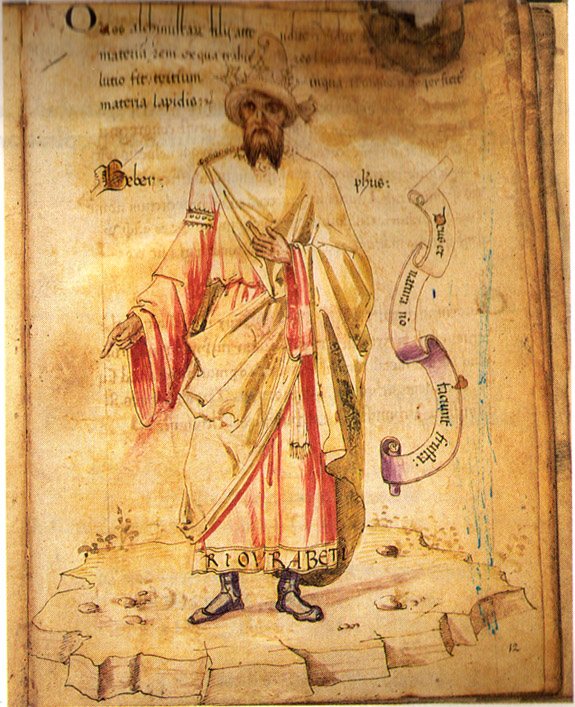
alchemy - Jabir_ibn_Hayyan

I love the saying, when life gives you lemons make lemonade. We’ve all known people who can step into a pile of steaming dung and seemingly come out smelling of roses. And there are others who appear to have it all: beauty, talent, fame, money, and on the surface they seem to be highly successful. But if you were a fly on the wall you might understand that issues can plague them just as much as the rest of us. Illness, heartache, family strife, or any kind of situation could be causing them misery, sadness and anxiety.

We all have our ‘stuff’ to deal with. Not least of which is that annoying little voice that likes to chirp up at the most inconvenient moment to tell us that we’re not good enough.

Or is that just me?

No matter what is going on around us, if we stop comparing ourselves to others and just focus on being the best person we can be, we can handle these sticky situations and mutate them into the precious metals of our lives…

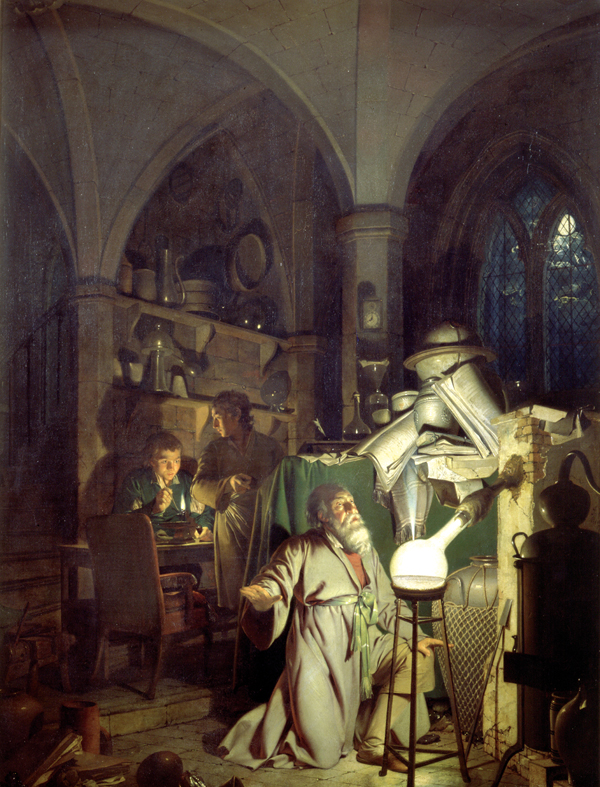
The Alchemist by Joseph Wright

The Alchemist by Joseph Wright

When I look back on my saddest moments and greatest life challenges, I know that’s when I grew the most. When the chips are down you learn more about yourself than you do when it’s all plain sailing. My inner strength was forged in the fire of suffering. But it’s like Jesus said, “This too shall pass.” With the benefit of hindsight I’ve been able to get some perspective and see how my attitude either helped or hindered me in those times.
When I was faced with the ultimate choice to either change or die, I think you can guess when I finally created my gold.

Attitude is a very fluid thing, it can change according to our mood and circumstances, but the trick is to be aware of our thoughts and our self-talk, and when it dips be able to alter it accordingly. I know that I’m normally quite a ‘high’ sort of person but I can sometimes get pulled into a ‘low’ when things don’t go my way, which tends to happen fairly frequently.

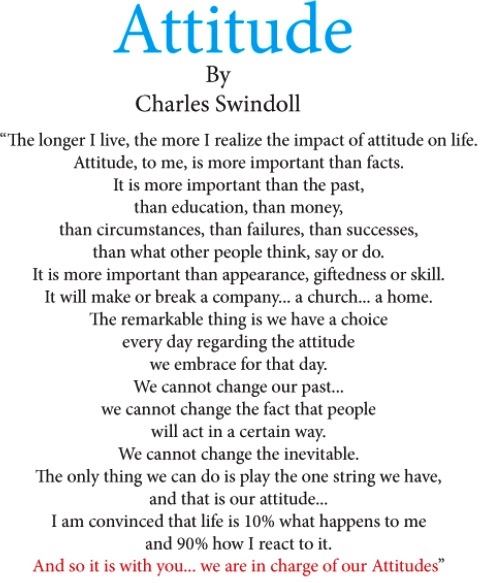
Attitude - Charles Swindoll

I try to be a constant practitioner of gratitude, because unless you’re dead, things can always be worse. There have been days when, as Zig Ziglar so aptly put it, I needed a ‘check-up from the neck up’.

“Your attitude, not your aptitude, will determine your altitude.” ~ Zig Ziglar

Speaking of Mr Ziglar, here’s the man himself. Attitude Makes All The Difference:

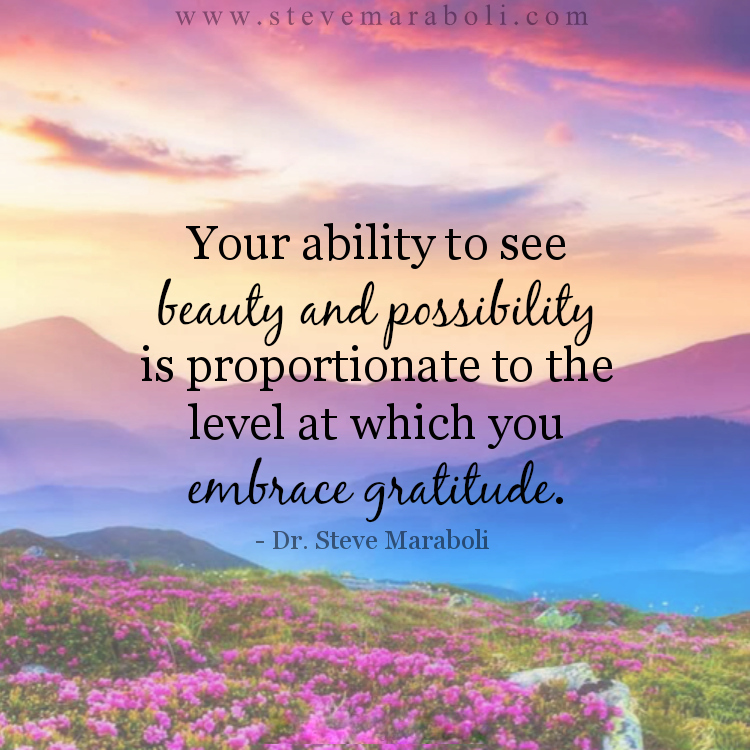
Gratitude lets you see the beauty of your life which opens you to possibilities and better, more positive outcomes. We can’t second guess the universe, we can only play the current hand that we’re dealt with and try to make the best of it. Sometimes a duff hand is the most amazing blessing in disguise, even though in our despair we may ask, “Why is this happening to me?” The answer may not always become clear until after the event.

attitude - gratitude

Wounded souls have undergone healing, and are capable of deep compassion, empathy, strength and love.  The desire to serve and make things better for others often comes from experiencing a hardship that we want to spare our fellow man. Pain, whether it be emotional or physical is the main ingredient in our noble quest for transformation. Heartache is metallurgy for the soul.

It’s not our intelligence that will make the difference.  We could be the brainiest person in the world, but if our thoughts about us and others were negative, a high IQ wouldn’t count for much. If we have the attitude to know that we don’t know everything we can always learn from someone who has gone before us.

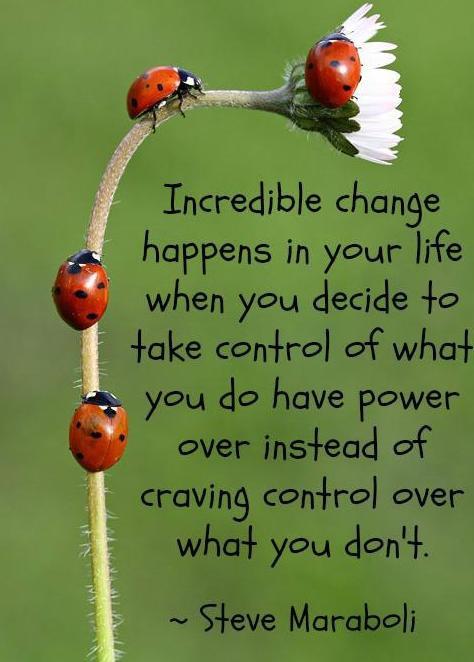
Our attitude is the thing that makes the biggest difference. If we evaluate where we’re at and adjust our settings accordingly we won’t get thrown too far off our course. It’s the only true thing we have complete control over.

attitude - living-success

After conducting countless experiments Thomas Edison might have rightly announced he was never going to invent the electric light bulb, but after being questioned about his apparent lack of results Edison was quick to respond:

“Results!  Why, man, I have gotten lots of results!  I know several thousand things that won’t work!”

So our thoughts and beliefs either elevate our attitude or they drag it into the gutter.

The sheer exuberance, innocence and enthusiasm for life that my children regularly demonstrate shows me how important that sense of wonderment really is. Magic is real to children.

Succumbing to wallowing in our weaknesses and problems is probably the biggest roadblock to leading the life of our dreams. When we have a purpose and passion in our lives it provides motivation to ditch these badly formed, ill-informed thoughts for ones that will better serve our inspiration. Brendon Burchard nails it in this clip where he talks about shifting our dominant frame:

People with charisma and warm, uplifting auras are a pleasure to be around, we are drawn to them like metal filings to a magnet. On the other hand, the moaning minnies of this world tend to repel both people and happy circumstances. They are caught in a perverse cycle of victimhood which makes it harder to manifest the life they want.

It’s like the crab that’s  trying to clamber out of the bucket, but is caught in the pincers of another crab who wants to hold him back and prevent him from escaping. The remaining crabs pull him back in, sealing their collective their fate. Only this time, the pincers pulling us downward are our mind, and sometimes other people. Great explanation of the crabs-in-a-bucket theory.

Helpful tips

  • Sometimes it can be useful to imagine we are shape-shifters, and metaphorically use the qualities of the creature best placed to deal with our current situation so that we can run with the challenge.
  • Learn to reinvent ourselves.
  • Balance our time between the external, fast paced world we live in and our precious inner world. Meditation is a great way to do this, as is playing a musical instrument, getting immersed in a hobby or time out in nature.
  • To live by our values and protect what we hold sacred, even in the face of troubles.
  • To be creative, go with the flow and have fun always lightens one’s burdens.
  • If we see ourselves and others with a sense of humour it balances our seriousness.
  • Live with humility in the present moment and be grateful for our blessings, for life is a privilege.
  • Learn to balance patience with action and always be bold and courageous to know that we can achieve whatever we set our minds on.

Rather than understanding the ancient philosophy and practice of alchemy and the nature of matter, we can be masters of the chemical impulses in our own brains. When we change our attitude we change ourselves, and it can happen for better or worse in an instant.

I thought I’d share Der Alchemist by Carl Spitzweg  complete with atmospheric chamber music that totally fits the painting and the ethos!

It’s how we handle our base emotions and thoughts that determine how much ‘gold’ we will convert. We can decide how we’re going to lead our lives, what legacy we’re going to leave the world, and if that isn’t true alchemy – I don’t know what is.

The Great Virtuoso Violinists/Composers of the 19th Century: Sarasate

“A sandwich and a cup of coffee, and then off to violin-land, where all is sweetness and delicacy and harmony.” ~ Arthur Conan-Doyle (The Adventures of Sherlock Holmes)

I’m excited to share the sublime music of Pablo de Sarasate with you. He’s one of my favourite composers of 19th century romantic violin music. His tunes are so evocative of his Spanish homeland, but more than that, they are infused with virtuosic flair, memorable folk tune melodies and romantic lyricism.

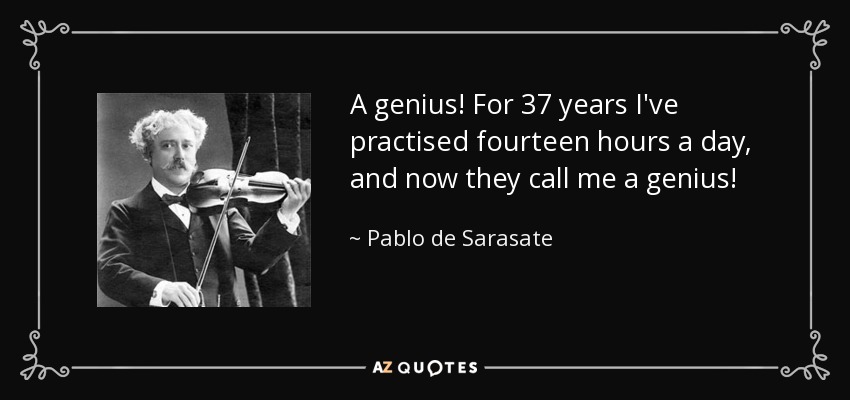
Sarasate quote-a-genius-for-37-years

Every time I hear his music my heart flutters…especially when played with a colourful tone and expressiveness.

His music always transports me to another time and reality; a place filled with Mediterranean warmth, caballeros, siestas inside white washed houses topped with cinnamon coloured terracotta tiles, dramatic mountain scenery, cicada filled olive groves, dusty plains and shimmering beaches sprawling under pinky red streaked skies;  illuminating a vast land with the effulgence of a romantic Spanish sunset.  Ah, I think I got a little carried away there…

You never get the feeling that he sacrificed a good tune for the sake of showing off, he managed to seamlessly integrate technique, flair and melody.

Sarasate with his Stradivarius

He may not have written a violin concerto, but his repertoire of fifty seven brilliant compositions for violin and piano and or orchestra more than make up for it.

Pablo de Sarasate: 10 March 1844 – 20 September 1908

Born with a spectacular name entirely befitting his talents, Pablo Martín Melitón de Sarasate y Navazcués, grew up in the city of Pamplona in Spain’s northern province of Navarre.

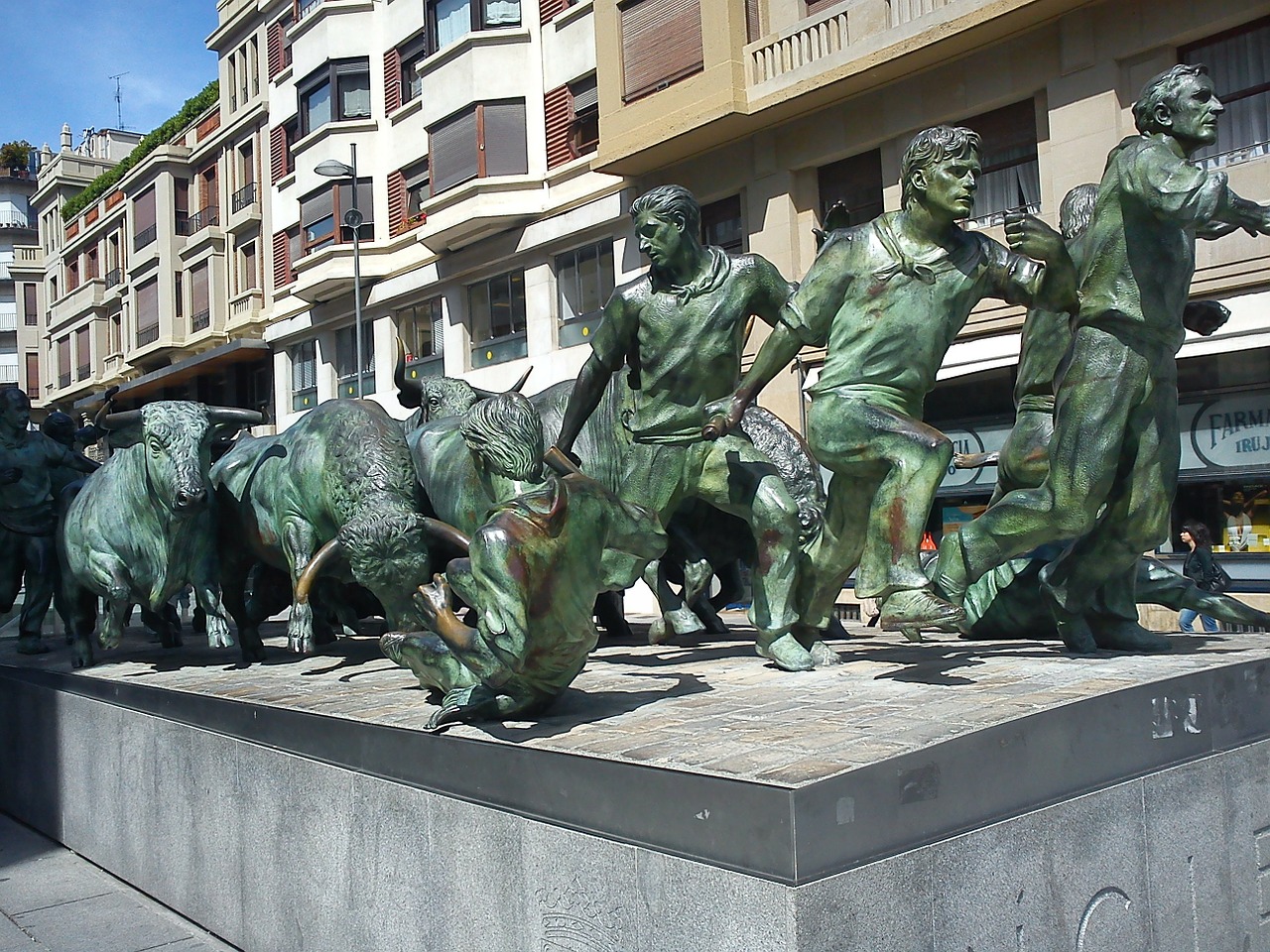
He must have imbibed the fiery atmosphere of the San Fermin Festival and the “Running of the Bulls” every summer, and somehow transmuted all that thrill, tradition and dangerous daring of nature into his music.

Bull-run monument in Pamplona

Bull-run monument in Pamplona

Famed for his own romantic and virtuosic performances, one can only marvel at his brilliance. His music is mostly for advanced violinists because that was his skill level on the instrument. No shirking for Pablo; or indeed us wannabe virtuosos for that matter!

Sarasate’s genius on the fingerboard influenced many well-known composers. The French romantic composer, Camille Saint-Saëns, wrote and dedicated his third Violin Concerto and the Introduction and Rondo Capriccioso in A minor for him.

Jascha Heiftez blows me away with this performance:

Other compositions written in his honour include Lalo’s Symphonie Espagnole, Bruch’s Scottish Fantasy and Wieniawski’s Second Violin Concerto. Sarasate’s style of performing had a direct impact on how other composers of the era formed their violin solo passages.

The early days

Spain’s cherished and foremost violinist/composer began lessons at the age of five, being taught initially by his father who was a bandmaster. He gave his first concert at the age of eight, which secured him patronage to study in Madrid under Manuel Rodríguez Saez, where he became popular with Queen Isabella II of Spain.

At the age of twelve he was sent for tutelage under Jean-Delphin Alard at the Paris Conservatoire, but the journey from Pamplona to Paris proved to be a tragic one. Soon after their train had crossed the border into France, Sarasate’s mother died of a heart attack and Pablo himself was found to be suffering from Cholera. Fortunately he recovered and was able to continue his studies. In 1861 he won first prize in the prestigious Premier Prix in Paris.

Pablo-de-Sarasate-sepia-photo1

Thus began his touring soloist’s career. He was one of the early recording artists also, with a performance in 1904 that prompted a reviewer to write he had “the fleetest fingers and bow arm in the history of recorded sound”.

Not only was he popular in London and Europe, but he also toured America, South Africa and Asia.

Operatic inspiration

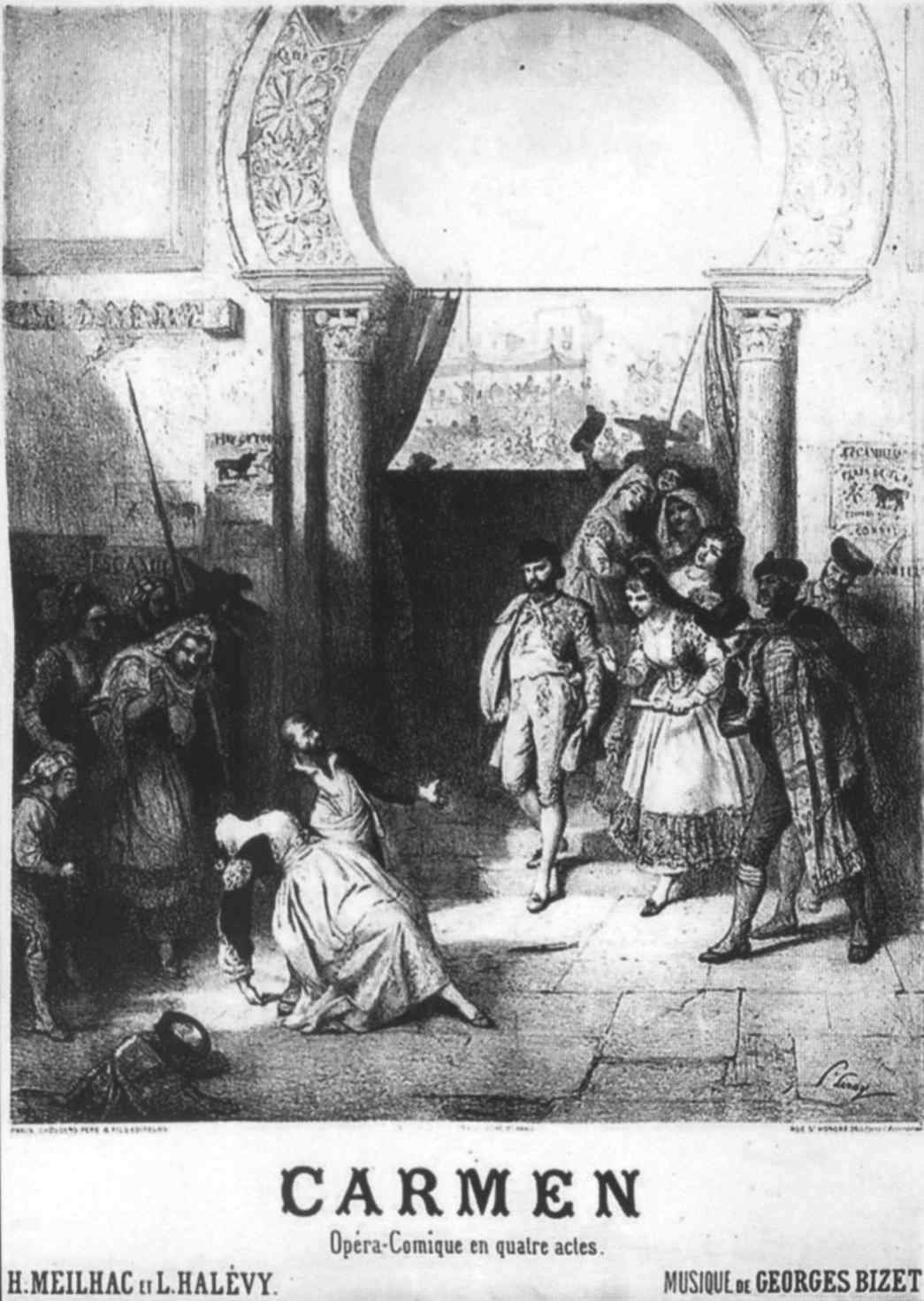
In his early career Sarasate performed mostly opera fantasies, including his evocative and beautiful Carmen Fantasy based on Georges Bizet’s seductive and passionate opera, Carmen.

1875 poster for Bizet's opera Carmen

1875 poster for Bizet’s opera Carmen

It’s technically very challenging and demanding (as you would expect from a violinist of his caliber), containing elements and adaptations from the Aragonaise, Habanera, an interlude, Seguidilla, and the Gypsy Dance.

Inspired by Sarasate’s work, film composer Franz Waxman wrote a similar piece, his Carmen Fantasie in 1946, which I also adore.

It would be remiss of me not include some stratospheric performances of his Opus 25!

Gil Shaham shows us how it’s done:

I also love Itzhak Perlman:

And of course, it would be rude not to feature this stunning performance by Maxim Vengerov of Waxman’s Sarasate inspired version of Carmen:

Other Operatic Fantasies

 The Magic Flute Fantasy with Gil Shaham:

Faust Fantasy, Op. 13- Pablo de Sarasate Gil Shaham:

Fantasy on Mozart’s Don Giovanni (performer unknown):

Concert Fantasy on Gounod’s Romeo et Juliette, Op. 5:

Gypsy Airs (Zigeunerweisen), Opus 20

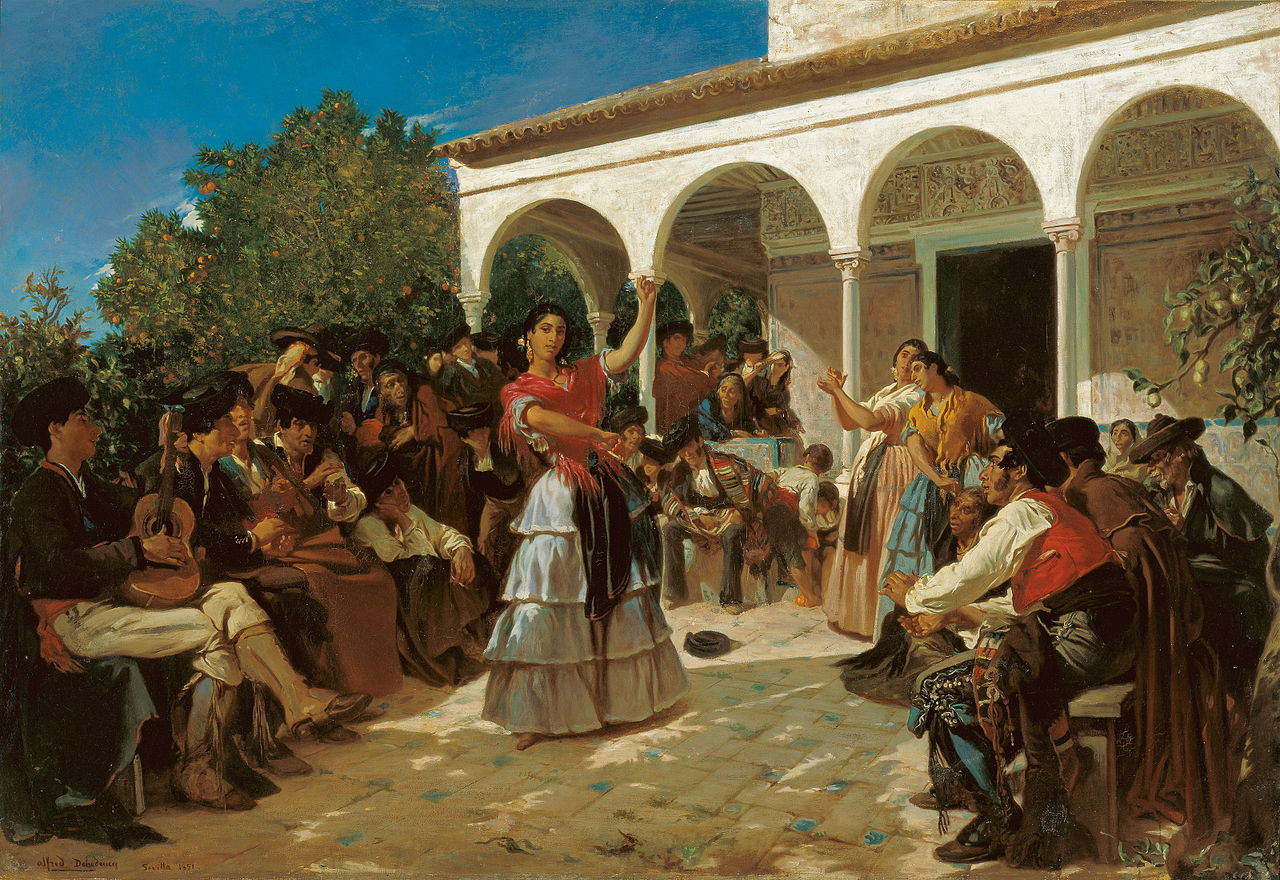
Zigeunerweisen is Sarasate’s most popular composition, and was written for violin and orchestra in 1878 and premiered the same year in Leipzig. It features the themes of the Roma people, and in part also the csárdás, which was ‘borrowed’ from a theme previously used in Franz Liszt’s Hungarian Rhapsody No. 13, composed in 1847.

A Gypsy Dance in the Gardens of the Alcázar by Alfred Dehodencq

A Gypsy Dance in the Gardens of the Alcázar by Alfred Dehodencq

Sarasate recorded his best loved work in 1904, but since then it has been recorded by many violinists, being a popular stalwart of the virtuoso’s repertoire.

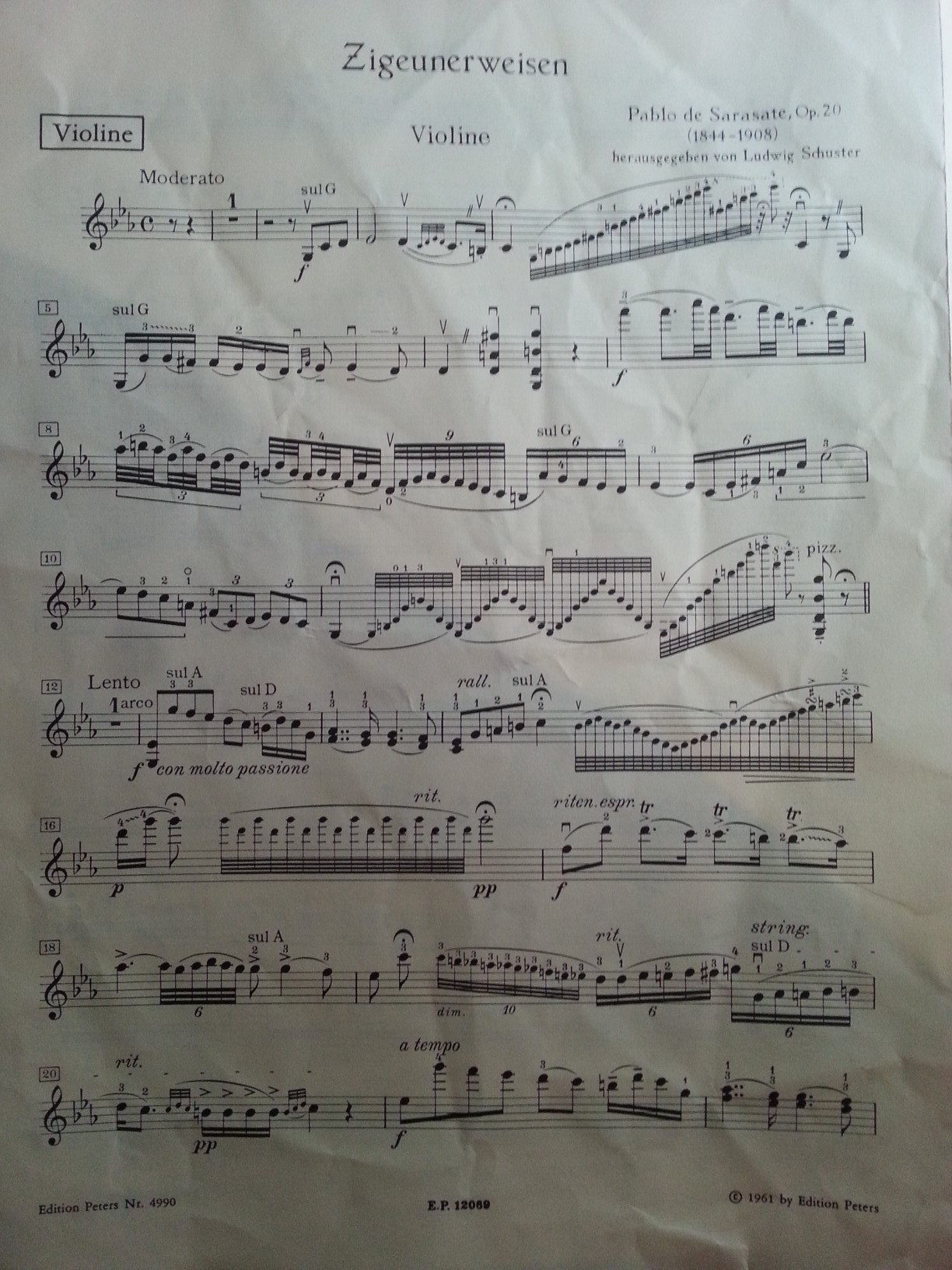
My crumpled violin score of Zigeunerweisen (rescued from the clutches of my youngest)

My crumpled violin score of Zigeunerweisen (rescued from the clutches of my youngest)

Technical data courtesy of Wikipedia.

Zigeunerweisen is in one movement but can be divided into four sections, the first three in the key of C minor and the last in A minor, based on the tempi:

Moderato – An imposing, virtuosic introduction with slow majestic energy by the orchestra, then a little softer by the violin itself.

Lento – The violin plays in lugubrious lento 4/4. This section has an improvisational quality; the melody, which essentially consists of pairs of 4-bar phrases, is punctuated with difficult runs and other technically demanding figures, including flying spiccato and ricochet bowings.

Un poco più lento – The muted soloist plays a melancholic melody with the so-called reverse-applied dotted note (1/16 + dotted 1/8 rhythm), akin to the “Mannheim sigh” of the classical era; in 2/4 time.

Allegro molto vivace – At this point, the piece becomes extremely rapid. The challenging solo part consists mainly of long spiccato runs, along with double stops, artificial harmonics and left-hand pizzicato; in 2/4 time.

This is undoubtedly my favourite from Sarasate’s romantic oeuvre, and I love this exquisite performance by Belgian violin ace Arthur Grumiaux:

The inimitable Itzhak Perlman:

The shortened vintage version recorded by Sarasate in 1904:

I can’t forget Jascha Heifetz either!!

The Duo Toivio recorded a beautiful transcription for cello and piano:

This arrangement for double bass and guitar with Edgar Meyer and Béla Fleck is lovely:

And perhaps even more impressive is the amazing duo of two violins and piano. Hyun-su Shin and Clara Jumi Kang display perfect timing and intonation in their stylistic duet:

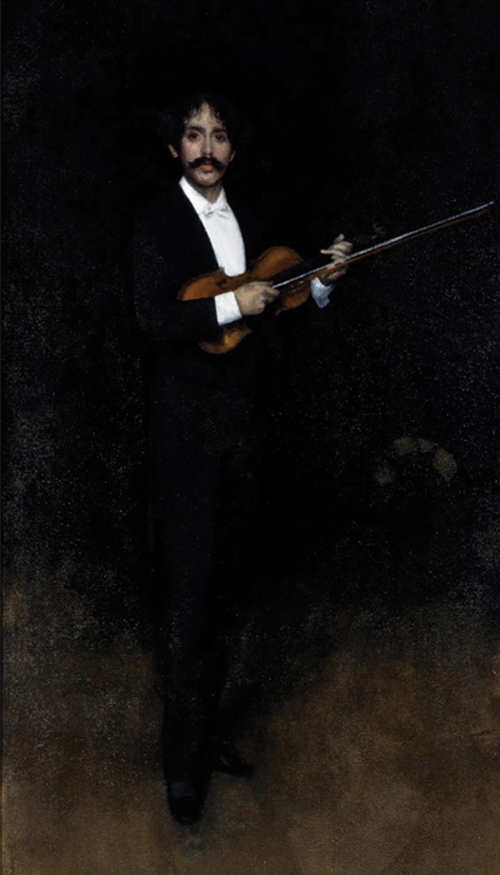
Sarasate lived the latter part of his life in Paris, in a home that had been decorated by none other than the American Post-Impressionist artist James Abbott McNeill Whistler, who also painted a wonderful portrait of him at the same time.

Pablo de Sarasate - Arrangement in black by James Abbot McNeill Whistler

Pablo de Sarasate – Arrangement in black by James Abbot McNeill Whistler

Now quite wealthy he purchased a holiday home, a villa in Biarritz, but would return to Pamplona for the festival every year.

It seems to me from his paintings and photographs that he dressed impeccably, and was ever the perfect gentleman. Sarasate and his music belonged to a romantic era. I’m sure he must have had no shortage of female admirers, but, for whatever reason, he remained a bachelor. No woman could have taken the place of his beloved violin…

His renown as a performer has been immortalised in print, with mentions in plots by novelists Arthur Conan-Doyle, Anthony Burgess and Edith Wharton.

The Sarasate Stradivarius

Pablo played on a 1724 Golden Period Stradivarius, which was bequeathed to the Musee de la Musique at the Paris Conservatoire after his death in 1908, and is now aptly named after their star student, the Sarasate Stradivarius.

His second violin was also a Stradivarius, the 1713 Boissier, which is now owned by Real Conservatorio Superior de Música, Madrid, where he studied as a boy.

Boissier Stradivarius in Madrid

Boissier Stradivarius in Madrid

Here’s a selection of his beautiful, Spanish themed compositions.

Airs Espagnols – great feisty interpretation, but the performers are unknown as they are not mentioned:

Habanera by Itzhak Perlman:

Malagueña Op. 21, No. 1 (Spanish Dances) by Yehudi Menuhin:

Introduction and Tarantelle, Heifetz:

Spanish Dances Op. 22, No. 1 Romanza Andaluza, Leonid Kogan:

Caprice Basque, Op. 24, Itzhak Perlman:

¡Viva Sevilla! Op. 38 (performer unknown):

‘Navarra’ for 2 Violins. Husband and wife team Gil Shaham & Adele Anthony:

Zapateado performed by Henryk Szeryng:

Zortzico Op. 39 with David Oistrakh:

El Canto del Ruiseñor, (song of the nightingale) Ruggiero Ricci:

Nocturnes:

Les Adieux, Op. 9 Tianwa Yang:

George Bernard Shaw once said that though there were many composers of music for the violin, there were but few composers of violin music. But of Sarasate’s talents, both as performer and composer, he said that he “left criticism gasping miles behind him.”

Hasta la próxima vez amigos. ¡Felices Pascuas!

#SundayBlogShare – The Joys of Spring 🌷🌾⛅☔

The Joys of Spring

The chilly, desolate air of winter is abating,

It’s time for frolicking; animals are mating,

Softer grounds yield bounty to probing beaks,

A sprightly dawn chorus will lift flagging spirits.

Springtime Awakening by Luc Oliver Merson

Springtime Awakening by Luc Oliver Merson

First splash of rowdy pigments signals awakening,

The patient spirit of spring, indefatigable, unwavering,

Bright yellow daffodils, pretty pink blossom, and

Vivid purple crocuses, give pleasure to gaze upon.

A song of Springtime by John William Waterhouse c. 1913

A song of Springtime by John William Waterhouse c. 1913

Rebirth and transition occurs all around us,

Unleashing fervent growth – stillness to flux,

Hibernation is over, sleepy eyes can refocus,

Once again, life is animated, freshness permeates.

Springtime at Giverny by Claude Monet c. 1886

Springtime at Giverny by Claude Monet c. 1886

Release and use your body’s reserves,

Shed your winter coat, it no longer serves,

Momentous celestial maneuvers fire up creation,

This very day ushers in the Spring Equinox.

The First Day of Spring by Alfred Sisley c. 1889

The First Day of Spring by Alfred Sisley c. 1889

Longer days give rise to abundant energies,

Green leaves will soon clothe barren trees,

Regeneration sparks quiet, dormant hearts,

Welcome the bifurcation of old and new.

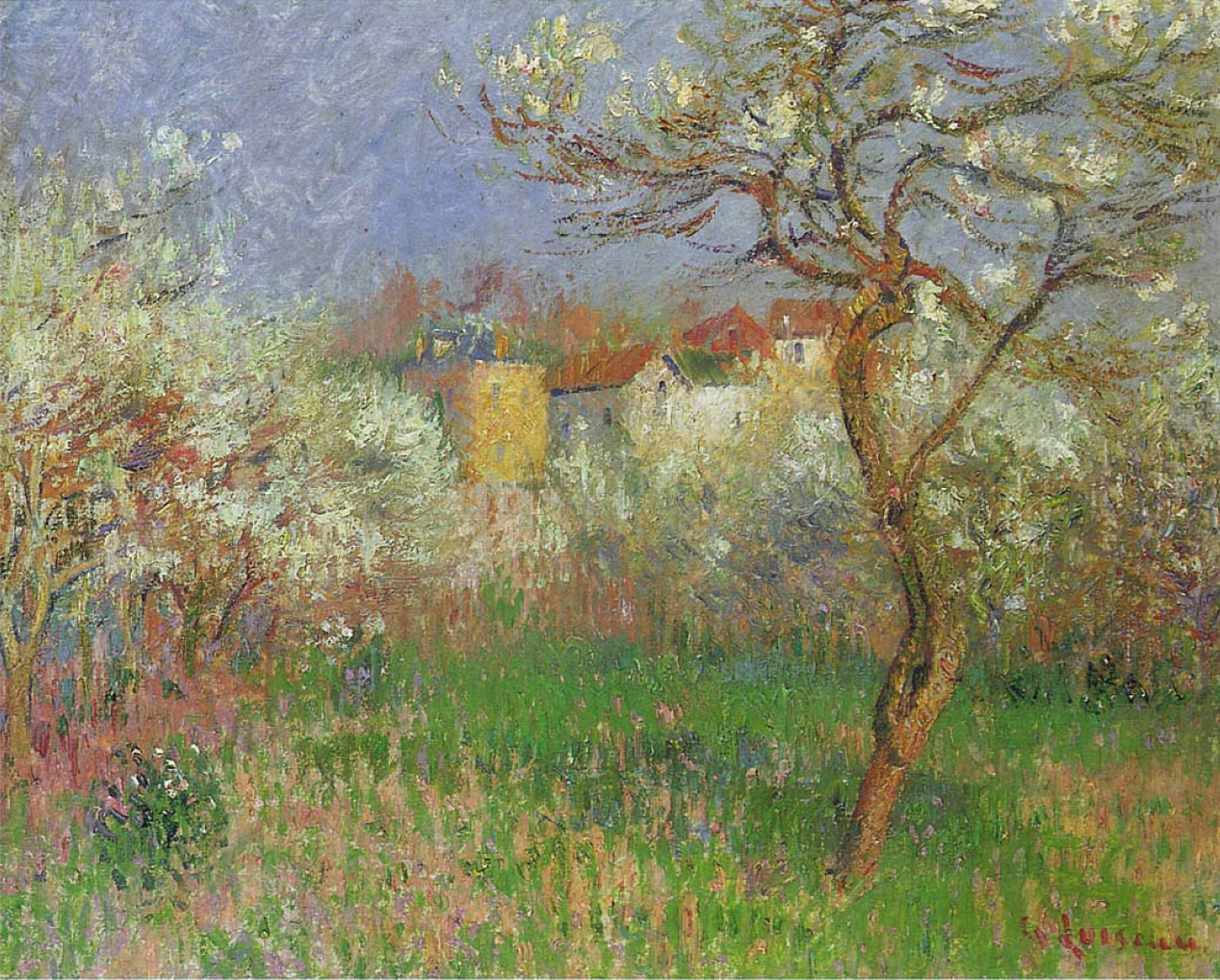
Spring by Gustave Loiseau

Spring by Gustave Loiseau

None can escape the March Hare’s madness,

It’s time to bid farewell to winter sadness,

Warm, hazy sun beams now and then,

We can venture forth from our snug cocoons.

Narcissus by John William Waterhouse

Narcissus by John William Waterhouse

Morning mist hangs, layered in pale cloud,

Illuminated by light, casting ghostly shroud,

Soon, like a parting season, it will evaporate,

Just as sky reflects blue, imbued with clarity.

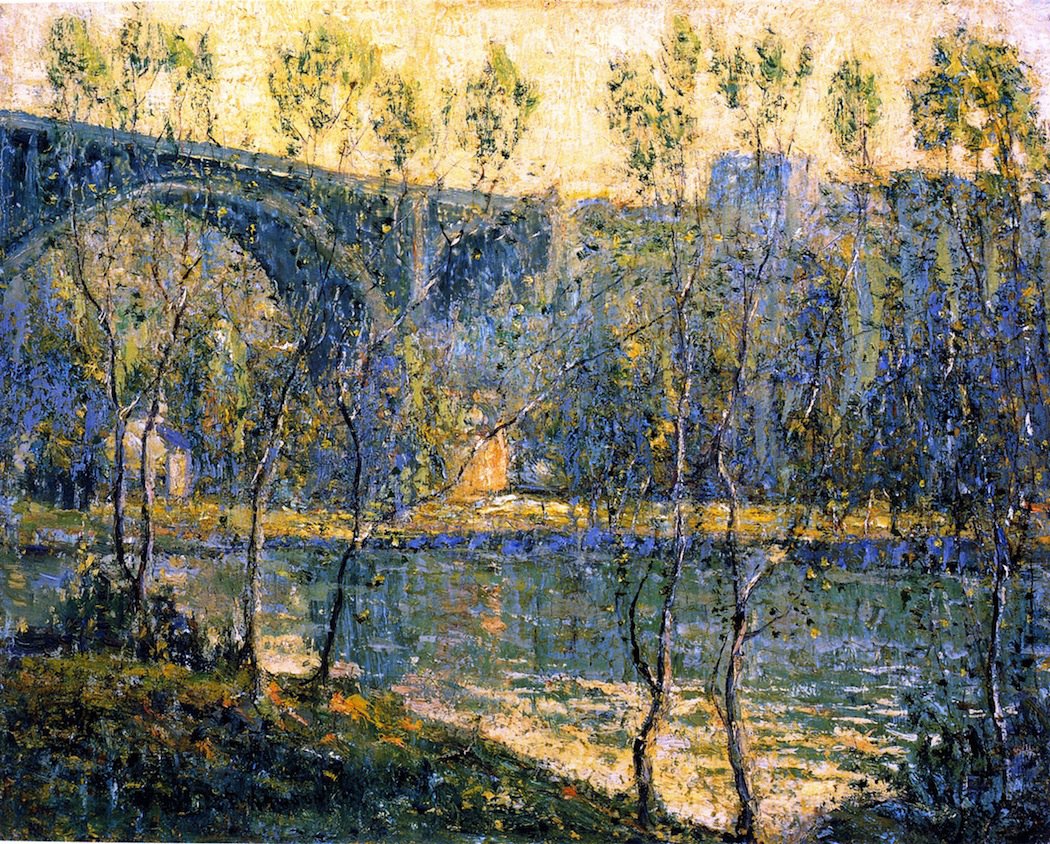
Spring Morning by Ernest Lawson

Spring Morning by Ernest Lawson

In valley, moor, meadow and plain,

Plants are nourished with sunshine and rain,

The landscape undergoes a metamorphosis,

Once barren soil mutates into pastures fertile.

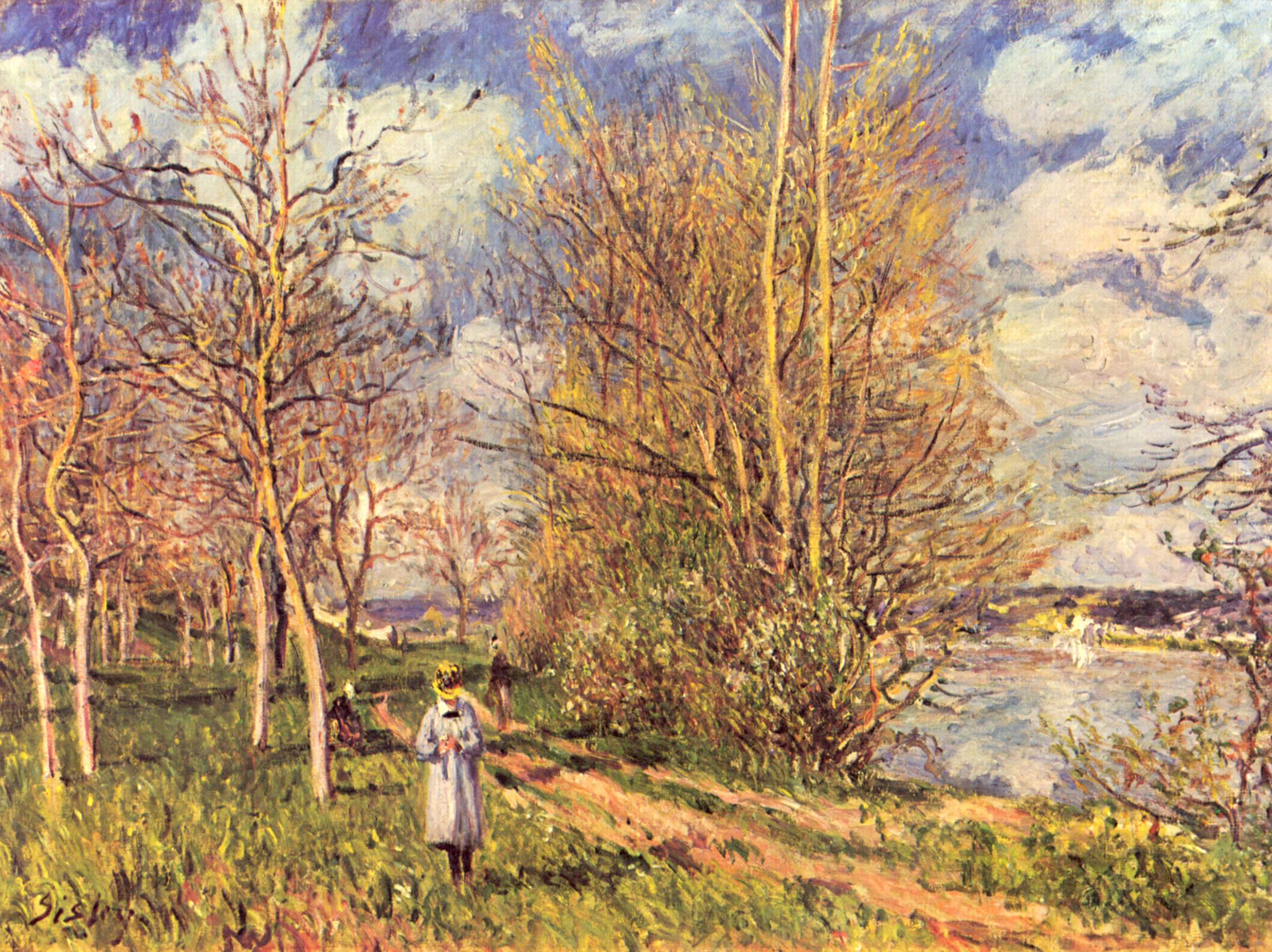
Small meadows in Spring by Alfred Sisley c. 1880

Small meadows in Spring by Alfred Sisley c. 1880

Stroll in sunny fields, this season do not squander,

Like a stream meanders, free your soul and wander,

With her glorious, lustrous hues, spring invigorates,

Breathe in life, explore nature’s vibrant palette.

Spring in Italy by Isaac levitan c. 1890

Spring in Italy by Isaac levitan c. 1890

Tightly clenched, silken buds suddenly unfurl,

Dancing with wind, sweet petals sway and swirl,

The Earth shares her joy through spring,

Spreading new hope with a canvas of colour…

Spring (detail) by Sir Lawrence Alma-Tadema

Spring (detail) by Sir Lawrence Alma-Tadema

Bring Colour Into Your Wardrobe and Your Life

I’m delighted to introduce you to colour expert and stylist, Jo Baldwin-Trott, founder of Colour First for her fascinating guest blog for this week’s #SundayBlogShare.

JBT - portrait picColour plays a big part in our lives – from advertising to interior design, fashion to photography, colour is everywhere affecting our mood and emotions, mostly when we are unaware.

Black is repressive, yellow invigorating, pale blues and greens are calming and healing and red detracting and repelling.

In our clothing in Europe we are traditionally very muted and dark in our wardrobes.

Black only really looks good on a certain cool skin tone and it ISN’T slimming (a good Marks & Spencer 1980’s marketing campaign and myth) and doesn’t go with everything – navy does!

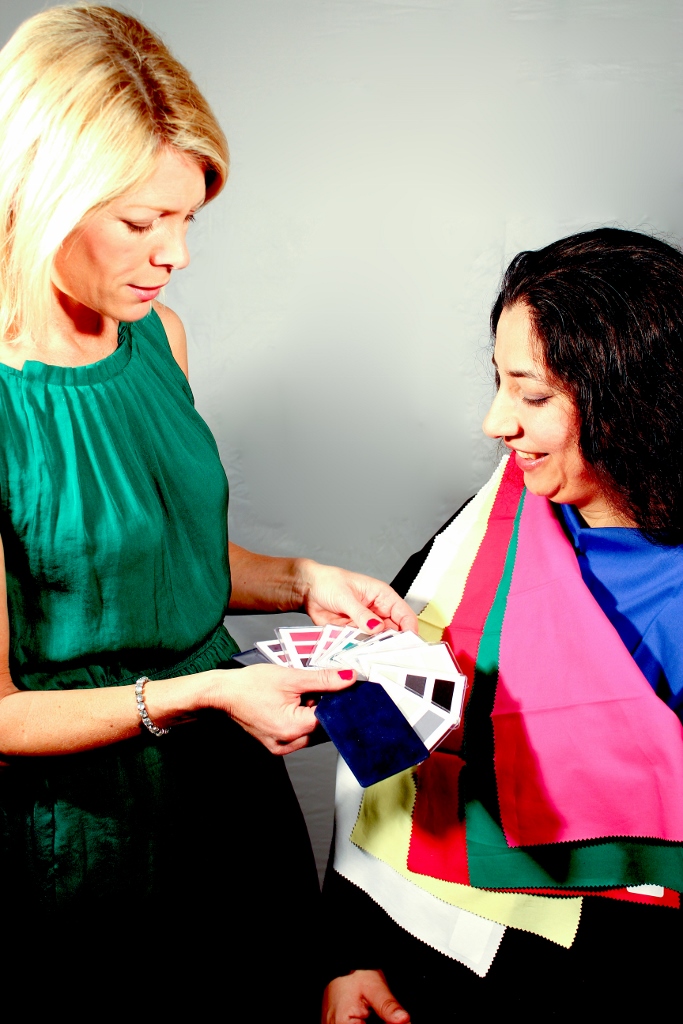
It is impactive and exciting discovering NEW BRIGHT COLOURS which not only suit you and brighten your natural look, complexion and your wardrobe, but can change the way you feel. COLOUR ANALYSIS may have been around for 30 years but my approach to colour is fresh, modern, relevant to current fashion and all about discovering the colours that make you ‘ZING’*!

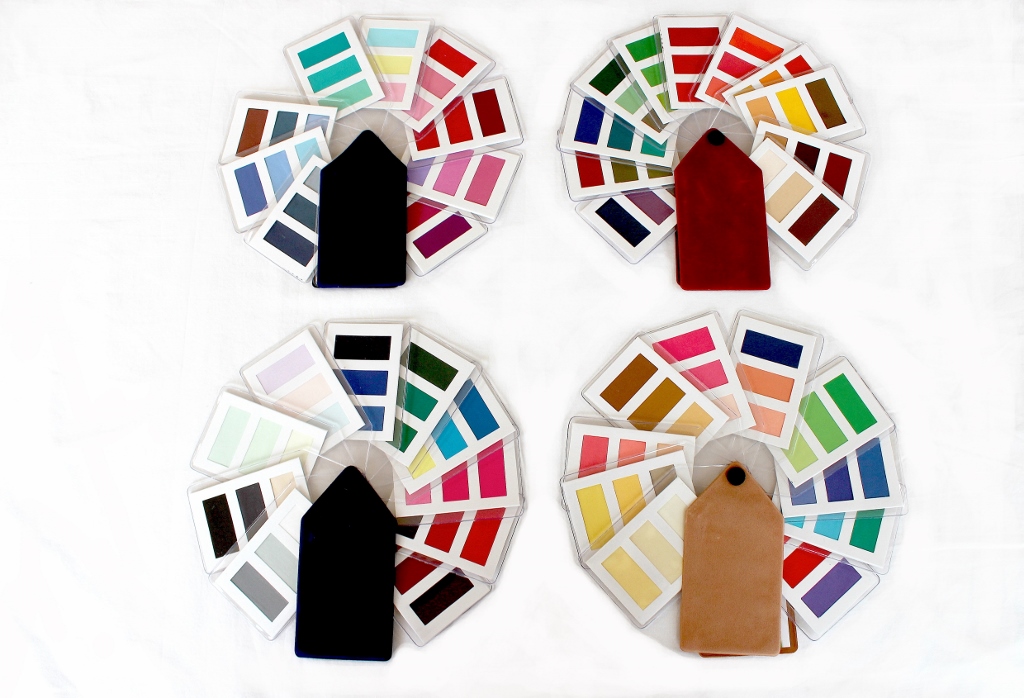
These are the 6 or 7 colours in your seasonal palette which enhance you – and just you!  You may have an autumn palette, like the Duchess of Cambridge or David Beckham, but you will likely have a different combination of skin tone, hair and eye colour so your Zing’s* will be different.  Discovering your Zings* can be life changing – it was for me as I have English rose skin and struggled like crazy to find bright colours to wear. Now I love wearing True Green, Cornflour Blue and feel so much more vibrant wearing them, and as for Watermelon Red…!!

JBT - colour pantones

Swatches for each season’s palette – clockwise from top left: Summer, Autumn, Spring, Winter

Europeans and Americans have a very mixed ethnicity, as history has determined!  This means that many people do not have just one obvious colour combination – their eye colour could be cool, their skin tone warm.  Hair colour warm, eyes cool and so on.  COLOUR ANALYSIS is not prescriptive and although many stylists follow certain rules and charts to diagnose a client’s season, it takes vision and creativity to be able to SEE YOUR COLOURS.

I can envisage my clients in lime green or bright orange, turquoise or camel.  And it is this skill that makes me an expert in my field and why I offer a guaranteed accurate analysis.

Due to this creativity I can also offer VIRTUAL CONSULTATION. I am more than happy to travel to any client, anywhere, but if time doesn’t allow for a two hour consultation I can consult from specific photographs and send clients their seasonal palette with their Zing colours; all done from the comfort of their own office or home.

JBT - samina with drapes in landscape

Many of the clients who come to me have been ‘mis-diagnosed’ and given the wrong season (but they will leave with the right one).  My expertise allows me to not only be creative in colour but also styling, which is what my clients experience when I take them personal shopping.  Combining your perfect colours (especially the ones that make you Zing!) and the most flattering but authentic styling is the way to a dream wardrobe.

Not only will all the colours blend and allow you to pick virtually any item to wear with any other, but with the ideal styling perfect for you, it truly transforms your self-vision and confidence with your clothes.

A colour and styling experience with me is bespoke and as individual as you are!

Spring is without doubt THE most exciting time of year for colour, and thanks to the stunning PANTONE COLOURS OF THE YEAR there are so many gorgeous hues, tones and shades for men and women to wear and enjoy this season.  It’s the time for beautiful new colours for nature and you.

Other services offered by Jo Baldwin Trott:

  • Cosmetic Consultation with directional cosmetics specific for your colouring
  • Wardrobe Re-vamp
  • Personal Shopping

You can connect with Jo via email: info@jobaldwintrott.com,  @ColourFirst  on Twitter and on Facebook.

Colour First logo

Celebrating Unique Mothers and Women on International Women’s Day #IWD2016

“The moment a child is born, the mother is also born. She never existed before. The woman existed, but the mother, never. A mother is something absolutely new.” ~ Rajneesh

In celebration of Mother’s Day in the UK this past Sunday, and International Women’s Day today, I would like to share a few heartfelt verses. I have always maintained that mothers are the ultimate executives. After all, they are not just raising profits; they are raising humanity…

Motherhood - life quote

The bottom line is not money, it’s love. Love makes the world go round. People perform best when they are happy and aligned with their purpose. The unconditional love that mothers give to their children is essential to foster self-esteem, confidence, courage, kindness and healthy development. Those early years, all the way through to adulthood cannot be underestimated.

Yet so often in the corporate world mothers are discriminated against, paid less and struggle to work rigid hours that make the challenging job of raising children even harder than it already is.  Let’s not forget, before the working day starts we’ve already done what feels like a day’s work, and when the working day is over mothers are on over-time until their offspring are tucked up safely in bed. Even then we have to be on call 24/7.

Beautiful-Motherhood-Quotes-Mothers-Day

Just ask one of America’s most powerful and influential women, Anne-Marie Slaughter, and she will attest to having experienced exactly the same situation that most women, and especially working mother’s face in today’s world. Why Women Still Can’t Have It All is a compelling read.

I admire and respect the men who notice, value and share our lives in all their inspiration, talent and daily drudgery.

This is such a brilliant and uplifting advert! #ShareTheLoad

#PleadgeforParity #IWD2016 International Women’s Day 2016

Let’s celebrate our mothers and all women!

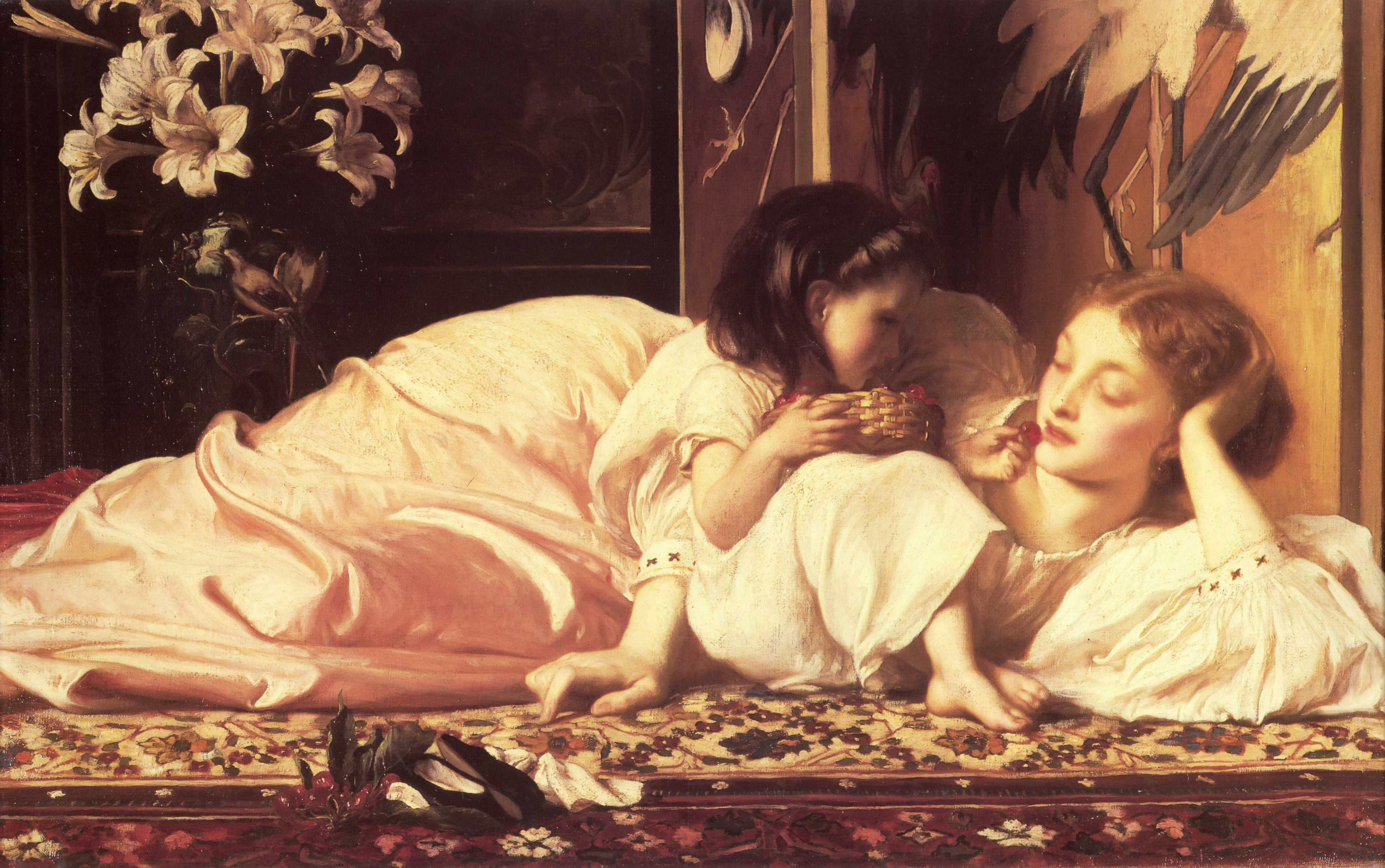
Mother and Child by Frederic Leighton

Mother and Child by Frederic Leighton

Dear Mum

You held my hand through thick and thin,

You shared and celebrated my triumphs,

You encouraged me after each disaster,

You helped me when needed, to bear my pain,

You wiped away my tears…

You gave me your precious love and your time,

You sacrificed your sleep, and at times, your sanity!

You learnt fast and on the job, without vanity,

You saw no immediate return on your investment.

You did your best, even under trying circumstances,

You instilled manners, morals, and values to be proud of,

You never gave up on me.

You kept me safe; yet gave me wings…

You nurtured and nourished me no matter what,

You took me places, cheered me on,

You cooked me delicious, nutritious meals,

You washed and ironed my clothes,

You never asked for anything in return,

You taught me how to learn,

You always gave me a smile, a kiss and a hug,

You nursed me when I was poorly,

You were quite handy with a bandage and plaster!

You pushed me to work harder, achieve more,

Your wisdom and advice I ignored too often,

You and I are different; but I couldn’t be who I am without you.

You and I share an unspoken, unbreakable bond,

You remember when it was sometimes stretched…

You and I know it’s forever flexible and strong,

Your example is a beacon for me to follow,

You guide me in my own journey as a mother,

You want the best for me; my hopes and dreams are yours…

With all my love, and eternal gratitude,

Long may you flourish and prosper!

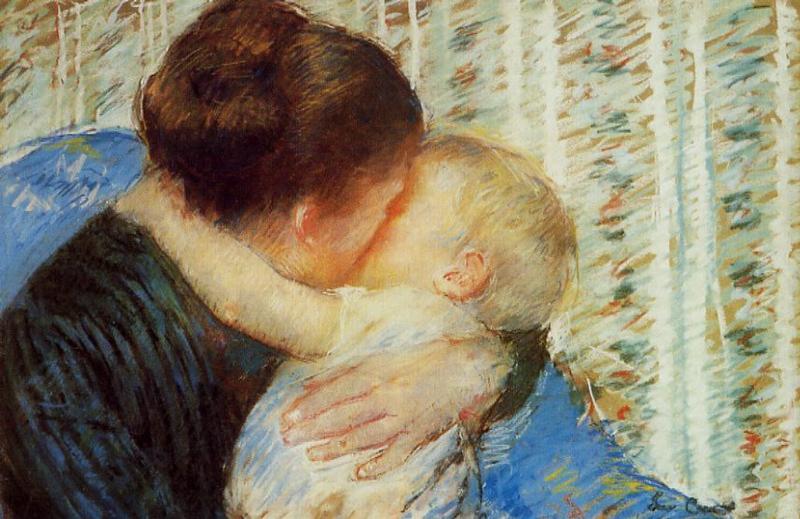
Motherhood is a tough but rewarding calling and shouldn’t be underestimated or undervalued.

Mother and Child by mary Cassatt c. 1880

Mother and Child by mary Cassatt c. 1880

If the basic human need to be loved and supported isn’t met, the chances of dysfunctional behaviour in the individual become vastly increased, alongside the implications for society as a whole.

David R. Hawkins on the role of mothers:

“Motherhood is near to divinity. It is the highest, holiest service to be assumed by mankind.” ~ Howard W. Hunter

What’s in a Painting? Taking a Closer Look at Hans Holbein the Younger’s Masterpiece: The French Ambassadors (c. 1533)

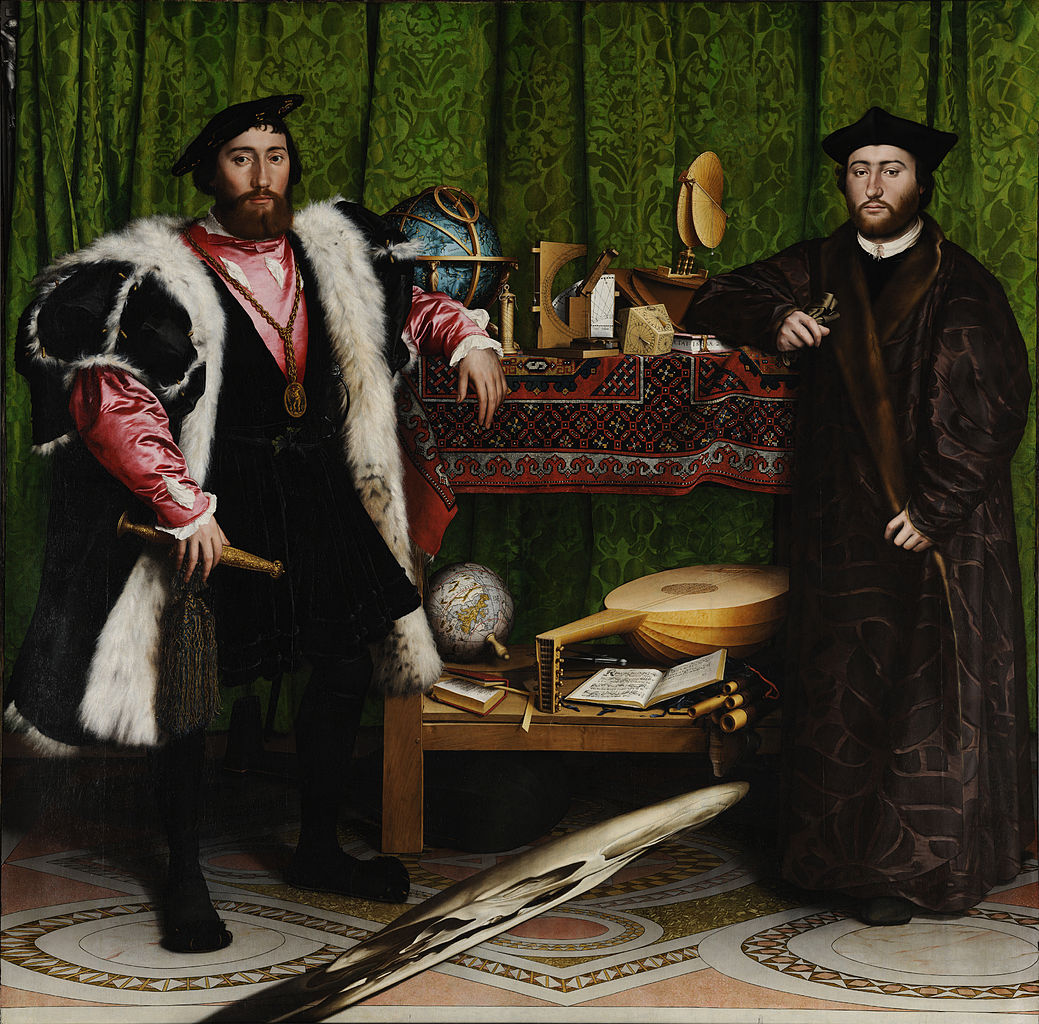
Following on from my first installment about Velazquez’s masterpiece, Las Meninas, I’m now turning to a work of art that was created in the Tudor period of English history; Holbein’s enigmatic and resplendent, The French Ambassadors. I’ve always been fascinated by this painting. It’s currently on display at the National Gallery in London.

The French Ambassadors by Hans Holbein the Younger c. 1533. Oil on wood, 207 x 210 cm. The National Gallery, London

The French Ambassadors by Hans Holbein the Younger c. 1533. Oil on wood, 207 x 210 cm. The National Gallery, London

This full-length double portrait with still-life objects depicts the French Amabssadors: Jean de Dinteville, the ambassador to England on the left (who commissioned the painting) and on the right is Georges de Selve, the Bishop of Lavaur, ambassador to the Papal court. Both men served King Francis I of France.

You can tell by their posture, expressions and equal presence in the painting that they are good friends. Holbein seems to have captured beautifully the subtle nuance of their relationship and shared interests.

What also stands out for me looking at their stance, is how self-assured they appear, both personally and in regards to their faith, which would have been dangerously at odds with the religious turmoil in England at that time.

The painting has long been the focus of analysis and discussion, due to the many encoded clues contained within its colourful pigments. These hidden meanings spring from the Italian tradition, and because the work is full of symbolism it can be interpreted in a number of ways…

As I’ve said before, I’m no expert on art and art history, but it is a subject that interests me and I’m learning as I go!

Analysis

As a lay person I can appreciate the incredible detail and vibrancy of the green jacquard curtain behind the men, the way the light catches on the satin and the fullness of the folds. On the far left upper corner of the picture you can see a dark shadow where you can just about make out a silver crucifix hanging, partially hidden behind the sumptuous material.

It highlights that both the painting’s subjects are staunchly Roman Catholic. You could also surmise that they believed Christ is always there even if you can’t see him.

Research has recently indicated that a chapel was located directly behind the wall on which the painting was once hung.

The anamorphic skull between them would have served as a reminder of the transient nature of human life to courtiers and holy men as they passed by the painting on their way to the chapel. Art scholars have deduced that the painting was originally hung in a narrow corridor due to the acute slant of the skull.

It was a measure of Holbein’s skill that he could distort the image so cleverly that it appears to be corrected when viewed from a steep angle to the side of the image. It serves as a memento mori that death eventually comes to all, no matter their station in life.

The portrait is very telling of the political and religious upheaval that was underway in England in 1533. Henry VIII was deeply involved in his ‘great matter’, namely how he could annul his lengthy marriage to Catherine of Aragon, marry Ann Boleyn and break away from the Pope in Rome.

The beautiful floor tiles are even significant, being the same as the ones in Westminster Abbey choir, where Henry VIII married Anne Boleyn. Thus Holbein was doffing his painterly cap in a political and personal gesture to his future patron and monarch.

The French Ambassadors by Hans Holbein the Younger c. 1533. Oil on wood, 207 x 210 cm. The National Gallery, London

The French Ambassadors by Hans Holbein the Younger c. 1533. Oil on wood, 207 x 210 cm. The National Gallery, London

The ambassadors are standing either side of an étagère, a double level storage unit that has an oriental carpet draped over the top. Both are resting an arm on the upper level which contains items concordant with the ‘celestial’ sphere. The objects imply erudition in science, showing perfectly detailed instruments that measure time and the heavens.

We immediately feel that they are educated, learned men, concerned with the larger questions of existence and the universe. Their expressions convey a sort of intellectual intimacy.

The lower shelf portrays the ‘terrestrial’ sphere, with a hymnal open to Luther’s hymn ‘Come Holy Spirit our Souls Inspire’ and the lute, which has a broken string, could indicate that harmony has been broken by religious discord.

A brilliant analysis of The French Ambassadors by the National Gallery in London:

Hans Holbein the Younger (1497 – 1543)

Born in Augsburg to a painter father (Hans Holbein the Elder) and younger brother to Ambrose Holbein, he is considered one of the greatest German painters of his time, alongside fellow Northern Renaissance masters, Albrecht Dürer and Matthias Grünewald.

Self portait

Self portait

While his father produced mainly religious paintings, Hans Holbein the Younger was able to branch out into woodcuts and portraiture. He was obviously filled with wanderlust, and lived and worked in Basel from 1515 to 1526, when he took a two year trip to England.

Holbein returned to Basel a fashionably dressed, wealthy man and bought a house. Basel was a flourishing intellectual city at the time, where the influential humanist scholar, Erasmus of Rotterdam, lived and worked. Such was his legacy that he reconciled classical antiquity with Christianity and was named ‘the first conscious European’ by Stefan Zweig.

Desiderius Erasmus by Hans Holbein the Younger c. 1523

Desiderius Erasmus by Hans Holbein the Younger c. 1523

Holbein painted Desiderius Erasmus a number of times, who furnished him with a letter of recommendation to the lawyer and author of Utopia, Sir Thomas More in London.

The iconoclasm of 1529 meant that religious paintings were banned in many parts so portraits became the main source of income for artists.

Holbein travelled to London again in 1532 where he was bestowed with many private commissions, one of which was by the now immortalised Jean de Dinteville. He also received commissions from Thomas Cromwell and the powerful Boleyn family.

Sir Thomas More by Hans Holbein c. 1527. The Frick Collection New York

Sir Thomas More by Hans Holbein c. 1527. The Frick Collection New York

He was appointed as a court painter and portrait artist to Henry VIII in 1536. His annual income was around thirty pounds; less than the miniaturist painters at court received. However, it’s Holbein’s work that has endured from this period!

Henry VIII by Hans Holbein the Younger

Henry VIII by Hans Holbein the Younger

In recent years I enjoyed watching the hit TV series The Tudors, and here is a great scene where Thomas Cromwell commissions Master Holbein to paint a portrait of Anne of Cleves (with the agenda of arranging a politically advantageous union between her and Henry), and tells him to make sure that he portrays her with a “pleasing countenance”.

Holbein’s supposedly complimentary 1539 portrait of Anne of Cleaves persuaded Henry to marry her, but unfortunately, when Henry decided that his bride’s actual appearance did not live up to that of her painting, Master Holbein fell from favour and did not receive any further royal commissions.

Hans Holbein the Younger died at the age of forty five, falling victim to the dreaded plague which was rampant in London in 1543.

Holbein is probably one of the best portrait artists of all-time, leaving a large number of eloquent and life like portraits of his contemporaries to posterity.

Conclusion

With regards to The French Ambassadors it’s not just the skill with which he has incorporated the hidden meanings, but also the sheer brilliance and appearance of the realistic figures, the fine details of the still life component and the texture of their clothes. I want to run my hand over their furs and silks…

However you interpret the painting, one thing’s for sure: it’s an amazing piece of art that is clever, beautiful, contemporary and full of technical mastery which is still relevant today.

What Happened When I Experienced Sound Therapy…

We all need a little TLC now and then, and my dear friend Laurelle Rond, a highly gifted lady who is probably the most talented, knowledgeable, kind and wise person I’ve ever had the privilege to know, was on hand to provide it.

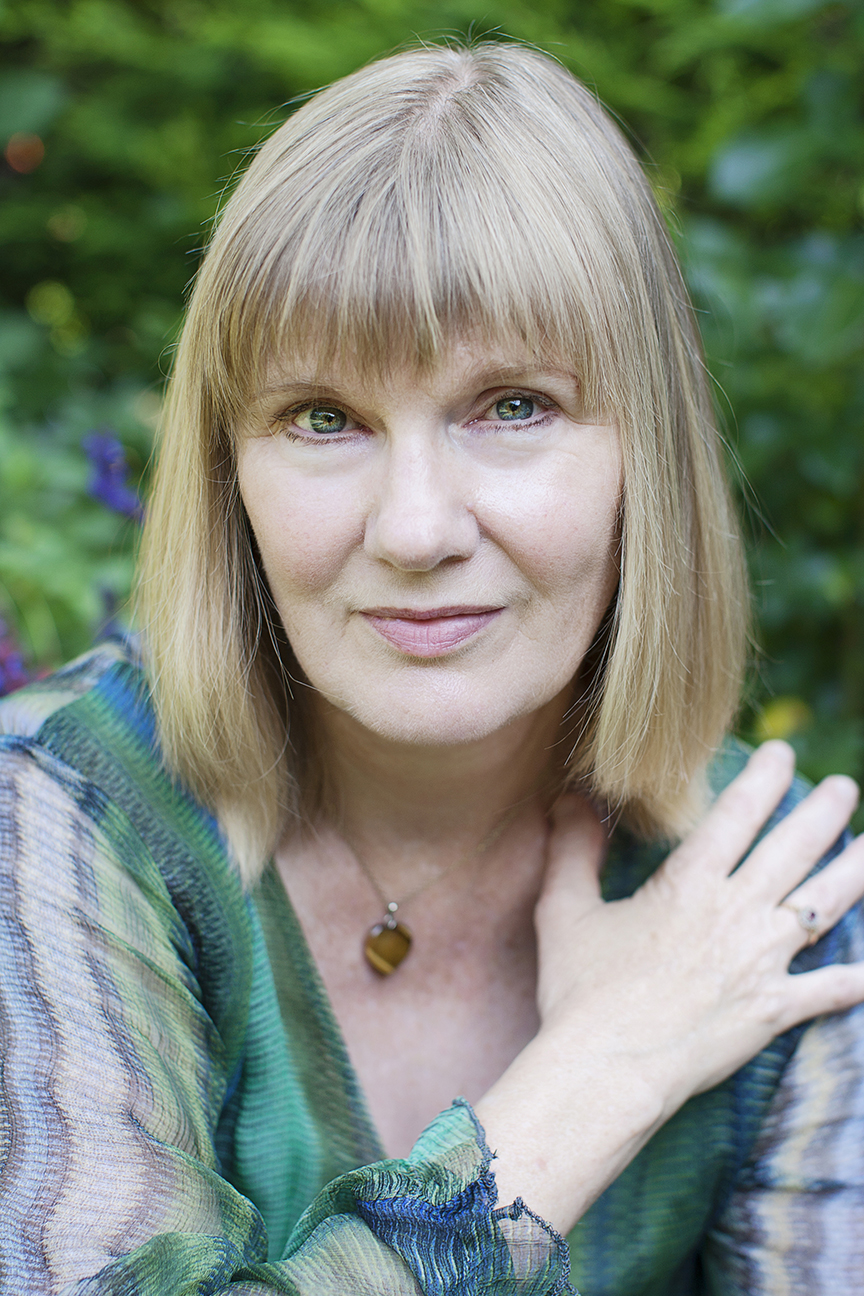
Laurelle portrait 4Laurelle Rond began her career as a musician, singer and writer. She has developed a unique method of healing and self-discovery using sound, voice therapy and story work. With forty years of experience as a teacher and healer, she is also a published novelist and has recorded twelve CDs.

Laurelle runs meditation classes, has a private practice as a sound therapist and vocal coach and runs self-discovery workshops.

I was coming apart at the seams emotionally and Laurelle put me back together again. Literally!

Not in a physical Humpty-Dumpty way, but in an energetic way.

Quantum Physics states that our bodies are a constantly vibrating mass of atoms at the sub-atomic level. The nuts and bolts of our physical make-up are the exact same ingredients that constitute the entire universe:  we are literally one with the substrate of all that is! We are as amazing as the stars and planets that we stare up in awe at on a clear night.

Milky Way

Energy cannot be created or destroyed, it can only change form, and on that basis we are as eternal and immortal as the cosmos.

However, if our energy is knocked out of balance it can become stagnant, which is when health issues can arise. Emotional and childhood trauma, stress, childbirth and all manner of events can splinter our main energy point, so that it hampers energy from travelling effectively through our Chakra system.

Perhaps I should explain, what Laurelle did for me was to bring my energy vortex back into wholeness by re-aligning my assemblage point.

The assemblage point is the epicentre of the body’s energy field, which lies roughly in the centre of the chest.

What is an assemblage point?

I didn’t really know what to expect, and I’d like to say I came away fully re-charged, but apparently my reaction was a good one! I’ll not keep you guessing any longer…

Assemblage Point re-alignment

When I arrived Laurelle greeted me with her usual warm smile and we chatted in a safe environment for a bit about my childhood and current situation. It seemed my visit was well timed; a particularly traumatic event from my early childhood had been triggered. After a decade of meditation I thought I had cleared most things, but this was sitting heavy on my chest, causing some issues with my lungs and voice.

There is a tendency to bury traumatic feelings and beliefs that arise in early childhood as they are too painful to deal with at the time. However they can get buried deep in the psyche and we become unconscious of them. I had abandonment issues, which manifested in a very emotional reaction when I told Laurelle about my experience as a six year old girl.

In my mind’s eye I saw my younger self as she sat at a window watching her father walk down the path, away from their home, feeling like she was at fault and that she must have done something very wrong.  She hadn’t meant to upset her dad. Her world was crashing in on her in that moment, she knew she would never live with him again.

I hadn’t even thought about it for a very long time, yet it affected me very profoundly when I spoke of it in a loving, non-judgmental environment. Then Laurelle took me through to her sound therapy room.

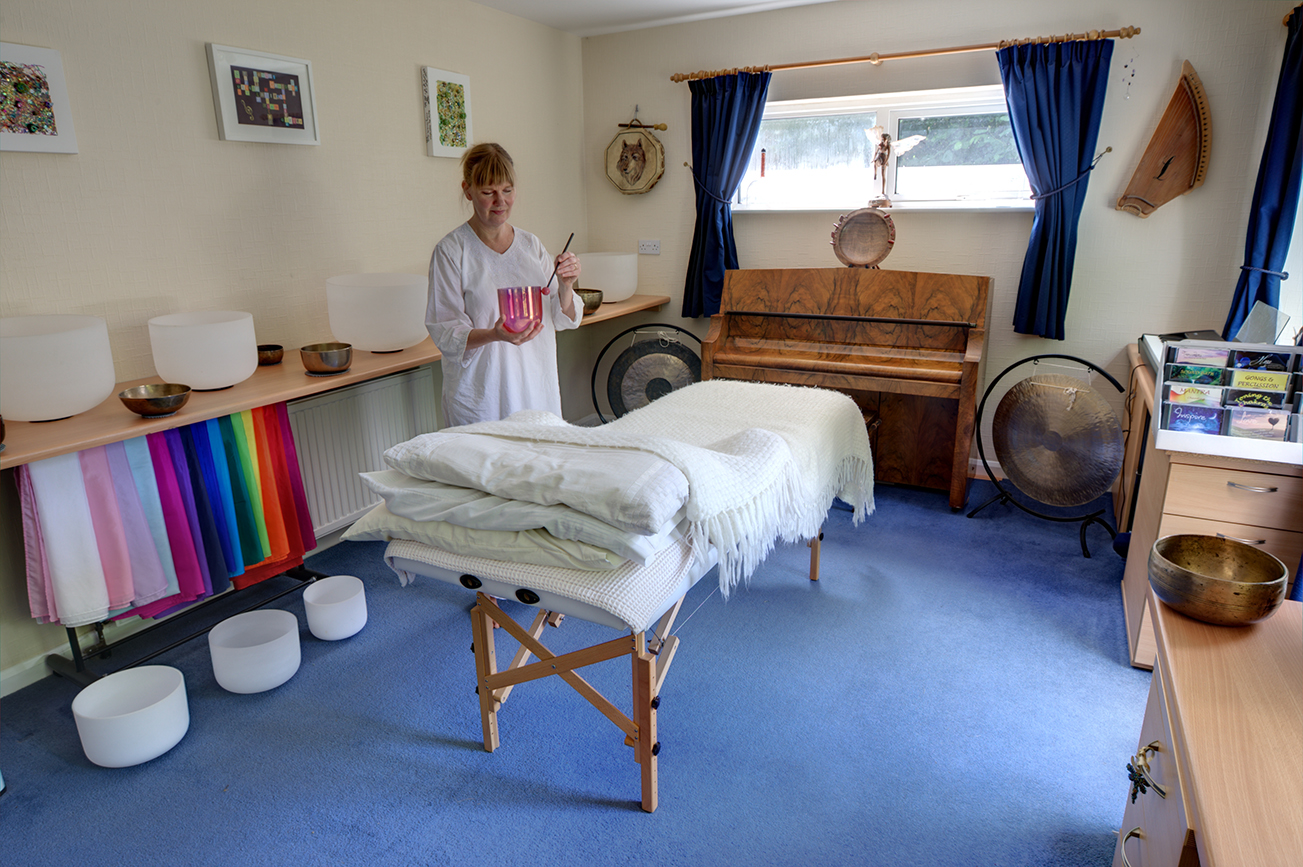
Laurelle bowl room

The curtains had been drawn. I settled in repose on her extremely comfortable treatment couch and she pulled a soft blanket over me. I was told I could relax and it was fine if I fell asleep, but that she would need to gently wake me at a certain point in the treatment when she would ask me to do an energy lock so that she could align my Assemblage Point.

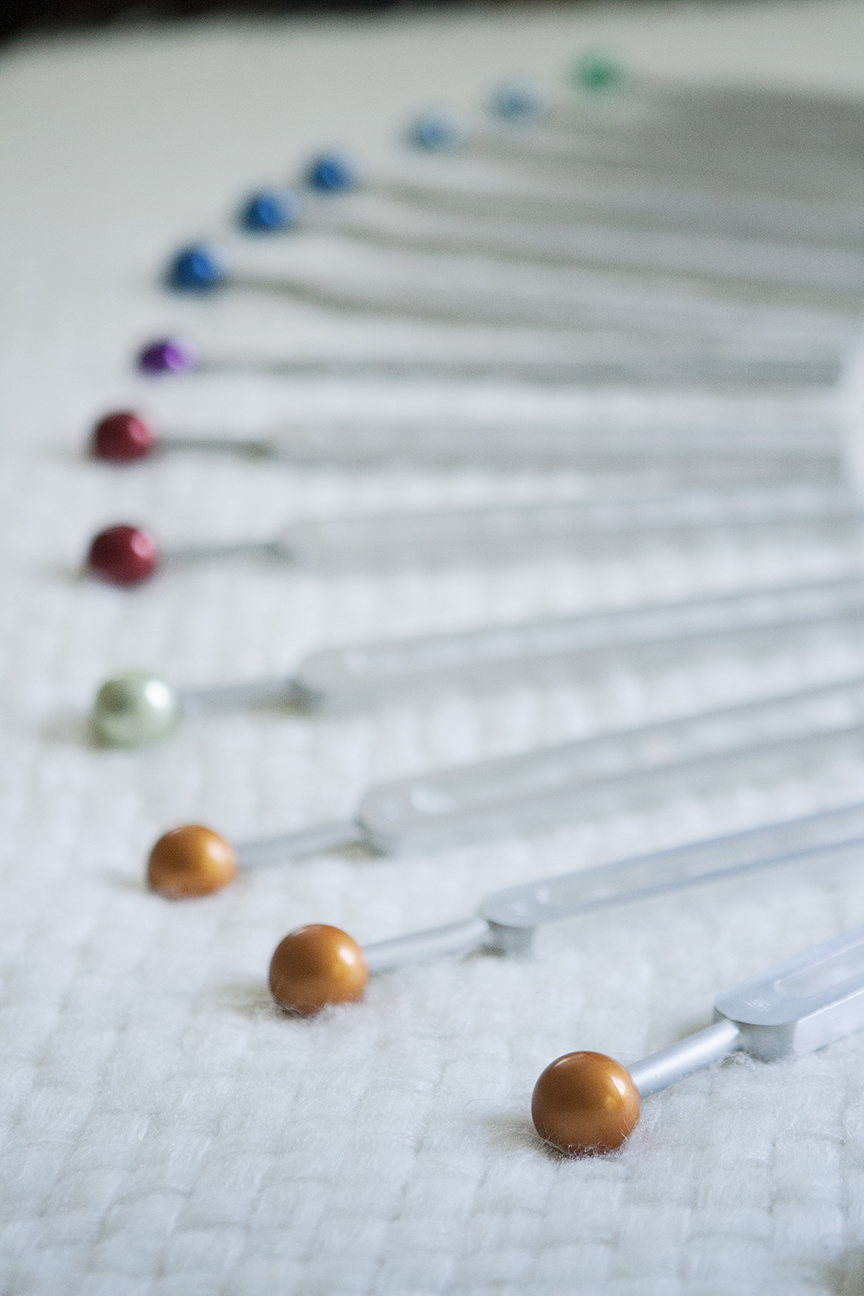
Planetary Tuning Forks

Planetary Tuning Forks

It was quiet for a second as I lay there, eyes closed, ready for Laurelle to work her magic. And work it she did. I soon became aware of different sounds passing around me. They seemed unintrusive and comforting, they calmed my overactive mind.

I remember hearing what sounded like beads shaking, tuning forks, Himalayan bowls, crystal bowls and Laurelle’s beautiful, pure voice.

All the while my eyes remained closed as the sounds infiltrated my whole being.

Laurelle placed a crystal on my chest and I gradually felt the area warm up until after a few minutes my whole upper body seemed to be radiating intense heat. It was a very welcoming sensation! I had no control over my body or my mind at this point; I was in Laurelle’s capable and caring hands!

I was then told to tighten my muscles as Laurelle had explained to me at the beginning, which I did for a few seconds, after which I was able to return to my deeply relaxed state. More pleasant sounds passed through me, I was enjoying the way the healing vibrations were affecting me.

Afterwards Laurelle left me all cosy and sleepy.  It took me a few minutes to re-focus my eyes when I opened them, I didn’t want to move, I felt so calm…

Eventually I rose and sat with Laurelle in her lounge. It was at this point something very strange happened to me. The all-encompassing warmth that had filled me dissipated and I started shivering slightly. Quite quickly the trembling progressed and before I knew it I was shaking uncontrollably all over. Laurelle pulled a fleece blanket round me and we sat together quietly as my body did its thing. My mind was empty while my body felt like it was in overdrive. This went on for about ten minutes.

Laurelle explained that this was my body’s way of releasing pent up trauma; a natural, physical reaction that was both healthy and normal and that I should let it run its course. I had a drink of water and Laurelle told me I would feel tired for about 48 hours.

I spent a few hours snuggled under my duvet that afternoon and slept like a baby. Gradually over the weekend the heaviness I felt in my chest and limbs disappeared and my physical, mental and spiritual flow returned. As I write this post I’m feeling fully restored and firing on all cylinders again!

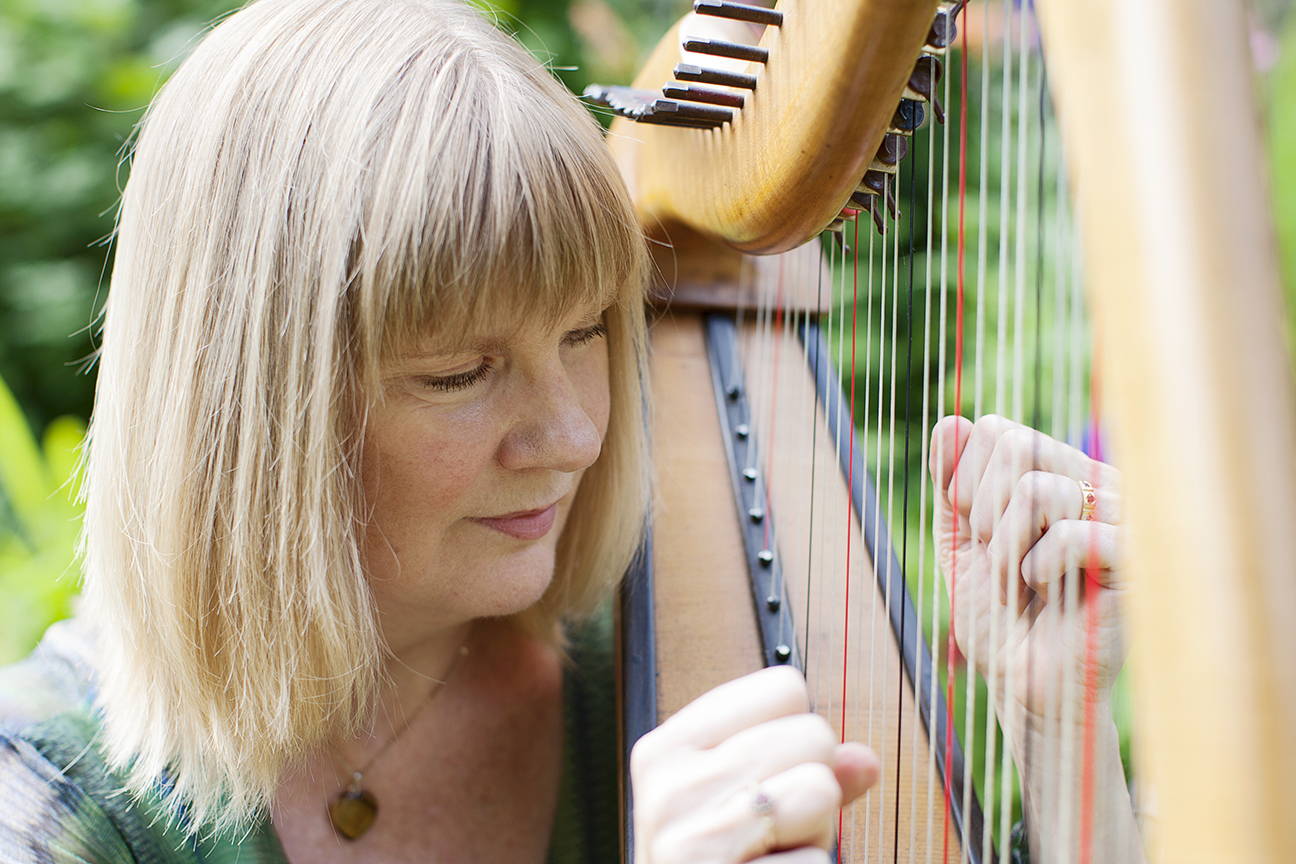
Laurelle harp garden close up

I’ll definitely be going back for a ‘tune up’. It was an incredible experience that is hard to put into words. It affects you at a fundamental level and regardless of what’s going on in your mind your cells respond…

I admire Laurelle on so many levels, as a human being, as a teacher, as a musician and healer. She understands me. What more can anyone ask of a therapist and friend?

If you live in the Home Counties area, do get in touch with Laurelle and give it a try. I guarantee you it will be one of the most worthwhile experiences you will ever have – completely life changing.

The Wonderful Work of WheelPower at Stoke Mandeville Stadium

“Stoke Mandeville Stadium is like a second home to me, and here I had a defining moment of my career choosing what sport I wanted to do.”

~ David Weir CBE, past Junior Games participant and 6 x Paralympic Champion.

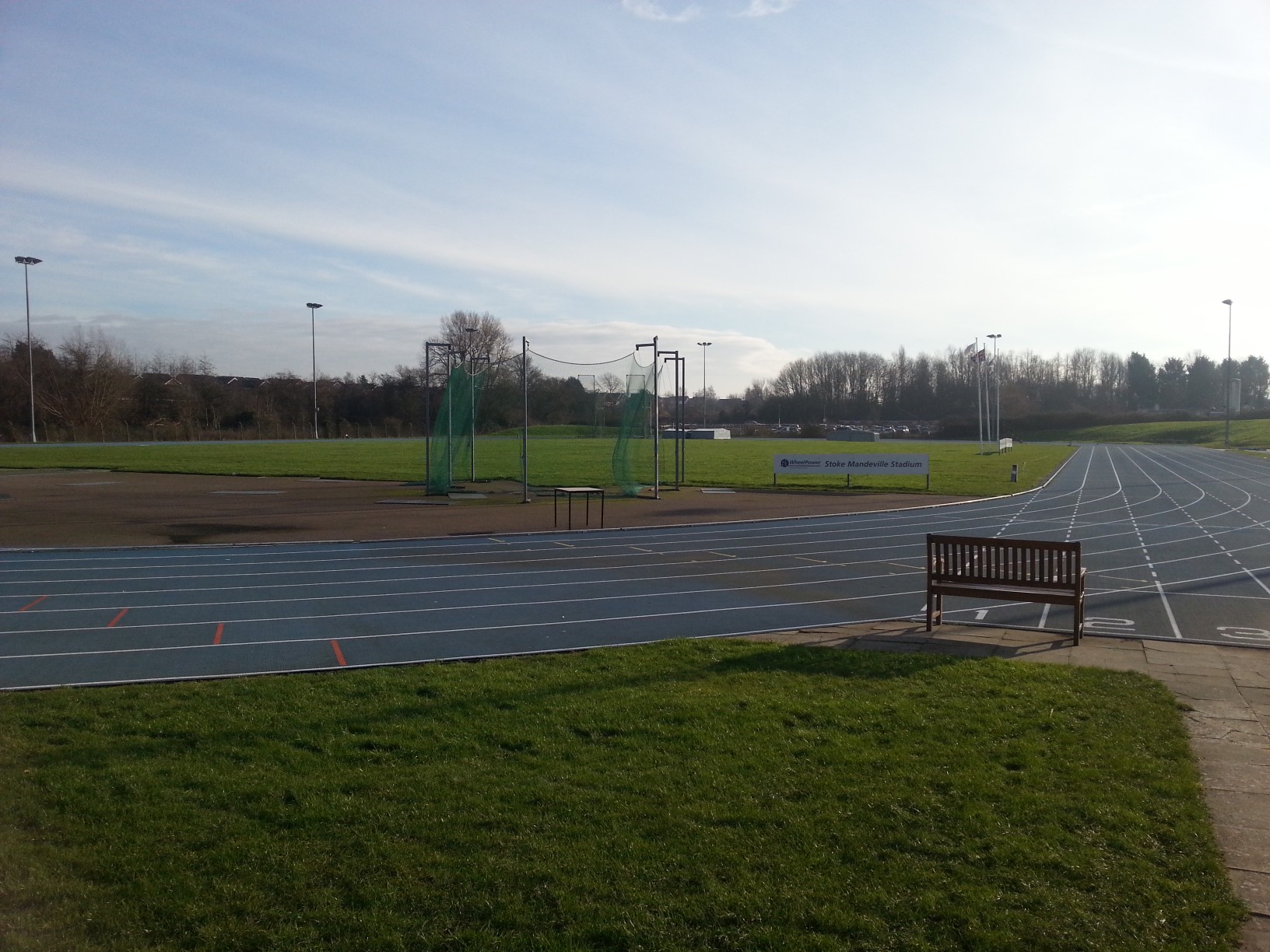
I recently visited Stoke Mandeville Stadium to find out more about the inspiring work of our national charity for wheelchair sport, WheelPower; who provide opportunities for disabled people to play a sport they love.

Wheelpower sign

But before I talk about the amazing activities and coaching this charity organises, I’d like to take you back to where it all began, to the ground breaking and pioneering work of doctor Ludwig Guttmann, who made all of this possible.

Professor Sir Ludwig Guttmann & The National Spinal Injuries Centre

Doctor Ludwig Guttmann was a top neurosurgeon in Germany when the Nazis came into power. Jewish by birth, Dr. Guttmann realised he had to get out of Germany before the start of the Second World War.  Fortunately he was able to come to the UK in 1939 and settled in Oxford with his family.

Here he continued his research in neuroscience at the Radcliffe Infirmary until he was asked by the British government to spear head the National Spinal Injuries Centre at Stoke Mandeville Hospital near Aylesbury, Buckinghamshire.

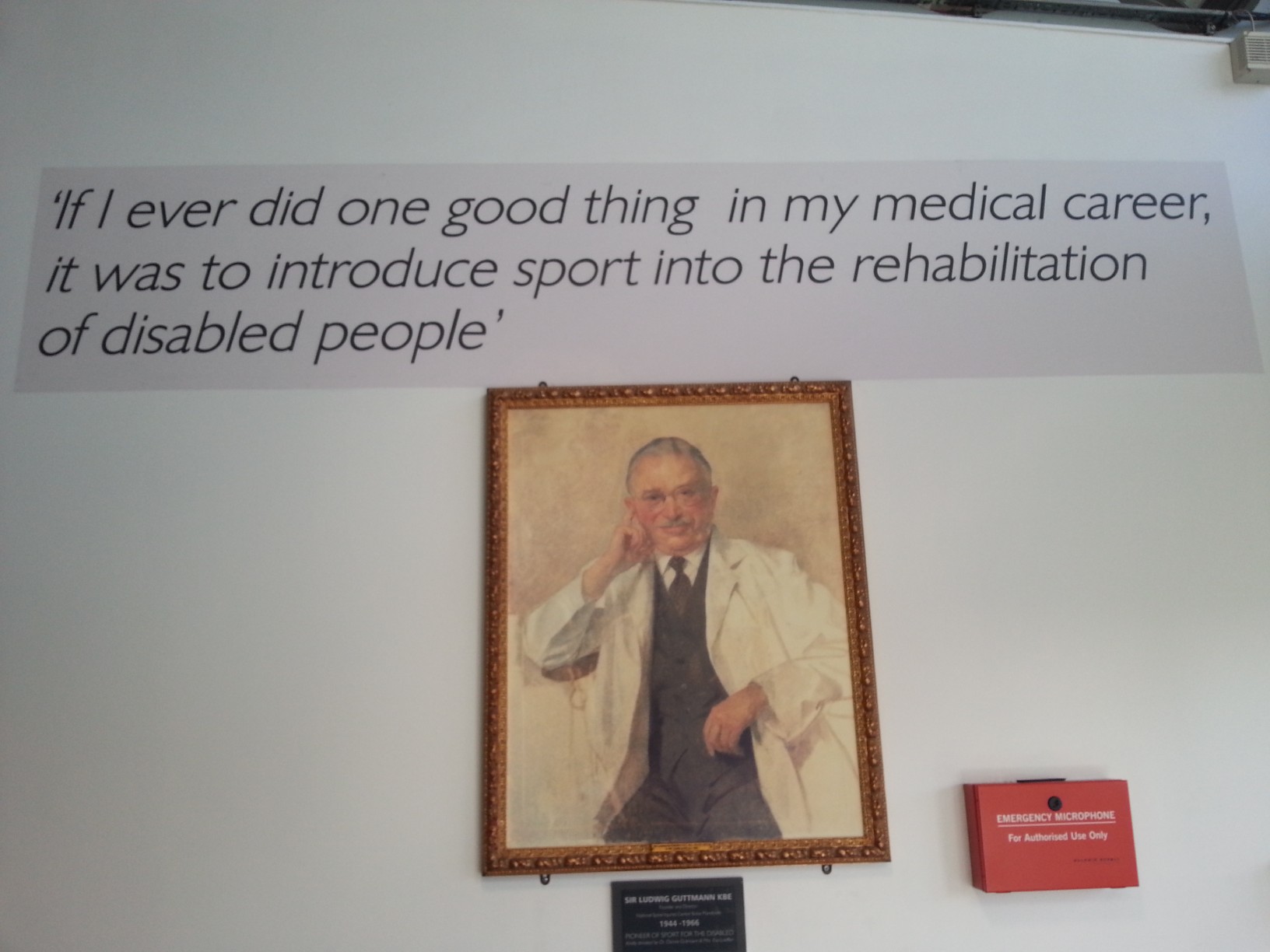
Dr. Ludwig Guttmann painting and quote

Under his leadership the centre opened on 1st February 1944 and Guttmann became its first director. He introduced the concept of using sport to rehabilitate injured service personnel returning from the war and also for those with other spinal injuries and illness. Dr. Guttmann believed that physical exercise was crucial to restore fitness and self-esteem, as well as giving much needed social interaction.

1984 Paralympic Flame signIn those days spinal patients weren’t expected to recover and were left lying in sedation with no hope of rehabilitation, their treatment was purely palliative.  Fortunately, Dr. Guttmann had other, more innovative ideas, which met with resistance initially, but gradually his therapies changed both lives and attitudes.

Here is a moving clip from the film, The Best of Men, with Eddie Marsan doing a brilliant job of portraying this kind, forward thinking man in his quest to bring sports into the lives of the injured and disabled:

With around sixteen patients in cold wooden huts with little in the way of equipment and resources he set about creating an atmosphere of support and camaraderie that gave his patients hope for the future. To him, being paralysed wasn’t the end of life.

Dr. Guttman used medicine balls and got patients to sit up and move around, which soon progressed into wheelchair sport. In the grounds of the hospital they would play wheelchair polo, archery, basketball and netball. In 1948 London hosted its first Olympic Games and Dr. Guttmann persuaded the authorities to let him showcase his work. As a result, two spinal units competed at Stoke Mandeville in what was the first ever Paralympic Games.

In 1952 the Dutch team came over to compete with the British and in 1960 the UK sent its first Paralympic team to Rome. Fast forward to London 2012 and the Paralympic athletes are given as much respect as Olympic athletes. The 2012 Paralympic torch relay started from its home in Stoke Mandeville.

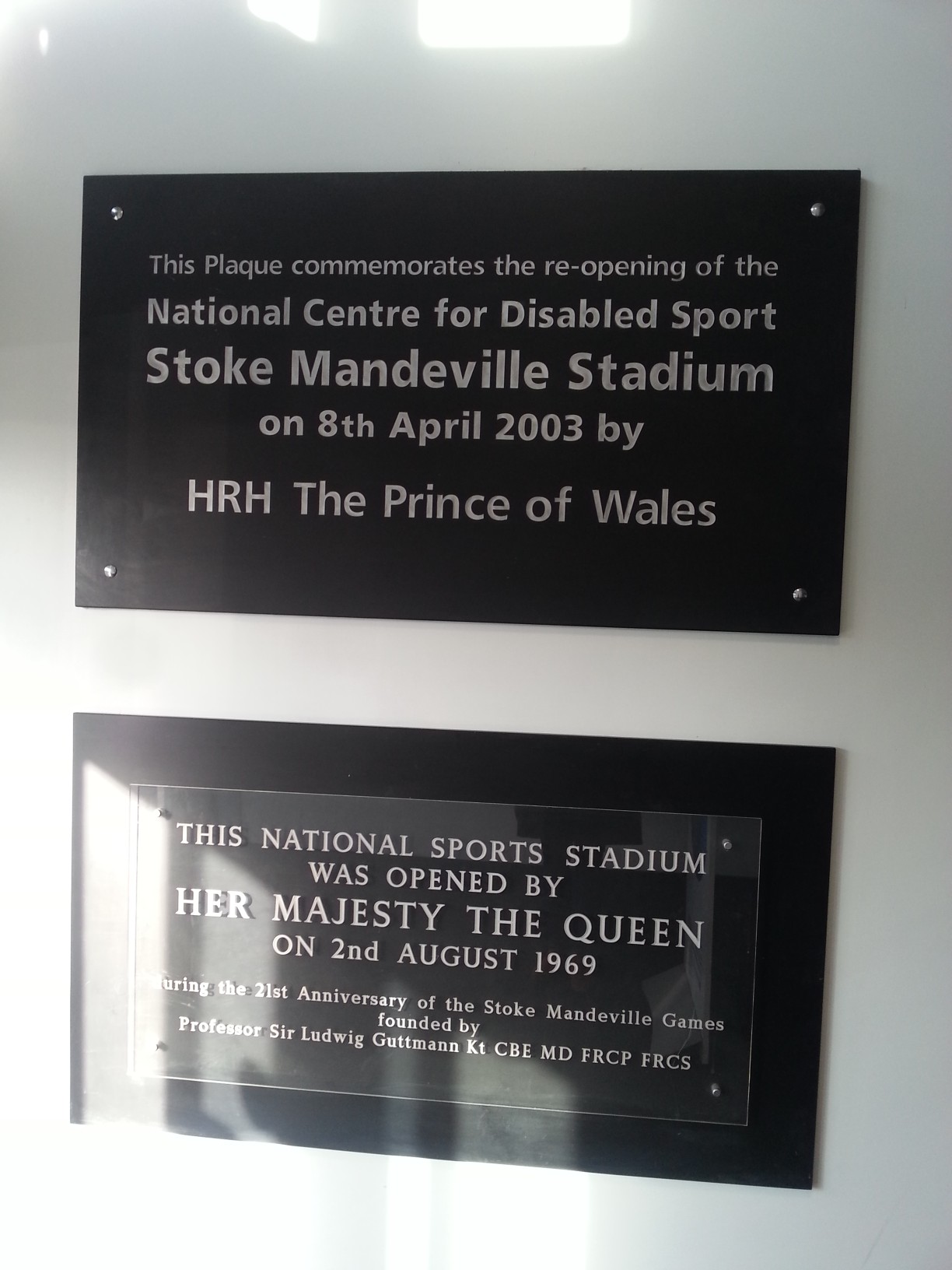
Memotial Placques

Transforming Lives

WheelPower continues to carry the torch of Dr. Guttmann’s legacy at grass roots level by enabling disabled people to transform their lives through sport.

They have specialist advisors who work in the Stoke Mandeville spinal unit as well as on site at the stadium next door, and at other spinal units around the UK.

WheelPower host the Junior Games every year which are open to 11 to 18 year olds across the UK and are held at Stoke Mandeville Stadium.  It was at one such event that Baroness Tanni Grey-Thompson began her career as a Paralympian.

They also run sport camps at weekends where parents can accompany their children. These are expanding from Stoke Mandeville to London, Birmingham and five new locations around the country. This is an ideal environment for the youngsters to try different wheelchair sports and find out what they like doing.

“I went to my first WheelPower camp and I tried lots of different sports, but the last sport I tried was archery and I fell in love with it straight away! I felt the whole experience of the WheelPower camp was amazing and without it I would never have found archery.”

~ Megan Fossberry, (past participant aiming for Rio 2016.)

For adults, WheelPower run the Inter-Spinal Unit Games based on Dr. Guttmann’s ideas. There are around twelve units in the UK. They are also given advice on how they can play sport in their local area, and WheelPower have a postcode finder on their website.

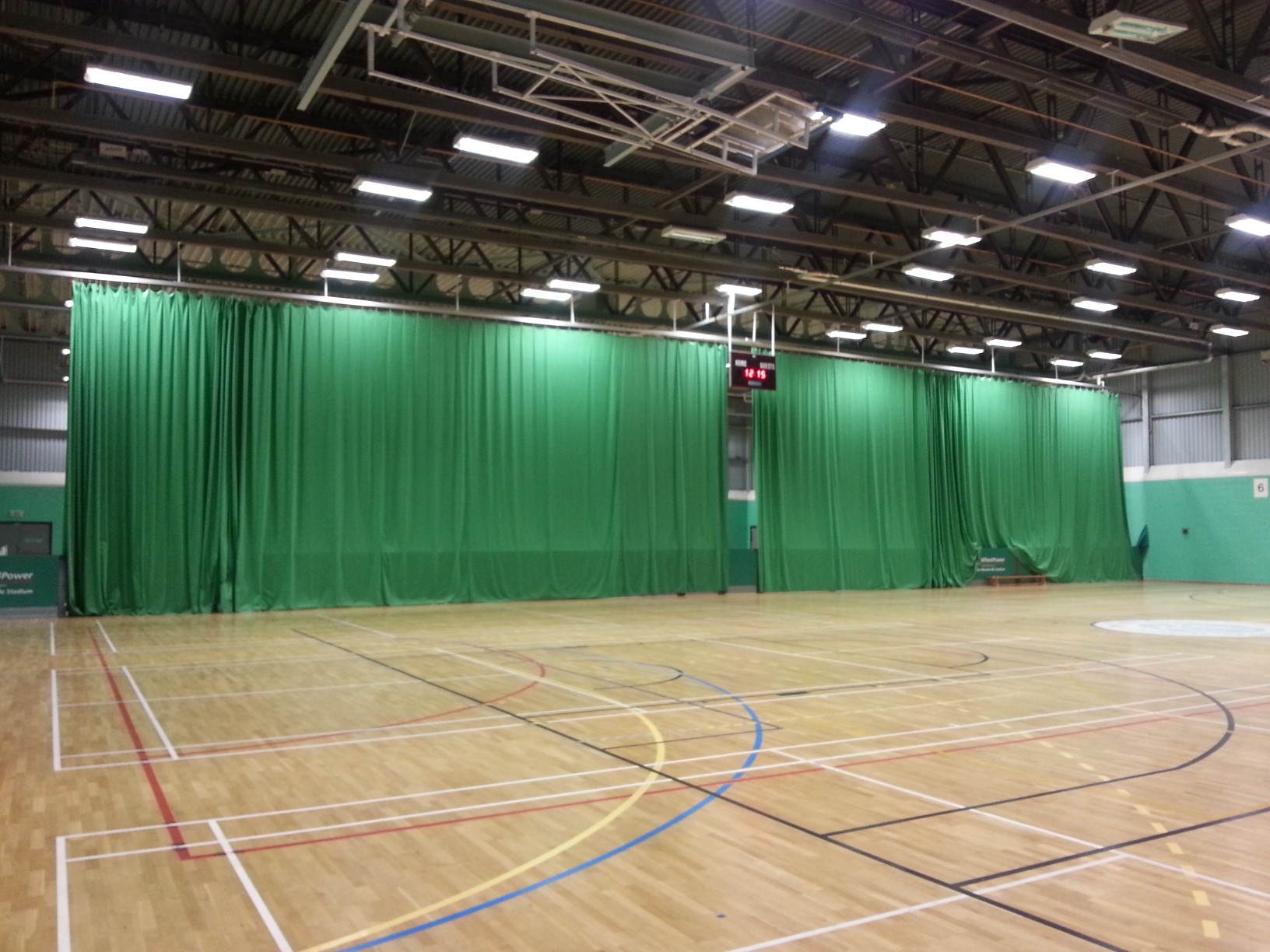
SM sports hall

WheelPower 2014-15 year in numbers:

  • 482,155 people played sport at Stoke Mandeville Stadium
  • Arranged 103 sport sessions and workshops for 794 recently paralysed hospital patients
  • 122 children attended the National Junior Games
  • 450 new Wheelpower members
  • 85 recently paralysed people introduced to sport
  • 228 disabled gym members
  • 288 disabled children introduced to sport at WheelPower camps
  • 2% of disabled people play sport once a week
  • 45,214 disabled people played sport at Stoke Mandeville Stadium

Fundraising

Sport England provides a certain amount of funding for the buildings that WheelPower use in their work, but mostly they rely on volunteers and public fundraising to continue with their day to day activities. Companies can also sponsor corporate events at Stoke Mandeville to assist the charity.

A £100 donation could fund a place for a child at a weekend event.

WheelPower also promote their WheelAppeal which raises money for a disabled person’s first specialist sports wheelchair. These bespoke chairs are made to measure by RGK and cost around £3,000.

SM track view

Their Tour de Vale bike ride takes place every June with two thousand community places and in 2015 the event raised £63,000. Lots of budding cyclists welcome!

Ollie told me that he regularly takes a wheelchair into mainstream schools to raise awareness of their work with able bodied children to get them thinking about what they can do for children who haven’t been so fortunate. There is also a fundraising lottery that costs £1 per week.

Breakdown

The charity publish the proportion of spending for every pound they recieve. In 2014-15 16.4%  of income was spent on governance and fundraising and the remaining 83.6% went to good use fulfilling their charitable objectives. WheelPower raise £5.19 for every £1 they invest in fundraising.

How to join in and support WheelPower

If you would like to make a donation to this worthy cause, you can do so here.

Stoke Mandeville Stadium

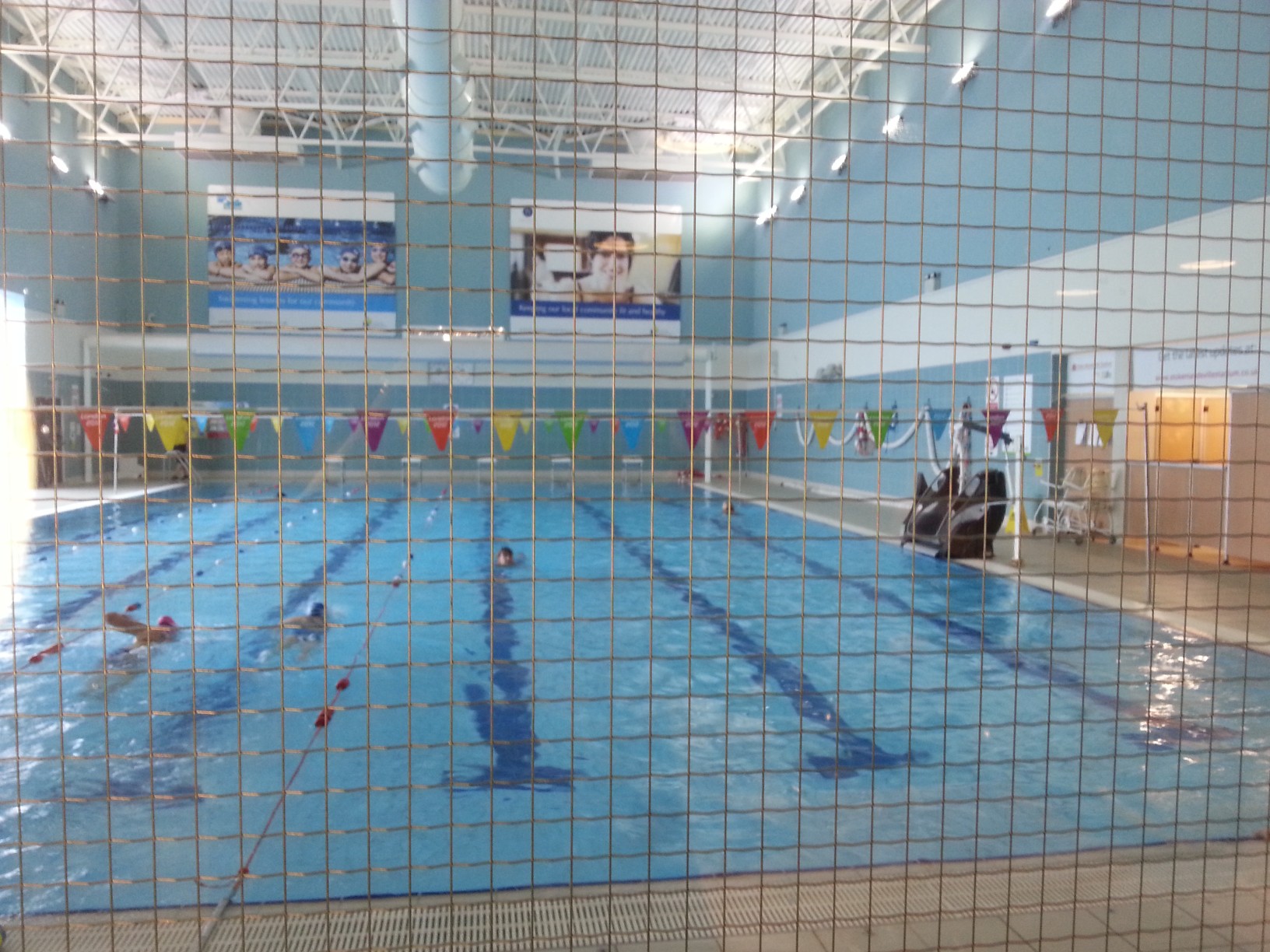
The Stoke Mandeville facilities are open to able bodied and disabled members alike. The swimming pool has a special pod that transfers someone from their normal wheelchair into a waterproof wheelchair without the need for assistance.

SM pool

The comprehensive facilities at the stadium complex include track and field, indoor sports hall, well equipped gym that caters for wheelchair users also, tennis courts, dance studio, stationary bikes, and in the original huts there is powerlifting, shooting and cue sports. In total there are twenty different sports and activities available. The site can offer accommodation for up to 200 disabled visitors.

Ambassadors

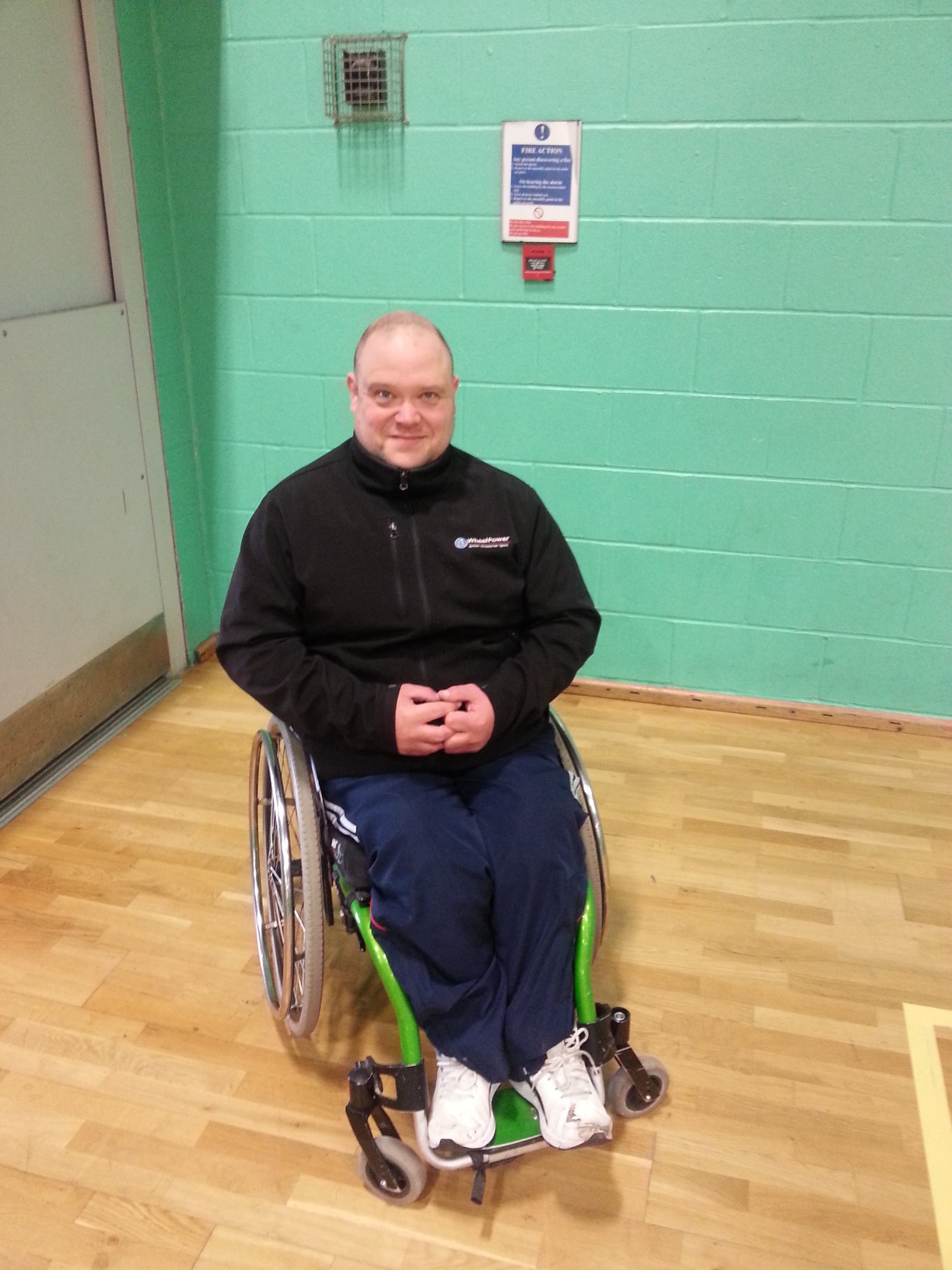
Chris Rattenbury - Wheelpower AmbassadorChris Rattenbury has been a WheelPower ambassador for five years. A former power lifter, he was once ranked 7th in the world, lifting 172 kilos.

Chris has Spina bifida and has received twenty years of support and assistance from WheelPower. These days he loves to play basketball, and he was a charming host, showing me round the stadium complex.

It was such an uplifting and inspiring day, I hope my post adequately highlights the dedicated and important work that WheelPower does, and can continue to do with enough public support.

Please donate what you can to this worthy cause!

#SundayBlogShare – Your Inner Goddess 💗🙋

My musings today are for the sisterhood, for the sacred feminine that isn’t celebrated enough in our modern, patriarchal society.

Diana and her Nymphs - Johannes Vermeer c. 1653 - 1656

Diana and her Nymphs – Johannes Vermeer c. 1653 – 1656

I’m showing some love this Valentine’s Day for women around the world; so often mistreated, forgotten, ignored, repressed, used, abused, attacked, criticised, taken for granted, unappreciated, struggling to live in your beauty and power…this is for you, and for all men who agree with these sentiments and love, cherish and admire you for how special you are!

Circe Offering the Cup to Odysseus - JW Waterhouse c. 1891

Circe Offering the Cup to Odysseus – JW Waterhouse c. 1891

Your Inner Goddess

The ancient goddess, that mythical, sensual deity,

Archetypal, dwelling in you is she;

Endowing her wisdom, virtue and fecundity.

Use her radiance and effulgence in days,

She presents herself in a myriad of ways.

Venus et l'amour - Lambert Sustris c. 1550

Venus et l’amour – Lambert Sustris c. 1550

Your inner Goddess takes any form you desire,

There is Gaia, Rhea, Madonna, Ninhursag,

Creative energy populates, always on fire.

Heavenly mother, epitome of unconditional love,

Life is in you, ever fertile, below and above.

Madonna in the meadow - Raphael c. 1506

Madonna in the meadow – Raphael c. 1506

From the youthful, sweet singing siren,

Luring lusty sailors to misfortune, to the

Nubile nymph, perched seductively on grassy lichen.

You and nature are one; nurturing and plentiful,

Elemental, ephemeral, eternal, intoxicating, bountiful…

Hylas and the Nymphs - John William Waterhouse c. 1896

Hylas and the Nymphs – John William Waterhouse c. 1896

So it has been; throughout the age of humanity,

In every philosophy, religion, or zeitgeist,

Goddesses of every age, passion and variety;

Were revered and respected to give,

Their gifts: both benign and destructive.

Marie de Medici as Bellona by Peter Paul Rubens c. 1625

Marie de Medici as Bellona by Peter Paul Rubens c. 1625

In business you can call on Athena,

From Rome she rules supreme in crafts and strategy,

For immortal, divine wisdom: Sophia.

Aphrodite and Venus bestow love, pleasure, beauty,

Celtic Brigantia exalts to mountain peaks lofty.

The Birth of Venus - Sandro Botticelli c. 1484-86

The Birth of Venus – Sandro Botticelli c. 1484-86

Huntress Artemis, protector of babies born,

Archer, animal loving daughter of Zeus,

Feel her fury if a warrior goddess you scorn.

Kali, Pele and Enyo destroy evil, unleash war,

Align with your Goddess companion and soar.

The Death of Acteon (Diana) - Titian c. 1559 - 1575

The Death of Acteon (Diana) – Titian c. 1559 – 1575

Seek Minerva for intellect, music and magic,

Connect with your sacred feminine,

To ignore your inner Goddess is tragic.

You are flesh and blood; bone and sinew,

Beauty and brains; but mythology is in you!

Astarte Syriaca - Dante Gabriel Rossetti c. 1878

Astarte Syriaca – Dante Gabriel Rossetti c. 1878

Adapt and use her primordial intensity,

To bless and infuse your uniqueness,

Be it as lover, healer, or essence of vitality.

You are a powerful cosmic sorceress,

Worship your inner goddess…

Athena - Gustav Klimt c. 1898

Athena – Gustav Klimt c. 1898

Beethoven and Bridgetower: The Story Behind the Famous ‘Kreutzer’ Sonata

Aside from his musical genius, composer Ludwig van Beethoven was known by his contemporaries to possess an irascible nature. Hardly surprising when you consider the circumstances of his life, but underneath his passionate exterior beat a kind and loyal heart.

Portrait of Beethoven by Joseph Williboard Mahler c. 1804-5 (oil on canvas)

Portrait of Beethoven by Joseph Williboard Mahler c. 1804-5 (oil on canvas)

As certain people found to their detriment, if you got on the wrong side of him it was virtually impossible to get back into his good graces!

Just ask Napoleon Bonaparte, who he originally dedicated his third symphony the ‘Eroica’ to.  After Napoleon’s egalitarian ideals developed into warmongering and a rapacious appetite for control over Europe, the composer violently crossed out his dedication from the top of the score.

Beethoven Eroica _title

Beethoven branded his nephew’s mother, Johanna, a ‘queen of the night’ and the two were locked in years of battle over custody of her son Carl. It’s debatable if he was in a lucid moment or not, but Beethoven asked for her forgiveness on his deathbed. (You can read the incredibly moving text in Conversations with Beethoven).

Another unfortunate recipient of Beethoven’s wrath was virtuoso violinist George Bridgetower.

As it’s Black History Month I thought George deserved some recognition!

George Bridgetower by Henry Edridge c. 1790

George Bridgetower by Henry Edridge c. 1790

Unfortunately, his falling out with Beethoven meant that his achievements were rather side-lined in history. This is a very great shame, as Beethoven had been impressed enough by his talent and character when they met to compose the bulk of his ninth violin sonata in A major, opus 47 in his honour, along with the original dedication.

Here’s a fabulous vintage recording of the sonata in full by Leonid Kogan and Grigory Ginzburg:

Beethoven’s penultimate violin sonata contains three movements and is pretty much as difficult to play as a violin concerto.  I love that it’s just as demanding for the piano. Rather than being an accompaniment the two instruments are having the most fascinating conversation.

Heaven only knows what swell of emotions were raging inside Beethoven when he wrote it.  It seems entirely plausible that it could it have been inspired by one of his ill-fated, passionate love affairs.

The sonata takes around 40 minutes to perform in its entirety and is a full-on physical workout! I’m still trying to master the double-stopping at the beginning…

My score of the Kreutzer by Edition Peters.

My score of the Kreutzer by Edition Peters.

Beethoven and Bridgetower premiered the work together on 24th May 1803 at the Augarten Palace Park Pavilion in Vienna at the rather unusual time of 8 am.

The final movement was already written as an unused movement from a previous violin sonata No. 6 Op. 30/1 (also in A major), so Beethoven hurriedly composed the first and second movements which were only completed at 4.30 am on the day of the concert!

The copyist had his work cut out, but hadn’t managed to do the violin part for the Andante and so Bridgetower had to read over Beethoven’s shoulder at the piano. In fact he sight-read the majority of the sonata to rapturous applause.

The second variation of the Andante which was sight-read by George Bridgetower.

The second variation of the Andante which was sight-read by George Bridgetower.

Obviously it wouldn’t have been perfect, but to have the confidence to play a work of such difficulty from sight in public speaks volumes.

The following text was taken from Beethoven’s sketchbook in 1803:

“Sonata per il Pianoforte ed uno violino obligato in uno stile molto concertante come d’un concerto”

His affectionate dedication read:

“Sonata mulattica composta per il mulatto Brischdauer (Bridgetower), gran pazzo e compositore mulattico” (Mulatto Sonata composed for the mulatto Bridgetower, great fool mulatto composer).

Sadly, their relationship turned sour after Bridgetower insulted a woman that Beethoven held dear. No-one knows who she was, or what was said, and perhaps Beethoven felt more than friendship for her, but true to form, in his anger Beethoven withdrew the dedication and later granted it to another famous violinist of the time, Rodolphe Kreutzer.

The irony is Kreutzer never performed his eponymous sonata, claiming it was unplayable! He considered it “outrageously unintelligible” and was not a fan of Beethoven’s music in general.

A most undeserved dedication, but the moniker was put into print and has been in use ever since.

Beethoven - Kreutzer front page

I love this clip from one of my favourite films, Immortal Beloved. Although not accurate in many aspects I love so much about this film, including the scene when Beethoven and Anton Schindler are discussing his ‘agitation’ and how music is like hypnotism, as George practices the sonata:

George Augustus Polgreen Bridgetower (11 October 1778 – 29 February 1860)

Born an Afro-European in Poland, he lived most of his life in England and became a celebrated virtuoso violinist. His father was probably from the West Indies and his mother was German, it’s thought that they served in the household of Joseph Haydn’s patron, the Hungarian Nikolaus I, Prince Esterházy.

Watercolour dated from 1800. Artist unknown.

Watercolour dated from 1800. Artist unknown.

George took to the violin at a young age becoming a celebrated virtuoso; he performed mainly in London and around Europe. He left London for Dresden in 1802 to visit his mother and brother who was a cellist there and later travelled to Vienna where he met Beethoven in 1803. He was also the recipient of Beethoven’s tuning fork which is now kept in the British Library.

In London Bridgtower was known as the ‘African Prince’ and the Prince Regent (eventually George IV) was one of his patrons. Despite the falling out with Beethoven he continued to have a successful musical career and in 1807 he was elected into the Royal Society of Musicians and in 1811 he attained his Bachelor of Music from Trinity Hall, Cambridge.

He was also a composer, two of his known works include: Diatonica armonica for piano, published in London in 1812 and Henry: A ballad, for medium voice and piano, also published in London.

This video was taken from an exhibition commissioned by the City of London Corporation in 2007 to commemorate the 200th anniversary of the first parliamentary bill to abolish slavery. George’s achievements are duly recognised:

The Pulitzer prize-winning poet and former United States Poet Laureate, Rita Dove, wrote an imagined narrative work about Bridgetower titled: Sonata Mulattica

Here she talks about her inspiration for the poem, alongside contemporary violinist Joshua Coyne, in a documentary film trailer:

I’m glad to say George hasn’t been forgotten!