Reaching for the Stars – Enlightened Goal Setting (Part 2)

“The important thing is to strive towards a goal which is not immediately visible. That goal is not the concern of the mind, but of the spirit.” ~ Antoine de Saint-Exupéry

The ancient science of Numerology, which originated in Babylon and Egypt, was also studied thousands of years ago in China, India, Rome, Japan and Greece. It was in ancient Greece where a certain Greek Philosopher and Mathematician, Pythagoras, felt that the entire universe could be expressed through numbers, and his theories expanded Numerology (so that he became known as the father of Numerology).
Infinity_by_TheUnlikedOne_1600x1000In modern Numerology 2015 is an 8 Universal Year, (calculated by adding the digits of the year together).  The number 8 is said to represent infinite abundance, which of course could affect many different areas of our lives.

Let’s hope we can all harness this cosmic power moving forward…

Having done some soul searching, decide your definite major purpose.

There are nine advantages to this:

  1. You start to notice resources and develop the possible qualities needed to achieve your purpose.
  2. Specialise – attract the knowledge you need. This gives you focus.
  3. Budget your time and money. You don’t waste precious resources.
  4. It alerts you to possibilities you may have missed before, when your radar is honed.
  5. You make quicker decisions.
  6. You attract help. When you’re on a mission people will want to help you.
  7. Experience of the 12 great riches mentioned in part 1.
  8. Develop faith. Not so much in the religious sense, but in yourself.
  9. Develop success consciousness.

It is recommended to make goal statements. These should be positive, specific and with a deadline. Ideally they should fall under the categories of what, why and how. They should also be influence-able, i.e. under your control.  Decide the price you’ll pay, know how you are going to do it, and what you’ll learn and do. Read it several times a day, and memorise it.

Outcome Acting & Thinking:

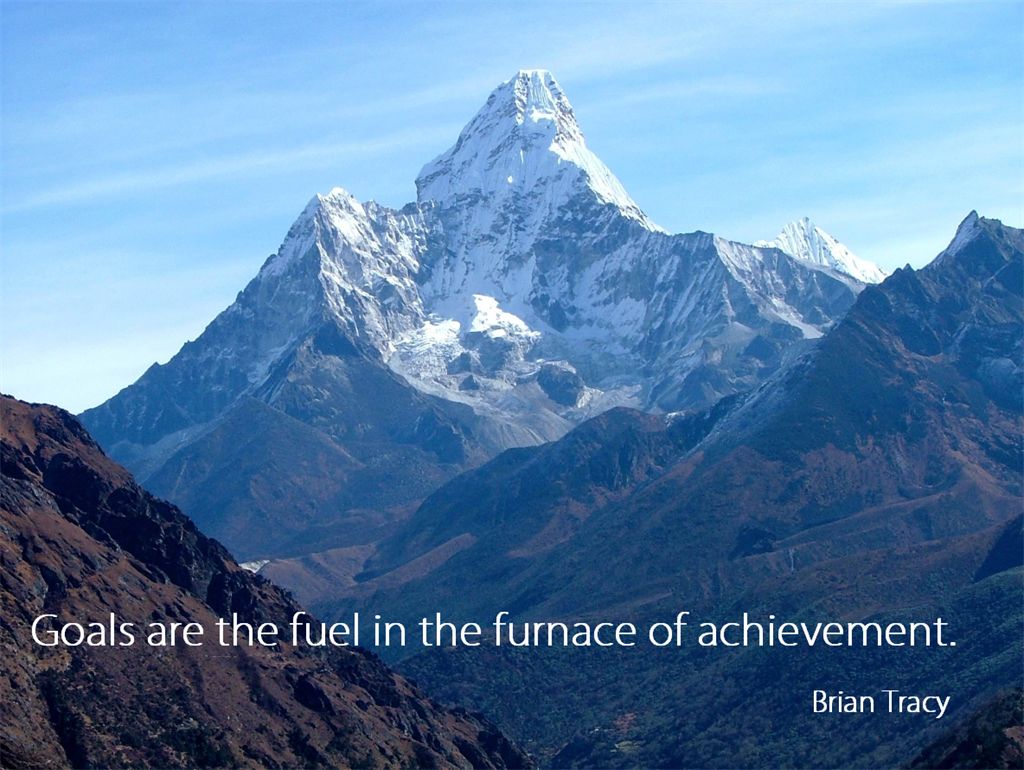
Brian Tracy goal-quotes2Model yourself on other people who have done what you want to do. Study not just what they did, but if possible what they believed and their values. What were they focusing on? If you can meet such people, many successful people are prepared to help those with a dream. You can also learn a lot from books and people online.  To some extent you will go through trial and error to gain wisdom.

Working backwards is helpful. First you look at the big picture, and like a puzzle gather and fit together the pieces you need to achieve to reach your goal. It’s common sense to break it down into doable steps.

Remember to ask the magic question if you hit a brick wall:

“How can I____________________?”

Fill in the blank with whatever it is you need to know. It’s amazing how the answer will come to you. It could be in the form of meeting someone influential or knowledgeable in the area you’re interested in. You might see an article, hear a radio interview, read a book etc. Somehow, the universe will answer you.

It’s worth noting that without awareness thoughts and events happen on auto-pilot, according to our early programming.

Thinking:

  • Align your beliefs with your goals for the year. Watch out for your un-resourceful or self-sabotaging beliefs.
  • Values provide a source of motivation.
  • Filters allow us to let in the information that you need to reach your goal.
  • Create the big picture and then chunk it down into manageable steps and actions, so that you don’t lose heart or become overwhelmed.
  • Look at your method of making good and fast decisions.
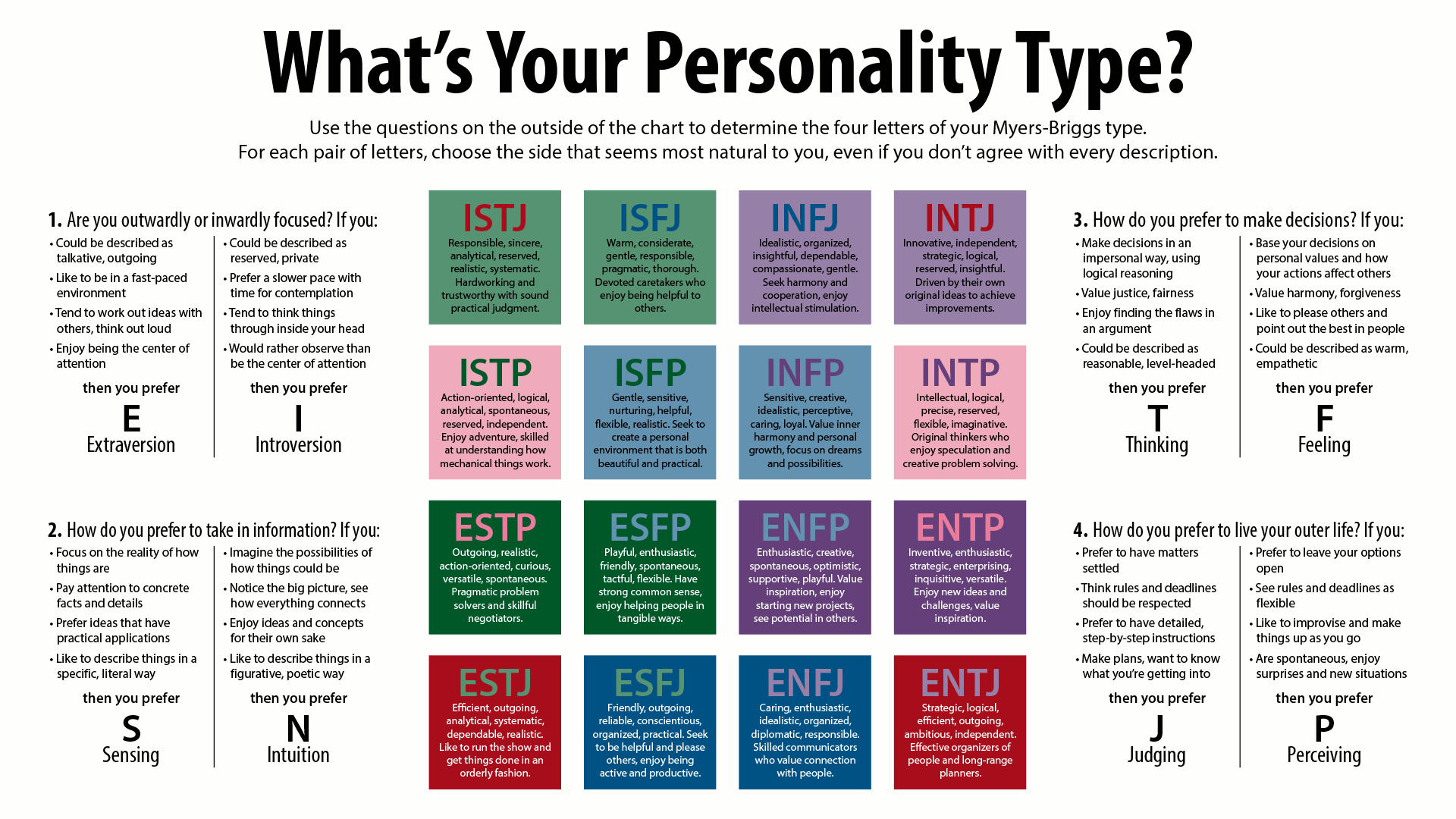
  • You might find it useful to be aware of your psychological preferences. Are you extroverted or introverted? Sensing or intuitive? Thinking or feeling? Judging or perceiving? Why not take the Myers Briggs Test based on Jung’s writings in his book Psychological Types.
  • Understand your internal representations and how they steer your actions.

MyersBriggsTypes

We are all bound to hit some rocks on the road to success. Maybe even a mountain or two. There’s no avoiding it. I’ve found it helpful at such times to remind myself of Napoleon Hill’s statement that every adversity carries with it the seed of an equivalent or greater benefit. It’s okay to feel temporarily discouraged or bad about it, but the most important thing to do is to evaluate the adversity and list its advantages.

Germinate the seed…

Shakespeare so often has the right words and wisdom for every occasion:

There is a tide in the affairs of men,

Which, taken at the flood, leads on to fortune;

Omitted, all the voyage of their life

Is bound in shallows and in miseries. ~ Julius Caesar 4.3.217-20, Brutus to Cassius

If we go the extra mile we will gain more satisfaction, make ourselves indispensable, increase our personal initiative, develop self-reliance and courage, integrity and eliminate procrastination. The qualities of all successful people.

Good luck! By that I mean: Labouring Under Correct Knowledge

“You are never too old to set another goal or to dream a new dream.” ~ C.S. Lewis

Reaching for the Stars – Enlightened Goal Setting (Part 1)

“Whatever the mind of man can conceive and believe, it can achieve.” ~ Napoleon Hill

It’s a new year, and we’re naturally focused on what we might do differently or better than last year. Those well-meaning new year resolutions to exercise more, give up smoking, and all manner of ‘should dos’ get attention for maybe a couple of months before they fall by the wayside; even if we’re super determined. Life has a way of testing us to the limit!

To me, the term ‘resolutions’ sets us up for failure before we’ve even begun. It sounds too much like iron clad will-power is required. There’s no fun or adventure and excitement in it. It sort of implies that we’ll need to be as serious as the United Nations are when they publish a Security Council statement of will.

Some lofty intention that we don’t really believe is attainable, eating away at our motivation for sustained action. We certainly do need intention and resolve to achieve our goals and dreams, but that alone won’t propel us to the heights of achievement.

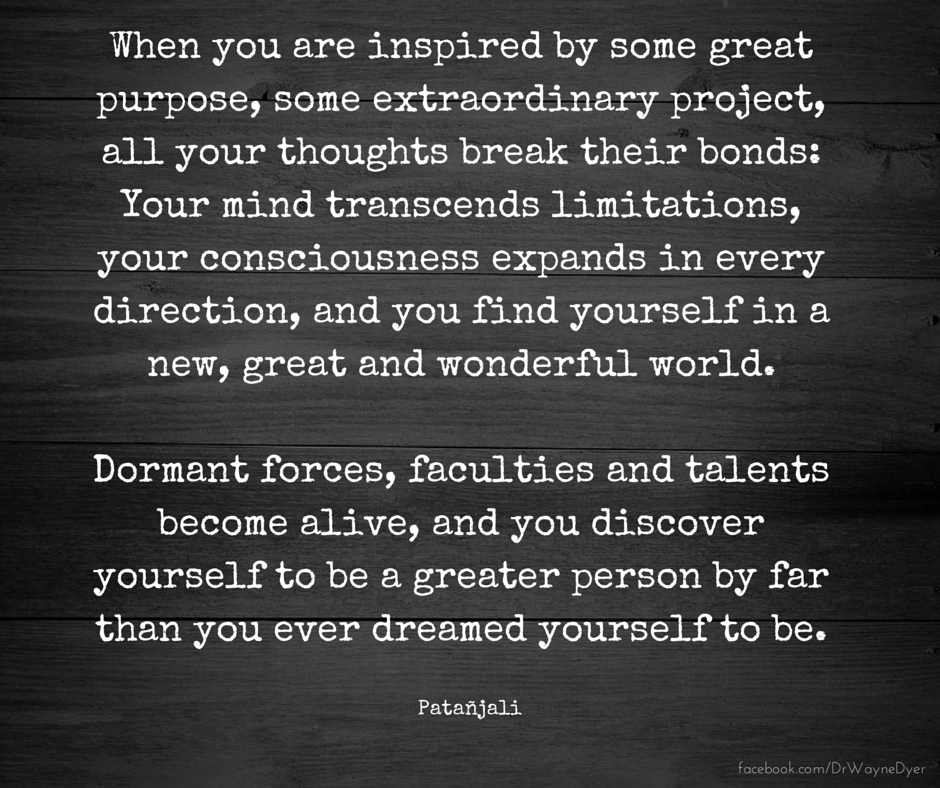
patanjali

In this and the next post I hope to break down the components of how to turn a few ideas on your 2015 resolutions list into a way of life: a step by step approach to create habits so ingrained that it wouldn’t occur to you not to behave in a way that takes you closer to your desired outcomes; so that when 2016 rolls around you can knock back the champagne knowing you did everything in your power to live the life of your dreams.

Every year is a stepping stone toward manifesting the full potential of your life.

It’s an ambitious task I know, but I wanted my first post of 2015 to be as meaningful as possible…

Perhaps we should start with questions.

Why create something?

For some it’s the joy of creating, but at the end of the day, we all need to survive. We all want stuff. That’s okay. For others, the challenge is the key. If you set yourself a challenge that’s just far enough away to motivate and stretch you, just a little more than you thought you could do, but not so far away that it’s frustrating and seemingly impossible, who knows what your life could look like in the process of striving for that goal.  The point is it has to be important and meaningful to you.

The dictionary definition of success is:  the favourable or prosperous termination of attempts or endeavours; the accomplishment of one’s goals.

Napoleon Hill studied the most successful people in America over a period of twenty years, and at the suggestion of billionaire businessman Andrew Carnegie, he distilled this collective knowledge in his 1937 best-selling book: Think and Grow Rich.

In it, he lists the 12 Great Riches of Life:

  1. PMA – Positive Mental Attitude
  2. Sound physical health
  3. Harmony in human relationships
  4. Freedom from fear
  5. Hope of achievement, e.g. setting yourself challenges, which gives you a zest for life
  6. Capacity for faith
  7. Sharing your blessings with others
  8. Having a labour of love
  9. Have an open mind on all subjects
  10. Self-discipline
  11. Understand people
  12. Financial security

Napoleon Hill’s words of wisdom from the great man himself:

Do you know what you want?

Some of us have been told as children that we shouldn’t want anything, and in other cases these decisions were made for us. Some of us may have decided that what we want is not possible anyway. Just deciding this one thing could be the most important step you ever take.

It’s important to have that key ingredient of awareness, and ask: what are my beliefs around what I want? Beliefs are self-fulfilling prophecies that can either help us or hinder us in our quest.

The next thing to decide is the price. What are you willing to do, or to give of yourself to achieve your goals? The price must be paid in full (even though it’s January there’s no discounting allowed, sorry!)

Six Step Formula:

  1. Know where you are – this is taking stock of your situation. What do I know or not know? What resources are available to me?
  2. Know where you want to be, and be very specific.
  3. Take action. Doing something will lead to learning and to further actions. You may not know every action you should take, but an elephant isn’t eaten whole (if you excuse the example), just act the best way you can.
  4. Evaluate the action. What worked? How can I tweak it?
  5. Refine the action. Continue to act, evaluate and you will attract the people and situations that will help you.

I must away…until part 2.

“If you cannot do great things, do small things in a great way. ~ Napoleon Hill

A Christmas Cracker!

“I will honour Christmas in my heart, and try to keep it all the year.” ~ Charles Dickens

Just a short post from me today, (and my last of the year). I can hear your “phews”! I am ensconced in Christmas preparations and as things stand at the moment, Santa might well break his neck trying to make his way into my daughters’ bedroom…

Even a burglar would have a challenge making that much mess!

As is the case with Christmas crackers, you normally get a bright but flimsy hat, a corny joke and a completely useless plastic gift, (with the odd surprise), but they are quite fun to pull on when you are completely stuffed and happily inebriated!

50 best Christmas cracker jokes ever

Merry ChristmasI’d like to thank everyone who has spent their precious time reading any of my posts, and to wish you all a very Merry Christmas and a Happy New Year!

I know I say this every year, but it feels like 2014 has gone by in a flash. My kids are that bit taller, savvier, and generally more mature.  Funnily enough, they haven’t yet grown out of their adoration of Father Christmas!

I, on the other hand, feel older and not much wiser, with a rather depleted bank account! Luckily, monetary measures are not the only way to evaluate a year. It has been a tough one for me, but it hasn’t been without its highlights.

I hope 2015 will bring you abundance in every area of your life!

Some say that ever ‘gainst that season comes

Wherein our Saviour’s birth is celebrated,

This bird of dawning singeth all night long;

And then, they say, no spirit dare stir abroad,

The nights are wholesome, then no planets strike,

No fairy takes, nor witch hath power to charm,

So hallow’d and so gracious is the time.

~ William Shakespeare

Hamlet 1.1.163-9, Marcellus to Horatio

It’s time to give thanks for the light in our lives. Our faith, health, family, friends and for the good fortune that has been bestowed upon us, in whatever form we have been blessed in.

“I have always thought of Christmas time, when it has come round, as a good time; a kind, forgiving, charitable time; the only time I know of, in the long calendar of the year, when men and women seem by one consent to open their shut-up hearts freely, and to think of people below them as if they really were fellow passengers to the grave, and not another race of creatures.” ~ Charles Dickens

I will bid you a festive farewell with a small selection of baroque Christmas music that for me, represents the spirit of love, peace, joy and goodwill to all men:

Ho, ho ho! I better get back to making a path for Santa…

Beethoven’s Heroism

“The piece is a monster. I have never seen anything like it; it may not be music at all.” ~ Wenzel Sukowaty (from the BBC film Eroica).

In honour of Ludwig van Beethoven’s 244th birthday on 17th December 2014, and the composer chat conducted by my esteemed musicians and friends on Twitter (hashtag #LvBchat), I thought I would focus on his most heroic of compositions – the Sinfonia Eroica. It was composed during the summer of 1803 and completed in April 1804.

The 9th of June 1804 was a very important day for our dear Ludwig, but it was also a watershed in the history of classical music, absolutely critical to the future development and evolution of music and for composers and artists in general. Beethoven set the benchmark. However, I doubt that Beethoven realised the profound significance of what he had achieved, he was just doing what he did best – following his heart and his muse.

This was the day that his legendary third symphony in E-Flat Major, opus 55 was first privately performed at the Bohemian residence (Castle Eisenberg), of Prince Franz Lobkowitz, to whom the work was dedicated, and one of Beethoven’s most ardent supporters and patrons. Rehearsals prior to the public premier of the symphony (which took place on 7th April 1805 at the Theater an der Wien), were held in the concert hall of the prince’s Palais Lobkowitz in Vienna, (later named the Eroica Saal after this momentous composition), and was to unleash music of the likes the Viennese had never heard before. Now that’s brave!

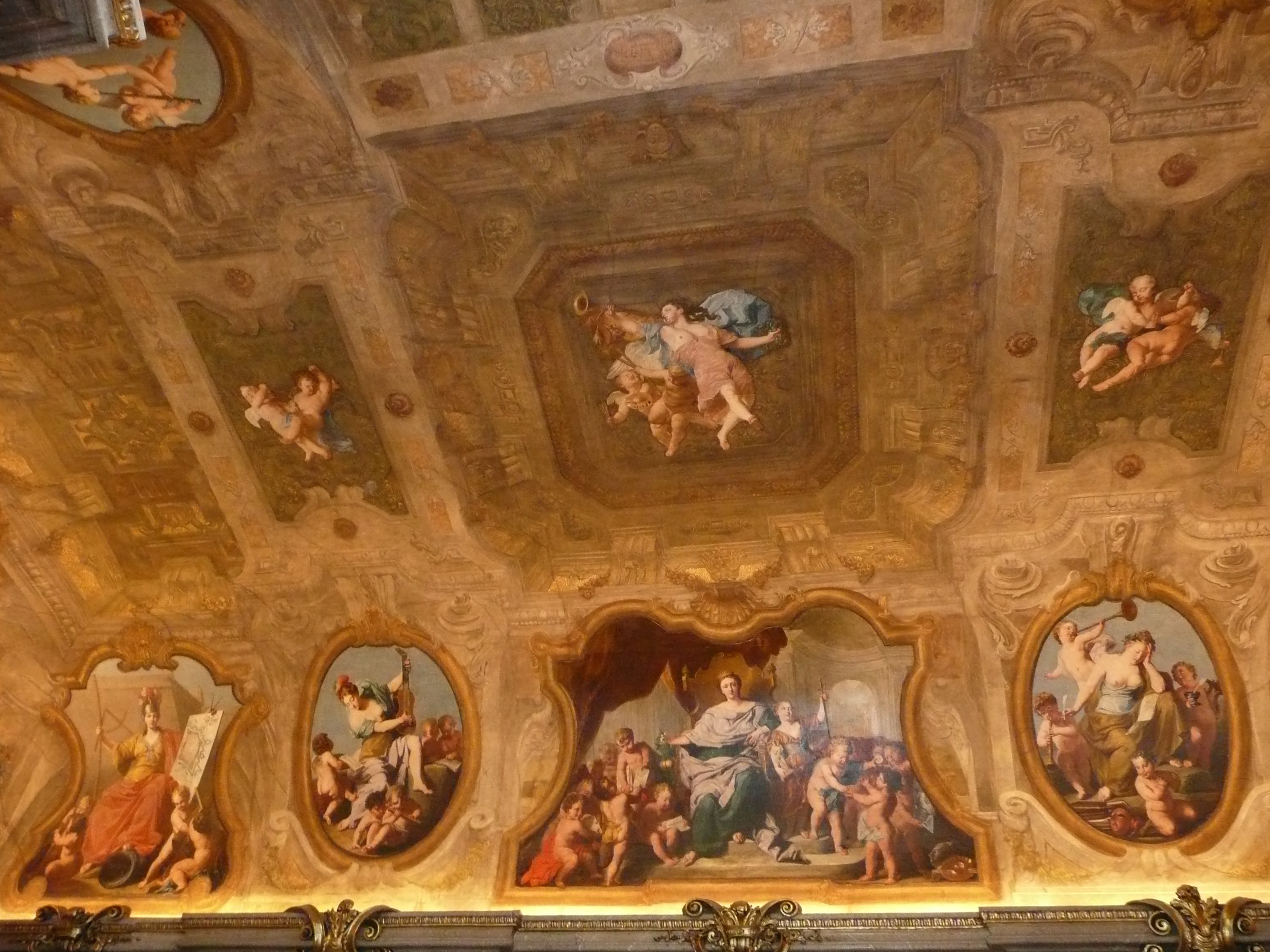
Ceiling of the Eroica Saal at the Palais Lobkowitz

Ceiling of the Eroica Saal at the Palais Lobkowitz

A temporary respite from the hostilities between Napoleon and Europe was holding. Beethoven embraced this revolutionary turmoil and the ideals of liberty, equality and fraternity, and firmly placed himself as an artist at the centre of his third symphony by writing what he felt, and what he wanted, breaking away from the accepted symphonic structures and norms at the time. It was a beacon of originality. He was a man who had entered into the most creative period of his life.

Eroica: The Day That Changed Music Forever

The BBC dramatised the event of the private premier of the third symphony in the film, Eroica, with the strapline: the day that changed music forever. It was first broadcast in 2003, written by Nick Dear and directed by Simon Cellan Jones. The film follows Ludwig, Ferdinand Ries, the Lobkowitz family, friends, and the musicians as the new music unfolds on an unsuspecting audience, and takes you on Beethoven’s personal journey into the history books.

What I love about this film is the care and accuracy with which it was made, drawing on the recollections of Ferdinand Ries (Beethoven’s pupil and secretary), and from reports about the event.

Ian Hart plays Beethoven just how I imagine him; enthusiastic about his music, bold, dynamic, forthright, (blunt even), brutally honest, brusque, impatient, with frequent outbursts of temper, but underneath that he displays a simmering passion and tenderness for his lover, the widowed Countess Josephine von Deym.

The Orchestre Revolutionnaire et Romantique directed by Sir John Eliot Gardiner perform the music on authentic, period instruments (none of the violins have chin rests, which were yet to be invented), and in the numbers and proportions that Beethoven intended it for.

I love the way it switches from Beethoven walking with Ries to the Lobkowitz residence, to the palace staff going about their business, getting ready for the event, and the musicians, especially the horn player, Otto, who is known to Beethoven.

The camera work is very sensitively done, moving around the sections of the orchestra as they tackle this new, epic work, and capturing their shocked reactions at the nature of the notes and markings presented to them by Beethoven’s copyist Wenzel Sukowaty.

It is longer, more difficult and unlike anything they have ever attempted or played before, and a few re-starts are required until Beethoven is satisfied that they have reproduced the sound he wants.

Eroica film still

It’s unthinkable that a modern orchestra would sight read a new symphony at its premiere (private or not), let alone consume beer before doing so. They might start seeing more than one baton!!

There are so many magical touches, one being the introduction of Beethoven to Prince Lobkowitz’s cousin, Count von Dietrichstein; and when asked if he is a land owner, Beethoven proclaims that he is a brain owner! Dietrichstein shows himself to be egotistical, ignorant and rigid in his ideas about music, but strangely his views on Napoleon Bonaparte turn out to be erudite.

We see a scene where the musicians, exhausted from their exertions are having a break and some lunch, and begin to debate the war and Napoleon’s agenda.

Beethoven’s views that an artist is on the same level as the nobility, are borne out by his behaviour and of course Ries’s comment, ‘that he doesn’t accept the inequality,’ to the copyist, who replies, ‘men have been executed for less.’ It could be considered heroic that Beethoven never compromised his artistic integrity for the whims or desires of any of his wealthy and titled patrons.

There is a very endearing moment when Beethoven and Josephine are alone discussing his marriage proposal, and she refers to him as ‘Louis’. However, it does not go well.  It’s my personal view that Josephine was his ‘Immortal Beloved’.

In the third movement we glimpse Beethoven’s distress and distracted expression as he deals with his rejection from Josephine, whilst directing the scherzo marked allegro vivace, which personifies his hot-blooded nature.

The elderly Haydn’s entrance just before the start of the fourth and final movement is brilliant, as is the ensuing exchange of comments about students, and what idiots they are. The inference is not lost on Beethoven, who was championed by Haydn and became his student as a young man in 1792.

I’m going to shut up now, and let you watch the film uninterrupted!

Beethoven’s idealism and his abhorrence of tyranny are at the root of the Eroica. The fervour of freedom embodied by the Eroica is just as relevant and ground-breaking today as it was 210 years ago. There is always room for heroism in our lives!

Neither before or since, has music evoked such passion as Beethoven’s. He was in-tune with his creative spirit, and had endured more than his fair share of suffering; so who better than Herr Beethoven to write music that represents the struggle and overcoming of life’s challenges?

When asked by a close friend some fourteen years later, which was was his favourite symphony, Beethoven responded without hesitation: ‘the Eroica.’

We know that with the inevitable onset of his deafness and heart-break, that his heroism would eventually far outshine what he achieved in the summer of 1804. But for me, it’s the starting point of his heroism, it’s the moment we are blessed by his courage and the music that gives us a first insight into the depth of his spirit.

“He gives us a glimpse into his soul. Everything is different from today.” ~ Joseph Haydn (from the BBC film Eroica).

The Path to Publication

“Every secret of a writer’s soul, every experience of his life, every quality of his mind is written large in his works.” ~ Virginia Woolf

When I was eleven I had a nasty accident at school. It was positively gruesome. I remember the day vividly; my class had just come back from a P.E. lesson and we were making our way into the changing rooms. I wanted to tell my best friend something (I can’t even remember what it was), and in my haste to talk to her I placed my right hand next to the hinge of the door as she was closing it. Only I didn’t quite have my finger out of the way…

PhotoFunia-The Virtuoso2The ensuing carnage must have been quite a shock for my head teacher, who was greeted by a very pale screaming girl, with the end of her finger missing and copious amounts of blood flowing everywhere.  The trail of blood running from the girls changing room to the classroom must have been redolent of a murder scene. The whole of Bledlow Ridge Primary School knew that something quite grisly had just happened.  He duly picked up the top of my finger and wrapped it up (I never asked what in), and I was driven straight to hospital. The car journey was awful, I was clutching my tawdry severed finger, and as the initial shock wore off the pain grew in intensity.

It wasn’t a clean separation, and I was told that they would try and sew it back on. My mum and my family came to see me before the anaesthetic to reassure me. I had never been under before, and I was terrified I would never wake up again, as the anaesthetist counted down from ten. By the time he reached five I was out cold.

When I regained consciousness my finger was throbbing in agony and I felt groggy. The wonderful get well cards made by my classmates helped to cheer me up in the aftermath of my surgery. The only consolation was that I’m left handed, so it could have been worse, and I got to have quite a bit of time off school.

My mum dug those handmade cards out of her loft recently. They still bring a smile to my face. I remember I couldn’t play netball for months, (which I was absolutely gutted about) and when the bandages eventually came off I was shocked to see that the top of my right index finger wasn’t actually recognisable as a finger. The nerve endings gave me hell in the cold. It was like needle points stabbing my flesh until it went numb.

Needless to say, I have a thing about fingers and doors, and my kids have received several lectures about the dangers of getting a digit caught!

In the midst of my trauma little was I to know that the experience would surface many years later from the depth of my psyche, to provide my muse with inspiration for the misfortune of my first heroine and protagonist of my novel, The Virtuoso.

So you could say the idea has been brewing for a good many years!  Eleven was also the age when I started learning to play the violin. I can’t help thinking that the foundations of the path to publication were laid in 1981…

Stepping Out Onto the Worldwide Amazon Stage

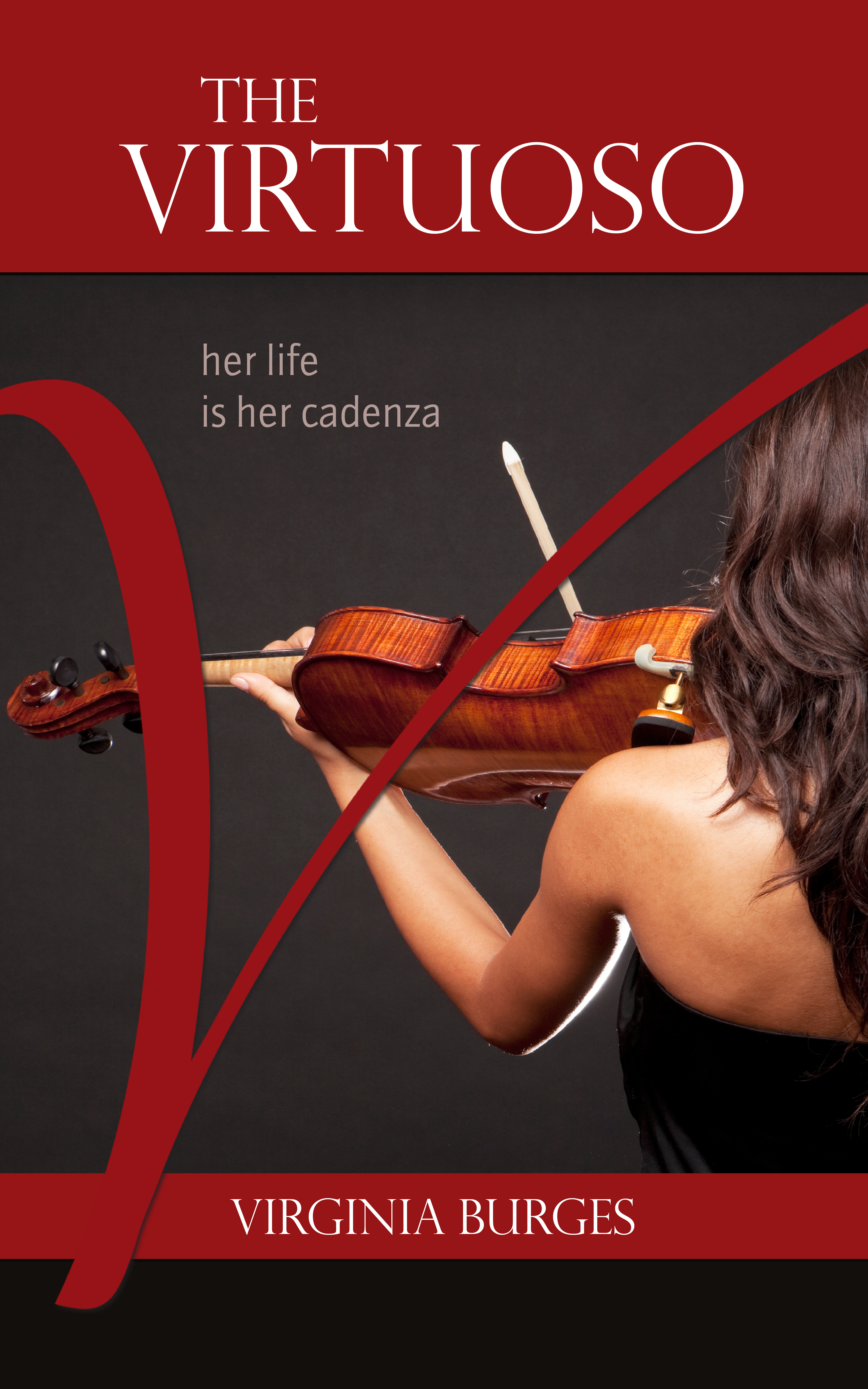
New Kindle Cover

New Kindle Cover

I’m happy to announce that The Virtuoso has now been published on Amazon Kindle today, Monday 15th December 2014 at a launch price of £3.59. There will also be a paperback version available on Amazon next year. (US Link)

I’m sure I’ll feel a certain amount of satisfaction that I made it this far, for persevering over the seven years it’s taken me (on and off) to complete The Virtuoso, so that I can finally say my work in progress is now a work in print!

I’m now at the stage where I’m excited that my work can open the door to other related creative pursuits. I was fortunate to meet and hear the violin virtuoso, Adelia Myslov in the summer. She played a stunning performance of the Mendelssohn Violin Concerto. I asked her if she would be interested in playing a specially composed unique ‘theme’ for The Virtuoso, and to my delight she said yes! The music project is still ongoing and I hope it will be composed and recorded in the not too distant future. Eventually it will be available on iTunes and Amazon.

There is also a book trailer that has been produced for The Virtuoso by 13Media Arts in Daventry. Along with my voice, words and pictures, and Kevin and Darren’s digital jiggery pokery (I mean expertise), I am hoping it will prove to be a successful team effort!

During these years I’ve battled my demons of self-doubt that I could actually be a writer, and a half decent one at that. Well, I’ll leave the judging to my readers (I do hope I have some soon), after all, my daughter Emily is telling everyone she knows: ‘my mum is an author.’

The path to publication hasn’t always been like the yellow brick road! At times I had so many other ‘distractions’ beckoning for my attention; mainly life happening around me. But I found that the more time and effort I put into it,  the more I got sucked into my characters’ world of make-believe, and the more I felt as if I was becoming a proper writer.

“Fiction is the truth inside the lie.” ~ Stephen King

The Art of Violin

“When you play a violin piece, you are a storyteller, and you’re telling a story.” ~ Joshua Bell

To me, the beauty, mystique and resonance of the violin is both beguiling and irrefutable. The instrument’s tone, agility and versatility is unsurpassed in classical music repertoire. Of course, I adore all stringed instruments, with the cello coming a close second.

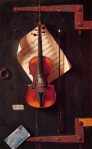
gottlieb-painting-violin_bigLooking at the design of the violin I love the way the wide curves of the upper and lower bouts contrast with the inverted C-bouts (the waist), to give it that sensual shape, and the elegant f-holes, along with the combination of the long and graceful fingerboard leading to the peg box and the scroll, which can be quite elaborate on older violins. Then you have the sheen and shine of their wood exteriors, usually spruce and maple. It is a thing of beauty!

Ancient liras, violettas and violas were created by the school of Brescia in the late 14th century, and in 1574 the Bertolotti Gasparo da Salò family made what is considered the finest carved and decorated Renaissance violin in the world, which was once owned by Ferdinand II, Archduke of Austria. Its current home is the Vestlandske Kustindustrimuseum in Bergen, Norway.

From Wikipedia:

Early History:

The Persian geographer Ibn Khurradadhbih (d. 911) of the 9th century, was the first to cite the bowed Byzantine lira as a typical instrument of the Byzantines and equivalent to the rabāb used in the Islamic Empires of that time. The Byzantine lira spread through Europe westward and in the 11th and 12th centuries European writers use the terms fiddle and lira interchangeably when referring to bowed instruments (Encyclopædia Britannica. 2009). In the meantime rabāb was introduced to the Western Europe possibly through the Iberian Peninsula and both bowed instruments spread widely throughout Europe giving birth to various European bowed instruments.

Over the centuries that followed, Europe continued to have two distinct types of bowed instruments: one, relatively square-shaped, held in the arms, known with the Italian term lira da braccio (meaning viol for the arm) family; the other, with sloping shoulders and held between the knees, known with the Italian term lira da gamba (or viola da gamba, meaning viol for the leg) group. During the Renaissance the gambas were important and elegant instruments; they eventually lost ground to the louder (and originally viewed as less aristocratic) lira da braccio family of the modern violin.

Between the 16th and 19th centuries, several changes occurred, including:

  • the fingerboard was made a little longer to be able to play even the highest notes, in the 19th century.
  • the fingerboard was tilted a little more, to produce even more volume as larger and larger orchestras became popular.
  • nearly all old instruments were modified, including lengthening of the neck by one centimeter, in response to the raising of pitch that occurred in the 19th century.
  • the bass bar of nearly all old instruments was made heavier to allow a greater string tension.
  • the classical luthiers nailed and glued the instrument necks to the upper block of the body before gluing on the soundboard, while later luthiers mortise the neck to the body after completely assembling the body.
  • the chinrest was invented in the early 19th century by Louis Spohr.

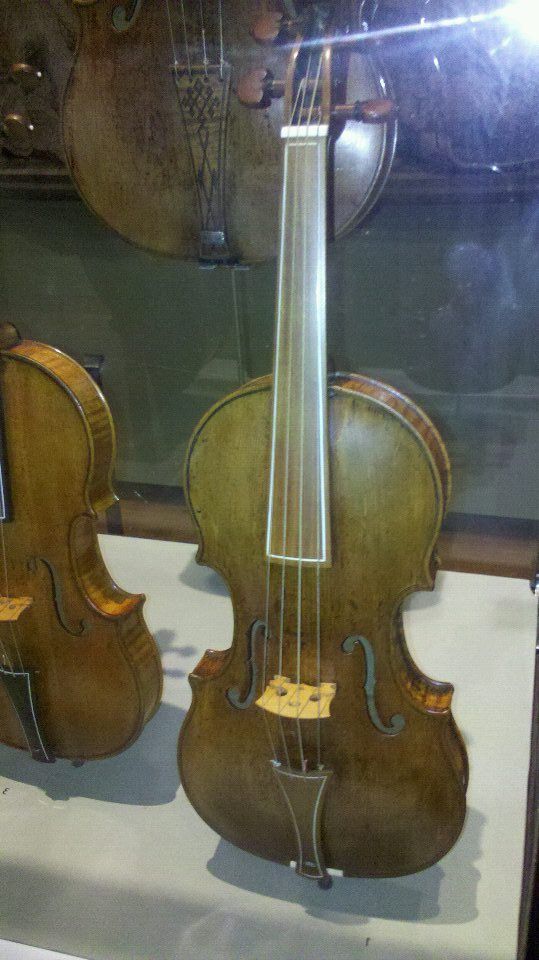
Amati eldest dated violinWe can thank the French Renaissance for what we know today as the ‘modern’ violin. In Cremona, Andrea Amati created the first batch of violins in 1564 at the behest of King Charles IX, who wanted to create a new musical sound for the kingdom of France.  Amati was credited with adding the fourth string to the existing three-stringed ancient violin type instrument. His instruments were beautifully adorned with art work. There is a wonderful display of Amati instruments at the Ashmolean Museum in Oxford.

Andrea passed his violin making skills down to his two sons, Antonio and Girolamo, who in turn inspired the latter’s fourth son, (Andrea’s grandson), Nicolo Amati. Among Nicolo’s aspiring students were Andrea Guarnerius and Antonio Stadivari.  Alongside the slightly newer violins of Jacob Stainer of Austria, these instruments are the most sought after and valuable in the world.

Zsolt-Tihamér Visontay (the Leader of the London based Philharmonia orchestra), does a great job of explaining the basics about the violin and his role in the orchestra:

One of my heroes on the violin, Itzhak Perlman, has made some very helpful short videos to assist us amateur violinists with our technique!

For violin lovers here is a fabulous documentary titled: The Art of Violin:

Part 1:

Part 2:

After discussing the ‘ordinary’ Strad (if there is such a thing), played by the late David Oistrakh, and the amazing sound that he achieved with it; Itzhak Perlman concludes that, ‘the sound comes from the individual, not the instrument.’

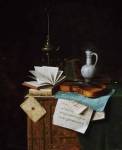
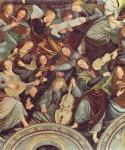
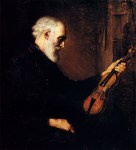
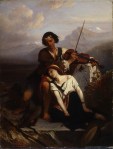
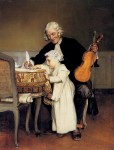
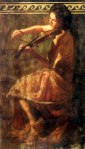
Renaissance artist and sculptor Gaudenzino Ferrari painted the earliest known depiction of the violin. And now to the visual art of violin! I have included a small gallery of some of my favourite paintings and images of the violin in still life and in a living setting:

“You are the music while the music lasts.” ~ T.S. Eliot

How Should we Perceive Failure and Success?

“Failure is the condiment that gives success its flavor.” ~ Truman Capote

None of us are immune to vicious slurs or criticism. Nicknames and labels such as ‘loser’ and ‘washout’ and other derogatory terms only serve to further stigmatise the social perception of failure. Or, if I can put it another way, the fear of being called, labelled or thought of as a failure is a fate worse than death for most of us (me included).

parentingI have a  sweet memory of my dad from when I was about six years old, and I was upset after I had been bullied in the local park. He told me a rhyme. Most likely many parents have used it themselves, and I certainly have with my kids. “Sticks and stones will break my bones, but names will never hurt me.”

However, I’ve often found verbal violence more insidious than physical violence. It can be harder to brush off.  Somehow emotional wounds seem to last longer and cut you to the core. What if they have a point?

If you look closely at someone’s motivations for dissing you or your work, you may see that jealousy, and their own feeling of inadequacy or lack of understanding to be on their emotional agenda. There’s a big difference between constructively helping someone improve and handing out a character assassination or cruel taunts.

Marianne Williamson asserts that it’s not our failures we are most afraid of, but our successes. Fear in any form is worth remembering as False Evidence Appearing Real.

Let’s face it – none of us would do anything if we constantly worried about the outcome. We just have to do our best and be okay with the consequences. Once those negative thoughts take over it’s very difficult to motivate yourself for future projects and work.

success-is-the-ability-to-go-from-failure-to-failure-without-losing-your-enthusiasm-failure-quoteI remember reading the story of Rachmaninoff’s first symphony, which had a disastrous premiere in 1897, and on top of that the work was given disparaging comments from music critics. Rachmaninoff was left feeling depressed and didn’t compose any major works for quite some time.  Luckily for us he bounced back and produced his much loved legacy of orchestral and piano music, including his immortal piano concerto number 2, which is universally adored. What if he had given up when the going got tough? The same can be said of Beethoven, and many other artists and composers.

Walt Disney approached many banks to get his theme park off the ground. Michael Jordan missed a lot of shots.  The best of us have failed, and failed spectacularly.  Edison ‘failed his way to success’.

It takes courage to express yourself authentically in your work and your life. Opinion is a fickle commodity, and should be taken with a pinch of salt.

Everything in literature, art and music is highly subjective, and will be approached by people from their own unique filter and experiences. The main opinion that matters about you and your life is yours. I’m not saying we shouldn’t strive to please, but we shouldn’t let other people’s opinions rule us. It’s good to take counsel, have constructive feedback, but ultimately the decisions we make should come from our own heart.

That said, it can be tricky to maintain a positive attitude when you are pursuing a dream, but others looking in don’t quite see it that way and are enthusiastic about telling you!

Theodore Roosevelt ~ The Man in the Arena:

It is not the critic who counts; not the man who points out how the strong man stumbles, or where the doer of deeds could have done them better. The credit belongs to the man who is actually in the arena, whose face is marred by dust and sweat and blood; who strives valiantly; who errs, who comes short again and again, because there is no effort without error and shortcoming; but who does actually strive to do the deeds; who knows great enthusiasms, the great devotions; who spends himself in a worthy cause; who at the best knows in the end the triumph of high achievement, and who at the worst, if he fails, at least fails while daring greatly, so that his place shall never be with those cold and timid souls who neither know victory nor defeat.

I think that Rudyard Kipling also summed up the attitude of resilience beautifully in his poem IF:

I have listed a few personal thoughts on the subject I hope you will find helpful in dealing with the fickle beasts of ‘success and failure’. Let’s learn to treat those two impostors just the same!

5 Tips for keeping Mentally Strong

  1. It helps not to think of things in terms of success and failure. Very often a situation or result that could traditionally be deemed as a ‘failure’ will later manifest as a success down the road, in ways that you can never comprehend at the time.
  2. It’s up to you to decide what means the most to you. What is it that will give you satisfaction and fulfilment regardless of the outcome? Your friends and family and wider social circle aren’t the ones walking in your shoes.
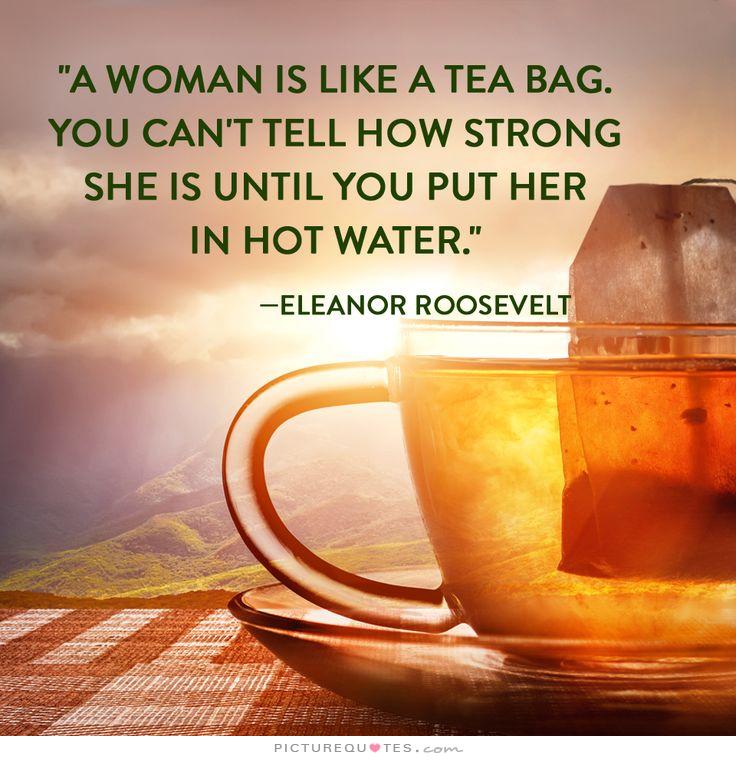
  3. a-woman-is-like-a-tea-bag-you-cant-tell-how-strong-she-is-until-you-put-her-in-hot-water-quote-1Many of the experiences that I considered as the lowest points in my life have served to strengthen me and give me the courage to know that if I overcame that then I can overcome this… What doesn’t kill you makes you stronger.
  4. Persistence is more important than talent. You can learn what you need to know, try and fall short, try again, change and learn from what you are doing, (except perhaps how to be an astronaut or a brain surgeon!). With each draft of my novel I learnt more, and I’m still a beginner on my writing journey. Very often we learn best kinesthetically, by actually doing something. Our brains develop plasticity and memory to enable us to improve at an activity. Toddlers don’t say, ‘right, that’s it mummy and daddy, you’re going to have to carry me around for the rest of my life, I can’t walk!’ No, they can see everyone else walking and they are going to do it come hell or high water.
  5. Don’t beat yourself up if something doesn’t go according to plan. I have been the worst when it comes to mental self-flagellation, but it only serves to bring you down even more. Very often, the works that humanity consider to be of the highest pinnacle of achievement underwent many years of blood, sweat and tears, were revised and criticised, and perhaps weren’t appreciated fully at the time they were created. No experience is ever wasted. Encourage others, and soon that ethos will extend to your own life.

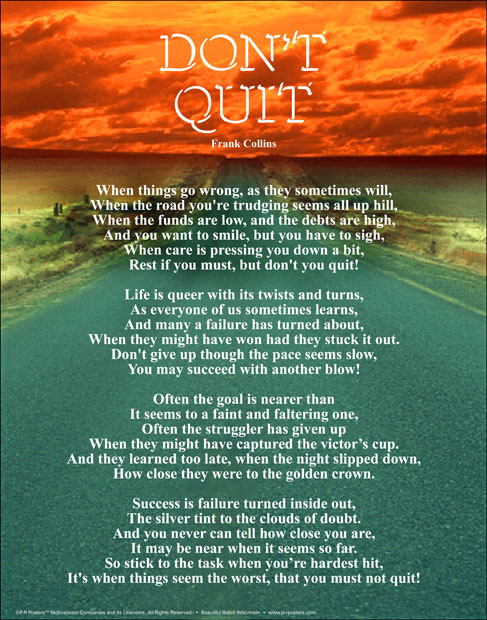
Don't Quit

Lastly, remember that any perceived ‘failure’ is only temporary unless you give up or don’t use the experience constructively.  Although we all feel better about having a measure of ‘success’ it’s nearly always our failures that we learn the most from, and without which we could not be successful in any definition of the word.

No one is perfect, so we should cut each other some slack. If you can love yourself, the well-meaning opinions and labels of others won’t be the crushing blow that defines who you are.

I don’t believe it’s right to judge how successful a person is purely by their bank account. Mother Teresa or Mahatma Gandhi would not have qualified for a life of inspiration or global icon status if their personal wealth was the only measure of their worth…

Einstein suggested that rather than striving to be a success, one should try to be a person of value. Wise words indeed.

In answer to the question posed by my title, we should not perceive success and failure as the be all and end all of everything. Perhaps we should just take the view that its all valuable life experience there to teach us something. And that’s the bottom line.

“Your attitude, not your aptitude, will determine your altitude.” ~ Zig Ziglar

Ode to Autumn…

“Autumn is a second spring when every leaf is a flower.” ~ Albert Camus

As the twilight of the year is upon us I thought I would give you a break from my ramblings and offer instead some high culture to round off my favourite season – Autumn.

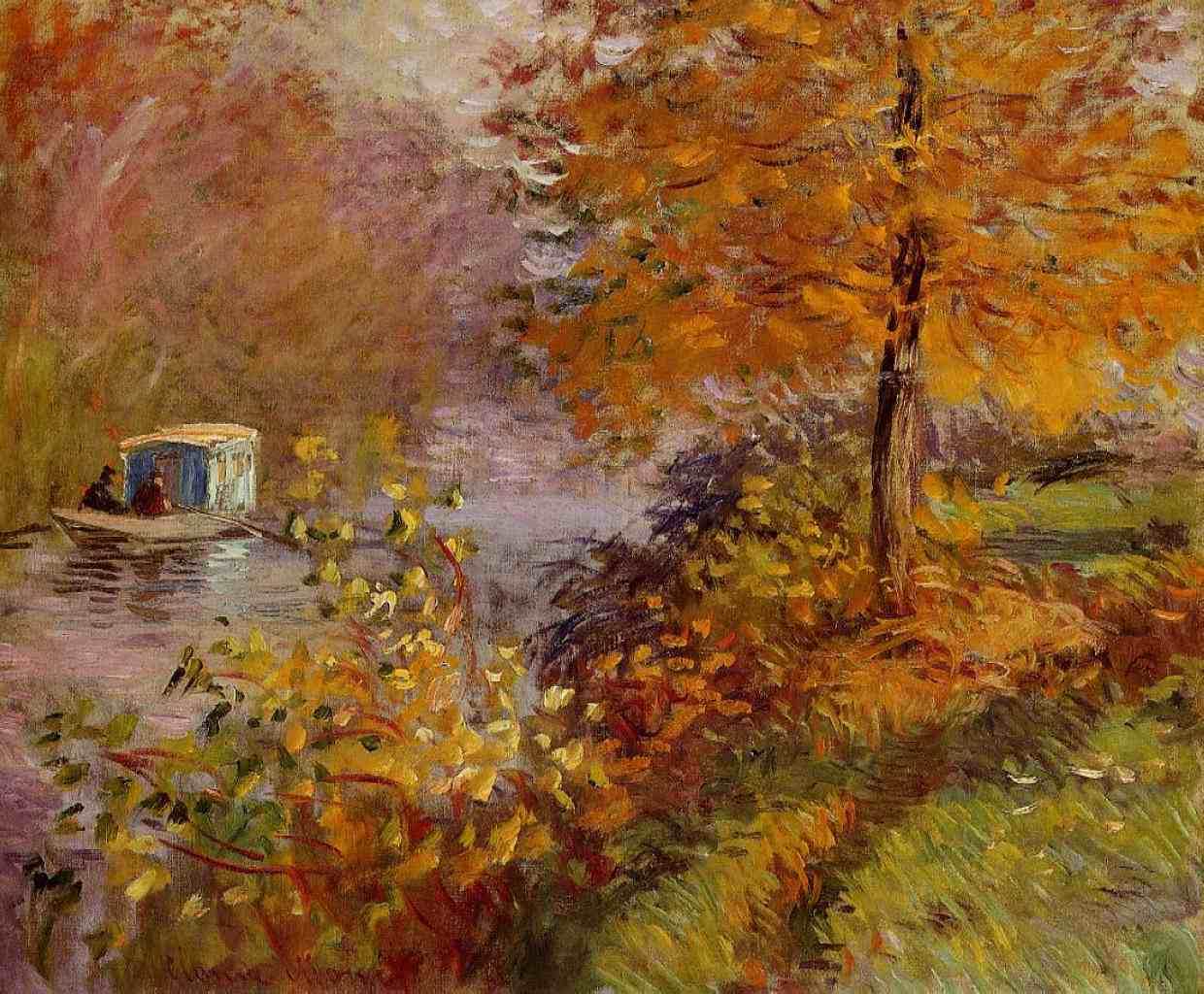
Claude Monet - the-studio-boat-1876

Claude Monet – The Studio Boat (1876)

I have taken a selection of poetry, music and art relating this most rustic of seasons, (and yes, it wouldn’t be complete without some music from Vivaldi!) to fill you with awe and admiration at nature’s most vibrant of transitions.

It seems appropriate to turn to prose, while the last of the orange leaves cling doggedly to wind-battered trees…

The temporary and mutable aspects of our existence are highlighted so beautifully in Autumn.  The descriptions of Autumn in relation to a human lifespan mirror those of the seasons, and can be likened to a person reaching their most vivid and vibrant peak; having reaped the harvest of a lifetime of experience, still benefiting from bountiful health, before the inevitable decline into the winter of life, which implies death…

In that regard perhaps we’d all wish for an Indian summer!

Enjoy some wonderful, evocative paintings by the likes of Monet, van Gogh, Henry Herbert La Thangue, Atkinson Grimshaw and Camille Pissarro, mixed with some of the most beautiful verses ever written about Autumn…

Digging ~ Edward Thomas (1878 – 1917)

Today I think

Only with scents, – scents dead leaves yield,

And bracken, and wild carrot’s seed,

And the square mustard field;


Odours that rise

When the spade wounds the root of tree,

Rose, currant, raspberry, or goutweed,

Rhubarb or celery;

The smoke’s smell, too,

Flowing from where a bonfire burns

The dead, the waste, the dangerous,

And all to sweetness turns.


It is enough

To smell, to crumble the dark earth,

While the robin sings over again

Sad songs of Autumn mirth.

Autumn Garden - Van Gogh

Marsh Marigolds ~ Nora Hopper (Mrs Chesson) (1871 – 1906)

Here in the water-meadows

Marsh Marigolds ablaze

Brighten the elder shadows

Lost in autumn haze.

Drunkards of sun and summer

They keep their colours clear,

Flaming among the marshes

At the waning of the year.


Thicker than bee-swung clovers

They crowd the meadow-space:

Each to the mist that hovers

Lifts an undaunted face.

Time that has stripped the sunflower,

And driven the bees away,

Hath on these golden gypsies

No power to dismay.


Marsh marigolds together

Their ragged banners lift

Against the darkening weather,

Lost rains and frozen drift:

They take the lessening sunshine

Home to their hearts to keep

Against the days of darkness,

Against the time of sleep.

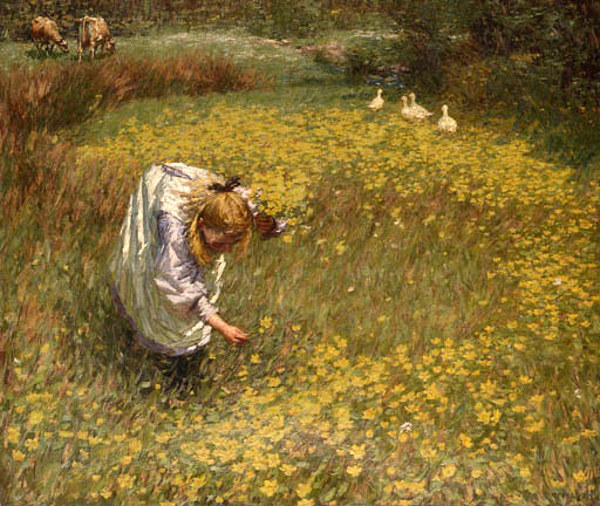
marsh-marigolds by Henry Herbert la Thangue (1859 - 1929)

John Keats – Ode to Autumn:

Yoko Ono

Spring passes and one remembers one’s innocence.

Summer passes and one remembers one’s exuberance.

Autumn passes and one remembers one’s reverence.

Winter passes and one remembers one’s perseverance.

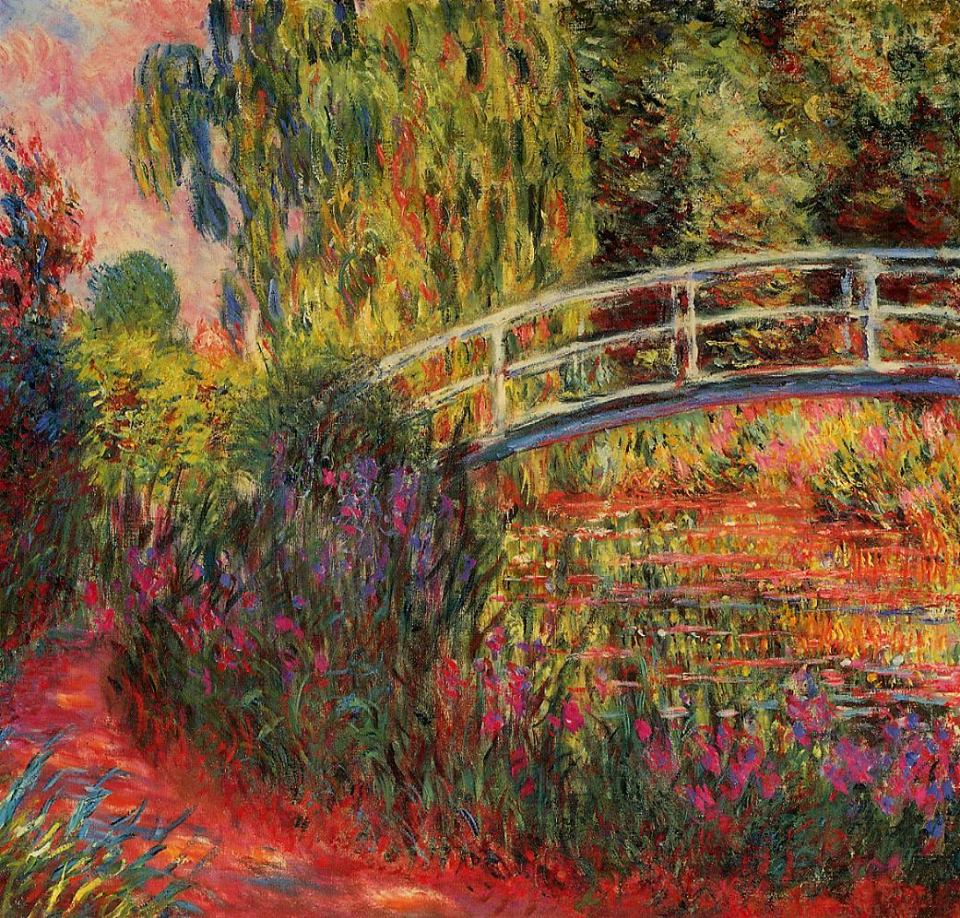
Monet - Japanese Bridge in Autumn

“No spring nor summer beauty hath such grace as I have seen in one autumnal face.” ~ John Donne

Elegy IX: The Autumnal 

Dante Gabriel Rossetti – Autumn Song:

 “That time of year thou mayst in me behold” (Sonnet 73)  by William Shakespeare

That time of year thou mayst in me behold

When yellow leaves, or none, or few, do hang

Upon those boughs which shake against the cold,

Bare ruined choirs, where late the sweet birds sang.

In me thou see’st the twilight of such day

As after sunset fadeth in the west;

Which by and by black night doth take away,

Death’s second self, that seals up all in rest.

In me thou see’st the glowing of such fire,

That on the ashes of his youth doth lie,

As the deathbed whereon it must expire,

Consumed with that which it was nourished by.

This thou perceiv’st, which makes thy love more strong,

To love that well which thou must leave ere long.

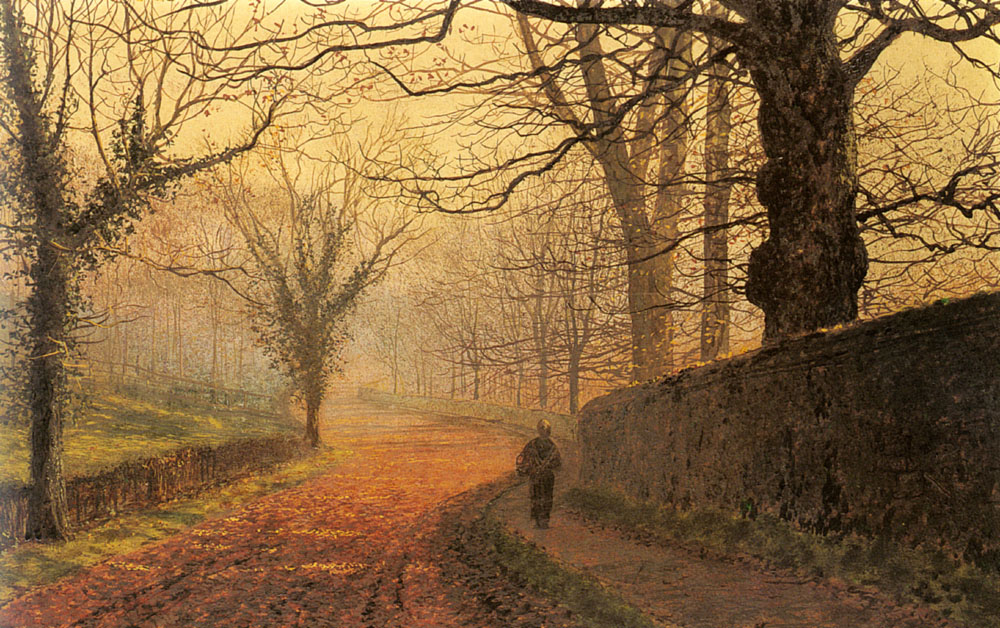
John Atkinson Grimshaw - november-afternoon-stapleton-park

William Blake – To Autumn:

 Charles Baudelaire – Chant d’Automne

I

Soon we shall plunge into the cold darkness;

Farewell, vivid brightness of our short-lived summers!

Already I hear the dismal sound of firewood

Falling with a clatter on the courtyard pavements.


All winter will possess my being: wrath,

Hate, horror, shivering, hard, forced labor,

And, like the sun in his polar Hades,

My heart will be no more than a frozen red block.


All atremble I listen to each falling log;

The building of a scaffold has no duller sound.

My spirit resembles the tower which crumbles

Under the tireless blows of the battering ram.


It seems to me, lulled by these monotonous shocks,

That somewhere they’re nailing a coffin, in great haste.

For whom? — Yesterday was summer; here is autumn

That mysterious noise sounds like a departure.

II

I love the greenish light of your long eyes,

Sweet beauty, but today all to me is bitter;

Nothing, neither your love, your boudoir, nor your hearth

Is worth as much as the sunlight on the sea.


Yet, love me, tender heart! be a mother,

Even to an ingrate, even to a scapegrace;

Mistress or sister, be the fleeting sweetness

Of a gorgeous autumn or of a setting sun.


Short task! The tomb awaits; it is avid!

Ah! let me, with my head bowed on your knees,

Taste the sweet, yellow rays of the end of autumn,

While I mourn for the white, torrid summer!

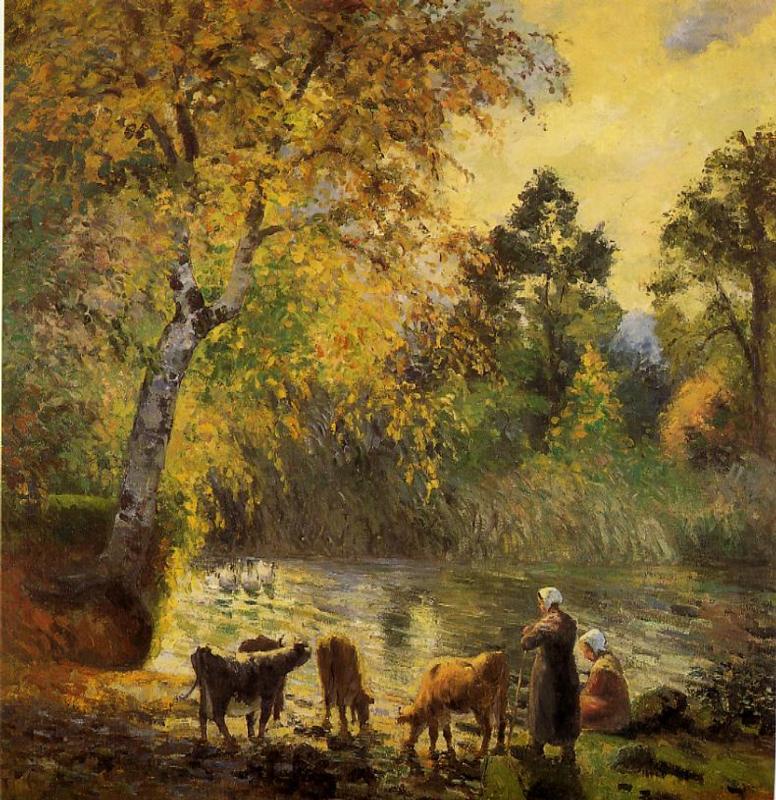
autumn-montfoucault-pond-1875 Camille Pissarro

Miles Davis – Autumn Leaves:

The brilliant baroque concerto from Antonio Vivaldi with Julia Fischer and the Academy of St. Martin In The Fields:

I’ll leave you with this poignant performance of Tchaikovsky – The Seasons ‘October’ Vladimir Tropp on Piano:


 “I would rather sit on a pumpkin, and have it all to myself, than be crowded on a velvet cushion.” ~ Henry David Thoreau

The Muses of Music – Composers and the Works Inspired by Literary Greats

The legendary words of Marcus Aurelius most definitely apply to the arts. “What we do now echoes on to eternity.”

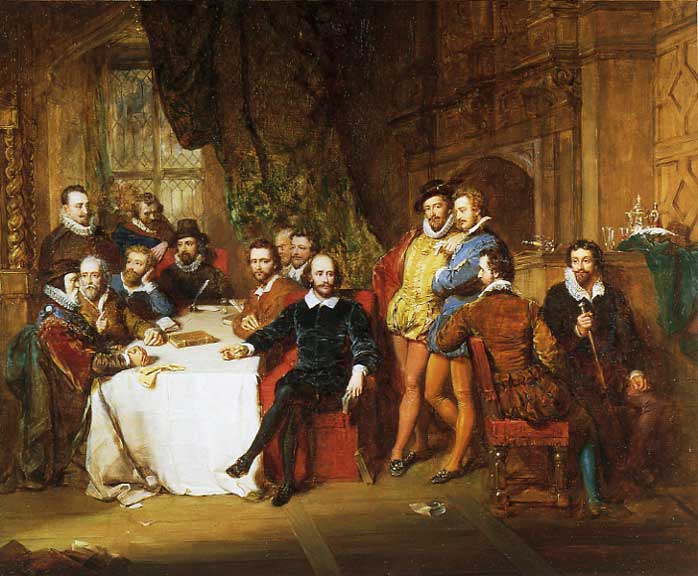
John Faed - Shakespeare and his contemporaries 1851

John Faed – Shakespeare and his contemporaries 1851

It’s only natural that the early composers served as inspiration for the musical creators that followed, but in this post I thought I would explore the rich cultural legacy that poets, playwrights and literary greats have inspired in composers, choreographers and purveyors of the arts. Of course, writers haven’t just provided mythical fodder for music, they have also been prolific in the imaginations of artists and painters through the ages in the world of art. However, today I’m going to stick to music.

I’ll be exploring opera, ballet and instrumental works. There are a range of writers who have provided creative juice to our musical geniuses, but Shakespeare due to his incredible literary legacy, features more than most.  There are ‘Bardolaters’ aplenty to investigate!

As opera is musical storytelling it is the perfect medium for literary adaptations, and I believe it’s on the stage of the vocal arena where Shakespeare’s plays have become a most popular muse to composers and librettists of the last two hundred or so years.

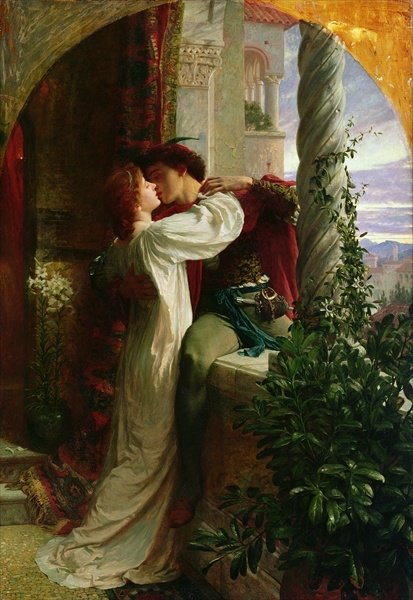
Dicksee - Romeo and Juliet on the balconyIn many ways, the music that came after the words has cemented the iconic status of certain plays in our hearts and minds, ensuring they remain at the forefront of popular culture, as the music transports us into these fictional worlds and helps us transpose them into our own lives.

Perhaps Shakespeare was hinting at musical imitation when he penned the immortal phrase: If music be the food of love, play on…

The Italian operatic composers Gioachino Rossini and Guiseppe Verdi both wrote operas based on Othello, and here is an aria each from each composer:

Rossini – Otello ‘Assisa a pie d’un salice’ sung by Cecilia Bartoli as Desdemona:

Verdi – Otello ‘Willow Song’ with diva Maria Callas as Desdemona:

A powerful aria sung by Piero Cappuccilli from Verdi’s opera Macbeth ‘Perfidi! … Pietà rispetto amore’:

Prokofiev’s immortal ballet Romeo and Juliet was first performed in Brno in the Czech Republic on 30th December 1938, but was then revised and shown again at the Kirov Ballet in January 1940. Since then it has become a firm favourite in both ballet and instrumental repertoire with choreographers such as Frederick Ashton, Sir Kenneth Macmillan, Rudolf Nureyev, Yuri Grigorovich and Peter Martins amongst others, who all had their own stylistic take on this most tragic and classic of love stories. Prokofiev also arranged his ballet music for solo piano.

Montagues and Capulets (also known as Dance of the Knights) Act I, Scene II:

Sticking with Romeo and Juliet I couldn’t leave out Tchaikovsky’s orchestral masterpiece, the ‘Fantasy Overture to Romeo and Juliet’. Here is Valery Gergiev and the London Symphony Orchestra with a wonderfully evocative performance that always pulls on my heart strings:

Tchaikvosky also wrote instrumental music for The Tempest and Hamlet. But it is the music of little known Thomas Linley the Younger (1756 – 1758) who was childhood friends with Mozart and later became known as the ‘English Mozart’ that I feel best encapsulates the theme of ‘The Tempest’.

Chamber orchestra Pratum Integrum and vocal ensemble Intrada perform “Arise! ye spirits of the storm” directed by Ekaterina Antonenko:

In the nineteenth century Felix Mendelssohn, a child prodigy, virtuosic pianist and violinist, turned composer and conductor, was inspired by Shakespeare’s Midsummer Night’s Dream and wrote the overture at the age of 17 in 1826, followed by the incidental music for the play in 1842.

Kurt Masur and the Gewandhausorchester Leipzig do a great job of bringing this spritely comedy to life!

Romanticism:

“Romanticism is the art of presenting to people the literary works which …can afford them the greatest pleasure. Classicism presents them with works which gave the greatest possible pleasure to their great-grand parents.” ~ Stendhal

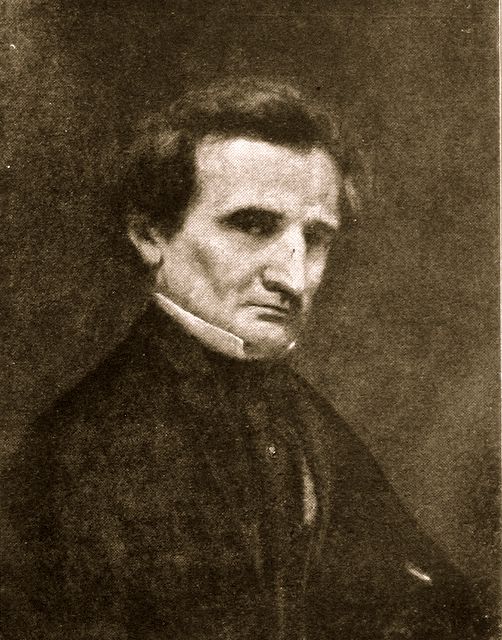
Hector_Berlioz by Gustave CourbetBorn into the world just before Napoleon was crowned Emperor , the French composer Hector Berlioz grew up with a love of literature, and was greatly inspired by the works of Virgil,  Shakespeare, Goethe, Byron, Thomas Moore, Sir Walter Scott and French poet Theophile Gautier. His musical God was Beethoven, (which is hardly surprising as Beethoven was the catalyst for the Romantic era of music), with his non-conformist and rebellious nature that dared to breach the traditional classical rules about structure and content; his passion for the notions of freedom and brotherhood, and above all else for his art, no matter what was deemed popular and the ‘done thing’ at the time. With such a combination of dramatic and artistic love it’s no wonder Berlioz wrote many works inspired by the Bard and the Romantics!

Dispensing with a career in medicine he focused on his music, and as an incomparable romantic he wrote the choral symphony Roméo et Juliette, after seeing Harriet Smithson star as Ophelia when a London Theatre Company was performing Hamlet in Paris. The cream of the Paris literati were also in the audience that night; Victor Hugo, Alfred de Vigny, Alfred de Musset and the painter Delacroix.

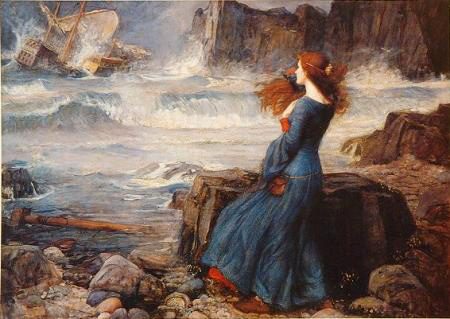
JW Waterhouse - Shakespeare - Miranda-The TempestThis music was followed with an Overture to King Lear, and also to the Tempest, which, as legend would have it, on the night of the performance in Paris the worst storm for fifty years was unleashing its wrath over the city and hardly anyone ventured out. Franz Liszt did attend however, and was later to transcribe his Symphonie Fantastique for the piano. The two became great friends.

Here is an excerpt from his last work, the comic opera Béatrice & Bénédict, loosely based on Shakespeare’s comedy ‘Much Ado About Nothing’ the aria ‘Nuit paisible’:

Debussy had a thing about gothic writer Edgar Allan Poe, Wagner’s operatic output is steeped in mythical legend, and composer and piano virtuoso, Franz Liszt wrote the ‘Dante Symphony’ and we can also thank him for creating a new art form: the symphonic poem. Here is his dramatic ‘Hamlet’ with Bernard Haitink and the LPO:

Generations of composers have written work from Shakespeare, I’d love to include their music but there’s only so much room! Worthy of mention are Henry Purcell, Shostakovich, Smetana, Sibelius, Poulenc, Debussy, Elgar, von Weber Ambroise Thomas, William Walton and Ralph Vaughan Williams.

The English poet and writer John Milton who was himself a keen musician and composer, inspired composers such as Joseph Haydn, who’s oratorio ‘The Creation’ (with the libretto by Baron van Swieten), was based on his epic poem Paradise Lost, and an opera was written on it by Polish composer Krzysztof Penderecki. More recently contemporary composer Eric Whitacre wrote an ‘Electronica Opera’ entitled Paradise Lost: Shadows and Wings inspired by Milton’s text.

A section of Miguel de Cervantes’ timeless chivalric novel ‘Don Quixote’ has been a firm favourite in the dance community, having been adapted and featured over the years as a ballet. The music was written by Ludwig Minkus with the original choreography by Marius Petipa, and it was first performed in 1869.

An excerpt from The Bolshoi Ballet with Maria Alexandrova & Mihail Lobuhin:

More recent literary works and novels have also been turned into ballets, such as the classic Alice In Wonderland by C.S. Lewis, The Sun Also Rises by Hemingway, As I Lay Dying by William Fualkner, Sophie’s Choice by William Styron, Heart of Darkness by Joseph Conrad and even Bram Stoker’s Dracula. Who would have thought that John Steinbeck’s iconic working class tale Of Mice and Men could be done? I wonder what George Orwell would have made of 1984 on the stage at Covent Garden in 2005, a much critically maligned production by the late maestro Lorin Maazel.

I think it is most fitting for me to end with Beethoven, the great titan of classical music composition, who served as inspiration himself for many musicians to follow, and who is still an icon of his art today. He wrote music to some of Goethe’s poems but my favourite of his Goethe inspired pieces will always be his eponymous overture for Count Egmont, with its themes of heroism, which was later adopted as the unofficial anthem of the 1956 Hungarian Revolution.

Herbert von Karajan and the Berlin Philharmoniker on top form:

“Music begins where words end.” ~ Richard Wagner

The Game of Life – Exploring Consciousness, the Playing Field of the Human Condition

I know it sounds obvious, but by virtue of our humanity we are all playing the game of life, whether we think about it or not, in astonishing energetic interactions of cosmic proportions.

There’s a word in Sanskrit: SAT-CHIT-ANANDA

SAT:  the absolute being, the essence that is pure, timeless and never changes.

CHIT:  the true consciousness

ANANDA:  joyfulness and pure bliss.

Earth_Eastern_HemisphereSo, by Eastern philosophy there is nothing that is outside of us, for we are one with the universe. Everything is connected. We are the one energy that’s everywhere and aware of itself, in a state of bliss.

Perhaps somewhere along the way you asked yourself: Who am I? Why am I here? What does existence mean to me? These are the fundamental questions that most people want answers to.

Religion has tried to give us the answers. Some have postulated the doctrine that we must be ‘good’. Do not sin and the kingdom of heaven shall be yours.  These rules that have been set out for us are rather black and white, with no room for grey. The aim of the game of black and white is that white must win. The game of life is one of duality, and seeming opposites.

We all need to eat, sleep, love, work, play, take care of ourselves and our loved ones, so we all play the game… It’s up to us if we are a pawn, a bishop, a knight, a rook, a queen or a king!

Black and white, joy and sorrow, right and wrong, good and evil. However, every coin has two sides. You can’t know one without the other, as each gives context to the other. In order to play the game we create these separations of the mind. We decide our preferences as we go. Ideally we find balance and equilibrium somewhere in the middle.

Traditional religion has rather set us up to fail, because it’s impossible for white to always win. We’ve already established that you must play the game, but you can’t win it in the indoctrinated sense.  Sadly, some play too hard and decide to opt out before their game is up.  ,

We are straddling two worlds. Jesus told us, ‘You are in the world, but not of the world.’

circle of lifeThat is the conundrum of the human condition. The nature of our physicality means we have to separate things and events, and draw the boundaries for what’s me and what isn’t me. Doing this however, puts us between a rock and a hard place, because the polarity only exists in our minds.

Buying and selling, giving and receiving, hot and cold, living and dying are all one thing. Bees and flowers are not separate. They are an eco-system that can only survive with each other. You could argue they also need the soil, worms, microbes, water and sunshine.

Physics calls the ‘one thing’ the Unified Field. Humanity could be compared to billions of water droplets from the same ocean. Individual: yet made from the same ingredients and from the same source.

Dividing things is helpful from the point of view that it enables us to go about our daily lives, stay safe, and make choices. The downside is that we risk becoming too separated and feel either alienated or in opposition from others. Social conventions magnify these perceived separations.

“Our entire biological system, the brain and the earth itself, work on the same frequencies.” ~ Nicola Tesla

Oneness-ReflectionIf someone asked you, how big is the sun? What would you say? ‘Well, it’s a massive burning ball of gas in the sky,’ or you might even go as far as to say, ‘it’s the extent of its light.’  Yet again, you could say, ‘Its beams of light are still travelling millions and millions of light years away.’

In reality there are no separate events. When did you begin? Was it with your conception, or your birth? Or did you come into being when your parents met, or perhaps when their parents met and all your ancestors going back to the dawn of time…? Maybe our souls have never not existed? We have our ideas about reality that are convenient for us, but in reality everything is one thing.

Lovely poem by Simon Welsh – The Zero Point Field:

You cannot know what it’s like to feel good without having felt bad and vice versa.  We can do things so we feel good more often than we don’t (and who wouldn’t want to if they are a conscious being), but to deny that bad exists and to resist it sets us up for frustration and anxiety. This is when we have to be aware of what kind of game we are playing and not play so hard. It’s a choice how hard we play, but our awareness self regulates us if we know where to direct it. Watch with awareness how you divide your world into ‘this’ and ‘that’.

To resist reality only causes more suffering.  I’ve been there, done that, and got the T-shirt on that one! To accept the full spectrum of what life immerses us in gives us the choice of how to react. If we are in sync with spiritual laws we will always feel that oneness that we pretend isn’t there. Have you ever had that complete and perfect feeling that you belong, that sense of connection with everything? However you are feeling right now is what oneness feels like. You can never-not be oneness. The whole spectrum of human emotion is how it feels.

To get past our minds which are conditioned to compartmentalise information is to get past resistance. Whoever wrote the script for Star Trek was a genius. “Resistance is futile.” Resisting life causes fear, anxiety, depression and alienation. Acceptance of ‘what is’ in the present moment is key.

mj-quote-swan-reflectionAttachments cause us suffering. But to be a human being means that we have attachments, (unless you are hermit). We all have attachments to people, to places, to things, to ideas. Life would be dull and boring without these attachments (I honestly don’t think we could live effectively without them), but the double-bind is that we must learn to relinquish them as and when the time comes. Whatever you love will change over time. That’s the root of our human condition. The question isn’t whether you are going to suffer, but how you deal with it.  There are times when we should all relax and play a softer version of our game.

From Harry Palmer’s book, Private Lessons:

“Adversarial games bring out the worst in human beings. Among successful adversarial traits are brutality, ruthlessness, deception, intolerance and exploitation. The resulting balance that adversaries create is more a wasteland of despair than fertile ground for life.

Inwardly the adversarial model is battle between desire and resistance, right and wrong, being a winner or a loser. The inner balance in an adversarial mind is stressful and unstable.

There must be a better way, and there is: Cooperation.

Let me offer you an ancient way of looking at opponents that does not lead to conflict. Think of opponents as depending upon each other. Instead of conflict, they complete each other. No up without down, no light without dark, no happiness without suffering… Everything has its season. When the competitive state of mind is honoured with trust and patience, it softens and comes to recognise the greater cycle of give and take.”

The brilliant author, journalist, researcher and lecturer Lynne McTaggart talks about the universe in an exceptional presentation that bridges science and spirituality at the LESA 2013 summit:

If we are not aware of the kind of game we are playing we react to situations by putting our stuff automatically either into the white pile or the black pile. When we are in the ‘witness mode’ we can observe how we create our personal game and adjust our strategy and the way we play accordingly.

Whilst we may have had to yield outwardly to worldly circumstance, we do not have to weaken inwardly.

“A Human being is a part of the whole called by us universe, a part limited in time and space. He experiences himself, his thoughts and feelings as something separated from the rest, a kind of optical delusion of his consciousness. This delusion is a kind of prison for us, restricting us to our personal desires and to affection for a few persons nearest to us. Our task must be to free ourselves from this prison by widening our circle of compassion to enhance all living creatures and the whole of nature in its beauty.” ~ Albert Einstein

You don’t need understanding to master the game of life. The only ingredient you need is awareness, which is our innate Self. May we all gain awareness of who we are behind the mask of mind.