You’re probably thinking that the topic of bridges doesn’t sound particularly exciting, but for some reason I have a fascination with them. I’m in awe of their designs and feats of engineering, (it’s one thing to draw some plans on paper and quite another to build one that spans miles of water or stretches over deep chasms and ravines. My mind wonders how they manage to stay put and remain firm and safe under continual assault from the elements and with multitudes of people and cars crossing them.
There are so many iconic bridges I’d love to cross. Up there would be the Golden Gate Bridge, the Capilano Suspension Bridge in Vancouver, The Seven Mile Bridge spanning the Florida Keys, the Oresund Bridge from Denmark to Sweden, the historic Ponte Vecchio in Florence and the Millau Viaduct in Southern France. I hope I’d have the nerve to go to the edge of the Stairway to nothingness at the Dachstein Glacier Resort in Austria.
The Sydney Harbour Bridge and the Brooklyn Bridge both offer stunning city views, but a bridge doesn’t have to be epic to be brilliant in my book.
I found the Rialto and the Bridge of Sighs in Venice very sweet and romantic. I even love the little Hertford Bridge, similar to, but much smaller than the Rialto, which joins two parts of Hertford College over New College Lane in Oxford. Needless to say I absolutely loved the Charles Bridge in Prague! I always think of the opening scene of Mission Impossible. It’s dark, eerie and shrouded in mist, and well, you know, the agents all get bumped off except Ethan…
If you feel that way inclined you can do a bridge climb over the Sydney Harbour Bridge:
These two guys must be off their rockers! The Russky Bridge Vladivostok:
One for all you adrenaline junkies! 25 Scary Bridges:
That’s all very well you may say, Ginny, but what about the two bridges? Well, I’m getting there. Who would have guessed that Buckinghamshire and Budapest would share a close link?
Let’s bridge the gap!
The Chain Bridge in Budapest is both massive and elegant. Straddling the Danube, it joins Pest to the ancient Buda side of the city, topped by its lofty and imposing castle that looks down over the sparkling capital. I had a great couple of days working in the city inspecting hotels that were contracted for the Hungarian Grand Prix. I remember the historical Gresham Palace (facing the Chain Bridge on the Pest side) was being renovated ready to house what is now the luxurious Four Seasons Hotel.
Around fifteen years after that trip whilst doing some research for my novel, The Virtuoso, I discovered the link between the two places. I’ve been going to Marlow for many years, but because I didn’t delve into its history until recently, I’ve only just made the connection.
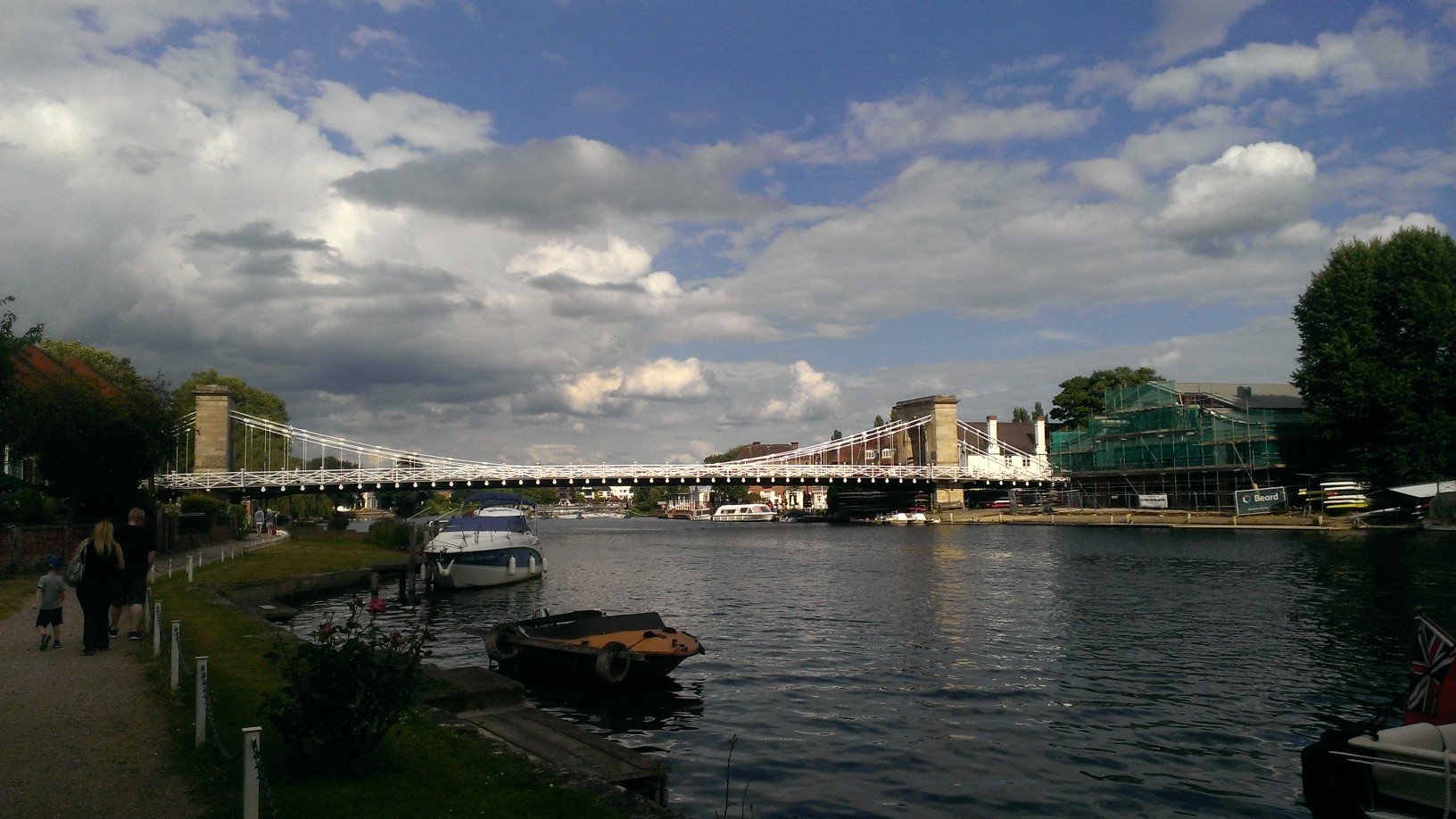
Marlow is a local and picturesque market town on the banks of the River Thames in South Buckinghamshire. It has a pretty white suspension bridge that spans the Thames, linking Marlow to the village of Bisham in Berkshire. Just on the other side of the bridge from the town end nestles the famous Compleat Angler Hotel.
Marlow is famous for its annual summer regattas, and was also home to Percy Bysshe Shelley and Mary Shelley, who moved into West Street in 1816. The writer and poet T.S. Eliot was also a resident of West Street during the First World War. It is also rumoured that Henry VIII courted Jane Seymour on the land where the Georgian House stands, known as Court Garden, which also has a bronze statue on its lawn erected to our most successful Olympian, the five times Gold medal winner – rower Sir Steve Redgrave..
Low and behold it turns out that the Marlow Suspension Bridge, built between 1829 and 1832 and the Széchenyi Chain Bridge in Budapest (completed in 1849) are almost identical, except in scale. They were both designed by the same Victorian era English civil engineer – William Tierney Clark.
The Marlow Bridge was the smaller prototype that preceded its larger sibling in Hungary, built to replace a wooden bridge further downstream, which had collapsed in 1828.
Construction in Budapest was supervised by the Scotsman Adam Clark. At the time of its completion in 1849 the Chain Bridge was the first permanent bridge to span the Danube in Hungary and one of the largest of its kind in the world.
A plaque on the Pest side of the river reads “To commemorate the only two surviving bridges designed by William Tierney Clark: The Széchenyi Chain Bridge over the Danube at Budapest and the suspension bridge over the Thames at Marlow, England.” A similar plaque has been placed on the Marlow Suspension Bridge, photographed here, if you can read it!
Tierney was among the earliest designers of suspension bridges, and his first bridge was the Hammersmith Suspension Bridge in London, which opened in 1827. This bridge has since been replaced by a later one designed by Sir Joseph Bazalgette. I have spent many traffic jams driving home from London on that particular bridge…
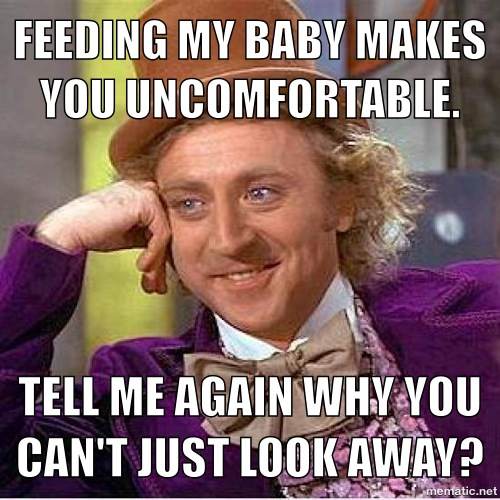
Recent controversy over mothers breastfeeding in public in certain US states has brought the #FreeTheNipple movement to my attention . It’s about time…
Everybody’s Gotta Eat:
It made me reflect on my own experiences with nursing my four babies. There is much science to back-up the health benefits to mother and child of breastfeeding one’s infant – I won’t go into that here. Suffice to say, my choice was to do the best I could to nourish my little ones. I’m not judgemental about mothers who don’t, or who have problems trying, each of has our own unique experiences and circumstances. But what I do find hard to stomach is the intolerance of others towards mothers who are committed to the long term health of their children. That, to me, is unacceptable. Nursing mothers should be protected by law.
To effectively be a prisoner in your own home because you are fearful of what others might think is a sad state of affairs. I remember I didn’t venture out after the birth of my first son until I was ultra-confident and we had established a comfortable routine of feeding. Even then I tried to avoid lactating in public. But hey, you have to buy food and other provisions, visit other new mums and attend social engagements, so at some point it has to be done when you’re out and about.
I’ve had to endure sneaky feeds in the car, in the toilet, at the back of restaurants, in friend’s homes etc. When I had my second son I was more self-assured about feeding, but despite our success at it, and the beautiful bond I had formed with him, I only managed to breastfeed him for 3 months because I had to return to work and it was just too difficult to be expressing milk in an office environment. I couldn’t get on with it at home, let alone anywhere else. Some of my mates would fill whole bottles, compared to my measly few ounces. Somehow the attachment of a machine made me feel a bit too much like Gertrude to really ‘let go’. I had a real guilt complex about that for ages. Luckily Wills seems none the worse for the fact that he was fed for the shortest amount of time of all my offspring.
I remember going to a wedding reception when Wills was only about a month old, and he was voraciously hungry all the time. My let down reflex was so powerful that I didn’t even need to be in the same room with him, I would just leak milk when that strong tingling feeling came over me. It’s time for a feed. I only had to get caught out once to invest in a ton of breast pads.
None of us are blatant exhibitionists who can’t wait to show of our new, non-surgically enlarged mammaries: we just have a biological need to feed our babies when they need feeding. There’s nothing more stressful than being in the middle of a food shop only to have your wee bairn exercise his lungs to the extent that the whole store has to cover their ears. It’s very distressing. There’s nothing more natural and easy than being able to attach them to your body, which doesn’t need sterilising or heating to the perfect temperature and has all the exact nutrients your baby needs.
Given the choice many of us would rather feed in private. I would even retreat to the bedroom in my own home if we had visitors, but sometimes it’s unavoidable in public. It’s important for mums to retain some semblance of a normal life, other than being purely a feeding and nappy changing machine in those early months. When I had my girls I used to love going to John Lewis because they had designated comfortable feeding areas that were not a toilet. If only all major retailers had the same ethos and caring attitude towards their customers.
There has been so much education for new mums, and many midwives will help you to get the technique right so that you don’t feel like your nipple has been plugged into the national grid. There are breastfeeding clinics and organisations such as the NCT that do wonderful work all-round for mothers.
Reading about some of the negative experiences of other lactating mums I feel the education really needs to be aimed at the general public. I think most people are tolerant if the mother is fairly discreet in the UK, and companies like Mamaway and Jojo Maman Bebe do stylish nursing tops that make it easier to feed with minimal flesh exposure. But looking to the US, I do feel they are un-necessarily prudish in their outlook. If a woman happens to flash a nipple while trying to get her baby to latch on (and sometimes, if they are really agitated it can take a few goes to get them on right, even for a seasoned pro), to then be liable for arrest because she is ‘exposing’ herself is just beyond the pale. It’s a ticking time bomb. If mums feel isolated and unwelcome in society in those early months that’s another reason not to breastfeed. A generation down the line there could be all sorts of health issues. Attitudes need to change – fast.
Why should keeping a helpless baby alive stimulate so much prejudice, annoyance and downright scorn?
There is something inherently sick in a society where violent films rake in millions at the box office, where graphic scenes of murder and killing are celebrated, but the sight of a mother doing the right thing by feeding her baby who is in need of sustenance can cause offence. Perhaps the mothers of those individuals should not have bothered with them!
Many first time mums are coping with either some, or all of these symptoms: sore bodies, sore nipples, lack of sleep, lack of confidence, post natal depression, loss of freedom, fear about their abilities as a mother…
The last thing they need is to suffer the accusing stares of ignorant people, and worse, the interruption of a feed by someone asking her to stop or leave when her baby is latched on.
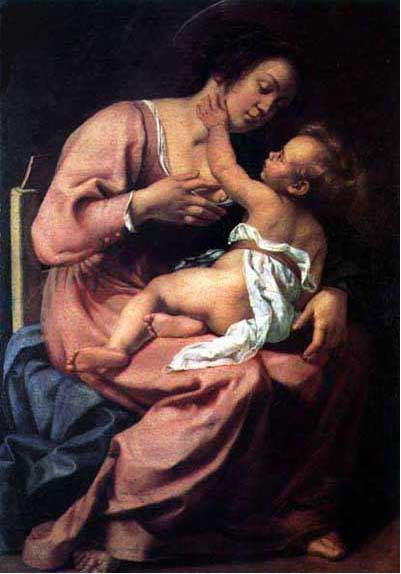
Artemisia Gentileschi – Madonna and baby Jesus (1609)
Breastfeeding has been celebrated in classical, Baroque and Renaissance art, with beautiful paintings from the likes of Peter Paul Rubens, Giovanni Bottrafaffio, Botticelli, Joos Van Cleve, Leonardo da Vinci and Artemisia Gentileschi to more recent artists such as Jean-Baptiste Greuze, Paul Cezanne, Camille Cortot and Mary Cassatt.
Here is a link to a blog on the Facebook issue (but also mentions the prolific amount of Renaissance art on the subject).
I’ve always said that mothers are the ultimate executives. Instead of raising profits we are raising humanity. Let us do that with some humanity! Don’t make us feel awkward or embarrassed about it. We come in for criticism about so many things, either for working too many hours, or for being a stay-at-home mum, or for not breastfeeding, and it is totally unfair. Juggling a career and raising children is challenging, and most of us feel we are not doing enough in either area. But I think the ‘having it all’ debate is worthy of a separate post.
Every woman must do what she thinks is best for her young one, and someone’s aversion to seeing her God-given assets being used in the manner that God intended – for the nurturing of her baby, is just not her problem!
I applaud The Guardian for this article written a year ago.
It’s not all bad, some companies are forward thinking, I remember reading about a Japanese firm that allows its new mum employees take their babies to work and feed them on the premises. But that is the exception rather than the rule.
With diabetes, cancer, heart disease and other diseases on the rise and with the NHS and GP’s constantly under so much pressure, isn’t it a worthwhile goal to prevent illness?
You can’t beat a mother’s milk, hence my twisted take on Tina Turner – Simply the Breast!
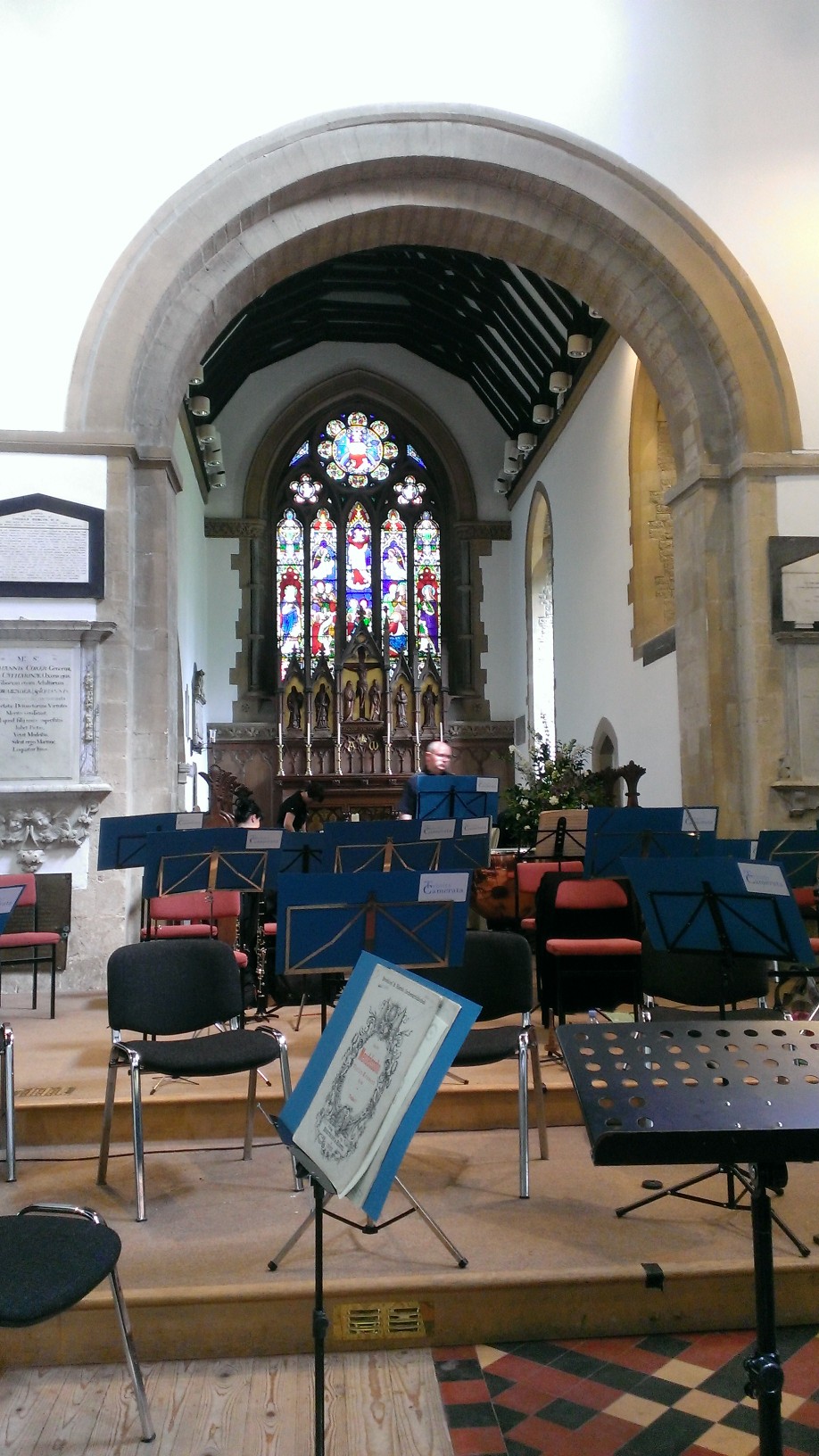
I went to a small scale church concert on Sunday at St. Edburg’s Church in Bicester with my aunt and my mother. It didn’t take long to persuade me as Mozart, Mendelssohn and Beethoven were on the programme.
The amateur music ensemble Trinity Camerata (conducted by Sam Laughton) gave a wonderful opening to the afternoon with the Overture to Don Giovanni. The conductor (who was very eloquent), gave us all a preamble about each piece, which was really interesting and added to our understanding and enjoyment of the music. It’s the sort of ensemble I’d like to join when I’ve taken my Grade 8 and have more time to practise.
The highlight of the afternoon was being just a few feet away from the guest soloist, Adelia Myslov, the young virtuoso who performed the popular Mendelssohn Violin Concerto in E minor.
Here is my favourite vintage recording of the work with Yehudi Menuhin, the Berlin Philharmonic and Wilhelm Furtwängler:
All I can say is wow, this diminutive Russian really packs a powerful punch with her violin. To say her performance blew me away is an understatement. As far as I could tell with my limited understanding of music her performance was pretty flawless. Not just technically, but stylistically, musically and emotionally. She had her eyes closed for most of it, and the feelings of the music were etched on her expressions, and then translated into the sound from her gifted Lorenzo Storioni violin.
She’s fabulously talented, and I sat in awe at her prowess on the violin. Her double-stopping was so clean, the rapid arpeggios seemed effortless, combined with incredible bow control, and impeccable intonation. She produced the sweetest top notes. The cadenza was truly virtuosic. The acoustics of the church were fantastic, and her pure tone sang out the lyrical melancholy tones of the opening movement with such poignancy that my eyes became leaky…
I have no doubt that she will make it onto the world stage. She deserves to be as well-known as the likes of Hilary Hahn, Julia Fischer, Nicola Benedetti, Janine Jansen, Anne-Sophie Mutter and Vanessa Mae. She will win many hearts and over time, a huge fan base.
Originally from St. Petersburg her family moved to the UK where she attended the Yehudi Menuhin School and Purcell School of Music. Her website charts her musical achievements: http://www.adeliamyslov.co.uk/
I found this clip from her acclaimed recital series ‘Mortal Man; Immortal Dreams’ with pianist Craig White.
When she is famous I’ll be able to look back and say I had the pleasure of seeing her perform in an old church in Oxfordshire.
The concert was rounded off with Beethoven’s jolly and exuberant 8th Symphony, that he affectionately nicknamed his “little one” in F Major. Whilst not every note or nuance was perfect the Trinity Camerata certainly put in a competent performance and captured the Master’s impish and ebullient mood throughout his happiest symphony!
I’m aware this post is a bit on the long side, (I hope you’ll stick with me), mainly because the subject matter is quite in-depth. I opted for a slightly meatier article as I didn’t want to just pay lip service to a profession that requires huge amounts of skill and dedication.
Certain conductors are just as famous and revered in their own right as the soloists and orchestras they wave their batons at; with reputations alone that can fill a concert hall. Here are the cream of the crop listed by surname, both past and present, across the alphabet:
Classical music fans tend to have their preferences. For some it’s their interpretation of a particular work, and for others, nothing less than hero worship. Leopold Stokowski was known for his innovative orchestral arrangements; and his enduring performance in Fantasia for Disney, which brought classical music to a whole decade of youngsters and continues to do so to this day.
Documentary – Stokowski at 88:
Leonard Bernstein’s talks on music educated a swathe of music lovers into understanding the master composers, along with his legendary teaching abilities.
Daniel Barenboim and his close friend, the late Palestinian-American academic Edward Said, jointly created the ground-breaking West-Eastern Divan Orchestra in 1999. WEDO is a youth orchestra made up of musicians from the Midde East, namely Egypt, Iran, Israel, Jordan, Lebanon, Palestine, Syria and Spain, being based in Seville. They are an example to us all through their unity and their music. I saw them perform Beethoven’s 5th and 6th symphonies at the Royal Albert Hall for the 2012 BBC Proms. It was magical!
In Barenboim’s own words:
“The Divan is not a love story, and it is not a peace story. It has very flatteringly been described as a project for peace. It isn’t. It’s not going to bring peace, whether you play well or not so well. The Divan was conceived as a project against ignorance. A project against the fact that it is absolutely essential for people to get to know the other, to understand what the other thinks and feels, without necessarily agreeing with it. I’m not trying to convert the Arab members of the Divan to the Israeli point of view, and [I’m] not trying to convince the Israelis to the Arab point of view. But I want to – and unfortunately I am alone in this now that Edward died a few years ago – …create a platform where the two sides can disagree and not resort to knives.”
Herbert von Karajan, principle conductor of the Berlin Philharmonic Orchestra for 35 years, was just epic in every sense of the word… But not loved by all: Save us from the resurrection of that old devil
Composer/conductor Jean-Baptise Lully (1632 – 1687) goes down in history as the only conductor to be mortally wounded in the pursuit of his craft. Death by baton occurred when Lully staked himself in the foot with his long conducting staff during a performance of his Te Deum to mark Louis XIV’s recovery from surgery. The wound became infected, but Lully refused amputation and died of gangrene two months later.
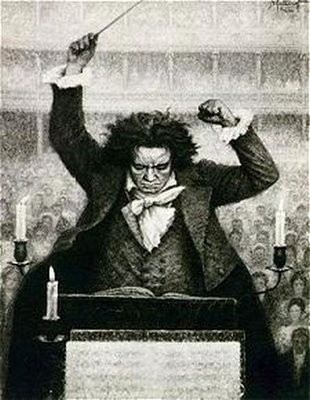
They all had, and have, their special attributes, their individual quirks, that players and listeners either love or loathe. But regardless of their personalities (which do in part help to cement their reputations), it’s their innate skill to understand the music and bring out the best in their ensembles and orchestras that fascinates us as much as their ferocious expressions when a beat was missed or a note played out of tune.
Documentary – The Art of Conducting – Legendary Conductors of a Golden Era:
Over the years they have been sent up as bumbling idiots presiding over a rabble of musicians… Rowan Atkinson conducting Beethoven never fails to amuse!
In the third chapter of my novel, The Virtuoso, I briefly explore the role of the conductor from the protagonist’s view point (after all, she is married to one!) In my story he is a little unhinged, so I’m making un-reserved apologies now to all conductors: I’m not saying you are all egomaniacs like the character Howard Miller, who is derived solely from my imagination!
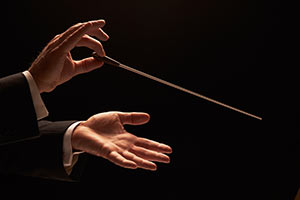
Throughout the evening Isabelle observed Howard intently. She had never really seen him in action before, as their schedules hadn’t been conducive to joint collaborations. It was one of the few times his normally furrowed face was free of lines, and just animated. He waved the baton rhythmically, first low by his waist when the music came to a quiet section, and then as the tension built and it came to a crescendo he was more forcible; also using his left arm, raising it, and sometimes shaking it slightly to indicate to the strings that he wanted more volume or intensity. It was certainly a skill that she greatly admired. No matter how good the individual players in an orchestra were, the resulting experience of the audience was also impacted largely by the role of the conductor. He was the sculptor shaping and carving the flow of time and the form of the music, living and breathing the notes with his orchestra. But it was a skill that involved so much more than beating out time. Part of his job was to embody the character of the music, as well as to deeply understand the tempo and phraseology of the work, and how the abilities and ranges of his musicians and their instruments could express the essence of the music in each moment.
It was a delicate eco-system she mused: the conductor could have all the mechanics and knowledge at his disposal but without the attribute of being able to physically communicate his feelings evoked by the music to his players, through his meaningful actions of the baton, his arms, his hands, his fingers, eyes and the gestures of his personality, and have them respond accordingly, it would not elevate them all as group to an exalted performance. Most conductors were also proficient or virtuosic on an instrument themselves. These were the attributes that were needed to be a really great conductor.
She had been impressed to learn that Howard could listen to a score as he looked at it, hearing the printed notes in his head before a single note had been played. She knew he was fastidious about preparation and could anticipate where his musicians might make mistakes during a performance. He had quoted Leonard Bernstein to her on one occasion. ‘Isabelle, conducting is like breathing; the preparation is the inhalation, and the music sounds as exhalation. I have to always be a breath ahead of them.’
What was it that set apart the big names from the ones who didn’t quite make it on to the world stage? The likes of Karajan, Barenboim and Bernstein who had achieved their iconic status had an intangible magic about their relationships with their respective orchestras. She wasn’t sure if Howard shared their passion, he seemed to exhibit more of a cold ambition.
Respect on both sides was essential, but it had to be more than that. It had to be total commitment. Love for the music created an energy that brought it to life for the audience.
Interestingly, The Academy of St. Martin in the Fields (named after the eponymous London church where they are based) was created by Sir Neville Marriner in 1959 as a small string ensemble that would perform minus a conductor, but has since evolved to a larger group now with a conductor.
Mendelssohn founded the first tradition of modern conducting based on the concept of precision by using a baton about 150 years ago.
Big Think gives us food for thought:
Maestro we need you!
Co-ordination especially larger orchestras
Understanding complex music
Efficiency
Preparation & Interpretation
Perception of the inner meanings of music
Powers of communication & inspiration
Knowledge of the cultural background of the composer & context of the work
Balance, dynamics, style & tempo
Sculptor of time, not just the beats but the form, the whole phraseology of the work
Intangibles – Conductor & orchestra bound together in the moment, creating a physical response in the listener.
London Symphony Orchestra conducting masterclass:
I love this eloquent extract from Leonard Bernstein as he describes a conductor’s role in his book, The Joy of Music:
“But the conductor must not only make his orchestra play; he must make them want to play. He must exalt them, lift them, start their adrenalin pouring, either through cajoling or demanding or raging. But however he does it, he must make the orchestra love the music as he loves it. It is not so much imposing his will on them like a dictator; it is more like projecting his feelings around him so that they reach the last man in the second violin section. And when this happens – when one hundred men share his feelings, exactly, simultaneously, responding as one to the rise and fall of the music, to each point of arrival and departure, to each little inner pulse- then there is a human identity of feeling that has no equal elsewhere. It is the closest thing I know to love itself. On the current of love the conductor can communicate at the deepest levels with his players, and ultimately with his audience. He may shout and rant and curse and insult his players at rehearsal- as some of our greatest conductors are famous for doing – but if there is this love, the conductor and his orchestra will remain knit together through it all and function as one.
Well, there is our ideal conductor. And perhaps the chief requirement of all is that he be humble before the composer; that he never interpose himself between the music and the audience; that all his efforts, however strenuous or glamorous, be made in the service of the composer’s meaning- the music itself, which, after all, is the whole reason for the conductor’s existence.”
In some cases the composer himself is the conductor. Nothing new there. But – when his composition skills outweigh his conducting skills and he can’t hear, that’s a brave undertaking indeed!
In conclusion, I am reminded of the words of the soprano Wilhemine Schroder-Devrient in 1822, recalling her experiences of singing the role of Leonore in a revived production of Beethoven’s Fidelio at the Kärntnertortheater in Vienna, with dear Ludwig himself conducting:
“At that time the Master’s physical ear was already deaf to all tone. With confusion written on his face, with more than earthly enthusiasm in his eye, swinging his baton to and fro with violent motions, he stood in the midst of the playing musicians and did not hear a single note! When he thought they should play piano, he almost crept under the conductor’s desk, and when he wanted a forte, he leaped high into the air with the strangest gestures, uttering the weirdest sounds. With each succeeding number we grew more intimidated, and I felt as though I were gazing at one of Hoffman’s fantastic figures which had popped up before me. It was unavoidable that the deaf Master should throw singers and orchestra into the greatest confusion and put them entirely off beat until none knew where they were at. Of all this, Beethoven was entirely unconscious, and thus with the utmost difficulty we concluded a rehearsal with which he seemed altogether content, for he laid down his baton with a happy smile.”
The image this passage conveys always brings a smile to my face.
‘It is a truth universally acknowledged, that a single man in possession of a good fortune, must be in want of a wife.’ This keen observation from Jane Austen is universally acknowledged as the brilliantly articulate opening line to the classic romantic novel Pride and Prejudice. It was first published in 1813, and over two hundred years later it remains one of the most popular novels ever written. I am no Jane Austen aficionado, but I do admire her greatly.
“Vanity and pride are different things, though the words are often used synonymously. A person may be proud without being vain. Pride relates more to our opinion of ourselves, vanity to what we would have others think of us.”
For all her wit and wisdom, her fertile imagination and her publishing success, especially during a time when women were considered soft furnishings in men’s establishments – Jane Austen had to endure her own personal heartbreak. If only she could have known how she would come to be so adored in every corner of the 21st century world, by those still blessed with a romantic heart and a thirst for understanding human foibles.
I ponder what it is about her writing that has made her such an icon of British literature. Certainly her prose is beautiful and her insights into affairs of the heart erudite. Her heroines are willful, passionate and intelligent (women after her own heart), and her settings are magnificent, and to a large extent from her own world. Love is in the air, but only after an interminable amount of suffering, heart ache and introspection on the part of her vividly drawn characters; before being fully realised and experienced as a happy ever after.
Her true story is both inspiring and tragic. However, we will return to reality a little later on.
The reason for my sudden Austen mania is that I’ve just watched ‘Austenland’ on Sky Movies. It was released in 2013, and filmed entirely on location at the Dashwood Estate, West Wycombe Park – only five minutes from my house. I ask myself, how could I not know this was happening? I would have been down there like a shot, gate crashing the crew.
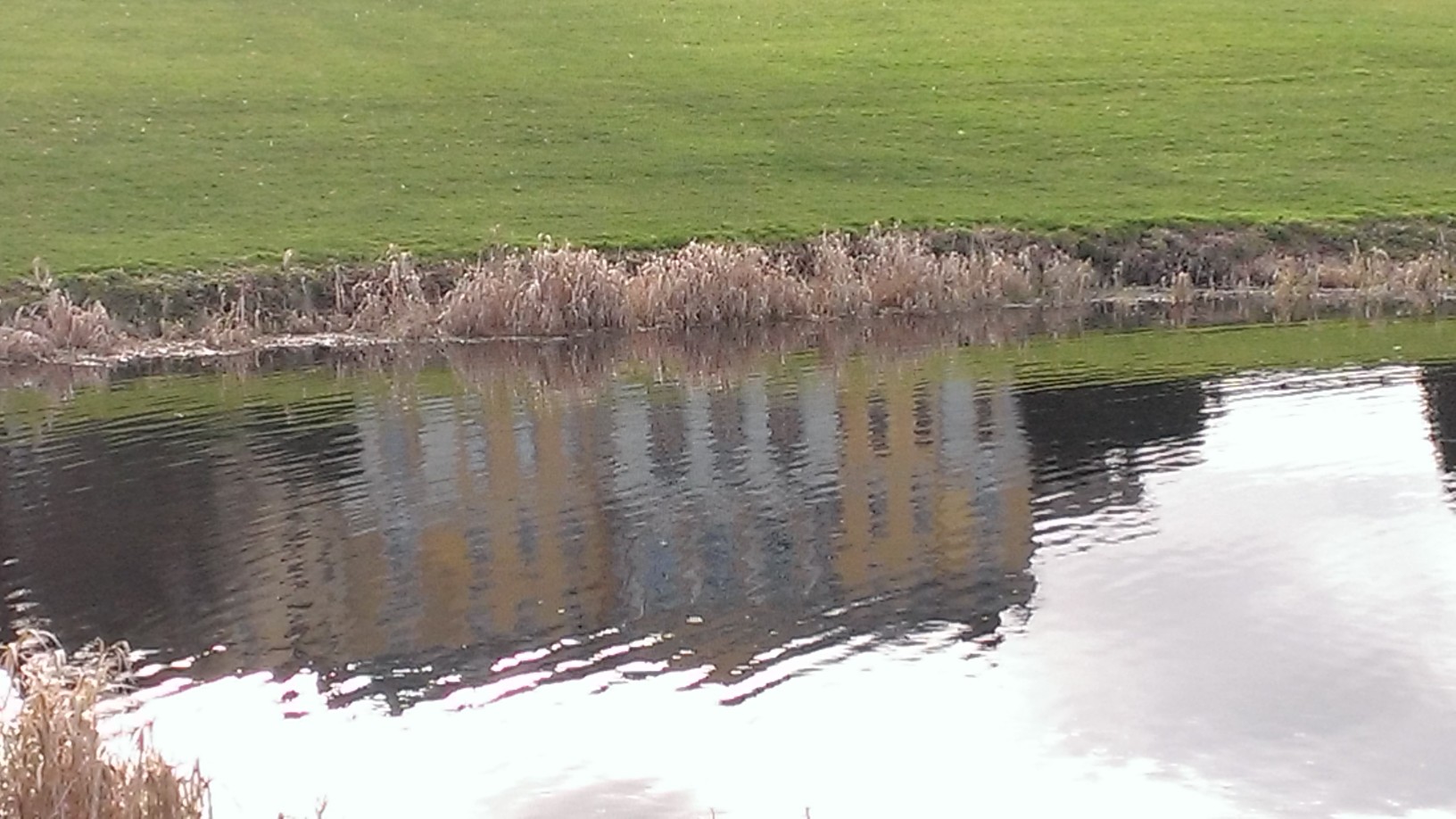
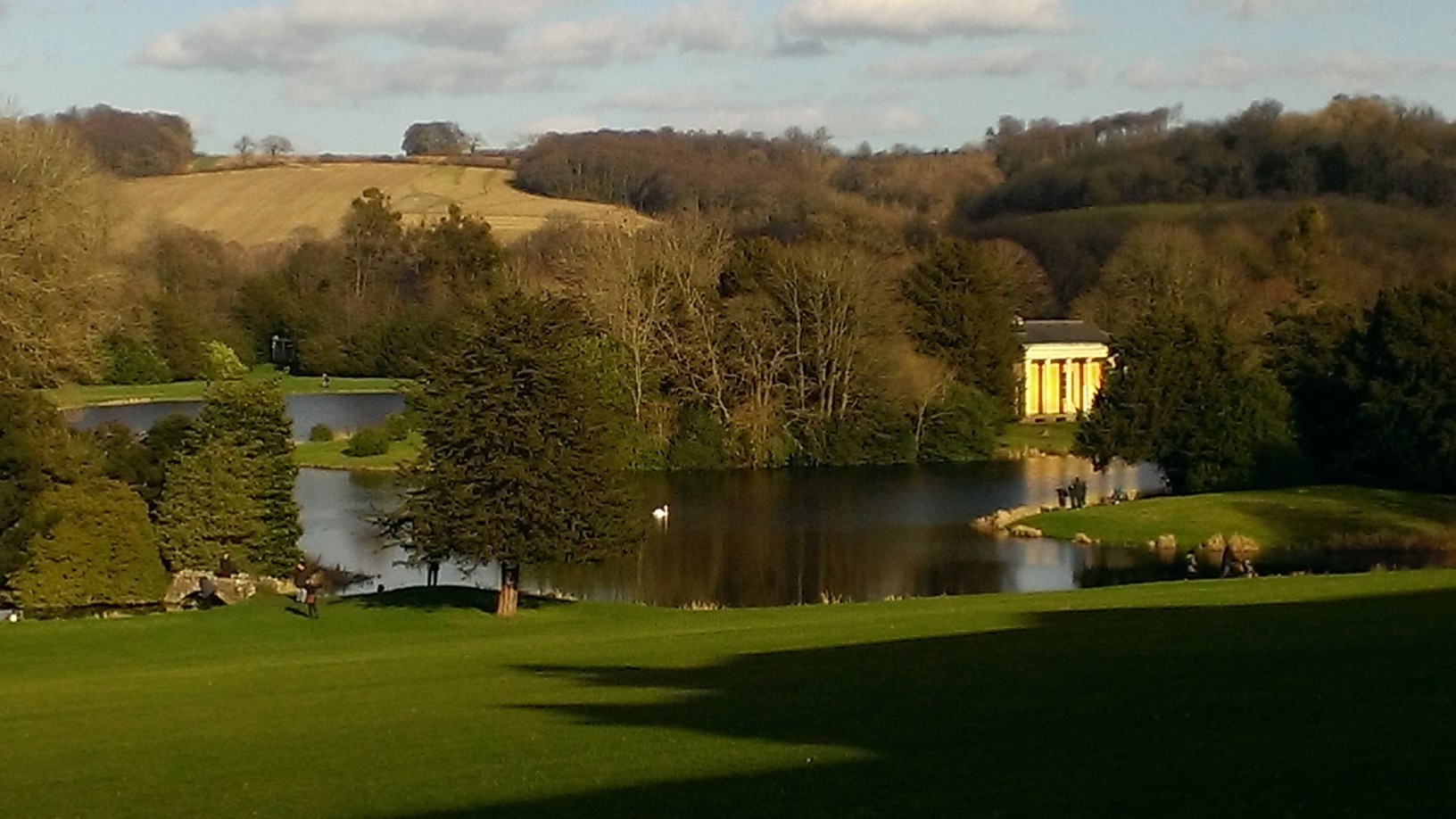
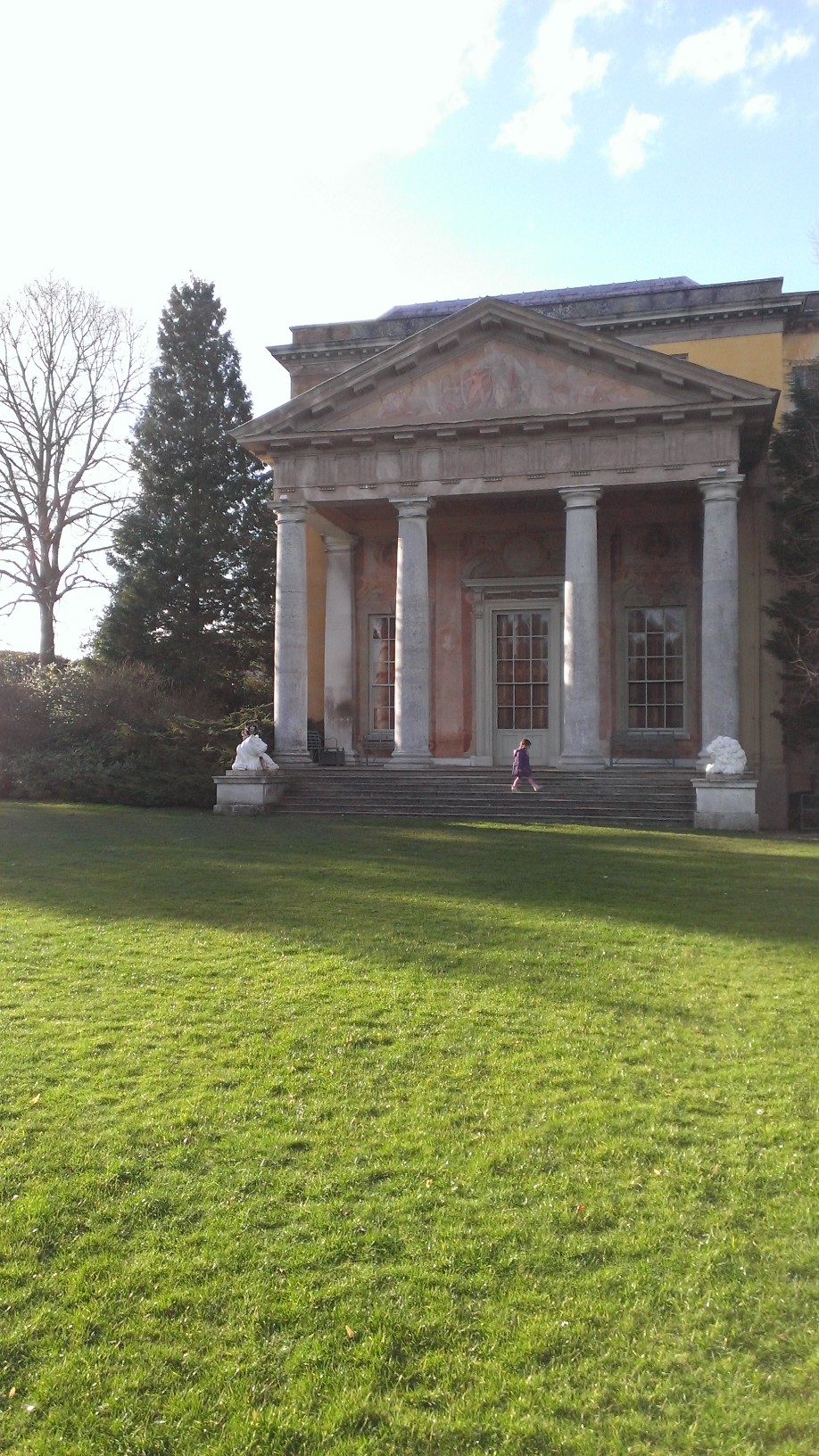
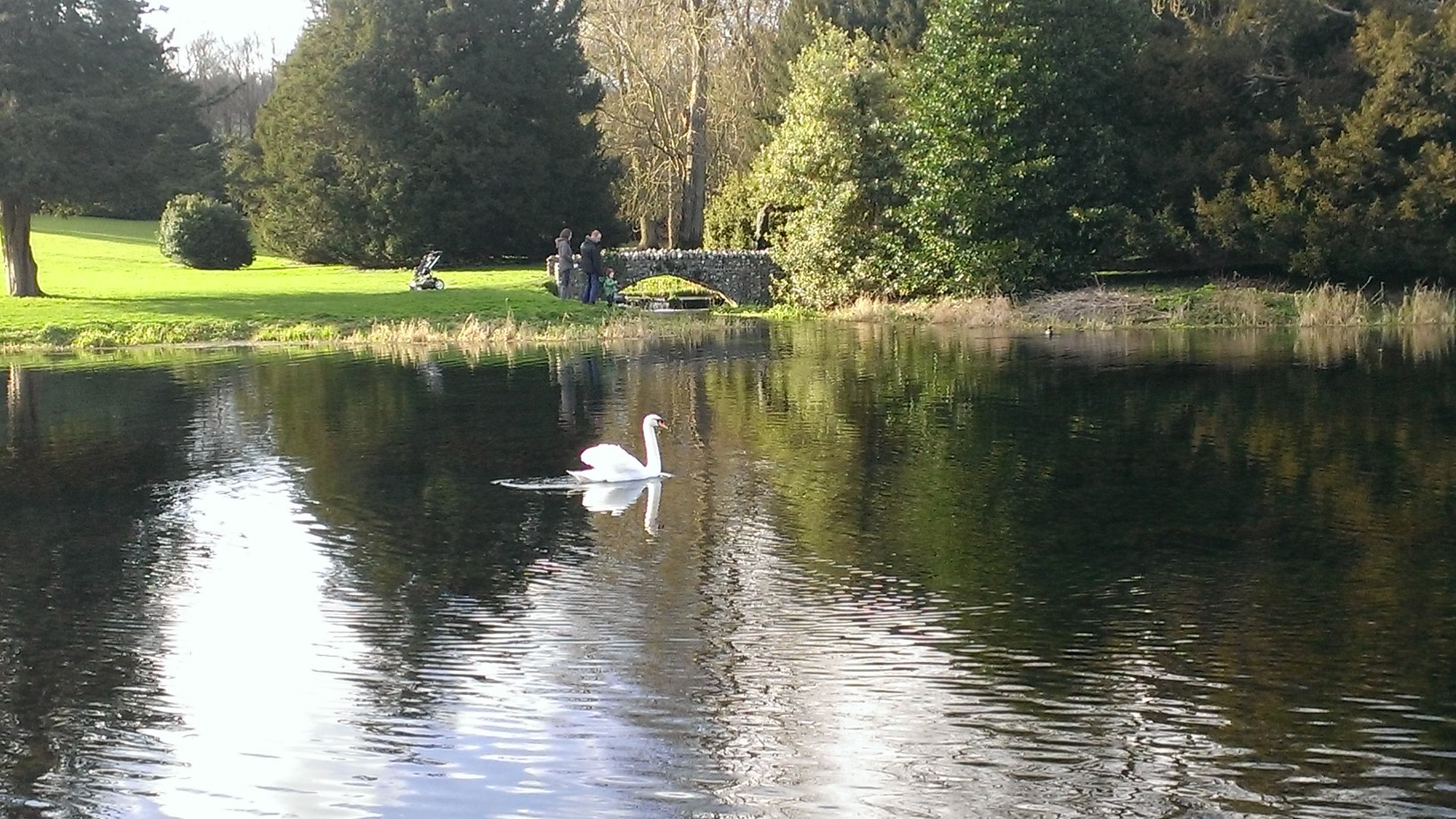
I did however, take my girls there in February this year to explore Lady Dashwood’s snowdrop trail. We had a ball, and the grounds are every bit as beautiful as portrayed in the film. I took rather a lot of pictures, which I have scattered throughout this post. The Music Temple on the island in the lake is the image for my current header.
Austen has inspired no less than 21 movies and television miniseries, here are just a few of my favourites in order of preference:
Pride and Prejudice – the stunning 2005 film adaptation by Joe Wright starring Keira Knightly as the spirited Elizabeth & Matthew Macfadyen as the brooding Mr Darcy (and a gorgeous piano soundtrack by Dario Marianelli). I have watched this version no fewer than five times.
The 1995 P&P miniseries with Colin Firth as the dashing but aloof Mr Darcy and Jennifer Ehle as the charming Elizabeth.
The ITV drama Lost in Austen with Jemima Rooper, Elliot Cowan and Hugh Bonneville combined old with new in a wonderful twist on P&P.
Death Comes to Pemberley – the continuation of the P&P story was penned by P.D. James and, quite frankly I doubt whether any other author would have been up to the task of continuing Austen’s legacy. The BBC adaptation was also superb.
Sense & Sensibility – the 1995 Ang Lee film features Emma Thompson and Kate Winslet as the hard done by Dashwood sisters with Hugh Grant, Greg Wise and Alan Rickman cast as the main men of the story. In fact, it’s an all-star cast, totally sumptuous, heart breaking and visceral.
Emma – Romola Garai and Jonny Lee Miller are fabulous in this tale of mischief and matchmaking.
Becoming Jane – with Ann Hathaway as the feisty author and James McAvoy as her one-time love Thomas Langlois Lefroy.
Unfortunately Austenland isn’t in the same league as the above adaptations, but it doesn’t take itself too seriously and it does have a marvellous setting for the lonely Jane Austen obsessed protagonist to lose herself in: namely a palladian and neo classical style house and gardens as the backdrop for her copper package regency experience, complete with stereotype actors paid to romance her in the manner of a bygone era.
West Wycombe Park was built between 1740 and 1800 and was home to Sir Francis Dashwood 2nd Baronet, a notorious and licentious English politician and founder of the Hellfire Club.
And now, if you’ve got this far, thank you for having the patience to bear with me! Let’s delve into the fate of the lady who started it all – Jane Austen.
I visited her home/museum in the village of Chawton in Hampshire a couple of years ago; it is wonderfully preserved much as it would have been in Jane’s day. She began living there in 1809. The museum contains lots of information about her day to day life, her devotion to her sister, her letters to her brothers, wider family and friends, excerpts of her hand written manuscripts and personal items.
Sadly, Jane’s own love for trainee barrister Thomas Lefroy was not to result in marriage, as his family did not approve of the match. They never saw each other again and Jane died a spinster aged a paltry 41 years of age. Had she married Lefroy it is almost certain we would not have benefitted from the rich literary legacy she created from a life dedicated to writing. She is buried in the north aisle of the nave at Winchester Cathedral. There are many suppositions as to the cause of her death, which range from Addisons Disease, to bovine Tuberculosis to Brill-Zinsser disease, a recurrent form of Typhus (which Jane had as a child).
Wonderful interview with author P.D. James about her Jane Austen sequel, Death Comes to Pemberley:
‘But for my own part, if a book is well written, I always find it too short.’ ~ Jane Austen
On 11th April 2013 I was fortunate enough to attend my first masterclass run by world renowned violinist Maxim Vengerov, in conjunction with Oxford Philomusica. We gathered at the iconic (Grade 1 listed) Sheldonian Theatre, designed in 1664 by Sir Christpoher Wren.
I huddled excitedly into my wooden pew along with my fellow spectators, vying for a glimpse of one of my living musical heroes. Vengerov did not disappoint.
Looking back now at my sketchy notes, the first thing that jumps out at me is his declaration that the violin should replicate the human voice; and he elicited much laughter from the audience by bursting into an impromptu song. He was warm, confident, knowledgeable (as you would expect), and he genuinely seemed to care about the students from Oxford University who were performing for his expert feedback. His insights into the music were unparalleled. He told the first student, who played Mozart’s Adagio in E Major, ‘Know where you are going in relation to the phrasing – have a goal.’
What impressed me was that he was able to impart a lot of relevant advice to the violinists in the short time he had to evaluate them. He was able to spot almost immediately where they needed improvement. To me they all seemed brilliant, and they were, but with Vengerov’s help they could become world class.
The second player tackled the Brahms Violin Sonata No. 1 in G Major. He seemed to feel that she was too controlling, and he told her simply to, ‘Let go.’ He then proceeded to show her how to balance her bow, using the forefinger for control and the little finger to balance it. All the time his manner was relaxed yet utterly erudite and eloquent.
He compared violin technique to breathing: ‘The left hand is the heartbeat and the right hand is the lung.’
There were other technical gems about increasing finger pressure, bow speed and vibrato to achieve a crescendo, and he coached on the art of smooth changes in bowing style and speed.
The third violinist was shown where she was missing out notes in the furious tempo of the Grieg sonata, and he told her to lift her fingers off the string completely to improve accuracy, and to accent the first note of a group. He compared her rendition to a train passing through a station without stopping.
He had us all captivated with his unique blend of joviality and humour, mixed with just the right amount of constructive and affable critique. His joy in coaching was evident. His own playing of each of their pieces to demonstrate his points transcended the music. To add to the experience the acoustics were fantastic, and even though it was a grey day light was streaming in through the high windows. I only wish I had been able to sit closer to the action. In short: he is an amazing ambassador for the violin and classical music.
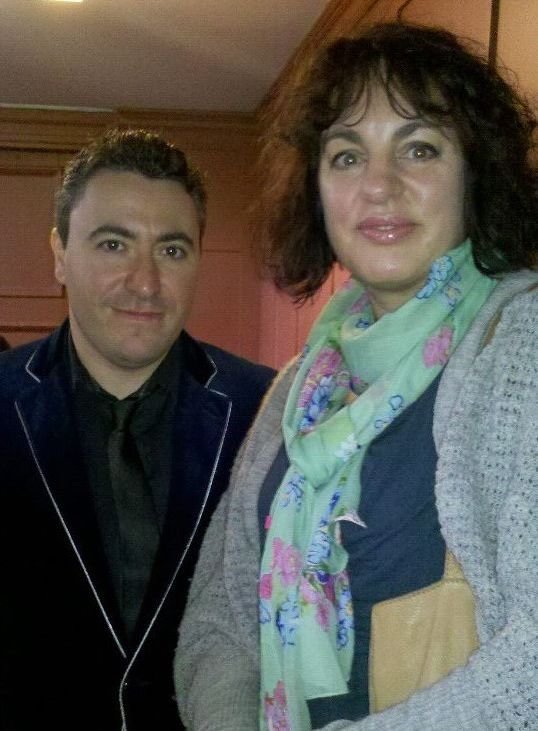
He was totally charming and stayed behind afterwards to sign autographs and meet his numerous fans (of which I was one). Hence the slightly deranged coat-hanger smile! I comfort myself thinking he must meet gushing and overawed amateur violinists quite often and forgive them their nervous blabbering.
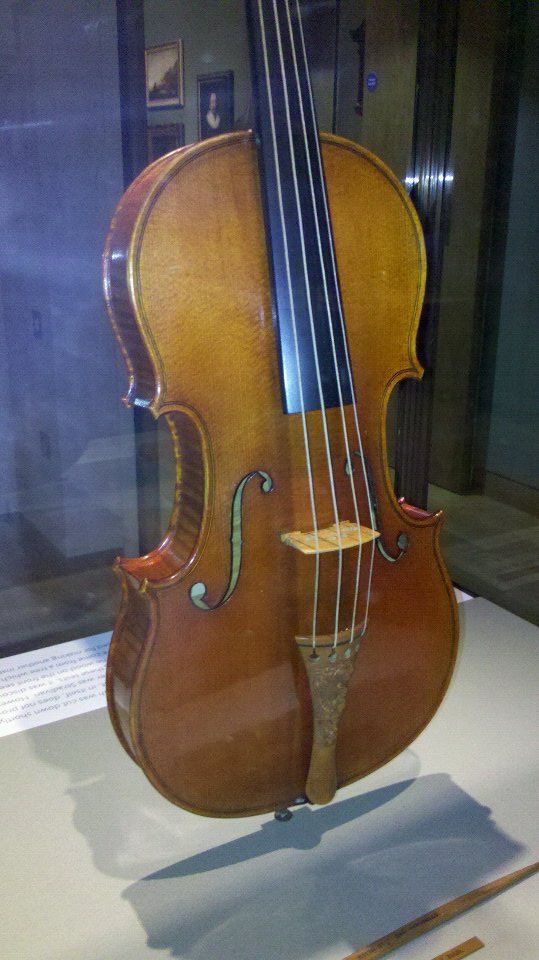
The day was capped off with a visit to the Ashmolean Museum and sighting of my very first Stradivarius violin, the best preserved of them all – The Messiah.
The ‘Messiah’ Stradivarius currently on display at the Ashmolean Museum in Oxford.
“The true mission of the violin is to imitate the accents of the human voice, a noble mission that has earned for the violin the glory of being called the king of instruments”. ~ Charles Auguste de Beriot
 You’re probably thinking that the topic of bridges doesn’t sound particularly exciting, but for some reason I have a fascination with them. I’m in awe of their designs and feats of engineering, (it’s one thing to draw some plans on paper and quite another to build one that spans miles of water or stretches over deep chasms and ravines. My mind wonders how they manage to stay put and remain firm and safe under continual assault from the elements and with multitudes of people and cars crossing them.
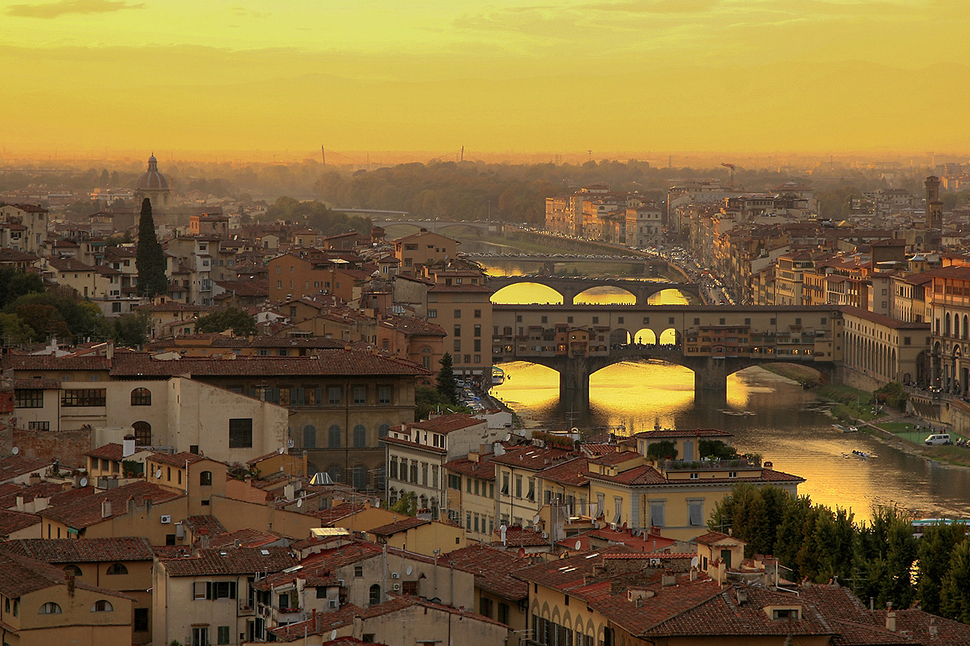 There are so many iconic bridges I’d love to cross. Up there would be the Golden Gate Bridge, the Capilano Suspension Bridge in Vancouver, The Seven Mile Bridge spanning the Florida Keys, the Oresund Bridge from Denmark to Sweden, the historic Ponte Vecchio in Florence and the Millau Viaduct in Southern France. I hope I’d have the nerve to go to the edge of the Stairway to nothingness at the Dachstein Glacier Resort in Austria.
 I found the Rialto and the Bridge of Sighs in Venice very sweet and romantic. I even love the little Hertford Bridge, similar to, but much smaller than the Rialto, which joins two parts of Hertford College over New College Lane in Oxford. Needless to say I absolutely loved the Charles Bridge in Prague! I always think of the opening scene of Mission Impossible. It’s dark, eerie and shrouded in mist, and well, you know, the agents all get bumped off except Ethan…
 The Chain Bridge in Budapest is both massive and elegant. Straddling the Danube, it joins Pest to the ancient Buda side of the city, topped by its lofty and imposing castle that looks down over the sparkling capital. I had a great couple of days working in the city inspecting hotels that were contracted for the Hungarian Grand Prix. I remember the historical Gresham Palace (facing the Chain Bridge on the Pest side) was being renovated ready to house what is now the luxurious Four Seasons Hotel.
 Around fifteen years after that trip whilst doing some research for my novel, The Virtuoso, I discovered the link between the two places. I’ve been going to Marlow for many years, but because I didn’t delve into its history until recently, I’ve only just made the connection.
 Marlow is a local and picturesque market town on the banks of the River Thames in South Buckinghamshire. It has a pretty white suspension bridge that spans the Thames, linking Marlow to the village of Bisham in Berkshire. Just on the other side of the bridge from the town end nestles the famous Compleat Angler Hotel.
 Marlow is famous for its annual summer regattas, and was also home to Percy Bysshe Shelley and Mary Shelley, who moved into West Street in 1816. The writer and poet T.S. Eliot was also a resident of West Street during the First World War. It is also rumoured that Henry VIII courted Jane Seymour on the land where the Georgian House stands, known as Court Garden, which also has a bronze statue on its lawn erected to our most successful Olympian, the five times Gold medal winner – rower Sir Steve Redgrave..
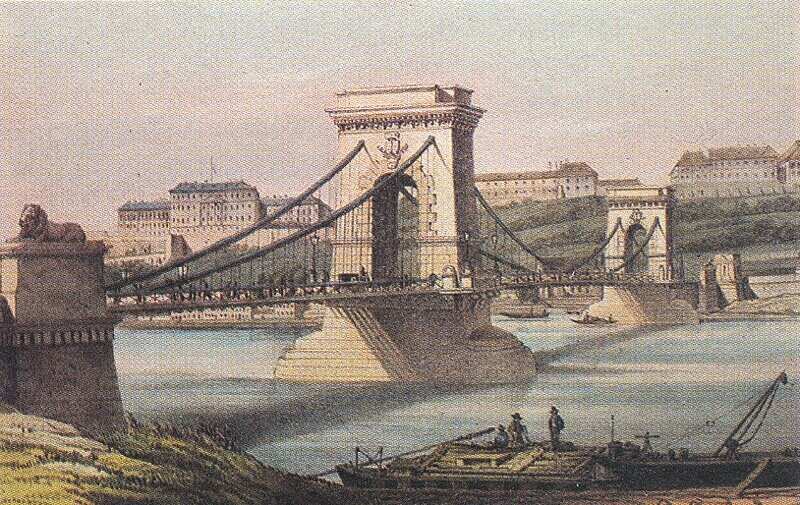 Low and behold it turns out that the Marlow Suspension Bridge, built between 1829 and 1832 and the Széchenyi Chain Bridge in Budapest (completed in 1849) are almost identical, except in scale. They were both designed by the same Victorian era English civil engineer – William Tierney Clark.
 Construction in Budapest was supervised by the Scotsman Adam Clark. At the time of its completion in 1849 the Chain Bridge was the first permanent bridge to span the Danube in Hungary and one of the largest of its kind in the world.
 A plaque on the Pest side of the river reads “To commemorate the only two surviving bridges designed by William Tierney Clark: The Széchenyi Chain Bridge over the Danube at Budapest and the suspension bridge over the Thames at Marlow, England.” A similar plaque has been placed on the Marlow Suspension Bridge, photographed here, if you can read it!