Science: is it a Useful Tool to Further Humanity’s Understanding, or a Set of Outdated and Rigid Laws, Riddled with Dogma?

“Principles for the Development of a Complete Mind: Study the science of art. Study the art of science. Develop your senses- especially learn how to see. Realize that everything connects to everything else.” ~ Leonardo da Vinci
protonI wonder what Leonardo da Vinci would have made of quarks?

What purpose does science, and all its many branches serve, unless it can teach us more about ourselves; how to live life to the full, how to lead healthy, happy lives in harmony with each other and nature?

I propose that the only true aim of science should be to assist the evolution of mankind. And I don’t mean into more perfect physical specimens, rather as more evolved beings, with increased awareness about how we affect our planet and how we manifest our dreams and goals. Surely technology has only a limited scope in achieving this aim? We are looking out there for answers, when perhaps they are inside us all along.

The micro world of subatomic particles is probably the only area of study that will illuminate the building blocks of life and the universe.
Never trust an atomHowever, science still can’t define what the soul is. It still can’t tell us what happens to the spirit upon the moment of death. It still has many questions to answer about the nature of consciousness and existence.

Without a moral or spiritual intention surely scientific endeavour is just glorification of the ego?

Your inner realms are just as infinite as the cosmos. And when you look at all the amazing achievements to date, they were all a product of the mind of man. They all came from that deep creative well that every human has access to. Moments of insight, backed up and developed by rigorous research and experimentation.

Geeks are cool…

Science has been responsible for much of humanity’s progress in the last few centuries.  And the pace of technical innovation is breath taking. It has impacted our lives in so many areas: from the inventions of everyday gadgets such as the washing machine, the smartphone, flat-screen TVs, the whole Apple phenomena to virtual reality and medical matters.
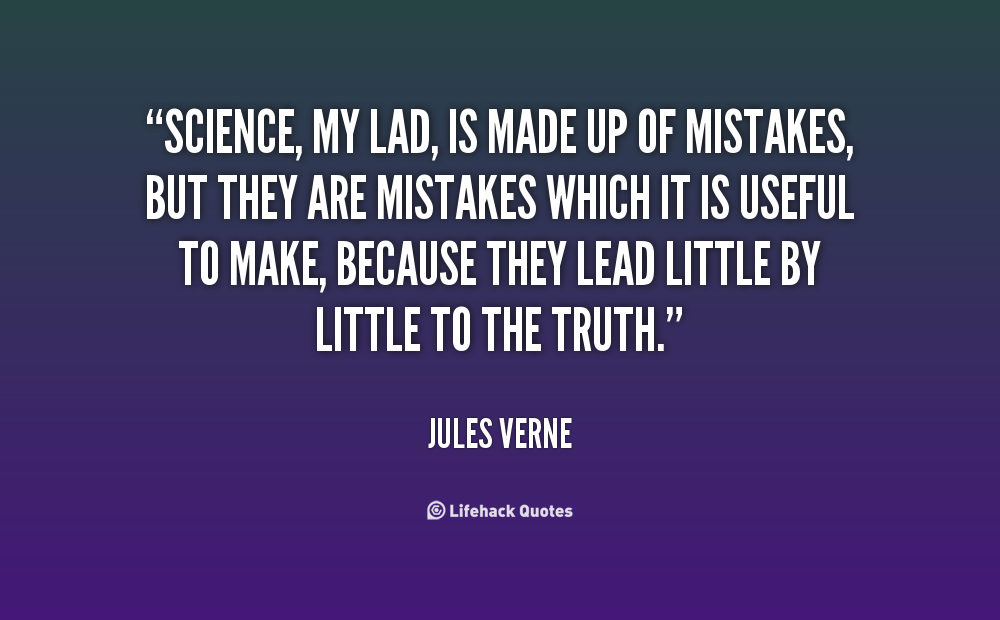
quote-Jules-Verne-science-my-lad-is-made-up-of

But it hasn’t all been good. The atom bomb should never have been created. Society has paid a high price for science that was ultimately motivated by greed and self-interest.

When scientists start messing with the food chain I get worried. Genetically modified crops are contaminating the gene pools of plants, and self-propagating GMO pollution is predicted to outlast the considerable effects of global warming and nuclear waste. In large-scale farming the use of pesticides are decimating the world’s bee and insect populations, just so the likes of Monsanto can make a profit feeding us HFCS (high fructose corn syrup), and other highly processed foods; if you can even call them that!

“Seven Deadly Sins: Wealth without work

Pleasure without conscience

Science without humanity

Knowledge without character

Politics without principle

Commerce without morality

Worship without sacrifice.” ~ Mahatma Gandhi

Without government action and intervention the lack of integrity in this field means that science operating with impunity threatens the health of future generations. It’s time for consumers to make their voices heard in the supermarket aisles, where the big corporations will feel the effects of our dissent.

Space, the final frontier…   
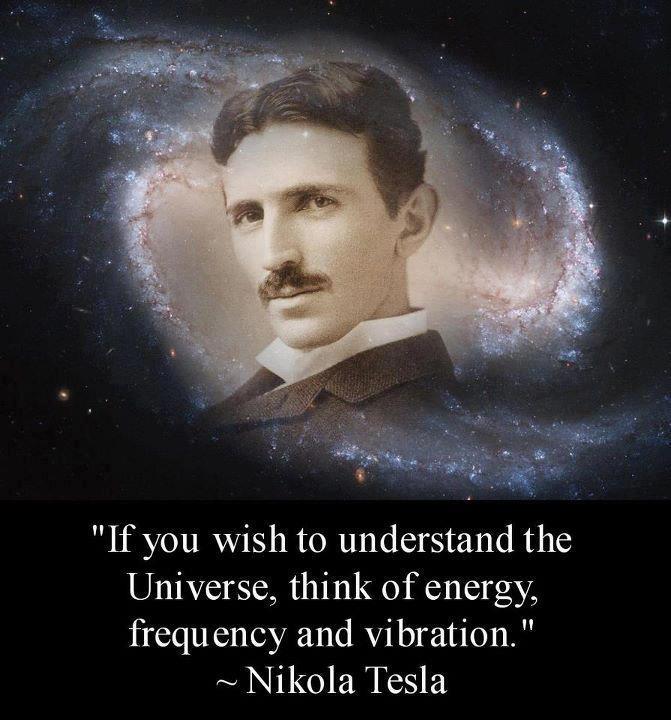
Tesla1At the other end of the scale, a group of brilliant people landed men on the moon, an unmanned craft on Mars, completed the successful Rosetta comet mission and invented telescopes that can penetrate deep into space millions of light years away and show us galaxies, nebulas, black holes, the births and deaths of stars. Dark matter, soon to be created light matter, and the very stuff of the universe.

Scientists at CERN proclaimed that they have found the elusive Higgs boson, nicknamed the ‘God Particle’.  But not everyone at techtimes agrees. Whatever your opinion about it, the large hadron collider (LHC) is an incredible achievement in itself. It is actually one of the coldest places on Earth, as well as generating temperatures hotter than the core of the sun when the particles collide and explode.

Here is an interesting documentary about the LHC at CERN, the Higgs boson experiment and the theory of ‘supersymmetry’.

https://www.youtube.com/watch?v=GCoIz7Hx-nI

Perhaps it’s time to question the standard model of particle physics? Is the big bang theory that is so universally accepted really true? Is the phenomena of psychic ability a reality? Do we all possess it? What about the possibility of time travel? Whoa…I’m getting ahead of myself.

It must be tough being a scientist, working at the peak of human intellectual capacity as well as combining understanding with the essential element of creative insight. Then, after the light bulb lights up, there follows the endless verification and testing that scientific theories require before they are proven and accepted into the mainstream.

One of the dangers they face must certainly be confirmation bias. Not to mention the whole funding issue.

the-greatest-science-in-the-world-in-heaven-and-on-earth-is-loveIt seems natural that as humans created science that science is in danger of getting bogged down in indoctrination and the same way of doing and thinking about things. Humans thought that the Earth was flat until it was proven to be a sphere. Our knowledge is limited to our perception and ability to question accepted thoughts, facts and dogmas.  Only with enlightened questions can we find the answers to humanity’s biggest dilemmas and problems.

Quantum Physics

Particles do not exist unless there is an observer. We really do create our own reality!

Throughout history there have been many influential physicists, scientists and inventors that have steered humanity towards the answers it seeks: Galileo, Leonardo da Vinci, Newton, Max Planck, Albert Einstein, Niels Bohr, David Bohm, Cecilia Payne-Gaposchkin, Nikola Tesla, Alexander Graham Bell, Thomas Edison, Heinrich Hertz, Guglielmo Marconi, Alan Turing, Tim Berners-Lee and Peter Higgs to name just a few.

For me the Heisenberg Principle is one of the most amazing discoveries of quantum physics. Alok Jha from The Guardian explains all!

But what does it all mean if we can’t apply it to our everyday lives? I like this fun explanation from Dr David R Hawkins. Here he is talking about people who eat too many cookies, but it could be applied to smoking, drinking and all kinds of vices:

https://www.youtube.com/watch?v=bXtFbzQrG7w

As he says, “Attention begins to diminish a thing automatically.” Dysfunctional behaviours cannot continue when the light of consciousness shines on it.

Erwin Schrödinger and Schrödinger’s cat

The brilliant Nobel Prize-Winning Austrian physicist, Erwin Schrödinger is known as one of the fathers of Quantum Mechanics: he formulated the wave equation, authored many works, in particular his book, What Is Life?

From Wikipedia:

Schrödinger stayed in Dublin until retiring in 1955. He had a lifelong interest in the Vedanta philosophy of Hinduism, which influenced his speculations at the close of What Is Life? about the possibility that individual consciousness is only a manifestation of a unitary consciousness pervading the universe.

Probably one of his most enduring legacies is his thought experiment Schrödinger’s cat. My cat (who loves to perch next to me on my desk and watch the screen), has just scarpered!

As I’m not a physicist and I’m still trying to get my head round this concept I thought it best to include a video or two that explains wave function and more:

You could say that this blog post does and doesn’t exist simultaneously, but by my observing it, by my thoughts I caused the wave to collapse, and bingo, you have a blog post to read that probably doesn’t make sense!!

I’d like to finish with the work of British biologist and author, Dr. Rupert Sheldrake, who’s theory of Morphic Resonance has not been embraced wholeheartedly by the scientific community. I admire his open-minded and common sense approach to science and his courage to question the dogmas that western science clings to.

Here is a wonderful interview between Rupert Sheldrake and Deepak Chopra. Science Beyond the Superstitions of Materialism:

This is also a fascinating interview that delves into Rupert’s book, Science Set Free, questioning long held assumptions by Western science:

So, in reply to the loaded question posed by my title, I’m going to assume a ‘superposition’ and say that both answers exist at the same time; until you start observing one of them that is!!!

“The saddest aspect of life right now is that science gathers knowledge faster than society gathers wisdom.” ~ Isaac Asimov

A Musical Surprise from Johann Sebastian Bach

“Joy, sorrow, tears, lamentation, laughter – to all these music gives voice, but in such a way that we are transported from the world of unrest to a world of peace, and see reality in a new way, as if we were sitting by a mountain lake and contemplating hills and woods and clouds in the tranquil and fathomless water.” ~ Albert Schweitzer

With my children and their friends running me around in circles this half-term I almost gave up on the idea of publishing a new blog post. But then I made a discovery, and I wanted to share it. By the way, if all you guys and gals out there already know about this gem do feel free to tell me…

I thought I knew all Bach’s violin concertos. I often play them when I practice. His Double Violin Concerto in D minor BWV 1043 is so well known, it seemed odd that he would have written a Triple Violin Concerto that is virtually unheard of.

However, the other day as I was browsing through YouTube that is exactly what I came across!

It was the 2nd movement being performed by Sir Yehudi Menuhin and David Oistrakh’s musical dynasty, (his son, Igor and grandson Valery), in Moscow. I was intrigued. It’s not in mainstream repertoire, or surely I would have heard of this piece before?

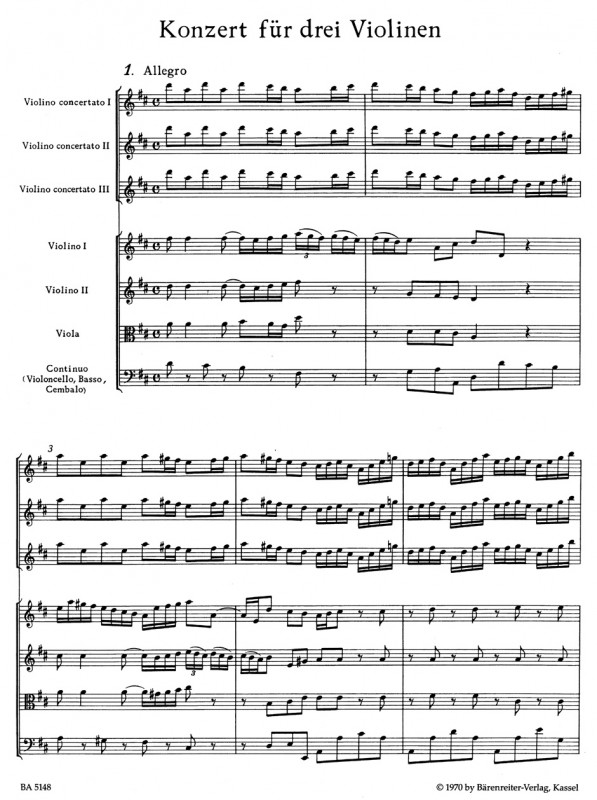
So I did a little digging, and unearthed the reconstructed Concerto for 3 Violins in D Major BWV 1064R.  This wasn’t published as an original Bach violin concerto; it’s a reconstruction of the Concerto for 3 Harpsichords, strings and Continuo in C Major, BWV 1064.

Bach - Triple Violin Concerto BWV 1064R

Here’s where the uncertainty creeps in. Whether Bach used one of his own earlier (now lost) violin concertos or one composed by Vivaldi is unclear. But the point is, there actually was a violin concerto used as the basis for BWV1064, and the piece has been transcribed back to the violin in the key of D Major to give us that wonderful original sound.

Whilst it may not be as melodic and lyrical as Bach’s Double Violin Concerto, the Triple Concerto has a certain charm, and so as far as I’m concerned it’s a case of ‘better late than never’.

All of Bach’s harpsichord concertos (with the exception of the Brandenburg concerto) are thought to be arrangements made from earlier concertos for melodic instruments probably written in Köthen. In many cases, only the harpsichord version has survived.

Here is the Freiburger Barockorchester, on period instruments, performing the entire concerto:

https://www.youtube.com/watch?v=tKog41NwNxo

Christopher Hogwood Transcription for chamber ensemble musicians.

The original published version for harpsichord with Hogwood, Moroney and Rousset:

I also really like it arranged for 3 pianos:

https://www.youtube.com/watch?v=q8h-4GlrG8M

Again, it just goes to show how versatile and universal Bach’s music is that it suits so many different instruments.  See my earlier post about the Chaconne for solo violin.

With a plethora of top violinists recording Bach, it’s hard to imagine that the early recordings of Bach’s violin music were made back in 1904, when Fritz Kreisler first performed the Prelude in E and ‘Air on the G String’ in Berlin. The Double Violin Concerto was recorded by Kreisler and Efram Zimbalist in January 1915, the first time a complete recording of a major work by Bach was made, and also the first time that two leading violinists played together in a recorded performance.

With such a large body of work it’s hardly surprising that Bach’s music continues to offer surprises, and I’d like to toast to many more to come.

I must scoot Bach to doing the housework now, humming as I go…

“No one can give a definition of the soul. But we know what it feels like. The soul is the sense of something higher than ourselves, something that stirs in us thoughts, hopes, and aspirations which go out to the world of goodness, truth and beauty. The soul is a burning desire to breathe in this world of light and never to lose it – to remain children of light.” ~ Albert Schweitzer

Variations on a Theme of Love

“The more we give love, the greater our capacity to do so.” ~ Dr. David R Hawkins

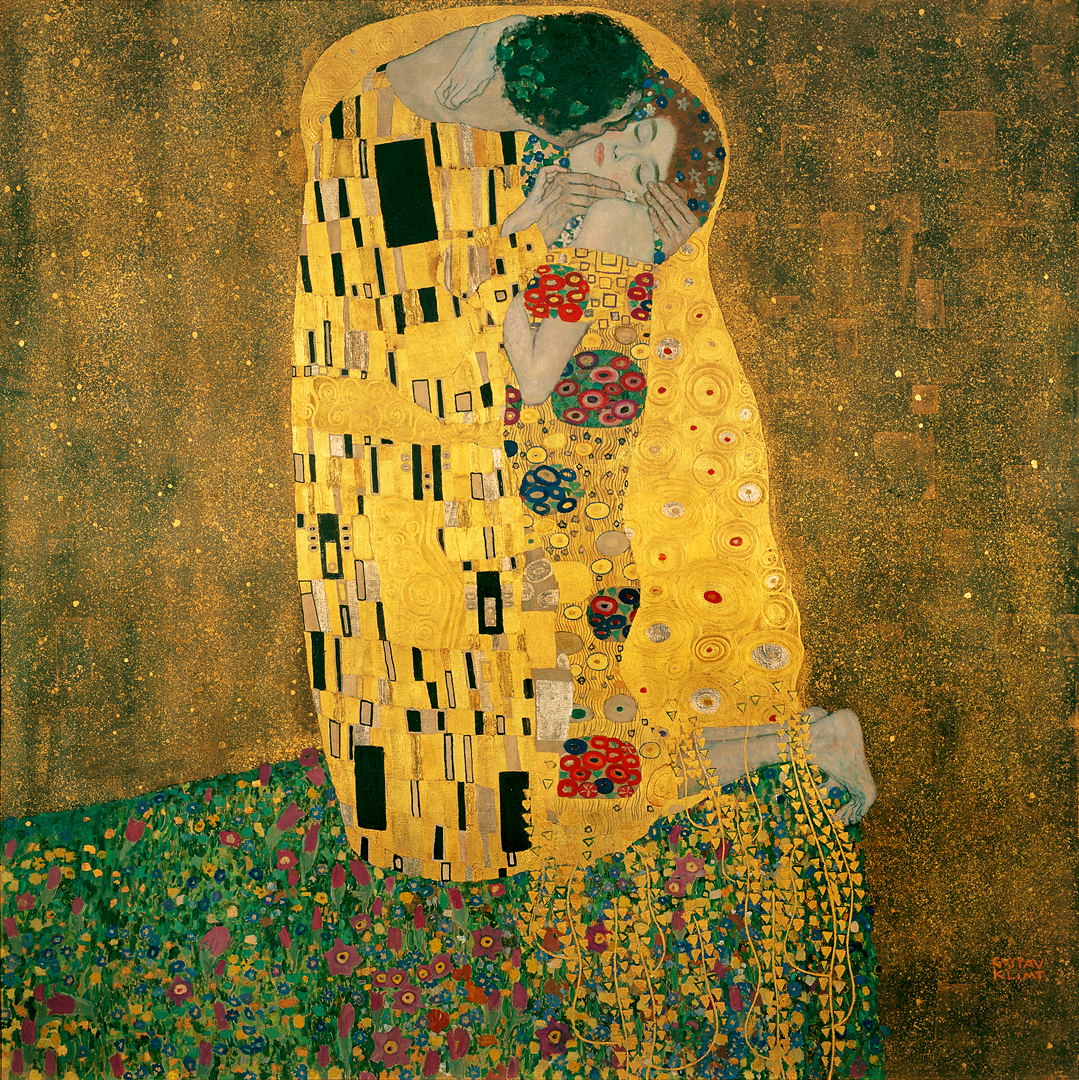
Gustav_Klimt_The KissAs Valentine’s Day is approaching, I thought I might as well jump on the love bandwagon!

I probably should have written this post in French; étant le vrai langage de l’amour.

In terms of the arts, nothing captures the many facets of love like music. Just as a single ray of light dances through the prisms of a diamond, casting a beautiful, ethereal spectrum; so can the notes of a captivating romance, passionate rhapsodie, reflective nocturne or a soulful sonata evoke certain emotional states in the listener. States that can place you into a poignant memory or an ardent fantasy, or the many moods in between.

And now for the scientific part:

A musical tone makes physical objects vibrate at its frequency, the phenomenon of sympathetic reverberation. A soprano breaks a wineglass with the right note as she makes unbending glass quiver along with her voice. Emotional tones in the brain establish a living harmony with the past in a similar way. The brain is not composed of string, and there are no oscillating fibers within the cranium. But in the nervous system, information echoes down the filaments that join harmonious neural networks. When an emotional chord is struck, it stirs to life past memories of the same feeling.

(A general Theory of Love)

Over to you Ludwig!

Now, us ladies love to be romanced (generally speaking), and I’m sure it’s true for most women that being desired by your sweetheart is somewhat of a potent aphrodisiac, and makes us every bit as enthusiastic about amatory pursuits as lovers, partners or husbands.

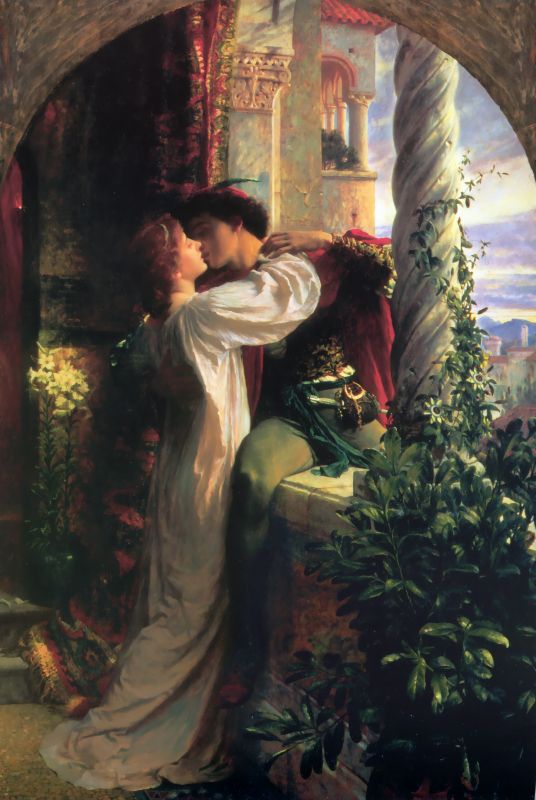
Frank Dicksee - Romeo-and-Juliet-ArtworkBut there’s more than one type of love, although it’s usually the romantic and erotic type of love that society pays the most attention to.  Even more so, at this time of year, thoughts turn to the intimate relationship between a man and a woman. Hall & Oates captured the sentiment in the lyrics of their song, Kiss On My List. 

Come the 14th not everyone will be fortunate enough to be with a loving partner, and Valentine’s Day can be quite depressing if you believe your happiness solely rests on a romantic connection. It’s an endless commercial love-fest of adverts, romcoms, red roses and card sales. I would never berate a man for giving me roses, (quite the opposite), but the expectation it puts on people means the true meaning of love can get distorted and exploited on Valentine’s Day.

It’s as much about friendship, companionship, kindness, sharing, trusting and understanding as it is about pleasures of the flesh; although who wouldn’t enjoy a night of unbridled lovemaking with their sweetheart? Moving on swiftly…

Even without love, the pleasure part can be addictive. I’m sure the sexual exploits of Giacoma Casanova left a trail of devastated hearts in women across 18th century Europe. Perhaps he was the first celebrity womaniser?

Love, or the lack of, affects everyone. In 450 B.C., Hippocrates stated that emotions emanate from the brain.  You and I are mammals, and as such we’re subject to limbic resonance and limbic regulation.

Love is, without doubt, the most powerful force on the planet. It can heal, sooth, excite, placate, reassure, create new life and put one into a state of ecstacy. However, those moments can be relatively short lived. For constant happiness to abide in your heart, you have to be able to extend love and forgiveness to yourself first.

The basis of all love is self-love. If you love and respect yourself, you will be able to pass on that energy to others. There’s nothing selfish or unhealthy about that. Self-loathing, guilt and repressed emotions are all blocks to giving and receiving such love.

“Immature love says: ‘I love you because I need you.’ Mature love says ‘I need you because I love you.” ~ Erich Fromm (The Art of Loving).

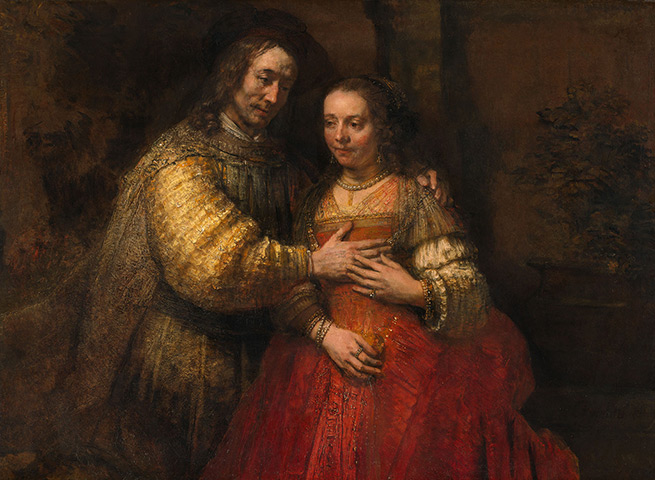
The Jewish Bride, 1665 by Rembrandt van RijnThe immature love is a dependency. You love that person because of the way they make you feel, and when that feeling has gone you will feel bereft and perhaps then look for someone else who can provide those emotions. But the mature love means you love someone for who they are.

You are tender, kind and passionate, but do not depend on them for your own happiness. Instead, you treasure each moment with them, appreciating and respecting them for who they are, for their unique personality, talents, endearing qualities and flaws, wanting their happiness as much as your own.

That’s where the ‘variations’ come in. The basic ‘theme’ is the person you become by your lovingness towards your kin and the wider world, and with that comes the capacity to truly appreciate love in all its glorious forms: the sensual, the passionate, the platonic, the maternal, the highs, the lows and the middle ground.

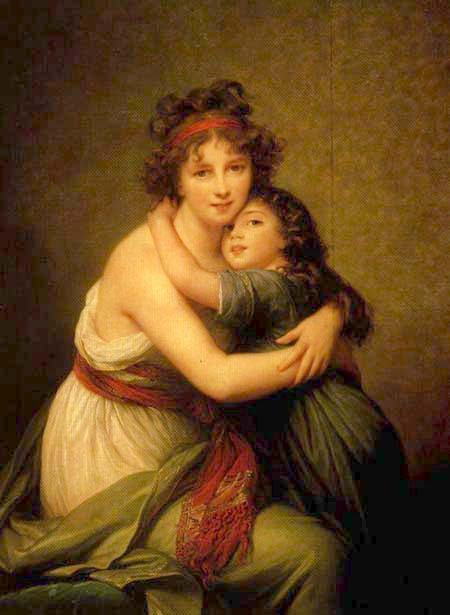
vigee_lebrun_self_portrait_c1789Maternal love is so strong that nothing can break it, (perhaps with the exception of mental illness). Whilst your offspring may drive you crazy and push you to the limit on occasion, you know that no matter what, you will always love and protect them. Part of that love is knowing when to nurture, and when to promote independence and foster self-reliance. The love of parents plays a huge role in a child’s self-esteem and development. Never criticize the person, only cite the action.

And just as the unwavering love children are shown promotes harmony in families, so can the loving behaviour we all show to each other, to friends, aquaintances and even to total strangers, promote a healthy global community.

To be able to suspend our judgements of others and love unconditionally is no easy task, but it comes from the standpoint of compassion and understanding. We are all at different points in our spiritual evolution.

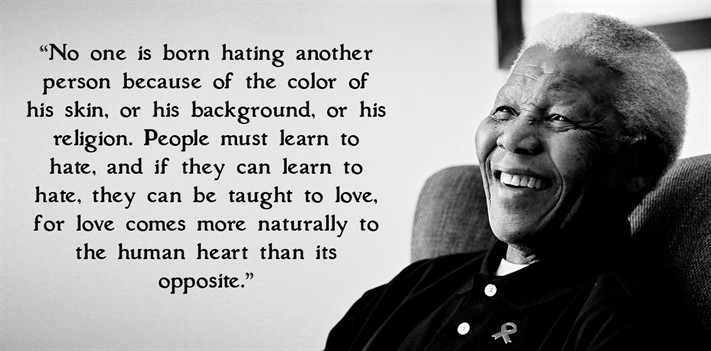
nelson-mandela-quote

I’ve long been a student of the late Dr. David R Hawkins, founder of the Institute for Advanced Spiritual Research, and author of many illuminating books. He also gave many brilliant lectures and interviews during his life. His book Power vs. Force totally changed my perspective on life (see Veritas Publishing).

He often cited instances where the caring and loving attitude of a doctor towards both the patient and their recovery would have a beneficial impact on their healing. An advocate of animals, he believed that the unconditional love shown by dogs to their human companions could add as much as 10 years to their life. Especially if that person was elderly, isolated and lonely.

“Love is misunderstood to be an emotion; actually, it is a state of awareness, a way of being in the world, a way of seeing oneself and others.” ~ David R. Hawkins

Here is a wonderful talk he gave on unconditional love:

https://www.youtube.com/watch?v=eOmK0751EAU

There is so much mesmerising art and beautiful prose written about love, and that is what I will leave you with.

“I loved you first: but afterwards your love”

Poca favilla gran fiamma seconda. – Dante

Ogni altra cosa, ogni pensier va fore,

E sol ivi con voi rimansi amore. – Petrarca

I loved you first: but afterwards your love

Outsoaring mine, sang such a loftier song

As drowned the friendly cooings of my dove.

Which owes the other most? my love was long,

And yours one moment seemed to wax more strong;

I loved and guessed at you, you construed me

And loved me for what might or might not be –

Nay, weights and measures do us both a wrong.

For verily love knows not ‘mine’ or ‘thine;’

With separate ‘I’ and ‘thou’ free love has done,

For one is both and both are one in love:

Rich love knows nought of ‘thine that is not mine;’

Both have the strength and both the length thereof,

Both of us, of the love which makes us one.

Christina Rossetti

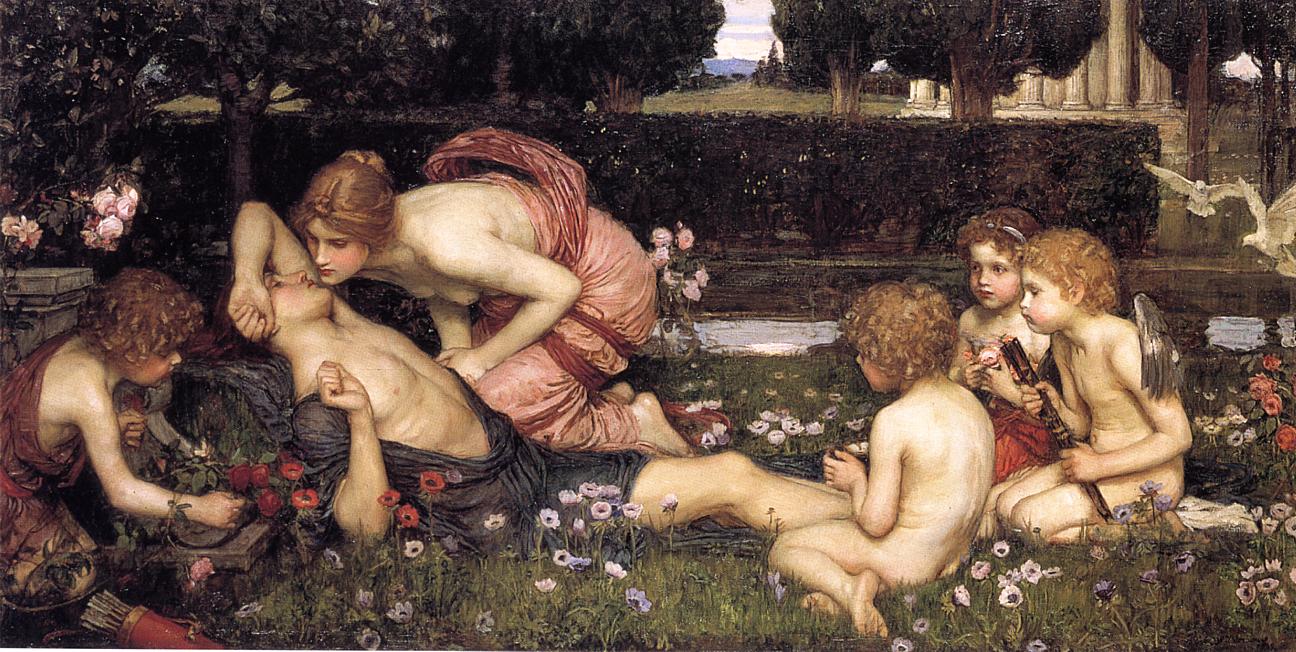
JW Waterhouse - the-awakening-of-adonis-1899

“Love one another, but make not a bond of love:

Let it rather be a moving sea between the shores of your souls.”

Kahlil Gibran, (The Prophet)

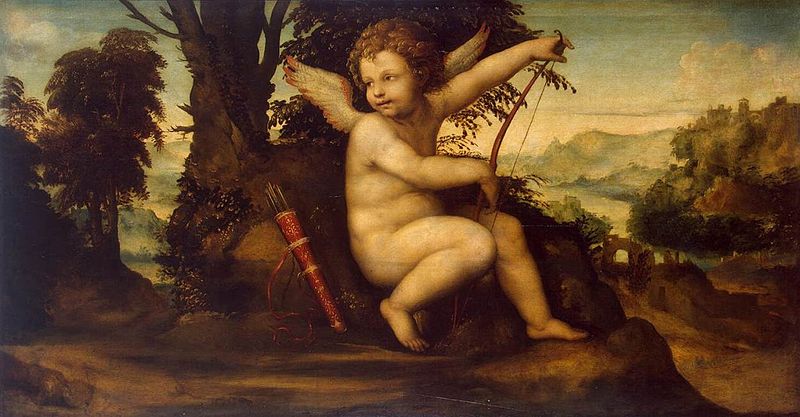
Cupid_in_a_Landscape_by Sodoma

As for me, Cupid has pierced my heart, his arrow is well and truly lodged!

Cupid, draw back your bow… The dulcet tones of the ‘king of soul’ Sam Cooke:

Let me not to the marriage of true minds

Admit impediments. Love is not love

Which alters when it alteration finds,

Or bends with the remover to remove:

O no! it is an ever-fixed mark

That looks on tempests and is never shaken;

It is the star to every wandering bark,

Whose worth’s unknown, although his height be taken.

Love’s not Time’s fool, though rosy lips and cheeks

Within his bending sickle’s compass come:

Love alters not with his brief hours and weeks,

But bears it out even to the edge of doom.

If this be error and upon me proved,

I never writ, nor no man ever loved.

William Shakespeare (Sonnet 116)

Percy Bysshe Shelley – Love’s Philosophy:

https://www.youtube.com/watch?v=YLtXPzxejxY

C’est tous mes chéris, Je t’aime!

Thomas Tallis – If Ye Love Me:

“When the power of love overcomes the love of power the world will know peace.” ~ Jimi Hendrix

Delving into the Meaning and Mystery of Dreams

“For me, time is the greatest mystery of all. The fact is that we’re dreaming all the time. That’s what really gets me. We have a fathomless lake of unconsciousness just beneath our skulls.” ~ Anthony Hopkins

Since the dawn of time humans have dreamt, and those dreams have a served a purpose, but are we any closer to figuring out what that purpose is?

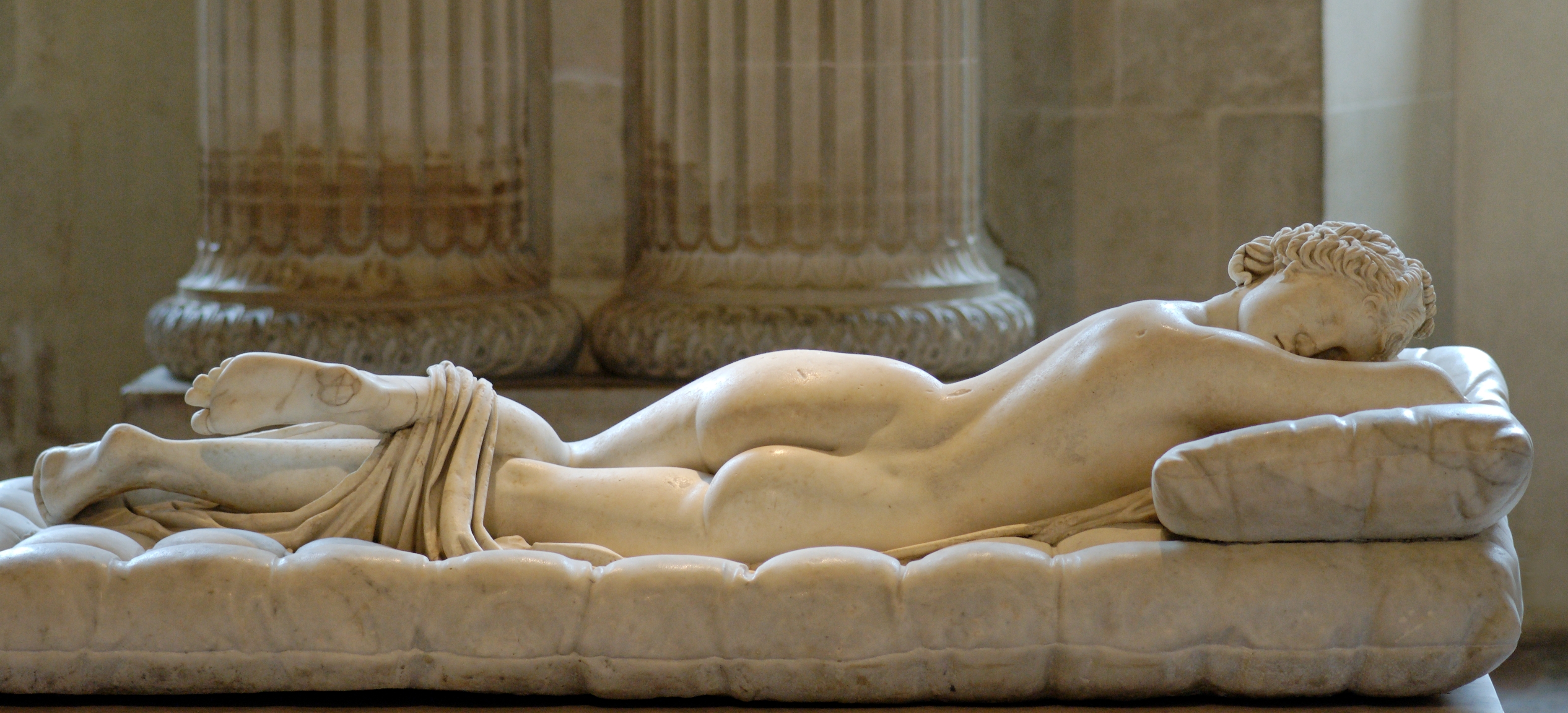
Borghese_Sleeping Hermaphroditus_Louvre

Sleeping Hermaphroditus, by Bernini c. 1620 (Louvre)

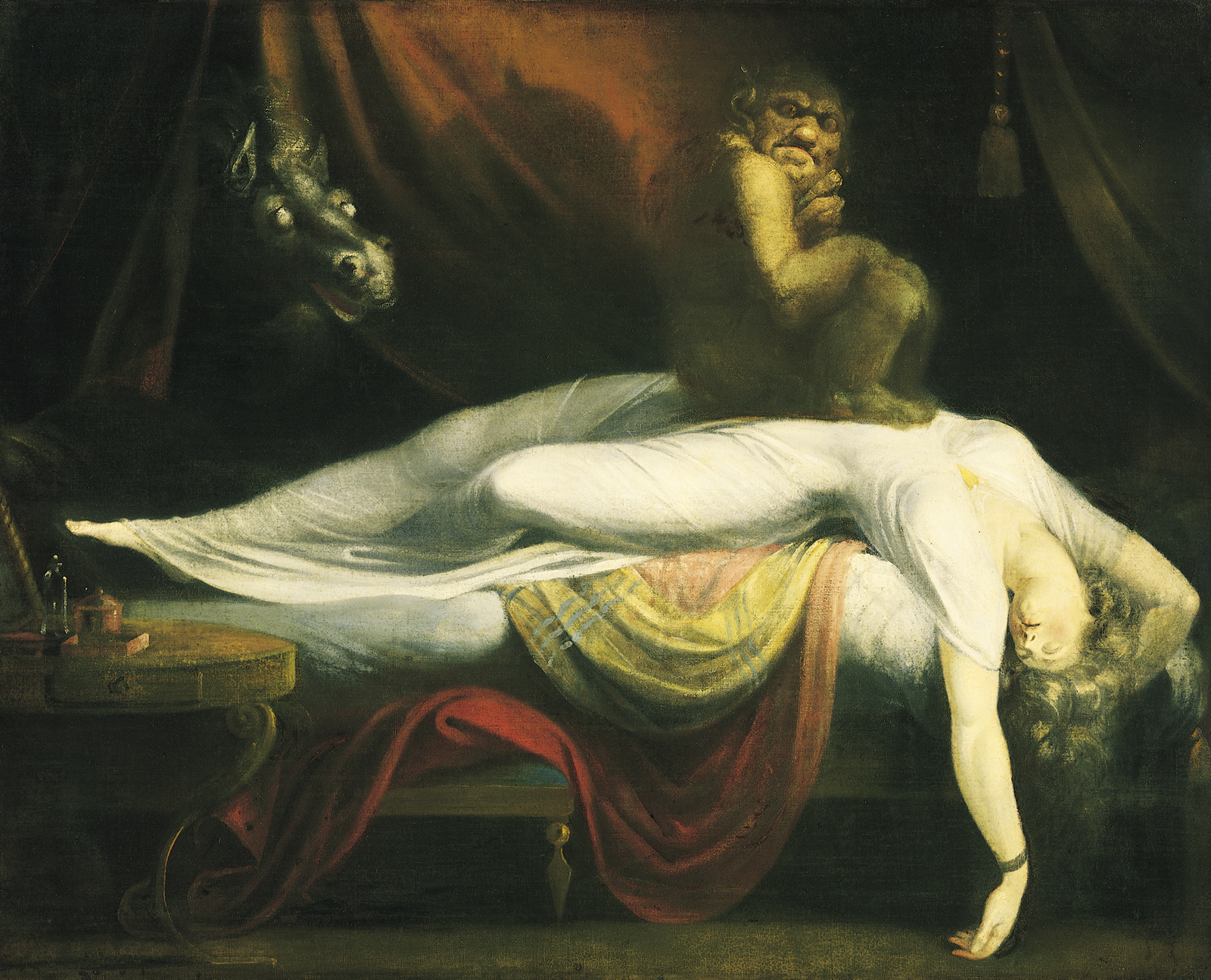
Have you ever woken up in a cold sweat, with your heart racing, gasping for breath, temporarily terrified that what you just went through in your sleep was real? Sometimes it can take a few seconds to realise that it was all a dream, albeit a rather vivid one.

I had one just like that just the other day. I might as well share it with you, it was quite strange!

The Nightmare, by John Henry Fuseli

The Nightmare, by John Henry Fuseli

I was working in some sort of complex, (I couldn’t tell you what I was doing, but it was scientific), and then there was a commotion, and we looked out the window to see a rocket coming towards us.  I saw the rocket hit the ground not far from us, and the explosion rapidly engulfed us. I didn’t feel the heat, but soon it became quite obvious that instead of waking up, as I had just perished in a fireball, that I was now a spirit. Somehow my spirit was asking questions. What just happened and why? I began to investigate the causes of the crash.

I was only aware that I was still in the land of the living when Ruby climbed into bed beside me, warming her cold feet on me, cuddling up to me, saying, “Mummy, I had a bad dream.” Comforting her helped me to forget the horror of my own nightmare.

I began to wonder what had transpired in my life to dream of such bizarre circumstances.  If I took Freud’s theory of ‘wish fulfillment’ literally, I might arrive at the conclusion that I have a death wish!

What I find amazing is that our minds can create such real scenarios that we live out in our sleep, so much so, that even after we become fully conscious those mental images can still haunt us.  Equally strange that some dreams we forget almost instantly; and others make us reflect…

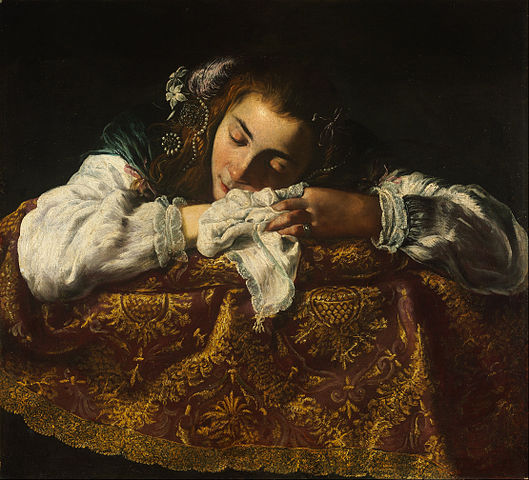
Sleeping Girl, by Domenico Fetti

Sleeping Girl, by Domenico Fetti

It is surely a healthy release for our subconscious minds to process all the emotions and events going on in our lives, and interpret those sensations and thoughts into a series of seemingly unrelated mental pictures that, if analysed, could tell us about what is going on deep in our psyche. I find it fascinating that our ‘inner’ eye is every bit as detailed and accurate in painting pictures on the canvas of our minds, as are our biological eyes at capturing so called ‘reality’.

It seems to me that dreaming is our way of integrating our thoughts and beliefs that have been repressed or that are transparent to our conscious mind.  The illumination of our experiences, hopes, and fears into messages that our conscious mind can make sense of. Shining a light, (even if it is a blurry one), into the darkness.

Perhaps we are not meant to fully understand our dreams. Perhaps it is enough that we acknowledge them, and honour them, by paying more attention to what has been unfolding in our lives, thus making us more aware.

BBC documentary on  dream interpretation:

https://www.youtube.com/watch?v=vHVHugGQq-8

When I was a child I used to have regular recurrent dreams, one of which was flying over fields. Maybe I watched Peter Pan once too often! Luckily, the muscle paralysis in REM means we’re unable to actually physically live out our dreams. But I wonder, how do we sleep walk? That phenomena has long interested me.

Occasionally I find myself lucid dreaming, and during one such episode I had an out of body experience. I can’t remember the dream, only that I was awake in the dream and I was aware of what I was creating as I went along. I was on the verge of drifting back into sleep and I felt myself sinking into a super relaxed state when the OBE occurred. It was an incredibly profound experience, one that I think about often. It lessened my fear of death significantly.

Both Sigmund Freud and Carl Jung studied and analysed dreams, with Freud publishing his findings in his book The Interpretation of Dreams. Jung rejected his theory that dreams were meant to be secretive, and became immersed in his mythic world of archetypes and our universal experiences of the Collective Unconscious. For serious dreamscape navigators, there are two books that might be of interest by Jung: his autobiography, Memories, Dreams and Reflections, and his personal dream diary, The Red Book.

Carl Jung – The Wisdom of the Dream (A world of Dreams):

https://www.youtube.com/watch?v=3HvN04oaW0Y

From Wikipedia:

Jung stressed that the dream was not merely a devious puzzle invented by the unconscious to be deciphered, so that the true causal factors behind it may be elicited. Dreams were not to serve as lie detectors, with which to reveal the insincerity behind conscious thought processes. Dreams, like the unconscious, had their own language. As representations of the unconscious, dream images have their own primacy and mechanics.

Jung believed that dreams may contain ineluctable truths, philosophical pronouncements, illusions, wild fantasies, memories, plans, irrational experiences and even telepathic visions. Just as the psyche has a diurnal side which we experience as conscious life, it has an unconscious nocturnal side which we apprehend as dreamlike fantasy. Jung would argue that just as we do not doubt the importance of our conscious experience, then we ought not to second guess the value of our unconscious lives.

The film A Dangerous Method follows the story of Freud, Jung and his disturbed young Russian patient, Sabina Spielrein. There is a great scene in the film where Freud and Jung are analysing one of Jung’s dreams:

Interesting article from The Harvard Review of Philosophy

Plato’s Dream – By Voltaire

I would sign off by saying, “Sweet dreams,” but maybe it would be better to say, “dream big, dream of your future, and trust that your present dreams are somehow leading you there…”

“All that we see or seem is but a dream within a dream.” ~ Edgar Allan Poe