The Great Virtuoso Violinists/Composers of the 18th Century: Tartini (Part 1)

“Giuseppe Tartini is one of the leading figures of the Italian School of violin playing in the 18th century, a school whose art is as meaningful today as it has ever been. Tartini’s music is expressive, sincere, warm and melodious, and it is in these qualities that lies its appeal.” ~ David Oistrakh

The more I learnt about Tartini, the more I became engrossed in his life and musical achievements.  As with Vivaldi, there’s just too much to share to do him justice in one post. There’s a lot more to this iconic Italian master than his exceptional ‘Devil’s Trill’ sonata; however that incredible work is the main focus for part 1.
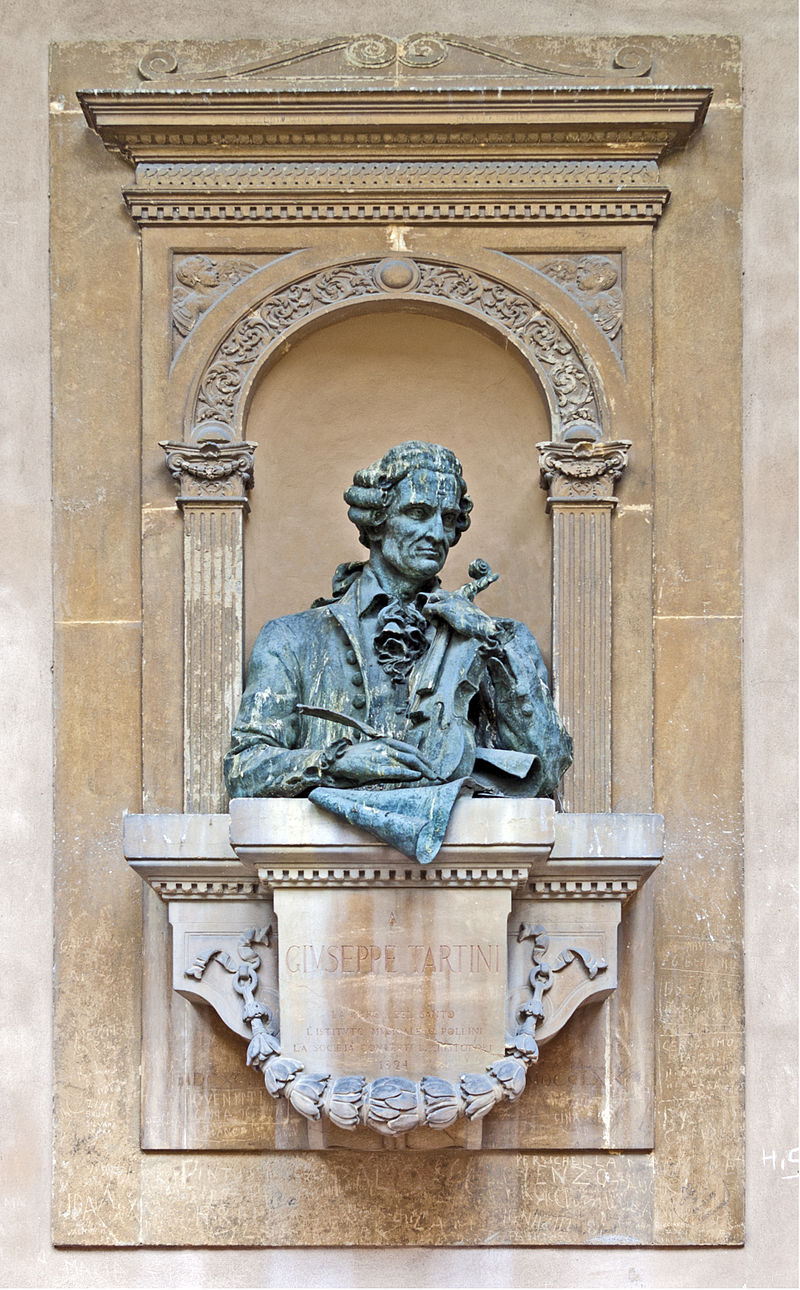
Monument to Tartini at St. Anthony's Basilica Padua

Monument to Tartin at St. Anthony’s Basilica Padua

If the violin is the so called ‘Devil’s Instrument’, then Guiseppe Tartini (8th April 1692 – 26 February 1770) is most definitely his composer of choice!

I think Paganini would have given him a run for his money on the fingerboard, but so far in my investigations into the great virtuoso violinists who were also composers, I feel that Tartini, more than the others, embodied the most evenly balanced skills in both composing and virtuoso performance.

Vivaldi, Viotti and Corelli I think leaned more towards composition, whilst Paganini, although highly talented in both, played with such virtuosity that his reputation as the ‘Devil’s Violinist’ will forever remain the stuff of legend.

Tartini however, would prove to be Lucifer’s student extraordinaire, as his most popular Violin Sonata, aptly named ‘The Devil’s Trill’, proves to this day to be one of the most wickedly sublime sonatas ever written for the instrument.

Legacy

Tartini left the world a vast heritage of music. As a result of his study, hard work, and imagination his quill penned no fewer than 350 works, most of which were written for the violin. Like Corelli and unlike Vivaldi, Tartini composed almost exclusively instrumental music, criticising composers of both vocal and instrumental music.

“These kinds of music are so different that he who is successful in one of them cannot be so in the other; each must remain within the confines of his own talent.”  To push his point home he also said, “I have received offers to work for theatres in Venice, but I have never agreed to this, for I know well that the vocal chords are by no means identical with the violin fingerboard. Vivaldi, who wanted to work in both genres, was always booed in the one, whilst in the other he was completely successful.”

Tartini’s influence reached beyond his contemporaries: Vivaldi, Laurenti and Boccherini across nations to what historians have discovered as traces of his style in the works of the young W.A. Mozart. Leopold Mozart recognised his genius by referring to Tartini as “one of the most splendid violinists of our time,” in citations that appeared regularly in the pages of his School for the Violin (1756).

Tartini himself it seems was a creative and sensitive soul with an inquiring mind, who was committed to mastering the technical aspects of the violin as well as finding the peak of his artistic taste and individuality.

He was greatly was influenced by a fellow virtuoso violinist from Florence, Francesco Maria Veracini (1690 – 1768), who had performed in London, Dresden, Poland and what is now the Czech Republic for Count Kinsky. It is thought the two met in 1716 in Venice at the festivities in honour of the Crown Prince of Saxony. Tartini was attracted to the romantic colouring of Veracini’s sonatas and was impressed by his manner of playing, which was bold and vivid, with a smooth-flowing tone and an easy mastery of bow and finger techniques, including the trill.

Tartini assimilated the skill and style of his eminent compatriot over the years that followed as he busied himself in seclusion in Ancona.

Not all of Tartini’s work has been published, but most of his original manuscripts can be found in the music archives of the chapel of St. Anthony in Padua.

Basilica of St. Anthony in Padua

Basilica of St. Anthony in Padua

How I wish I’d known that when I visited Padua in my early twenties! There are probably more autographs that have yet to be discovered, as was the case with Vivaldi. His first collection of violin concertos were published in Amsterdam in 1729, followed by his sonatas four years later.

In addition to his violin works, Tartini left a few compositions for viola da gamba, cello and flute.

The Devil’s Trill Sonata

Written in the key of G minor, the sonata is an example of one of the best 18th century violin classics. It begins with a beautiful, melancholy and expressive melody, the ‘Largo Affettuso’. I wonder if this is meant to represent Satan’s sadness at being kicked out of heaven?
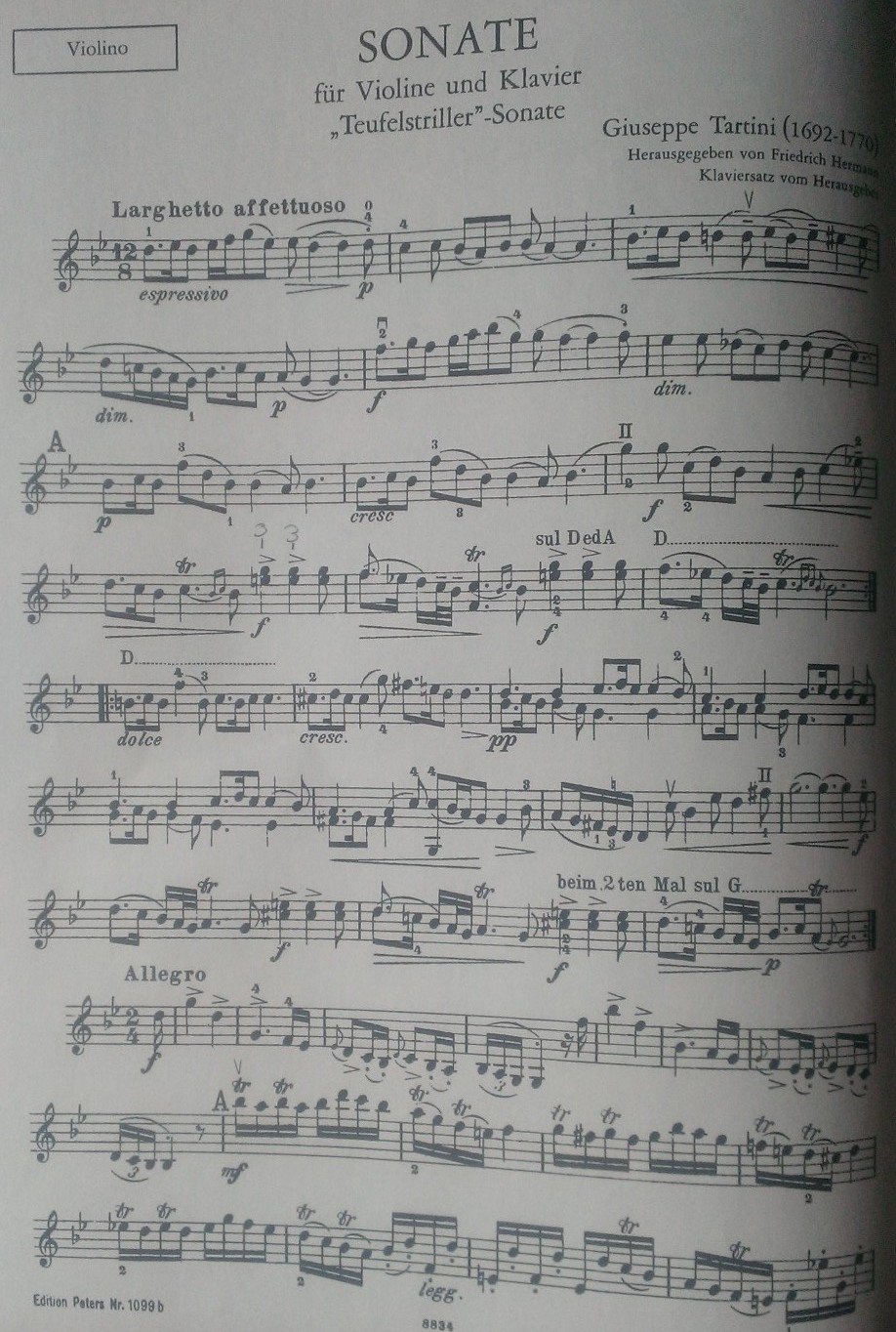
My score!

My score!

It is both poetic and soulful, with a mournful lyricism that immediately creates an emotional pathos. It lulls you into a poignant state before the song like tune moves into the ‘Allegro’ where the tempo and temperament change dramatically.

The Andante provides a lyrical interlude before the Allegro assai assaults the senses! Vigorous, determined and virtuosic, it’s positively demoniacal to play; Tartini was most certainly gripped by a violent and turbulent passion…
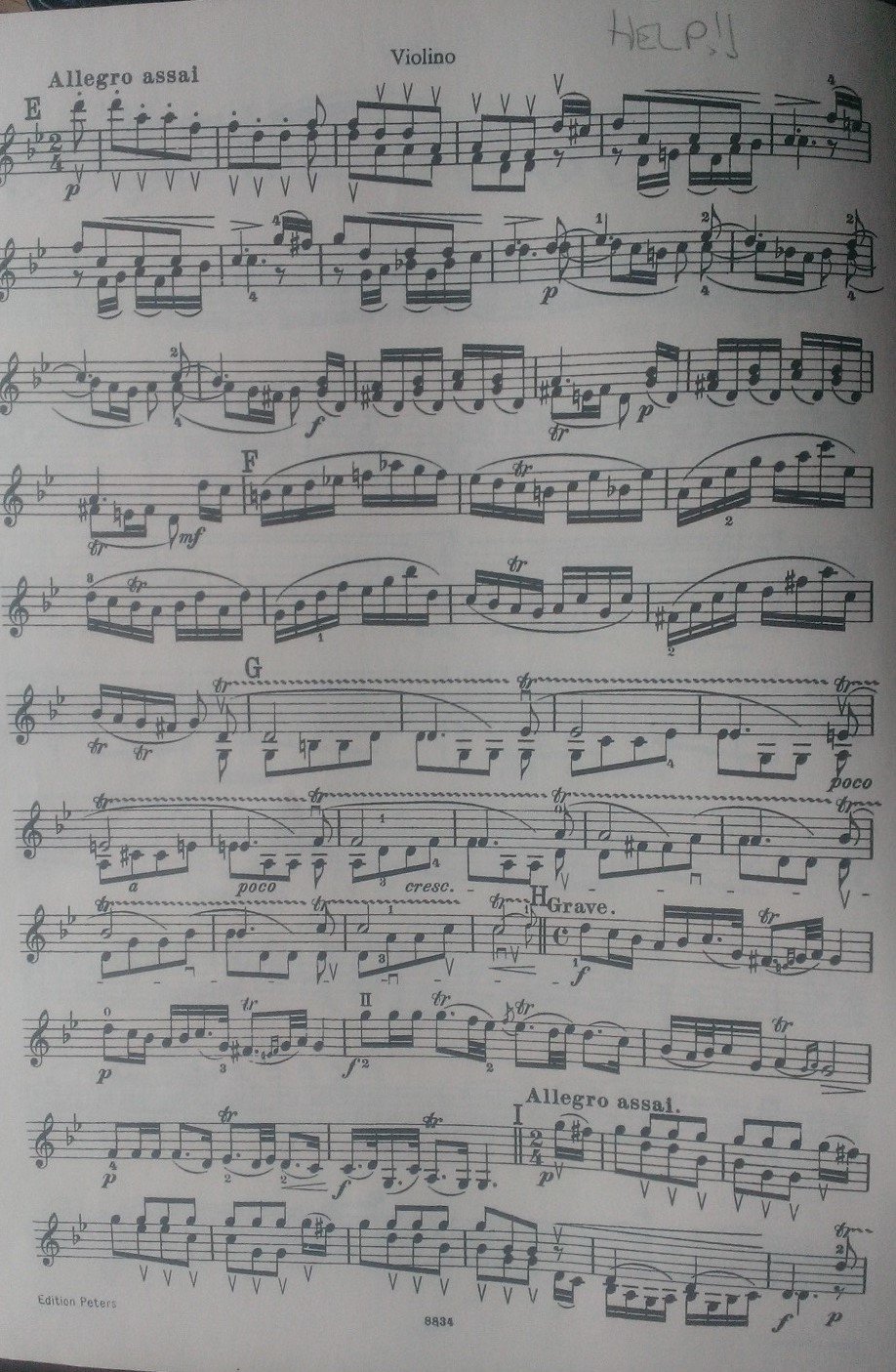
The Allegro assai, where Tartini uses a continuous background of double-stopping trills. Looks like a lifetime of practice for me!

The Allegro assai, where Tartini uses a continuous background of double-stopping trills. Looks like a lifetime of practice for me!

“Such marvellous compositions of Tartini’s as his sonata in E minor and G minor (The Devil’s Trill) or his Concerto in D minor have been with me since my youth, throughout my life as a musician; these and other works by Tartini are now played by my pupils, but his music never loses its freshness for me, its colour and its emotional impact. I consider his Devil’s Trill sonata to be of such importance that I not infrequently conclude my solo concert (recital) programmes by performing it.” ~ David Oistrakh

His words perfectly complement his amazing performance of The Devil’s Trill in a feat of such jaw dropping virtuosity that I haven’t found a performance to top this one!

The Devil’s Dream

French astronomer and writer, Joseph Jérôme Lefrançois de Lalande, tells the story of how the Devil’s Trill Sonata came about as told to him by Tartini himself:

“One night in 1713 he (Tartini) dreamed that he had made a contract with the devil, who happened to be in his service.  Whatever Tartini wanted was granted to him, and all his wishes were anticipated by his new servant, who gave him his violin to see if he could play anything harmonious. But what was Tartini’s surprise when he heard a sonata so original and lovely and performed with such perfection and meaning that he could never have imagined anything like it! He experienced such amazement, admiration and delight that he was breathless; this strong emotion woke him up and he immediately seized his violin in the hope that he would be able to remember at least part of what he had heard, but in vain. The piece that Tartini composed then is indeed the best of all that he has ever done, and he calls The Devil’s Sonata. But the former one that amazed him was so much higher that he would have broken his violin and given up music forever if only he could have.”

The musical idea of the sonata had probably matured in Tartini’s mind long before the dream further ‘elucidated’ his ideas. He’d already worked hard on the trill, conceiving it not only as a technical device but as a means of musical expression.
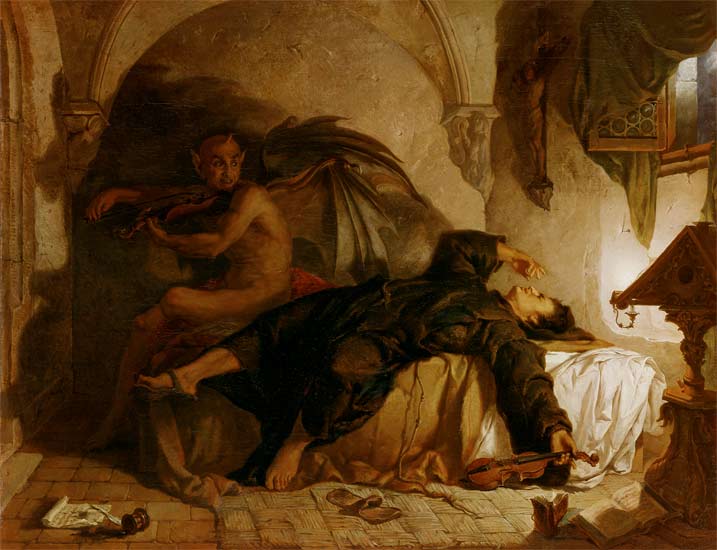
Painting of the devil's trill

Although the dream story has an air of the mystical about it the cause of the dream was undoubtedly Tartini’s creative drive at work. He later devoted much attention to the trill in his Treatise on Ornaments.

Debate over the date of composition 

The Tartini scholars, Paul Brainard, Andreas Moser and Antonio Capri assert that the artistic content of the sonata, its depth, harmony, originality and technique are more in line with his mature final period, and suggest it wasn’t written before 1730/1740.

However, Johann Quantz heard Tartini perform in Prague in 1723 and made a point of Tartini’s skill in playing double trills. These comments prompted Italian violinist Michelango Abbado, (father of conductor Claudio), to surmise that the sonata had already been written by 1723.

Sadly, the original autograph of the Devil’s Trill sonata no longer exists, and as Tartini was prone not to date his works it may not have shed light on the debate in any case. It’s also logical to assume that if it was composed in Tartini’s youth that over time he would have practiced and perfected the sonata, as well as teaching it to his students. It’s also understandable that Tartini himself didn’t want to shout from the rooftops that he was dreaming of the Devil whilst a violin soloist and director of music at the Chapel of St. Anthony!

Here are some other wonderful performances and interpretations of the brilliant Opus 1 No. 4 composition.

Henryk Szeryng:

Joshua Bell’s interpretation with the harpsichord:

An arrangement for violin and orchestra by Marc-Oliver Dupin, performed by Orchestre d’Auvergne and Jean-Jacques Kantorow:

A lovely performance on authentic instruments from the Palladian Ensemble for violin, viola da Gamba and Harpsichord, archlute & baroque guitar:

A 16 year old Yehudi Menuhin in a fabulous vintage recording:

The inimitable Itzhak Perlman:

Nathan Milstein from 1959:

Publication

Jean Baptiste Cartier first published The Devil’s Trill sonata in his method (L’art du Violon ou Collection Choisie dans les sonatas des Ecoles Italienne, Francaise et Allemande), that came out in Paris in 1798 followed up by a second edition in 1801.

The sonata then had a dormant period of 54 years and reappeared in 1855 with a piano accompaniment by Henri Vieuxtemps and Robert Volkmann. That edition also revived interest in Tartini’s works in general not just The Devil’s Trill.

At the turn of the 19/20th century a large number of arrangements of the sonata were produced by Joseph Joachim, Fritz Kreisler, Leopold Auer and Georgi Doulov which further spread appreciation and performance of this brilliant sonata.

I’d love to hear from you with your favourite versions of The Devil’s Trill as well! Until part 2…

An Epiphany in Gratitude

“When we are happy, we are less self-focused, we like others more, and we want to share our good fortune even with strangers. When we are down, though, we become distrustful, turn inward, and focus defensively on our own needs. Looking out for number one is more characteristic of sadness than of wellbeing.” ~ Martin E. P. Seligman ph.D. (Authentic Happiness)

This isn’t particularly easy for me to share, but I feel the lessons I learnt from my recent ‘mensis horribilis’ may be useful to some who are having a nasty time of things. The week leading up to Friday 13th was truly awful and stressful, I really had the kitchen sink thrown at me.

I won’t bore you with all the gory details, but suffice to say, pretty much every day I had a major challenge to deal with. On top of that I was tired, my kids were at each other’s throats and I had a constant ear ache that thankfully hasn’t developed any further. I felt like I had the world on my shoulders. I’d deal with one problem and then another arose more or less straight away, so I began reacting badly to my worsening circumstances.

Martin Seligman - positive psychology

I wasn’t flowing in and out of my emotions, I had become entrenched in my negative energy field. I certainly didn’t take my own advice from a previous post: Positive Psychology, the Science of Happiness.

Maybe if I’d been more positive I would have coped better with the events that presented themselves to me. I’m usually quite a positive and happy person, but somehow everything got on top of me and I was drowning in a sea of negativity. I was expecting the s**t to hit the fan, and it dutifully did! My pity party rapidly upgraded into a full-on woe-is-me rave…

However, after hearing about the barbaric and tragic murders in Paris something shifted in me. The terror of those affected must have been unimaginable. It has been incredibly distressing to watch the news over the last few days, but it helped put my life into perspective for me. There were many people suffering in much worse circumstances than me.

I said my prayers for the poor souls who were in pain, and thanked God for all that I had. Which, when I tallied it all up was quite considerable, despite the many setbacks of the preceding week. I had allowed myself to become pessimistic and because I was mired in that negative energy it magnified everything.

In a beautiful light bulb moment I started to feel grateful for all the good in my life, in light of the fact that so many just across the channel had needlessly lost their lives in a cowardly, heinous attack. Here one minute, gone the next.

My challenges haven’t disappeared, but the black cloud I borrowed from Eeyore has now left its temporary home above my head!

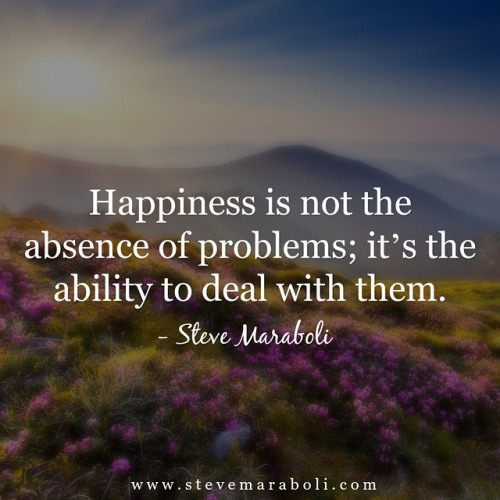
Everyone has bad events to deal with; it can’t all be plain sailing. It’s not what happens to you that matters, it’s what you do about it that does. It’s how you react to it.

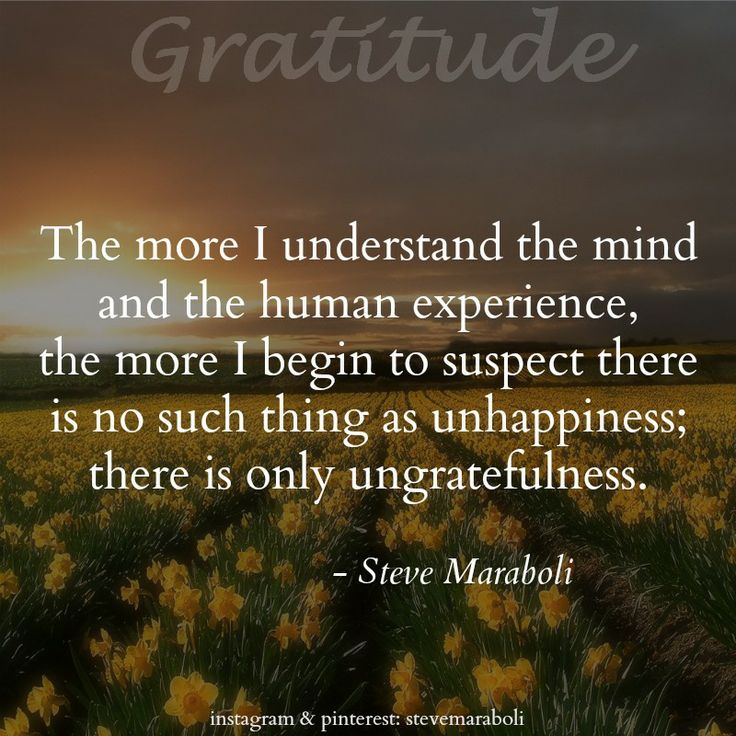
happiness - steve maraboli

I admit, it’s harder to stay positive when you’re under an onslaught, but thankfully weeks like that are relatively rare.

Mum and I went to Oxford on Friday, I needed to do a bit of research for my next novel, plus it meant we could have some precious mother/daughter time, as mum now lives near the ‘city of dreaming spires’.

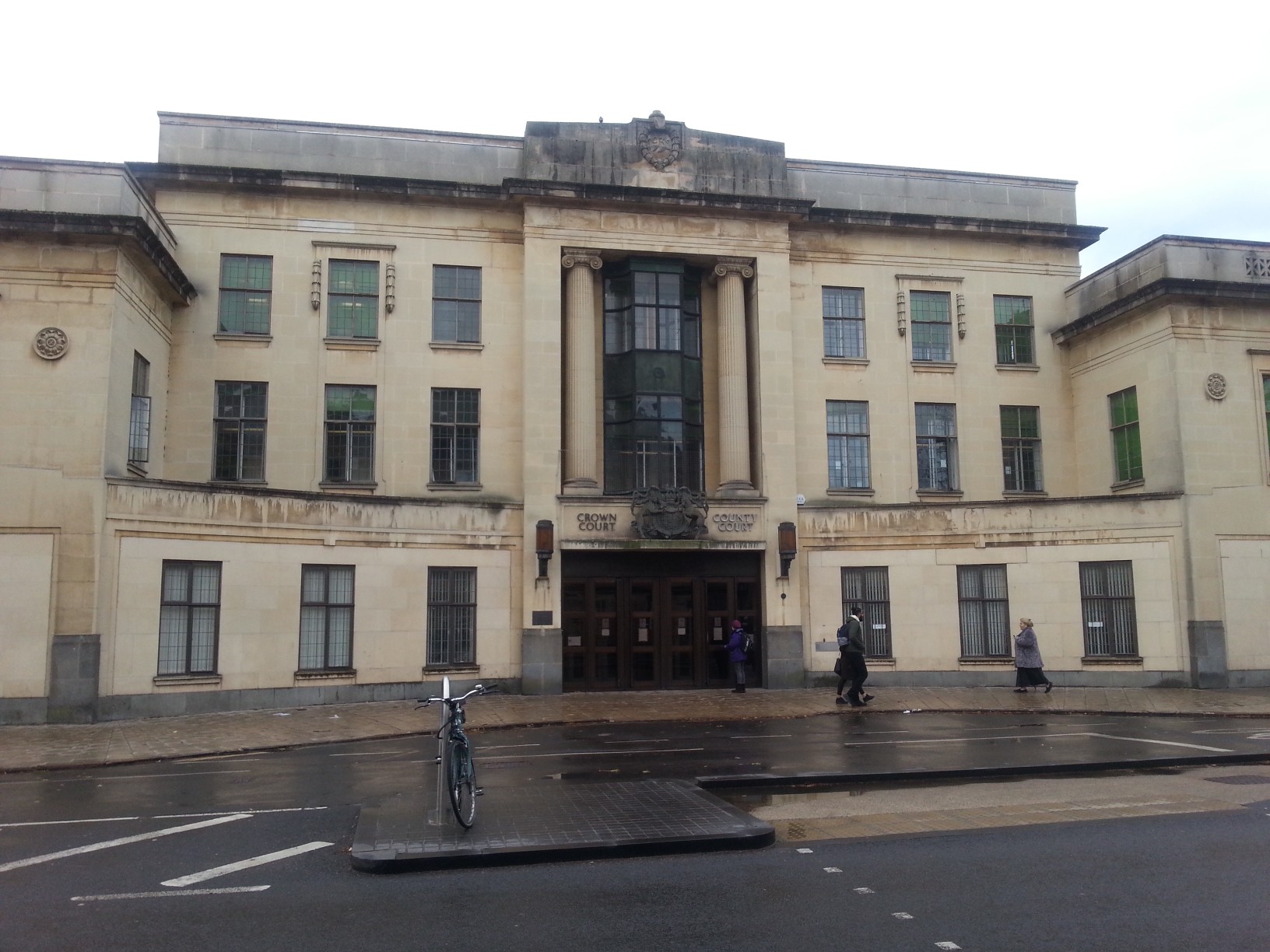
We spent a good hour and a half in Oxford Crown Court, mainly in courtroom two. After seeing a complainant be cross-examined in the witness box by a seemingly kind and softly spoken barrister who mercilessly went in for the kill at the end of her questions, I was grateful not to be in her shoes. I’m not permitted by law to reveal any details about what I heard.

Oxford Crown Court

Oxford Crown Court

Whilst I had sympathy for the person in the witness box, I was learning about the workings of a case. That defence barrister certainly operated like an iron fist cloaked in a velvet glove.

After hearing charges against another man for unmentionable crimes, I began to see that there is so much evil and drama going on in other people’s lives, that mine seemed relatively happy in comparison.

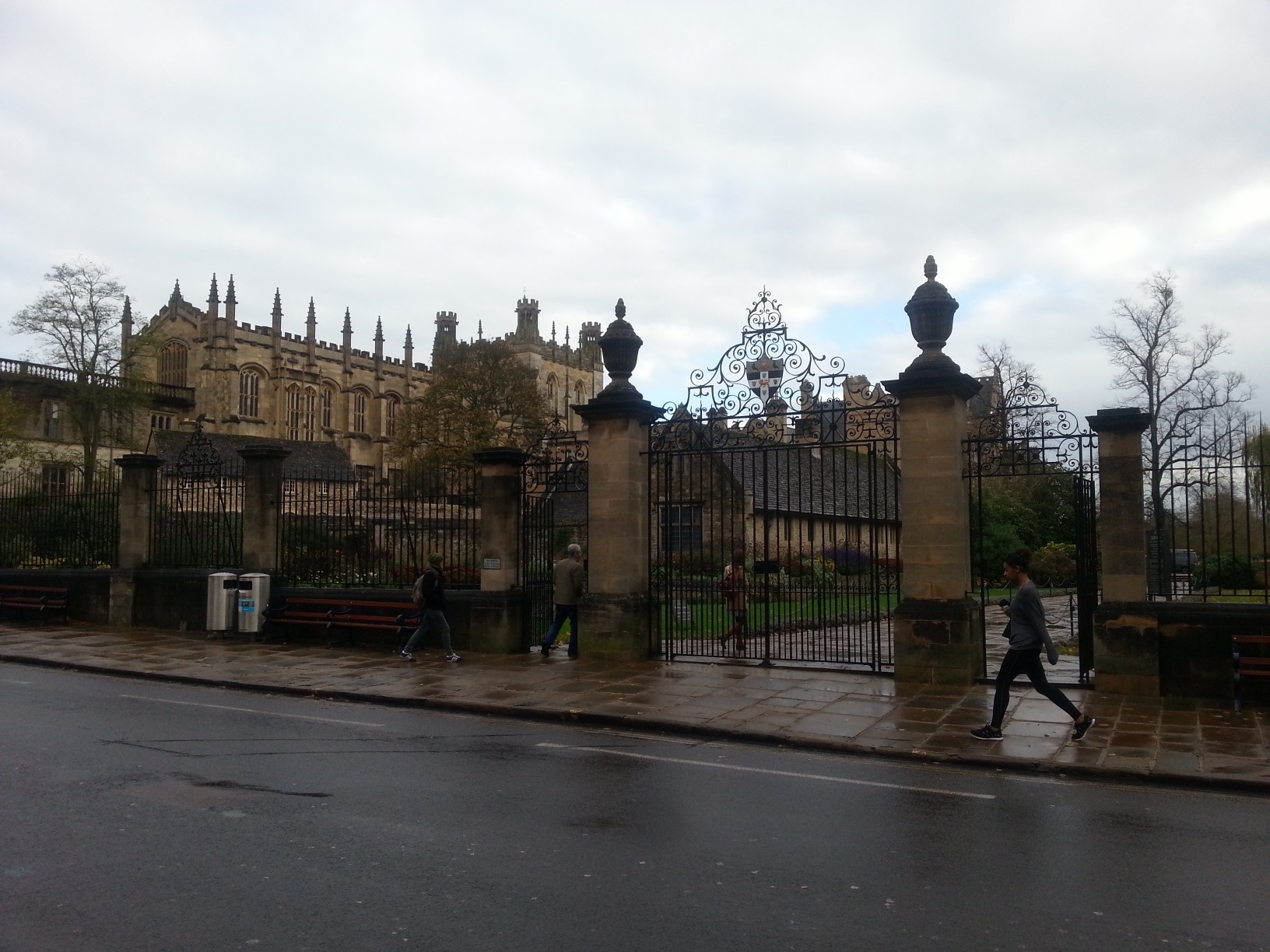
Passing Christ Church Cathedral en-route to the Crown Court

Passing Christ Church Cathedral en-route to the Crown Court

I almost decided not to go as we had a deluge of torrential rain that morning, but by the time we exited the court house at the lower end of St. Aldates the sun had come out and blue sky illuminated the city.  The heavy grey clouds that blanketed the sky earlier had completely evaporated. Mum and I had a short stroll around Christ Church before we had to get the bus back to the park and ride. It was a happy and productive day and I felt myself brightening up.

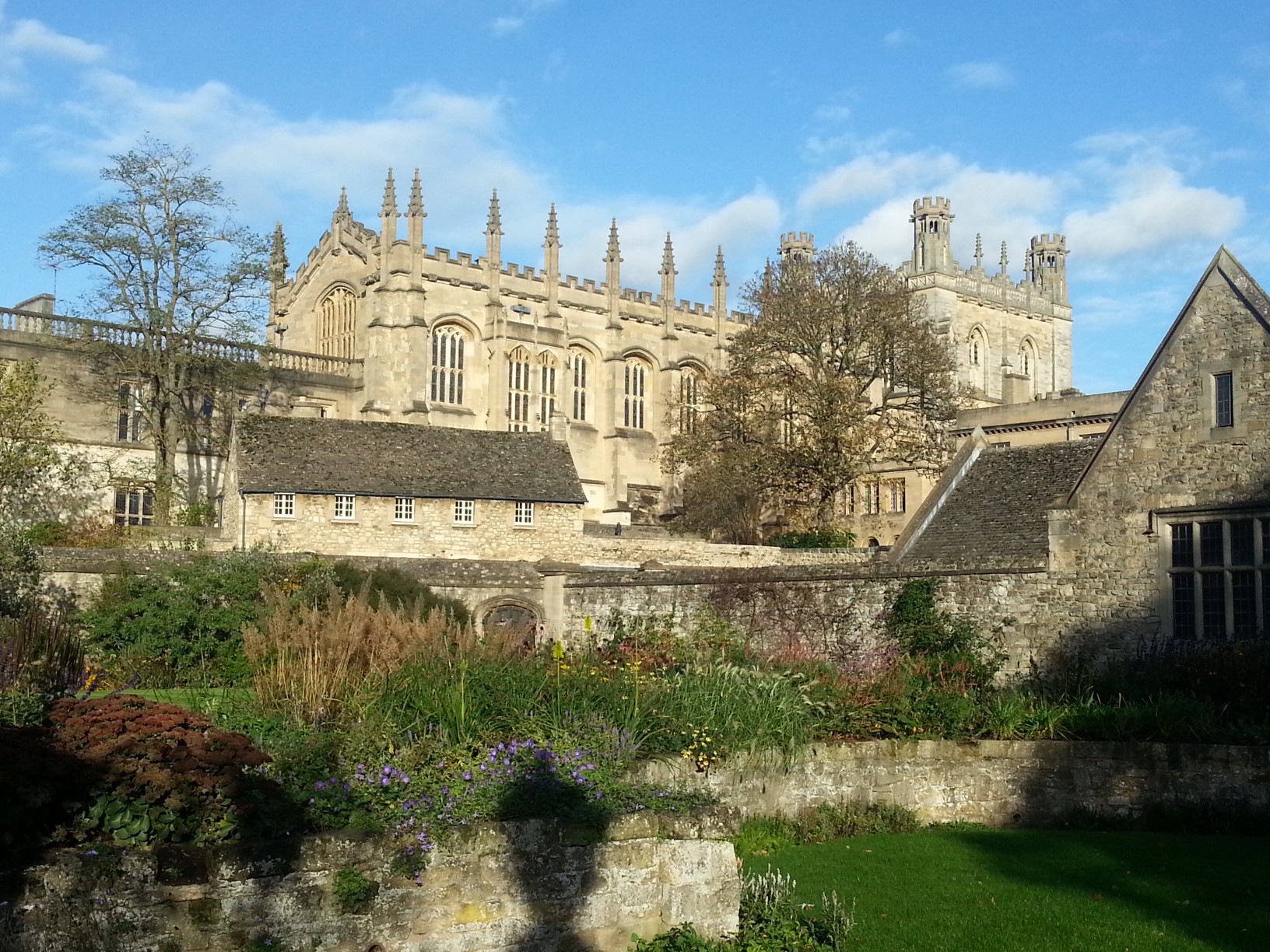
On our way back from Christ Church Meadow

On our way back from Christ Church Meadow

I stopped listening to the chimp on my shoulder and started making the case for all the success and good things I’ve done. This what Martin Seligman refers to as disputation. What I had perceived as a permanent failure was just a temporary setback. Having the setbacks all at once was probably a consequence of a deeper, more pervasive dissatisfaction with myself.

A cherished friend introduced me to Martin Seligman’s ground break book, Authentic Happiness, which is an invaluable companion right now! I took Martin Seligman’s Gratitude Test, and whilst the results weren’t bad, they weren’t particularly great. It’s obviously something I need to work on.

Gratitude - Steve Maraboli

Here’s the link to the Gratitude Survey, I recommend you give it a try!

The Authentic Happiness website has some great resources and further tests that you can complete anonymously to help further research into positive psychology.

Looking back, I can see that even in the midst of challenges there were some beneficial events unfolding and people helping me. I won’t mention them by name, but in my heart I am truly grateful to them!

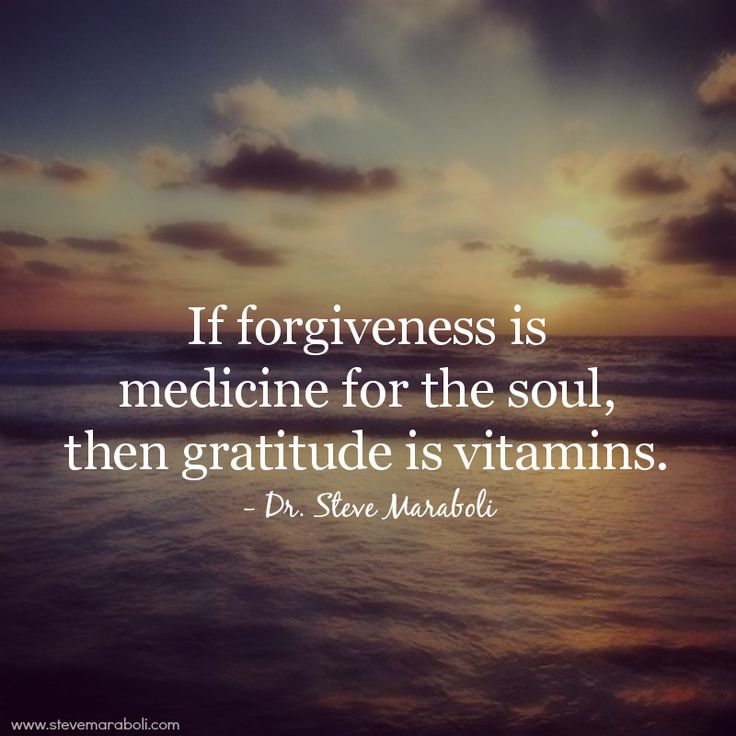
forgiveness - steve maraboli

This is an easy to follow presentation about optimism and gratitude based on the positive psychology work of Martin Seligman:

I’ve seen the video before of Joshua Bell playing his Gibson ex-Huberman Stradivarius in the Washington Subway experiment and feel it’s very relevant to show, (as it’s mentioned in the video above), to demonstrate how sometimes people don’t appreciate the beauty all around them in their lives:

Since my recent epiphany my energy levels are on their way back up, and I feel grateful for so many things: family and friends (both in my physical space and online), having a roof over my head, transport, food in the cupboards, healthy, happy children, a new book to write, my violin and music, a new direction with my health and an opportunity to top up flagging finances, plus many more blessings that I have taken for granted.

My wish for the future (stealing a phrase spoken by Abraham Lincoln in his first inaugural address), is that you, me and humanity can be happy, grateful and content despite the everyday threats and challenges we face, by being true to the better angels of our nature.

Chatting about #NaNoWriMo, Writing and #TheVirtuoso Live on Marlow FM

I’m going to let my voice do all the talking on this post!

I’d like to say a big thank you to Jean Wolfe (@jeanspark) for having me as her guest on Friday 6th November to talk about writing on her BizBuzz show. Jean broadcasts every Friday afternoon at 2 pm on Marlow FM.  She was such a warm, welcoming and knowledgeable host and I really enjoyed our conversation.

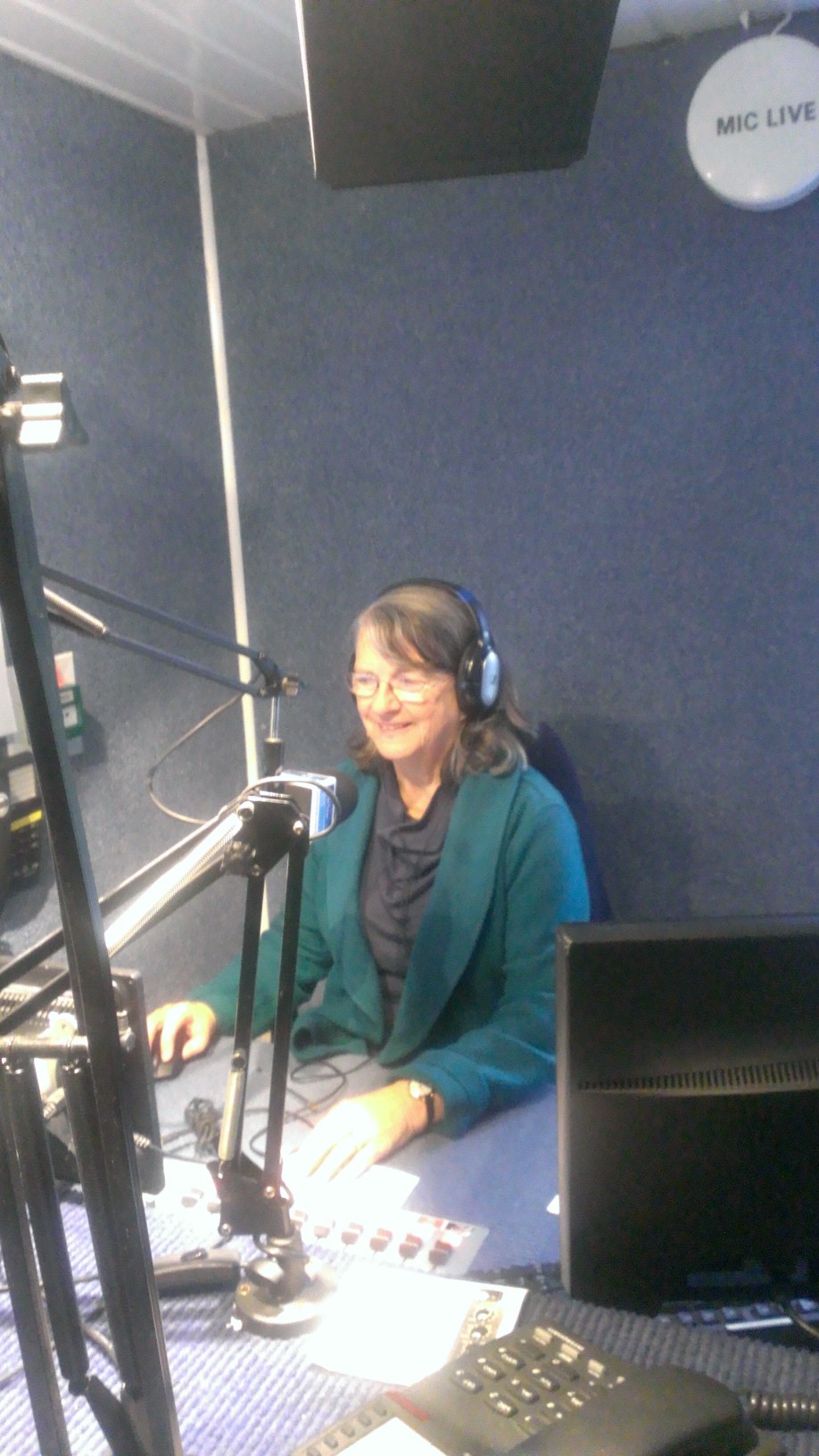
Jean at Marlow FM

The goal of NaNoWriMo is write 50K words in a month! I’m using this month to get my next trilogy of novels off the ground.

I don’t want to repeat everything we discussed on air, so without further ado here is the link to the interview which will be available with all the music interludes for the next three weeks.

I was delighted to be on my local radio station Marlow FM (@MarlowFM), especially as there are a few scenes in The Virtuoso that take place in the town!

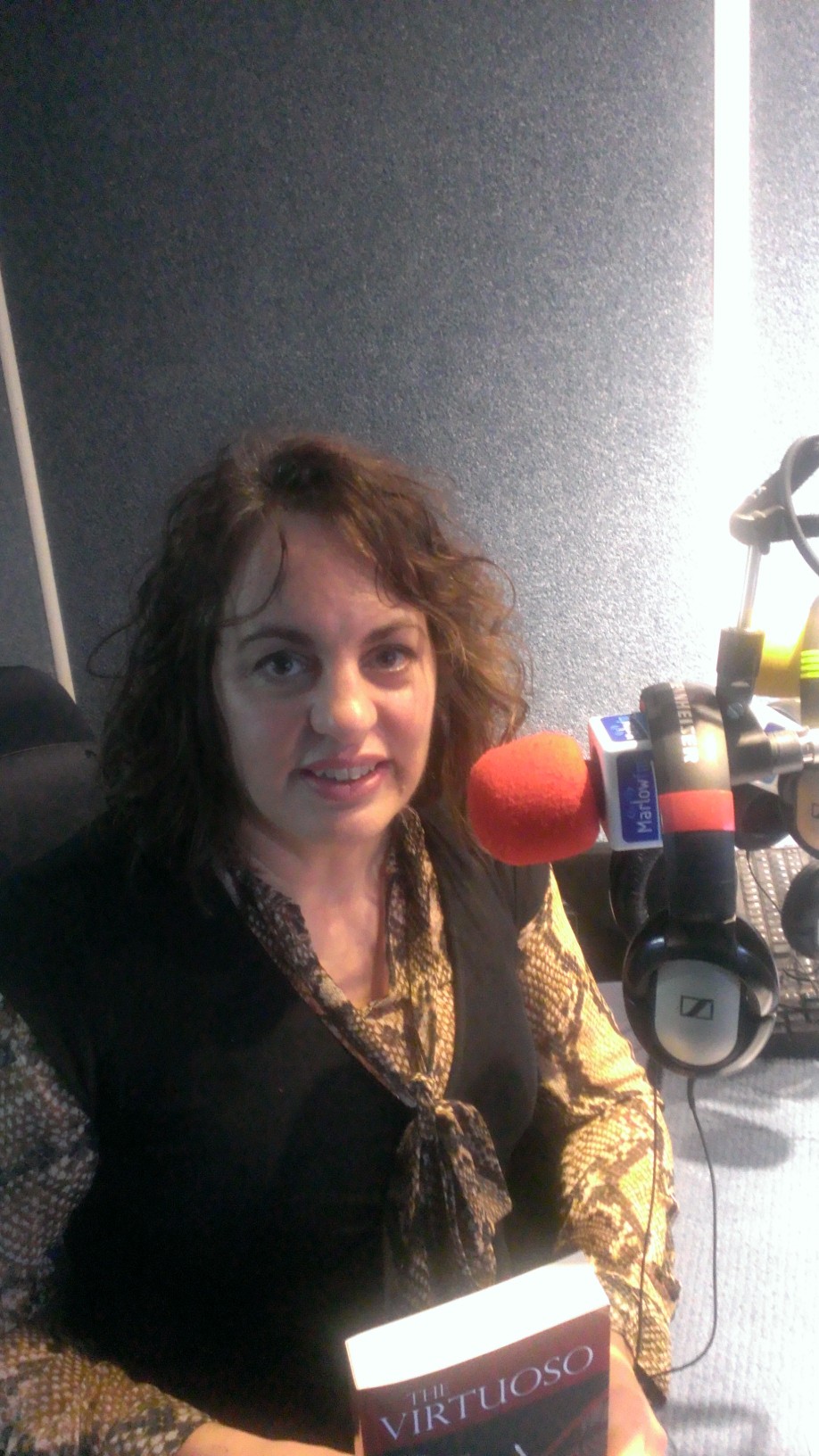
in the Marlow FM studio

And before I forget, here is Schubert’s marvellous String Quartet ‘Death and the Maiden’ (same title as my next trilogy) that we discussed in the interview:

Thanks for listening! I’d appreciate any constructive feedback, I did make an effort not to um and ah too much…

#SundayBlogShare – Equilibrium 🎭⛅

Life operates on an invisible pendulum,

Constantly moving and evolving…

Swinging to love; weightless and free,

Where gratitude and mirth overflow

But momentum is gathering,

It will swing back.


Pausing for an infinitesimal moment, in boundless joy

Before lurching towards the depths,

Passing through an emotional kaleidoscope

To its opposite partner: despair.

I feel its inevitable power and sway,

Like a heeling yacht at the mercy of the ocean.


Please don’t let those dark tentacles pull me down,

Dragging me towards the inner abyss,

Where blackness engulfs and consumes.

A void, a vacuum of happiness and air

I cannot breathe, burdens are impossible to bear,

Hope – do not desert me, I will become nothingness.


Realm of unmet desire, stifled purpose, broken dreams

And so it goes;

I teeter between light and dark,

Passing through the chromatic scales of life,

Spared no notes; resonance for every season.

A symphony of joy, a sonata for sorrow,


Plucked and played at each end of the spectrum,

My journeyed heart yearns for equilibrium.

It can be the organ of my ecstasy, or my downfall…

There is no way to ignore its vibrations.

I am the composer of my soul’s music,

I alone conduct the sound of my energies.


Singing true to my keys: be they major or minor.

Will I soar on a meaningful adagio?

Or become enslaved to a never-ending fugue?

Will my melody ever be heard in the vast universe?

Listened to or ignored, my music is being performed.

I will play it, then let it go.


Those tunes will come to their finale,

I must remain in control; in balance…

At home in the symmetry of my soul;

That place of perfect peace and serenity.

Why must I experience such extremes?

Perhaps that is the nature of intense passions?


Without the lows there would be no highs.

I cannot deny my feelings,

They are part of me, not greater than the whole.

Once felt, I endeavour to release them,

Send them on their merry or miserable way,

And return, once again to equilibrium…

By Virginia Burges