Remarkable Women: The Life and Times of Gwenllian ferch Gruffydd, (Warrior Princess of Wales)

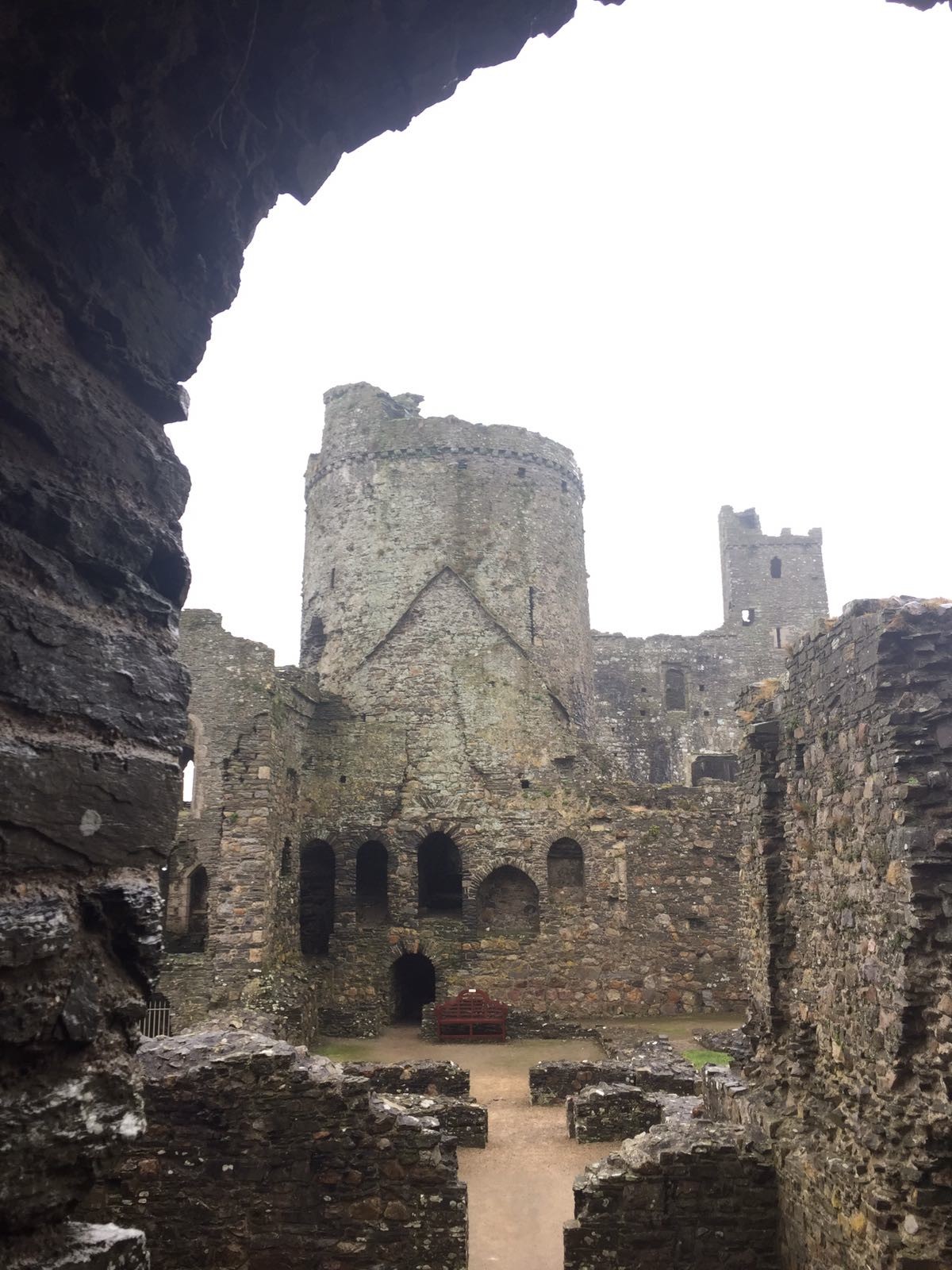
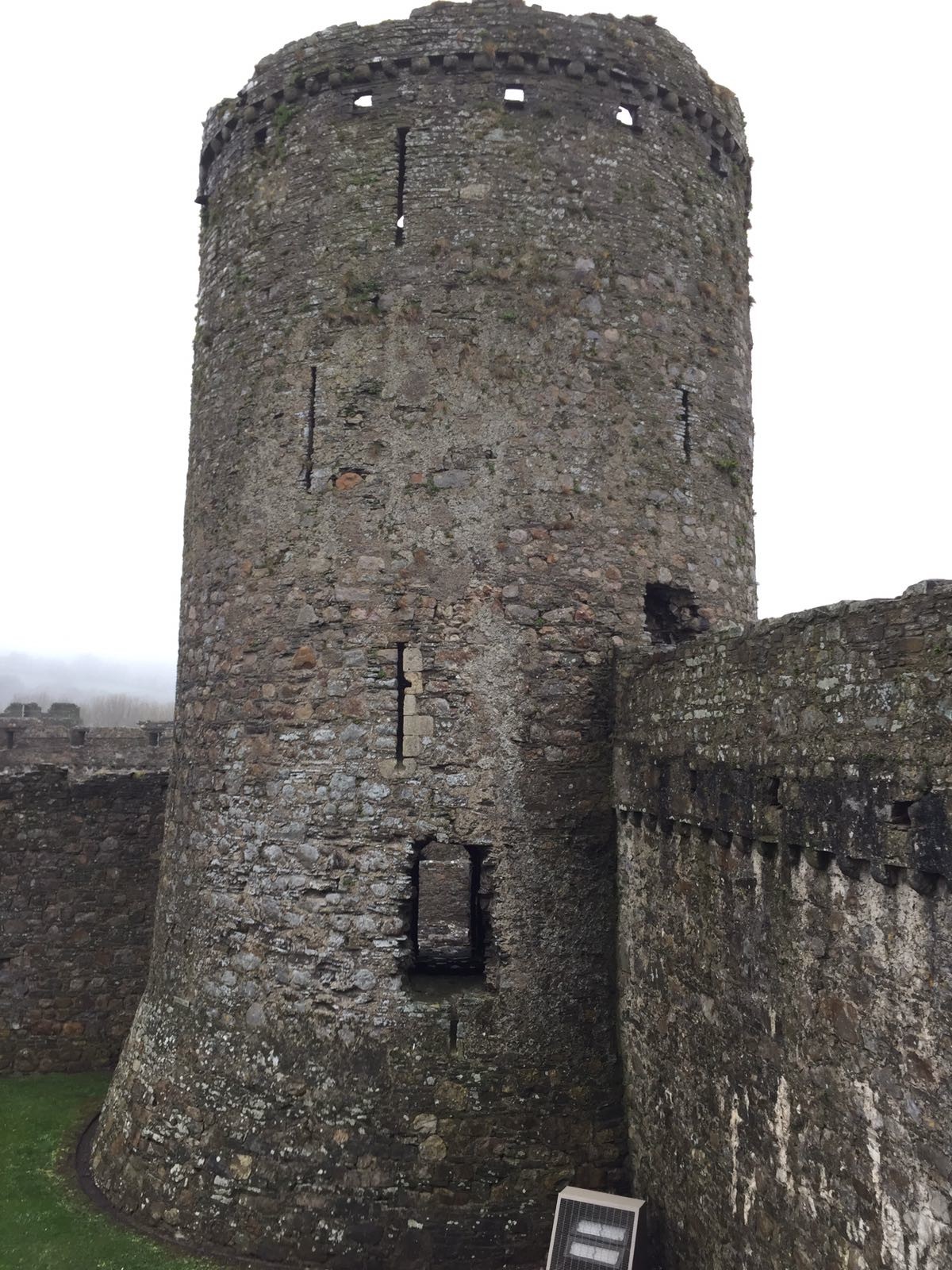
On a cloudy afternoon in March my son and I stood at the top of the tallest tower of Cydweli Castle in Kidwelly, Wales. Sleety rain dispersed over us, cold droplets like tiny needles driven into our flushed faces on the crest of a biting wind. Panting and puffing, our breath mingled with the boisterous breeze as we recovered from a steep and winding climb up the tower, our feet carefully treading over centuries of narrow, worn stone.
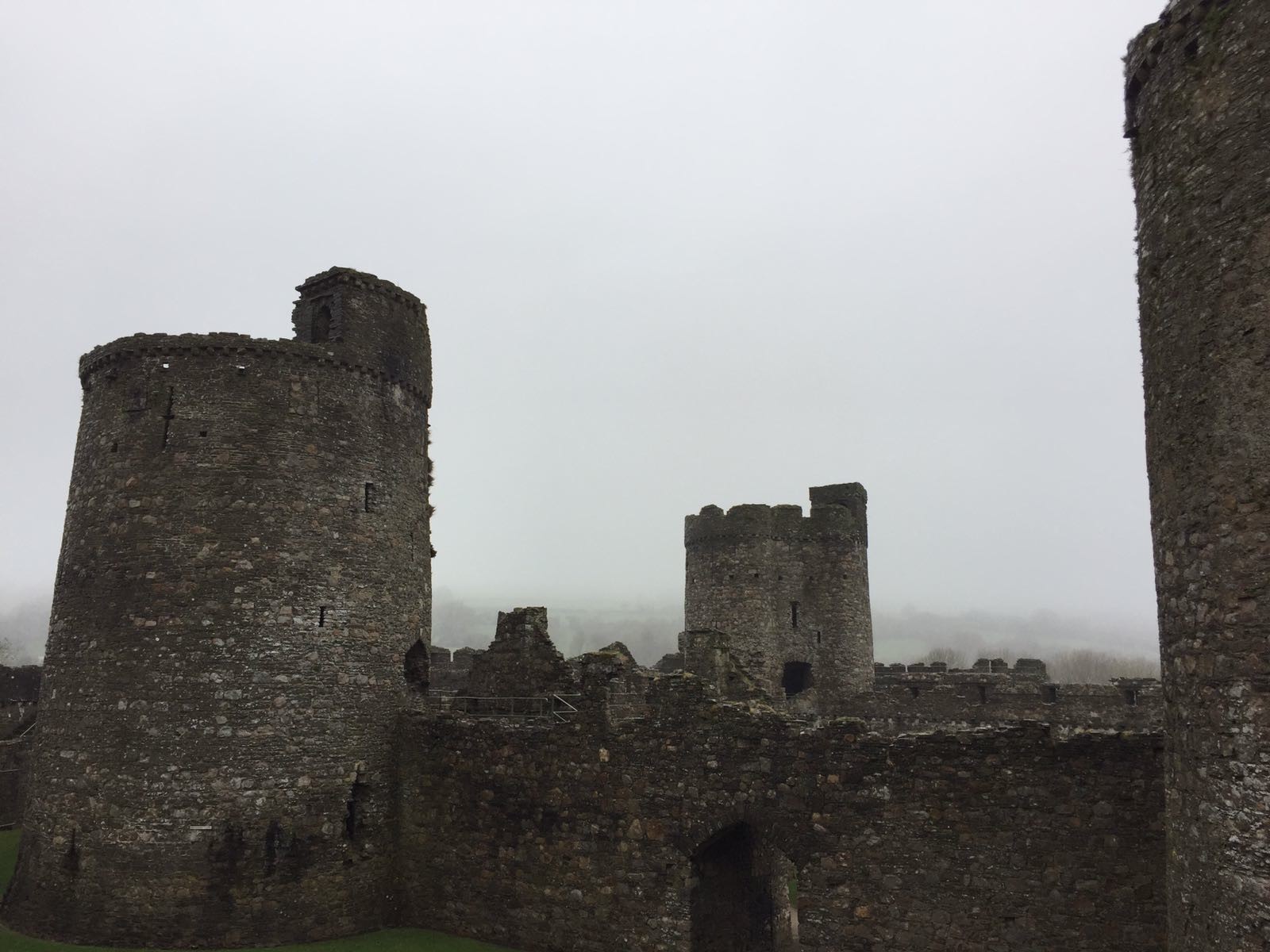
Towers and battlements of Cydweli Castle

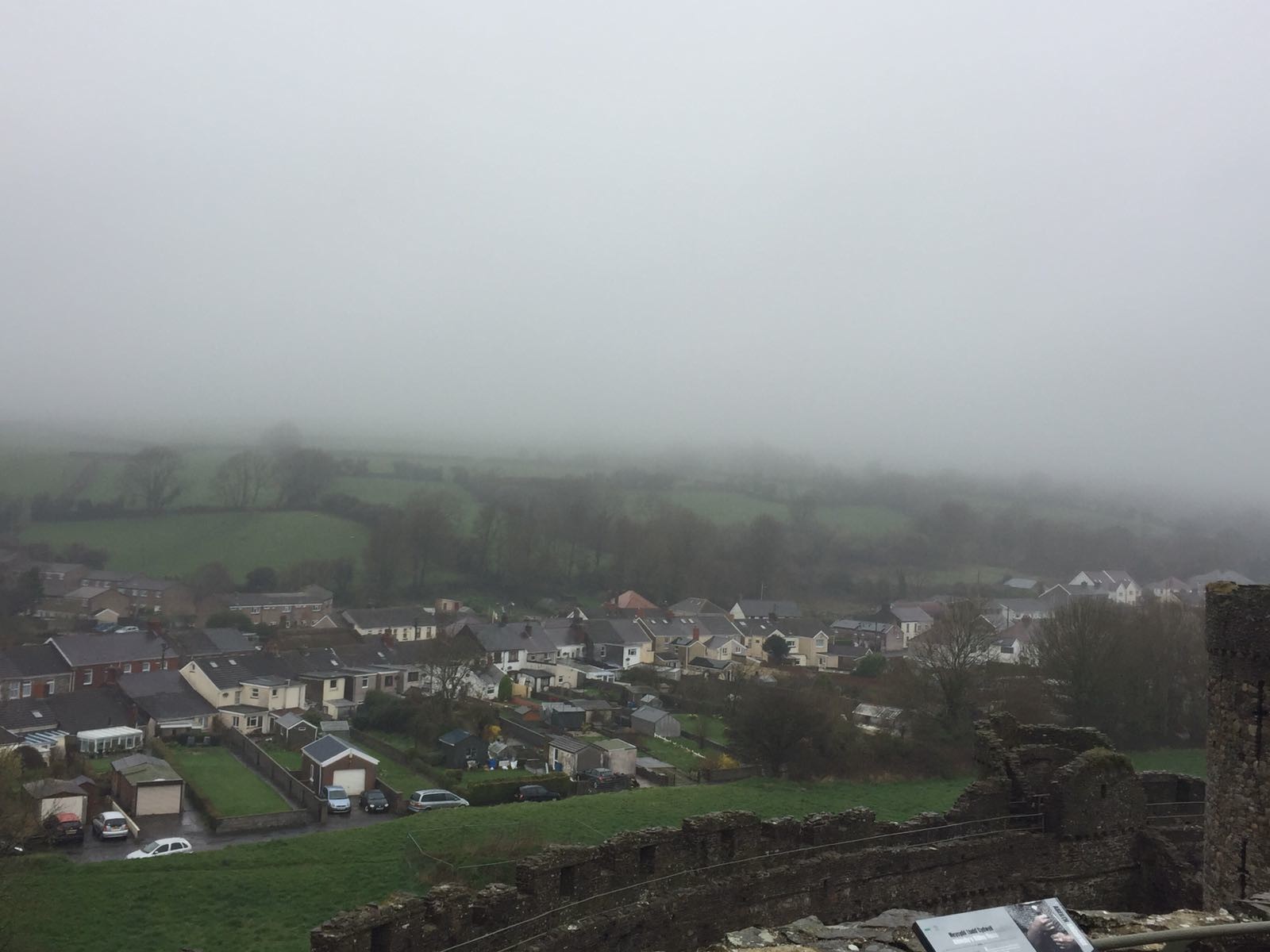
A low lying mist shrouded the rolling green landscape around us. On one side the view looked over the coast of Camarthenshire, a narrow estuary and marshland that had been developed with housing, leading to the village and the surrounding fields and hills.

Over a thousand years of history lay silent around us except the rushing of the elements and the occasional whooping of my daughters elsewhere in the castle.
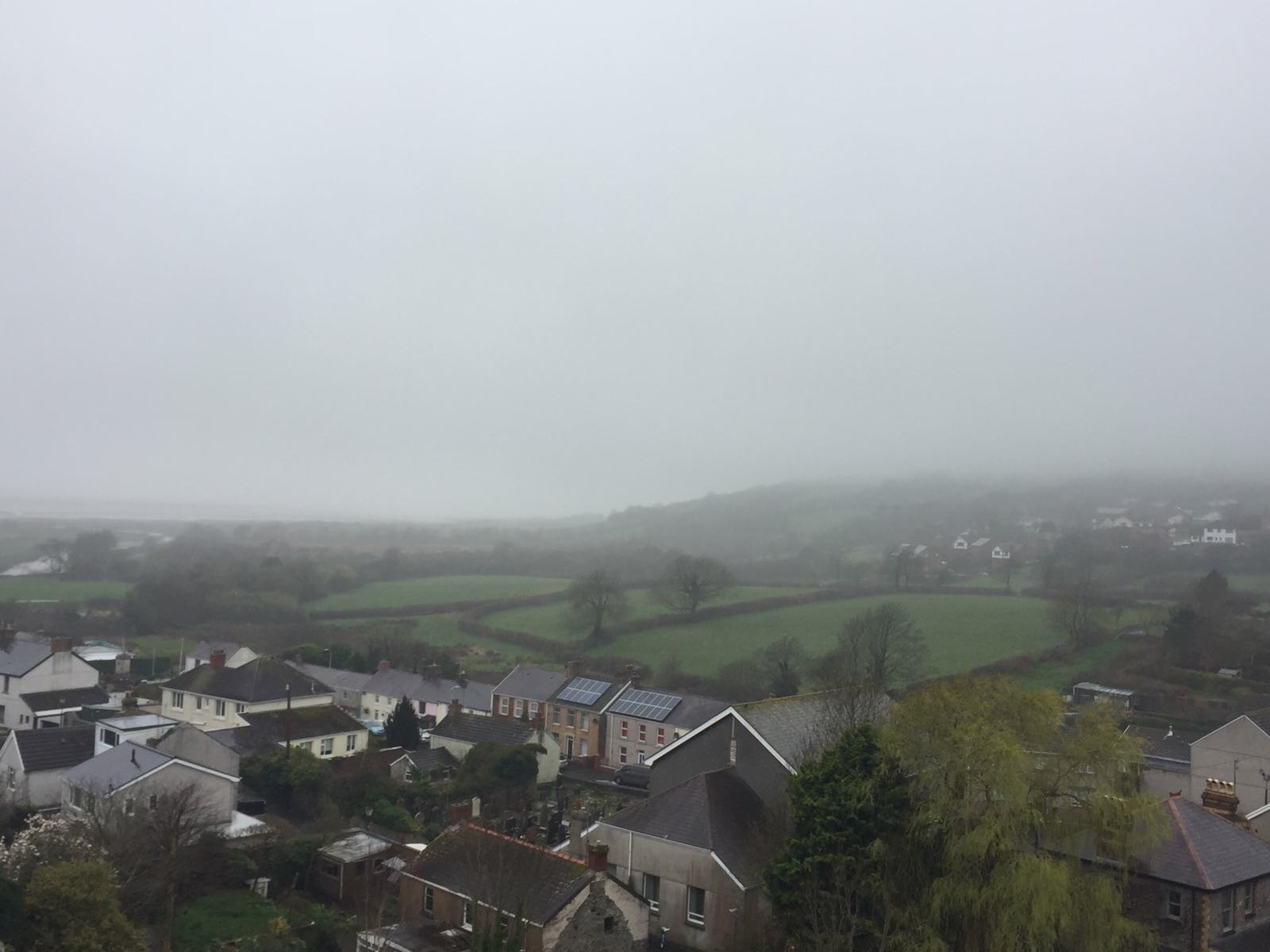
We looked out over Maes Gwenllian (Gwenllian’s Field), about 500 metres from the castle, near woodland. The once stirring battle cries of the brave warrior princess, Gwenllian echoing silently down over the centuries through the legend of her deeds.
After I learnt of her story I was inspired by her courage and sacrifice and felt she deserved to be remembered in my writings.

Gwenllian ferch Gruffydd (1100 – 1136)  

Princess Gwenllian was the youngest daughter and child of Gruffydd ap Cynan (1055 – 1137), King of Gwynedd, and his wife Angharad. Born at the family seat in Aberffraw, she had four older sisters (Mared, Rhiannell, Susanna and Annest) and three older brothers (Cadwallon, Owain and Cadwaladr). She was said to be beautiful with long, flame red hair, intelligent and well educated.

After the French Norman Invasion led by William the Conqueror in 1066 turmoil had been unleashed across the kingdom. The Welsh lords had lost many of their lands and possessions to the Normans, who built impressive fortifications and castles in Aberystwyth, Cardigan, Camarthen, Pembroke and Cydweli.

These castles stood on land that had once belonged to the Kingdom of Deheubarth.
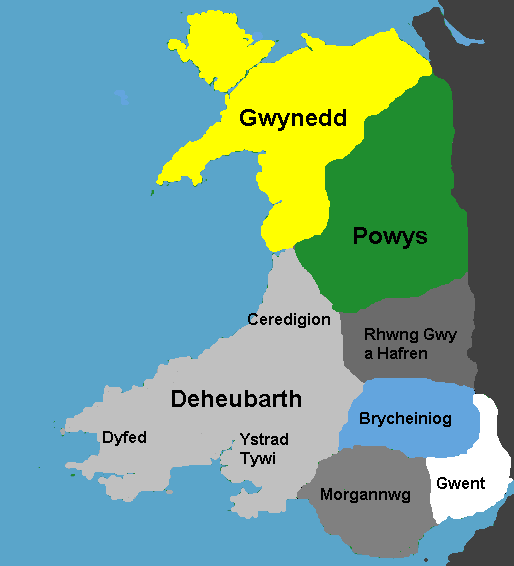
Map of Welsh regions c. 1093 when Rhys ap Tewdwr died.

It was in this environment of repression, rebellion and Welsh patriotism that she was raised. Even though physically striking she was no wilting violet, having been taught how to use a sword by her father!

Gwenllian was about 13 years old when she first met the love of her life, Gruffydd ap Rhys, prince of Deheubarth. He had received a warm welcome from her elderly father and promptly fell in love with his spirited daughter Gwenllian.
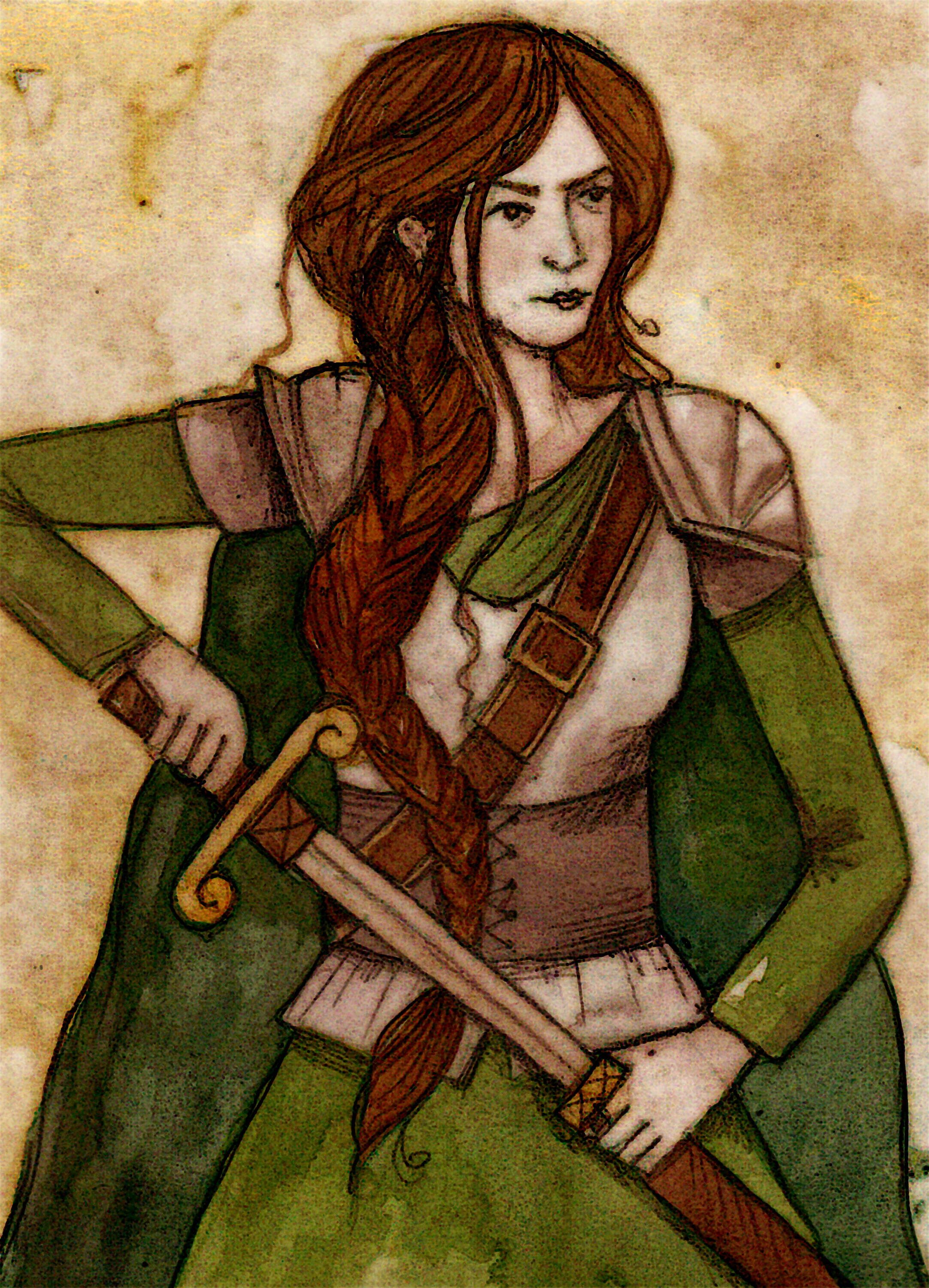
The couple eloped to Gruffydd’s castle home of Dinefwr in the Tywi Valley, Deheubarth. They had four sons: Morgan (1116 – 1136), Maelgwyn (1119 – 1136), Maredudd (1130 –1155) and Rhys (1132 – 1197). Gwenllian and Gruffydd were a kind of medieval version of Robin Hood and Maid Marion, making daring raids on the Normans in Deheubarth, redistributing their goods and wealth among the local Welsh population.

Their raids would surely have been an annoyance for the Normans, but no significant turning point came until early 1136, shortly after the passing of Henry 1st, the Norman King of England. His death had created a power struggle between his nephew, Stephen of Blois and his daughter, The Empress Matilda, in a civil war known as ‘The Anarchy’.

A revolt began in South Wales, where a Welsh army lead by Hywel ap Maredudd, Lord of Brycheiniog defeated Maurice de Londres at Llwchwr near Swansea. The Norman lord fled back to Cydweli Castle.

Sensing the Normans were on the run, Gruffydd and Gwenllian made the fateful decision for Gruffydd to ride north with his men to gather support and the forces of her father based in Gwynedd in the north. An army of that size would have been able to drive the Normans out of Deheubarth.

Battle and betrayal at Cydweli Castle

With her husband and the majority of his men away, Gwenllian and her sons were left vulnerable. In the early hours of the 28th of February 1136 Gwenllian received news that the Normans were amassing an army at Cydweli Castle, likely aware that Gruffydd and his men were away. Gwenllian had already decided to fight should the need arise, and after making sure her two younger sons Maredudd and Rhys were safe she rallied support from the local men.
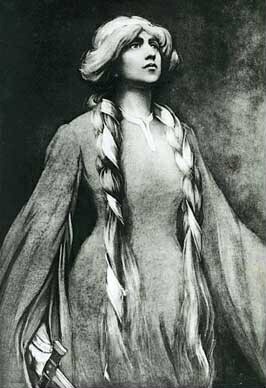
Working men from the Tywi Valley left their labours to join Gwenllian in defence of their lands. Maybe she said something like:

“Men of Deheubarth, will you join me in battle? I am the daughter of a king, but you are the sons of Wales. This is your land, and the Normans have already stolen much of our birthright. Shall we let them steal even more?”

Gwenllian, the Warrior Princess, led her army consisting of her two eldest sons and around two hundred ill-equipped local men and by the afternoon they had reached Cydweli Castle. The short winter daylight hours meant they had to camp nearby. She decided on two strategies, namely lightning raids which she had organised before with her husband, while waiting for his return to launch a major offensive.

She split her troops in half; one group to remain with her at their camp in the woodland to the north of the castle, intent on cutting-off supplies to Maurice de Londres in the castle, while the other group, headed by a local chieftan, took men by boat to stop the Normans landing on the coast.
This may well have worked, had it not been for the traitor in her midst. Gwenllian was betrayed by no less than her chieftan, Gruffydd ap Llewellyn, who instead of cutting-off the coastal landings as instructed, met with Maurice de Londres and gave away Gwenllian’s position.

She had lost the element of surprise and was the victim of a surprise attack herself as Gruffydd ap Llewellyn and the Normans descended from Cydweli Castle along the banks of Gendraeth Fach, their banners fluttering in the wind. Soon they had surrounded Gwenllian’s camp.

A fierce battle ensued, with archers and dagger men, and eventually Gwenllian was felled from her horse. Her eldest son Morgan was killed trying to protect her, and Maelgwyn was made to watch as his injured but defiant mother was captured.

The cruel Norman Lord, Maurice de Londres, who instead of acting in a chivalrous manner towards a woman captive (which was the etiquette of the time), decided she should be executed.

Poor Gwenllian was spared being burned at the stake but was beheaded there and then on the battlefield. A gruesome but quick death. It is said that a spring welled up in the place where she died, fighting to the end for Welsh freedom.

When her husband Gruffydd ap Rhys and her brothers Owain and Cadwalar heard that Gwenllian and her two sons had perished at the hands of the Normans they were filled with grief and vowed revenge. Her death was the catalyst for the Great Revolt of 1136.

Revenge for Gwenllian!

The furious Welshmen attacked the castles of north Ceredigon, slaughtering the Normans there. They had a further victory at Cardigan in 1136, but Gruffydd ap Rhys died only a year after his wife. Of their four sons only the youngest Rhys ap Gruffydd lived to old age.

There is a touching monument to Princess Gwenllian at Cydweli Castle, and stories abound of her headless ghost roaming the field where she was so mercilessly slain. For centuries after her death Welshmen used the battle cry, “Revenge for Gwenllian!”

For decades after her death the welsh and the Normans battled over castles and territories, but eventually her youngest son Rhys ap Gruffydd (The Lord Rhys), became the greatest Welsh lord of his time. He regained many of the lands his family had lost in Deheubarth and won others to boot.
In 1159 he retook Cydweli Castle from the Normans avenging his mother’s murder. He rebuilt the fortress in 1190 and held it until his death in 1197. Rhys also claimed Cardigan Castle, where in 1176 he founded the first Welsh Eisteddfod. Thus was started a festival tradition that continues to this day. Singers and musicians have performed for centuries, long after the court poets, harpists and bards of Lord Rhys’ era.

Royal descendants

The title of ‘Prince of Wales’ may well have first been used by the Lord Rhys. He must have been a man of vigour as he was known to have fathered at least nine sons and eight daughters. There was a bitter feud between his eldest legitimate son, Gruffydd ap Rhys (II) and his eldest, illegitimate son, Maelgwn ap Rhys.

Two of his daughters were named Gwenllian after his legendary mother, but the younger Gwenllian (1178 – 1236) married Ednyfed Fychan, seneschal of Gwynedd under Llywelyn the Great, and through her offspring her grandmother, Gwenllian ferch Gruffyd became an ancestor of the Tudor dynasty.
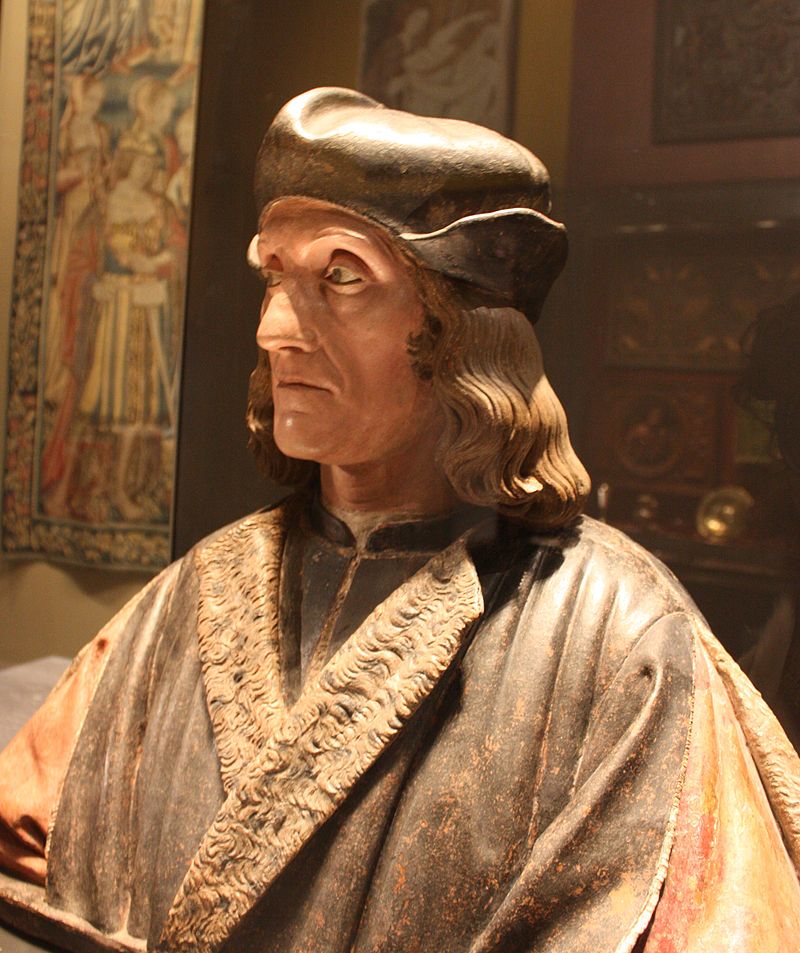
Posthumous bust of Henry VII by Pietro Torrigiano made with Henry’s death mask c. 1509 – 1511

Through the Tudors inter-marrying with the House of Stuart, Gwenllian is an ancestor to the House of Windsor and also an ancestor of several ruling houses in Europe. When Henry Tudor landed in Pembrokeshire, Wales in 1485 to make a bid for the English throne, his descent from the Lord Rhys (and Gwenllian), was one of the factors which enabled him to attract Welsh support (Henry flew a Welsh dragon banner at the battle of Bosworth Field).

Caniad Hun Gwenllian

Gwenllian is remembered in a traditional Welsh lullaby known as the ‘Caniad Hun Gwenllian’, by Meilyr Brydydd (1100 – 1137), chief bard at the court of Gruffydd ap Cynan, King of Gwynedd.

Sleep, Gwenllian  

Sleep, Gwenllian, my heart’s delight

Sleep on through shivering spear and brand,

An apple rosy red within thy baby hand;

Thy pillowed cheeks a pair of roses bright,

Thy heart as happy day and night!

Mid all our woe, O vision rare!

Sweet little princess cradled there,

Thy apple in thy hand thy all of earthly care.

Thy brethren battle with the foe,

Thy sire’s red strokes around him sweep,

Whilst thou, his bonny babe, art smiling through thy sleep

All Gwalia shudders at the Norman blow!

What are the angels whispering low

Of thy father now

Bright babe, asleep upon my knee,

How many a Queen of high degree

Would cast away her crown to slumber thus like thee!

Our Welsh sojourn was fun and fascinating, summed up for posterity on a blog with photographs (Wales is Always Poetic, Even in the Rain).  For me Gwenllian really embodies the spirit of Wales, wild, beautiful, patriotic, cultured and courageous, having left a tremendous historic legacy on the UK and the world.

The Great Virtuoso Violinists/Composers of the 19th Century: Vieuxtemps

“Vieuxtemps’ art – expressive, human, romantic and distinctive – belongs not only to history, but to the contemporary world as well”. ~ Prof. Lev Ginsburg

To my shame and consternation I have never played a piece of music by Vieuxtemps on my violin. I honestly wasn’t that familiar with his repertoire before reading up about him. I knew of him, but I had no idea just how beautiful and virtuosic his music really is.

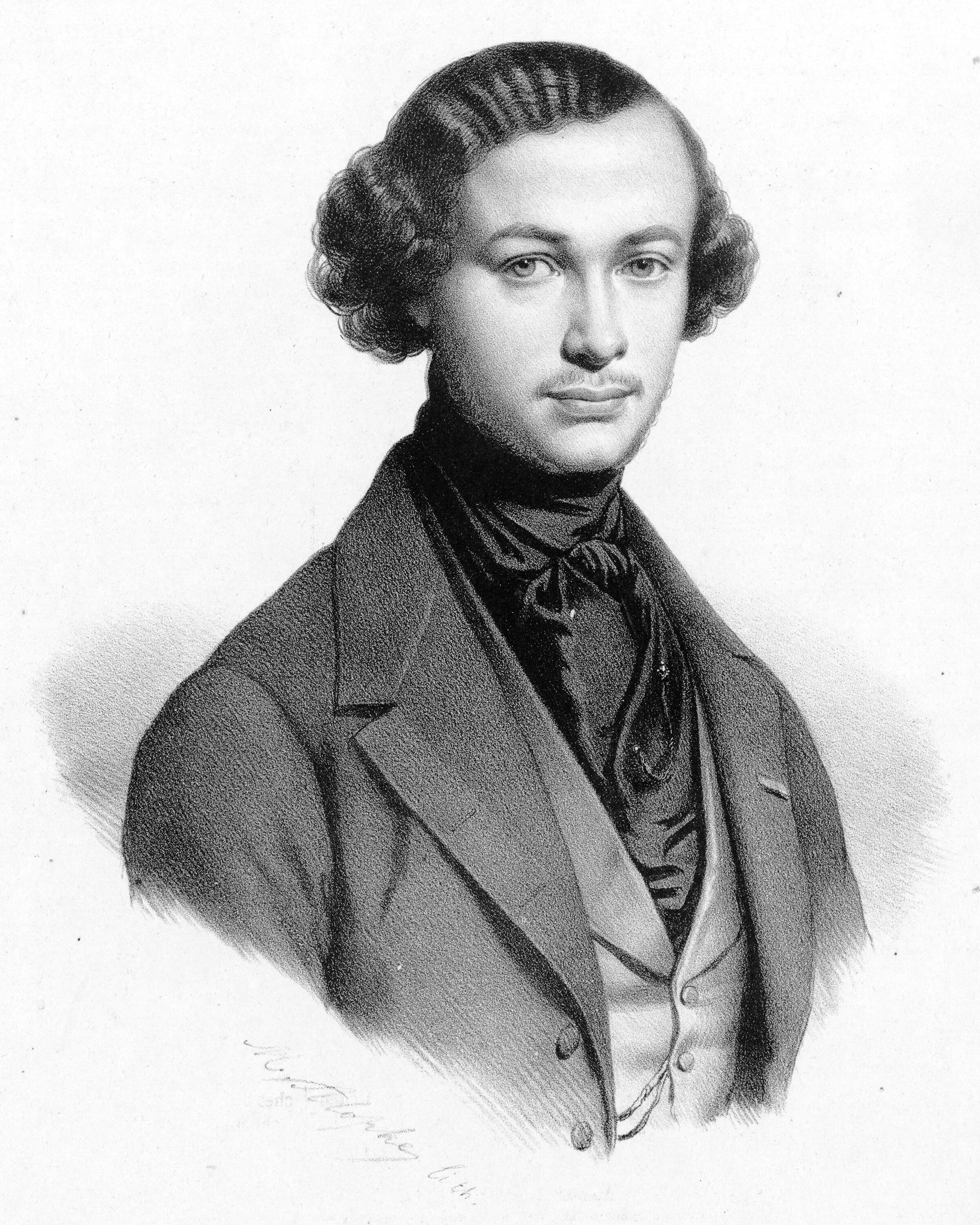
Henri Vieuxtemps by Marie Alexandre Alophe

An outstanding virtuoso violinist of the romantic era, he mastered his performance craft and was completely in tune with what was and wasn’t possible on the violin; pushing soloists to their technical limits in his violin concertos.

He had almost certainly been influenced by the brilliance of the famous violinist Paganini. The two met in London in 1834 when Paganini was in the twilight of his career and Vieuxtemps had given his debut in the city. Both were said to be mutually impressed with each other’s talents, but differed in their musical philosophy.

Vieuxtemps eschewed excessive showmanship, and although his compositions were undoubtedly rhapsodic and extremely technically challenging, he never sacrificed unbridled virtuosity at the expense of the music. This philosophy was impressed upon his renowned Belgian pupil, Eugène Ysaÿe, who quoted his teacher: “Not runs for the sake of runs – sing, sing!”

If one could know a person through his creative output I would say that Vieuxtemps possessed a great love for the violin and wanted to explore what it was capable of within the parameters of aesthetic enjoyment.  It seems that the virtuosity in his music is the epitome of his flair and improvisational skills, but it is never misplaced or garish.

A man of taste, passion and emotional intelligence, his numerous qualities translated into his solo career and romantic concertos, an enduring legacy for the most poignant and expressive instrument of all…

Henri Vieuxtemps (17 February 1820 – 6 June 1881)

 Although Henri Vieuxtemps, (literally translated as Henry ‘old times’) was incredibly popular during his lifetime his work has slipped into comparative obscurity today.

The young Henri Vieuxtemps – Portrait of a Violinist by Barthelemy c. 1820s

His early development seems to follow a similar path to that of others I have written about in the violin virtuoso/composer series, in that he was a child prodigy from the age of four. Oh what it must be like to be gifted from the get-go! Henri was initially tutored by his father, a weaver by trade, but also an amateur violinist and luthier.

Vieuxtemps the virtuoso

Vieuxtemps made his first public debut playing a violin concerto by Pierre Rode aged six, and later came to the attention of illustrious violinist/composer Charles Auguste de Bériot  at one of a series of concerts in Brussels and Liege. De Bériot became his private tutor and took the young Henri to Paris in 1829, where he made his debut with another Rode violin violin concerto.

The July Revolution of 1830 in Paris and de Bériot’s marriage to Maria Malibran forced his return to Brussels where he continued to perform for a time with Pauline Garcia, de Bériot’s sister-in-law.

During a tour of Germany in 1833 Henri met and became friends with Louis Spohr and Robert Schumann. He also garnered the attention and admiration of Hector Berlioz during his touring of various European cities.

Now established on the European classical circuit Vieuxtemps also made three concert tours of the USA, firstly in 1843 – 44, in 1853 and again 1857 – 58.

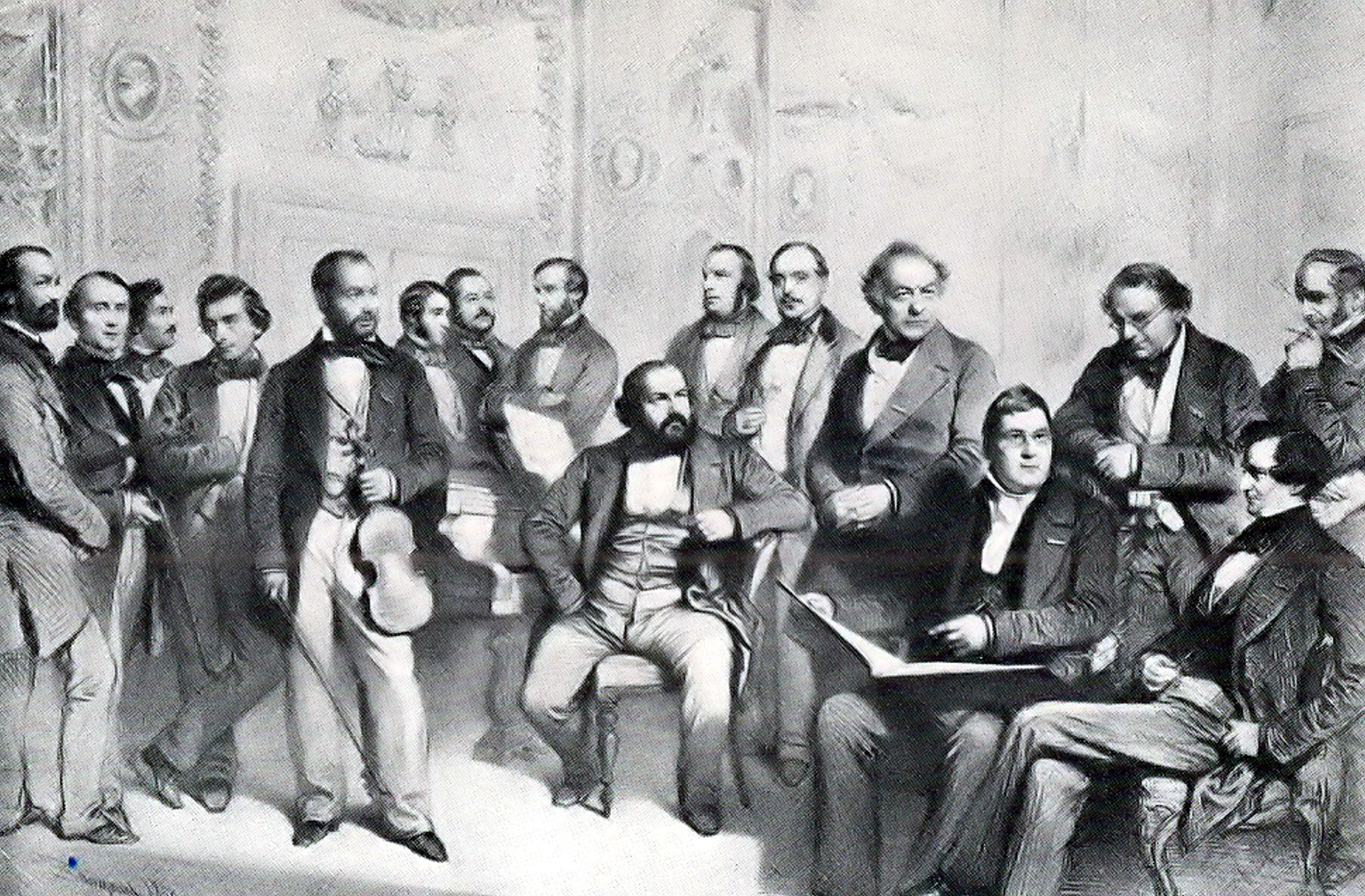
Henri Vieuxtemps standing (with his Guarneri violin), alongside noted musicians and composers who performed in John Ella’s 1853 season of the Musical Union. Louis Spohr is seated with his score, with Berlioz next to him.

Perhaps it was the influence of traditional American folk music that inspired his composition of the ‘Yankee Doodle’ Souvenir d’Amérique.

A brilliant encore by Joshua bell:

Vieuxtemps in Vienna

Not content with performance alone he studied composition with Simon Sechter in Vienna, after having performed Beethoven’s Violin Concerto in D Major as his debut in the composer’s home city. A mature work indeed for a tender teenager of fourteen, and a concerto he would champion throughout his career. He also became a pupil of Antonin Reicha in Paris.

Franco-Belgian School

Vieuxtemps was an influential performer, composer and teacher, especially in the history of the Franco-Belgian School of violin during the mid nineteenth century. The school dates back to the evolution of the modern violin bow such as those made by François Tourte, often referred to as the Stradivari of the bow.

Qualities favoured by the Franco-Belgian School (and most likely epitomised by Vieuxtemps) included elegance, a full tone with a sense of drawing a ‘long’ bow with no jerks, precise left hand techniques, and bowing using the whole forearm while keeping both the wrist and upper arm quiet, (as opposed to Joseph Joachim’s German school of wrist bowing and Leopold Auer’s Russian concept of using the whole arm.)

Vieuxtemps the composer

What stood out for me listening to and discovering his violin music and overall oeuvre was the singing, ‘bel canto’ quality of the violin, especially in the higher registers. This is a quality that Tartini also embodied. The works aren’t overly violin dominated but encompass the entire orchestra in partnership with the violin and are richer for it.

Whilst he may not be on par with Beethoven in terms of composition, (whom he admired and performed), alongside Bach, Mozart and Mendelssohn, he certainly used his intimate knowledge as a player to bring out the emotion, rising above the obstacles of technical difficulty.

His violin music has a freedom to express emotion that is most endearing and attractive for a soloist; enabling a player to impart their own style and personality on the music.

Vieuxtemps’ violin concertos

Henri Vieuxtemps wrote seven violin concertos, the first being completed in 1836, but published as number 2 in F sharp minor, opus 19. Hrachya Avanesyan does the honurs:

Violin Concerto No.1 in E-major, Op. 10 (actually his 2nd), performed by Misha Keylin with Dennis Burkh and the Janácek Philharmonic Orchestra:

Violin concerto No. 3 in A Major, Op. 25 composed in 1844, performed by Misha Keylin:

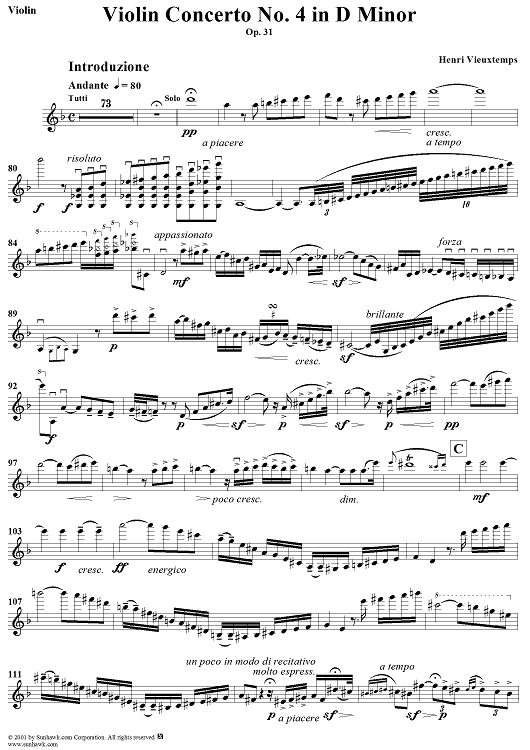
Violin Concerto No. 4 in D minor, Op. 31

The most famous of his violin concertos was number 4 in D minor, composed while he was in Saint Petersburg as the court violinist to Tzar Nicholas 1 of Russia in 1846. Unusually for a violin concerto it has four movements, which Vieuxtemps (rather astutely in his experience as a performer), advised that the challenging ‘off-beat’ third movement was optional for programming purposes.

The orchestra’s opening few bars of the concerto are gentle, lush and romantic, with a dramatic, if slightly melancholy melody that soon reaches a crescendo infused with a dark edge, hinting at unknown depths…

When the violin makes its expressive and singing entrance, free and interpretive, forward moving with increasing tempo and power in the higher notes, a certain forcefulness in the chords, virtuosity in the runs and harmonics – a drifting and energetic solo using the whole range of the instrument – you have a concerto worthy of immortality!

I love this fantastic performance by Hilary Hahn and the Berlin Philharmonic. Hilary has been playing this concerto since the age of ten, and rightly knows it inside and out! She brings a certain ‘je ne sais quois’ to it:

To my mind it’s better and more complete with the 3rd movement included; said to be difficult even for professional violinists with its the tricky rhythm between soloist and orchestra, but at the same time lilting and lyrical with a rather playful quality, especially in Hahn’s gorgeous interpretation.

The final runs in the 4th movement indicate a March like theme with impressive motifs and changing melodies. It’s what Hilary Hahn refers to as a ‘finger twister’!

I am in awe of anyone who can play this concerto, especially the section in the finale that requires the fingers of left hand to move in alternating small and large increments whilst the right, bow arm and hand keep the pressure in the sweet spot so that 3 strings are simultaneously depressed; a violin multi-tasking mind bender!!

Another performance of this beautiful concerto I really like is by the late Belgian violinist Arthur Grumiaux:

Violin Concerto No. 5 in A minor, Op. 37 ‘Grétry’ written in 1861, played by Shlomo Mintz:

Violin Concerto No. 7 in A minor, ‘À Jenő Hubay’, Op. 49 c. 1870 (Op. 3 posthumous) with Misha Keylin:

Salon, concert and chamber works

I adore this rather operatic style composition for violin and orchestra, the Fantasia Appassionata in G minor, Op. 35 in this wonderful 1980 recording performed by Gidon Kremer and the London Symphony Orchestra with Riccardo Chailly:

Ballade et Polonaise Op. 38 with Heifetz:

Romance sans paroles Op. 7 Nos 2 & 3 with David Oistrakh:

Vieuxtemps ‘Reverie’ with Lola Bobesco:

David Nadien plays Vieuxtemps’s Regrets:

Duo Brilliante in A Major, Op 39 for violin, cello and orchestra with Aaron Rosand:

Elegie for Viola and Piano Op. 30 with Robert Diaz and Robert Koenig:

Capriccio in C minor for Solo viola ‘Hommage à Paganini’ played with heart and soul by Anna Serova on the Amati 1615 ‘La Stauffer’ Viola:

The ‘Vieuxtemps’ Guarneri del Gesù Violin – the most expensive violin in the world

Famed violin maker Guarneri del Gesù made the violin in 1741, three years before his death, and it was used extensively by Henri Vieuxtemps in his performances as a virtuoso violinist.

Later musicians who played the Vieuxtemps Guarneri included Yehudi Menuhin, Itzhak Perlman, Pinchas Zukerman and Joshua Bell.

The violin’s excellent condition and undisputed provenance led to a steady increase in price and the instrument was sold to an anonymous buyer in 2012 by J & A Beares in London in conjunction with Paolo Alberghini and master violin restorer, Julie Reed-Yeboah. The final record-breaking price was said to be somewhere in the region of $16 million, with the purchaser gifting lifetime use of the ‘Viuextemps’ to the ecstatic virtuoso violinist, Anne Akiko Meyers.

As Anne says, with other legendary violins owned and played by Paganini, Kreisler and Heiftez now resting largely unheard in museums, it is a precious gift to have the ‘Viuextemps’ being played on!

Anne gave this moving interview after receiving the violin – ‘Art and Soul’ of World’s Most Expensive Violin:

Anne Akiko Meyers History of  ex-Vieuxtemps Guarneri Del Gesu:

‘Vieuxtemps’ Guarneri Del Gesu Returns To The Concert Stage…

News coverage of the sale by npr.

Russian legacy

Henri Vieuxtemps achieved great success and popularity in Russia. He made two concert tours there in 1837 and 1840 as well as his later 5 year stint at the Imperial Court. Perhaps his lasting legacy from his most revered time in Saint Petersburg (1846 – 1851), was his founding of the Violin School of the Saint Petersburg Conservatory and his early guidance of the ‘Russian School’.

The teachers that followed him in Saint Petersburg were violin luminaries Henryk Wieniawski and Leopold Auer, whose students inlcuded some of the greatest violinists of the twentieth century, such as Mischa Elman, Jascha Heifetz, Nathan Milstein, Efrem Zimbalist, Georges Boulanger, and Oscar Shumsky.

Final Years

An excerpt from Robert Cummings’s Biography sums up Vieuxtemps’ final years:

“He took a teaching post at the Brussels Conservatory in 1871, where his students included Eugène Ysaÿe, and two years later suffered a stroke resulting in paralysis of his right arm. This episode effectively ended his career as a soloist, though he eventually regained enough ability to perform chamber music in private concerts. He was also able to compose in his last decade. In 1879, he moved to Algeria where his daughter lived. His inability to play with proficiency in his final years was a source of great frustration for him.”

I feel strongly that Henri Vieuxtemps deserves more recognition and to be heard regularly on stage and in recordings.

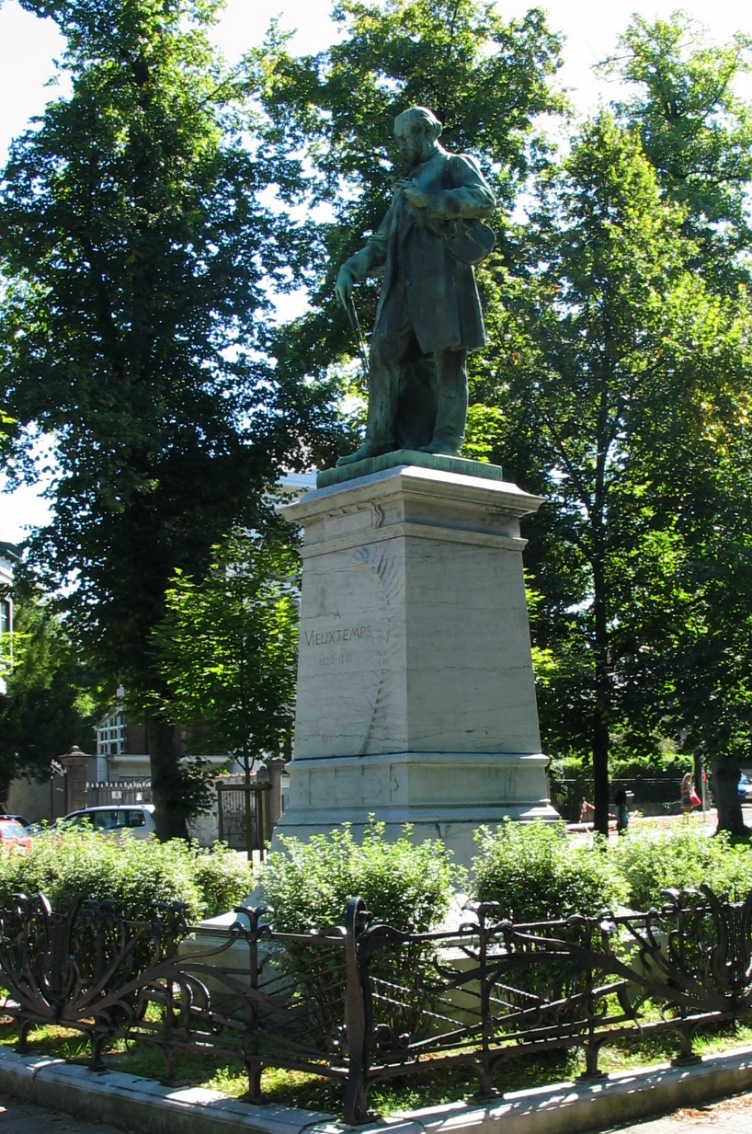
Memorial to Henri Vieuxtemps in Verviers

I hope you have enjoyed his music as much as I have during my venerative Vieuxtemps interlude!

A Sunny Sunday at the Beautiful and Bucolic Blenheim Palace

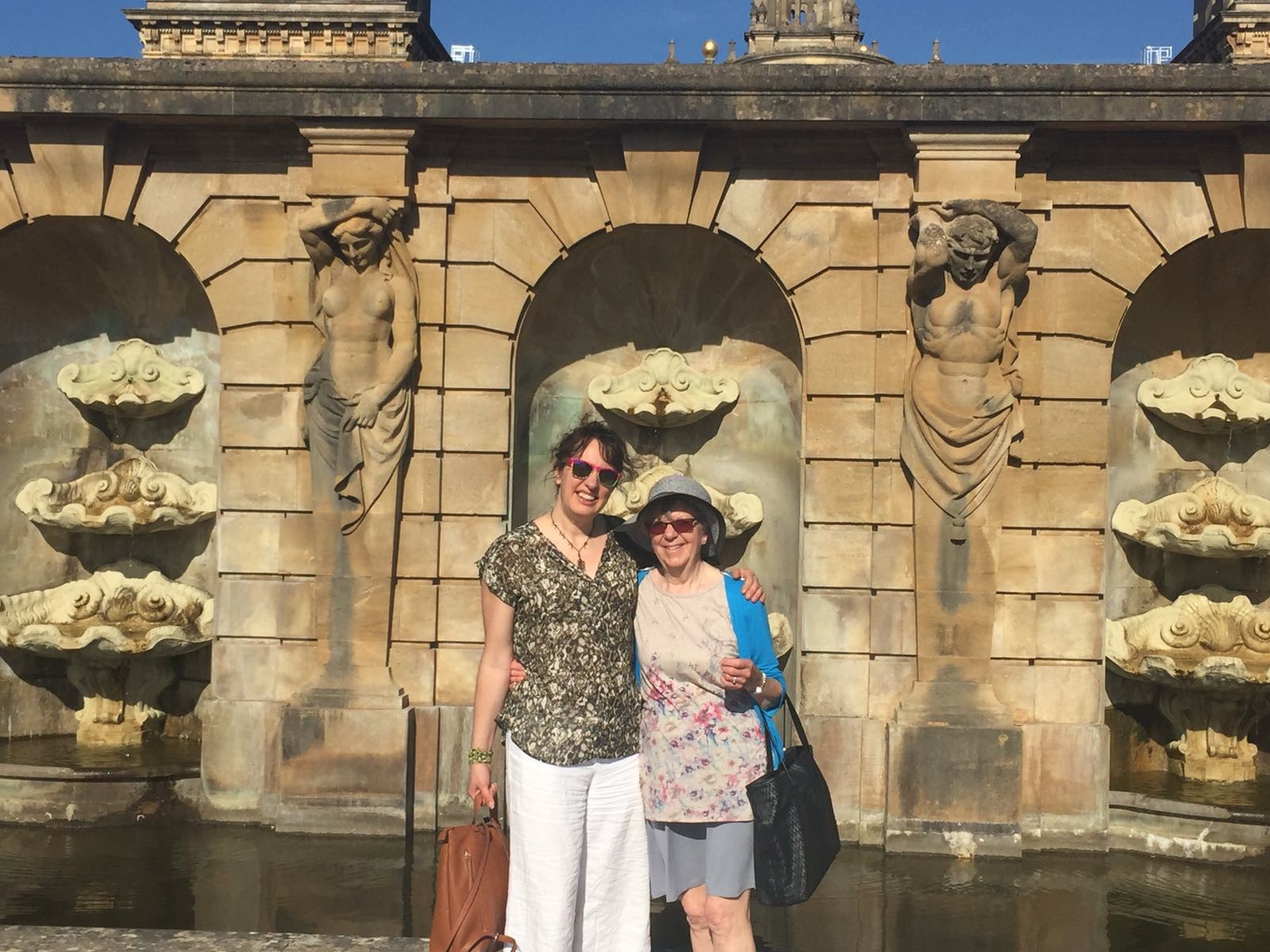
One never needs an excuse for a family picnic. As Sunday was my birthday, and rather fortuitously, the sunniest and hottest day of the year to date, we drove to Woodstock and spent a fabulous few hours at Blenheim Palace.

Roughly 25 years have flown by since my first visit and my children have never been, so we decided to explore the vast park and gardens that have been home to the Dukes of Marlborough for 300 years.

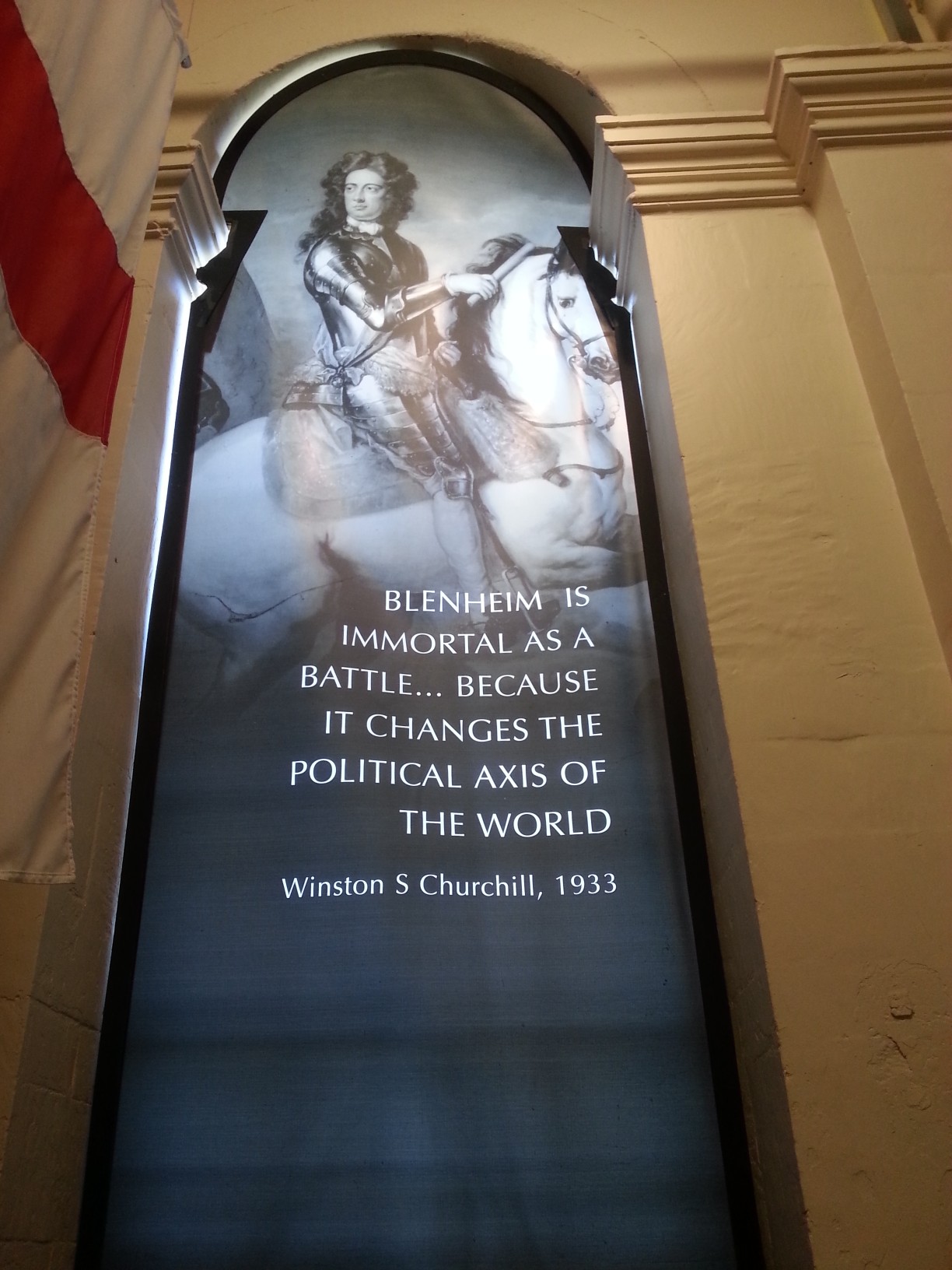
Blenheim was also the birthplace and ancestral home to former UK Prime Minister, Sir Winston Churchill, being a grandson of the 7th Duke of Marlborough and a direct descendant of John Churchill, 1st Duke of Marlborough.

“Under the auspices of a munificent sovereign this house was built for John Duke of Marlborough, and his Duchess Sarah, by Sir J Vanbrugh between the years 1705 and 1722, and the Royal Manor of Woodstock, together with a grant of £240,000 towards the building of Blenheim, was given by Her Majesty Queen Anne and confirmed by act of Parliament . . . to the said John Duke of Marlborough and to all his issue male and female lineally descending.”

~ Plaque above the East gate of Blenheim Palace

It was fascinating picking up bits of history through an exhibition in the stables, just off the main front courtyard.

Aerial views of Blenheim in winter:

The Battle of Blenheim

During the War of the Spanish Succession, John Churchill 1st Duke of Marlborough proved to be a canny general and diplomat. England was allied with the Dutch Republic, Austria and the Holy Roman Empire, together forming the Grand Alliance against Louis XIV in his brazen attempt at dynastic rule over Spain and their European territories.

The Battle of Blenheim (fought at Blindheim, Bavaria on 13th August 1704), was won under John’s leadership in alliance with Prince Eugene of Savoy, and was a major turning point in deciding the European balance of power.

Rather than engaging in siege warfare against Marshall Tallard and his French forces, Churchill made a strategic, surprise attack forcing an open battle. It was hard fought and hard won, with many casualties on both sides.

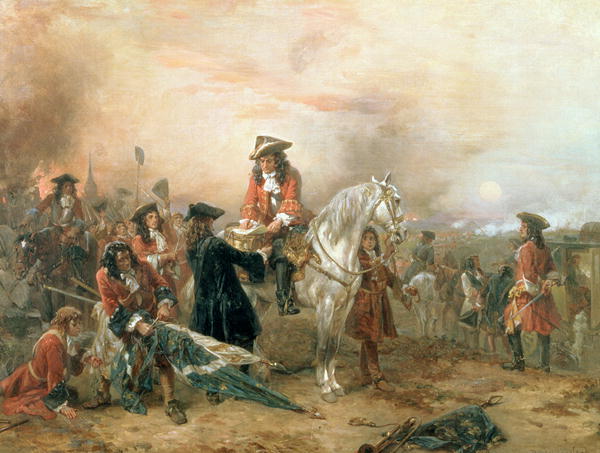
The Duke of Marlborough signing the despatch at Blenheim c. 1704

He won further victories at Ramillies in 1706, in Oudenarde in 1708 and Malplaquet in 1709, elevating and securing his position as one of the most successful and respected generals in Europe. The Battle of Blenheim was such an important turning point for Great Britain and its emergence as a military and political leader in Europe, that the estate in Woodstock was gifted to John and Sarah Churchill by a grateful monarchy.

Despite the glorious victory that preceded and heralded Blenheim’s existence, much acrimony surrounded its construction. Blenheim’s birth was not an easy one!

Plan of Blenheim Palace and Gardens c. 1835

A major reason for discord between the Duke and Duchess of Marlborough was John’s controversial choice of architect, Sir John Vanbrugh.

Aided by Nicholas Hawksmoor, he designed and built Blenheim Palace in the English Baroque Style. However the duchess, Sarah Churchill, a close confidante of Queen Anne, had wanted to employ Sir Christopher Wren, who was unassailable after St. Paul’s Cathedral. There was constant bickering between the Duchess and Vanbrugh.

The two could not agree about the fate of the existing Woodstock Manor and lodge, which had served as a royal retreat since the time of King Henry I.

Princess Elizabeth, before ascending to the English throne had been held captive in the lodge between 1554 and 1555 by her half-sister and Queen, Mary Tudor. It had lain in ruins after its destruction at the hands of Oliver Cromwell and his Parliamentarians since the Civil War.

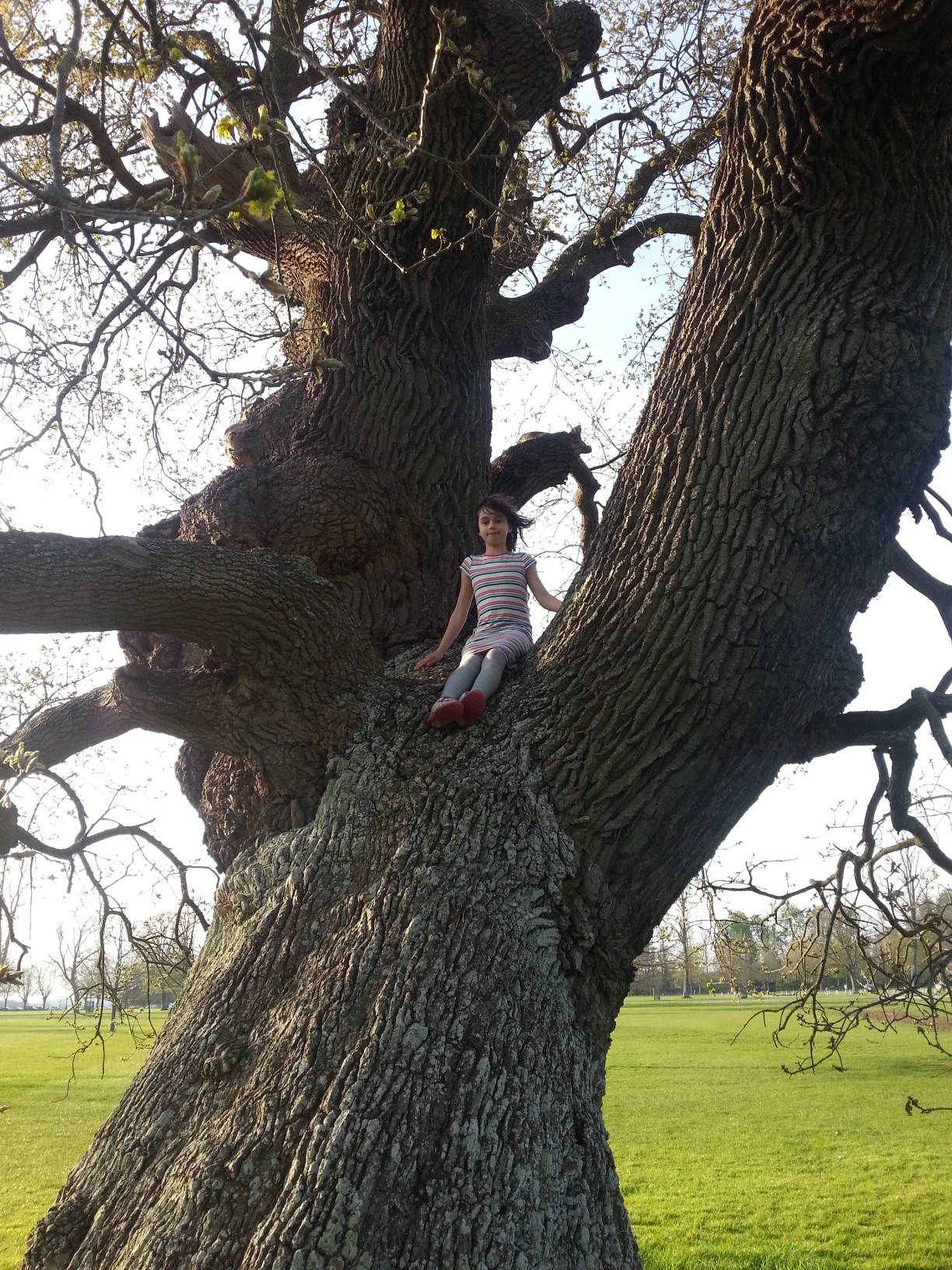
Ruby in the perfect climbing tree near our picnic spot.

All but a stone pillar was swept away before construction of Blenheim Palace at the behest of the duchess; against the wishes of Vanbrugh, who had wanted to conserve what remained of the original dwelling.

Political infighting with the Tories and Whig Party and a fall out with Queen Anne sent the Churchill’s into ignominious exile on the continent, only returning after Queen Anne’s death in 1714. They took up residence in the east wing of the then unfinished Blenheim, and found themselves back in favour with the new monarchy, the Hanoverian dynasty.

Charles Spencer-Churchill, 9th Duke of Marlborough

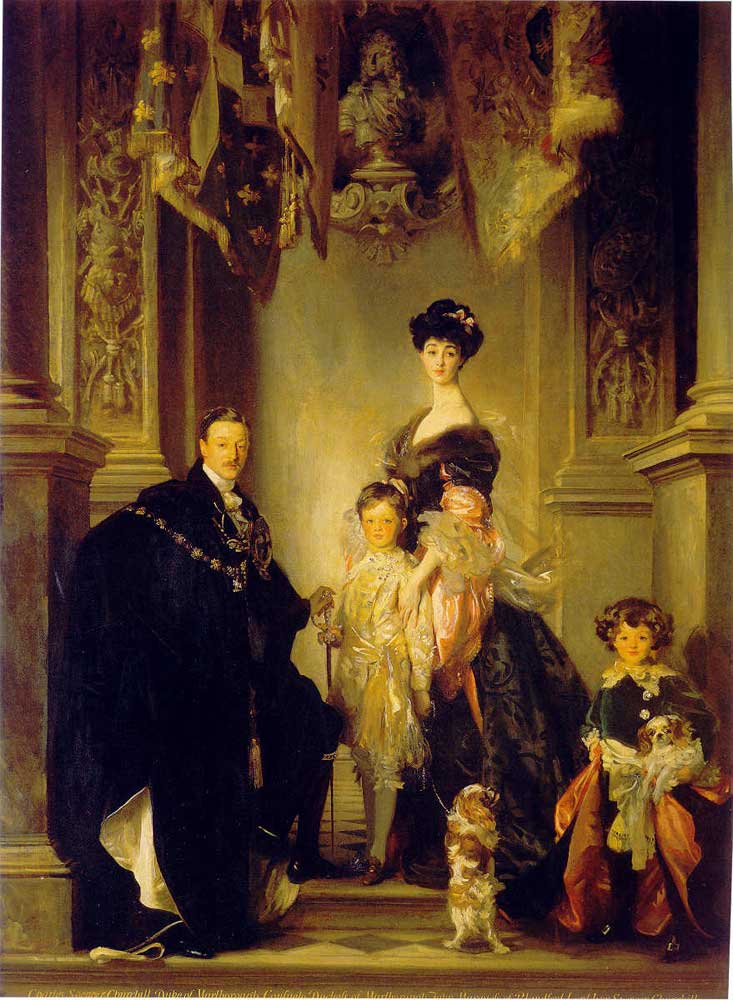
Charles Spencer-Churchill, 9th Duke of Marlborough first cousin of Winston, inherited his dukedom in 1892 under the shadow of personal and family bankruptcy.

The debts incurred by the extravagant spending habits of George Spencer-Churchill, 5th Duke of Marlborough, which John Winston Spencer Churchill, 7th Duke of Marlborough had not been able to stem, even after selling off many of the family’s heirlooms, forced him into a mercenary and loveless marriage with Consuelo Vanderbilt; the beautiful, young American railroad heiress in 1895.

9th Duke of Marlborough with Consuelo and their sons, by John Singer Sargent

New world Vanderbilt money ensured old world Blenheim’s survival, but the Duke and Duchess were unhappy together. They had two sons to carry on the Marlborough line, but separated in 1906 and divorced in 1921, after which Charles had their marriage annulled.

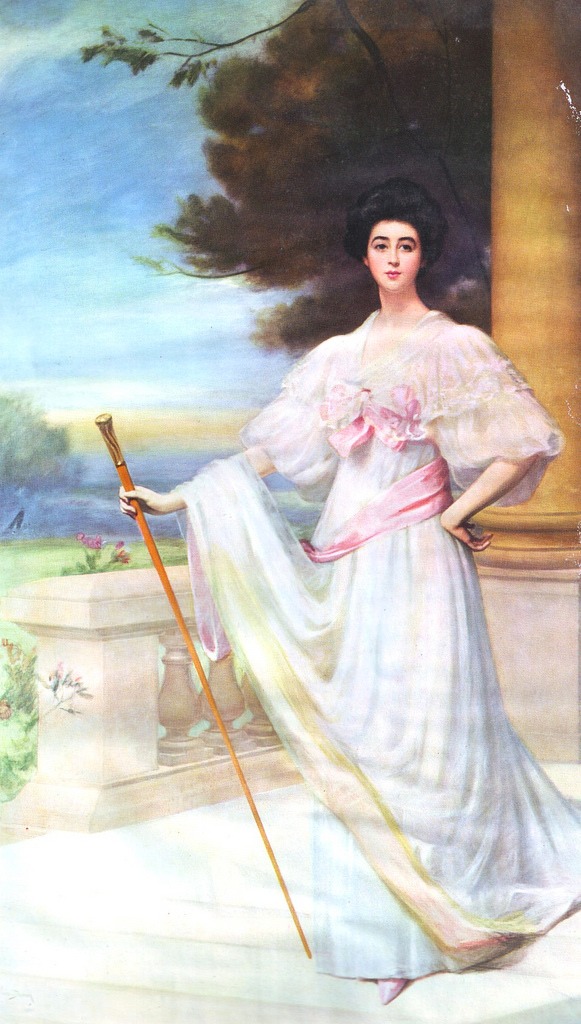
Consuelo Vanderbilt by Carolus Duran c. 1900

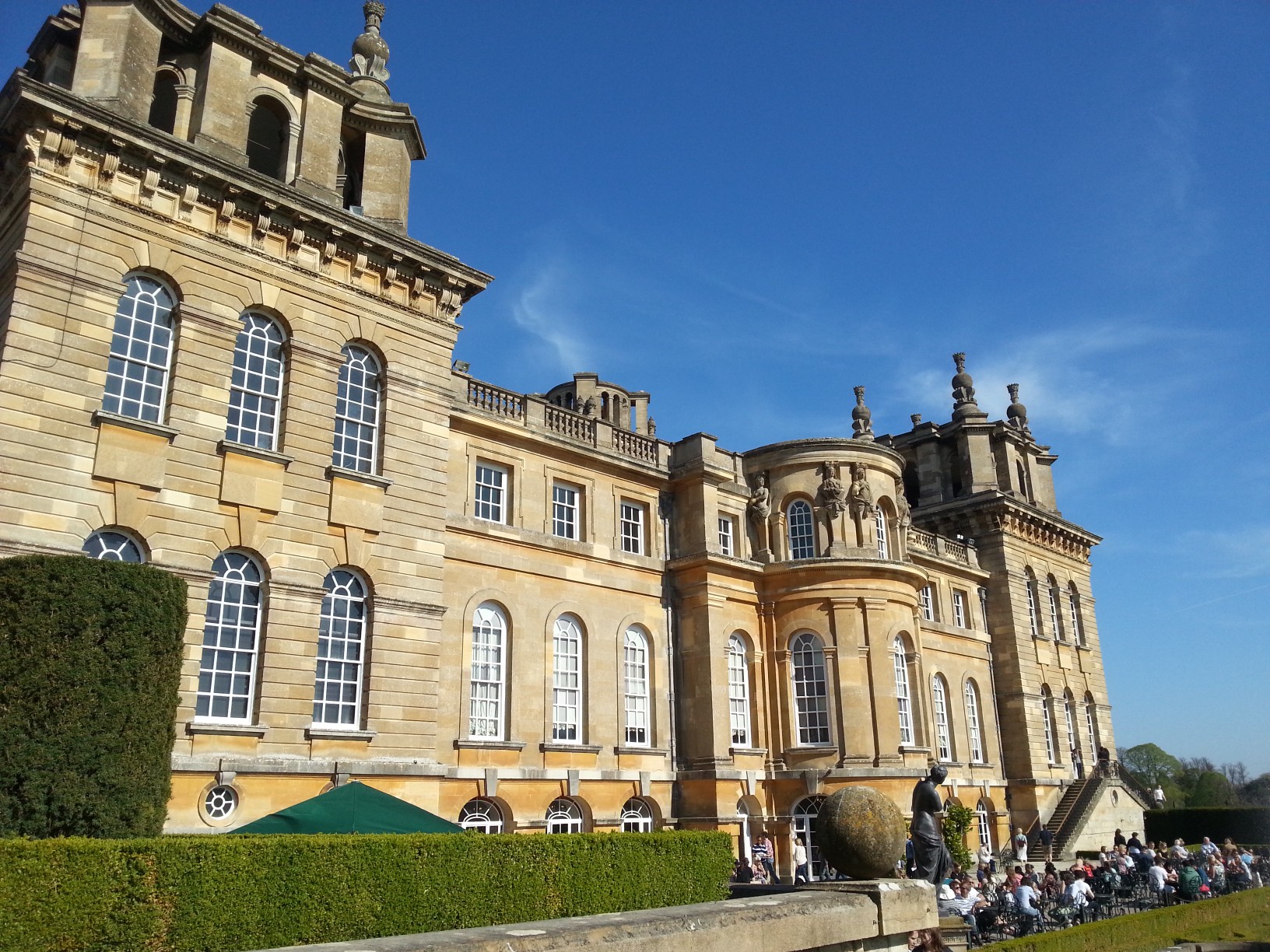
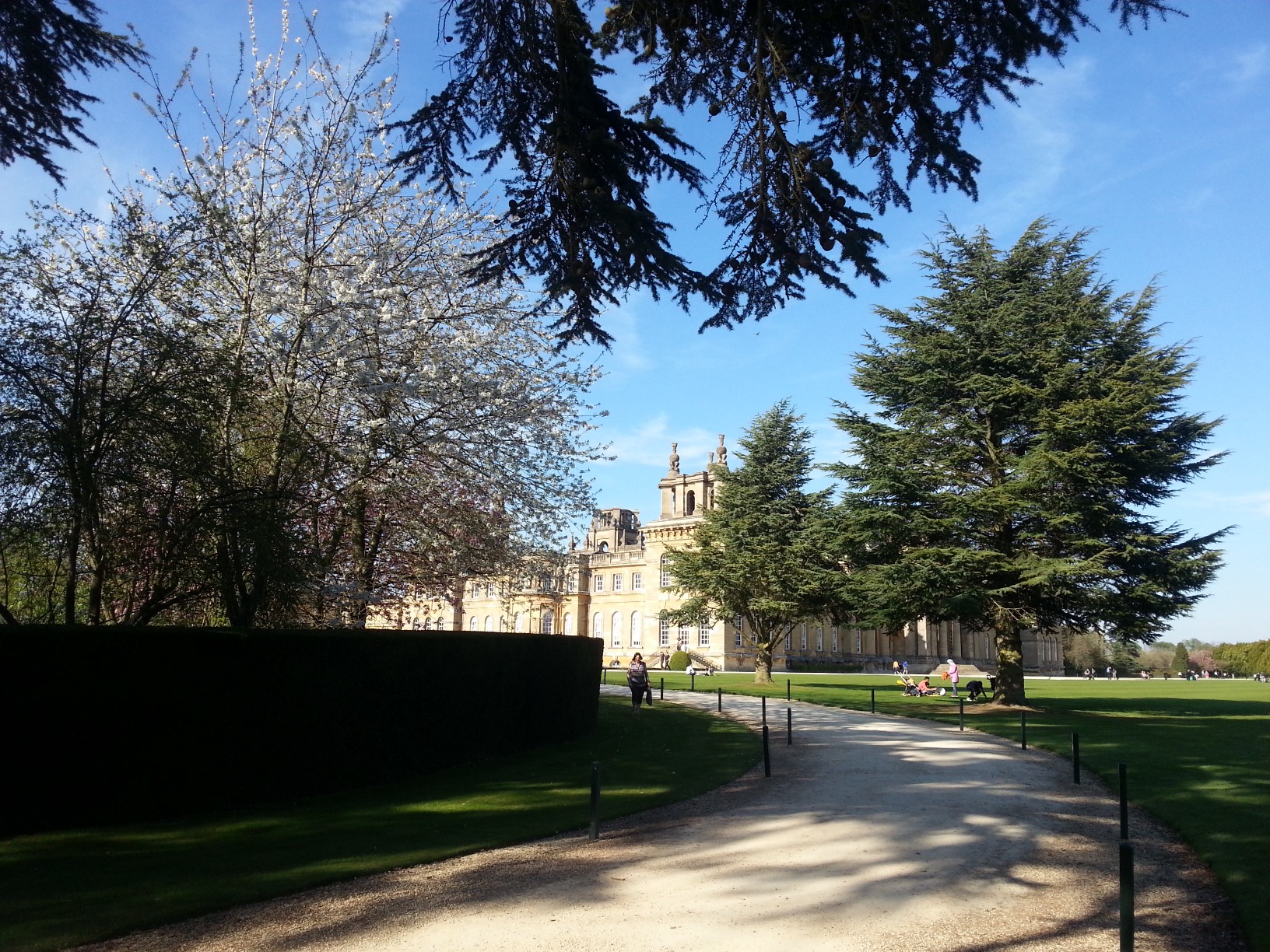
We didn’t go into the house, my daughters made it clear that walking round a stately home would be a fate worse than death; but we did enjoy parts of Blenheim’s formidable 2,000 acres of gardens and grounds.

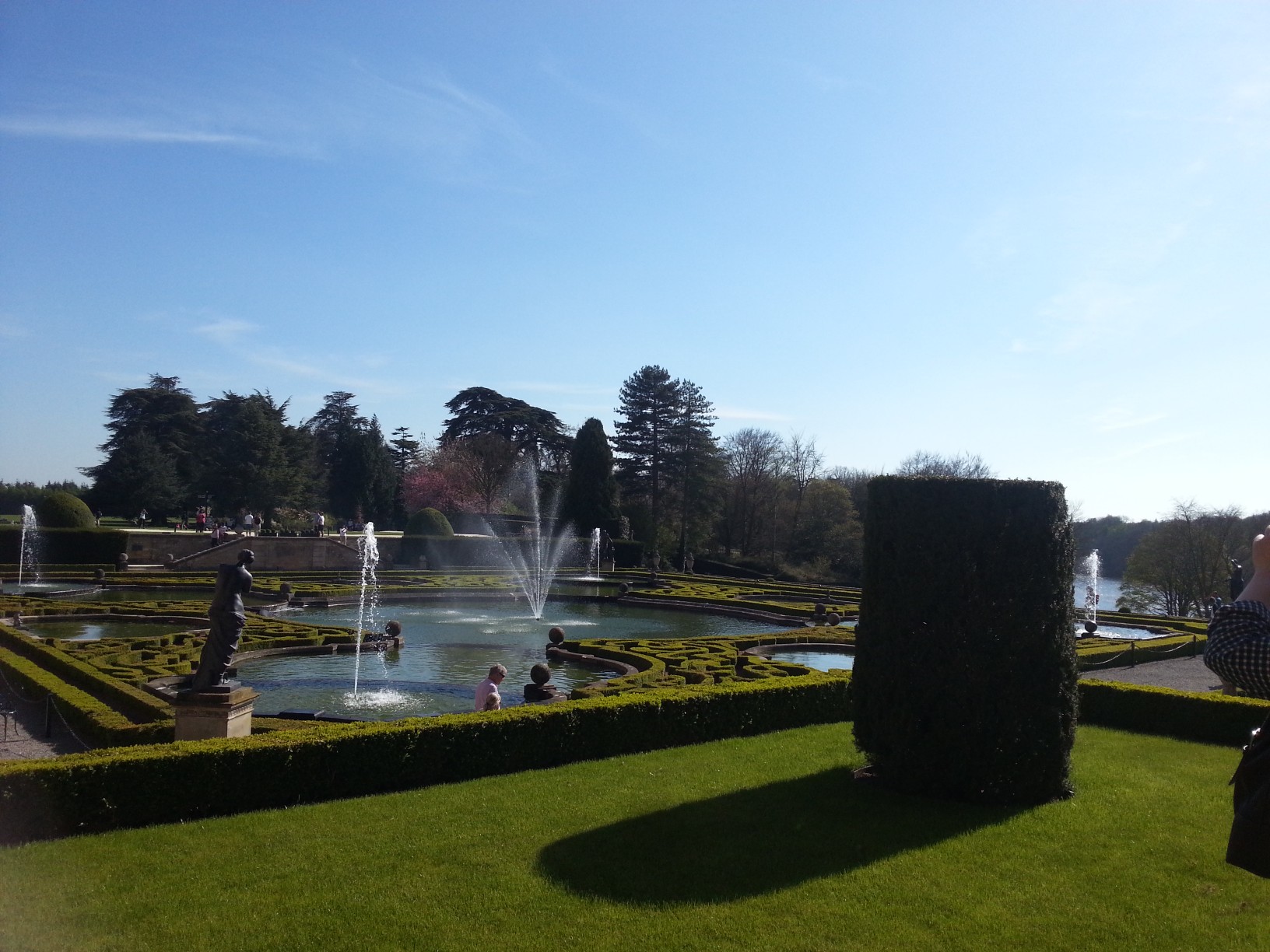
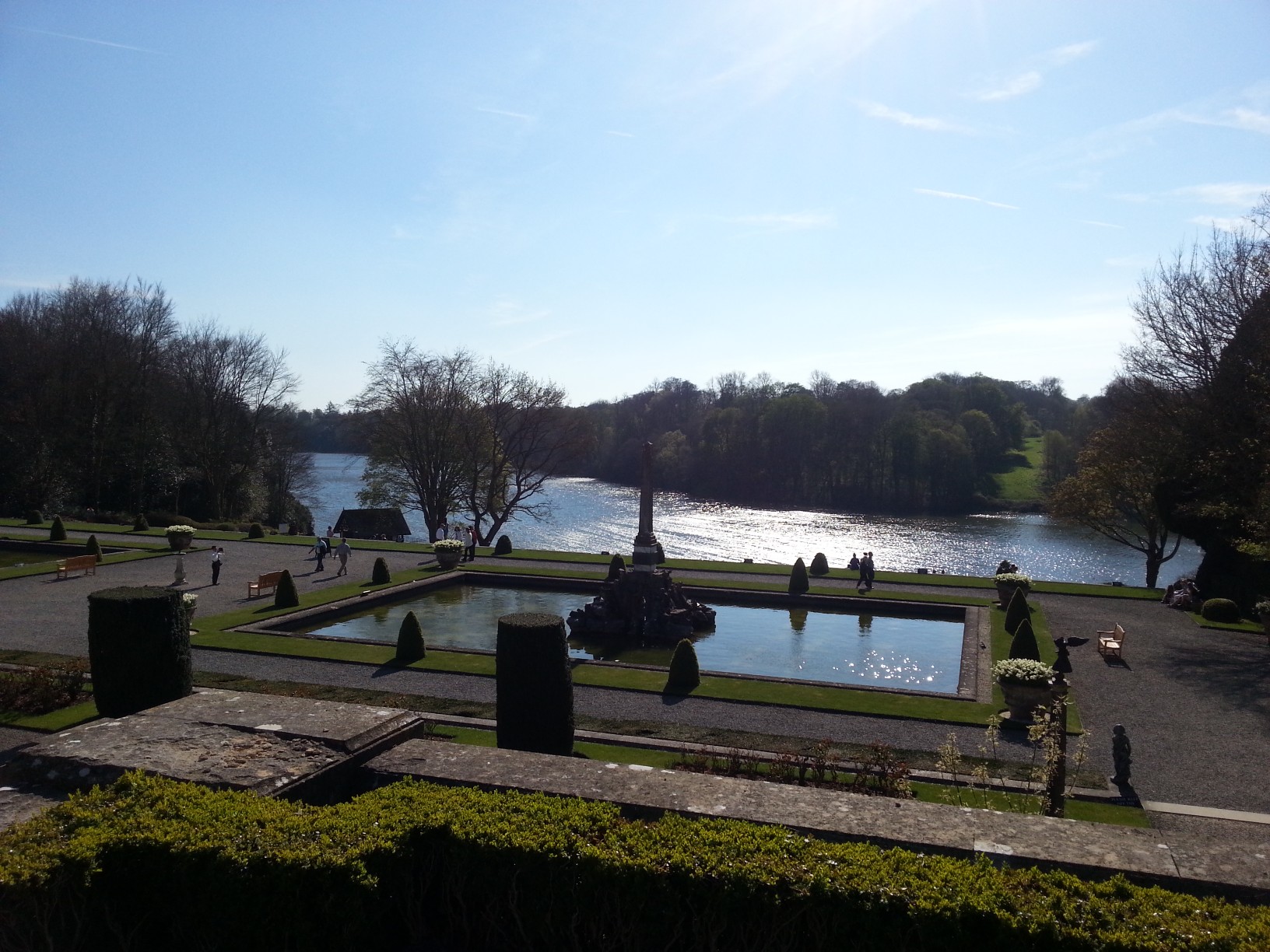
The Fountain Terraces (complete with sculptures from Bernini’s Italian studio) and lakeside walk are a pleasure to amble through on a sunny afternoon. An ice cream treat doesn’t go amiss either!

Blenheim Palace is unique as a country house in that it is the only non-royal residence (apart from the Church of England’s Lambeth Palace) allowed the status of ‘palace’. Its grandeur had even beguiled Hitler, who instructed that it not be bombed during World War 2, eyeing it as a possible residence should he invade the UK. Fortunately that nightmare scenario did not prevail!

Blenheim Palace was first opened to the public in 1950 and made a UNESCO World Heritage site in 1987.

The estate is now home to the 12th Duke of Marlborough and his family, who in his younger, reckless days was labelled the ‘Black Sheep’ of the family by his estranged father John Spencer-Churchill, 11th Duke of Marlborough, also a cousin of Winston Churchill and given the nickname ‘Sunny’, (but not due to his temperament). Eventually father and wayward eldest son were reconciled.

The millions of visitors each year provide the funds for Blenheim’s onerous upkeep.

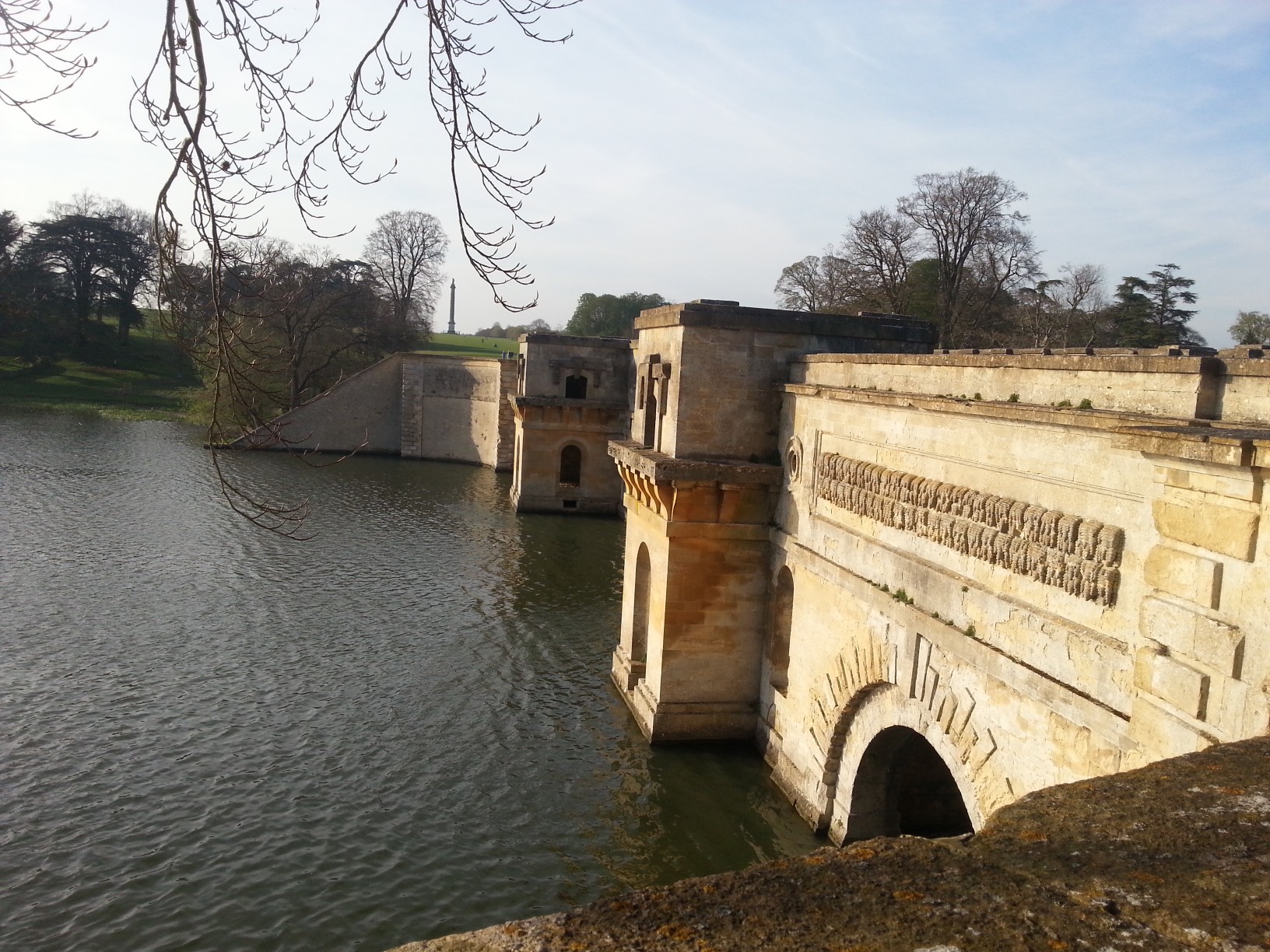
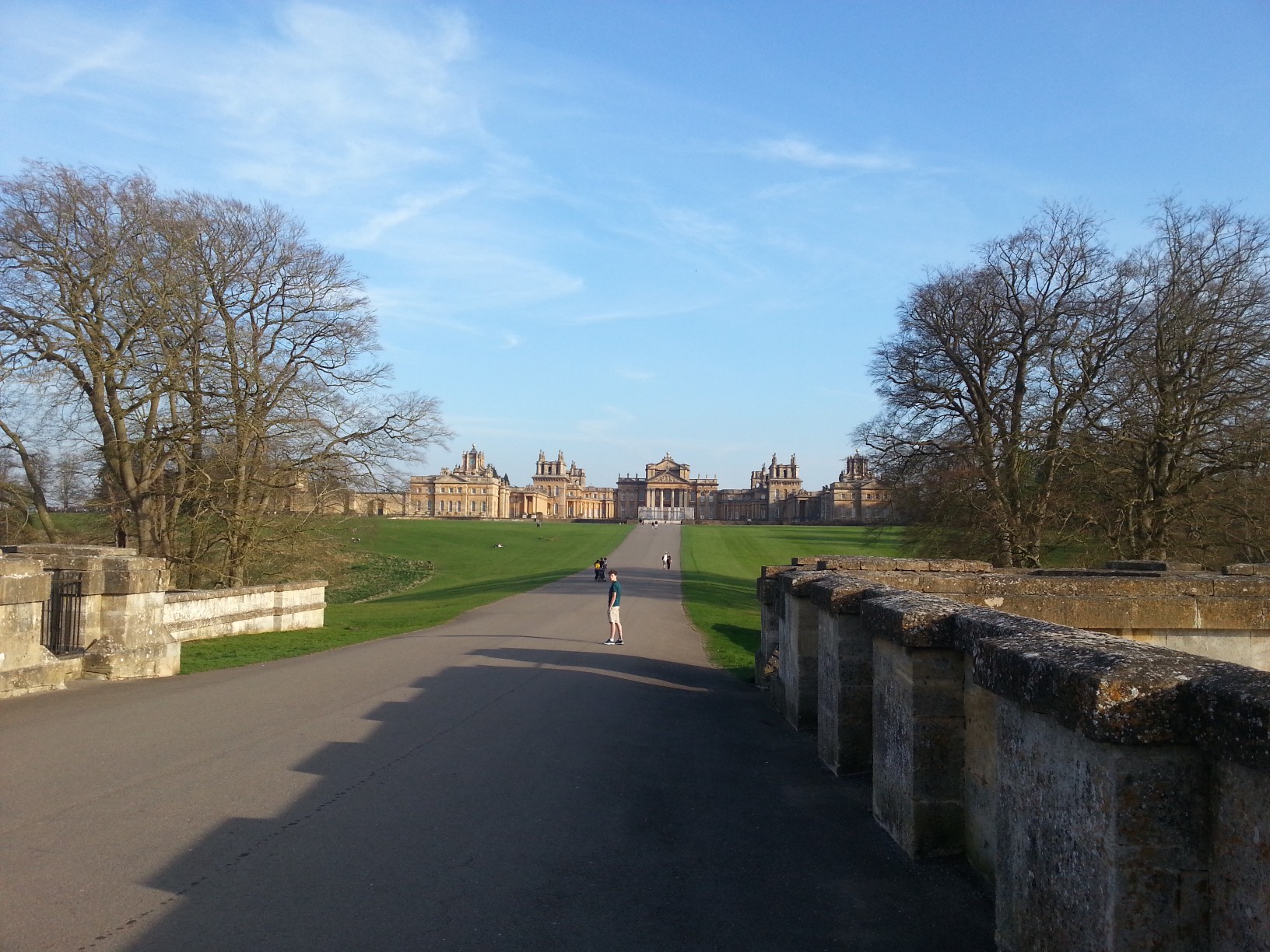
Before we departed I wandered over the Grand Bridge built and designed by Sir John Vanbrugh, with the Column of Victory looming before me.  Ruby was very tired and had taken to dragging her feet whilst pulling my arm and wailing intermittently.

She begged me mercilessly to let her roly-poly down the steep hill, but I decided the generous amounts of geese poo and the thought of her rolling straight into the lake prohibited that particular fancy…

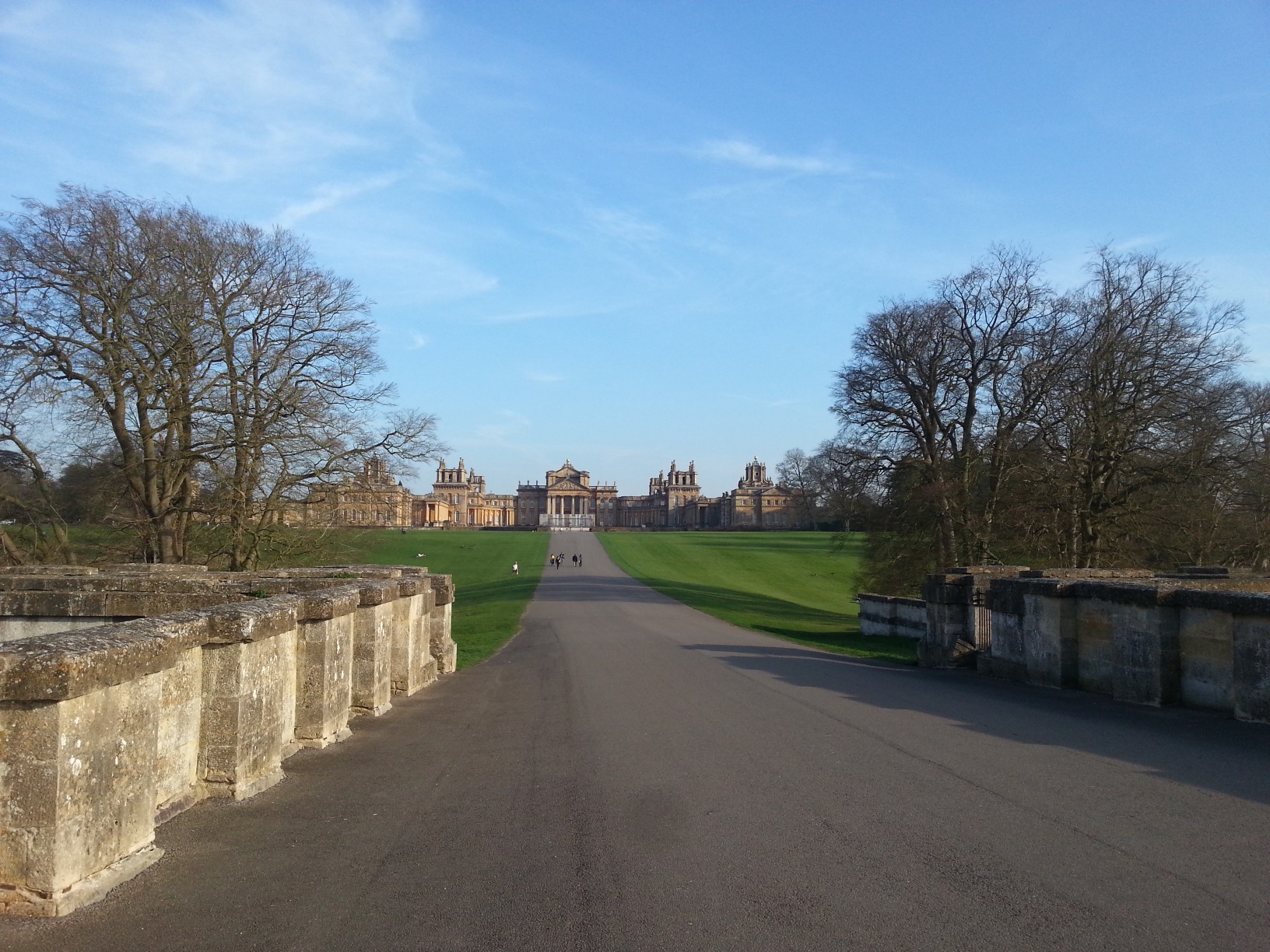
Grand Bridge and Victory Column

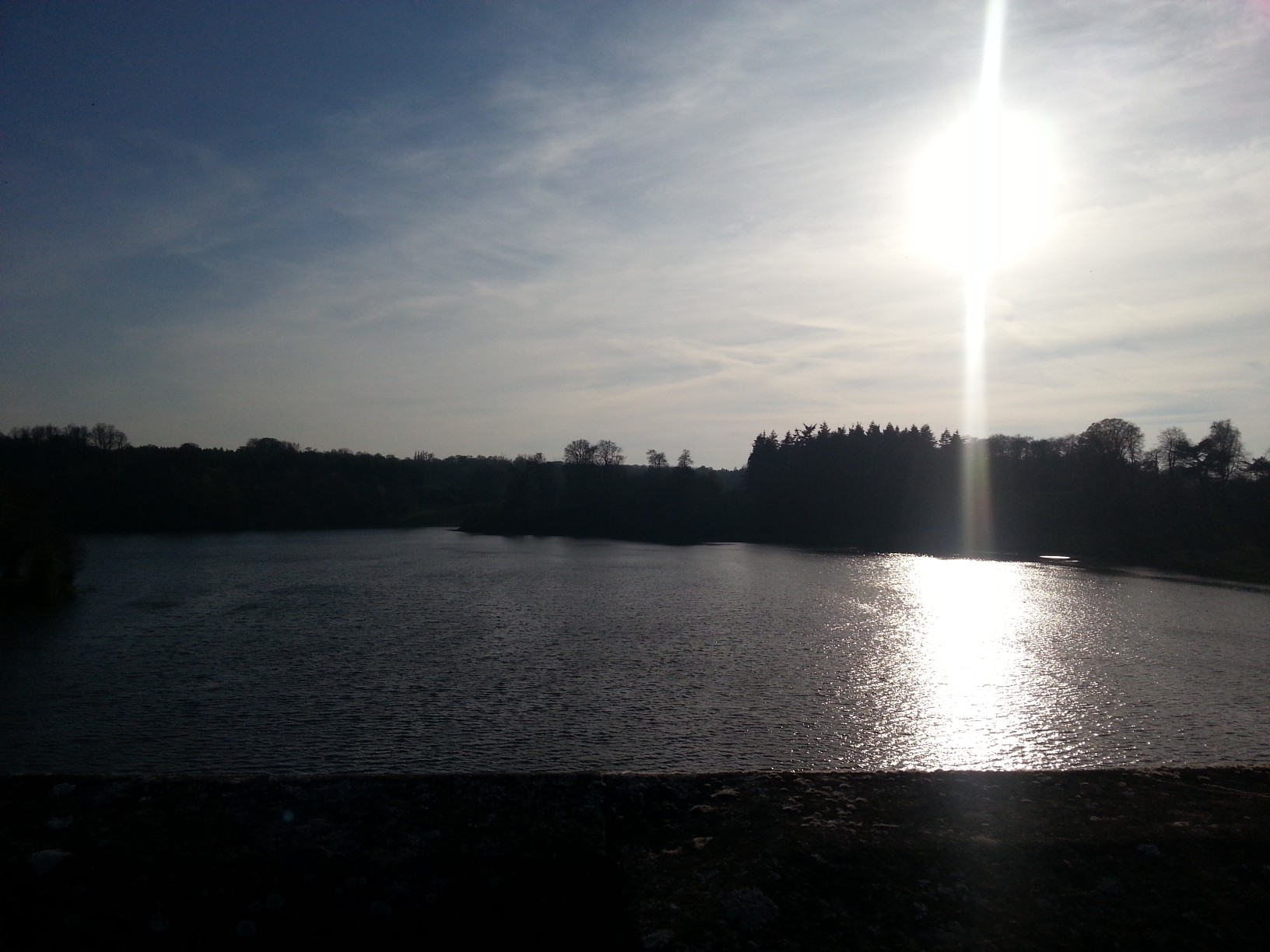
The sun was slowly sinking, its fading light reflected as brilliant, squint inducing starbursts off the water, shimmering and glinting at passers-by, illuminating every last drop of Blenheim’s peace and tranquility.

I eventually turned to head back to our picnic spot to search for Emily’s lost bracelet, but took a moment to admire the distant sandy coloured façade and columns of the palace, standing noble and proud to this day. Blenheim will always be an emblem of courage, fortitude and empire that presides over its Capability Brown landscape and beyond.

William also admiring the view!

Blenheim Palace is the legacy of its founding father and his outstanding military achievement, but each generation of its famous chateleins, (the Spencer-Churchill family), have left their mark in the process of preserving Blenheim for future generations – a national treasure with a magnificent, historic heritage.

“At Blenheim I took two very important decisions: to be born and to marry. I am content with the decision I took on both occasions.” ~ Sir Winston Churchill

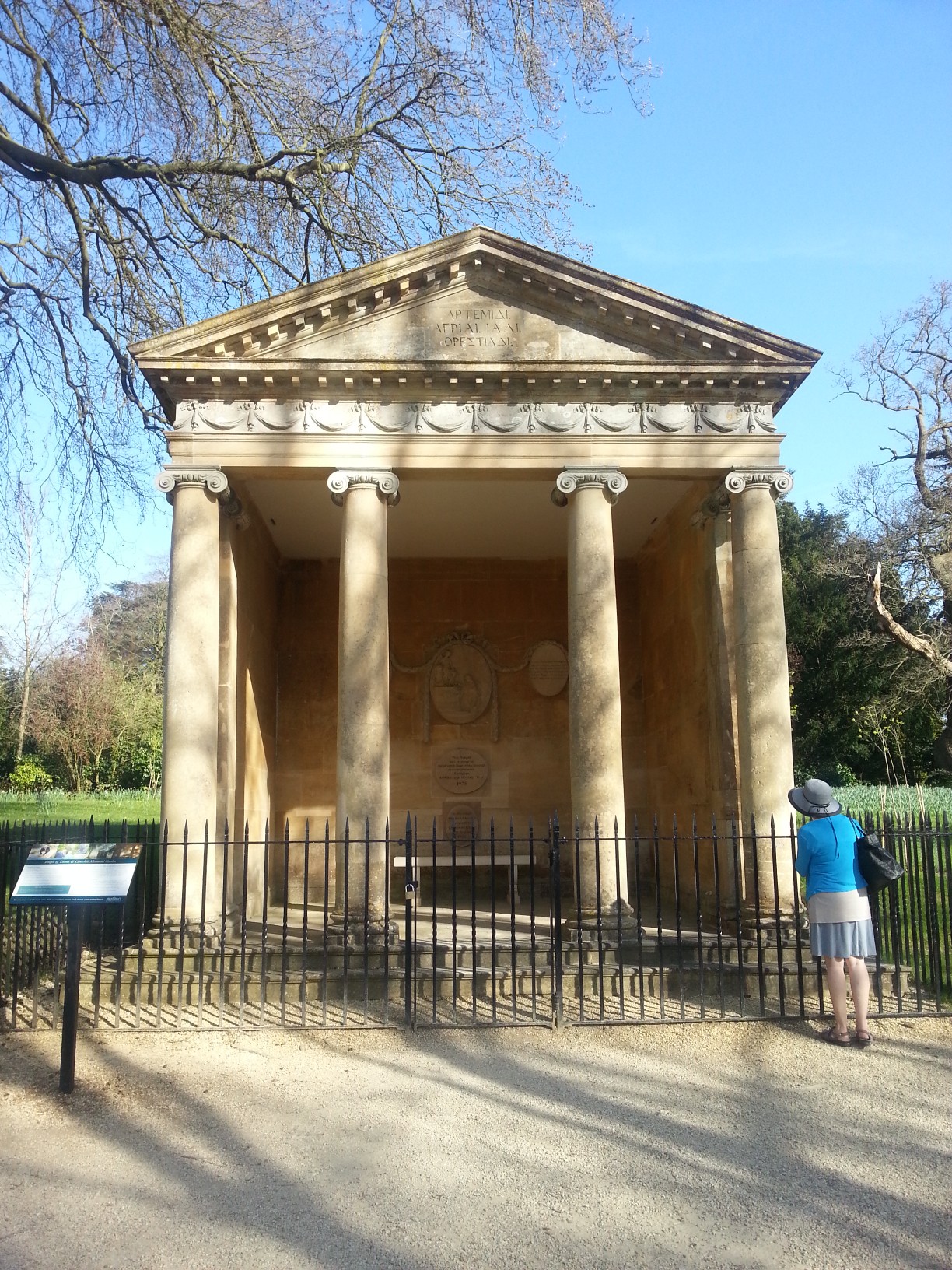
The temple of Diana, where Winston Churchill rather romantically proposed to Clementine Hozier during a rain storm in 1908. He later wrote: “My most brilliant achievement was my ability to be able to persuade my wife to marry me.”

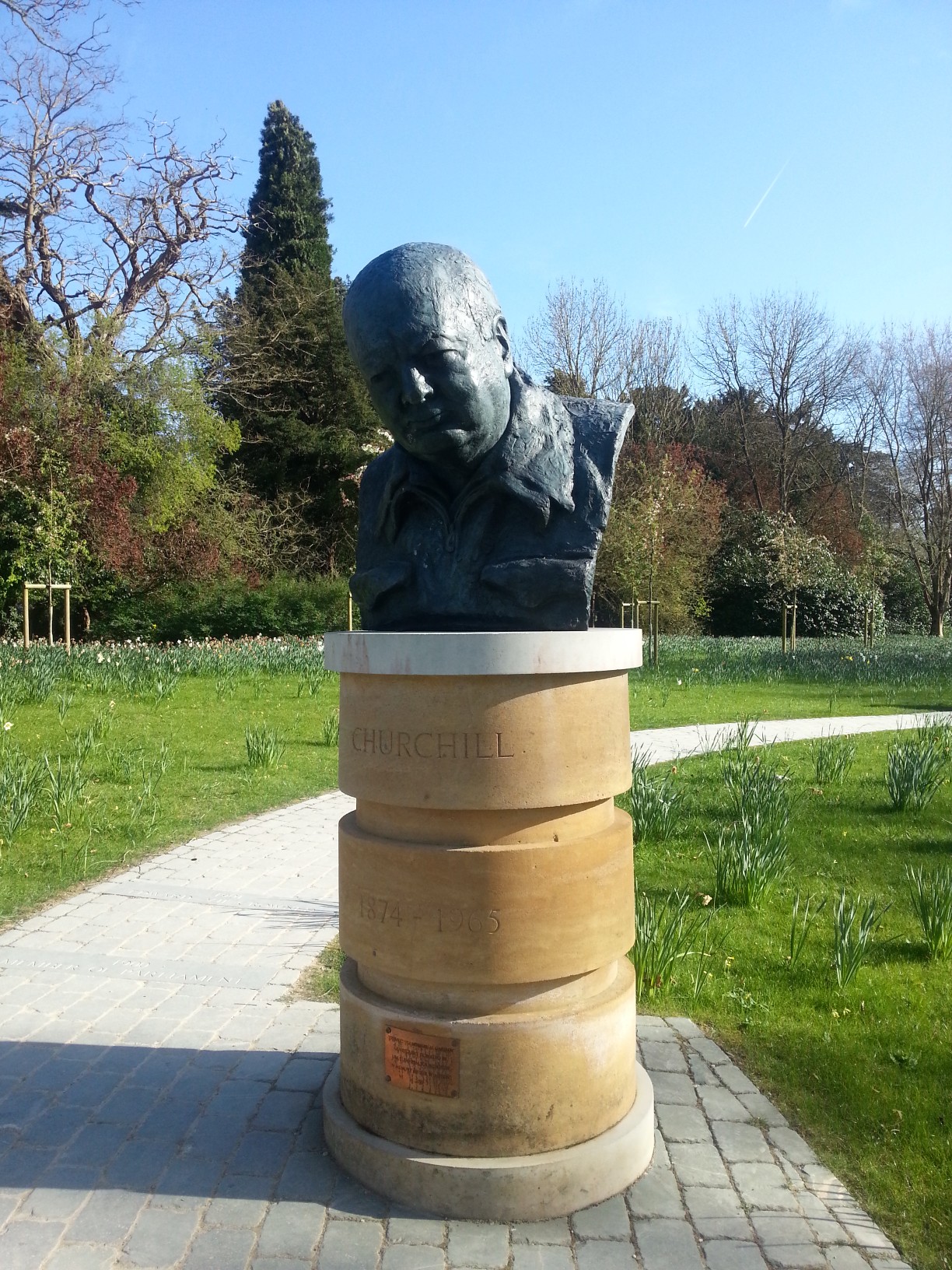
Bust of Sir Winston Churchill in the WC Memorial Garden

I hope you like my photographs of the grounds and gardens. It’s well worth a visit if you’re ever in the vicinity of Oxford. It will be especially fun for families this Easter weekend. Happy Easter!

A Courageous Experiment that will Make you See Music and Beauty Differently

“Spontaneity is a meticulously prepared art.” ~ Oscar Wilde

At 7.51 am on Friday 12th January 2007, an unassuming lone male figure dressed in a long sleeved T-shirt and baseball cap played the most spiritually uplifting violin music there is, on a £3.5 million Stradivarius, to oblivious passing commuters at the L’Enfant Plaza on the Washington Metro.

The subway experiment:

Normally classical music fans, and in particular, violin aficionados pay around $100 to attend a Joshua Bell concert, for the chance to listen to one of the greatest living violinists.

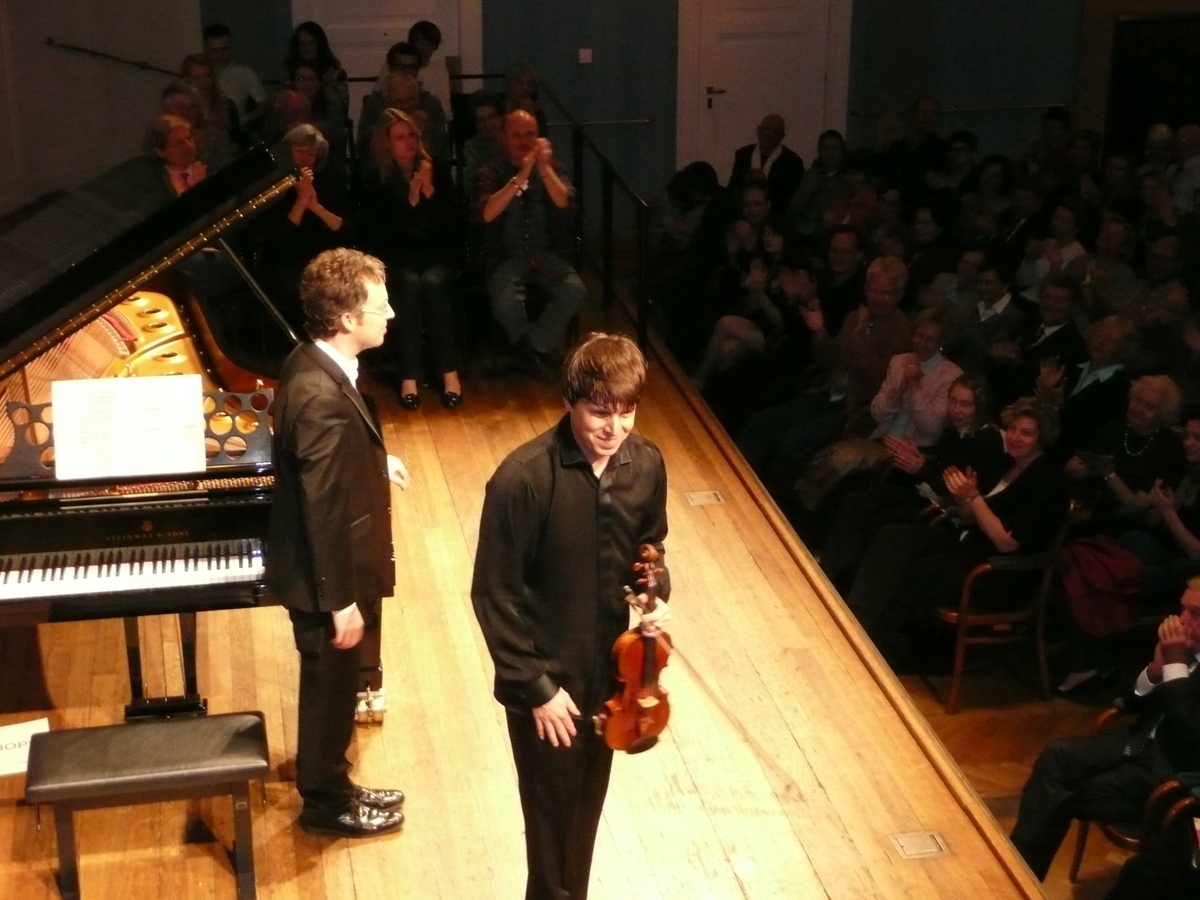
I saw Joshua Bell in a performance of Schubert with Jeremey Denk in Vienna a few years back. It was very special. I got to meet him briefly afterwards, and I cannot think of a more down to earth, approachable and lovely person as he. It also helps that he’s pretty much flawless on the violin too…

Joshua Bell in Vienna

The experiment was thought up by Joshua Bell and Gene Weingarten, a Washington Post journalist, curious to see if someone of Joshua’s fame and reputation would elicit large crowds and a hefty amount of coinage in his case.

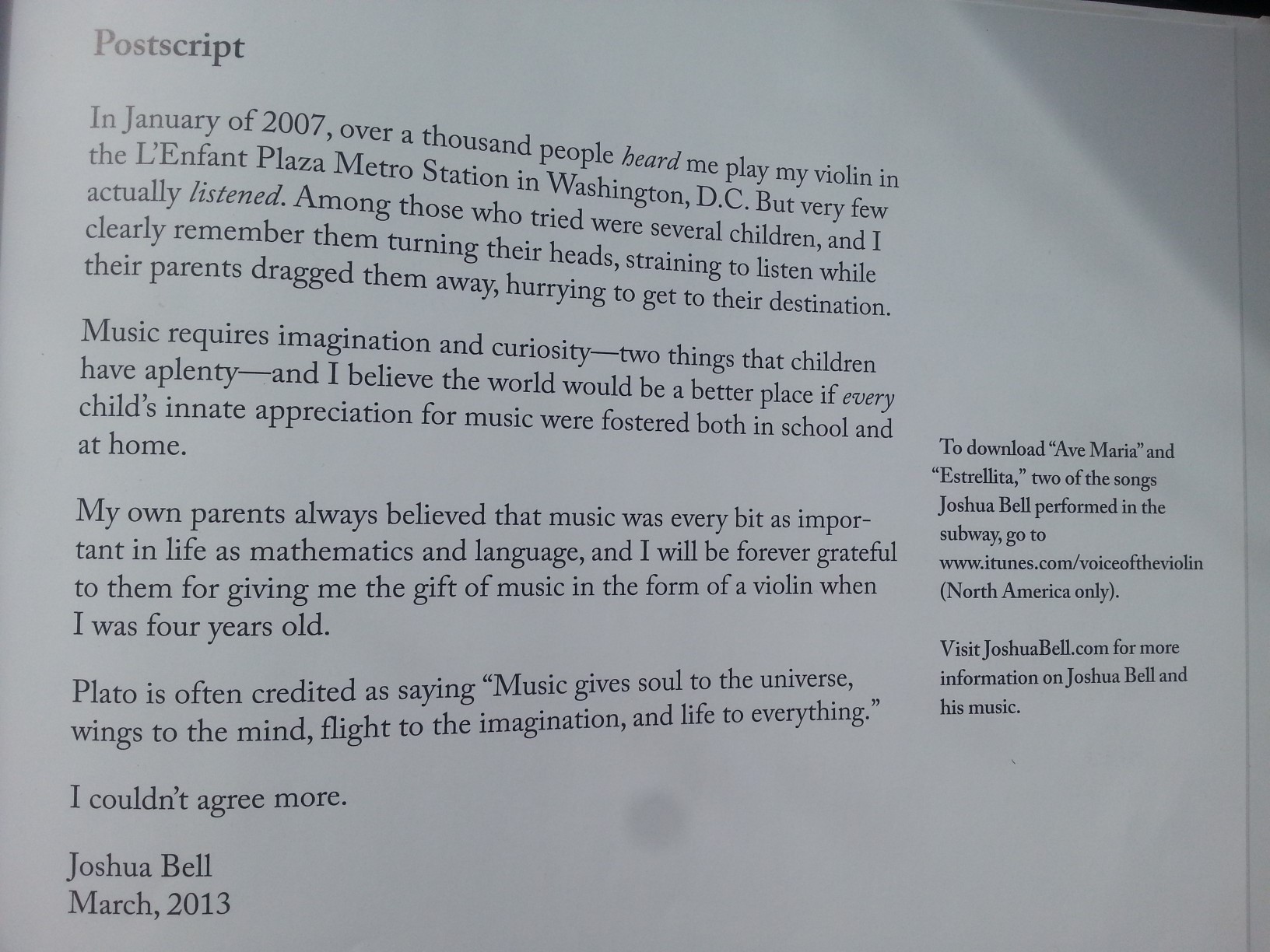
The outcome of the 45 minute busking session was shocking – of the 1097 people that passed by Joshua that morning, only 7 people stopped to listen for a minute or longer, and the ones who tended to want to stop most were children.  Joshua had received little over $32 for the entire session.

I’m not sure many other professional violinists would have undertaken a similar experience…

For lesser virtuoso’s that kind of reception would likely have cleaved a severe dent in their ego, but Joshua Bell, I think, was able to look objectively at what happened. It had no bearing on his skill on the violin.

It had everything to do with perception, placement and people’s capacity to enjoy something despite its context and their preconceived ideas.

Buskers, although many are highly talented, are not usually in the same league as a concert soloist. We tend to disregard them unless we like what we hear. No matter their skill level my children always stop for buskers.

It was early in the morning and people were naturally rushing to work so they weren’t really focused on anything else. The dismal results highlight how often we can live in a kind of manic, 21st century stress bubble.

Our schedules are crammed to the hilt; we don’t appear to have a nanosecond to enjoy the finer things in life. But such a blinkered attitude means we miss out on what’s really around us.

“Some of the most thrilling things in life are done on impulse.” ~ Syrie James (The Missing Manuscript of Jane Austen)

It’s time to open up our awareness and take a deep, abdominal sniff of the roses – really smell and devour their glorious scent – make it a part of us.  Let that divine aroma mingle in our blood as it pulses around our body and nourishes our cells.

Stop and listen to the music if you can, it’s highly beneficial for human beings. Pause and appreciate a work of art, read an excerpt of a classic text and truly digest what message, what heart-felt passion and skill went into its creation.

One of the best violinists in the world was playing music that speaks to the soul on a Golden Period Stradivarius, and barely anyone could truly appreciate it. This wasn’t just any old music played on a shoddy instrument by an amateur – this was mastery – mastery of composition, of violin construction and musicianship.

It makes you think what else we might miss if our radar isn’t attuned to art, nature, beauty, literature and music, our whatever it is that elevates our soul. The universe is ‘speaking’ to us all the time, but are we listening?

Many opportunities for joy may pass us by if we are in a kind of awareness stupor, only concerned with the banalities of life. To be fair, maybe some people didn’t recognise or know who Joshua Bell is; but surely the heavenly music would have roused them from their cultural cocoons for just a minute?

It’s a sad day when a person’s life is so devoid of feeling or joy that they cannot spare such a short time to enrich it.

Here’s the article that Gene wrote after the experiment in the Washington Post.

The Man with the Violin

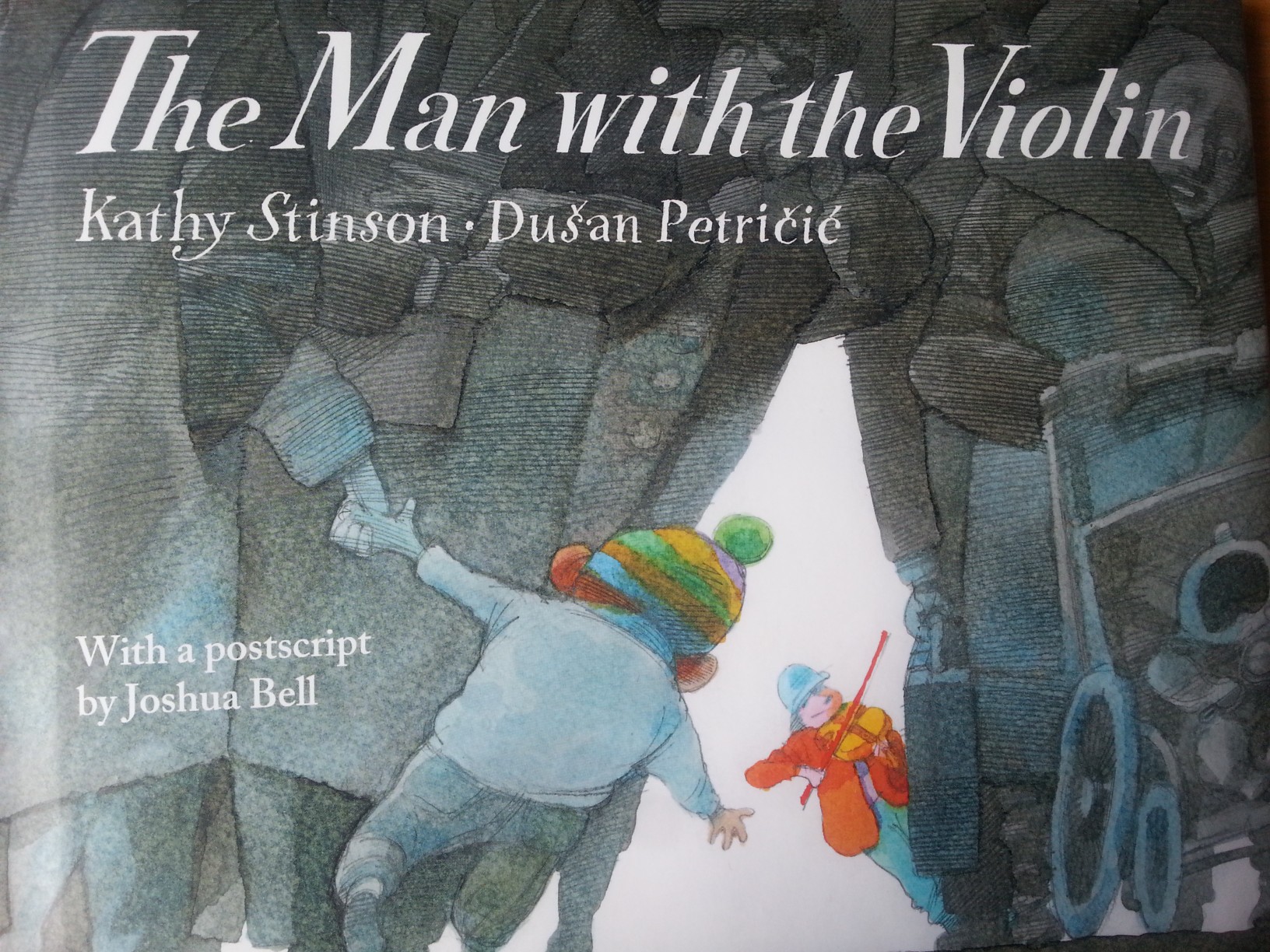
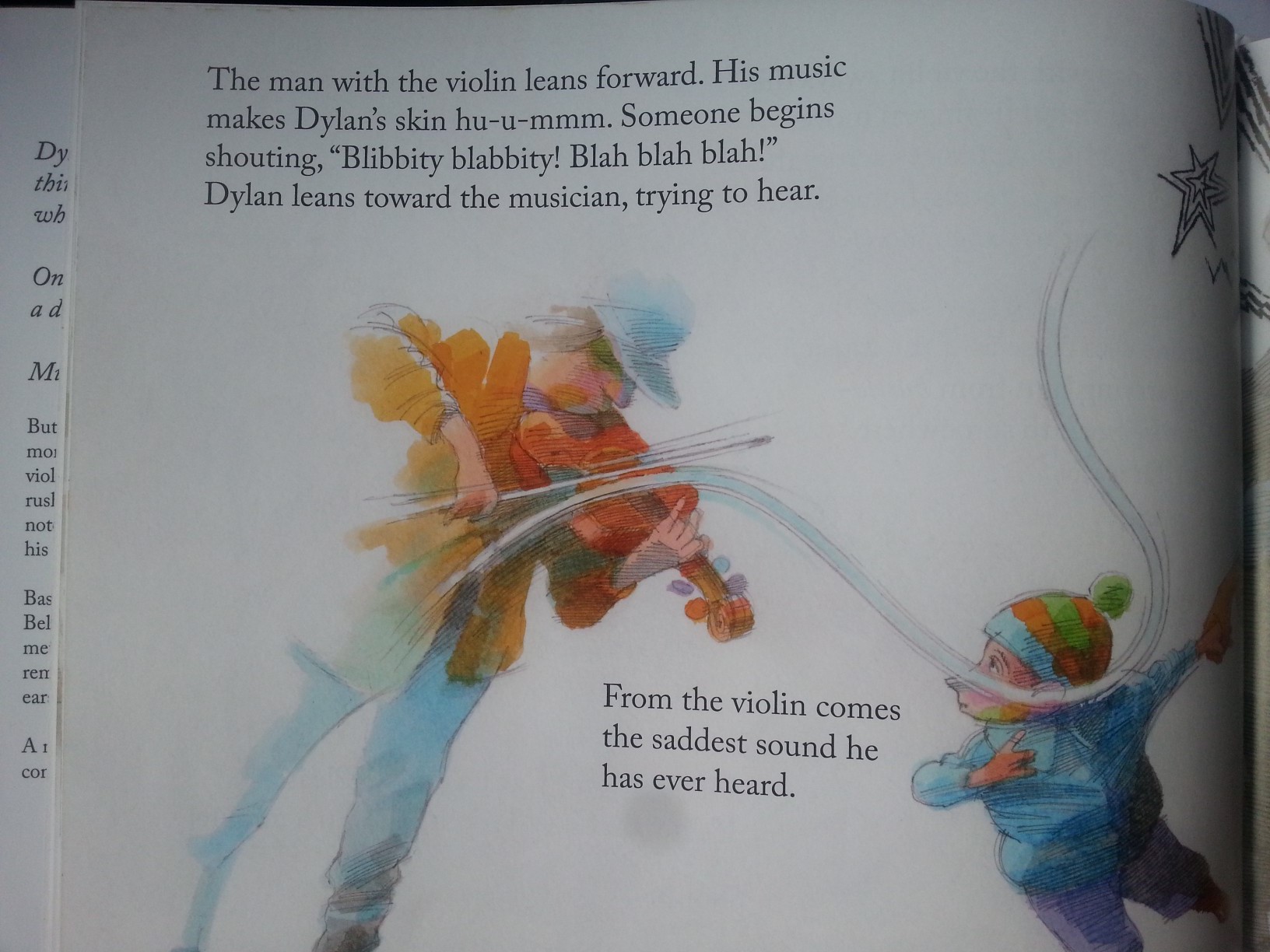
The experiment prompted children’s author Kathy Stinson to write a glorious book about it: The Man with the Violin. Kathy put herself in the shoes of one of one of the children who may have passed Joshua that cold wintry morning and wrote it from a young boy’s point of view.

When I discovered this book I had already seen the experiment and knew that my daughters would love it. They do, and so do I, because it reminds me to pay attention to what my children pay attention to, and to live in and enjoy the moment.

It’s beautifully written with a beautiful message and evocative illustrations.

Context

One of the lessons of this enlightening experiment was context. It turns out that time and place matter, that expectation has an impact on our experience and enjoyment. When we have paid a considerable amount of money to sit in a concert hall and hear the amazing acoustics of a hotly billed soloist we are in the right frame of mind to get the most out of that experience.

Spontaneity is not something that the majority of people who passed him seemed to possess. It also demonstrated that people tend not to value something unless they pay for it.

His follow-up performance at Washington Union Station in 2014 was much more successful! It helped that the event was publicised, so people knew in advance what was happening.

Joshua Bell is very eloquent when he talks about the experience and classical music in general:

I love his passion for children to have a musical education and how that impacts on their lives as well as their test scores. Music (of any kind) is not a nice to have, it’s as essential as maths and literature. It’s fundamental to our well-being on a mental, emotional, physical and spiritual level.

So whatever floats your boat, be it music, literature, art, or being in nature, take time to enjoy it and let its beauty infiltrate your life and revitalise your soul.

“No matter how many plans you make or how much in control you are, life is always winging it.” ~ Carol Bryant