“Neurons that fire together, wire together.” ~ Donald Hebb (Hebb’s Law)
Last week was #BrainAwarenessWeek, and as I find neuroscience a fascinating subject, I thought I’d share my key learning points in a bid to better understand and make the most of the electrical activity that happens within the grey matter nestled inside the cranium.
Your brain can change – it’s called plasticity!
Whether we tend to manifest slightly neurotic, nebulous or nifty neurons, Brain Plasticity (Neuropalsticity) can direct us to achieve our highest potential if understood and developed to positively influence an individual’s life experience.
I can hear Patrick Stewart’s deliberate and deep voice, laden with gravitas, that kicks off Star Trek episodes with the immortal words: “Space, the final frontier….”
I too would like to boldly go where no man has gone before, into my left prefrontal cortex! I’d like to make a case that it’s the six inches between our ears that has uncharted territory, and it’s certainly worthy of exploration. The human brain and psyche still has many secrets to reveal.
Now is a good time to give our neurons a second thought…

Think that affirmations are hooey? Visualisation is fantasy? Mindfulness is a load of rah-rah new age fluff?
I’ve sometimes had my doubts, but science backs it all up.
For me, learning and expanded awareness is a life-long process, and I know from past experience that the mind can be a powerful ally or your own worst enemy. I suspect you, like me, when you have wanted to implement positive change or more empowering habits have sometimes encountered resistance. It feels hard at first with conscious effort.
Oh boy, I’ve sabotaged myself more times than I’ve had hot dinners. However, I do eventually overcome the backlash from my brain; indignant that I’m making it work when it has previously been happily running on automatic.
If there ever was a case for being aware of our habitual thoughts, beliefs, habits and actions, this is it: once the circuitry is thoroughly embedded over time, our brain (doing what it is designed to do in conserving energy), runs those items on autopilot – what is known as Automaticity.
Until recently, Brain plasticity was thought to be a biological process unique to childhood, and that after a certain age brain development halted. Neuroscience has now proved that theory incorrect.In fact, our brains continue to evolve into old age if we take an active process in keeping our neurons firing. Scientist believe that our brains peak in our early forties, but we can use brain plasticity to slow cognitive decline.
The phrase ‘use it or lose it’ certainly applies to our brain cells.
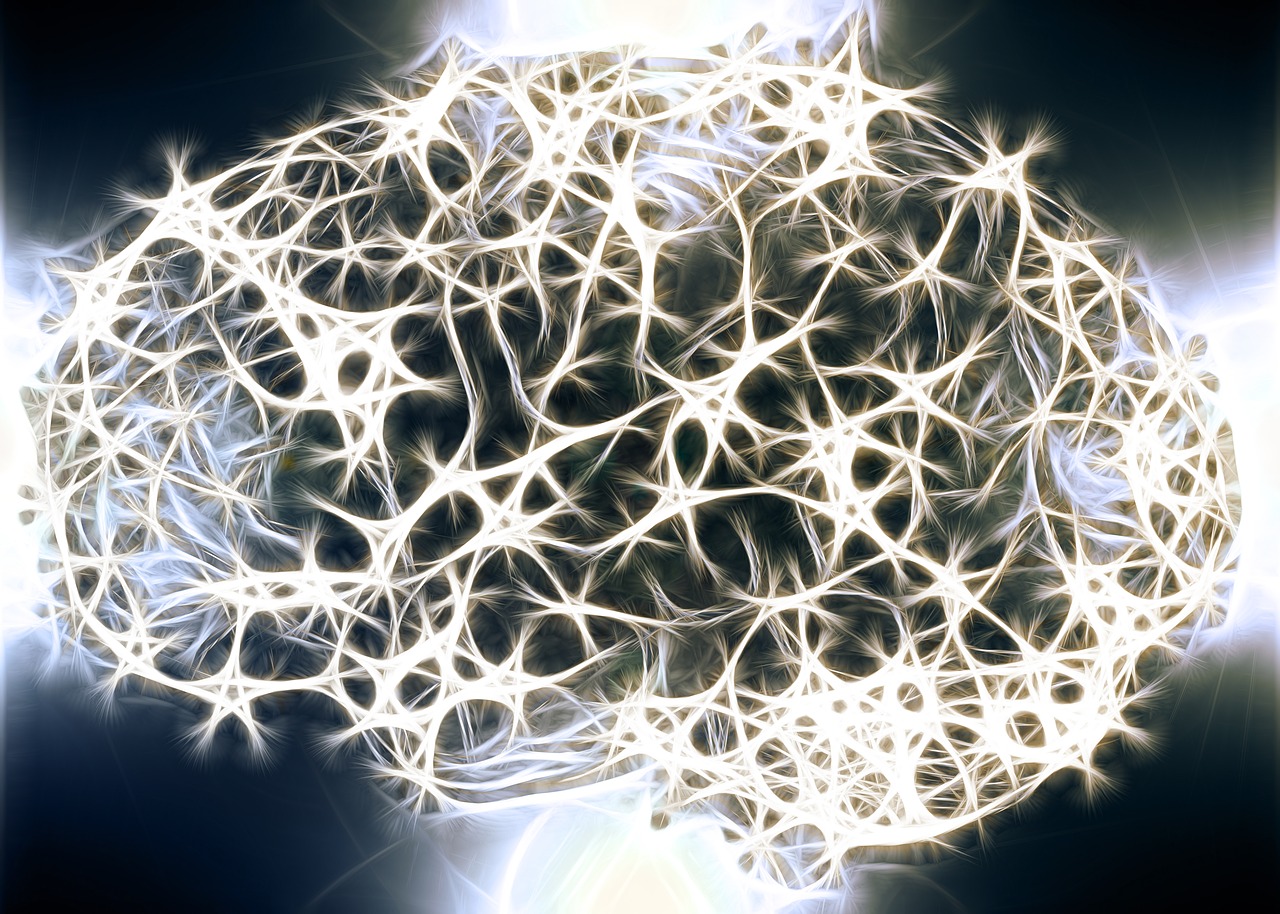
Our brains have the capacity to create new neural pathways and new cells (neurogenesis), the latter being mainly in the memory HQ, the Hippocampus. Neurons are not hardwired like computer technology. I know that I’d have been up the creek without a paddle if they were!
You’ve most likely upgraded your computer software at certain intervals to ensure smooth running, more speed and improved features. Well, we have incredible biochemical software in our heads which can be continually upgraded; possibly the most complex electrical equipment in the universe…

Our brains consist of around 100 billion neurons (nerve cells), surrounded and protected by ten times more glial cells, which give physical support, nutrition, repair and to some extent they assist neural communication and neuroplasticity.
On average a neuron fires between five and fifty times per second, forming thousands of links with other neurons and the more signals are sent between neurons the stronger they become. A typical brain might experience between a 100 and a 1000 trillion synapses. These hyper connected neural pathways form neural networks.
Imagine a field of wheat, just before harvesting. The tufty wheatears are swaying in the wind. If you walked from one side of the field to the other, you would leave an indentation in the crop. If you took a different route each time you crossed the field the paths would be there, but they would be faint.

If you kept using the same route each time you walked through the crop, the pathway would get flattened and leave a greater visible mark. It’s bigger and stronger than lots of less used paths. I find this a helpful analogy when thinking about neural pathways and brain plasticity.
“A particular train of thought persisted in, be it good or bad, cannot fail to produce its results on the character and circumstances. A man cannot directly choose his circumstances, but he can choose his thoughts, and so indirectly, yet surely, shape his circumstances.” ~ James Allen (As a Man Thinketh)
Through repetition, emotion and visualisation we fire certain neurons together repeatedly, forming new pathways.
Honing habits
Turbo-charging our brain takes work. Our brains evolved over millennia to do five things above all others: ensure survival, control bodily functions, keep us safe, conserve energy and experience pleasure, (including desirable sensory experience).
Our brains take up about 25% of our body’s daily energy pool.
At birth our brains are a blank canvas, a neutral sending and receiving set which does not contain any limiting beliefs, thoughts or perceptions.
When we are little and learning to walk and talk and co-ordinate our bodies we stumble and fall time and again, but we are determined and we eventually develop enough muscle memory, persistence and plasticity to succeed. So when we have mastered walking, talking and riding a bike, it comes to us as second nature, we don’t have to think about it because those strong neural patterns are embedded in our brain.

Even if I haven’t ridden a bike for years I can get back in the saddle and although I may have a wobbly start, I can very quickly find my balance and the plasticity of my brain enables me to reuse that skill.
Constant repetition enforces automaticity. This is great news for productive thought patterns and habits, not so much for disempowering ones. Deeply held beliefs are re-enforced based on meanings we assign to events and situations. The stronger the emotion the stronger the pathway.
Scientists did an experiment with fleas in a jar. Because the fleas were trapped in the jar and would hit their heads on the lid when they tried to jump out, after a while they stopped jumping so high. They associated jumping with pain. When scientists removed the lid so they could escape they witnessed that the fleas still only jumped to just below the level of the lid. No fleas jumped out of the jar, even though they would have been able to, due to their conditioning.
Our parents, early environment and experiences shaped our thought processes as we expanded our internal ‘map of reality’.
Our habitual thoughts, feelings and actions create a sort of electrical loop, which is made automatic and becomes part of our unconscious expression. Those deeply created patterns run automatically whether they are positive and helpful or negative and self-limiting.
Trauma in childhood can be especially hard to overcome as the networks built around those experiences; thoughts of anxiety, lack of self-worth, fear and depression reinforce dysfunctional behaviour over time, which can be become a self-fulfilling prophecy. Negative thought investments that we continually make, without often being aware of them, can be counter intuitive for this reason.
The brain will distort or delete anything that does not confirm with our subconscious map of reality, so we always prove ourselves right.
Such partisan and often vociferous political division in America seems to stem from both sides being entrenched in certain belief systems. We see what we are conditioned to see, so in a sense the eyes don’t see; the brain sees.
Behaviour, practice and activity are the primary drivers of change in the brain. The brain is shaped structurally and functionally by everything we do and don’t do. Science has also noted that if the learning involves increased difficulty that it leads to greater neural structure.
Music education
One example of this is learning a musical instrument. When I first began to learn the violin I found it extremely challenging and I would come home from my lesson feeling tired. Eventually I mastered the basic skills, how to read music, first position, bowing, trills, double-stopping, 3rd and 5th position and started taking grades.
After a few years one of the pieces I really wanted to learn to play was Beethoven’s Violin Romance No. 2 (which was on the ABRSM Grade 8 syllabus a few years back).
There were sections I thought I would never master. But one time, I had a Eureka Moment and saw the music in a different way and was able to understand how to play the section I had always got stuck on before. It removed my self-imposed glass ceiling. I can play it pretty well now, but I wouldn’t say I’ve mastered it like a virtuoso.
Whenever I hear it being played I can ‘see’ the notes and move my fingers in the air as if I’m playing it, visualising where I would place them on the fingerboard. I can even play it with my eyes closed and ‘feel’ where my fingers should go.
At one time I had the entire piece committed to memory, but I obviously didn’t play it enough on an ongoing basis to keep firing the neurons, so now I can only remember the first third or so of it.
Now to tackle Bach’s Chaconne for solo violin!
It’s important to practice music correctly as playing a section with a slight mistake again and again will mean that it’s harder to fix it later on because the mistake will become automatic.
Playing music lights up the brain like a fireworks display, and I have touched on this in my post: The Importance of a Musical Education.
Setting goals and implementing new habits
So when we recognise a habit or thought pattern that is no longer serving us and try to replace it with a more constructive one which is sparked in the thinking, conscious mind (the left prefrontal cortext), it can sometimes conflict with hidden beliefs wired into our subconscious and our brain experiences chaos.
John Assaraf eloquently explains this concept:
The new goal is therefore not in alignment with a story we have continually told ourselves, so we might talk ourselves out of doing something new or procrastinate. The ensuing brain confusion can make us a slave to our conditioning if it is self-limiting.
This cognitive dissonance that we experience can keep us stuck. We have to pay a price to implement new thoughts, behaviours and learning, which is also known as the switch cost. Our brains go through a period of uncertainty, fear and other emotions.
Dr. Srini Pillay, a professor of Neuropsychology at Harvard University and a specialist in brain imagery and best-selling author, says that we must become committed to this new change and convince our brain that the change is essential.
There are various methods to help us rewire a new habit or thought pattern, such as self-talk, positive affirmations and corresponding physical actions. Self-talk is meant to be even more effective when we talk to ourselves in the 2nd person. For example, I might say to myself before a speech to a group of people: “Ginny you’ve got this, your talk is engaging and interesting, it will resonate with the audience and be successful.”
New actions and self-talk changes brain blood flow and increases neurotransmitters such as dopamine. He also recommended activating reward pathways.
When we experience fear the lizard part of our brain is activated, the AMYGDALA. This is our ‘feeling’ and danger processing centre, and yep, you guessed it, our amygdala doesn’t like change!
So these fearful thoughts and feelings that overwhelm us sometimes when we try new things, or find ourselves out of our comfort zone, can cause a sort of ‘earthquake’ in this part of the brain. But because all parts of the brain are connected this has an impact on our left prefrontal cortex, (the Einstein part of the brain) and that can rattle and shake in after-shocks which disrupts mental clarity.
I have certainly experienced this with some challenging circumstances recently which also meant I had experienced severe and prolonged sleep deprivation as well. This caused a huge amount of stress. I wasn’t just stressed, I was distressed. There were times when I felt like I had lost my mind!
Stress
Dr. Pillay confirmed what I had been experiencing, and that is that when we are emotionally stressed and the amygdala is activated, it makes it much harder to think rationally, and tends to trigger our brain to revert to old, well worn pathways and habits.

An obvious example is how someone who was once an alcoholic, but has been sober for many years can spectacularly fall off the wagon when confronted with trauma or intensely stressful situations. Same with smoking, retail therapy, or any dysfunctional behaviour or coping mechanism.
From all angles, rampant, out of control stress sucks.
He stated that stress is the key to habit health. How we manage it is fundamental to getting the most out of our grey matter. Productive, self-empowering daily habits are more important than strategies.
The first step is awareness, noticing what we are noticing.
“If you believe you can change—if you make it a habit—the change becomes real. This is the real power of habit: the insight that your habits are what you choose them to be. Once that choice occurs—and becomes automatic—it’s not only real, it starts to seem inevitable.” ~ Charles Duhigg, (The Power of Habit: Why We Do What We Do in Life and Business)
Developing mental muscle
The human body has a total of 650 muscles at its disposal. If we want to tone our physique or define those muscles further we have to exercise and add resistance to our workouts. We’d also picture in our mind’s eye what we want our body to look like. Athletes and sports people often use visualisation in addition to physical training to enable strong physical and mental prowess.
The same fundamental principle also applies to our brains.
It’s very important to find mindfulness practices that work for us. Meditation with Holosync is a life saver for me, as well as breathing exercises, physical exercise, reading and playing my violin. A hug helps too!
Meditation
“Meditation has also been proven scientifically to untangle and rewire the neurological pathways in the brain that make up the conditioned personality.
Buddhist monks, for example, have had their brains scanned by scientists as they sat still in deep altered states of consciousness invoked by transcendental meditation and the scientists were amazed at what they beheld. The frontal lobes of the monks lit up as bright as the sun!
They were in states of peace and happiness the scientists had never seen before. Meditation invokes that which is known in neuroscience as neuroplasticity; which is the loosening of the old nerve cells or hardwiring in the brain, to make space for the new to emerge. Meditation, in this sense, is a fire that burns away the old or conditioned self, in the Bhagavad Gita, this is known as the Yajna.”
~ Craig Krishna, (The Labyrinth: Rewiring the Nodes in the Maze of your Mind)
This is a simple but effective way to attain an altered state of consciousness very quickly, by Dr. David R hawkins:
Dr. Pillay suggests using CIRCA:
- C – Chunking down the problem/situation (defining/taking manageable steps when overwhelmed)
- I – Ignoring mental chatter (employ meditation, mindfulness, joy filled activities)
- R – Reality check (recognising that ‘this too shall pass’)
- C – Control check (Understanding that not everything is within our control and letting go)
- A – Attention shift (Focusing on the solution which also involves epigenetics)
Innercise
Self-empowerment coach John Assaraf devised internal exercises known as Innercises, which can be different according to want you want to achieve. Today we don’t have to contend with the appearance of a sabre tooth tiger in the village, but in the modern world we are vulnerable to a vast array of internal or external stimuli which can trigger our evolutionary fight or flight response. When that happens, blood is drawn away from the prefrontal cortex into the amygdala.
Innercises are effective in the Autonomic Nervous System (in the Hypathalamus), consisting of the Parasympathetic Nervous System and the Sympathetic Nervous System. When we are relaxed and responsive we are in the Parasympathetic Nervous System, where we generally exhibit good judgement and consciously choose how to react.
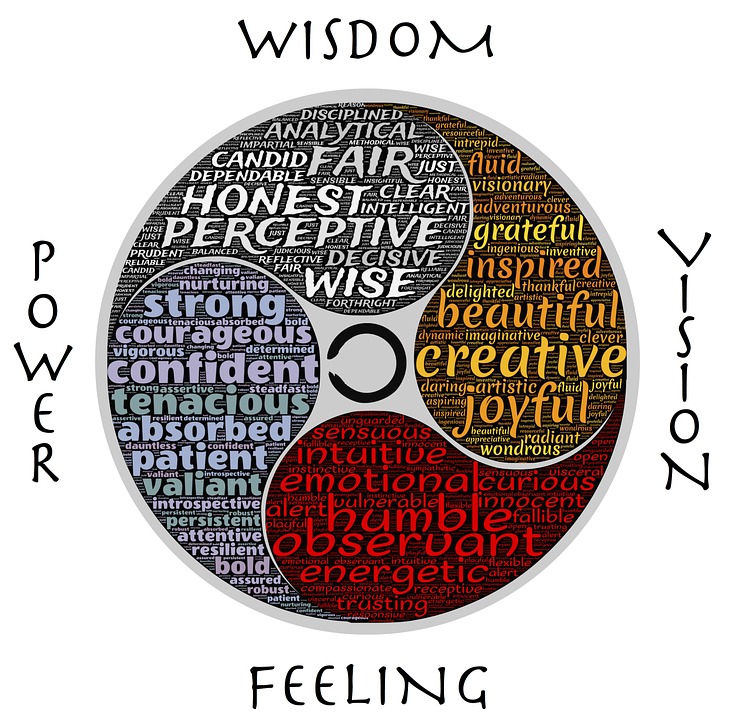
When we are fearful, emotional or distressed our bodies prepare for survival and Cortisol is released into the blood, via the Sympathetic Nervous System. When this happens we need to actively empower the left prefrontal cortex and limit the time the amygdala is running the show, and therefore activating unhelpful previous neural patterns.
Take 6, Calm the Circuits
Breath in deeply through the nose (from the abdomen not chest) and count to six. Release slowly through your mouth, slightly pursed as if blowing through a straw. You can also say: “I breathe in calmness,” as you inhale and “I release stress and fear,” as you exhale.
Another Innercise is AIA: Awareness, Intention and Action.
Awareness: Take 10 minutes and ask yourself – What are my dominant thoughts, emotions, feelings and behaviours right now? Write them down, note if positive or negative. Pay attention to whether you are behaving in a constructive way. The golden rule here is not to assign blame, shame or guilt, just observe without judgment.
Intention: Now that you are aware of your thoughts, feelings and actions and in a calm state, ask do you want to be in this state, or something more positive? Set your clear intention for what you want. Ask: what if you’re worthy of being your future self?
Action: Do one action you can take to interrupt the dysfunctional pattern. Recognise the ones you want to keep and strengthen those, and let go of the ones you want to release.
I love these short and sweet bursts of inspiration from Dr. Robert Mark Waldman:
There are two reasons we look to upgrade our subconscious conditioning: longing and discontent. These emotions motivate us to change and tell ourselves new stories so that we can experience an expanded version of life expression, to be more fulfilled and joyful.

The ability to be able to translate potential into results is summed up perfectly by Maxwell Maltz, author of Psycho Cybernetics:
“Within you right now is the power to do things you never dreamed possible. This power becomes available to you just as you can change your beliefs.”
Neuroplasticity matters, because we can never outperform our own self-image.
Helpful aspects of neuroplasticity:
Flex your cortex!
7 ways to make the most of brain plasticity:
- Single task! Do one thing at a time and avoid multi-tasking. I used to pride myself on being able to switch between tasks, but in reality I wasn’t doing justice to any of them. Our brains are not wired to do two things simultaneously. The brain toggles using the frontal lobes and this increases stress hormones. Single task for improved mental productivity.
- Inhibit information. Whilst the internet has been a massive benefit for humanity, it’s now such a behemoth of content that if not controlled information overload can fry your circuits! The highest performing individuals are the not the ones who know the most, but who know what to block out, inhibit or bounce and focus only on a few things.
- Detox distractions. If we’re not careful we can let technology control us. Smartphone addiction is detracting from living. Who wants to live with constant buzzing and beeping? It is said that the average person in a corporate setting works for only 3 minutes without interruption. How can anyone do high level thinking in just 3 minutes? It takes about 20 minutes to recover from a distraction and get back into flow.
- Big idea thinking. This is rocket fuel for your brain. To take ideas from disparate sources, learning and various areas of your life to combine them with the rich knowledge and experience you already have and thereby form some generalised higher way of thinking. It means we have to synthesise and interpret life. The meanings we derive are the powerhouse transformative communication. Is learning boring or rote? Big idea thinking makes thinking, memory and learning more robust and increases all levels of brain health. It can increase blood flow by 8-12% so neurons are happier! This state can elicit a 30% increase in speed of neural connection across the executive networks. Reasoning and problem solving is improved. Big ideas are to the brain what push-ups and pull-ups are to the body.
- Calibrate: balance mental effort. Don’t waste mental effort on less important items, do the big thinking and important tasks in the first few hours of the day.
- Innovate: the brain becomes stale with the status quo, it’s not firing on all cylinders.
- Motivate: Motivation trumps talent. It’s what will help inspire us to reach our full potential. It can be elusive, but it’s easier if you are doing something you are passionate about. Innovation fuels motivation which injects our brains with powerful neurotransmitters such as dopamine. It makes us happier and increases the speed of learning.
- 7 Habits of highly Effective Brains, by Dr. Sarah McKay PhD
Dr. McKay also gives us permission to indulge in our neurobiology:
In many ways the body and brain could be viewed as a biological virtual reality suit for our consciousness. Perhaps these scientific ideas and practical exercises will be useful for further exploration and understanding, so that we can all perform at a higher level.
Dr. David R Hawkins teaches about the benefits of the etheric brain after someone reaches a certain level of consciousness, but that’s a whole new post for another day…
We are the drivers and mechanics of the most powerful engine in the world, but it certainly helps if we have an instruction manual!
“Knowing yourself is the beginning of all wisdom.” ~ Aristotle
















 rhap.so.dy in words