An Epiphany in Gratitude

“When we are happy, we are less self-focused, we like others more, and we want to share our good fortune even with strangers. When we are down, though, we become distrustful, turn inward, and focus defensively on our own needs. Looking out for number one is more characteristic of sadness than of wellbeing.” ~ Martin E. P. Seligman ph.D. (Authentic Happiness)

This isn’t particularly easy for me to share, but I feel the lessons I learnt from my recent ‘mensis horribilis’ may be useful to some who are having a nasty time of things. The week leading up to Friday 13th was truly awful and stressful, I really had the kitchen sink thrown at me.

I won’t bore you with all the gory details, but suffice to say, pretty much every day I had a major challenge to deal with. On top of that I was tired, my kids were at each other’s throats and I had a constant ear ache that thankfully hasn’t developed any further. I felt like I had the world on my shoulders. I’d deal with one problem and then another arose more or less straight away, so I began reacting badly to my worsening circumstances.

Martin Seligman - positive psychology

I wasn’t flowing in and out of my emotions, I had become entrenched in my negative energy field. I certainly didn’t take my own advice from a previous post: Positive Psychology, the Science of Happiness.

Maybe if I’d been more positive I would have coped better with the events that presented themselves to me. I’m usually quite a positive and happy person, but somehow everything got on top of me and I was drowning in a sea of negativity. I was expecting the s**t to hit the fan, and it dutifully did! My pity party rapidly upgraded into a full-on woe-is-me rave…

However, after hearing about the barbaric and tragic murders in Paris something shifted in me. The terror of those affected must have been unimaginable. It has been incredibly distressing to watch the news over the last few days, but it helped put my life into perspective for me. There were many people suffering in much worse circumstances than me.

I said my prayers for the poor souls who were in pain, and thanked God for all that I had. Which, when I tallied it all up was quite considerable, despite the many setbacks of the preceding week. I had allowed myself to become pessimistic and because I was mired in that negative energy it magnified everything.

In a beautiful light bulb moment I started to feel grateful for all the good in my life, in light of the fact that so many just across the channel had needlessly lost their lives in a cowardly, heinous attack. Here one minute, gone the next.

My challenges haven’t disappeared, but the black cloud I borrowed from Eeyore has now left its temporary home above my head!

Everyone has bad events to deal with; it can’t all be plain sailing. It’s not what happens to you that matters, it’s what you do about it that does. It’s how you react to it.
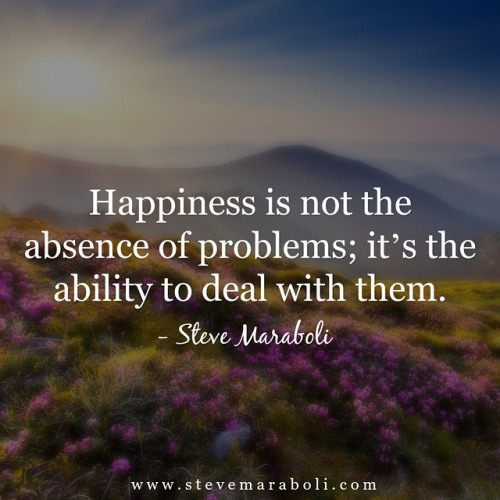
happiness - steve maraboli

I admit, it’s harder to stay positive when you’re under an onslaught, but thankfully weeks like that are relatively rare.

Mum and I went to Oxford on Friday, I needed to do a bit of research for my next novel, plus it meant we could have some precious mother/daughter time, as mum now lives near the ‘city of dreaming spires’.

We spent a good hour and a half in Oxford Crown Court, mainly in courtroom two. After seeing a complainant be cross-examined in the witness box by a seemingly kind and softly spoken barrister who mercilessly went in for the kill at the end of her questions, I was grateful not to be in her shoes. I’m not permitted by law to reveal any details about what I heard.
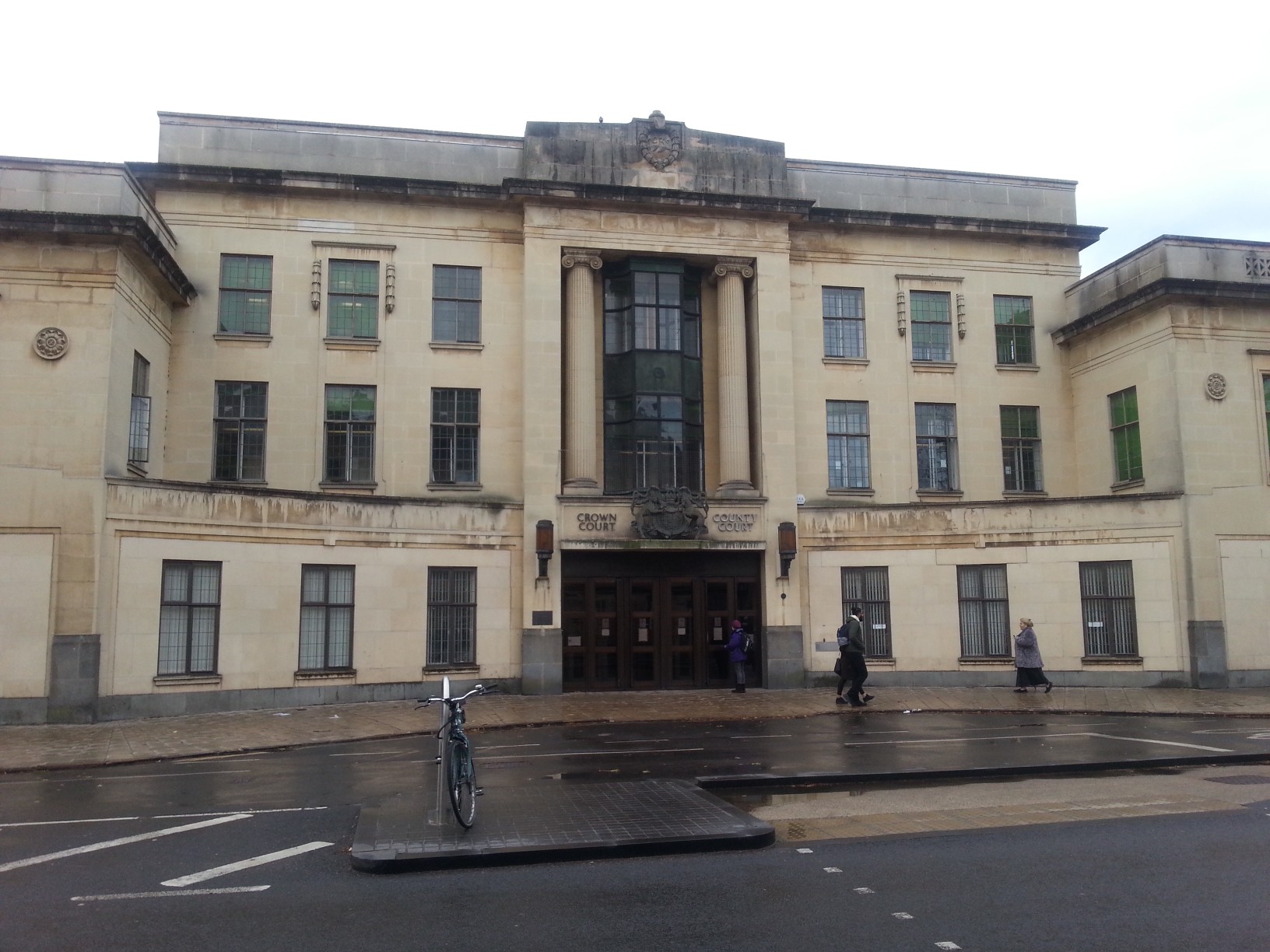
Oxford Crown Court

Oxford Crown Court

Whilst I had sympathy for the person in the witness box, I was learning about the workings of a case. That defence barrister certainly operated like an iron fist cloaked in a velvet glove.

After hearing charges against another man for unmentionable crimes, I began to see that there is so much evil and drama going on in other people’s lives, that mine seemed relatively happy in comparison.
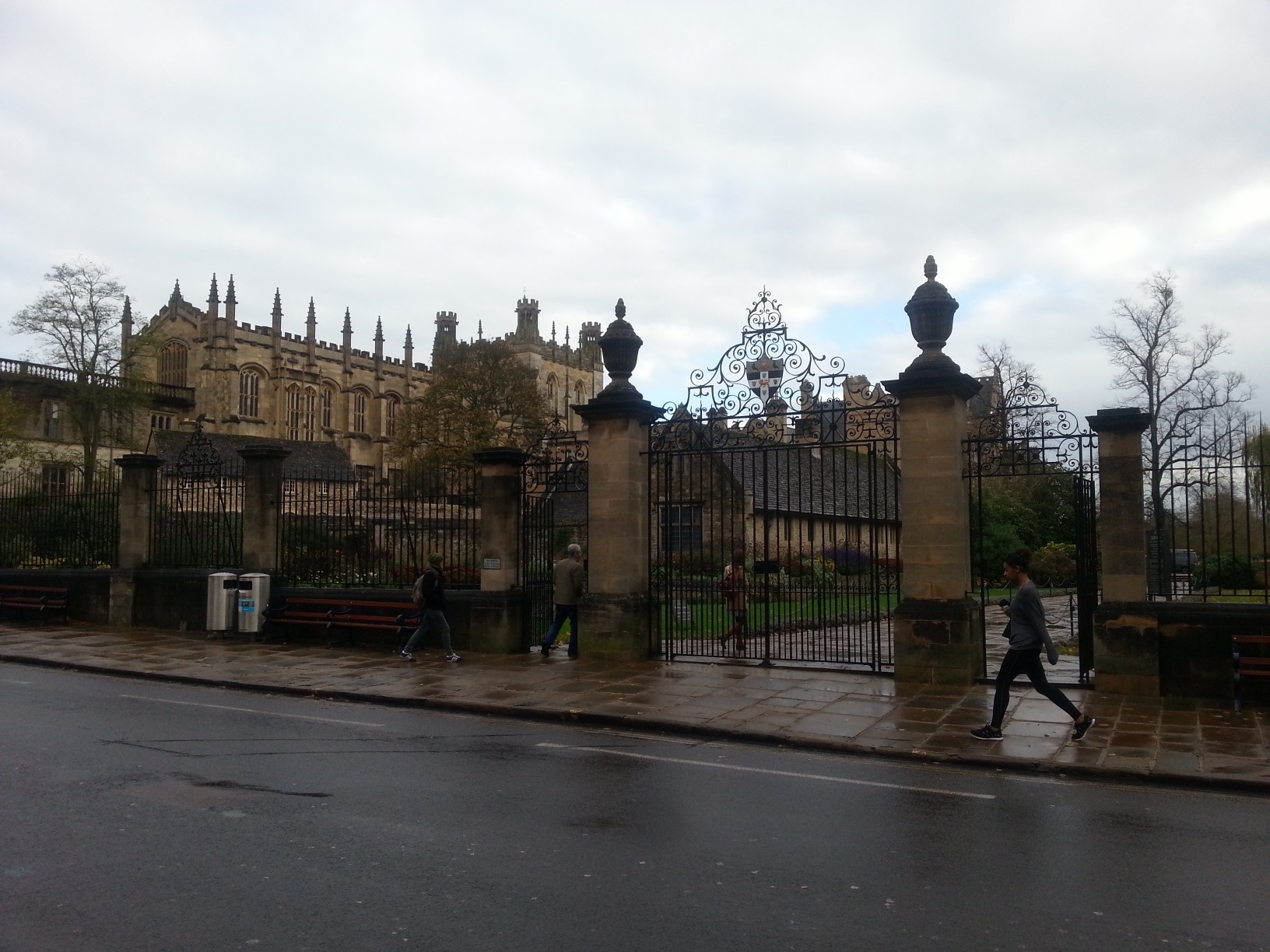
Passing Christ Church Cathedral en-route to the Crown Court

Passing Christ Church Cathedral en-route to the Crown Court

I almost decided not to go as we had a deluge of torrential rain that morning, but by the time we exited the court house at the lower end of St. Aldates the sun had come out and blue sky illuminated the city.  The heavy grey clouds that blanketed the sky earlier had completely evaporated. Mum and I had a short stroll around Christ Church before we had to get the bus back to the park and ride. It was a happy and productive day and I felt myself brightening up.
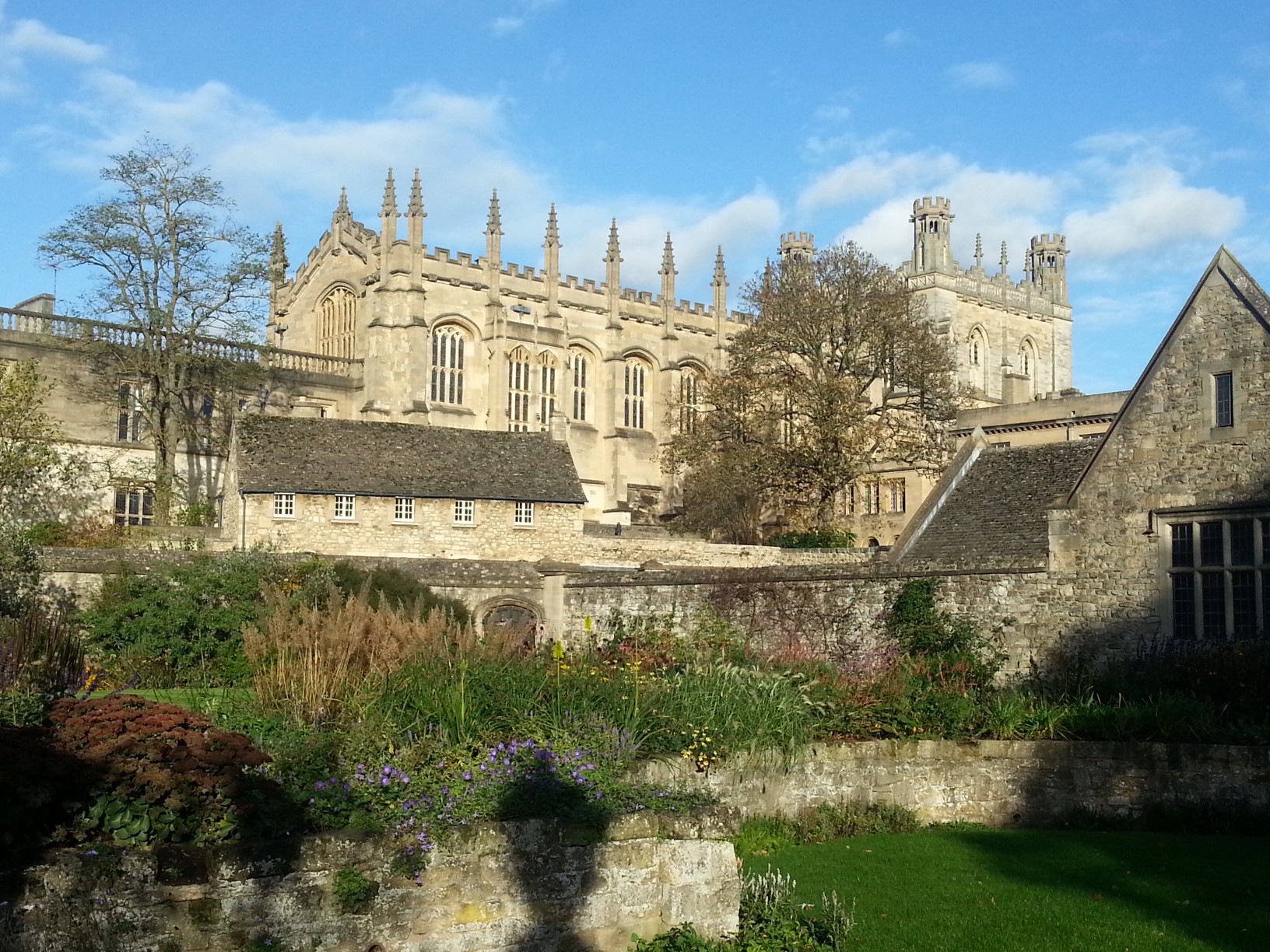
On our way back from Christ Church Meadow

On our way back from Christ Church Meadow

I stopped listening to the chimp on my shoulder and started making the case for all the success and good things I’ve done. This what Martin Seligman refers to as disputation. What I had perceived as a permanent failure was just a temporary setback. Having the setbacks all at once was probably a consequence of a deeper, more pervasive dissatisfaction with myself.

A cherished friend introduced me to Martin Seligman’s ground break book, Authentic Happiness, which is an invaluable companion right now! I took Martin Seligman’s Gratitude Test, and whilst the results weren’t bad, they weren’t particularly great. It’s obviously something I need to work on.
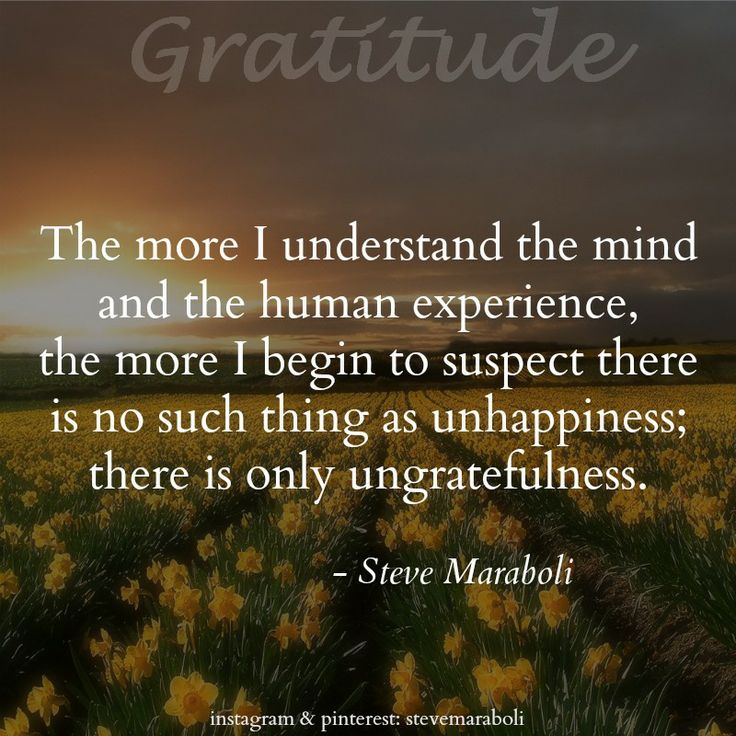
Gratitude - Steve Maraboli

Here’s the link to the Gratitude Survey, I recommend you give it a try!

The Authentic Happiness website has some great resources and further tests that you can complete anonymously to help further research into positive psychology.

Looking back, I can see that even in the midst of challenges there were some beneficial events unfolding and people helping me. I won’t mention them by name, but in my heart I am truly grateful to them!
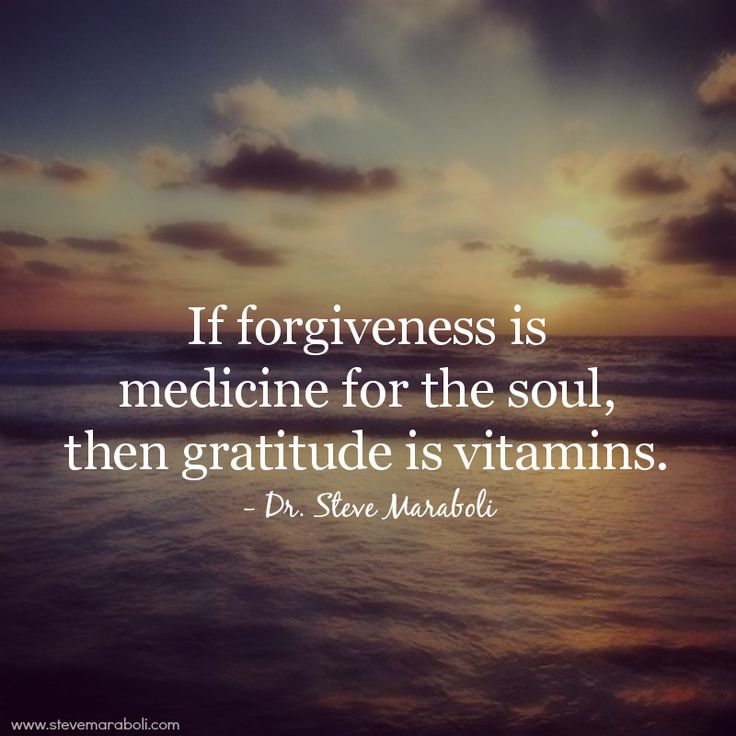
forgiveness - steve maraboli

This is an easy to follow presentation about optimism and gratitude based on the positive psychology work of Martin Seligman:

I’ve seen the video before of Joshua Bell playing his Gibson ex-Huberman Stradivarius in the Washington Subway experiment and feel it’s very relevant to show, (as it’s mentioned in the video above), to demonstrate how sometimes people don’t appreciate the beauty all around them in their lives:

Since my recent epiphany my energy levels are on their way back up, and I feel grateful for so many things: family and friends (both in my physical space and online), having a roof over my head, transport, food in the cupboards, healthy, happy children, a new book to write, my violin and music, a new direction with my health and an opportunity to top up flagging finances, plus many more blessings that I have taken for granted.

My wish for the future (stealing a phrase spoken by Abraham Lincoln in his first inaugural address), is that you, me and humanity can be happy, grateful and content despite the everyday threats and challenges we face, by being true to the better angels of our nature.

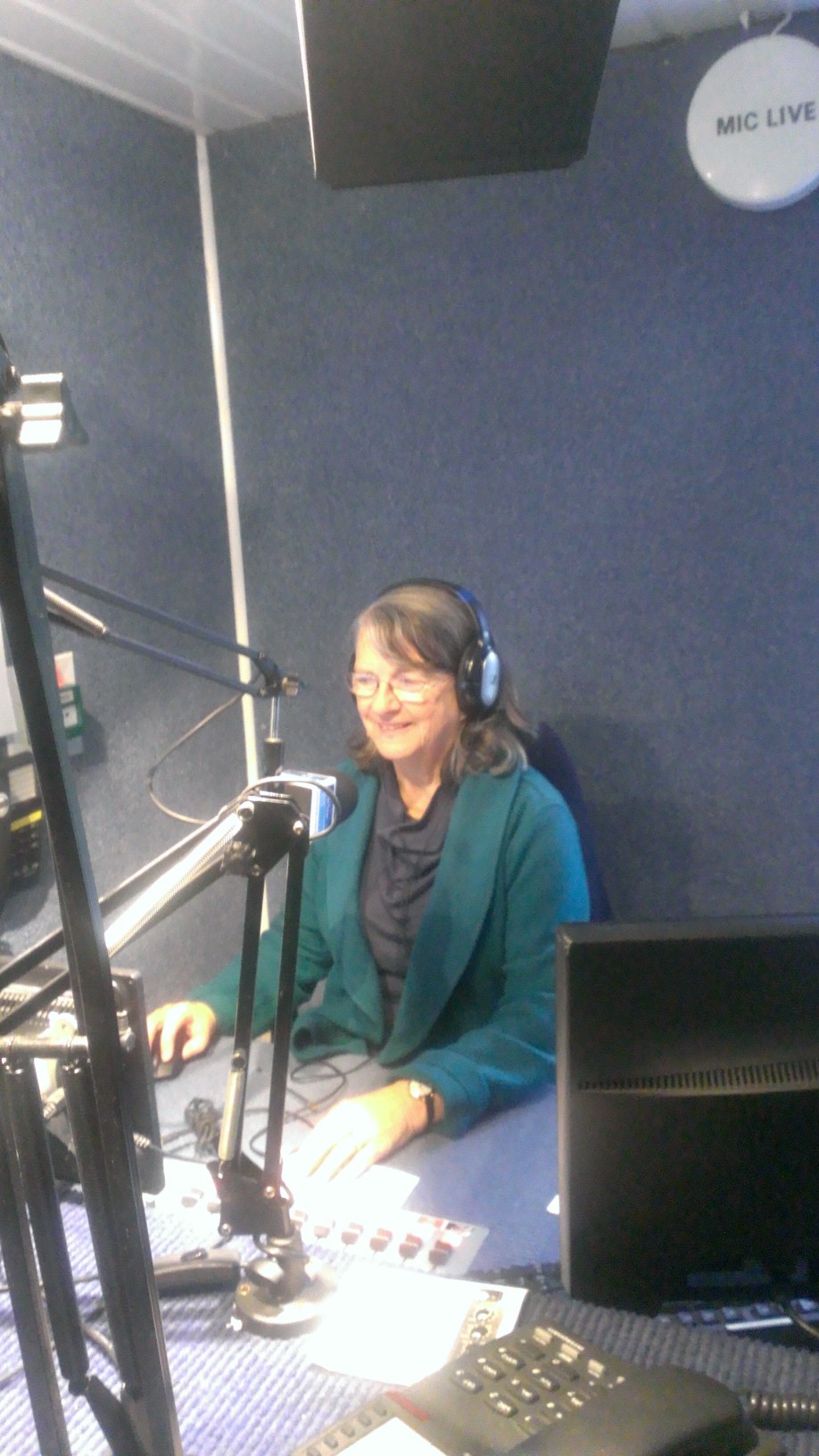
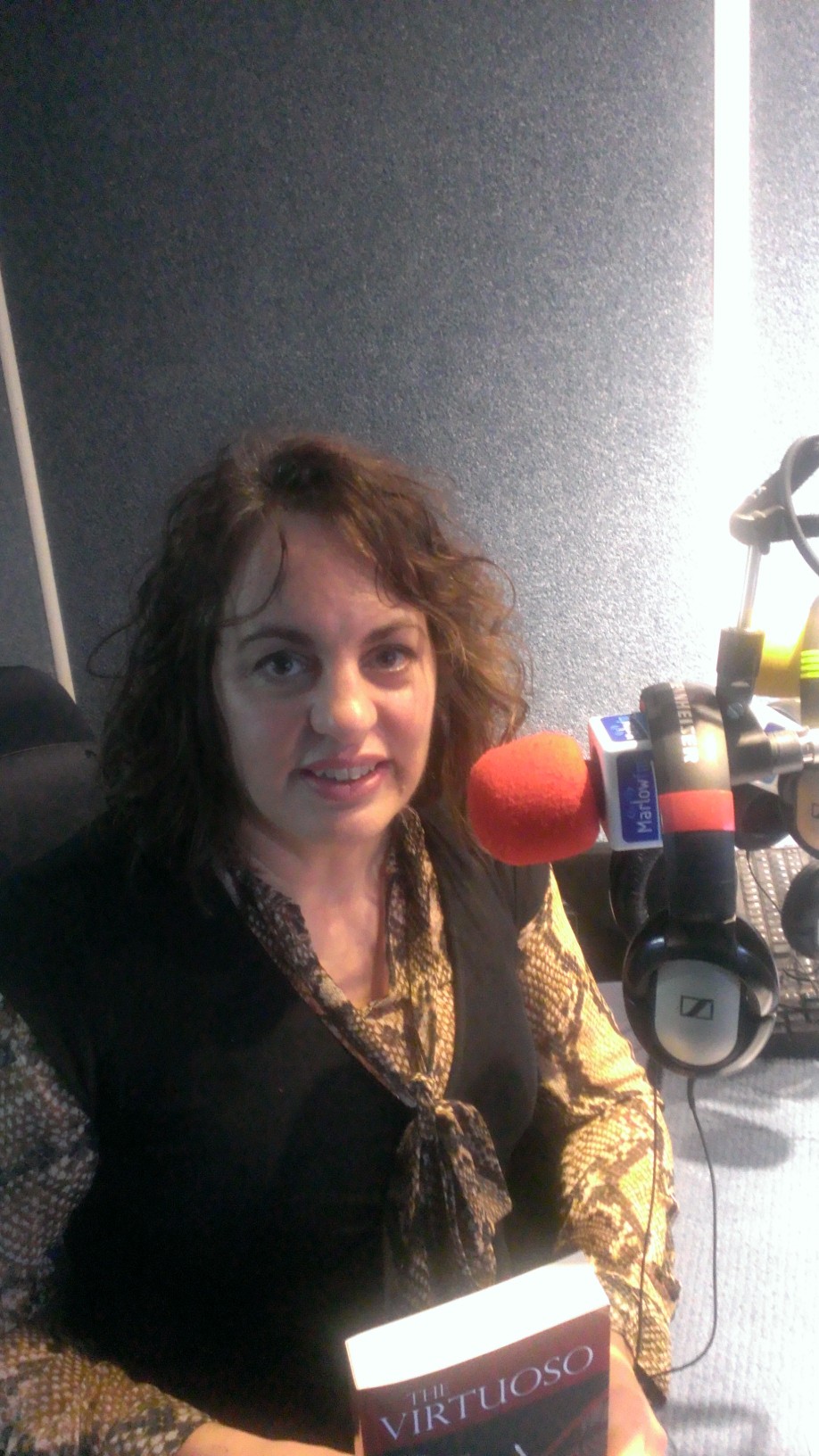
Chatting about #NaNoWriMo, Writing and #TheVirtuoso Live on Marlow FM

I’m going to let my voice do all the talking on this post!

I’d like to say a big thank you to Jean Wolfe (@jeanspark) for having me as her guest on Friday 6th November to talk about writing on her BizBuzz show. Jean broadcasts every Friday afternoon at 2 pm on Marlow FM.  She was such a warm, welcoming and knowledgeable host and I really enjoyed our conversation.

Jean at Marlow FM

The goal of NaNoWriMo is write 50K words in a month! I’m using this month to get my next trilogy of novels off the ground.

I don’t want to repeat everything we discussed on air, so without further ado here is the link to the interview which will be available with all the music interludes for the next three weeks.

I was delighted to be on my local radio station Marlow FM (@MarlowFM), especially as there are a few scenes in The Virtuoso that take place in the town!

in the Marlow FM studio

And before I forget, here is Schubert’s marvellous String Quartet ‘Death and the Maiden’ (same title as my next trilogy) that we discussed in the interview:

Thanks for listening! I’d appreciate any constructive feedback, I did make an effort not to um and ah too much…

#SundayBlogShare – Equilibrium 🎭⛅

Life operates on an invisible pendulum,

Constantly moving and evolving…

Swinging to love; weightless and free,

Where gratitude and mirth overflow

But momentum is gathering,

It will swing back.


Pausing for an infinitesimal moment, in boundless joy

Before lurching towards the depths,

Passing through an emotional kaleidoscope

To its opposite partner: despair.

I feel its inevitable power and sway,

Like a heeling yacht at the mercy of the ocean.


Please don’t let those dark tentacles pull me down,

Dragging me towards the inner abyss,

Where blackness engulfs and consumes.

A void, a vacuum of happiness and air

I cannot breathe, burdens are impossible to bear,

Hope – do not desert me, I will become nothingness.


Realm of unmet desire, stifled purpose, broken dreams

And so it goes;

I teeter between light and dark,

Passing through the chromatic scales of life,

Spared no notes; resonance for every season.

A symphony of joy, a sonata for sorrow,


Plucked and played at each end of the spectrum,

My journeyed heart yearns for equilibrium.

It can be the organ of my ecstasy, or my downfall…

There is no way to ignore its vibrations.

I am the composer of my soul’s music,

I alone conduct the sound of my energies.


Singing true to my keys: be they major or minor.

Will I soar on a meaningful adagio?

Or become enslaved to a never-ending fugue?

Will my melody ever be heard in the vast universe?

Listened to or ignored, my music is being performed.

I will play it, then let it go.


Those tunes will come to their finale,

I must remain in control; in balance…

At home in the symmetry of my soul;

That place of perfect peace and serenity.

Why must I experience such extremes?

Perhaps that is the nature of intense passions?


Without the lows there would be no highs.

I cannot deny my feelings,

They are part of me, not greater than the whole.

Once felt, I endeavour to release them,

Send them on their merry or miserable way,

And return, once again to equilibrium…

By Virginia Burges

Dancing to Death’s Tune: The ‘Danse Macabre’

“Venite ad me, qui onerati estis.” (Come to me, all ye who labour and are heavy laden.)

Death lingers in the air at this time of year. Ghastly ghouls, wicked witches and spooky skeletons decorate shops, costumes and cakes, as everything occult fascinates society at Halloween. Perhaps it’s our way of confronting the inevitable, the journey of life towards the grave that no one particularly wants to talk about.

Frans Francken the Younger - Detail of Danse Macabre

Frans Francken the Younger – Detail of Danse Macabre

Halloween decorates death with a mostly comical slant; ergo it becomes more acceptable, slicing and dicing the edges from the fear and disgust of the decomposed, emaciated body, the dissolution of earthly life. We are reminded in a joking atmosphere that Death has become light hearted, transforming some people into what I would describe as necromaniacs!

Necromancy, dancing spirits and ghostly stories abound at this time of year, but underneath this creepy consumerism and fun there’s a deeper message lurking for anyone who dares to look harder.  Could it be modern society’s memento mori minus the seriousness of Christian theology?

Totentanz - Danse Macabre at St. Nicholas Church Tallin

Totentanz – Danse Macabre at St. Nicholas Church Tallin

It’s a subject people are loath to ponder, why would one meditate on one’s own demise? Yet the transience of life, the fragility of physical existence is all around us, we have all been touched by death’s tendrils in one form or another. Our ongoing mortality is grounds for practising gratitude, for no matter how bad things get, we are at least still breathing! It’s a stark reminder not to take our existence for granted.

Origins

Musically, culturally and artistically, the dance of death has its origins in medieval France. Dancing and death went hand in hand – the allegory of the longest sleep.

Hans Holbein - Nuremburg Chronicle c. 1493

Hans Holbein – Nuremburg Chronicle c. 1493

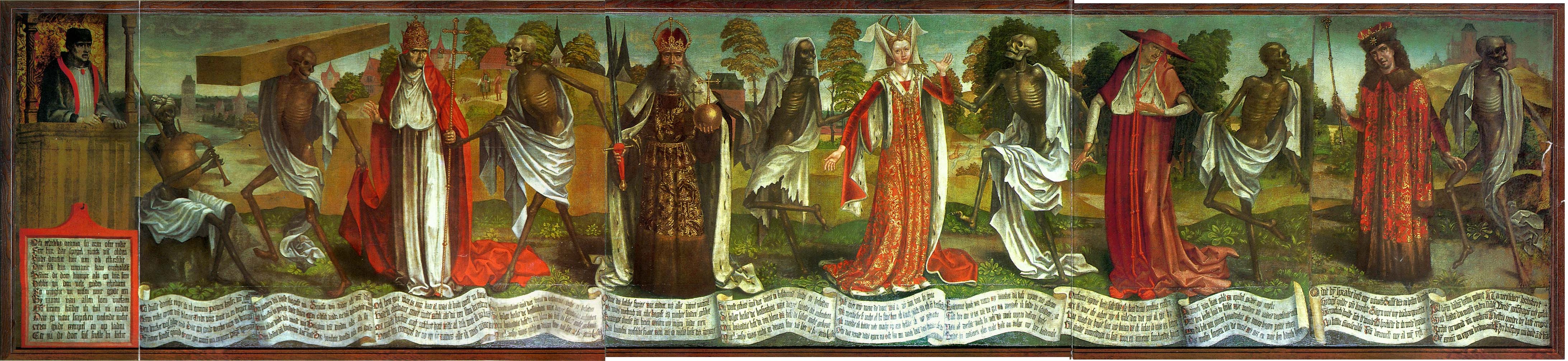
The Danse Macabre was designed to show us that no matter our station in life, whether lowly or exalted, death is the harbinger of equality; it eventually comes for us all, and one should consider one’s earthly activities in order to earn a spiritual meritocracy – aka eternal salvation, entrance into heaven/immortality.

Throughout medieval France and Europe the Danse Macabre/Totentanz was a serious message about the inevitability of death, packaged as entertainment (life was pretty grim for the ordinary folks), and was expressed in poetry, church murals, paintings, Hans Holbein’s woodcuttings and in religious hymns.

The Hundred Years War

The poor souls that inhabited Paris throughout the cruel and bitter civil war between the Armagnacs (those loyal to the French Royal Family and the Orléanist Lords) and the Burgundians (those loyal to the English Royal Family and Anglo-allied Burgundian Lords), experienced the intense suffering of a late Middle Ages power struggle, namely: famine, sieges, plagues, disease and extreme weather conditions, thus life expectancy was short. Very short.

The English Regent, John Duke of Bedford, ruled a stricken Paris in the years that followed the deaths of his ambitious brother, King Henry V of England and the mentally unstable Armagnac King Charles VI of France, (only seven weeks apart), when the Anglo-Burgundian alliance sought to rule over all of France.

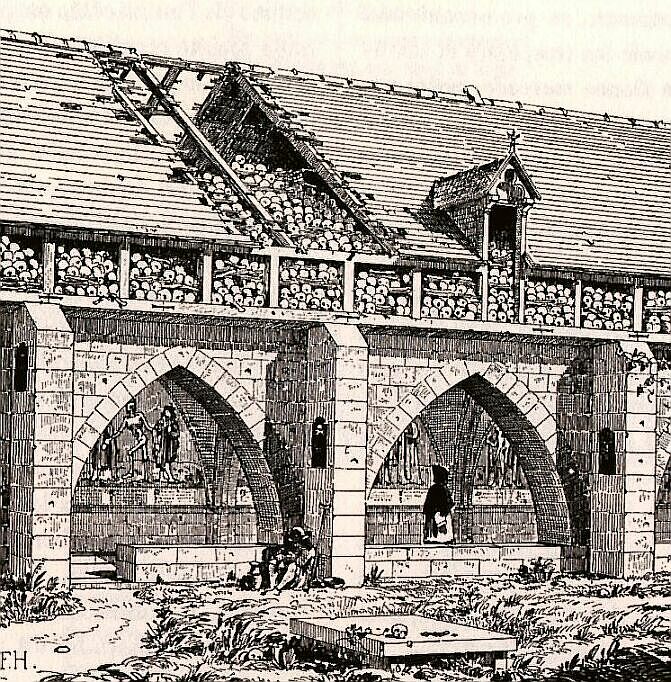
Danse Macabre on the Charnier at Holy Innocent's Cemetery

Danse Macabre on the Charnier at Holy Innocent’s Cemetery

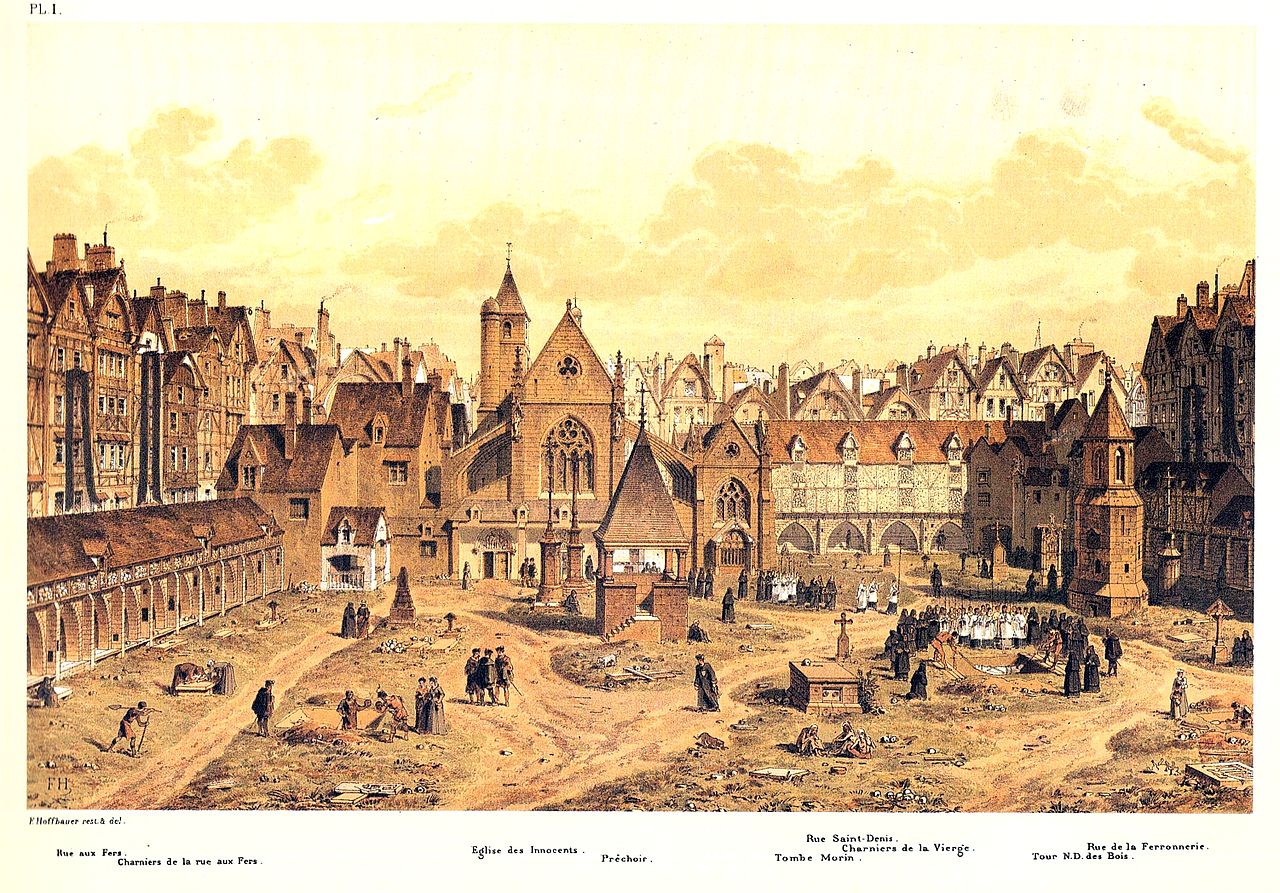
In the spring of 1425 the weary citizens of Paris witnessed the unveiling of a painting of the ‘Danse Macabre’ along the cloister walls of the city’s massive cemetery of the Holy Innocent’s, which depicted the grotesque figure of death leading a carnival of king, beggar, pope and peasant, mocking the pomp and power of earthly life in the face of certain death. It showed the people that the vanity of earthly riches and a sybaritic lifestyle was no protector from death’s grasp. They all marched towards the inevitable one-way door as equals, united in death’s all encompassing dark cloak…

That very first Danse Macabre mural was destroyed in 1669 when the wall was demolished. The copious corpses of medieval Paris were eventually relocated in a mass exhumation to the city’s catacombs due to the unsanitary conditions of the Holy Innocent’s in the late 18th century, and the church was also destroyed around this time.

The Holy Innocent's in Paris c. 1550 by Hoffbauer

The Holy Innocent’s in Paris c. 1550 by Hoffbauer

All that remains today is the original Fountain of Innocents, moved and rebuilt in the centre of the new market, now known as the Place Joachim-du-Bellay.

The music of La Danse Macabre

As music is the universal language; transcending time, religion and race, it has power over words alone in conveying a feeling, thought or message, hence ‘La Danse Macabre’ prises its fiendish way into the imagination…

The most famous of all is Camille Saint-Saëns’ richly evocative eponymous tone poem, Opus 40. First performed in 1875, the composition is based on the text of French poet Henri Cazalis:

Henri Cazalis - Danse Macabre

The opening chords of the solo violin are meant to put you on edge, and so it’s hardly surprising the work wasn’t as popular in the 19th century as it is today. I personally think those first startling, dissonant and jarring notes are pure genius when taken in the context of the subject matter. It also has a surprisingly jaunty and devilishly good melody that makes you want to dance death’s jig… I love to play it at home on my violin.

From Wikipedia:

According to legend, “Death” appears at midnight every year on Halloween. Death calls forth the dead from their graves to dance for him while he plays his fiddle (here represented by a solo violin). His skeletons dance for him until the rooster crows at dawn, when they must return to their graves until the next year. The piece opens with a harp playing a single note, D, twelve times (the twelve strokes of midnight) which is accompanied by soft chords from the string section. The solo violin enters playing the tritone consisting of an A and an E-flat—in an example of scordatura tuning, the violinist’s E string has actually been tuned down to an E-flat to create the dissonant tritone.

The first theme is heard on a solo flute, followed by the second theme, a descending scale on the solo violin which is accompanied by soft chords from the string section. The first and second themes, or fragments of them, are then heard throughout the various sections of the orchestra. The piece becomes more energetic and at its midpoint, right after a contrapuntal section based on the second theme, there is a direct quote played by the woodwinds of the Dies Irae, a Gregorian chant from the Requiem that is melodically related to the work’s second theme. The Dies Irae is presented unusually in a major key. After this section the piece returns to the first and second themes and climaxes with the full orchestra playing very strong dynamics. Then there is an abrupt break in the texture and the coda represents the dawn breaking (a cockerel’s crow, played by the oboe) and the skeletons returning to their graves.

Clara Cernat and Thierry Huillet give a fantastic performance on Violin and Piano:

I also love this orchestral version by Leopold Stokowski and the National Philharmonic Orchestra:

The Gromoglasova sisters do a chilling job on two pianos!

An inventive and lively arrangement for four violas by members of the Taiwan Viola Chamber Orchestra:

The Dance of Death is also portrayed in the 4th movement of Shostakovich’s Piano Trio in E minor, Opus 67.  A fine performance from Richter, Kagan and Gutman:

Dance of Death based on Mussorgsky:

Totentanz

Composer and virtuoso pianist Franz Liszt had something of an obsession with death, it featured in quite a few of his compositions, but Totentanz is the most well-known.

Valentina Lisitsa gives a spine tingling rendition of Franz List’s Totentanz for Piano and Orchestra, Paraphrase on Dies irae:

Liszt’s arrangement for two pianos:

Sylvia Plath’s Poem Danse Macabre:

Down among the strict roots and rocks,

Eclipsed beneath blind lid of land

Goes the grass-embroidered box.


Arranged in sheets of ice, the fond

Skeleton still craves to have

Fever from the world behind.


Hands reach back to relics of

Nippled moons, extinct and cold,

Frozen in designs of love.


At twelve each skull is aureoled

With recollection’s tickling thorns

Winding up the ravelled mold.


Needles nag like unicorns,

Assault a sleeping virgin’s shroud

Till her stubborn body burns.


Lured by brigands in the blood,

Shanks of bone now resurrect,

Inveigled to forsake the sod.


Eloping from their slabs, abstract

Couples court by milk of moon:

Sheer silver blurs their phantom act.


Luminous, the town of stone

Anticipates the warning sound

Of cockcrow crying up the dawn.


With kiss of cinders, ghosts descend,

Compelled to deadlock underground.

I’d like to thank you for visiting my blog and wish you a happy Halloween!

Thermography – A Focus on Breast Health Rather than Disease

Guest Post by Author and Cancer Survivor, Jenny Phillips

Jenny Phillips is a Registered Nutritionist, author and public speaker on all things wellness related. Her book, Eat to OUTSMART Cancer, aims to inspire people to create their own health and reduce their risk of chronic ill health.

Jenny’s website: Inspired Nutrition

As we draw to the end of the 2015 ‘Breast Cancer Awareness’ month – it’s worth reflecting on the fact that breast remains the leading cancer for women, accounting for some 30% of cases. In the latest data (2011) this equates to over 50,000 diagnoses a year.

Back in 2003, I was one of those cases. Diagnosed at the age of 39, a mum to two very young kids, it felt like our world had fallen apart. The medical treatment was slick and effective, chemo and surgery, but the next mountain to climb was staying cancer free. I have spent the last twelve years researching how not to get a recurrence, which has made me something of an expert in diet, lifestyle and health.

I have learnt that cancer takes time to develop, in some instances this can be up to 10 years before it is detectable by conventional means, such as mammogram. But what if there was a way to determine the health of your breasts before it became a cancer diagnosis?

This could then enable you to be more vigilant in your diet and lifestyle. Potentially then you could reverse yourself away from a future disease state.

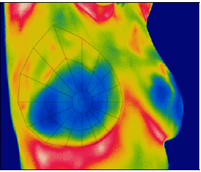
Breast ThermographyThis is what is offered by thermography, or breast thermal imaging. It uses a state of the art thermal imaging camera to produce an image or thermal scan. This is based on the knowledge that breast tumours have abnormal blood vessel patterns that give off more heat than the surrounding tissue. Hence thermography acts as a potential early warning of abnormal physiology, or whether the breast cells have started to behave aberrantly.

Breast thermography has been the subject of extensive research since the 1950s. There are over 1000 peer-reviewed studies in the medical literature, some of which followed patients over twelve years.

In one study of women reported to have false positive thermograms (ie: positive thermogram and negative mammogram), over one third went on to have confirmed breast cancer within five years.[i] This suggests that the thermogram is indeed an early indicator for future disease risk.

Dr. Mercola on the benefits of breast thermography:

Another study confirmed that a positive thermogram is 10 times more significant than a first order family history of the disease.[ii]

What are the benefits of thermography?

Thermography is 100% safe, radiation free, non-contact and painless.

It enables very early detection of cancer risk (up to 10 years earlier than mammography).

It is unique in its capacity to record physiological problems such as increased metabolism, inflammation and abnormal blood vessel patterns.

What is involved?

The thermal scan takes around fifteen minutes to complete. We use a cold challenge, which means the room is cool (18 degrees). Firstly we take a series of infra red images, there is then a ten minute cool down, and the images are repeated.

The cool down increases the accuracy of the scan. We use advanced software which compares right breast to left, and then warm to cool. You receive a detailed report and can opt in for a further consultation to discuss healthy breast strategies.

Where can I get a thermal scan?

Thermography is now available in Buckinghamshire at the Whitethorns Medi-clinic near Stoke Mandeville. Please call 01296 614441 or 07904 438411 to check next dates and availability.

References:

[i] Gautherie M, Gros CM. (1980) Breast thermography and cancer risk prediction. Cancer. Jan 1;45(1):51-6.

[ii] Louis K, Walter J, Gautherie M (1982) Long-term assessment of Breast Cancer risk by thermal imaging. Biomedical Thermology. Alan R Liss Inc p279-301


Tales of the Unexpected: An Eventful Commute and a Mysterious Stranger…

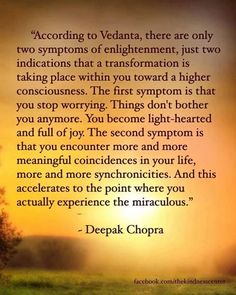
“We do not create our destiny; we participate in its unfolding. Synchronicity works as a catalyst toward the working out of that destiny.” ~ David Richo (The Power of Coincidence: How Life Shows Us What We Need to Know)

As I’m in a storytelling mood I thought I’d relate a recent audition anecdote.

Late Thursday afternoon I took my son William to London for a film audition. He was desperate to go, his last one was for a small part in Pirates of the Caribbean 5, many months ago. I arranged for my girls to go to an afterschool Halloween party so Will and I could enjoy some rare mother and son time.

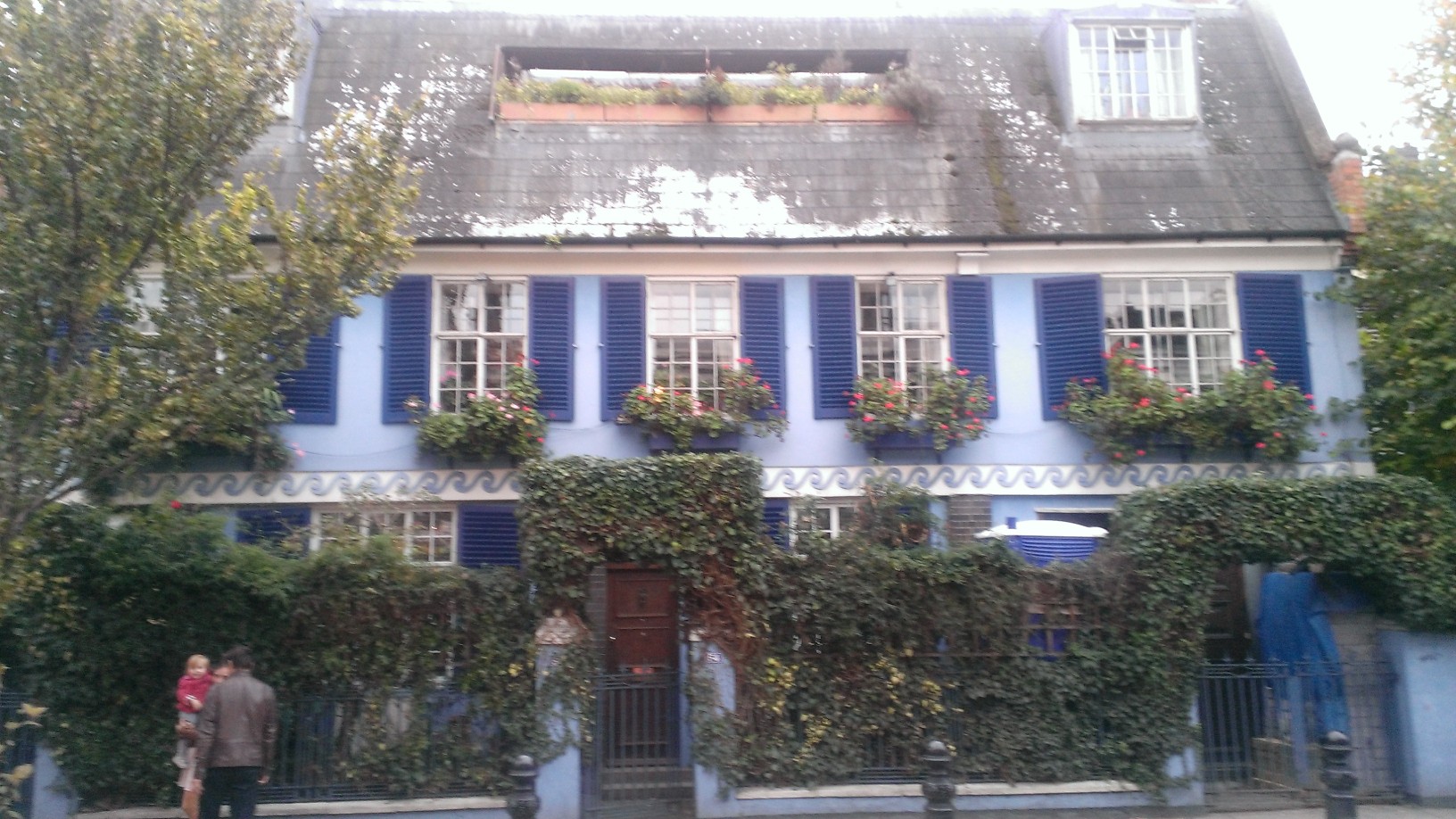
We made our way to the casting agent’s office located on the colourful and vibrant Portobello Road in London’s trendy W11. Being to the west of central London I had considered driving, but I knew that the traffic would be stressful, and with my previous track record of parking in London I should find another solution!

Will had learnt his script on the train, and for once we arrived in good time. There was no-one else in the waiting room and Will had his usual 10 minute audition with the casting agent and we were back on the street just before twilight descended.

We had a pleasant walk, passing the candy coloured houses, even if I did manage to navigate a an entirely different route back to Notting Hill Gate.

old house near Portobello Rd

We normally grab a fast food meal when he’s done an audition, but Will was keen to go to Nando’s (his favourite restaurant chain), and persuaded me with gusto that he deserved a Nando’s because he had earlier that day been invited by the head of science at his school to study the single sciences for GCSE, (he’s been working hard and revising for exams to get into triple science, which is only offered to the top 10% of students in the year), so I could hardly refuse!

Nando’s was conveniently located near Notting Hill Gate tube station and he heartily tucked into a hot meal. When I say hot, I mean hot. He tried the extra hot sauce this time, handling it with aplomb. Only a really runny nose and a bright purple face gave away his perverse pleasure at eating their most feared dish. I was getting hot flushes just from the chilli fumes coming out of his pores!

I urged him on (he likes to eat leisurely when in Nando’s), as I knew we had to get to South Ruislip station by 18.59 where we had to change from the central line tube onto the mainline train that would take us to High Wycombe. Many of the trains between Marylebone and High Wycombe only stop at Gerrards Cross and Beaconsfield. I knew if we missed it we’d be sat on a cold, dark and deserted platform for ages…

We left Nandos at about 18.15 and settled in on the long tube journey. We finally trundled into South Ruislip at 18.56 and most of the commuters disembarked with us. I could see the mainline train waiting at the other platform, so we ran as quickly as we could down the stairs, dodging through throngs of people and bounding up the other side, only to see the train pulling out of the station. We must have missed it by about ten seconds.

As I was still struggling for breath from our little sprint I couldn’t even verbalise just how cross I was!

The driver had departed two minutes ahead of schedule, he hadn’t even bothered to wait and see if there was anyone from the tube who wanted to change platforms. William wandered up the platform as I cussed and cursed the train driver. Thanks to him we could get mugged, stabbed or robbed, as all sorts of scary images entered my mind.

By now it was dark and getting cold, so I sat down in resignation of the exact scenario I had so wanted to avoid. It seemed everyone had left and the station was deserted except for Will and I. About a minute passed and then a strange thing occurred.

Nancy Thayer

Without me really noticing a young Asian man appeared from nowhere and sat next to me on the bench. I turned to him and immediately felt comforted.

He was obviously not of evil intent, but well dressed in a suit, I would say in his early thirties. Will had walked back over and he started chatting to us. It seemed we weren’t the only ones who hadn’t meant to be waiting around on a shadowy, shivery platform. He had been travelling on the mainline train from Marylebone to High Wycombe, when, for some inexplicable reason as his train stopped at South Ruislip and lots of people got off, he got off too, without realising it wasn’t his intended destination.

“Coincidence is God’s way of remaining anonymous.” ~ Albert Einstein

So there we were; an unusual trio. We learnt his name was Aaron. He showed us pictures of himself on the Great Wall of China and he told us about  travelling through Japan on the Bullet train in response to William asking randomly how fast they go after a fast train had whizzed past us on the way to Birmingham.

He asked about us, so we told him about the audition and he established a great rapport with Wills, asking him what he wanted to do. I jokingly pointed out that he didn’t appreciate his mother at the moment, being a supremely vain, confident, knowledgeable (and often ratty), 13 year old boy. Aaron told us that his mother lived with him and his family. He spoke with such wisdom and friendliness it had a profound impact on both of us.

He told us that in many cultures extended families were still at the forefront of life, but since the industrial revolution and the emerging capitalist culture of ‘me first’ in the west, families were more separated.

He said, “I’m a Muslim, and we have a saying: the gates of paradise lies at the feet of the mother.”

He seemed almost prophetical. He then went on to tell William that although he may not appreciate me, his mother at the moment, that would change and that he should remember me when he’s attending premieres on the red carpet. He told William that he had the right look to be a top actor and certainly the brains.

synchronicity

Twenty minutes went in a blur and the mainline train duly stopped at the platform. We got on, but didn’t sit together. It turned out that this train was terminating at Gerrards Cross, so two stops later the three of us found ourselves in déjà vu back on a cold platform, but this time under shelter and with plenty of lights. We wandered over to the taxi rank but it was too pricey, so went back to waiting and chatting on the empty platform.

We discovered that Aaron was an investment banker in the city, he specialised in recovery from the financial crisis, so I asked if he dealt with large sums of money, to which he replied, “Billions,” without even batting an eyelid. I think our mouths were gaping at this point. I asked if he got nervous working with huge funds, and he acquiesced that he did at first, but now he was used to it.

He explained that he was salaried on 200K, and showed Will his top of the range Rolex watch. He didn’t come across as being materialistic to me, I felt he was encouraging William more by telling him that he had worked hard, (degrees from Oxford) and that Will could achieve that if he worked hard too. He was preaching to the converted, Will is super conscientious and ambitious, but I could see that Aaron had made a very positive impression on him.

Soon the train arrived and we were once more hurtling towards High Wycombe. When we got off he quickly disappeared into the crowd and we went back to our car.

Both Will and I had a feeling of synchronicity – like we were meant to meet him on that platform. You had to be there to fully appreciate the profundity of it! So, Aaron, if you ever read this; thank you for being our companion for the evening!

Deepak Chopra - synchronicity

I love this short video by the late Dr. Wayne Dyer about synchronicity and strawberry icecream:

I narrowly avoided a car accident on the way back from the station, and I got thinking that maybe our encounter with the mysterious Aaron at South Ruislip and Gerrards Cross was a good omen for the film part and Will’s future career.

We were both exhausted by the time we got home. The things I do for love!

“Synchronicity is an ever present reality for those who have eyes to see.” ~ Carl Jung

During half term I’ll be taking them all to hopefully glimpse their brother as an extra (tribal boy) in the Warner Bros. Pan film:

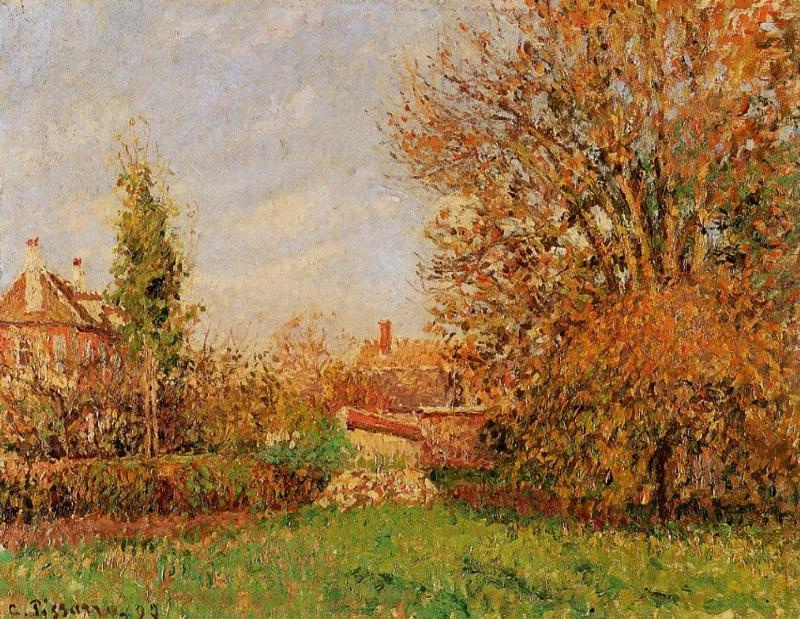
#SundayBlogShare – Autumn Foliage 🍂🍁

Anyone in my social circle may suspect that October is my favourite month! Last year I collated some beautiful poems, paintings and literature in the post Ode to Autumn.

Camille Pissarro

Camille Pissarro

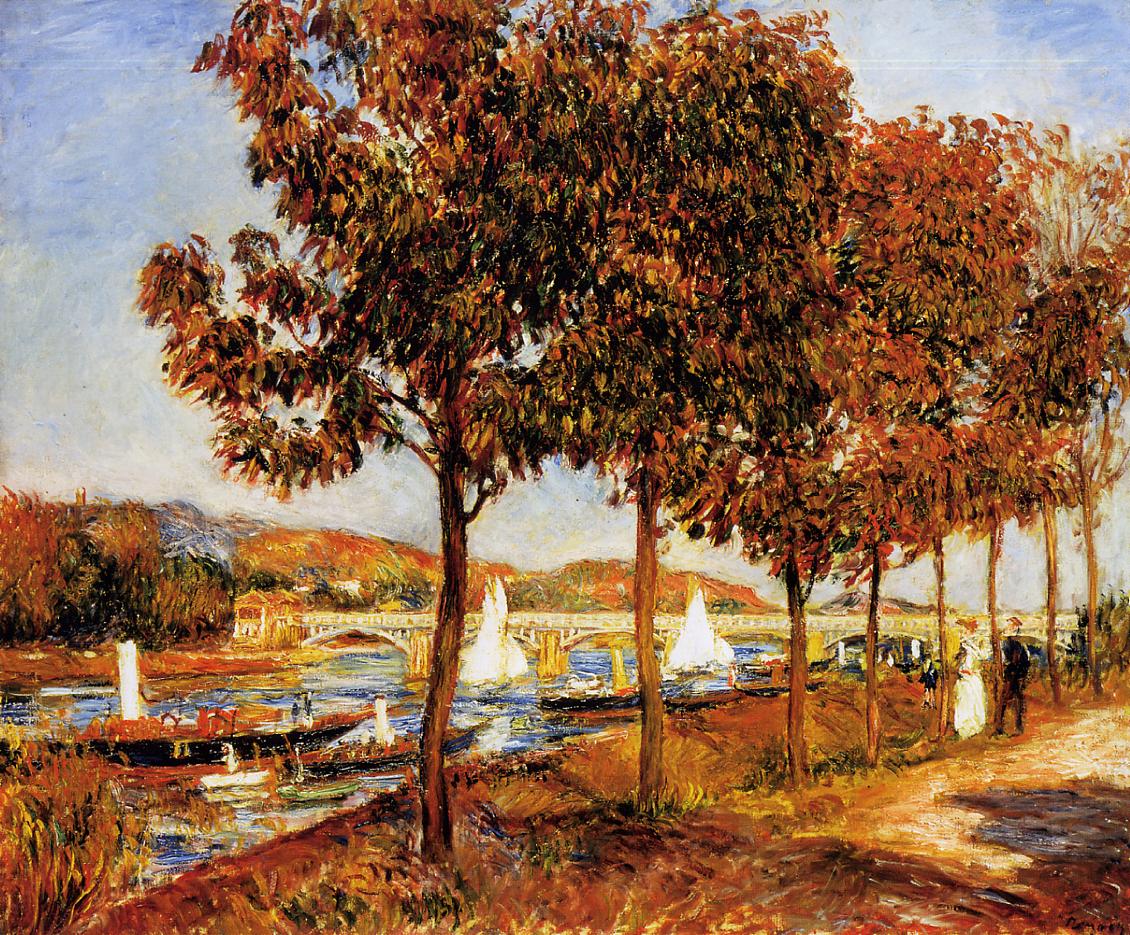
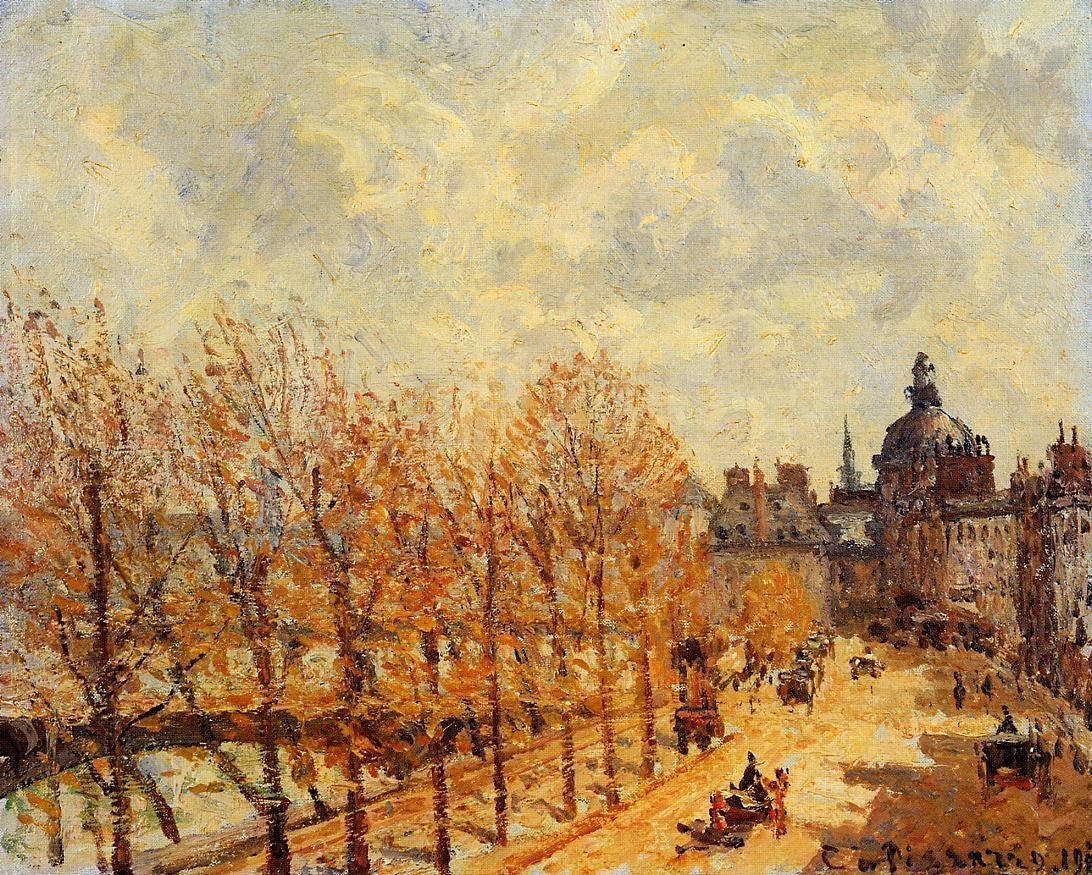
I hope my own words can cast a ray of light on your Sunday and paint some worthy burnished pictures in your mind…(alongside some Impressionist beauties)!

Autumn Foliage

You don’t possess the scorching heat of Summer;

Yet your warm palette brightens my soul.

Flaming tones of yellow, orange, ochre and red,

Have committed green to verdant memory.

Febrile fronds merge and sway in unison,

A kaleidoscope of colour ablaze on my retina,

Nature’s last jump for joy, before Winter comes.

Camille Pissarro

Camille Pissarro

I see tinted, vivid leaves clinging defiantly,

Radiating their seasonal light like a supernova,

An explosion of ephemeral, golden bloom,

Before they are ripped from branch and bough.

To be tossed and discarded,

On the breath of exuberant winds.

Swirling, withering petals of vibrant tincture;

James Tissot

James Tissot

Eventually laid to rest…

Creating a carpet of luminous pigmentation,

Dry and crisp under boisterous boots,

A final burst of spirited and spicy intensity.

The burnt hues of Autumn will soon be gone,

Leaving my eyes bereft of beauty.

Wind whistling long…

Pierre Auguste Renoir

Pierre Auguste Renoir

Through the bleak, bare trees of winter.

Empty conker skins and mulchy leaves break down

Their recycled atoms dormant until spring,

Waiting to power tentative daffodil buds.

Death and decay, the cold season brings,

For renewal means to die and to be reborn;

…Even more magnificent than ever.

By Virginia Burges

Camille Pissarro

Camille Pissarro

Thoughts on Nature Vs. Nurture

Prospero: A devil, a born devil on whose nature Nurture can never stick, on whom my pains, Humanely taken, all, all lost, quite lost. And as with age his body uglier grows, So his mind cankers. I will plague them all, Even to roaring. ~ William Shakespeare (The Tempest).

We can thank Shakespeare for the concept of nature and nurture, as elucidated by Prospero in The Tempest about the ‘foul’ Caliban.

George Romney - William Shakespeare's The Tempest - Act 1, Scene 1

George Romney – William Shakespeare’s The Tempest – Act 1, Scene 1

During my recent author interview with Viv Oyolu at Dream Corner – which gives inspiring women a voice – we talked about my novel, The Virtuoso, life and dreams. Towards the end of the interview we discussed children and education, and Viv mentioned that as someone who doesn’t have kids she was able to look objectively at how parents raise their children.

family-holding hands

She mentioned the nature/nurture scenario and it got me thinking. The nature vs. nurture debate has long been hit about the court of public and professional opinion like an endless ping pong, so as a mum of four, with some experience of nurture, I thought I’d serve up my take on it.

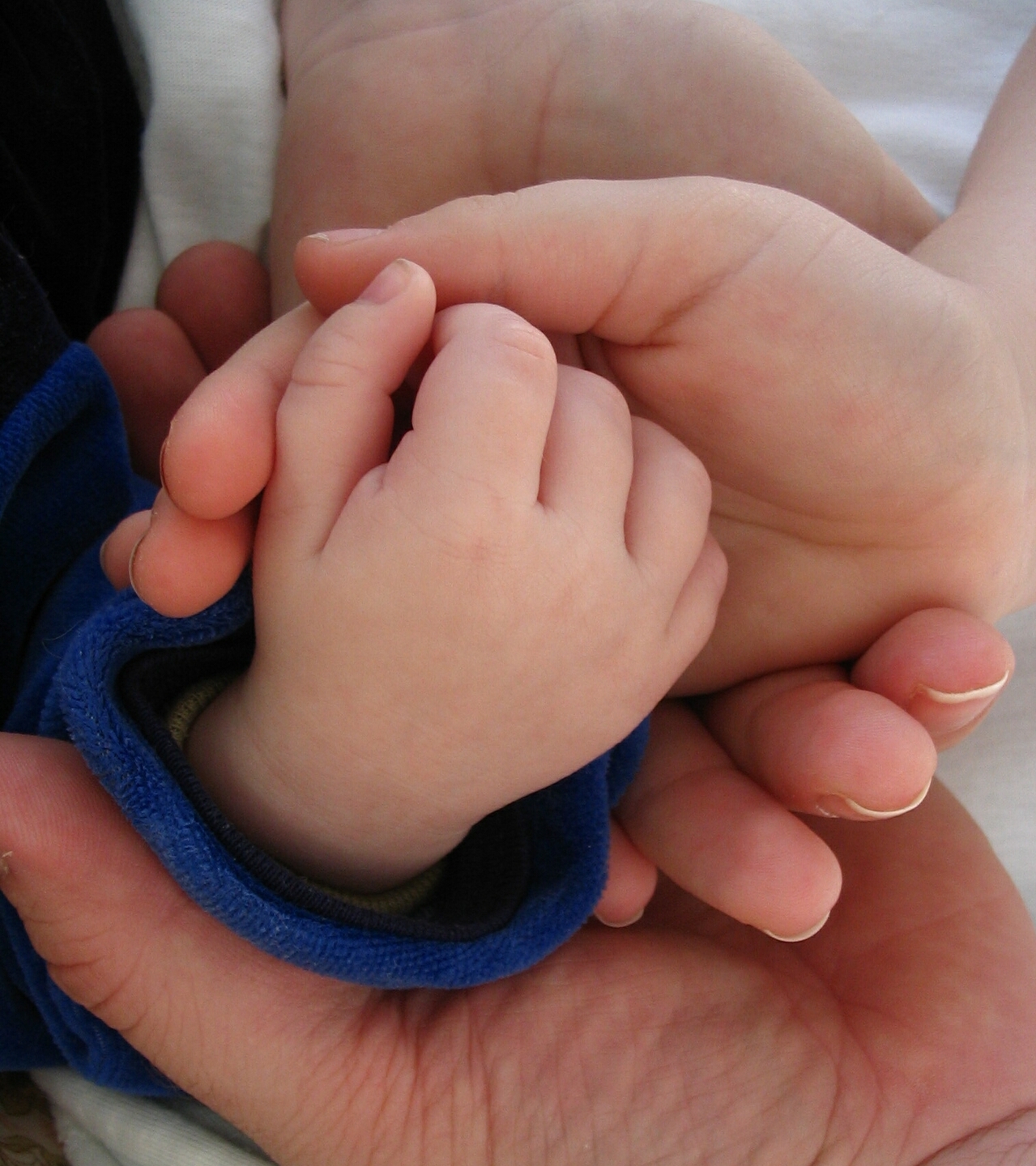
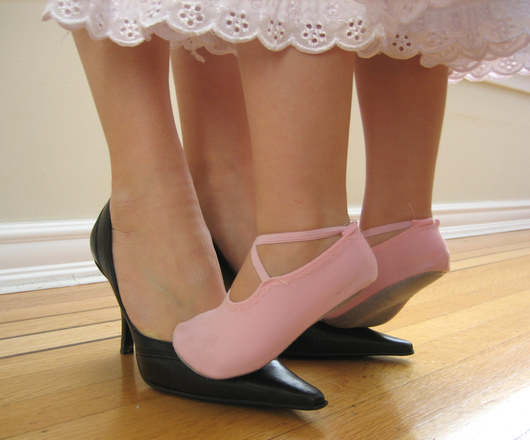
From a maternal perspective nature deals the earthly hand, whereas nurture gives a helping, developing hand. It’s a team effort!

We’re born with specific physical attributes, personality traits, various talents, but our future success and happiness in the world depends largely on how nurture shapes and molds these raw ingredients that we have to work with.

dancing

Rather than asking which one is better, or which one has the most influence, I think we should consider the possibility that the two are co-dependent and therefore inextricably linked.

Max Macdowell explains the basic question of Nature Vs. Nurture:

It’s a complex interaction of genes and environment that shape who we are, and more importantly, who we can become. Nature without nurture and vice-versa means that we face greater challenges in reaching our true potential.

seven-psycho-perspect

Nurture can come from different sources, but early in life it’s predominantly from our parents or another caring adult.

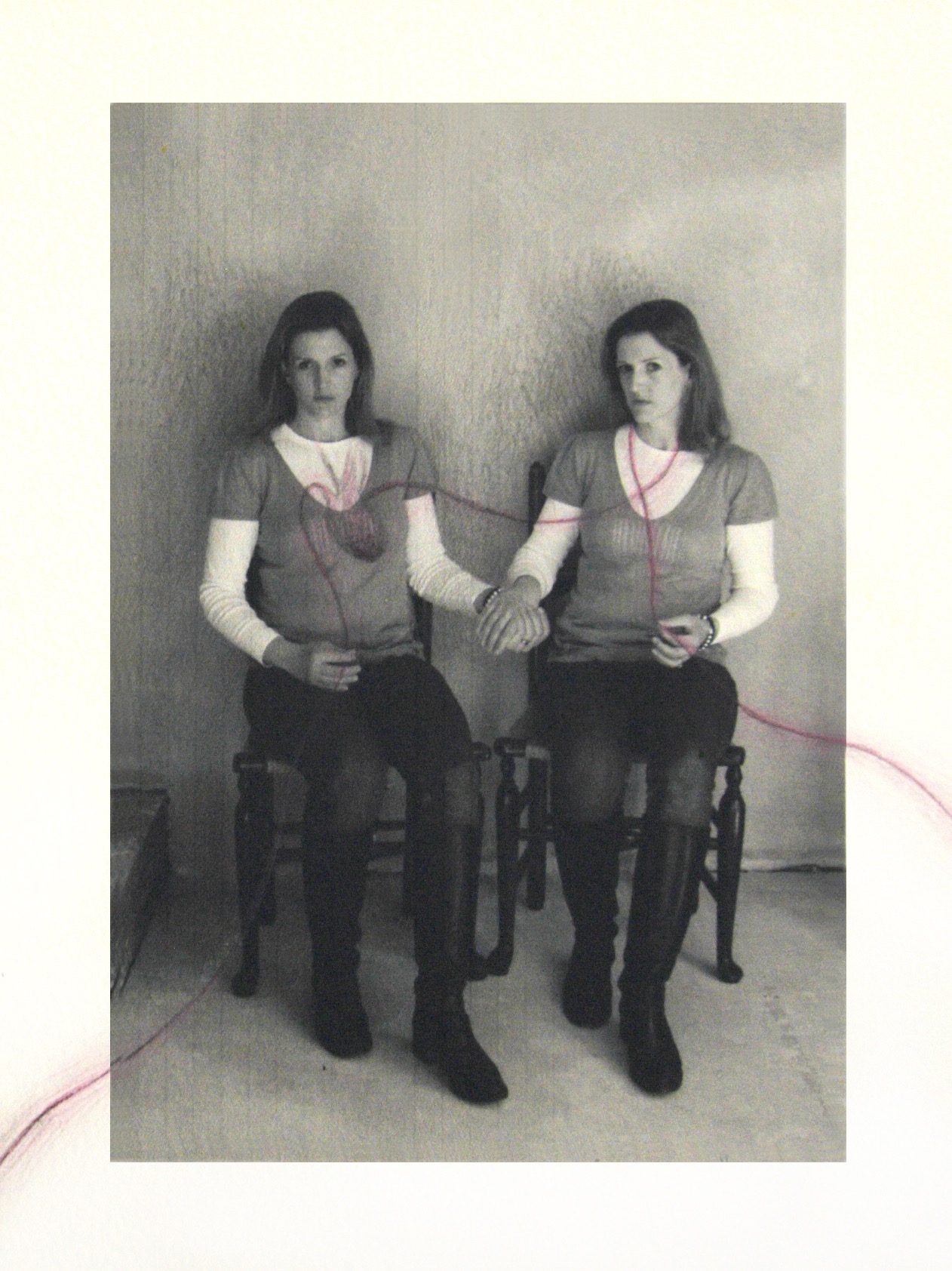
I saw a fascinating and moving programme on BBC 4 Sunday evening about two identical Chinese girl twins. I missed the very start, but basically the two had been separated at birth and adopted in China at the same time by two different families, one living in Norway and the other in North America. The two families, (having met in China) only found out for sure that their adopted daughters were twin sisters six months after they have been caring for them.

Mia and Alexandra eventually met and got to know each other, distance and language challenges notwithstanding. Both are growing up in loving homes, albeit in different cultural and environmental circumstances, yet when visiting the other family their mothers noticed shared behavioural tendencies in the twin daughter.

A fun and interesting talk from experimental pyschologist, linguist and cognitive scientist Steven Pinker, about his book, Human Nature and The Blank Slate, where he focuses on the arts and parenting:

Interestingly, British runner Mo Farah, now one of the most successful athletes in the world, has a twin brother in Somalia, who he used to race against as a child before he came to the UK. Mo didn’t always win. Today Mo’s brother is a car mechanic. He may be very happy with that, but it’s obvious that environment/nurture played a massive role in how their lives and careers diverged.

Trauma in childhood can be a massive hurdle to overcome. You may have great genes, but a terrible environment. How do some people achieve and emerge victorious from their circumstances, and yet others don’t?

Earlier this year I learned the story  of Mohed Altrad, which blew me away. I recommend you read his inspiring story: From Bedouin to Billionaire.

Here is an example of a young and vulnerable boy losing his mother in a cruel twist of fate, an outcast even among the Bedouins, yet he had the strength of character to understand that school would give him the nurture he needed to escape his environment. His story strongly supports my view that nurture can also be an inside job.

If you intend to nurture your abilities and dreams the people and circumstances who can help you will show up. It reminds me of this Zen proverb:

“When the student is ready, the teacher will appear.”

On the other side of the coin I’ve heard stories of child prodigies and young musicians in particular, (Mozart is the most famous example of this), who learnt one or more instruments at an early age. Many were propelled by their parents who recognised and encouraged their musical talent and actively supported them in attaining their musical goals. In Mozart’s case his nature trump card was a brilliant mind, but it’s unthinkable that he would have been the sensation he was without some serious nurturing from his family, (especially  his father Leopold), tutors as well as wealthy and influential patrons!

It’s the same with many achievers, whether they’re athletes, dancers, entrepreneurs, artists, writers, actors and so on…they had teachers, coaches, supporters and benefactors.  I suppose the bottom line is, if you don’t have the genetic makeup (physique) to be an athlete, then no amount of coaching will get you the gold medal. It has to be a combination of both.

nature-vs-nurture

There are also stories of talented people not achieving all they could in life because they just didn’t develop resilience, persistence and self-belief, which to me is also product of nurture. Reading a book and learning from the author is nurture. You may not know that person, but they can still help you.
The backbone of being nurtured is being loved and cared for. It also encompasses education, home environment, a healthy diet, sleep, being out in nature, learning skills, enjoying hobbies, having a mentor and the desire for a better life.

But is there such a thing as negative nurture? You only have to study religious fanaticism to understand that the wrong kind of nurturing produces evil deeds.

Nature or Nurture? Through the Wormhole with Morgan Freeman explores the link between genes and poverty in studies of twins:

It seems to me they are surmising that the more nurture a person receives the more nature comes to the fore.
Yet the facts of Mohed Altrad’s life buck this trend. Whilst it seems fair to say that poverty radically decreases one’s chances of fully expressing inbuilt genetic benefits, the rags to riches stories mean you can’t write people off just because of their socioeconomic background. They have faced and overcome challenges that those in more privileged positions haven’t and so develop an inner strength that can influence everything.

Sheer intention, imagination, determination, faith and deeply felt dreams can surely elevate nature and provide nurture to any individual’s circumstances?

Sometimes a person can have everything going for them and still squander it all. Perhaps there is such a thing as too easy a life?!

Maybe there’s an extra dimension to this conundrum…

What about the human spirit/soul? Does it have a pre-set blueprint (Karma) for life on Earth? What if we assumed for a moment that it has a divine nature and exists beyond time and space? If it isn’t genetic, and it isn’t defined by its earthly environment, how does it interact in the trilogy of Spirit Vs. Nature Vs. Nurture?

I thought I’d share this wonderful lecture given by Professor Steve Jones at Gresham College, in which he explains about genes and environment and their interaction beautifully. Nature, Nurture or Neither? The View from the Genes:

In conclusion I feel I may have asked more questions than I answered! But to me, it seems that a human being born in good health, with properly functioning genes, but neglected as an infant without a shred of nurture will perish, just as an individual born without robust genetic material will either die or have health problems despite nurturing.

Ultimately, for a person blessed with a sound body and mind by nature and given enough of the right kind of nurture, the sky’s the limit!

Discussing J.M.W. Turner: A Chat over Char with Artist Claire Podesta

“To select, combine and concentrate that which is beautiful in nature and admirable in art is as much the business of the landscape painter in his line as in the other departments of art.”  ~ Joseph Mallord William Turner.

I recently had the good fortune to get to know artist and designer Claire Podesta, through my membership of the Athena Network. I plan to have one of my photos immortalised in watercolour by her soon…

The Two Claires - After Frida (mixed media)

The Two Claires – After Frida (mixed media)

We met up earlier this summer at Rumsey’s in Thame to drink tea and talk about her love of Turner and art.  As I love Turner and I admire anyone who can create a work of fine art, (my skills in that arena are confined to badly proportioned stick men), I was in awe of her skills…

She is an incredibly talented lady, and I wanted to share her love of Turner and art with you in this mostly visual blog post.

“I can’t remember a time when I didn’t want to be an artist.”

You could say that Claire started young. Drawing and painting has always been at the forefront of Claire’s life, she was fortunate to have been encouraged by her parents in exploring her passion. She took an art foundation course at Cambridge followed by a degree in Graphic Design and Illustration at Leicester Polytechnic, now De Monfort University.

Claire worked in graphic design on ‘High Life’ the British Airways in-flight magazine for about a year and then spent a few years with various design consultancies in London for clients such as Microsoft, BP, Hewlett Packard, Johnson & Johnson and other blue chip companies and organisations.

In 2002 Claire helped her husband, Matt, start up Podesta, a bespoke furniture business, and was responsible for the branding and marketing of the company, a role which she has recently taken on again part time.
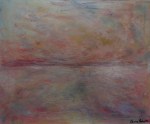
Recently, Claire and Matt were inspired to start The English Tuck Box Company after their eldest daughter started at boarding school – they realised there was a gap in the market for fine quality tuck boxes. Claire also spent three and a half years in the challenging position of Marketing Director at Godstowe School in High Wycombe.
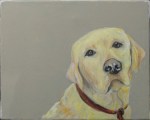
Throughout her career, Claire has always continued to paint, especially during the time when her three children were small, and it led her to the realisation that making art was what she really wanted to do with her life.

In 2014 the family moved to a small village near Thame in Oxfordshire and Claire took the plunge and set up in business for herself as an artist.  Her many years in graphic design have given her a creative edge in the type of art that she produces. Claire paints in her home studio.

When I asked her who her main influence in art had been, she smiled and replied immediately: “Turner.  He is timeless; he was ahead of his time. His art still looks modern.”

Claire confessed that seascapes are what really floats her boat! She loves to add her own unique flair and touches by making them abstract.

“I find inspiration in the landscape of the Chilterns, the drama of the sea, handmade objects, old family photographs and the vibrancy of the southern Mediterranean.”

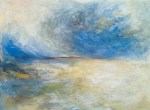
I saw some of Claire’s work in the art shop/gallery ‘From’ in Thame. I particularly love her Turner-esque seascape that has been used in the header of this post.

To be able to draw and paint like Turner is an unbelievable gift!  With Claire’s permission I have included a gallery containing a selection of her work. If you would like to commission a Turner style landscape (acrylic on canvas), or if you have a favourite photograph of a beloved family pet or other memories you’d like to see on canvas Claire can accommodate you.

Claire specialises in paint, ink and mixed media pictures, as well as more ‘hands-on’ creations such as ceramics.

You can contact her via her website and on Facebook.

All images in this gallery are the copyright of Claire Podesta:

Film Review: Macbeth

“Stars, hide your fires; Let not light see my black and deep desires.” ~ William Shakespeare, The Tragedy of Macbeth

This latest film joins the ranks of earlier TV and movie adaptations, providing a realistic, gritty and modern version with a dark touch of the supernatural, which is bound to be popular.

It’s probably no coincidence that Shakespeare penned The Tragedy of Macbeth during the reign of King James I of England (formerly King James VI of Scotland), between 1599 and 1606 with characters based on real people from Holinshead’s Chronicles.

Whilst not exactly a verse for verse reproduction (as films of plays rarely are), I think it’s true to the spirit of the play. A look behind the scenes with director Justin Kerzel and his two stars:

This Film 4 production of Macbeth is an assault on the senses. It’s not just that what you see is so brutal and visceral; it’s the intensity with which it is portrayed that is so startling.

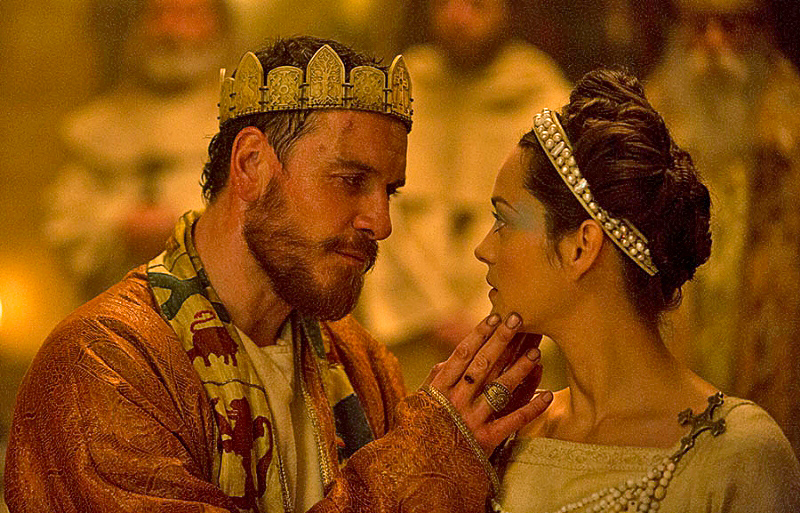
Michael Fassbender as the tortured Macbeth and Marion Cotillard as his scheming wife are in a league of their own. Worthy of mention is David Thewlis as the King of Scotland, Sean Harris as Macduff (the Thane of Fife) and Paddy Considine as Banquo.

The combination of acting talent, amazing costumes, stunning locations, a pared back text, powerful, evocative soundtrack and visual artistry make it a worthwhile watch.

To sum up Macbeth the film in a few words, I would say it’s totally mesmerising, disturbing and compelling.

macbeth2

The cinematography is as epic as the on-location highland scenery of Scotland; misty mountain moors place you at the burial of the Macbeths’ child at the start. It is cold, windy and inhospitable.

Tragedy starts it all off, and tragedy certainly ends it.

We see Macbeth (the Thane of Glamis), with Banquo and his depleted army by his side, fighting for King Duncan of Scotland against Macdonwald and his group of Scottish, Irish and Nordic rebels.

Every gory detail, every scream and pained expression is framed in slow motion; including the urgency of Macbeth to reach the traitors. In the midst of the bloody battle he sees through the mayhem and smoke, three female figures and one child. They are standing where Macdonwald was. The moment seems to last forever. Then the fighting proceeds at full pelt again and Macbeth eventually emerges weary but victorious.

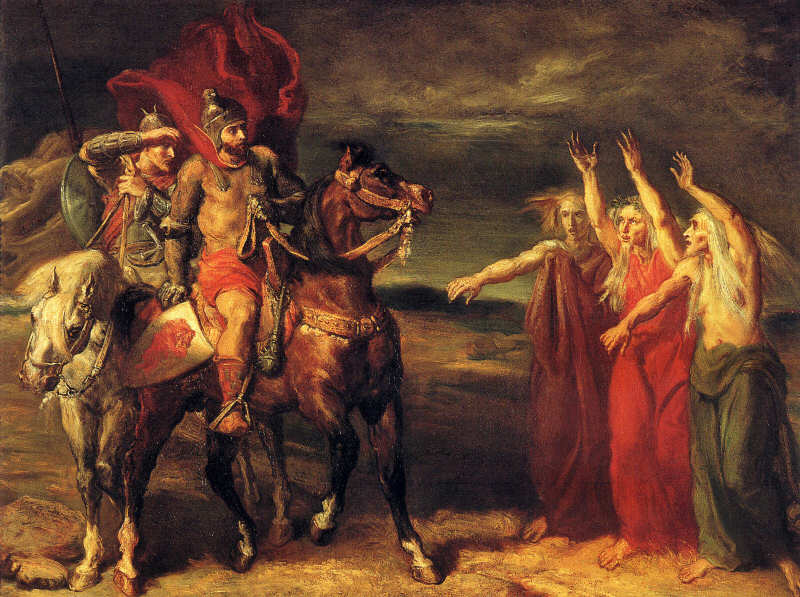
Theodore Chasseriau - Macbeth and Banquo meet the witches.

Theodore Chasseriau – Macbeth and Banquo meet the witches.

As he and Banquo respectfully place their dead into a pit the witches approach them. It is the fateful moment when you just know that double double, toil and trouble will haunt Macbeth ’till the end of his days. The sinister prophecy is spoken by the ‘weird sisters’. They finish with, “All hail Macbeth,” before disappearing back into the fog.

At this point echoes of “all hail Caesar” are in my mind, and you know it’s not going to end well.

It is with these words playing in his mind that he returns to his wife and village. Soon after he is rewarded by a grateful King Duncan who bestows on him the title Thane of Cawdor as foretold by the witches, and his thoughts turns to the crown.

The spellbinding 1979 performance by Judi Dench of Lady Macbeth’s soliloquy after she hears of Macbeth’s strange and prophetic visitation:

Macbeth is persuaded by Lady Macbeth (whilst they engage in carnal pleasure), to do away with Duncan as he sleeps in his tent at their home. Sexually sated and consumed with a deadly purpose, Macbeth walks menacingly towards the king’s tent.

Torrential rain is falling and while Duncan’s body guards lay slumped in a wine induced stupor he commits regicide in a frenzied dagger attack.  Lady Macbeth later places the bloody daggers into the hands of the sleeping guards to deflect blame from her husband. Gruesome as this murder is, it’s not the most horrifying scene in the film.

The rain may have washed the king’s blood off his hands, but it’s now ingrained in his soul, the poison has already begun its inevitable journey to Macbeth’s heart. You see the glint of unbridled ambition burn in his eyes. The acting is just chilling.

A little water has not ‘cleared them of their deeds’ as Lady Macbeth suggested it would in the aftermath of Duncan’s murder, in an attempt to assuage them of guilt.

Once the ‘gold round’ is on his head Macbeth slides further into paranoia and hunger for total power. You see that he is cursed as he ponders the witches words, the fact that he has no heir and has won the royal line for Banquo’s seed. Macbeth tells his wife whilst pointing a dagger at her empty womb, “Full of scorpions is my mind”.

And so his henchmen hunt down and strike down the unfortunate loyal Banquo in an act of utter betrayal that is only slightly lessened by the fact that his son, Fleance escapes the steel blade of his father’s slayers. Distasteful as it is, it’s still not the worst scene in the film.

The weirdness of the banquet seals Macbeth’s fate. The sight of his murdered friend Banquo at the table confounds and confuses Macbeth, now racked with guilt over his treachery, causing him to react strangely and lose face among his people. Macduff begins to smell a rat and leaves.

Another visit to the witches leaves Macbeth confident of his victory, killing off his last remnants of kindness and moral rectitude. He is now dead inside and willing to stop at nothing to crush his enemies.

I’m not sure I can articulate the horrors that Macbeth goes on to commit; the grief etched on Marion Cotillard’s face show us his wife cannot believe that he is capable of it either. The latter part of the movie has some pretty haunting scenes, which prove too much even for Lady Macbeth.

In her sleep she is dreaming she’s back at the chapel of their old village with her dead child. She is tired of the power struggles and the monster her husband has become, a path that she herself pushed him onto. It makes for a poignant scene.

Here are her words taken from the text in what is Act 5 Scene 1 of Shakespeare’s play:

Yet here’s a spot.

Out, damned spot! out, I say! – One: two: why, then, ’tis time to do’t. – Hell is murky! – Fie, my lord, fie! A soldier, and afeard? What need we fear who knows it, when none can call our power to account? – Yet who would have thought the old man to have had so much blood in him.

The thane of Fife had a wife: where is she now? – What, will these hands ne’er be clean? – No more o’that, my lord, no more o’ that: you mar all with this starting.

Here’s the smell of the blood still: all the perfumes of Arabia will not sweeten this little hand. Oh, oh, oh!

Wash your hands, put on your nightgown; look not so pale. – I tell you yet again, Banquo’s buried; he cannot come o

To bed, to bed!

There’s knocking at the gate: come, come, come, come, give me your hand. What’s done cannot be undone. – To bed, to bed, to bed!

And thus, she never wakes up. Meanwhile an inconsolable Macduff and Malcolm (the elder son of Duncan), return from England to Dunsinane to wreak revenge on Macbeth for their murdered loved ones.

Fire now rages beyond the walls of Dunsinane and Macbeth goes defiant into battle once more. In one on one combat he has his sword at Macduff’s throat – believing he cannot be harmed by a man born to a woman – when Macduff splutters that he was untimely ripped from his mother’s belly.

Macbeth seems only now to fully comprehend the evil empty promises that the witches have instilled in his mind and the hatred he felt for Macduff evaporates into the red smoke that fills the screen, as the camera hones in on their darkened bodies and grubby, agonised faces, the outer sign of their troubled souls.

Macbeth then allows Macduff to strike him down on the battlefield. The final scene shows a courageous Fleance pulling Macbeth’s sword from the scorched earth and running into the distance like a child warrior.

This film is a very human tale of seduction, deceit, quest for political power and betrayal. My sympathy for Macbeth only returned at the very end; a broken, pitiable figure when he recognises the tyrant he has become and what it has cost him.

It’s gut churning action and powerful soliloquys from beginning to end. All in all, a gripping film, even if the turn of events are hard to watch at times. I emerged from the cinema into a cold rainy night somewhat traumatised!

A must see for Shakespeare connoisseurs and Bardolaters alike…

“To-morrow, and to-morrow, and to-morrow,

Creeps in this petty pace from day to day,

To the last syllable of recorded time;

And all our yesterdays have lighted fools

The way to dusty death. Out, out, brief candle!

Life’s but a walking shadow, a poor player,

That struts and frets his hour upon the stage,

And then is heard no more. It is a tale

Told by an idiot, full of sound and fury,

Signifying nothing.” ~ William Shakespeare, Macbeth