A Helpful Lesson in the World of Energy

“We have been all wrong! What we have called matter is energy, whose vibration has been lowered as to be perceptible to the senses.” ~ Albert Einstein

It’s a rather plaintive opening to this week’s post. A series of recent events and stressful situations has caused me to feel overwhelmed, anxious, antsy and all in all, emotionally battered. With nasty old thought patterns rearing their ugly heads, my energy channels almost reached overload and I was feeling lost. I couldn’t see a way out and I wasn’t able to deal effectively with what life was throwing at me.

The trouble is, when you act unconsciously you are usually unaware of it at the time the behaviour occurs, and so a downward cycle can hinder us in balancing our energy and removing blockages that, if left buried and unexpressed or unreleased, can cause physical illness as well as emotional distress.

energy-stress

I was lucky to have the help and support of a close friend and very special lady who is helping me in many areas of my life.

Kim was able to help me release this heavy, negative energy, restore my energy flow and emotional equilibrium.  The technique she used was new to me, (although similar in some respects to other energy healing therapies I have come across), known as EmoTrance, or EMO – Energy in Motion.

What is EmoTrance/EMO?

It’s all energy

Quantum Physics asserts that everything in the universe is pure energy at the sub atomic level. Our planet, nature, our bodies, and our thoughts exist in space and time, and have a certain vibration.

energy-darryl-anka-quote

The founder of EMO, Dr. Silvia Hartmann, explains how the metaphor of water is used in EmoTrance energy healing work:

After a thorough session I was feeling restored to my usual energetic self. I had some significant releases and it felt good to let go of the thoughts, feelings and energy that most definitely wasn’t helping me. As I discovered, it’s all about the flow. Blockages are bad with a capital B. Just think of drains, smells, stagnant pools and disease. My nose is crinkling already! It’s all about balance. Energy can’t be balanced if it does not flow through a system. Any system.

energy-light-bulb

Walking along a sandy beach watching and listening to the regular, rhythmic sound of waves rolling onto the shore and pulling back a layer of sand or pebbles, you can fully appreciate the eternal flow of our planet. Even the unused particles of dead plants and animals get recycled into the cosmic energy field. Nature does not waste energy.

energy-beach

This will be an ongoing process for me as I work through my challenges. I had another realisation straight after the session, as I thought about what Kim and I had explored and its relation to a movie I had recently seen with my family, Fantastic Beasts and Where to Find Them. You may be wondering what the blazes has the Warner Bros. prequel spin-off to Harry Potter got to do with imbalances in energy?

All will be revealed post haste!

The main character in Fantastic Beasts and Where to Find Them is Newt Scamander, a wizard and magizoologist who wrote a book by the same name that was referenced in Harry Potter. JK Rowling wrote her first screenplay for the film. I thought she did a great job. She has imagined a whole new magical world that exists before Harry Potter that fans can get absorbed in.

The film is set in 1920’s New York as Newt becomes embroiled in the secret magical community just as they are battling a mysterious, powerful enemy whose spate of grisly murders are threatening to expose them to No-Maj’s (the equivalent of Muggles in Harry’s universe).

We learn that Newt, who is played by the young, quintessentially British, Oscar winning actor, Eddie Redmayne (The Danish Girl, The Theory of Everything), was expelled from Hogwarts and is very much an expert and lover of fantastic beasts across the world. He is making a new home for them in the wilds of Arizona where they can live safely and he can study them further. He plans to write a book about them someday…

An Obscurus in real life

Without giving away too much of the plot (in case you haven’t seen the film), I had a surge of insight about the dark, swirling entity in the movie, referred to as an obscurus.

I was especially taken with the concept of an obscurus; a malignant, uncontrollable energy form that arises in young magical children, who out of persecution and fear have suppressed their abilities and wizard identities to deny who they truly are. The obscurus eventually takes on a life force of its own, consumes and eventually kills its disturbed wizard hosts and creators. Obscuruses are destructive, malevolent and seemingly impossible to destroy.

Newt manages to capture and suspend one such entity from a dying girl with the purpose of understanding it more fully. When he comes across the source of the baleful one on the rampage in New York, the film takes a darker turn.

Through the action Rowling cleverly illustrates how unresolved anger, repression and negative emotions manifest in a fictional world.

But to me, the realm of fantasy doesn’t seem that far removed from reality. What happens to us energetically when we bury strong or unresolved emotions and transparent beliefs, is not so different to the lethal effect of the obscurus. It is an unconscious act of self-harm.

The light aspects of a person’s archetypes and their equivalent positive thoughts can become obscured by an overload to the energy centers (chakras, meridians, etc.) when a person suffers prolonged stress, or emotions triggered from a traumatic event or incident in childhood.
energy-chakras

Left unchecked and unnoticed stagnant energy festers and can cause all sorts of physical ailments. As complex, integrated beings, our thoughts and emotions are intricately entwined with our physical bodies.

Our bodies and thoughts have been proven by physics to be nothing but energy forms, and these energy forms are either working for us or against us. I found the parallels between the field of energy healing and the Fantastic Beasts film helpful in visualising what trapped negative energy might look like, and the damage it can wreak on mind, body and soul, let alone a movie set!

Don’t feed your obscurus as I did; study it and be aware of it, and take time to top up your energy reserves if you feel depleted. I find it’s sorely needed at this time of year!

Hommage to Heifetz – One of the Greatest Violinists of all Time

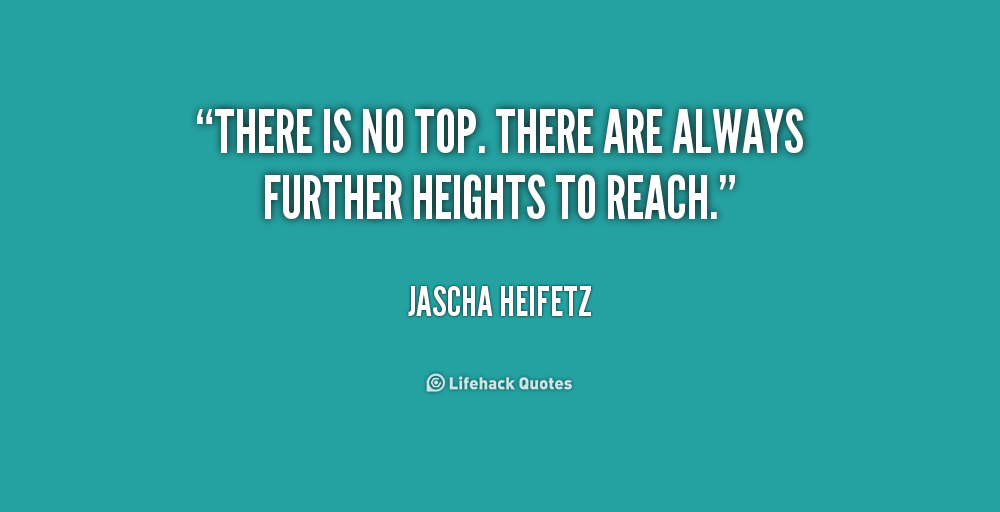
“An artist will never become great through imitation, and never will he be able to attain the best results only by methods adopted by others. He must have his own initiative.” ~ Jascha Heifetz

Jascha Heifetz needs no introduction to anyone familiar with classical music, or a fan of the violin; but out of respect to a great artist, here goes. There will be more than a hint of hero worship! As far as violin playing is concerned, he reached the peak of Mount Olympus. There wasn’t anything he couldn’t do. He was, quite simply, a legend in his own lifetime.

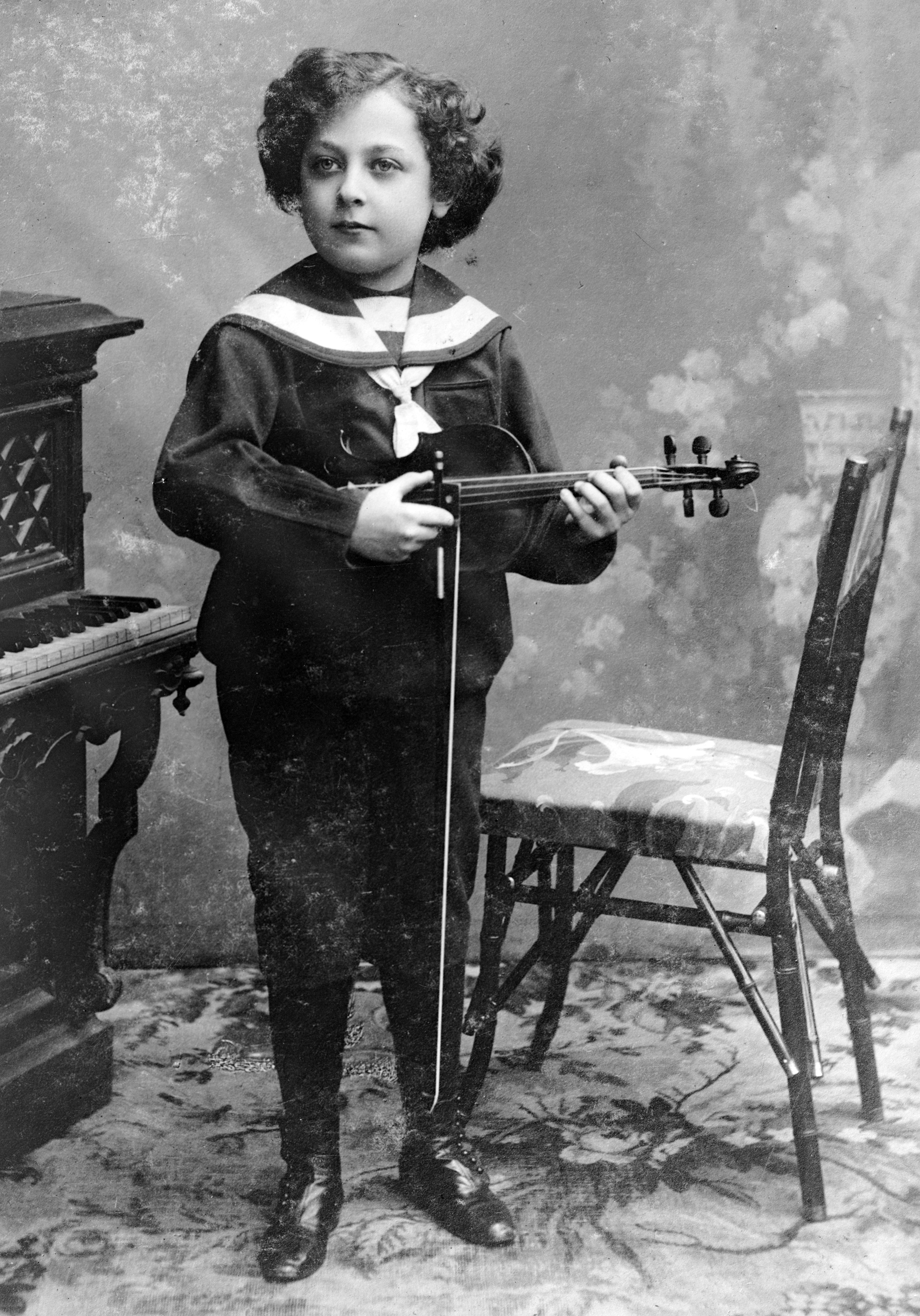
heifetz_as_a_young_boy

Jascha Heifetz (2 February 1901 – 10 December 1987)
There are shades of Mozart in his youth: as a child prodigy he began playing the violin aged three, gave his first public performance aged five, and was accepted into the St. Petersburg Conservatory aged nine. He was first influenced musically by his father, played for royalty, took Europe by storm as a teenager, thrilled American audiences in Carnegie Hall at the age of sixteen and embarked on his first world tour aged nineteen. The rest, as they say, is history…

Many believe he has done more than any other 20th century violinist to elevate the standard of modern violin playing. But, paradoxically, he wasn’t all about technique. He was that rare breed of musician that transcended the physical boundaries of his instrument and became a true artist. Artistry for me, more so than technique is what sets him apart from other violinists. He took all the skills that were available to him, boundless natural talent, hours of practice, his almost flawless technical skill, emotional and mental mastery, and molded them into his individual, personal style, his unique artistry.

heifetz-quote

He was blessed with divine ability on the violin, which was brought about in a most heart-warming way. As a baby he would cry while his father was looking after him and he did not know how to calm him. Being a professional violinist and concert master of the Vilnius orchestra, (now in Lithuania), Rubin Heifetz would play his violin to baby Jascha, and it stopped him crying!

We should never underestimate the impact of early exposure to music on a human being. Whether they grow up to be one of the greatest musicians the world has ever seen or not, its benefits are immeasurable.

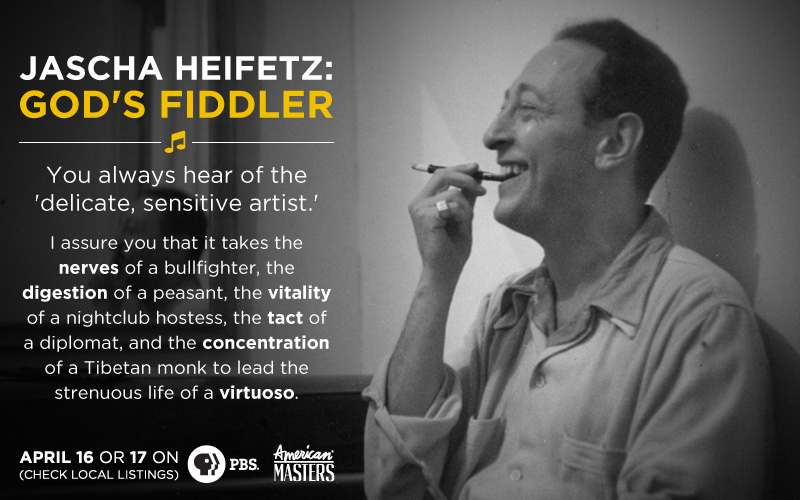
Probably the most well-known superlative that has been heaped on him was the sobriquet and documentary film title: ‘God’s Fiddler’. Even his teacher at the Conservatory in St. Petersburg, the revered Leopold Auer, when asked why he had not mentioned Jascha Heifetz in his list of top students retorted, “He’s not my student, he’s a student of God.”

The celebrated violinist Fritz Kreisler commented after hearing Heifetz’s debut in Berlin, “The rest of us might as well take our fiddles and break them across our knees!” From Kreisler!

heifetz-quote2

In a letter from his father to his uncle, when Jascha was just 10 years old, his father talked of the praise that had been showered on his son, not just by his teachers, but by the St. Petersburg press and musical community, who had been gushing over him after his first professional recital, saying that he was unique, not just in Russia, but in the whole world. The weight of expectation was firmly on his young shoulders.

His name has become synonymous with excellence. Many musicians, regardless of their instrument, have heard the scathing phrase: “He’s no Heifetz!”  The great cellist, Pablo Casals was dubbed the ‘Heifetz of the cello’. Pretty much every performance of Heifetz’s is a masterclass in violin mastery and perfection.

Performances

Jascha Heifetz’s performing career spanned over sixty years, during which time he played in a total of 2,368 performance events. The bulk of his performance was naturally given in recitals, both solo and with orchestras. He made 197 recordings and 82 radio broadcasts. His chamber work was the rarest of his performance appearances, with only 28 concerts under his belt.

By the time he gave his London debut in 1920 he had already sold 20,000 copies of his early recordings.

Jascha Heifetz was a crowd pleaser, an audience wower, he was born to perform.

But all the talent in the world would not have served him without the relentless work ethic and self-discipline that he exhibited throughout his life. The one time he allowed his practice schedule to lapse for a little too long served as a painful, but essential lesson in his blossoming career.

Let’s have a break and listen to some early, vintage recordings of the wunderkind!

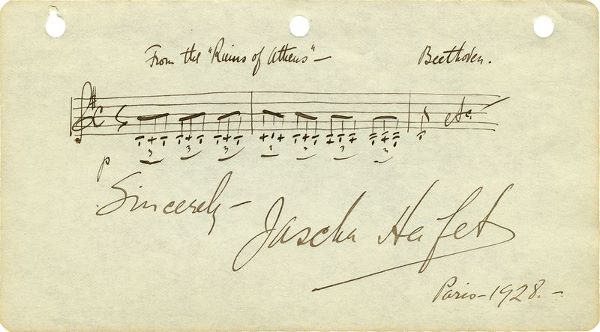
Soon after his debut Heifetz performed a devilishly difficult programme piece by Beethoven, the Chorus of Dervishes from The Ruins of Athens.

heifetz-ruins-of-athens

It has triplet fingered octaves, a previously unknown piece to me, but very evocative:

The Russian Revolution ensured that Heifetz remained in America and he became a citizen of his adopted homeland in 1925, where he lived for the rest of his life. At first he settled in New York and moved to California in the late thirties. During the Second World War he toured camps across Europe with the USO, playing to soldiers to lift morale and give some cultural interlude from the horrors of war.

“The performer must create an illusion for the audience.” ~ Jascha Heiftez

One of his students, professional violinist and pianist, Ayke Agus who later became his accompanist, assistant and confidante, tells of a story that Heifetz had impressed upon her about one such wartime recital:

“He had arranged to play to the troops in the open air, but the weather had taken a turn for the worse and on the day of the concert it was raining. Heifetz was offered the chance to pull out of his obligation, but he replied that as long as he could breath, move and walk he would perform.  Only one soldier stood in the deserted, muddy, wet field to listen that day.”

Ayke insists that Heifetz told her he thought it was one of his best ever performances.

In his later life as his performance career diminished Heifetz would often reminisce to her about his soloist days. She relays the story of when Heifetz played a private concert for Hellen Keller, who very touchingly could feel the music vibrations through her fingertips as she held on the scroll of his violin. She had impressed Heifetz greatly.

Shock, horror, a bad review!

For most of his early life Jascha Heiftez had received nothing but praise. And rightly so, he was one of the most outstanding violinists of his time, and indeed of all time. But his popularity in America, which furnished him with success and freedom, enabled him to let his hair down a little and enjoy the good life. In his own words, Heifetz admitted that it was not until he had reach adulthood that he could behave like a child.

In his childhood he had endured a strict regime of musical studies. It’s certainly understandable that he would want to relax and enjoy the fruits of his success for a while. But the lack of practise during his first four years in America had begun to show in his performance.

Nothing had prepared Heifetz emotionally for a bad review, and when scathing criticism came his way after one fateful New York concert, it wounded him deeply and jolted him out of complacency.  Although his pride was hurt, Heifetz actually agreed with the reviewer that he owed it to himself and music never to be content. It seems he became his own biggest critic from that day on.

After his ego recovered Heifetz applied himself to rigorous preparation and practice schedules before his concerts. He had set the bar impossibly high, and now the challenge was always to live up to an incredibly high standard.

“The discipline of practice every day is essential. When I skip a day, I notice a difference in my playing. After two days, the critics notice, and after three days, so does the audience.” ~ Jascha Heifetz

What really blows my mind was the speed, accuracy and co-ordination of his hands and bow. Heifetz’s hands in slow motion:

Philosophy

Jascha Heifetz believed that the audience should never feel like the artist is struggling to achieve anything. And in all his clips, no matter how fast and furious the piece, or even slow and legato, he has perfect control and makes it look effortless. He likened performance to making the perfect pitch in baseball. No-one would see, or even understand the effort that had gone into it.

His positive mind set comes across brilliantly in a great interview about violin mastery on David Jacobson’s blog.

When once asked by a student, “What are the most important attributes for an artist?” Heifetz responded candidly: “Self-respect musically speaking, integrity and enthusiasm.”

His personal philosophy was drawn from Rudyard Kipling’s poem, If, which he carried a copy of at all times. He said of particular relevance to him was the idea of treating the imposters of triumph and disaster just the same. He understood that an artist’s life meant treading that path between the two. Let’s face it; most of what he achieved was a total triumph, even to the extent that his unrivalled standard of perfection made him a target.

He was labelled as ‘cold’ and unemotional. It’s true that he didn’t show feelings so much on his face as is more common now-a-days. How silly for his critics to get their nickers in a twist over a lack of facial expression, when he clearly made the music his mode of expression. This video makes the point perfectly:

Jim Hoyl

At the height of his fame Jascha Heifetz wrote some popular songs under the pseudonym Jim Hoyl, which was easy to use with the same initials.

Here is Heifetz playing the piano to his own song, When You Make Love, which had been sung by none other than Bing Crosby :

He would also travel under this alias so as not to be easily recognised and identified. It struck me that he was humble and modest despite his international fame.

Teaching

After 1974 Heifetz dedicated himself to continuing the teaching legacy of his beloved tutor in St. Petersburg, Leopold Auer. In his own words Heifetz had said about Auer: “The professor was stern and very exacting, but a sympathetic teacher.” I feel these words describe his own pupils’ experiences. Ayke Agus had expressed what seemed close to terror, “It felt like we were victims.” She related how he would cover the technical aspects, the musical aspects as well as make them play on out of tune violins to prepare them for any eventuality they might face as professional musicians.

He held twice weekly lessons structured in the same way as Leopold Auer. My living hero on the violin, Itzhak Perlman, tells of his Masterclass experience as a 14 year old with Heiftez:

There is a great clip of Heifetz himself warming up for practice with scales, left handed pizzicatos and he even plays sections of the first movement of Beethoven’s violin concerto, which consists of beautiful melodic scales!

Ayke tells of how Heifetz would teach them the importance of bowing technique, and how Heifetz impressed on them that the colour of the tone came from the bow arm. He likened it to a painter with a brush never having the same evenness of colour and shade on the canvas, it wasn’t uniform.  He taught them to reach out to people’s hearts.

heifetz-beethoven

Heifetz himself found staccato bowing the most difficult thing to learn and tried to in-still in his students what Ayke Agus refers to as an ‘honest staccato’, which can only be achieved by having a stiff arm, lifting the bow on and off the string slowly and accurately before attempting a fast tempo.

Hora Staccato:

Heifetz did a series of televised Masterclass sessions in the sixties. I have chosen the one dedicated to Bach’s ‘Chaconne’. If you have read this earlier post on one of my favourite pieces of solo violin music, then you will know that Heifetz’s interpretation is untouchable.

Interests and idosyncracies

Jascha became known for deliberately playing badly, in order to demonstrate how not to do it. It was something of a party trick. He was also a keen photographer, ping pong player and motorist. Years before Elon Musk was born, Jascha Heifetz spent a significant amount of his money building his own electric car in 1965.  He didn’t like the smoke and pollution and decided he would do his bit for the environment.

Transcriptions for the violin

Heifetz also adapted other composer’s works for the violin. He met and admired George Gershwin, arranging his songs from Porgy and Bess for the violin.

Being a true patriot he also arranged the Star Spangled Banner:

The story behind one of his most beloved encore arrangements – Estrellita:

Heifetz’s Violins

Jascha Heifetz owned several high value violins, his preferred performance violin being the 1742 ‘ex-David’ Guarneri del Gesù, closely followed by his 1731 Stradivarius.

A touching interview with luthier Hans Benning, who Heifetz chose to maintain his violins:

Violin Concerto Recordings:

There are no words to describe the pure magic of these vintage recordings!

“You can ‘just listen’ to the Brahms violin concerto and enjoy it keenly. But if you read about Brahms’ life, you appreciate it more. And, if you’ve listened to recordings of it, you will appreciate it ten times as much.” ~ Jascha Heifetz

Heifetz’s sound was, and still is distinctive, original and silky, his tonal quality unsurpassed. His sublime phrasing, his unique musical language just send me to another realm and inspire me to practice. I love that you never get sentimentality from Heifetz, but you always get his enthralling blend of power and emotion.

If there was any downside to his stellar success I think it showed-up in his private life. He was married and divorced twice, and by some accounts wasn’t particularly close to his three children. He had to balance his career with his family, and I don’t think his relationship with his own father was a warm one. Heifetz was quite introverted and said in interviews that he had felt lonely at the top. His fame had come at a price.

I hope you’ve enjoyed his music as much as I have, and please share the post if you think the world needs more Heifetzes!

It feels fitting to bow out, (if you’ll pardon the pun!) with Heifetz’s final recital:

#TuesdayBookBlog – How to Make an Author Insanely Happy

“A page-turner and moving journey filled with romance, Burges’s novel shows the possibilities of moving on beyond tragedy.” ~ Publishers Weekly

We authors are a sensitive breed. At least, I know am. Perhaps it’s because of my creative and open nature. Writers live in a world of words and pictures, with scenes floating around and playing out in our heads. Premises come and go; only the most compelling that take root in the depths of our imagination will be used for that next novel. Our heads are full of images: faces, voices, characters, traits, plots, places, descriptions, all coalescing and escalating to a breathtaking climax before breakfast. No, not that sort!

oscar-wilde-quote-a-writer-is-someone-who-has-taught-his-mind-to

As Ernest Hemingway said with a hint of satire: “There is nothing to writing. All you do is sit down at a typewriter and bleed.”

Not literally I hope, but sometimes it feels like my head will explode. You craft your stories as best you can, edit them, get them read, incorporate feedback, edit and rewrite, get more feedback and go on until you’ve reached the end of your tether and just want to get the darn thing published.

You’ve probably gathered I don’t possess the patience of a saint!

virtuoso-kindle-no-bleed-2

Some writers are blessed with quick minds, maybe if they have no other work or family commitments they can churn out a book every year. It took me five to finally publish my debut novel, The Virtuoso. It was a labour of love. But that doesn’t mean to say I don’t care about its journey out into the big, wide, literary world.

With upwards of a million books on Amazon and the empowerment Indie publishing brings to many aspiring writers, it’s tougher than ever to stand out among the noise as a first time author.

oscar-wilde-quote-in-old-days-books-were-written-by-men-of-letters

I know if I could just get The Virtuoso featured on Classic FM or BBC Radio 3 I’d be in with a fighting chance of reaching many of my potential readers through the medium of music. After all, music is at the core of my novel, and so is an irresistible story. Sadly, I don’t have a large marketing budget to afford the advertising and an unknown author is a bit of a risk for the big radio stations.

And now to the question of how to make an author insanely happy: it’s twofold really, read their book and write an honest, constructive review. Social proof is the best way for a fledgling author to win new readers and build up a fan base so that they can hit the ground running with their next novel. Writers spend many hours obsessing over their ‘babies’ and want nothing more than to enrich readers’ lives with their work.

oscar-wilde-on-writing-and-creativity-22-638

I haven’t found the process of marketing my book entirely comfortable, I don’t like to blow my own trumpet, but it is certainly easier to sound off someone else’s!

Hence my unashamed promotion of my first major book review; an awesome endorsement from industry giant, Publishers Weekly. When I submitted The Virtuoso for a review on their BookLife platform I wasn’t expecting anything to come of it. It was highlighted that many, many books were sent to them and only a select few would be chosen for a review.

oscar-wilde-quote-there-is-no-such-thing-as-a-moral-or-an-immoral

Imagine my delight when I received this email from BookLife yesterday!

Dear Ms. Burges,

The Publishers Weekly review for your book, The Virtuoso, ran on Nov. 14th:

http://www.publishersweekly.com/978-0-9930777-1-5

Thank you for submitting your book for review to Publishers Weekly. Of the hundreds of self-published titles received each month, only a handful of the very best are selected for review.

Thank you also for being a part of the BookLife community. We hope you will continue to use all of the resources at BookLife.com to support your work as an author.

Sincerely,

BookLife.com

Here it is:

publishers-weekly-review-cropped

Dare I finish by saying that the thing that would send this particular author into the stratosphere, would be to have a film adaptation made of The Virtuoso.

My dream cast

My readers tell me they think it would make a fantastic film. My dream cast would be Keira Knighly in the main role as Isabelle Bryant, the heroine of my novel. She has the perfect blend of spirit, talent, vulnerability, courage and beauty, (both inner and outer) to play the beleaguered violinist. her Her box office appeal doesn’t hurt either!

Sharon D. Clarke is the only woman I can visualise as the larger than life jazz singer, Hortense Lafayette. I think Damian Lewis could bring the right amount of the narcissist and tortured soul to conductor Howard Miller’s character. I’m not sure about Daniel Carter. Maybe someone like Hugh Grant could fill his shoes.

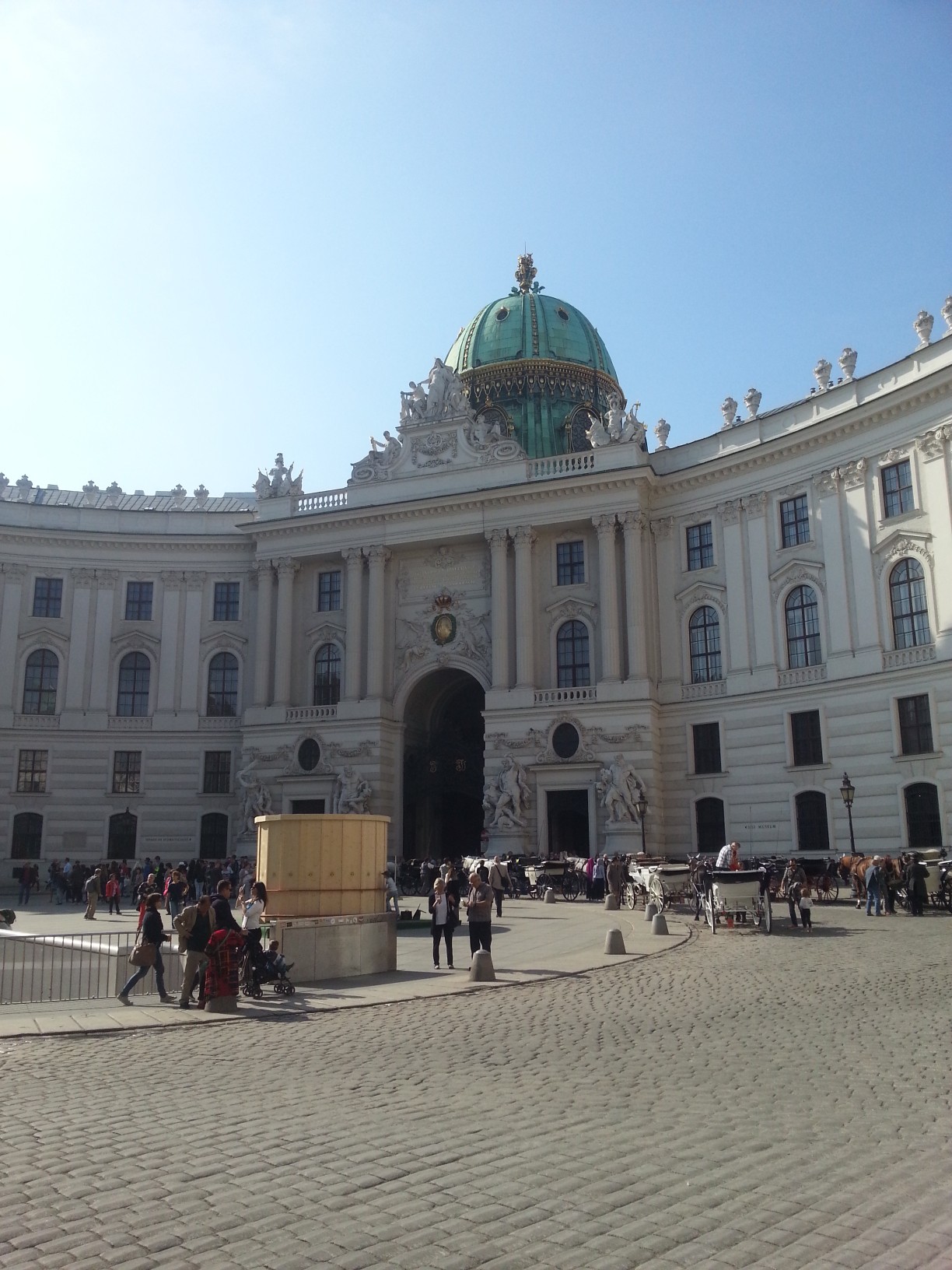
There are some wonderful locations as well, such as Madeira, New York, Vienna and London.

hofburg-palace

If you’ve read The Virtuoso, thank you, and if you’ve left me a review on Amazon or Goodreads, thank you from the bottom of my heart! Do feel free to share your ideal cast for the film adaptation, I’m open to suggestions…

I can always dream can’t I!?

At least the music soundtrack has already been recorded!

#SundayBlogShare – Honouring The Fallen on Remembrance Sunday

The Fallen

The fallen have no voice, our freedom is their sign,

Oh, brave heroes, selfless deeds claimed your prime,

Your words were left unspoken, on hellish frontiers,

But we still hear you, even after all these years…

History has veiled your suffering, sacrifice never to forget,

So many wars, too many battles; faced by general and cadet,

Greedy death, your serpent like tongue, too fast ran,

Devouring life after life; from cruel carnage of man.

The Somme’s sodden, bloody fields saw many a charge,

Cut down by a hail of bullets, bombs small and large,

Pounding hooves, feet and tanks, cover pestilent ground,

Ear splitting screams, explosions, to stealthy silence sound.

washington-memorial

When the smoke has cleared, gritty eyes cannot bear indignity,

Of mangled and missing bodies; but in courage lies nobility,

A debt we can never repay, you faced evil, settled the score,

Faces we cannot see, but your deeds are the stuff of lore,

Our hearts fill with gratitude, for your unwaivering duty,

Concrete shells of empty buildings, stripped of beauty,

Serve as reminders of lost limbs and shattered homes,

Your graves tended, sought are your lost, scattered bones.

The dice has been shaken; the dice has been rolled,

Your number is up; time to cross the eternal threshold,

You went into danger, knowing you may never return,

A mission impossible, no easy final sojourn…

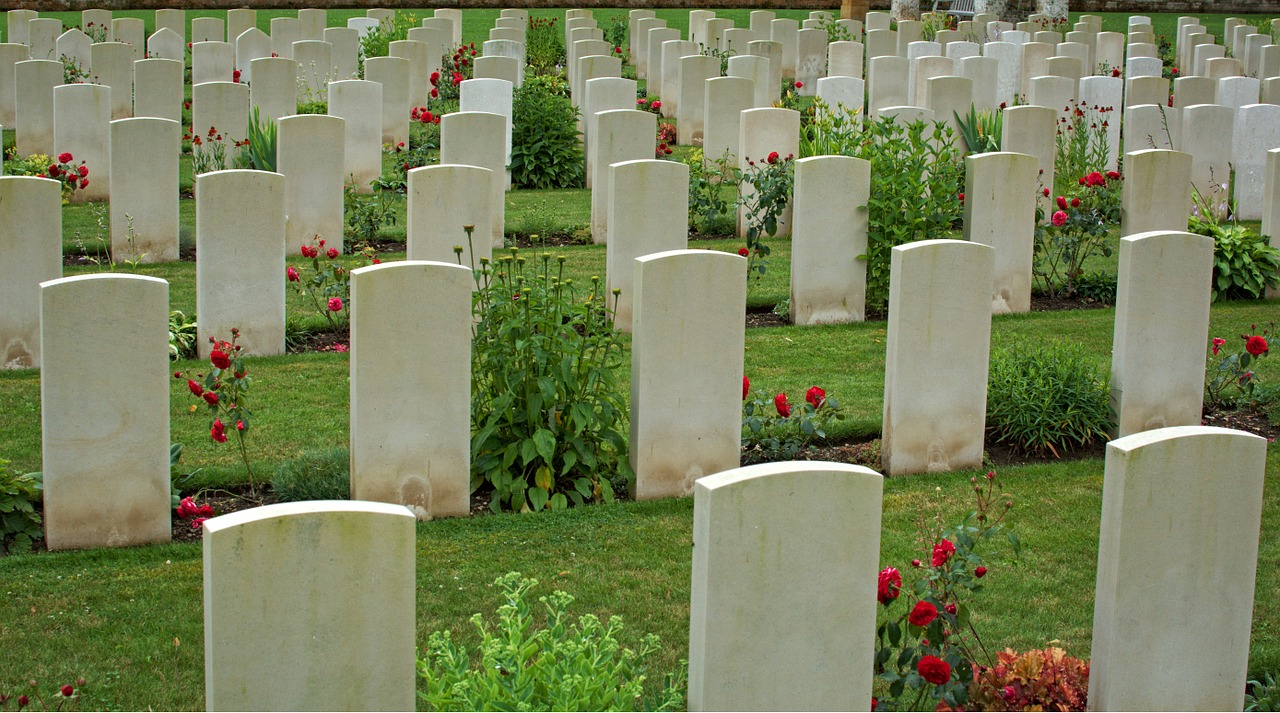
war-graves

Last post played, last drink downed, from life’s bitter-sweet cup,

If lucky, you could savour the taste, before going up,

Was it sweet? Was it sour? Did you know we wear your flower?

Red petals bloom in a sea of crimson; your poppies empower.

You drew a line in the sand, to defend our cherished homeland,

But the tragic loss of life, is hard to fully understand,

Our freedom is won, and the many thank the few,

Conflict resolved, because of what you went through.

Stories of the fallen continue to be told; as is just,

Their tales must not pass unknown, into shadows and dust,

The fallen show us the true meaning of extraordinary bravery,

So that we may never again, be shackled by tyranny and slavery.

poppy-in-wheat-field

You answered the call; sentinels of the skies, preserving lands,

Plummeting the depths of oceans, with protective hands,

Platoons, divisions, armies of ordinary men and women,

You saw and did, more of your share, of spying and killing.

Infiltrating enemy lines, up against cold, hunger and snipers,

Risking it all, to intercept and thwart, cleverly coded ciphers,

Through ninety percent of human history a war has waged…

Worthy causes hailed by leaders, for followers to engage.

The fallen will cry no more: anguish and pain disappear,

The fallen paid the highest price for valour through fear,

The fallen fought for peace: to preserve a free society,

Honour and respect the fallen, by living with humanity.

canon-in-landscape

By Virginia Burges

Surreal Synapses: Behind the Scenes of the Wandering Mind

“To see the world, things dangerous to come to, to see behind walls, draw closer, to find each other, and to feel. That is the purpose of life.” ~ James Thurber (The Secret Life of Walter Mitty)

Mind-wandering is a fascinating topic. I thought I’d start this category off with a peek behind the scenes of our grey matter whilst it’s engaged in day-dreaming and mental time travel; better known as memory. You might think our brains are static while you’re not concentrating on a specific task, but quite the opposite is true.

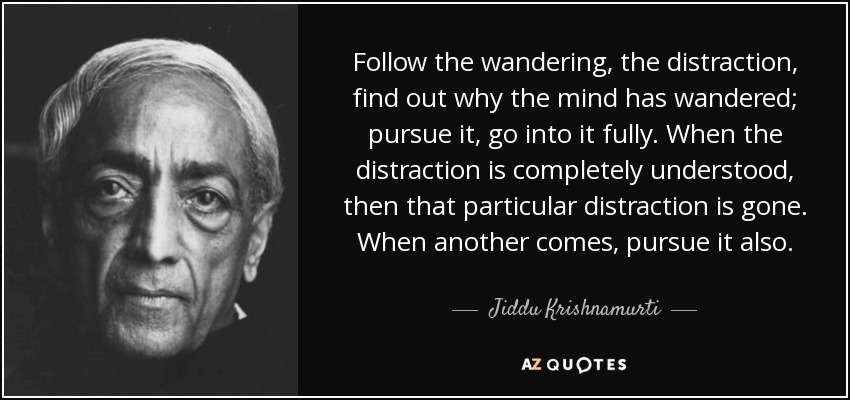
wandering-mind-jiddu-krishnamurti

Scientists have produced evidence that for half the day our minds are wandering, (obviously not in one continuous epic day dream), and at night, whilst in REM sleep our minds wander into dreams. Despite the bad rap mind-wandering has received (even from a recent Harvard study), this can be no bad thing if we are designed to spend considerable chunks of time doing it.

In his brilliant book, The Wandering Mind, Michael Corballis, emeritus professor at the Department of Psychology at the University of Auckland, has defended our innate tendencies to drift into these surreal synapses and put forward a compelling case for mind-wandering in various contexts.

It’s taken me a while to get my brain in gear for this post. There have been so many opportunities to ponder and wander…

Walter Mitty

The daring, audacious day-dreaming of fictional character Walter Mitty is something to behold. His adventurous perambulations on the colourful landscape of his imagination have no equal. OK, some authors might argue with me on that one…

To alleviate his rather dull life, Walter indulges in frequent, exciting bouts of ‘zoning out’, but his life becomes infinitely more interesting when he embarks on a real-life adventure. In the Ben Stiller film version, his day-dreaming facilitates him stepping outside his comfort zone and undertaking the journey of his life.

Mind-wandering is the portal to our memory, imagination, creativity, originality, mental time travel, the minds of others and psychic phenomena.

In fact, evolutionary psychologists believe that our cerebral escapades were one of the earliest mental faculties to evolve in Homo Sapiens; our relatively modern branch of the Homo genus that emerged in the Pleistocene period some 200,000 years ago.

Wander/won’der/intransitive verb. To go astray, deviate from the right path or course, the subject of attention, etc.

The day-dreaming taboo

At school, if the lesson was boring I’d often find myself day-dreaming despite my best efforts to concentrate on the task in hand. I would never have let on that I was day dreaming of course, for fear of the teacher’s wrath.

wandering-mind-imagination

I’ve often noticed my children drifting off into other worlds during homework, reading, watching television and chores, concocting all sorts of outcomes. Depending on the activity I gently try to get them back on track. Sometimes though, when appropriate, I participate with them in some community and family mind-wandering.

Ruby’s favourite mind-wandering realm is that of the animal kingdom. She can do the most brilliant animal sounds (honorary dolphin), and act like a monkey with the best of them!

I’ve been surprised on many occasions at their problem solving abilities on issues that matter to them, most assuredly bolstered by their focus free interludes!

I think I will be more tolerant of my childrens’ mind wanderings, especially when I’m giving them instructions or when they are getting ready for school.

wandering-mind-where-the-heart-is

It seems that the taboo of mind-wandering is slowly lifting. Of course, there is a time and a place for mind-wandering. It’s definitely not when you are operating dangerous machinery, flying a plane or driving a car, as Walter Mitty does in the opening scene of James Thurber’s book, The Secret Life of Walter Mitty.

In fact, you could be doing the exact same thing right now. As your eyes scan these words maybe your mind is roving elsewhere!

Mind-wandering can be as intrusive as it can be pleasant. Perhaps we’re having trouble switching off; we can’t get that particular song or ear-worm out of our heads, we worry about trying circumstances or future events while we are trying to rest.

Alternatively, our minds can experience some respite from long periods of focus and engaging tasks. Taking a brisk walk always clears my head. We may deliberately swing from a hammock on a beach in the Seychelles, recall a favourite holiday, meander through nature or imagine rather more intimate activities…

Let’s take a break from the heavy mental lifting now and listen to a selection of popular culture’s music on the subject.

Measuring Brain Activity

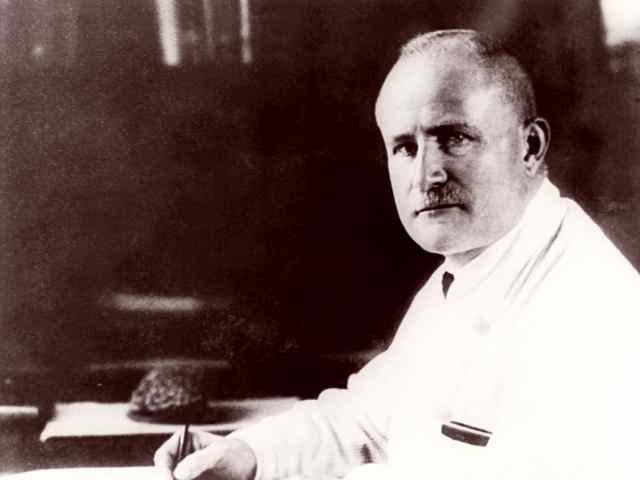
Our understanding of what the brain is doing when it’s zoning out is possible because of an accident. It was German physician Hans Berger’s fall from his horse into the path of a horse-drawn canon that precipitated his exploration of electrical activity in the brain.

wandering-mind-hansberger_univ_jena

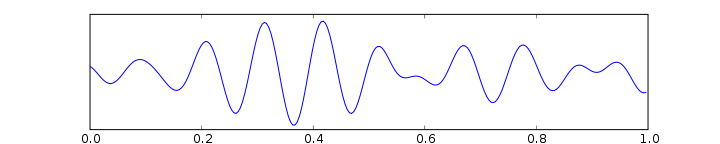
Had his sister not sensed that he was in danger several kilometres away and contacted their father Hans may never have considered the possibility of telepathy and invented a technique we still use today, electroencephalography (EEG). When subjects were in a resting state with their eyes closed the EEG showed a fluctuation in voltage frequency ranging between 8 to 13 cycles, which was named ‘Berger’s Wave’. Today it is known as the ‘Alpha Wave’.  Alpha brainwaves are perfect for day-dreaming and creativity!

Alpha Brainwaves - Originally the Berger Wave

Alpha Brainwaves – Originally the Berger Wave

Neuroscience has since sought to continue understanding how our brains work. Newer methods for measuring blood flow to the brain were invented to study what was termed by David H Ingvar as ‘undirected, spontaneous, conscious mentation’.

Positron Emission Tomography (PET) involves injecting radioactive substances into the blood stream to map activity in the brain, as well as functional magnetic resonance imaging (fMRI), which uses a powerful magnet to detect haemoglobin carried in the blood and thus map the brain’s network. In this way researchers can see which parts of the brain are active when a person is involved in a specific task compared to when they are idle.

The Default Mode Network

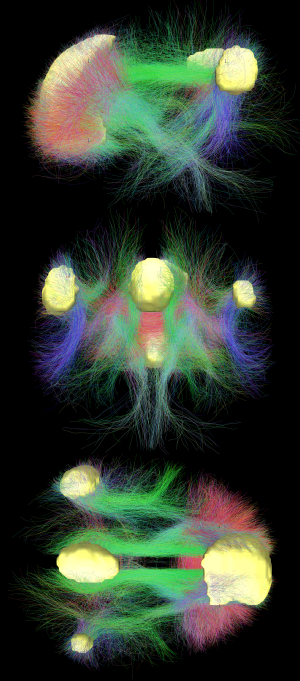
Default Mode Network Connectivity

Default Mode Network Connectivity

Surprisingly, the idling brain receives only 5 to 10% less blood than when engaged, and wider regions of the brain are active during idle moments. The brain regions active in the wandering mind have become known as the ‘Default Mode Network’.

The Default Mode Network covers substantial areas of the brain, mainly in the areas not used in perceiving the world or responding to it. This is the network that lights up when we embark on our mental meandering.

It seems that nature has equipped us with two equally important mental faculties: mind wandering and paying attention. How often we alternate between the two depends to a large extent on individual proclivities.

But it happens whether we like it or not and whether we realise it is happening or not.

The benefits of appropriate mind-wandering allow us to adapt to a complex world, especially when we need to escape the here and now, mull over past mistakes and consider possible futures and understand how other people’s minds work. Empathy would not exist without this ability. Neither would the creative spark of humanity and our innovations over millennia.

All our modern conveniences, possessions, clothes, cars, art, culture, buildings, technology and the like were once figments and flashes of inspiration in a zoned-out mind.

We are such stuff

As dreams are made on, and our little life

Is rounded with a sleep.

~ William Shakespeare (The Tempest)

A trip down memory lane

Our memory allows us to experience time as we know it, encompassing past, present and future, providing us with the ability to mentally time travel. We’ve all been there: trying frantically to remember someone’s name, retrace our steps to find lost keys, to recapture emotions and events that are meaningful to us and bury ones we’d rather forget. We use past events to help us envisage future events.

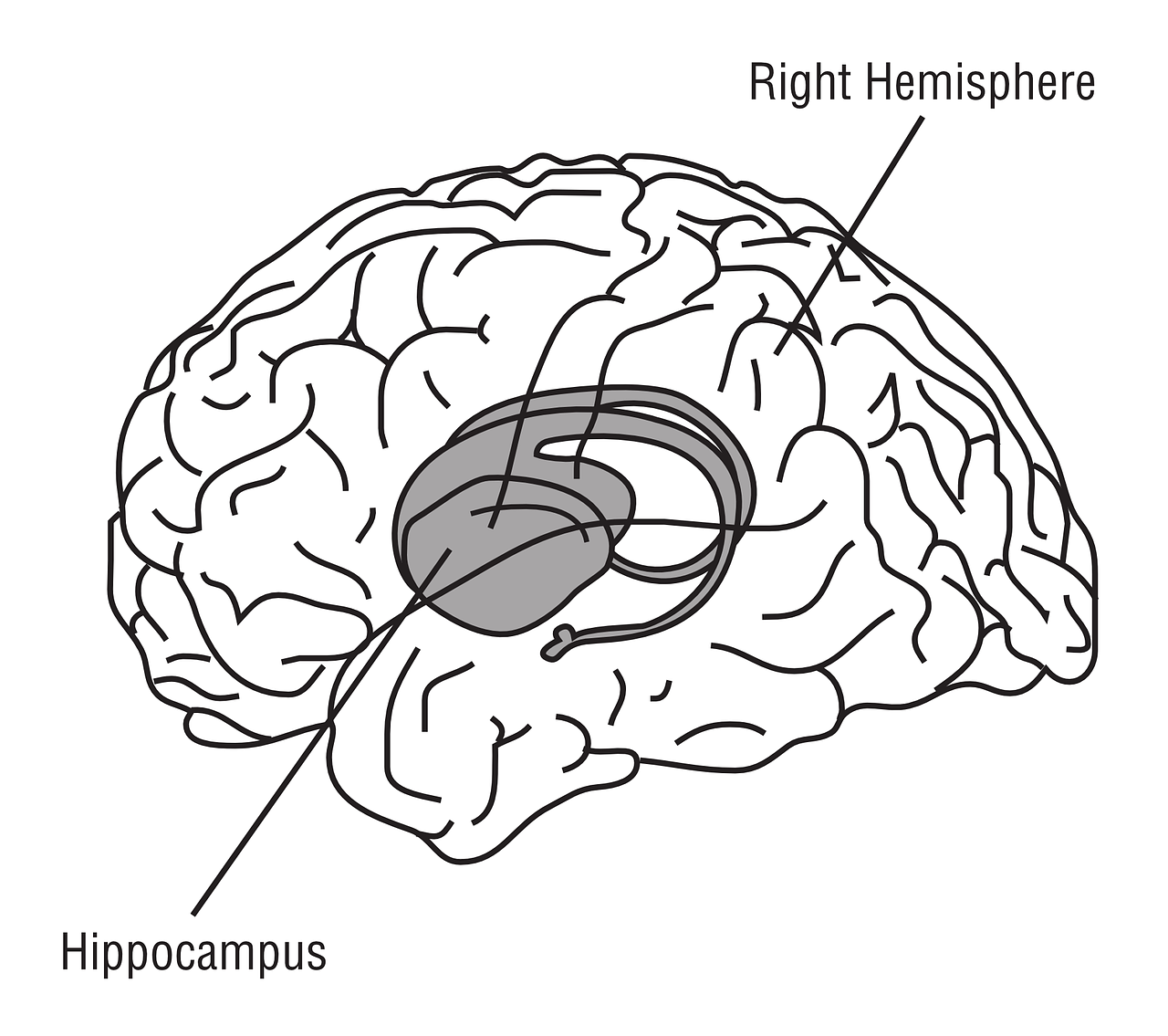
Memory is therefore a creative process. Memories are strengthened connections in the brain, all made possible by the Hippocampus (Major).

“She knew that she had a tendency to allow her mind to wander, but surely that’s what made the world interesting. One thought led to another, one memory triggered another. How dull it would be, she thought, not to be reminded of the interconnectedness of everything, how dull for the present not to evoke the past, for here not to imply there.” ~  Alexander McCall Smith, (The Novel Habits of Happiness)

The Hippocampus

This remarkable section of the human brain is what imbues us with a sense of where we are in space and time, and acts as a cognitive map.

wandering-mind-hippocampus

It relates to personal matters, retrieval of personal events and making plans. Damage to this area can result in Anterograde Amnesia.

Because of its shape and resemblance to an equine sea creature, the name Hippocampus was derived from the Greek for seahorse. It’s located on the inner surface of the temporal lobes (behind the ears).

wandering-mind-seahorse

The Default Mode Network includes the prefrontal lobes, temporal lobes and parietal lobes, and activated areas overlap extensively. The Hippocampus is the hub of this network.

The hippocampus is so powerful that vividly imagined scenarios often appear to be real, and the line between fiction and reality becomes blurred. Sometimes these ‘scenes’ can be remembered as though they actually happened. This is how false memories occur.

It may seem the stuff of futuristic, nefarious thrillers (cue book idea), but it’s possible to put memories into people’s heads that weren’t there.

Now, what was I saying? Are you still with me?

Perhaps this is good place to rest and mind-wander for a bit. Next time I’ll explore the role of language, storytelling and psychical phenomena in our mind-wandering excursions.

In the meantime I’ll leave you with the exquisite reveries of Claude Debussy:

Thought is the labour of the intellect, reverie is its pleasure. ~ Victor Hugo

Halloween: An Epic Journey to The Isle of the Dead

“A dream picture: it must produce such a stillness that one would be awed by a knock on the door.” ~ Arnold Böcklin

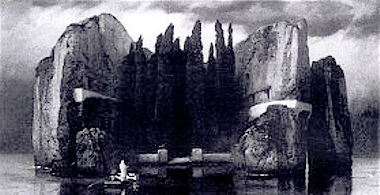
As our collective fascination with death prevails at this time of year, my thoughts drifted to Rachmaninoff’s evocative symphonic poem, The Isle of the Dead, completed in early 1909.

This haunting music was composed after Rachmaninoff had seen a black and white reproduction of the painting Isle of the Dead, exhibited in Paris two years earlier.

Black and White Photograph of Version 4

Black and White Photograph of Version 4

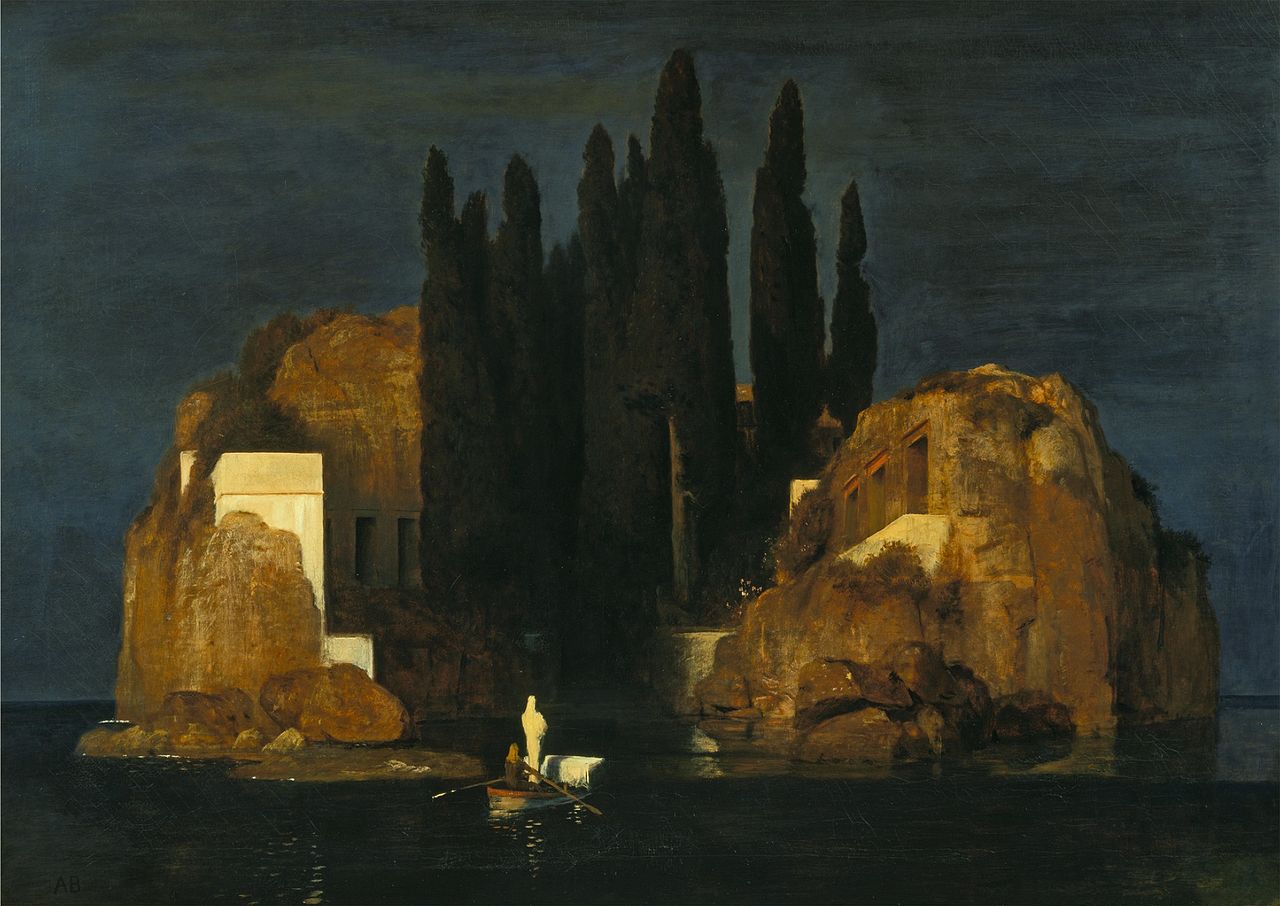
The original and subsequent versions of the Isle of the Dead paintings were created in colour by the romantic Swiss artist, Arnold Böcklin (1827–1901).

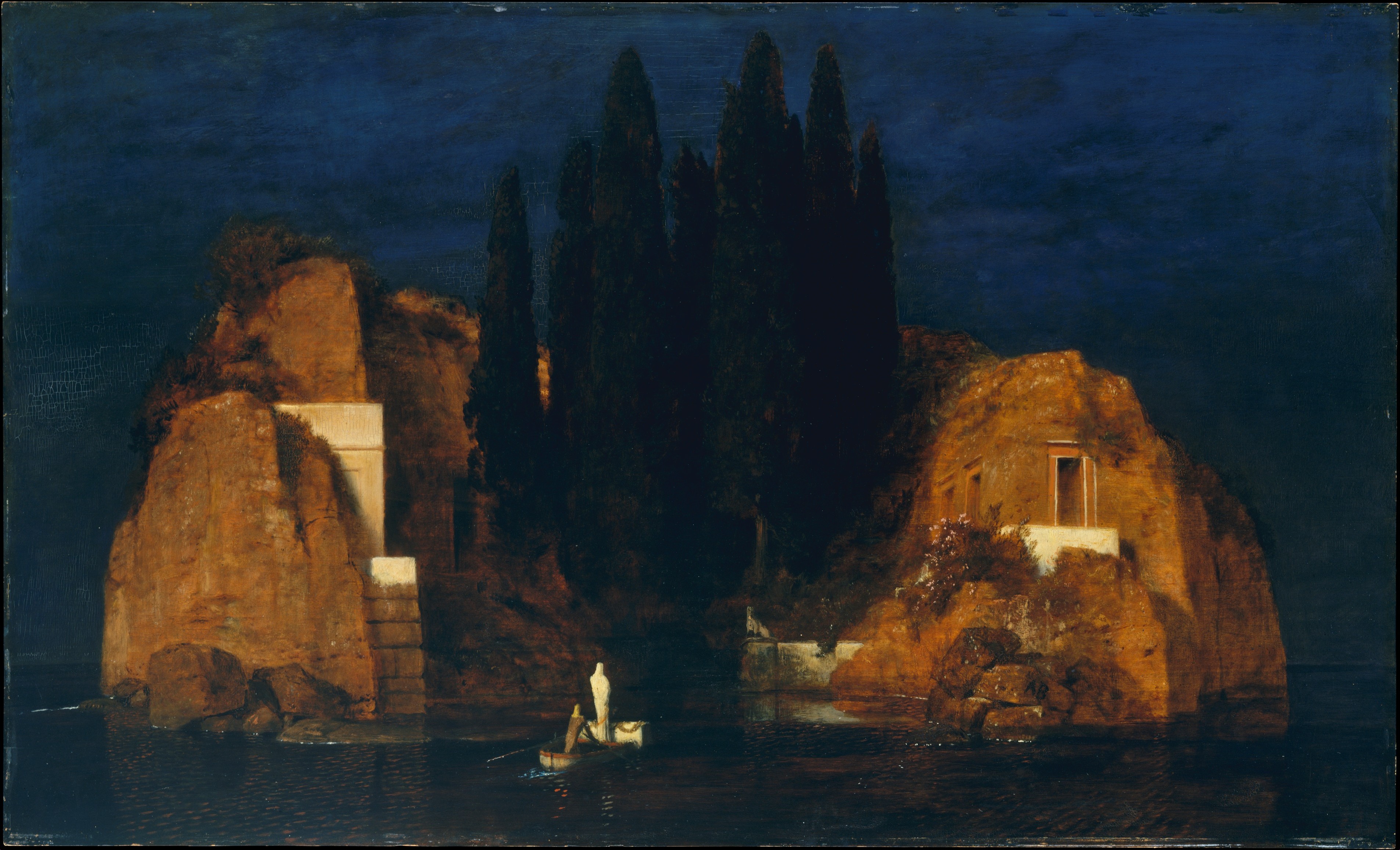
Between 1880 and 1886 he painted a total of five versions of his iconic Isle of the Dead. The original painting was commissioned by his patron, Alexander Günther which was spotted half-finished, sitting on an easel in his Florence studio by German widow Maria Berna. This is often referred to as the Basel version.

Isle of the Dead by Arnold Böcklin c. 1880 (Basel Version)

Isle of the Dead by Arnold Böcklin c. 1880 (Basel Version)

She persuaded him to add the female figure and the draped coffin to the solitary rowing boat in memory of her deceased husband. Maria’s painting (version two) was a smaller painting (29 x 48 inches) of oil on wood, which now hangs in the Metropolitan Museum in New York.

Böcklin must have admired Maria’s idea as he then also added the figure and coffin to his original painting. These first two paintings were titled Die Gräberinsel (Tomb Island) by Böcklin. The enduring ‘Isle of the Dead’ name that all the versions now go by was suggested by art dealer Fritz Gurlitt in 1883.

Isle of the Dead by Arnold Böcklin c. 1880 (Metropolitan Museum New York)

Isle of the Dead by Arnold Böcklin c. 1880 (Metropolitan Museum New York)

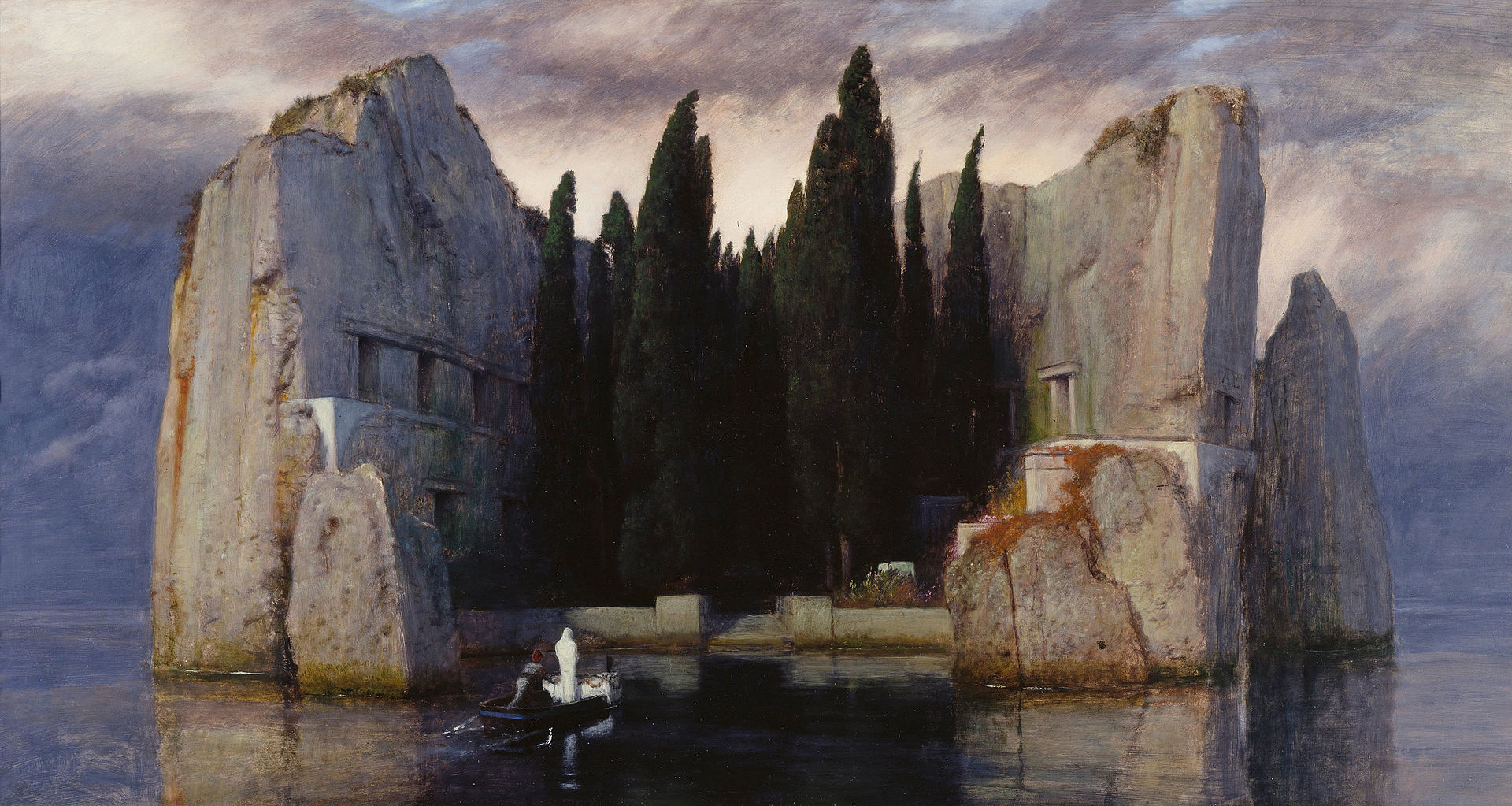
Painting number three was done in 1883 for Böcklin’s dealer Fritz Gurlitt. Beginning with this version, one of the burial chambers in the rocks on the right bears Böcklin’s own initials: A.B. The painting was sold in 1933 when it was acquired by Adolf Hitler, where it hung in the Berghof in Obersalzberg. After 1940 it was moved to the New Reich Chancellery in Berlin. Its less contentious home these days is in the Alte Nationalgalerie, Berlin.

Version 3 c. 1883 (Alte Nationalgalerie Berlin)

Version 3 c. 1883 (Alte Nationalgalerie Berlin)

Version number four, (upon which Rachmaninoff’s music is based), was created in 1884 due to financial pressures, and was bought by art collector Baron Heinrich Thyssen. Luckily a black and white photograph was taken of the painting before it was destroyed by fire during World War II.

Rachmaninoff eventually got to see the fifth and final colour version (painted in 1886) at the museum of fine Arts in Leipzig. He commented that he much preferred the earlier black and white version and that he would not have been inspired to compose his opus 29 had he seen the colour version first instead.

Version 5 c. 1886 (Leipzig)

Version 5 c. 1886 (Leipzig)

“When it came, how it began—how can I say? It came up within me, was entertained, written down.” ~ Sergei Rachmaninoff referring to his orchestral opus 29 in A minor, Isle of the Dead.

Possible inspiration

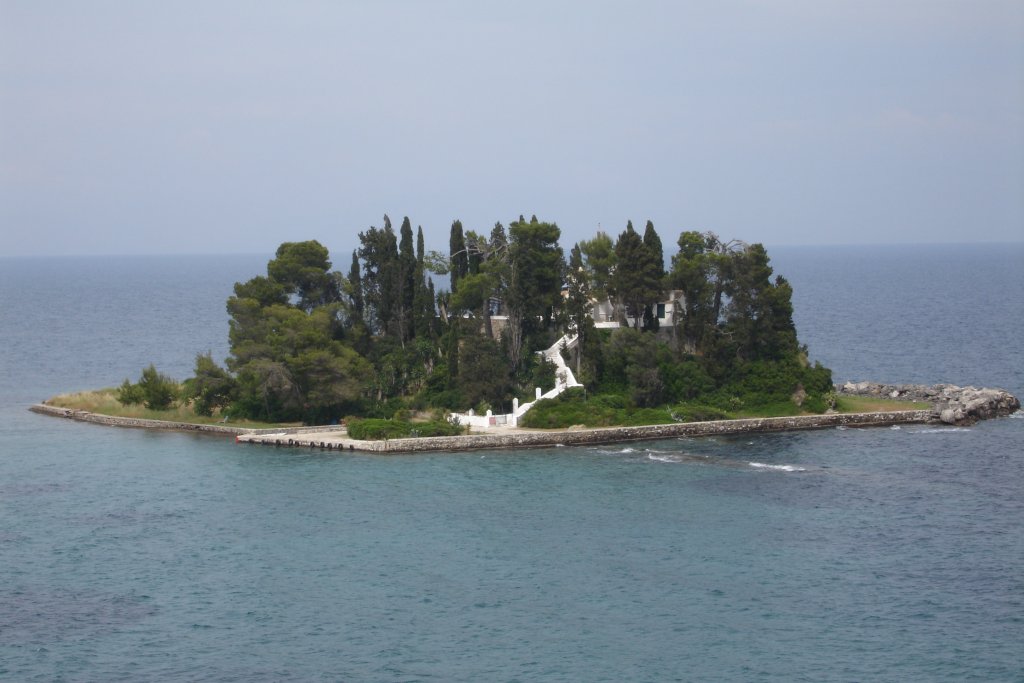
halloween-pondikonissi_islandIt has been proposed that the Greek islet of Pontikonisi near Corfu, with its Byzantine chapel and Cypress trees was the main inspiration for the painting, along with the high volcanic walls of Strombolicchio. Also the English Cemetery in Florence, where Böcklin’s infant daughter was buried served as the location for the painting of the first three versions. Another suggestion is St. George’s Island in the Bay of Kotor, Montenegro.

Overview of the music by Phillip Huscher for the Chicago Symphony Orchestra :

Rachmaninov begins with the irregular movement of oars in the water. (Mahler’s Seventh Symphony, completed just four years earlier, also begins with the stroke of oars on a lake.) The opening is dark—just low strings, with timpani and harp at first—and mysterious. For a very long time, we move forward with little sense of destination, but with a growing urgency. (Tantalizing melodic fragments appear from time to time, like glimpses through the mist, and a haunting high violin theme takes wing at one point.)

Finally, the island comes into sight, the music gathers force and direction, and at last we hear the Dies Irae, the Gregorian chant from the Mass for the Dead—a motto of mortality that recurs often in Rachmaninov’s music. Then suddenly the music is suffused with life—urgent, passionate, and joyous. (Here Rachmaninov departs from the painting, although Böcklin did in fact paint a complementary Isle of Life two years after his last Isle of the Dead canvas.) But the Dies Irae rings out, and the music is again clouded in shadows. The ending is mostly still, and we are left where we began, with the sound of ceaseless rowing.

Two spine tingling versions:

Fritz Reiner and the Chicago Symphony Orchestra:

An arrangement for 2 pianos sourced from my favourite treasure trove of classical music, with Zdeňka Kolářová and Martin Hrše of the Prague Piano Duo:

In honour of  Böcklin  and Rachmaninoff, as well as the historical origins of our modern interpretation of Halloween, I’ve written a few verses of my own:

Journey to The Isle of the Dead

Deep, melancholy chords escort me to the Isle of the Dead,

Remote, alabaster tombs protrude, rising from darkness and dread.

Monotonous oars glide through glassy, unfathomable depths…

No wind to rustle the sombre shroud of Cypress leaves,

Oil on canvas for widow Maria; a window to her dreams.

🎨🎼🎧💀

Reverent brush strokes paint entry to immortal sleep,

The fatal shore beckons: come, come, your soul to reap.

Cross the silent, still surface, to peace or purgatory…

Within the high, pale rock, lies the secret of eternity,

Destiny concealed from searching, inquisitive fervency.

🎨🎼🎧💀

Five versions, against muted backdrop of foreboding firmament

Greys and blues, softened by nebulous cloud; omnipotent.

Navigate lofty cemetery through the watery gates…

Sea and sky blend and merge, in subtle, never-ending horizon,

Arrival assured: but no departure possible, from Death’s Island.

🎨🎼🎧💀

Rhythmic notes on the stave narrate a deathly story,

Atmospheric melody; oppressive, mythical and eerie.

A final journey to the sea-bound realm beyond the living…

Corpses lay buried, side by side, forever to abide,

Within the endless cavern of souls; life doth hide.

🎨🎼🎧💀

Hallowed art and music, death’s mystery shall convey,

Sacred and ancient celebration – All Saints’ Day.

‘Samhain’ bids Gaelic farewell to light; to summer’s passing…

Hallow –e’en, from 18th century Scottish: ‘All-Hallows-Even’

Holy Eve before the rising; for death is conquered in heaven…

By Virginia Burges

Happy Halloween!

HBO’s Popular New Drama ‘Westworld’ and its Provocative Plot 🚂🛤🌵🐎🎬

“These violent delights have violent ends.” ~ Peter Abernathy

Like millions of other viewers over the past few weeks, I’ve been gripped by HBO’s latest drama ‘Westworld’, based on the eponymous 1973 film by writer and director Michael Crichton.

Trailer for the original film with Yul Brynner:

The current Westworld airing on HBO differs in plot and characterisations compared to its earlier, less sophisticated film version, but the premise is basically the same: for an exorbitant sum guests can enter a futuristic wild west theme park where there are no rules, to live out their wildest fantasies.

In Westworld they can maim, kill, rape and plunder at will and without consequences. The murdered and brutally raped inhabitants of Westworld are the creations of Dr. Robert Ford (played chillingly by Anthony Hopkins), co-founder of the park, and are designed to be indistinguishable from humans. Their technology has created highly sophisticated organic robots, programmed with certain memories and narratives that serve the human guests.

These humanoids are referred to by the park’s creators and programmers as ‘hosts’.

Dolores Abernathy

In the first episode we are acquainted with the pretty, sweet-natured Dolores Abernathy, (Evan Rachel Wood), and her loving rancher father. Dolores was the very first host made for Westworld; always youthful and unspoilt, thanks to her constant repairs and ‘upgrades’ after each episode of rough treatment she suffers at the hands of the park’s guests.

We see her going through the same motions at the start of each day, but how each day goes depends on her interactions with the human guests in the park. Her mutual affection for fellow host Teddy, (played by the handsome James Marsden), draws you in to the one beautiful aspect of her world. At first, despite the violence she witnesses on a daily basis and the rapes that she has endured, she does not appear to recall these harrowing incidents.

Or does she?

As glitches are becoming apparent in some of the hosts’ programming they are promptly questioned and either returned with adjustments or taken out of service.

Despite the staff’s efforts to curtail these glitches they only seem to become more widespread and frequent. Trouble is brewing in Westworld…

One of the most harrowing scenes for me was in episode 3 when Maeve Millay (Thandie Newton), who is currently the madam of the brothel, awakens during her repairs. She sees strange men in hazmat suits hovering over her, gets up and runs off with the wound in her stomach still unrepaired, staggering around the factory in confusion. To make matters worse she stumbles upon the naked, lifeless bodies of her fellow hosts that were also slaughtered in Westworld as they are being hosed down.

It seems she cannot compute what is happening as it is so alien to her normal world. When back in operation within Westworld she begins to draw the hazmat men on pieces of paper to try and make sense of it.

Maeve also has other distressing memories of being scalped and being killed in other settings away from her current role. It’s not easy viewing.

Although you know she and her fellow machines are not human – Dr. Ford makes a big point of telling Bernard not to forget that they are ‘not real’, you start to feel for them as though they were.

In episode 3 Robert Ford tells Bernard (his chief programmer), the story of his original business partner Arnold, who helped him to create Westworld some thirty years prior. Arnold perished in the park under mysterious circumstances, and we learn from the rather cold and detached Ford that Arnold became too attached to the park and obsessed with being able to help the hosts experience consciousness in a similar way that a human being would.

Rather cruel when you witness the atrocities they go through every day. The internal monologue he tried to imbue them with did not appear to succeed, until now perhaps… I’m sure his motives and fate will become clearer as the series progresses.

utah-landscape

But with errant hosts and even innocent Dolores showing signs of cognition and questioning of her reality, you just know that, along the lines of the original film, the ‘hosts’ are going to rebel against their treatment sooner or later!

The hosts are unable to hurt or kill any of the human guests, but I’m not sure this will remain the case for long. And you can’t help thinking that the guests deserve whatever retribution is forthcoming from the hosts.

Newcomer William (unlike his friend, seasoned park visitor Logan), seems to be the only decent guest in the park who wants to stay true to himself and uphold his values. The park is billed as a place where guests can explore their deepest, darkest desires whilst acting in their chosen story lines and scenarios, and in most cases the free reign to do as they please in Westworld, with no repercussion, brings out the very worst in them!

The most enigmatic human guest in the park is the ‘man in black’ (played to perfection by Ed Harris), a veteran of 30 years in Westworld. In the first few episodes he comes across as pretty ruthless, but now I’m starting to suspect there is more to him than meets the eye and his agenda clearly goes beyond personal gratification. He does not act as a friend to the hosts, but could he really be on their side?

Behind the scenes look at Westworld:

It’s brutal, tender, intelligent, character driven and thought provoking; a great mix of sci-fi and good old western mixed into a mind-bending thriller that keeps you on the edge of your seat.

Artificial intelligence going wrong isn’t a new idea in films, although I think the original 1973 film must have been quite ground-breaking in its day, but the moral questions it raises are very pertinent to society.

I think that was the genius of Michael Crichton. He makes you think.

Is it okay to act in a way that you never normally would, in a setting that allows depraved fantasies of every kind to be played out?

Even though these interactions are with robots, they look and react like humans, and surely it begs the question that if you indulge in your absolute worst behaviour, it is going to affect you on some level.

There has been debate over whether the prevalence of violent video games adversely affects players and therefore makes them more prone to acts of violence. Imagine being immersed in a real world and acting in the same manner…

The insidious premise behind the park is pandering to the wealthy and morally corrupt guests of Westworld. If you wouldn’t do it to a real person, why do it to a robot that may possibly develop the senses to experience pain and suffering?

It’s a pretty compelling drama, and no doubt the lack of ethics at the heart of the park will ultimately cause the hosts to exact a bloody revenge!

I’m going to end with the opening credits, which are also brilliant and eerily congruent with the theme of artificial intelligence, violence and suspense:

“You can’t play God without being acquainted with the devil.” ~ Dr. Robert Ford

What’s in a Painting? Taking a Closer Look at Bosch’s Masterpiece: The Garden of Earthly Delights (Triptych c. 1510)

A work of art is not always created exclusively for the purpose of being enjoyed, or, to use a more scholarly expression, of being experienced aesthetically. …But a work of art always has aesthetic significance (not to be confused with aesthetic value): whether or not it serves some practical purpose, and whether it is good or bad, it demands to be experienced aesthetically. ~ Erwin Panofsky (art historian)

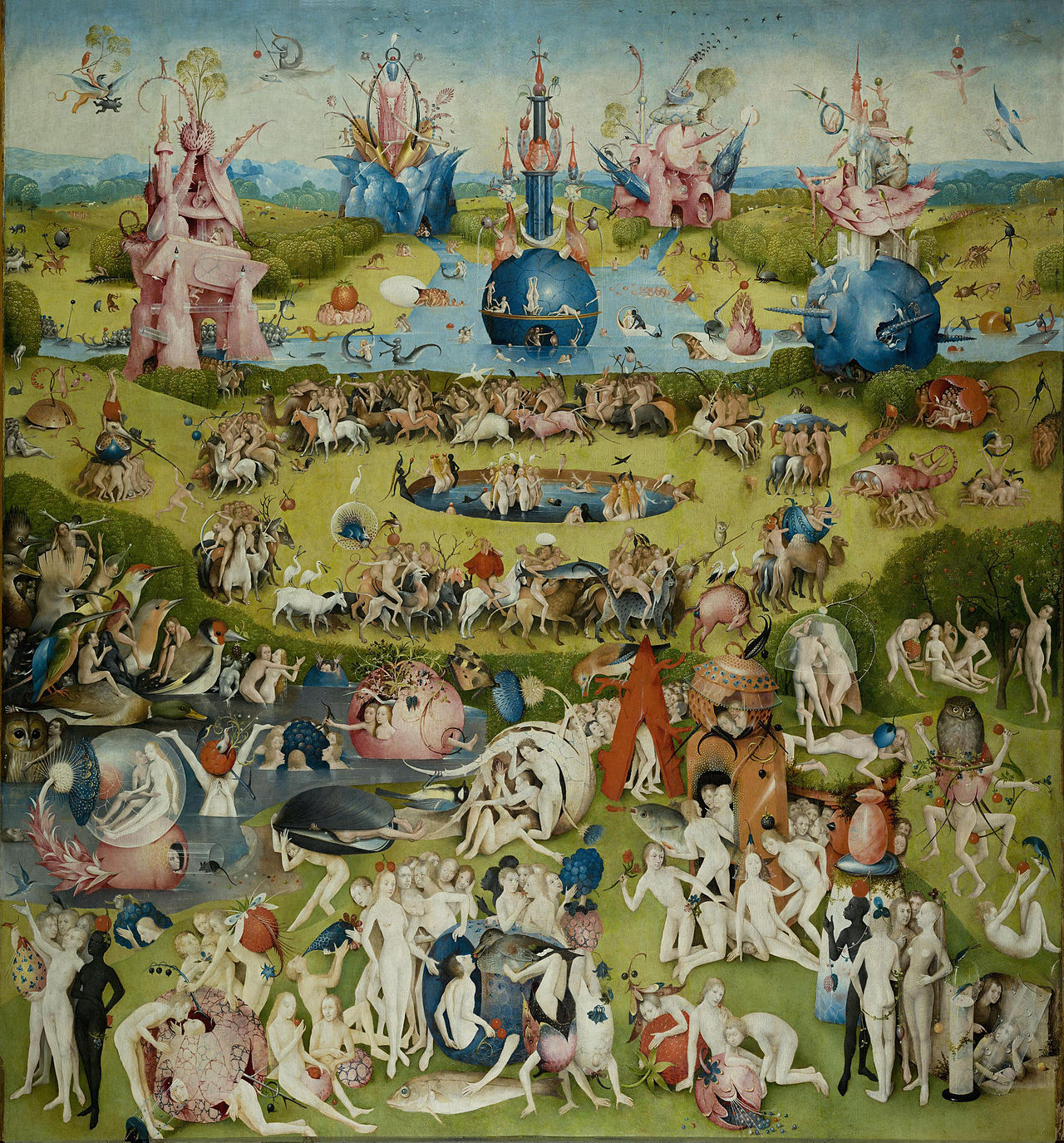
I can’t say I find Hieronymus Bosch’s enigmatic triptych, The Garden of Earthly Delights particularly beautiful, because it’s really quite disturbing in places. When you feast your eyes on many of the smaller images that make up the whole work, the words that spring to mind are freakish, Bacchanalian and nightmarish.

The Garden of Earthly Delights (triptych ca. 1510) by Hieronymus Bosch

The Garden of Earthly Delights (triptych ca. 1510) by Hieronymus Bosch

Unlike his Renaissance contemporary, Michelangelo, Hieronymus Bosch was unaffected by Italian influences and was not concerned with painting works that hailed the glory of man in all his strength and beauty; but instead portrayed man’s vices and weaknesses in settings of fantastical worlds.

The general consensus among art historians and scholars is that the triptych was not created to be aesthetically pleasing in the traditional sense, as more of a social commentary about the extent of human folly that Bosch perceived around him.

The Garden of Earthly Delights – Overview

From left to right, the triptych depicts humanity’s journey and experience of life in three stages: Paradise, The Garden of Earthly Delights and Hell. It is painted in oil on oak, with the central panel measuring 220 x 195 cm and each wing is 220 x 97 cm. If you want to see it in real life you’ll have to travel to the Museo del Prado in Madrid.

To me it comes across as a bold, imaginative, surrealist dreamscape; rooted in reality yet completely off the wall!

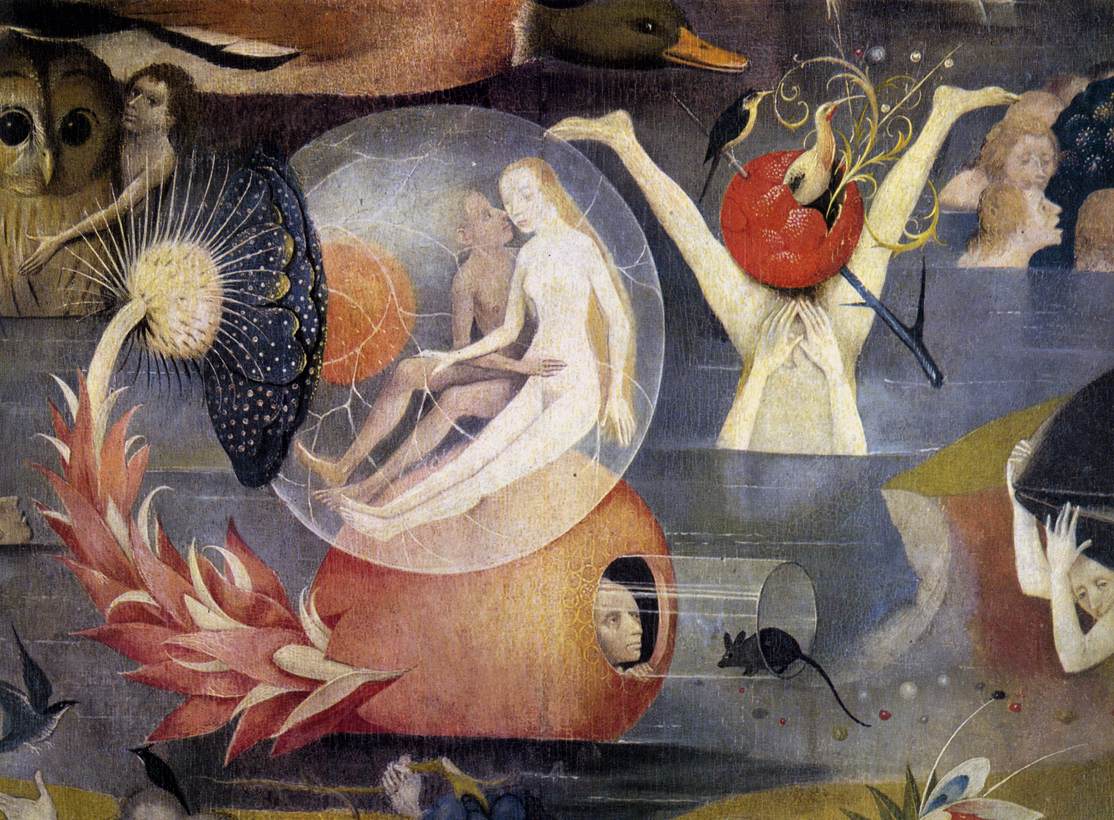
The Garden of Earthly Delights is a visual smorgasbord of polymorphous nude figures, beasts and human-bestial hybrids, illustrated in various poses and pursuits of pleasure; the most obvious being carnal satisfaction. Other iniquities on display include vanity, pride, decadence and greed, as well as their inevitable consequences.

Detail of a man and a woman inside an amniotic bubble of a seed.

Detail of a man and a woman inside an amniotic bubble of a seed.

It’s so bizarre, it’s like a Renaissance parody of unbridled fornication, except its meaning or warning is deadly serious.

Bosch’s unusual creatures had their origins in the Physiologus, a folk book from Alexandria, and Herold’s illustrations of Herodotus, featuring images of monsters and strange hieroglyphs.

Details of The Garden of Earthly Delights to ‘De Profundis Clamavi’ composed by Josquin performed by The Hilliard Ensemble:

When I gaze upon these mostly grotesque creatures and monsters intertwined in activities and positions that are still shocking today, I wonder at his bravery for committing them to panels, as well as for stepping outside the established norms of the era.

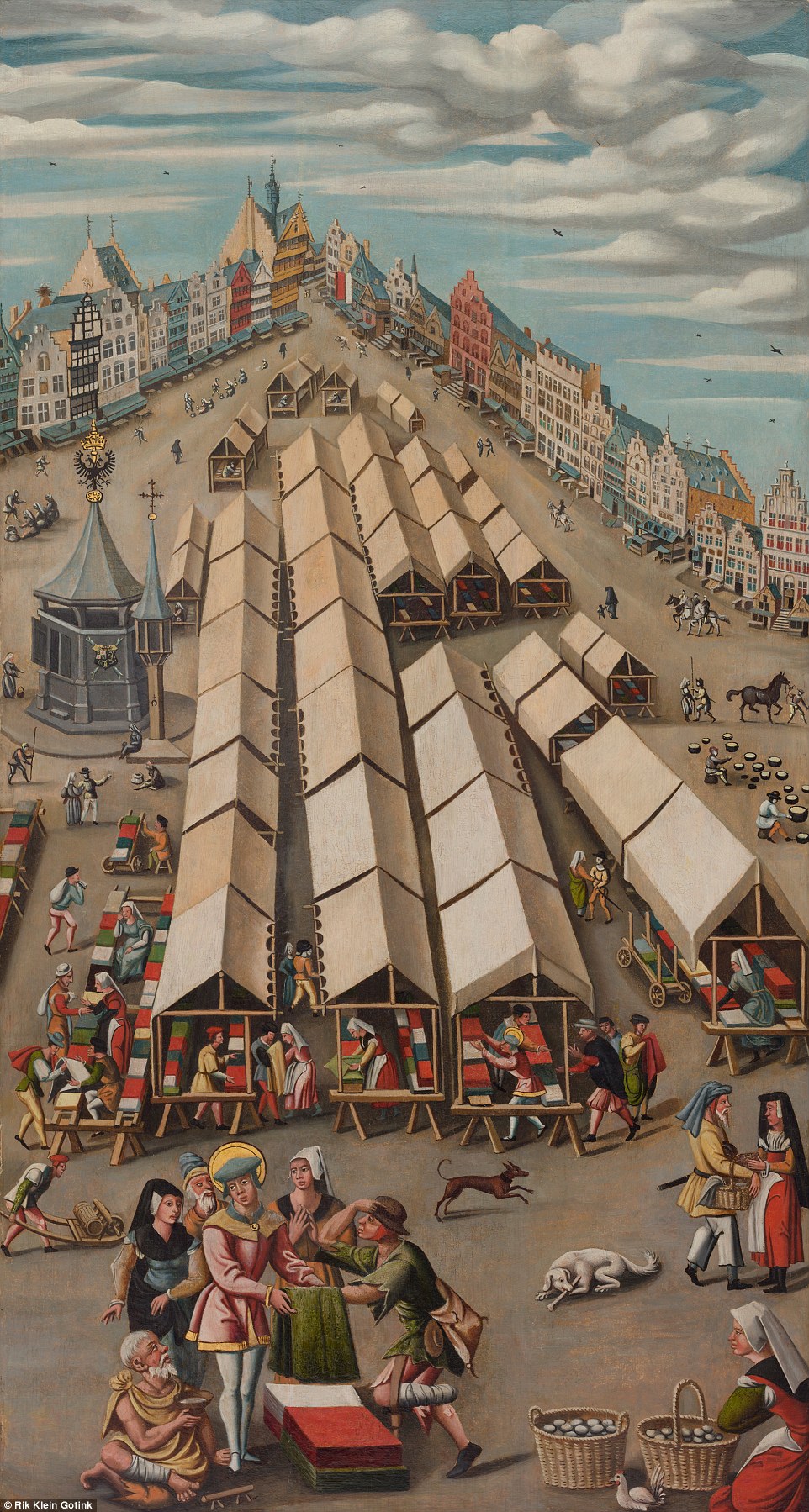
Had he been living in any of the major artistic centers his peculiar type of art may not have been acceptable on the grounds of perspective or traditional expectations. Fortunately he was under the radar of the religious authorities, living in the provinces of the Low Countries which were under the control of the Burgundian aristocracy.

The Draper's Market in 's-Hertogenbosch ca. 1530

The Draper’s Market in ‘s-Hertogenbosch ca. 1530

The Garden of Earthly Delights is something of a time bomb, being way ahead of its time during the Renaissance, containing nothing in its imagery that dates it. The triptych is just as relevant and enigmatic today as it was 500 years ago. Mind you, one has to wonder if Bosch was on some kind of hallucinogenic substance when he painted it!

Hieronymus Bosch has defined sin as a consequence of temptation and lack of judgment in startling, 16th century high definition.

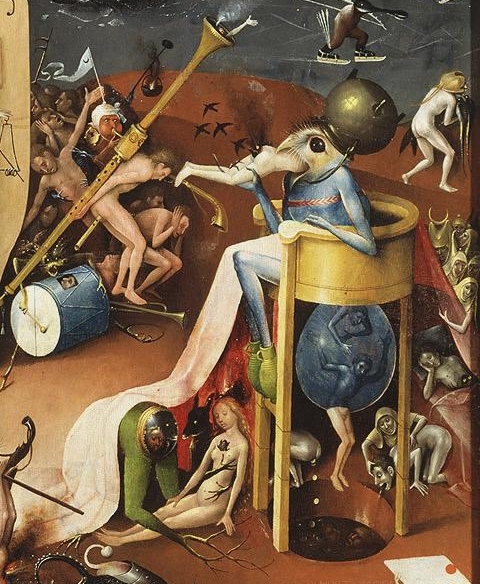
bosch-hell-detail

The three panels that comprise the triptych of The Garden of Earthly Delights are full of symbolism and mystery, and Wilhelm Fraenger, a leading Bosch scholar, considered him to be under the influence of esoteric mysticism and occultism.

Provenance, journey to Spain and the tapestry

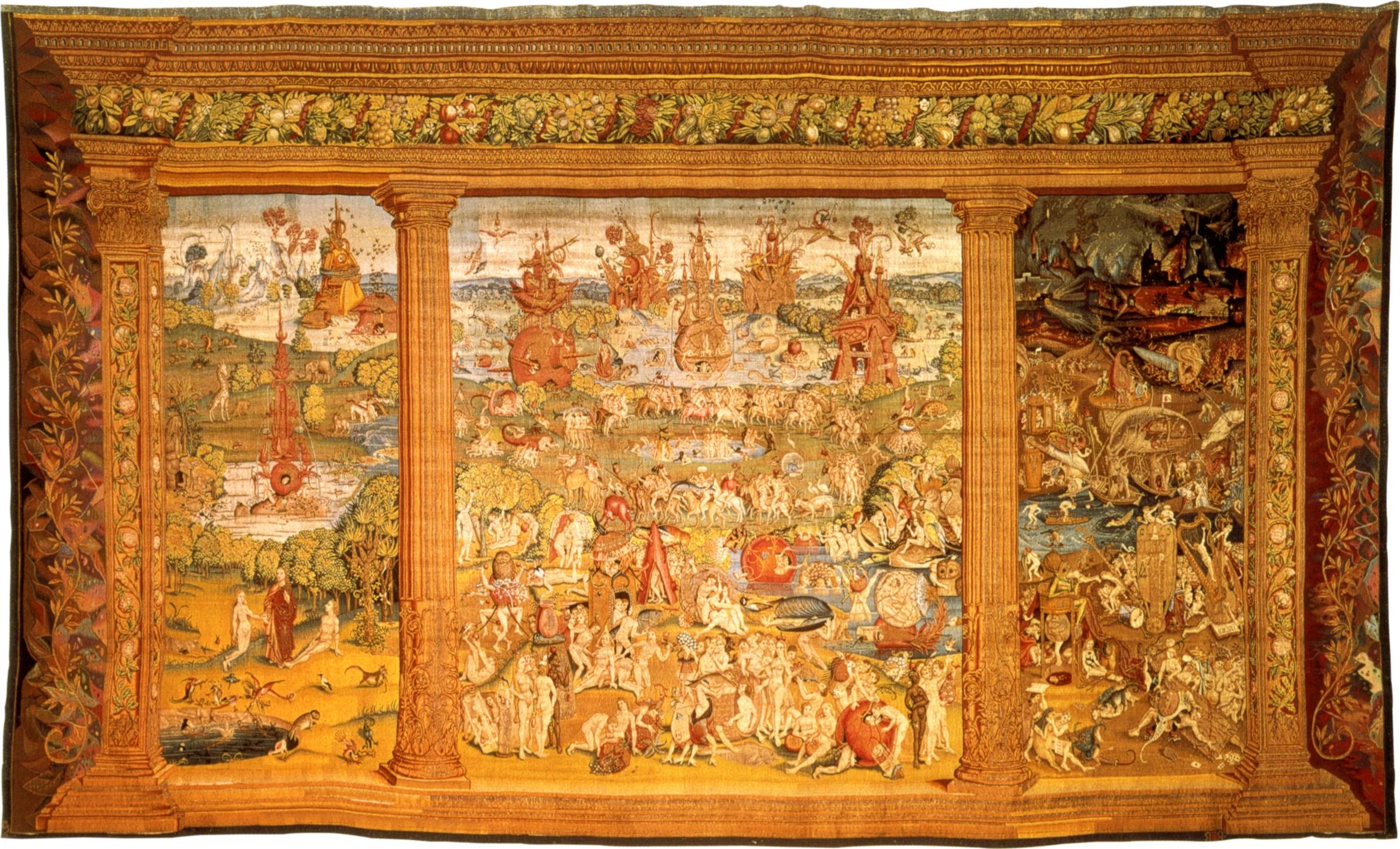
When the tripych’s owner, Count Hendrik III of Nassau died, The Garden of Earthly Delights was passed on to William of Orange. However, Bosch’s altarpiece was coveted by Fernando Álvarez de Toledo y Pimentel, 3rd Duke of Alba, who took it (after torturing William as to its whereabouts), at the start of the Eighty Years War.  He transported it back to Spain, where a copy was made in tapestry form in 1556, exquisitely woven in silver, gold and silk, which now hangs in San Lorenzo de El Escorial.

Tapestry after Jheronimus Bosch

Tapestry after Jheronimus Bosch

After the Duke of Alba’s death the painting was passed on to his illegitimate son and then became the property of Felipe II of Spain.

Left Panel – The Garden of Eden (Paradise)

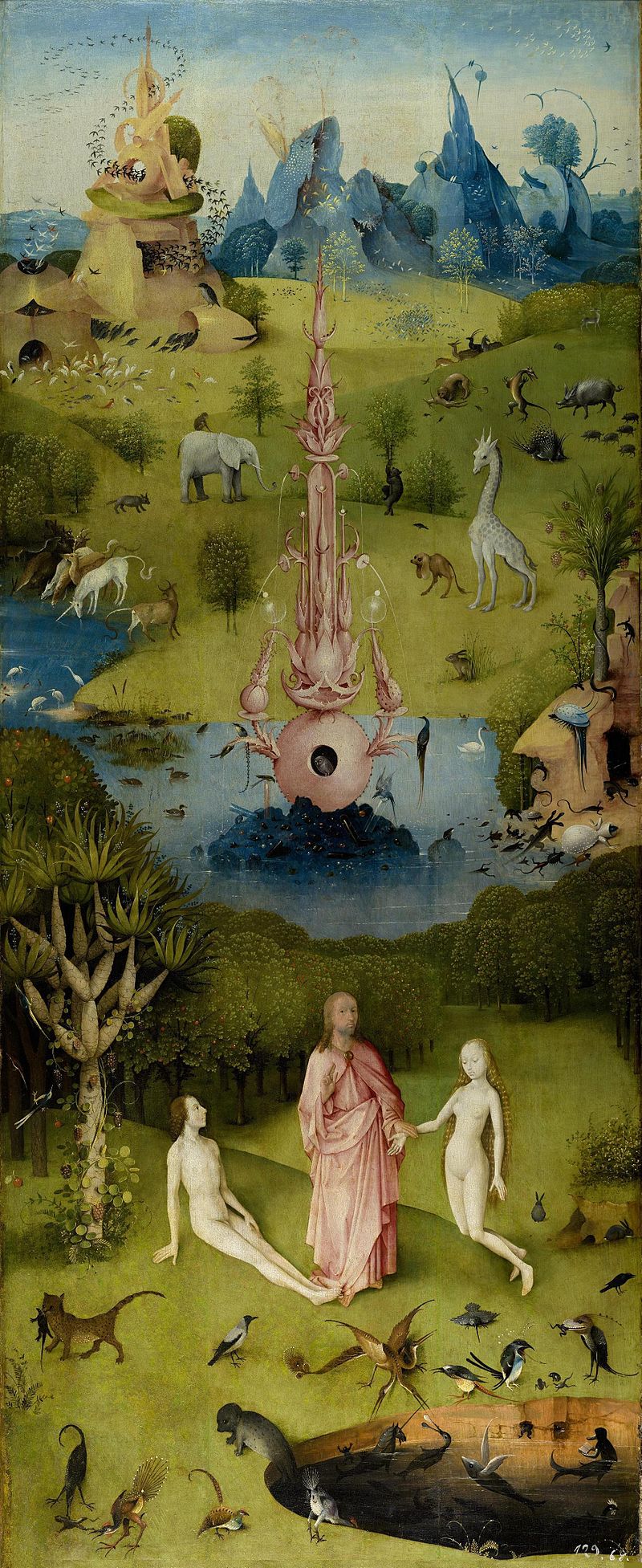
In the far left panel of the triptych, Bosch shows us the Garden of Eden at the exact moment Eve is created to be Adam’s earthly companion, with their creator making the introduction. It is a pristine paradise where animals, both European and exotic, as well as mythical creatures roam freely in God’s garden.

The Garden of Eden

The Garden of Eden

…”As though enjoying the pulsation of the living blood and as though too he were setting a seal on the eternal and immutable communion between this human blood and his own. This physical contact between the Creator and Eve is repeated even more noticeably in the way Adam’s toes touch the Lord’s foot. Here is the stressing of a rapport: Adam seems indeed to be stretching to his full length in order to make contact with the Creator. And the billowing out of the cloak around the Creator’s heart, from where the garment falls in marked folds and contours to Adam’s feet, also seems to indicate that here a current of divine power flows down, so that this group of three actually forms a closed circuit, a complex of magical energy”… ~ Wilhelm Fraenger (German art historian 1840 – 1964).

It has been noted that Eve’s body is leaning seductively towards Adam, whose intense gaze has been attributed to three things by Fraenger: firstly, surprise at the presence of his creator, secondly an awareness of Eve and that she has, essentially, the same nature as him and has been created from his body, and thirdly the intense sensation of sexual desire and the primal urge to go forth and copulate…ahem, multiply!

Centre panel – The Garden of Earthly Delights

Some scholars read the triptych panels as a narrative from left to right, so you have the perfect start, moving into the middle panel, which depicts man and woman gone wild with lust; cavorting around the landscape with the animals and each other.

The Garden of Earthly Delights

The Garden of Earthly Delights

The desire for earthly delights has run rampant and is now in full swing! The amount of naked flesh on display, the frolicking, debauchery and carefree attitude towards the pleasures of earthly life are evident in all the land areas of the Garden of Eden.

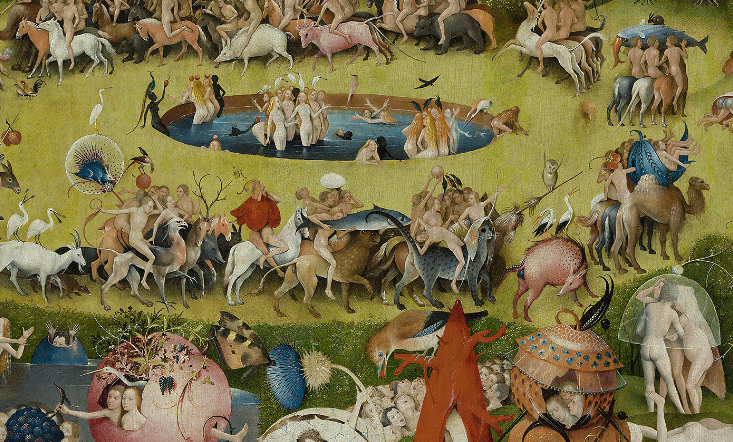
In the upper half of the main panel we see maidens bathing and they are encircled by hordes of men riding horses, donkeys, unicorns and beasts in various poses of bravado and acrobatics in order to gain the attention and favour of the females.

bosch-maidens

It seems evident from Bosch’s depictions and the dogma of Original Sin that the blame for man’s fall from grace lies squarely with Eve! The biblical story portrays Eve as the one who succumbed to the serpent’s temptation of eating an apple from the tree of knowledge, promptly leading Adam astray…

Therein lies the struggle of women over the centuries (perhaps subconsciously), with guilt issues!!!

It is a powerful allegory for the loss of innocence and the responsibility that comes with free will and knowledge, since we all can do both good and evil deeds, depending on our nature.

There is an interesting enclave to the right and centre of this panel that shows a group of men and women beneath apple trees. One male is reaching up for an apple while another couple eat an apple and a man approaches a resplendent woman with a giant strawberry, a symbol of the fleeting nature of hedonistic pleasures. One of the few clothed men in the triptych is the man tucked away behind them, watching their activities intently. He stands out with his very dark hair and a stern countenance.

bosch-detail-of-apple-tree

At the very bottom right of the panel there are two men, one of which is more obvious for he is clothed, has dark hair in the shape of an M and is crouching at the entrance to a small cave, pointing to a woman lying down. His possible identity has caused some debate among scholars and art historians. Some think it could be the painting’s benefactor, or an advocate of Adam denouncing Eve, or St John the Baptist or even a self-portrait.

Birds live in pools, fish fly or lay on the ground, it’s as if the world order is in chaos. Interestingly there are no children or elders in the painting, perhaps denoting the garden as it would have been before the fall of man, in a utopia without consequences. The images coalesce into an erotic vortex.

Fraenger believed that Bosch was indicating a route to paradise through sexual freedom that ultimately returned humans to a state of innocence.  Basically redemption through sex, putting his hypothesis directly at odds with the accepted idea that its central theme is one of morality.

Right Panel – Hell

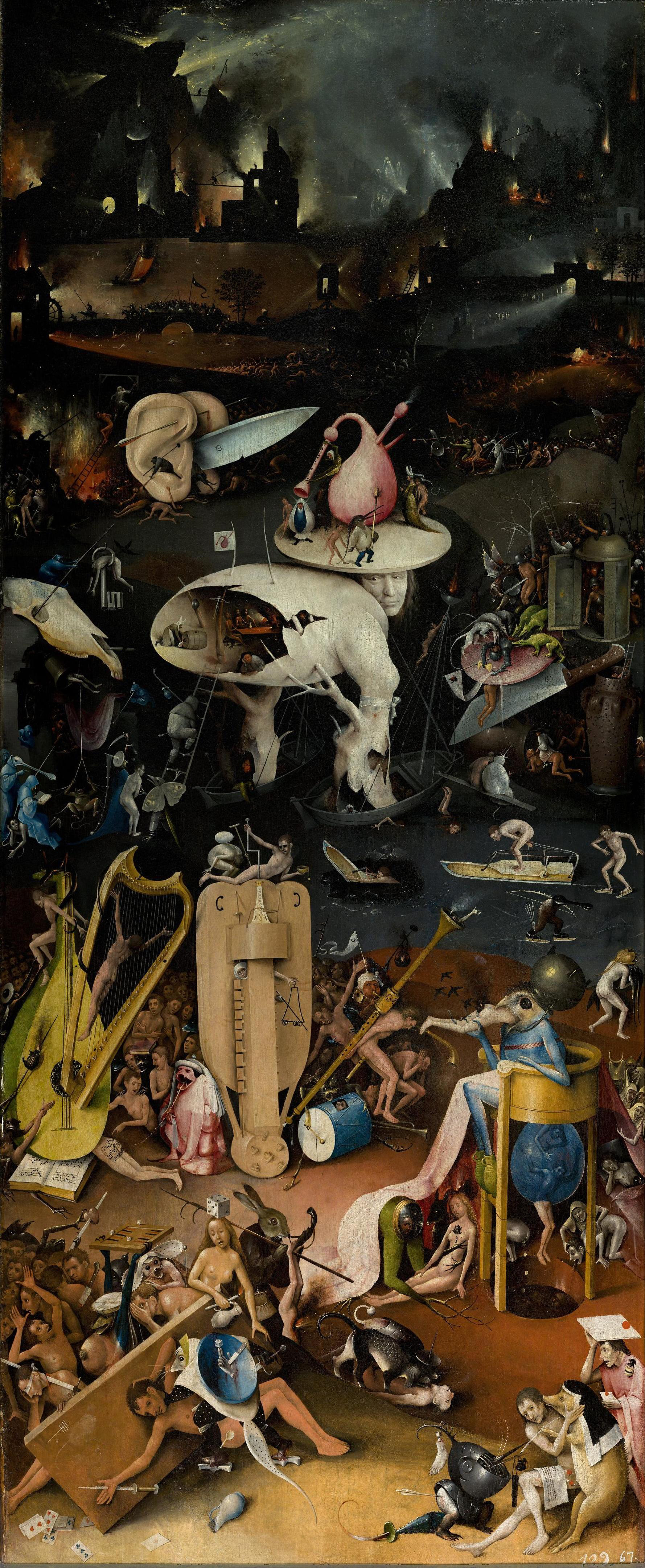
The aversion these brutal images of miscreants suffering to eternity provoke in me, makes it all the more important to appreciate the timeless genius of Hieronymus Bosch.

bosch-hell

The flames, furnace and fires raging in the night of the upper part of the right panel would have been painted from real fires that Bosch had witnessed. Given the religious situation of the time it’s highly likely that he would have seen the burning of villages and executions of those branded as heretics and witches.

The atmosphere reeks of acrid smoke and the stench of wickedness, choking the air out of the viewer’s lungs.

It seems Bosch is expressing his curiosity about Hell, highlighting the fact that it is a firmly established empire here on Earth. The consequences of humanity’s sins (such as gambling), are shown in graphic detail. There is no longer any hint of eroticism, only ugliness.

Contorted, tortured, and broken bodies are subject to physical and psychological punishment and many are being devoured by animals, demons and beasts. It is a gathering of bleak scenes, devoid of hope and God forsaken; in stark contrast to the divine image of the first panel. The darkness is pervasive and heavy. Who wouldn’t amend their ways to avoid such a reality?

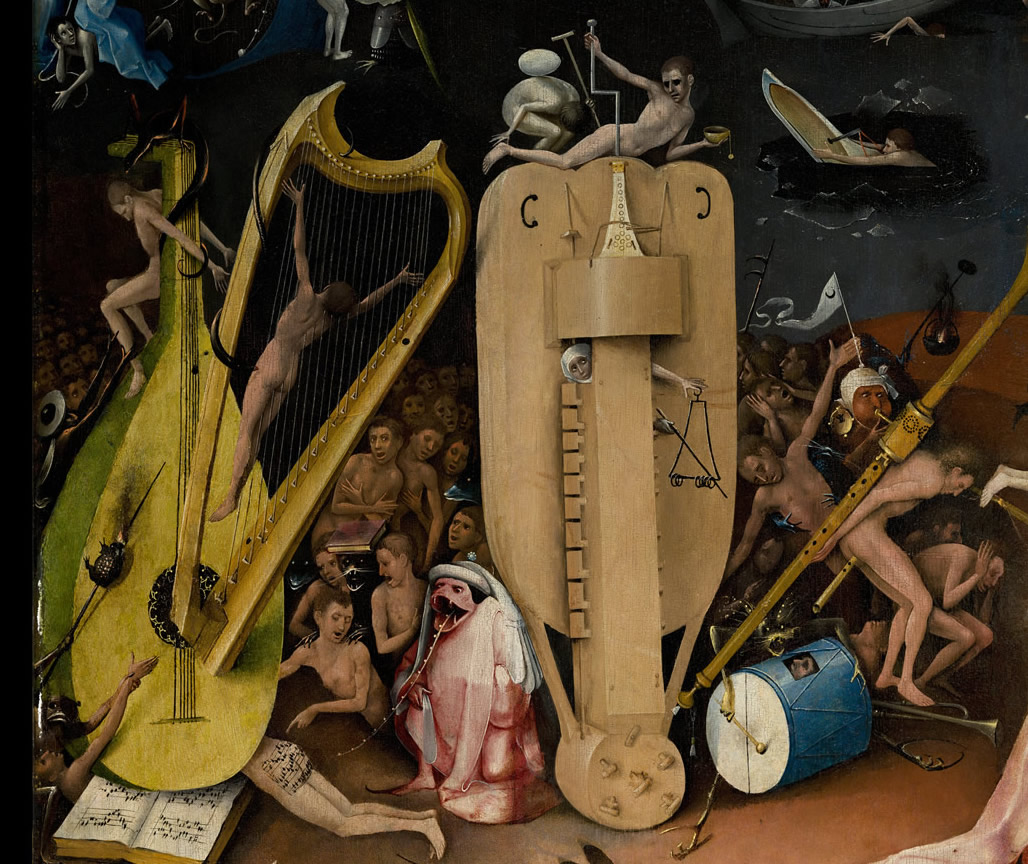
bosch-hell-music-detail

I can’t work out why the lute and harp are featured in Hell, with music emblazoned on some poor, half-squashed soul’s derriere! You can hear what the music of Hell sounds like if you take this detailed interactive audio-visual tour: Jheronimus Bosch – the Garden of Earthly Delights

Interestingly, if you draw a straight line from Adam’s eye line in the far left panel of paradise, and follow it diagonally all the way across the Garden of Earthly Delight to Hell in the far right panel, it aligns with Bosch’s self-portrait as the grotesque tree-man afflicted by his sins.

The Exterior panels

On the reverse side of the left and right panel, (which fold over the central panel), Bosch has painted an image of the Earth on day 3 of its creation by God, when the land is separated from the sea.

bosch_-_the_garden_of_earthly_delights_-_the_exterior_shutters

Thus, when the doors are closed it denotes the oneness and unity of creation that is to become fragmented and corrupted once the panels are opened to reveal the carnage within.

Earliest description

The earliest known writing about The Garden of Earthly Delights was recorded in Brussels in 1517, just a year after Bosch’s death, by Antonio de Beatis, secretary/chaplain to Cardinal Luigi of Aragon.  Whilst travelling with the cardinal and his entourage, de Beatis kept a journal of their grand tour through Germany, Switzerland, the Low Countries, France and Italy in 1517-18.

In the palace of the Counts of Nassau, Antonio de Beatis noted for posterity the unusual art he beheld:

“Some panels of bizarre themes. They represent seas, skies, woods, meadows, and many other things, such as people crawling out of a shell, others that bring forth birds, men and women, white and blacks doing all sorts of different activities and poses. They feature things so pleasing and fantastic that they could not be properly described in any way to those who do not know them.”

In the same diary he also wrote about meeting Leonardo da Vinci in France in October 1517 and being shown three of his paintings by the ageing artist.

Hieronymus Bosch (c. 1450 – 9th August 1516)

There was no other artist quite like this early Netherlandish master, who was a genre defining anomaly of his era. He was truly an independent, creative free spirit.

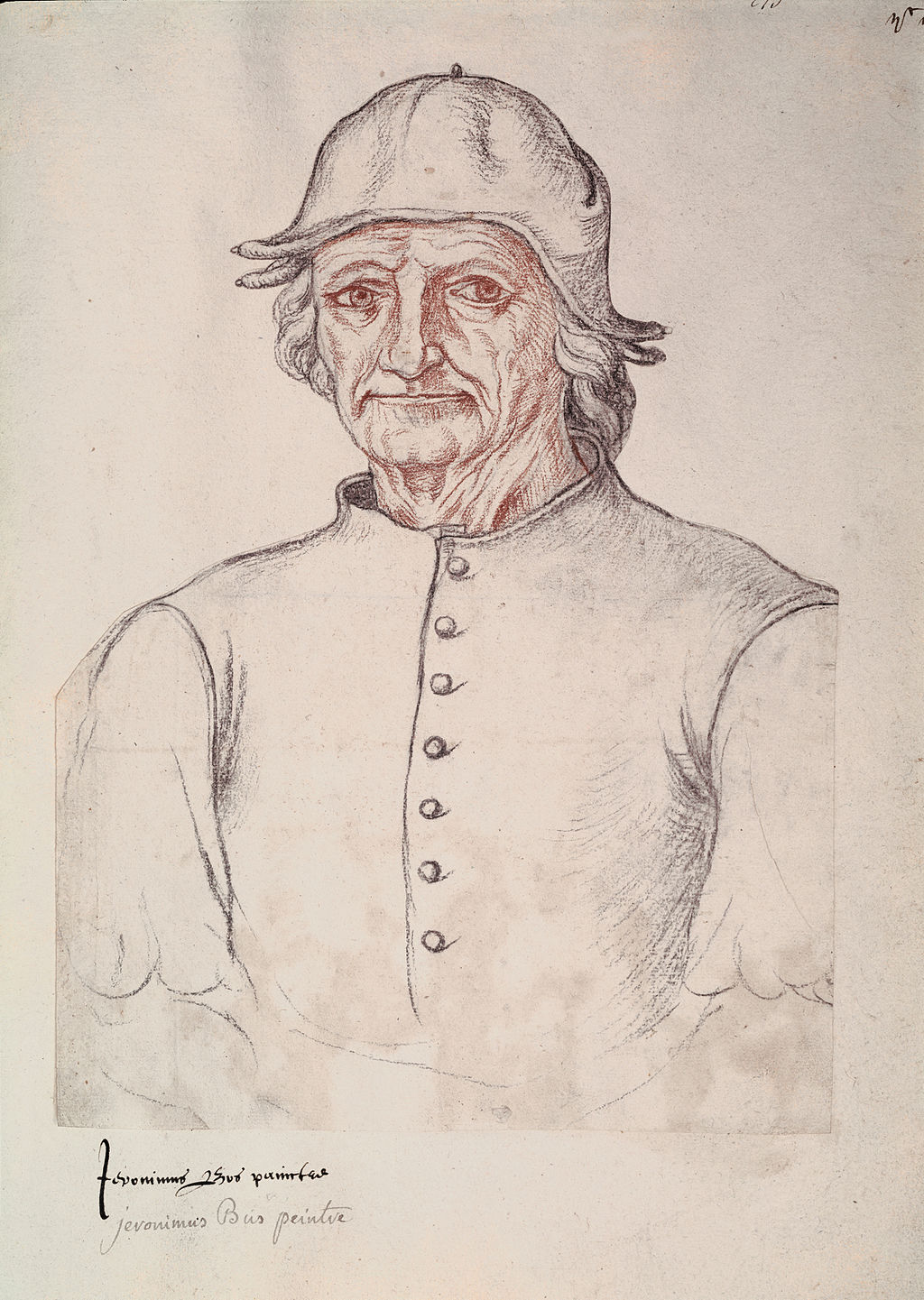
Image of Hieronymus Bosch thought to be based on a self-portrait.

Sketch of Hieronymus Bosch thought to be based on a self-portrait.

His birth name was Hieronymus van Aken and he was born in the Dutch town of ‘s-Hertogenbosch, after which he is named. His first name is also linked to a mysterious religious sect in the town, the ‘Hierononymites’, also known as the ‘Brethren of the Common Life’ whose aims were withdrawal from the world and cultivation of the interior life.

Although he never travelled, he was well known outside of his home town and made a very good living from his art. Felipe II of Spain acquired a total of 33 of his paintings.

Trailer to a new 2016 documentary – Hieronymus Bosch: Touched by the Devil

Some of his other famous works are the Haywain Triptych ca. 1490 (also in the Prado), The Ship of Fools (Louvre), Christ Carrying the Cross and the Last Judgement Triptych, Ascent of the Blessed, c. 1504, which resides in the Palazzo Ducale in Venice.

“This too high for my wit,

I prefer to omit.”

~ Erwin Panofsky on deciding the secret to the interpretation of Bosch’s Garden of Earthly Delights has not been found.

The Great Virtuoso Violinists/Composers of the 19th Century: Spohr

Before reading up a bit for this post I was aware that Louis Spohr (named Ludwig, but he preferred the French equivalent Louis), was a virtuoso violinist and younger contemporary of Beethoven, widely known for inventing the violin chin rest in 1820. I’m very grateful to him for that; I really don’t enjoy playing my violin without one. It’s a fabulous creation. I can’t imagine how violinists managed during the baroque era!

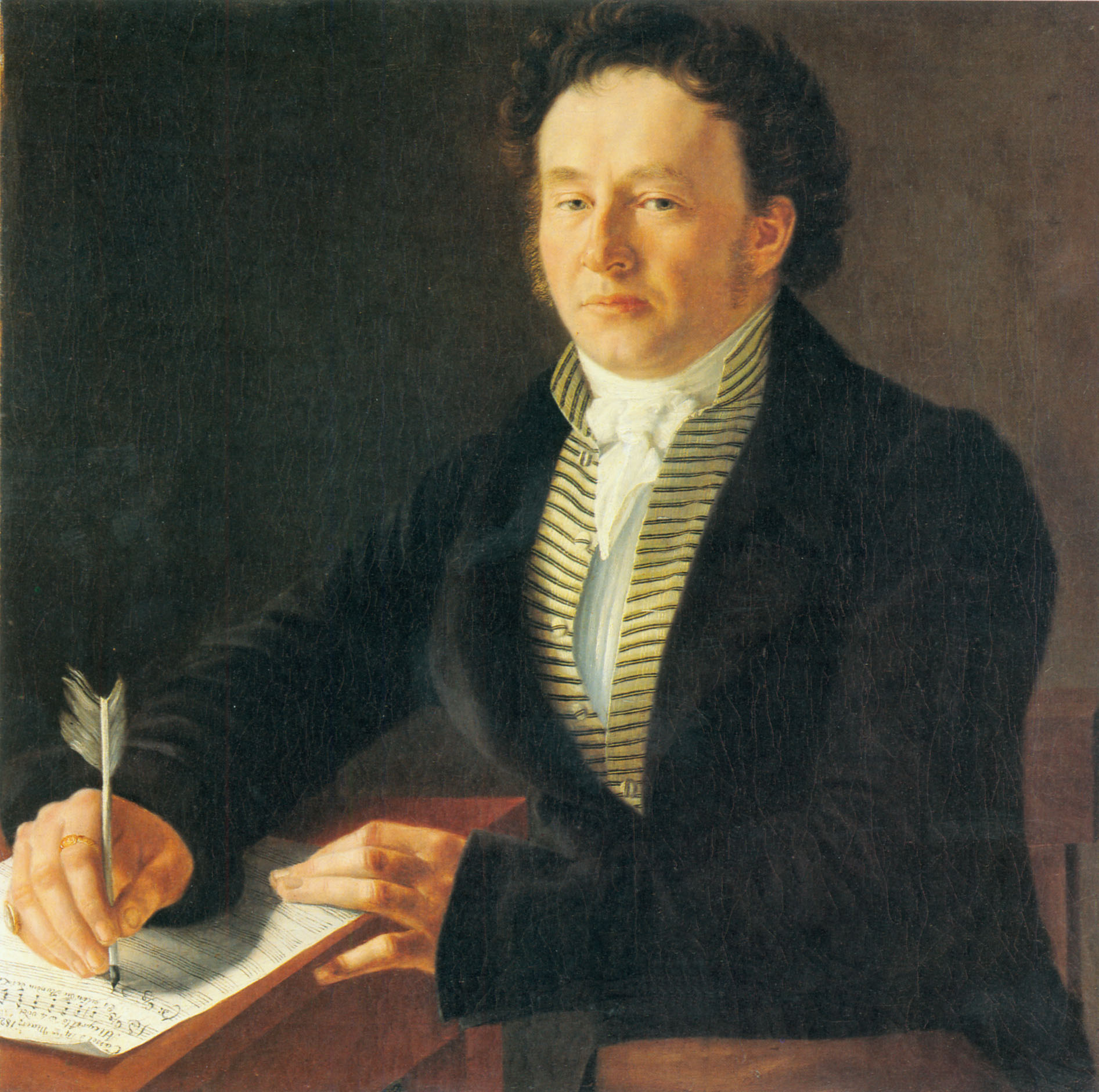
Portrait of Louis Spohr composing in Kassel c. 1824

Portrait of Louis Spohr composing in Kassel c. 1824

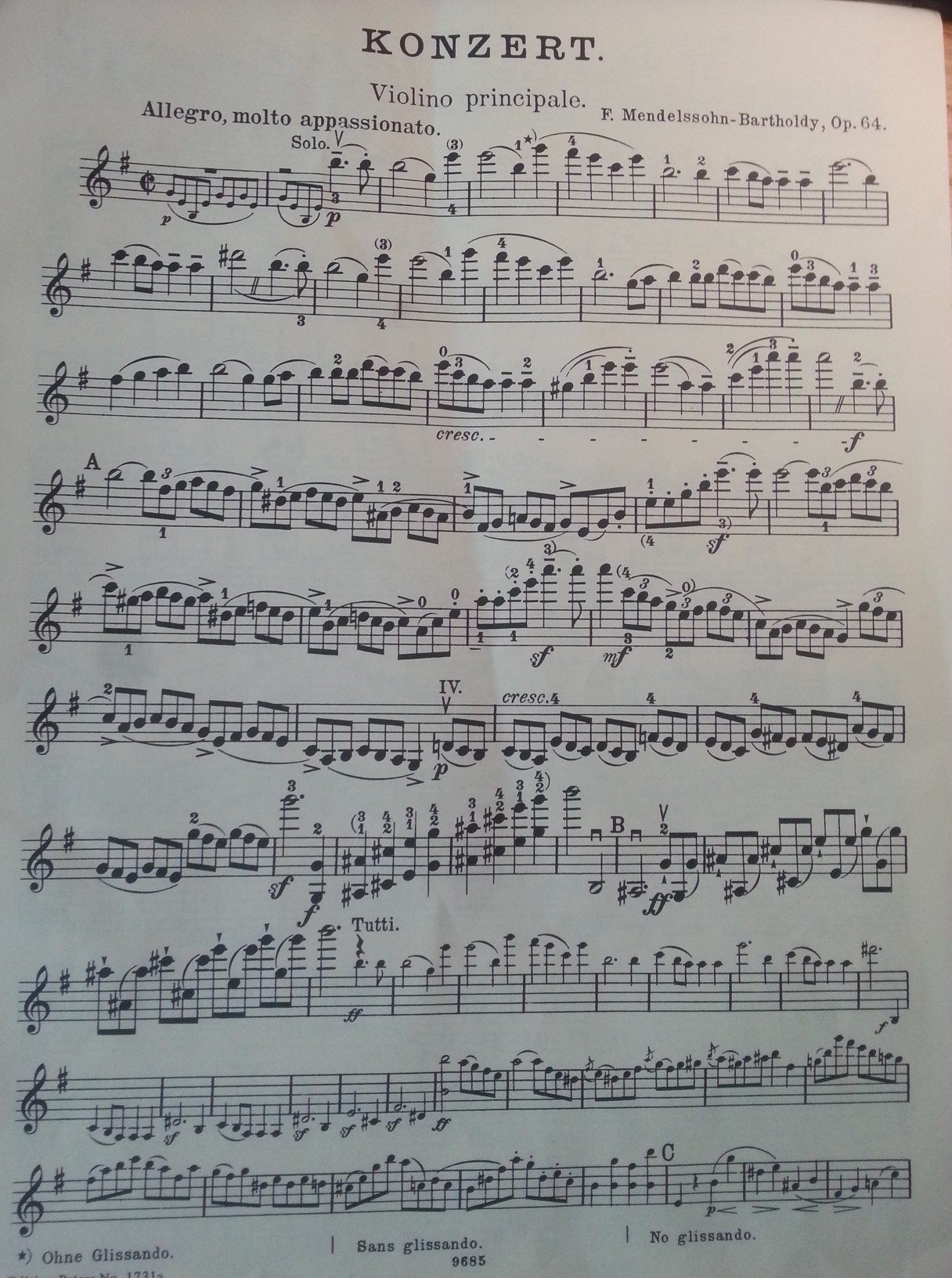
He also had the foresight in 1812 to use letters on musical scores as an aid to rehearsal. So he was quite the innovator in many ways. When our conductor at Aylesbury would bark something like: “You made a real hash of the passage between D and E, so let’s go back to D again,” you’d be able to find the place in the music very quickly and easily. I had no idea that this bright idea was down to Louis Spohr.

My copy of Mendelssohn's Violin Concerto complete with rehearsal letters, shown on all modern music scores.

My copy of Mendelssohn’s Violin Concerto complete with rehearsal letters, published on all modern music scores.

Louis Spohr: (5 April 1784 – 22 October 1859)

I was pleasantly surprised and impressed to say the least, when I started to discover his many other accomplishments. His musical compositions were largely unknown to me, despite his immense popularity in classical circles during his lifetime. His fame dwindled after his death and only a small portion of his work remains in modern repertoire.

It couldn’t have been easy crafting your notes in the shadow of Mozart and at the same time as the likes of Beethoven, Hummel and Schubert, but to his credit he followed his own path within the parameters of early romanticism.

He was widely known and respected in Europe during the early 19th century as a virtuoso violinist, conductor, teacher and composer.  He was probably the most famous violinist in Europe until Paganini arrived on the scene with his own fiery brand of pyrotechnics.

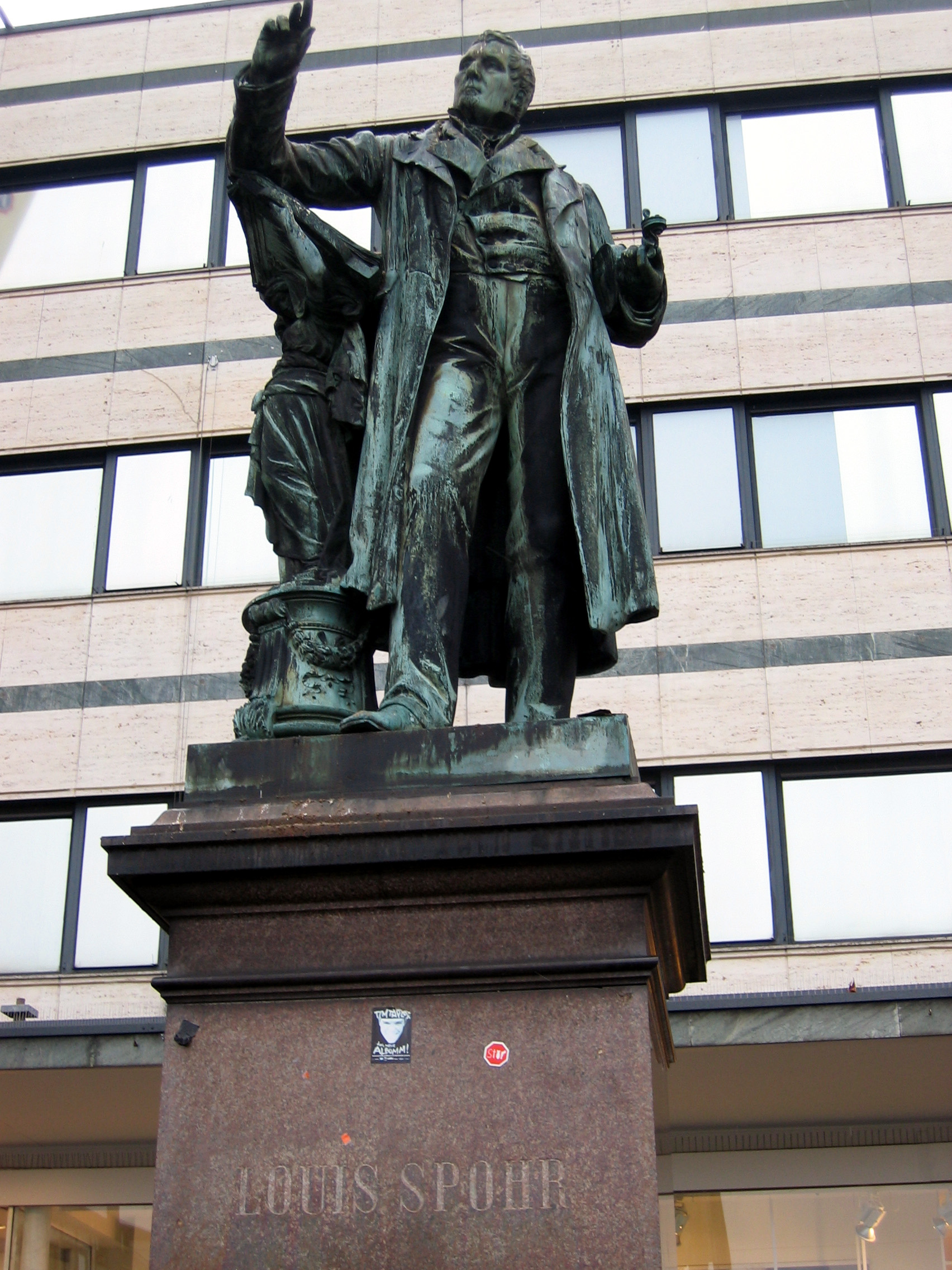
Statue of Louis Spohr in Kassel.

Statue of Louis Spohr in Kassel.

Like his friend Beethoven, he also believed in democratic freedoms and was known to possess a noble character. He was unusually tall for the time, being over six-foot. Unlike Beethoven, who was the epitome of the lonely, tortured artist, Spohr was a family man who enjoyed a happy social life and varied pursuits like swimming, ice-skating, hiking, gardening, as well as considerable skill as a painter.

Biedermeier period

Whilst Beethoven was creating music that was innovative, immortal and ‘new’ to the ears of early 19th century concert goers, Spohr appears to blend in with the tastes of the zeitgeist, certainly nothing that would upset the apple cart. But when tastes changes, as they invariably do over time, his more traditional music became eclipsed by Beethoven and Schubert.

The so called Biedermeier period (1812 – 1848), saw the rise of the middle class in Europe, paralleling urbanisation and industrialisation, when access to the arts expanded to attract a larger number of people. Biedermeier encompassed literature, music, the visual arts, interior design and architecture.

It seems that Louis Spohr was a product of his era, whereas Beethoven was a musician for all-time. Rather sadly he is sometimes referred to as the ‘forgotten master’.

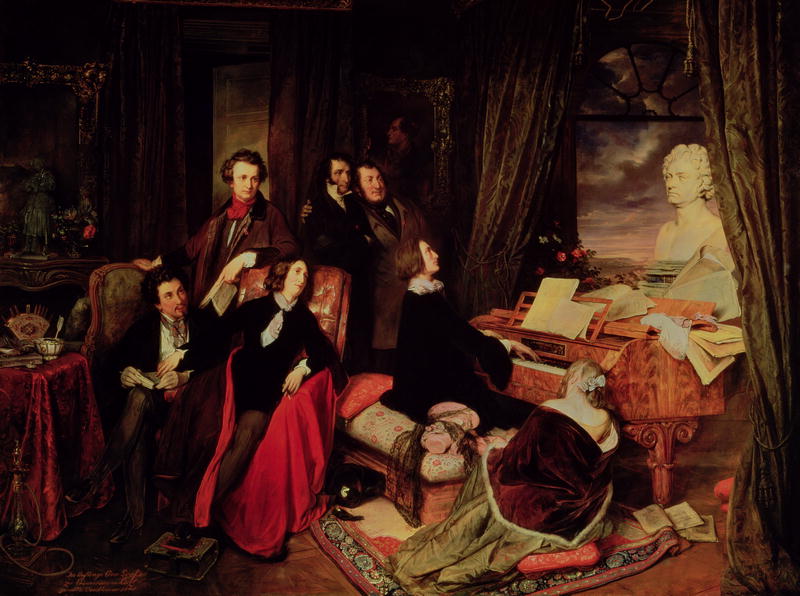
Liszt at the Piano by Biedermeier painter Josef Danhauser, c. 1840

Liszt at the Piano by Biedermeier painter Josef Danhauser, c. 1840

As I’ve discovered, his music was mostly written in the romantic genre and I was surprised at the many different instruments he wrote for aside from the violin. I believe his music should be more widely heard and performed than it is.  He may not be a Mozart or a Beethoven, but his achievements are worthy of admiration.

Career

Louis was born to musical parents; his mother being a talented singer and pianist whilst his father was an amateur flutist. The young Spohr however, despite starting out on the harp, took to the violin. His first tutor was a violinist named Dufour, who saw an opportunity for his pupil to further his musical learning at the Duke of Brunswick’s court.  He joined the ducal orchestra aged 15.

Three years later he was sent on a year-long study tour of St Petersburg and Moscow with his tutor, violinist Franz Anton Eck. He also wrote his early compositions during this time.

After Spohr returned to Brunswick the duke allowed him to make a concert tour of northern Germany. An influential music critic, Friedrich Rochlitz happened to be in the audience during his recital in Leipzig in December 1804, and wrote a glowing review of both his virtuosity and his opus 2 violin concerto in D minor. Hence Spohr was promptly catapulted into the pantheon of revered violinists of the early 19th century.

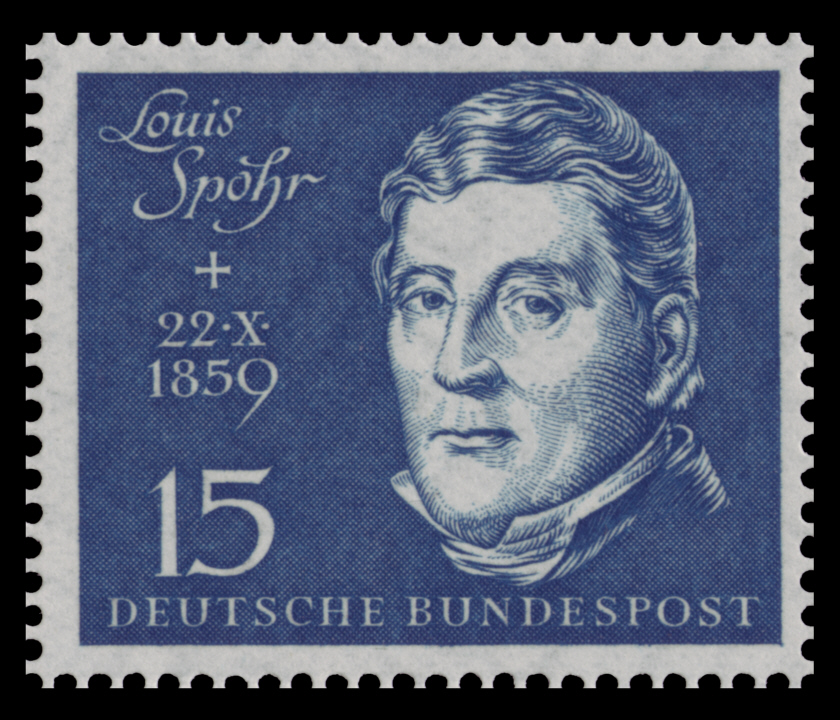
German stamp depicting Louis Spohr from 1959

German stamp depicting Louis Spohr from 1959

Spohr became orchestral director at the court of Gotha between 1805-1812 until he landed the job of leader of the orchestra at the Theater an der Wien in Vienna from 1813-15, where he met Beethoven.

His career progressed as he moved to Frankfurt where he took up the post of Opera Director between 1817-19, and thanks to the recommendation of fellow composer, Carl Maria von Weber, he was appointed Court Kapellmeister at Kassel from 1822 until his death on 22nd October 1859. Incidentally, Kassel was also the place where the Brothers Grimm wrote most of their fairy tales in the early 19th century.

During his career and at the height of his popularity Spohr travelled to England on five separate occasions, and was named in an aria from Act 2 of Gilbert and Sullivan’s Opera, The Mikado.

Compositions

Spohr was a prolific composer of many genres: violin concertos, symphonies, clarinet concertos, harp and chamber music, lieder, cantatas, oratorios and operas. I’ve selected a few pieces from each genre to give an overview of his style and talents. He composed a total of 290 works.

 Violin works

Although he wrote eighteen violin concertos, six violin sonatas and various duos for violin and harp he did not set out to write purely for the violin in the same way that Viotti, Kreutzer, Vieutemps or Wieniawski did.

Of particular note is his Violin Concerto No. 8 in A minor, Op. 47 ‘In modo d’un scena cantate’ that just sings in the most mournful, lyrical melody when performed by the incomparable Jascha Heifetz:

 Violin Concerto No. 2 in D minor, Op. 2 by Christiane Edinger and the Slovak Radio Symphony Orchestra:

‘Duo für 2 Violinen’ with David and Igor Oistrakh:

Violin Concerto No. 7 in E minor, Op. 38 (3rd movement) with Takako Nishizaki, Libor Pesek  and the Bratislava Philharmonic Chamber Orchestra:

Sonata in D Major for Violin and Harp, with Sophie Langdon and Hugh Webb:

Duo for Violin and Viola in E minor, Op. 13 with Antje Weithaas and Tabea Zimmermann:

Sonata for Violin and Harp in C minor, a delightful recital by Jean-Jaques Kantorow and Susanna Mildonian:

Concertante No. 1 in G Major, WoO 13 for Violin, Harp and Orchestra (Adagio) with Ursula Holliger, Hansheinz Schneeberger and English Chamber Orchestra:

Concertante No. 2 in E minor, WoO 14 for Violin, Harp and Orchestra, (3rd movement) performed by English Chamber Orchestra, Ursula Holliger and Christoph Poppen under the baton of Heinz Holliger:

Symphonic works

Like Beethoven, Louis Spohr has nine symphonies to his name, and a tenth unfinished!

His Symphony No. 4 in F Major, Op. 86 ‘Die Weihe der Töne’ (The Consecration of Sound), was based on the poems of the same name by Carl Pfeiffer.

Overview from Naxos:

The first movement opens with a slow introduction, illustrating the profound silence before the creation of sound. The Allegro that follows, in traditional sonata form, includes the gentle sound of the breeze and woodwind bird-song, before the storm that forms the central section of the movement, to die out in the distance in the final bars. The second movement demonstrates the function of music as lullaby, dance and serenade, the last with a solo cello. All three finally combine in a conductor’s nightmare of varying bar-lines and tempi.

The third movement shows the role of music as an inspiration to courage, here with a narrative element. Soldiers depart for battle, while in a central trio section those remaining behind express their anxiety, followed by the victorious return of the marching troops and the song of thanksgiving. The final movement buries the dead, to the sound of the chorale ‘Begrabt den Leib’, leading to ultimate consolation in tears.

Here is a recording by the Budapest Symphony Orchestra and Alfred Walter:

Symphony No. 6 in G Major, Op.116 ‘Historical Symphony in the style and taste of four different periods’ composed in 1840, performance by Concertgebouw Amsterdam and Ton Koopman:

  1. Largo-Grave (Bach-Händel’sche Periode, 1720)
  2. Larghetto (Haydn-Mozart’sche Periode, 1780
  3. Scherzo (Beethoven’sche Periode, 1810)
  4. Allegro vivace (Allerneueste Periode, 1840)

Symphony No. 9 Op. 143 ‘The Seasons’ performed by Slovak State Philharmonic Orchestra under Alfred Walter:

 Harp and clarinet works

Spohr wrote a significant number of works for, and including the harp, which is entirely understandable as his first wife, Dorette Scheidler, was a renowned harp virtuoso. They were married for 28 years until her death in 1834.

Dorette Spohr, née Scheidler (1787-1834)

Dorette Spohr, née Scheidler (1787-1834)

Fantasie for Harp in C Major, Op. 35 with Lena-Maria Buchberger:

Clarinet Concerto No. 1 in C Major, Op. 26 (3rd movement) with Paul Meyer and the OCL:

Clarinet Concerto No. 2 in E-Flat Major, Op. 57 with Julian Bliss:

Clarinet Concerto No. 4 WoO 20, ‘Rondo al espagnol’ with Paul Meyer and Orchestre de Chambre de Lausanne:

Chamber music 

Among his output of chamber music are 36 string quartets, 7 string quintets, a string sextet and 5 piano trios. Probably the most performed in modern repertoire are the Nonet and the Octet, for your listening pleasure below.

Octet in E Major, Op.32 with the Vienna Octet:

Nonet for Wind Quintet and Strings in F Major, Op. 31 with the Consortium Classicum Conducted by Dieter Klöcker:

Piano Trio No. 2 in F Major, Op. 123 with the Hartley Trio :

Concerto for String Quartet & Orchestra Op. 131 (1st movement), composed in Kassel during the last three months of 1845, performed here by Leipziger Streichquartett, Leipziger Kammerorchester and Sebastian Weigle:

Six German Songs 

Spohr’s Six German Songs for Soprano, Piano and Clarinet, Op. 103 are a delightful indulgence of his romantic side! These lovely performances are by Helen Donath, Klaus Donath and Dieter Kloecker:

  1. Be still my heart
  2. In a lilac bush sat a little bird
  3. Longing: I look into my heart
  1. Cradle Song: All is quiet in sweet peace
  2. The Secret Song: There are secret pains
  3. Awakening : Why do you stand and ponder 

 Operas

Of the ten operas Sphor composed the two most popular are Jessonda and Faust.

Jessonda

Jessonda was written in 1822 to the libretto by Eduard Gehe, based on Lemiere’s novel, La veuve de Malabar. Under Spohr’s baton it was first performed on 28th July 1823 in Kassel, and tells the story of an Indian princess (Jessonda), who is condemned to burn on her husband’s funeral pyre; as was the custom for a widow of a recently departed Rajah. She is ultimately spared by a young Brahmin (Nadori) and eventually rescued by the Portuguese General she was in love with (Tristan d’Acunha). It was popular in 19th and 20th century repertoire until it was banned by the Nazis.

Overture to Jessonda:

Jessonda – Selected highlights with Gerd Albrecht leading the Hamburg State Philharmonic Orchestra and Opera Chorus and Julia Varady and Dietrich Fischer-Dieskau in the main roles:

The Tristan Chord

So, the big question is, did Wagner take inspiration from Spohr to create his famous chord?

I might ignite some controversy here!

The Tristan Chord in Tristan und Isolde by Richard Wagner

The Tristan Chord in Tristan und Isolde by Richard Wagner from Wikipedia.

Much has been made of the Tristan Chord in the opening bars of Wagner’s beautiful, romantic opera, Tristan und Isolde; but composer and musician Dr. Dick Strawser, who was quite taken with aspects of Jessonda noticed the following:

Now, what I found in the vocal score of Spohr’s Jessonda – opening the main character’s entrance aria – was an almost identical passage: the same key, the same 6/8 meter and (as I recall) the same rhythms but, more importantly, virtually all the same pitches but one – the next-to-last note in Spohr is a C-natural, an “upper-neighbor” embellishment, where Wagner’s A-sharp is a chromatic passing tone.

Spohr composed his opera in 1823.

Yet no one calls it “The Jessonda Chord.” Nor does anyone accuse Wagner of plagiarism, either.

Was Jessonda so forgotten 25 years later that Wagner could steal this, even subconsciously, without anyone noticing? Hmmmm…

Wagner aficionado Stephen Fry:

A beautiful aria ‘Ich bin allein’ from Act Two of Faust:

Spohr the conductor  

Louis Spohr was one of the first musicians to use a baton when conducting. Imagine the orchestra’s surprise when their leader, instead of using his bow, put his violin down, took a wooden stick out of his pocket, got up and turned the music stand to face the orchestra where he proceeded to wave it about in time with the music.

Later in his musical career after he had scaled back his violin performance schedule, his reputation as an eminent conductor meant that he continued to receive many invitations to music festivals and various events, including the unveiling of Beethoven’s statue in Bonn in 1845.

He championed Wagner’s music and also played Beethoven’s late quartets, even though it seems he was as baffled by them as audiences were at the time. He also played with Beethoven during rehearsals of the Piano Trio No. 1 in D Major,  Op. 70 ‘The Ghost’ in 1808, commenting on how Beethoven, almost devoid of his earlier technical abilities, hammered away on the ivories and that his piano was out of tune, but he must have made allowances for Ludwig’s hearing loss.

A wonderful recording of ‘The Ghost’ with Daniel Barenboim, Jacqueline du Pre and Pinchas Zukerman:

Violin School

Spohr made many valuable contributions to violin technique in the early 19th century and was a proponent of the Mannheim School. He taught around 200 pupils during his career. If I ever find myself in Kassel I’ll be sure to visit his museum there!

‘Metamorphosis’ 🍂🍁🐛

“What’s happened to me,’ he thought. It was no dream.”  ~ Franz Kafka, The Metamorphosis

This stunning performance on the harp by Lavinia Meijer, of Metamorphosis II by Philip Glass, plus a lovely violin and guitar duo make a perfect accompaniment for my poetry on the subject. I hope you enjoy the music, the prose and the paintings!

‘Metamorphosis’

What is this force that draws me, inexorably towards you?

The Earth’s four seasons, unfaltering, come and go,

Red, orange and yellow foliage now proliferates,

Love, like burnt leaves, clings precariously,

To rustic boughs; fearing annihilation from the gusts of life.

Pompeo Mariani - Autunno

Pompeo Mariani – Autunno

Thoughts and feelings transmute like the elements,

Hot for a time, cold the next, perhaps even icy…

But passions warm like a glorious autumn day,

Lighting up your life while they burn and glow; evolution

Is inevitable, yet the heart yearns for what has passed.

The Stone Bench in the Garden at Saint-Paul Hospital by Vincent van Gogh

The Stone Bench in the Garden at Saint-Paul Hospital by Vincent van Gogh

Learning to embrace the wisdom of changing seasons;

Both life and death. All effort against nature is futile,

Souls are forged within molecular metamorphosis,

Dipping in and out of an infinite, primordial panoply,

Merging with other souls, individual but connected.

Apple Picking at Eragny sur Epte c. 1888 by Camille Pissarro

Apple Picking at Eragny sur Epte c. 1888 by Camille Pissarro

The concertina caterpillar chews quietly on his leaf,

Unremarkable on the surface, evolving inside his chrysalis,

Hidden from the world, he is overtaken by energy,

Emerging from his self-imposed cocoon transfigured,

All of life is metamorphosis, an explosion of alteration.

Jupiter, Mercury and Virtue by Dosso Dossi circa late 16th Century

Jupiter, Mercury and Virtue by Dosso Dossi circa late 16th Century

The new butterfly tests his dynamic, vibrant wings,

Fluttering to and from the sweet scent of flowers,

Thus an old heart may beat to a new tune,

But it remembers the shared music of before,

Where unforgotten melodies are woven into DNA.

Autumn Leaves by Sir John Everett Millais

Autumn Leaves by Sir John Everett Millais

A new phase, a new masterpiece will be written,

As the trees release their golden halos, ready

For preordained progression, so it is with spirit.

The journey of metamorphosis and rebirth carries us

To infinity, where we are ever the same – yet different.

~ By Virginia Burges

Autumn c. 1904 by Edward Atkinson Hornel (1864-1933).

Autumn c. 1904 by Edward Atkinson Hornel (1864-1933).

Philip Glass on the piano playing his Metamorphosis IV and V:

“I cannot make you understand. I cannot make anyone understand what is happening inside me. I cannot even explain it to myself.” ~ Franz Kafka, The Metamorphosis