Remarkable Women: The Life and Times of Baroque Painter Artemisia Gentileschi (Part 1)

“I have made a solemn vow never to send my drawings because people have cheated me. In particular, just today I found…that, having done a drawing of souls in Purgatory for the Bishop of St. Gata, he, in order to spend less, commissioned another painter to do the painting using my work. If I were a man, I can’t imagine it would have turned out this way.” ~ Artemisia Gentileschi (from a letter to patron Don Antonio Ruffo, November 13, 1649.)

From what I have gleaned in my research and seen with my own eyes of her paintings; Artemisia Gentileschi was a strong, spirited, determined, talented, fearless and voluptuous artist; who possessed bright, fierce eyes that communicate her emotions from her canvases. In pigment she exudes a powerful energy that is completely captivating. In real life she must have been a force of nature!

Artemisia Gentileschi (8th July 1583 – 1656)

Much of her work has been lost, sidelined and misattributed through the centuries, but has recently been restored, revered and rightly honoured.
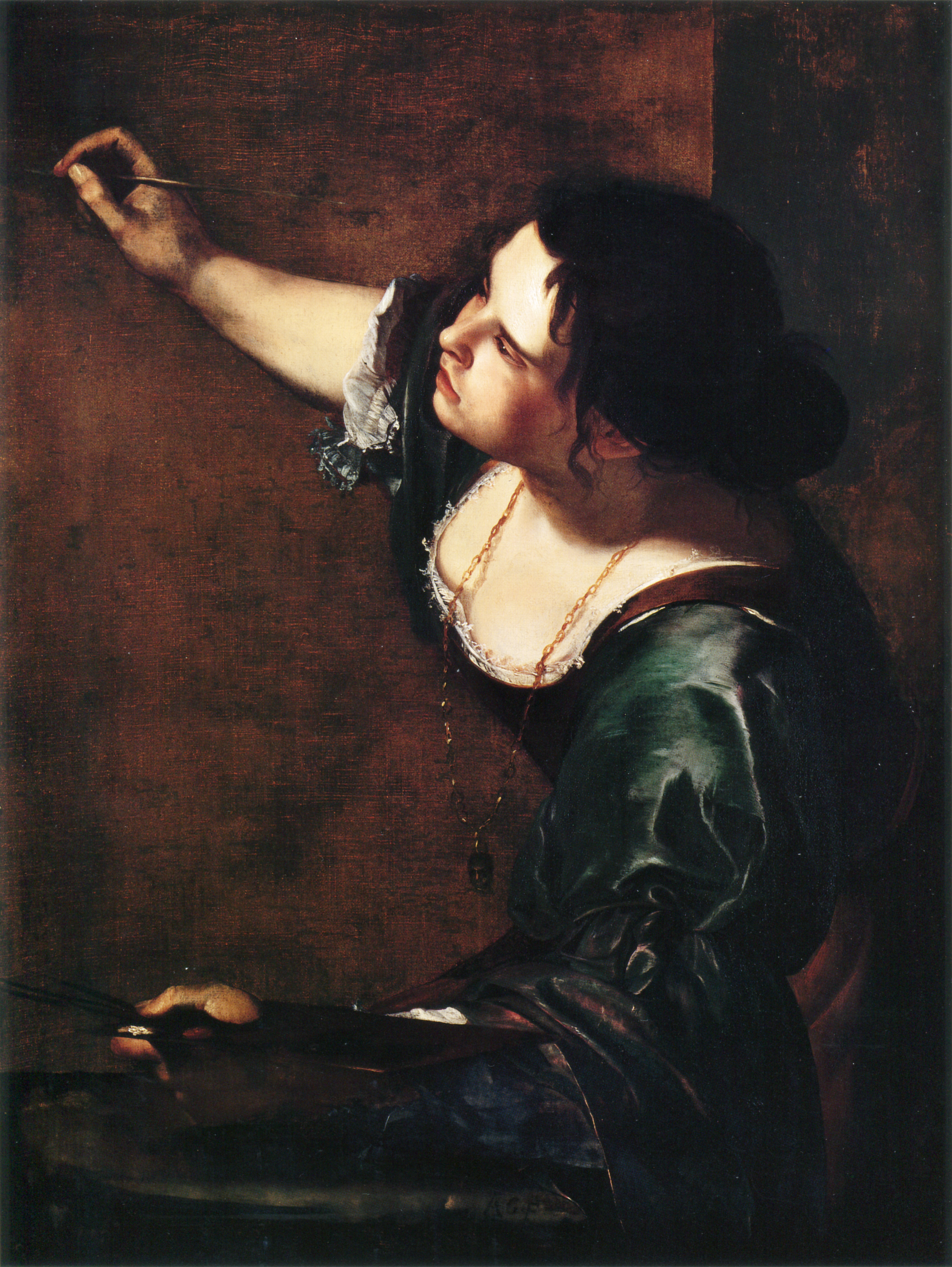
Self-portrait as the Allegory of Painting by Artemisia Gentileschi. Thought to have been in the collection of Charles I.

Self-portrait as the Allegory of Painting (La Pittura) by Artemisia Gentileschi, circa 1638-9, commissioned by Charles I in London. It is now housed in Hampton Court Palace.

If ever there was a body of work that deserved the mantle of ‘art imitating life’ it was hers.

She painted mostly biblical scenes and heroines – strong female protagonists from history and mythology, in a way that was natural and worthy of a Caravaggista.

She truly mastered the Baroque painting technique developed by Caravaggio, known as chiaroscuro, in which light and shadow are sharply contrasted. Only a heroine could have done that…

What she achieved as an artist of the post Renaissance era in a heavily male dominated field (only seven percent of the self-portraits by western art’s most revered masters hanging on the walls of the Vasari Corridor are by women), is just astounding. There were so many obstacles to her success and although she is one of history’s most accomplished female artists of the baroque period, she was never recognised as much as she deserved to be in her lifetime.
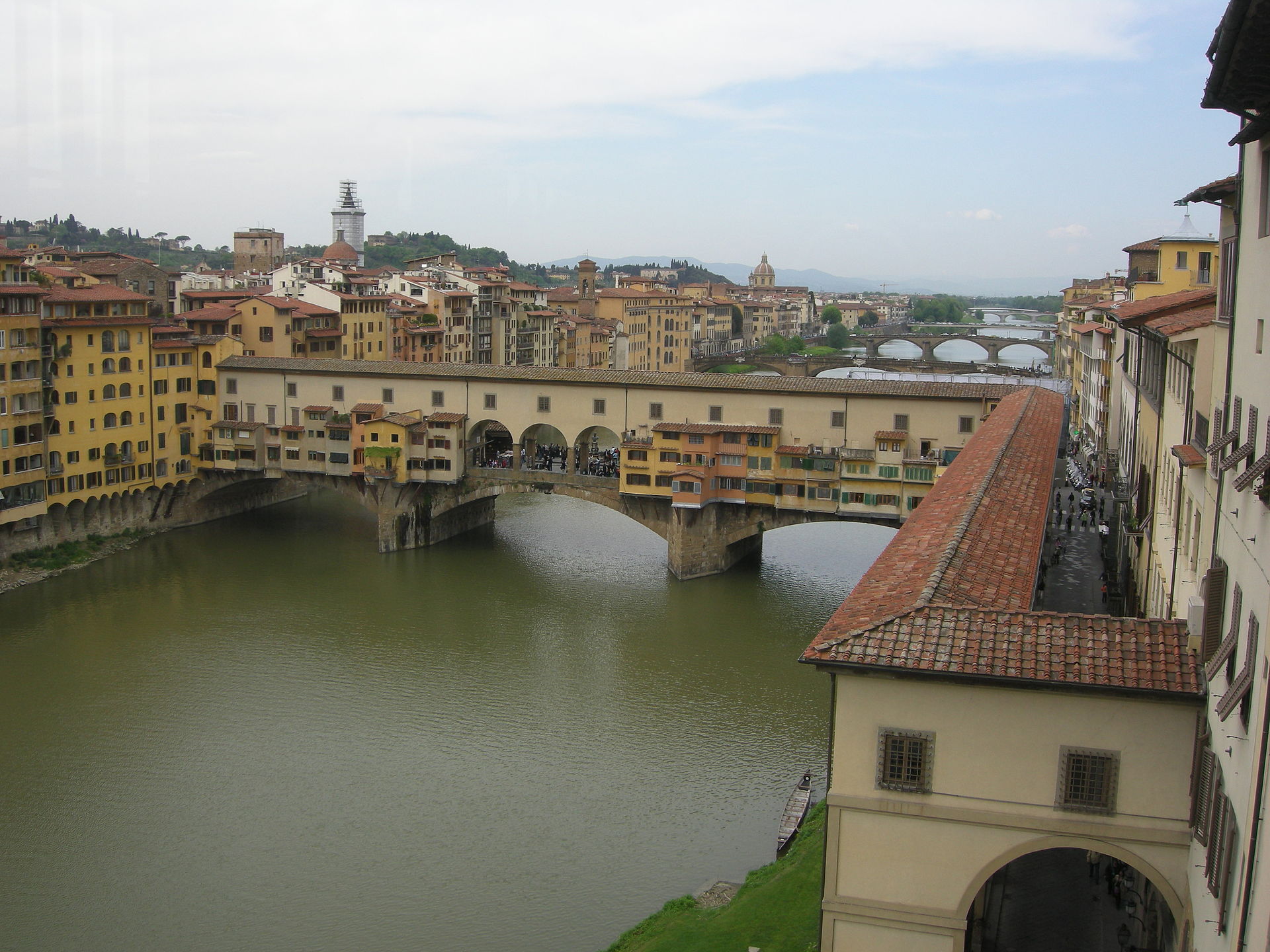
The Vasari Corridor running from the Uffizi Gallery on the right, turning into the Ponte Vecchio Bridge to join the Palazzo Pitti.

The Vasari Corridor running from the Uffizi Gallery on the right, turning into the Ponte Vecchio Bridge to join the Palazzo Pitti.

Alas, the stories of many great painters, writers, poets, sculptors and composers share this unfair narrative arc of neglect, both male and female.

“Artemisia has suffered a scholarly neglect that is unthinkable for an artist of her calibre.” ~ Art Historian Mary D Garrard

Artemisia Gentileschi’s childhood and teenage years

Born on 8th July 1593 in Rome to a well-known, established painter, Orazio Gentileschi and his wife, Prudentia Montone, Artemisia grew up being greatly influenced by her father’s trade. At that time in history it would have been impossible for a young girl to receive training in the arts, unless from a parent. She would have learnt to draw, mix paints and watch her father painting in his studio from a very early age.
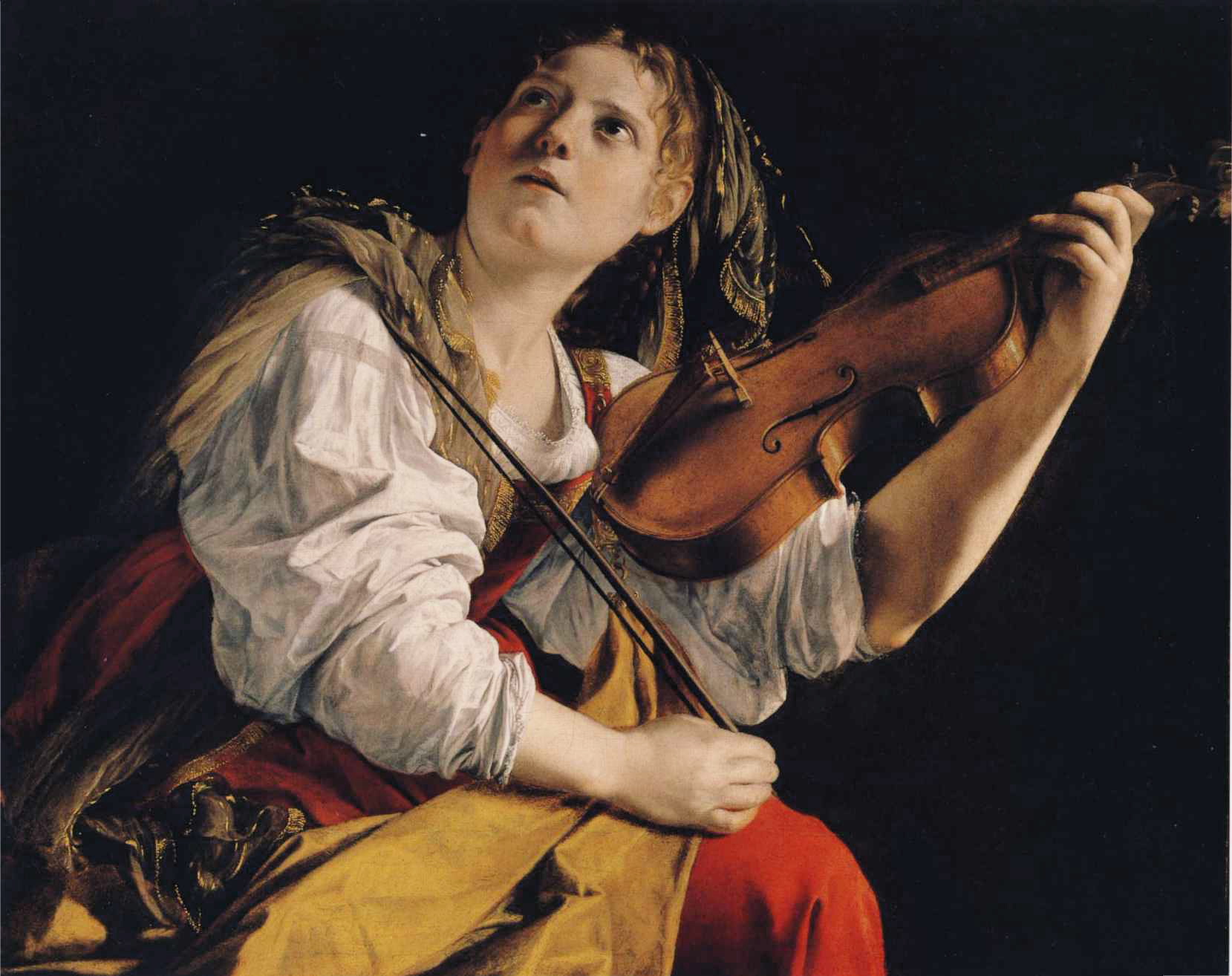
Young woman playing a violin by Orazio Gentileschi - obviously a very good likeness of his beloved daughter - Artemisia Gentileschi!

Young woman playing a violin by Orazio Gentileschi – obviously a remarkable resemblance of his beloved daughter – Artemisia Gentileschi!

Her mother died in childbirth when Artemisia was just twelve years old, leaving her with her father and in the role of surrogate mother to her three younger brothers. No easy task at the same time as dealing with her own grief.

I love the fact that her father (who was a friend and follower of Caravaggio and Tenebrism), admired her talent regardless of her gender, with no regard for his ego, stating that he could teach her no longer when she turned 15. He then turned to another painter to continue her tutelage.

Rome, although home to the Pope and The Vatican was far from being pure and sin free. After the sun’s pink and orange hues faded from the sky above its historic spires, statues and domed rooftops, its illustrious streets witnessed many deeds of depravity, when parts of the city transformed into a cesspool of vice and crime.

Criminals were swiftly dealt with, (usually on the Piazza di Ponte), where public executions and beheadings were common.  The bodies of these unfortunate souls were left exposed to passers by on the Ponte Sant’ Angelo. It was noted that on such occasions the waters of the Tiber ran red…
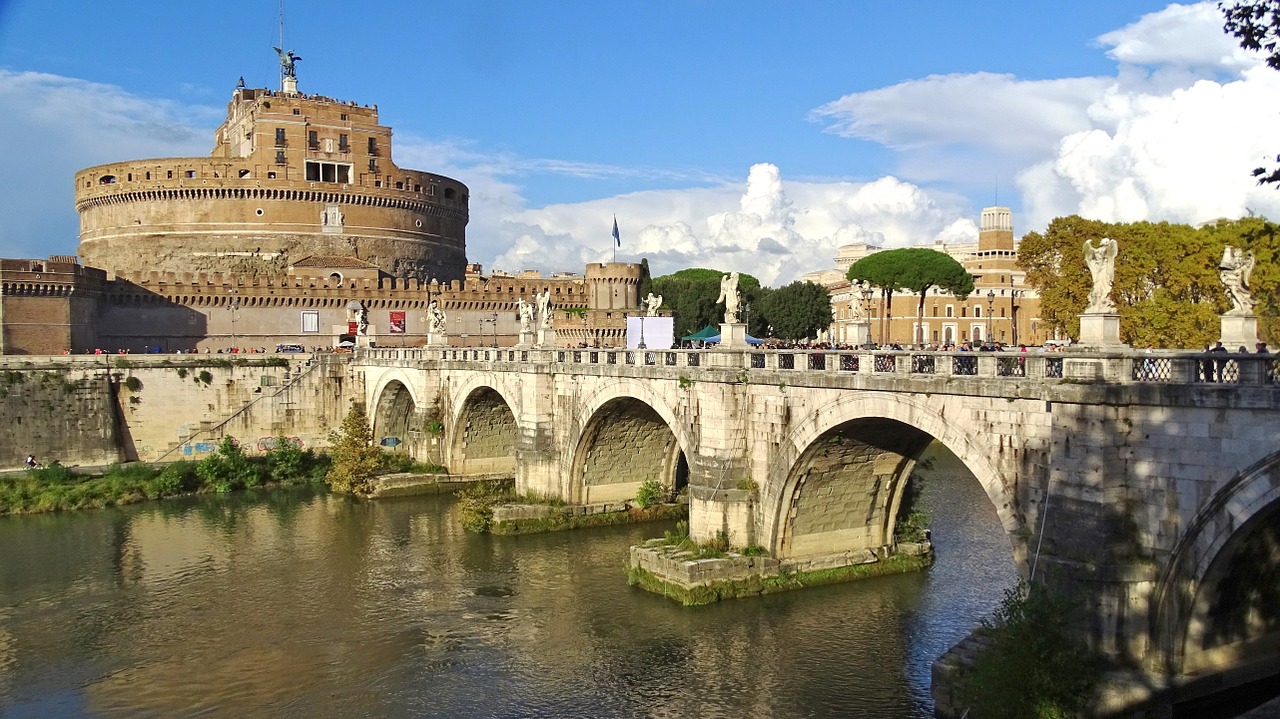
Ponte Sant' Angelo, Rome

Ponte Sant’ Angelo, Rome

Orazio Gentileschi was understandably keen to protect his only daughter from such goings on; she was vulnerable until she could marry.  Seventeenth Century Italy was very much a patriarchal society where women were often either classed as virtuous or sinful. If a woman lost her virginity outside of marriage (and therefore her reputation), it frequently led to a life of prostitution.

It seems that despite his best intentions for his daughter, Artemisia’s father unwittingly played a hand in one of the most traumatic experiences of her life when she was eighteen years old.

Rape of Artemisia Gentileschi by Agostino Tassi (1578 – 1644)
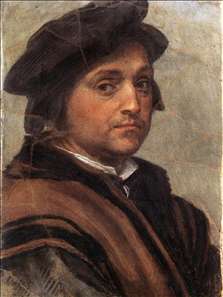
Agostino Tassi, self-portrait

Agostino Tassi, self-portrait

As Orazio had worked with a painter of frescoes, Agostino Tassi, at the Palazzo Pallavicini-Rospigliosi in Rome, he trusted him to further Artemisia’s training. At the time of the rape (in spring of 1611), with his wife missing, assumed dead, Tassi struck.

One afternoon during one of Artemisia’s lessons, Tassi’s lechery turned into a sexual assault when he accosted Artemisia in her father’s studio. She fled upstairs in an attempt to escape but he followed her, forced her into the bedroom and raped her.

Sadly, the only other woman in her life, a family friend Tuzia, who rented an apartment at the premises did not come to her aid.

Not only was this a traumatic physical and emotional experience (one that she initially kept from her father), but it spelled disaster for her reputation and marriage prospects. It is thought that Tassi promised he would marry her and she had no choice but to accept. Under that expectation and agreement they had sexual relations for a further year, until it emerged that Tassi’s wife was actually still alive (it was rumoured he had hired men to kill her).

This was the straw that broke the camel’s back for Orazio Gentileschi, who was outraged that his daughter’s purity (and therefore prospects) had been violated by a trusted friend without the promised restoration to his family’s honour. He duly launched court proceedings against the scoundrel Tassi in 1612.
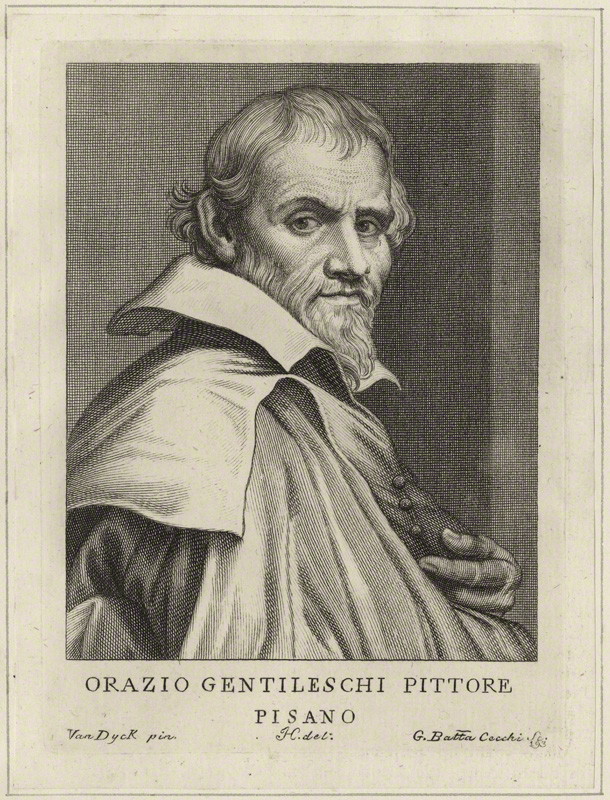
Portrait of Orazio Gentileschi by Giovanni Battista Cecchi, after Sir Anthony Van Dyck. Line engraving, possibly late 18th century

Portrait of Orazio Gentileschi by Giovanni Battista Cecchi, after Sir Anthony Van Dyck. Line engraving, possibly late 18th century currently held by the National Portrait Gallery in London.

The case was unprecedented, and with his daughter’s character in tatters through no fault of her own, Orazio wrote to Pope Paul V (who unfortunately was a patron of Tassi’s), to claim reparation for such a wrongdoing to their family name.

He may have been a talented artist, but Agostino Tassi was no gentleman. He was a serial liar, a serial rapist (having also defiled his own sister-in-law) stolen a painting from Orazio’s studio, as well as planning the murder of his wife. The kind of person we might label today as a low-life scumbag!

There would have been no counselling and support for the victim of this sordid affair, Artemisia herself. It must have been a very confusing, frightening and terrible time for her under such an intense spotlight in court and as a subject of notoriety in the gossip circles of Rome.

What follows is a graphic extract recorded by a court notary during the trial in Rome, where Artemisia describes the moment of the rape. The ancient transcriptions of the case are held at the Rome State Archive:

“I felt a strong burning and it hurt very much, but because he held my mouth, I couldn’t cry out. However, I tried to scream as best I could, calling Tuzia. I scratched his face and pulled his hair, and before he penetrated me again I grasped his penis so tight that I even removed a piece of flesh. All this didn’t bother him at all, and he continued to do his business.” ~ Artemisia Gentileschi.

Throughout the trial Artemisia was subjected to horrific examinations and torture with instruments such as the thumbscrew, which strongly shaped her psychological development and her future artwork.

Susanna and the Elders
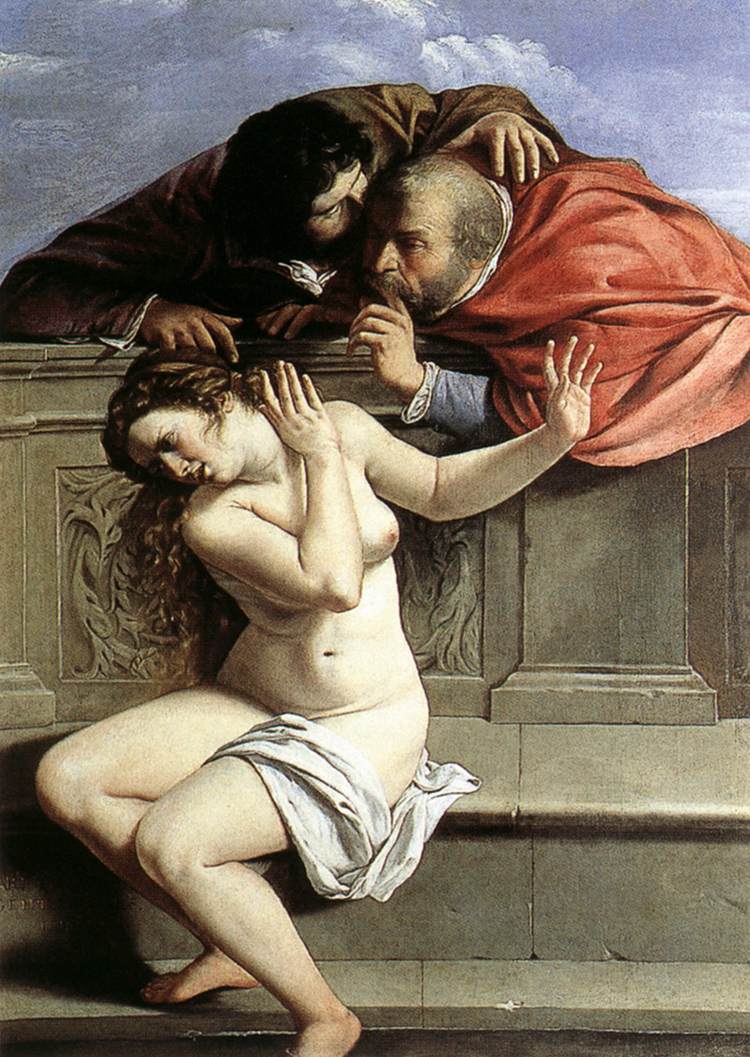
Artemisia_Gentileschi - Susanna_and_the_Elders_(1610)

Susanna and the Elders by Artemisia Gentileschi circa 1610

Only a year earlier at the age of seventeen she had completed her version of Susanna and The Elders, circa 1610, one of the few paintings of this biblical subject that portrays Susanna with her head turned away from the advances of the men, with body language and an expression indicating their approach is unwelcome.  The female form (possibly based on her own), is more natural rather than idealised. Somehow, it seems to have been an inauspicious omen of the event that would take place on the Gentileschi premises in the spring of 1611.

Paintings of Susanna and the Elders (Book of Daniel) by Bernadino Luini, Jacob van Loo, Ottavio Leoni, Hendrick Goltzius, Antonio Bellucci, Bonaventura Lamberti, Guido Reni, Tintoretto, Alessandro Allori, Rembrandt van Rijn, Gerrit van Honthorst, Pieter Pietersz, Bartolomeo Chiari, Giovanni Battista Tiepolo, Massimo Stanzione, Claude Vignon, von Hagelstein, Sebastiano Ricci, Peter Paul Rubens, Jacob Jordaens, Anthony van Dyck, Sisto Badalocchio, Jean-Francois de Troy, Salomon Koninck, Frances Trevisiani, Lambert Sustris, Andrea Vaccaro, Hendrick de Clerk, Paolo Veronese, Giovanni Francesco Guerrieri and Orazio Gentileschi have Susanna facing the men (fully or partially) and do not depict the same level of distress and unwillingness.
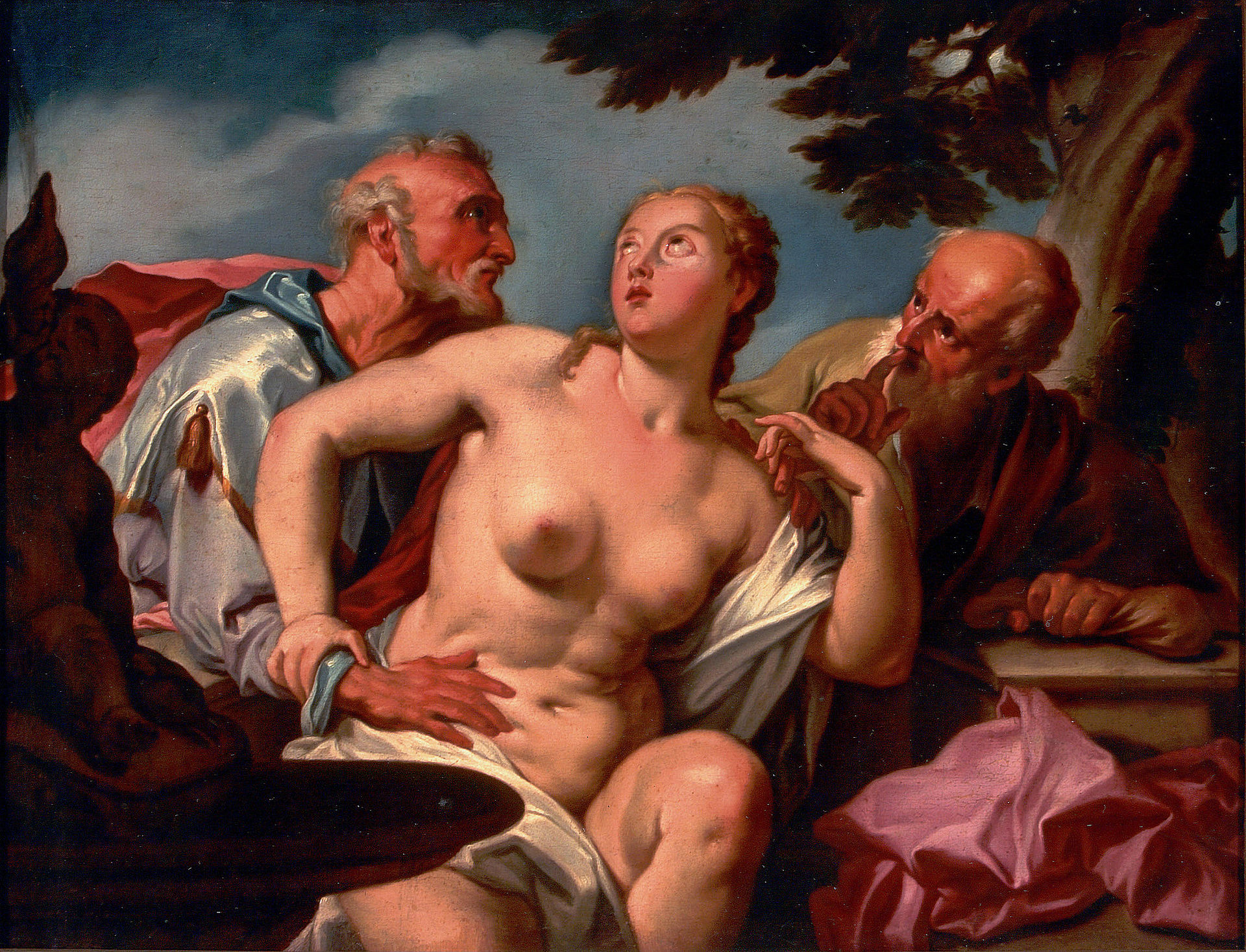
Susanna and the Elders by Orazio Gentileschi
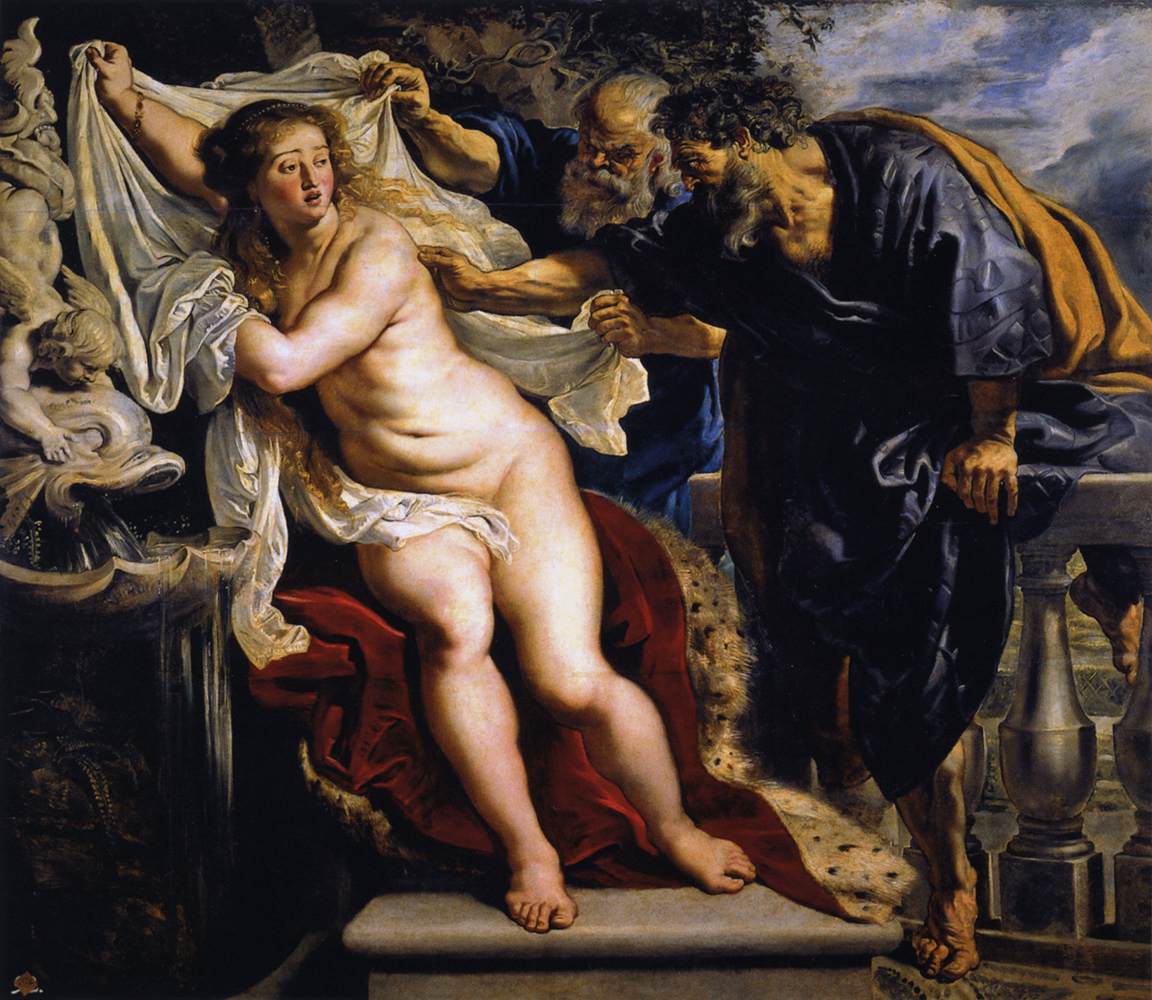
Susanna and the Elders by Orazio Gentileschi

Susanna and the Elders by Peter Paul Rubens, also painted in 1610
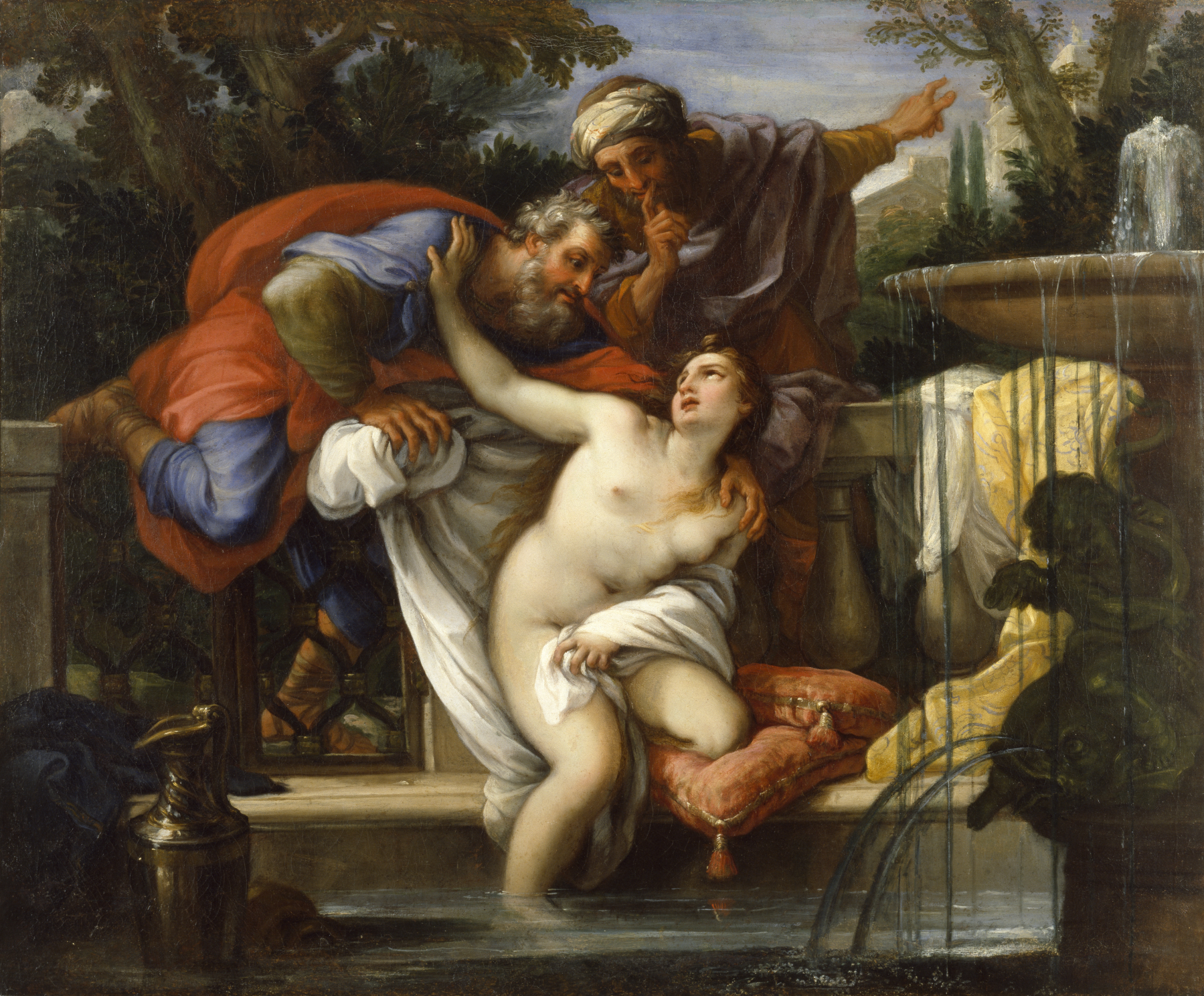
Susanna and the Elders by Peter Paul Rubens, also painted in 1610

Susanna and the Elders by Giuseppe Bartolomeo Chiari

Susanna and the Elders by Giuseppe Bartolomeo Chiari

Eventually Tassi was found guilty and sentenced to prison and exile, neither of which he fully served. Artemisia on the other hand, was viewed as damaged goods, but her father (with the help of a substantial dowry), found her a husband, a Florentine artist, the younger brother of the lawyer that had helped him during the lengthy court case against Agostino Tassi.

Despite these considerable challenges, Artemisia managed to pick herself up, ditch her victim mantle and find solace and cathartic expression in her work.
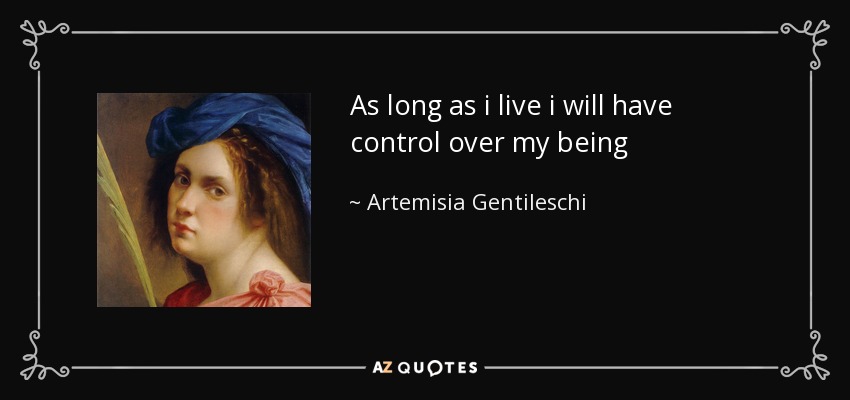
Artemisia Gentilschi quote

In part 2 we’ll look in more detail at her paintings – you’ll notice that many of them are shockingly violent for a female artist – even to our more exposed, desensitized eyes of the twenty first century!

Beautiful Violin Gems 🎼🎻 of the 3 B’s: Bériot, Bull and Bazzini

“The true mission of the violin is to imitate the accents of the human voice, a noble mission that has earned for the violin the glory of being called the king of instruments.” ~ Charles-Auguste de Bériot

I thought it was time to share some lesser known, but brilliant violin works from the nineteenth century. It’s been a little while since my last ‘musical’ post and I’m getting withdrawal symptoms. Plus, I’ve been having technical problems, my old PC has gone to the scrap heap in the sky. The inevitable data retrieval is proving arduous, so in the spirit of a true musician, I’m having to improvise!

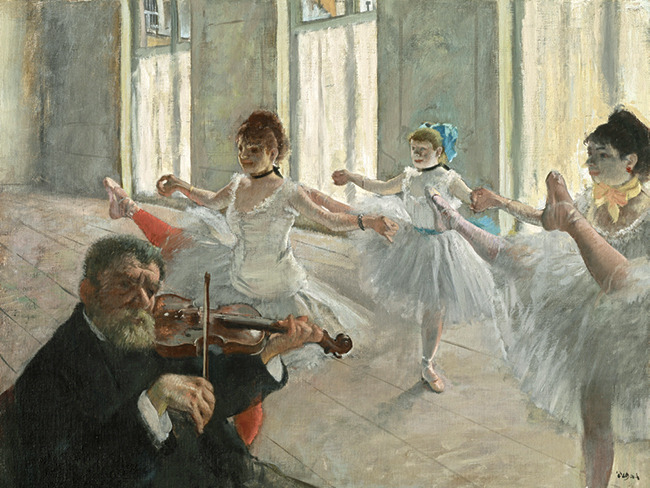
The Rehearsal by Edgar Degas

The Rehearsal by Edgar Degas

Romantic violin pieces flourished in the nineteenth century,  the heyday of romanticism. I’ll present these three violin aces and their music in the order of their birth.

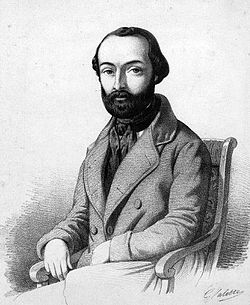
Charles-Auguste de Bériot (20 February 1802 – 8 April 1870)

Although he was born in Leuven, Belgium, de Bériot spent the majority of his musical career in Paris. At the Conservatoire de Bériot was tutored by Jean-François Tiby, an acolyte of Viotti. He was also influenced by Baillot and Viotti directly, as well as Paganini (elements of the latter can be heard in the style and virtuosity of his music).

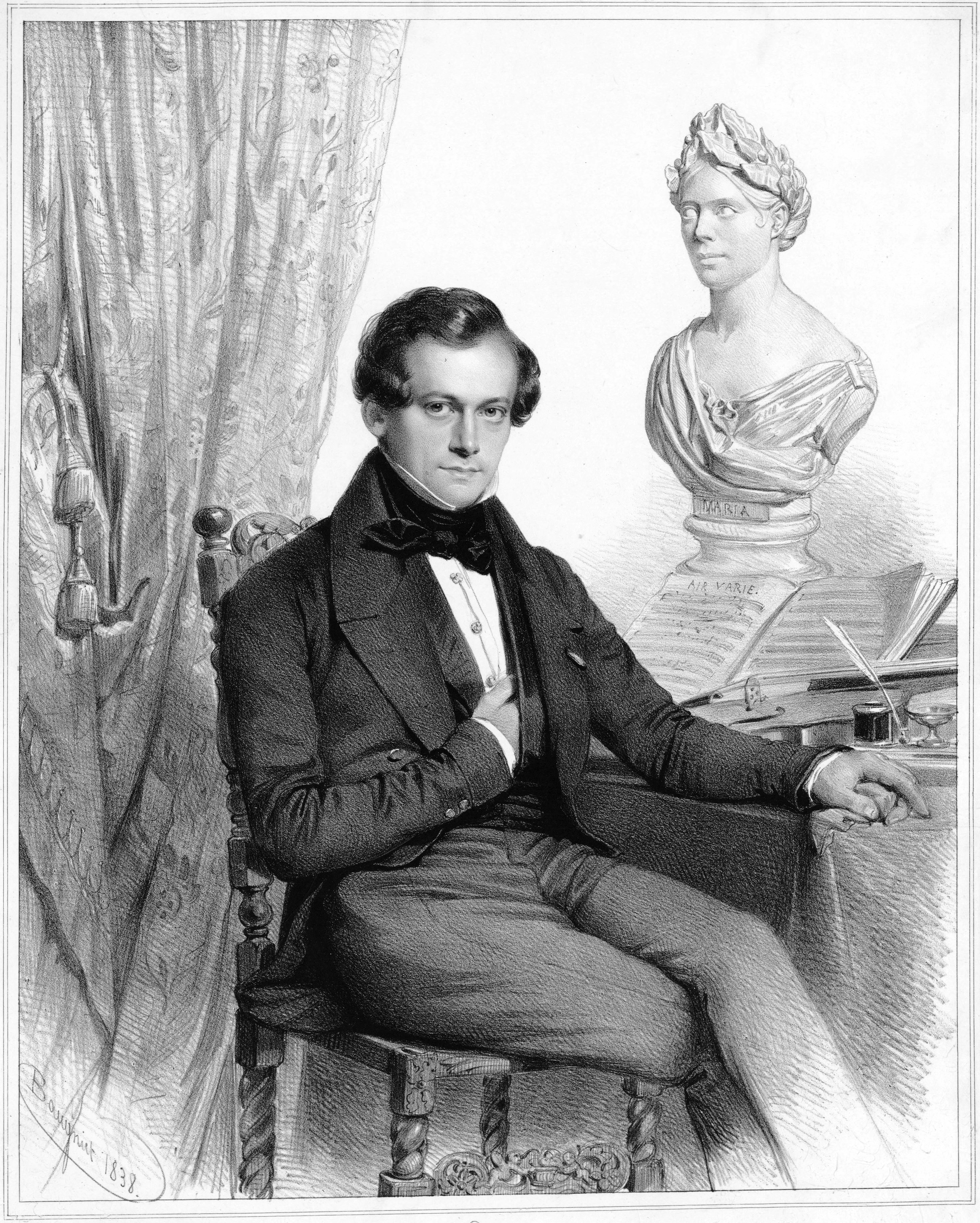
Charles-Auguste_de_Bériot_byCharles Baugniet circa 1838.

Charles-Auguste_de_Bériot_byCharles Baugniet circa 1838.

He played for royalty in France and the Netherlands as well as touring London and Europe. De Bériot was also proficient on the piano and toured much of China against the emperor’s wishes.

His first wife was the celebrated mezzo soprano opera singer, Maria Malibran, who bore him a son in 1833. Charles-Wilfrid de Bériot became a piano professor who counted Maurice Ravel, Ricardo Vines and Enrique Granados among his pupils. Sadly, Maria died at the tender age of 28 (after a riding accident), and de Bériot moved back to Brussels.

In Leuven he met Marie Huber in a cafe of all places. She was an orphan but had been adopted by by Prince von Dietrichstein, making her step sister to his piano legend son, Sigismund Thalberg. It seems to have been a small world in the musical circles of Europe…

Portrait of Charles-Auguste de Beriot by Emile Jean-Horace Vernet.

Portrait of Charles-Auguste de Beriot by Emile Jean-Horace Vernet.

De Bériot later became the chief violin instructor at the Brussels Conservatory where he established the Belgian-Franco School.

Among his followers were the virtuoso violinists Hubert Leonard, Henri Vieuxtemps and Heinrich Wilhelm Ernst.

He was forced to retire from teaching and performing in 1852 due to failing eyesight and became completely blind by 1858. Unfortunately his ill health continued and he had to have his left arm amputated in 1866.

Compositions

De Bériot wrote pedagogical studies for students, such as the Violin Method Opus 102 and His First 30 Concert Studies Opus 123 for soloists wanting to perfect their technique and skills prior to performing major violin concertos. His output includes various romantic violin pieces that were sometimes used for encore performances in addition to ten violin concertos. His music has fallen into relative obscurity, so I think it’s time to dust it off and give it an outing!

The fabulous Scene de Ballet, Op. 100 with Itzhak Perlman and the Juillard Orchestra conducted by Lawrence Foster:

Violin Concerto No. 9, Op. 104 with Takako Nishizawi:

Third movement of Violin Concerto No. 9, Op. 104 (performer unknown):

Duo Concertante No. 1, Op. 57 for two violins with Maxine Kwok-Adams and Philip Nolte of the LSO:

A soulful interpretation of Violin Concerto No. 7 in G Major, Op. 76 with Laurent Albrecht :

“If Ole Bull had been born without arms, what a rank he would have taken among the poets – because it is in him, and if he couldn’t violin it out, he would talk it out, since of course it would have to come out.” ~ Mark Twain in a letter to William D. Howells, April 19, 1880

Ole Bornemann Bull (5 February 1810 – 17 August 1880)

This energetic and eccentric Norwegian prodigy didn’t follow the usual path to virtuosity, due to his extremely creative bent and a desire to do things his own way.

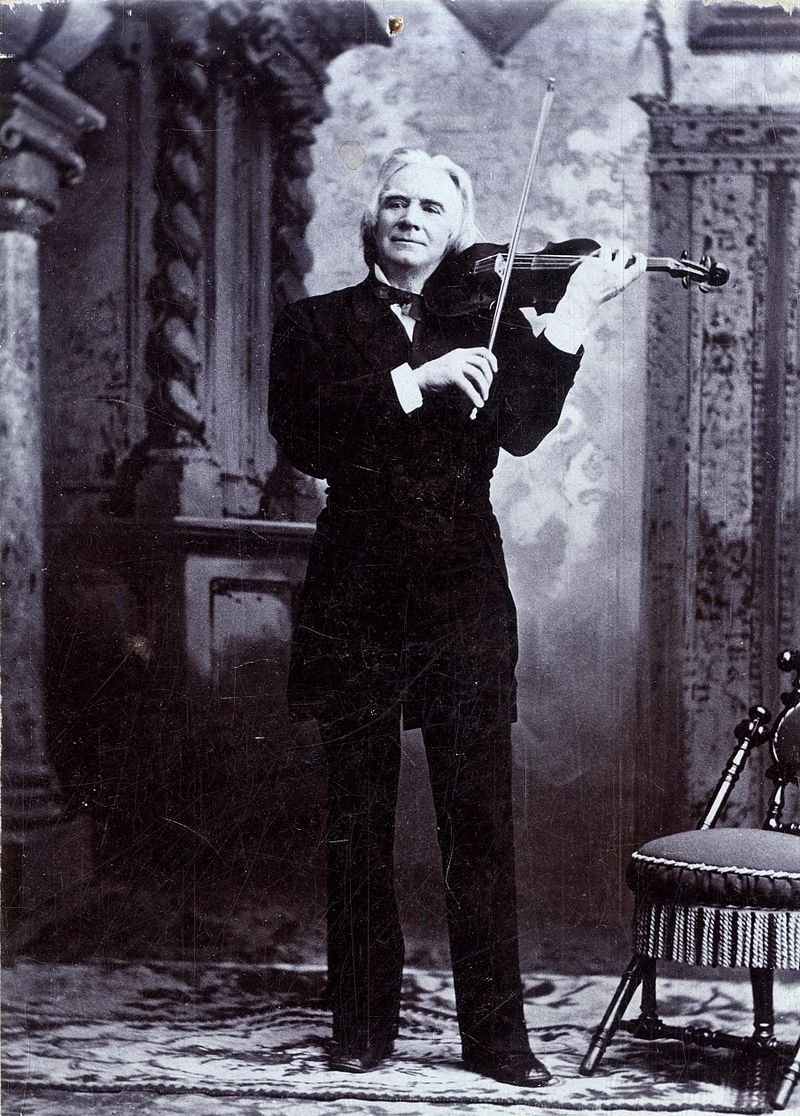
Ole_Bull_playing

Ole Bull playing his Gasparo da Salo violin

Norwegian violinist Ole Bull has received less attention than the other composer/virtuosi of the nineteenth century. Perhaps because a good portion of his performance activity took place in the United States, where less of a historical perspective on 19th century music-making has developed among performers. Bull was Norway’s first real celebrity, and as a virtuoso he was something of a rock star, playing on the emotions of audiences in a way Sarasate, for example, did not.

How many other violin virtuosi have played at the top of a pyramid in Egypt? Probably none! Bull certainly led an interesting life…

From the Violin-man.com:

During the season 1836—37 he played 274 concerts in England and Ireland; in 1839 he visited the great German violinist and composer Spohr in Kassel, in the hope of receiving useful advice from him. In 1840 he played Beethoven’s Krentzer So­nata in London, with Liszt at the piano. On July 23, 1849, he announced the formation of a Norwegian Theater in Bergen, which was opened on Jan. 2,1850. While he failed to impress serious musicians and critics in Europe, he achieved his dream of artistic success in America; he made 5 concert tours across the U.S., playing popular selections and his own compositions on American themes with such fetching titles as Niagara, Soli­tude of the Prairies, and To the Memory of Washington, inter­spersing them with his arrangements of Norwegian folk songs.

I found this short documentary about the man, his music and his idiosyncrasies (such as shaving off the top of the bridge to enable him to play chords on all four strings simultaneously) quite informative:

Luthier Gasparo da Salò

In 1842 Ole Bull bought a very richly decorated da Salò violin, originally made in 1570 for the treasure chamber of Archduke Ferdinand I of Tyrol. He used it on tour along with a magnificent Guarneri del Gesu and a large Nicolo Amati model, for nearly forty years of frenzied, fiery improvisation and recital.

Ole Bull's Gasparo da Salo violin.

Ole Bull’s Gasparo da Salo violin.

I adore the deeper, darker, unique sound of Ole Bull’s Violin, made by Jean-Baptiste Villaume:

Compositions

It’s thought Ole Bull wrote as many as seventy pieces in his lifetime, but only around ten of those endured and continue to be performed in modern repertoire.

This is totally seductive and beguiling! ‘Cantabile doloros e Rondo giocoso’ with Charlie Siem and the London Symphony Orchestra at Abbey Road Studios:

Violin Concerto in A major, “Grand Concerto’, Op. 4 (1834; revised 1864) with Annar Follesø with the Norwegian Radio Orchestra, conducted by Ole Kristian Ruud:

This sweet tune is an example of his love for Norwegian folk songs, arranged for violin and orchestra by Johann Svendsen – Sæterjentens Søndag (The Herd-Girls’ Sunday):

Polacca Guerriera played with virtuosic flair by Marek Pavelec:

La Verbena de San Juan: Spanish Fantasy for Violin and Orchestra with Annar Follesø:

Fantasy And Variations On A Theme By Bellini and other gems by Arve Tellefsen:

It seems that he was friends with Pianist and composer Franz Liszt, and Robert Schumann wrote that Bull was among “the greatest of all,” extolling that he was on par with Niccolò Paganini for the speed and clarity of his playing.

“His violin, which transforms all your soul, combines enthusiasm with perfect intonation … his mastery of the bow … produces a song that resembles the human voice, and he has the technique for the most difficult whims found in Paganini, executed without hampering true expression.” ~ Review by a Milanese Critic after hearing Bazzini perform on the violin in 1839

Antonio Bazzini (11 March 1818 – 10 February 1897)

Bazzini was born in Brescia, Italy into a long established Brescian family dating back as far as the 1400s.

Antonio_BazziniHis early introduction to literature, culture and music was provided by his grandfather, Antonio Buccelleni, who had written poems, sonnets and odes, some of which formed the basis of Bazzini’s early compositions.

His first violin instruction was under Kapellmeister Faustino Camisiani, and by the time of his death in 1830 young Antonio was a competent eleven year old violinist.

Bazzini’s fame as a violin virtuoso overshadowed his composing and teaching, he was regarded as one of the finest concert violinists of the 19th century.

From Naxos:

At seventeen Bazzini was himself a maestro di cappella for the church of San Filippo in Brescia. His early works were often religious in nature, and while at San Filippo he wrote Masses, Vespers, and six oratorios. His life materially changed on 20 March 1836, when he played first violin in a quintet by Luigi Savi. The work was dedicated to Paganini and the dedicatee was in the audience. Paganini advised the young man to tour as a virtuoso, and Bazzini took this advice to heart. Beginning in 1837 he toured Milan, Venice, Trieste, Vienna, and Budapest; from 1841–1845 he toured Germany, Denmark, and Poland.

For several years he lived in Leipzig, where he studied the German masters. While in Germany, Bazzini performed with Mendelssohn’s Gewandhaus Orchestra, reputedly giving one of the first private performances of Mendelssohn’s E minor Violin Concerto. In 1848 he undertook a tour of Spain and in 1852 he settled in Paris. In 1864, after a final concert tour in the Netherlands, he returned to Brescia and concentrated on composition; he also championed instrumental music in Italy through string quartet performances at the home of Gaetano Franchi and the creation of the Società dei Concerti. Among the soloists Bazzini brought to Italy were Hans von Bülow and Anton Rubinstein, in 1870 and 1874 respectively.

Along with Verdi, Bazzini had an important rôle in establishing standard concert pitch (440 Hz), which was first recognised in Italy by the Congresso dei Musicisti Italiani in 1881. In 1873 he was appointed professor of musical theory and composition at the Milan Conservatory and became director of the same institution in 1882. Among his pupils at the Milan Conservatory were Mascagni and Puccini.

Compositions

He returned to Brescia after touring, where he focused on composing. During this time he wrote an opera, Turanda, cantatas, sacred works, concert overtures and symphonic poems (Francesca da Rimini). His chamber music proved to be his most successful pieces as far as composing was concerned.

The insanely virtuosic show piece, Scherzo Fantastique, Op. 25 La ronde des Lutins performed superbly by Maxim Vengerov and Ingo Dannhorn:

James Ehnes is cool, calm and collected, yet manages to set his 1715 ‘Marsick’ Stradivarius on fire…

As popular show pieces tend to be arranged for other instruments, I thought I’d treat you to one for the cello and piano by Duo Toivio; cellist Seeli Toivio and pianist Kalle Toivio :

An incredible transcription for classical guitar of ‘La Ronde des Lutins’ by. Alexey Zimakov:

Violin Concerto No. 4 in A minor, Op. 38 with Aldo Ferraresi, Orchestra ‘A. Scarlatti’ di Napoli della Rai conducted by Franco Gallini:

‘Calabrese’, Waltz in E minor, Op. 34, a splendid vintage recording with Yehudi Menuhin and Adolph Baller:

Fantasia on themes from Verdi’s ‘La Traviata’ Op. 50 with Claudio Voghera and Francesco Manara:

I’ll bid you farewell now, (the hungry hordes are waiting for their tea), echoing Shakespeare’s immortal verse: If music be the food of love…play on!

#SundayBlogShare – The Paradox of Polarities 🌞🌛☺️😭

Lately I have been trying to make sense of how I act unconsciously. Watching to see what happens when I allow certain situations or people to push my buttons!

It has been a busy and somewhat stressful time for me over the past few weeks, and to get through this intense phase I know I need to be more aware of the emotions that I have disowned in myself, and therefore rub me up the wrong way when other people display that very ‘thing’.

To shine the light of awareness on my my own internal state is not easy, but it is helpful. For when we become conscious of a hidden belief or shadow that is driving us, we can integrate and ‘own’ it, and the dysfunctional behaviour that surrounds it will drop away. We rarely act in a way that is detrimental to our well-being once we are conscious of it.

Writing about this subject in the form of poetry has helped me to understand the concept better and apply it in my own life. I hope you enjoy the poem in its own right, along with the sublime art (which always reflects beautifully the human condition).

Long may the light shine on you (and your shadows!) Happy Sunday!
The Paradox of Polarities

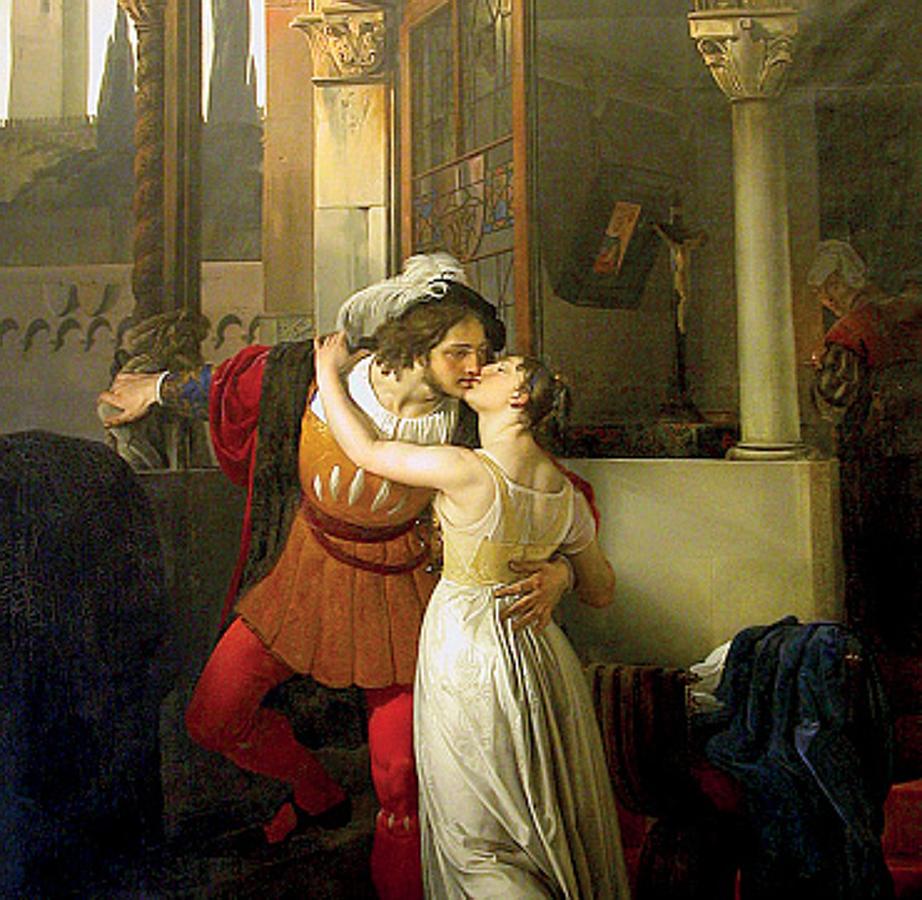
Juliet lamented to Romeo: ‘parting is such sweet sorrow’,

Yet we love…yearning to insatiably consume,

Maybe fearing, perhaps craving the morrow.

What will fate serve us: fortune or doom?

Whatever may manifest in these given hours,

That which we truly see, is endowed with powers…

The Last Kiss of Romeo and Juliet by Francesco Hayez

The Last Kiss of Romeo and Juliet by Francesco Hayez

Where our vision dares to go, energy will flow,

Born are we, into the realm of black and white,

Intrepid into the shadow side, we must not go.

To survive this masquerade we stay in the light,

Reprisals in childhood make us afraid to venture,

As adults, what is perceived as dark, we censure…

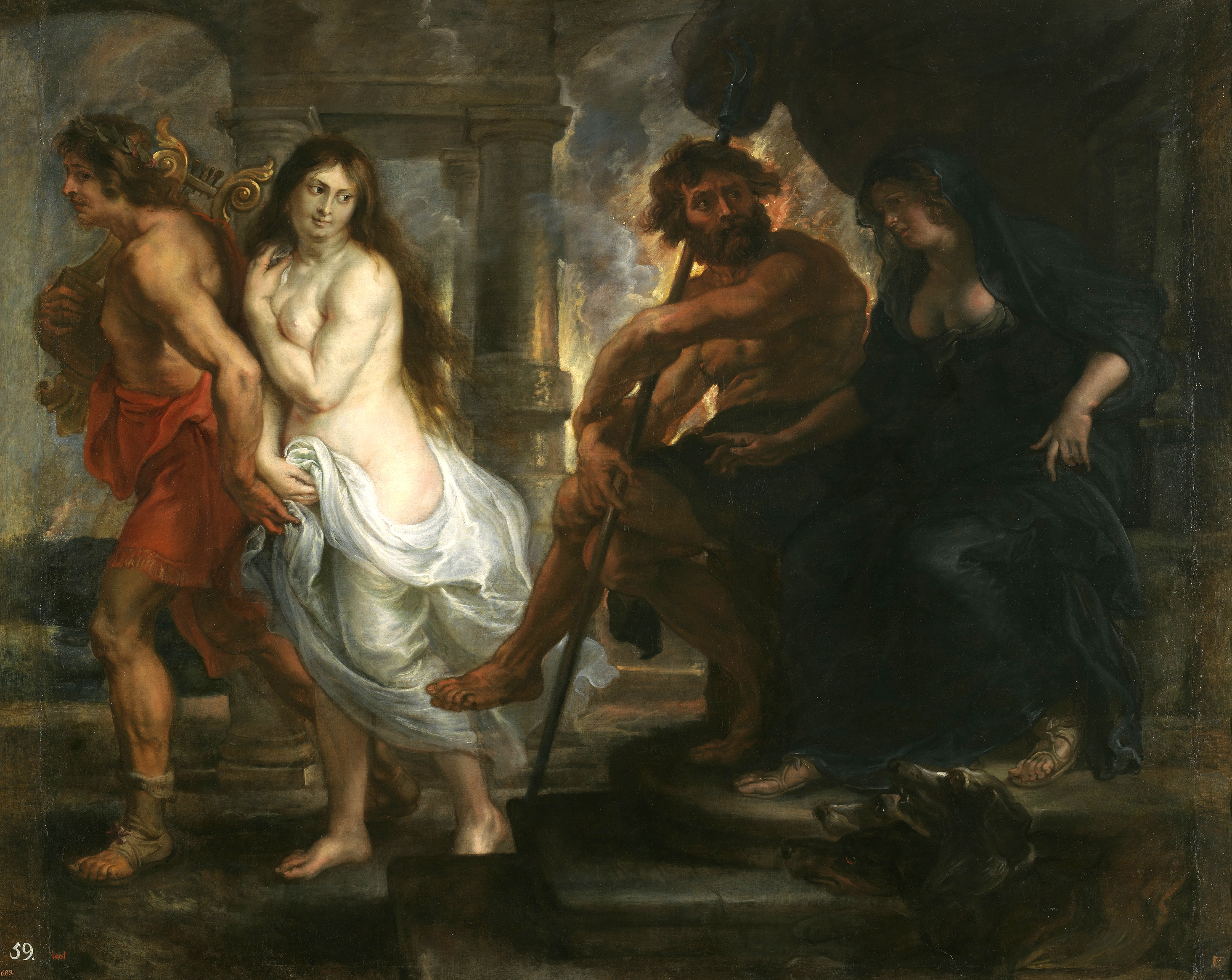
Orpheus and Eurydice in the Underworld by Peter Paul Rubens

Orpheus and Eurydice in the Underworld by Peter Paul Rubens

Lurking somewhere beneath, dark soils unconscious mind,

It cannot be disowned, denied and repressed forever,

Expressing covertly as dysfunctional, not kind.

To exhibit that which we thought of never,

The voice we accept not in ourselves, or in others,

Speaks the loudest, drowns out, and smothers.

Othello and Desdemona by Christian Köhler

Othello and Desdemona by Christian Köhler

Despite our best efforts, eventually in vain,

We never will destroy shadows; our other side,

As night follows day, with pleasure comes pain.

The vast spectrum of life is not easy to divide,

Opposites attract, nay, depend on each other to exist,

Demarcation is purely conceptual, shrouded in mist…

Hamlet - Act IV Scene V - Ophelia Before the King and Queen by Benjamin West

Hamlet – Act IV Scene V – Ophelia Before the King and Queen by Benjamin West

How humans define polarity is arbitrary,

Endless primordial cauldron of emotion,

Good against evil can be so contrary.

Life and death, clarity and confusion,

Appear they, to be separate ideas of reality,

Isolated by social convention, for the sake of sanity…

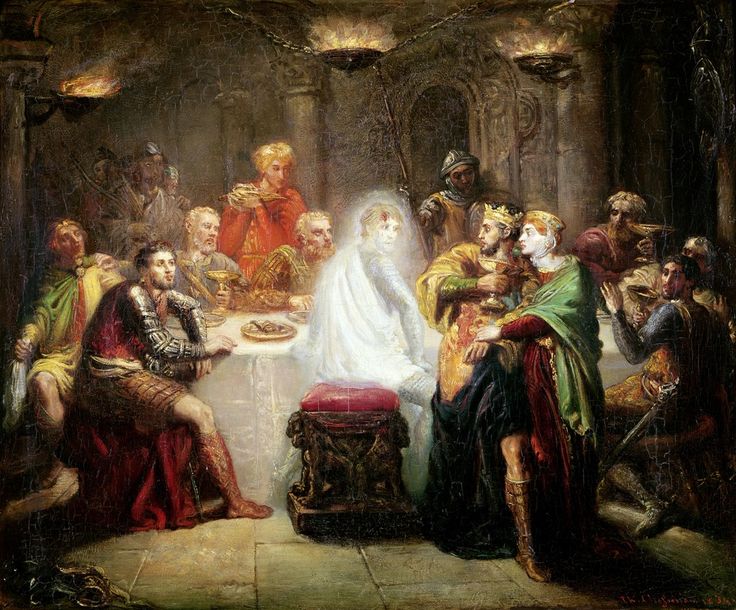
Macbeth and the Ghost of Duncan by Theodore Chasseriau

Macbeth and the Ghost of Duncan by Theodore Chasseriau

Thus, one ‘thing’ is split into a patchwork field,

We can only appreciate health because of illness,

Energy delineated, to create our journey we wield.

We can harm or heal; by practice, learn to witness,

The inner states with which we play the game,

Be we happy or sad, empty or full, of pride or shame…

The Illness of Antiochus from Antiochus and Stratonice by Jean Auguste Dominique Ingres

The Illness of Antiochus from Antiochus and Stratonice by Jean-Auguste-Dominique Ingres

To avoid any experience is to fall on our sword,

Better to watch and feel, then move forward,

Enjoy passion, shun apathy, either inspired or bored.

Awareness frees us from stagnation and being cornered,

To surf the panoply and panorama of tides,

Waves of dichotomy ebb and flow from all sides…

Tristan and Isolde by Herbert James Draper

Tristan and Isolde by Herbert James Draper

The paths we take are followed in physics,

Nature’s eternal, divine laws unfold regardless,

To deny a part of the whole is to set limits.

What is buried, resisted and guarded will surface,

Dip into darkness again; find a flicker of light,

A single, bright, dancing flame expands in sight…

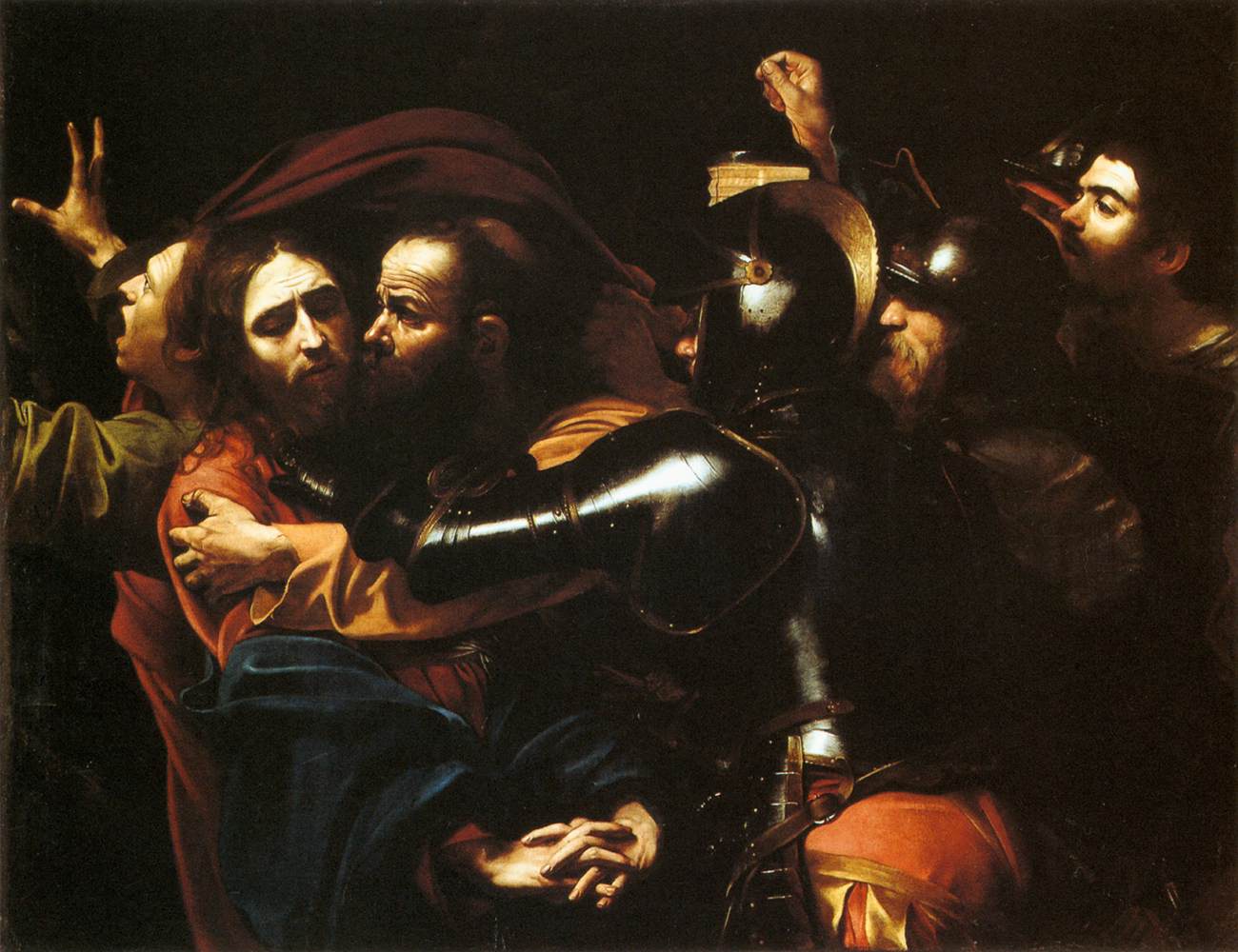
The taking of Christ by Caravaggio

The taking of Christ by Caravaggio

We make up right and wrong as we go along,

Physical forms of the infinite, quantum reality,

Both here and not here; is a part of our song.

For singing softens the immutable tree of polarity,

Rotting roots, scarred bark, broken branches, lofty leaves;

Wild forest, shaped into desired topiary: thus life weaves…

By Virginia Burges

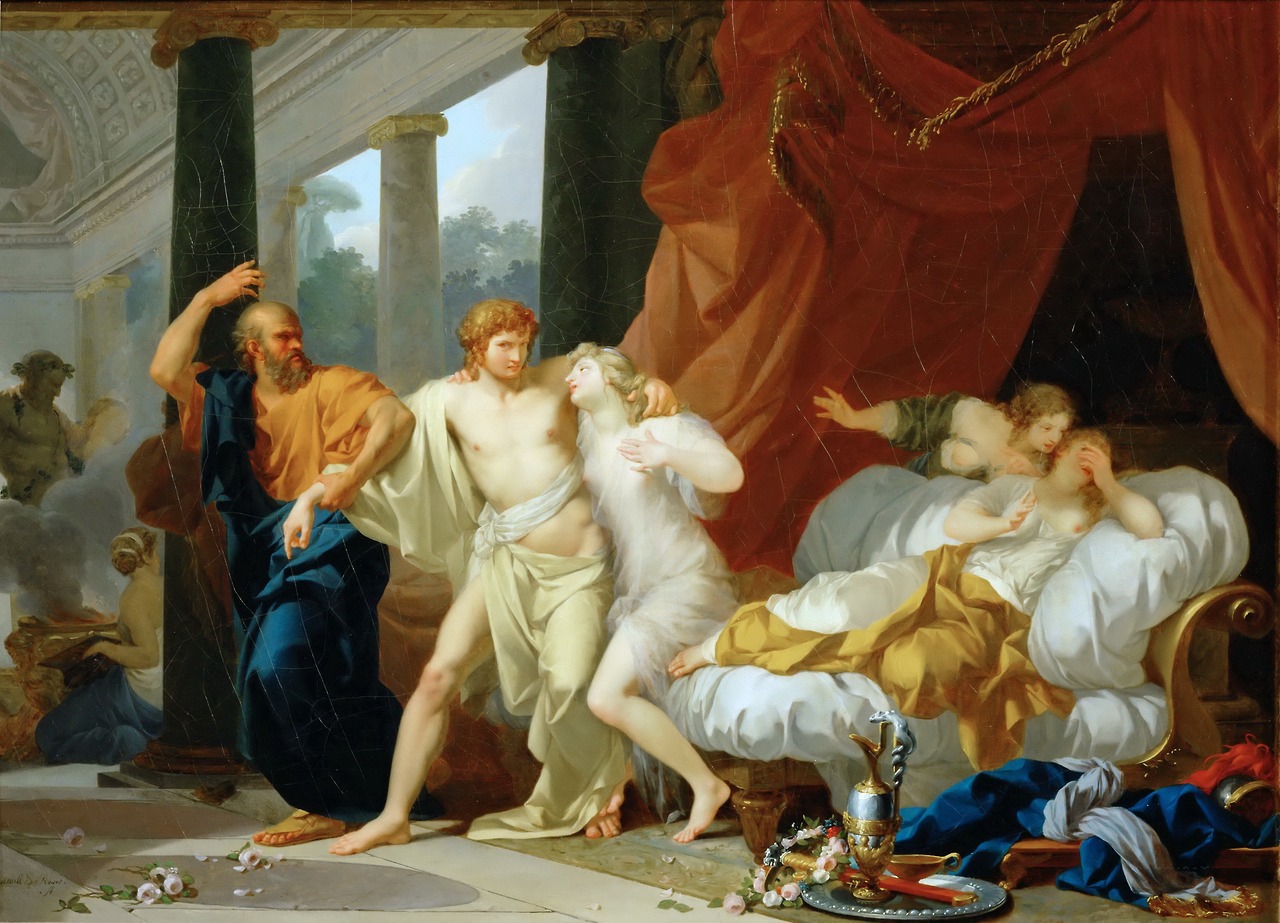
Socrates tears Alcibiades from the embrace of sensual pleasure by Jean-Baptiste Regnault c. 1791

Socrates tears Alcibiades from the embrace of sensual pleasure by Jean-Baptiste Regnault circa 1791

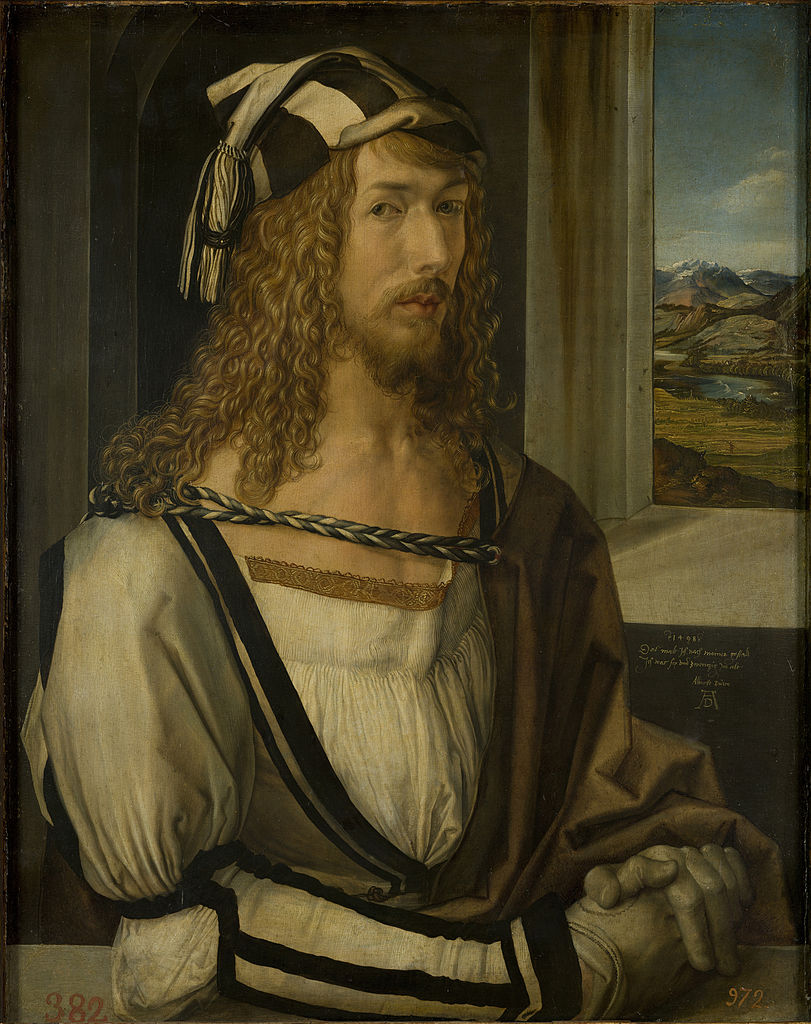
What’s in a Painting? Taking a Closer Look at Albrecht Dürer’s Masterpiece: Self-Portrait with Fur-Trimmed Robe (c. 1500)

“If a man devotes himself to art, much evil is avoided that happens otherwise if one is idle.” ~ Albrecht Dürer

I tarried for a long while deciding which painting to cover next in the ‘What’s in a Painting?’ series. There’s just so much amazing art and many deserving artists to choose from! But for now, I have settled with Dürer’s beguiling and enigmatic Self-Portrait circa 1500, a mixed media composition on limewood, measuring 67.1 by 48.7 centimetres.
Dürer was the first ‘artist’ in the modern sense… This is for several reasons, which I’ll share as I go along.

First and foremost, the 1500 Self-Portrait is a mesmerising piece of art which I’m always drawn to, and was fortunate enough to see hanging in the Alte Pinakothek in Munich a few years ago. Looking at it I felt like I might have known him, it’s so…human. His image still speaks to us from the grave.

Perhaps it’s no coincidence that he painted it in the year 1500; the expected year of the Apocalypse that was foretold and dreaded in the late Middle Ages. But 1500 was also the first centennial year in Europe that was celebrated. It brought hope, change and new ideas.

You may also be thinking, ‘What’s there to talk about in a self-portrait?’ I almost fell into that trap until I started my research about the cosmopolitan Herr Dürer…

Da Vinci had drawn the iconic Vitruvian Man only ten years earlier, moving away from church art towards images of human beings, when human proportions became the standard for artistic creation.

What’s really incredible to me is the actual skill with which he depicts himself. It must be hard enough to paint a life-like portrait of another person, let alone oneself. What’s even more striking about this portrait is the fact that he is facing us full on.

You might think that is perfectly normal, and it is today, but back in 1500 only paintings of Christ were afforded that honour. Portraits by Dürer’s predecessor, Jan van Eyk, were always painted of a person slightly side on with their face at an angle. Had he painted this self-portrait just a few decades earlier, Dürer could have been burnt at the stake for what the medievalists would have considered unforgivable blasphemy.

Self-Portrait c. 1500 by Albrecht Durer, Alte Pinakothek

Self-Portrait c. 1500 by Albrecht Durer, Alte Pinakothek

Indeed, he even has the audacity to show himself in a Christ-like pose, with his hand in front of his lapel, his gaze so utterly penetrating. It’s as if his kind, hazel eyes are looking right through me. I can’t be completely sure what his expression portrays.

If I were to put my finger on it I’d say self-assurance and serenity. His eyes radiate compassion and understanding; the windows to the soul of a deep thinker. Albrecht Dürer was twenty eight and at the height of his career when he painted it.

I’m also riveted by the detail and accuracy with which he has depicted his life-like hair. His long, flowing, spiralled curls are defined beautifully by the light glinting on the silky strands. Again, this natural, almost romantic look is not dissimilar to many images of Jesus, and he has also grown a short beard with tints of red. His powers of observation are amazing. It’s just so realistic. I even love the little tuft of fringe that tops his barely furrowed forehead.

Self-Portrait c. 1500 by Albrecht Durer, Alte Pinakothek

Self-Portrait c. 1500 by Albrecht Durer, Alte Pinakothek

His skin is both luminescent and slightly ruddy. The shadows shape his face perfectly. There’s a symmetry about his proportions that is divine in nature, representative of an omnipresent being. To me, he is saying, ‘I am every man,’ but he is also a humanist finding Christ within himself. He is comparing his own features with miraculous self-portraits of Christ.

So he’s looking out at us, but, rather mysteriously, he also appears to be absorbed in his body and inner world. The small piece of fur at the base of his coat overlaps his fingers, indicating he is rooted in a physical experience. Paradoxically his gaze then, is also one of introspection.

I am totally obsessed with this work of art! Not only is it incredible as a painting, it’s the ultimate Self-Portrait in the history of art. One could argue it’s also ground breaking as the first ever selfie…

“I hold that the perfection of form and beauty is contained in the sum of all men.” ~ Albrecht Dürer

Medieval media mogul

The modern cult of artist as personality was ushered in by Dürer. Art reveals the person who created it (regardless of subject matter), by showing the skill and character of its maker.

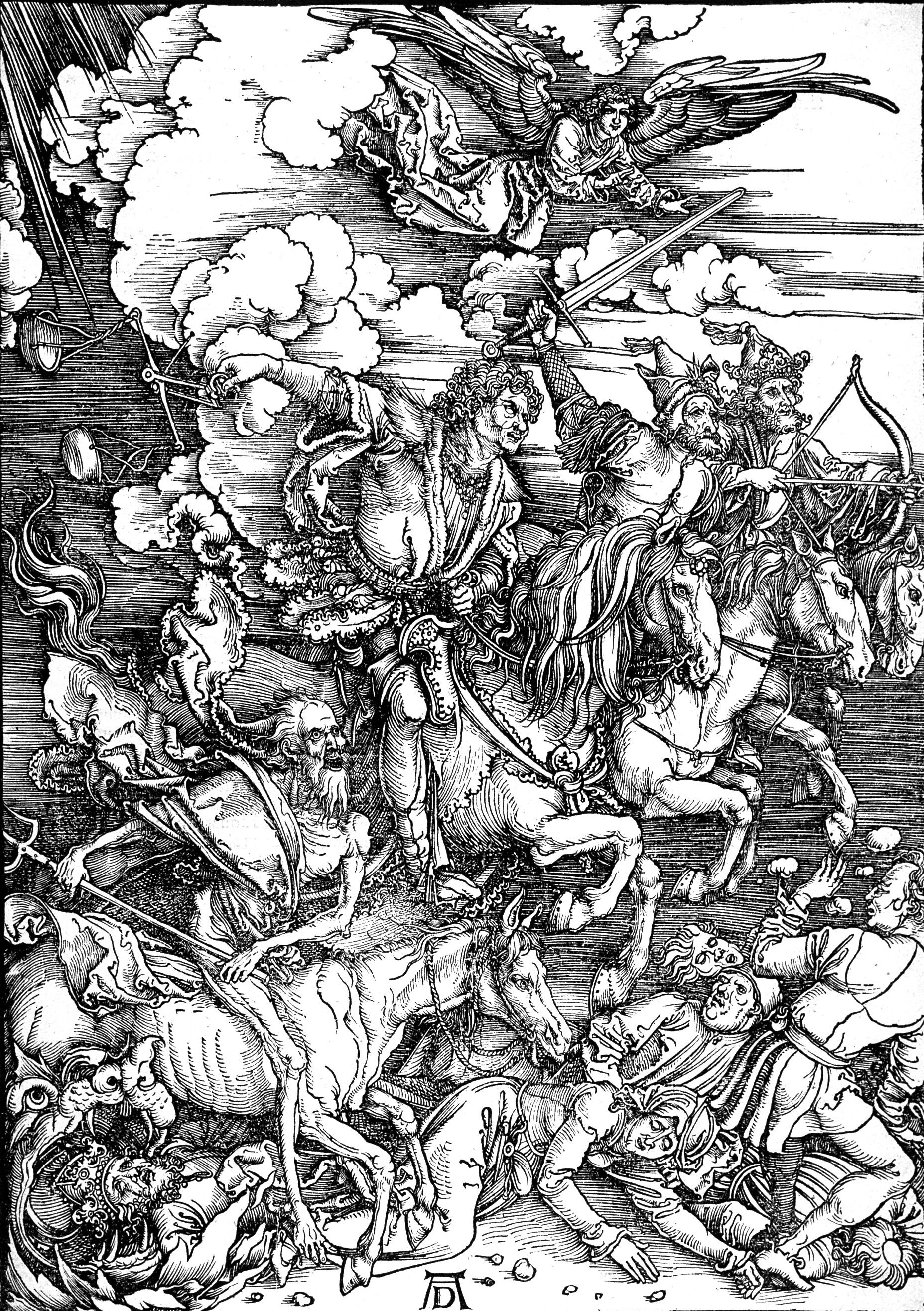
Four Horsemen of the Apocalypse - woodcut print by Albrecht Durer c. 1497-98

Four Horsemen of the Apocalypse – woodcut print by Albrecht Durer c. 1497-98

Not only was Dürer supremely confident and talented in drawing, etching and painting (both watercolour and oil) he also harnessed the power of the invention of the age: Gutenberg’s printing press. He was the first major artist to embrace the revolutionary way images were made and used with his iconic woodcut prints. Instead of making just one print he was able to make and distribute thousands. It was a total transformation in communication.

Branding expert

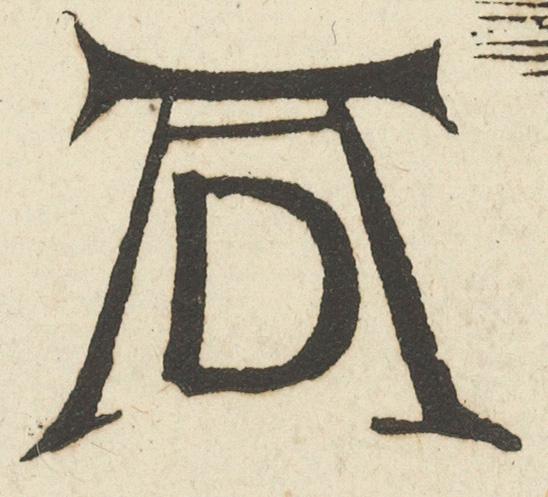
Dürer’s ubiquitous monogram of a large capital A above the smaller D that he placed in a prominent position on all his works could be considered the very first trademark and brand. How clever of him to make sure everyone knew he was behind such works of genius…

Albrecht Durer - Monogram

I doubt that the likes of Coca-Cola, Apple, Disney and other famous brands realise how the concept of branding began with this visionary artist.

He wasn’t afraid to push the boundaries of what was acceptable, exploring his talent and his art regardless of the religious turmoil of the age. Living during the Renaissance and the Reformation enabled his vast creative expression to flourish.

Further south on the other side of the Alps in Italy, Dürer’s contemporaries; Michelangelo, Raphael and Da Vinci were also making art history, but this did not seem to deter Dürer from forging his own path in Nuremberg.

Albrecht Dürer was the undoubted star of the Northern Renaissance; a polymath who mastered painting, printmaking, and theory. His fame and fortune was way ahead of its time for an artist of the early, modern era to experience in his lifetime. His popularity even reached as far as India.

Albrecht Dürer: Masterpieces at the Albertina

Earlier Self-Portraits

The very first self-portrait ever painted was also by the same artist, when he was just thirteen years old, and can be seen in The Albertina Museum in Vienna.

His 1498 Self-Portrait hints at an elegant, confident young man, with his shirt softly billowing in the breeze. However, each detail has been carefully considered and executed with the utmost technical precision.

Self Portrait c. 1498 by Albrecht Dürer in the Prado, Madrid

Self Portrait c. 1498 by Albrecht Dürer in the Prado, Madrid

He is portrayed as a slightly ostentatious dandy compared to his previous more boyish portraits.

Other Self-Portrait sketches by Dürer depict him in the act of sketching himself as well as in a vexed state. He was also the first artist to draw a nude Self-Portrait. He was certainly preoccupied with his own appearance, for no other artist before him had left such probing accounts of their person. Maybe for him, art was his way of exploring who he was at his core.

Albrecht Dürer: 21 May 1471 – 6 April 1528

Albrecht Dürer was born during the Northern European Renaissance as a native of Nuremberg, the third child to a Hungarian born goldsmith, Albrecht Ajtósi and his wife Barabra Holper, who supposedly had eighteen babies. Albrecht was the eldest son (and only one of three children) to make it to adulthood.

The German version of their Hungarian name was Türer, which Albrecht the Younger changed to Dürer to better suit the German language and dialect.

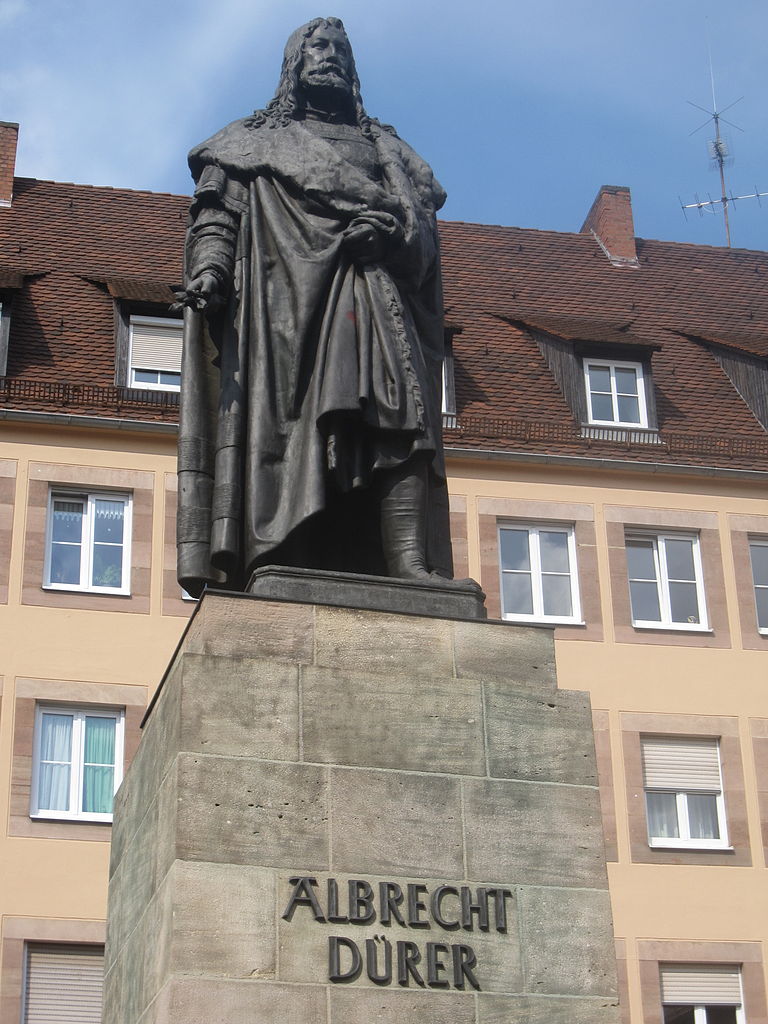
Albrecht Dürer statue in Nuremberg

He grew up in the mythical German city of Nuremberg during its golden age as a trading centre and home to the treasures of the Holy Roman Empire. In 1828 a bronze statue of Dürer was revealed to mark the third centenary of his death, (the first public statue of its kind of an artist in the world), and miraculously, it survived the heavy bombing of the city during the Second World War. To Nuremberg’s credit the historic city centre was rebuilt in its original medieval style that was so reminiscent of Dürer’s Halycon days.

For those that wish to learn more about his life and work:

He was a remarkable man; a humanist, scholar, philosopher and intellectual, with an interest in literature and nature as well as many forms of art. He left an incredible cultural legacy for humanity.

“As I grew older, I realized that it was much better to insist on the genuine forms of nature, for simplicity is the greatest adornment of art.” ~ Albrecht Dürer

Ultimate Life Lessons – An Amazing Day on the Charisma Connection

“Charisma is an authentic power that captivates the hearts and minds others.” ~ Nikki Owen

I’ve been through many self-development and training workshops over the course of my career. All of them have been valuable in their own right, but some make such a profound impact that the experience as well as ‘aha’ moments can continue to be applied to your life long after the initial learning has been assimilated. The Charisma Connection was one such day.

Creator of the Charisma Connection: Nikki Owen

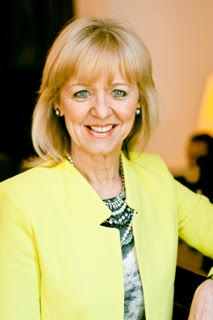
Sylvia Baldock

Sylvia Baldock

I had not come across the work of Nikki Owen before I attended this workshop, but was persuaded by a dynamic business woman, Sylvia Baldock, the Regional Director of my local Athena networking group, who I know and trust; that it would be a worthwhile investment. I’m glad I listened to her!

Sylvia met Nikki through her membership of the Professional Speaking Association (PSA) and became fascinated by her work on charisma as it tied in closely with her own expertise on Talent Dynamics and Flow.

Charisma - Sylvia logoTo cut a long story short, Nikki trained Sylvia so that she could be accredited to deliver her pioneering work.

Thirty years of research have been distilled into a life changing day of learning, laughter and limitless possibilities.

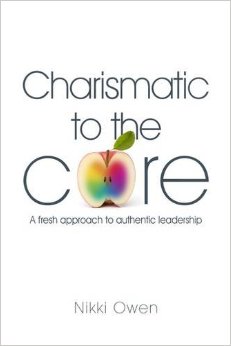
As part of the study materials for The Charisma Connection we each received a signed copy of Nikki’s ground-breaking book: Charismatic to the Core, our workbooks and access to her amazing Hypno Meditations, our online charisma profile to identify our charismatic potential as well as a follow up call with our trainer Sylvia.

Nikki’s story is incredibly moving and inspirational. You can read about her achievements, get your own charisma profile and more, on her website.

Charisma - Charismatic to the Core

I had a few doubts in my mind before I arrived at the venue, the Crowne Plaza hotel in Marlow. Could I really afford to take a whole day out of the office that wasn’t geared to my business? I was thinking of all the writing I should be doing and the meetings I wanted to set up.

All the machinations in my mind were dispelled virtually the instant Sylvia greeted me. I knew it was going to be a worthwhile day and a much needed investment in myself. Sylvia’s positive energy radiated and connected with mine before she even said a word.

Our seats were laid out in a semi-circle with all our materials in a bright and airy room scented with beneficial aromatherapy oils, and Sylvia’s warm introduction set the tone perfectly. There were eight of us in the group which meant that we could get the most out of our individual and team exercises.

“When you are being true to who you really are inside, you shine in your own unique way.” ~ Nikki Owen

Format

Sylvia gave us a brief overview of the day and began by telling her story. It was an emotional and uplifting start which bonded us beautifully.

We then began our first exercise, which was discussing the charismatic advantage in the areas of success, engagement, resilience, talent and health.

We split into two groups and did a wonderful exercise that highlights the processes going on unconsciously in our heads and how that translates to our emotions and subsequent actions. We had to put the right terms onto a magnetic board to show what happens when we are subjected to information and sensory input. It was harder than it looks! However, with a bit of guidance from Sylvia we got there eventually.

Charisma model

According to Mihaly Csikszentmihalyi, professor at the Drucker School of Management in California, every moment our unconscious mind absorbs over two million bits of information through our senses. Professor George Miller, Harvard Business School states that consciously we typically only process around seven chunks of this stream of information.

Who are you?

In order to create the right internal conditions for our charisma to develop Sylvia grouped us into pairs to ascertain our authenticity and purpose, which is vital to help our charisma grow and flourish.

For the first part of the exercise we sat comfortably facing our partners. Person A wore a blindfold to promote deeper introspection and person B asked “Who are you?” every 15 seconds, while remaining present and focused on their partner. As person A responded, person B made a note of their answers. We did this for five minutes and then switched roles.

Having the question “Who are you?” repeated continuously for this period of time enabled us to reach beyond our early superficial responses and reach deep into our subconscious minds to access our truth.

Charisma - youth

For the second part of the exercise we followed exactly the same format, except Person A asked person B “What do you want?”

This was an incredibly powerful exercise, and I’ve been looking through some of answers my partner Gerry wrote down.

Just before lunch Sylvia treated us to one of Nikki’s relaxing Hypno Meditations. Her soft voice spoke to us, specifically recorded with two to three dialogues speaking at the same time to have maximum impact on the brain, accompanied by binaural beats and music. Lunch was a delicious, healthy buffet, and we even managed to sit out on the balcony before the rain descended.

Survival or Growth?

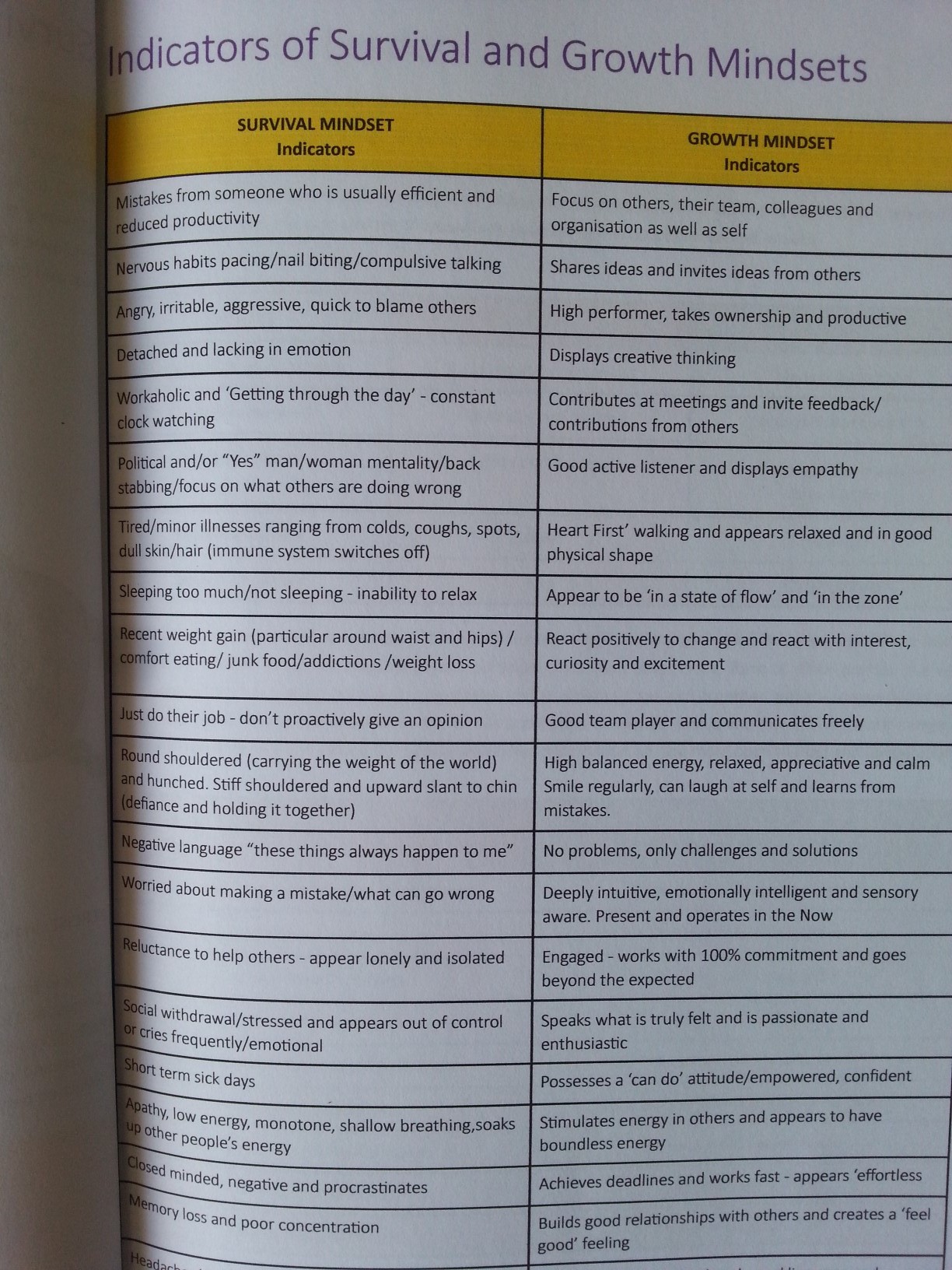
The afternoon session was equally eye-opening. We began by studying the attributes of someone in either a survival or growth mindset. Again, Sylvia split us into two groups, each taking a mindset. We shared our findings and reflected on the specific behaviours and physical symptoms.

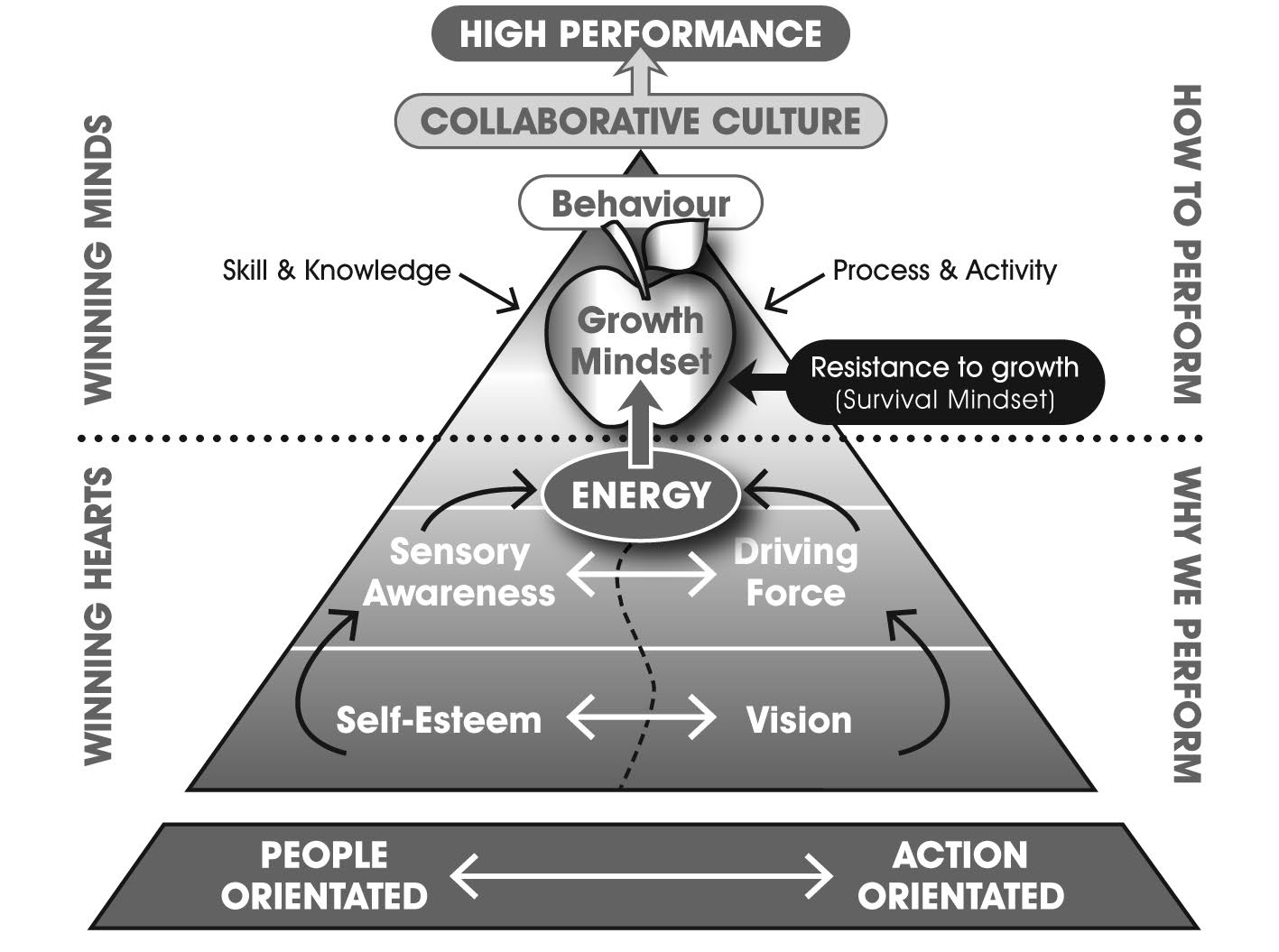
Afterwards we collectively went through the Survival/Growth models and Sylvia explained that when a person is in survival mode and typically stressed, their cells literally shut down, triggered by the release of cortisol and adrenaline. In order to protect themselves cells become closed silos by sealing themselves and moving into a protective operating mechanism. This in turn prevents other growth hormones from entering.

When we are living and working in a safe and supportive environment we release serotonin and oxytocin which increase an individual’s openness towards social belonging. This chemical reaction opens the cells so they can absorb nutrients for growth.

Charisma - survival - growth

It’s obvious to see why some businesses and organisations go from strength to strength and others fail. If individuals are placed in an environment where they feel stressed, that encourages selfish, closed thinking – a silo mentality. Nikki points out that a safe and supportive environment will actively encourage open, selfless thinking – a collaborative and caring culture. And the key to silos lies in our cellular biology!

We talked about charismatic leaders and the importance of Maslow’s Hierarchy of Needs in attaining a growth mindset, both individually and as part of an organisation.

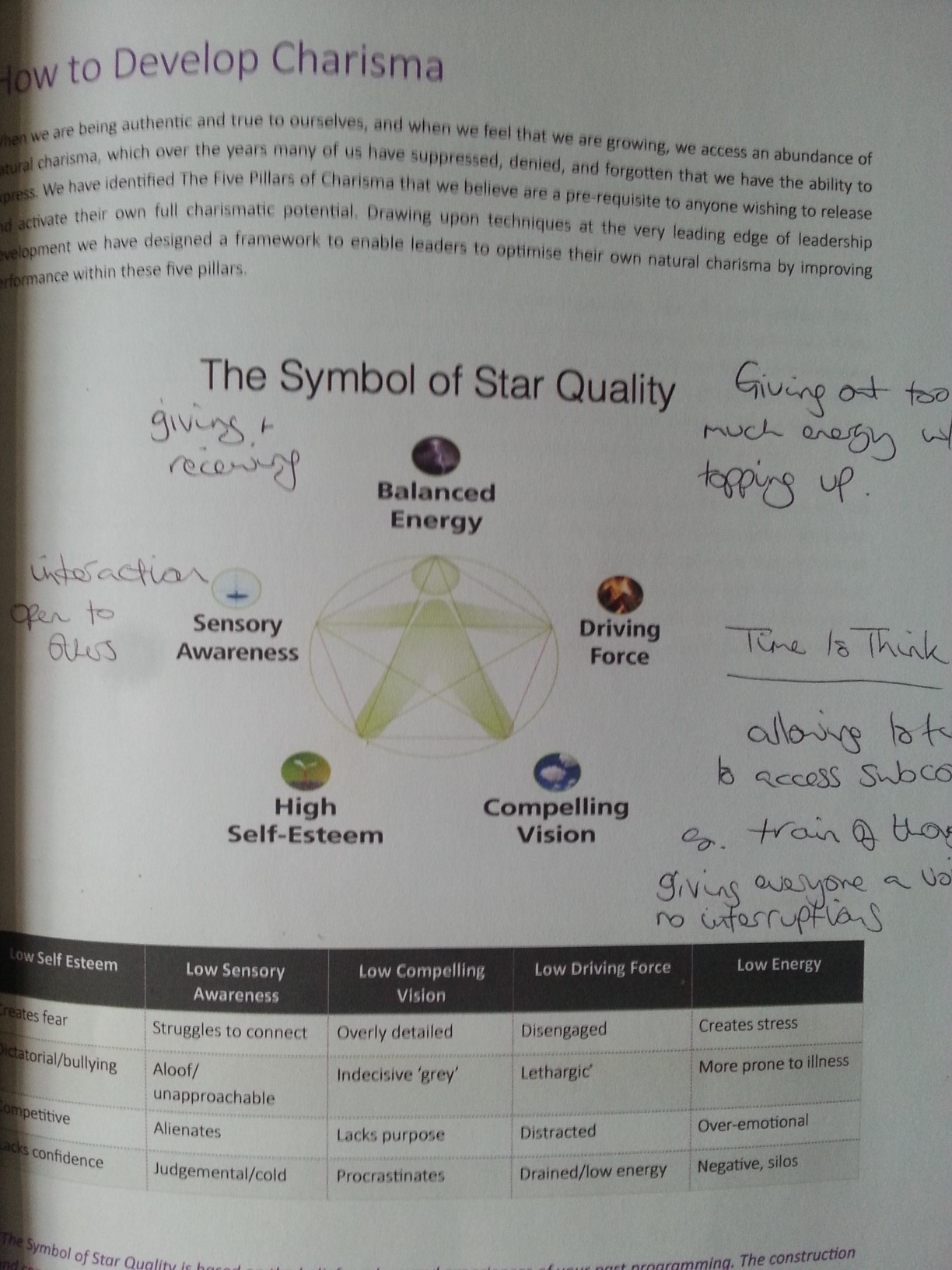
How to Develop Charisma

Sylvia showed us the five pillars of charisma and we covered each one in detail. These pillars were shown on a five point star. We could see how a downward spiral in the areas of balanced energy, driving force, compelling vision, high self-esteem and sensory awareness would create a silo, whereas strengthening these attributes develops charisma and improves your whole life.

“The symbol of star quality is based on the beliefs, values and experience of your past programming. The construction and constituents of each pillar is expressed through a variety of unconscious behaviours that in a work context influences a leader’s impact either positively or negatively.” ~ Nikki Owen

Charisma - five pillars - star

Charisma Constellation

We did an interesting exercise (again in pairs) to establish our charisma constellation. This powerful process meant we could engage with the depth, wisdom and awareness of our unconscious minds to gain intuitive insights about our charisma.

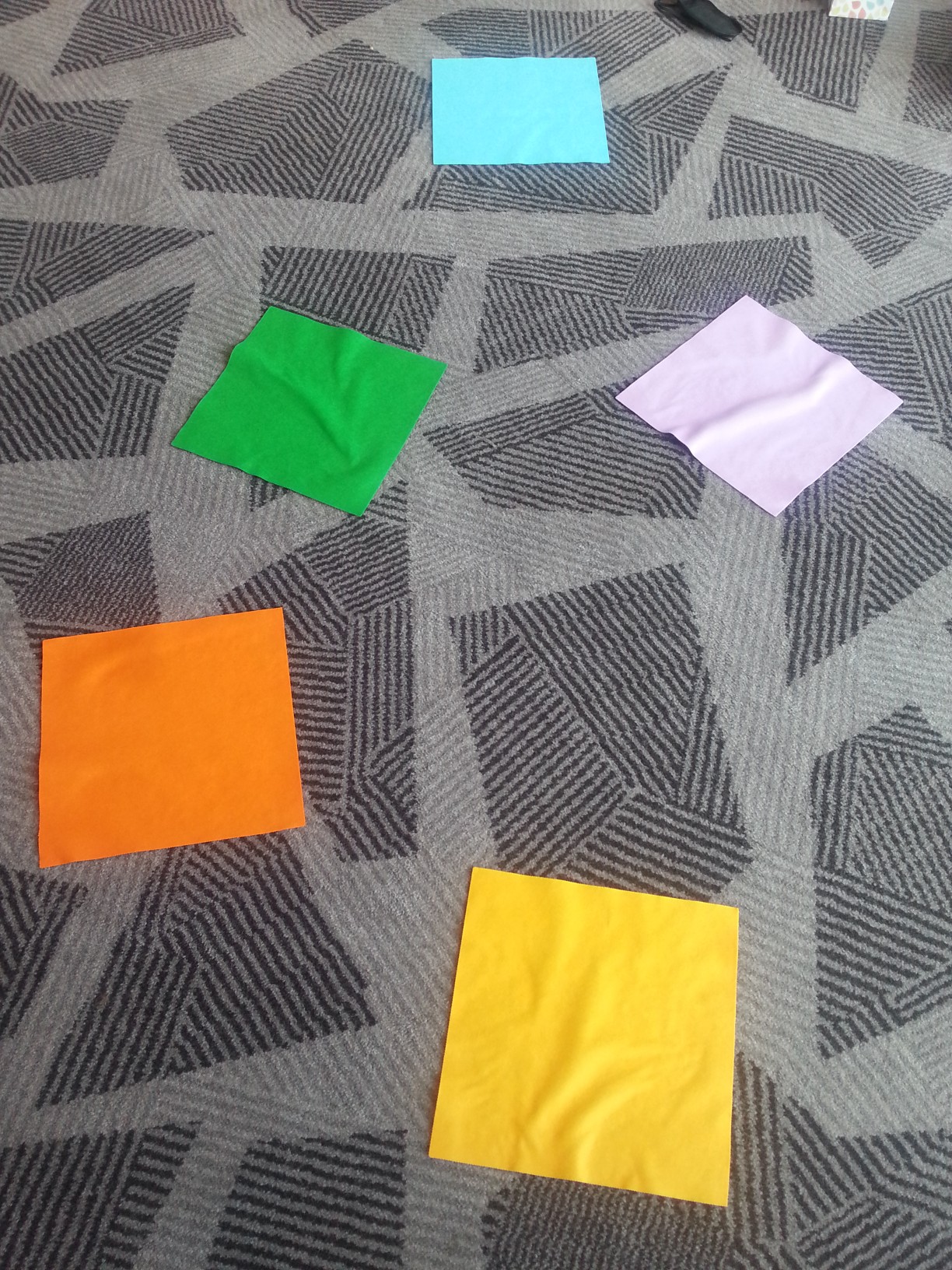
It involved using colours for each pillar, some of which are representative of the Chakra System.

We placed the colour squares for each pillar onto the floor in the positions and colours that felt right to us. My balanced energy point was yellow, at the start, close to my driving force which I chose orange, close to self-esteem which was green, alongside my purple sensory awareness looking towards my vision for which I chose blue.

Charisma - constellation

As we stepped on each square we had to notice how that colour made us feel in relation to each point on the star. We were allowed to rearrange the footprints until we established what felt in alignment with each person.

The Charisma Model

Thoughts Become Things

We saw the pictures of Dr. Masaru Emoto’s extensive experiments on the molecules of water crystals in samples that had been split into separate containers and labelled with worlds such as love and peace and hate and war.  The resulting images he later studied under a microscope revealed that thoughts and intentions profoundly affected the matter they were directed at.

Nikki did her own experiment in 2009, which she termed ‘The Big Apple’. It involved cutting an apple into two halves, again directing positive, loving thoughts to one half, and negative, thoughts, beliefs and emotions towards the other half. The results were astounding!

These results highlight the power of focused intent. It really shows how a leader can impact on the culture, performance and results of an organisation, or indeed a country.  Research by Goleman, Boyatzis and McKee (Primal Leadership) cite that the leader’s mood is not only contagious but it affects the bottom line.

Eliminating Limiting Beliefs

The final exercise of the day was invaluable. Sylvia discussed with us the impact that early programming in childhood can have as we grow up and thus implant self-limiting beliefs. I am always in awe of my children’s lack of guile, and of the generally open, honest and direct way they express themselves. They haven’t yet managed to sabotage their beliefs.

We paired up again with our course partner and chose a limiting belief that we wanted to exterminate. One person then asked the other various questions about their limiting belief, and in part two they asked more but different types of questions.

I had an amazing ‘aha’ insight that my empowerment doesn’t depend on anyone else. This was such a powerful exercise.

Charisma - limiting beliefs holding back

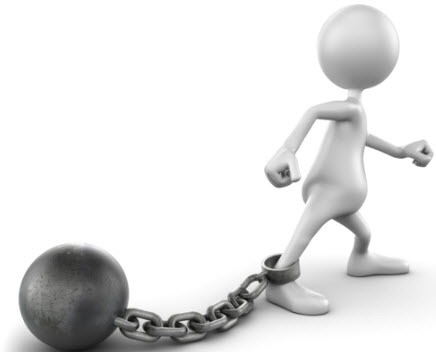
As I said to Sylvia, it’s a great feeling to challenge and destroy those beliefs that don’t serve our purpose, passion and potential. It’s liberating to cut loose the heavy ball and chain of the thoughts that hold us back.

I saw Gerry last week at our Athena meeting and she is as keen as I am for us to get together every month or so to continue our progress.

The day was rounded off with a different Hypno Meditation and Sylvia told us a very moving story. We each drew on a plate our thoughts of the day and explained a little about how we had arrived at our creations.

Insights

Lots of things ‘stuck’ for me on this day. Some of the teaching I had been exposed to before to some lesser degree, but it was taught in such a brilliant way that it affected me profoundly. The following days saw some incredible coincidences. I bumped into people I had been thinking about that I hadn’t seen for a year or more. Everything seemed to flow. I’m sure that’s because I was in a creative, growth place!

Big thanks and appreciation go to Nikki Owen for producing this material and to Sylvia Baldock for facilitating our learning in such a charismatic way. She certainly practiced what she preached!

Charisma - Sylvia logo2

I will continue on my charismatic journey. I have been starting and ending my day with the Hypno Meditations and working through the material again in my own time. I will continue to peel back the layers to reveal my authentic self. I have started to apply what I’ve learnt so that I can be a better parent and become a person who can inspire others.

If this post has inspired you, please do buy a copy of Nikki’s book, visit her website and that of our trainer Sylvia Baldock. You won’t be disappointed.

“Charisma is your birth right, it is a natural state that is within all of us, including you, just waiting to be awakened.” ~ Nikki Owen

#SundayBlogShare – A British Summer 🌳🌺💨☔🌞

After waking up with a bit of a hangover I felt the urge to write about the weather… How very British! I was also pondering on how the collective unconscious affects our perception of nature. I hope you enjoy it, and perhaps even relate to it on some level.

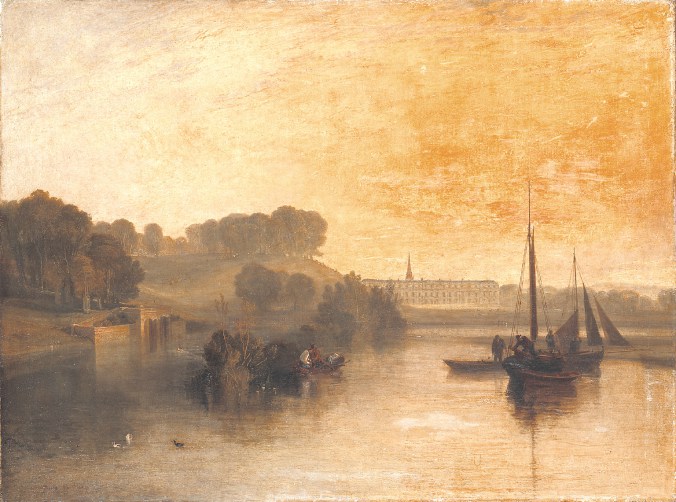
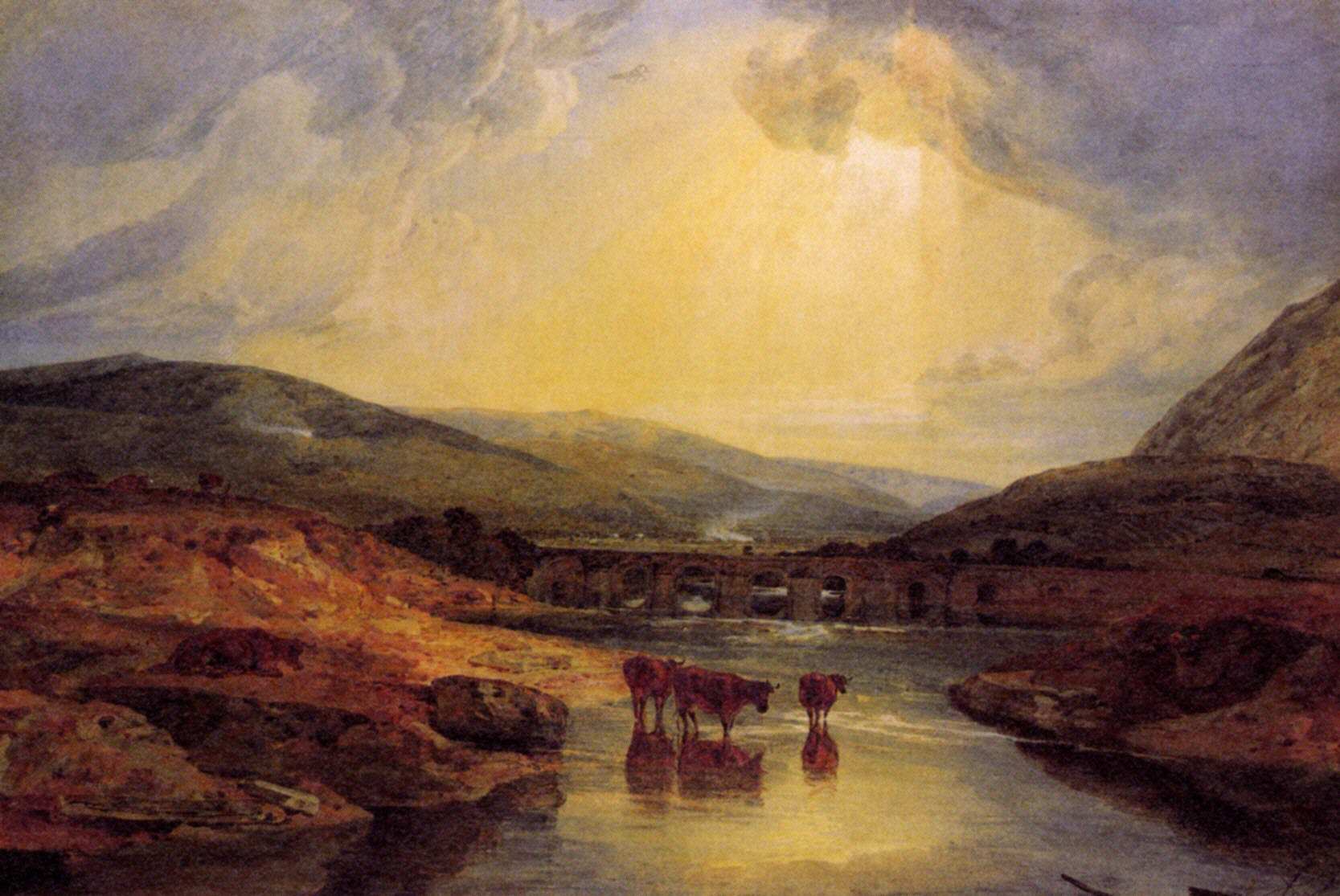
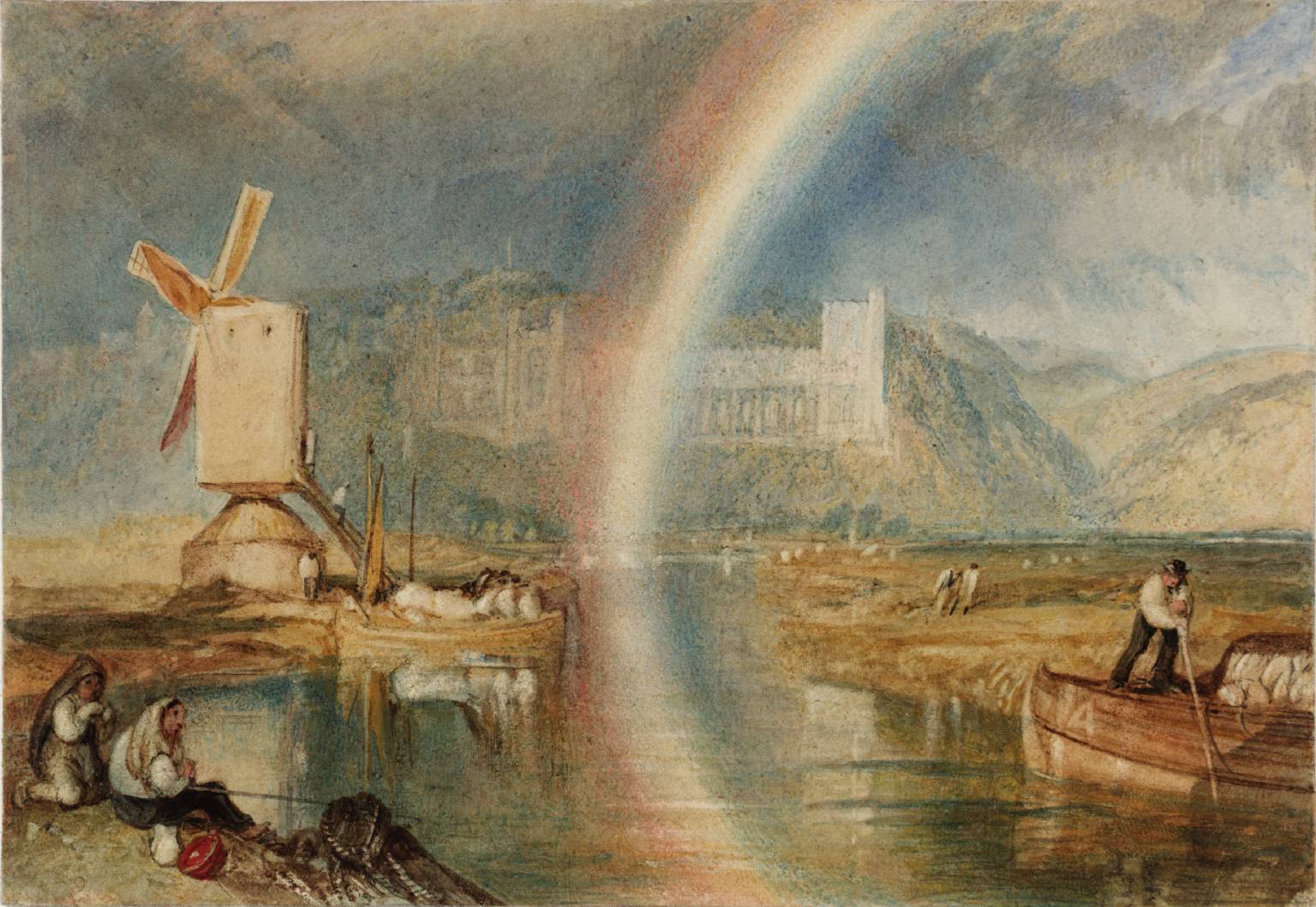
As I love the work of Joseph Mallord William Turner, Britain’s most prolific and famous landscape painter, I have used his art to help illustrate my prose.

Happy Sunday!

A British Summer

Heavy grey clouds claim the sky, suffocating hope,

Reflecting the changing moods of the nation,

Temperatures fluctuate; oppressive then cool,

Winnie-the-Pooh’s blustery day is upon us…

Raby Castle, the seat of the Earl of Darlington, by JMW Turner

Raby Castle, the seat of the Earl of Darlington, by JMW Turner

Towering trees adorned with lush, verdant leaves,

Shimmer, bend and wave in nature’s breathy puff,

Wild flowers populate meadows and hedgerows,

Colourful petals spread succour for broken hearts

Thomson's Aeolian Harp by JMW Turner c. 1809

Thomson’s Aeolian Harp by JMW Turner c. 1809

Rays of sun breakthrough, beaming sporadic warmth,

Threat of violent showers always present, looming,

A green and pleasant land supports uncertain steps,

Whether bold or timid; blades of grass in their billions.

Abergavenny Bridge Monmouthshire by JMW Turner

Abergavenny Bridge Monmouthshire by JMW Turner

Pimms and tennis distract weary, outraged citizens,

Quintessential Hundred Acre Wood of our nation,

Still holds surprises. The worker bees hide not;

Streams babble and burst lowly banks.

Arundel Castle on the River Arun, with a Rainbow c. 1824-5 Joseph Mallord William Turner 1775-1851 Accepted by the nation as part of the Turner Bequest 1856

Arundel Castle on the River Arun, with a Rainbow c. 1824-5 Joseph Mallord William Turner

Life abounds in forests, fields and flowers,

Towns and cities go about their daily grind,

Forgotten worms thrive in velvety brown sludge,

Birds soar above gardens, manicured or wild.

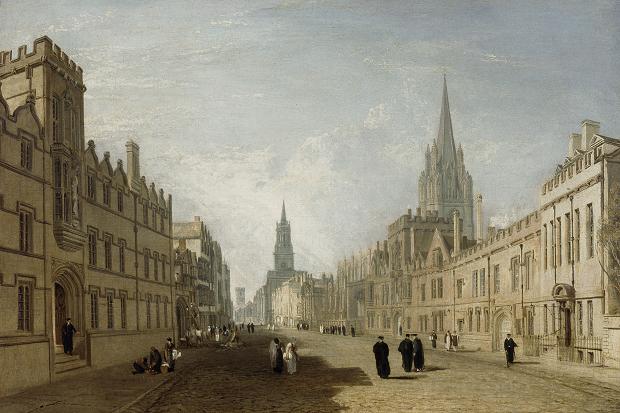
Oxford High Street by JMW Turner

Oxford High Street by JMW Turner

In times of trouble the land is earthy and stable,

The cycle of death and rebirth ceaseless, reliable.

Gain strength from longer, lighter days, be

Fortified by the season of playfulness and revelry.

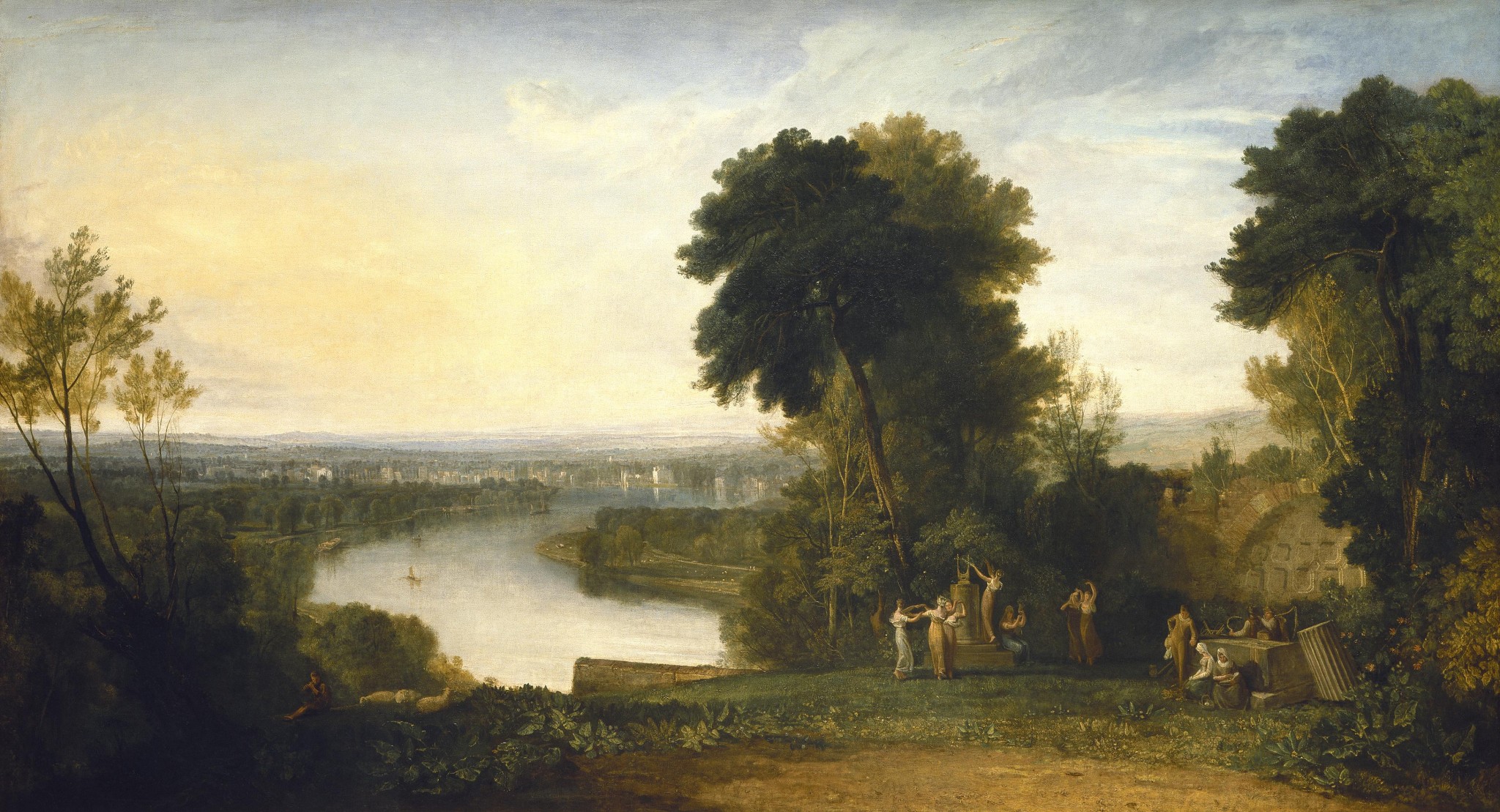
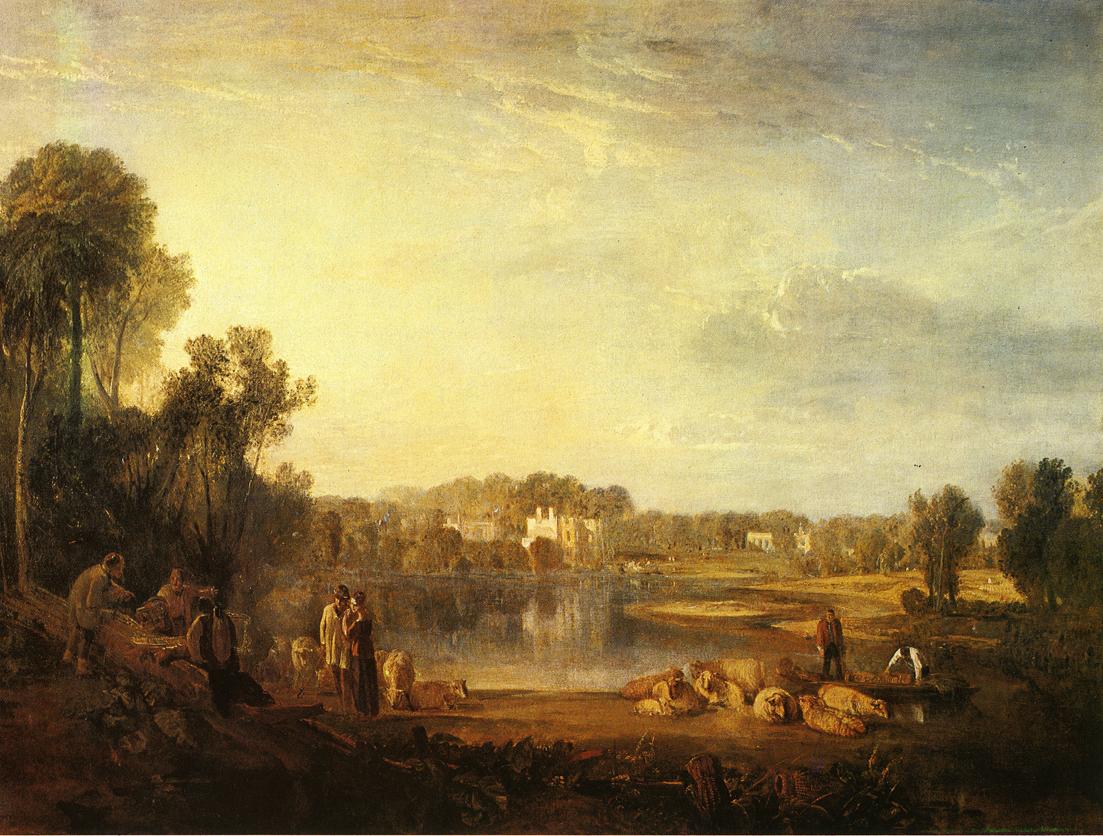
Pope's Villa at Twickenham by JMW Turner

Pope’s Villa at Twickenham by JMW Turner

History lives on in ancient stone walls,

Land of democracy and freedom decays,

Only to grow back around human drama,

Scenery of ups and downs: metamorphosis.

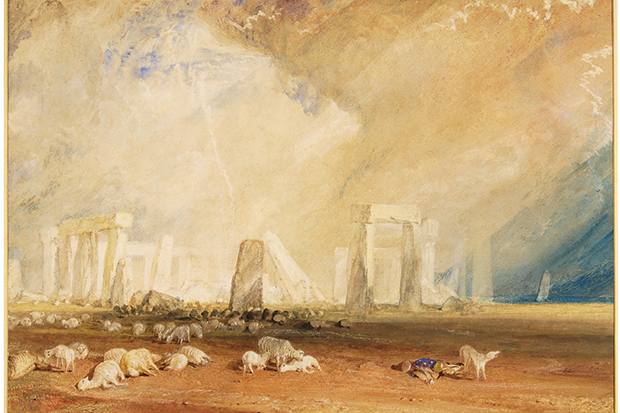
Stonehenge by JMW Turner c. 1827

Stonehenge by JMW Turner c. 1827

Lakes and mountains, coasts and cliffs,

Magnificent island refuge to everyday strife,

Spires look upwards over quaint village greens,

Season of vitality to revive cynical souls.

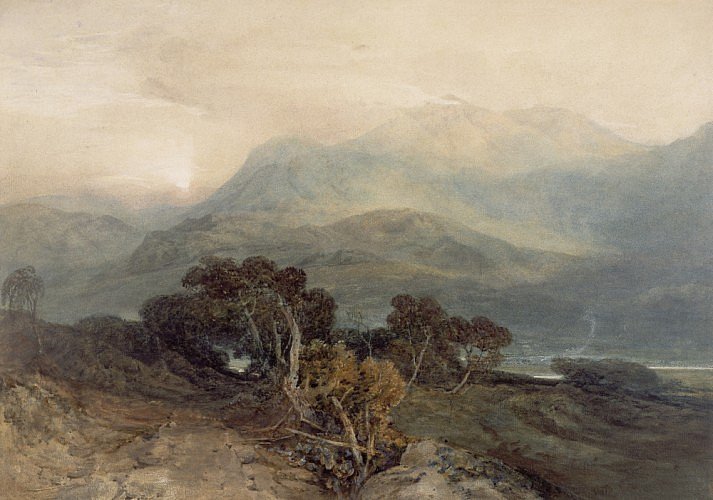
Scottish landscape by JMW Turner

Scottish landscape by JMW Turner

English rose, soft symbol of beauty and summer,

She attracts us with her sweet, heady scent,

Draws blood with her protective, thorny fingers,

But we love her essence and fullness of life.

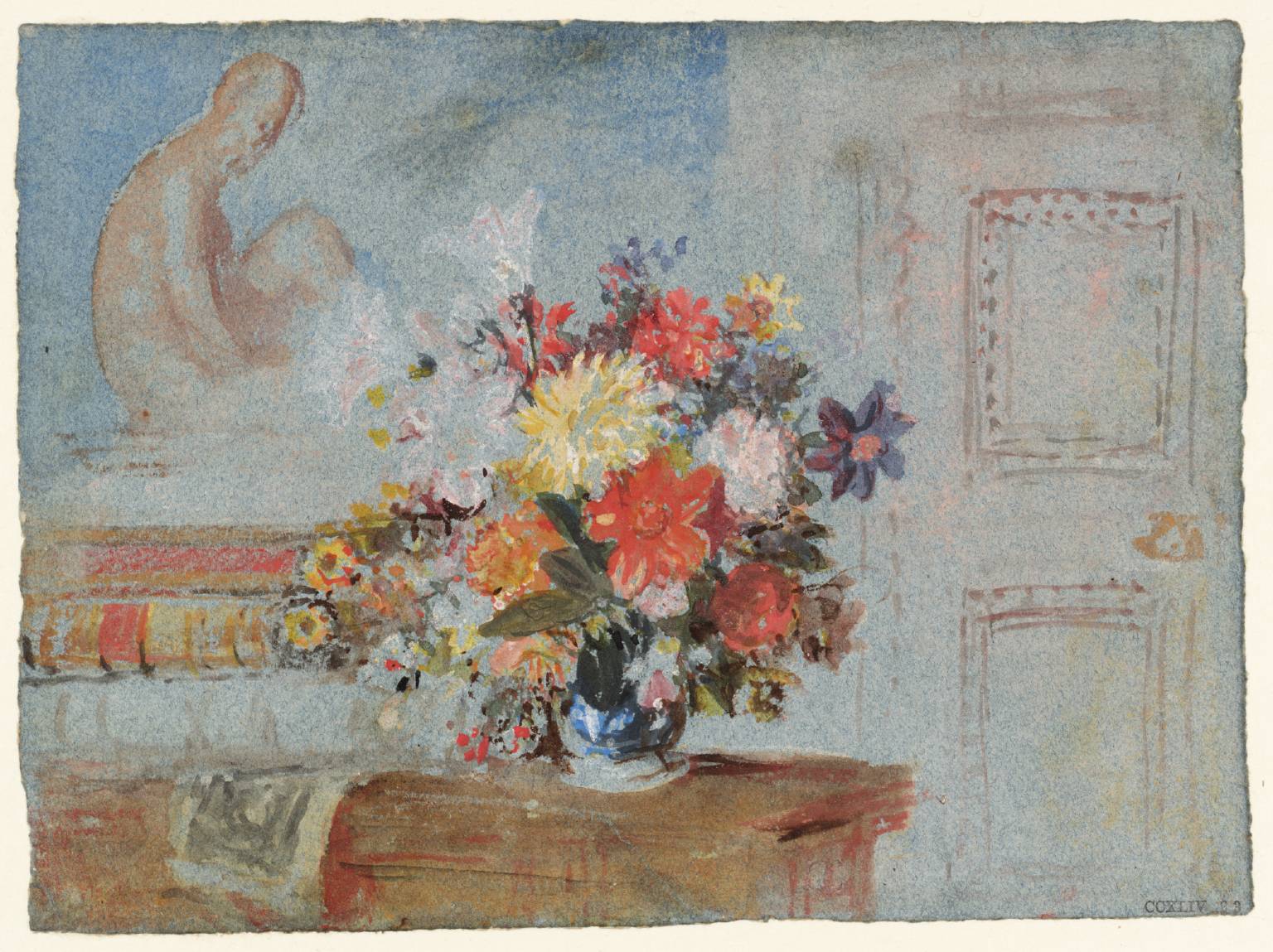
The Old Library: A Vase of Lilies, Dahlias and Other Flowers 1827 Joseph Mallord William Turner 1775-1851 Accepted by the nation as part of the Turner Bequest 1856

The Old Library: A Vase of Lilies, Dahlias and Other Flowers 1827 Joseph Mallord William Turner

Is this the summer of our discontent?

Rough winds do shake wounded spirits,

Sprites commit their mischief then sneakily retreat,

But Bacchus’s bounty exists for all who seek it…

By Virginia Burges

jmw-turner-petworth-house

Petworth House and Park by JMW Turner

The Magic of Embracing Femininity in a Man’s World

“This has always been a man’s world, and none of the reasons that have been offered in explanation have seemed adequate.” ~ Simone de Beauvoir

One of my favourite songs is It’s a Man’s World by James Brown. I loved his voice, vibe and vitality. The melody is tuneful and catchy, almost addictive; but the lyrics are pure genius. I’m sure you know the song well, but why not have another listen? I love this duet version with opera supremo Luciano Pavarotti:

By virtue of their experience most women will agree it’s still a man’s world. The irony is that it can only ultimately be propagated and populated by women. If we weren’t willing to, or couldn’t bear children it would threaten the survival of our species, (cue the brilliant novel by P.D. James, The Children of Men).

A mother is the most vital person in a baby’s early life, the source of food, love, security, comfort and care. She is indispensable. Her femininity is integral to life. But before she’s a mother she’s a woman.

The divine feminine

Women have struggled against repression from the dawn of time to the present day, (with exceptions of course), having been subjected to rules and conditions that were imposed by religion and men who felt threatened by feminine power.

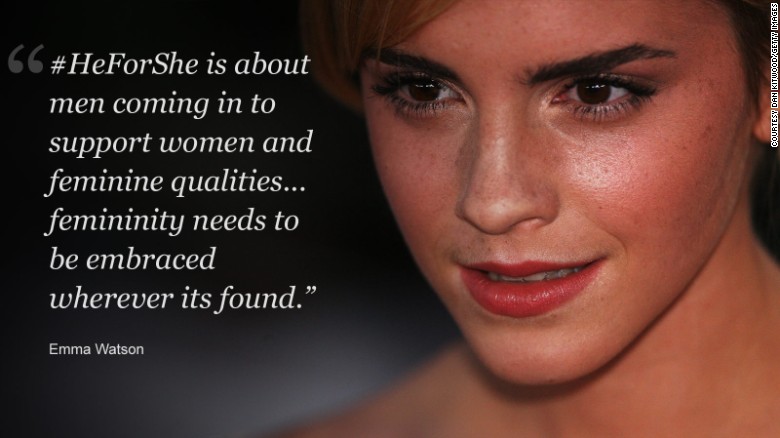
Femininity - Emma Watson

Our human rights have been trampled over in the most appalling ways. In many parts of the world women continue to be treated like second class citizens, deprived of education, used as sex slaves, domestic slaves; not permitted to show their faces and made to walk behind a man.

In Victorian Britain women were not allowed to vote, spawning the rise of the Suffragette Movement, spearheaded by heroines such as Emily Pankhurst. She was no less feminine for her bravery, sacrifice and cause.

Women and girls have been given away in marriage by their parents without a say in a commitment that will affect the rest of their lives and future happiness. Even worse, some have been murdered for daring to love the man they want instead of a man that has been ‘chosen’ for them.

Femininity is about respect for life in all its forms.  It is not about manipulation and control.

Unlike the cruel, ego led males that have trafficked young, vulnerable women and condemned them to a life of prostitution so that their pimps can rob them of all dignity and freedom and live off of their subjugation. It’s sickening. If women rise and live in their power these types of situations will become less prevalent.

I so admire the work of Angelina Jolie with the United Nations in standing up for Women’s rights. She has achieved her success by embracing her own feminine power.

In many parts of the world girls are denied an education in an attempt to keep feminine power from manifesting. That is why the Nobel Peace Prize Laureate Malala Yousafzai is such an important role model for young girls across the globe. Her courage, intelligence, determination and humanity have thwarted hatred, ignorance and fear.

Femininity - malala quote1

An educated woman is a force for good in the world.

In the West, where women mostly have the luxury of equal rights (and in some cases equal pay), we still fight against injustice, prejudice and sexism in corporate life as well as mainstream media. The plethora of sexualised images of women on posters, magazines, TV and films contribute subliminally to the feeling of inadequacy that many of us (who weren’t blessed with supermodel looks) feel about our bodies. In my case after having children.

We end up comparing our imperfections against the perfect ‘retouched’ glossy photos where hair and makeup have been professionally applied so it’s never a fair contest. It should never be a contest, but it’s hard not to feel inferior when we are constantly bombarded with images of nubile goddesses in their prime versus our post motherhood forms.

Turkey - 1989

Yours truly on holiday in Turkey in 1989. It reminds me of my ‘free spirit’.

Sometimes it’s fun to be reminded of our prime! We remember that youthful part of us is still part and parcel of our more mature selves.

The Siren

A siren has an air of mystery; she is alluring and confident in her own skin. It’s not about sexual domination, but about being in tune with her abundant sexual energy. Perhaps, mistakenly, we think that men will only notice us if we flash the flesh, wear red lipstick, walk in high heels and brandish our ‘assets’ in plunging necklines. I’ve done it occasionally myself. But I firmly believe there’s more to femininity than appearance.

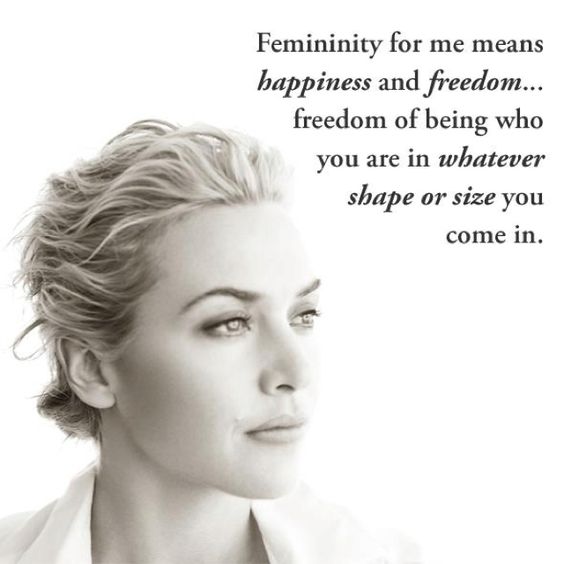
Femininity - Kate Winslet

By all means we should make the best of ourselves. I’m not saying there’s anything wrong with that if makes you feel good and it’s done with self respect. True sexiness comes from embracing our innate femininity and personal power. It’s feeling content with who we are, happy in our own skin (even if it does bear the stretch marks of motherhood).

It’s about making the best of our appearance for our own self-esteem and not always pandering to the preferences of men. It’s about embracing our ‘inner goddess’ by knowing that we are beautiful on the inside and on the outside.

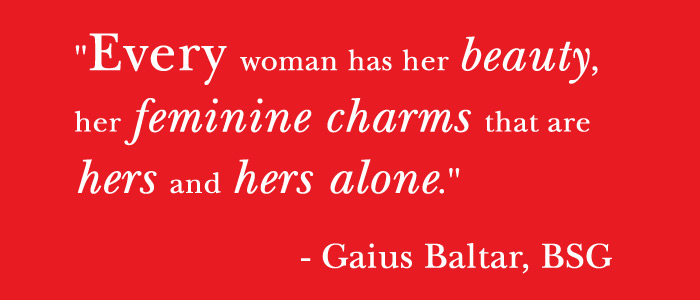
Femininity - Quote_GaiusBaltar_Beauty

Understanding our strengths and representing our unique virtues and values in the world is the ultimate expression of our divine femininity.

femininity

noun: the quality of being female; womanliness.

“she celebrates her femininity by wearing make-up and high heels”

synonyms: womanliness, feminineness, womanhood, womanly qualities, feminine qualities

“she had always delighted in her femininity”

You are smart, sexy, intelligent, kind, empathetic, intuitive, tender and strong just as you are. Women can thrive in a man’s world by being true to who we are. A woman who loves and respects herself first and foremost will be a valuable partner in any relationship. She’s not clingy and insecure, but rather in touch with her own emotions and therefore more likely to be in tune with those of her partner.

Dancing and movement is a wonderful, grounded way to express and manifest feminine energy. Ilaria Masini illustrates my point perfectly with her contemporary ballet performance to Händel’s Sarabande:

Battle of the sexes

Any kind of repression and curbing of freedoms will elicit a backlash, otherwise there would have been no need for the feminist movement. It’s understandable that women have developed more traditionally ‘masculine’ qualities in order to tough it out in a man’s world or a challenging environment. But we must return to our true nature.

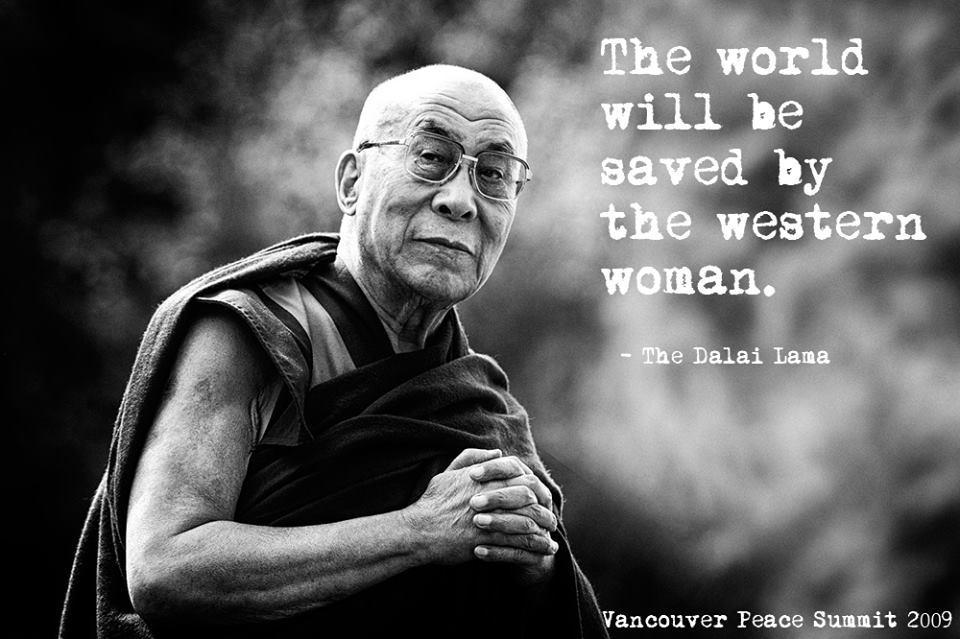
Femininity - dalai-lama

I view it as not being a question of competition but of collaboration. A woman is meant to complete a man, not finish him off! There’s such beauty and symmetry in Yin and Yang.

We’ve all seen and met a woman in business who dresses in trouser suits and acts like a hard bitch or a ‘femme fatale’ because she thinks she has to emulate a man to succeed. She betrays her feminine side in order to be accepted as one of the lads.  Deep down they will not respect her for it, they will feel threatened.

Women don’t need acceptance from anyone but themselves.

The interactions between men and women are most harmonious when both have an equal balance of their ‘anima’ (feminine principle) and ‘animus’ (masculine principle). I’ll be covering more of Jung’s work on this fascinating subject in a later post.

Feminine power

Embracing our femininity is entwined with accepting and asserting our personal power and realising our God-given talents. We can achieve anything we set our minds to.

“On the day when it will be possible for woman to love not in her weakness but in her strength, not to escape herself but to find herself, not to abase herself but to assert herself–on that day love will become for her, as for man, a source of life and not of mortal danger.” ~ Simone de Beauvoir

The qualities of femininity as I see it means expressing ourselves in whatever mode we choose. We can be nurturers, achievers, thinkers, lovers or whatever we desire. It will change depending on what stage of life we’re at. Many of us with children are multi-tasking for our lives.

Femininity - Strong Albert Einstein

There have been a few times when I’ve had to unleash Kali in order to survive. But I locked her away again after she had accomplished her purpose. Otherwise I would have been eaten up by anger, bitterness and revenge. Nowadays I like to call on Isis, Venus, Aphrodite and Athena, depending on the circumstances!

Just be…

Be a communicator, be savvy, be strong, be vulnerable, be a damsel in distress if it serves you. Be sexy, be passionate, be sensual, be exhilarated, be interested, be inspired, be lazy, be active, be funny, be playful, be sad, be brave, be scared, be emotional, be detached, be connected, be selfish, be kind, be giving and loving, be protective, be daring, be sporty, be adventurous! Don’t become stuck. Follow your heart! Your dreams matter.

Embrace the whole darn lot! It’s time we claimed an equal share in the sense of entitlement that men often display.

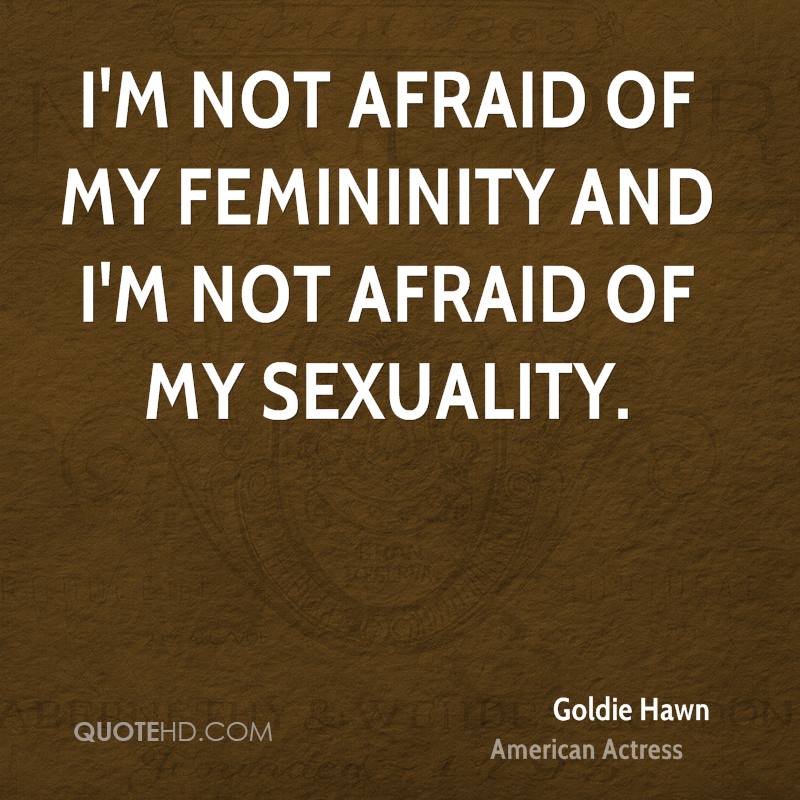
Femininity - goldie-hawn

Don’t get me wrong, there are plenty of times when a feisty female, (me included) wants to be held, loved and protected, wrapped in a man’s strong arms; cherished and desired. Sexual union can be just as important to women as it is to men. There are moments when women may equally want to take the lead and initiate all sorts of activities, including lovemaking.

“No-one is more arrogant toward women, more aggressive or scornful, than the man who is anxious about his virility.” ~ Simone de Beauvoir

By being authentically feminine we give men permission to be manly and masculine, but not in a stereotypical way. However, what you do behind closed doors is your business… I don’t know why, but a picture of Tarzan and Jane popped into my mind just then…

I love this candid talk about feminine energy and power by Candice Oneida:

To truly be a woman in a man’s world is both liberating and exciting.  When we accept our ‘inner heroine’ we can admire and value the ‘inner hero’ of men. Embracing our femininity doesn’t make us weak, it makes us powerful.

Until the next time, yours in feminine power…Ginny

Why I Voted to Remain in the European Union #EURef

“No one pretends that democracy is perfect or all-wise. Indeed, it has been said that democracy is the worst form of government except all those other forms that have been tried from time to time.” ~ Sir Winston Churchill.

Like the rest of the UK, Europe and the world, I woke up to the shattering news that our nation has voted to leave the EU.

Brexit - Thomas-jefferson-on-democracy

The #Brexit campaigners and supporters are euphoric, but I feel devastated. I have never known anything different than Britain being a member of the EU, and now the political status quo has been shaken to its core by this seismic EU Referendum.

With an overwhelming majority of 1.2 million votes the ‘Leave’ campaign has yanked our nation out of the EU and onto a new independent course.  Many didn’t like the direction the more ‘federal’ EU was taking. A ‘United States of Europe’ was one anathema too far.

I love Europe. I love Europeans and European culture, but I must admit I have no affection for the bureaucracy of Brussels. For me, that was the main voting issue, one of sovereignty. But after much reasoned thought I weighed that our contributions to our stability, economic prosperity and the greater good of Europe and our position on the world stage ultimately were of greater importance.

The anti-migrant sentiment and the feverish emotions that have been stirred up by this referendum have been shocking. Not least it has had a part to play in the tragic murder of mother, human rights campaigner and Labour MP Jo Cox.

Brexit - metro_ad

This morning it feels like a shallow victory for democracy. The British people have stuck two fingers up to Brussels, but at what cost?

None of us can answer that question yet. The reverberations could be felt for years to come…

As the world’s fifth largest economy that was a huge gamble to take. The markets have opened in turmoil (as warned), David Cameron has resigned as prime minister, (another blow to stability), and now Boris Johnson and the Leave Campaign, whose rhetoric and hyperbole has seduced many, will have to steer us through the aftermath of this shocking decision.

Here is Lord Owen’s appraisal of the Leave campaign and the NHS:

I did not vote for a little England and a far right government. The thought of Nigel Farage being at the forefront of British politics makes my blood run cold. Added to that is the prospect of the overwhelmingly ‘Remain’ Scottish voters now sticking two fingers up to the United Kingdom.

Who knows how the new prime minister and cabinet from a deeply divided conservative party will treat our much cherished NHS. Will any of the issues that the Brexit supporters voted for now improve? Forgive my lack of enthusiasm for the land of milk and honey to suddenly materialise.

I think John Oliver’s satirical assessment is on the money:

Have we shot ourselves in the foot? Time will tell. I hope and pray that we have not. Boris promised to make an apology to the nation if we went into recession. How, by any stretch of the imagination is that going to make up for lost jobs and domestic turmoil? Hubris is hubris, whether in the name of British sovereignty or not.

We do not live in age of British imperialism and Empire any longer, no matter how much Boris wants to recapture those halcyon days. Now we risk becoming international pariahs.

On the other hand, we could be seen as foresighted, inspirational and courageous. History will be the judge.

Brexit - Churchill Democracy Quote

I do not know what the future holds for my children, but I do know that now this decision (that I do not agree with) has been made, we as a nation must put our differences aside and come together to work towards a brighter future. You make the decision and then you make the decision right.

The British people are stoic as much as they are rebellious. Anger has driven us to this point, but humility, hard work, political skill, tolerance and love must lead the way into the unknown.

Brexit’s motto was ‘take back control’.  With control comes responsibility. Now is the time to roll up our sleeves and make it happen.

#MondayBlogs – Focus on Success, Monkey Business and Bananas 💡🐒🍌

“The person who suffers from inner poverty is relentlessly driven to accumulate on the material level.” ~ Dr. David R. Hawkins

In the face of mounting challenges earlier this Monday morning, I thought I’d take a few minutes to muse on what it means to be successful. Not the ‘outer’ trappings such as fame, fortune, mansions and fast cars, but to properly understand the cause that ultimately leads to the effect.

I’ve started reading a helpful book by Dr. David R Hawkins which has elucidated this subject beautifully for me. In it, he points out that most people chase the ‘out there’ stuff because they think that ‘having’ and ‘doing’ are the answer. They don’t realise that ‘being’ is the first step on the ladder of success, and without that rung any further effort will be largely futile.

Monkey Business and Bananas

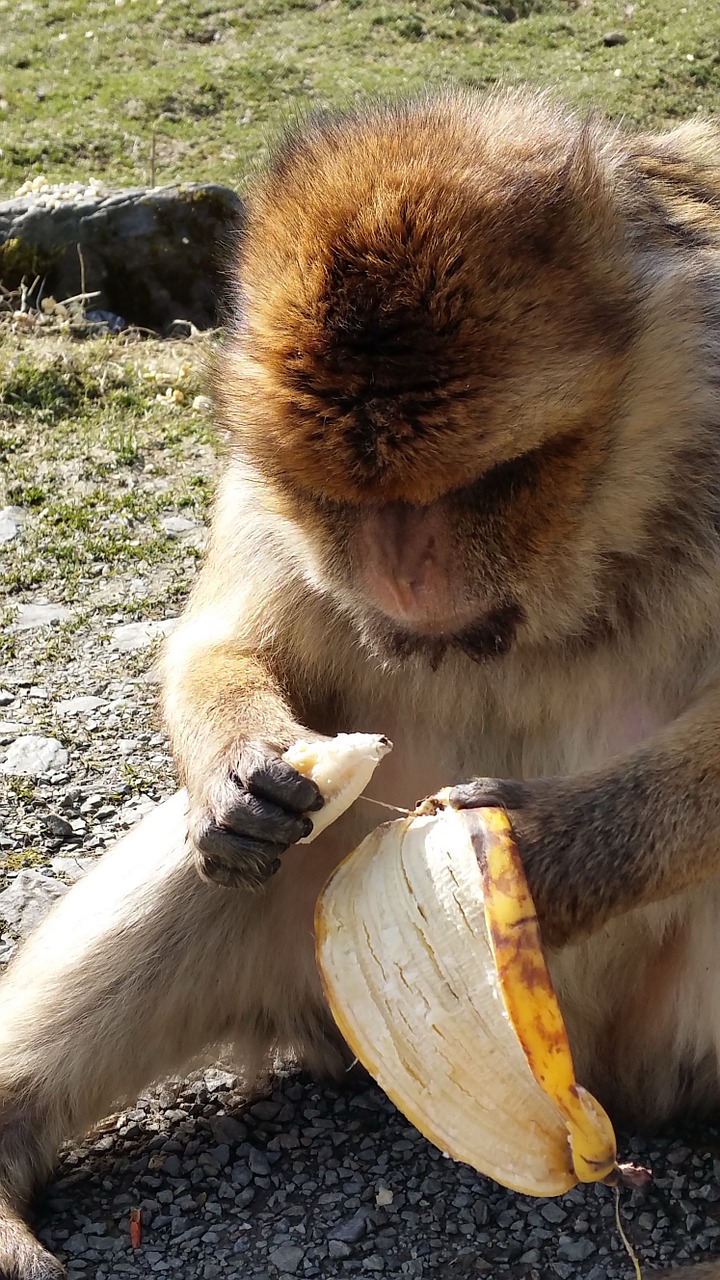
The best way to explain it is to show you. Imagine a monkey locked inside a cage, with big bunches of ripe, yellow bananas just out of reach. He frantically puts his arm through the bars and struggles to reach them. He may get one or two, spurring him to keep on trying, but the really big bunches are still a few inches on from the tips of his fingers. By now his arms are getting sore. Eventually he gives up and slumps to the floor, exhausted.

This is how most of us try to become successful. We get caught up in monkey business. We see the outer ‘things’ that other people have and we think that is what we should have and so we strive for those same things.  We are struggling for the effect instead of the cause, which is an inner knowing, a way of being in the world.

monkey eating a banana

Dr. Hawkins asserts that it only takes a split second to be successful. Once we ‘get it’ the rest will follow in due course. Very often we have to pause from grabbing at the bananas and shift focus. If the monkey turned his back on the bananas to face the opposite direction, a shift of 180 degrees, he’d notice that the door of the cage wasn’t locked, that he could open it anytime and help himself to as many bananas as he could eat.

All the how-to manuals in the world won’t work unless you have that shift in perspective. The presence of joy in our work is a big indicator of whether we are knocking our brains out or not.

Success sign

Is our awareness coming from the place where the only reason to do something is so we can have something? The wrong attitude and motivation will set us up for certain failure in the long run. There has to be an intention not to just serve one’s selfish interest or exploit the public for personal gain without providing any needed service in their lives.

Very often if a person is truly successful we tend to admire them as a person. It’s not so much what they have, or what they do (even though that may be very interesting to us), but it’s more who they are that impresses us. They have a charisma, they have ‘it’ and we want that something special to rub off on us.

summit-1209168_1280

If you can be happy rich, happy poor and happy whatever the situation; you can create your own magic. Don’t settle for satisfaction. Some people think that satisfaction is happiness, but they are different states of being.

There are many stories of broke people winning the lottery and after a short space of time they were in a worse position financially than they found themselves in before their so called good fortune. They hadn’t ‘got it’ before their luck changed so they weren’t ready for the responsibility that came with it.

Really what it boils down to is the difference between power and force. A person coming from the position of power, such as Gandhi, was able to harness his personal power plus the power of the Indian people, using principles of universal truth, to win against the limited force of the British Empire which was motivated by self-interest.

“The ‘aha’ experience is indicative of a jumbo level of power. When we ‘get’ something, we get it because its voltage has just increased. This is indicated intuitively by the image of the lightbulb going on over a person’s head. Light is power and energy. All of the energy on this planet, whatever its manifestation, came here via light. The power is the light.” ~ Dr. David R Hawkins

Having the bananas is the consequence, the result. It’s the ‘out there’ of success that the world sees, envies and tries to imitate. But you can’t imitate what’s ‘out there’ you can only imitate what’s ‘in here’. When we have that ‘aha’ experience of finding the open door we can amuse ourselves with manifesting it in the world. When we’ve achieved inner mastery we don’t have to prove it anymore.

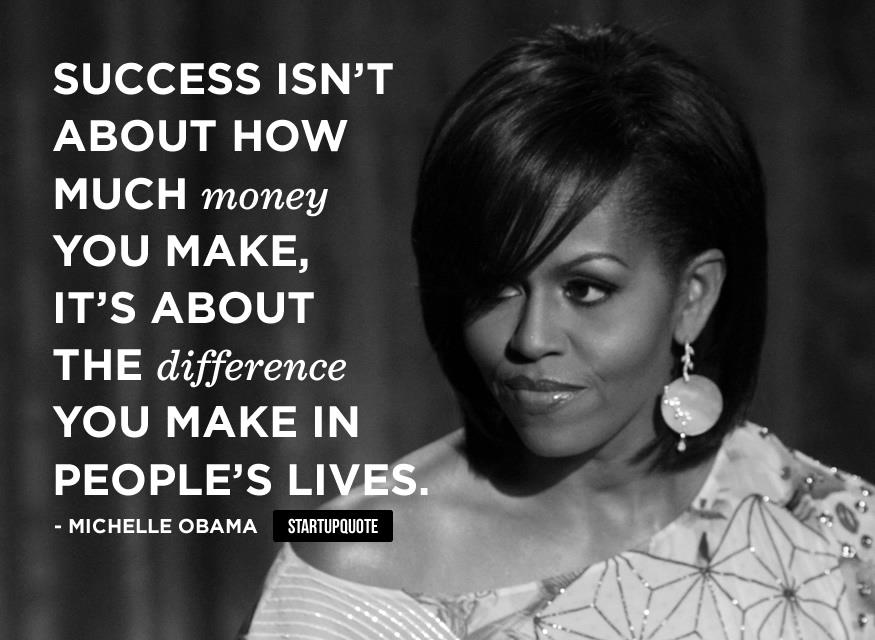
success-isnt-about-how-much-money-you-make-its-about-the-difference-you-make-in-peoples-lives-michelle-obama

Success is grace, ease, poise and absolute precision and focus. If we’re tired and burned out at the end of the day, then it’s from the monkey business of trying to grab the bananas.

The laws of physics show that force creates counterforce, which is why we can get exhausted. No force is possible without counterforce. Nothing can press against something unless there is something to resist it.

In the world of real success there is no competition. The best restaurants are so good that people are clamouring to eat there. The most passionate singers and musicians perform to sell-out venues. Top consultants in any field are usually sought after because they manifest excellence. If we can manifest excellence in the world we won’t have to worry about money at all at some point in the future. The world will seek us out.

success-happiness

The secret of power is that there is no resistance to power! Power doesn’t come from facts, positions or having anything ‘out there’. Power comes from an inner position relative to those things.

The Greek Legend of Sisyphus

The myth of Sisyphus, the King of Ephyra, who was condemned to push a heavy boulder uphill against the force of gravity, can be likened to our struggle for success. The movement of the rock is only possible if the upward force of the muscle strength exceeds the force of gravity. If it doesn’t that rock is going to come tumbling down and crush us!

Sisyphus by Titian, c. 1548-49

Sisyphus by Titian, c. 1548-49

I for one have no desire to play the Sisyphus game. Modern Sisyphus examples tend to become addicts or commit suicide.

Thought to originate with Plato or one of his students, Sisyphus is further described in Homer’s Illiad and Book XI of The Oyssey. He also features in Ovid’s story of Orpheus and Eurydice. Upon hearing Oprheus sing to Hades and Persephone he pauses from his eternal task and sits on his rock.

There are many more principles to grasp about success, but it’s good to start with the fundamental elements and spiral upwards from there.

I’m off on my travels now, so I wish you all the bananas you can eat this week!

Heart Matters: What is the Leading Cause of Death in the World?

“The greatest wealth is health.” ~ Virgil

Welcome to the second installment of my Heart Matters trilogy of posts!

And to answer the question posed in the title – cardiovascular diseases (CVDs), are the culprit when it comes to global mortality. I’ll be looking a little closer at the issues we face in battling this silent killer.

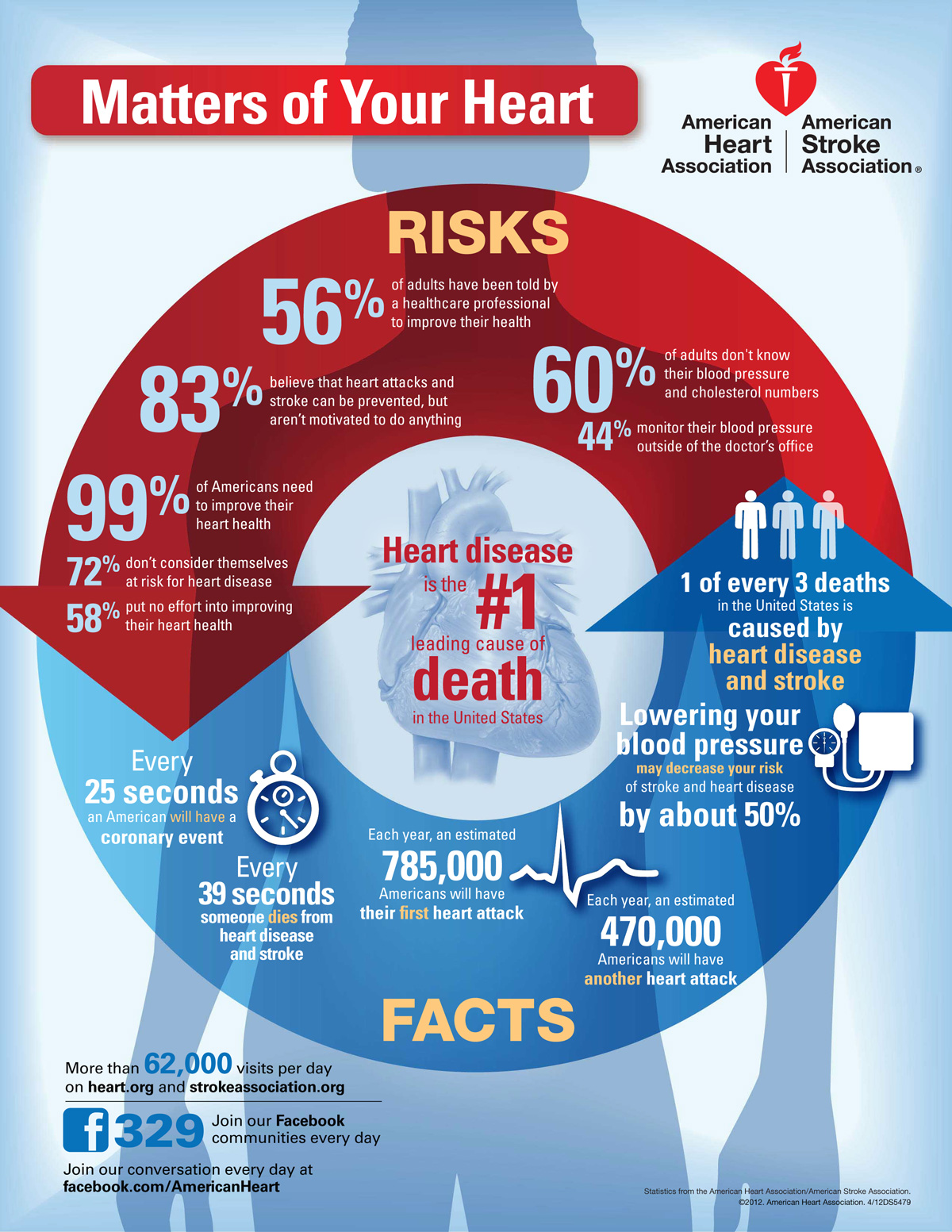
American Heart Disease-infographic

Our health is something we generally take for granted right up until the point we lose it – for whatever reason. I’ve been guilty of this myself. In my youth I was extremely fit and healthy, there was no reason to think that would ever change.

However, modern living should carry a government health warning!

It’s time to take responsibility for our health. Someone dies from a cardiovascular illness EVERY 42 SECONDS IN THE USA.

According to the Centers for Disease Control and Prevention (CDC), heart disease kills more people than cancer, diabetes and prescription drugs combined.

Recent figures from UCLA indicate that more people are dying of obesity than starvation for the first time in human history.

Heart Matters - hamberger and fries

There are a myriad of reasons why this is the case, here are the main causes:

  • Hereditary factors
  • Poor diet
  • Smoking & drinking
  • Sedentary lifestyle
  • Stress
  • Pollution

If heart disease runs in your family the chances are your genes are pre-disposed towards some type of cardiovascular illness. There’s not much you can do about that.

Or is there?

That was certainly the case for my mum, who sadly lost her mother and father to heart disease. For as long as I can remember my mum has always struggled with high blood pressure. Late last year she was hospitalised as her blood pressure reached a dangerous level, 210 over 105. She was already taking two lots of medication which didn’t seem to reduce her hypertension and produced unpleasant side-effects to boot. To say I was worried was an understatement. I was petrified.

Heart and stethoscope - cardiology and medicine icons

I’m ecstatic to report that my mother now has a normal average blood pressure of 125/70, her heart palpitations have vanished and she is off all her medications. She looks and feels 10 years younger and the best part is she has achieved this all through natural means. I’ll be going into a lot more detail about how she took control of her health in the next post.

Lifestyle, stress levels and exercise are all activities that we can influence and have a choice over.  Eating too much processed foods, smoking and sitting at a desk, doing a job we don’t enjoy could be accelerating our body clock, causing premature ageing and cellular degeneration, potentially taking years off our lifespan.

Pollution

In our industrialised age it’s difficult to escape the toxins in our environment. Urban areas tend to be worse, but with car emissions and factories polluting the skies, coupled with the devastation of large tracts of rainforest (effectively weakening the lungs of the Earth) a man-made disaster is in the making.

Heart Matters - pollution

The question is not: are you toxic?

The question is: how toxic are you?

Toxicity in our soil, air, water and food can cause auto-immune problems, asthma, COPD (chronic obstructive pulmonary disease), and lung cancer to name a few. Effects of Pollution.

In addition to all of the above, your heart, lungs and blood vessels are working extremely hard to ensure the optimum amount of oxygen and nutrients reach every cell and organ in your body. It has its work cut out, because your circulatory network (including the ultra-fine capillaries) is about 100,000 miles in length and would wrap around the world at least three and half times!

Circulatory System

Circulatory System

The human body requires a vast network of blood vessels to support every organ and cell effectively. Every invention known to man cannot compare with the complexity and regenerating power of the human body.

Wherever blood flows in your body there is a blood vessel to carry it. Age and lifestyle related problems cause plaque to form in our arteries, restricting the flow of blood, known as atherosclerosis.

Arteries - Cardiovascular-Disease

This is not easy viewing, but everyone should understand what happens during a heart attack:

Even conditions such as vascular dementia and Alzheimer’s disease are caused by plaque in the brain and a lack of oxygen to the brain due to a stroke, which in turn is caused by blood clots blocking hard, narrow plaque filled arteries in the brain.

Again and again so many health concerns can be traced to the condition of your circulatory system. Don’t even get me started on diabetes.

Heart Facts

  • Your heart is the hardest working muscle in your body
  • Your heart beats approximately 100,000 times per day, 35 million times per year
  • The muscles of your heart work twice as hard as the leg muscles of a sprinter
  • During an average lifespan the human heart will beat 2.5 billion times
  • Every 24 hours your heart pumps approximately 1800 gallons of blood
  • During the average lifetime the heart pumps about 1 million barrels of blood
  • The average adult heart is about the size of two clenched fists
  • On average women’s hearts beat slightly faster than men’s hearts
  • The heart of an embryo begins beating around four weeks after conception
  • The heart pumps blood to 75 trillion cells, except the corneas, which do receive a blood supply.
  • The heart has its own electrical impulse and can continue to beat even when separated from the body as long as it has an adequate supply of oxygen
  • Blood is actually a tissue

Some of us spend more money on putting fuel into our cars than we do fuelling our bodies with the right nutrition and lifestyle that will support it enough for us to have a long, healthy life.

As I said in my first Heart Matters post, a loving, happy heart reduces stress and is a key factor in longevity.

I’ll leave you with food for thought until I return with part 3, which I promise will be much more uplifting!