‘Versailles’ Reigns Supreme in the Popular World of Period Drama

“I am the state.” ~ Louis XIV

If you haven’t already seen ‘Versailles’ and you have an interest in history or a love of period drama, you’ll want to watch it at some point. Ambition, conspiracy and danger lurk around every gold-leaf covered corner of Louis XIV’s palace of pleasure, Versailles.

The pure splendour and magnificence of the Palace of Versailles was ultimately down to the vision, determination and seemingly endless va-va-voom of Louis XIV, France’s longest reigning monarch.  He was self-styled with a rather apt sobriquet: le Roi-Soleil (the Sun King).

I had long assumed he was just another lazy and privileged monarch who breathed hubris from every pore, a fashion loving, philandering, power obsessed, party animal. But I hadn’t been quite fair to Louis XIV.

As the recent drama on BBC2 has enlightened me, there was much more to this king than meets the eye. And whilst some of my impressions are fairly accurate, what I had failed to understand was the context for such behaviour.
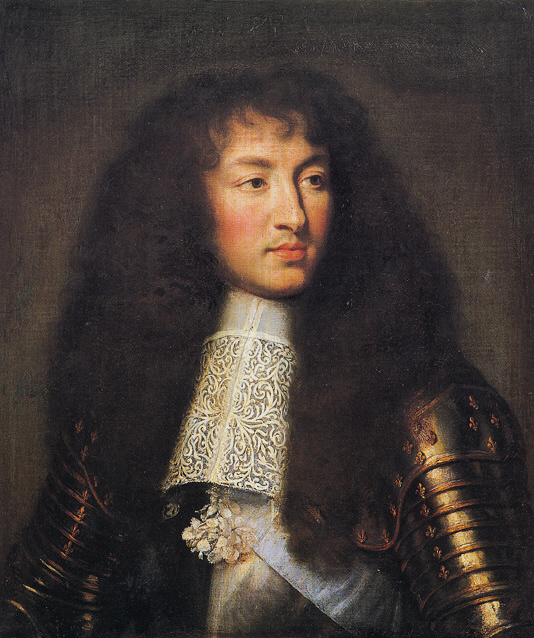
Portrait of Louis XIV by Charles Le Brun c. 1661

Portrait of Louis XIV by Charles Le Brun c. 1661

Also, it’s unfair to see a person as the sum of their vices, as Louis XIV had incredible energy and a love of outdoor pursuits. He was also a visionary; his obsession to transform his father’s old hunting lodge at Versailles, (which was surrounded by swampland and forest) into a palace that would eventually become the heart of the French Court and the envy of seventeenth century Europe, was his legacy to France.

‘Versailles’ is a new joint Anglo-French production dramatising Louis’s turbulent and fragile rule over the disjointed kingdom he inherited upon the death of his mother and Regent, Anne of Austria at the age of twenty seven. Louis XIV was her first surviving child after twenty three years of marriage to King Louis XIII. Anne was featured as a major character in Alexandre Dumas’s novel, The Three Musketeers.
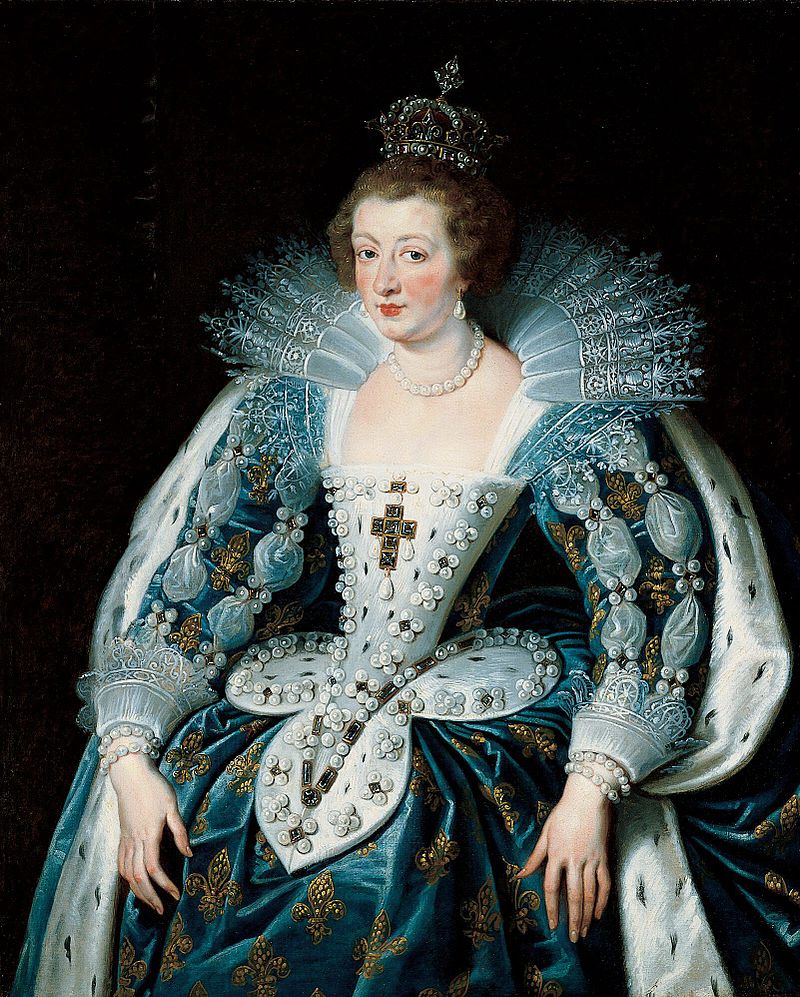
Anne of Austria c. 1622 - 25 by Peter Paul Rubens

Anne of Austria c. 1622 – 25 by Peter Paul Rubens

At that time France was controlled as much by belligerent, powerful, feuding nobles, as the by the king and his court, and Louis’s main task was to unify and bring them to heel or he and his younger brother, Philippe I, Duke of Orleans, would have been assassinated. He started out in a very precarious position with his power and control hanging by a thread.

Needless to say, I quickly got hooked on it, as I always do with engaging period dramas. I could have period drama queen stamped across my forehead!

Clips from Versailles:

I am feeling bereft now that episode 10 of season one has ended, very sadly I might add, with the death of his beloved Henriette of England. However BBC 2 will air season two next year.

How will I last that long?!

Versailles was located only twelve miles from Paris but was too small for many guests to stay there for entertaining purposes. One of the things that struck me in the early episodes was the remote, treacherous single track road that led to the chateau. A few nobles come to grief on that quiet, eminently ambushed, wooded road.

It certainly got me interested in this period of French history. As with all period dramas, there is enough factual content to make it realistic and enough dramatic fictional content to make it addictive!

BBC link showing the historical and fictional characters of ‘Versailles’.

BBC Clips from Season One of Versailles, including  some ‘behind the scenes’ glimpses.

You can purchase/download all 10 episodes via the BBC website.

Season One had ten wonderful episodes full of political intrigue and turmoil, religious acrimony, plotting, betrayal, murder, steamy sex scenes, scandal, more bedroom action (both heterosexual and homosexual) and AMAZING costumes, all filmed on location at Versailles as well as in the studio.
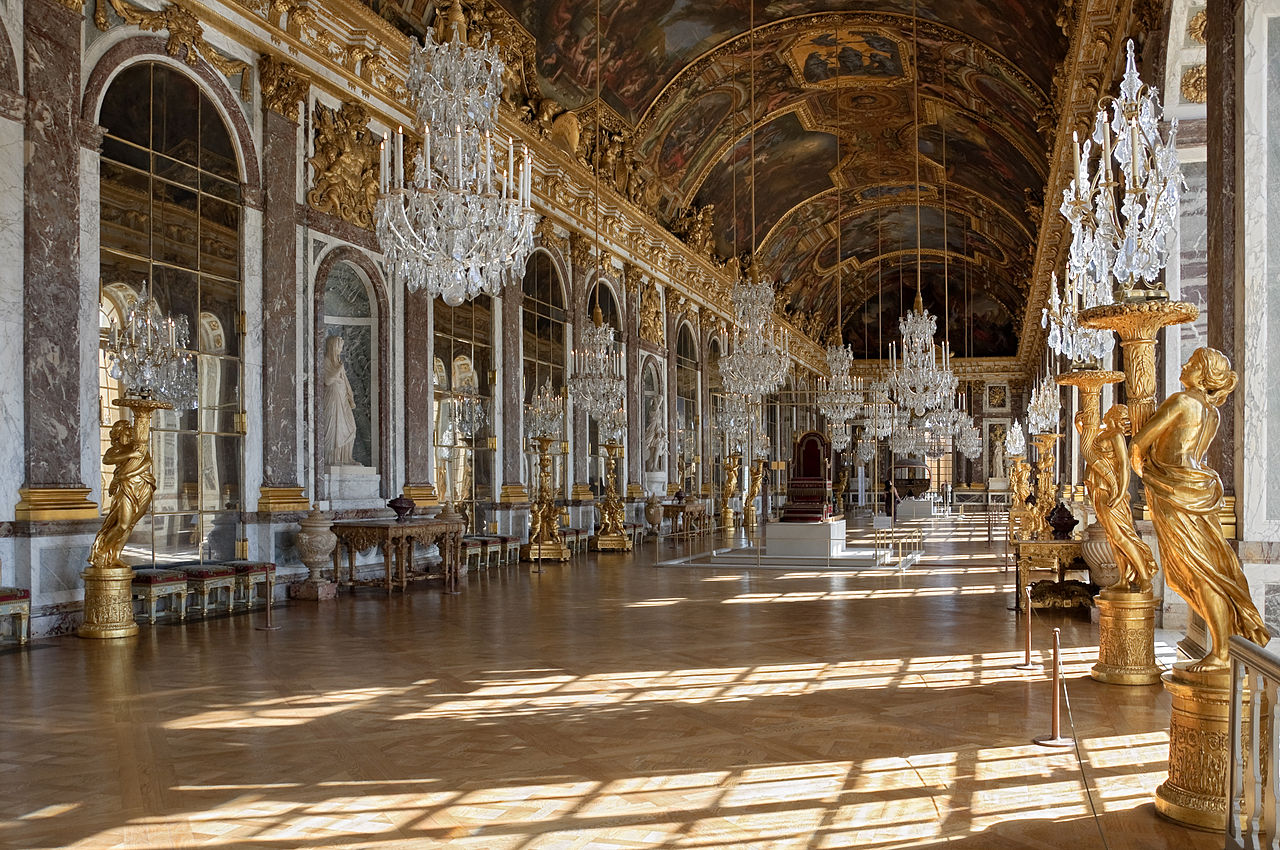
Galerie des Glaces (Hall of Mirrors) at Versailles

Galerie des Glaces (Hall of Mirrors) at Versailles

You really get a sense of how claustrophobic it must have been in the early days at Versailles, with all these power hungry individuals cooped up, seeking to either gain favour with the king or plot his downfall. Even in the king’s personal circle you have him secretly bedding his brother’s beautiful but neglected wife, a jealous Philippe who is still content to take male lovers, as well as the female rivals at court competing for the king’s frequent amorous attention!

“I could sooner reconcile all Europe than two women.” ~ Louis XIV

Even though the acting is great, (especially George Blagden as Louis and Alexander Vlahos as Philippe) and the script is well-written (in modern parlance), this drama has elicited more questions than it answered.

Inside Versailles

With after show analysis now popular in its own right, such as Thronecast for Game of Thrones, the BBC foresaw the interest this new historical series would spark in viewers and produced a short contextual historical analysis, Inside Versailles, directly following each episode.

These ‘after episode’ mini documentaries, hosted by Professor Kate Williams and Greg Jenner and various guests are really interesting and provide an insight into the how the drama encompasses the actual history of Versailles.

It seems bizarre and immoral to our modern sensibilities that a man would be permitted to openly play the field when he was married, but for seventeenth century France, infidelity was so pervasive that questions would have been asked had the king and his nobles not taken lovers.

Marriage was arranged purely for political alliances and to produce heirs. Rarely was love involved. In Louis’s case he was betrothed to Maria Theresa of Spain, daughter of Philip IV of Spain and also his mother’s niece.
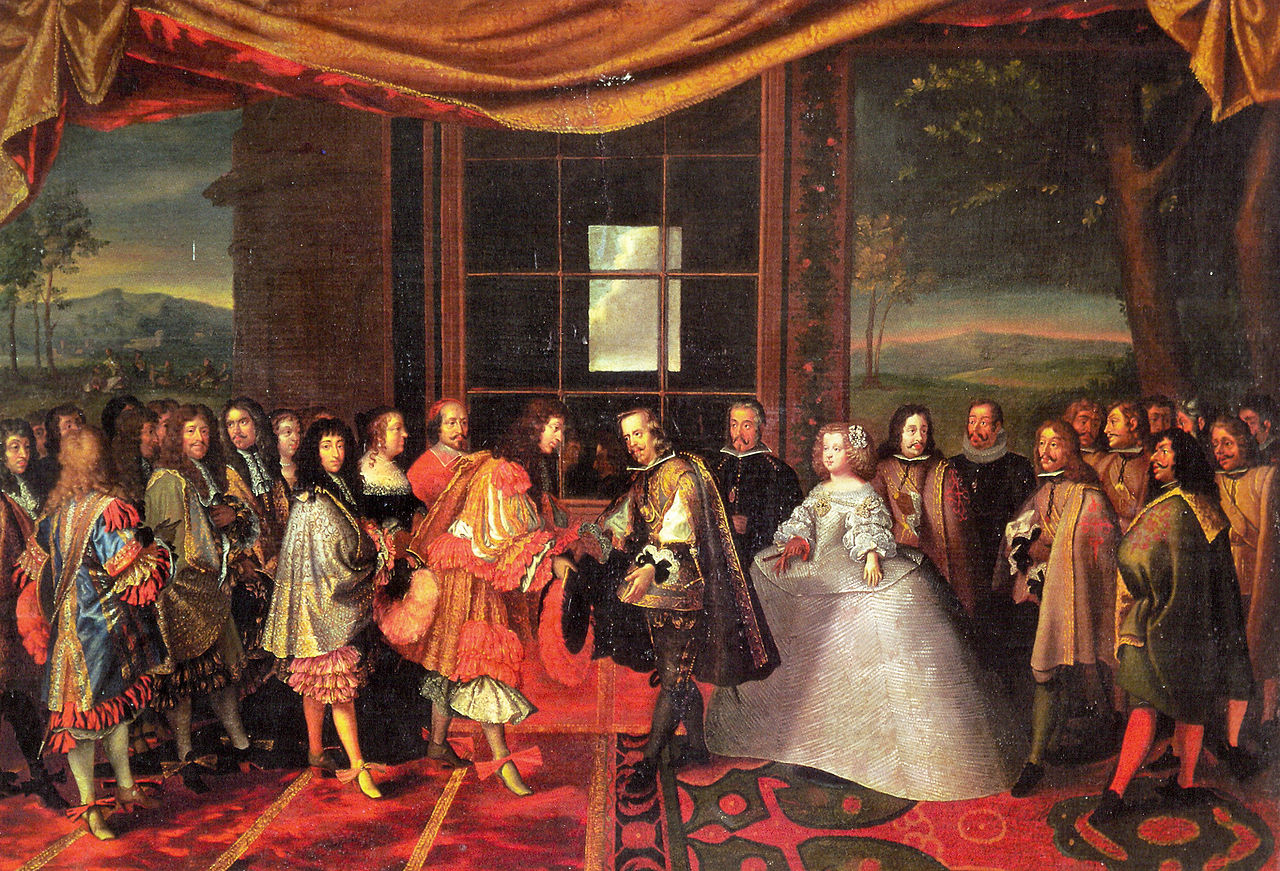
Maria Theresa is handed over to the French and her husband Louis XIV by proxy on the Isle of Pheasants in June 1660

Maria Theresa is handed over to the French and her husband Louis XIV by proxy on the Isle of Pheasants in June 1660

The king’s preferred mistress, (his favourite at any given time), was bestowed with a semi-official position known as the maîtresse-en-titre.

As the most powerful man in France he was surrounded by beautiful women. Louis’s love of women is infamous, as is the long list of courtesans who had shared his bed and the title of maîtresse-en-titre. There were plenty of places and opportunities in which to have illicit trysts in Versailles!

Louis XIV was actually a very hard working king: he held council meetings three times a day, went hunting three times a day and yes, you guessed it, the royal member was reportedly active three times a day. He must have had a very healthy constitution and potent libido!
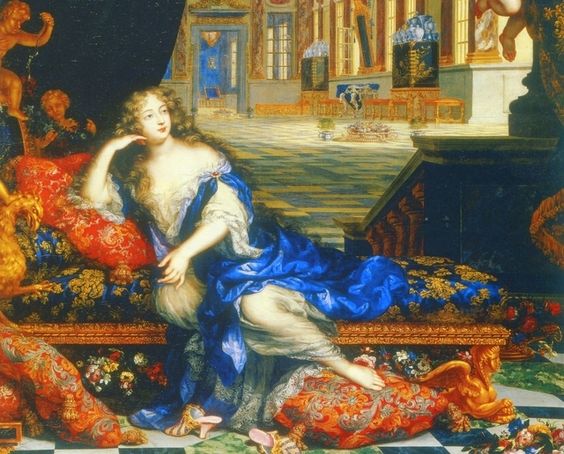
Françoise-Athénaïs de Rochechouart de Mortemart, marquise de Montespan, at the château de Clagny c. 1670 by Henri Gascar

Françoise-Athénaïs de Rochechouart de Mortemart, Marquise de Montespan, at the château de Clagny c. 1670 by Henri Gascar

He fathered many children through his mistresses, most of whom he later legitimised and gave titles to.  Françoise Athénaïs de Rochechouart de Mortemart, Marquise of Montespan, aka Madame de Montespan, bore him seven children over a decade, of which four survived into adulthood. She was also influential in the legacy of the fashion industry in France today.

Descendants

Louis XIV through his daughter with Madame de Montespan, Louise Françoise de Bourbon (1673 – 1743)  who married Louis III, Prince of Condé and their daughter, Louise Élisabeth de Bourbon, whose only daughter by Louis Armand de Bourbon, Prince of Conti was Louise Henriette de Bourbon, who via her marriage to Louis Philippe d’Orléans, was mother of Louis Philippe Joseph d’Orleans (Philippe Égalité), make them ancestors of (as well as the descendants on the direct legitimate male line from Philippe I) the House of Orléansthe July Monarchy and the current living members and pretenders to the throne of France, Italy and the kings of Spain and Belgium and the Grand Duke of Luxemburg. The prince and princesses du sang live on!

Philippe I, Duke of Orléans aka ‘Monsieur’

The relationship between the king and his younger brother and how they handle the threats to the monarchy forms the backbone of the drama. In ‘Versailles’ their relationship is portrayed as tense, tumultuous and at times, tender. Philippe is trying to make his own way at court but ultimately cannot escape being controlled by his older brother.

A tender scene from episode 10 as they are about to lose their beloved Henriette:

At one point in the drama Philippe, in a moment of utter desolation, tells Louis, “If you think it’s difficult being a King, you should try being a King’s brother for a day!”

In this early portrait of Louis and Philippe you can see that Philippe is wearing a dress. It was common practice to put dresses on boys in seventeenth century France until they were aged seven or thereabouts.
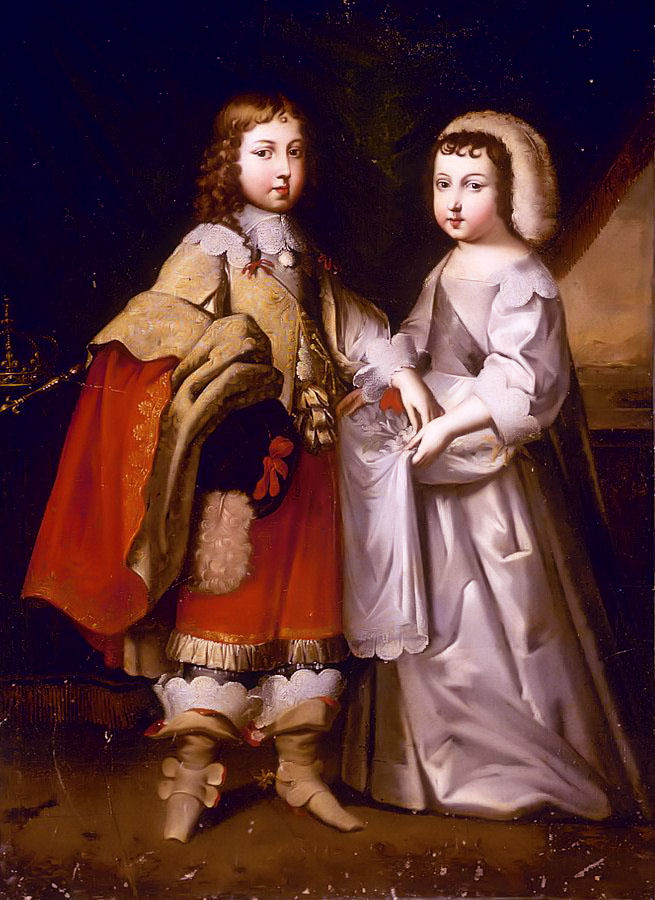
Portrait Of King Louis XIV and his Brother Philippe I, Duke of D'Orleans

Portrait Of King Louis XIV and his Brother Philippe I, Duke of D’Orleans

In an attempt to mitigate any sibling rivalry between her sons, Anne of Austria actively encouraged Philippe to wear dresses to remove any threat from his brother Louis. This obviously served to bolster Louis’s masculinity as King. Philippe was known to cross-dress at court, and although he was very fond of his wife, his real passions were reserved for the Chevalier de Lorraine, his official male mistress.

Louis was emotionally scarred by the Fronde during his childhood. His traumatic experiences from the uprising would shape his modus operandi as future king. He had seen how civil war ended for Charles I across the channel so it made perfect sense for him to take a different approach.

Instead, Louis launched a charm offensive on his nobles.

By 1684 his whole court had transferred from Paris and was installed at Versailles, then home to five thousand souls. Louis wielded his power with refinement and overwhelmed his nobility with luxury, providing distractions such as feasting gambling, hunting and extravagant parties.  As the courtiers were busy with every day court minutiae it took their minds off revolt. Louis very cleverly gave them the message, ‘You don’t need to rebel to get what you want.’

Philippe proved himself to be a brave soldier and fought well as commander at the Battle of Cassel. It was the only way he could see to use his talents and earn any personal glory as a prince of the blood. His success meant that it was the only battle Louis allowed him to participate in. He couldn’t bear to be upstaged by his younger brother!

Jean-Baptiste Lully was Louis’s court composer. This Overture to Le Ballet Royal de la Nuit is a great example of the pomp and splendour of the French Baroque period:

As well as incurring a hefty financial cost, there was a high human cost to building Versailles, which was highlighted by rebellious, disgruntled workers. The sheer scale of the works required thirty six thousand builders to labour under terrible conditions. Health and Safety laws hadn’t yet been invented so these poorly paid men who were sick of risking their lives day and day out decided to go on strike.

There was a terrible accident on 26th July 1668 as half a dozen workers were crushed under the debris of falling masonry. The king was confronted by an angry mother of one of the victims who had demanded to have her son’s body back, overstepping the bounds of conformity of the day. She was punished for her trouble.

Construction of the Chateau Versailles by Adam Frands van der Meulen

Construction of the Chateau Versailles by Adam Frans van der Meulen

In the episode Louis comes across as quite cold hearted over this matter, it appears that Versailles represents the glory of France and he is not prepared to let anything get in the way of that. To him, the end justified the means. Fortunately he did relent, and paid compensation to families of the dead and injured workers. Three hospitals were eventually built, including Les Invalides.

There were three distinct construction periods during Louis XIV’s tenure at Versailles – the first phase of expansion being from 1661 to 1678. Three new wings of stone, known as the enveloppe style, were built surrounding the original hunting lodge on the north, south and west (garden side).
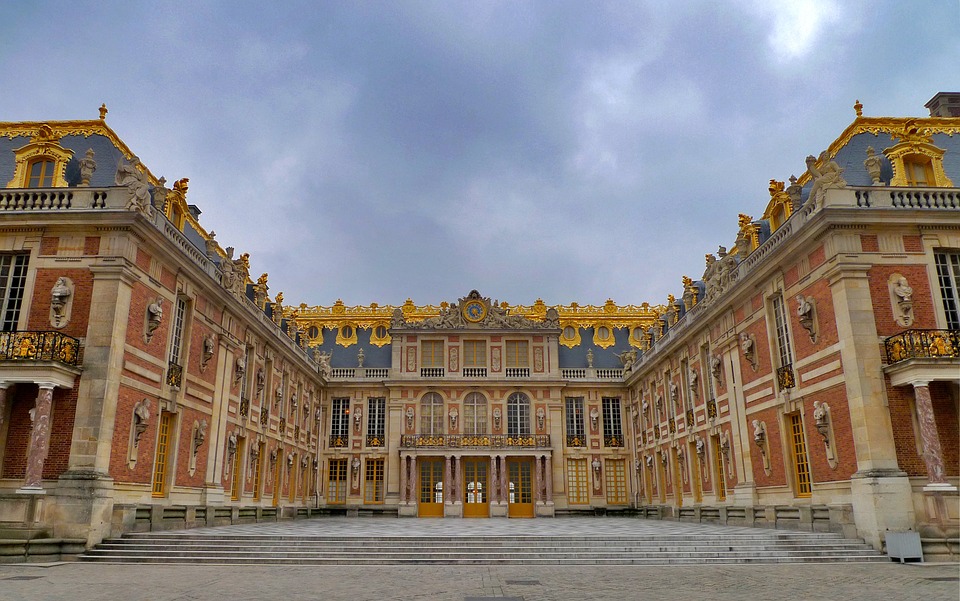
Entrance to Versailles

Entrance to Versailles

During the second phase (1678 – 1715) two enormous wings were added, north and south of the wings flanking the Cour Royale. The large terrace facing the garden formerly built by Le Vau was replaced by what would become the Palace’s grandest and most ostentatious room, the Hall of Mirrors.

The third phase was smaller in scale, with the enlargement and re-modelling of the royal apartments in the original hunting lodge. This was undertaken after the death of Maria Theresa in 1683. Mansart began work on the Royal Chapel of Versailles, located at the south end of the north wing in 1688, which was completed after his death in 1708 by his assistant Robert de Cotte in 1710.
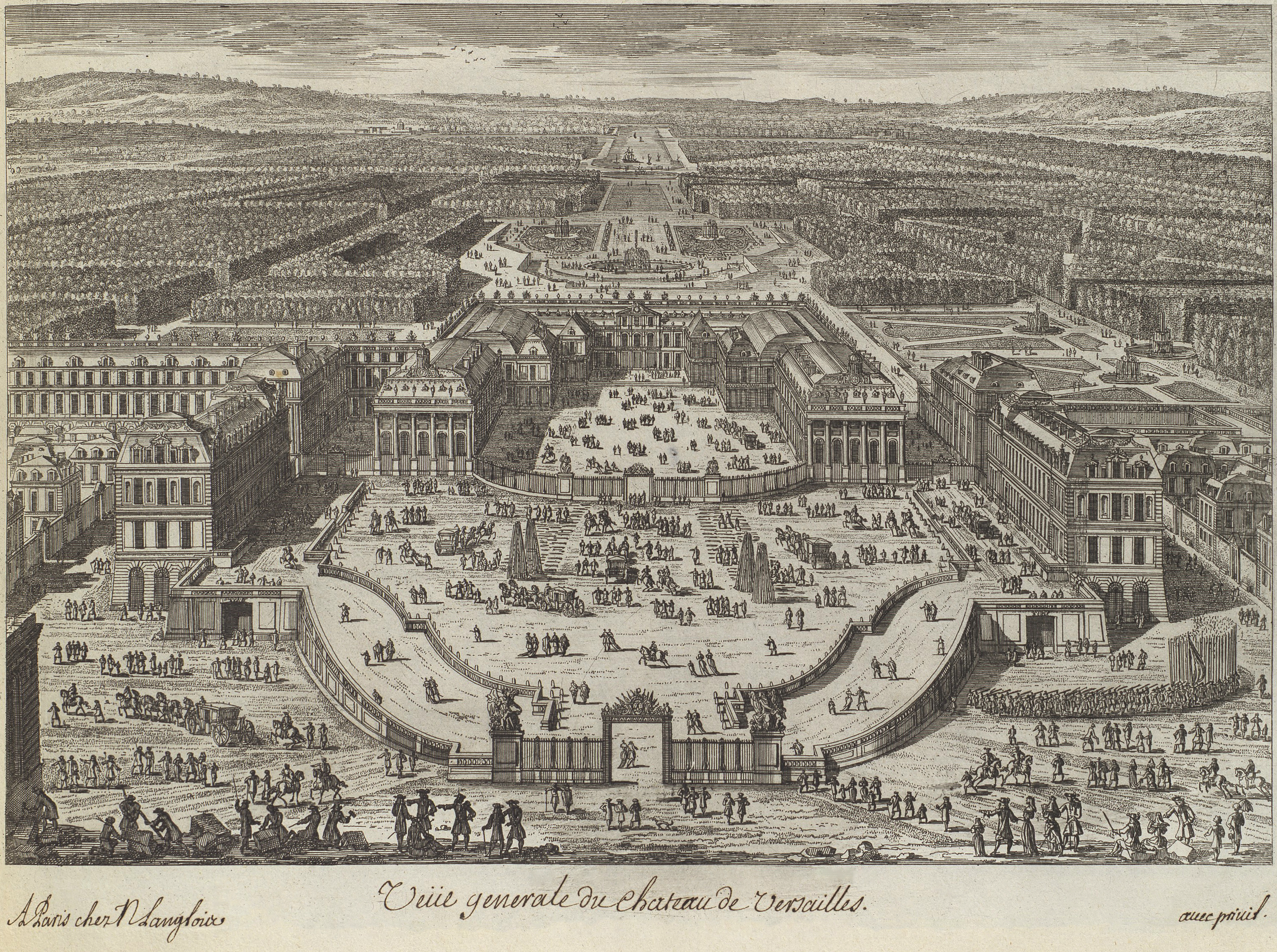
General view of the Palace of Versailles c. 1680s by Adam Perelle

General view of the Palace of Versailles c. 1680s by Adam Perelle

André Le Nôtre was the head landscape gardener at Versailles, and he had the unenviable task of draining swamps and moving forests in order to tame the land and create formal gardens for the king and his guests. Le Nôtre was held in high esteem by the king, as were his friends and compatriots the royal artist, Charles Le Brun and celebrated architect, Jules Hardouin-Mansart.

Culture and sophistication ruled at Versailles. The king’s schedule, starting with the Grand Levee was tightly controlled. A selected elite witnessed him dressing and lined his daily route to chapel. If nobles attended Versailles regularly they were more likely to gain an audience with the king to ask for favours. If you weren’t a familiar face to the king you were out in the cold. You had to be part of the public spectacle of the king’s life.

It could never have worked for a monarch devoid of charisma, but for Louis, it seems that he thrived on being the sun to the universe of his court at Versailles. In this manner he got his nobles bowing and scraping to him and his reign as an absolute monarch was a successful one.

It’s worth mentioning Louis’s most trusted servant and head valet, Alexandre Bontemps, who faithfully served Louis XIV for forty years. He was totally devoted to the king and was one of his most trusted advisors and confidantes. Bontemps slept on the floor in the king’s official bedroom. Not even a queen was allowed to sleep in the king’s bedroom.

There is a great scene in the drama (I forget which episode), where the king invites Bontemps to sit beside him in front of the fire in a chair with arms.  Bontemps hesitates and tries to pull up a stool, because in those days protocol dictated only a king was allowed to sit in a chair with arms, but Louis insists Bontemps is his friend and equal.

One of my favourite fictional characters in the drama is the overworked Fabien Marchal, the king’s beleaguered head of security. He is a curious blend of noble man and ruthless brute, and for most of season one he has a stoic and sombre countenance! He is kept rather busy, torturing and capturing the plotters and would-be assassins, only just surviving being poisoned himself. This is down to the skill of Louis’s female physician, who I think is also a fictional character.
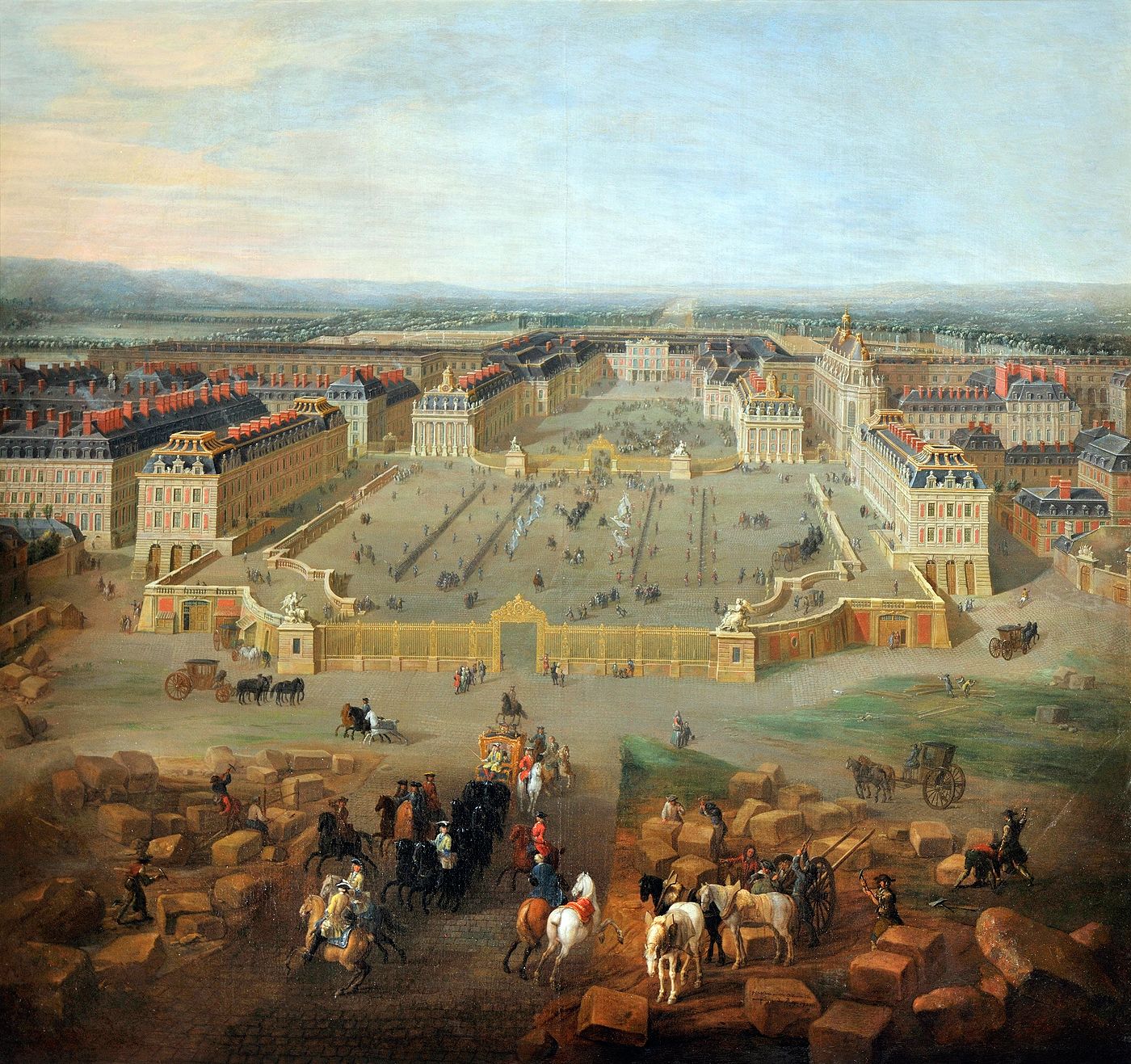
Versailles

Versailles after Louis

The drama ‘Versailles’ is portrayed as a hotbed of maneuvering, poisoning, gossip, adultery, jealousy, passion, pursuit and state business. The drama only adds to the sense that in reality, Versailles was one of the most incredible royal palaces anywhere in the world, with a history to match!

In the meantime, if you want all the insider details of what really went on in Versailles you could read the memoirs (in  three volumes) of Louis XIV and his Court by diarist the Duke of Saint-Simon.

I will certainly be glued to season two when it broadcasts next year… C’est magnifique!

Remarkable Women: The Life and Times of Baroque Painter Artemisia Gentileschi (Part 2)

“My illustrious lordship, I’ll show you what a woman can do.” ~ Artemisia Gentileschi

Not long after her wedding to Pietro Antonio di Vicenzo Stiattesi in Rome on 29th November 1612, Artemisia and her husband moved to Florence; where, armed with a letter of introduction from her father, she began her career as a professional painter.  It proved to be a successful and fruitful time in her life, (she certainly deserved some good fortune after the traumatic events in Rome as a young woman).

Self-portrait as a Lute Player c. 1615 - 17 by Artemisia Gentileschi

Self-portrait as a Lute Player c. 1615 – 17 by Artemisia Gentileschi

Florence and the Medici Court

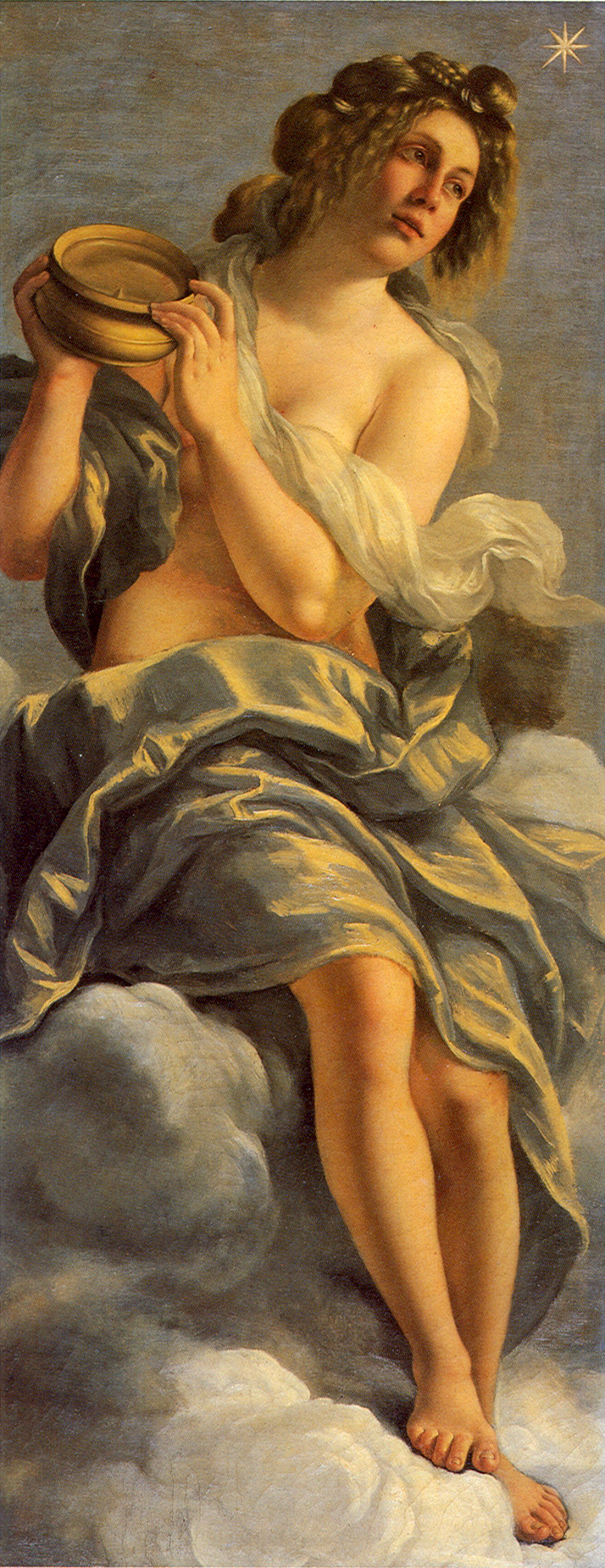
Soon after arriving in Florence the ambitious Artemisia landed a commission from Michelango the Younger, great nephew of the Renaissance icon. She painted a panel, the Allegory of Inclination, for the Galleria of his Casa Buonarroti.

Artemisia Gentileschi - Allegory of Inclination

Artemisia set about educating herself in the spheres of music and literature, employing her beauty and charm to impress the wealthy merchants and nobles of Florence, with the aim of ingratiating herself with the powerful, dynastic Medici Court.

She understood that the appropriate appearance would elevate her position, so she wore expensive silk gowns which she managed to purchase on credit. She gave it some good, old fashioned hustle!

Saint Cecilia Playing a Lute by Artemisia Gentileschi

Saint Cecilia Playing a Lute by Artemisia Gentileschi

After all the struggle of her painful last year in Rome she had earned some success.

Her living was made mostly by painting commissions from wealthy patrons and for Grand Duke Cosimo II de’ Medici and Grand Duchess Christina. She was friends with Galileo Galilei – excerpts from her letters to the astronomer, physicist and philosopher still exist.

Tragedy, however, would strike again in her life. The first three of her babies with her husband Pietro did not survive infancy, and her fourth, a daughter, was named Prudentia after her deceased mother. Like her father had done with her, Artemisia taught her to paint.

She eventually left her husband in 1620 after financial problems arose, returning to Rome in 1621. She spent a decade travelling Europe, painting in Genoa, Venice and England (where she was reunited with her father at the court of Charles I), before settling permanently in Naples.

A View of the Bay of Naples by Giovanni Battista Lusieri

A View of the Bay of Naples by Giovanni Battista Lusieri

Before the unification of Italy in the nineteenth century, Naples came under Spanish rule when it was the largest commercial, cultural city on the Mediterranean. In Artemisia’s day it was three times the size of Rome. She spent the last years of her life in Naples and continued painting into her sixties. She taught male students and collaborated with other painters during this time.

Judith and Holofernes

The biblical story from the Book of Judith tells of how the beautiful Israelite widow Judith bravely slays the Assyrian General, Holofernes, in order to save the people of her homeland, (the city of Bethulia). It proved a popular subject in Renaissance and Baroque art.

In return for sparing her life and that of her family, Judith had promised Holofernes a secret route into the city in an act of apparent betrayal. Due to his desire for her he admitted her to his tent and gave her free access to the Assyrian camp. Being Jewish, Judith would have taken her own food with her and perhaps a maidservant.

Thinking that his personal conquest of Judith is assured, Holofernes lets down his guard and drinks himself into a stupor. As he sleeps, Judith summons up her courage to decapitate him using his sword. The two women put his head in a sack and sneak out of the camp. The next morning, as the head of Holofernes is displayed on the battlements and the rest of his body is discovered, his men flee, having lost their leader and, quite literally, head of the army.

The chaste Judith ( a female version of David and Goliath), is victorious and has been depicted many times as the triumph of virtue overcoming vice, chastity overcoming lust and humility overcoming pride.

With her penchant for painting  powerful women: heroines of immense strength and courage, imbued with a healthy dose of vulnerability, it’s no surprise that she painted four canvases of Judith and Holofernes.

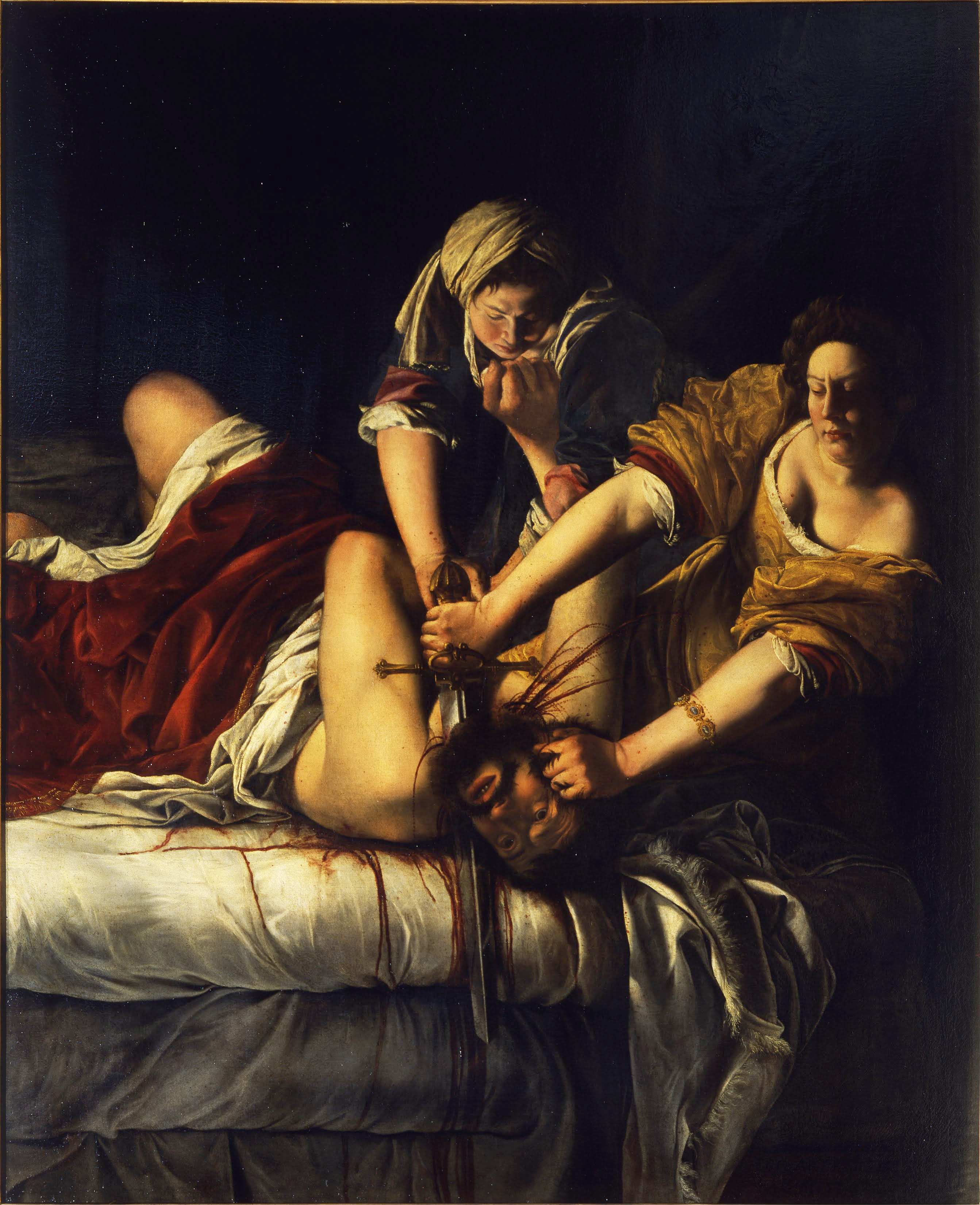
Of all the paintings and sculptures that were created by artists of the era, (including Caravaggio), to me, hers are the most violent, visceral and real.  The graphic violence of Artemisia’s depictions is staggering when compared to the more sanitised versions (except maybe Caravaggio), considering the other artists were all men.

Judith Slaying Holofernes by Artemisia Gentileschi c. 1614-18. Pitti Palace Florence

Judith Slaying Holofernes by Artemisia Gentileschi c. 1620 -21. Uffizi Gallery Florence

When I look at the Florence painting it shows me rage. Pure, unadulterated rage and it’s horrible to look at. It’s as if she has transferred all her anger towards Agostino Tassi and the suffering she endured from inquisition style torture at the hands of the ‘establishment’, and laid it bare for people to witness hundreds of years after her brush covered the canvas.

It is similar in composition to Caravaggio’s version painted earlier in 1599, but in Caravaggio’s Judith is somewhat detached from her grisly deed, whereas in Artemisia’s paintings she’s putting all her physical effort and force into her unpleasant task. The look on Holofernes’s face (or is it Agostino’s face?) is chilling.  Certainly Judith is a self-portrait of Artemisia.

The injustice she felt and the cruelty she experienced is expressed through her art. Artemisia put herself into her work, and her art speaks to me as a woman.  Art historians might disagree with me, but that’s my humble opinion.

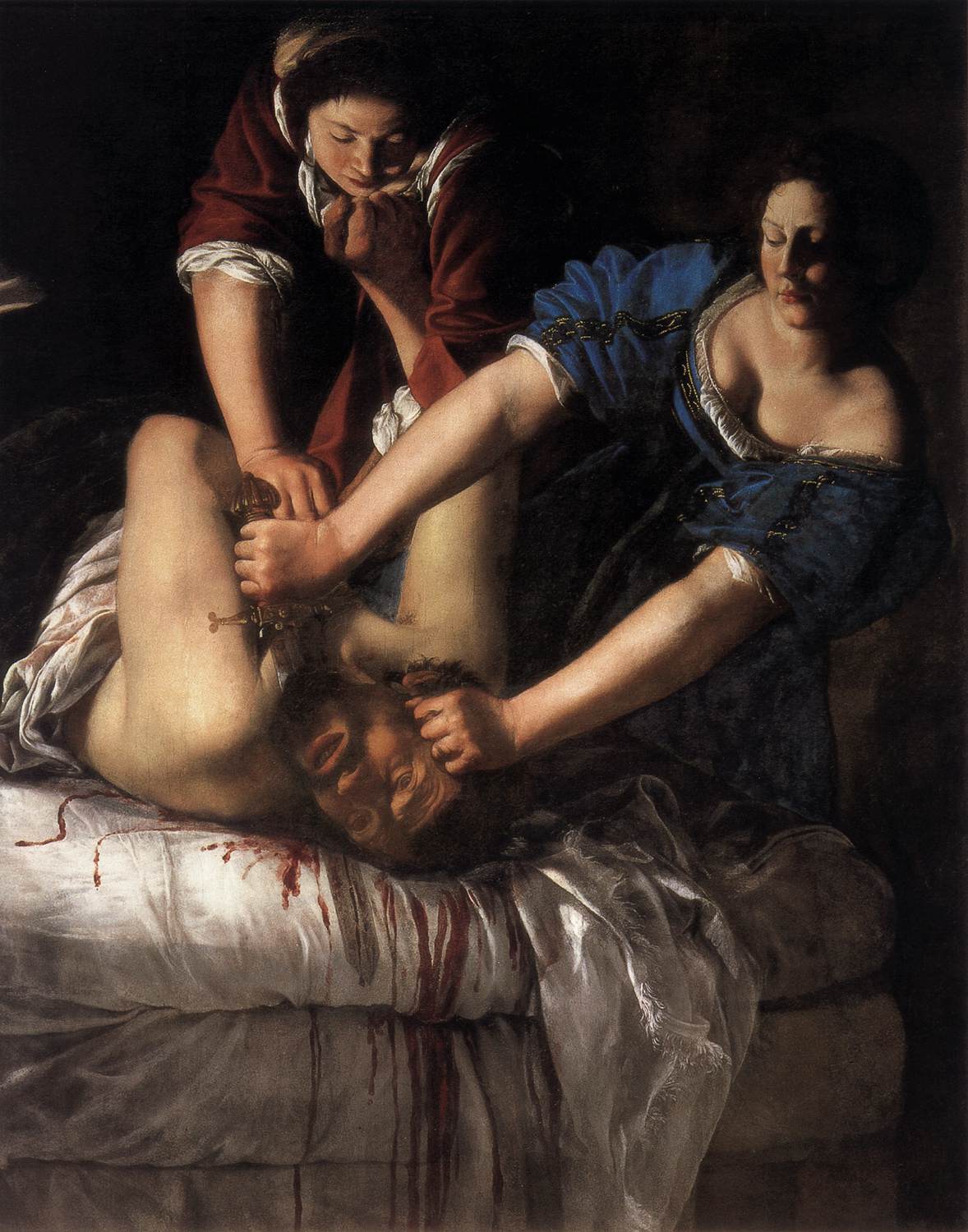
Her earlier painting of Judith Beheading Holofernes (where she is wearing a blue dress) shows the pure horror of her act: there is blood seeping into the mattress and spurting everywhere, but she is determined to kill Holofernes and thus eradicate tyranny.

Judith Slaying Holofernes by Artemisia Gentileschi c. 1611-12. Commissioned by the King of Naples now haning in the Capodimonte Museum, Naples.

Judith Beheading Holofernes by Artemisia Gentileschi c. 1611-12. Commissioned by the King of Naples now hanging in the Museo di Capodimonte, Naples.

The other two pictures of the aftermath, where the head of Holofernes is being placed in a basket/bag are equally arresting. Again, there are many versions by different artists, and even compared to one by her father, Orazio, Artemisia’s 1625 version (now in the Detroit Institute of Art) has a sense of realism that makes your hairs stand on end.

Judith with the Head of Holofernes c. 1625

Judith with the Head of Holofernes c. 1625

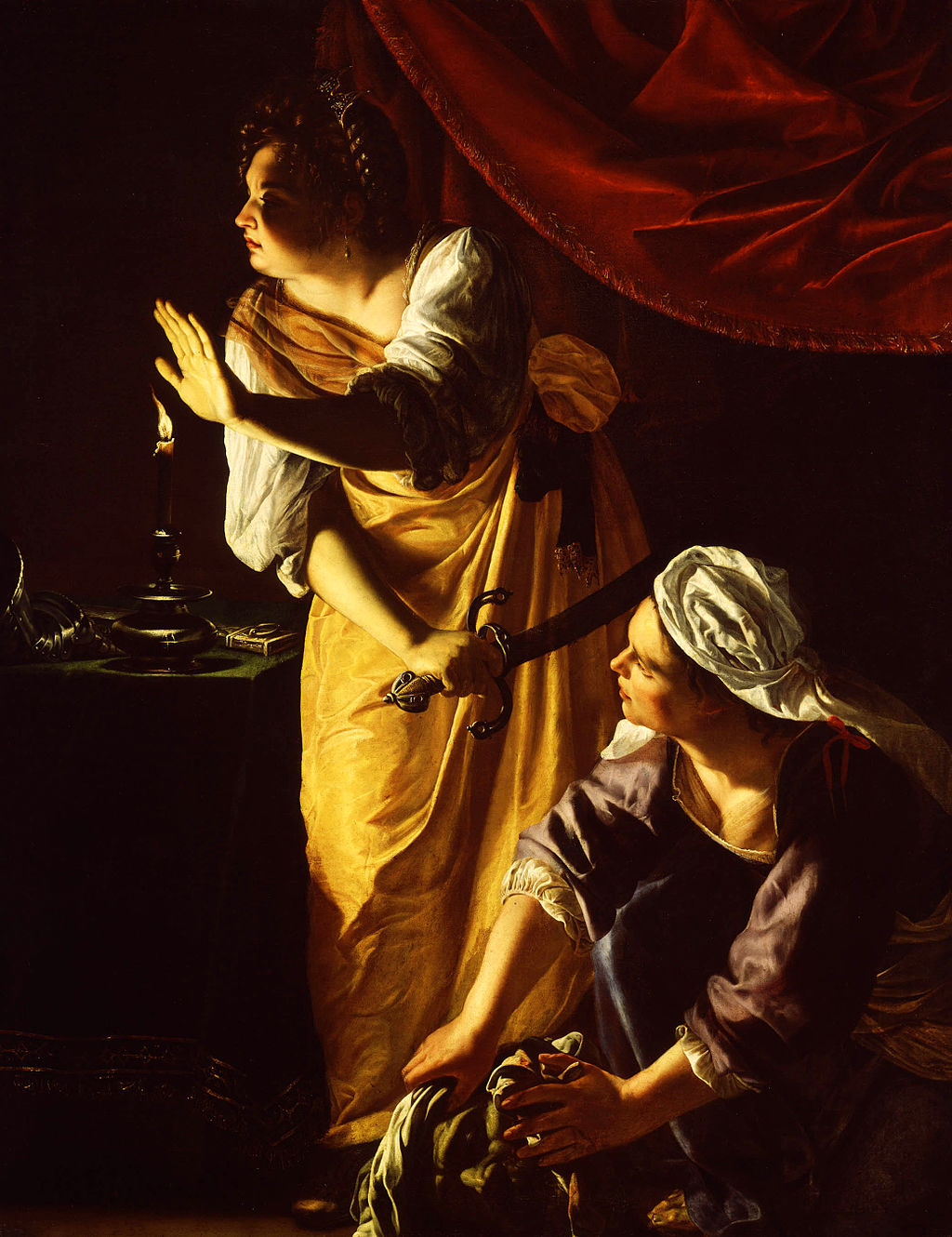
The golden silk sheen of Judith’s dress is almost luminescent under the flame, and her skin glows in the candlelight in comparison to the pervading darkness inside the tent. This shade of yellow has been labelled as ‘Artemisia Gold’.

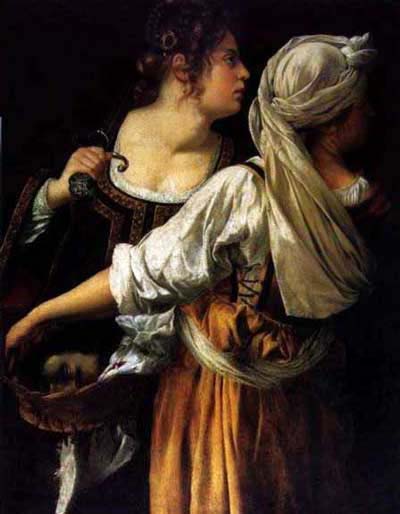
It’s as though, having done her deed, Judith and her maidservant pause as they hear a sound outside the tent. Discovery would have meant certain death, so the two women are momentarily still, not yet able to make their escape. It’s claustrophobic, dramatic and totally brilliant!
Judith and her Maidservant by Artemisia Gentileschi c. 1612-13. Housed in the Pitti Palace, Florence

Judith and her Maidservant by Artemisia Gentileschi c. 1612-13. Housed in the Pitti Palace, Florence

Other paintings

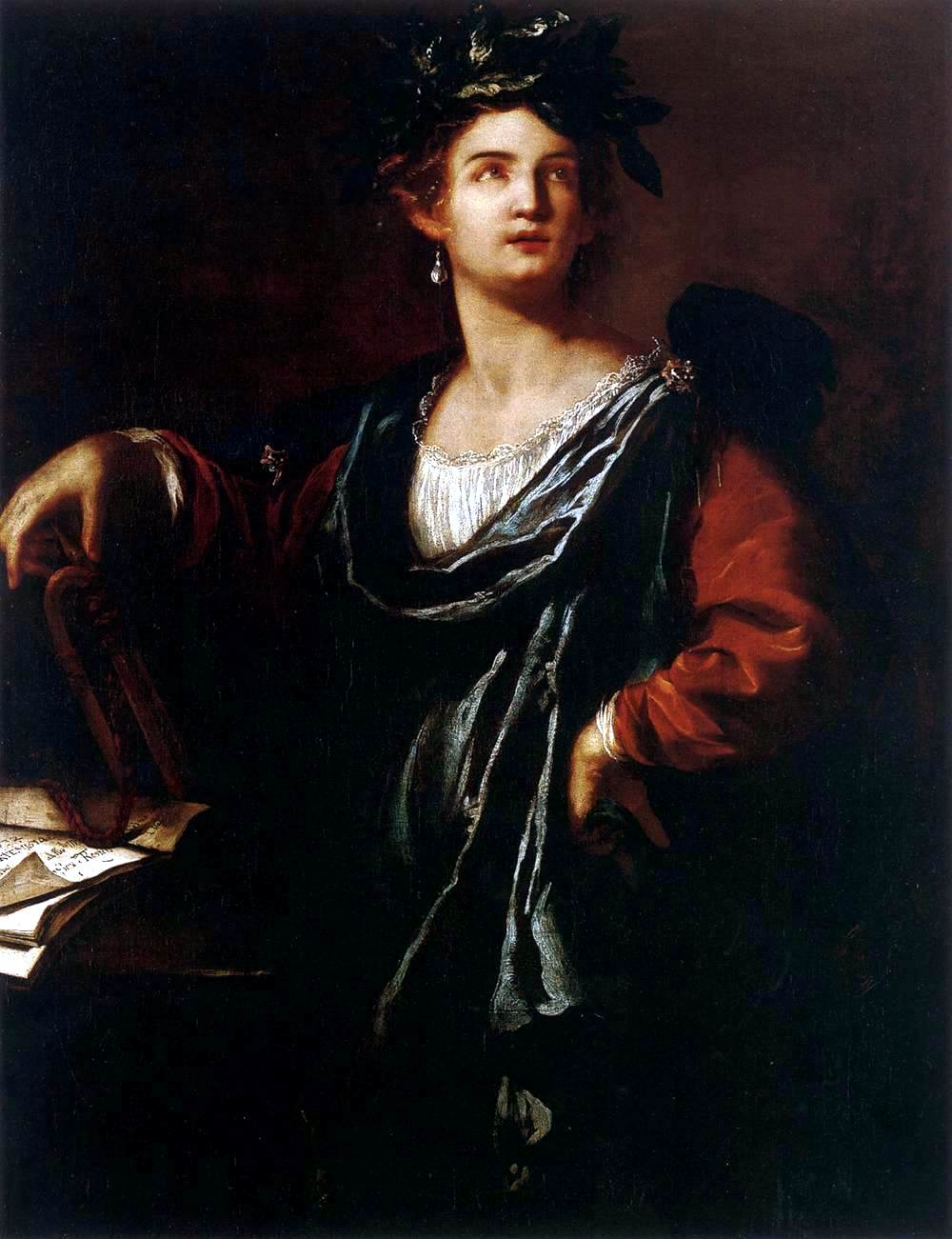
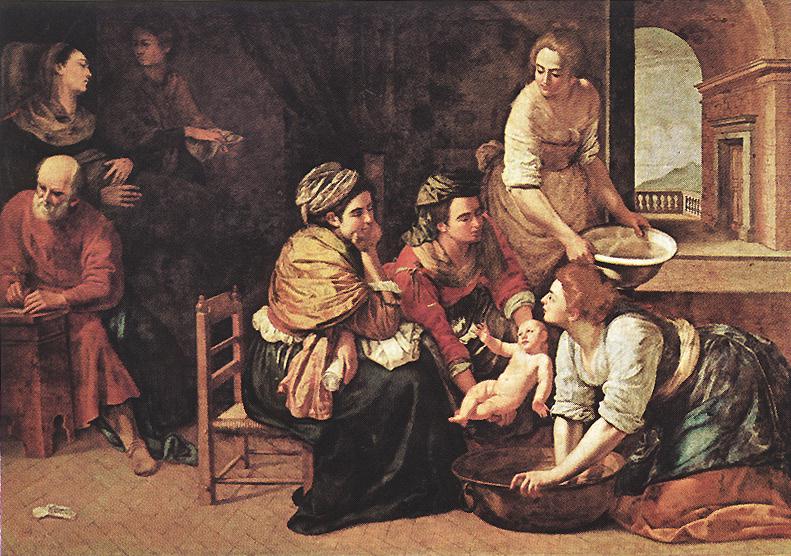
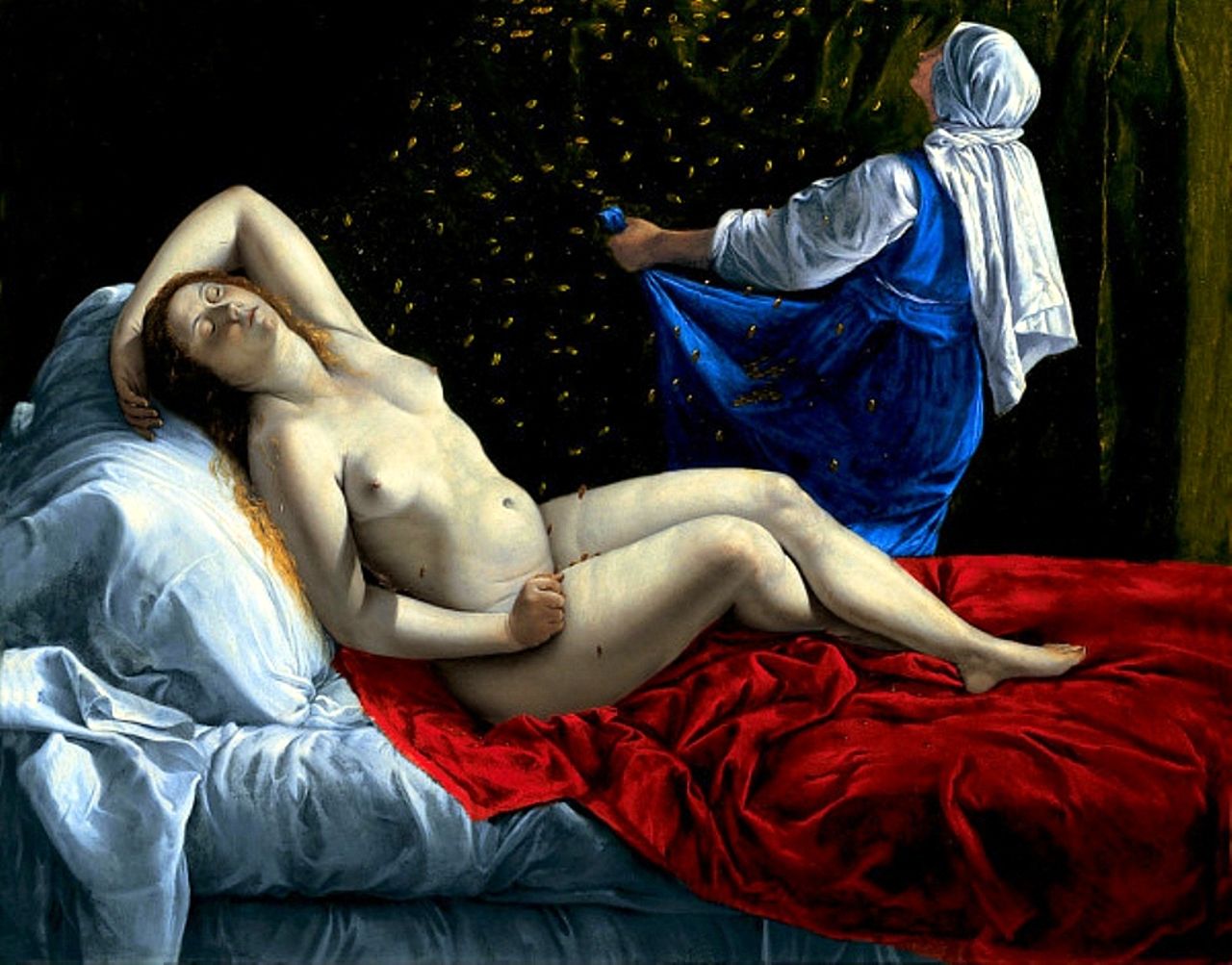
Here is a selection of her heroines and biblical characters, proving that she didn’t just do gore and slaughter!

Clio the Muse of History c. 1632 by Artemisia Gentileschi

Clio the Muse of History c. 1632 by Artemisia Gentileschi

The Birth of St. John the Baptist by Artemisia Gentileschi. Commissioned by Philip IV of Spain

The Birth of St. John the Baptist by Artemisia Gentileschi. Commissioned by Philip IV of Spain

Danaë by Artemisia Gentileschi

Danaë by Artemisia Gentileschi

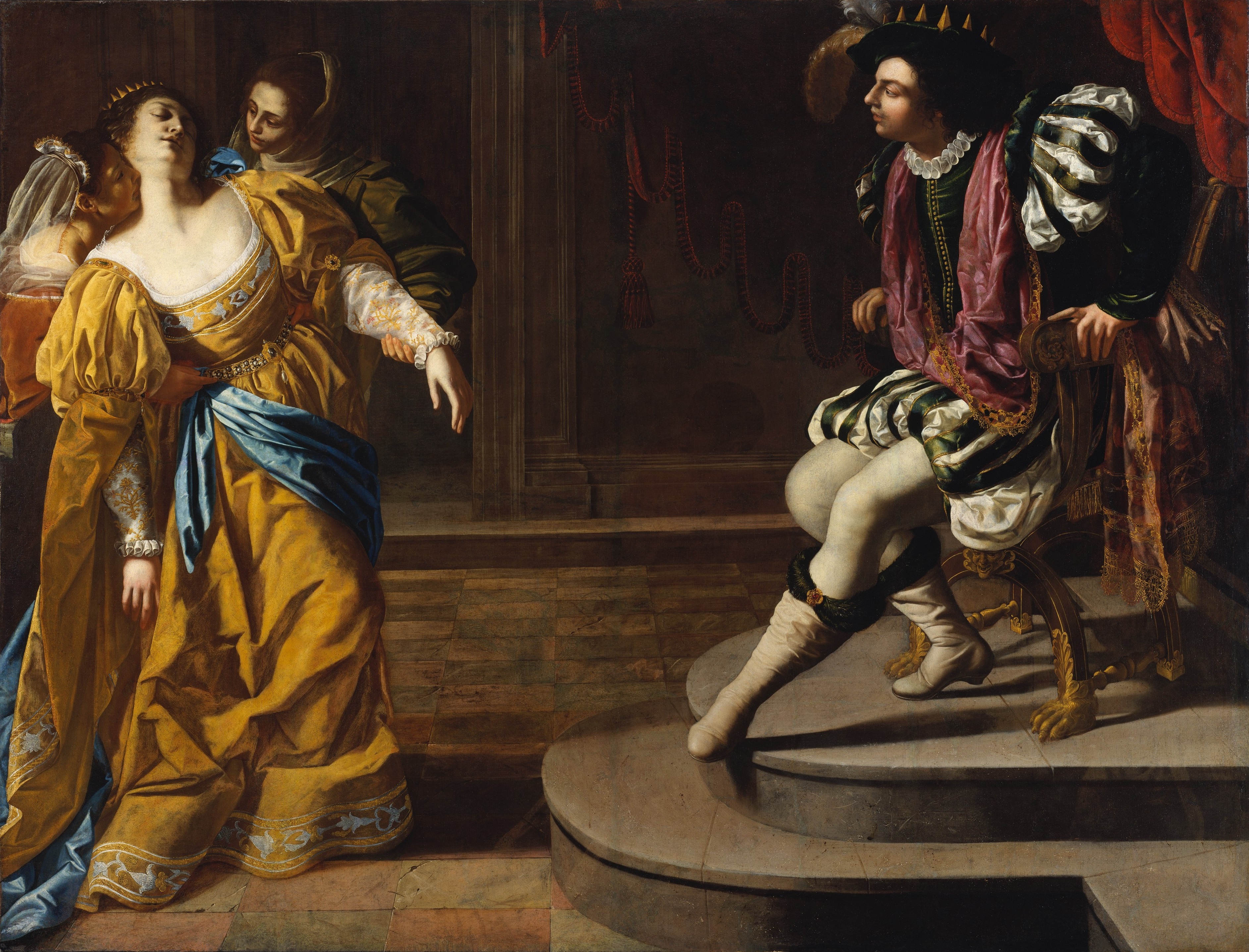
Esther_before_Ahasuerus c. 1628 - 35 by Artemisia Gentileschi

Esther before Ahasuerus c. 1628 – 35 by Artemisia Gentileschi

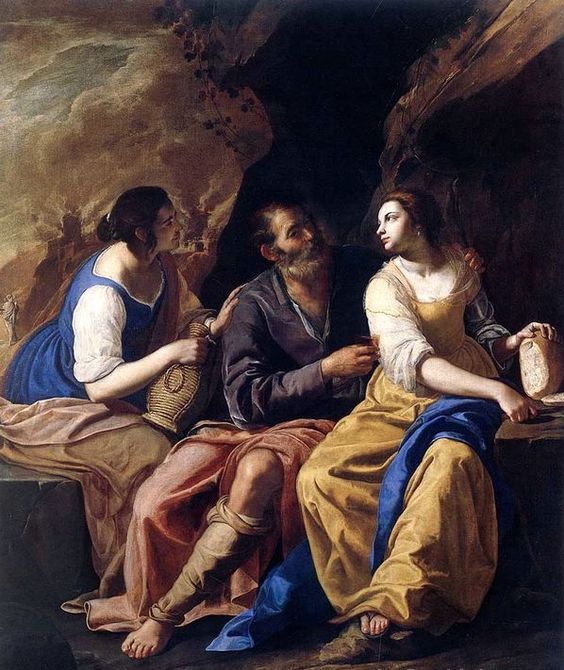
Lot and his Daughters by Artemisia Gentileschi

Lot and his Daughters by Artemisia Gentileschi

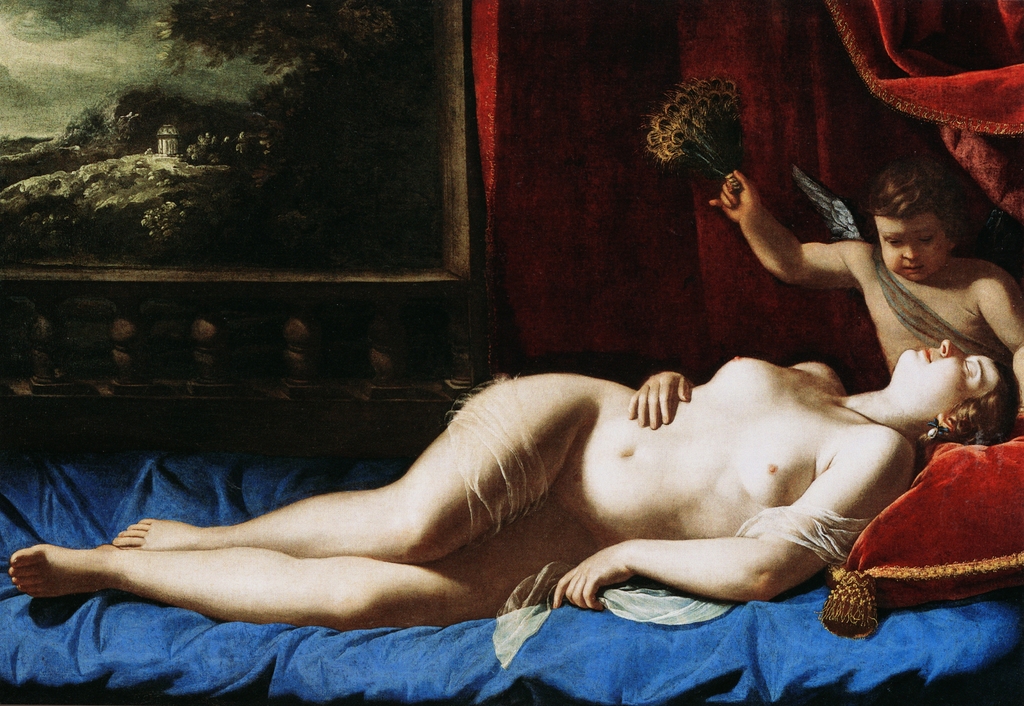
Sleeping Venus by Artemisia Gentileschi

Sleeping Venus by Artemisia Gentileschi

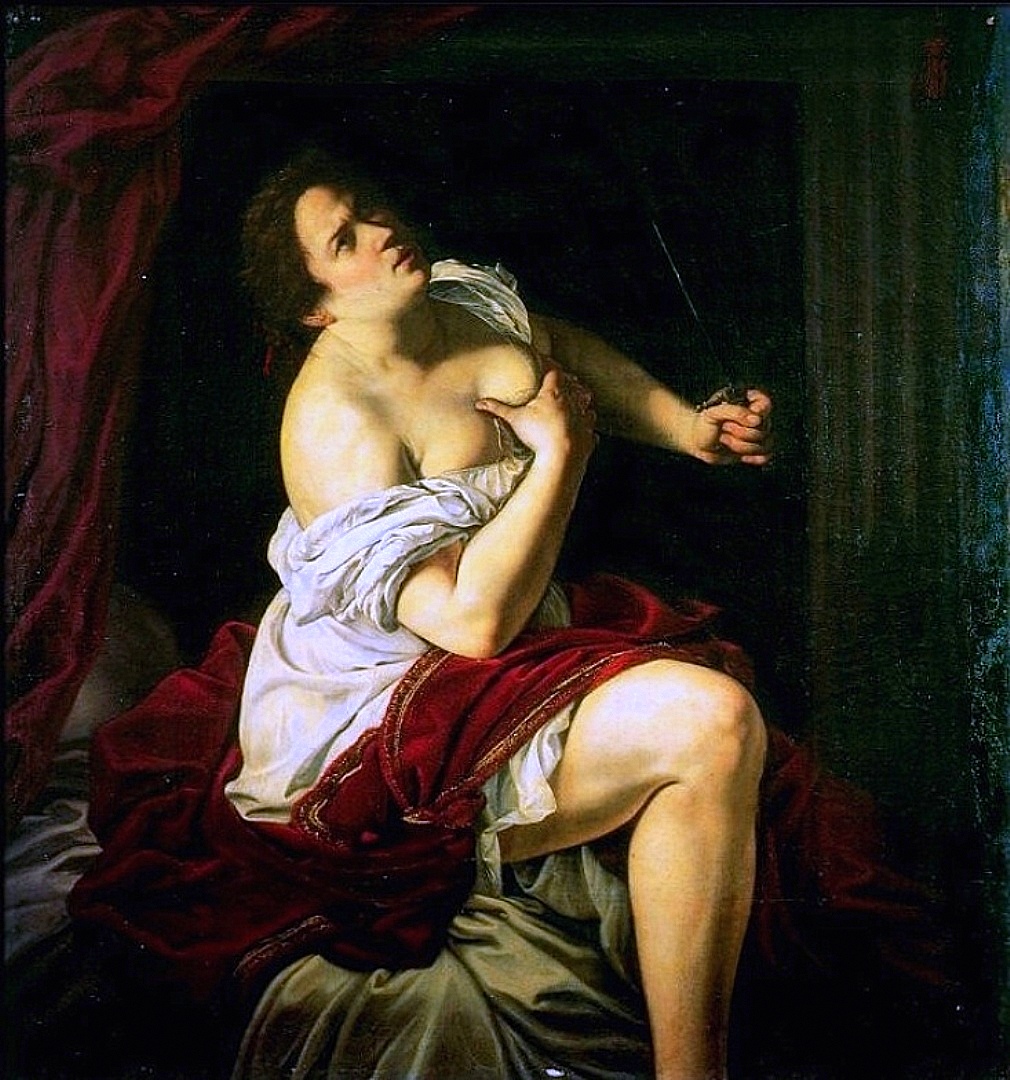
Lucretia c. 1620 -21 by Artemisia Gentileschi

Lucretia c. 1620 -21 by Artemisia Gentileschi

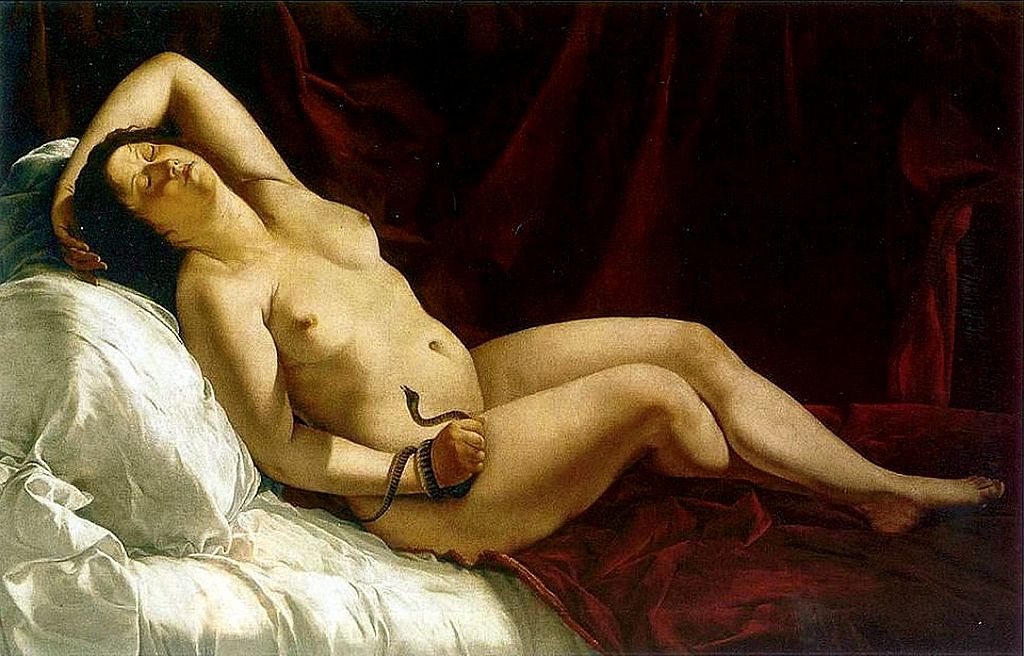
Cleopatra by Artemisia Gentileschi

Cleopatra by Artemisia Gentileschi

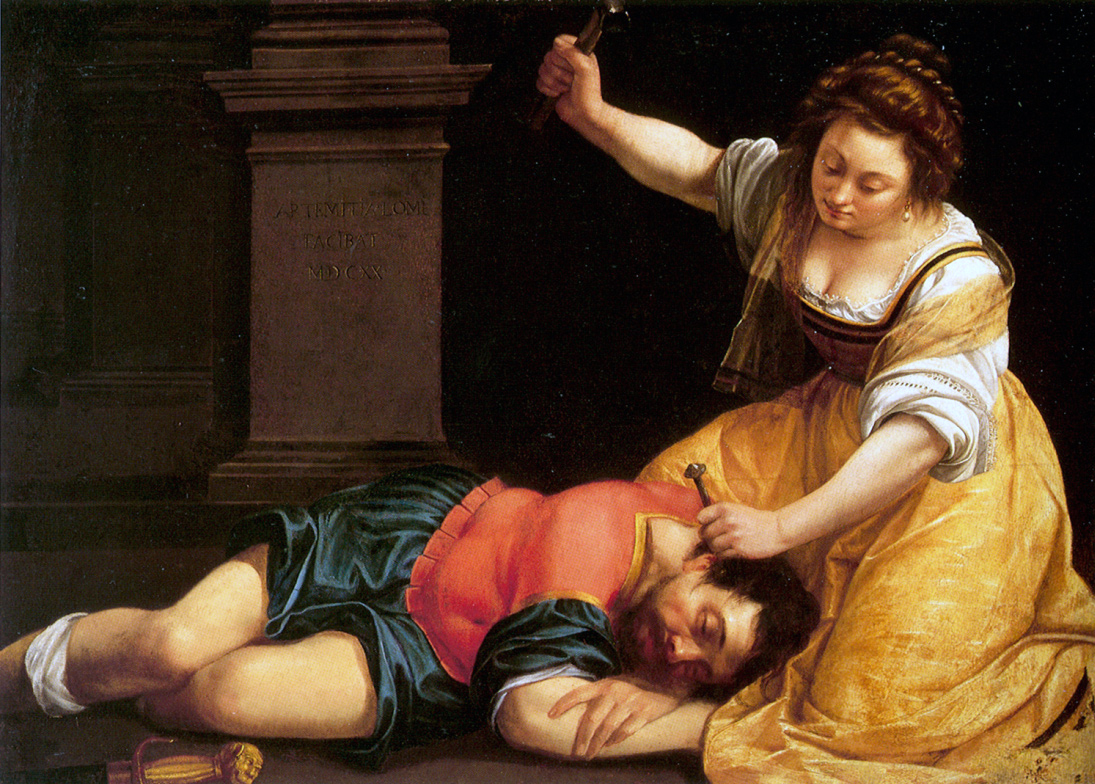
Jael and Sisera c. 1620 by Artemisia Gentileschi

Jael and Sisera c. 1620 by Artemisia Gentileschi

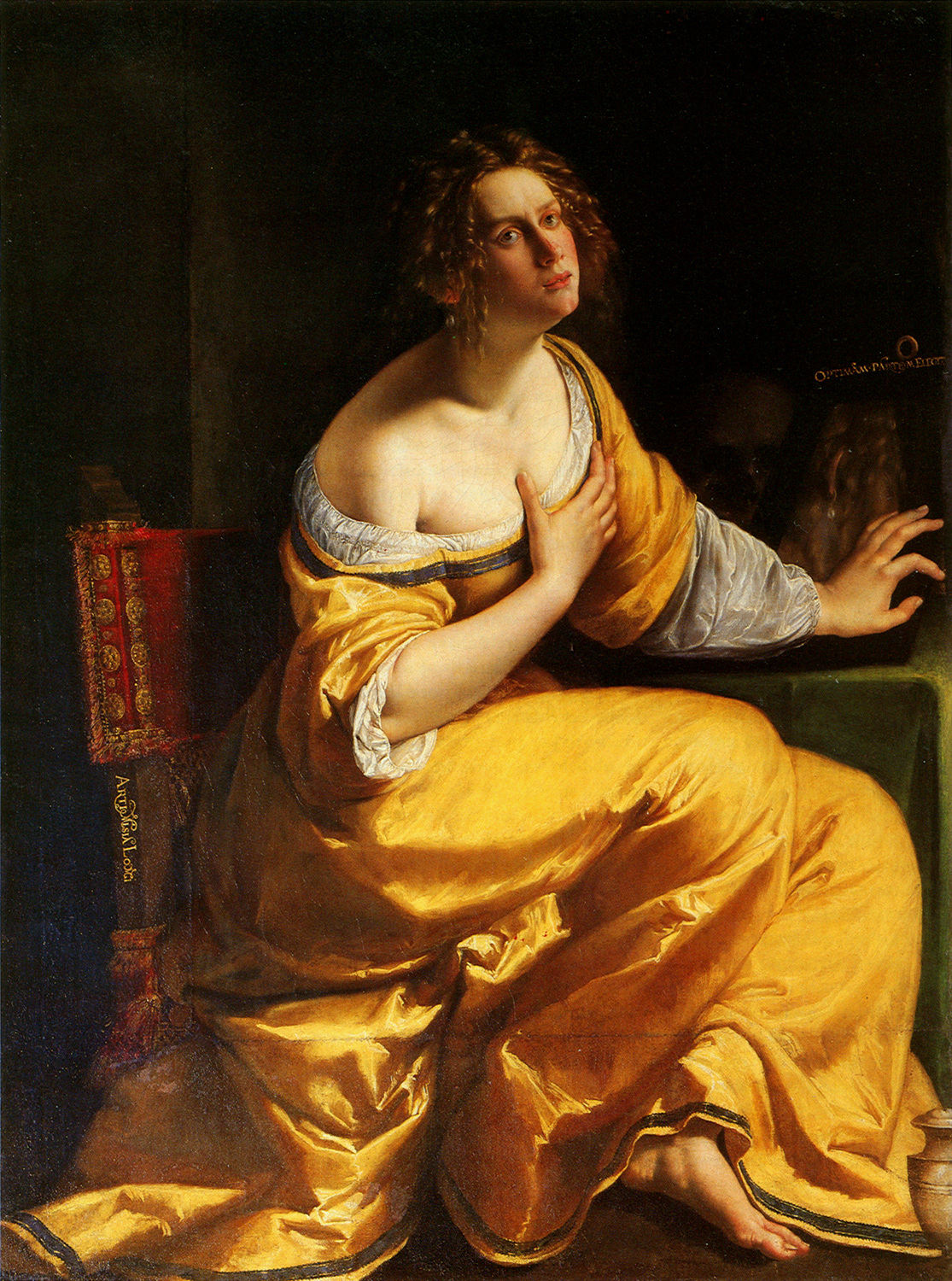
The Penitent Mary Magdalen c. 1615 - 16 by Artemisia Gentileschi

The Penitent Mary Magdalen c. 1615 – 16 by Artemisia Gentileschi

Although there were other notable baroque women painters, I feel it is Artemisia who suffered and struggled the most for her art, who laid down the gauntlet to the male art establishment that said, “I’m as good as any of you.” Art was very much a gentleman’s club in the baroque era, and Artemisia soon discovered that they weren’t all gentlemen either!

She was an artist with an edge, certainly living on it most of the time. Her work has such a robust and natural quality, and perhaps her infamous status after the rape trial set her apart as a bit of a curiosity, freeing her up to create such incredible works without the usual constraints that women of the time lived within.

Her early trauma seems to have been the catalyst for her career. I don’t think she would have made such an impact as an artist without the emotional intensity behind her painting.

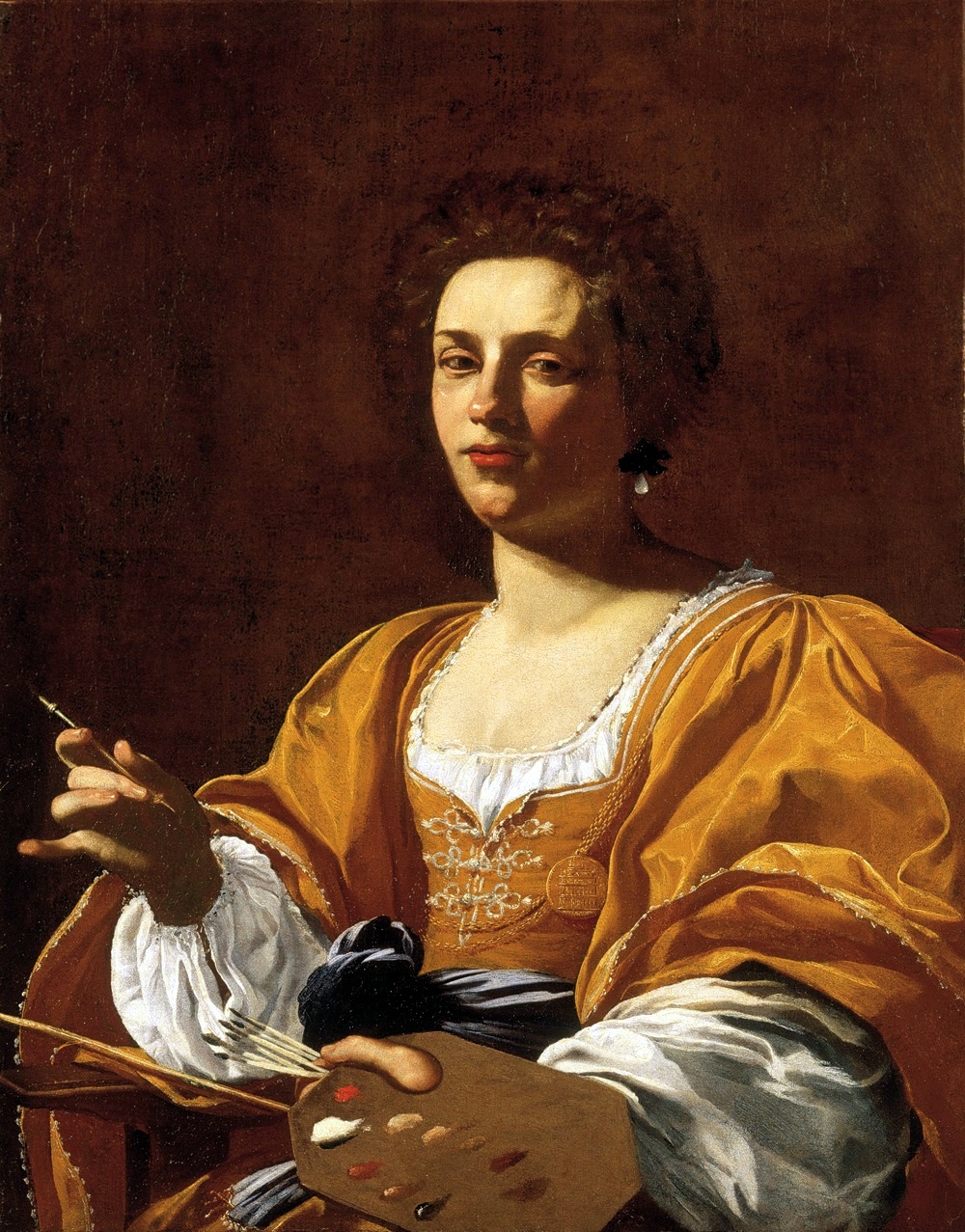
Portrait of Artemisia Gentileschi c. 1623 - 26 by Simon Vouet

Portrait of Artemisia Gentileschi c. 1623 – 26 by Simon Vouet

She and I would have had quite a bit in common, (centuries, circumstances and talents notwithstanding). Being as I can’t have a conversation with her, the next best thing is to admire her art and study her life. She deserves to be remembered.

Remarkable Women: The Life and Times of Baroque Painter Artemisia Gentileschi (Part 1)

“I have made a solemn vow never to send my drawings because people have cheated me. In particular, just today I found…that, having done a drawing of souls in Purgatory for the Bishop of St. Gata, he, in order to spend less, commissioned another painter to do the painting using my work. If I were a man, I can’t imagine it would have turned out this way.” ~ Artemisia Gentileschi (from a letter to patron Don Antonio Ruffo, November 13, 1649.)

From what I have gleaned in my research and seen with my own eyes of her paintings; Artemisia Gentileschi was a strong, spirited, determined, talented, fearless and voluptuous artist; who possessed bright, fierce eyes that communicate her emotions from her canvases. In pigment she exudes a powerful energy that is completely captivating. In real life she must have been a force of nature!

Artemisia Gentileschi (8th July 1583 – 1656)

Much of her work has been lost, sidelined and misattributed through the centuries, but has recently been restored, revered and rightly honoured.

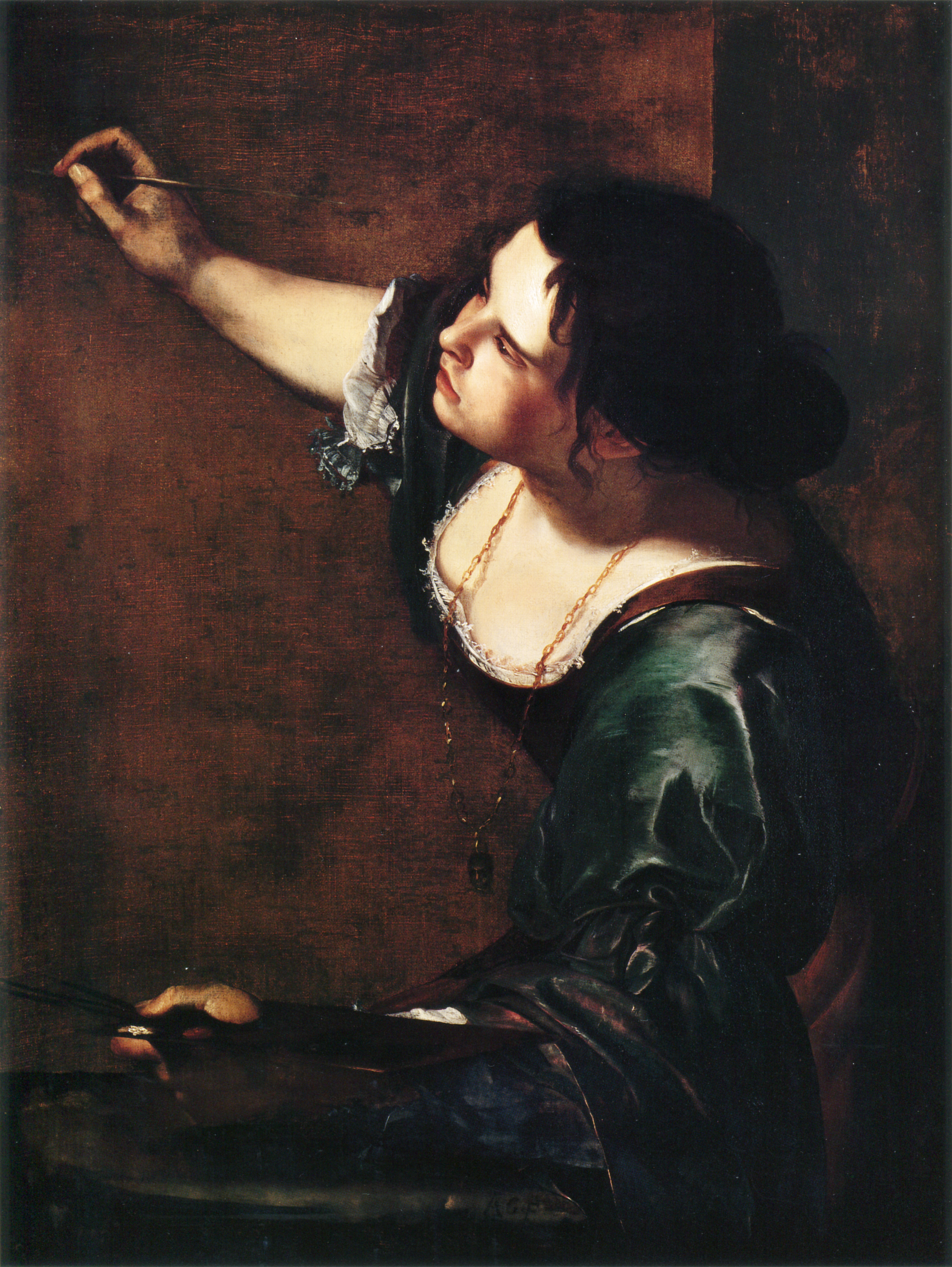
Self-portrait as the Allegory of Painting by Artemisia Gentileschi. Thought to have been in the collection of Charles I.

Self-portrait as the Allegory of Painting (La Pittura) by Artemisia Gentileschi, circa 1638-9, commissioned by Charles I in London. It is now housed in Hampton Court Palace.

If ever there was a body of work that deserved the mantle of ‘art imitating life’ it was hers.

She painted mostly biblical scenes and heroines – strong female protagonists from history and mythology, in a way that was natural and worthy of a Caravaggista.

She truly mastered the Baroque painting technique developed by Caravaggio, known as chiaroscuro, in which light and shadow are sharply contrasted. Only a heroine could have done that…

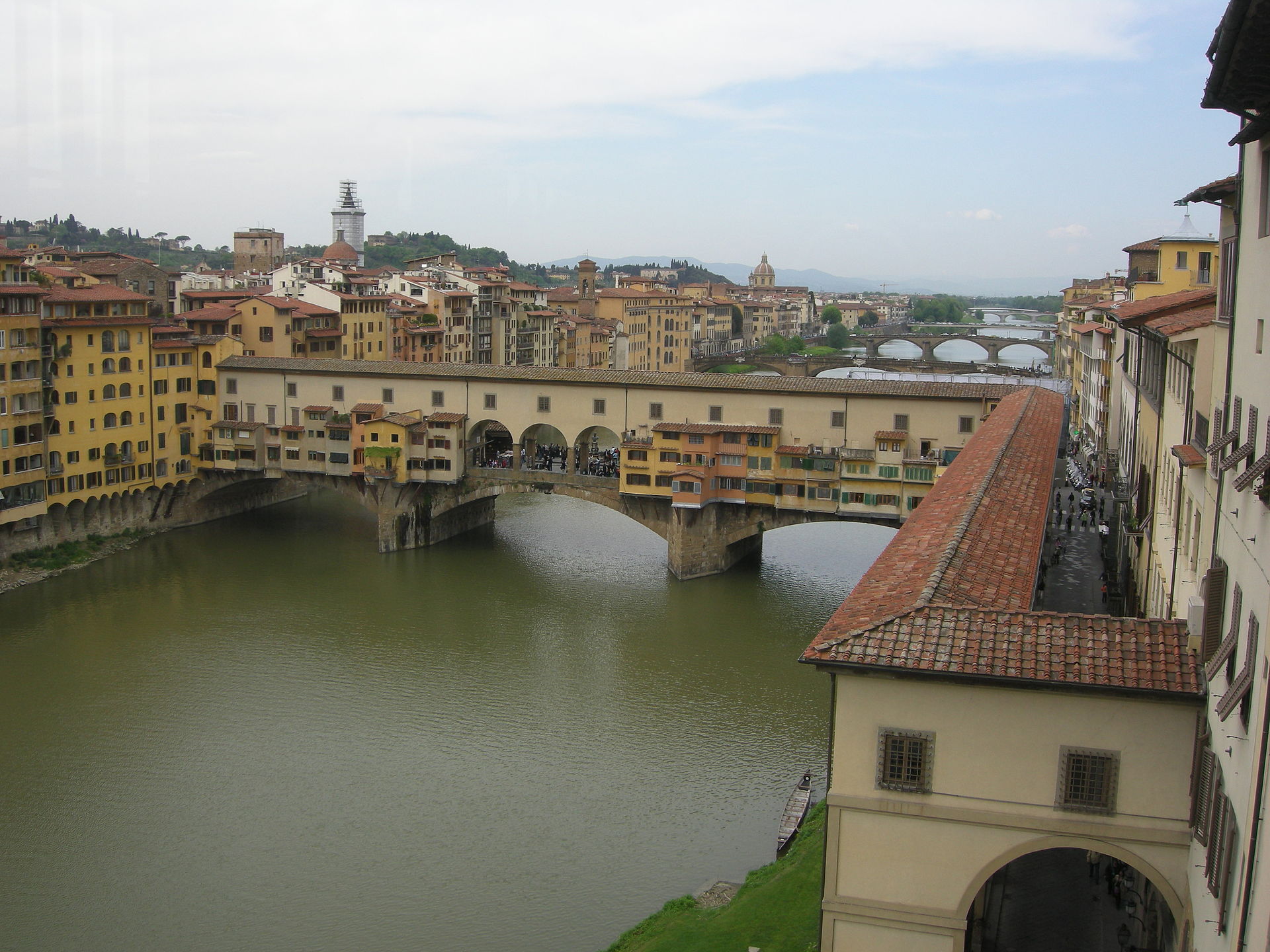
What she achieved as an artist of the post Renaissance era in a heavily male dominated field (only seven percent of the self-portraits by western art’s most revered masters hanging on the walls of the Vasari Corridor are by women), is just astounding. There were so many obstacles to her success and although she is one of history’s most accomplished female artists of the baroque period, she was never recognised as much as she deserved to be in her lifetime.

The Vasari Corridor running from the Uffizi Gallery on the right, turning into the Ponte Vecchio Bridge to join the Palazzo Pitti.

The Vasari Corridor running from the Uffizi Gallery on the right, turning into the Ponte Vecchio Bridge to join the Palazzo Pitti.

Alas, the stories of many great painters, writers, poets, sculptors and composers share this unfair narrative arc of neglect, both male and female.

“Artemisia has suffered a scholarly neglect that is unthinkable for an artist of her calibre.” ~ Art Historian Mary D Garrard

Artemisia Gentileschi’s childhood and teenage years

Born on 8th July 1593 in Rome to a well-known, established painter, Orazio Gentileschi and his wife, Prudentia Montone, Artemisia grew up being greatly influenced by her father’s trade. At that time in history it would have been impossible for a young girl to receive training in the arts, unless from a parent. She would have learnt to draw, mix paints and watch her father painting in his studio from a very early age.

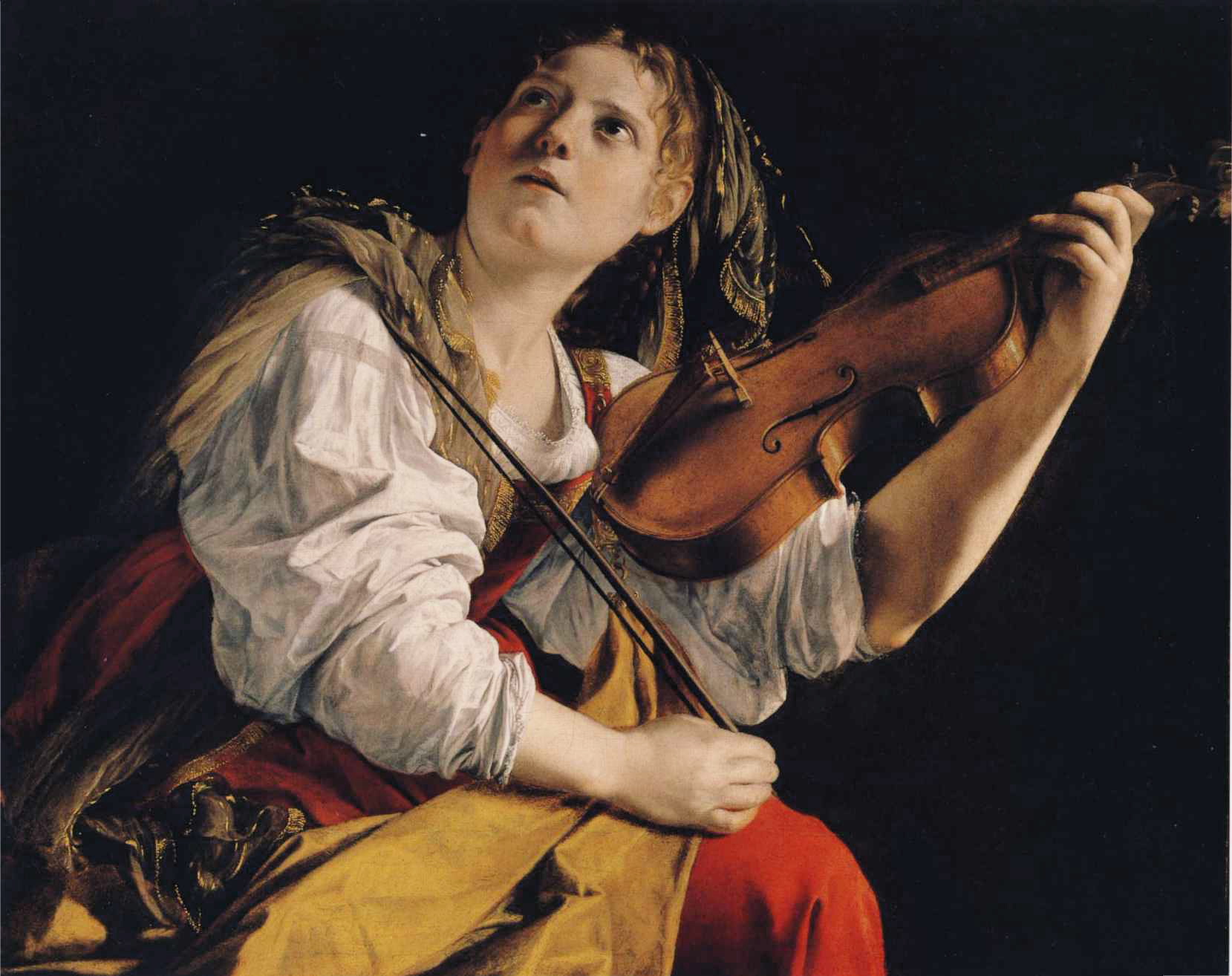
Young woman playing a violin by Orazio Gentileschi - obviously a very good likeness of his beloved daughter - Artemisia Gentileschi!

Young woman playing a violin by Orazio Gentileschi – obviously a remarkable resemblance of his beloved daughter – Artemisia Gentileschi!

Her mother died in childbirth when Artemisia was just twelve years old, leaving her with her father and in the role of surrogate mother to her three younger brothers. No easy task at the same time as dealing with her own grief.

I love the fact that her father (who was a friend and follower of Caravaggio and Tenebrism), admired her talent regardless of her gender, with no regard for his ego, stating that he could teach her no longer when she turned 15. He then turned to another painter to continue her tutelage.

Rome, although home to the Pope and The Vatican was far from being pure and sin free. After the sun’s pink and orange hues faded from the sky above its historic spires, statues and domed rooftops, its illustrious streets witnessed many deeds of depravity, when parts of the city transformed into a cesspool of vice and crime.

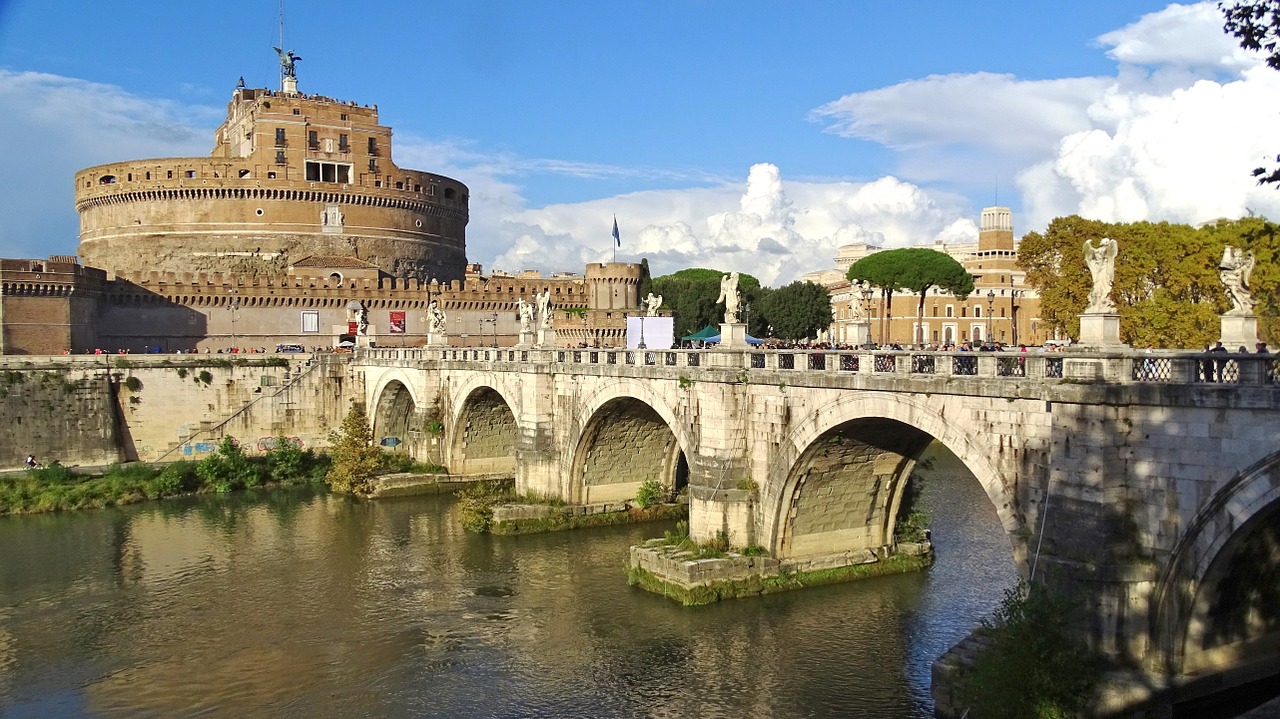
Criminals were swiftly dealt with, (usually on the Piazza di Ponte), where public executions and beheadings were common.  The bodies of these unfortunate souls were left exposed to passers by on the Ponte Sant’ Angelo. It was noted that on such occasions the waters of the Tiber ran red…

Ponte Sant' Angelo, Rome

Ponte Sant’ Angelo, Rome

Orazio Gentileschi was understandably keen to protect his only daughter from such goings on; she was vulnerable until she could marry.  Seventeenth Century Italy was very much a patriarchal society where women were often either classed as virtuous or sinful. If a woman lost her virginity outside of marriage (and therefore her reputation), it frequently led to a life of prostitution.

It seems that despite his best intentions for his daughter, Artemisia’s father unwittingly played a hand in one of the most traumatic experiences of her life when she was eighteen years old.

Rape of Artemisia Gentileschi by Agostino Tassi (1578 – 1644)

Agostino Tassi, self-portrait

Agostino Tassi, self-portrait

As Orazio had worked with a painter of frescoes, Agostino Tassi, at the Palazzo Pallavicini-Rospigliosi in Rome, he trusted him to further Artemisia’s training. At the time of the rape (in spring of 1611), with his wife missing, assumed dead, Tassi struck.

One afternoon during one of Artemisia’s lessons, Tassi’s lechery turned into a sexual assault when he accosted Artemisia in her father’s studio. She fled upstairs in an attempt to escape but he followed her, forced her into the bedroom and raped her.

Sadly, the only other woman in her life, a family friend Tuzia, who rented an apartment at the premises did not come to her aid.

Not only was this a traumatic physical and emotional experience (one that she initially kept from her father), but it spelled disaster for her reputation and marriage prospects. It is thought that Tassi promised he would marry her and she had no choice but to accept. Under that expectation and agreement they had sexual relations for a further year, until it emerged that Tassi’s wife was actually still alive (it was rumoured he had hired men to kill her).

This was the straw that broke the camel’s back for Orazio Gentileschi, who was outraged that his daughter’s purity (and therefore prospects) had been violated by a trusted friend without the promised restoration to his family’s honour. He duly launched court proceedings against the scoundrel Tassi in 1612.

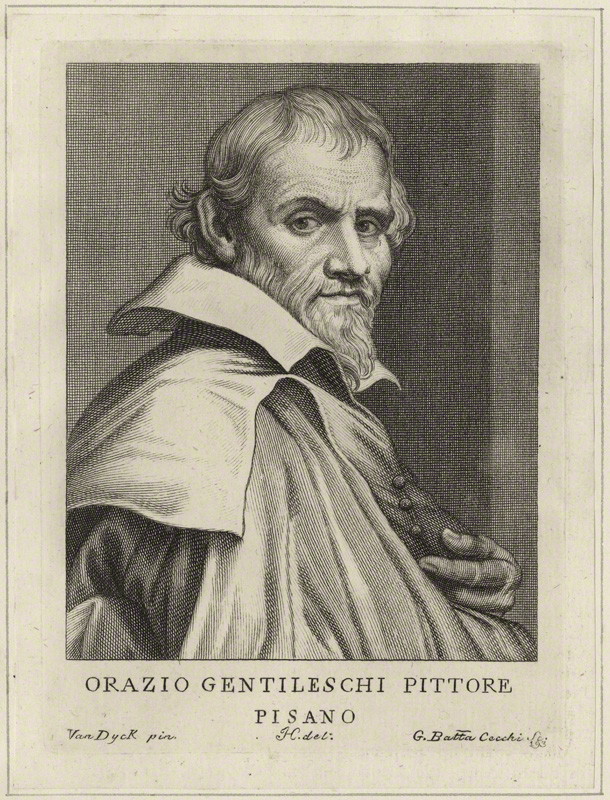
Portrait of Orazio Gentileschi by Giovanni Battista Cecchi, after Sir Anthony Van Dyck. Line engraving, possibly late 18th century

Portrait of Orazio Gentileschi by Giovanni Battista Cecchi, after Sir Anthony Van Dyck. Line engraving, possibly late 18th century currently held by the National Portrait Gallery in London.

The case was unprecedented, and with his daughter’s character in tatters through no fault of her own, Orazio wrote to Pope Paul V (who unfortunately was a patron of Tassi’s), to claim reparation for such a wrongdoing to their family name.

He may have been a talented artist, but Agostino Tassi was no gentleman. He was a serial liar, a serial rapist (having also defiled his own sister-in-law) stolen a painting from Orazio’s studio, as well as planning the murder of his wife. The kind of person we might label today as a low-life scumbag!

There would have been no counselling and support for the victim of this sordid affair, Artemisia herself. It must have been a very confusing, frightening and terrible time for her under such an intense spotlight in court and as a subject of notoriety in the gossip circles of Rome.

What follows is a graphic extract recorded by a court notary during the trial in Rome, where Artemisia describes the moment of the rape. The ancient transcriptions of the case are held at the Rome State Archive:

“I felt a strong burning and it hurt very much, but because he held my mouth, I couldn’t cry out. However, I tried to scream as best I could, calling Tuzia. I scratched his face and pulled his hair, and before he penetrated me again I grasped his penis so tight that I even removed a piece of flesh. All this didn’t bother him at all, and he continued to do his business.” ~ Artemisia Gentileschi.

Throughout the trial Artemisia was subjected to horrific examinations and torture with instruments such as the thumbscrew, which strongly shaped her psychological development and her future artwork.

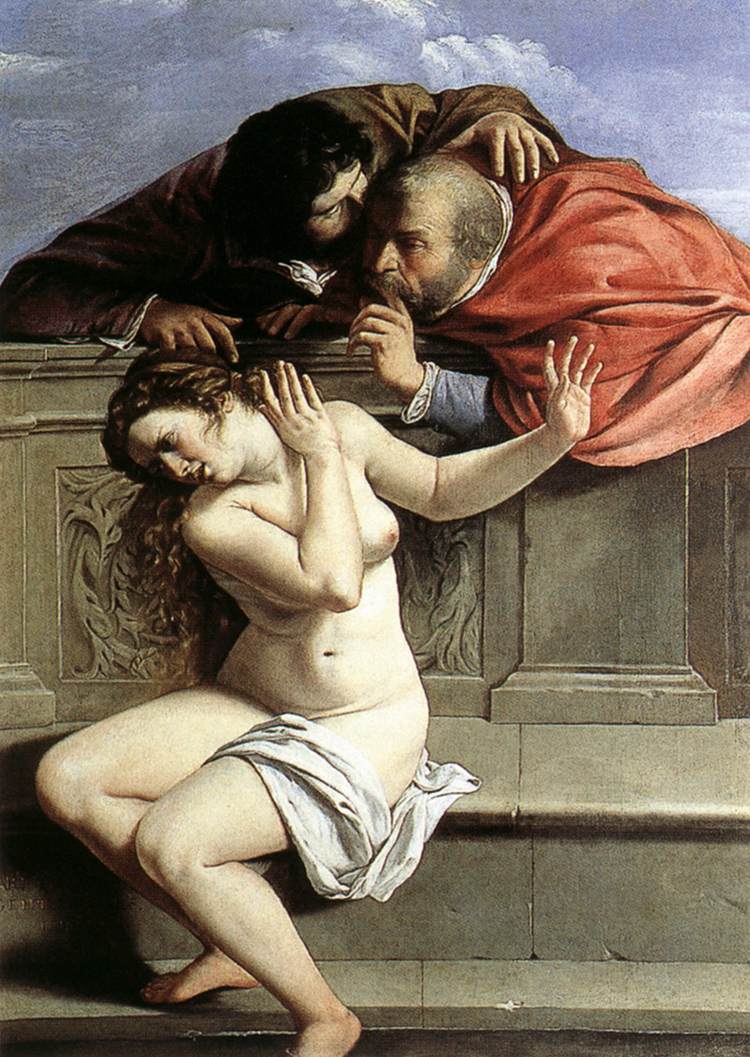
Susanna and the Elders

Artemisia_Gentileschi - Susanna_and_the_Elders_(1610)

Susanna and the Elders by Artemisia Gentileschi circa 1610

Only a year earlier at the age of seventeen she had completed her version of Susanna and The Elders, circa 1610, one of the few paintings of this biblical subject that portrays Susanna with her head turned away from the advances of the men, with body language and an expression indicating their approach is unwelcome.  The female form (possibly based on her own), is more natural rather than idealised. Somehow, it seems to have been an inauspicious omen of the event that would take place on the Gentileschi premises in the spring of 1611.

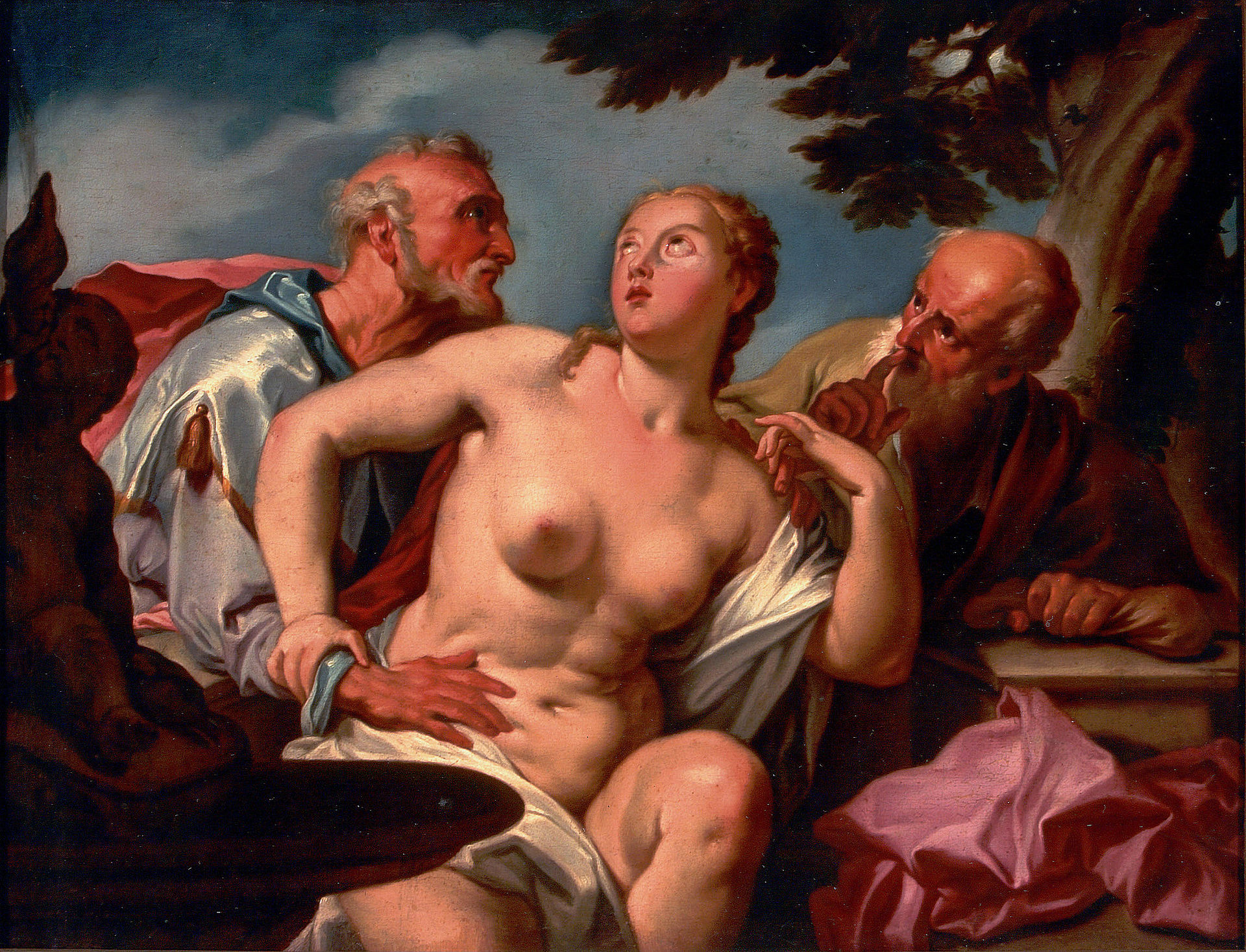
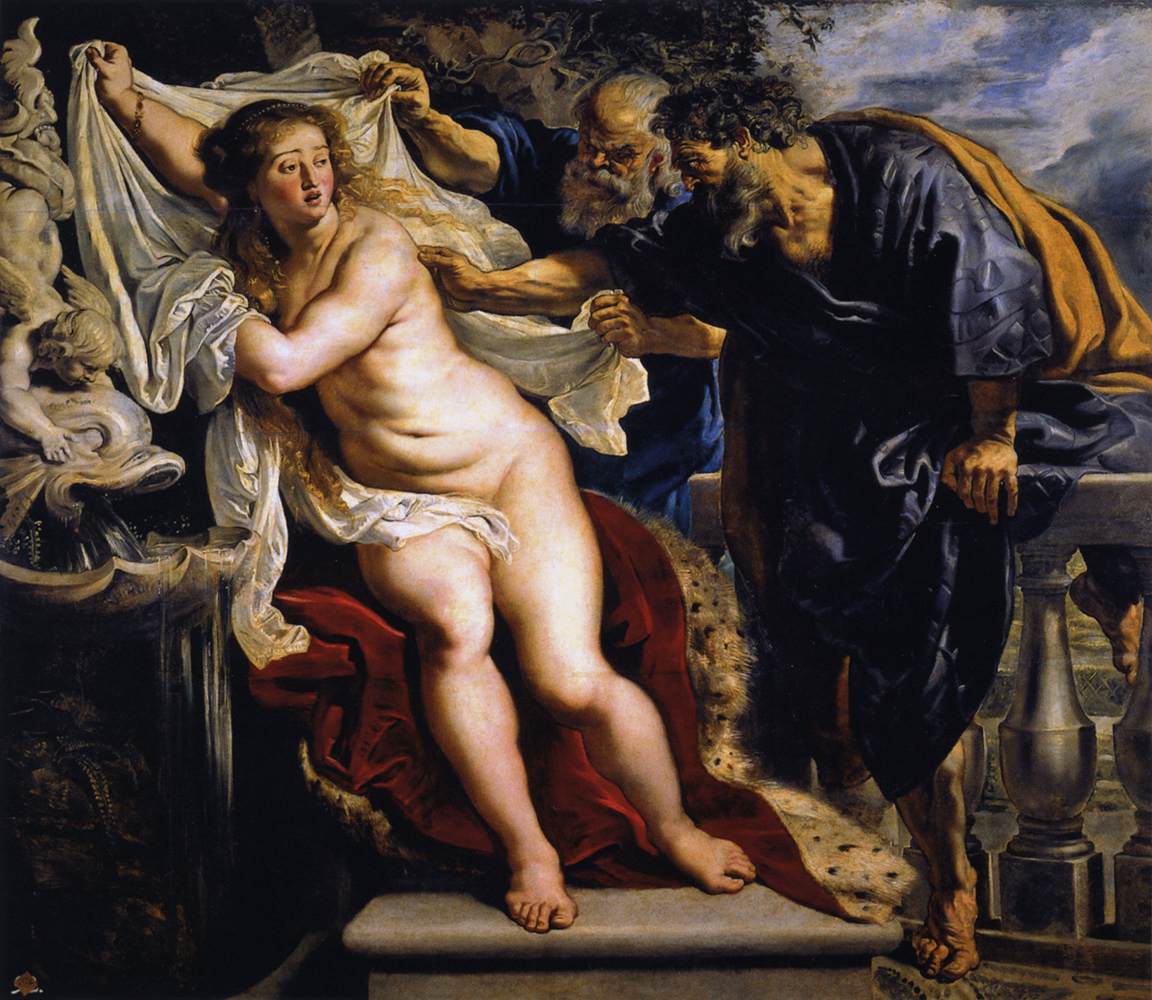
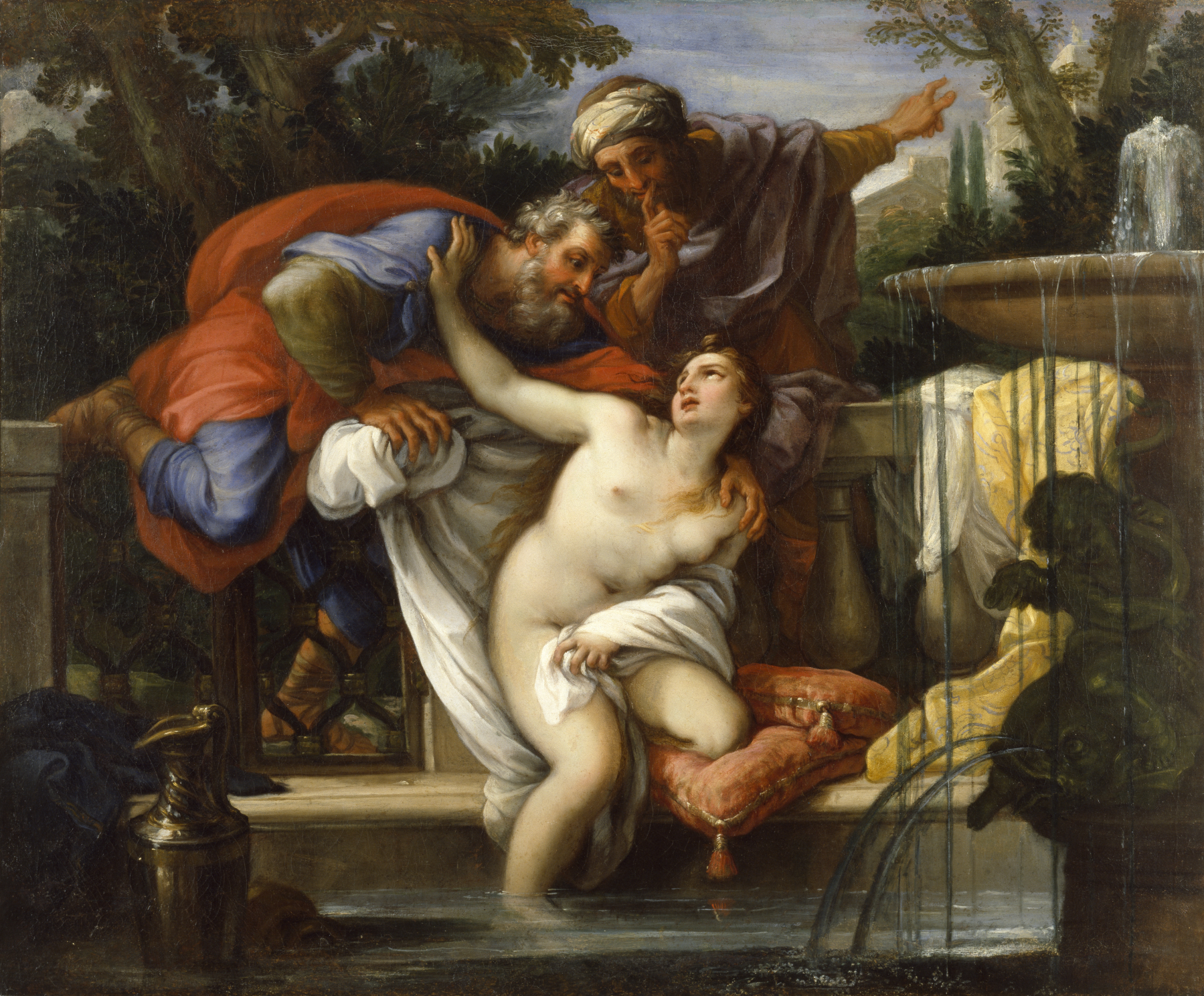
Paintings of Susanna and the Elders (Book of Daniel) by Bernadino Luini, Jacob van Loo, Ottavio Leoni, Hendrick Goltzius, Antonio Bellucci, Bonaventura Lamberti, Guido Reni, Tintoretto, Alessandro Allori, Rembrandt van Rijn, Gerrit van Honthorst, Pieter Pietersz, Bartolomeo Chiari, Giovanni Battista Tiepolo, Massimo Stanzione, Claude Vignon, von Hagelstein, Sebastiano Ricci, Peter Paul Rubens, Jacob Jordaens, Anthony van Dyck, Sisto Badalocchio, Jean-Francois de Troy, Salomon Koninck, Frances Trevisiani, Lambert Sustris, Andrea Vaccaro, Hendrick de Clerk, Paolo Veronese, Giovanni Francesco Guerrieri and Orazio Gentileschi have Susanna facing the men (fully or partially) and do not depict the same level of distress and unwillingness.

Susanna and the Elders by Orazio Gentileschi

Susanna and the Elders by Orazio Gentileschi

Susanna and the Elders by Peter Paul Rubens, also painted in 1610

Susanna and the Elders by Peter Paul Rubens, also painted in 1610

Susanna and the Elders by Giuseppe Bartolomeo Chiari

Susanna and the Elders by Giuseppe Bartolomeo Chiari

Eventually Tassi was found guilty and sentenced to prison and exile, neither of which he fully served. Artemisia on the other hand, was viewed as damaged goods, but her father (with the help of a substantial dowry), found her a husband, a Florentine artist, the younger brother of the lawyer that had helped him during the lengthy court case against Agostino Tassi.

Despite these considerable challenges, Artemisia managed to pick herself up, ditch her victim mantle and find solace and cathartic expression in her work.

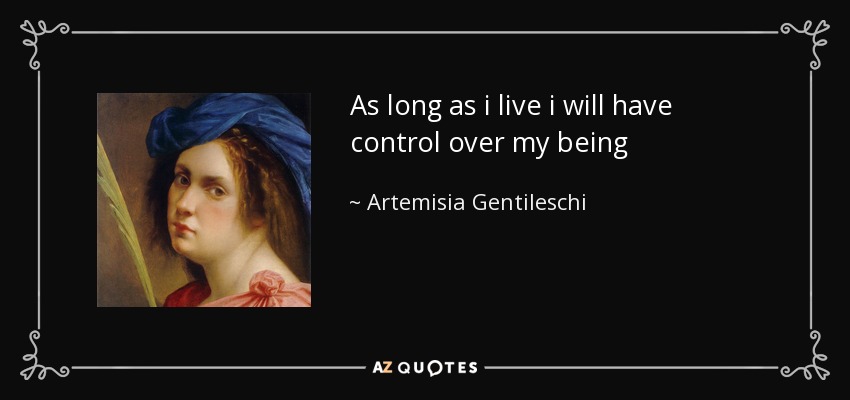
Artemisia Gentilschi quote

In part 2 we’ll look in more detail at her paintings – you’ll notice that many of them are shockingly violent for a female artist – even to our more exposed, desensitized eyes of the twenty first century!

Beautiful Violin Gems 🎼🎻 of the 3 B’s: Bériot, Bull and Bazzini

“The true mission of the violin is to imitate the accents of the human voice, a noble mission that has earned for the violin the glory of being called the king of instruments.” ~ Charles-Auguste de Bériot

I thought it was time to share some lesser known, but brilliant violin works from the nineteenth century. It’s been a little while since my last ‘musical’ post and I’m getting withdrawal symptoms. Plus, I’ve been having technical problems, my old PC has gone to the scrap heap in the sky. The inevitable data retrieval is proving arduous, so in the spirit of a true musician, I’m having to improvise!

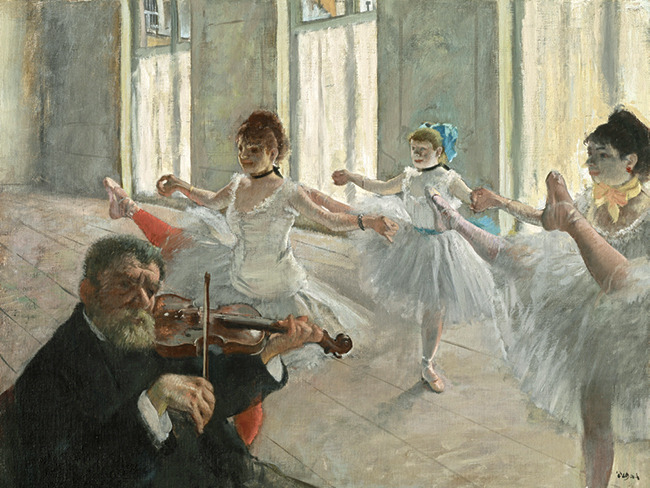
The Rehearsal by Edgar Degas

The Rehearsal by Edgar Degas

Romantic violin pieces flourished in the nineteenth century,  the heyday of romanticism. I’ll present these three violin aces and their music in the order of their birth.

Charles-Auguste de Bériot (20 February 1802 – 8 April 1870)

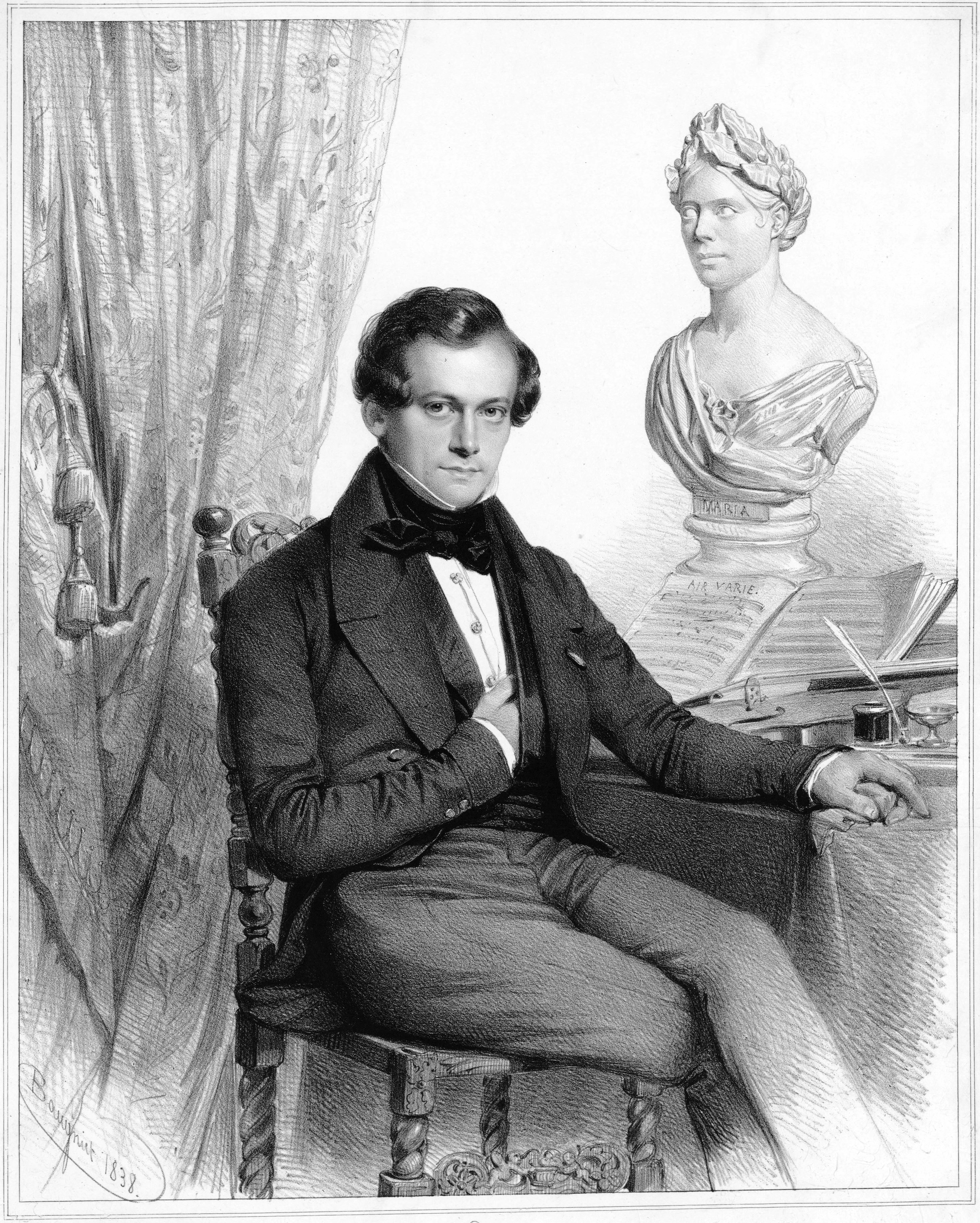
Although he was born in Leuven, Belgium, de Bériot spent the majority of his musical career in Paris. At the Conservatoire de Bériot was tutored by Jean-François Tiby, an acolyte of Viotti. He was also influenced by Baillot and Viotti directly, as well as Paganini (elements of the latter can be heard in the style and virtuosity of his music).

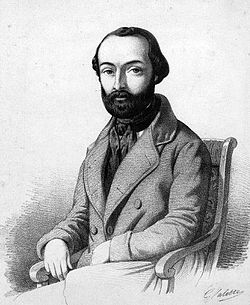
Charles-Auguste_de_Bériot_byCharles Baugniet circa 1838.

Charles-Auguste_de_Bériot_byCharles Baugniet circa 1838.

He played for royalty in France and the Netherlands as well as touring London and Europe. De Bériot was also proficient on the piano and toured much of China against the emperor’s wishes.

His first wife was the celebrated mezzo soprano opera singer, Maria Malibran, who bore him a son in 1833. Charles-Wilfrid de Bériot became a piano professor who counted Maurice Ravel, Ricardo Vines and Enrique Granados among his pupils. Sadly, Maria died at the tender age of 28 (after a riding accident), and de Bériot moved back to Brussels.

In Leuven he met Marie Huber in a cafe of all places. She was an orphan but had been adopted by by Prince von Dietrichstein, making her step sister to his piano legend son, Sigismund Thalberg. It seems to have been a small world in the musical circles of Europe…

Portrait of Charles-Auguste de Beriot by Emile Jean-Horace Vernet.

Portrait of Charles-Auguste de Beriot by Emile Jean-Horace Vernet.

De Bériot later became the chief violin instructor at the Brussels Conservatory where he established the Belgian-Franco School.

Among his followers were the virtuoso violinists Hubert Leonard, Henri Vieuxtemps and Heinrich Wilhelm Ernst.

He was forced to retire from teaching and performing in 1852 due to failing eyesight and became completely blind by 1858. Unfortunately his ill health continued and he had to have his left arm amputated in 1866.

Compositions

De Bériot wrote pedagogical studies for students, such as the Violin Method Opus 102 and His First 30 Concert Studies Opus 123 for soloists wanting to perfect their technique and skills prior to performing major violin concertos. His output includes various romantic violin pieces that were sometimes used for encore performances in addition to ten violin concertos. His music has fallen into relative obscurity, so I think it’s time to dust it off and give it an outing!

The fabulous Scene de Ballet, Op. 100 with Itzhak Perlman and the Juillard Orchestra conducted by Lawrence Foster:

Violin Concerto No. 9, Op. 104 with Takako Nishizawi:

Third movement of Violin Concerto No. 9, Op. 104 (performer unknown):

Duo Concertante No. 1, Op. 57 for two violins with Maxine Kwok-Adams and Philip Nolte of the LSO:

A soulful interpretation of Violin Concerto No. 7 in G Major, Op. 76 with Laurent Albrecht :

“If Ole Bull had been born without arms, what a rank he would have taken among the poets – because it is in him, and if he couldn’t violin it out, he would talk it out, since of course it would have to come out.” ~ Mark Twain in a letter to William D. Howells, April 19, 1880

Ole Bornemann Bull (5 February 1810 – 17 August 1880)

This energetic and eccentric Norwegian prodigy didn’t follow the usual path to virtuosity, due to his extremely creative bent and a desire to do things his own way.

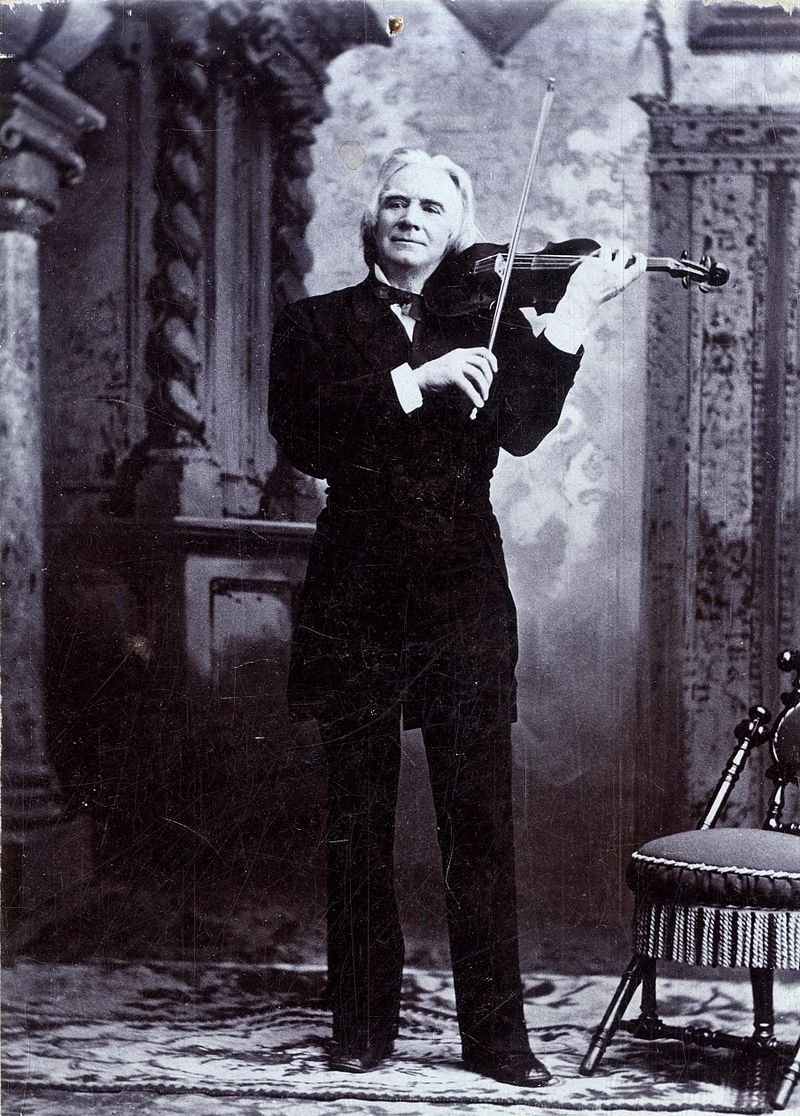
Ole_Bull_playing

Ole Bull playing his Gasparo da Salo violin

Norwegian violinist Ole Bull has received less attention than the other composer/virtuosi of the nineteenth century. Perhaps because a good portion of his performance activity took place in the United States, where less of a historical perspective on 19th century music-making has developed among performers. Bull was Norway’s first real celebrity, and as a virtuoso he was something of a rock star, playing on the emotions of audiences in a way Sarasate, for example, did not.

How many other violin virtuosi have played at the top of a pyramid in Egypt? Probably none! Bull certainly led an interesting life…

From the Violin-man.com:

During the season 1836—37 he played 274 concerts in England and Ireland; in 1839 he visited the great German violinist and composer Spohr in Kassel, in the hope of receiving useful advice from him. In 1840 he played Beethoven’s Krentzer So­nata in London, with Liszt at the piano. On July 23, 1849, he announced the formation of a Norwegian Theater in Bergen, which was opened on Jan. 2,1850. While he failed to impress serious musicians and critics in Europe, he achieved his dream of artistic success in America; he made 5 concert tours across the U.S., playing popular selections and his own compositions on American themes with such fetching titles as Niagara, Soli­tude of the Prairies, and To the Memory of Washington, inter­spersing them with his arrangements of Norwegian folk songs.

I found this short documentary about the man, his music and his idiosyncrasies (such as shaving off the top of the bridge to enable him to play chords on all four strings simultaneously) quite informative:

Luthier Gasparo da Salò

In 1842 Ole Bull bought a very richly decorated da Salò violin, originally made in 1570 for the treasure chamber of Archduke Ferdinand I of Tyrol. He used it on tour along with a magnificent Guarneri del Gesu and a large Nicolo Amati model, for nearly forty years of frenzied, fiery improvisation and recital.

Ole Bull's Gasparo da Salo violin.

Ole Bull’s Gasparo da Salo violin.

I adore the deeper, darker, unique sound of Ole Bull’s Violin, made by Jean-Baptiste Villaume:

Compositions

It’s thought Ole Bull wrote as many as seventy pieces in his lifetime, but only around ten of those endured and continue to be performed in modern repertoire.

This is totally seductive and beguiling! ‘Cantabile doloros e Rondo giocoso’ with Charlie Siem and the London Symphony Orchestra at Abbey Road Studios:

Violin Concerto in A major, “Grand Concerto’, Op. 4 (1834; revised 1864) with Annar Follesø with the Norwegian Radio Orchestra, conducted by Ole Kristian Ruud:

This sweet tune is an example of his love for Norwegian folk songs, arranged for violin and orchestra by Johann Svendsen – Sæterjentens Søndag (The Herd-Girls’ Sunday):

Polacca Guerriera played with virtuosic flair by Marek Pavelec:

La Verbena de San Juan: Spanish Fantasy for Violin and Orchestra with Annar Follesø:

Fantasy And Variations On A Theme By Bellini and other gems by Arve Tellefsen:

It seems that he was friends with Pianist and composer Franz Liszt, and Robert Schumann wrote that Bull was among “the greatest of all,” extolling that he was on par with Niccolò Paganini for the speed and clarity of his playing.

“His violin, which transforms all your soul, combines enthusiasm with perfect intonation … his mastery of the bow … produces a song that resembles the human voice, and he has the technique for the most difficult whims found in Paganini, executed without hampering true expression.” ~ Review by a Milanese Critic after hearing Bazzini perform on the violin in 1839

Antonio Bazzini (11 March 1818 – 10 February 1897)

Bazzini was born in Brescia, Italy into a long established Brescian family dating back as far as the 1400s.

Antonio_BazziniHis early introduction to literature, culture and music was provided by his grandfather, Antonio Buccelleni, who had written poems, sonnets and odes, some of which formed the basis of Bazzini’s early compositions.

His first violin instruction was under Kapellmeister Faustino Camisiani, and by the time of his death in 1830 young Antonio was a competent eleven year old violinist.

Bazzini’s fame as a violin virtuoso overshadowed his composing and teaching, he was regarded as one of the finest concert violinists of the 19th century.

From Naxos:

At seventeen Bazzini was himself a maestro di cappella for the church of San Filippo in Brescia. His early works were often religious in nature, and while at San Filippo he wrote Masses, Vespers, and six oratorios. His life materially changed on 20 March 1836, when he played first violin in a quintet by Luigi Savi. The work was dedicated to Paganini and the dedicatee was in the audience. Paganini advised the young man to tour as a virtuoso, and Bazzini took this advice to heart. Beginning in 1837 he toured Milan, Venice, Trieste, Vienna, and Budapest; from 1841–1845 he toured Germany, Denmark, and Poland.

For several years he lived in Leipzig, where he studied the German masters. While in Germany, Bazzini performed with Mendelssohn’s Gewandhaus Orchestra, reputedly giving one of the first private performances of Mendelssohn’s E minor Violin Concerto. In 1848 he undertook a tour of Spain and in 1852 he settled in Paris. In 1864, after a final concert tour in the Netherlands, he returned to Brescia and concentrated on composition; he also championed instrumental music in Italy through string quartet performances at the home of Gaetano Franchi and the creation of the Società dei Concerti. Among the soloists Bazzini brought to Italy were Hans von Bülow and Anton Rubinstein, in 1870 and 1874 respectively.

Along with Verdi, Bazzini had an important rôle in establishing standard concert pitch (440 Hz), which was first recognised in Italy by the Congresso dei Musicisti Italiani in 1881. In 1873 he was appointed professor of musical theory and composition at the Milan Conservatory and became director of the same institution in 1882. Among his pupils at the Milan Conservatory were Mascagni and Puccini.

Compositions

He returned to Brescia after touring, where he focused on composing. During this time he wrote an opera, Turanda, cantatas, sacred works, concert overtures and symphonic poems (Francesca da Rimini). His chamber music proved to be his most successful pieces as far as composing was concerned.

The insanely virtuosic show piece, Scherzo Fantastique, Op. 25 La ronde des Lutins performed superbly by Maxim Vengerov and Ingo Dannhorn:

James Ehnes is cool, calm and collected, yet manages to set his 1715 ‘Marsick’ Stradivarius on fire…

As popular show pieces tend to be arranged for other instruments, I thought I’d treat you to one for the cello and piano by Duo Toivio; cellist Seeli Toivio and pianist Kalle Toivio :

An incredible transcription for classical guitar of ‘La Ronde des Lutins’ by. Alexey Zimakov:

Violin Concerto No. 4 in A minor, Op. 38 with Aldo Ferraresi, Orchestra ‘A. Scarlatti’ di Napoli della Rai conducted by Franco Gallini:

‘Calabrese’, Waltz in E minor, Op. 34, a splendid vintage recording with Yehudi Menuhin and Adolph Baller:

Fantasia on themes from Verdi’s ‘La Traviata’ Op. 50 with Claudio Voghera and Francesco Manara:

I’ll bid you farewell now, (the hungry hordes are waiting for their tea), echoing Shakespeare’s immortal verse: If music be the food of love…play on!