What’s in a Painting? Taking a Closer Look at Pieter Bruegel the Elder’s Masterpiece: The Census at Bethlehem (c. 1566)

“You can use a mount of any format you like to cover parts of this extraordinary painting: it will always appear composed. Each element is set out in such a way that, together with the adjacent element, it constitutes a scintillating composition… These seemingly scattered elements could not be more ordered. But this uncanny science is hidden by the work’s engaging nature.  The public does not pay attention to hidden forces.”
~ André Lhote on the Census at Bethlehem (Treatise on Landscape Painting, 1939)

I toyed with the idea of a looking at a Nativity scene for my Christmas masterpiece, and there are certainly plenty of incredible iconic works; but in the end, the more I studied The Census at Bethlehem, the more it related to me on a human level.

Pieter Bruegel the Elder was a Flemish Renaissance Master, an important influence on the Dutch Golden Age, and THE pioneer of winter scenes.
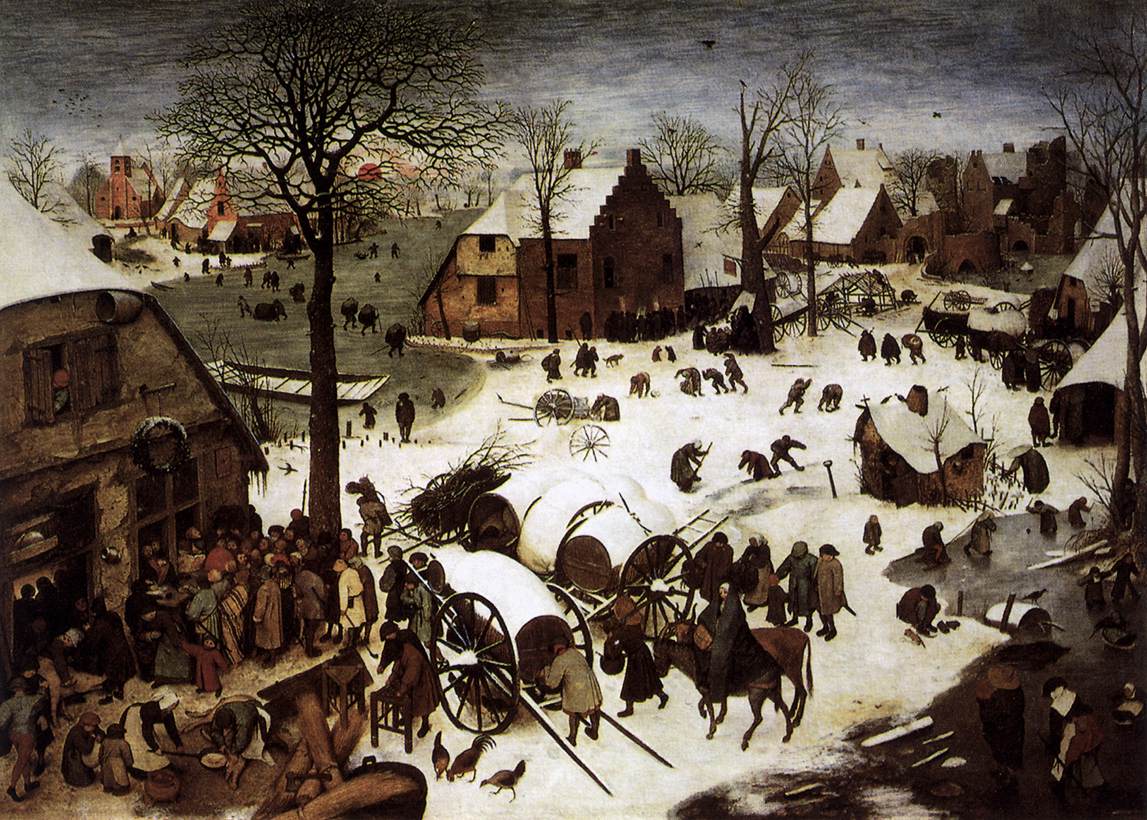
The Census at Bethlehem by Pieter Bruegel the Elder c. 1566

The year before The Census at Bethlehem was completed in 1566, the Netherlands and much of Europe had been in the grip of the coldest winter for a hundred years. Hardships were experienced by the population on a biblical scale; such as famine, disease, riots and a brutal occupation by the Spanish, all of which had hit the population hard.

There was no respite from these seasonal struggles, as the winters in Europe for the next 250 years proved to be among the coldest on record, (certainly harsh enough to justify the ominous phrase, “Winter is coming,” used to great effect in Game of Thrones), leading to that time being dubbed as a ‘little Ice Age’. It was so bitterly cold that even the river Thames froze over, which was recorded for posterity on canvas in 1677 by Abraham Hondius, a Dutch painter living in London.
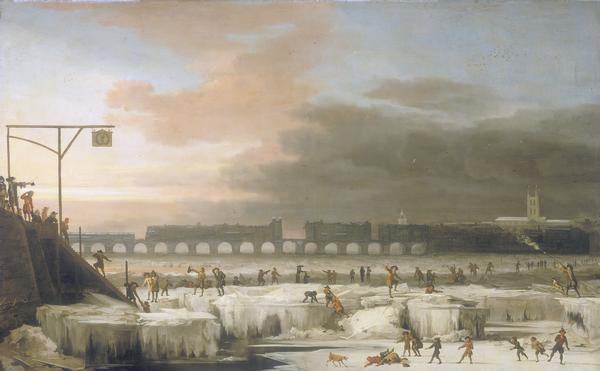
The Frozen Thames by Abraham Hondius c. 1677

You might expect to see a painting of The Census at Bethlehem depicting the central characters of a pregnant Mary and Joseph to actually be in Bethlehem, the ancestral home of Mary’s betrothed, Joseph – but Bruegel takes his subject and his audience on a journey to the City of David in his Flemish homeland – a snowy Brabant village.

According to the Gospel of Luke 21, 1-5:
“And Joseph also went up from Galilee, from the city of Nazareth, to Judea, to the city of David, which is called Bethlehem, because he was of the house and family of David. In order to register, along with Mary, who was engaged to him and was with child.”

The decree by Caesar Augustus that all citizens be registered is portrayed on this 116 x 164.5 cm oil on oak panel, and by painting this biblical event in a contemporary setting perhaps Bruegel is also commenting on the hefty taxes imposed by the Spanish regime in the Low Countries.

However, it seems that Luke may have taken poetic licence in his gospel:

“The historical problems with Luke are even more pronounced. For one thing, we have relatively good records for the reign of Caesar Augustus, and there is no mention anywhere in any of them of an empire-wide census for which everyone had to register by returning to their ancestral home. And how could such a thing even be imagined? Joesph returns to Bethlehem because his ancestor David was born there. But David lived a thousand years before Joseph. Are we to imagine that everyone in the Roman Empire was required to return to the homes of their ancestors from a thousand years earlier? If we had a new worldwide census today and each of us had to return to the towns of our ancestors a thousand years back—where would you go? Can you imagine the total disruption of human life that this kind of universal exodus would require? And can you imagine that such a project would never be mentioned in any of the newspapers? There is not a single reference to any such census in any ancient source, apart from Luke. Why then does Luke say there was such a census? The answer may seem obvious to you. He wanted Jesus to be born in Bethlehem, even though he knew he came from Nazareth … there is a prophecy in the Old Testament book of Micah that a savior would come from Bethlehem. What were these Gospel writers to do with the fact that it was widely known that Jesus came from Nazareth? They had to come up with a narrative that explained how he came from Nazareth, in Galilee, a little one-horse town that no one had ever heard of, but was born in Bethlehem, the home of King David, royal ancestor of the Messiah.
~ Bart D. Ehrman, Jesus, Interrupted: Revealing the Hidden Contradictions in the Bible & Why We Don’t Know About Them

Certain art historians have sometimes interpreted the pig’s slaughter in political terms. It is feasible to see this as a metaphor for the peasants who were bled dry by excessive taxes levied by Philip II of Spain, which were particularly intolerable during the harsh, famine-ridden winters.

Bruegel must have surmised that the painting would hold greater meaning if the people of 16th Century Flanders could relate to the hope of a better future with the happy and uplifting message of the birth of Jesus if it somehow took place in the heart of their own difficult circumstances.

This magnificent painting is now on display at the Royal Museums of Fine Arts of Belgium in Brussels, a city Bruegel made his home from 1563 onwards. He was also active as a painter in Antwerp prior to his last decade. His pigments were sourced mainly in Antwerp, and were ground in his studio.

The Census at Bethlehem has an abundance of characters going about their chilly business on Christmas Eve, amidst the religious fervour of the birth of Christ, where the Flemish landscape is also a major component. Everywhere you look there is a hive of activity, the freezing landscape is teeming with life.

I like that we have an elevated view onto the scene, with Joseph leading Mary (her face barely visible), perched on her trusty steed (donkey), with an ox in tow, unobtrusively blending into the centre foreground, heading towards the hubbub at the Inn.
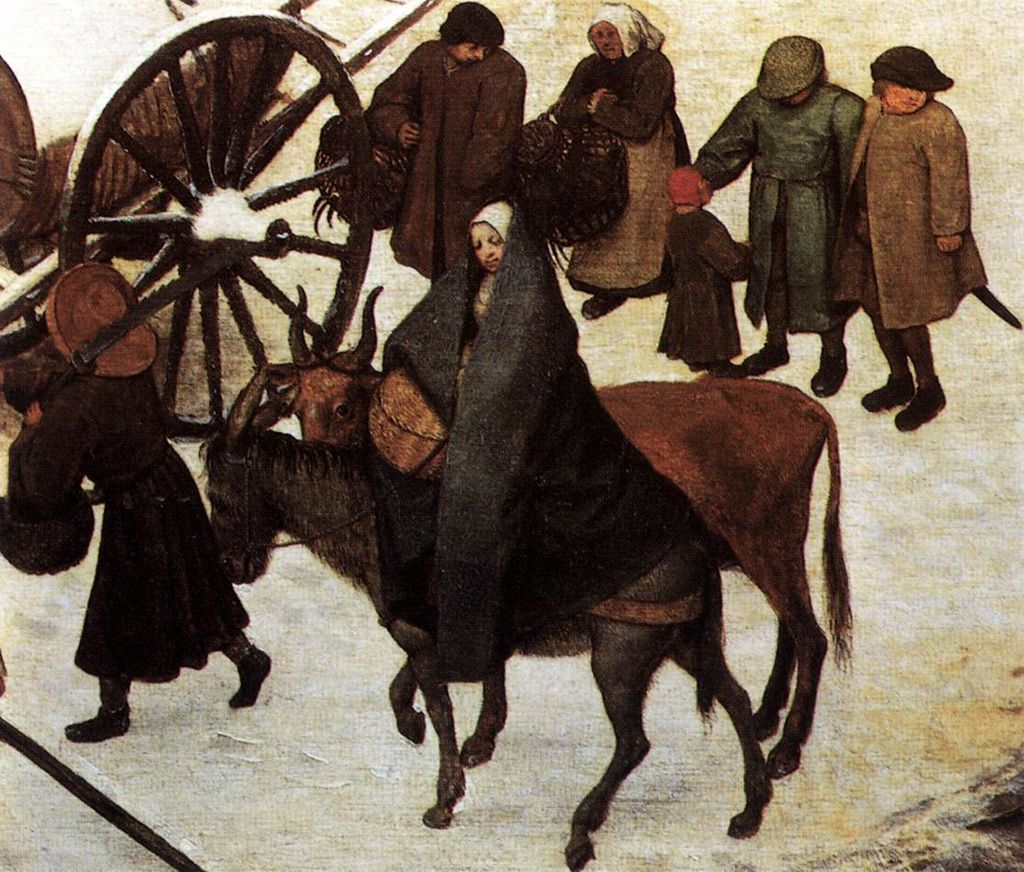
The Census at Bethlehem – detail of Joseph and Mary

The gathering of people clamouring to register is surely a hint that there’s not going to be any room at the Inn, even one with a ruling Habsburg crest on the wall.
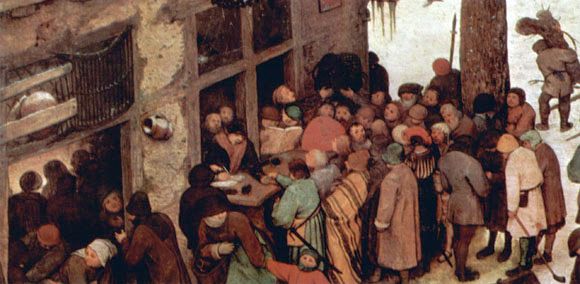
The Census at Bethlehem – detail of the crowded inn

The lack of decent accommodation, as we know, meant Mary had to give birth to the Saviour in a stable.

I take my hat off to Mary, there was no such thing as Entonox, epidurals, or any pain relief two millennia back, let alone a comfortable bed. Hay might have been okay, but one can imagine it must have been a tad draughty.  I’m not sure I would have coped with a procession of wise men, shepherds and worshippers just hours after giving birth in such circumstances, but thankfully Mary rose to occasion for the sake of humanity!

The perspective in The Census at Bethlehem pulls our gaze towards the bottom left as this appears closer, and the tall tree with the setting sun visible through its high, barren branches seems to demarcate the painting in invisible diagonals from top left to bottom right and bottom left to top right, intersecting in the middle where a single spoked carriage wheel lays in the snow.

The Census at Bethlehem by Pieter Bruegel the Elder c. 1566

Decay and disease is also part of the picture, as a man with leprosy is sheltered in the little hut.

The whiteness of the snow in the centre ground and on the slanting roof tops dazzles against the grey sky and bleakness of unforgiving winter weather, the light in the darkness of winter, as Jesus will become the light of the world.

In the top right we can see a ruined castle, (thought to be based on the towers and gates of Amsterdam Castle), a parallel with the dying of an old belief system, or a Pagan way of life, contrasted with the construction of newer buildings and a church across the frozen river, an allegory for a new religion – Christianity.
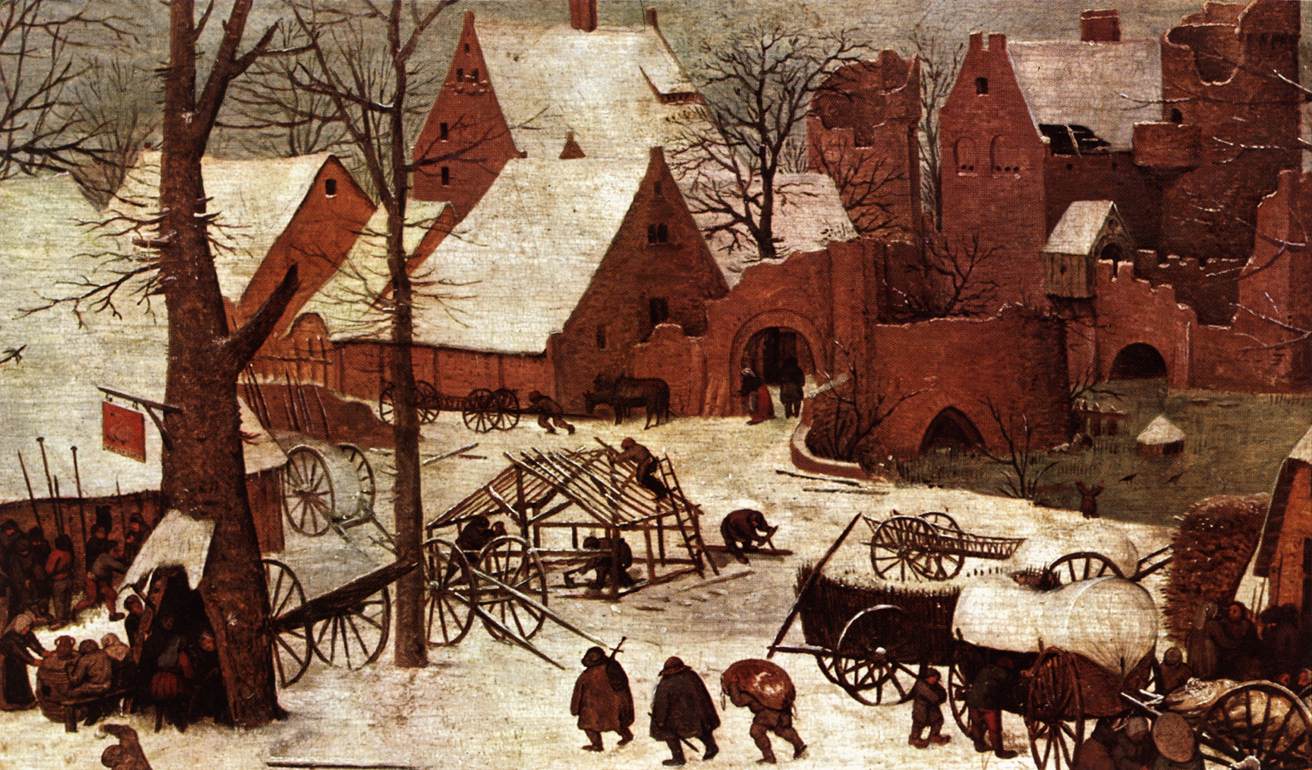
The Census at Bethlehem – detail of the castle ruins

Despite the bone numbing cold, many ordinary citizens have ventured out into the snow, from weary travellers to local residents busily preparing for the Christmas mass and celebration.

To think that children over four hundred and fifty years ago were doing just what children would do today, even in the midst of unimaginable cold, generates sympathy with our European ancestors. The joy of skating on ice, throwing snowballs (I loved the touch of white powder stuck to the man’s left shoulder standing with his back to us on the edge of the water), and being generally engaged in wintry play warms your heart.
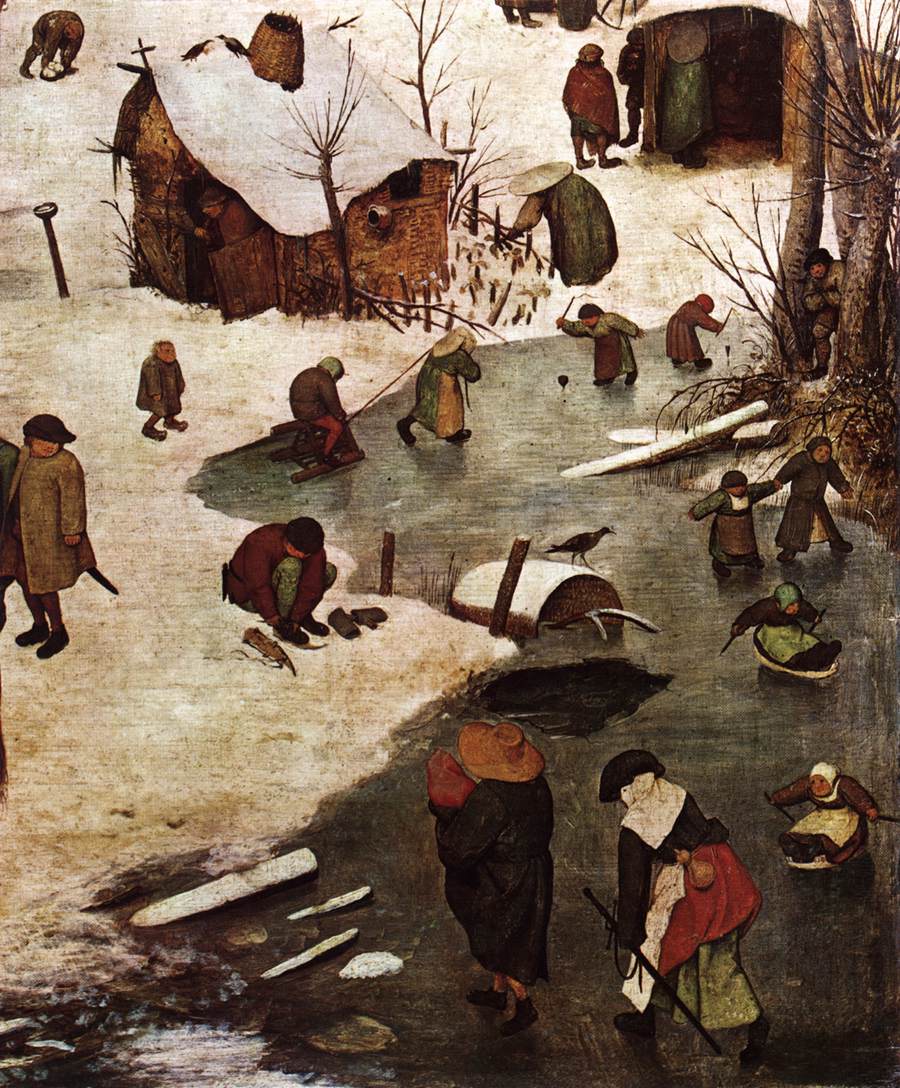
The Census at Bethlehem – detail of the children

Large barrels of grain are stationary, ready to feed the people with much needed sustenance, even as their souls will be nourished by the coming birth…

The Census at Bethlehem was a popular painting during Pieter Bruegel the Elder’s lifetime, as were pretty much all of his works, which tended to depict the solid, robust and stocky figures of peasants (quite a few engaged in matrimonial and celebratory settings), combining landscapes with ordinary activities, making him an early pioneer of genre painting.

It is said the artist (who would have been categorised as upper-middle class in his day), used to dress as a peasant to gain access to such events and closely observe their activities.

The Census at Bethlehem was copied 14 times, 13 of them were known to be produced by his son, Pieter Brueghel the Younger (spelt conspicuously with an ‘h’); he knew he was on to a good thing! The 14th copy (painted in 1611) caused particular excitement in the art world when it surfaced in 2013 and came to the attention of a respected Old Masters art dealer, Johnny Van Haeften, having been in private ownership for 400 years.
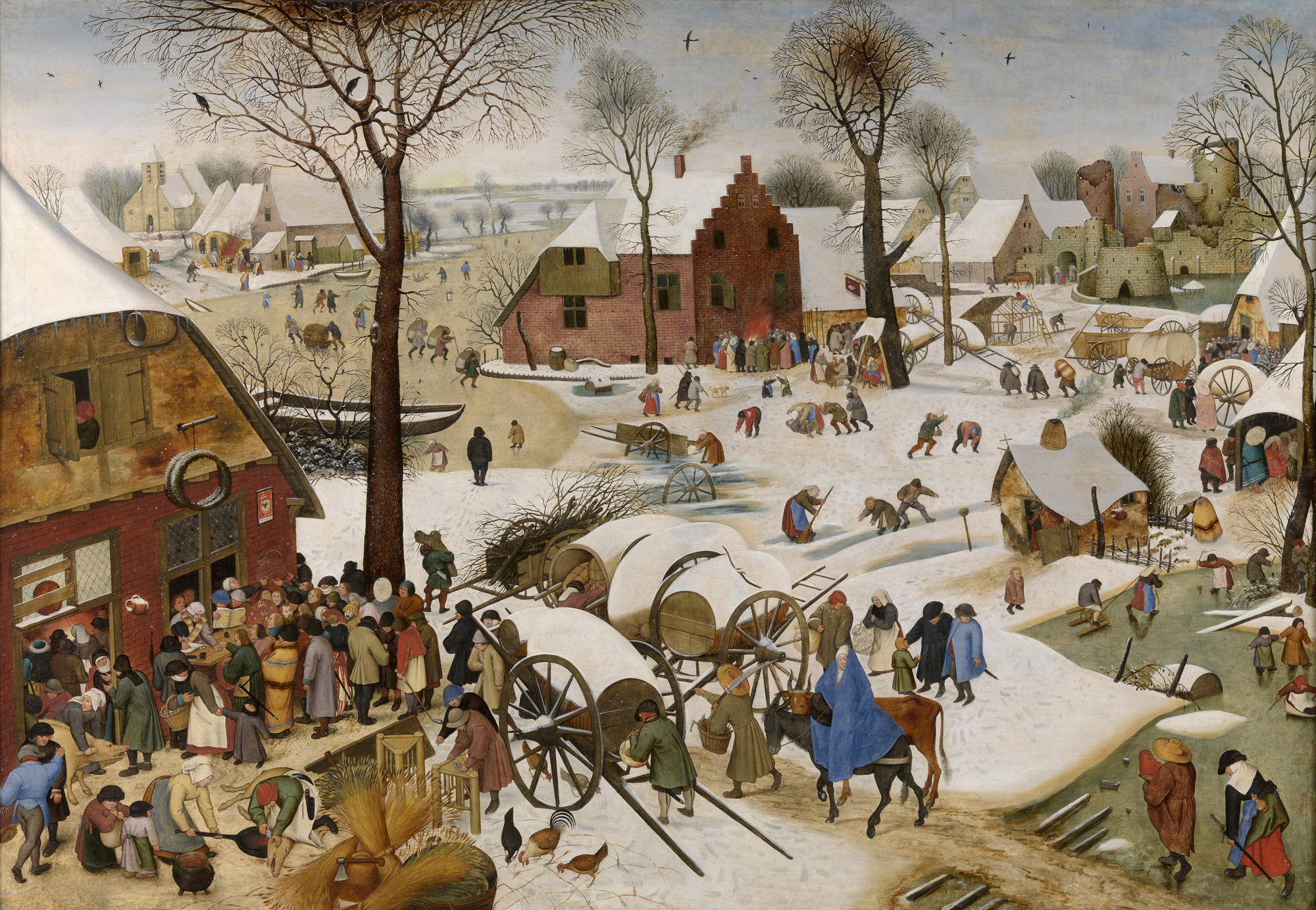
The Census at Bethlehem by Pieter Breughel the Younger

There are subtle differences. The son, a skilled artist in his own right, is bound to stamp his own personality into his art after all, but the most striking for me is the vibrancy of the colour, and it lacks the sunset. It just looks, well cleaner, and not as gritty as his father’s…

Both sons were trained as painters by their maternal grandmother, Mayken Verhulst, a sixteenth-century miniature, tempera and watercolour painter, (hailed as one of the four most important female artists in the Low Countries by Lodovico Guicciardini in 1567), due to the death of their father they were very young. Bruegel’s second son, Jan Brueghel the Elder, differentiated from his brother (who solely focused on replicas of his father’s paintings), with his own original works and became a key figure in the transition to the Dutch Baroque style, frequently collaborating with Peter Paul Rubens.

Pieter Bruegel the Elder (1525–69)

The Painter and the Connoisseur c. 1565 (only known possible self-portrait)

Bruegel was a member of the Antwerp Painter’s Guild. He was known to work by mixing layers that hadn’t dried completely, a technique called ‘alla prima’ or ‘wet on wet’ in English. In contrast to the Flemish artists from the previous century, the light effects are not due to transparency, but the overlay of material and thick impasto brush strokes of colours. This innovation was started by Heironymous Bosch, who was the premier influence on Bruegel, as well as the Italian Renaissance.

In other places, whilst the layers are very thin, Bruegel plays with them to obtain stunning nuances, particularly of the white shades. Bruegel was a master of depicting snowy surfaces and winter skies. Probably his most famous painting is The Hunters in the Snow (c. 1564).  It’s an amazing snowscape that gives a visual gift of desolate beauty and a sense of vast wintry territory in one of the world’s most revered landscapes.
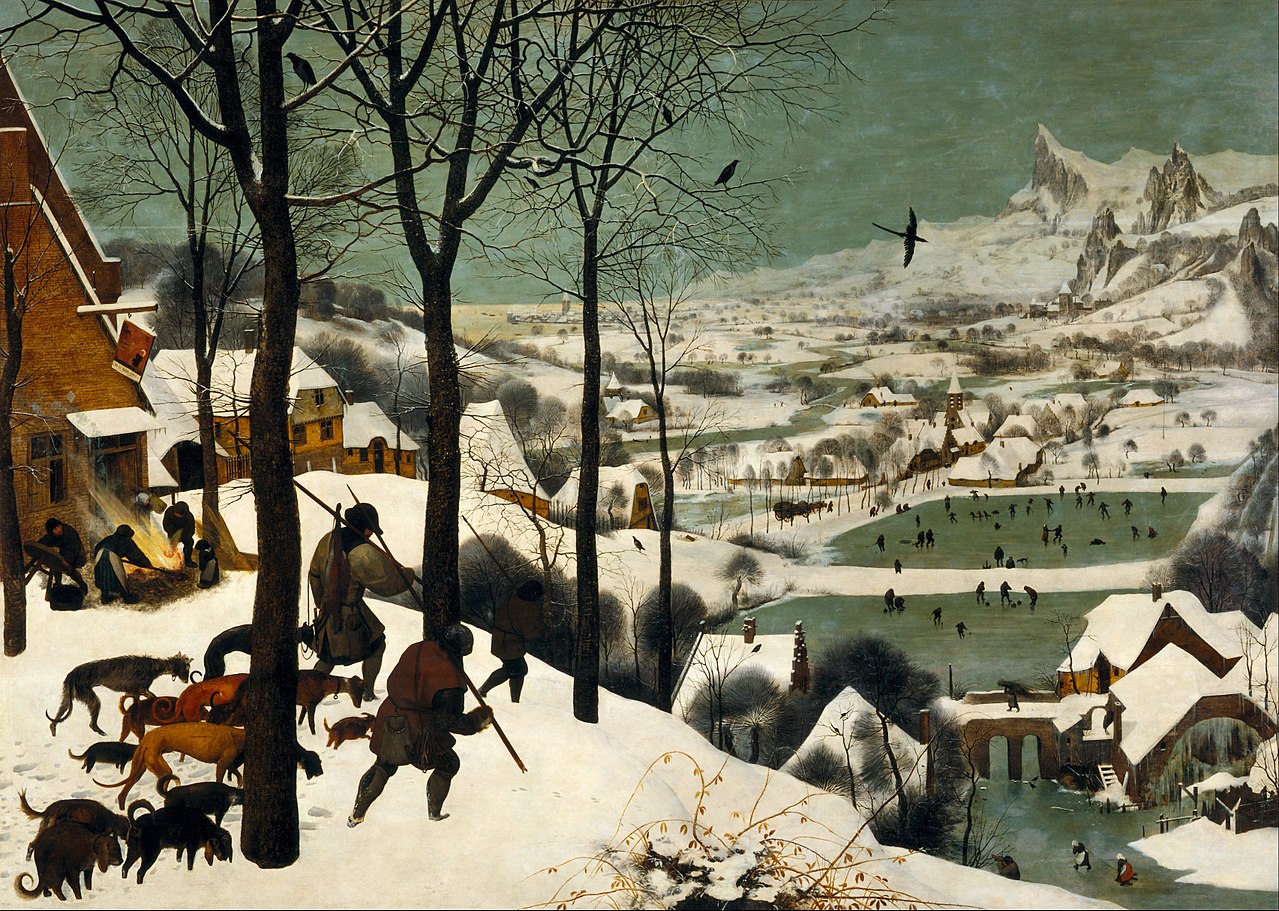
Hunters in the Snow by Pieter Bruegel the Elder c. 1565

Bruegel’s travels to Italy and the influence of the mountainous landscape he would have encountered on his journey in the form of the Alps are juxtaposed against the flat fields of Flanders.

The Hunters in the Snow captures something elemental about our common experience of winter, a deep need for shelter, security and warmth against the stark nothingness surrounding our existence. It also offers the viewer a cinematic position over the first winter landscape created in western art.

I’m shivering just looking at it!

I am reminded of the toughness and resourcefulness of the people of that time, who didn’t have central heating during the ‘little Ice Age’. My brood complained about not having any heating or hot water for five days after our gas combi boiler was condemned a few weeks ago. Woolly jumpers were promptly resurrected from the bottom of drawers.

Bruegel in Vienna this winter…

To commemorate the 450th anniversary of the death of Pieter Bruegel the Elder a major exhibition of three quarters of his surviving work is being hosted at the Kunsthistorisches Museum in Vienna.

Here is a link to his complete oeuvre of ‘Boschian’ allegories, proverbs, religious subjects, landscapes (including human forms) and genre peasant paintings.

Time is rapidly ticking by and I must attend to my brood, plus my usual endless list of last minute preparations, as I am blessed to have all my children together for the first time in a long time this Christmas.

I’d like to take this opportunity to say a big thank you to my readers for the instances you visited or shared my blog in 2018 and wish you all a very merry Christmas and a happy New Year! I hope to bring you some interesting and worthy posts in 2019…

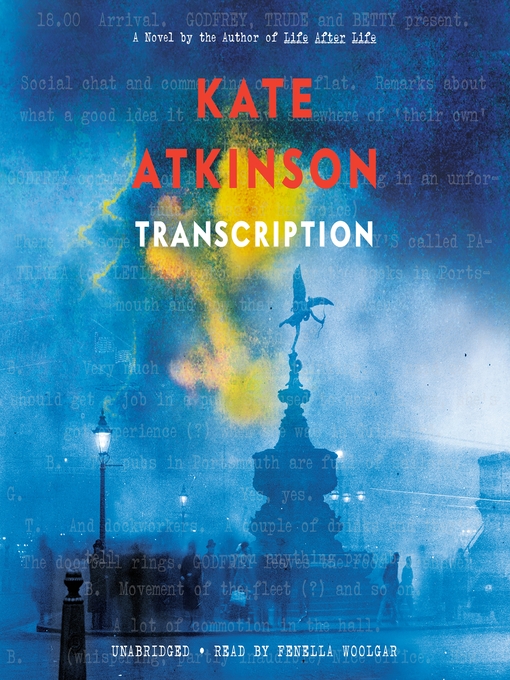
Book Review of Transcription by Kate Atkinson: Fascism’s Dangerous Ideology (and a Brexit Whinge)

“In wartime, truth is so precious that she should always be attended by a bodyguard of lies.” ~ Winston Churchill

Kate Atkinson is such an incredible storyteller. She has gripped me from the very first page to the very last in her latest novel, Transcription.

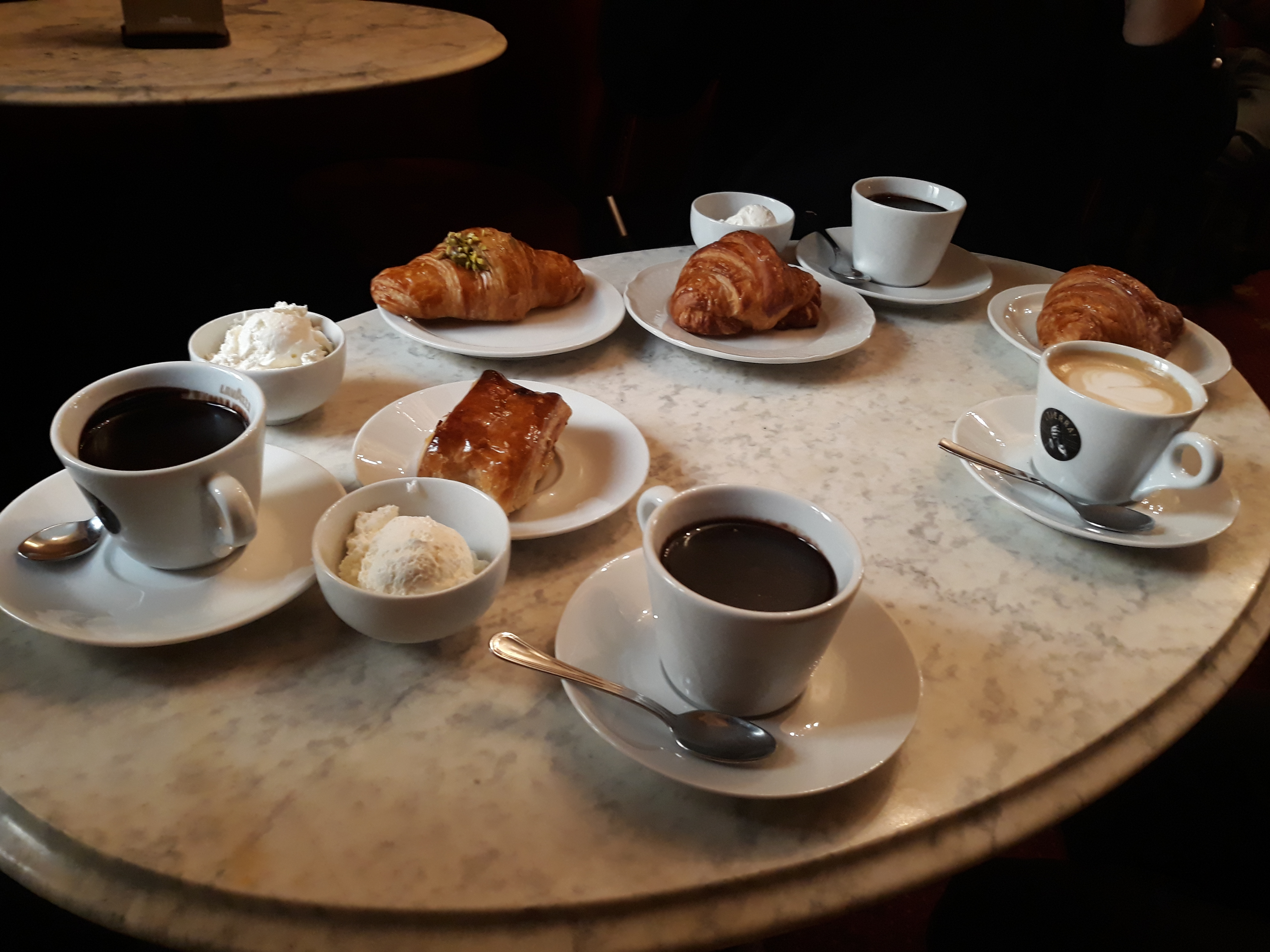
I bought Transcription in WH Smith at Gatwick Airport on my way to Turin in October. I didn’t actually start reading it in Italy, (which was a good thing), as I’m not sure I would have been able to drag myself away from it to attend a health conference or marvel at the architecture, learn the history (and taste the best hot chocolate I’ve ever had in my life) in this beautiful Piedmont city, thanks to my friend, Maestro Alessandro Fornero.

A table for four in Fiorio, laden with dark hot chocolate. A decadent sensation for those with non sweet taste buds!

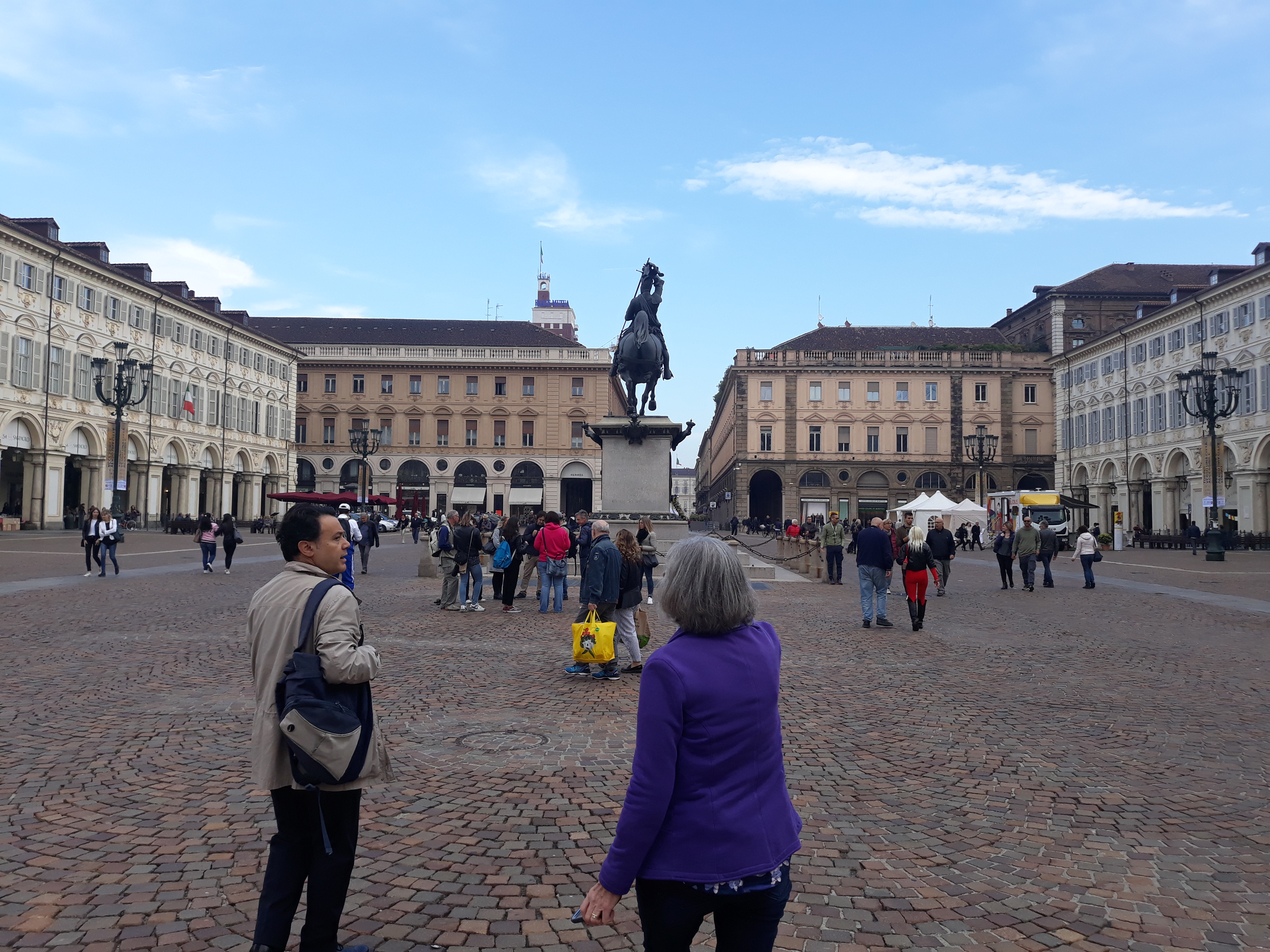
Admiring the equestrian statue of Emmanuel Philibert, Duke of Savoy and the Piazza San Carlo

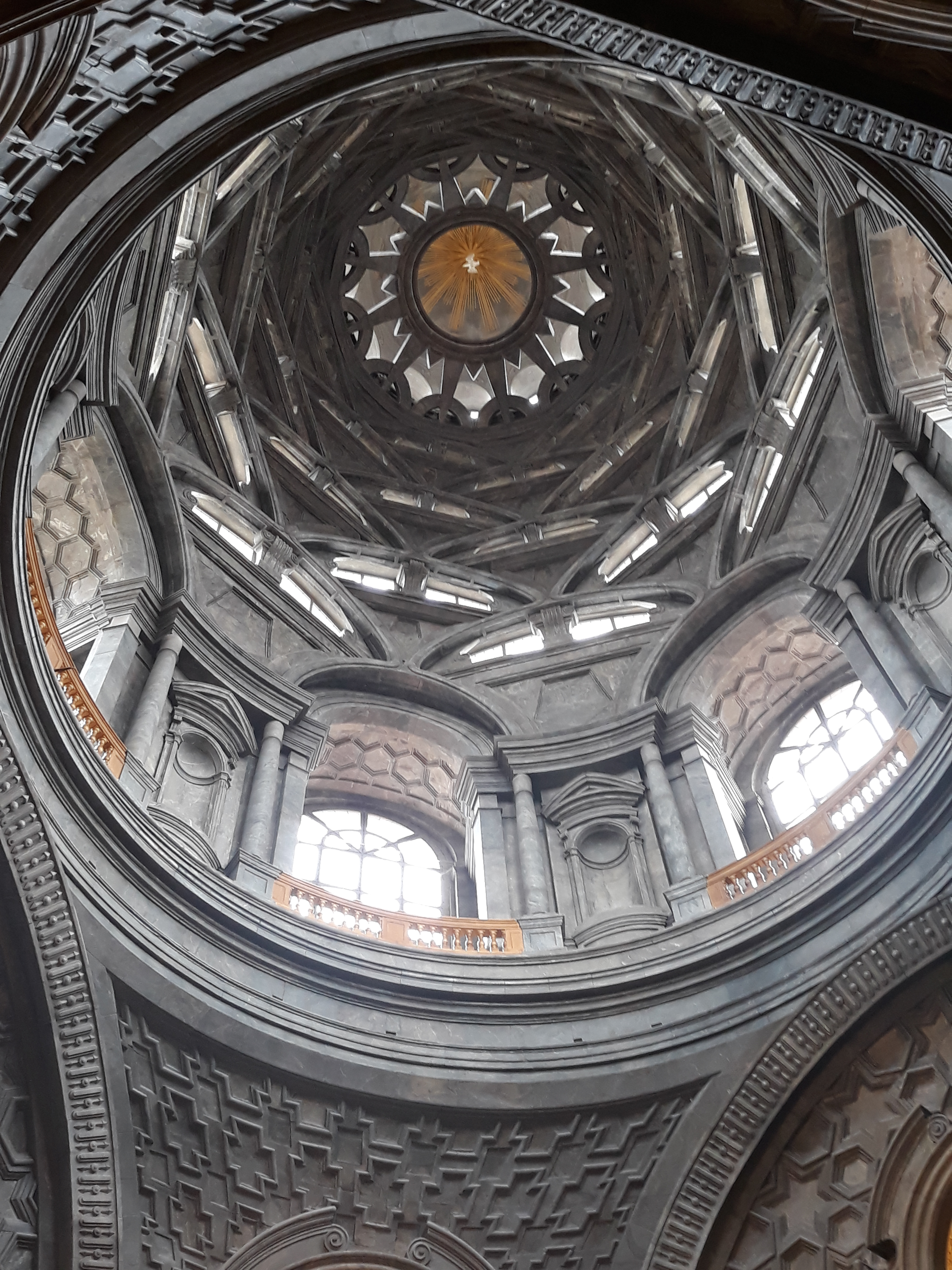
Guarini’s Baroque masterpiece: the dome of The Chapel of the Holy Shroud, which had only been re-opened to the public for a few weeks following its 22 year restoration project after the 1997 fire.

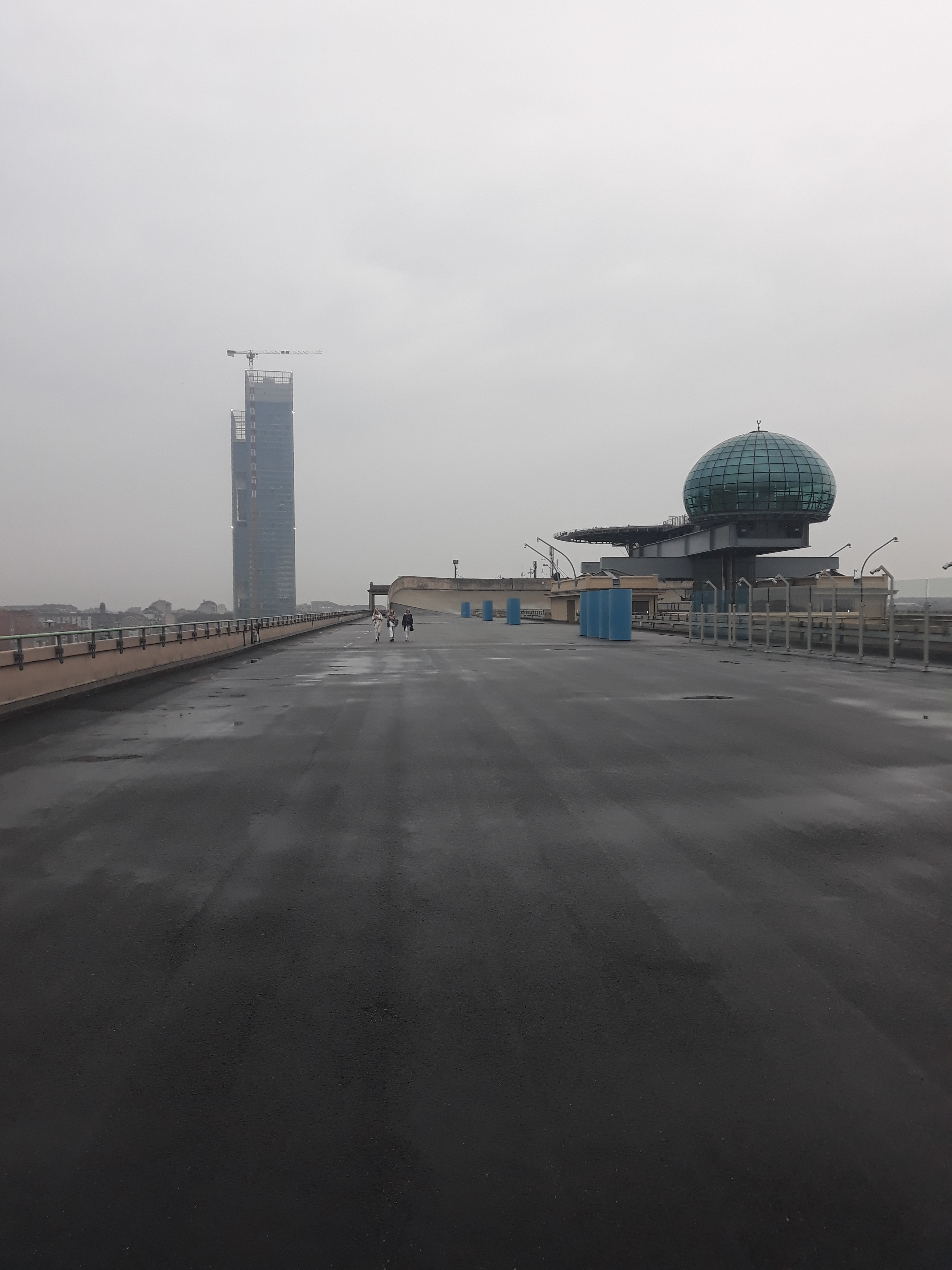
The Fiat test track at Lingotto, immortalised in a scene of the Michael Caine classic film, The Italian Job.

Luckily it was filmed on a sunnier day than when we visited:

Going back to topic I do seem to have a penchant for spy thrillers, but this is not your typical high octane fodder. No, Transcription is an intense and highly personal story about a young and  idealistic wanna-be spy, Juliet Armstrong, after she is recruited by the shadowy figure of Miles Merton into MI5 during the Second World War.

Recently bereaved after the loss of her mother, (she never knew her father), Juliet is alone in the world and ripe for their purposes.

Although initially slow burning, it’s intelligent and totally absorbing, with prose to die for (my writer’s radar was in admiration mode).  So much about this novel felt authentic. I couldn’t tell fact from fiction, although the author openly states that much of it is fiction, albeit fiction based on facts she accessed from the National Archives. The dialogue is totally believable and well written.

The characters are slightly stereotypical to fit the historical slant of the story, but they do seem real. Perhaps because they’re distorted reflections and constructs of actual people. The plot grabs you unawares, as you get pulled in deeper and deeper to the secretive world of MI5’s work on home soil during the war.

The novel covers an aspect of the war I didn’t know anything about; the efforts of the intelligence community (itself riddled with double agents), to draw out and obfuscate the activities of home grown fascists and Nazi sympathisers.

The genius of Miss Juliet Armstrong’s character was that I could relate to her on many levels, despite her wartime era. The bulk of the action is set in 1940 and 1950, with a brief jump in the first and last chapter to 1981.

Juliet is just 18 when she is drafted into a clerical position within MI5. She proves herself capable and is soon promoted to a special operation run by Peregrine (‘call me Perry’) Gibbons.

Perry explain’s Juliet’s role in her new position; to type the transcripts of secret conversations recorded in an adjacent apartment (Dolphin House in London) between British spy Godfrey Toby and various pro Hitler fascists that pose a potential threat to the outcome of the war.

‘I presume you are familiar with the ins and outs of the fifth column, Miss Armstrong?’
‘Fascist sympathizers , supporters of the enemy sir?’
‘Exactly. Subversives. The Nordic League, the Link, the Right Club, the Imperial Fascist League, and a hundred smaller factions. The people who meet with Godfrey are mostly old British Union of Fascists members – Mosley’s lot. Our own home-grown evil, I’m sorry to say. And instead of rooting them out, the plan is to let them flourish – but within a walled garden from which they cannot escape and spread their evil seed.’

Juliet has a crush on Perry, her troubled boss, unaware that it can never be requited due to his suppressed homosexuality. He takes Juliet on various trips such as bird watching in the Chilterns and to the Roman ruins at Verulamium Park, where Juliet hopes she will be seduced, but in reality he is using her to protect his reputation.  I felt that he did genuinely care for her, (just not in the way she wanted), and was a patriot dedicated to serving his country.

“Do not equate nationalism with patriotism,” Perry warned Juliet. “Nationalism is the first step on the road to Fascism.”

Her whole life is shaped by her experience and tragic events during the war, which has unfortunate ramifications for Juliet. At first, she feels like she is embarking on a big adventure, one that grows more exciting as the war progresses and the stakes are raised. But a decade on, Juliet has secrets of her own and the establishment that she once served is ever present.

The paradoxes of her personality put plenty of flesh on her young bones. She is smart but naïve, blithe yet (at times) terrified, plucky but also vulnerable. I loved her sense of humour, which made me chuckle in places and her propensity to quote Shakespeare to her colleagues, which mostly goes over their heads.

This book also filled me with a morose melancholy, not just for the impressionable orphaned Juliet, but for the awful situations she had to navigate in order to do her duty. Transcription is an engaging story that delves into the damage done by the misguided ideology of ordinary citizens as well as the moral implications of spy craft.

The novel makes no bones about the preponderance of anti-semitic sentiment in the UK as Hitler invaded Europe. It ran like an ugly seam throughout British society and was just as prevalent in the upper echelons of the aristocracy as it was in the middle and lower classes of the time.

Her main task, he explained, was to try to infiltrate the Right Club. ‘These people are a cut above our Bettys and Dollys,’ he said. ‘The Right Club is drawn from the establishment – a membership peppered with the names of the great and the good. Brocklehurst, Redesdale, the Duke of Wellington. There’s a book, supposedly- the Red Book – that lists them all. We would very much like to get our hands on it. A lot of its members have been swept up by defence regulation 18b, of course, but there are still many left – too many.’

Further on, after a key sting operation Perry tells Juliet, ‘Mosely’s been arrested as well.’

Sir Oswald Mosely, founder and leader of the British Union of Facists (BUF) married Diana (one of the notorious Mitford sisters), after the death of his first wife, (Lady Cynthia Curzon). They were married in Goebbel’s drawing room at his home in Berlin in October 1936, with Hitler and his inner-circle cronies present.  Even more shocking was Diana’s younger sister Unity Mitford’s devotion to Hitler; she shot herself in the head in Munich on the day Britain declared war.

There is a passage in the book where Juliet goes undercover in her spy pseudonym of Iris Carter-Jenkins at an evening gathering in the Right Club, where she unexpectedly bumps into her high society friend and colleague at MI5, Clarissa. Perhaps a discreet authorial nod to the Mitford sisters, (seeing as their father Baron Redesdale had been mentioned earlier):

These men weren’t funny. They were in charge of the country, one way or another. Were they even now discussing how they would carve up power if Hitler marched along Whitehall?
‘Daddy’s ferociously right-wing, completely pro-German,’ Clarissa said. ‘We met Hitler, you know. In ’36, at the Games.’ (We?) ‘So obviously, I fit the part. You’re doing a good job of not looking shocked. Have a fag, why don’t you?’
Juliet took a cigarette from the familiar gold-crested packet. ‘But you’re not…you know, are you?’
‘One of them? Dear God no. Of course not. Don’t be silly. My sisters are, mind you. And Mummy. And poor Pammy, of course – she worships old Adolf, dreams about having his baby.’

The themes in Transcription are just as relevant today in peace time, when far right, populist politics seem to be gaining ground in the UK, Europe and the USA. It actually scares me.

The enemy may not be a messianic, narcissistic, occultist madman like Hitler, (or the megalomaniac dictators Stalin or Mao for that matter, ) for the discontent he fuelled with his charisma, passionate oratory and malevolent rhetoric enabled him, and those who did his evil bidding, to be responsible for the unimaginable cruelty of the Holocaust, as well as the millions of deaths globally of soldiers and civilians in the Second World War. So many souls that perished directly and as a result of the flawed and dangerous ideology of Fascism and race superiority.

Current political and national turmoil in the UK

The use of the word ‘sovereignty’ was bandied about by hardline Brexiteers like confetti at a wedding during the lead up to the EU referendum. Like we didn’t have it already…

To my mind ‘sovereignty’ was used as a disguised weapon, a veiled forerunner of toxic Nationalism.

The level of vitriol and hate towards migrants, the bare-faced lies and propaganda deployed from positions of power, on social media and ‘fake news’ platforms adversely influences and manipulates people’s thoughts and beliefs.

You only have to look at the chaos, fear and uncertainty that the leave campaign and Brexit has unleashed on the nation. Funnily enough, I don’t recall ever seeing the words ‘economic armageddon‘ plastered on the side of a big red Brexit bus…

We know that the EU is far from perfect, but peace prevailing in Europe for the last 73 years must surely count for something? We have become careless with our hard won freedoms.

Modern politics seems to have descended into fear fuelled extreme rhetoric, sowing division and discord. Where is the centre ground, the pragmatism, the hope, the democracy?

Okay, so the fine margin ‘will of the people’ was obtained by the manipulative and shameless silvery tongues of charlatans and liars, (who may well have believed their fantasies) and like lemmings the whole nation is careering towards an irreversible plunge off the edge of the proverbial Brexit cliff.

Theresa May’s intractable stance is: the people voted unwittingly to jump off a cliff, and I’m going to facilitate a deal to jump off the cliff, no matter what. To rethink jumping off a cliff is an affront to democracy.

Apparently, to readjust a course of action that appears to be a mistake is out of the question!

I don’t doubt the prime minister believes she is doing the right thing and has done her best under the circumstances; but she is afraid to ask the people to review their folly in the harsh light of the government’s ineptitude in negotiating Brexit – to be given a last chance to decide whether to proceed with it or not.

Tally ho, off the edge we go! Head first into a worst of all worlds, whether you voted remain or leave…

Brexit was sold to the nation as ‘taking back control’, not relinquishing it, and MPs now have a crucial vote on 11 December about the future of our country. The former governor of the Bank of England, Mervyn King, has also entered the fray, (Bloomberg article), as contempt and disgust over May’s proposed Brexit deal mounts.

It seems I’m not the only person to think of lemmings, as Matthew Parris has in this recent article I found in The Spectator.  Nick Cohen at The Guardian also contends that politicians citing the ‘will of the people’ will be judged harshly by society in this brilliant article about post Brexit carnage.

Surely a second referendum could also open up the possibility of positive reform within the EU, as well as avoiding the inevitable hardships that this whole sorry episode in our nation’s long history will bring.

It seems we may be a step closer to this common sense vote after the government suffered three parliamentary defeats in the Commons on Wednesday.

An illuminating TED talk on why fascism is so tempting – and how your data could power it by Yuval Noah Harari:

“…in the end, democracy is not based on human rationality, it’s based on human feelings. During elections and referendums you’re not being asked, ‘What do you think?’ You’re actually being asked, ‘How do you feel?’ And if somebody can manipulate your emotions effectively, democracy will become an emotional puppet show.”~ Yuval Noah Harari

Anyhow, I digress, I just had to get that off my chest!

I couldn’t help but see the parallels of Transcription with the depressing political events unfolding in the UK. This book is so brilliant it makes you think about the scourge of Fascism, and the ways it can re-emerge its foul head.

The story highlights how opinions and actions are heightened during times of war, how collective beliefs are so crucial to the well-being and prosperity of any nation.

It was unusual for Kate Atkinson to start the book describing Juliet’s demise on Wigmore Street in 1981, with the memories of her life being told in the remaining minutes of her life.

The story properly gets going when in 1950 Juliet, (now a producer for the BBC in the Schools department), sees master spy (Godfrey Tobey), from her time at MI5. The tension becomes unbearable as we learn of Juliet’s contribution to the war effort, around the time of the Dunkirk evacuation.

Whether one lived or died seemed completely arbitrary, and risk of death was ever present for spies and double agents. The untimely reappearance of Godfrey Toby sparks her paranoia, which becomes acute as she perceives her life is in danger again, a decade after her wartime efforts.

Although she survives the war, but she carries emotional scars, as do many of the characters, scars that messily heal over but still contain an element of rawness.

I’m still reeling from the twist at the end, which I did not see coming…

My only small criticism of the book is not aimed at the actual ending itself, which was clever, and entirely plausible, but for the fact that I felt short-changed by a lack of foreshadowing. I didn’t have the faintest inkling of the plot twist. In hindsight I could have made more of a leap from Juliet’s love of Shostakovich, her interaction with Flamingo and her meeting at the museum in front of Rembrandt with Miles Merton.

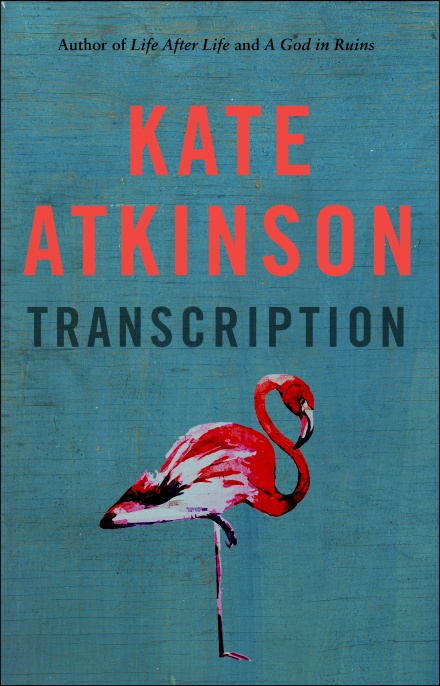
Before I began reading Transcription I wondered what business a flamingo had being on the front cover, as it didn’t seem to have any connection  with the premise of the book, but all that becomes clear towards the end of the novel, being tied up with the major plot twist.

In the end I was disappointed by Juliet, which, after being fully on her side for over 300 pages, felt like a kind of betrayal…

This book will stay with me for a long time, it warrants rereading at some point. It is the first novel I have read by Kate Atkinson, but it certainly won’t be the last.

I’d like to let the author have the last word from a recent interview about Transcription:

‘The mark of a good agent is when you have no idea which aside they’re on.’ It seemed to Juliet that there were some rather blurred boundaries when it came to beliefs – Perry had once been a member of the British Union of Fascists (‘It was useful,’ he said. ‘Helped me understand them’) and Hartley (Hartley, of all people!) had been a member of the Communist Party when he was at Cambridge. ‘But everyone was a Communist before the war,’ he protested.