“Every man’s life is a fairy tale written by God’s fingers.” ~ Hans Christian Andersen
Calliope bestowed me with a mother lode on Sunday morning. My circuits were almost on overload; frantically trying to record the flood of questions and stream of consciousness that I could not have stemmed even if I wanted to. A rare occurrence!
My hand scribbled as if on auto-pilot, struggling to keep up with the incoming thoughts, jumbled as they were, one leading to another in a febrile firing of unstoppable synapses.
Maybe it was the artistry of the prose of the book I was reading, or the fact that both my daughters were away at the time, and the ensuing solitude and relief from the tumult of the last few weeks that allowed my muse to be heard. Maybe it was a combination of all of it. I’m not complaining!
Now comes the hard part, placing them into a cohesive structure that makes sense, but also captivates, much like a story…
My muse wanted to talk about stories. I know I have shared posts on this subject before, but if you’ll indulge me I’ll try and come at it from a fresh angle, so that any repetition can be forgiven.
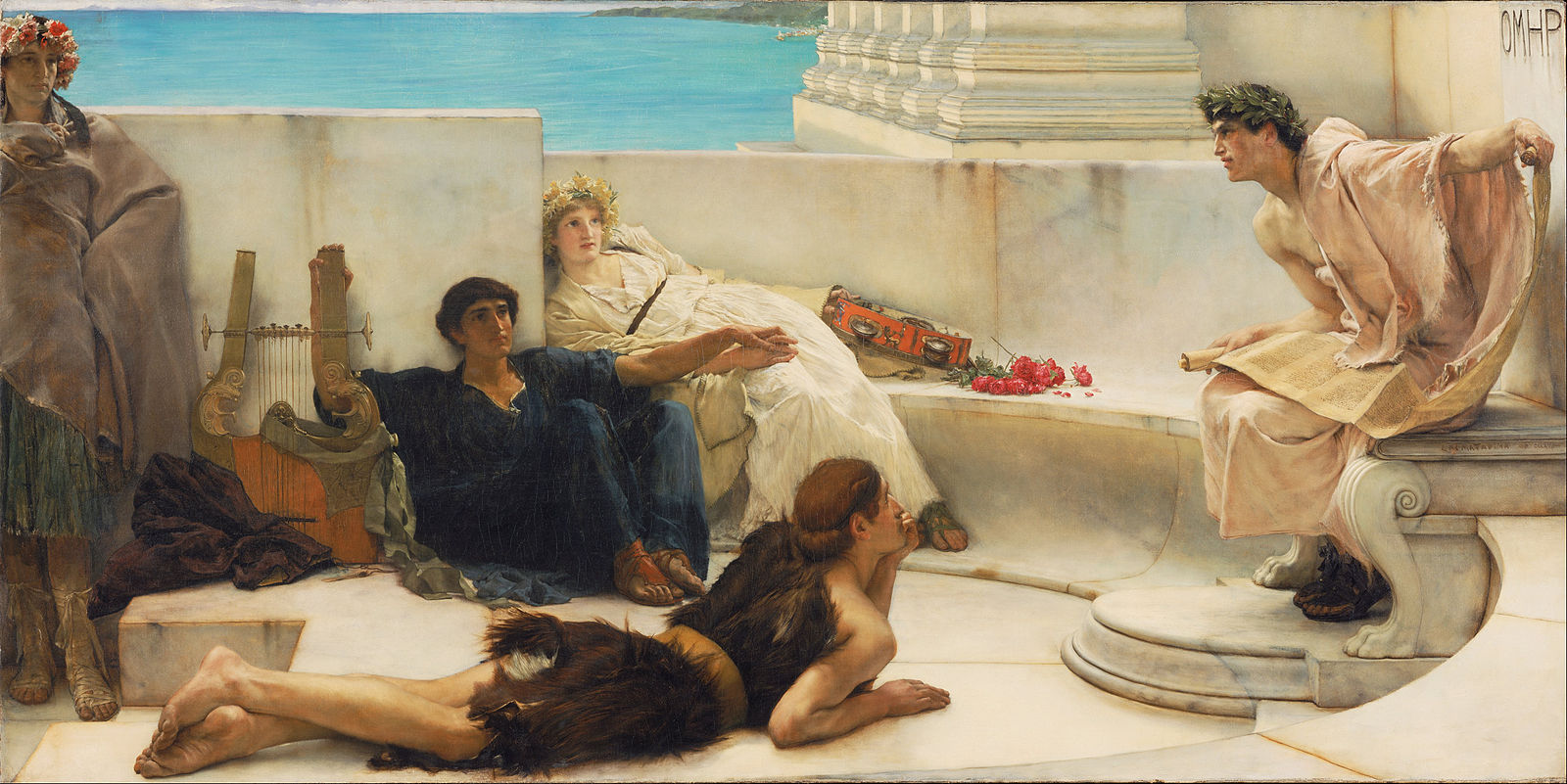
A Reading from Homer by Sir Lawrence Alma-Tadema
It’s such a profound subject I don’t think I could ever tire of it, but you my dear reader are entitled to feel differently!
What is a story?
There are many definitions for a collection of words that we deem to be a story. A body of words, strung together with a certain arrangement and architecture, style and voice; sometimes poetical in nature, perhaps enchanting, beguiling, suspenseful, mysterious, erotic, brutal or shocking. We are held rapt under their spell, either in awe or disgust, joy or sorrow, and every emotion in between – a voluntary prisoner to their unfolding.
These ordered black marks on the page evoke pictures in our minds, each word itself perhaps unremarkable, yet together, they are a collection of something magical: a work of art. Stories are the rich imaginal tapestry upon which consciousness records itself.
Why do stories matter?
Stories are greater than the sum of their literary parts – for their effect is transformational. The transformation can be emotional, mental, physical and even spiritual.
I dream of writing a book that will suck someone in and spit them out at the end forever altered. That, for me, is a worthwhile endeavour and contribution.
Stories are nebulous in nature because they come from nothing but an electrical spark. That spark, which is a memory or a thought, enables further sparks, which in combination coalesce into a form of expression through the lens and hand of a creator – a human being.
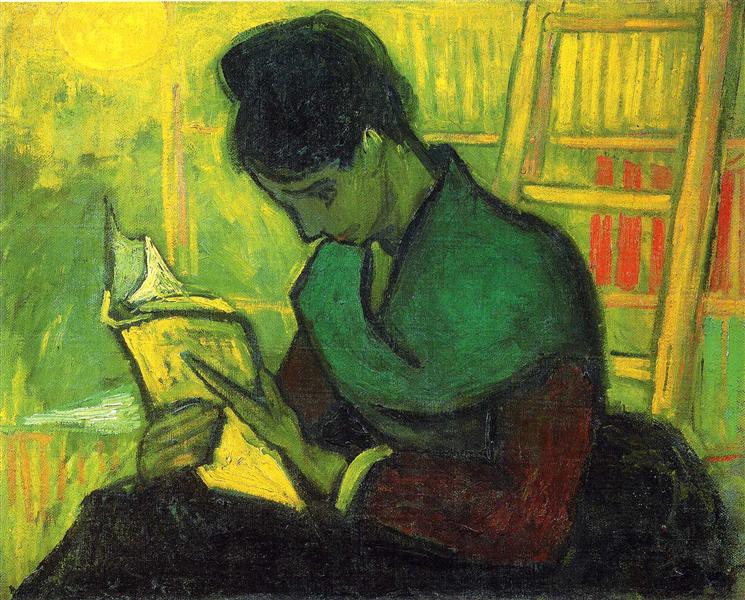
The Novel Reader by Vincent van Gogh c. 1888
The same could be said of music and art, of all creative, artistic endeavour.
Maybe stories and art hold such fascination and appeal because as human beings we are bound by flesh and blood, contained by our physical borders, but our imagination knows no such limits. There are no frontiers closed off to our imagination. Einstein grasped this concept when he asserted that imagination is more important than intelligence. Travel in the imagination is instantaneous and immersive.
Once notated onto paper or screen, outside the cranial cavity of the author, stories and characters can take on a life of their own.
The likes of Sir Lancelot, Guinevere, King Arthur, Merlin, Hamlet, Robin Hood, Bilbo Baggins, The Hobbit, Elizabeth Bennett and Mr Darcy, Ebenezer Scrooge, The Count of Monte Cristo, The Three Musketeers, Sherlock Holmes, Scarlett O’Hara, Alice in Wonderland, The Great Gatsby, James Bond and Harry Potter to name just a few, have become stalwarts of our culture.

Strand magazine Vol iv.1892. Page page 646. illustration The Adventure of the Silver Blaze by Sidney Paget.
A story is an escape rooted in reality that can come into existence and stay with us (in one form or another), through millennia and centuries. Stories, both real (historical) and fictional can leave an enduring legacy.
Stories beget and shape whole religions and belief systems, (Adam and Eve squarely put the blame for everything on women), with numerous epic tales that have been told over the ages; stories which are so deeply rooted and embedded in our collective unconscious that their effects will always be felt on some level.
“Many stories matter. Stories have been used to dispossess and to malign. But stories can also be used to empower, and to humanize. Stories can break the dignity of a people. But stories can also repair that broken dignity.” ~ Chimamanda Ngozi Adichie
Tales and poems told by bards, philosophers, sages, scribes, scholars and age-old greats like Hesiod, Homer, Ovid and Herodotus.
The ancient Greeks left their mark on western culture with their vivid descriptions of how the world was created, of Titans and mythological gods and goddesses, usually behaving badly and abusing their power in the course of their wondrous deeds. Despite their very great strength and ability their flaws and foibles are all too human…
Landscape with the Fall of Icarus by Pieter Bruegel:
If anything the stakes are higher now that humans possess nuclear warheads, biological weapons and the means to destroy entire ecosystems (and potentially all life on earth including our own), as a result of our aggregated economic activities, buying habits and behaviour.
Whether great tomes or tales of brevity, such immortal stories act as bridges to other worlds; ones that we usually cross willingly, if sometimes with a tinge of trepidation, nonetheless determined to reach the other shore.
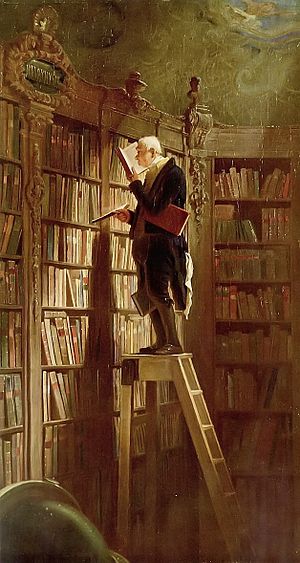
The Bookworm by Carl Spitzweg
Stories capture our yearning for adventure, our quest for discovery, and our innate curiosity. But most of all they fulfil perhaps the greatest of human needs: love and connection. That sense of connection gives meaning to our own experiences.
As the Oxford University professor, Jack (aka renowned author, C.S. Lewis) in Richard Attenborough’s moving film Shadowlands, when asking his writing students, “Why do we read?” is given his favourite eloquent answer: “so that we know we are not alone.”
This clip comes at the end of the film. I can feel myself welling up just from these brief minutes.
Stories are to humans as life is to death: there cannot be one without the other. When we read, (either fact or fiction) we deliberately enter a temporary hallucination, a vacuum in space and time where we can live vicariously through the reveries of the writer.
A story, then, could be classified as a chimera of the soul; a fundamental system on which to create an experiential palette, an understanding of life. Stories are the nearest thing we have to a map of the soul’s journey.
Maybe that is the purpose of a soul incarnated into physical form – to make it all up as it goes along. Charting a physical path to know itself as a divine being, free to make choices and live by the consequences of those choices. Free to create varying experiences and help other souls do the same. As such, we all participate to a lesser or larger degree in each other’s stories.
A skilfully crafted story can reawaken dormant ideas, hopes, dreams, and memories, show us what is possible no matter how absurd or fantastical it may seem.
The wisdom of the Native American culture is perfectly illustrated in this timeless folktale.
A Cherokee elder is sitting around a bonfire with his grandchild, teaching him the lessons of life:
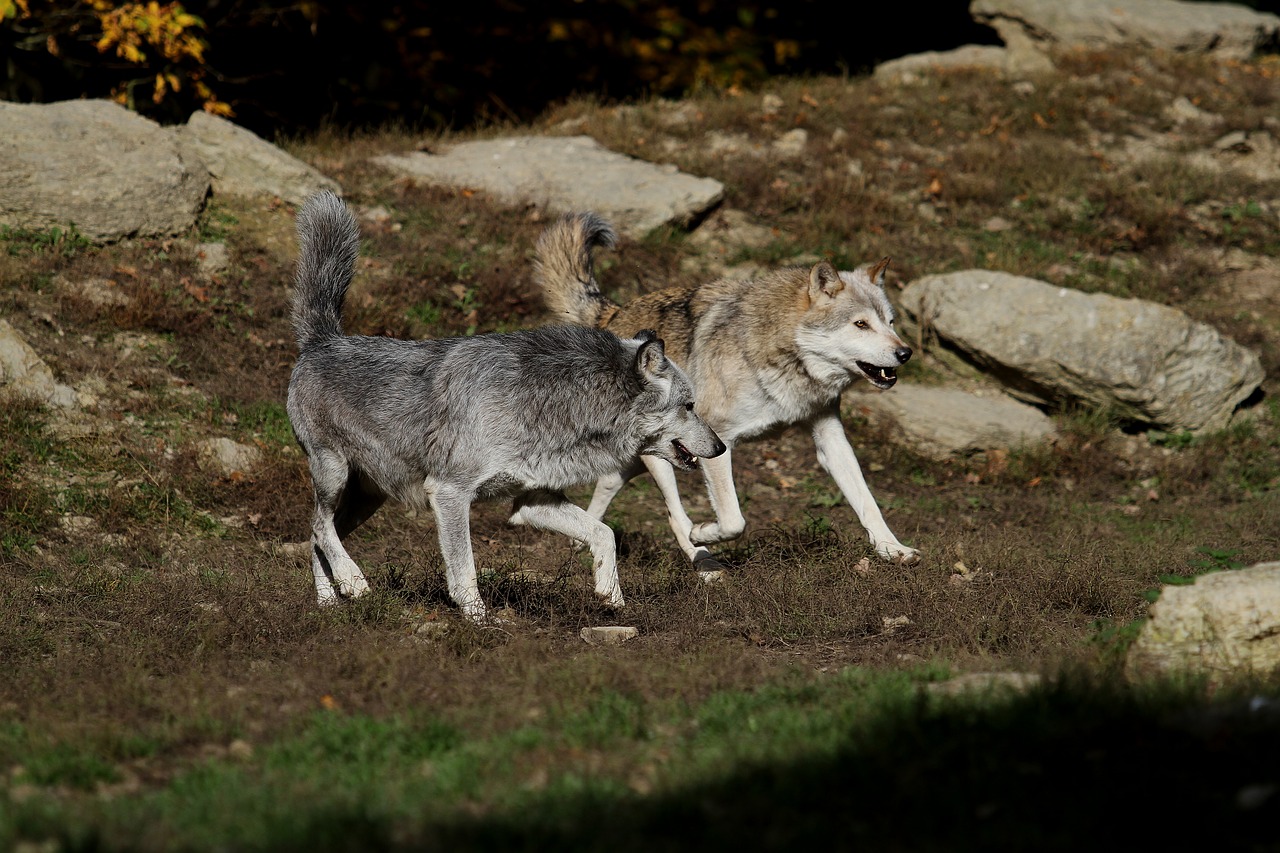
“There is a battle going on inside me,” he says to the child. “It is a constant fight, and it is between two wolves. One wolf is filled with anger, envy, jealousy, fear, regret, shame, greed, arrogance, self-pity, guilt, resentment, inferiority, false pride, superiority, and ego.
“The other wolf is filled with humility, gratitude, acceptance, patience, joy, peace, love, hope, kindness, empathy, generosity, truth, and compassion.”
He leans in close to his grandchild and whispers: “The same fight is going on inside you, my sweet boy – and inside every other person too.”
The child grows silent, thinking about the profound nature of this lesson, and then asks, “So Grandfather…which wolf will win?”
The old Cherokee smiles a knowing look and replies, “The one you feed.”
A story can open up new perspectives, capture a mood, a zeitgeist, or an intimate interaction, exposing a kernel of truth and transforming it into something truly iconic; something that inhabits the consciousness of generations that follow and lasts long after the author has passed.
Since time immemorial humans have been telling tales. They have evolved with us, from the simple to the complex, cautionary and heroic, enabling shared values and co-operation between peoples on a massive scale.
No matter the content, a really good story will challenge and change the reader in some way. That transition can be subtle or life-changing, and can even help shape opinion, as did Harper Lee’s To Kill a Mockingbird, Alice Walker’s The Color Purple and Margaret Atwood’s The Handmaid’s Tale.
Archetypes
There’s a reason we tell fairy tales to children – it’s a simple and effective way of getting to grips with our species’ archetypal energies. Kids can learn lessons by way of other people’s wisdom. The Grimm brothers certainly didn’t sugar coat their stories.
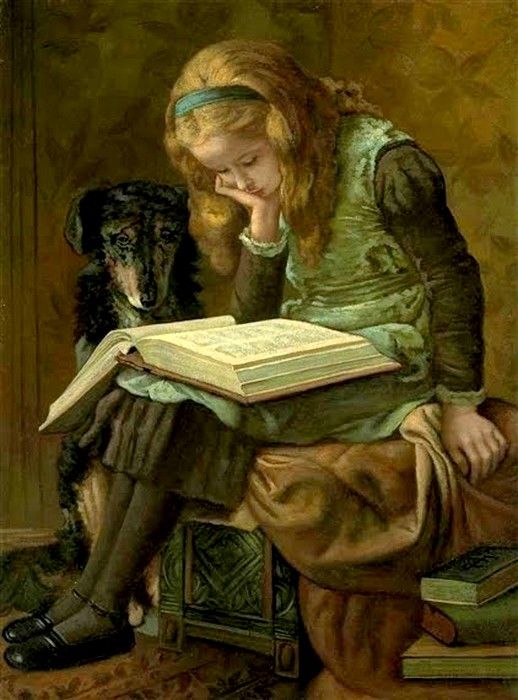
Girl reading a book by James Charles
But these archetypes don’t just live in fairy tales and folklore, they are more nuanced in adult fiction, but we can still recognise them:
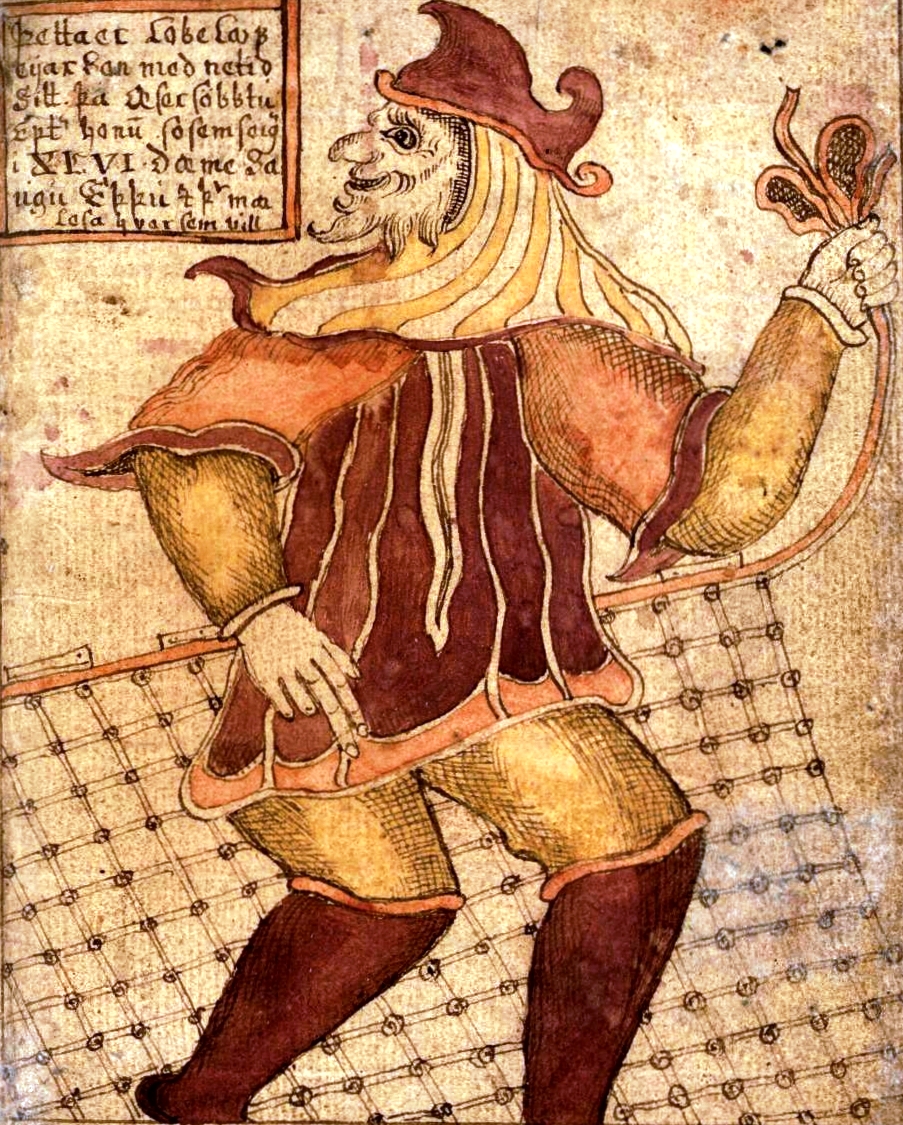
- The Fool/Jester – Henry VIII’s court jester was the only person that could say anything to the monarch without having his head decapitated. Jack and the Beanstalk is a tale about an honest fool overcoming the odds. In fiction there are some great examples in Shakespeare and their modern equivalents.
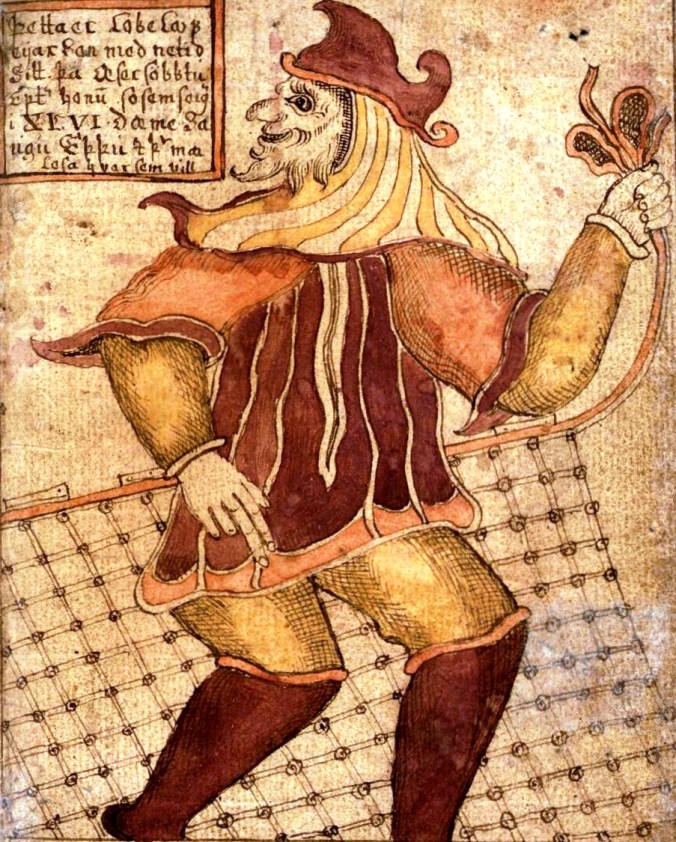
Norse trickster god Loki, from an 18th century Icelandic manuscript.
- The Fairy – These magical creatures take many forms. Peter Pan’s Tinkerbell is an enduring favourite, but not all fairies are well intentioned and some are downright meddlesome. There have been times in my life when I wanted so badly to have a benevolent fairy godmother!
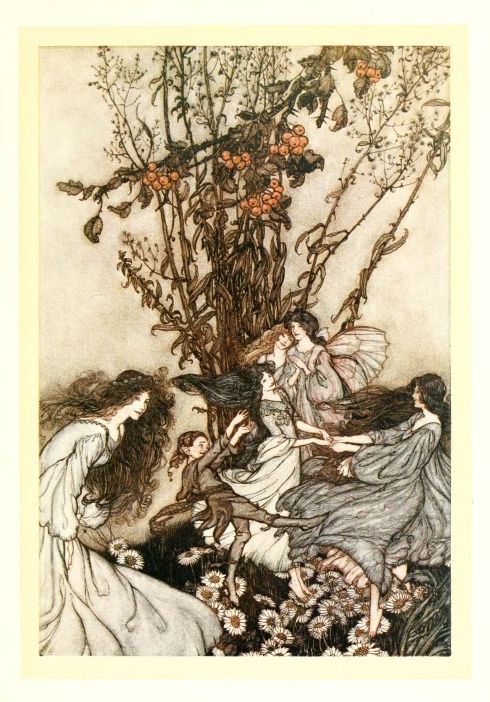
Dancing Fairies from Peter Pan in Kensington Gardens by Sir Arthur Rackham
- The Witch/Crone/Wicked Stepmother – These characters can be beautiful on the surface, but ugly on the inside, being capricious and cruel in the extreme. Snow White’s evil mother gets her punishment, as they usually eventually do.
- Prince Charming – usually involved in some type of daring rescue, he can kiss life back into heroines, but now and then his looks are more chiselled than his courage.
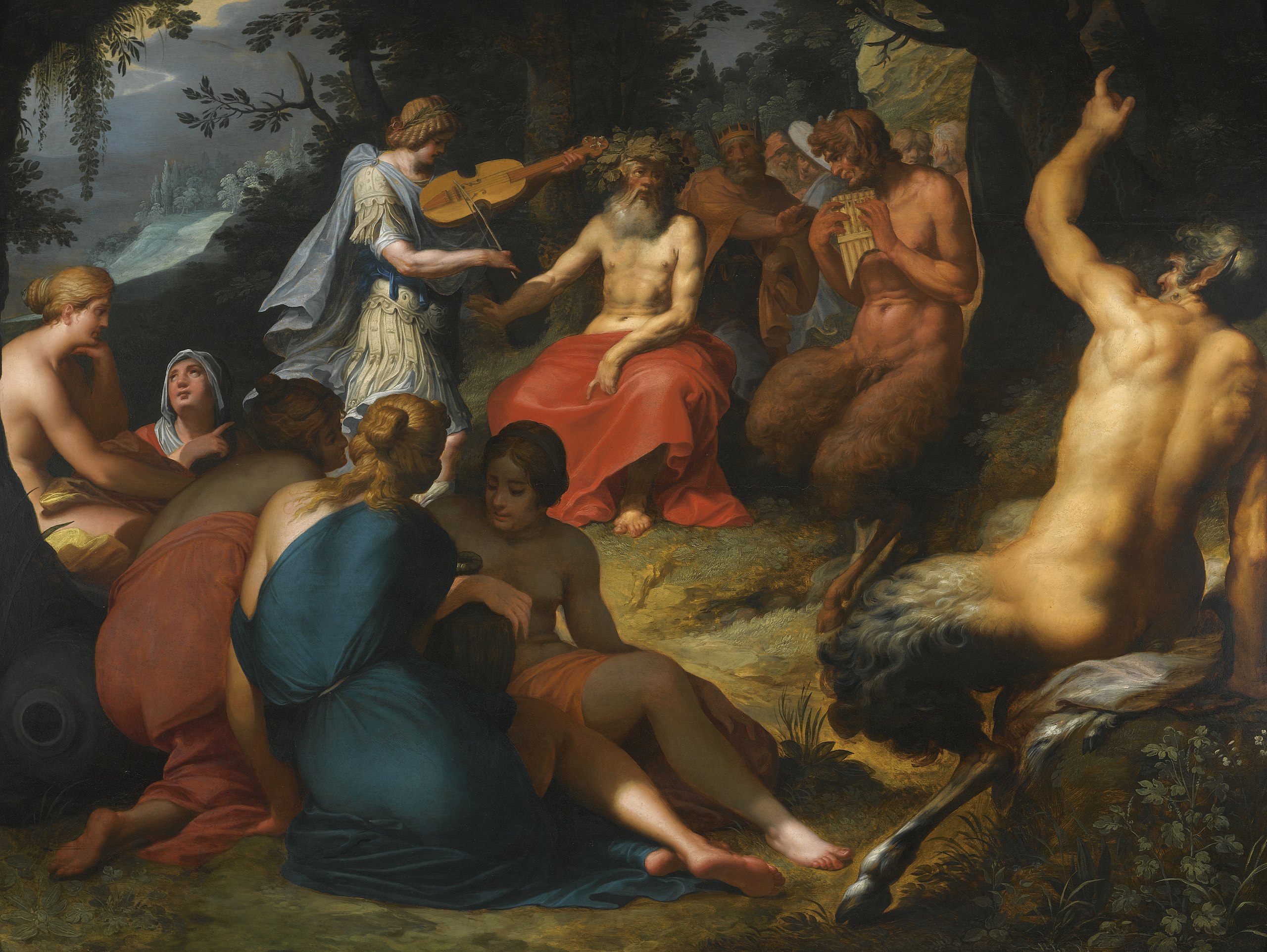
- The King – The egotistical King Lear and rapacious King Midas with his golden touch are perhaps the most tragic of monarchs.
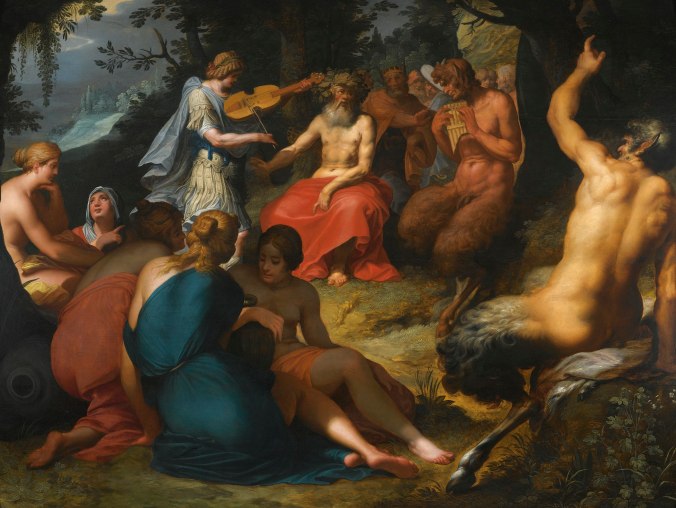
The Judement of Midas by Abraham Janssens
- Princess/Damsel in Distress – We’ve all felt the intense pangs of love that beset Romeo and Juliet, or the feeling of being trapped, just like Rapunzel.
- Pauper/Peasant – Mark Twain’s wonderful historical novel, The Prince and the Pauper explores the theme of mercy, clearly inspired by one of Shakespeare’s finest speeches: the quality of mercy is not strained.
- Orphan – Oliver Twist and Jane Eyre are characters who wear their troubles on their sleeves. Their emotional wounds and difficult lives make them relatable. They show us that a bad start in life doesn’t have to seal a person’s fate, but can provide the crucible for positive change.
- Greek Mythology – This subject alone is forming the basis of a new talk I will be giving to The Women’s Institute. I found Stephen Fry’s book, Mythos: The Greek Myths Retold absolutely entrancing.

Aphrodite’s rock/birthplace in Paphos, Cyprus

Archetypes rather than stereotypes allow us to put flesh on memorable character’s bones. Characters are therefore the same but different, as their attributes cling to a central support – the archetype.
A fascinating introduction to Jungian Archetypes:
The same goes for the structure of the story – how the plot unfolds. Films and novels tend to use the three act structure, but whichever format or formula a writer uses, the best ones allow for freedom of creative flow and don’t stifle the story.
Just as humans all have a skeleton that consists of the same bones in the same order, on the exterior we all look and sound different, and behave according to our own values, beliefs and experiences. This is also the case with a story, as the author layers its unique ‘features’ on top.
The elements of a story – the characters, the plot, the landscape/setting and era are woven together in a way that speaks to us collectively and as individuals. They bring the unconscious into consciousness – buried pain, lost loves, past trauma, moral dilemmas and personal victories shift into the here and now, to be indirectly relived and integrated.
The hero’s journey is the protagonist’s journey as experienced by a reader. The soul has to be breached to be opened, and wounds do the breaching. The deeper the wound the richer the story will be, and the greater the journey and more satisfying the transformation.
“You’re never going to kill storytelling, because it’s built in the human plan. We come with it.” ~ Margaret Atwood
There are many theories about what makes a good story – being a highly subjective art form.
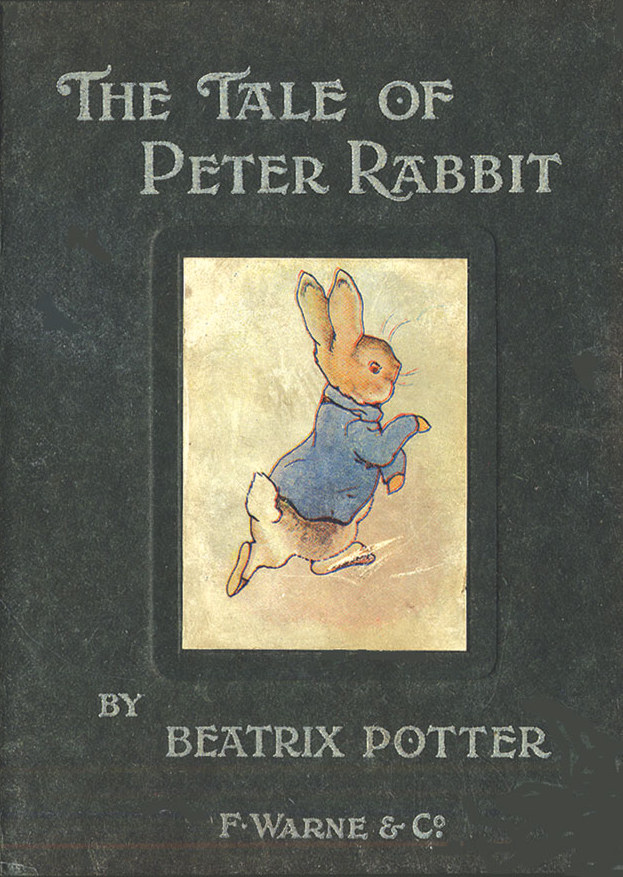
First edition of Peter Rabbit from 1902
The antithesis of a good story is boredom and ambivalence. Connection to characters and emotion balanced with action is surely its beating heart. It’s a tough task to both surprise a reader and give them what they want at the same time!
Human neurobiology has evolved around the eternal clock face of time with stories, but it is the soul that craves them.
Some acrostic thoughts on the properties of stories:
Seductive sparks firing,
Tales of inner journeys and outer travels
Of other
Realms and realities,
Illusory, ingrained, immortal
Essence and expression of human condition
Sharing seminal ideas
We can each feel something similar or different about a story according to our own subjective perceptions, background and imagination. Some stories devour me and become part of my DNA.
It is perhaps the greatest of compliments to be called a storyteller, a teller of tales, a spinner of yarns. Sharing one’s sparks is a challenging and courageous undertaking. I’m grateful for all the writers (in the present and past), who have changed my life.
Fiction writers don’t know what will happen in their own lives, but on paper at least, they can be masters of other people’s fates!
I am looking forward to hearing my first published novel, The Virtuoso being narrated for audio book format early next year.
I have just finished reading a biography that has gripped me from the start, a story of life and death that is so compelling I can’t stop thinking about it. Placing myself in that person’s shoes has filled me with awe and inspiration. Needless to say I will be sharing a post on it in the near future.
The stories we tell ourselves and others have the power to shape our destiny on a personal level and also as a species. The world needs storytellers (of all genres) who can contribute to humanity’s conscious evolution now more than ever…
I feel I should end this post with a beginning – and what a beginning it is. Probably the best (and longest) opening line in fiction that was ever written, and for me embodies more than just the title of the book it starts. To me it conveys the wisdom, folly and contradictions of human nature – it is nothing less than visionary!
“It was the best of times, it was the worst of times, it was the age of wisdom, it was the age of foolishness, it was the epoch of belief, it was the epoch of incredulity, it was the season of Light, it was the season of Darkness, it was the spring of hope, it was the winter of despair, we had everything before us, we had nothing before us, we were all going direct to Heaven, we were all going the other way – in short, the period was so far like the present period, that some of its noisiest authorities insisted on its being received, for good or for evil, in the superlative degree of comparison only.”
~ Charles Dickens (A Tale of Two Cities)





























































































































































































































 rhap.so.dy in words