Oscar Shumsky Playing the 24 Rode Violin Caprices on Pierre Rode’s Stradivarius

Every now and then I make a wonderful musical discovery. Lady luck was with me when I stumbled upon Monsieur Rode’s 24 Caprices for solo violin. How could I have not known about these violin gems?!

I guess Paganini’s 24 Caprices for solo violin are just so famous that they have overshadowed other worthy compositions of the same genre. Rode’s amazing caprices (which were composed between 1814 – 1819 when Rode lived in Berlin), came before Paganini’s and deserve be as famous and popular. They may not have quite the fiery wow factor, but they are nonetheless vital for developing skill in training soloists.

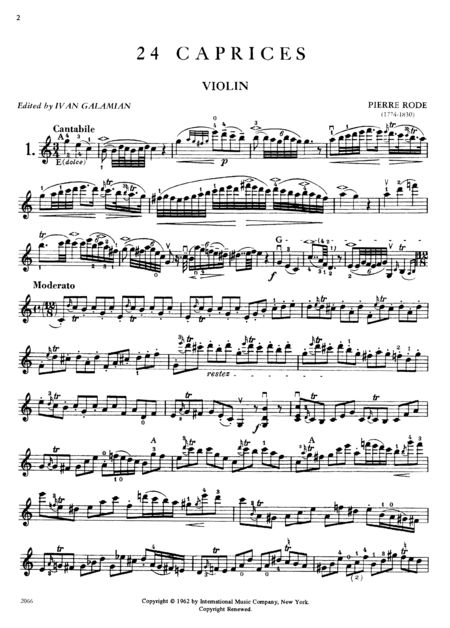
Rode Caprice score

The performances I’m going to share with you are performed by Oscar Shumsky (a hugely underrated virtuoso violinist), playing on a golden period Stradivarius that was once owned and played on by the violinist and composer, Pierre Rode.

What strikes me about these recordings is his purity of tone, the romantic colours, intonation, accuracy, incredible double-stopping, smoothness, flowing style, flair and downright virtuosity!

As the uploader (Rare violin treasures) states:

This is a rare world-premiere recording of the Rode Caprices revealing Mr Oscar Shumsky as one of the best soloists the world has ever known: deadly accurate intonation, effortless technique, a warm lush tone, expressive vibrato, and ultimately the ability to create musical drama. I can say he was easily my favourite of all Auer pupils and when you hear a recording like this it makes you wonder how many more incredible performances he has made that should have been captured but never were! Without a doubt he was one of the true greats of the 20th Century!

Oscar and Pierre rode into my heart with these! I hope they leave you as flabbergasted as they did me…

Helpful notes on how to play the Rode Caprices from Axel Strauss/Naxos

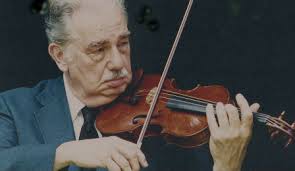
Oscar Shumsky

You can read about this superlative musician in his obituary in The Guardian.

David Oistrakh referred to him as “one of the world’s greatest violinists” and the New Grove dictionary says of him: ‘He was a player of virtuoso technique, pure style and refined taste; yet never sought recognition as a soloist, preferring to concentrate on teaching, chamber music playing and conducting.’

Duke of Cambridge/ex-Pierre Rode 1715 Stradivarius

Rather fittingly, this was the violin used by Oscar Shumsky to record the complete 24 Caprices by Rode.

Oscar Shumksy

Mr Shumsky tells how he came to acquire the instrument:

“It was a case of ‘love at first sound’. During the period of readjustment after the ‘war to end all wars’ we were trying to pick up our lives where we had left them, and I was in the throes of trying to better my instrument. I realized that if I were to pursue a concert career I needed something considerably more outstanding than the Camillo Camilli (an excellent violin in its class) on which I was performing. In the process I had been through many Guadagninis and some lesser Strads, but always came away disappointed.

Then on one of my innumerable visits to the atelier of Emil Herrmann, I spotted a violin lying on the long felt-covered table. A quick glance told me that the violin was not only a Stradivarius but one of the finest examples I had seen. Thrilled and discouraged at the same time (I knew that such an instrument was out of my financial range) I nevertheless had a strong curiosity to examine and try it. Permission was granted, and after a few passages from different fragments of the repertory I just knew I had to have it! I won’t flood readers with all the information about my huge bank loan, but I have never had a moment’s cause for regret. The fact that it somehow came by way of my old teacher Leopold Auer is a fascinating bit of mysticism.” ~ Oscar Shumsky (The Strad, April 1985)

Pierre Rode (16 February 1774 – 25 November 1830)

Born in Bordeaux and hugely talented, he travelled to Paris at the tender age of 13 where he became a favourite student of Viotti; whose tutelage helped him become an accomplished violinist and composer. Alongside Baillot and Kreutzer he worked on the Violin method of the Conservatoire de Paris published in 1802.

As well as the 24 Caprices he composed 13 violin concertos, 12 Etudes, string quartets and a trio, 6 duos for violin and a polonaise for guitar, flute or violin.

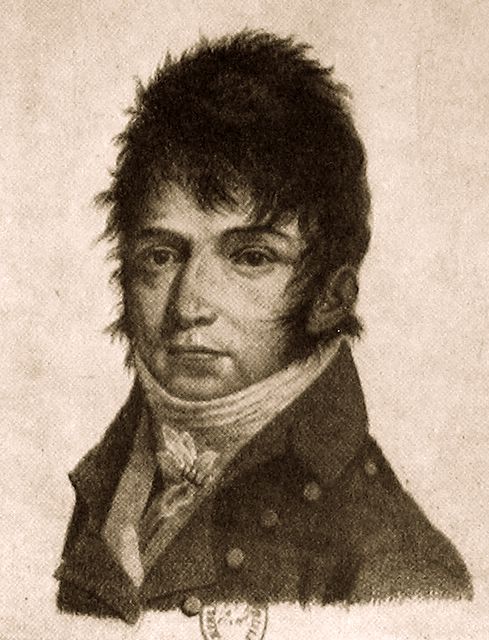
Pierre Rode black and white

The Viotti violin concertos and chamber music formed the backbone of his performance repertoire.

In 1794 he toured the Netherlands, Germany, England and Spain (meeting and becoming friends with Luigi Boccherini). He became the personal violinist to Napoleon Bonaparte in 1800 and he greatly captivated and influenced the German maestro Louis Spohr, who heard him perform in 1803.

From 1804 to 1808 Rode was solo violinist to the Tsar in Saint Petersburg (just at the time Tolstoy set War and Peace) and enjoyed extraordinary popularity. Whilst in Saint Petersburg he stayed with his countryman François-Adrien Boieldieu.

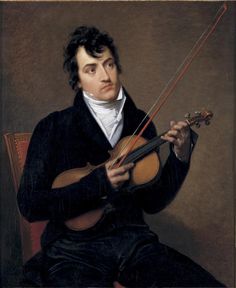
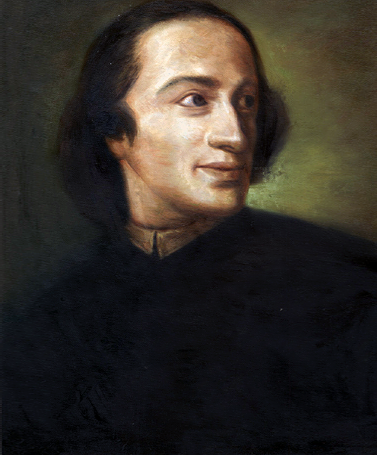
Jacques Antoine Vallin - Portrait of young man with a violin - possibly Pierre Rode

Jacques Antoine Vallin – Portrait of young man with a violin – possibly Pierre Rode

Beethoven wrote his Violin Sonata No. 10, Op. 96 in G Major for Rode, dedicated to the violinist alongside Archduke Rudolph, when he was visiting Vienna.

Because I can’t resist a Beethoven composition here is a fabulous vintage performance of the above sonata with Isaac Stern and Dame Myra Hess from 1960:

The final movement was written with Pierre Rode’s style in mind. Shortly before completing the work, Beethoven wrote to the Archduke Rudolph:

“… I did not make great haste in the last movement for the sake of mere punctuality, the more because, in writing it, I had to consider the playing of Rode. In our finales we like rushing and resounding passages, but this does not please R and — this hinders me somewhat.”

Whilst in Vienna in 1812, Rode gave the first performance of Beethoven’s Opus 96, accompanied by Archduke Rudolph at the piano.

All that remains is for me to get hold of the music scores and start practising!

5 Valuable Lessons I Learned From Writing a Novel

“After nourishment, shelter and companionship, stories are the thing we need most in the world.” ~ Philip Pullman

When someone reads a book they are going on a journey. That person has invested hours of their life travelling in the mind of the author, wanting nothing more than to reach the end if it’s an exciting adventure…

Book and hands closeup

The fictional dream is a powerful phenomenon. There’s been many a time I couldn’t stand not knowing what was going to happen next because I was totally engrossed in a story. Equally there were moments when my imagination was in overdrive and I was writing so fast there must have been steam coming off my keyboard.

Just as the benefits of reading impact on the reader, the action of writing imbues blessings on the writer.

I’m willing to bet even famous and seasoned novelists still get a rush of joy when they read a good review of their work. It’s a kind of validation that the thing they love doing and can’t live without is somehow contributing to another person’s life in a positive way.

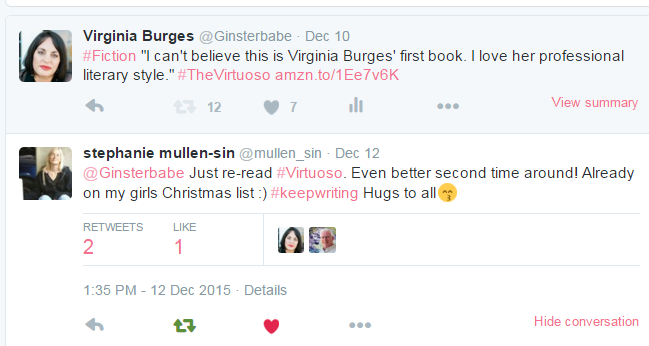
Twitter_-_stephanie_comments

That’s certainly the case for me as a newbie author. But beyond those feel good factors there are some profound and deep things I discovered about myself in the process of writing and publishing The Virtuoso, that go way beyond recognition or financial success.

It may not be a literary masterpiece in the same ilk as Hilary Mantel’s, or as epic as War and Peace, but it’s my story, told with my ‘voice’.

In the spirit of sharing I thought it would be helpful to list my personal lessons, in case you were thinking of writing your magnum opus or best-seller this year! It could equally apply to any large project that you have decided to undertake in 2016.

  1. I’m a finisher. The first time I wrote the words The End a feeling of euphoria swept over me, but alas, it didn’t last very long! When I saw the quality of my first draft I was less than impressed and soon realised that it was going to take an awful lot of hard work to produce something of a respectable standard. After umpteen late nights, a further three drafts and two professional edits my 100,000 word manuscript was ready to go out into the big wide world.  So what if it took a few years of consistent effort alongside my daily life; what means more to me is that I completed it.
  2. I have more courage than I thought I did. Sending your carefully crafted words out there is scary as hell! What if people don’t like what you’ve written? Neuroses plagued me. But I reasoned that ultimately it wasn’t important what people thought of me as a writer, the only thing that mattered was the book. The message not the messenger. After my book was published I did three radio interviews, which the thought of doing absolutely terrified me at first. I spent most of last year way out of my comfort zone. But action cures fear. I was doing things I had never done before and conquering them, which is incredibly liberating and expands one’s horizons and confidence.
  3. The act of writing made me believe in myself. Although I visualised my book in print, I didn’t dwell on thinking about writing, I just did it. That created a real shift in my perception and before long my abilities. My creativity blossomed under the hat of hard work. I met and worked with two incredibly talented people as a result of my ‘creation’. The wonderful violinist Adelia Myslov and film composer Tim Johnson collaborated with me to write and perform a unique classical soundtrack to accompany The Virtuoso. Creativity begets creativity…
  4. I developed patience and perseverance. That lesson didn’t come easily either. I’ve had to work at becoming more patient and my book tested me to the limit! The time it took to write the thing, then get feedback, then polish and get more feedback and so on seemed interminable.  Had it not been a labour of love I never would have stuck at it. Even the submission stage was a lengthy process, never mind how long it took to build up some reviews. They were worth waiting for as it turned out.
  5. I learnt to trust my instincts and to forgive myself for my mistakes. Perfection is great to aim for, but in reality we sometimes have to settle for our best at the time. Our maiden voyage in any endeavour is likely to be a little awkward and unsure. Can you remember the first time you rode a bike, drove a car, made love, played a musical instrument or learnt a new skill? Maybe you fell off a few times, fumbled nervously, dropped a few notes and irritated another driver with that daring manoeuvre at the roundabout? So too it is with writing and publishing a book. No experience is ever wasted; you just don’t always get what you expect from it, but rather what you need instead.

Ultimately your lessons will be unique to you, depending on where you’re coming from and they’ll probably surprise you.

Somehow the right people came into my life at the right time, and the support was there when I needed it. I’m very grateful to Satin Publishing for unleashing my words, and everyone who’s been a part of my writing/publishing journey.

Above all, I’ve managed to widen back and go with the flow a bit more. On the other hand, if you do feel inclined to read The Virtuoso I’d be very happy indeed!

And if you also wrote a review I’d be ecstatic!

I’ll leave you with the music that only exists because of the dream that was The Virtuoso

So, whatever you’re planning to achieve this year, go for it!

“There’s always room for a story that can transport people to another place.” ~ J.K. Rowling

A New Year’s Ditty

Farewell 2015! Swept away by the relentless hands of time,

Now it belongs in the eternal halls of history.

Ushered out amid a flurry of fireworks;

Eager eyes marvel at the displays heralding 2016.

The human family’s diaspora celebrates.

🎇

The air is dancing with excitement

At prospects unknown…

We face the future with hopeful hearts,

Praying that this year will be good to us

A blank canvas to paint our dreams on.

🎨

The unlived hours stretch ahead of us,

Take time to evaluate the days now behind

Some were great, some were not;

But achievements are begging to be acknowledged.

Some pledge to do it differently, better.

📚

Resolutions occupy our thoughts

Better health, more money, time with friends,

Travelling to exotic lands, or perhaps just Land’s End!

We aim to improve our circumstances,

Or perhaps those of others…

🎻

A handful commit to paper their goals for the year;

Know your destination, ‘see’ it daily.

Fill your hours wisely and

Plan your route with room for detours,

Most of all: enjoy the journey…

🌴💗

What Can a Good Cup of Herbal Tea do for You?

After a full-on festive season of preparations, carol singing, wrapping, unwrapping, eating, drinking, more eating and drinking, tidying up and blustery walks to shift the seasonal excess…or the odd yule time overindulgence; it’s time for tea…

Specifically: healthy, tasty, freshly made herbal tea, created by the wonderfully gifted and passionate herbalist, Alice Nugent, founder of the Hippopot!

Alice Nugent, founder of the Hippopot

Alice Nugent, founder of the Hippopot

I had the pleasure of meeting Alice a few weeks before Christmas at various Athena and training events, but it was great to get to know her better and learn about her many skills, when I visited her quaint and well stocked ‘tea house’ in Marlow recently.

Alice has a warm, welcoming African smile; her enthusiasm for life is totally infectious. On that particular morning I was pumped with adrenaline, I had a list of things to do a mile long before the end of the day as Christmas was fast approaching, and she must have sensed my excess of nervous and physical energy.

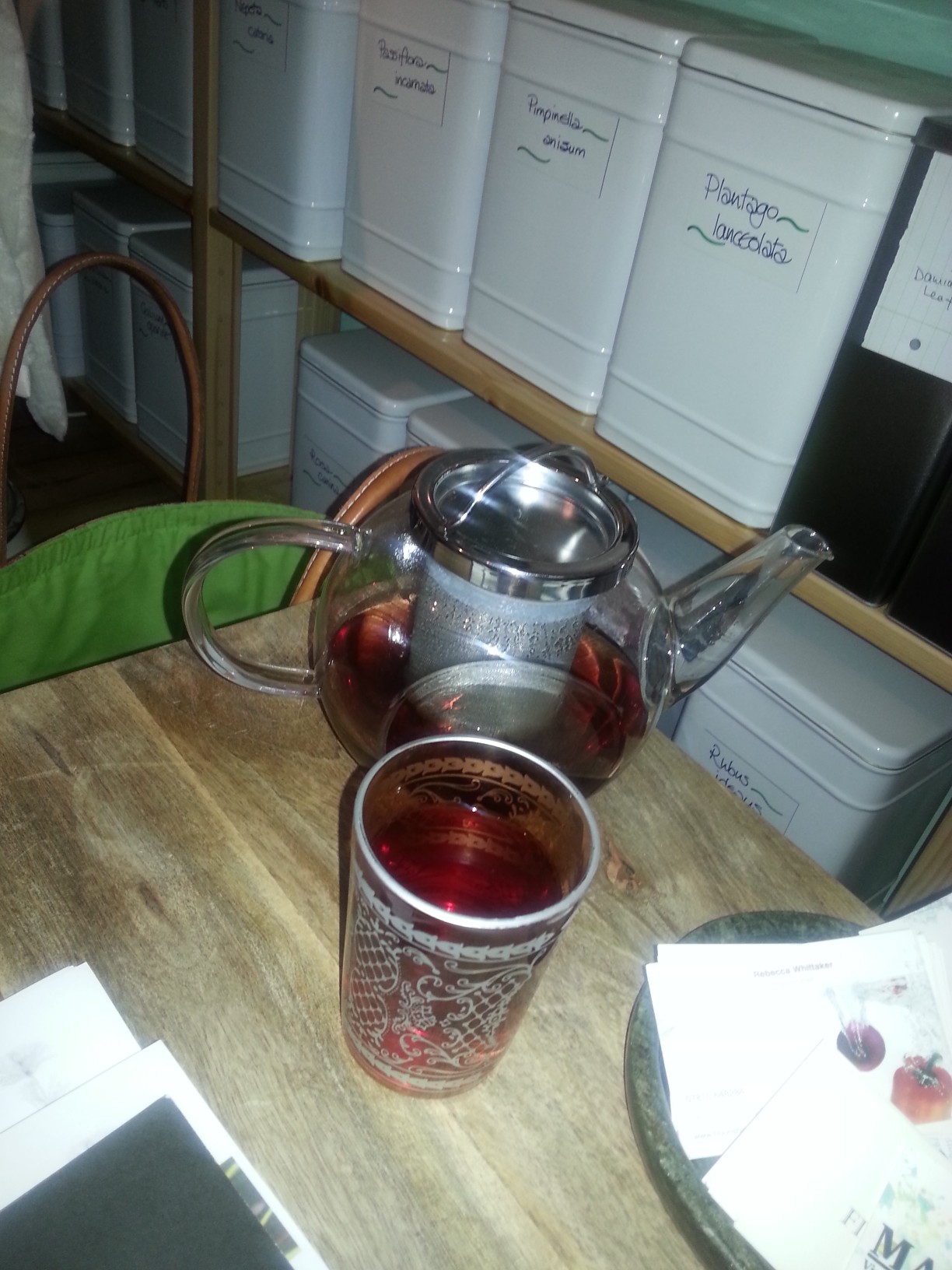
A few minutes later Alice had prepared me a wonderful brew she calls Serenity, a mixture of chamomile flowers, lemon verbena, oatstraw, passiflora leaves, spearmint, violet leaves, skullcap leaves, hibiscus blossoms, rosehip peel, apple pieces, elderberries, blackberries, strawberry and raspberry.

Hippopot - Serenity tea

A Hippopot special brew – the Serenity Tea

Alice grows many of the flowers and herbs in her back garden as well as sourcing them from specialist suppliers, making a large variety of different teas and also teas for the four seasons of the year.

Her life story is fascinating…

Alice’s love for natural, healing herbs and plants stemmed from her early childhood experiences. She spent her formative years roaming the land near her remote home in Francungo in the Tete Province of Mozambique, where she lived on a farm with her mum and dad, two older brothers and three sisters. They reared chickens, goats and pigs as well as growing beans, vegetables and rice. She still has a cousin who’s a chief in the border lands of Kanyemba!

Her eyes glass over as she remembers wandering in the bush and picking indigenous plants. Their nearest neighbours were two miles away.

At the age of six Alice was sent to live with her aunt in Harare, Zimbabwe, where she benefited from a full-time education. She returned home for a visit to her parents every six months.

Alice first trained as a secretary in Clinical Pharmacology at the University of Zimbabwe Medical School. Working for the lecturers there reignited her interest in herbs. She then went on to study beauty therapy at polytechnic and worked in a salon. Meanwhile, her interest in health hadn’t waned, and she began to learn about aromatherapy.

In 1993 Alice and family moved to Lagos, Nigeria, in connection with her husband’s work. Four years later they decided to move to the UK.

Alice turned her attention to learning reflexology at Ellesmere College, and when her husband got a posting in London she worked at a spa in a posh Hilton hotel. During this time she studied herbal medicine at Westminster University for four years, and is now a qualified Medical Herbalist BSc (Hons), as well as a member of the National Institute of Medical herbalists (NIMH), and the College of Practitioners of Phytotherapy (CCP). Every year Alice does a CPD course to ensure that she is up-to-date with the latest research and methods in her profession.

The Hippopot clinic – Alice calls it the pool, (as in hippo pool, in reference to her African roots), has been established in her special cabin for two years (and a year in Marlow High Street before that) and is going from strength to strength.

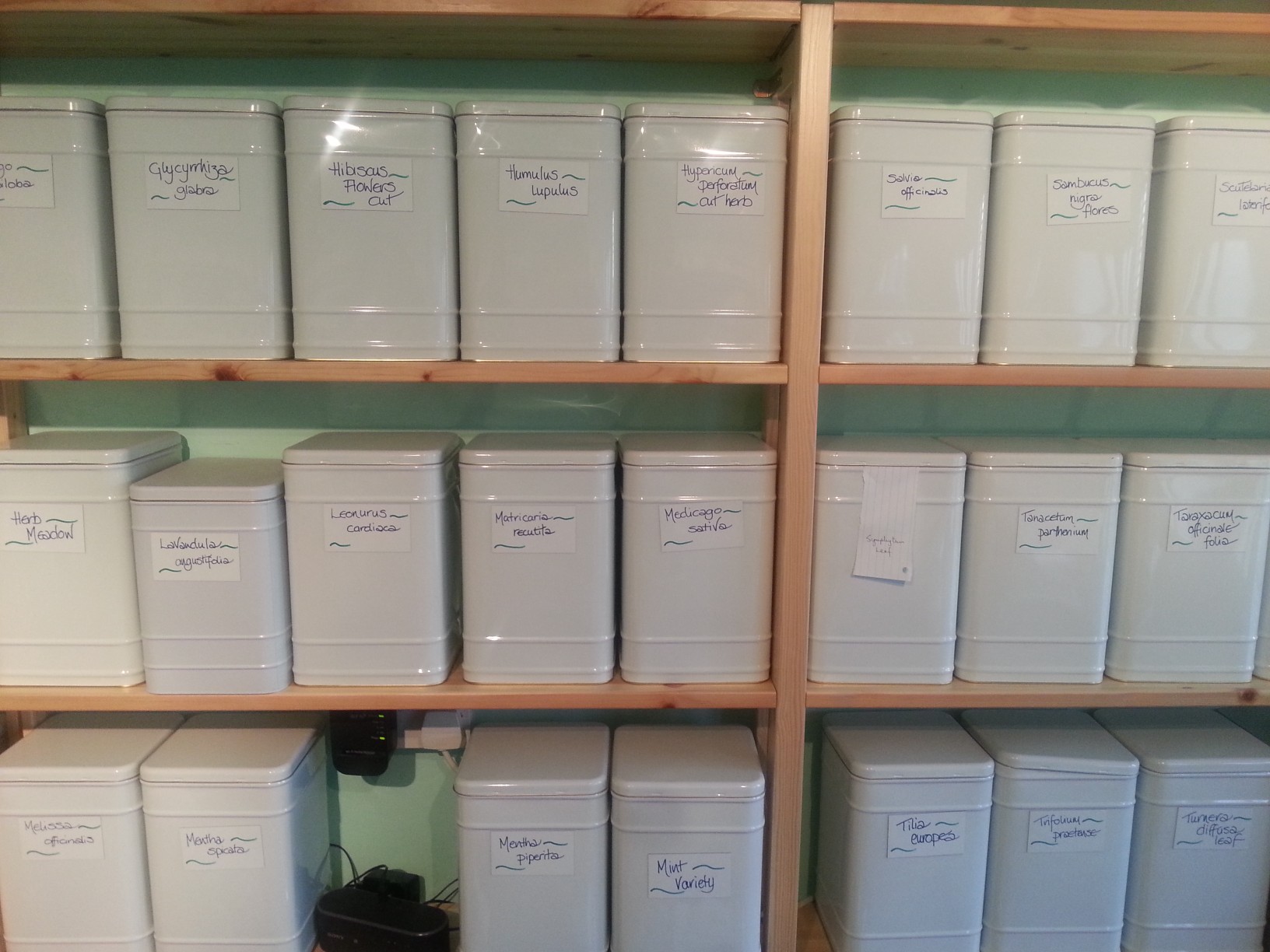
The shelves are lined with immaculately labelled bottles and boxes and it’s the perfect ambience to sit quietly with a cup of cha to have a chat.

All the herbs used in Hippopot teas are categorised by their Latin names.

All the herbs used in Hippopot teas are categorised by their Latin names.

I discovered that viscum album is actually mistletoe!

So in addition to a vast range of pre-made teas, Alice offers free consultations for local residents where she can assess the individual’s health and make a bespoke tea/tincture infusion tailored to their needs.

As Alice points out to me, herbs work together in nature…

She also makes special herbal tinctures and creams. The tinctures are alcohol based and the herbs are infused over a month. Alice is fully covered under the Medicine Act for her services. She can only sell the tinctures after a consultation, but her delicious and healthy teas can be purchased from the Hippopot website and sent around the world…

The Hippopot Tea Shop.

Alice doesn’t use anything from the ‘tea’ plant itself; therefore all her teas are free of green, black tea and caffeine, preservatives and additives. They contain purely natural herbs. The Hippopot also sells accessories for tea lovers, such as pots, strainers and cups which are sourced from the German tea company DNB.

So I urge you to purge your body of its Christmas induced ‘toxins’ and try some of her delicious and effective teas. They aid in bringing balance back to the body.

If that isn’t enough, Alice runs courses for those interested in learning about herbal medicine, and her next session will be on Saturday 6th February from 10 am to 4 pm at the Hippo Pool in Marlow. The cost of the training is £85.00 and the focus will be on Winter health and herbs. It goes without saying Alice will provide top quality refreshments!


On top of being a mum and a medical herbalist, Alice is also raising much needed funds for Malawi orphans.

A short, fun video about the history of herbal medicine:

Needless to say, by the end of our meeting my whole body had relaxed and an aura of calm had descended over me. Serenity certainly did its job!

“Food is our medicine” ~ Alice Nugent

I’d like to finish by thanking everyone who has followed my blog this year and taken the time to read some of my posts; I wish you the best of health and abundance for 2016.

Happy New Year!

Film Review: Star Wars – The Force Awakens (spoiler-free)

On Saturday afternoon my brood and I were transported to a galaxy far, far away…

With 3D glasses perched firmly on our faces, popcorn at the ready, the familiar yellow words began slanting across the screen and John Williams’s magnificent music score surrounded us. This movie was part of their Christmas treat and expectations were high.

Chewie and Han Solo

All I can say is that JJ Abrahams had the force with him when he made this movie. To have the pressure of making the sequel to the movies that hold such a special place in the hearts of millions of fans must have been both an exciting and terrifying prospect.

By now you’ve probably seen a few reviews about this film, so I doubt I’ll say anything that you’ve haven’t already read. However, it’s my honest opinion, adding to the chorus of high praise.

It’s very rare that the hype of a film actually lives up to its own hyperbole, but in this case; in my humble opinion, it most certainly does. My eighteen year old son (who absolutely loved Star Wars and watched the first six films numerous times growing up), turned to me and said, “Mum, that was sick!” For anyone with a teenager you’ll know that’s the highest praise he could bestow on it.

For me personally, it was like stepping back briefly into my childhood. Episode’s IV-VI are so deeply embedded in my early memories that paradoxically, The Force Awakens felt familiar and also different.

The official trailer:

What I really loved about it was the two main characters, (played by Daisy Ridley and John Boyega) are both unknown actors portraying unsung heroes. You see Rey (Daisy Ridley) scavenging for old space ship parts on the arid planet of Jakku, and you sense that she is more than her circumstances suggest. Her encounter with the fleeing droid BB-8, carrying a very important map, and the AWOL Storm Trooper Finn, brings the might of the dark side to her desert home.

The edge of our seats were definitely getting more wear and tear than normal!

The film unfolds with strong focus on the characters and their stories, and the cinematography is very faithful to the themes and style of the first three films that George Lucas made. It has a true sense of reality, thankfully no overkill of CGI that can often overtake the actual people in a film.

As you would expect, you cannot have light without dark, and the darkness is infiltrating the galaxy in the form of Darth Vader wannabe Kylo Ren, commander of the ruthless and shadowy First Order under the supremely evil leader Snoke, (played by the master of scary voices, Andy Serkis).

It always boils down to the eternal battle between good and evil, and only the Jedi can bring balance to the Force.

The special effects are amazing as you would expect, but they are more a part of the film than the central focus. The chases are breath-taking, the plot twists and turns dramatically as the film progresses and the appearances of the ageing lovable rogue Han Solo, General Leia Organa, the walking carpet Chewbacca and the fastest rust-bucket in the galaxy, the Millenium Falcon, are nothing short of brilliant. I think the new, comical but loyal droid, BB-8 will become as iconic as R2-D2 and C-3PO.

Star-Wars-BB-8

It left me hungry for more, to find out exactly what happened to Luke and how things went bad for Darth Vader’s children in the thirty years after they defeated the Empire at the end of episode VI. I expect those questions will be answered in good time in the next two episodes. The family saga will continue…

So I’ve deliberately kept this post short, because I don’t want to give away any major plot points if you haven’t yet seen the film.

Even my thirteen year old son was impressed, which is no mean feat. So it’s five thumbs up from me and my sons. If you enjoyed the original films I think you’ll be satisfied that this long awaited sequel hits the spots that other sequels just can’t reach.  Its legendary characters have made pure movie magic once again.

Star Wars The Force Awakens has smashed box office records for an opening weekend, (having already made around $238 Million on its first three days of screening in the US and $517 Million globally), which is hardly surprising – it’s a great film that’s part of one of the most beloved and iconic film brands in the world. Star Wars has ignited many imaginations over generations and holds a place of true affection for countless individuals as it reminds us of the hero’s journey.  All our journeys.

We may not be fighting the First Order or the evil Empire, but we face our own struggles in our daily lives, and boy does it feel good to get involved for just a couple of hours with characters who have bigger problems than most of us. Life and death issues…the threat of annihilation…

We emerged from screen five like proper space cadets; mute from having our minds blown away…

If Master Yoda had seen the film, I’m pretty sure he’d say something like: see it you must. Depends upon it, your life does.

Barmy About Beethoven on his 245th Birthday…

“Music is the one incorporeal entrance into the higher world of knowledge which comprehends mankind but which mankind cannot comprehend.” ~ Ludwig van Beethoven

Ludwig van Beethoven, a titan of classical music, and to my mind the most pioneering composer and pianist of the romantic era, turned 245 today. At least, the 17th December 1770 was the day of his baptism in Bonn, and most likely his date of birth.

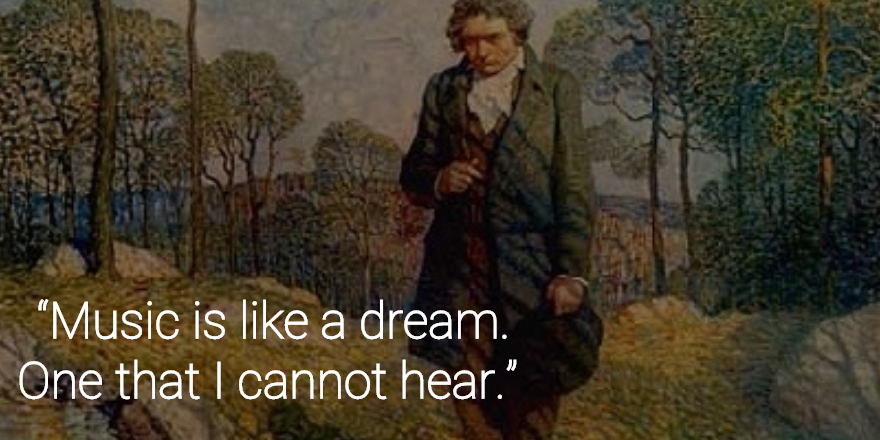
Painting of Beethoven in the Vienna Woods by N.C. Wyeth

Painting of Beethoven in the Vienna Woods by N.C. Wyeth

The deaf maestro wrote so many unforgettable, transcendental and downright epic tunes and melodies that his position in the lexicon of humanity’s geniuses is eternally guaranteed.

No-one remembers the pompous aristocracy (except for his kind patrons) that thought themselves above a low born musician, because centuries after they popped their noble clogs Beethoven’s music is still making an emotional connection with millions of people around the world.

It’s still relevant. It’s still innovative. It’s still heart-wrenchingly moving and profound…  That’s what was so brilliant about Beethoven.

Beethoven at the piano

His personal life was complex, passionate, and a catalogue of almost insurmountable challenges. They nearly broke him, but his music moved them into the realm of the divine, into victory with a capital V. His music was his life and his eventful life provided plenty of material for musical inspiration!

Beethoven at the piano 2

He suffered greatly for his art. Who else could have endured such despair and yet still have produced such earth-shattering music? Only dear Ludwig. Suffering really does transpose into the most achingly beautiful and timeless music.

“I do strongly feel that among the greatest pieces of luck for high achievement is ordeal. Certain great artists can make out without it, Titian and others, but mostly you need ordeal. My idea is this: the artist is extremely lucky who is presented with the worst possible ordeal which will not actually kill him. At that point, he’s in business: Beethoven’s deafness, Goya’s deafness, Milton’s blindness, that kind of thing.”  ~ John Berryman

I didn’t intend for this to be a lengthy post, (anyone who knows me will be aware that I can get quite carried away when I’m passionate about something). Rather, it’s a short celebration to mark the life and contributions of a person I deeply revere.

Beethoven at the piano 3

These BBC docudramas are superb; they really bring his life to life!

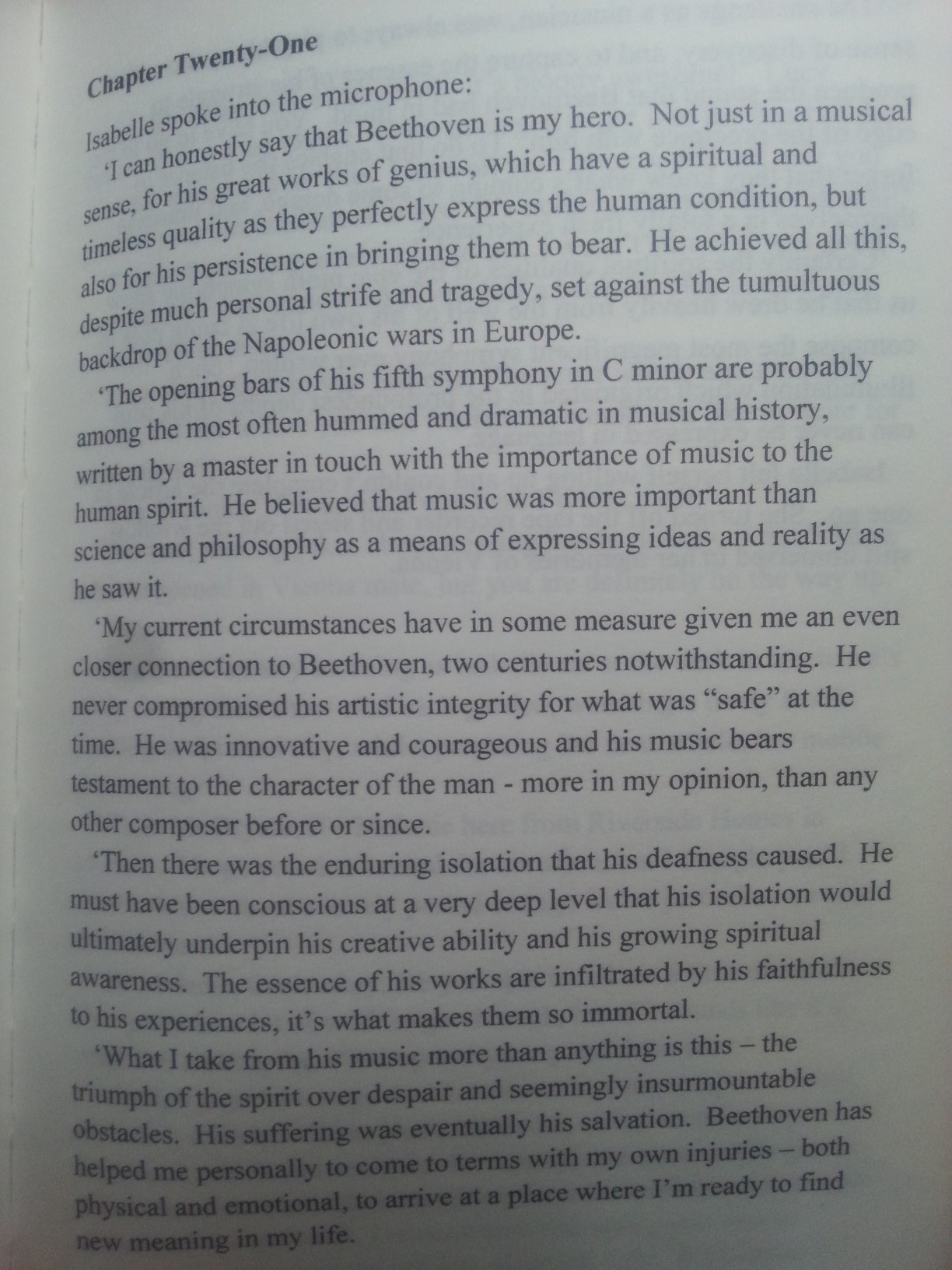
My tribute to Beethoven from chapter 21 of my novel, The Virtuoso:

The Virtuoso - copyrighted material from Chapter 21

The Virtuoso – copyrighted material from Chapter 21

Chapter 21 - 2

Also mentioned in the book is his violin concerto in D Major. Here is my all-time favourite performance that I grew up listening to, of Itzhak Perlman with Carlo Maria Guilini conducting the Philharmonia Orchestra from  their 1981 recording:

I also love this transcription for the clarinet performed by the amazing Michael Collins:

It’s great on the piano as well… Daniel Barenboim and the English Chamber Orchestra:

My two favourite recordings of his Romance No.  2 in F Major, Op. 50:

If you hang out on Twitter do join in the birthday celebrations, just use the hashtag #LvBChat.

See you there!

The Story of the World’s Most Accomplished and Successful Art Forger

In an unassuming garden shed that sat in the back garden of a council house on the edge of Bolton, art history was made.

There, over a period of several decades, all kinds of art; paintings, ceramics, bronzes, reliefs and sculptures were produced by the supremely talented (if somewhat deceitful and misguided) Shaun Greenhalgh.

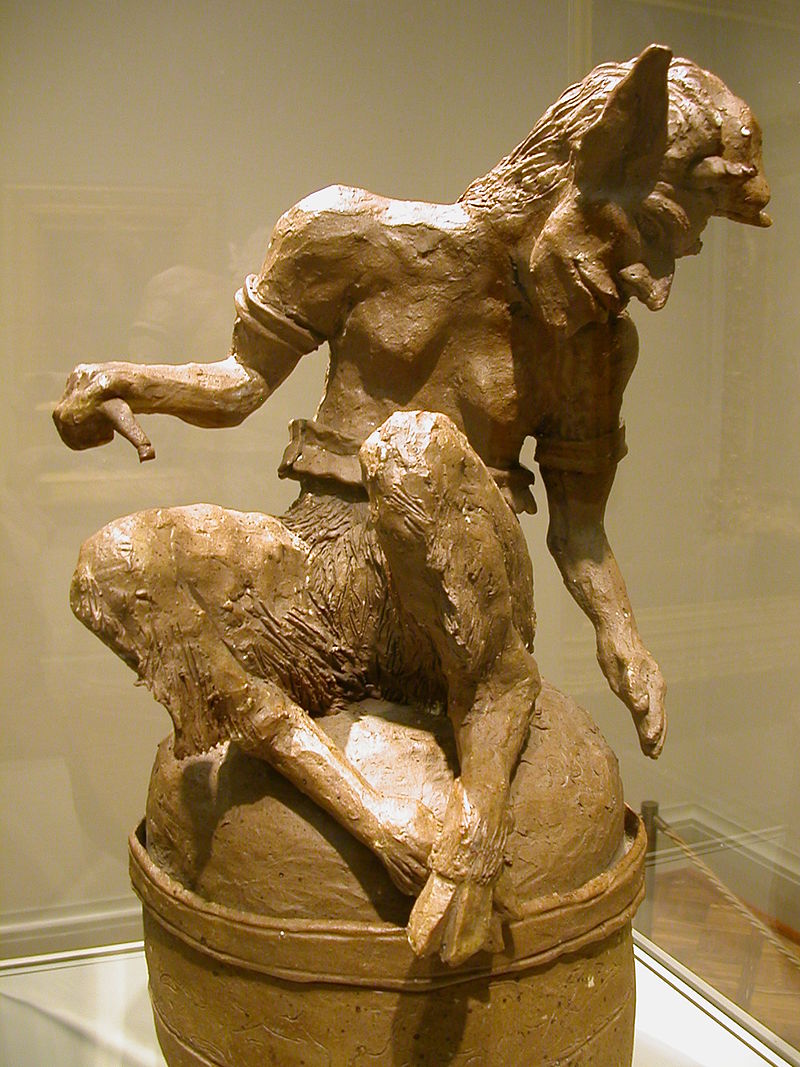
Shaun Greenhalgh's fake carving of Gauguin's Faun

Shaun Greenhalgh’s fake carving of Gauguin’s Faun

Unsurpassed in their variety, quality and sheer inventiveness, these forgeries fooled many art critics and dealers all over the world, being sold to museums, auction houses, private buyers and collectors, all hailed as long-lost masterpieces.

His career as an ‘official forger’ began in 1989 and during the following seventeen years Shaun created and (with the help of his parents), sold a prolific amount of art worth almost a million pounds.

It’s a tale almost too fantastical to be true, but the shunned and frustrated shy young man whose art was scoffed at and who felt discriminated against because of his humble origins (let’s face it, growing up in Bolton in the sixties and seventies wasn’t exactly glamorous or exciting), decided he would prove the experts wrong.

That’s exactly what he did and he achieved it in spectacular style! The fact that his gifted hands were able to produce so many different forgeries for so long shows just how good he was. And he had the nouse to know that he had to create a ‘past’ for each piece.

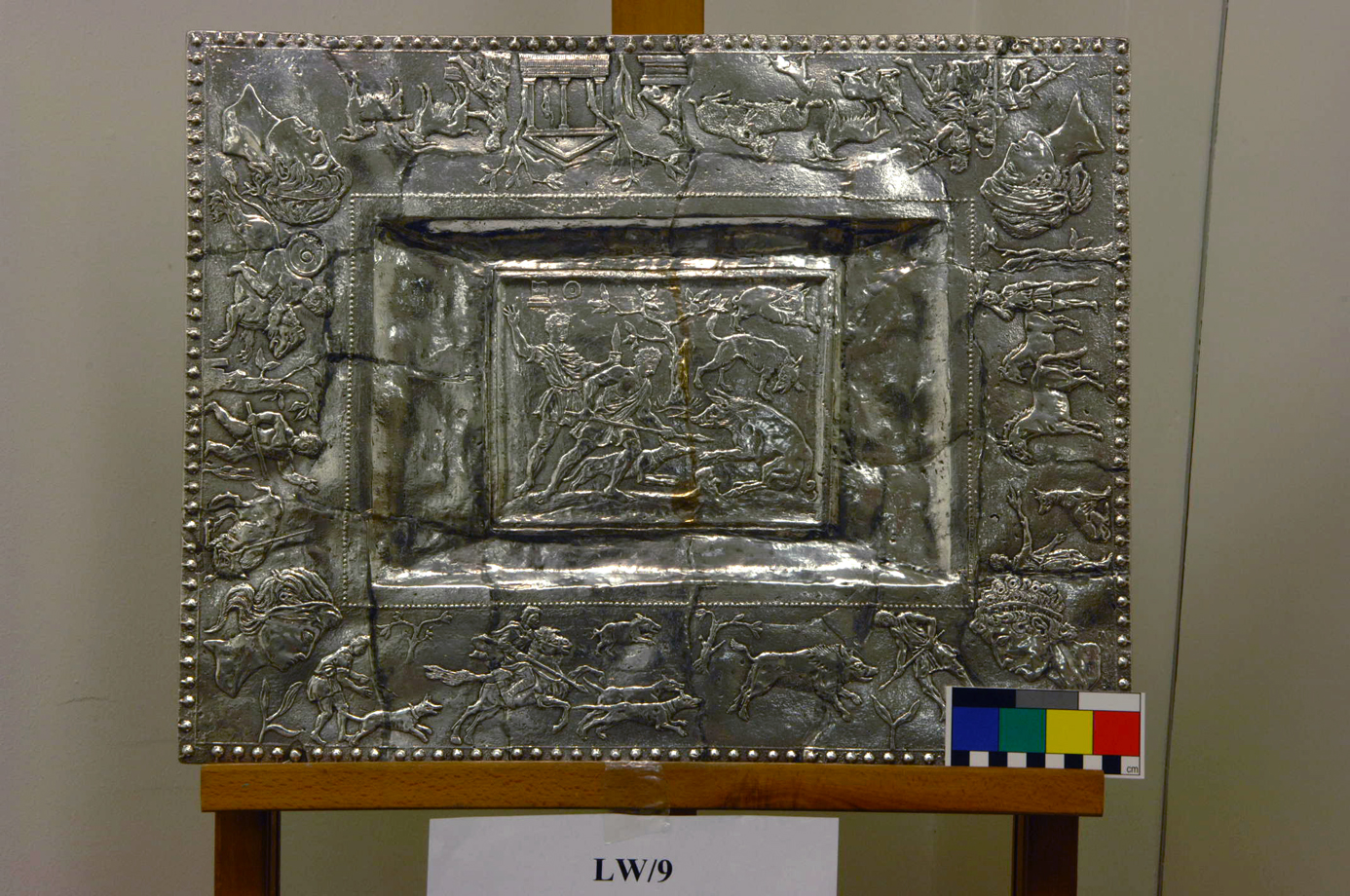
The Risley Park Lanx made by Shaun Greenhalgh from melted Roman coins

The Risley Park Lanx made by Shaun Greenhalgh from melted Roman coins

The lad from Lancashire took the art world by storm, knocking up masterpiece after masterpiece until one day in 2006, when he got an ominous knock at the door. Goodbye shed, hello Scotland Yard…

The law had finally caught up with Shaun and his elderly parents; the most unlikely ring of master forgers you could ever imagine. Truth really is stranger than fiction!

It turns out a mistake in his Assyrian Relief, which was in the process of being authenticated by Bonhams for The British Museum alerted the authorities to their brazen activities.

Where it all began

Shaun’s penchant for making things began to surface at primary school, where he exhibited early talent in pottery. After a while he gave up art at his Bolton Comprehensive and started to learn on his own terms. The Bolton Museum had also imbued the fledgling forger with a love of all things Egyptian. He taught himself hieroglyphics and stone carving. He studied woodwork and attended pottery classes. As it turned out, there wasn’t anything he couldn’t turn his hand to.

Provenance is everything

Much like musical instruments, the provenance of a piece of art can massively add to its value and desirability. It’s a shame that a certain amount of snobbery comes into play.

Shaun Greenhalgh believes that people should only buy a thing because they like it, rather than for the signature on it, or for an item’s detailed history. Forgeries thrive because of the stories behind the art’s creation. I wonder if, in a few hundred years, collectors will flock to purchase the art of probably the most prolific art forger of all time?

Gauguin’s Faun

Art critic, Gauguin fan and documentary maker Waldemar Januszczak was one of the people that Greenhalgh fooled, and can be seen here waxing lyrical about the discovery of Gaugin’s first sculpture during an exhibition celebrating the centenary of Gaugin’s death at the prestigious van Gogh Museum in Amsterdam in 2003:

To be fair, the faun was displayed underneath bright lights and sheltered behind thick perspex, so it’s unlikely he would have noticed the composite pieces had been made separately and glued together with Araldite Rapid! The naughty “PGo” signature was a touch of genius that added authenticity to Shaun’s fake faun. The half man, half goat ceramic was acquired by the Chicago Art Institue for $125,000 back in 1997.

The Amarna Princess

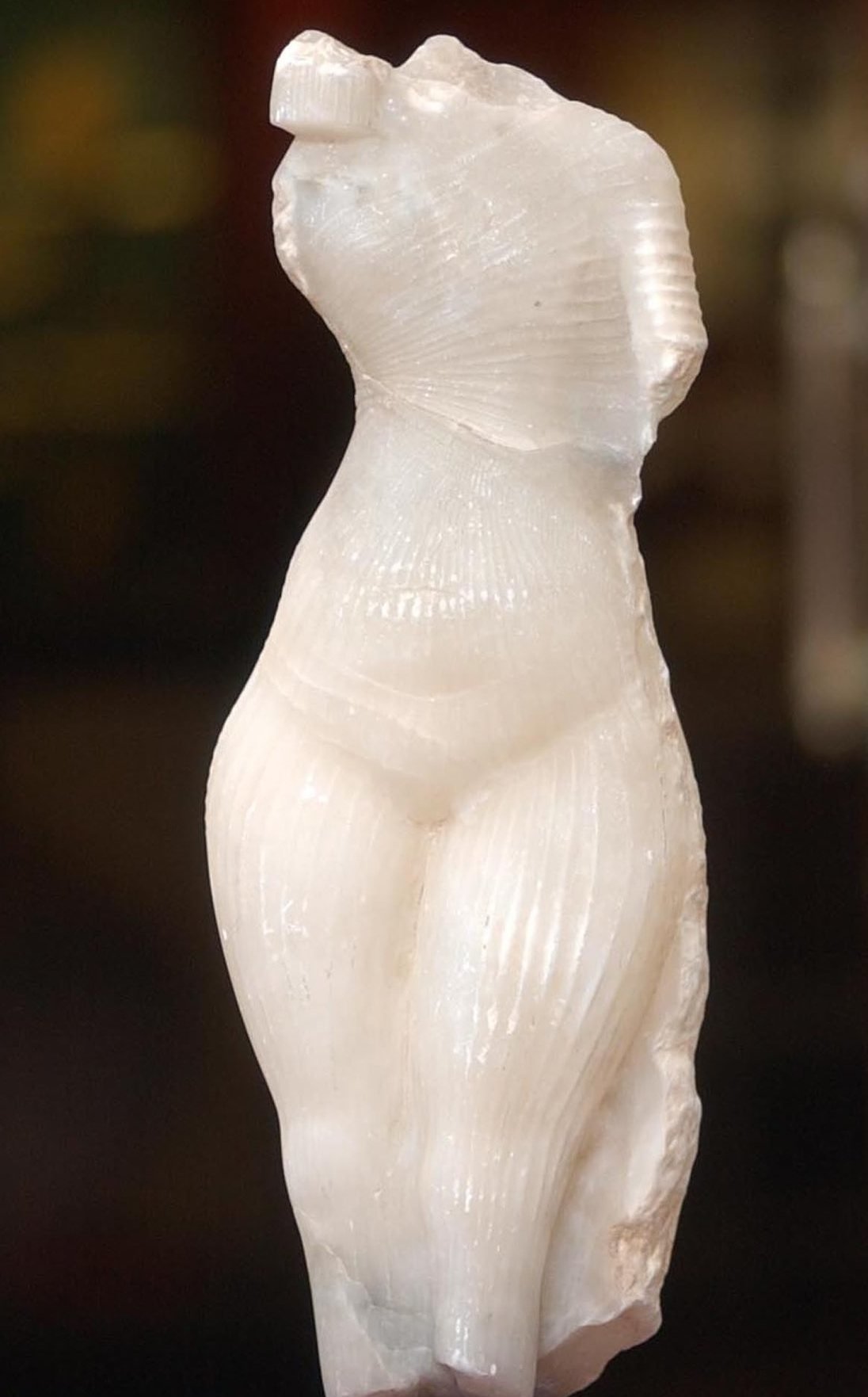
Another stunning creation by Greenhalgh was his alabaster model of an Egyptian princess, carved in his shed in just three weeks from calcite, with tools he purchased from B&Q. He aged it with tea and clay. The statuette depicts the daughter of the Pharoah Akhenanten and Queen Nefertiti, mother of Tutankhamun, said to date to the Amarna period of 1350 B.C.

The Amarna Princess

The idea for the provenance of the piece came after they had purchased an 1892 catalogue that listed valuable antiques that had been auctioned off in Silverton Park, Devon, home of the 4th Earl of Egremont. Among the items sold were eight Egyptian figures, which he drew on as inspiration for the carving.

Unbelievably, Shaun dropped the piece of stone and it cracked in two, but his trusty Araldite Rapid came to the rescue once again! The glued together work was authenticated by both the British Museum and Sotheby’s, and was deemed so important that it was even shown to the Queen. It was sold to the Bolton Museum in 2003 for £439, 676.00!!

La Bella Principessa, aka Alison from the Co-Op

Greenhalgh claims that in 1978 he did a drawing in the style of Leonardo da Vinci, using a check-out girl as his model. Shaun used the lid from a discarded desk that came from Bolton Tech. His dad had worked there and when he realised there were unwanted desks he bought one home for his son. The wood was used as the backing to the vellum of an old land deed that Shaun drew the image onto.  It was never meant to be a da Vinci and wouldn’t have fooled any Renaissance specialists, it was more an experiment to see if he could emulate the left-handed genius.

Amazing artefacts

It’s thought that Shaun produced over 120 forgeries, and it’s highly likely that some are still in circulation, yet to be discovered or else kept on the QT by embarrassed owners. Over the years many experts were duped, as were private buyers. One such buyer, William Jefferson Clinton purchased a so called bust of Thomas Jefferson in an auction. Luckily for Shaun, the Tower of London is now only open to tourists, as he sold a medieval crucifix to the royal family on the pretence that it came from the tomb of King John. It actually came from the shed on the outskirts of Bolton.

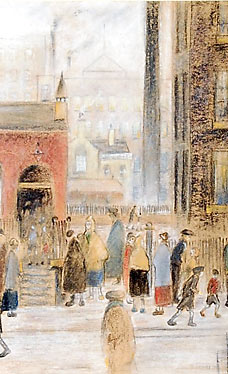
Shaun Greenhalgh's forgery of LS Lowrys - The Meeting House

Shaun Greenhalgh’s forgery of LS Lowrys – The Meeting House

His copy of LS Lowry’s painting, The Meeting House sold for £70,000 and his Risley Park Lanx made £100,000 and was displayed in the British Museum for a time. He passed off watercolours claiming they were painted by Archibald Thorburn, as well as beautiful items of lalique glass, Chinese pots, Venetian bronzes and Visigoth eagle brooches.

Known list of forgeries.

The ugliness of prejudice

I think what I found so fascinating about this story is the fact that we tend to underestimate seemingly ordinary people. We judge by appearances and circumstances. Unless you’re already an established name or celebrity it seems that it’s almost impossible to make it in the world of literature, art, music and culture.

But by anyone’s standards, the range and depth of skill of this self-taught artist is staggering, and he should have been able to produce his own art and make a living with the same prestige and recognition as say Rothko, Warhol, Banksy, Gormley or Emin – to my mind he has more talent.

But his talent wasn’t recognised in its own right because the ‘experts’ were blinded by prejudice. It was this prejudice that drove him underground, where, by taking on the personas and works of masters of the past, he could prove he was every bit as good (within a whisker) as Lowry, Gaugin, Da Vinci and ancient Egyptian, Roman and Anglo-Saxon artists.

How the Greenhalgh’s were caught:

According to Shaun’s prison memoir – A Forger’s Tale – many of his creations were sold to unscrupulous dealers who made up the provenance and stories attached to them.

Facts tell but stories sell…

It’s obvious he was no angel, and I liken his father, George, to a British TV character Arthur Daley, a benevolent wheeler dealer, but he certainly became embroiled in the underworld of the art world. Waldemar Januszczak points out that Greenhalgh’s book (written during his four and half years in prison), exposes the massive murky side of an industry that is meant to celebrate enlightened and brilliant individuals at the pinnacle of human expression.

Shaun Greenhalgh features after the Sutton Hoo hoard is shown, about 23 minutes in (demonstrating how Anglo Saxon disc brooches were made) in episode 4 of Januszczak’s documentary, The Dark Ages – An Age of Light (2012):

It’s not as if he lived a flamboyant and expensive lifestyle with his considerable earnings from his forgeries; Shaun never left home. It seems he was content to live in meagre circumstances doing what he did best – making things.

#SundayBlogShare – Reflections on Life and Love 🌄🌌👪

Random musings from the keyboard of a poorly but philosophical Ginny on this rainy Sunday…

What does it mean to live an authentic life?

Precious gifts of breathing, thinking and feeling…

Simple enough on the surface.

Breath flows regardless of our thoughts,

Minds wander into other realms

Emotions stemming from the former.

Hikers hammock

Masters and navigators of the senses,

How do we control and stimulate them?

That responsibility is our challenge…

Life would be shallow without the depth of despair,

Life would be meaningless without the joy of love,

Life would be boring without learning and becoming.

Statue of liberty at night

Like the concept of compound interest,

Personal growth accumulates in the bank of life.

Many actions originate beneath the surface,

Steering us blindly into seas as yet uncharted.

This gift of life, we can use it wisely or squander it.

It’s not just about us, but all souls.

goodmorning-twins

Do we not hail from the same source?

The mysterious paradox: we are different, but the same.

What separates us is our beliefs; limiting or otherwise.

What matters is how we use our strengths and virtues,

Forget the flaws, we share those too.

Follow your heart, it beats in wisdom.

Summerside, PEI. Summerside waterfront.

Humanity: expression of a diverse panoply of peoples,

A melting pot of DNA and talents;

We come in all shapes and sizes, but all share the Spirit.

Spirit infuses us with purpose and passion,

In hedonism, satisfaction is fleeting and empty

Meaningful experience is the very crux of life…

woman swimming

The connection of souls is limitless,

A deep well that each of us draws from

And contributes to;

Our wellbeing or suffering affects another

In ways we have yet to comprehend,

But love makes everything worthwhile.

vinyl record - find your groove

Without love, existence is a physical void,

A space of nothingness, matter without nucleus

Society asleep thrives on celebrity gossip, victimhood.

We are all here now; on this planet together.

Random acts of kindness go unreported,

But the recipient knows the warmth of that deed.

morning cup of tea

If my light were extinguished now, what would my legacy be?

Would the impression of my existence be noticed?

A brief stitch on the infinite tapestry of time…

It lies not in wealth or fame,

But in the small moments of giving and receiving,

Living in the present…

surf on a sandy shore

Part of the perpetual ebb and flow of life.

A hug and a kind word to demonstrate love,

The hand outstretched to a friend in strife

The courage to be who you are;

Share your creativity, your innermost self.

Lives are like beacons: one light signals to the next.

Lighthouse at night

Now the hills are ablaze with fires.

A universe of souls aligned with their light,

And accepting of their shadows.

Don’t deny or resist your power,

Be who you are, shine your light!

In doing so, you illuminate the way for others to do the same.

underneath a daisy

Life is for Living In Flow Eternally…

The Great Virtuoso Violinists/Composers of the 18th Century: Tartini (Part 2)

“Beyond doubt, Tartini strove for the truest possible expression in violin playing, he wished to give his epoch the best possible example of style, in the broadest sense of the word.” ~ Leopold Auer.

In this second installment on Tartini I’ll be covering his formative years, Slavonic and folk music influences, career highlights, as well as his musical ethos, developments on bowing, Treatise on Ornaments and his teaching legacy.  Plenty to write home about and to listen to!

Tartini’s philosophy

Giuseppe Tartini portraitTartini’s principles in performing and teaching, like his principles in composing, were based on an experience of the humanism of art, its need for context and on his desire to be as close as possible to nature without artificiality.

According to Tartini good musical taste should be displayed in both composing music and performing it, as a product of human nature and should therefore be guided by one’s “sommo giudicio” (highest judgement).

I feel that the undisputed heavy weight champion of classical music, Ludwig van Beethoven, who was also faithful to his life experiences in terms of musical expression shared this musical ideology with Tartini.

Tartini attached great importance to the ‘singing quality’ of the violin. In his ‘Regole per ben suonare il Violino’ (Rules for Playing the Violin Well), he differentiates two ways of playing: cantabile (singing style) and sonabile (resonant). According to Tartini the singing manner of playing cantabile required slurring (same bow for multiple notes) and coherence, as distinct from sonabile.

Tartini’s motto: “Strength without convulsiveness; flexibility without laxity.”

‘Theory of Affects’

In his aesthetic views Tartini belonged to a group of 18th century composers who were the trend setters of his day, namely, Francois Couperin, Johann Mattheson, Francesco Geminiani, CPE Bach, Leopold Mozart and Luigi Boccherini. Their collective views were incorporated into a doctrine known as the ‘theory of affects’, which can be traced back to ancient times.

Their ideology can be summed up by Geminiani, who believed that music was good if it expressed “movements of the soul” and bad if it “expressed nothing”.

My score of the G minor violin sonata 'Didone Abbandonata'

My score of the G minor violin sonata ‘Didone Abbandonata’

Tartini certainly was a master of music with a descriptive force that could arouse emotional states in the listener. Truthfulness of expression was everything. According to his contemporaries, Tartini often drew inspiration from the poems of Petrarch and the romantic writings of Metastasio.

The Cipher

Tartini modestly put his verses into cipher, so that his feelings were expressed in the music alone. He wrote his mottoes in a cipher that he invented which remained a mystery to investigators for two hundred years, adding to the mystical aura that surrounded his life and work. Just over thirty years ago the Greek violinist and musicologist Minos Dounias (who cataloged his violin concertos according to tonality), cleverly decoded Tartini’s cipher.

Folk music and Slavonic influences

Tartini had a keen interest in Italian and Slavonic folk songs and dances, hence much of his music reflected their simple, lively tunes and enchanting rhythms.

Lorenzetti_Italian folk dance

There is a story that tells of how the impressionable composer once heard some Venetian Gondoliers singing a song with words by the 16th century Italian poet, Torquato Tasso. Tartini put down the song and allegedly used it in a movement of a solo violin sonata and wrote the Tasso text under the notes.

Violinist and scholar Peter Sheppard Skærved performing the so called ‘Aria del Tasso’:

Tartini dedicated considerable attention to folk songs in his Treatise on Music, written in 1750:

“Each nation has its own songs, many of which arose from old tradition, though many are created afresh in harmony with the prevailing spirit. As  a rule they are extremely simple; one might even remark that the simpler and more natural they are, the better they are assimilated.”

In his youth Tartini listened to and absorbed the songs of Croats and Slovenes. The final movement of his violin concerto D. 115 is a fine example of his affection for Slavonic folk tunes.

Violin Concerto in A Minor, D.115 ‘A Lunardo Venier’ Presto with Nicola Beneditti and the Scottish Chamber Orchestra in a sweet rendition:

Formative Years

Born the fourth of six children to Florentine merchant, Giovanni Antonio Tartini and a girl from a family in Pirano dating back to the 15th century, Caterina Zangrando; little Giuseppe grew up with his siblings in Pirano, a small, pretty town on the Adriatic coast now part of Slovenia.

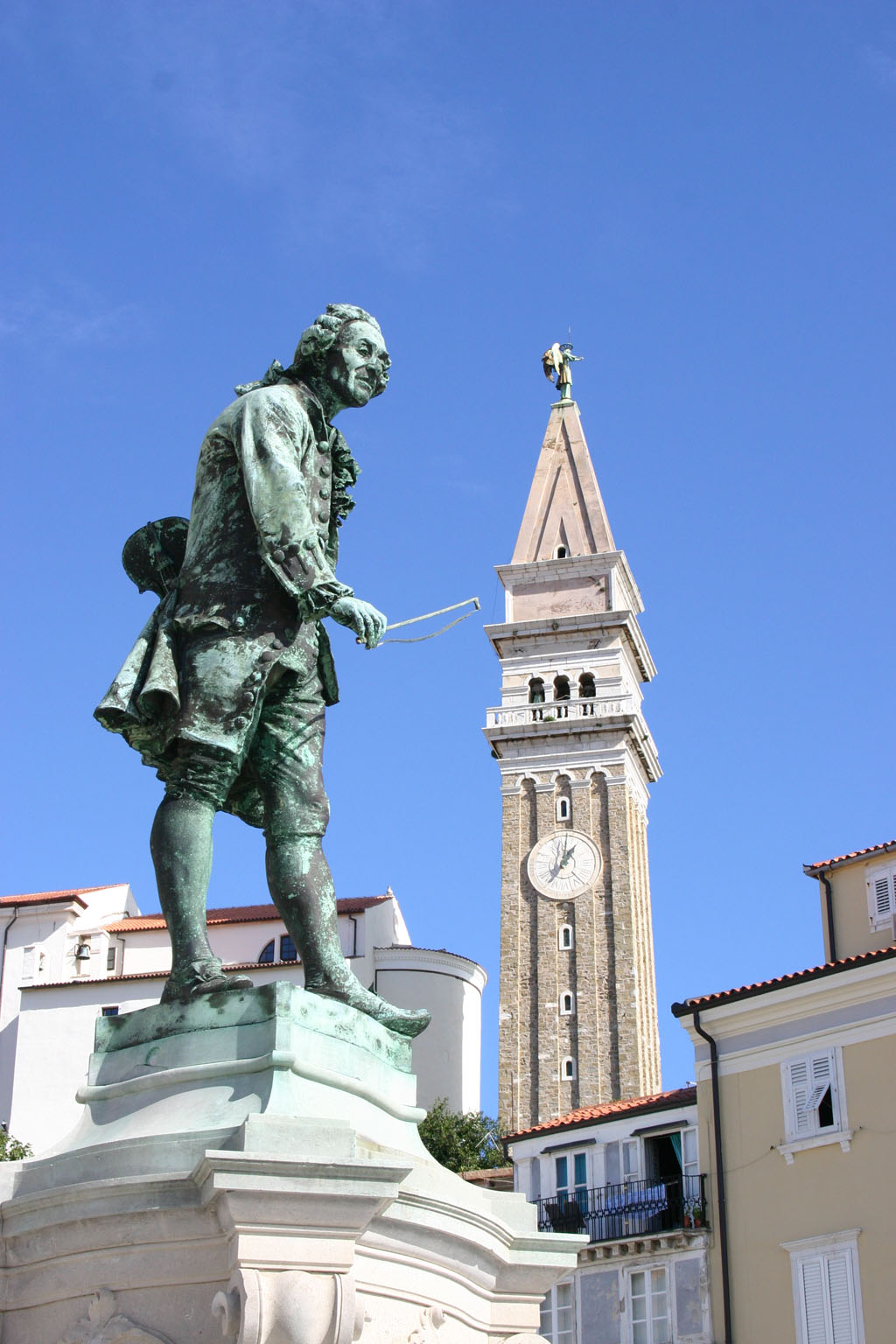
Tartini_statue

Statue of Tartini in the square of his home town Pirano

He was influenced by both Italian and Slavonic culture of the baroque period. One of his early musical influences may well have been attending the famous ‘Dei Virtuosi’ Academy in Pirano with his father. Giovanni actually intended for Giuseppe to become a priest and prepared him for an ecclesiastical career.  However, after his initial education Tartini rebelled against his father and moved to Padua in 1708 (which at that time was part of the Republic of Venice) and a year later he enrolled to study law in Padua’s ancient university, (said to have been founded in 1222).

It seems that Tartini quickly began to out-perform his first music teacher, Julio di Terni, and developed mastery of the violin largely through his own efforts and the study of other prominent violinists of his time. He studied Corelli and listened attentively to the likes of Veracini, and divided his time between law and music studies as well as a penchant for fencing.

Love and marriage

According to some sources Tartini developed a passion for the cardinal’s niece, Elisabetta Premazone, and married her secretly in 1710. This did not go down well with her influential family and Tartini fled to Assisi, having also incurred the wrath of his own family, who cut off all financial support.  He spent two years studying assiduously in a monastery and worked on perfecting his musical skills, and where he created his early compositions (and most likely his famous Devil’s Trill Sonata).

There are also claims that whilst in seclusion in Assisi Tartini took musical instruction from Bohuslav Cernohorsky (1684 – 1743 nicknamed Padre Boemo), a noted Czech composer, theorist and head of the 18th century Czech school of composition, who had also tutored Christoph Willibald Gluck.

Prague and Padua

Tartini returned to Padua in 1721 as a mature artist and versatile musician. He  spent most of his life there, but also performed and taught in Venice, as well as undertaking visits to Milan, Bologna, Livorno, Palermo and Naples. By this time he was well known throughout Europe and was invited to perform in Prague by an influential member of the Hapsburg dynasty and a big supporter of the arts, Count Kinsky.

The Kinsky family's coat of arms in Prague

The Kinsky family’s coat of arms in Prague

After the coronation of Emperor Charles VI they worked as chamber musicians in Count Kinsky’s chapel until 1726.  Tartini also played in Prague’s musical academies.

The success of his countrymen Scarlatti and Geminiani in foreign courts may have hastened his decision to go to Prague, but because of his early exposure to Slavonic folk tunes the trip most likely excited him and represented an opportunity to further study Slavic music.

He travelled with his friend and first cellist at Padua, Antonio Vandini. The role of cello accompaniment was quite important in the absence of a harpsichord or keyboard instrument. Tartini and Vandini were close friends for over fifty years, and Tartini wrote several cello concertos for him.

Here’s my favourite of them, in D major, performed by Russian virtuoso Mstislav Rostropovich:

After he returned to Padua in 1726 he rarely left, and besides his performances in Venice his last major concert tour was a trip to Rome in 1740 after an invitation from the cardinal to play in the presence of Pope Clement XII.

Performer and teacher

Tartini founded the Paduan Violin School a year or so after his return from Prague, which he directed for more than forty years. Violinists from all over the world came to learn from Tartini and perfect their craft, and he earned the nickname “maestro delle nazione” (teacher of nations). Antonio Capri, who was his biographer states that over seventy of his pupils became violinists of note in the history of violin playing.

“One cannot speak of music at Padua without mentioning the famous Giuseppe tartini, who has long been the first violin of Europe. His modesty, moral standards and considerateness evoke as much respect as his talent; in Italy he is referred to as ‘il Maestro delle Nazioni’ both in regard to the violin and to his compositions… No one has impressed me more with his inspiration and the fire of his compositions than Tartini. ~ Jérôme Lalande

Tartini’s methods were also passed on by his students, namely Pietro Nardini, of whom Leopold Mozart said, “I have heard the famous Nardini… It is impossible to hear anything of greater beauty, purity, evenness of tone and melodiousness. And with all of this he has nothing heavy in his playing.” Other students worthy of mention were Maddalena Lombardini, Domenico Ferrari, Pierre Lahoussaye, Filippo Manfredi and Domenico Dall’Oglio.

From reading about his legacy I have assumed that he was equally as good at teaching as he was at performing and composing! His respected writings qualified him as the eminent music scholar of 18th century Italian violin music; so you could say he had many strings to his bow!

Development of bowing techniques

“The bow should be held firmly between the thumb and forefinger and lightly by the other three fingers, in order to produce a strong, sustained tone. To increase the tone, press harder on the bow with the fingers and also press down the strings more firmly with the fingers of the other hand.” ~ Giuseppe Tartini

The authors of Methods of the Paris Conservatoire (Paris 1802), Baillot, Rode and Kreutzer wrote that under Tartini’s bow the violin becomes a “harmonious, sweet instrument, full of grace.”

He attached great importance to the “correct distribution of the bow.” A story from a contemporary relates that sometimes Tartini used two bows while teaching: one of them had its stick divided into four parts, and the other into three.

Tartini also fluted the wood of the bow. It’s also easy to forget that during Tartini’s musical era the bow was held not at the heel as it is today, but gripped at a certain distance from it. Tartini discovered that in order to enrich the tone it was necessary to lengthen the bow which increased its flexibility and enabled a broader range of expression in bowing technique. He developed a broader palette of bow strokes than Corelli (who used mostly detache and legato), by also using both staccato and bouncing strokes.

It’s quite a skill to amplify the sound without compromising the quality of the note, so bowing technique is crucial in applying the dynamics of a piece. Crescendo’s aren’t my Forte!!!

Minos Dounias observed that Tartini’s slurring of strokes coincides with that of musical phrases.

L’Arte del Arco (The Art of Bowing)

To assist his teaching methods Tartini wrote The Art of Bowing which consists of fifty variations on a Gavotte from Corelli’s Violin Sonata in F Major, (Opus 6, No. 10). Despite its title the variations also challenge left hand activity and require perfect coordination of movement from both hands!

It highlights his exhaustive knowledge of the many modes of expression of the violin and serves as a kind of compendium of violin technique in the 18th century. The work isn’t just a manual in technical ability but combines a certain artistry that frees it from the usual monotony of studies and exercises.

The Art of Bowing was adopted by many prominent 18th and 19th century violinists (such as Joseph Szigeti and Fritz Kreisler) who made arrangements for their own performance.

A gorgeous performance by Oscar Shumsky of Kreisler’s shortened arrangement of Tartini’s Variations on a Theme by Corelli:

Treatise on Ornaments

Tartini was against ornamentation/embellishment as a purely decorative device unconnected with the inner nature of the music itself. The choice of ornaments and the way they were played had to be underpinned by an understanding of the music  and performed to reflect the feeling, idea or, as was the basis for his philosophy, the affect that it expressed.

Tartini’s writings pertaining to technical and aesthetic performance started out as instruction manuals for his pupils that he refined over the years. His Treatise on Ornaments was thought to have been written between 1735 and 1750 when he was highly active both as a performer and teacher.

It contains his ideas on different kinds of grace notes, trills, tremolos and mordents and various ways of using them.  Regarding mastering the trill at different speeds he wrote:

“The same shake will not serve with equal propriety for a slow movement as for a quick one.”

He suggests starting the trill slowly and gradually making it faster.

Tartini’s art was progressive, meaningful, and full of humanity. It’s no surprise then that through generations of violinists many of his principles in methods of teaching are used to this day, and his best compositions still thrive in modern repertoire.

I’ll leave you to listen to a small selection from his massive output of violin concertos, sonatas, trios etc. Happy listening!

Violin Sonata in G minor Op. 1 No. 10 ‘Didone Abbandonata’ David Oistrakh and Frida Bauer:

My favourite violin concerto in D minor ‘Ombra diletta…’ D. 44 Performed by Wolfgang Schneiderhan and the Festival Strings Lucerne conducted by Rudolf Baumgartner:

Violin Concerto D. 22 Concerto Bucolico for violin, strings & b.c. by L’Arte dell’Arco:

Violin Concerto in A Major, D. 96, Accademia Bizantina, on period instruments:

Violin Concerto in G Major, D.  82 Pierre Amoyal, Claudio Scimone & I Solisti Veneti:

Trio Sonata in F Major for 2 Violins and Harpsichord, David and Igor Oistrakh with Hans Pischner:

Sonata ‘Staggion bella’ for Violin & basso continuo in B flat major, Op.Posth (Brainnard Bb.3):

Violin Sonata No. 12 Op. 2 in G Major, vintage recording of Joseph Szigeti:

Trio Sonata in D major, B. D2 (Op.3 No.6) La Magnifica Comunità :

Violin Concerto in E minor, D. 55 by the Drottningholm Baroque Ensemble & Nils-Erik Sparf:

Violin Concerto in G minor, D. 85 by the Drottningholm Baroque Ensemble & Nils-Erik Sparf:

Tartini Violin Concertos D70, 42, 109, 123, 54, 45, 115, 13, 125, 110:

Tartini Solo Violin Music performed sympathetically and soulfully by Andrew Manze:

“Tartini has always been to me a source of achievements with the violin.” ~ Joseph Szigeti

The Great Virtuoso Violinists/Composers of the 18th Century: Tartini (Part 1)

“Giuseppe Tartini is one of the leading figures of the Italian School of violin playing in the 18th century, a school whose art is as meaningful today as it has ever been. Tartini’s music is expressive, sincere, warm and melodious, and it is in these qualities that lies its appeal.” ~ David Oistrakh

The more I learnt about Tartini, the more I became engrossed in his life and musical achievements.  As with Vivaldi, there’s just too much to share to do him justice in one post. There’s a lot more to this iconic Italian master than his exceptional ‘Devil’s Trill’ sonata; however that incredible work is the main focus for part 1.

Monument to Tartini at St. Anthony's Basilica Padua

Monument to Tartin at St. Anthony’s Basilica Padua

If the violin is the so called ‘Devil’s Instrument’, then Guiseppe Tartini (8th April 1692 – 26 February 1770) is most definitely his composer of choice!

I think Paganini would have given him a run for his money on the fingerboard, but so far in my investigations into the great virtuoso violinists who were also composers, I feel that Tartini, more than the others, embodied the most evenly balanced skills in both composing and virtuoso performance.

Vivaldi, Viotti and Corelli I think leaned more towards composition, whilst Paganini, although highly talented in both, played with such virtuosity that his reputation as the ‘Devil’s Violinist’ will forever remain the stuff of legend.

Tartini however, would prove to be Lucifer’s student extraordinaire, as his most popular Violin Sonata, aptly named ‘The Devil’s Trill’, proves to this day to be one of the most wickedly sublime sonatas ever written for the instrument.

Legacy

Tartini left the world a vast heritage of music. As a result of his study, hard work, and imagination his quill penned no fewer than 350 works, most of which were written for the violin. Like Corelli and unlike Vivaldi, Tartini composed almost exclusively instrumental music, criticising composers of both vocal and instrumental music.

“These kinds of music are so different that he who is successful in one of them cannot be so in the other; each must remain within the confines of his own talent.”  To push his point home he also said, “I have received offers to work for theatres in Venice, but I have never agreed to this, for I know well that the vocal chords are by no means identical with the violin fingerboard. Vivaldi, who wanted to work in both genres, was always booed in the one, whilst in the other he was completely successful.”

Tartini’s influence reached beyond his contemporaries: Vivaldi, Laurenti and Boccherini across nations to what historians have discovered as traces of his style in the works of the young W.A. Mozart. Leopold Mozart recognised his genius by referring to Tartini as “one of the most splendid violinists of our time,” in citations that appeared regularly in the pages of his School for the Violin (1756).

Tartini himself it seems was a creative and sensitive soul with an inquiring mind, who was committed to mastering the technical aspects of the violin as well as finding the peak of his artistic taste and individuality.

He was greatly was influenced by a fellow virtuoso violinist from Florence, Francesco Maria Veracini (1690 – 1768), who had performed in London, Dresden, Poland and what is now the Czech Republic for Count Kinsky. It is thought the two met in 1716 in Venice at the festivities in honour of the Crown Prince of Saxony. Tartini was attracted to the romantic colouring of Veracini’s sonatas and was impressed by his manner of playing, which was bold and vivid, with a smooth-flowing tone and an easy mastery of bow and finger techniques, including the trill.

Tartini assimilated the skill and style of his eminent compatriot over the years that followed as he busied himself in seclusion in Ancona.

Not all of Tartini’s work has been published, but most of his original manuscripts can be found in the music archives of the chapel of St. Anthony in Padua.

Basilica of St. Anthony in Padua

Basilica of St. Anthony in Padua

How I wish I’d known that when I visited Padua in my early twenties! There are probably more autographs that have yet to be discovered, as was the case with Vivaldi. His first collection of violin concertos were published in Amsterdam in 1729, followed by his sonatas four years later.

In addition to his violin works, Tartini left a few compositions for viola da gamba, cello and flute.

The Devil’s Trill Sonata

Written in the key of G minor, the sonata is an example of one of the best 18th century violin classics. It begins with a beautiful, melancholy and expressive melody, the ‘Largo Affettuso’. I wonder if this is meant to represent Satan’s sadness at being kicked out of heaven?

My score!

My score!

It is both poetic and soulful, with a mournful lyricism that immediately creates an emotional pathos. It lulls you into a poignant state before the song like tune moves into the ‘Allegro’ where the tempo and temperament change dramatically.

The Andante provides a lyrical interlude before the Allegro assai assaults the senses! Vigorous, determined and virtuosic, it’s positively demoniacal to play; Tartini was most certainly gripped by a violent and turbulent passion…

The Allegro assai, where Tartini uses a continuous background of double-stopping trills. Looks like a lifetime of practice for me!

The Allegro assai, where Tartini uses a continuous background of double-stopping trills. Looks like a lifetime of practice for me!

“Such marvellous compositions of Tartini’s as his sonata in E minor and G minor (The Devil’s Trill) or his Concerto in D minor have been with me since my youth, throughout my life as a musician; these and other works by Tartini are now played by my pupils, but his music never loses its freshness for me, its colour and its emotional impact. I consider his Devil’s Trill sonata to be of such importance that I not infrequently conclude my solo concert (recital) programmes by performing it.” ~ David Oistrakh

His words perfectly complement his amazing performance of The Devil’s Trill in a feat of such jaw dropping virtuosity that I haven’t found a performance to top this one!

The Devil’s Dream

French astronomer and writer, Joseph Jérôme Lefrançois de Lalande, tells the story of how the Devil’s Trill Sonata came about as told to him by Tartini himself:

“One night in 1713 he (Tartini) dreamed that he had made a contract with the devil, who happened to be in his service.  Whatever Tartini wanted was granted to him, and all his wishes were anticipated by his new servant, who gave him his violin to see if he could play anything harmonious. But what was Tartini’s surprise when he heard a sonata so original and lovely and performed with such perfection and meaning that he could never have imagined anything like it! He experienced such amazement, admiration and delight that he was breathless; this strong emotion woke him up and he immediately seized his violin in the hope that he would be able to remember at least part of what he had heard, but in vain. The piece that Tartini composed then is indeed the best of all that he has ever done, and he calls The Devil’s Sonata. But the former one that amazed him was so much higher that he would have broken his violin and given up music forever if only he could have.”

The musical idea of the sonata had probably matured in Tartini’s mind long before the dream further ‘elucidated’ his ideas. He’d already worked hard on the trill, conceiving it not only as a technical device but as a means of musical expression.

Painting of the devil's trill

Although the dream story has an air of the mystical about it the cause of the dream was undoubtedly Tartini’s creative drive at work. He later devoted much attention to the trill in his Treatise on Ornaments.

Debate over the date of composition 

The Tartini scholars, Paul Brainard, Andreas Moser and Antonio Capri assert that the artistic content of the sonata, its depth, harmony, originality and technique are more in line with his mature final period, and suggest it wasn’t written before 1730/1740.

However, Johann Quantz heard Tartini perform in Prague in 1723 and made a point of Tartini’s skill in playing double trills. These comments prompted Italian violinist Michelango Abbado, (father of conductor Claudio), to surmise that the sonata had already been written by 1723.

Sadly, the original autograph of the Devil’s Trill sonata no longer exists, and as Tartini was prone not to date his works it may not have shed light on the debate in any case. It’s also logical to assume that if it was composed in Tartini’s youth that over time he would have practiced and perfected the sonata, as well as teaching it to his students. It’s also understandable that Tartini himself didn’t want to shout from the rooftops that he was dreaming of the Devil whilst a violin soloist and director of music at the Chapel of St. Anthony!

Here are some other wonderful performances and interpretations of the brilliant Opus 1 No. 4 composition.

Henryk Szeryng:

Joshua Bell’s interpretation with the harpsichord:

An arrangement for violin and orchestra by Marc-Oliver Dupin, performed by Orchestre d’Auvergne and Jean-Jacques Kantorow:

A lovely performance on authentic instruments from the Palladian Ensemble for violin, viola da Gamba and Harpsichord, archlute & baroque guitar:

A 16 year old Yehudi Menuhin in a fabulous vintage recording:

The inimitable Itzhak Perlman:

Nathan Milstein from 1959:

Publication

Jean Baptiste Cartier first published The Devil’s Trill sonata in his method (L’art du Violon ou Collection Choisie dans les sonatas des Ecoles Italienne, Francaise et Allemande), that came out in Paris in 1798 followed up by a second edition in 1801.

The sonata then had a dormant period of 54 years and reappeared in 1855 with a piano accompaniment by Henri Vieuxtemps and Robert Volkmann. That edition also revived interest in Tartini’s works in general not just The Devil’s Trill.

At the turn of the 19/20th century a large number of arrangements of the sonata were produced by Joseph Joachim, Fritz Kreisler, Leopold Auer and Georgi Doulov which further spread appreciation and performance of this brilliant sonata.

I’d love to hear from you with your favourite versions of The Devil’s Trill as well! Until part 2…