What’s in a painting? Taking a Look at Velázquez’s Masterpiece: Las Meninas (c. 1656)

“I would rather be the first painter of common things than second in higher art.” ~ Diego Velazquez

As someone who enjoys looking at art, but with no education in art history, or any practical skill in sketching or painting, I thought it would be great to educate myself a little more and share my findings with you on my blog.

Detail of Infanta Margarita Teresa from Las Meninas. Her left cheek had to be repainted after the painting suffered fire damage in 1734.

Detail of Infanta Margarita Teresa from Las Meninas. Her left cheek had to be repainted after the painting suffered fire damage in 1734.

Great art was painted for many different reasons by the masters of history, but these days it serves chiefly as a window into the past. Great art has immortalised its creators and their methods and become sought after by wealthy collectors, as well as for the aesthetic enjoyment of all those who clap eyes on it in a museum.  It’s there to be appreciated.

You don’t have to know the specific techniques that the artist employed to achieve a certain effect, although maybe that knowledge would deepen understanding and thereby recognition of what makes a ‘masterpiece’.

Art, like music and literature is subjective; with each era bringing to the fore its masters of the craft, replete with their varied and individual styles, techniques and subject matters.

There have been many glorious paintings that have captivated, yet also eluded humanity over the centuries; their mysterious meanings being debated and interpreted by art scholars and critics through the ages, so I thought this would make a good subject for a series of posts.

I’m starting with the Spanish baroque painter Diego Velázquez, (June 1599 – August 1660), born in Seville to Spanish parents and Portuguese grandparents, he became principal court painter to King Philip IV of Spain and one of the leading figures of the Spanish Golden Age. His oeuvre consisted mainly of royal portraiture, plus important cultural scenes of the epoch, but he also captured portraits of ‘ordinary’ people.
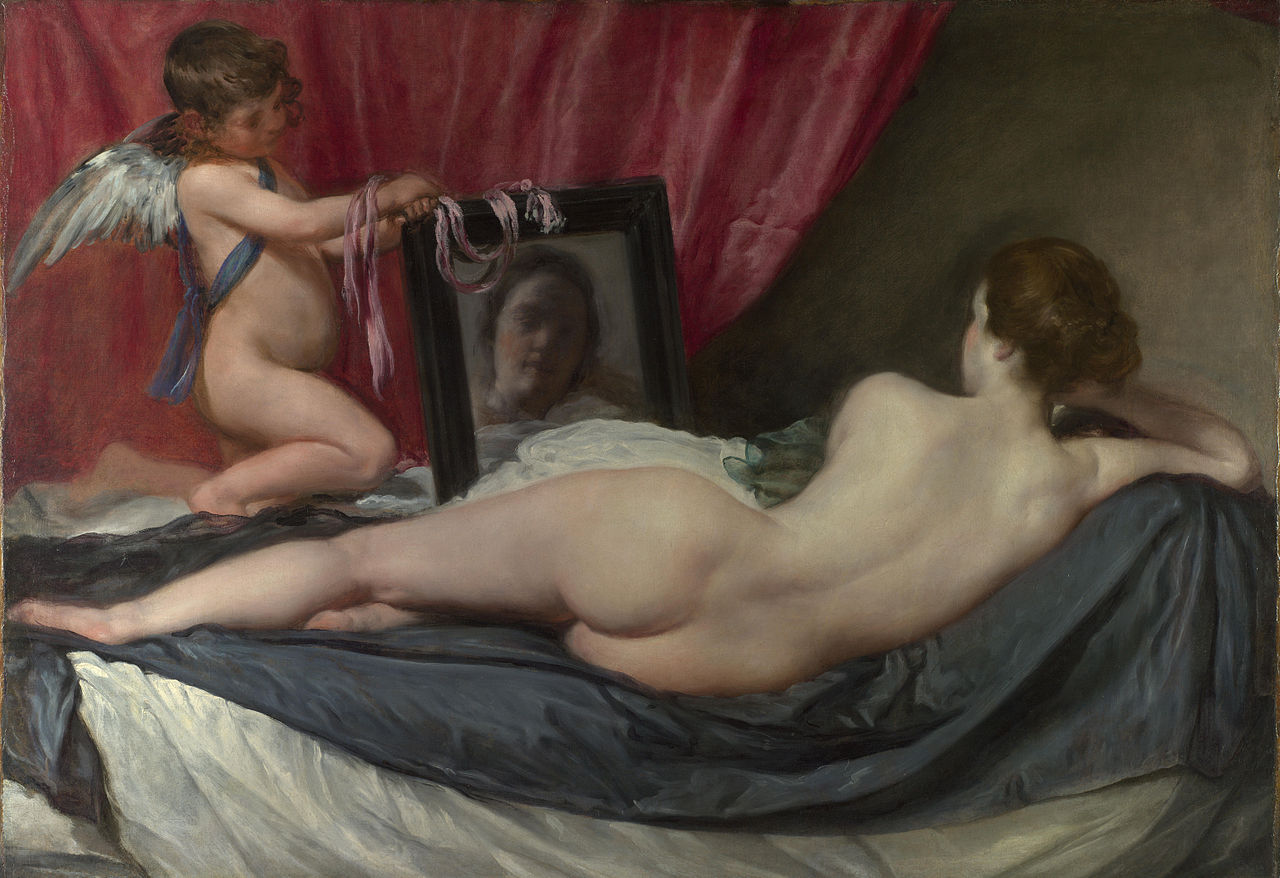
Diego Velazquez - The Rokeby Venus - The National Gallery London

Some of my favourites of his are the Rokeby Venus, The Spinners, Mars, God of War and the Three Musicians. He was admired greatly by Impressionist French painter Édouard Manet, who called him the “painter of painters”.

In addition to his royal portrait commissions, Velázquez was the king’s curator of the royal art collection in the 1640-50’s. He became known as a great connoisseur of European art and was responsible for the curation of works by Titian, Rubens and Raphael, which can still be seen in the Prado today.

Velázquez met Rubens during the Flemish master’s six month diplomatic trip to Madrid in 1628 and escorted him to El Escorial to view a collection of Titians. I can only surmise that they felt a mutual respect for each others talents!
Pablo Picasso, 58 recreations of Las Meninas.

Pablo Picasso, 58 recreations of Las Meninas.

Strangely his work only became known outside of Spain in the 19th century, but his influence on Western Art was considerable. Picasso recreated Las Meninas in 58 variations in 1957.  Salvador Dali and Francis Bacon both created works based on notable paintings by Velázquez. John Singer Sargent and Goya both referenced Las Meninas.

From Wikipedia:

Las Meninas has long been recognised as one of the most important paintings in Western art history. The Baroque painter Luca Giordano said that it represents the “theology of painting” and in 1827 president of the R.A. Sir Thomas Lawrence described the work in a letter to his successor David Wilkie as “the true philosophy of the art”. More recently, it has been described as “Velázquez’s supreme achievement, a highly self-conscious, calculated demonstration of what painting could achieve, and perhaps the most searching comment ever made on the possibilities of the easel painting”.

There is much information about the life and work of Velázquez, but for now I want to focus on the multi-layered visual information embedded in the astoundingly innovative Las Meninas, (The Maids of Honour).

This sizeable oil on canvas work measures 318 cm × 276 cm, and was painted only four years before Velázquez died at the age of 61 in 1660. If not quite his valediction, it is considered to be the apotheosis of his artistic achievement.

Las Meninas was painted in the ‘Pieza Principale’ of the apartments of the late Balthasar Charles’s in the palace of Alcázar, Madrid. After the death of Philip’s first child (by the deceased Queen Elisabeth), it was used as Velázquez’s studio.
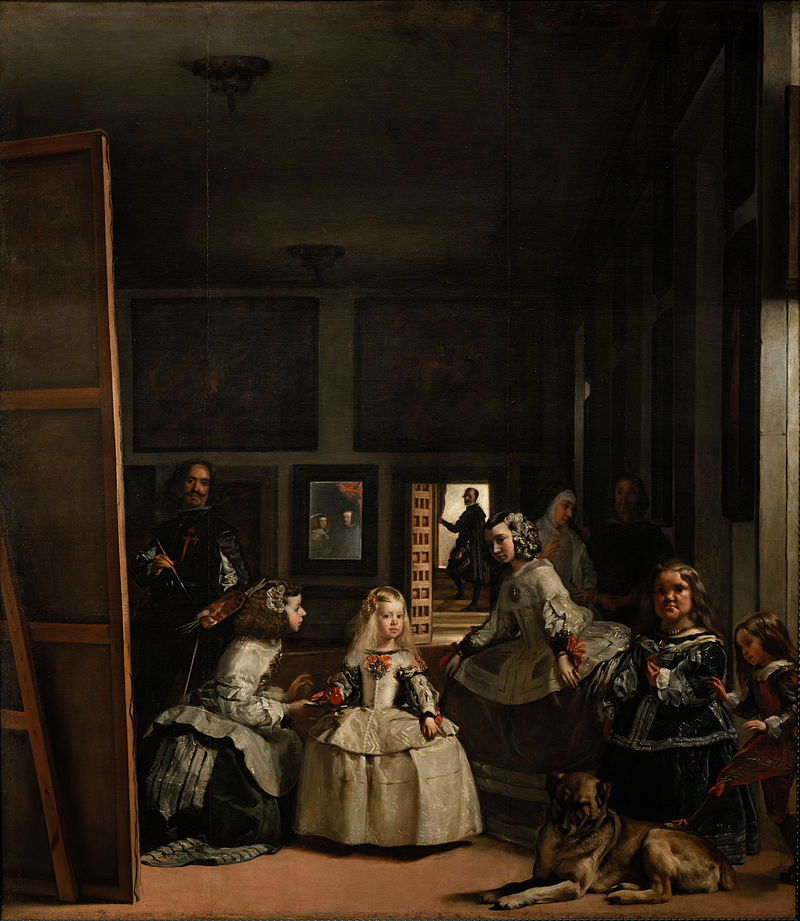
Diego_Velázquez - Las_Meninas

Who or what, is the real subject?

Upon first glance it could be thought that the subject matter is the only surviving child of Philip IV of Spain, a precocious looking Infanta Margarita Teresa. Either side of her are her two attentive ladies-in-waiting, one of whom appears to be offering her a small cup of cocoa. Incidentally, four hundred years ago the hot chocolate they drank contained mind-altering qualities!!

In her vicinity you can also see two dwarf court jesters, and behind them two courtiers (one of which is a nun), with the royal pooch obediently resting at their feet. The painter standing at the easel is Velázquez himself, (there could be no doubt about the origin of this masterpiece).

Then your eyes are drawn to the reflection of King Philip and Queen Mariana in the mirror at the back of the room. You wonder, are they visiting their daughter having her portrait painted, or is she visiting her parents having their picture painted, which is being reflected back to us from the tall canvas into the mirror? The imagery on the canvas he is painting can only be imagined.
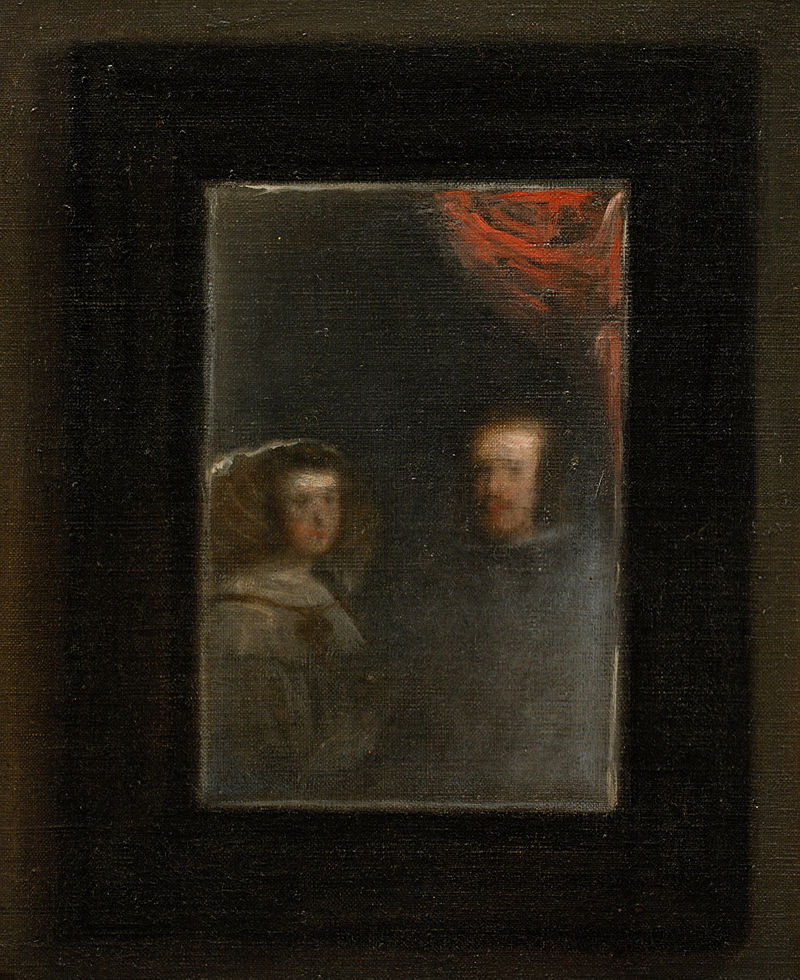
Las Meninas - Mirror detail of King Philip IV of Spain and Queen Mariana

Las Meninas – Mirror detail of King Philip IV of Spain and Queen Mariana

It could be interpreted that the royal couple are standing precisely where we, as the viewers, are witnessing the scene from, which is endowed with natural light from the front right window. We are standing in the king and queen’s shoes…

The air in the large, but to my sense, oppressive space between the figures and the high ceiling above them is almost tangible.

The painting is considered to have many vanishing points, apparently coinciding on the shadowy figure visible through the open door, posing somewhat menacingly on the staircase…

The presence of the man in the doorway, (Don José Nieto Velázquez), seems to signal that the king and queen (having posed for their portrait), will soon be leaving the room, but perhaps there is a darker theme being introduced to the viewer here? He could be a visual representation of a deeper meaning: mortality and death.

The heavily muted, dark background (perhaps one of the huge paintings hanging on the back wall is by Rubens?) is contrasted sharply by the bright light emanating from behind the figure on the stairs revealed by the open doorway, which draws your gaze away from the people in the foreground, giving the perspective of distance, of perhaps a journey into the unknown.

It seems to me a complex portrayal of the painter (and his elevated status among the royal household), a kind of snapshot of their life journey witnessed from the canvas and on the canvas!

No wonder it has been so celebrated over the years by artists, historians and art lovers alike. If you want to see it in real life you’ll need to travel to the painting’s permanent home in the Museo del Prado in Madrid.
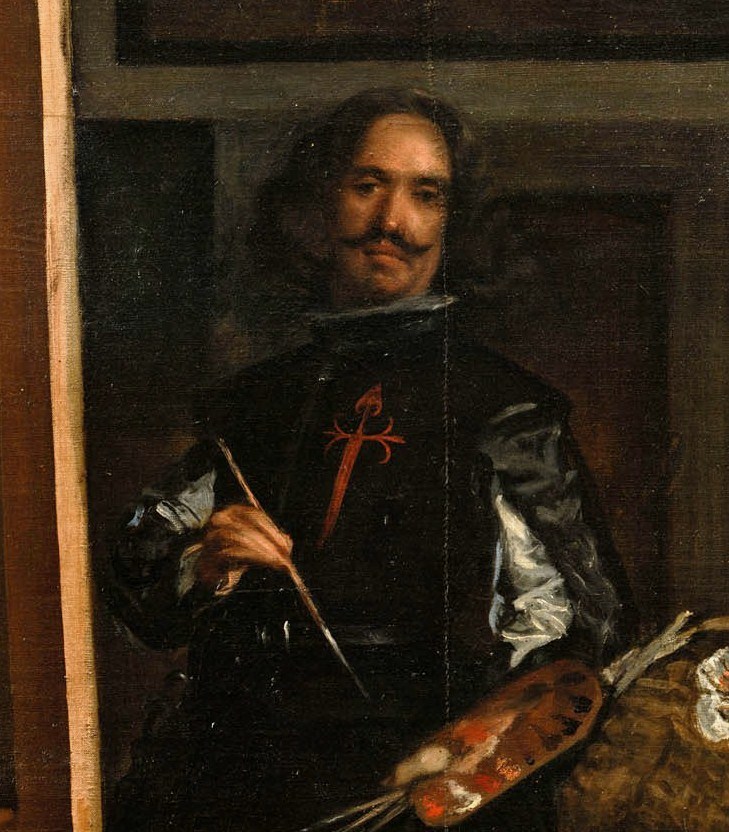
Velazquez was admitted into the Order of Santiago by royal decree in 1659, hence the red cross was added to his breast on the painting after the artist’s death.

For those in the UK with an interest there is also a smaller version of the painting (minus the royal reflection), preserved in the country house of Kingston Lacy in Dorset. Radiographs have shown it to be painted after the Madrid masterpiece. Some believe it could have been a copy by Velázquez’s student and son-in-law, Juan Bautista Martínez del Mazo (1612-1667).

The opening chapter of French philosopher Michael Foucault’s book, The Order of Things was devoted to an in-depth analysis of Las Meninas.

It seems somewhat sad to think that the most prominent figure in the painting, the young Infanta Margarita, was married off to her uncle Leopold I, Holy Roman Emperor in Vienna aged only 15, and by the time of her death in her early twenties she had endured 19 pregnancies, resulting in just four births, with only one of her babies surviving into adulthood.
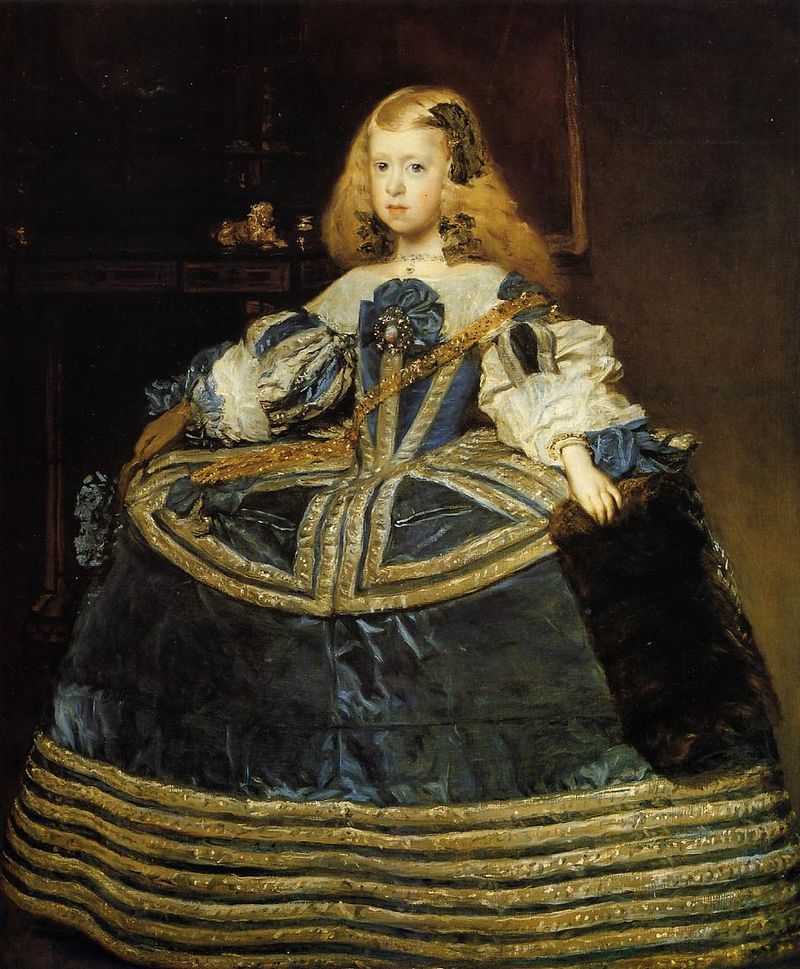
Velázquez - Infanta_Margarita aged 8 in a blue dress 1659

Growing up she was painted several times by Velázquez, probably the other most famous portrait is of her wearing a blue dress c. 1659 (now on display at the Kunsthistorisches Museum, Vienna.

Unlike its long gone painter and sitters, Las Meninas survived the Peninsula War, the Spanish Civil War, a precarious train journey back to Madrid and a fire that destroyed the palace in 1734. Luckily for us, monks rescued the scorched painting by throwing it out of the window! Sadly hundreds of paintings in the royal collection were lost in the disaster.

I’ll leave you with an interesting documentary about Diego Velázquez, his art and Las Meninas by the National Gallery:

The Great Virtuoso Violinists/Composers of the 17th Century: Corelli

“In Italy it was not only the human voice that began to sing. The principle that singing is breathing tool a firm hold on all the music. It is well known how the violin began to sing. Soon there came into being style, and forms, and a special kind of music-making, in which the chief figure was the soloist.” ~ Boris Asafyev

It wasn’t until I started doing a bit of research into this Italian baroque superstar that I began to realise just how talented, influential and virtuosic Corelli really was for his epoch.

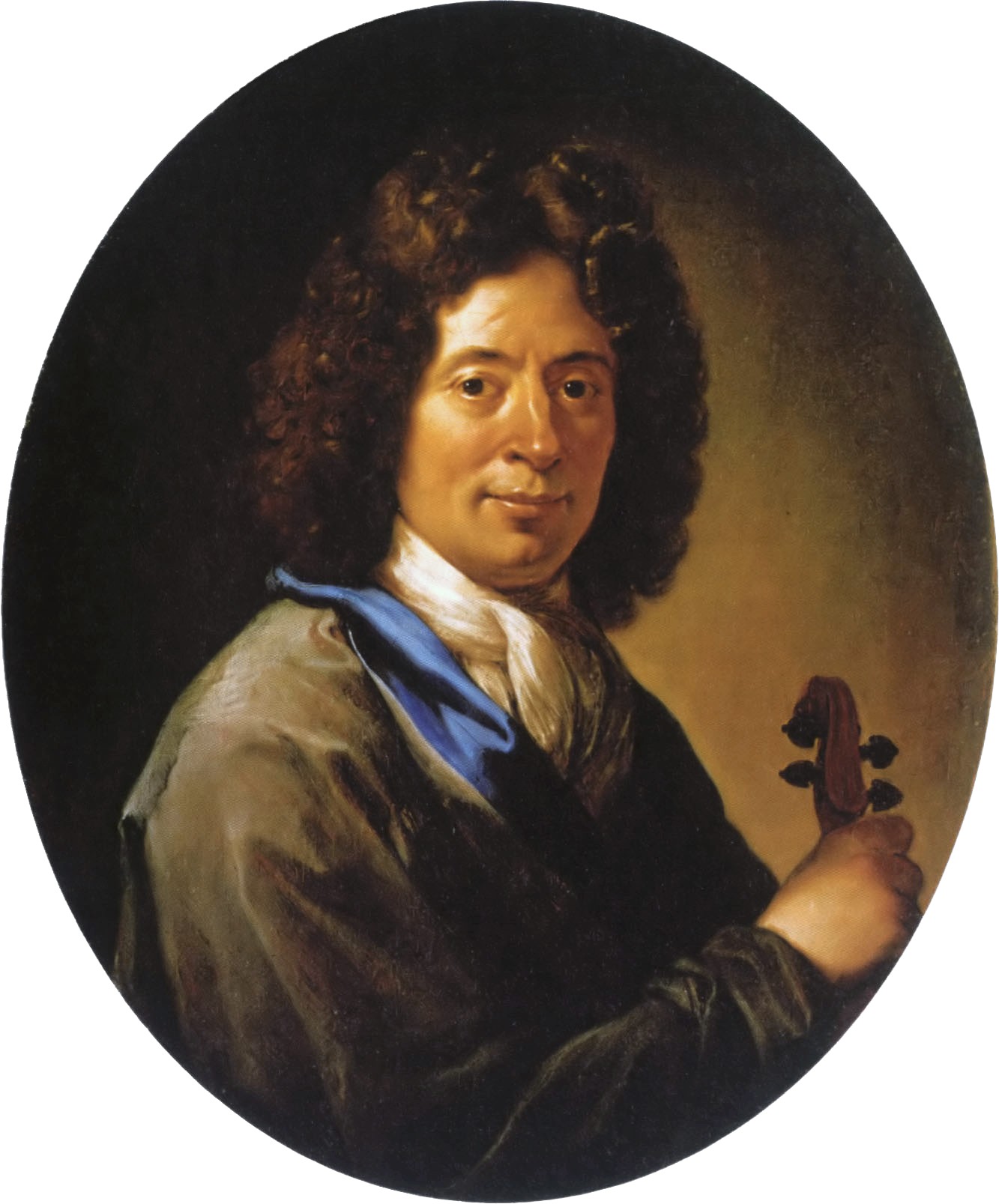
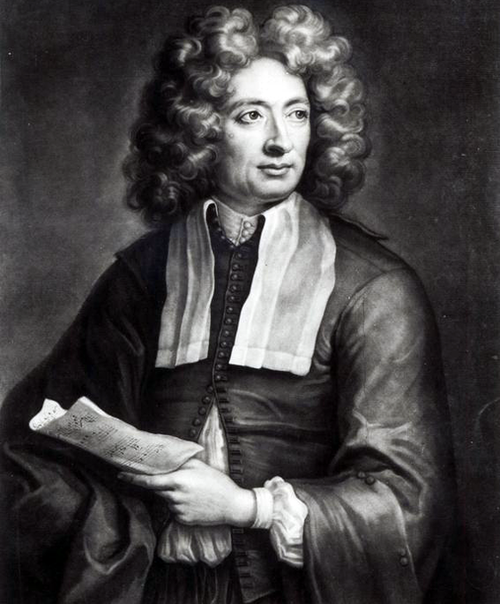
Arcangelo Corelli

I knew his work mainly through playing his violin sonata, La Folia – twenty three variations on a theme inspired by the folk music of the people. This final work (sonata number twelve in D minor), of his fifth opus encompasses all the violin techniques that had been used in the sonatas that came before it.

Here is my favourite interpretation of the work by violinist Henryk Szeryng. His technique is clean and smooth but infused with emotion and with baroque style embellishments, I just love it!

To understand the influence and relevance that Corelli still has in classical music, it helps to look back at the zeitgeist that Corelli lived and worked in, that blossoming period of creativity in music, the arts and human evolution – the Italian Renaissance – and the importance of Italian musicians in the development of the violin (and cello) in the 17th and 18th centuries.

Corelli paved the way for his equally brilliant violin and composer compatriots Antonio Vivaldi and Guiseppe Tartini (who I’ll write about in later posts).

Arcangelo Corelli: (17 February 1653 – 8 January 1713)

In the 17th Century the Italian city of Bologna was a flourishing centre for music and the arts, a place where musicians, composers and singers would meet, perform and discuss music, prompting its sobriquet “the Italian Athens” by Carlo Goldoni.

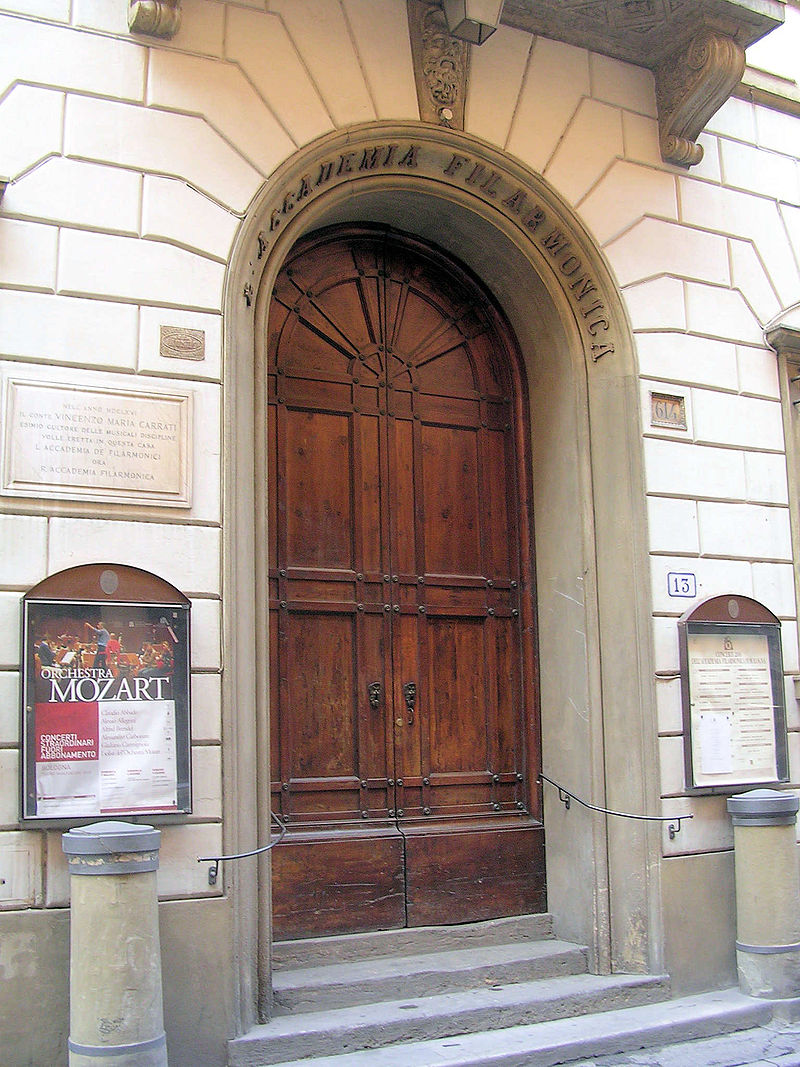
One of the societies in Bologna was the renowned Academia di Filarmonici, founded in 1666, of which Corelli was a member; he passed their admission audition at the tender age of seventeen.

Accademia_filarmonica Bologna

The youngest of five children, Corelli was raised by his mother as his father died shortly before his birth. It is thought that Corelli’s early music tuition was undertaken by a priest in the town of Faenza, When he was thirteen he moved to Bologna.

There can be no questioning Corelli’s violin pedagogy – he hailed from the Bologna Violin School, founded by Ercole Gaibara. Corelli signed his first three Trio Sonatas, “Arcangelo Corelli from Fusignano, called the Bolognese.” I don’t think it was because he liked pasta!

Portrait of Arcangelo Corelli by Jan Frans Douven.

Portrait of Arcangelo Corelli by Jan Frans Douven.

It is thought Corelli may have been an admirer of the French baroque composer, Jean-Baptiste Lully.

During the second half of the 17th century Corelli and his fellow musicians were not concerned with technical possibilities on the violin, they followed a more eloquent path, one with a desire to create deeper emotional content, to typify forms, to adhere to simplicity, clarity and lyricism, as well as bringing together chamber and sacred music in sonata and concerto forms and to explore instrumental music as a means of expression.

12 Concerti Grossi (Opus 6)

Corelli found fame through his violin sonatas and his twelve concerti grossi composed under opus 6. One of my all-time favourites is his Concerto Grosso number 8 in G minor, Fatto per la Notte di Natale (Christmas Concerto), performed here by the Accademia degli Astrusi and Federico Ferri in the Teatro Communale di Bologna:

In celebration of the 300th anniversary of the publication of the Opus 6 concertos in Amsterdam in 1714, Voices of Music recorded this delightful performance of Concerto Grosso number 4 in D Major on period instruments. It explodes with pure joy!

I just recently purchased the ABRSM violin Grade 8 music listing with some scores for the 2016 – 19 syllabus, and one of the pieces on List A is Corelli’s Violin Sonata No. 5 in G minor, Opus 5, specifically the Adagio and Vivace. I might just choose this as one of my three exam pieces. Here is the sonata in its entirety:
Corelli moved to Rome in about 1675 living in the palace of Cardinal Ottoboni until his death. He founded and headed the Rome Violin School, gave violin lessons as well as continuing to compose and play in chapels himself. Two of his students were Francesco Geminiani and Pietro Locatelli, who became great violinists and composers in their own right.

Concerto Grosso No. 1 in D Major, Opus 6 played by the Philharmonia Baroque Orchestra under the baton of Nicholas McGegan:

Corelli’s Opus 6 concertos fall into two broad structural categories. The first stems from the Italian tradition of the sonata da chiesa, or “church” sonata, consisting of a series of movements in alternating tempi (slow and fast), often employing rich contrapuntal textures. In contrast, the sonata da camera, or “chamber” sonata, is assembled as a suite, featuring dances such as the allemande, corrente, sarabanda, gavotta, and giga in addition to instrumental preludes and intervening movements.

Transcriptions based on La Folia

The expressive theme of Corelli’s Folia (already an existing theme that he modified), was to be used later by composers Alexander Alabiev in his ballet The Magic Drum, Franz Liszt in his Spanish Rhapsody and Sergei Rachmaninoff in his Variations on a theme of Corelli.

The inimitable Cziffra:

A Russian affair with Ashkenazy:

Corelli the composer is inseparable from Corelli the performer. According to Corelli’s pupils and other contemporaries, his style of execution was distinguished by exceptional expressiveness and dignity. He could be lyrical, thoughtful and absorbed and at the same time animated, emotional, headlong.

By limiting the compass of the violin to three positions (2.5 octaves), roughly the equivalent of the human voice, and by limiting his bowing technique to the detache and legato strokes, Corelli strove to obtain a greater effect from the expressive means he used so sparingly. His use of polyphonic devices (two voices) and arpeggio bowing and bariole were rather daring for his time.  ~ Dr. Lev Ginsburg

A period instrumental arrangement of la Folia by baroque musician Jordi Savall and his ensemble:

Corelli’s music was published in six opera, each opus containing 12 compositions: Opus 1 (1681), 2 (1685), 3 (1689), and 4 (1694) are trio sonatas; Opus 5 (1700), solo sonatas for violin and continuo; and Opus 6 (1714), concerti grossi for string orchestra.

La Follia by Corelli

Corelli wrote forty-eight trio sonatas made up into four volumes, (Op. 1-4, the last of which appeared in 1694), twelve sonatas for violin and bass (Op.5 published in 1700) and twelve concerti grossi Op. 6 (which were published posthumously).

His legacy extended to the 18th century Italian violin school as well as providing inspiration to the baroque greats, George Frederick Händel and Johann Sebastian Bach. His music continues to influence modern composers, such as 20th century composer Michael Tippett, who wrote Fantasia Concertante on a Theme of Corelli:

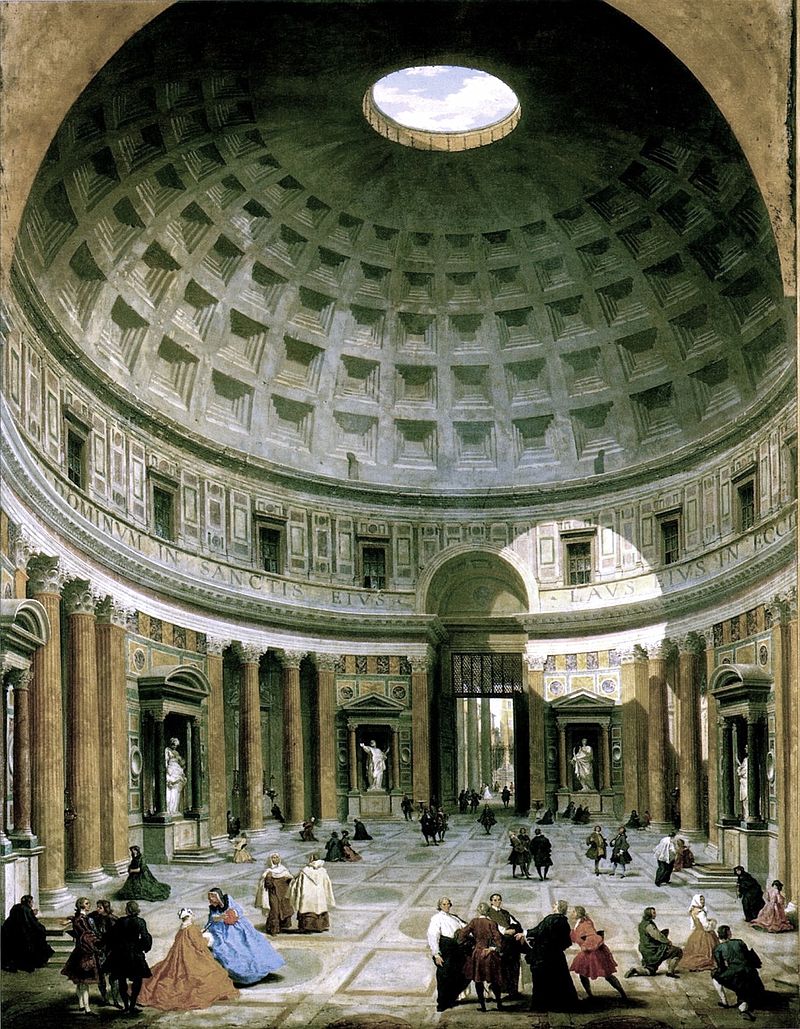
Corelli was laid to rest in the Pantheon in Rome, (as is the High Renaissance painter Raphael), having collected around 150 fine works of art by the likes of Trevisani, Onofri and Dughet, as well as many fine violins by the time of his death.

Interior of the Pantheon by Giovanni Paolo Panini.

Interior of the Pantheon by Giovanni Paolo Panini.

The Purcell Quartet playing Sonata da Camera, Op. 4 No. 9 in B-Flat Major:

12 Violin Sonatas Opus 5, brought to vivid life by Arthur Grumiaux:

“If you take a violin, you can make it sound 50 different ways. Not just pizzicato and played by the bow, but ponticello, and harmonics, and tremolos. If you take an oboe and play it, there’s about one way you can make it sound: like an oboe.” ~ John Corigliano

A Weekend of History and Music at Warwick Castle

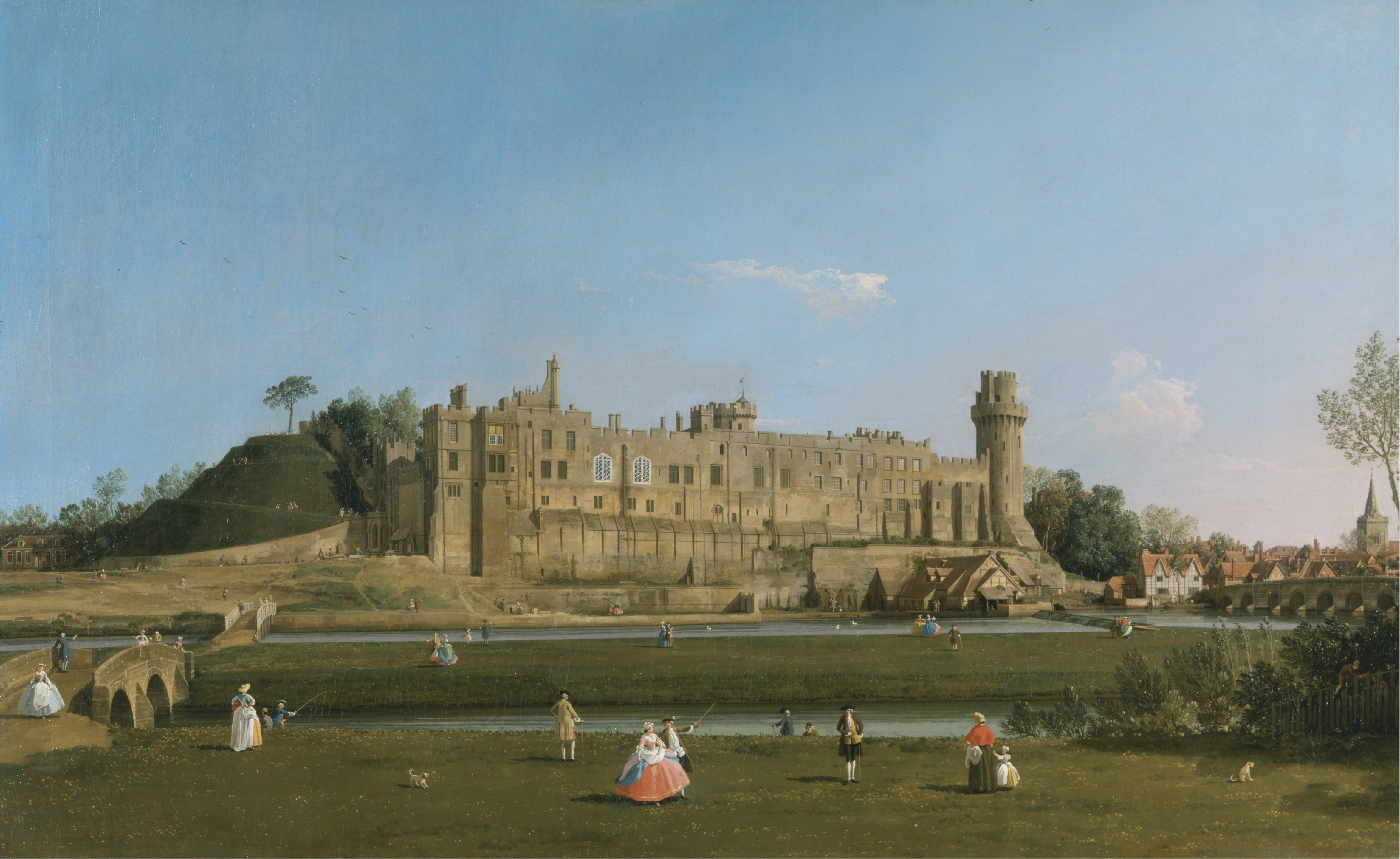
Visually, Warwick Castle has it all: towers, turrets and battlements, a drawbridge entrance over the castle ditch (which would have been filled with sewage rather than water), dungeons, sumptuous living apartments and spectacular views. Historically, you can’t ask for more…

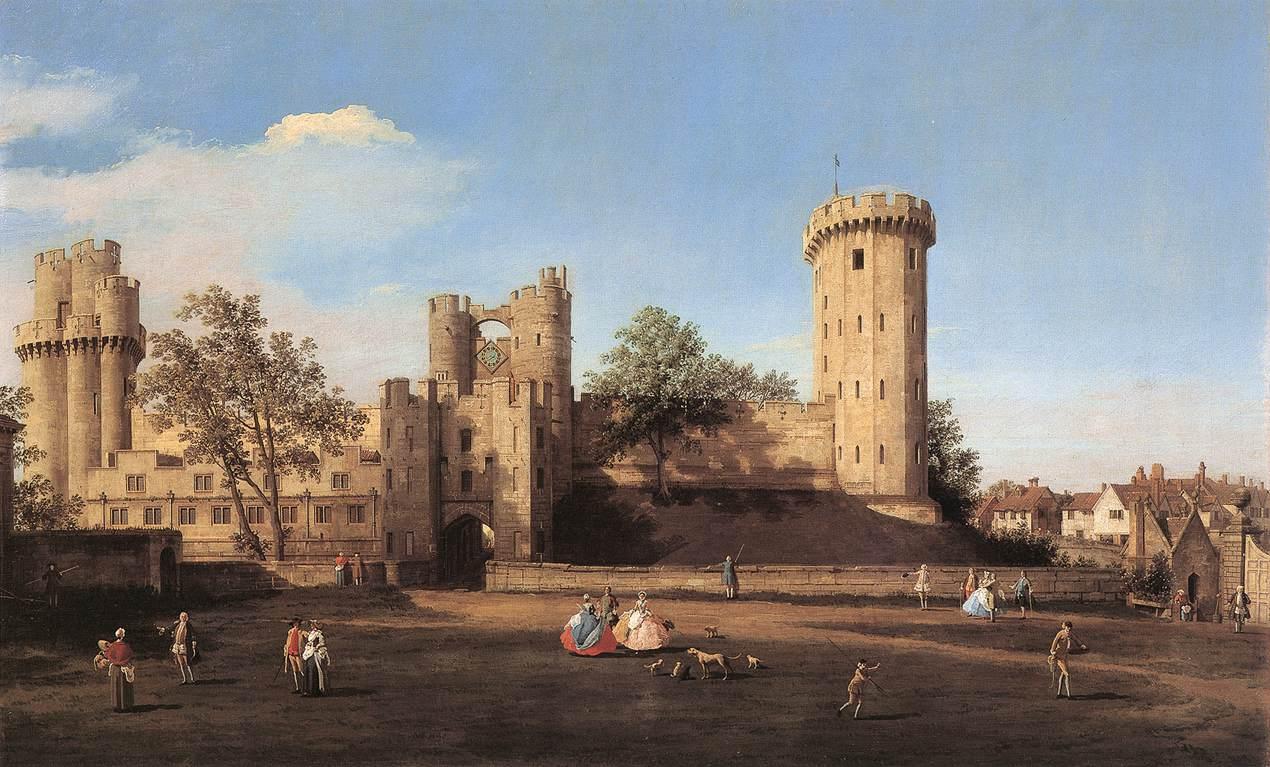
East front of Warwick castle by Canaletto c. 1752

East front of Warwick castle by Canaletto c. 1752

History

The very first settlement at Warwick Castle was constructed under the rule of Princess Ethelfleda in 914 AD after the Danish invasion. One can only imagine the grim conditions our Anglo-Saxon ancestors had to contend with.  The natural mound at Warwick provided the perfect setting for this defensive garrison against the Vikings. The first true castle was built on the site at the behest of William the Conqueror in 1048, and since then it has been fortified, expanded and improved, providing shelter and protection for noble houses down through the centuries.

The new ‘Time Tower’ shows in great visual detail the entire ancient and amazing history of Warwick Castle.

Throughout its colourful 1100 years of history Warwick Castle attained its zenith of power and prestige during the tenure of Richard Neville, husband of Anne de Beauchamp, who was the daughter of Richard de Beauchamp, the 13th Earl of Warwick.

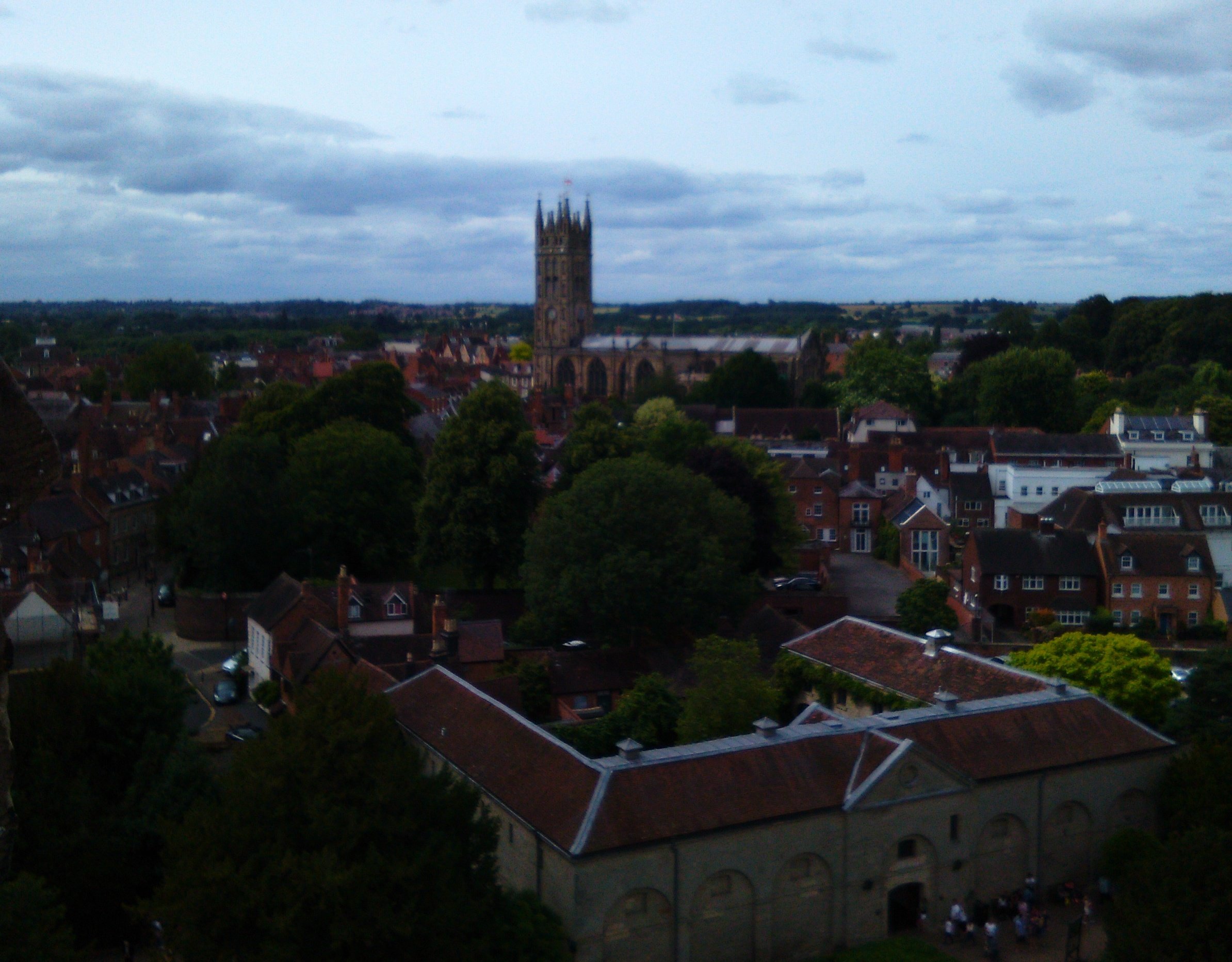
Richard de Beauchamp was one of the wealthiest men in Medieval England – worth around 34 billion pounds in today’s money – he occupied a position of power as Captain of Calais and England’s lay representative at the Council of Constance. He was active on behalf of Henry V in the Hundred Years War, when he captured and ransomed many prisoners, as well as overseeing the trial and execution of Joan of Arc in Rouen in 1431. He is buried beneath a lavish brass effigy in St. Mary’s Church, which is clearly visible from the castle.

View of St. Mary's Church Warwick from Guy's Tower.

View of St. Mary’s Church Warwick from Guy’s Tower.

His son-in-law, Richard Neville, was bestowed with the title 16th Earl of Warwick by King Henry VI in 1450. At this point in time the quest for power became truly complex and Machiavellian, when Henry VI’s reign came under threat of civil war from the Yorkist faction. Due to his family connections Neville supported the Yorkists, thus Richard Neville, aka ‘The Kingmaker’, had the power to depose the Lancastrian King Henry VI and back his rival cousin, the Yorkist Edward IV in what was known as the ‘War of the Roses’. After Henry VI was captured in 1455 at the battle of St Albans, as a reward for his support, Neville was granted a seat of power by the Yorkist king.

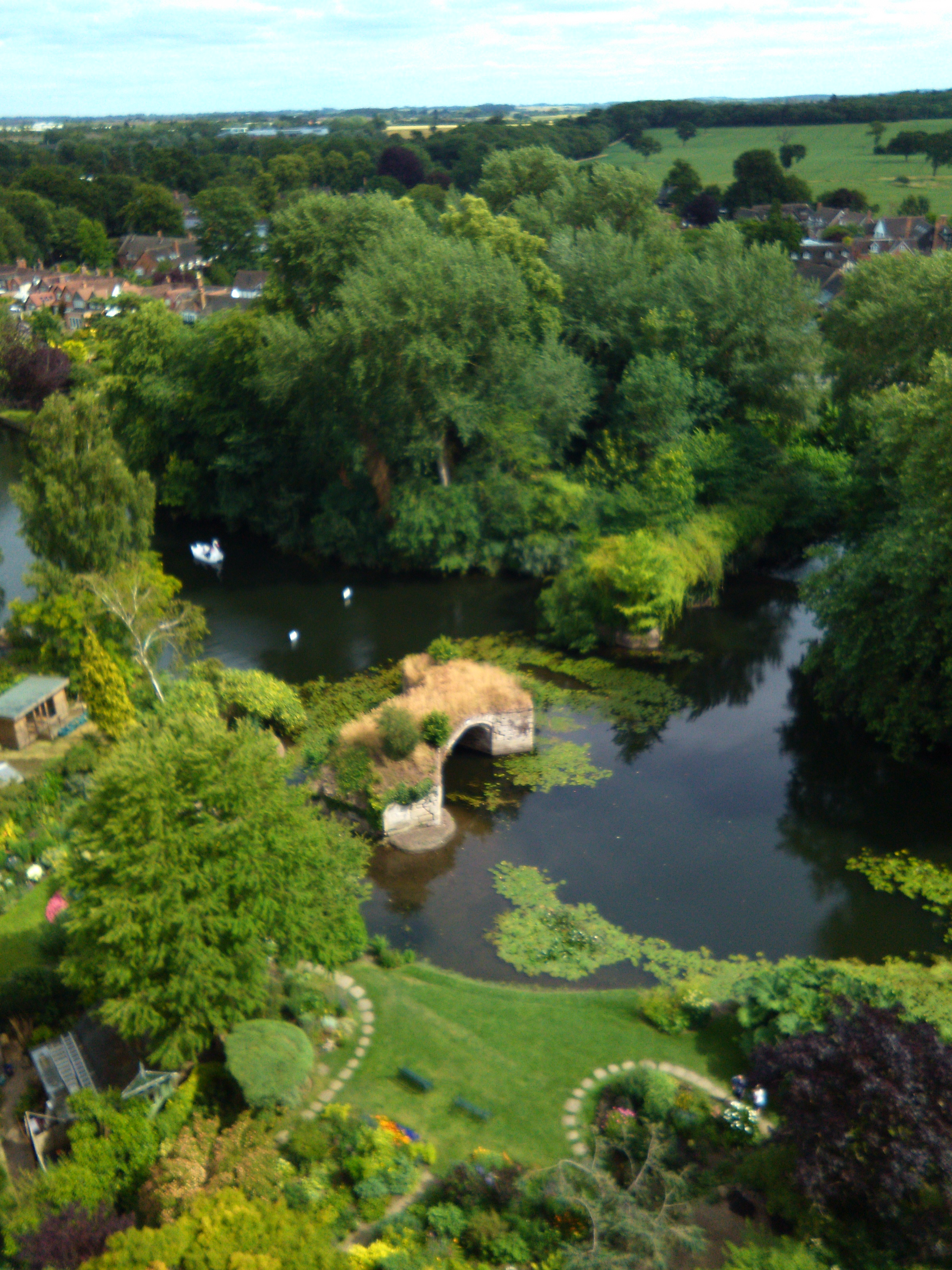
Looking down at the ruined bridge  on the River Avon from Cesar's Tower.

Looking down at the ruined bridge on the River Avon from Cesar’s Tower. In Canaletto’s paintings this bridge is still intact!

All was not smelling of roses for the ‘Kingmaker’ however, because Edward IV later married Elizabeth Woodville and Warwick’s influenced waned. He then plotted against Edward IV with his brother, the Duke of Clarence, raised an army, captured Edward and temporarily imprisoned him in Cesar’s Tower. Warwick then fled to France, having completely ditched his Yorkist alliances and later returned with an army to restore the imprisoned Henry VI to the throne. The ‘Kingmaker’ fought his last battle against Edward’s Yorkist and Burgundian forces in 1471, when he was killed at the Battle of Barnet.

His daughters Isabel and Anne were married to Edward IV’s brothers, George Duke of Clarence and Richard Duke of Gloucester respectively. Richard and his wife Anne Neville took ownership of Warwick Castle in 1478. After the mysterious murder of Edward’s sons, (the Princes in the tower), he became King Richard III in 1483. He commissioned the construction of the Bear and Clarence Towers. The Bear Tower has a pit which kept a bear for the cruel sport of bear baiting during festive tournaments. After Richard III’s untimely death at the Battle of Bosworth in 1485 the Bear and Clarence Towers were unfinished, remaining at the height visitors still see today.

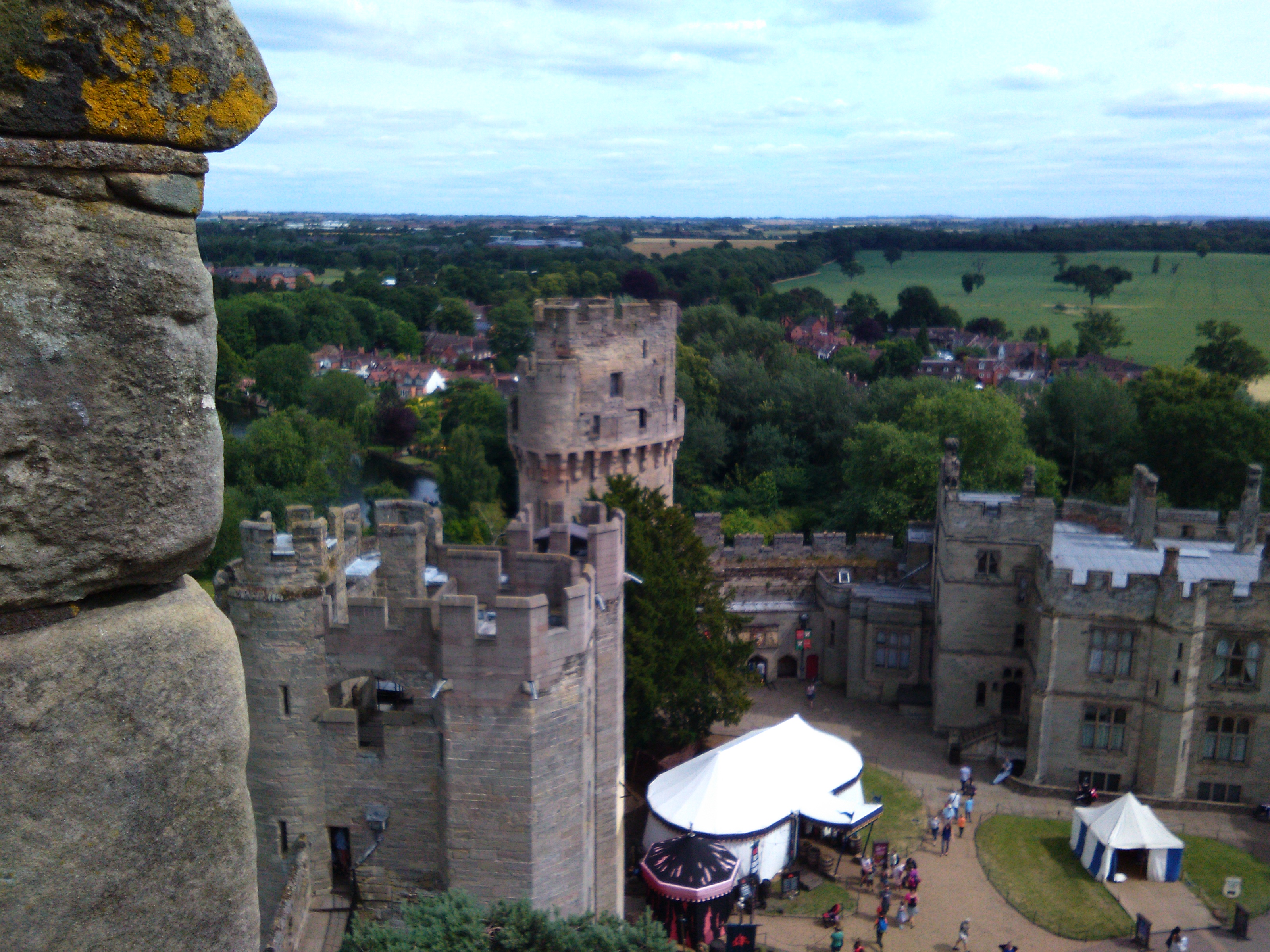
View of Cesar's Tower from Guy's Tower.

View of Cesar’s Tower from Guy’s Tower.

The new Tudor dynasty didn’t want to be associated with Warwick Castle and it fell into ruin over the following 118 years. It wasn’t until the rule of King James I of England, when it was gifted to the Calvinist Sir Fulke Greville, 1st Baron Brooke in 1604 for his services as treasurer of the navy, chancellor of the exchequer and commissioner to the Treasury, that Greville’s investment of £20,000 towards household improvements returned Warwick Castle to its former glory. During Greville’s ownership the castle was transformed from a military fortress into a stately home.

The Grevilles of Warwick Castle:

When the English Civil War broke out Robert Greville was aligned with the Parliamentarians. He placed guns atop the mound to defend Warwick Castle against Royalist invaders in 1643. This was the last siege that the castle endured. Originally the mound formed an important Norman fortification of the motte and bailey defensive system. The earliest stonework which replaced the Norman wooden walls dates to 1260.

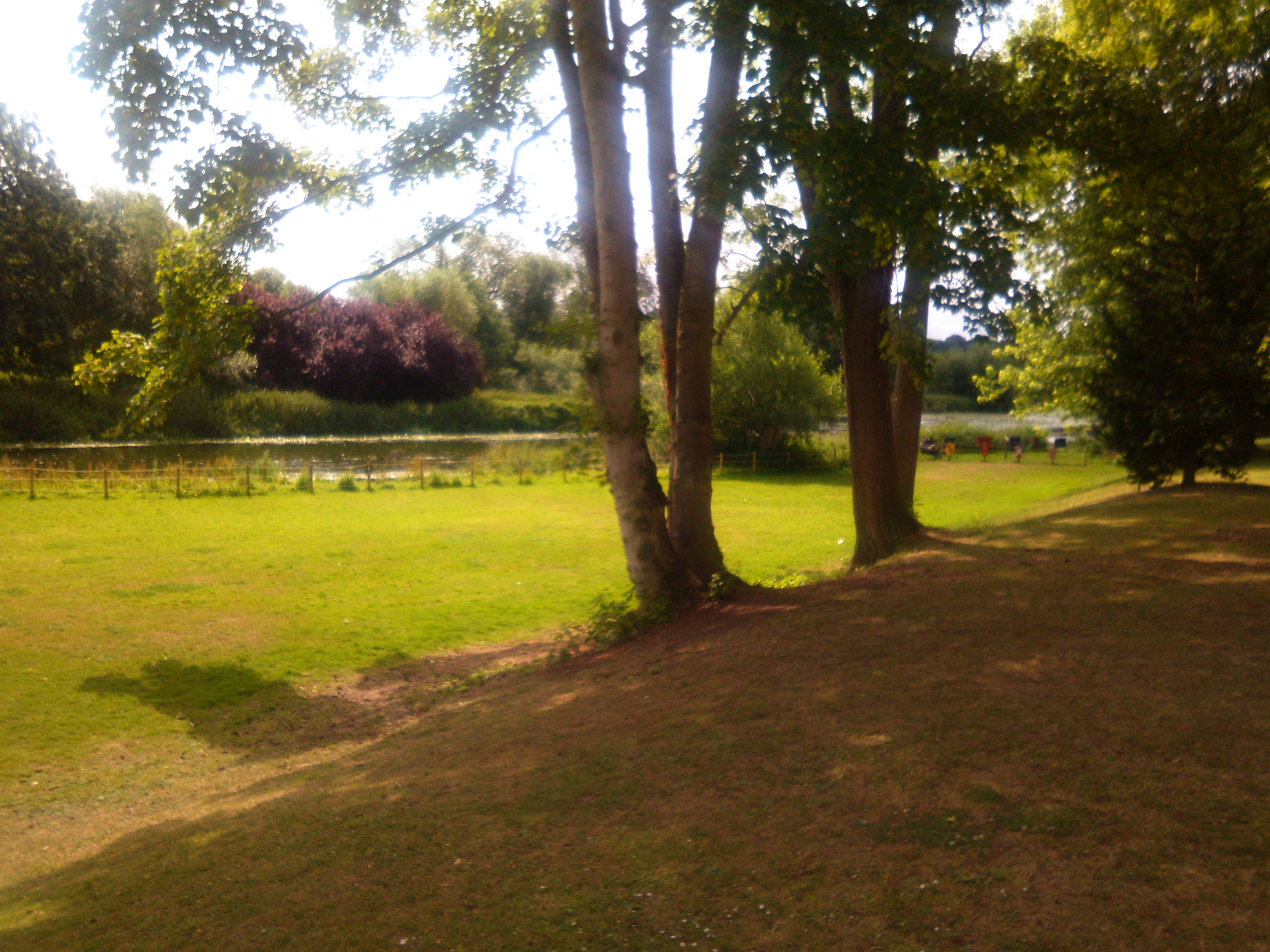
I climbed the mound with the girls, and the view from the top is stunning. Low placards indicate places on the landscape, pointing out the direction and distance of Oxford, The Cotswolds, Stratford-upon-Avon, the grounds landscaped by Capability Brown, the hunting lodge and the church of St. Mary. The grounds that visitors can stroll in today are a living work of art dating back from Capability Brown’s first independent commission for gardens, which helped to pave the way for his future career.

William found the dark, dank gaol which is lit only by a small shaft high on the wall and the even darker, tiny oubliette fearsome and fascinating in equal measure. If you weren’t ransomed you weren’t much use to the Beauchamp family and would have been left to rot in that airless, fetid environment.

IMG_20150711_153109

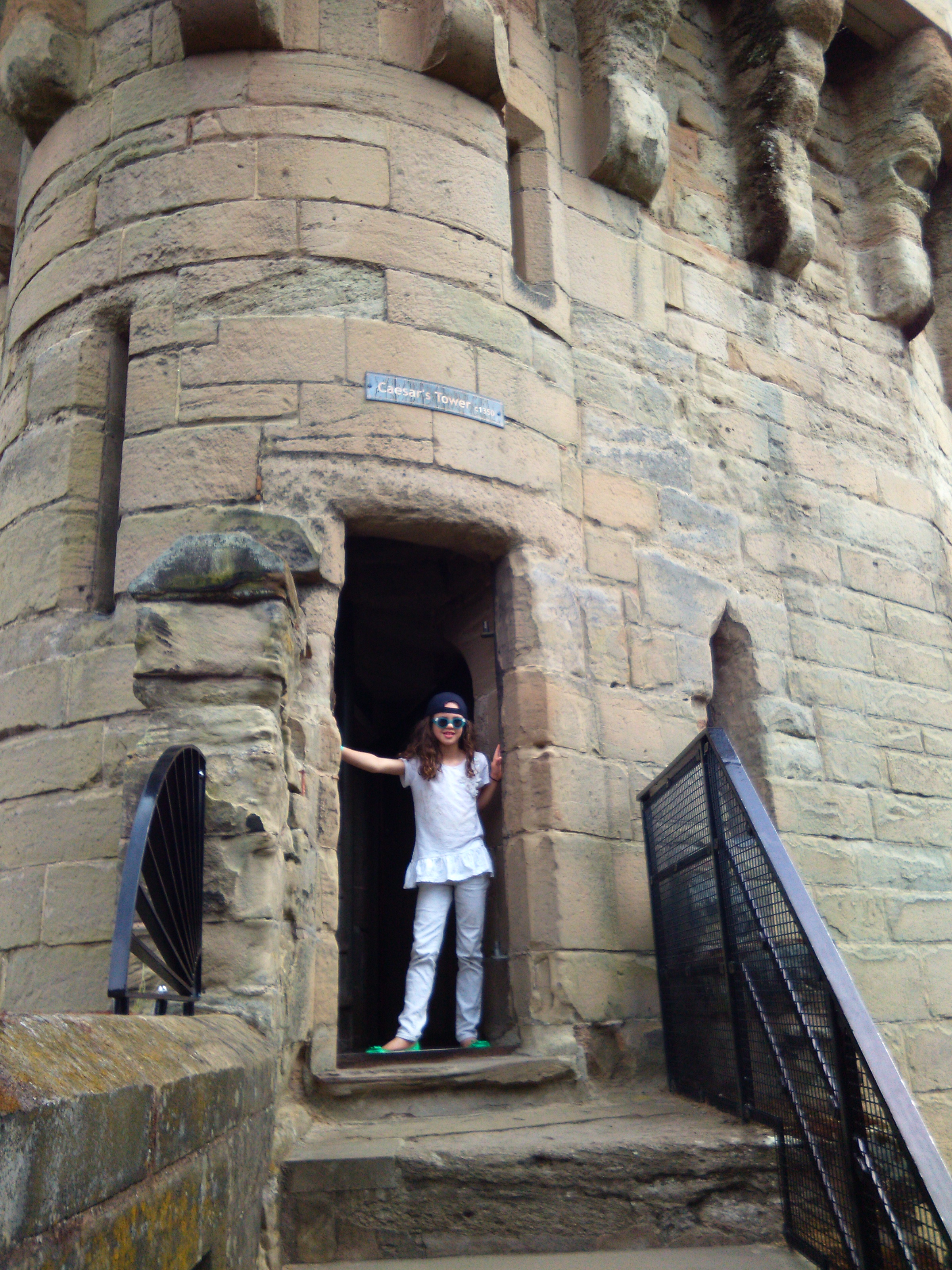
We peered under the grates of the pit in Bear Tower, scaled the ramparts, climbed to the top of Guy’s Tower, Cesar’s Tower and went round the Kingmaker displays in the oldest quarters of the castle.

A short documentary about the rich history of Warwick Castle:

Entertainment

There’s plenty to see and do both indoors and outdoors at Warwick. We spent two days there and on the Sunday when it poured with rain we saw the Great Hall and its historic armoury, as well as exploring the state apartments where Daisy, Countess of Warwick used to host her infamous ‘royal weekend’ parties in the late 19th Century.

The girls also enjoyed the special show and story in the Princess Tower!

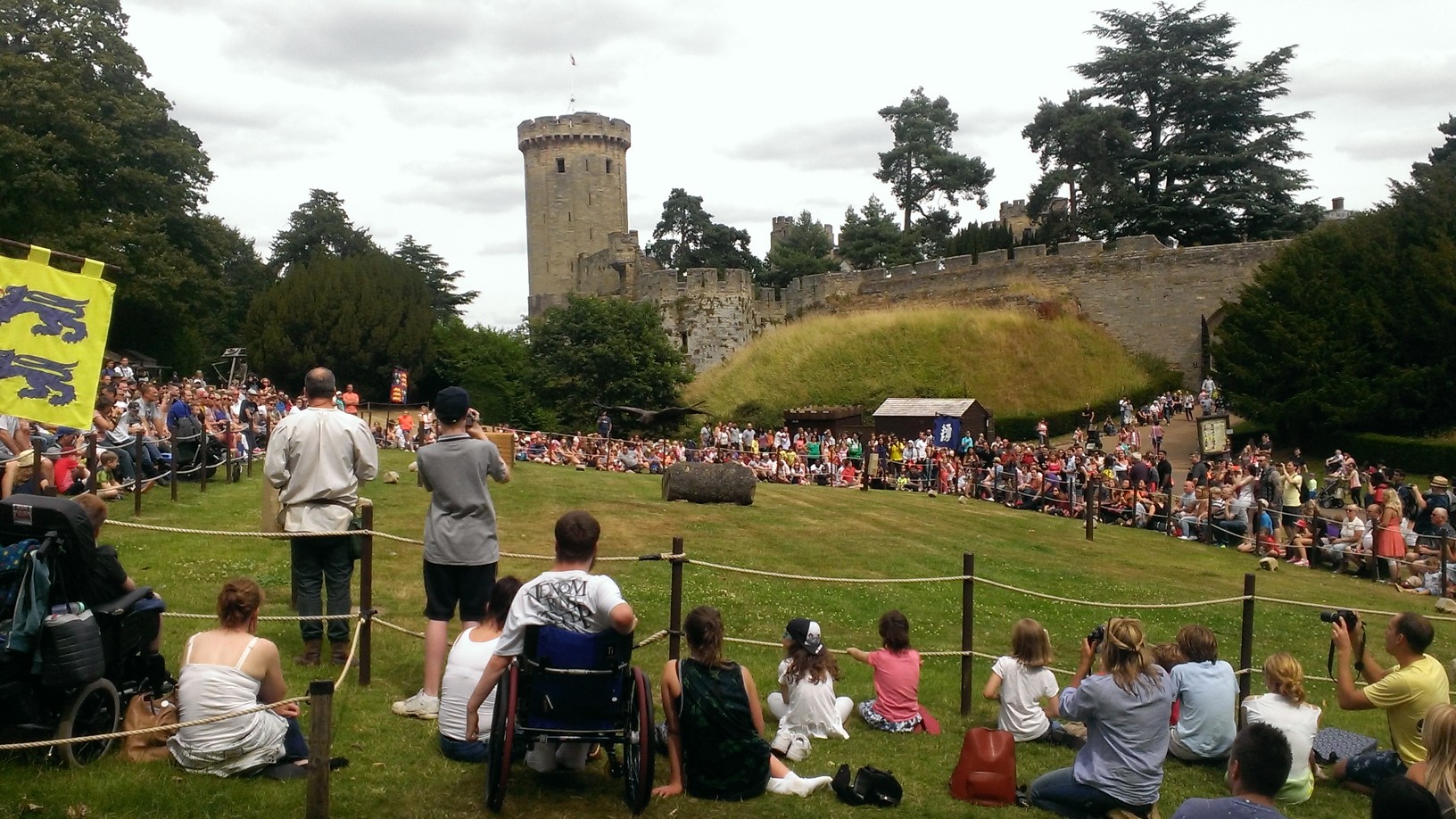
Outdoors there are regular displays of the castle’s birds of prey, consisting of eagles, owls and an Andean condor, the largest bird of prey in the world, whose aerodynamic skills are demonstrated with the guidance of the professional resident Falconer. The kids absolutely loved this show.

Andean Condor in flight - low just above the log.

Andean Condor in flight – low just above the log.

Unfortunately the Trebuchet wasn’t working when we visited, (I hope it wasn’t because of this recent incident), but usually the world’s largest modern working siege machine, which measures 18 metres high and weighs 30 tonnes, does a daily display of medieval warfare by slinging a fiery canon to demonstrate its effectiveness at catapulting all kinds of unsavoury ammunition at castles under siege.

There’s also a Horrible Histories show (which we missed), and the Great Joust tournament re-enacts the medieval sport of choice for brave knights throughout August.

The Longbow

We all enjoyed the humorous and knowledgeable demonstration by Lewis Copson, the bowman at Warwick, who took his audience back to the 14th Century and the incident that inspired the creation of the longbow by two Welsh men walking through the forest. One tripped on an elm branch, and losing his temper decided to snap the branch. When he couldn’t he decided to attach some string and fired a twig at his laughing companion. Elm was used successfully by the Welsh, and later adopted by the English and their armies, eventually evolving into Yew longbows that were known for their strength and flexibility.

A bowman in battle had to be able to fire a few hundred yards, and have the strength to pull back 125 lbs of draw weight. The Warwick bowman’s Cariadus (Welsh for beloved) had a draw weight of 75 lb, the most he could physically pull and (he was no slouch).  The command to put the arrow in, pull back and fire was knock, draw, loose.

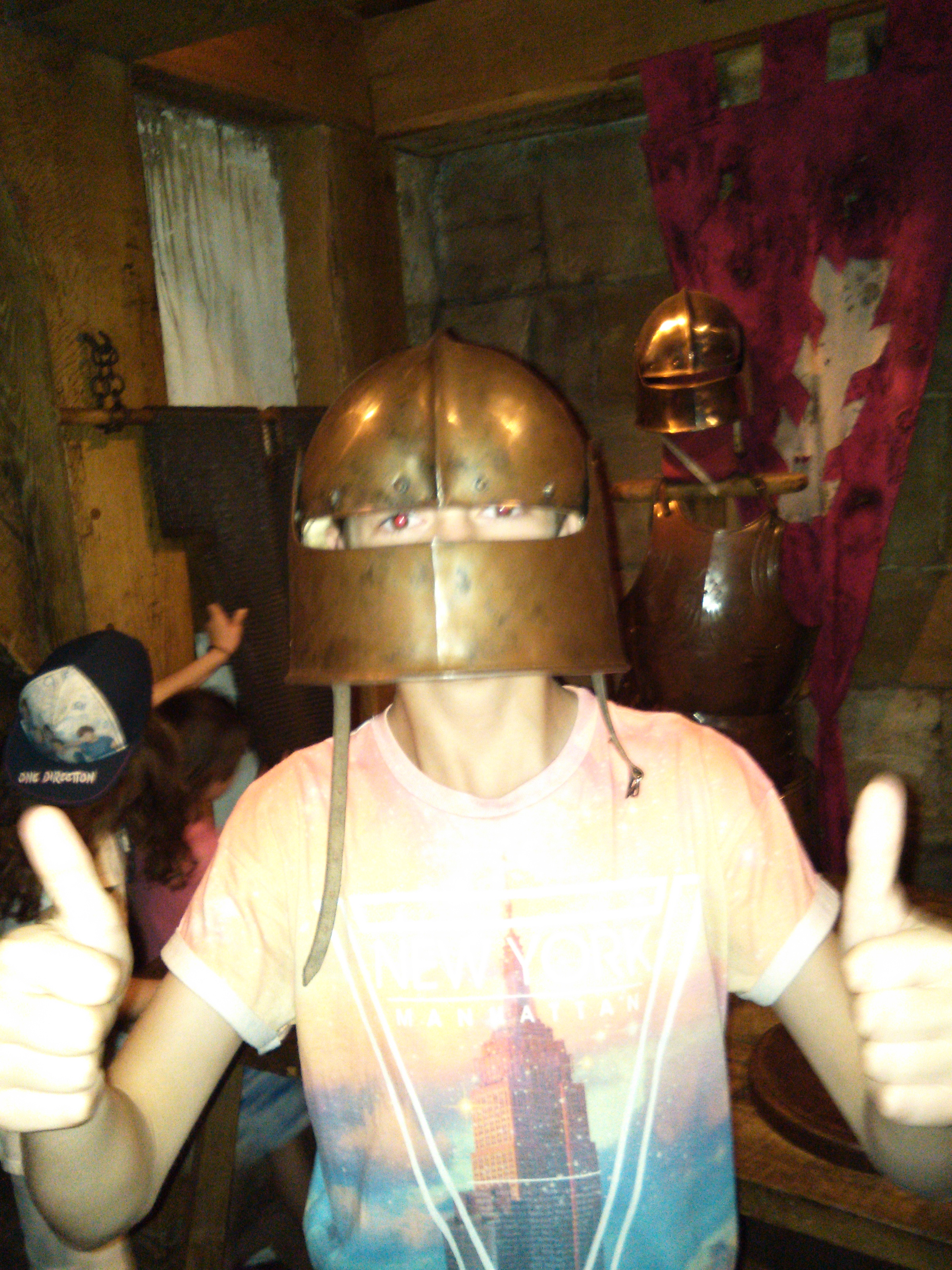
A would-be 'Kingmaker'!

A would-be ‘Kingmaker’!

In medieval England boys from the age of six would practice after church and before the pub on Sunday. Their bones hadn’t yet fully developed and fused, which meant that they developed oversized shoulders from pulling back over the years, and grew up with one side slightly higher and beefier!!

It was the bowmans’ expertise (along with bad weather and freezing mud) that meant the French were defeated at Agincourt in 1415. We also learnt that to test his bow was correctly strung the bowman would curl his fist, put his thumb up and place it in the curve of the wood. If there was a small gap between the end of his thumb and the string that was good. Hence the origination of the thumbs up sign to indicate that all is well!

Canaletto

Under the stewardship of the first Earl of Warwick, Francis Greville (who inherited the estate in 1727), Warwick Castle was ushered into the age of enlightenment and transformed into a civilised country house. He built a new state dining room, commissioned Lancelot ‘Capabiltiy Brown’ to landscape the gardens and paid Canaletto the sum of £58 to paint five informal landscape scenes of the castle.

South front of Warwick Castle by Canaletto c. 1749

South front of Warwick Castle by Canaletto c. 1749

The next three generations of house Greville: George, Henry and George spent a fortune on works of art collected from their travels in Europe, amassing one of the largest private collections of art in the world, containing paintings by Van Dyck, Rubens and Rembandt.

Glamping

IMG_20150712_110156When staying at Warwick Castle why not try glamorous camping?!

We had a two day pass to the castle and an overnight stay in a King’s Tent, with full English breakfast in the big banqueting tent. These posh tents are right at the southern end of the grounds, and ours overlooked the River Avon.

William and I even managed to play a game of chess. It would have been wonderfully peaceful had it not been for the heavy machinery that arrived at 5.30am on Sunday morning to take down the stage from the music performance the night before.

Sounds in the grounds

IMG_20150711_193020On Saturday night we were treated to a concert by the Royal Philharmonic Concert Orchestra with Lucy O’Byrne singing some lovely arias in between their orchestral pieces. It was a relaxed atmosphere, families had brought picnics and the Pageant Field was brimming with concert goers.

When they played Walton’s Spitfire Prelude and Fugue to commemorate the 75th anniversary of the Battle of Britain an ace pilot came zooming above us doing acrobatics in his spitfire.

Lucy O’Byrne singing Ebben Ne Andro Lontana at Warwick Castle:

At the end of the concert there was a firework display and we managed to get back to the tent just before the heavens opened.

IMG_20150711_215442

All in all a fun weekend of learning, exploration and culture.

Positive Psychology: The Science of Happiness

“Happiness is an intentional creation of the Self universe: I am happy. Of course, the self can believe in all sorts of appropriate reasons for making itself happy or unhappy, but the bottom line is that the Self decided.” ~ Harry Palmer

Close your eyes. Imagine, for a moment, what your ideal life would look like. You are living that life. How does that make you feel? What sensations does your body experience?

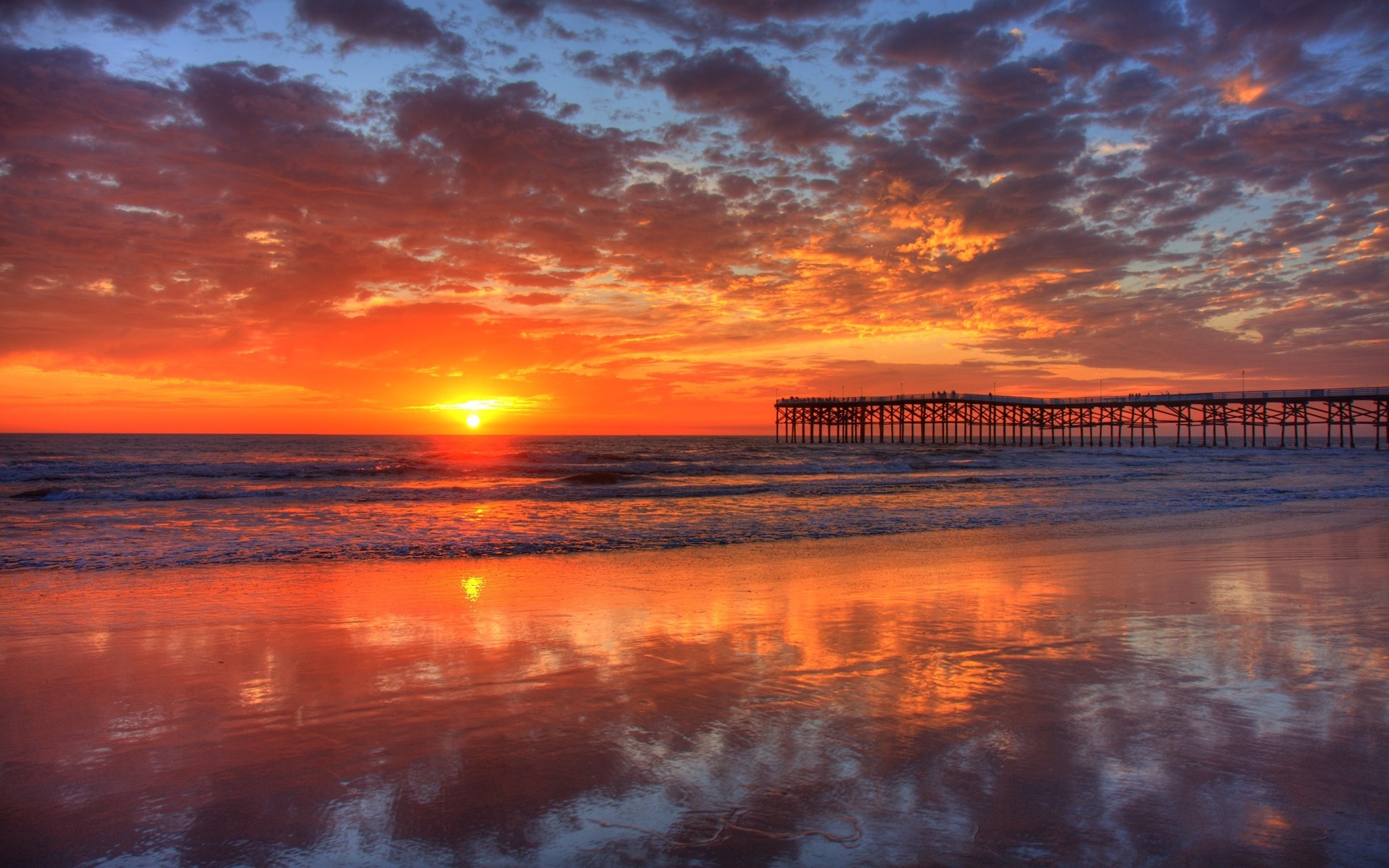
beautiful Pacific-beach,-sunset

We all have dreams that we want to manifest in our lives, otherwise breathing would feel like a rather pointless activity. Our innate creativity and thirst for adventure makes life interesting and fun.

You may have everything you want and desire and are now seeking to help others. Either way, those plans bring us happiness. The fact that we might not have those desired outcomes in our lives as yet can be uncomfortable, and that in itself can drive us on. We discover why we are here, what our talents are, and where we can use them, in other words: finding our place in the world.

I love the Vedanta wisdom on the science of happiness. Swami Sarvapriyananda talks about pleasure, engagement, meaning and the Atman (sat-chit-ananda):

No doubt you have heard the saying, “It’s not the destination that matters but the journey.” It’s who we become as the result of our travels that’s the real reward. Sure, we have successes along the way, as well as setbacks and challenges; nothing is ever handed to us on a plate. Problems, failure and suffering are all the training ground of the soul.

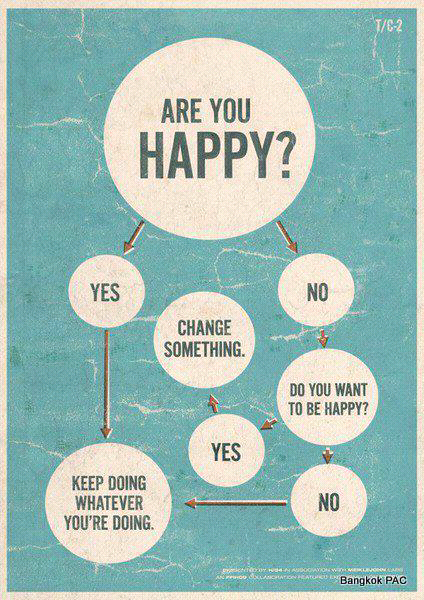
That elusive quality called ‘happiness’ is simply a state of being, a choice to think and act a certain way. We don’t get pulled down into our story, we somehow transcend it and use the hidden treasures from our life experience and transpose that into wisdom, love and compassion.

A fascinating talk by Harvard Professor Dan Gilbert about stumbling upon happiness:

Many people believe that when they are ‘successful’ then they will be happy. Sadly, many find they climb the ladder of success only to find that it was leaning against the wrong wall. Happiness in who you are and what you do in the present moment is vital to achieve whatever success means to you. Be it financial, good health, a happy family, giving back to society, peace of mind.

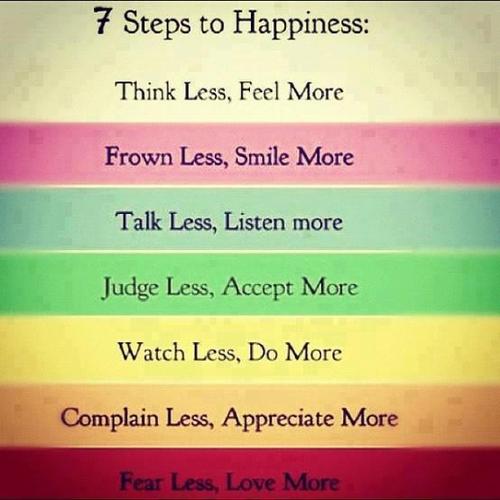
Quotes-On-Happiness

Acceptance of what is, whilst doing your best to steer your life where you want it to go seems to me to be the only way to live. Otherwise you are delaying life. If you are not happy with less, you certainly won’t be happy with more – not in the long run.

Delayed gratification isn’t a philosophy to aspire to when it applies to your happiness.

Dr. Tal Ben-Shahr is teaching Positive Psychology at Harvard University. There has been much research conducted into the physiological effects of living a happy life, concluding you are more likely to live longer and have better health, therefore leading a better quality of life.

Five ways to become happier today, by author and psychologist Tal Ben-Shahar:

I’ve come to the conclusion that happiness is an inner decision we make on a daily basis, regardless of outer circumstances. In fact, if anything, outer circumstances tend to reflect what’s going on in our internal representations and how we manifest our attitudes and beliefs.

Happiness-Quotes-32

When the going gets tough it’s hard not to slip into the ‘saboteur’ or ‘victim’ archetypes and therefore compound our misery. But once we have been there and got that T-Shirt, we develop an emotional awareness and tend not to fall into the same trap once a life lesson has been truly learnt.

“Each moment you are happy is a gift to the rest of the world.”  ~ Harry Palmer

I love that quote. Because when you are happy you are like a pebble breaking the surface of a limpid lake: your happiness causes waves to ripple outward in the form of a kind word or deed, thus your positive energy is transferred incrementally to your fellow human beings and the world.

There are days we choose not to be happy, after all, we are human. That’s okay; just don’t stay in that energy field very long. If your happiness always depends on outer circumstances then there will always be something to protect or lose, events that will happen that are out of your control.

happiness-quote

The only true thing we have control over is our mental outlook – our thoughts. And when life throws you a curve ball the challenge is not to get pulled down into the curve and out of our essential nature into judgement, hate, depression, blame and guilt.

“To a far great extent than common knowledge would lead anyone to believe, people’s happiness, health and success are not determined by the thoughts, ideas, and imaginings they have of themselves, but are determined by the ability to change these things. “ ~ Harry Palmer

Working on ourselves is probably the most important task we can ever undertake. This is not a selfish activity, because as we become happier and more fulfilled so we can help others to do the same.

Quotes-On-Happiness-And-Love

Our deepest fears are invisibility, being worthless, lack of importance, not being good enough, and annihilation. It helps to remember that the definition of fear is: False Evidence Appearing Real.

YOU MATTER.

This universal truth is demonstrated so artfully in Frank Capra’s 1946 classic movie, It’s A Wonderful Life, with Jimmy Stewart playing the despairing small-town businessman George Bailey, (in my humble opinion, the role he was born to play).

It’s Christmas Eve and George is on the brink of suicide, when he is visited by his guardian angel, Clarence Odbody, who shows him what the world would have been like if he had never been born.  This film is one of the most critically acclaimed films ever made, and was voted the most inspiring film of all time by the American Film Institute in 2006. This scene says it all. I’d like to be your Clarence, just for today!

One life touches many:

Just by being yourself, doing what makes you happy (as long as it’s not hurting others) and following your heart you can make a difference in the world.

“There was a time, a certain number of years ago, when a tiny blob of gelatin began to pulse with hidden potential. It was barely more than a speck of matter, about the thickness of a dollar bill, at the very threshold of human sight: any smaller and it would have been invisible to the naked eye.

Tough tiny, this insignificant little dot of matter (you could have fit about twenty of them on the head of a pin) contained chemical instructions that, if printed out, would have filled more than 500,000 pages; in fact, it was among the most organized, complex structures in the universe. Over the next nine months of slight edge compounding, this little blob of gelatin would blossom into about thirty trillion cells before being born into the open air…and letting out a wail as it took its first breath.

It would become you.”

~ Jeff Olson (The Slight Edge).

Until the next time, I wish you happiness and joy!

Experience Review: Tally Ho! An Afternoon on Horseback and Foot in Windsor Great Park

“No hour of life is wasted that is spent in the saddle.”  ~ Sir Winston Churchill

For Ruby’s sixth birthday I felt it was important for her to have an experience rather than more toys. She doesn’t have lots of toys, but she has enough. It would just be more to clutter up the house.

Instead, she had to wait until Saturday 4th July to have a two hour trek around Windsor Great Park with her sister.

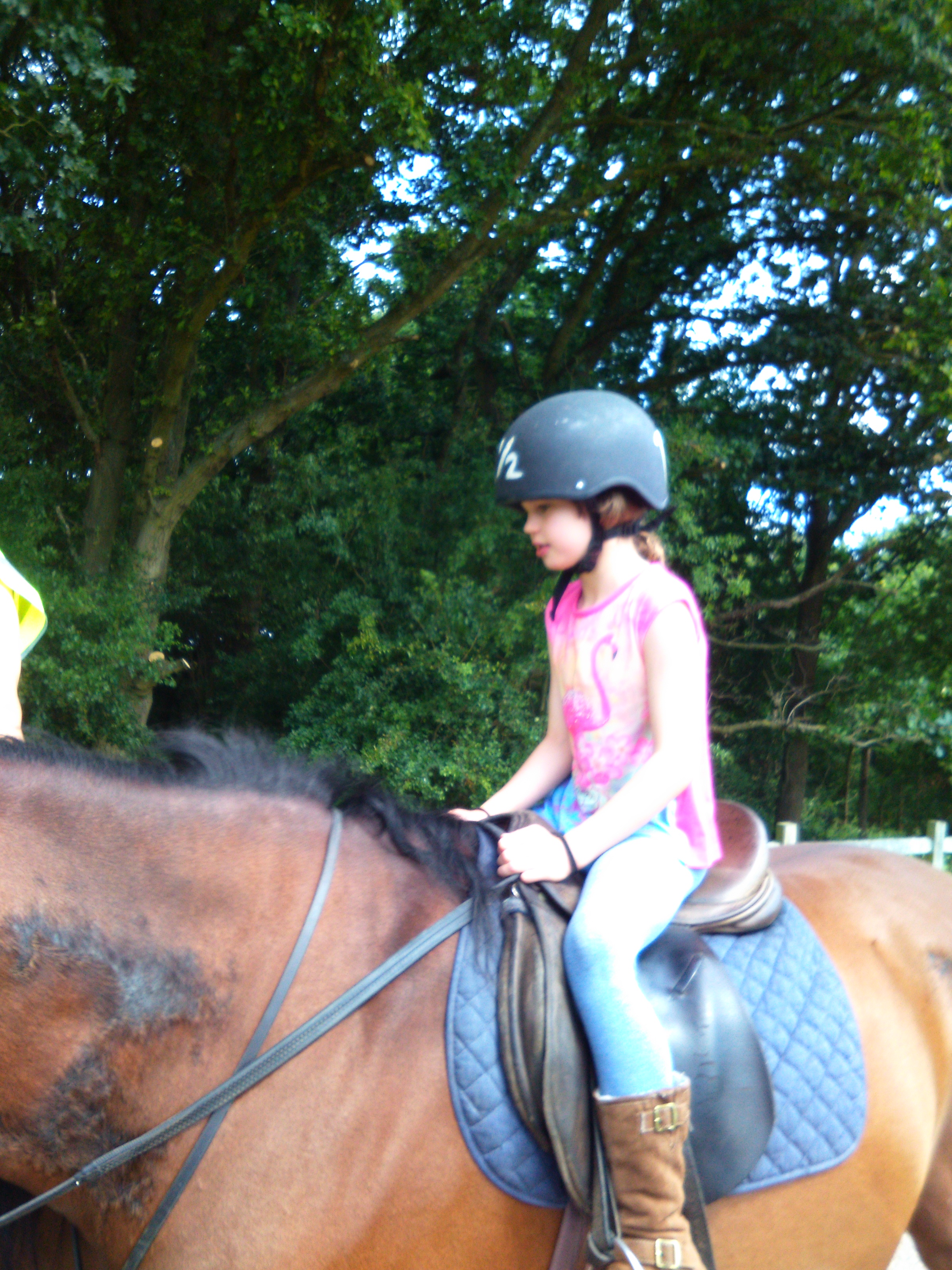
Ruby on Banjo

Ruby plays almost exclusively with her ponies and toy horses; you could say she is extremely enthusiastic about all things equestrian! Therefore, it was a no brainer to organise a riding experience for her.

Ruby back at the car park

Tally Ho! Stables was the obvious choice. I met Jenny Yung, the manager, at a recent Athena training, and what they offered sounded perfect for my girls. I wasn’t disappointed…

I couldn’t afford to ride with them, so that meant keeping up with the horses on foot, which was no walk in the park on such a hot day! Strenuous but fun, it was very rewarding to see my daughters having such a great time.

Emily on Curo

Ruby was a natural – as I knew she would be – and even though she is just six years old she acted like she was a confident, regular rider. Even Emily, my eldest, who is terrified of dogs and at best wary of horses, seemed to find her groove.

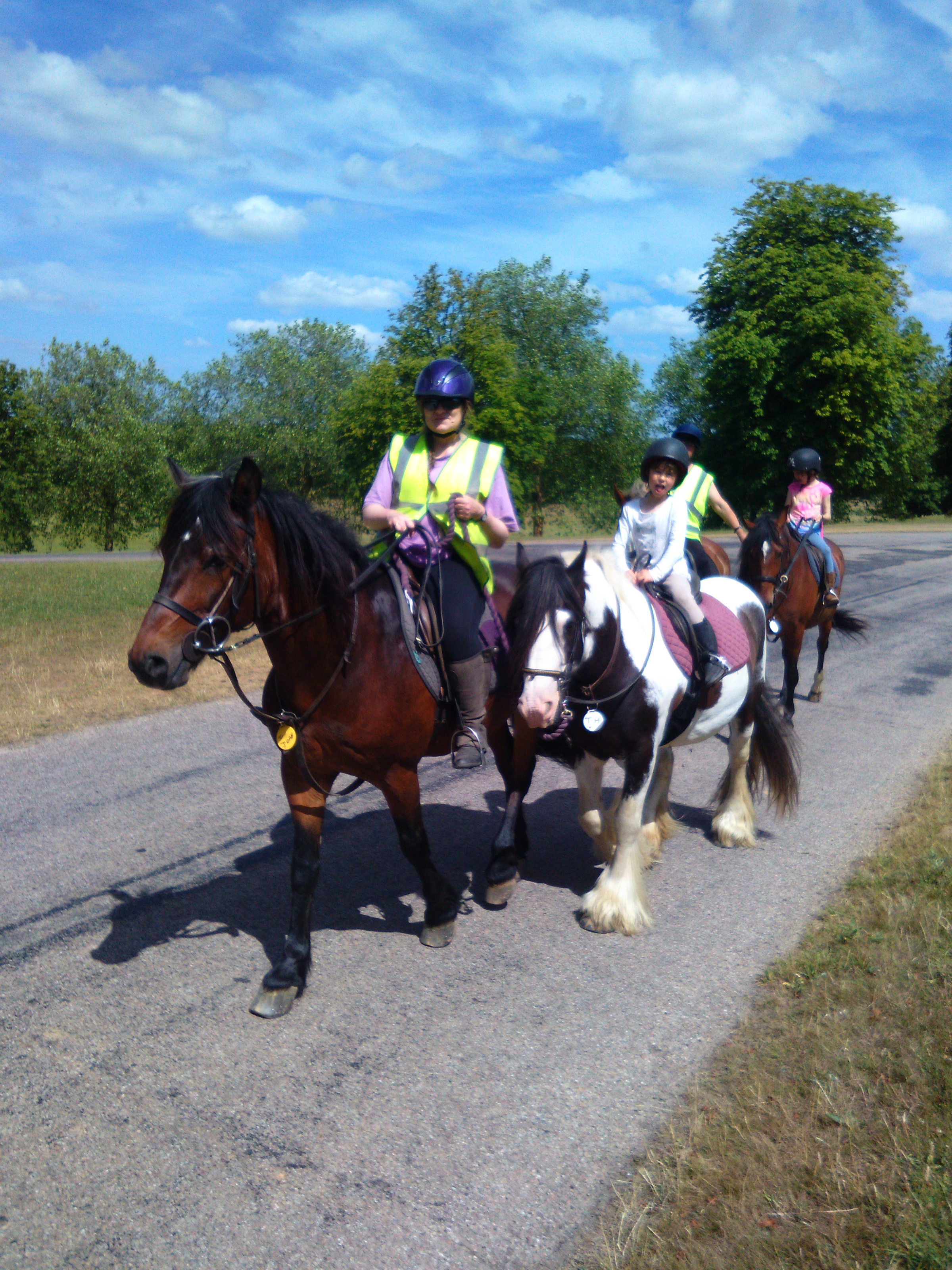
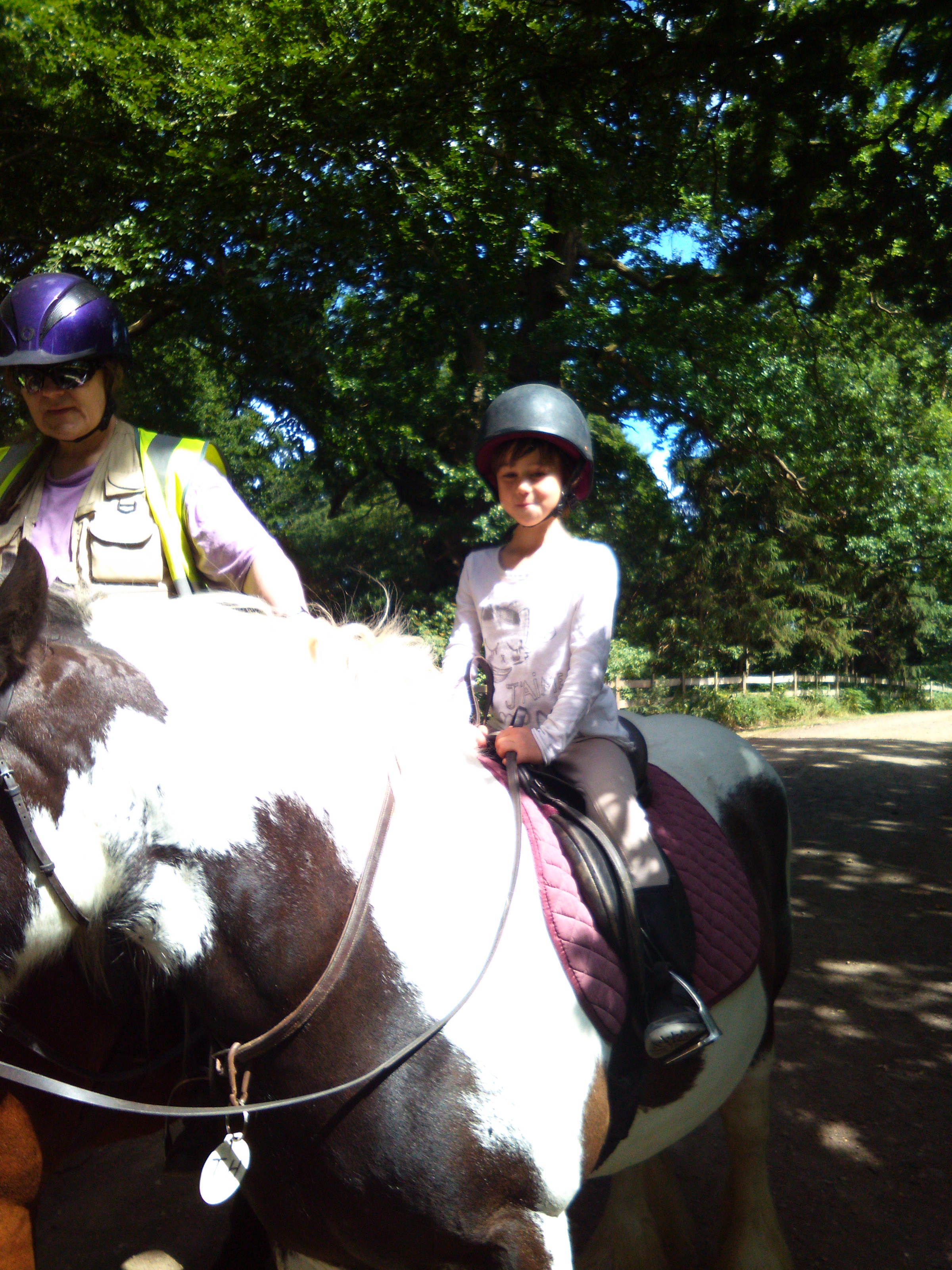
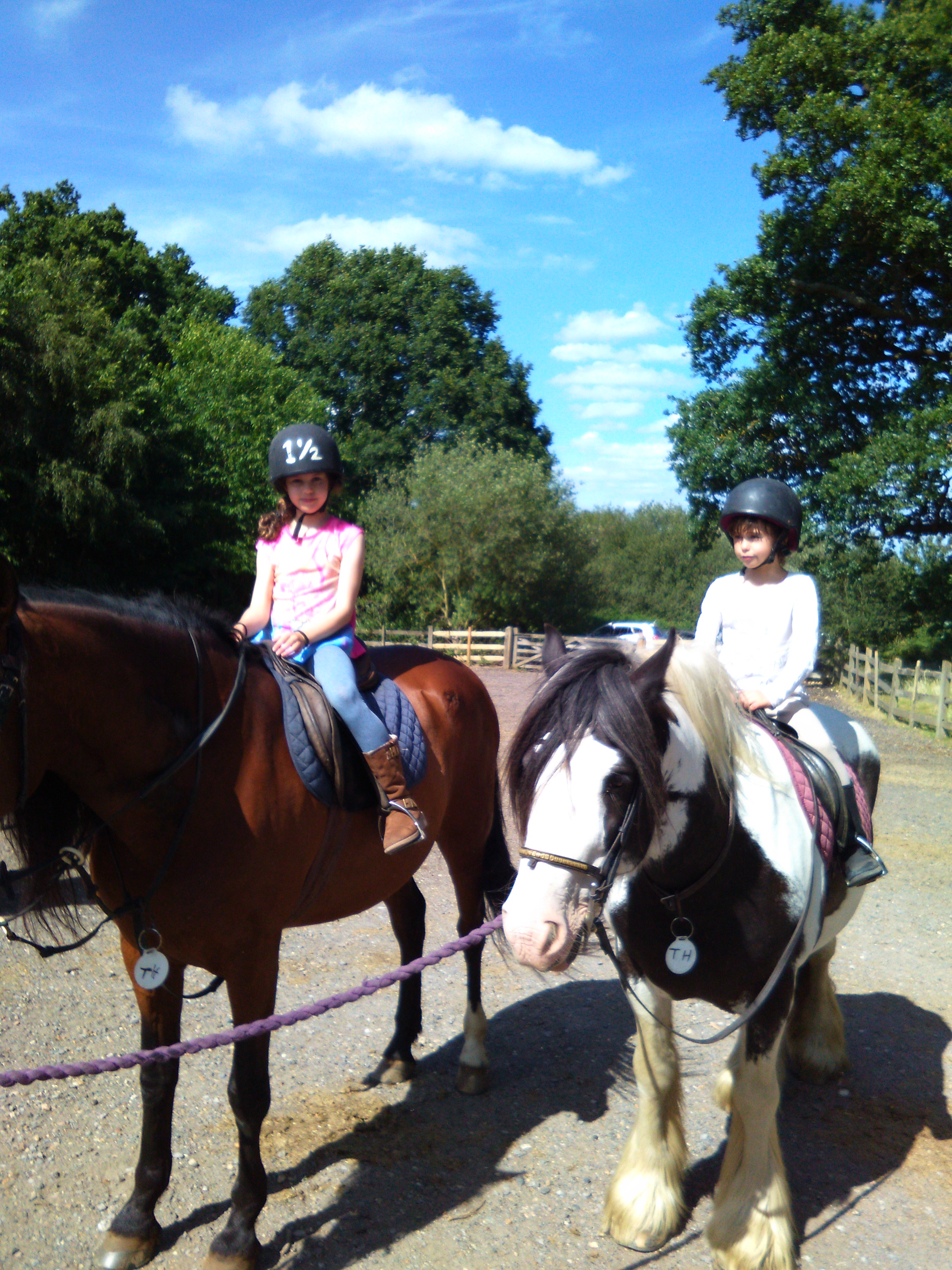
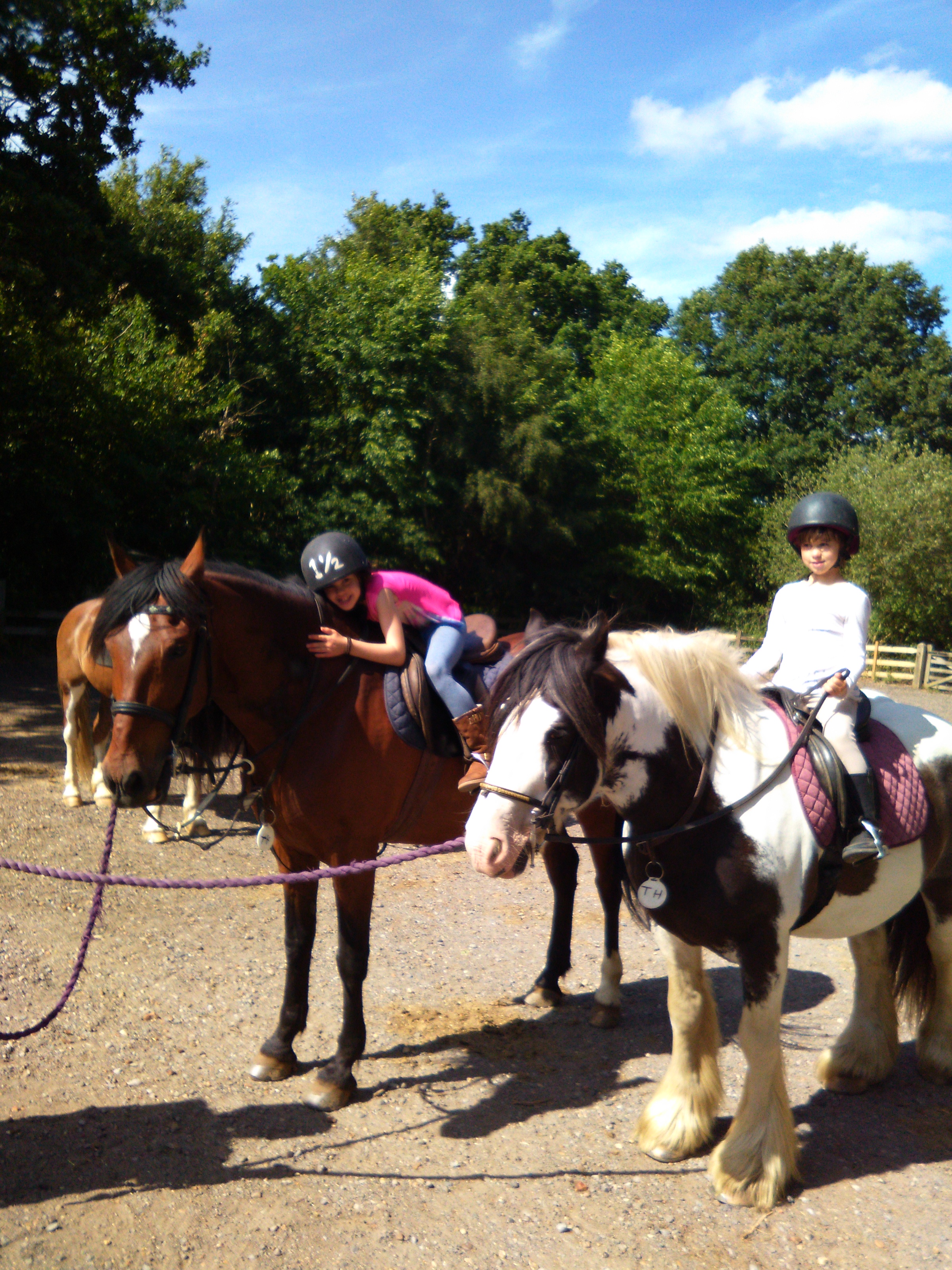
When we arrived the girls were introduced to their mounts: Ruby was on a gentle cob known as Banjo (who we were told was a bit of gypsy) and Emily’s ride was a beautiful Bay from Andalucia called Curo. Both horses were perfect for their riders.

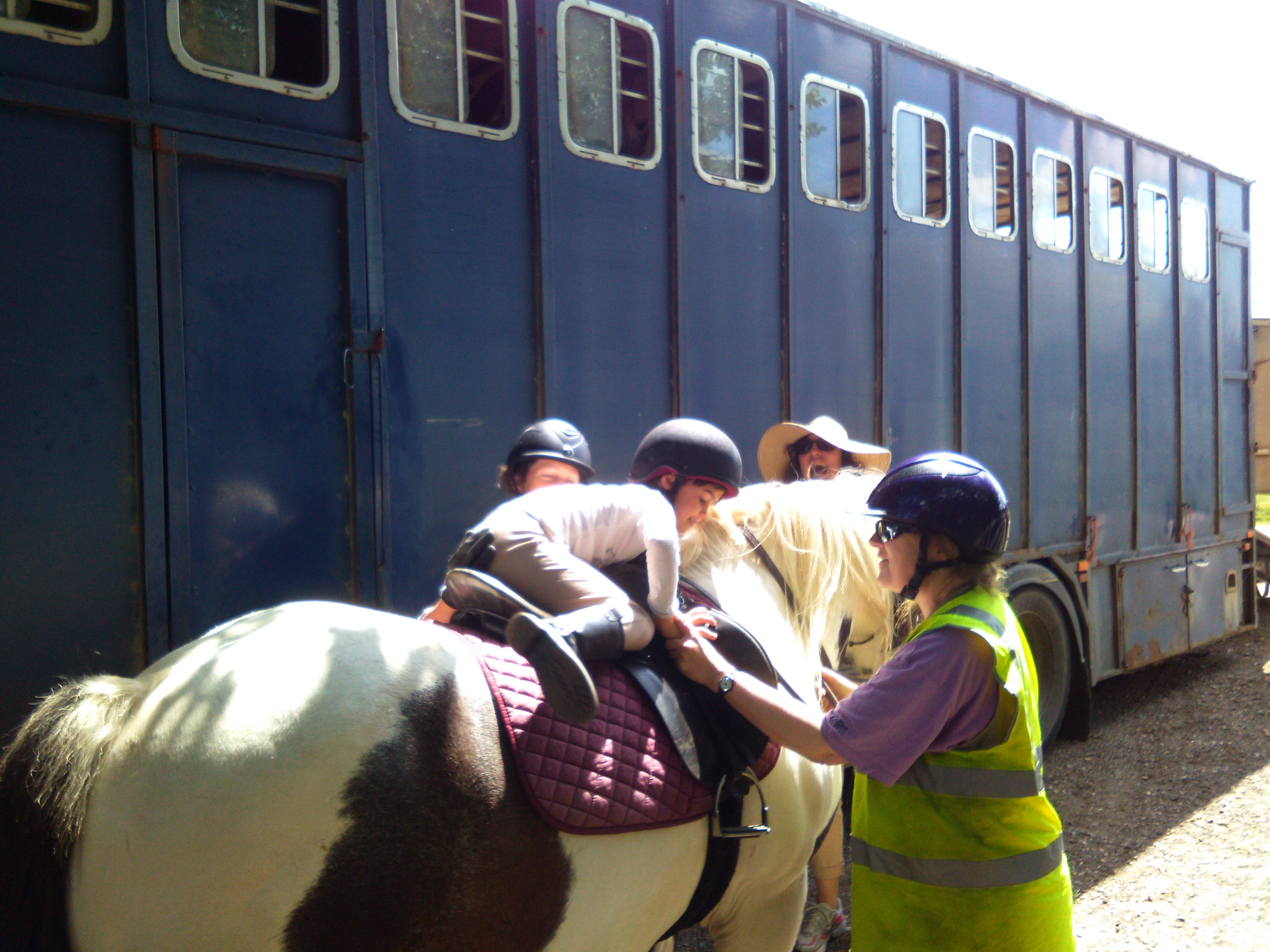
Ruby mounting Banjo

As the entrance to Windsor Great Park was a short distance from the stables we followed the horses in the large blue van to the park where they donned their riding hats, mounted up and set off initially down a sandy track. Most of the route consisted of sand paths, grass and some road.

we did it

Fairly early on they had to cross a main road, a point known as the Pegasus Crossing, which has red and green horses instead of red and green men! Then we ambled past the Crown Estate Manager’s country pad and were shortly inside the gates to the deer park, which contains some 250 to 300 deer.

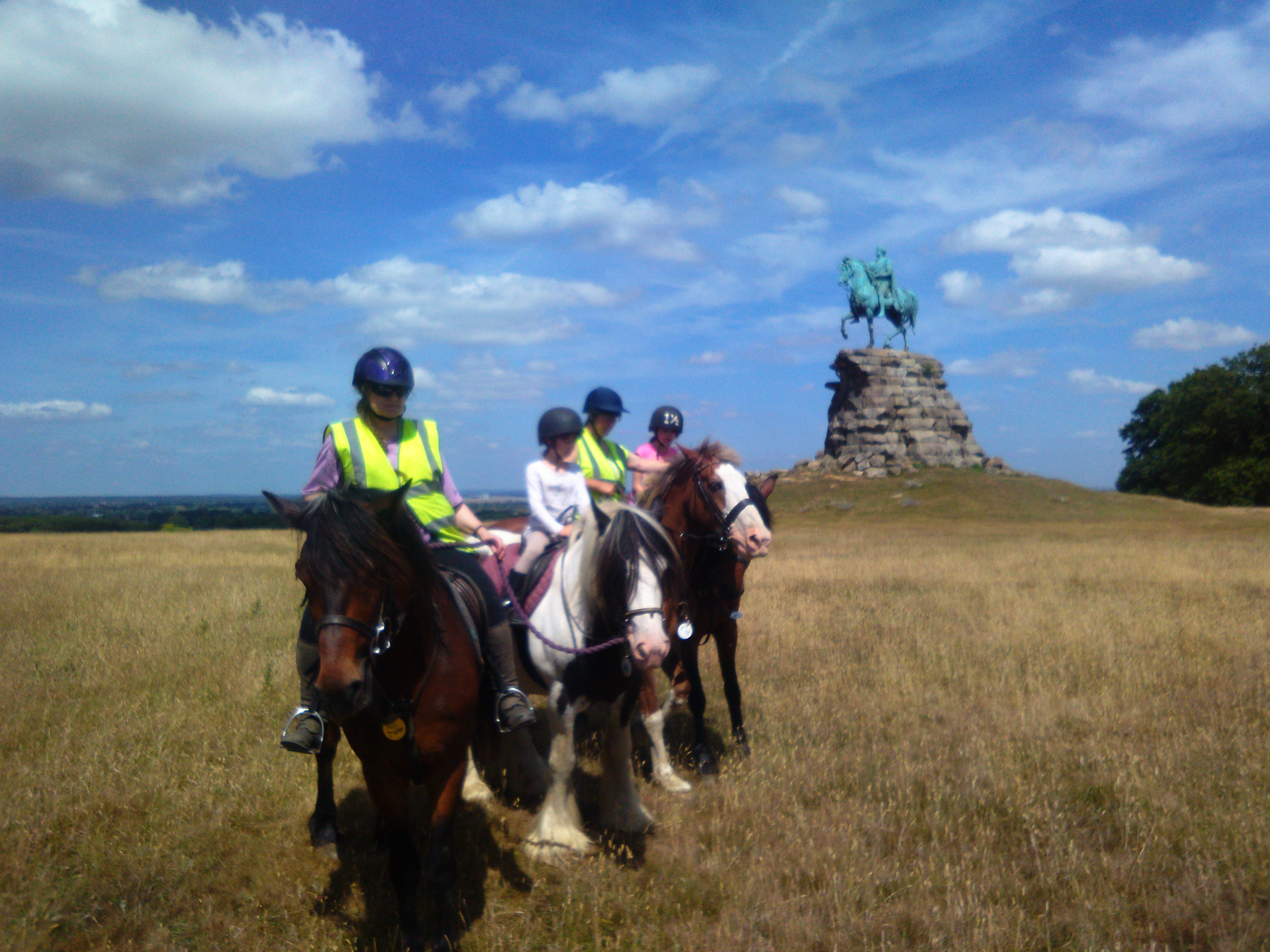
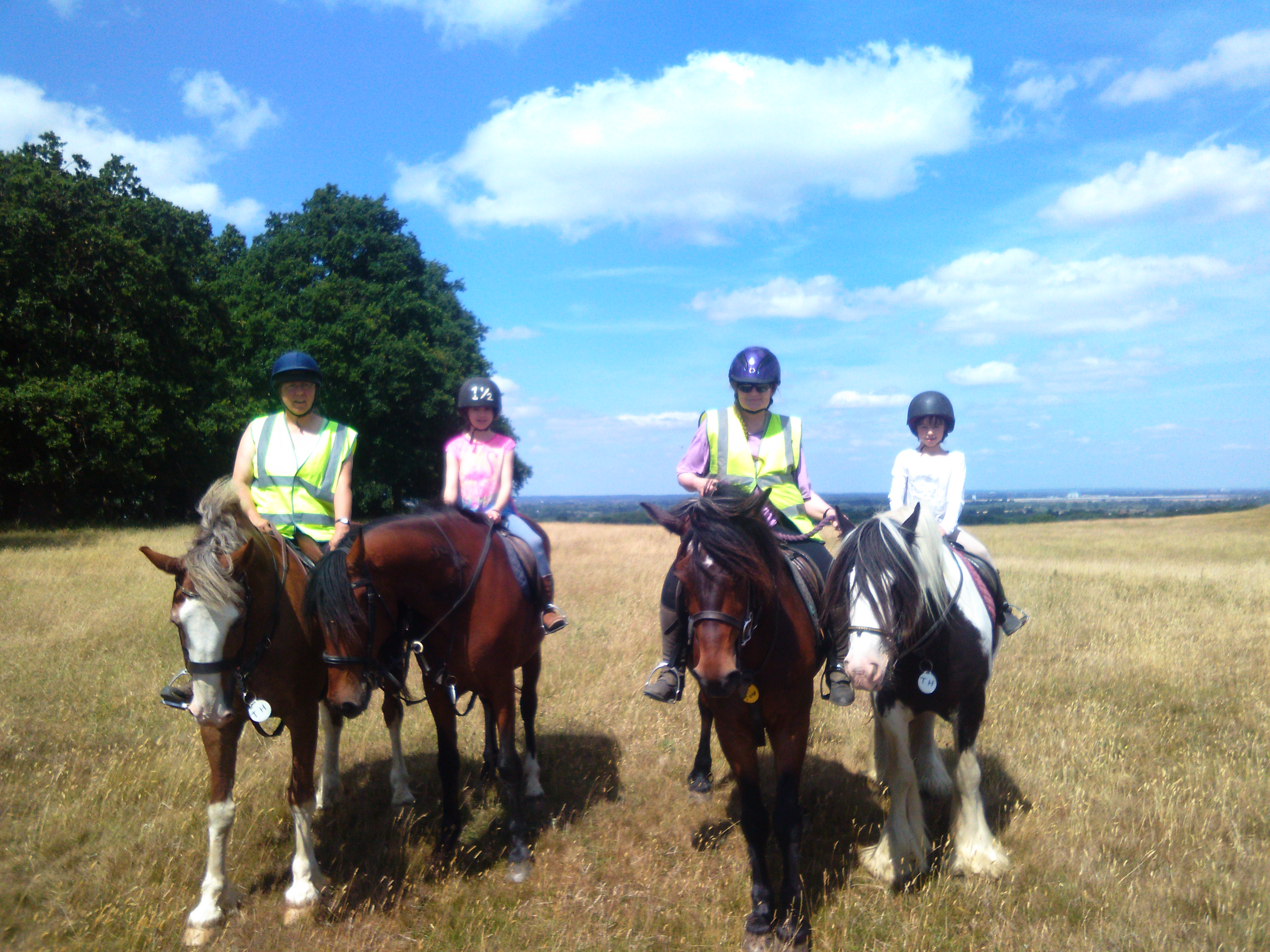
They trotted up a hill, and after a while we came to what Jenny and Jean referred to as ‘the copper horse’, an imposing equine statue of George III (this time on a real horse), overlooking the Royal Mile down below him leading to Windsor Castle.

by the copper horse

We had a couple of glimpses of the castle at different angles before this point. We didn’t follow the mile road though, instead we carried on through the deer park and back out via a slightly different route. Throughout the ride Emily and Ruby were relaxed and confident on their horses.

There was never a moment that I felt they were not safe. Jenny and Jean were accomplished horsewomen and knew the characters of the horses and their behavioural traits. The horses were always paired up and led by each woman so the girls were never riding alone, which was comforting to me!

four horses in a row

Jenny and Jean were very knowledgeable about the park and engaged in conversation with the girls (mind you, my two can talk the hind legs off a donkey so I don’t think it was too difficult for them), and were reassuring, answering all their questions.

During the parts of the ride that I had enough puff to keep up with Blue (Jenny’s horse), I found out that Tally Ho! Stables looks after 35 horses and can pretty much tailor the experience to the ability of the riders. They will take only one person out, or they can easily look after a larger group of riders with mixed abilities.

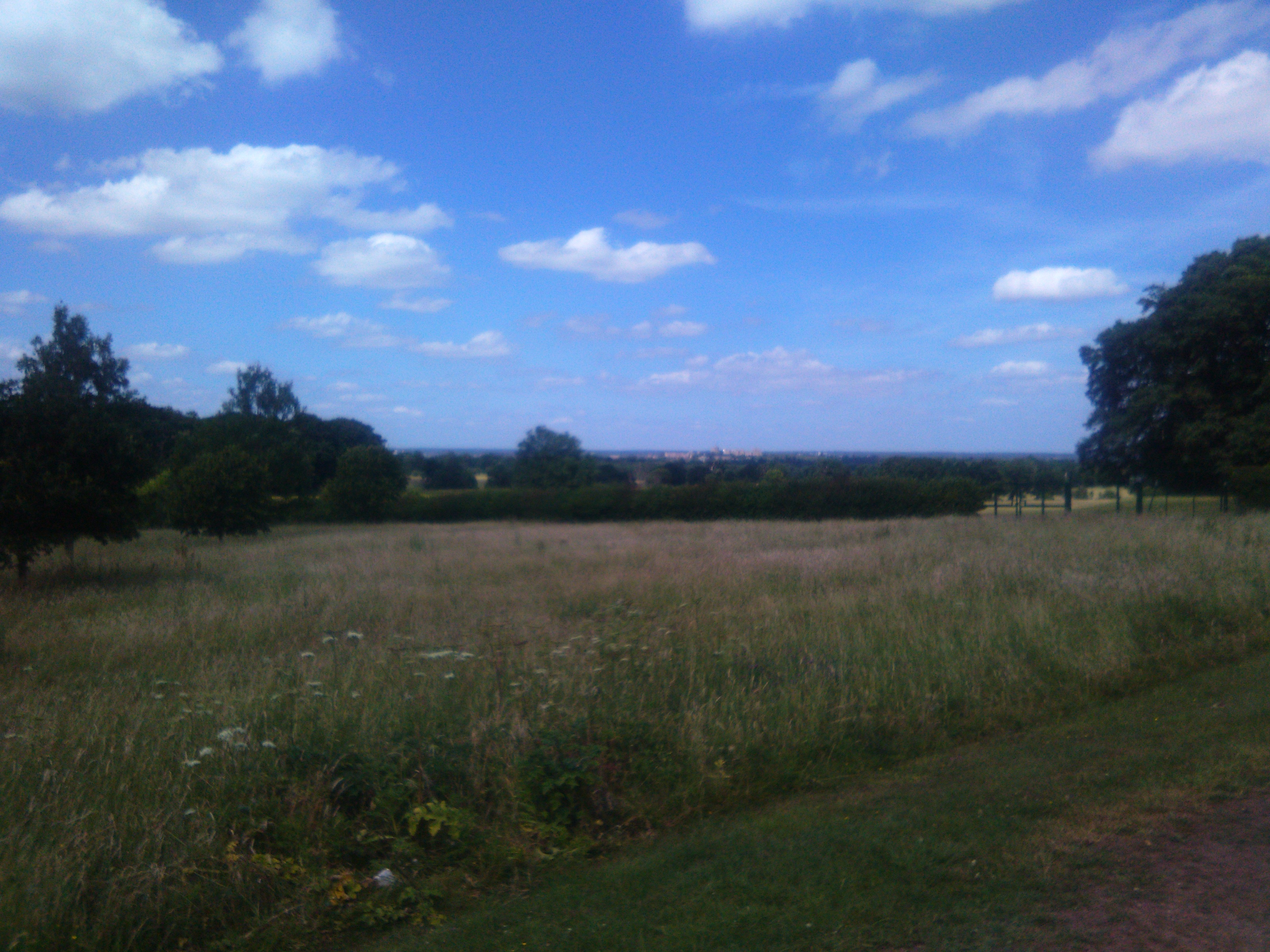
View of Windsor Castle across the park

Jean was telling me that quite a few of their horses had been film stars, Curo had been a soldier’s horse in the recent Cinderella film and a gorgeous, friendly stallion back at the stables known as Forry (abbreviation of Foreigner), a magnificent horse from Belgium, had been in War Horse and another film that escapes my memory…

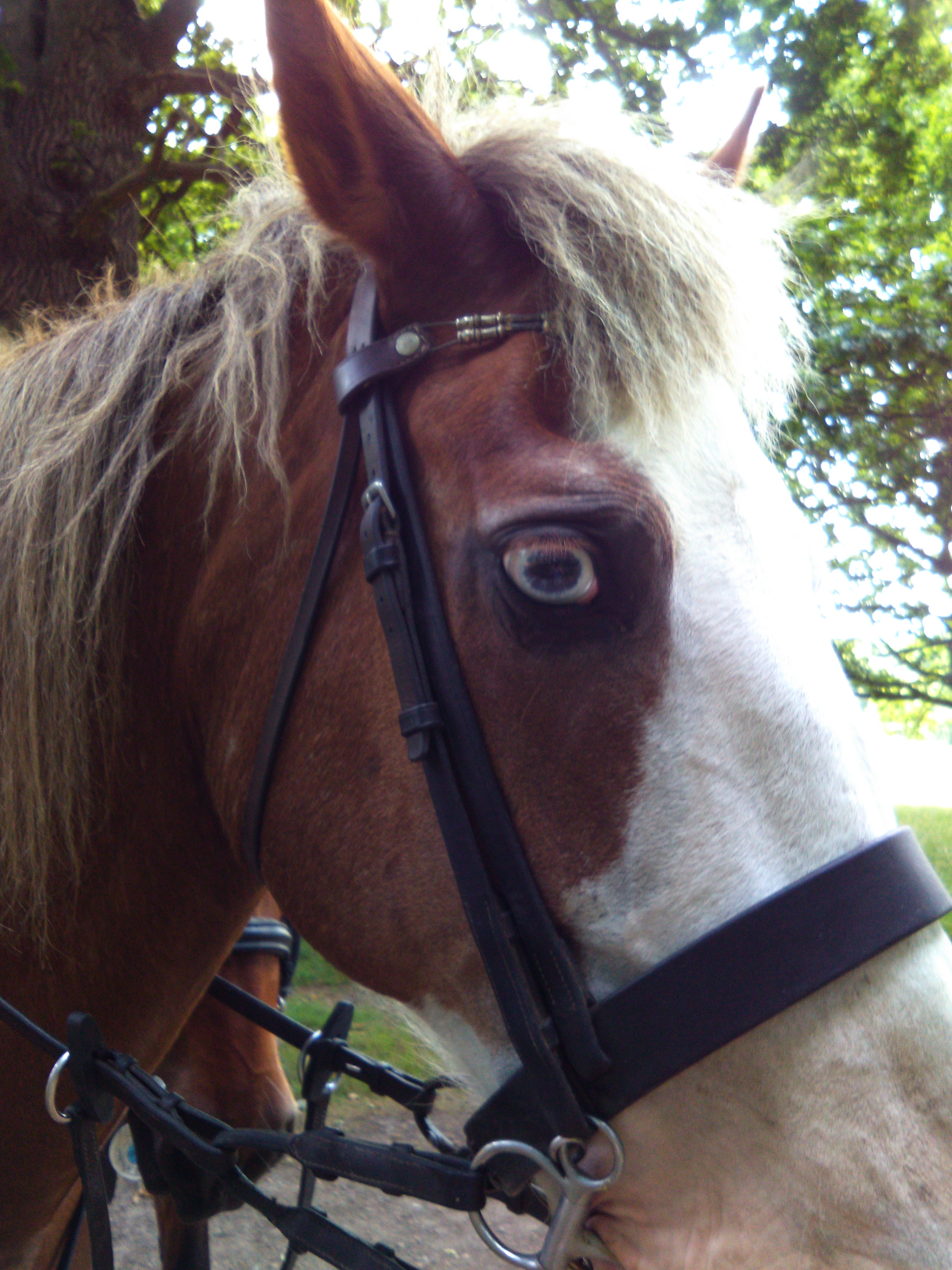
After the ride I noticed why Jenny’s horse for the hack was called Blue; he had one blue eye and one brown eye, (known as Wall Eye), which is quite rare for a horse. Banjo had this condition as well, but it was harder to see as his fringe was quite long!

close up of Blues Wall eye

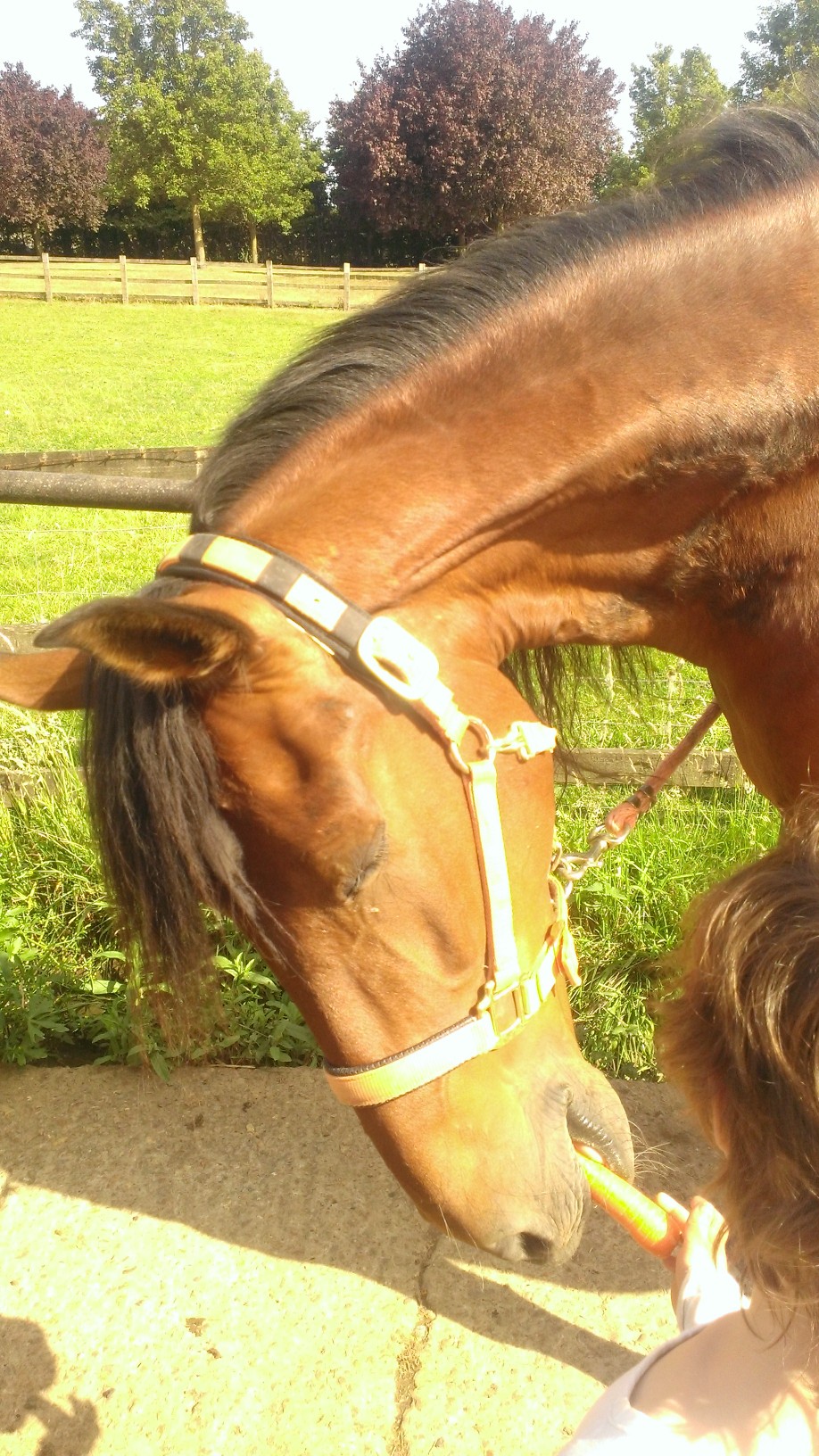
The girls were keen to say good bye to their horses at the stables, so we followed them back and Ruby and Emily were allowed to feed them carrots and help groom them.

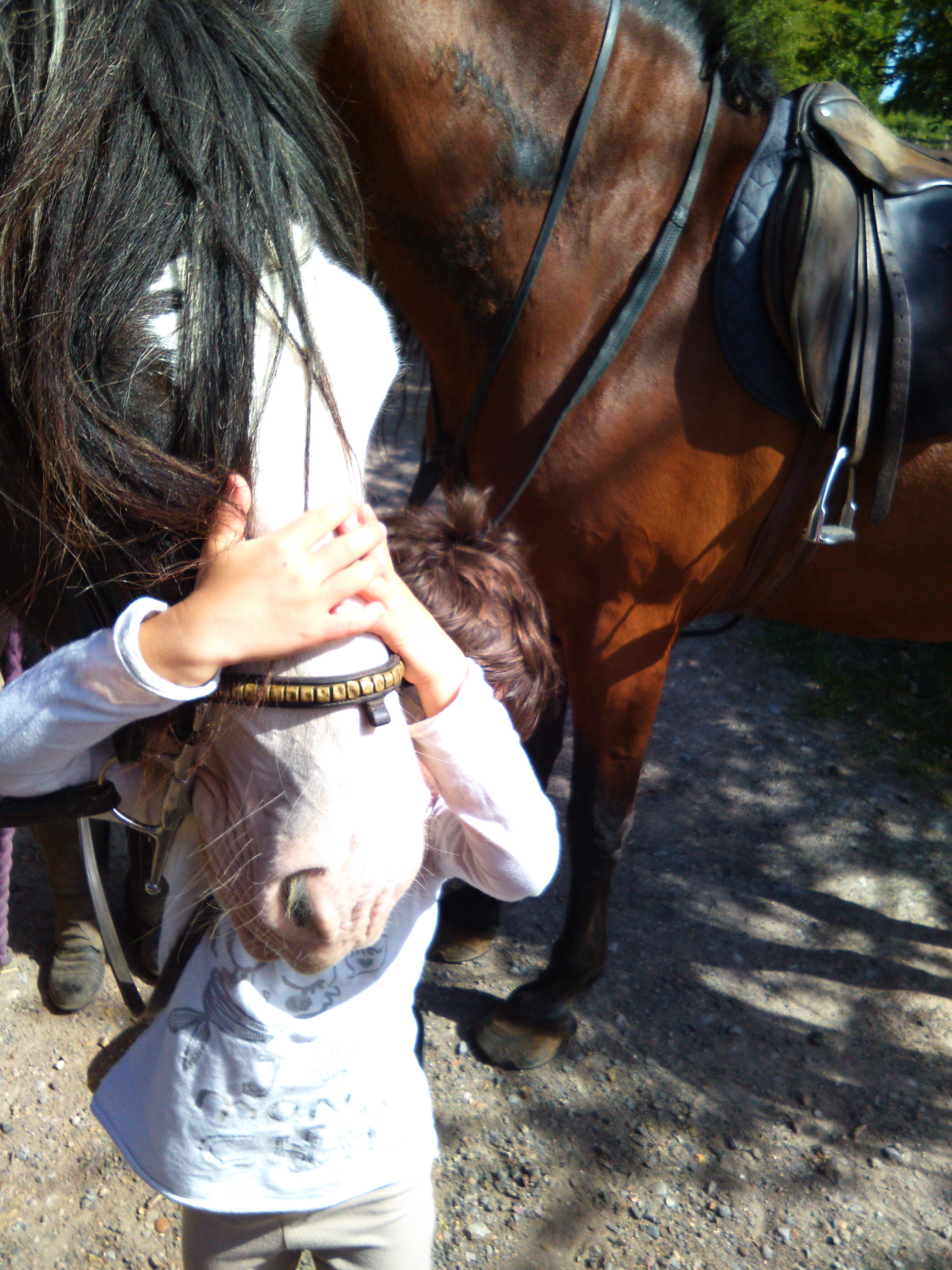
Ruby hugging Banjo

He knows when you’re happy

He knows when you’re comfortable

He knows when you’re confident

And he always knows when you have carrots.

~ Author Unknown

Ruby feeding Curo

It was a wonderful experience, one I would recommend for all ages and ability levels, Tally Ho! really do look after you and the scenery is just wonderful. We were lucky with the weather, but they do go out all-year round, except when it’s icy and the horses are likely to slip.

Jenny and her staff are regularly in touch with the park wardens and can always count on them for assistance should it be needed.

Emily saying thank you to Curo

Emily is already asking me if she can go back and do it for her 9th birthday, only next time I’m going to make sure I’m on horseback with them! They get 5 stars from me, it was worth every penny of the £80 per person fee. Happy memories are priceless…

happy girls after the ride

To make a booking, contact Jenny Yung on 01344 893700. The Tally Ho Stables website explains some interesting facts and history about Windsor Great Park, which was defined in 1240 by Henry III.

Windsor Castle is the longest occupied royal castle in Europe; built by William the Conqueror, it has been lived in and expanded by successive English and British monarchs since Henry I. The Queen is sometimes in residence at the weekends and the castle’s State Apartments hosts royalty and visiting dignitaries from around the world.

“There is nothing so good for the inside of a man as the outside of a horse.”  ~ John Lubbock, (Recreation, The Use of Life, 1894)

An Evening of Words, Music, Celebration and Chocolate: The Official Book Launch for The Virtuoso

“You can’t please all of the readers all of the time; you can’t please even some of the readers all of the time, but you really ought to try to please at least some of the readers some of the time.” ~ Stephen King (On Writing)

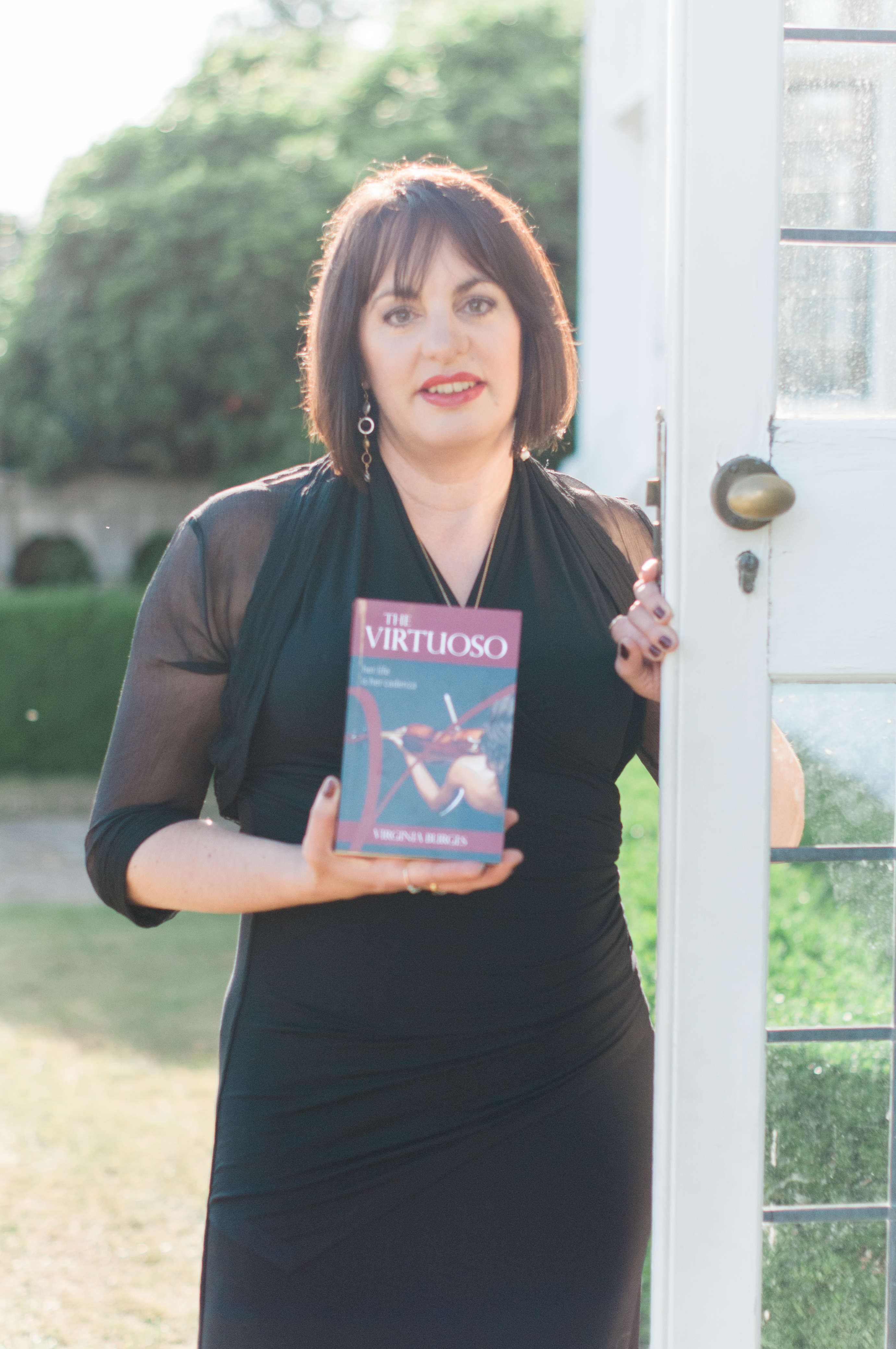
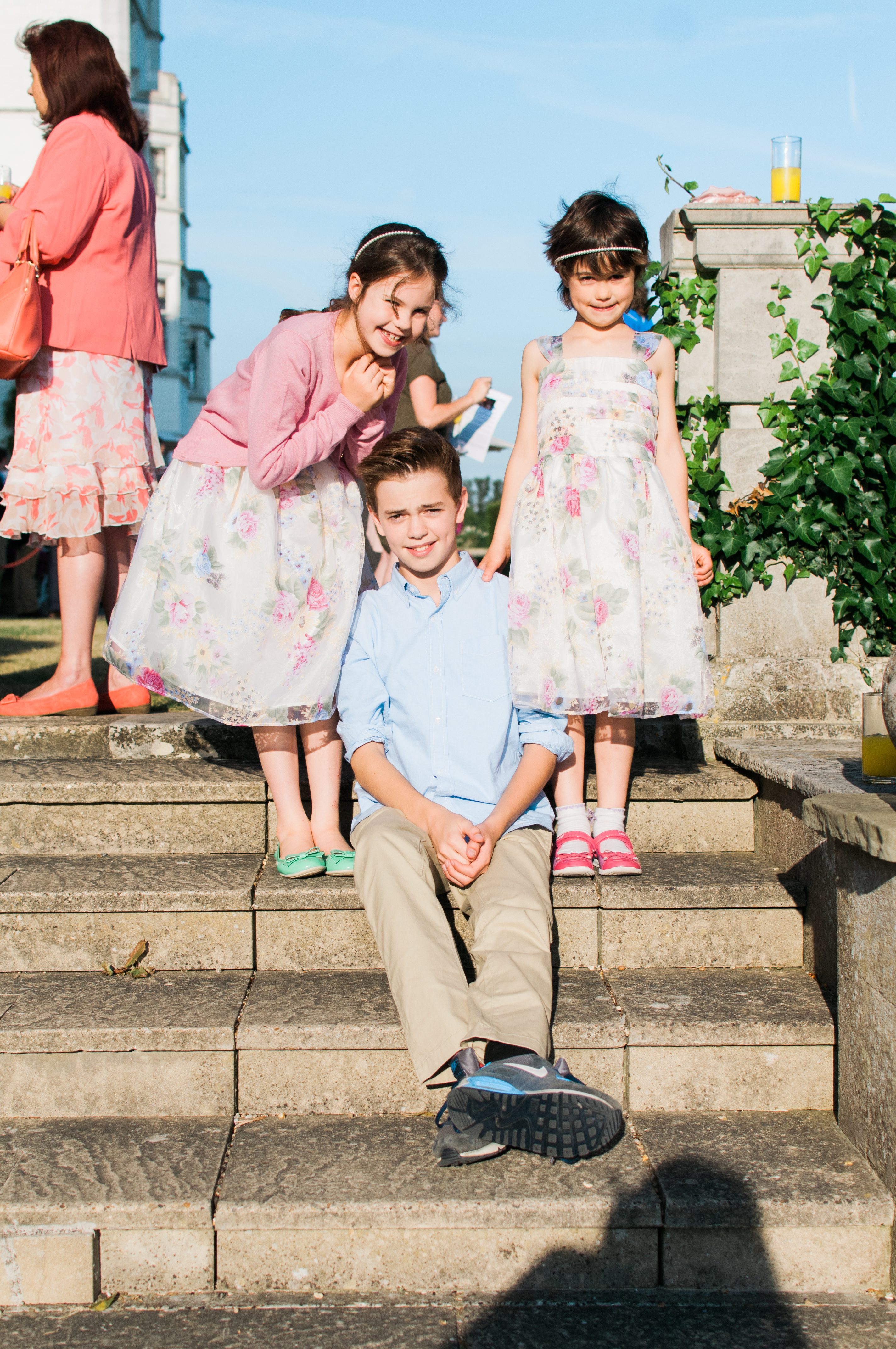
Virtuoso Book Launch-019 (1)After weeks of planning my big day was finally here: 25th June 2015 – Book Launch Day.  My stomach had been in turmoil all week, but I was strangely calm on the morning of the event. It felt reminiscent of planning a wedding and I didn’t want to turn into the literary equivalent of bridezilla!

After all, my launch party was meant to be fun, a celebration of getting The Virtuoso into print, and an acknowledgement of the many years of hard work that had gone into its creation. But I still felt I had a lot riding on it. I didn’t want to mess up in front of my family, friends and esteemed colleagues who were waiting expectantly, all dressed up in their glad rags, except for my brother!

It was my chance to let the world know why they should read The Virtuoso, and I had to get over the fact that I wrote it and just be the messenger…

I had lived and breathed my labour of love for the last few years, and now it was time to unleash it on the lovely people who came to support and celebrate with me.

I planned the event as meticulously as I could amidst my busiest month of the year so far. I’d had an extremely manic time with my family; two birthdays, one delayed birthday treat, one school trip to Waterloo, one book launch and a trip to the Royal Albert Hall all within days of each other.

Inevitably, some key people couldn’t make the event and I had to roll with it. At one point I was panicking that I’d just be speaking to my mum! In the end there were about forty guests, so my fears were unfounded.

I went to the hairdressers early in the morning; I didn’t want to risk a bad hair day! Mum and I got to the venue as early as we could, I had lots of helium balloons to inflate, tables to decorate, books to display. It was a real treat having my makeup done for me just beforehand.

The Location

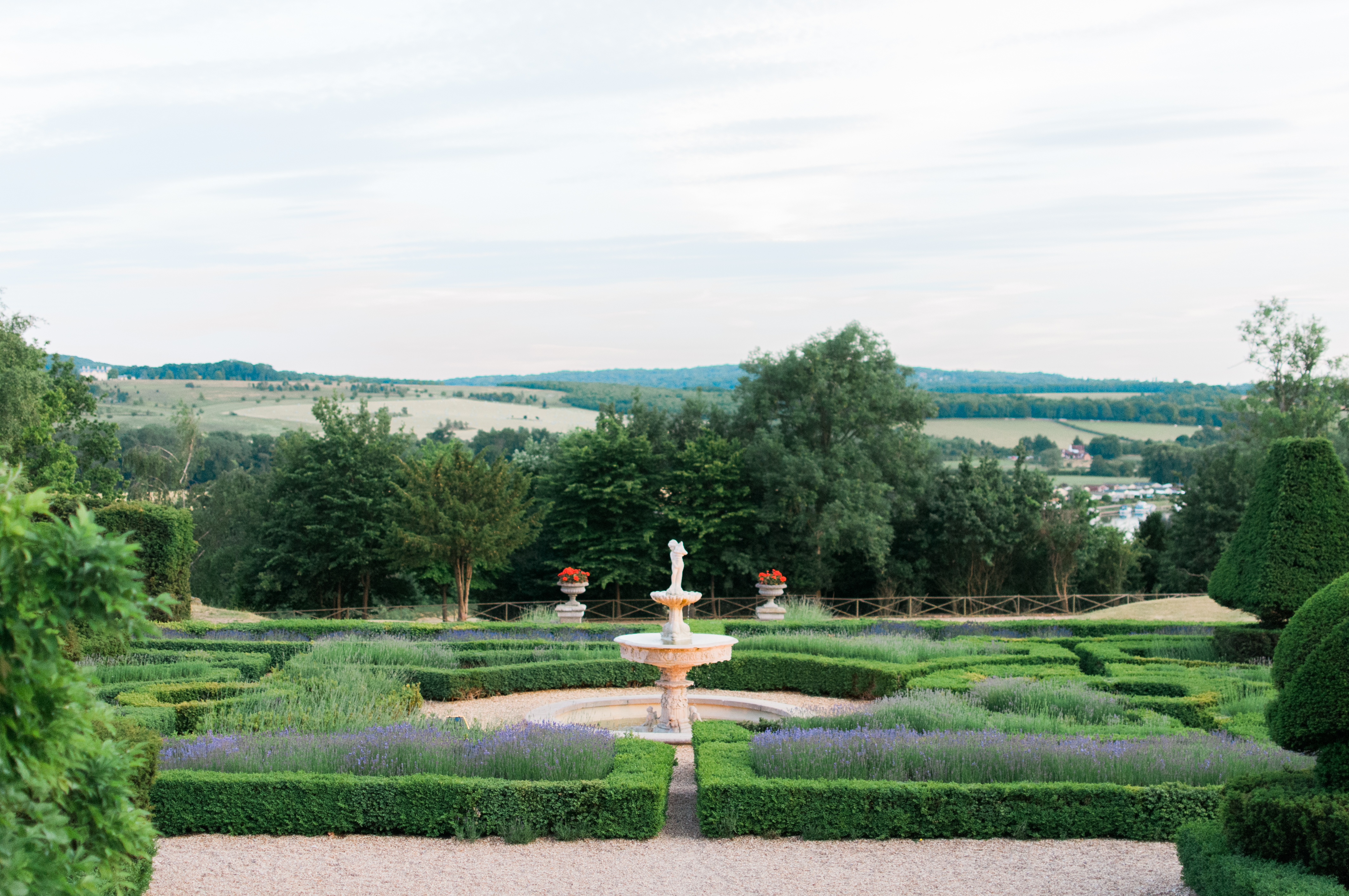
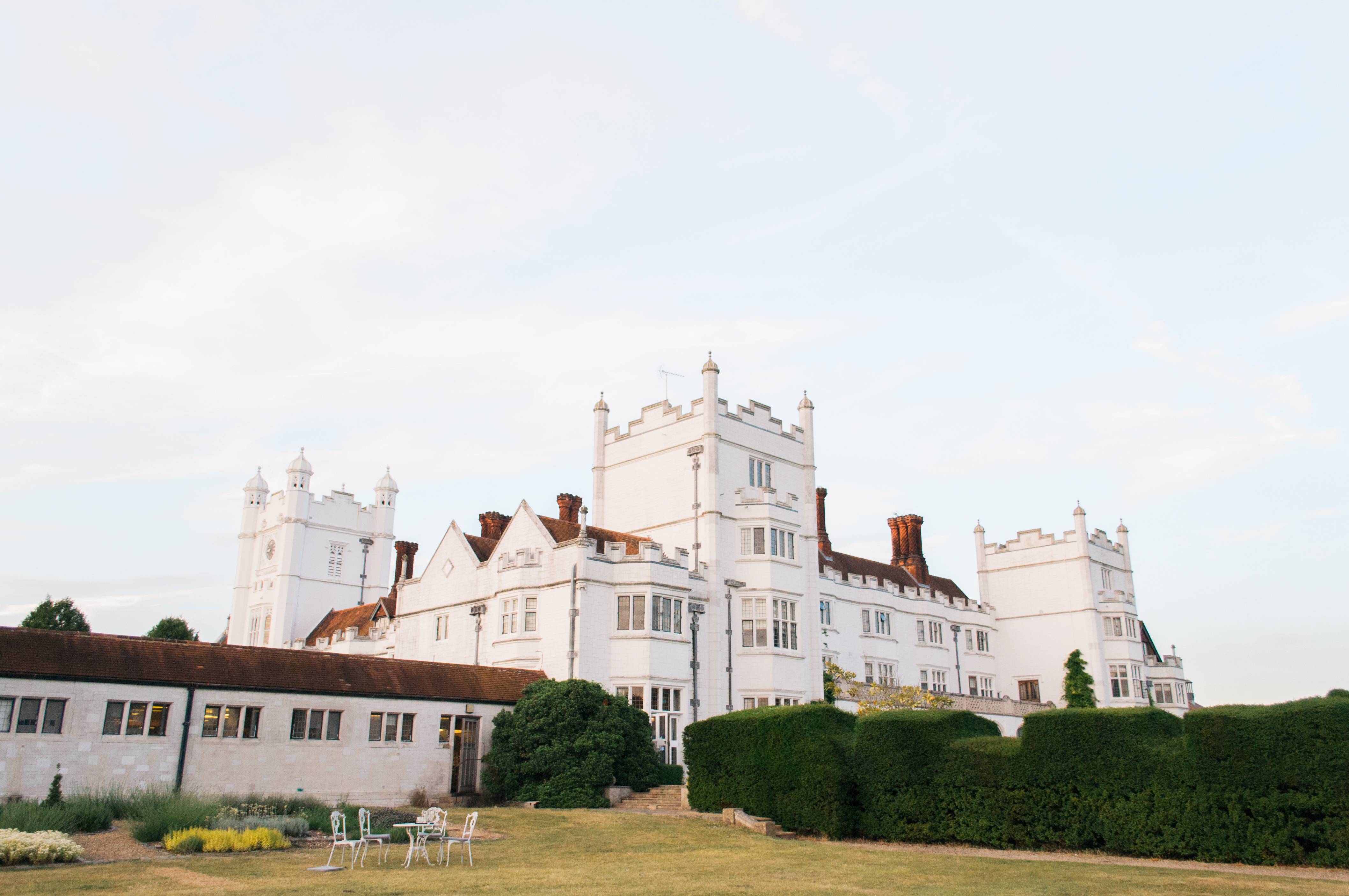
Danesfield House Hotel is the sort of hotel that my protagonist, Isabelle Bryant, would have frequented! It’s nestled on a hillside between Marlow and Henley with magnificent views over the River Thames.

Virtuoso Book Launch-151

The hotel has an interesting history, as well as having played host to George and Amal Clooney for their UK wedding celebration last year. Me and my gang weren’t Hollywood A-Listers, but they still gave us a warm welcome and treated us with impeccable service.

Virtuoso Book Launch-150

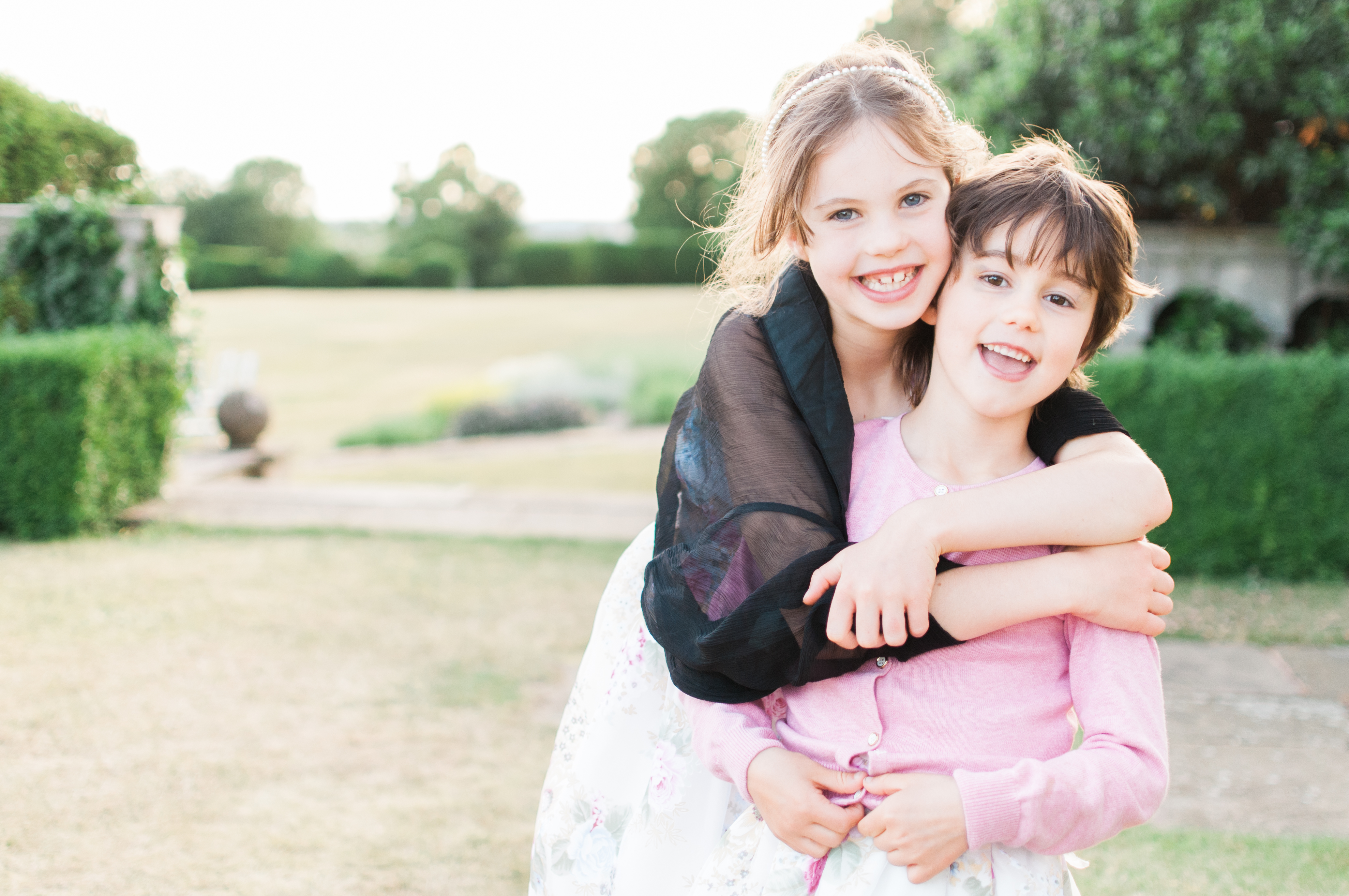
It was a happy moment for me when my family arrived to join me. My youngest, Ruby, was just so sweet, she couldn’t hide her excitement and was galloping around the grounds.

Virtuoso Book Launch-035

“Mummy, this hotel is really posh. Even the bushes are posh.”

Virtuoso Book Launch-140

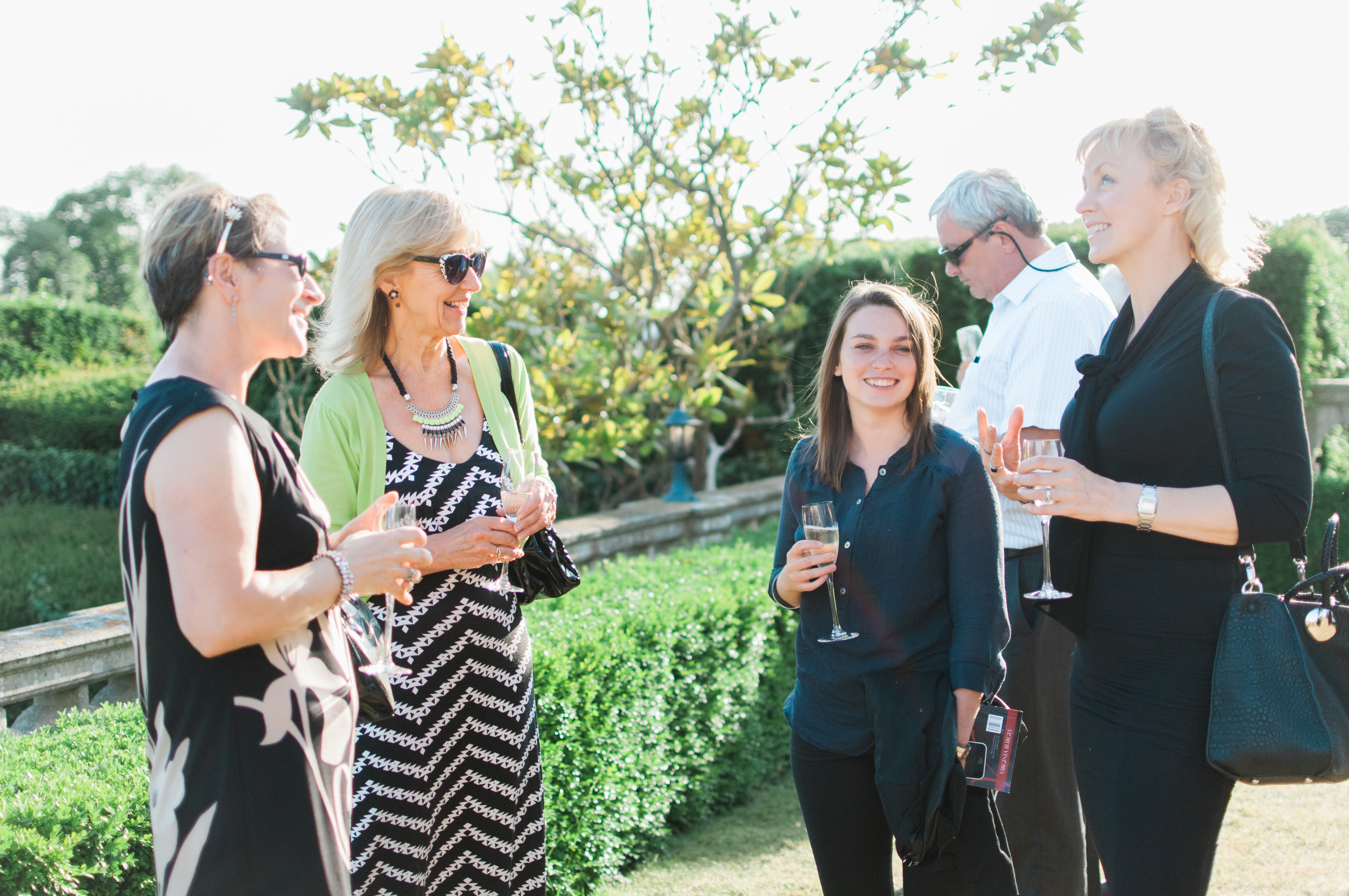
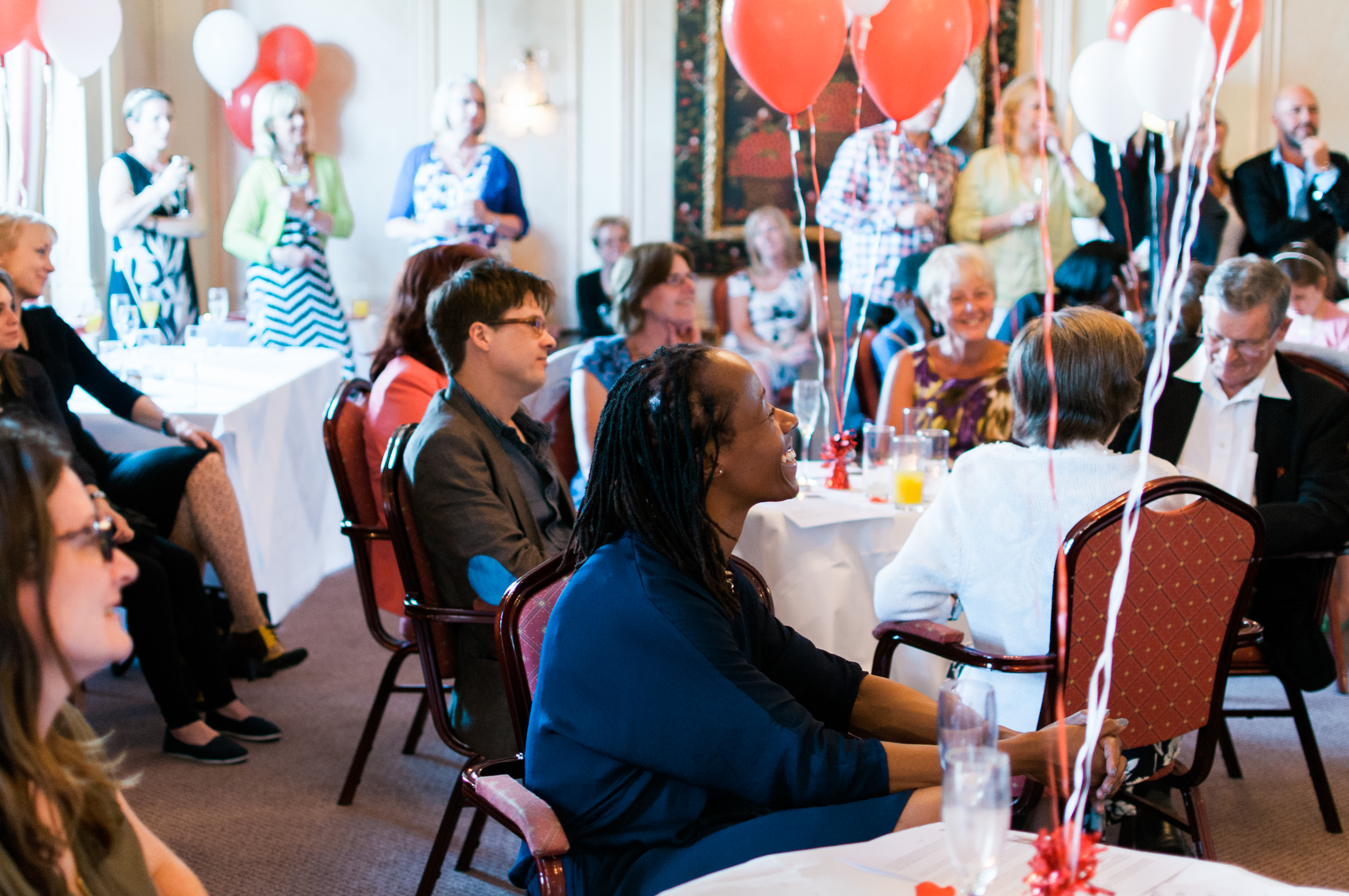
On arrival my guests were greeted with a hug and served with chilled Prosecco. The doors of the Chiltern Suite open out onto the terrace, and luckily the weather was amazing so everyone was able to sun themselves in warm, balmy air and relax a little before the formal part of the evening got underway.

Virtuoso Book Launch-041

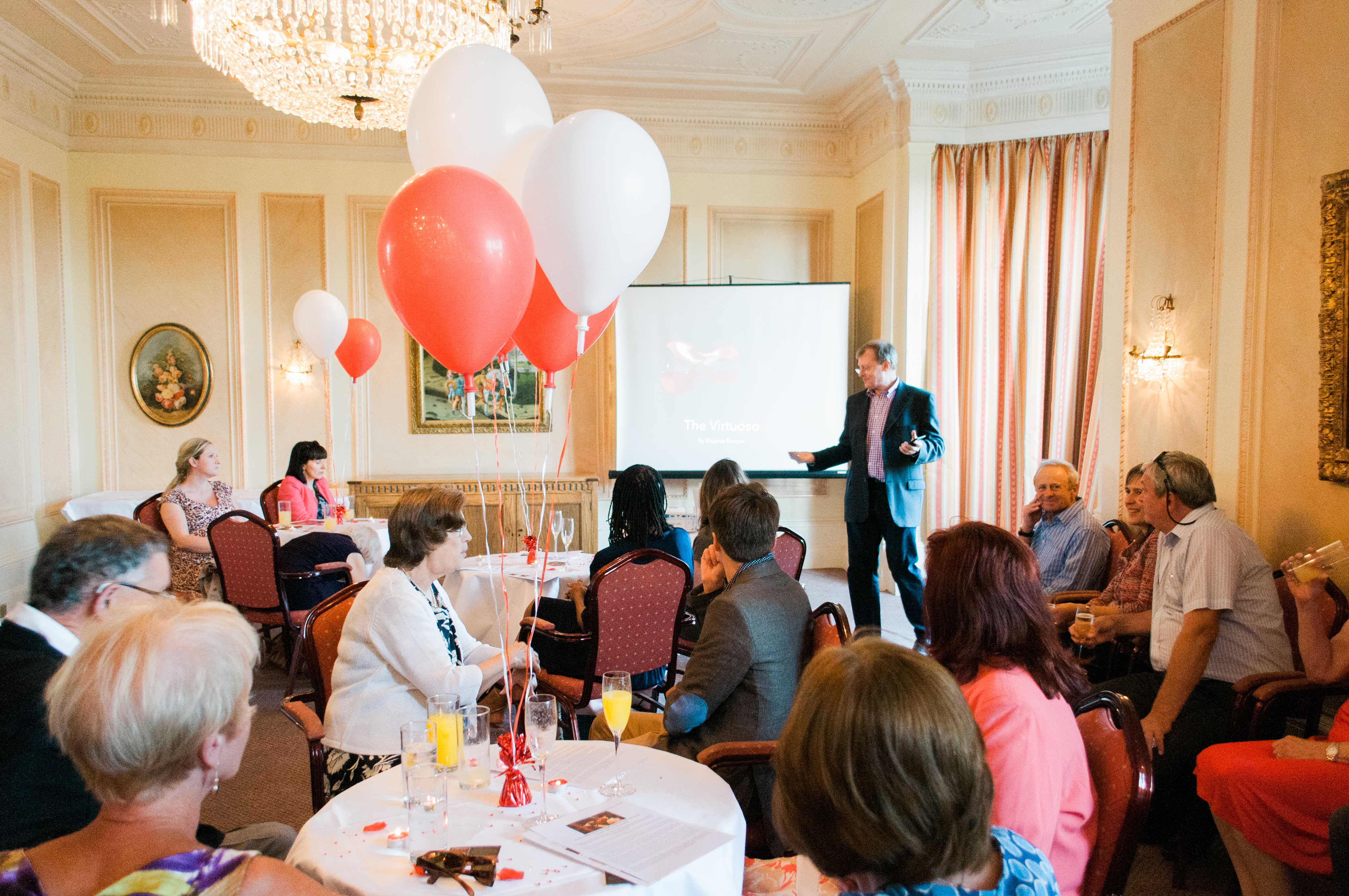
I was doing anything but relaxing! I had to get through a 20 minute presentation…

Robert Clay did a brilliant introduction for me, and then it was time to step on to the stage. I made a joke of my knees knocking together under my long black gown with exaggerated movements, which got a few titters, and then I was off! I was mighty relieved to get a hearty round of applause at the end. Luckily everyone seemed to find it interesting and enjoy themselves.

Virtuoso Book Launch-069

After that canapes and drinks were served and the audience were treated to a rendition of the music soundtrack which was written especially for the book. One guest even took the score home to play on her piano.

Virtuoso Book Launch-084

The music is now available to download and stream on Amazon, iTunes (listed under soundtracks on the store) and on Spotify. Search for Tim Johnson – The Virtuoso (feat. Adelia Myslov).

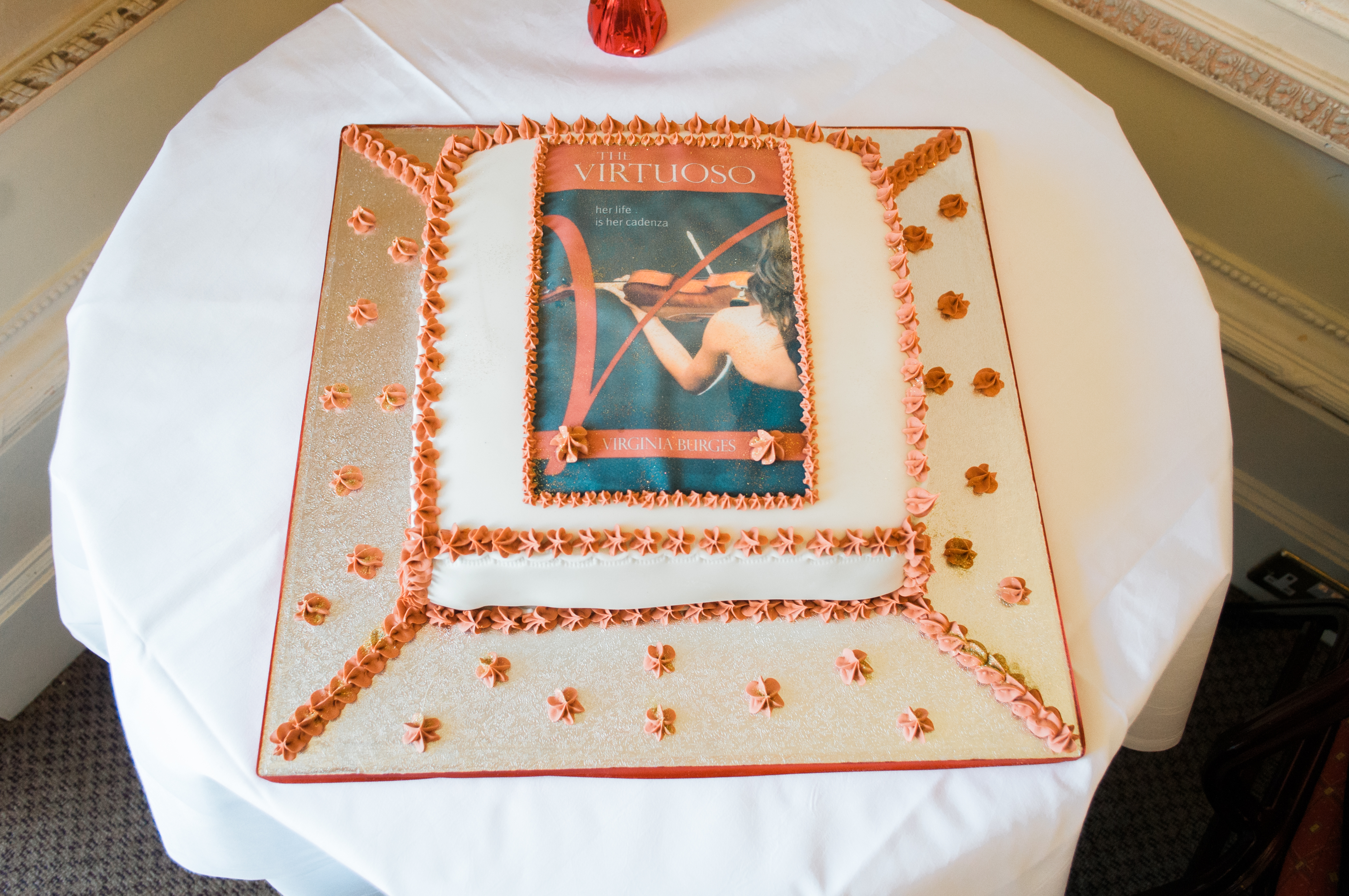
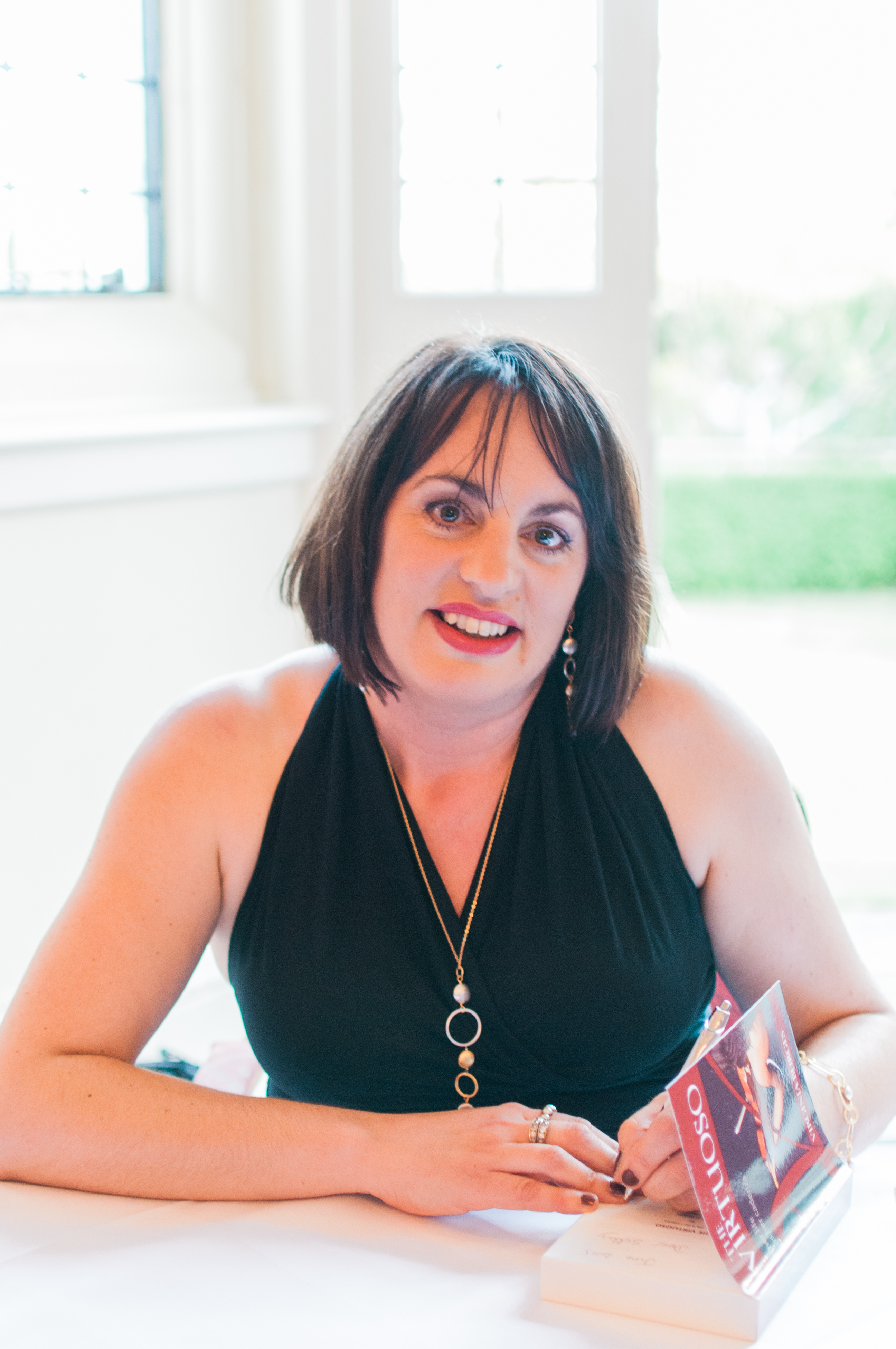
Then the beautiful, large and mouthwatering chocolate cake was cut and I became engaged in signing books…

Virtuoso Book Launch-006 (1)

Not bad for a girl who only wanted to take up the violin because her best friend at school had started lessons, having quickly discovered that she loved it! Out of accidental encounters passions can grow…

Virtuoso Book Launch-121

However – as is usually the case with life – as soon as you find yourself on a high there is someone ready to take you down a peg or two!

Only a few days later I had the absolute worst review on my Amazon page.

Everyone is entitled to their opinion, and this person didn’t hold back about how bad they thought the book was. I felt devastated. But, like most authors who I’m sure at some point have endured a cruel slur about their work, I just had to pick myself up, dust myself off and try not to feel like giving up.

They made a point about the price differentiation which I can explain. It was not done deliberately! When I originally set the price my publisher was in favour of £8.99 but I wanted to keep it below £8. However, when I made the book available in paperback with Amazon the minimum price they allowed me to charge was $15.99/£8.67.

A bigger book means higher costs. The Amazon paperback version is over 400 pages in length. So the cover will now be amended to show a price of £8.99. I hope you’ll read it and agree it’s worth the money, but I won’t hold it against you if you don’t…

I’m in the process of uploading the photo gallery onto my Facebook page.

It just remains for me to thank my family, friends and everyone who helped to make my book launch a really special evening filled with joy and excitement!

As well as the thanks I owed to everyone who helped me with the book, mainly my publisher, Nicky Fitzmaurice at Satin Paperbacks, and Gary Smailes at Bubblecow and Caroline Jacques for her fabulous cover. I’m also grateful to Liz Britnell for the tasty three tiered chocolate cake, Alison Oswald for making me feel like a movie star, Becky Rui for her amazing photographs of the event, Joanne Howe for her help with my press release, Anke Exnor for some pre-book launch encouragement, Sylvia Baldock and my Athena colleagues for their kind support and Robert Clay for all his mentoring over the years and for giving me a wonderful introduction!

If the majority of reviews remain positive then it will give me the impetus to continue with my next project; a trilogy of psychological thrillers.

There may be a radio interview coming up soon too…

I’m going to finish with a quote from James Patterson, an author who has sold 300 million copies of 130 novels worldwide:

“One of the nice things about books as opposed to television and movies to some extent, is it’s not a passive entertainment. People really do get involved, and they do create, and they do have their own visions of what different characters look like and what should happen. It’s great – it means their brains are working.”

Diatribe in D Major!

“Music gives a soul to the universe, wings to the mind, flight to the imagination and life to everything.” ~ Plato.

I can feel a rant coming on. I’ll try not to go overboard, but I’m already on top of my soapbox and it’s a subject very close to my heart – music.

I don’t think I could live without music and the arts, life would be so…lacklustre. Yet a narrow education policy and lack of funding is depriving thousands of youngsters the opportunity to benefit from learning music and thereby develop their innate creativity; which can only improve their lives.

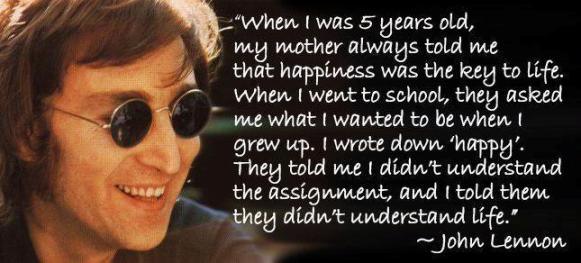
john-lennon-happy quote

My eldest daughter is now showing a great interest in singing and learning to play the violin, and we are so lucky that the High Wycombe Music Centre is just down the road. They do great work. It’s a major centre for brass and woodwinds, but they also do guitar and strings tuition. Emily plays the violin in their ‘sizzler’ group, which gives the children a chance to try all sorts of different instruments before deciding what, if any, they want to take further.

Emily has an hour of this, then a short break and an hour of singing in the junior choir on a Saturday morning. They are such a friendly, welcoming group, and Emily really loves going. It’s a pleasure to hear her singing their latest songs around the house, and it’s done wonders for her confidence. Although the music centre doesn’t charge exorbitant fees, every activity that is extra-curricular soon adds up, at a time when many families are struggling financially.

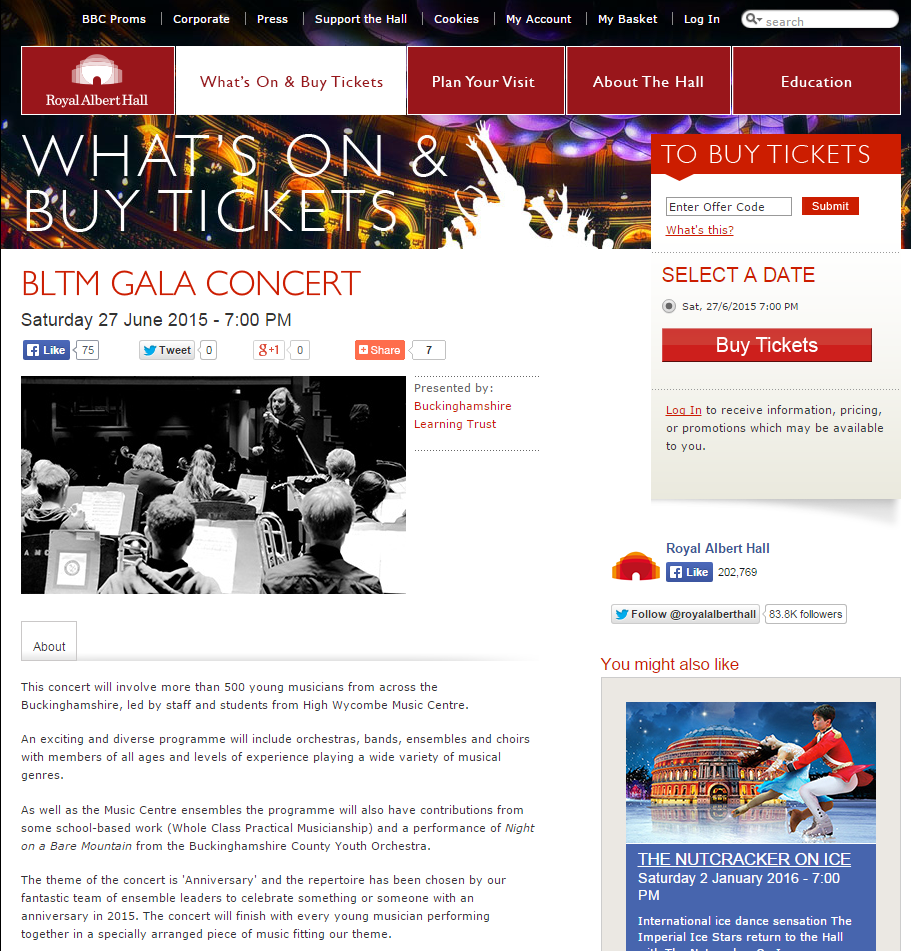
On Saturday 27th June Emily and her fellow students at the High Wycombe Music Centre will have the chance to perform at the Royal Albert Hall in the BLTM (Bucks Learning Trust Music) Gala. They do this every four years, and as Emily has been attending for only six months or so she’s fortunate to have the chance to take part.

blmt_gala_rah

“Music expresses that which cannot be put into words and that which cannot remain silent.” ~ Victor Hugo

Earlier this year when Sir Simon Rattle returned to the UK after 12 years as the principle conductor of the Berlin Philharmonic Orchestra, he promptly suggested that London was in dire need of a brand new state-of-the-art music performance venue. Whilst I agree with him, as a leading city in the world, London should have a modern arts facility. The media really got behind it, even the chancellor and the Mayor of London are on-side. But not everyone agrees.

“Great art and music is created by people, not buildings.” ~ Ivan Hewett

Of course, London already has some fantastic historical and iconic venues: the Royal Albert Hall, the Wigmore Hall, St. Martin-in-the-Fields, the Southbank Centre, the Barbican and Cadogan Hall to name but a few.

It’s all wonderful that so much investment will be made in the possible construction of a new hall above the Barbican (current home of the London Symphony Orchestra), but there is one major point everyone is missing…

Where will the future British musicians, soloists, conductors and vocal artists come from to perform in this shiny new hall, if we don’t invest now in grassroots music education for all children, regardless of their socio-economic status?

And it’s not just the future of our nation’s artistic community that’s at stake; the very future of our society is in question. Ahem! Sorry about that, I just had a drama queen moment. Government ministers should be thinking outside the box when it comes to reducing poverty and its associated behavioural manifestations.

I firmly believe that music and the arts (along with education and a loving family environment) will help to protect against emotional, mental and physical vulnerability.

It’s that old computer analogy: garbage in = garbage out.

It starts with prevention. Prevention is easier than cure.  With overwhelming scientific evidence of how learning music affects brain development and impacts on a child’s life in so many positive ways, it defies belief to read about yet more cuts in the arts sector and in education.

Classical Music Magazine outlines cuts by several local authorities earlier this year.

A great visual presentation about how playing an instrument benefits your brain by Anita Collins:

I mentioned the #DontStopTheMusic campaign in a previous blog (The Importance of a Musical Education), and James Rhodes has done a great job galvanising the arts sector and government in improving this dire situation.

However, as someone who signed this petition on change.org last time, I recently had a message from them that made my heart sink: the government are still not giving music the same priority as other academic subjects.

A brilliant discussion about music and the mind that all parents, health and teaching professionals should study:

As the effects of our ‘age of austerity’ seep into our everyday lives there’s even more reason to protect music and the arts, by making sure that all children have access to the very thing that can stimulate a deep emotional response in their brains, that impacts their neurological health on many fundamental levels: memory, learning and plasticity, attention, motor control, language, pattern perception, imagery and other areas. Those early years are so important.

These 11 month old twin sisters demonstrate this point perfectly when they have a delightful reaction to daddy’s guitar playing:

My mother played Beethoven piano sonatas when she was pregnant with me, and I’m sure that’s why I love his music so much, and why music has played an integral part in my life. I grew up with it. We all have stories of how music has influenced us like that.

There would be no such thing as movie soundtracks if music didn’t play such a vital role in our emotional perception. Filmmakers understand how it can add that defining emotional hook in our minds. I wonder if Star Wars would have been such a hit without the majestic interplanetary sound track written by film composer John Williams. The two are inseparable.

Tufts University neuroscientist, Aniruddh Patel, explains how scientists study your brain’s response to music and what parts of your brain are activated by different attributes of music:

Music and the arts are not just some fluffy dispensable activity that stimulates creativity; they are scientifically proven to be beneficial to the human family across the world, no matter the culture. Human beings inherently respond to rhythm and music, it’s a natural and fun way to produce dopamine, the so called ‘feel good’ hormone.

And that concludes my diatribe. If I wasn’t sneezing, coughing and streaming with a summer cold I’d go and pick up my violin for a practice. I’ll just have to listen to this jazz/baroque fusion instead!

Music for a while.

Shall all your cares beguile.

Wond’ring how your pains were eas’d

And disdaining to be pleas’d.

~ Lyrics by John Dryden set to music by Henry Purcell

My call to action this week is to please sign the #DontStopTheMusic petition. The children will thank you.

10 Reasons Why Coconut Oil is sooooo Good for You!

In Sanskrit, coconuts are called ‘Kalpa Vriksha’, which means ‘the tree that gives all that is necessary for living.’

Coconut_Tree_in_Tamilnadu

I’ve been consuming coconut oil on a regular basis for about five months now, and I love it. Where I previously used extra virgin olive oil I mostly use coconut oil. It’s fabulous for cooking with, but as well as ingesting it you can use it topically for skin and hair. Coconut oil is such an all-rounder. Those tropical fuzzy brown balls really are the complete superfood…

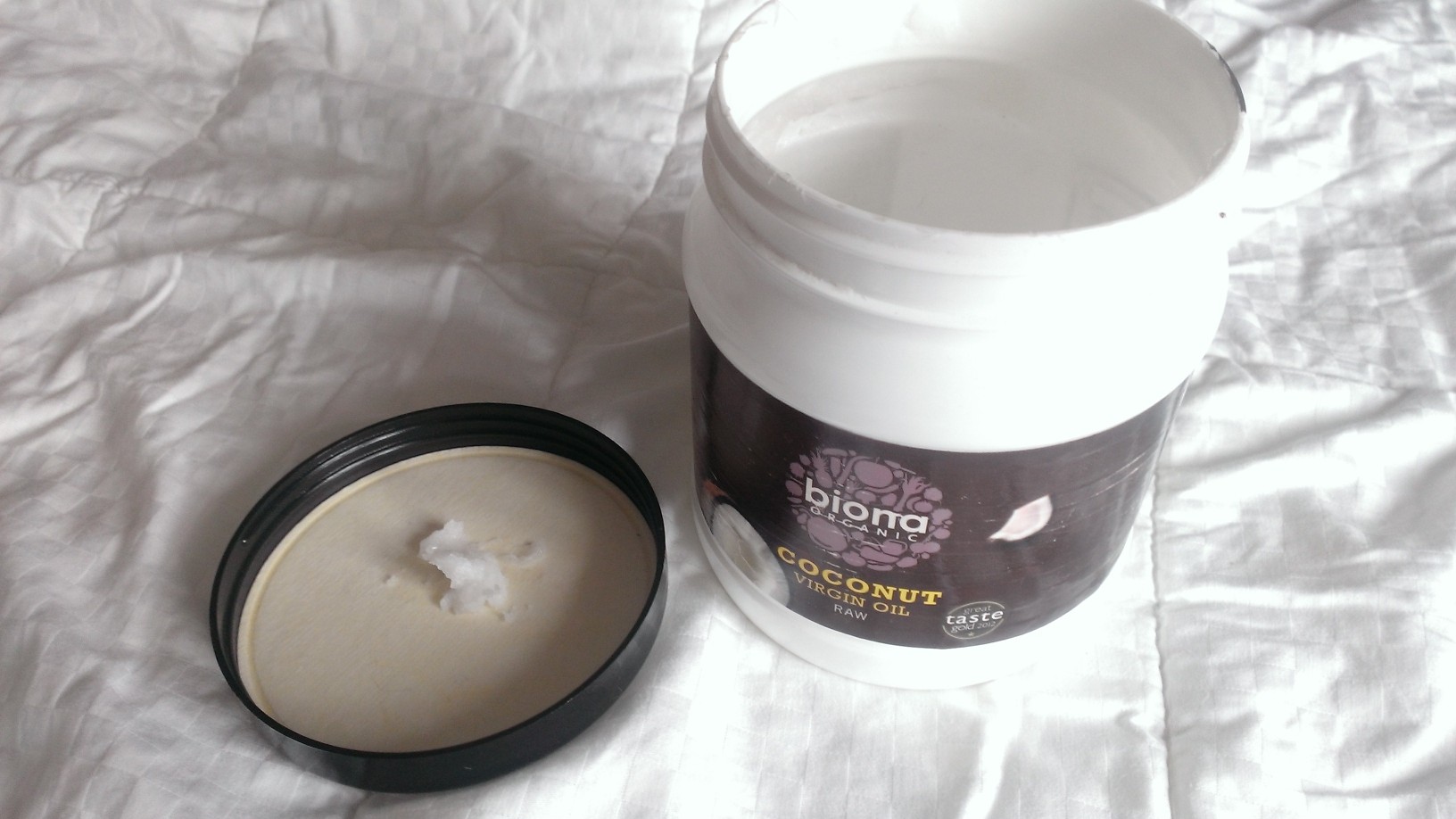
I use Lucy Bee’s extra virgin organic coconut oil for cooking and Biona virgin organic coconut oil for skin and hair. Just before bed I usually slather it on my face and body, and it soaks in quite quickly, leaving your skin soft and smooth with a subtle tropical scent.

Biona coconut oil

No wonder people who live in Asia and the Pacific Islands generally live so long and look so young; they are using nature’s nectar!

Coconut oil has been used for food and medicinal purposes for thousands of years, indigenous people learned it had enormous health benefits. It could well be the healthiest oil on earth.

The Saturated Fat Myth

You’ve probably heard or read that saturated fats are bad for you. In Western society the message has come over loud and clear: they clog your arteries, raise cholesterol, cause heart-attacks and more; but that’s just plain wrong! Not all fats are bad.

keep-calm-coconut-quote

The devil of fats is actually man-made trans fats (from hydrogenated oils), the sort you find in most commercial oils and which are used to prolong shelf-life in many processed foods . Any time any oil is artificially hydrogenated it creates a molecular distortion of its fatty acids, converting them into trans-fats. The more unprocessed and raw foods you can include in your diet the better.

Unrefined coconut oil is a natural saturated fat as opposed to a man-made saturated fat. The saturated fats in organic virgin coconut oil are ESSENTIAL to good health (in moderate dosage), as part of a healthy diet. There are no harsh toxic chemicals being put into your body or onto your skin.

Dr. Bruce Fife (author of The Coconut Oil Miracle), talks about the benefits of coconut oil:

10 Reasons to use pure, organic, unrefined virgin Coconut oil:

  1. Skin care. It’s brilliant for many types of skin problems such as acne, dry and cracked skin, dermatitis, eczema, itchy skin (e.g. yeast infections such as candida albicans), oily skin, pathogens, psoriasis, infections, wound healing and for anti-ageing in prevention of wrinkles. Mixed with certain essential oils it can even be used as a bug repellent cream. The properties in coconut oil make it antibiotic, antifungal and antimicrobial. It’s completely natural and can be blended with other ingredients to make scrubs, facials and emollient treatments. Coconut oil works well as a carrier oil in conjunction with essential oils that are used in aromatherapy.
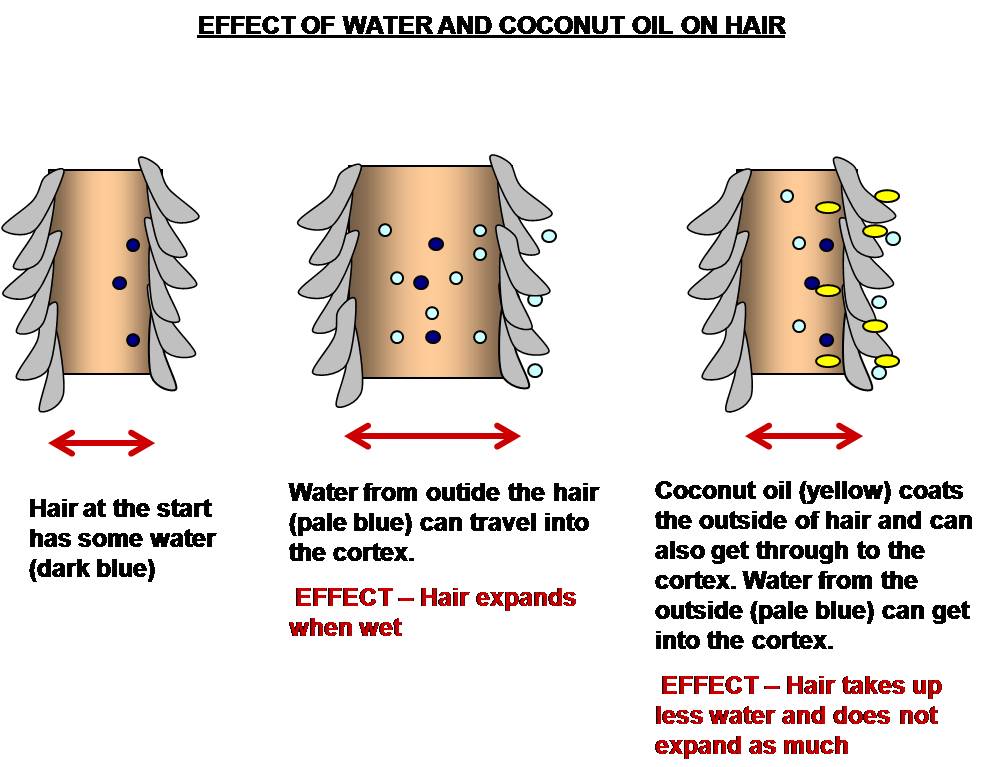
  2. coconut oil on harHair Care. As with skin, coconut oil can work wonders on dry, brittle, over heated and over treated tresses! Most over the counter treatments are a cocktail of toxic chemicals unless you know the brands that are completely free of parabens and sulfates. The Journal of Cosmetic Science published a study in 2003 where researchers found that coconut oil reduces protein loss in both healthy and damaged hair when used both before and after washing hair. It is an effective pre-wash treatment for damaged hair as the oil coats and protects the hair from water damage. The fatty acids enter the hair shaft and lock in the proteins, and it’s also a great de-tangler!
  3. Coconut oil contains MCTsMedium-chain triglycerides. Why should you care about that? MCTs comprise about two thirds of the total composition of coconut oil. Other vegetable oils are made up of LCTs – Long-chain triglycerides, which are more complex than MCTs and are harder for the body to digest and break down into energy. MCTs enhance your body’s ability to convert fat to energy and are a healthy source of energy as they’re sent straight to the liver. MCTs as part of a healthy diet are not typically stored as fat.
  4. Coconut-and-Coconut-OilLauric Acid (found in abundance in breast milk) forms around fifty percent of the MCTs in coconut oil. Your body converts lauric acid into Monolaurin, which has antifungal, antiviral and antimicrobial properties. Hence coconut oil is a natural remedy for bacterial infections, yeast infections and athlete’s foot among other conditions.  You don’t need to worry about bacteria building up resistance to coconut oil as you would with antibiotics prescribed by a GP because your body doesn’t recognise it as an ‘invader’ and won’t start to build up immunities against it. That’s one powerful natural antibiotic! Coconut oil contains roughly 6 to 8 grams of lauric acid per tablespoon. The secondary fatty acids are caprylic acid, capric acid and myristic acid.
  5. Aids your body with Vitamin E absorption. Whilst coconut oil does not have high levels of Vitamin E it has been shown to assist your body to absorb it in your diet. Vitamin E is a bit of a miracle worker. It helps with muscle growth, blocks polyunsaturated fats from oxidizing, helps to regenerate and repair damaged tissue and wounds, it’s an anti-oxidant that protects your cells from free radicals which are unstable molecules that can wreak havoc in the body, and it also promotes neurological health.
  6. Instant energy boost & weight loss. Because your body can easily digest coconut oil and utilises the MCTs much more quickly than other types of fatty acids it gives you an instant energy boost, and because it’s not stored as fat in the body you can keep your weight at healthy levels in conjunction with exercise and a healthy diet. Obesity is usually quite rare in cultures that consume coconut oil.
  7. Controls cholesterol. Coconut oil promotes healthy HDL cholesterol levels and lowers the bad LDL cholesterol.
  8. A balanced metabolism. Current research is pointing to coconut oil being able to correct thyroid malfunction. The Alternative Daily Special Report: Coconut Oil Exposed.
  9. Coconut oil is stable at high temperatures. It’s great for cooking with and can be used for frying, roasting and baking. Coconut oil can also be used raw and unheated in soups, smoothies, or combined with vinegar, honey and olive oil to make a scrumptious salad dressing, for flavouring coffee, melted and drizzled over roasted vegetables, drizzled over rice, on baked potatoes, mashed potatoes, used to scramble and fry eggs, or spread on toast. There are a myriad of different recipies online and in books.
  10. Supports the immune system. The antiviral properties of coconut oil can help to fight off and lessen the severity of colds and flu. It can be taken as a supplement in warm tea to help alleviate sinus congestion, and externally when mixed with a little eucalyptus oil it can be rubbed on your chest as a natural decongestant.

Storage

To prolong the life of your coconut oil, keep it in a cool, dark environment away from heat, light and oxygen. Coconut oil is slow to oxidise and turn rancid when kept this way.

There isn’t a recommended daily intake amount for coconut oil but some health experts advise taking 2 to 3 tablespoons per day.

coconut trees

No wonder diseases such as cancer and diabetes are on the rise. In our increasingly polluted environment our bodies are continually assaulted by the elements, man-made chemicals and from processed and genetically modified food, so it makes sense to protect them with nature’s nectar!

It may not be an instant magical elixir that will cure all your ailments or help you to lose weight overnight, but I do know what it has done for me, and I can wholeheartedly recommend it.

“He who plants a coconut tree plants food and drink, vessels and clothing, a home for himself and a heritage for his children” ~ South Seas saying

The Great Virtuoso Violinists/Composers of the 18th Century: Viotti

“…the violin — that most human of all instruments…” ~ Louisa May Alcott

Giovanni Battista Viotti: (12 May 1755 – 3 March 1824)

I have to admit, I didn’t know that much about Viotti before I began writing this post.

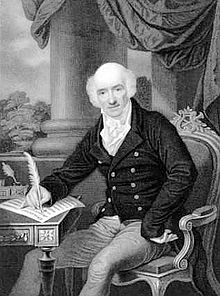
Giovanni_Battista_Viotti_afterTrofsarelliHe was 27 years older than his more famous and infamous compatriot, Paganini; but in my view he deserves just as many plaudits. Viotti was a key influence in the lives of many violinists and composers, such as Rodolphe Kreutzer, Pierre Rode, Pierre Baillot, Louis Spohr and Paganini indirectly, (via his pupil August Duranowski).

Beethoven himself drew inspiration from Viotti’s violin concertos.

Many modern violin greats can trace their pedadogical legacy back to Viotti. He is the founding father of the style of violin tuition from the early days of the Paris Conservatoire.

It’s probably fair to say that his skill as a violinist outshone his skill as a composer.

However, I had no idea he wrote such a substantial body of work: 29 violin concertos, 2 symphonie concertantes, many violin duos, violin and cello sonatas, string quartets and trios, a cello concerto, around 17 piano concertos (arrangements of his violin concertos), as well as 2 flute concertos, (also based on his violin concertos), plus other chamber works.

Uto Ughi and Guido Rimonda perform the duetto per due violini (music commences at 44 seconds):

Viotti’s musical education was under the patronage of Alfonso dal Pozzo della Cisterna in Turin and later by violinist Gaetano Pugnani. He served at the Savoia Court in Turin for eight years before touring as a soloist, initially with Pugnani throughout Germany, Poland and Russia, before he found favour in Paris; making his debut as a violinist in 1782 where he became the court musician to Marie Antoinette at Versailles.

He remained in France as a teacher and opera impresario, founding a new opera house in Paris under the patronage of the king’s brother (Louis-Stanislas-Xavier, comte de Provence), in 1788. He worked closely with his friend and opera composer, Luigi Cherubini whom, incidentally, Beethoven regarded as the greatest contemporary composer.

Despite his affiliation with the French monarchs Viotti was philosophically aligned with the Enlightenment movement and the teachings of Jean-Jaqcues Rousseau. After the French Revolution took a turn for the worse Viotti’s opera house was renamed Théâtre Feydeau in order to distance himself from the unpopular French Royalty.

Viotti kept his head and moved to London in 1792 where he became popular both as a violinist and musical director of opera concerts. He met Joseph Haydn in London in 1794, whose musical influence can be heard in Viotti’s later concertos.

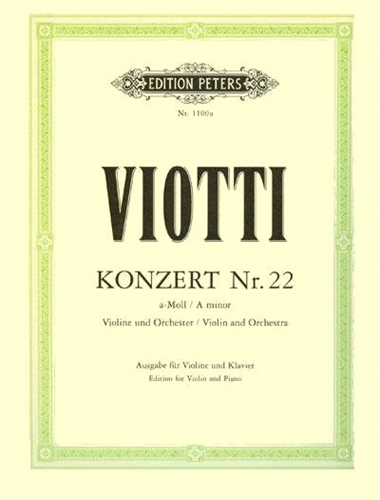
Viotti - Violin Concerto no. 22 sheet music cover

Tension between Britain and France led to him being expelled from Britain because of the Alien Bill in 1798, under the false charge of being a Jacobin; only to return two years later from Germany to live in secret with his English friends and supporters, William and Margaret Chinnery.

Around 1801 Viotti set up a wine merchant business, stating, “I find that the English prefer wine to music.” Unlike Paganini, who adored the limelight, Viotti was happier performing at smaller, more intimate gatherings. During this time he continued to compose and put on private concerts.

His friend (and younger brother to the Prince of Wales), the Duke of Cambridge, made it possible for Viotti to become a naturalised British Citizen in 1811, and Viotti became a key figure in the creation of the Philharmonic Society in London in 1813. At this stage of his career he played mostly as a chamber musician and orchestra leader.

When his wine business failed he returned to Paris to become the director of the Italian Opera between 1819 and 1822.  He returned to London in 1823 with Mrs Chinnery and died a year later.

Here is my favourite of his violin concertos, No. 19 in G minor, written in the 1790’s which has a contemporary sounding lyrical drama and a gorgeous melody, performed by Rainer Kussmaul:

The first movement of the same concerto arranged for piano:

Viotti’s Violin Concerto No. 22 in A minor was composed in 1803, and was revived by the virtuoso violinist Joseph Joachim in the 1870’s, elevating it to the most popular of his violin concerti. Brahms was also an admirer of this work, using artistic license from it in his own violin concerto. Here is one of the greatest violin virtuoso’s of the 20th Century, Itzhak Perlman, playing the third movement:

Origins of the French National Anthem

In 1781 during his time at Versailles, Viotti composed his Theme & Variations in C Major, which was copied in 1792 by Rouget de Lisle and dubbed ‘Song of War’. The ‘song’ was later adopted by volunteers from Marseille, and thus the “Marseillaise” was established, first becoming France’s national anthem in 1795. It seems rather unfair that de Lisle took all the glory!

Franz Liszt also wrote a piano transcription of the Marseillaise:

Viotti’s Violin

Viotti’s violin was made by Antonio Stradivari in 1709, and was given to him by Catherine the Great.

Viotti’s Strad also features in the opening chapter of my novel, The Virtuoso. My protagonist, the concert violinist Isabelle Bryant, is giving a Masterclass at the Royal Academy of Music, where the violin is now on display. Here’s the excerpt from Chapter 1:

Her violin represented another limb to her, it was that precious. It felt so natural, like an extension of her body. She gently rubbed her neck which was feeling a little sore. The rough, red patch of skin on her neck just below her jaw was often mistaken for a love bite, when in fact it was she affectionately referred to as a violinist’s hickey. Many hours of gruelling practice had left their marks.

Her mind drifted to her earlier private viewing of the Academy’s museum, where she had been shown round by the curator in person. She had spent a blissful afternoon paying particular awe and reverence to their recent acquisition of Italian virtuoso Giovanni Battista Viotti’s 1709 Stradivarius, renamed as the Viotti ex-Bruce to honour its British donor, which the Academy extolled as one of the most important and well preserved Stradivarius violins in the world.

She had studied the the sheen of the dark, pinky brown maple; picturing the old master craftsman huddled in his workshop in northern Italy; surrounded by the distinctive wooden shapes that would become so valuable over three hundred years later. Sadly there were so few of them remaining.

Her own violin, a modern Nagyvary, was crafted by the eminent Hungarian professor Joseph Nagyvary, who had spent his life studying the craftsmanship of Cremonese violin makers; namely Stradivarius and Guarnerius.

Nagyvary violins were made as closely to those of the ancient genius as possible, and there had been many debates about whether or not they sounded as good as those of the master. Isabelle adored it sonorous tonal qualities and projection power. If a Nagyvary violin had been good enough for Yehudi Menuhin to play for fifteen years, then it was good enough for her.

I found a great vintage recording of Raff’s Cavatina by violinist Pauline Hall, playing on Viotti’s Stad in 1912:

In the late 1600s the finest instruments originated from three rural families whose workshops were side by side in the Italian village of Cremona. First were the Amatis, and outside their shop hung a sign ‘The best violins in all Italy.’ Not to be outdone, their next-door neighbours, the family Guarnerius, hung a bolder sign proclaiming ‘The Best Violins In All The World’ At the end of the street was the workshop of Anton Stradivarius, and on its front door was a simple notice which read ‘The best violins on the block.’ ~ Freda Bright

Guest Blog: Eating to Conceive by Saffron Rogerson

“There is such a special sweetness in being able to participate in creation.”  ~ Pamela S. Nadav

Saffron Rogerson Nutritional TherapistAlthough my childbearing days are over, I figured the advice of Nutritional Therapist Saffron Rogerson (BSc Nutritional Therapy, MBANT), who specialises in fertility and conception, would be invaluable for couples who are planning to have children, and especially for those ladies who may have found conception has taken longer than they would have liked.

Saffron gives some expert nutritional advice on how to give yourselves the best chance to conceive a healthy baby; except of course, for the ins and outs of baby practice time!!

If you’re looking to get pregnant it can pay dividends to be nutritionally savvy from the offset, not just once your periods stop and the morning sickness starts.

The reasons for this aren’t obvious until you realise that it can take 2½ – 3 months to develop fully-mature, ready-to-be-ejaculated sperm.  Equally it can take just as long for an egg to mature before it reaches ovulation.  During this process of maturation certain nutrients are essential in both the mother and the father for the crucial stages of cell DNA replication and transcription.  A healthy diet for both partners can ensure that when the sperm and egg finally meet they’re carrying all their correct genetic information and both are resilient enough to finish the journey.

“It can take 2 ½- 3 months to synthesise fully-mature, ready-to-be-ejaculated sperm…”

Of course, even when actively trying to get pregnant, many women won’t realise they’ve achieved their goal until the first missed period.  By this stage they could already be three weeks down the line of foetal development, at this point there has already been a massive multiplication of cells and the resulting blastocyte is in the process of burrowing into the uterine lining. Great nutrition at this stage will not only result in the best foetal health but also help to make the uterine lining as receptive and nurturing as possible.

So, to help you get in the best health for pregnancy, make sure that you have plenty of the following in your diet:

Zinc

asparagus for spermThis mineral is commonly associated with male fertility and is crucial for cell division.  Found in seafood and asparagus (hence their reputation as aphrodisiacs) but also in eggs, fish, whole grains, lean meat and seeds and nuts.

Folate / Folic Acid

As the neural tube is one of the first things in the developing embryo (the precursor to the central nervous system) it is crucial that you keep folate levels up.  It’s so important in fact that many health providers recommend that the mother supplement with folic acid before and during pregnancy.  Recent research has shown that vitamin B12 is additionally vital for the same reasons. Consequently ensure that your daily multi-vitamin has a broad spectrum of B vitamins which specifically include folic acid and B12.  Alternatively ensure your diet is rich in yeast products, pulses, leafy green vegetables and whole grains.

Iodine

As with folic acid, iodine is important in the development of the early central nervous system, specifically the brain. Research has shown that low levels in pregnancy have been connected with many mental health issues in the child such as cretinism, ADHD and autism. Iodine is most easily found in fish, seafoods and seaweed but also dairy products.

Anti-oxidants

Several nutrients can work as cellular anti-oxidants which is important when cell multiplication is happening so rapidly. These include selenium, co-enzyme Q10 and vitamins E and C.  Whole grains, seeds and nuts are good sources of selenium and Vitamin E whilst Vitamin C can be found in abundance in all fruits and vegetables. Co-enzyme Q10 can be found in fish, sesame seeds, broccoli and eggs.

Omega 3

Not only important for sex hormone synthesis but Omega 3 polyunsaturated oils have been also recommended to increase sperm quality and count.  Most easily found in oily fish but also flaxseeds walnuts and pumpkin seeds.

Protein

Used again as the basis for sex hormones but equally needed for sperm creation and cellular replication.  There are many sources of protein but look for quality sources such as lean meats, eggs, fish and dairy which will help you to obtain all the essential amino acids.

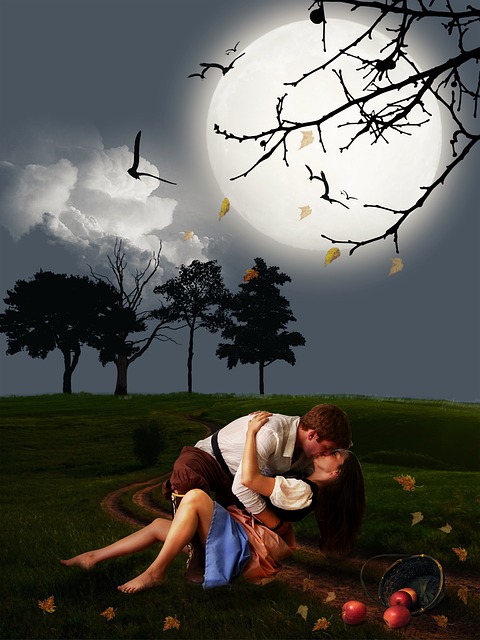
See, spot the apples?  This couple know what they’re about…

See, spot the apples? This couple know what they’re about…

Making sure your kids eat right doesn’t start at the kitchen table, it starts three months prior to even the twinkle in his eye.

At This Life Nutrition mother of four, Saffron Rogerson, understands the science behind the headlines. Achieving better health through diet and lifestyle is not about the latest trend – using sound evidence based research, she will assess you as an individual, reviewing your diet, lifestyle and medical history. She provides pertinent, tailored adivce to deal with issues, addressing any nutritional deficiencies and optimising health.

Saffron has been privileged to help clients with a wide range of health conditions including issues with conception, bloating, painful joints, menstrual pain, hormonal imbalances and much more.

For more pre-natal, ante-natal, and post-natal advice please contact her by email: saffron@thislifenutrition.co.uk. You can also connect with her on Twitter (@MamaNutrition).